

|
Getting your Trinity Audio player ready...
|
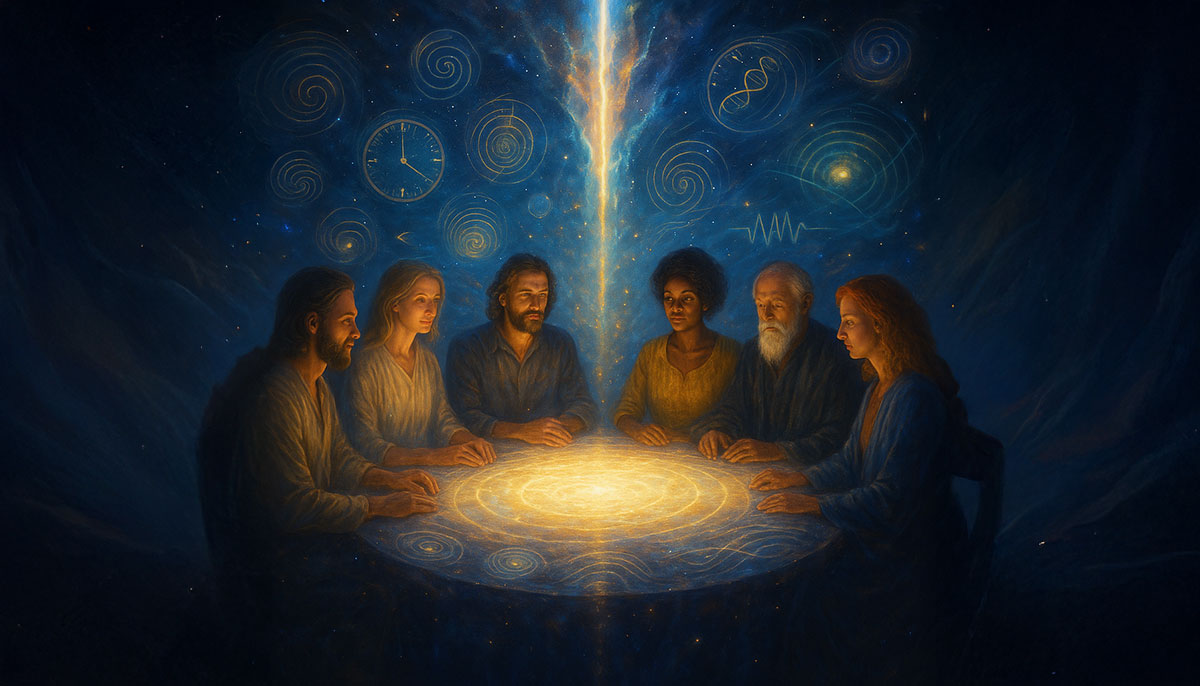
Marisa Liza Pell:
You didn’t land here by accident.
If you’ve been feeling overwhelmed, lost in the noise of the world, or like something deeper is trying to get your attention… this conversation is for you.
We are standing at a spiritual crossroads.
The planet is shifting. Time is accelerating. And whether we realize it or not, our souls are being called forward.
In this series, Messages from Beyond, I’ll be speaking not just as a medium — but as a messenger. The guidance coming through now is urgent, direct, and meant to awaken something deep in your heart.
This is not about fear.
It’s about preparation.
Not about doom — but alignment.
Each conversation is meant to help you remember who you are, why you’re here, and how your inner work is more important than ever. Because the next seven months? They matter.
Let’s begin.
(Note: This is an imaginary conversation, a creative exploration of an idea, and not a real speech or event.)

Topic 1: Why Psychic Readings Alone Won’t Change Your Life

Participants: Marisa Liza Pell, Caroline Myss, Michael Meade, Teal Swan, Dr. Gabor Maté
Moderator: Paul Selig
Paul Selig:
So many people receive powerful psychic readings, yet little changes in their lives. The Guides have often said, “What you do with what is revealed determines what comes next.” That leads us to our first question: Are psychic readings truly helpful if someone hasn’t done the inner emotional or somatic work?
Caroline Myss:
I would say psychic readings, like any intuitive insight, are grace points—but grace doesn’t mean transformation without effort. People want a shortcut. They want to know when love arrives, not why they sabotage it. If the psyche is burdened by unprocessed trauma, you can deliver the most accurate prophecy and still witness a collapse. That’s the sin of spiritual entitlement: thinking clarity alone saves you. It doesn’t.
Teal Swan:
Exactly. What I’ve seen repeatedly is that readings become an emotional high, a substitute for healing. They temporarily alleviate anxiety—but if that energy isn’t integrated, it reinforces avoidance. The universe may reveal a potential timeline, but your trauma decides whether you align with it or sabotage it. We must ask: Is the client coming for empowerment or comfort?
Dr. Gabor Maté:
From a psychological standpoint, I see this all the time. Many of my patients want to bypass the pain of their past with insight. But insight is not integration. If the nervous system has never felt safe enough to receive love, the promise of future love becomes a cruel joke. People confuse information for transformation. Trauma creates survival strategies that override even the most divine message.
Michael Meade:
And mythologically speaking, everyone wants the oracle’s voice without living the hero’s journey. They crave destiny without descent. But every true transformation begins with a descent into the unknown, into the underworld of the self. If a person avoids that descent, they’ll ask the seer again and again, hoping the vision will change, while they remain unchanged.
Marisa Liza Pell:
This is exactly why I shifted my entire practice. I was giving people accurate readings, even naming names, dates, events—but they couldn’t live into them. They were stuck in cycles because their body couldn’t hold the vibration of change. Without doing foundational somatic work, they’d keep manifesting the same type of lover, job, or trauma. I realized I was just forecasting their unconscious patterns. That’s not liberation—that’s loop prediction.
Paul Selig:
Brilliant insights. Let’s move to the next question: What’s the responsibility of the intuitive or psychic medium when we see a client won’t or can’t act on the guidance?
Michael Meade:
The sacred role of the seer is not only to see—but to challenge. Like Tiresias in Greek myth, the seer confronts. So when we recognize someone lacks the internal architecture for change, our task is not flattery—it’s initiation. Speak the truth even if it burns the ear. That’s sacred fire.
Marisa Liza Pell:
I learned to stop sugarcoating. If someone’s in fight or flight, I won’t give them a reading. They’re in survival, not receptivity. I now ask, “Are you ready to do the deep work? Or do you want relief from discomfort?” I’ve turned people away—and later they thank me. It’s tough love, but intuitive work must evolve into integrative work.
Teal Swan:
We also must set boundaries around psychic dependency. If you become someone’s surrogate decision-maker, you’re enabling emotional paralysis. I often redirect people to confront their pain, not bypass it. The greater the channel, the greater the ethical responsibility to provoke healing, not comfort.
Dr. Gabor Maté:
Exactly. The healing professional must resist becoming an emotional anesthetic. Empathy means helping someone face their wounds, not escape them. I often say: “What’s in the way is the way.” If they’re afraid to act on the reading, that fear is the first clue to what truly needs healing.
Caroline Myss:
Responsibility is sacred. The psychic, like the priest or healer, stands at the gate of transformation. If you see that someone is not ready, do not open the gate. It would be like handing a sword to a child. The true intuitive says: “Come back when you’re ready to wield what I give you.”
Paul Selig:
Final question: What must change—in the public and in the profession—for intuitive guidance to become a vehicle for true transformation, not spiritual entertainment?
Teal Swan:
We must stop selling comfort and start teaching capacity. The public needs to understand that receiving guidance is a skill. You can’t hold high-frequency truth in a dysregulated body. If you want evolution, you must stabilize your vessel. It’s not woo—it's wiring.
Caroline Myss:
And spiritual maturity must replace magical thinking. Intuition is not a fortune cookie. It’s a language of the soul. If we treated it with the same reverence as ancient oracles, we wouldn’t cheapen it with “what’s my future?” games. The change must begin with us: the professionals.
Dr. Gabor Maté:
Also, we must de-pathologize trauma. So many people blame themselves for not being able to change. It’s not laziness—it’s survival. We need to train intuitives to recognize when trauma is overriding free will. That’s when we pause the prophecy and guide the person inward.
Michael Meade:
Yes, and we must return soul to the center. The soul’s path is not linear. It speaks in symbols, dreams, and patterns. It will not be rushed. We need less prediction, more poetry. Less forecast, more fire.
Marisa Liza Pell:
This is the message I share now: psychic work without somatic integration is incomplete. Insight must meet embodiment. Otherwise, we’re not reading the future—we’re just recycling the past. And that’s not why I came here.
Paul Selig:
Beautiful. May we all stop asking for shortcuts and begin cultivating the strength to walk the path. Thank you all for this sacred dialogue.
Topic 2: The Planet is Shifting — Are You Doing Your Inner Work?

Participants: Marisa Liza Pell, Eckhart Tolle, Dr. Joe Dispenza, Thomas Hübl, Bruce Lipton
Moderator: Gregg Braden
Gregg Braden:
Welcome, everyone. We’re entering a time of extraordinary change—environmentally, socially, spiritually. Many feel the world is unraveling. But the deeper question is: What’s unraveling within us? Let’s begin here: What does it really mean to “do your inner work” in this moment in human history?
Eckhart Tolle:
To do your inner work now is to disidentify from the collective mind’s fear and madness. It is to notice your own mind’s reactivity, its compulsive need to label, judge, and resist what is. The pain body—both personal and collective—is being activated globally. To transcend it, we must bring presence into the inner chaos, not just react outwardly to global chaos.
Bruce Lipton:
And when we talk about inner work, we’re really talking about reprogramming the subconscious. Most of our behaviors, choices, and stress responses are shaped by early childhood imprints—often before age 7. If you’re not doing the work to rewrite those programs, you’re not driving the bus. The inner work is about shifting from being a victim of the system to becoming the architect of your biology.
Marisa Liza Pell:
I see this every day in my clients. They come asking for readings to know “what’s going to happen,” but I always ask, “What is your internal weather system doing?” The Earth’s tremors mirror our own. If you’re living in survival mode—fear, guilt, overproduction—you’re just recycling pain. Inner work now means somatic accountability. You must clear the trauma that keeps you addicted to stagnation.
Thomas Hübl:
Yes. Much of what we label as ‘personal pain’ is actually inherited or collective trauma. We carry the unresolved history of our lineages, communities, and civilizations in our nervous systems. Inner work now means becoming a trauma-literate culture—understanding that your anxiety may not even be yours. But it becomes yours to heal, because only through integration does the world begin to change.
Dr. Joe Dispenza:
What you repeatedly think, feel, and believe literally becomes your future. Inner work means getting beyond the familiar emotions that define your identity: fear, anger, unworthiness. These aren’t just moods—they’re neurochemical addictions. The body becomes the mind. If you want a new world, you have to biologically rehearse a new future from the inside out. Your personal coherence contributes to planetary coherence.
Gregg Braden:
Powerful. Let’s go deeper. Why is this moment in time so charged, and how does unhealed trauma within individuals feed into global instability?
Marisa Liza Pell:
Because we’re at capacity. Most people I see are energetically maxed out. They’re not just stressed—they’re emotionally constipated. They’ve never released the grief, rage, or shame that’s stored in their bodies. So when the world erupts, it matches the eruption they’ve avoided. And when I say “do the work,” I don’t mean get a massage—I mean face your unintegrated self and stop outsourcing your power.
Thomas Hübl:
I call it the trauma wall. When there’s a rupture—war, political division, pandemic—it pushes against that wall. If you haven’t done your inner work, you collapse into projection. You blame, judge, and externalize instead of metabolizing your own fear. Multiply that by billions of people, and you get a society reacting, not responding. Trauma needs integration, not more information.
Eckhart Tolle:
Indeed. The world reflects our inner states. When enough people are unconscious, egoic patterns dominate—fear, control, separation. But suffering is also a portal. If one person becomes deeply present in crisis, they radiate peace. That alone is revolutionary. Healing the world doesn’t mean fixing the world. It means becoming the field through which peace emerges.
Dr. Joe Dispenza:
Think about this: if enough people shift into elevated states—gratitude, compassion, love—we measure a literal electromagnetic change in the field. That’s not poetic. That’s science. But people need tools, not just insight. Meditation, breathwork, visualization—these recondition the body to trust the unknown instead of fear it. And from that trust, better choices arise.
Bruce Lipton:
Fear is the most dangerous contagion right now. It shuts down your immune system. It blocks growth and rewires your perception toward threat. So the question is: Who’s programming you? Mainstream media? Ancestral trauma? Or your conscious will? The moment you reclaim authorship of your biology, you reclaim authorship of the world.
Gregg Braden:
Brilliant. Final question: What can each of us do right now to shift our internal state and thereby affect collective transformation?
Bruce Lipton:
Start with awareness. Identify the beliefs that say “I’m powerless,” “It’s too late,” “The world is doomed.” Challenge them. Rewire your system by feeding it new inputs—affirmations, empowered language, and gratitude rituals. You can’t create a world of peace if your body runs on programs of fear.
Marisa Liza Pell:
Get back in your body. Learn to breathe again. Learn to feel again. Stop outsourcing your intuition. Your internal GPS already knows the way—but trauma has blocked the signal. Somatic practices like grounding, shaking, humming, and cold exposure help reset the vagus nerve so you can finally feel safe enough to move forward.
Dr. Joe Dispenza:
Create from the future, not the past. Each morning, ask yourself: Who do I want to be today? Then feel that future into your cells. Most people live in the residue of yesterday’s emotions. But you can interrupt that loop. With practice, the body forgets the past—and begins remembering a better future.
Eckhart Tolle:
Practice presence. That’s it. Presence dissolves the pain body. Every conscious breath, every moment of stillness, is a crack in the shell of ego. You don’t need to fix the world. You need to be the peace that makes the world livable.
Thomas Hübl:
And finally, don’t isolate. Healing is relational. Find spaces where you can be seen, held, and mirrored. We are not separate traumas—we are a tapestry. As we repair one thread, the whole fabric becomes stronger.
Gregg Braden:
That’s a beautiful reminder. We change the world not by shouting louder—but by resonating higher. Thank you all for your wisdom, presence, and courage.
Topic 3: Why We’re Stuck — The Nervous System is the Real Gatekeeper

Participants: Marisa Liza Pell, Dr. Bessel van der Kolk, Peter Levine, Deb Dana, Resmaa Menakem
Moderator: Nicole LePera
Nicole LePera:
So many people know what to do—read the books, attend the retreats, get the readings—yet stay stuck. We’re beginning to realize the true gatekeeper to transformation is not the mind, but the nervous system. To open, here’s our first question: Why is it so hard for people to change even when they genuinely want to?
Peter Levine:
Because the body remembers. Even when the conscious mind is ready for change, unresolved trauma in the nervous system tells the body that safety lies in the familiar. Change is perceived as danger. Until that internal alarm is reset, people will unconsciously sabotage or freeze—no matter how much insight they have.
Marisa Liza Pell:
This is what I see so clearly in spiritually aware people. They’ll say, “I know what my soul wants,” but their body says, “No, it’s not safe.” Psychic information enters—but it bounces off a nervous system that’s still locked in hypervigilance or collapse. I had to learn that no amount of intuitive accuracy matters if the client’s body doesn’t feel safe enough to act on it.
Dr. Bessel van der Kolk:
We tend to overemphasize the story—what happened—when healing is more about how it lives in the body. Trauma isn’t just remembered; it’s re-experienced unconsciously through posture, breath, tone of voice. People don’t fail to change because they’re weak. They fail because their survival brain is still stuck in the past. Change must happen at the physiological level first.
Resmaa Menakem:
Especially for those holding intergenerational trauma—Black bodies, Indigenous bodies, immigrant bodies—our nervous systems have adapted to centuries of threat. You’re not just healing your life story; you’re healing the residue of history. The nervous system doesn’t read time—it reads pattern. And until those patterns are interrupted somatically, insight alone won’t cut it.
Deb Dana:
This is why understanding your nervous system state is key. Are you in ventral vagal (safe and connected), sympathetic (mobilized for fight or flight), or dorsal vagal (shutdown)? Without this awareness, you’re trying to rewire your life from a place of dysregulation. And in that state, your ability to choose something new is neurologically unavailable.
Nicole LePera:
Let’s build on that. What does it actually mean to "regulate the nervous system"—and how can someone begin, especially when they're in chronic stress or trauma?
Deb Dana:
Regulation begins with recognition. Can you pause and name your state? From there, you build a menu of micro-practices that bring you back to ventral vagal—like humming, rocking, cold water on your face, orienting with your eyes. It’s not about “fixing”—it’s about coming into connection with yourself and your body again.
Peter Levine:
I call this “completing the trauma loop.” Animals in the wild shake off trauma—humans suppress it. Regulation means allowing the body to finish what it couldn’t when the trauma occurred. Gentle movements, attention to sensation, and spontaneous discharge (like shaking or crying) all help release trapped survival energy. When the body discharges, safety returns.
Dr. Bessel van der Kolk:
And don’t underestimate touch, movement, rhythm. These are ancient regulatory tools. Yoga, dance, drumming—all bypass language and go straight to the survival brain. If you want to heal trauma, you must speak the body’s language. And that language isn’t words. It’s rhythm, breath, gesture.
Resmaa Menakem:
I teach people to sit in discomfort without flinching. That’s regulation. Can you feel rage, fear, grief in your hips, jaw, chest—and not leave yourself? Can you stay with it long enough for your body to know: “This pain won’t kill me”? Regulation is building the capacity to stay, not escape.
Marisa Liza Pell:
For my clients, I start with intuitive body mapping. Where does your fear live? Your avoidance? Even your intuition? Once we find those spots, we breathe into them gently, again and again. Over time, those areas stop guarding. The intuition flows freely only after the body says, “Yes, it’s safe now.”
Nicole LePera:
That’s such a beautiful way of putting it. Last question: How can people begin healing their nervous system in everyday life—even if they’ve never done any trauma work before?
Dr. Bessel van der Kolk:
Start with the breath. It’s always available. Slow, conscious breathing signals safety to the brainstem. Try this: inhale 4 counts, exhale 8. Longer exhales activate the parasympathetic nervous system. Over time, this rewires your baseline for safety.
Marisa Liza Pell:
Limit overstimulation. Turn off the psychic noise, the scrolling, the energy-draining environments. Your nervous system is absorbing way more than you realize. Create an energetic boundary around yourself—daily walks in nature, salt baths, grounding without electronics. Give your body a break from the constant fight-or-flight messaging.
Peter Levine:
Cultivate body awareness. Several times a day, pause and scan your body. Notice: “Am I clenched? Am I breathing?” Name the sensation—without judgment. That builds capacity. You don’t need a full release. You just need presence with what is.
Deb Dana:
Create co-regulation. Regulation doesn’t just happen alone—it happens in connection. Find safe people, pets, or places that make your body soften. Even a favorite song or a warm cup of tea can be a co-regulator. Build a menu of “anchors” that remind your nervous system: You’re not alone.
Resmaa Menakem:
And don’t try to do it all at once. Pick one thing and do it every day. Trauma lives in repetition—so does healing. Whether it’s humming, walking, or just placing your hand on your heart, repetition sends the message: “I choose to stay.” That’s liberation.
Nicole LePera:
Thank you. This conversation is a reminder that we’re not stuck because we’re broken—we’re stuck because we’re protecting ourselves. But that protection can become our prison unless we gently, consistently, learn to trust again. In the body. In the moment. In ourselves.
Topic 4: What Spirits Regret — Messages from the Other Side

Participants: Marisa Liza Pell, Dr. Raymond Moody, Tyler Henry, Anita Moorjani, James Van Praagh
Moderator: Lisa Williams
Lisa Williams:
We often wonder what happens when we die—but even more, we wonder what the dead would say if they could talk to us now. As mediums and near-death experiencers, you’ve each touched this realm. Let’s begin here: What do spirits consistently regret or wish they had known while alive?
Anita Moorjani:
The biggest regret I felt after my near-death experience wasn’t about things done—it was about things not lived. I realized how much of my life had been shaped by fear: fear of disappointing others, fear of failure, fear of being “too much.” Spirits regret abandoning themselves. They wish they had loved themselves sooner and more fully.
Tyler Henry:
In almost every reading I give, there’s a theme: “I didn’t say what needed to be said.” Spirits often express regret over withheld forgiveness, love, or truth. They show me small moments—missed phone calls, unsaid “I’m sorry”s—that meant everything. The dead aren’t hung up on how they died. They’re focused on how they didn’t live fully when they had the chance.
Dr. Raymond Moody:
Through thousands of NDEs, I’ve found a common thread: people revisit their lives as a panoramic review—but from the perspective of those they affected. It’s not judgment. It’s deep empathy. The regret comes not from punishment, but from feeling the ripple effect of their choices. What they wish is: “If only I had loved more… sooner… deeper.”
James Van Praagh:
What surprises people is that spirits don’t talk about careers or money. They talk about presence. “I was there… but I wasn’t really there.” They regret numbing out, not holding their children longer, not dancing in the kitchen more. They often say, “Tell them to stop waiting.” There’s no perfect moment to start living.
Marisa Liza Pell:
I’ve had spirits come through who were powerful, wealthy, admired in life—and they whisper the same thing: none of that mattered. What mattered was how they made people feel, especially in private. One father told his daughter, “My soul was loud, but my love was quiet. I wish I’d switched that.” The regret is always emotional, never logistical.
Lisa Williams:
So powerful. Next, let me ask: What do spirits want us to know about death—and what actually happens during the crossing over process?
Dr. Raymond Moody:
The overwhelming consensus is that death is not the end—it’s a return. People report being greeted by light, by familiar souls, even by unconditional love itself. Time, identity, and separation dissolve. What spirits want us to know is this: death is peaceful, and the fear we have around it is a reflection of life not yet fully lived.
Anita Moorjani:
Exactly. When I died, I felt like I became part of everything—love, light, and infinite awareness. There was no judgment, only clarity. The only pain came from seeing how hard I had been on myself. Spirits want us to know that we are more than our bodies, and the body is just the clothing the soul wears for a time.
James Van Praagh:
Crossing over can be easy or difficult depending on the soul’s level of attachment. Some spirits cling to the physical, while others lift easily into the light. Many fear judgment or punishment—that keeps them stuck. But there is no wrath, only review. They often say, “The hardest part was leaving my loved ones unprepared.”
Tyler Henry:
Many times during readings, spirits show me symbols of the transition—things like floating, sudden peace, or a loved one holding their hand from the other side. They want us to know: we are never alone when we pass. Even those who die suddenly or tragically are immediately met—no one crosses without guidance.
Marisa Liza Pell:
And for those wondering “Did they suffer? Were they scared?”—spirits often clarify: the pain stops instantly. The fear dissolves. They are more worried about how we’re handling their death than they are about their own experience. They always say, “I’m okay—but you’re not.” They come through because they want us to heal.
Lisa Williams:
Final question: What do spirits urge the living to do differently—starting today—to avoid their regrets and live more aligned?
Tyler Henry:
Say it. Whatever you’re waiting to say—say it now. Don’t assume people know you love them. Don’t hold back your truth out of fear of judgment. The moment of death strips away ego, and all that’s left is what you gave and received in love. If it’s real, it’s worth sharing now.
Marisa Liza Pell:
Clear your energy while you're alive. Don’t carry your pain, guilt, and trauma into the next life. Heal your relationships. Forgive—even if it’s just inside yourself. Spirits say, “Please don’t let my pain become your inheritance.” Break the cycle now so the soul can evolve—and so can you.
Dr. Raymond Moody:
Pay attention to meaning. Life isn’t a checklist—it’s a narrative. Live a life you’d be proud to review. Seek out beauty, wonder, and awe. Ask: What story am I writing with my choices? Because one day, you’ll experience that story again—through the eyes of everyone you’ve touched.
Anita Moorjani:
Love yourself radically. That’s not selfish—it’s spiritual responsibility. Most people think loving others comes first, but spirits always say: “I couldn’t love well until I loved me.” When you honor your soul, you model freedom. That’s the greatest gift to those still on Earth.
James Van Praagh:
Be present. Be playful. Be here now. The dead don’t tell us to do more—they tell us to feel more. They beg us to stop missing our lives. When you cook, taste it. When you hold a hand, hold it. One day, that moment will be what remains.
Lisa Williams:
Thank you. This conversation reminds us that the veil between worlds is thinner than we think—and that love, not fear, is the true legacy of any life well-lived.
Topic 5: Humanity's Crossroads — The Next 7 Months Are Critical

Participants: Marisa Liza Pell, Lee Harris, Sadhguru, Penney Peirce, Caroline Myss
Moderator: Michael Beckwith
Michael Beckwith:
There’s a shared sense among many spiritually attuned people: something pivotal is happening. A convergence. A reckoning. Let’s start here: What exactly is this moment we’re in—and why are the next seven months so critical to our collective evolution?
Lee Harris:
Energetically, we are in a rapid compression and release cycle. Think of it like a pressure cooker: global tensions rising, old paradigms collapsing, while a new frequency emerges underneath. The next seven months represent an acceleration point—where what we choose emotionally and spiritually will ripple for years to come. It’s not fear-based urgency. It’s a window of opportunity.
Caroline Myss:
Let’s be blunt. We’re in a spiritual emergency. And most people are still sleepwalking. The Earth is in labor. Something is being born—but birth is messy. In the next seven months, people will either deepen their soul contracts or fall into greater psychic fatigue. You can’t straddle both sides anymore. You must choose: am I here to evolve or to delay?
Marisa Liza Pell:
I’ve been receiving this same message through readings and intuitive downloads: the soul contracts people made for 2025 are activating now. Some souls are stepping forward to lead, while others are breaking under the weight of unprocessed grief. The spirits say, “You asked to be here for this.” But they also say, “You must embody your knowing.” No more floating in the psychic realms. It’s time to ground it.
Sadhguru:
This is not the end of the world. But it is the end of a certain way of being in the world. We must stop living unconsciously—as if our actions do not echo. The Earth is not punishing us. It is responding to our disconnection. In the coming months, your inner clarity will determine whether you contribute to chaos or coherence. Choose wisely.
Penney Peirce:
The vibration of fear is peaking—globally and personally. Why? Because fear precedes transformation. The field of consciousness is reorganizing itself. That requires disruption. But here’s the good news: if you raise your frequency—through presence, truth, alignment—you stabilize your timeline. The next seven months are about matching the vibration of where you want to go, not reacting to where you’ve been.
Michael Beckwith:
Thank you. Let’s move into action. What should spiritually conscious individuals focus on right now to navigate this convergence with purpose, not panic?
Penney Peirce:
Focus on frequency hygiene. Monitor your media intake, conversations, and internal self-talk like you would a diet. Are you feeding your field with clarity or distortion? Use tools like breath, stillness, journaling, and creative play to align your energy. The more coherent your field, the more influence you have on the collective grid.
Lee Harris:
Be radically honest with yourself. Denial is no longer affordable. What are you pretending not to know? What parts of your life are out of integrity? Don’t wait for external permission to pivot. Even one bold action in alignment with your soul mission creates a vibrational ripple. The time for postponement is over.
Sadhguru:
Become a joyful participant, not a fearful spectator. Meditation, devotion, and conscious attention are your greatest tools. You do not need to “save the world.” Just become a clear presence in your corner of it. The inner and outer are not separate. When you align, even your silence becomes an offering.
Caroline Myss:
Spiritual responsibility is the new currency. Stop asking “Why is this happening?” and start asking “What is this trying to awaken in me?” Become ruthlessly accountable for your energy. Gossip, blame, and cynicism are luxuries we can’t afford. Become a spiritual adult. That’s how we move forward.
Marisa Liza Pell:
Don’t just chase the light. Integrate the shadow. This is a time when hidden wounds are surfacing, both individually and collectively. If you’re feeling overwhelmed, it doesn’t mean you’re failing—it means you’re being initiated. The inner work isn’t optional anymore. It’s foundational. Tend to your nervous system. Anchor your light in the body.
Michael Beckwith:
One final question: What gives you the greatest hope about where humanity is headed—even amid the turbulence?
Sadhguru:
The very fact that we are talking about this. Consciousness is rising. People are waking up—not just to their suffering, but to their potential. Crisis is a catalyst. This generation has the tools, the intelligence, and the spiritual thirst to turn the tide. That gives me immense hope.
Caroline Myss:
I see it too. Even as the structures crumble, I see souls stepping up. Young people with old wisdom. Elders finding their voice again. Mystics who once hid now speaking plainly. The sacred is returning—not through institutions, but through individuals.
Lee Harris:
Hope lives in the everyday miracles: the mother comforting her child, the stranger helping someone up, the artist creating beauty in dark times. These small acts are frequency stabilizers. They ripple across timelines. Don’t underestimate the power of softness in hard moments.
Penney Peirce:
Hope lives in our frequency. When we remember we are not just bodies or minds—but fields of energy capable of attunement, transmission, and transformation—we realize we are never powerless. That realization is contagious. And I see more people catching it every day.
Marisa Liza Pell:
The spirits have shown me something beautiful: this isn’t just a breakdown. It’s a soul harvest. So many are waking up. Remembering. Choosing to heal not just for themselves, but for their lineage. The next seven months will be bumpy. But they’ll also be sacred. We were made for this.
Michael Beckwith:
Then let it be known: we were not asleep when the moment came. We were ready. We were steady. And we moved with love. Thank you, everyone.
Final Thoughts (Marisa Liza Pell)
What you’ve just heard isn’t just information — it’s an invitation.
The spirit world isn’t separate from us. It’s closer than ever. And those on the other side are urging us to get quiet, get clear, and take action — within.
You don’t need to be perfect. You just need to be honest.
You don’t need all the answers. You just need to show up with an open heart.
Your intuition is real.
Your sensitivity is strength.
And your presence — right now — makes a difference for the entire collective.
So take what resonated, leave what doesn’t, and stay awake.
Because the future is being written in real time — and your soul has a pen in hand.
We’ll see you in the next conversation.
And remember… the beyond is always closer than you think.
Short Bios:
Marisa Liza Pell
Marisa Liza Pell is a renowned evidential medium and intuitive counselor known for her ability to deliver deeply healing messages from the spirit world. With over two decades of experience, she specializes in soul alignment, ancestral clearing, and guiding individuals through pivotal life transitions with clarity and grace.
Caroline Myss
Caroline Myss is a medical intuitive, best-selling author, and spiritual teacher who pioneered the field of energy anatomy. Her work integrates mysticism, healing, and archetypal psychology to help individuals understand the spiritual meaning behind illness, trauma, and transformation.
Dr. Joe Dispenza
Dr. Joe Dispenza is a neuroscientist, lecturer, and author known for merging quantum physics, epigenetics, and consciousness work. Through his research and workshops, he empowers people to rewire their brains, heal their bodies, and create new personal realities through meditation and elevated states of awareness.
Gordon Smith
Gordon Smith is one of the UK’s most respected mediums, known for his precise and compassionate communication with the spirit world. Often called “The Psychic Barber,” he has dedicated his life to delivering messages of comfort, validation, and continued presence from loved ones on the other side.
Lee Harris
Lee Harris is a globally followed energy intuitive, channeler, and author who translates high-frequency guidance into practical, emotional support. Through his monthly energy updates and workshops, he helps people navigate collective shifts with grounded insight and heartfelt compassion.
Kim Russo
Kim Russo, also known as “The Happy Medium,” is a spiritual communicator featured on TV shows like The Haunting Of and Psychic Intervention. She bridges the physical and spirit realms with warmth, accuracy, and a commitment to helping people find peace through connection with departed loved ones.
Matt Kahn
Matt Kahn is a spiritual teacher and empathic healer who blends heart-centered wisdom with intuitive teachings. His approach centers on love as the ultimate path to transformation, often using humor and gentleness to guide individuals through their spiritual awakening journeys.
Dr. Sue Morter
Dr. Sue Morter is a master of bioenergetics and quantum healing. Through her BodyAwake® method and bestselling book The Energy Codes, she empowers individuals to awaken to their true essence by aligning the nervous system with the flow of universal intelligence.
James Van Praagh
James Van Praagh is a celebrated medium, spiritual teacher, and pioneer in afterlife communication. With decades of experience and bestselling books, he offers profound insight into life after death, soul contracts, and the eternal nature of love.
Sonia Choquette
Sonia Choquette is a globally respected intuitive guide, spiritual teacher, and author. With a joyful and practical approach, she helps people connect to their sixth sense, trust their vibes, and live in harmony with divine guidance.
Leave a Reply