
|
Getting your Trinity Audio player ready...
|
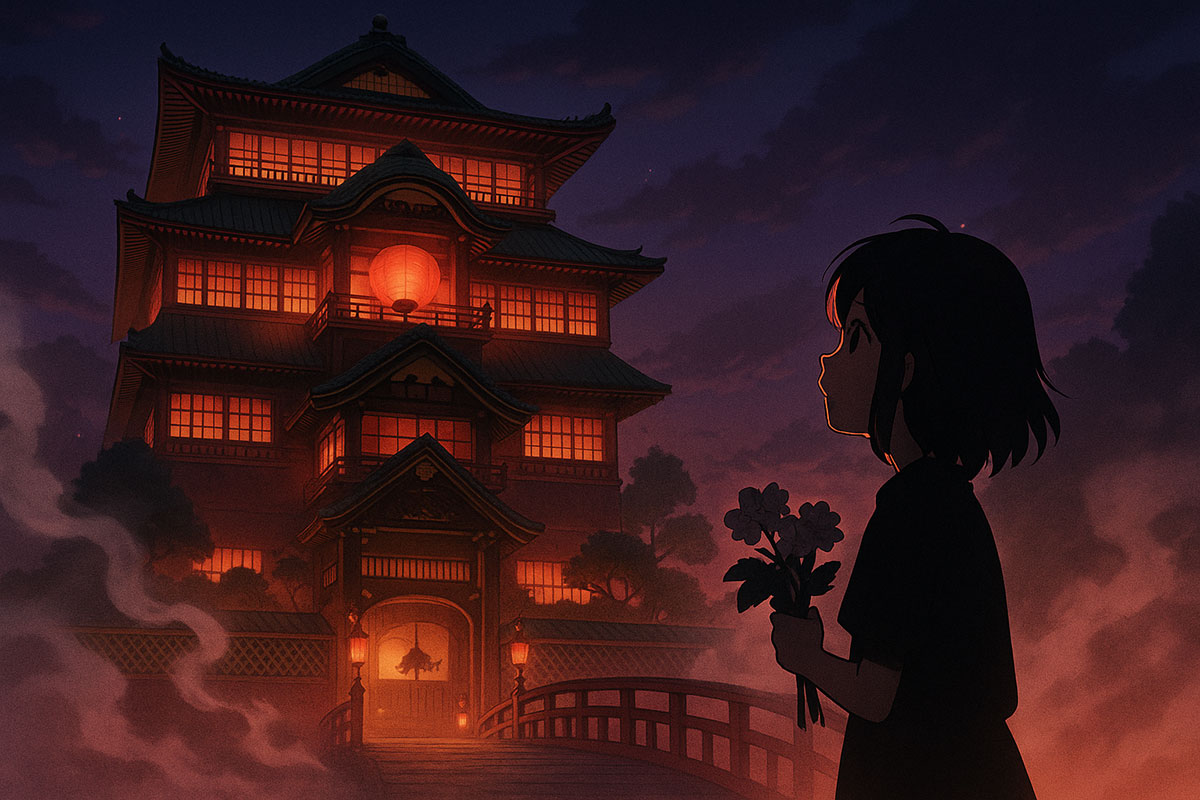
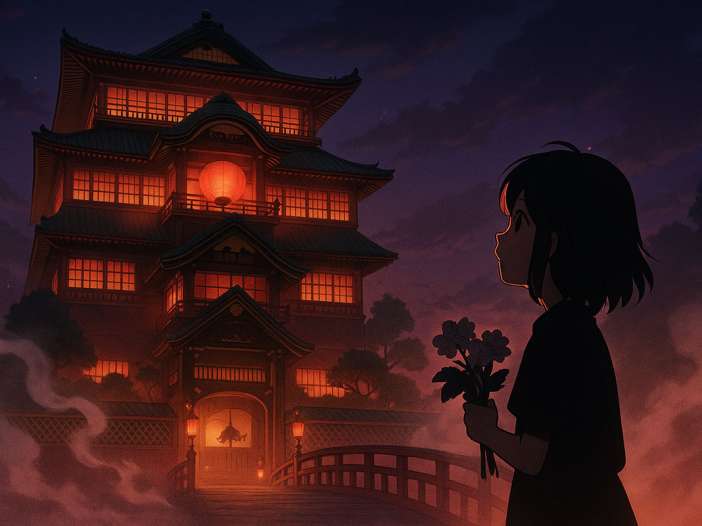
Introduction by Diana Wynne Jones
If you’ve ever wandered into the wrong alley and found yourself staring at a door that wasn’t there yesterday, you’ll know how it starts. Ordinary life gives a small cough, looks away, and in slips the extraordinary. That is precisely what happened to Chihiro once, and having survived it (barely), she might have expected the world to leave her alone. But that’s the trouble with worlds—they dislike loose ends.
What you’ll see in these chapters is not a sequel so much as a continuation. The spirit world does not tie its shoelaces neatly and call it done; it spills, barges, and insists on new bargains. Chihiro, who learned the hard way that names are not baubles but bones, steps again into places that want what she is, not what she has. And what she learns is less about defeating monsters and more about telling them she’s already paid her bill.
It is an adventure, yes, full of markets that hum, cities that lie, rivers that remember, and seasons that put on a court as if they were hosting a tea party with impossible weather. But more than that, it is about what it costs to keep hold of yourself when everything else offers to improve you. And if you’ve ever thought you weren’t enough, Chihiro will show you the trick of saying you are.
(Note: This is an imaginary conversation, a creative exploration of an idea, and not a real speech or event)
Chapter 1: The World of Spirits
The car wound through the forest roads like a snake that had lost its way. In the back seat, Chihiro sulked, clutching a bouquet of flowers already wilting. She didn’t want to move. She didn’t want a new school or a new town. She wanted the life she had known. But the road had other ideas.
Her father, brimming with overconfidence, took a turn that led them into the trees. Soon they stopped at the mouth of a long, dark tunnel that breathed cold air. Against her protests, her parents insisted on exploring. They stepped into the darkness, laughing at their own daring, while Chihiro followed reluctantly, the shadows curling close around her.
At the other end stretched a deserted town of empty stalls and silent streets. The air shimmered faintly, smelling of food that no one seemed to be cooking. Her parents found a feast spread out on tables—steaming bowls, glistening meats, plates piled high—and without hesitation began to eat. Chihiro tugged at them, frightened. But her words were brushed aside. As dusk fell and lanterns flickered to life, she saw them change—faces lengthening, bodies swelling—until pigs rooted where her parents had been.
She ran.
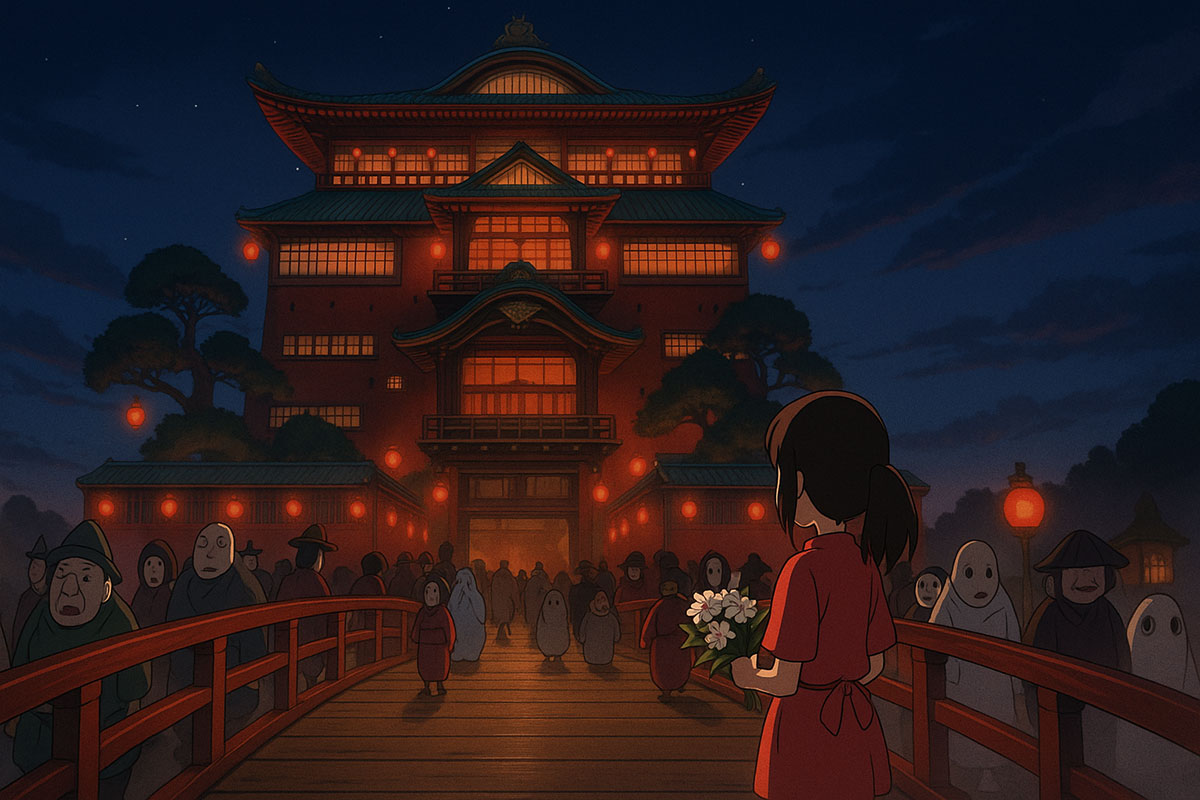
The town awoke around her. Spirits poured in with the night, shadows wearing masks, frogs in waistcoats, lanterns with eyes. The air filled with laughter that was not laughter at all. Terrified, she stumbled onto a long red bridge leading to a colossal bathhouse glowing like a lantern against the twilight. A boy with sharp, river-like eyes found her there. “You shouldn’t be here,” he warned. “Hide your breath. If they notice you, you’ll vanish.”
His name was Haku, and though he was strange and sharp, he was also kind. He guided her into the bathhouse, where the furnace keeper Kamaji and his soot-sprite helpers toiled endlessly. To survive, Chihiro needed work. To work, she needed a contract. And to get one, she had to face Yubaba—the witch who ruled the bathhouse with a jeweled fist and a cackle.
Yubaba took her name. On the contract, she scrawled it in glowing ink, and Yubaba stole most of it, leaving her with only “Sen.” Names were power here; with hers gone, Chihiro felt smaller, weaker. But she clung to the memory of who she had been.
Life in the bathhouse was hard. Workers mocked her, spirits demanded service, and every corridor seemed to breathe. Yet Sen endured. She carried water, scrubbed floors, and faced terrors that dwarfed her. When No-Face, a shadowy figure with a blank mask, began to follow her, she showed him kindness. But when he offered gold to the greedy workers, their hunger fed his, and he swelled into a ravenous monster, devouring all in his path. Sen did not take his gold. Instead, she offered him medicine and gentleness, guiding him to spit out what he had consumed. He shrank, fragile once more.
Other trials came. A filthy, stinking spirit clogged the baths, resisted every attempt to cleanse it. Sen pushed through the muck, discovering a bicycle jammed in its body. With the help of others, she pulled and pulled until the pollution poured out—and a magnificent river spirit rose, clean and radiant. He gave her a gift: a bitter medicine pellet that would later save her.
Haku himself was caught in danger. He was a dragon as well as a boy, bound to Yubaba by a spell, his body torn by wounds from stealing her sister Zeniba’s seal. Sen nursed him, clutching his dragon head as he writhed in pain, forcing him to swallow the medicine. In that moment she remembered: he was the spirit of the Kohaku River, the river that once flowed near her home but had been buried under apartments. His true name returned to him.
At last, Sen faced Yubaba’s final test. In a vast pen of squealing pigs, she was told to identify her parents. She looked carefully, steady and brave, and declared: “None of these are my parents.” Yubaba was furious—but the spell broke. The pigs were not her parents, and so they were freed.
Haku, now whole, guided her back to the bridge. “Don’t look back,” he told her. She clutched the flowers that had survived the journey, her steps trembling but firm. Across the bridge, past the town, through the tunnel—she emerged again into the world she had known. Her parents were there, unchanged, brushing off the dust, asking why she looked so pale.
They did not remember. But she did.
Chihiro walked to the car with her flowers in hand. She was still a child, still moving to a new town, still uncertain about the world ahead. Yet something had shifted. She had crossed a world of spirits, faced greed and forgetting, carried her name through danger, and returned. She was no longer only afraid.
The car rolled forward, the road opening ahead. The wind caught her hair, and she looked out at the trees—not with dread this time, but with wonder.
Chapter 2: The Forgotten Market
The first weeks in the new town passed with an uneasy quiet. Chihiro walked to her new school every morning, clutching her notebook of names. She hadn’t written much—just small reminders, tiny anchors: flowers, tunnel, bathhouse, Haku. She whispered them sometimes, to make sure the words still belonged to her.
Her parents, of course, remembered nothing. They spoke cheerfully of work, of shopping, of arranging the house. If she mentioned the tunnel or the pigs, they only laughed nervously. To them, it had been dust, hunger, and a long road. To her, it was still everything.
One late afternoon, as the sun slipped sideways into twilight, Chihiro wandered near the edge of the forest behind her house. The air shifted oddly, humming like the wires on telephone poles. A gate appeared between two leaning trees—an arch of wood strung with faded lanterns that swayed though there was no wind.
Her heart gave a nervous leap. Spirit places had a habit of appearing just when you weren’t ready for them. She told herself to turn back. She told herself she wasn’t curious. Then she stepped through anyway.
On the other side was a market.
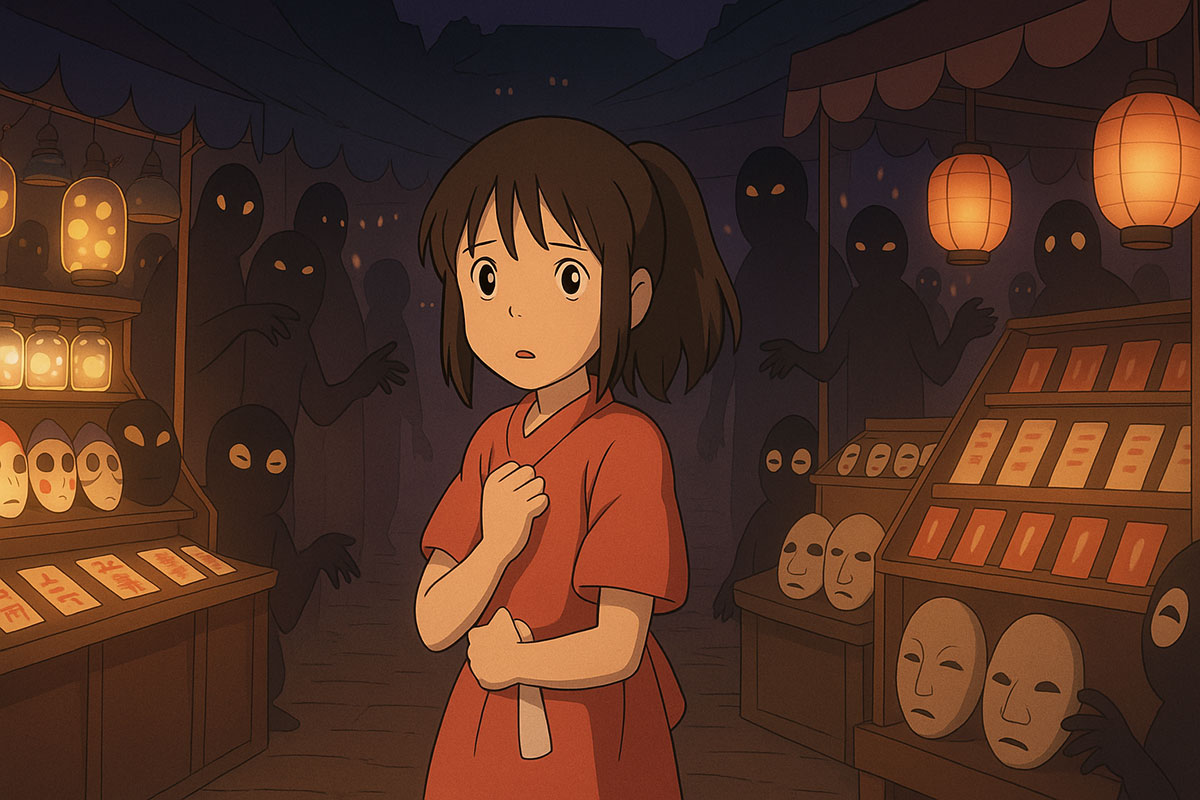
It sprawled in every direction, a labyrinth of stalls stacked high under paper canopies. Spirits jostled shoulder to shoulder, their bodies shimmering, shifting: foxes in robes, faceless figures dripping ink, a head on six tiny legs scuttling along with a basket of peaches. The air swelled with smells both wonderful and horrible—incense, sweet buns, sour smoke, and something like rust.
“Names! Best names, never used twice!” shouted a squat creature with teeth too large for its mouth. It waved slips of paper on a string. “Trade yours in for a fresher one—first bargain half-price!”
“Memories, sorted by quality!” called another, waving glass jars filled with glowing fog. “Childhood laughter? Golden! Regrets? Two for a coin!”
Chihiro pressed her hand against her chest where her name felt safest. She knew better than to bargain here.
The stalls grew stranger as she passed. One displayed faces pinned up like masks, smiling faintly. Another offered dreams sealed in paper envelopes that twitched and sighed. A third sold silences—bottled in dark jars that rattled ominously. Everywhere, the spirits bargained, trading what they were for what they wanted to be.
At one table, a pale spirit leaned over a bowl of shimmering dust. The vendor whispered, “A memory of your river, perhaps? Cheap tonight.” Chihiro stepped back quickly. She wouldn’t give them Haku, not even for a moment.
Further on, the market opened into a square. There, an auction roared. Spirits shouted bids—“One mother’s smile!” “Three years of youth!” “A first kiss, untouched!”—and tossed slips of parchment into the air. The auctioneer slammed his gavel, and the memories fluttered like frightened birds into the hands of the winners.
Chihiro’s stomach knotted. She saw how easily they gave themselves away, how happily. This place wasn’t only strange; it was dangerous.
Then she noticed a shadow following her.
It was tall, thin, its mask blank. For a moment her heart jolted with the memory of No-Face, but this was different. No hunger, no clumsy desire—only emptiness. It bent toward her.
“What will you sell, little one?” it asked. Its voice was a hiss of paper tearing. “A name? A secret? A hope?”
“I won’t sell anything,” Chihiro said, her voice small but steady.
The shadow’s blank mask tilted. “Everyone sells something.”
She shook her head. “Not me.”
It laughed without sound and slipped into the crowd, leaving a shiver in its wake.
Breathless, she hurried down a side alley. The stalls here were quieter, stranger. A stone bowl filled with shadows. A clock with no hands, still ticking. A feather dripping black ink. She walked faster, afraid her eyes would betray her into wanting.
At the alley’s end sat a crooked old woman before a table bare but for one slip of paper. It glowed faintly.
“What is it?” Chihiro asked before she could stop herself.
The woman’s eyes glittered. “It’s what you’ve already lost.”
Chihiro’s throat tightened. She wanted desperately to reach for it. But she remembered her flowers, her notebook, her mother’s voice calling her name in the tunnel. She bowed instead. “Thank you. But I’ll keep what I still have.”
The old woman chuckled. “Wise child. Few leave this place with their names intact. Go, then. And remember to remember.”
Chihiro turned and hurried back. The stalls blurred, the voices rose, and the air thickened with scents and cries. Just as she felt herself fading, she saw the lantern gate. She plunged through, clutching her breath as though it were a lifeline.
The market vanished. The forest edge returned.
That night, Chihiro lay in bed with the notebook on her chest, staring at the faintly glowing slip of paper tucked inside. Her name, half-formed, shimmered there as if it were being written by an invisible hand. She whispered it aloud, again and again, until sleep carried her away.
The next day, she told herself it had been a dream. She told herself the market had been no more real than smoke. But her feet led her back to the forest at twilight, and the air hummed in the same way, and the lantern gate appeared again.
This time she entered with her heart steadier, though no less afraid.
The market was busier, noisier, more insistent. A spirit with a dozen arms grabbed at her sleeve, shouting, “Sell me your shyness! I’ll give you boldness, cheap!” Another waved a pot of glowing ink, offering, “Write yourself new parents—better ones, richer ones, ones who never embarrass you!”
Chihiro yanked her arm free, repeating her name silently, her only shield.
She noticed a tall pavilion at the center of the square, draped in banners stitched with fragments of words. The air around it prickled, heavy with voices. Inside, rows of spirit-scribes sat at desks, feverishly writing. Their ink-stained hands shook as they filled endless ledgers with names, then tore the pages free and stacked them high.
A name caught her eye. It shimmered faintly on the page, familiar. Kohaku.
Her breath caught. She darted forward, but before she could reach the stack, a scribe slammed its hand down. “Not yours,” it hissed.
“It is!” she cried. “It’s his!”
But the scribe only shook its head. “Names belong to the market now.”
The page vanished into a slot behind the desk, swallowed by the pavilion.
Her chest burned with anger. She scrambled around the pavilion, finding a stair that twisted downward. At the bottom was a hall of shelves, stacked with jars. Hundreds, thousands—each glowing faintly, each labeled with a name. Some blazed bright, others flickered like dying stars.
At the far end stood the blank-masked shadow, guarding a chest bound in chains.
“You won’t find what you seek,” it hissed. “Names that matter most are locked away.”
“Then I’ll take it back,” Chihiro said, though her knees shook.
The shadow tilted its mask. “And what will you give? The market demands exchange.”
She had nothing but her notebook. Her fragile shield, her written memories.
She held it up. “I’ll give you everything I’ve written—if I can have his name.”
The shadow’s mask cracked as if amused. It opened the chest. Names blazed like fireflies. She saw it—Kohaku. She seized it, trembling.
The notebook vanished from her hands.
The chest slammed shut.
Chihiro stumbled back into the square, clutching Kohaku’s name against her chest. The market roared louder than ever, but she had no ears for it. She whispered his name over and over, holding it tight.
When she emerged through the lantern gate, she collapsed on the grass. The market dissolved behind her like mist. She had lost her notebook, but she had saved something greater.
And she knew now: the spirit world was not done with her.
Chapter 3: The City of Shadows
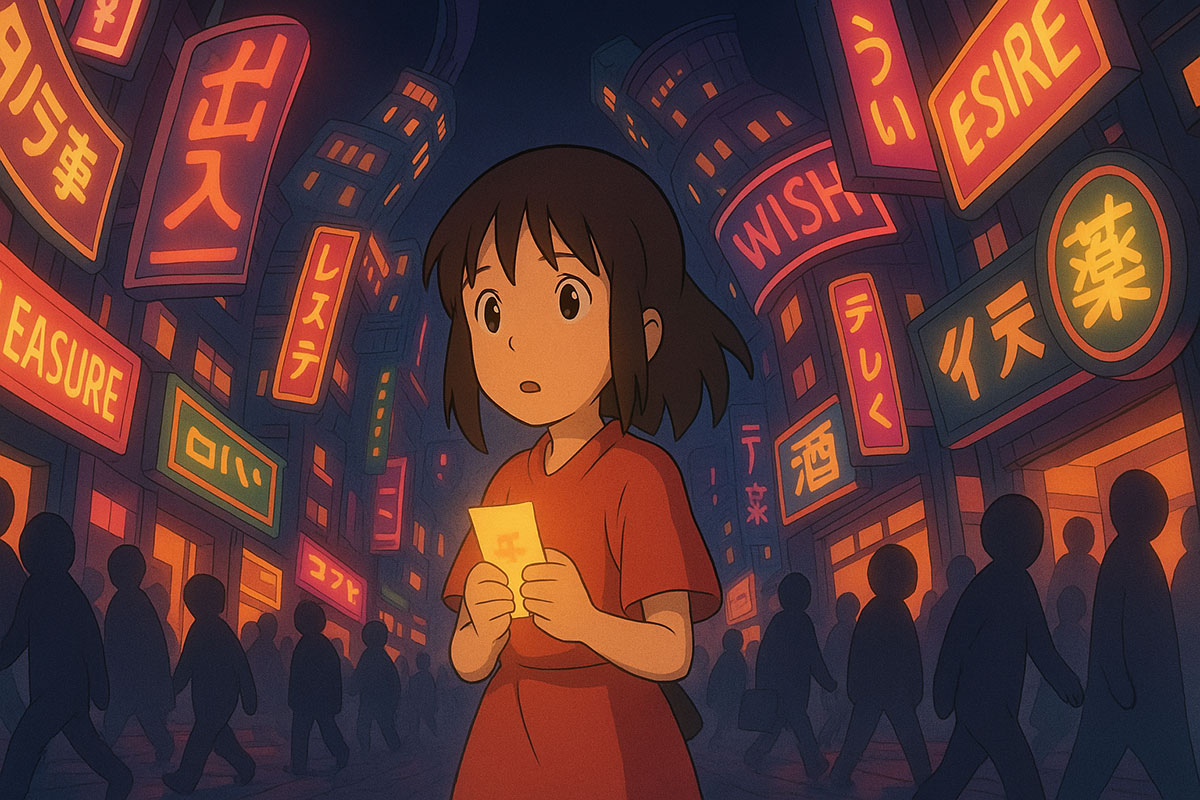
The next doorway didn’t look like a doorway at all. It looked like a bus stop sign that had given up on being useful: a bent pole, a cracked circle of enamel with the word CITY scabbed across it, and beneath that, someone had scratched a smaller word in a hurry: LATER. The air around it ticked faintly, like a watch with an opinion.
Chihiro was not planning to go anywhere. She’d only come to the road to think, hands pressed to the slip of paper that carried Kohaku’s name. Her pockets felt emptier without the notebook, and she kept reaching for it the way you reach for a tooth that’s no longer there. The forest hummed with late light. She told the road she was going home.
The bus arrived anyway.
It swam into view out of the air, which is a rude way for a bus to behave. It was painted the color of dusk, with windows that showed entirely the wrong things—night skies when it was afternoon, stars swirling even though the sun was still sulking around the treetops. The doors hissed open with the put-upon sigh of furniture dragged across a floor.
“This is a bad idea,” Chihiro told herself, and stepped aboard.
Inside: shadows. Not dark—shadows. The shape of people, without the inconvenience of faces. Some rustled like paper; some clinked like coins; one smelled strongly of rain on hot pavement. Where a driver ought to be there was only a hanging cord with a little bell, which chimed by itself. The bus moved with a lurch, and Chihiro, who was becoming an expert at keeping her balance when worlds changed their minds, clung to a pole that felt remarkably like a tree pretending not to be one.
The ride was either very long or a sneeze. When the doors sighed again, she stepped into a city that glittered like a promise and grinned like a trap.
Neon stitched the air. Towers leaned together conspiratorially, glass-haired and smug. Streets looped and unlooped themselves, laughing at maps. Spirits, all angles and shimmer, hurried past in clothes that were somehow entirely too much and not nearly enough. Everything smelled of sweet smoke and newness: the heavy, dizzying breath of things that want to be wanted.
A sign swung overhead—WANTS BOUGHT & SOLD—and a hawker shoved a scroll under her nose. “Starter set of ambitions! Two for one! Comes with compliments from strangers!”
“No, thank you,” Chihiro said, and the hawker recoiled, as if politeness were contagious.
“Upgrades!” sang a chorus from a doorway. “Faster, brighter, smoother! We can sand off your worries!” When she didn’t duck inside, the doorway muttered, “Suit yourself,” and became a wall for someone more promising.
She walked quickly, clutching her pocket where the name burned warm as a candle flame. The city noticed. Lights angled toward her. A billboard purred her name—her real one, which was rude—then corrected itself into a cute nickname, then into a slogan that promised she would never be lonely again. The letters dripped honey and need.
At an intersection paved with mirrors, a theatre spilled a crowd into the street. Its posters showed a girl suspiciously like her, triumphant, lauded, not a hair out of place even in a storm. “Special showing!” cried the usher, whose smile was all teeth and no mouth. “You, but improved!”
Chihiro’s feet tried to turn of their own accord. She held Kohaku’s name tighter until it pricked her palm, and the pain was an anchor. “No,” she told her feet. They sulked in her shoes but obeyed.
Temptations arrived in layers. A café offered admiration by the cup. A shop sold friends who would always agree. A vendor pushed a cart labeled EXPLANATIONS—Return Policy Generous—and whispered, “For a small fee, I can tell you why everything happened to you and whose fault it all is.” She nearly laughed; then didn’t. The cart’s wheels squeaked like guilt.
In the middle of a square, a fountain threw coins into the air—not water, coins, a sleet of metal and light. Shadows shoved one another to stand under it, mouths open, swallowing shine. Their eyes were hollow and very busy. A sign beside the fountain read ENOUGH and someone had scribbled NEVER across it.
She turned away. When she looked back, the sign had eaten the scribble and was back to ENOUGH, stubborn and plain.
A boy fell into step beside her. For a heartbeat she thought Haku, then saw at once that she was wrong. The eyes were winter-sharp without any river underneath.
“You’re new,” he said conversationally, which is what wolves say to lambs inside storybooks that have opinions about your chances. “What do you want?”
“Home,” Chihiro said, deciding to be boring on purpose.
“Home is a want,” he said cheerfully. “We trade those.” He gestured at the city as if he owned it. “Here, everything is desire with doors. You can walk into any of them.”
“I’ve walked into enough doors,” she said.
“You’re holding on to something,” the boy observed. “A keepsake? A name? Names sell well on Wednesdays.”
“It isn’t Wednesday,” Chihiro said, because the sky said it wasn’t.
“In here,” he replied, “it is whatever the market needs.” His shadow, which had been behaving, stopped. It stretched. It decided to be more than one shadow. Hands blossomed out of it, a dozen, two dozen, each holding exactly what she feared to want: her mother’s laugh on a day without worry; her father choosing correctly every time; friends who never looked past her; a river running under an apartment building as if the concrete were never there; a life without being small and uncertain and wrong-footed.
She wanted all of it so fiercely she felt sick.
The paper in her fist burned. She looked down. Kohaku flickered there, stubborn as memory under rain. She breathed in, and the breath shook, and she said—perhaps to the boy, perhaps to herself, perhaps to the city which was a listening thing—“I can’t want everything and be anyone at all.”
The hands flickered. The boy’s smile slipped. “You’re no fun,” he said lightly, but there was an edge on it. “You won’t last here. Desire is how we move.”
“I can move without buying new legs,” Chihiro said, which was not one of her better retorts but would do. The city seemed to lean down to hear it anyway.
The boy peeled away, sucked into a brighter street where the signs shouted louder. Chihiro walked on, turning corners quickly, as if she could outpace her own wanting. The city had corridors that looped back on themselves like worry. After the third loop, she stopped running and tried something else: she looked for the ordinary.
It’s harder than you’d think in a place determined to dazzle you. But there—a laundrette, steaming and uncomplicated, with shirts arguing quietly on a line. And there—a bench with a wobble, a trash bin without enchantment. And there—an old woman with a cane, buying a pear that was simply a pear.
Chihiro sat on the bench. The wobble was comforting, like a heartbeat that couldn’t be bothered to be perfect. The old woman glanced at her and then at her clenched fist. “Careful,” the woman said. “Things you hold too hard decide to wriggle.”
“I can’t let it go,” Chihiro said.
“Did I say let go?” the woman asked, affronted. She bit the pear with ferocity. “Hold properly. That’s different.”
“How do you—” Chihiro began, and realized the woman had become a lamppost with a nice pear in its bracket. City habits.
She tried holding the name differently then—less like a drowning person clutching a rope, more like a bird she meant to keep but not crush. The paper warmed at once, then cooled to a steady glow, as if relieved to be trusted.
The lights above the square hiccuped. Somewhere, a mechanical orchestra missed a beat and pretended not to. Chihiro stood. “I have enough,” she said softly, testing the words.
They were heavier than she expected. They fell into the street and made a sound you could almost hear. The fountain of coins behind her sputtered, then coughed up a single, very ordinary copper. A shadow caught it, looked offended, and drifted away.
She said it again, firmer. “I have enough.”
Signs flickered. A billboard stuttered into a picture of a blank wall and then, embarrassed, back into fireworks. The theatre doors snicked shut. The café chalked over its menu and, for a very brief moment, offered tea.
A bell rang.
Chihiro turned. The bus had arrived, sulky as ever, doors open like a yawn. The city exhaled—hot, sweet, impatient—as if disappointed to lose a promising customer.
On the bus, the shadow-passengers rustled. One, made of advertisements stitched together, leaned toward her. “You’ll be back,” it whispered, and somehow managed to sound fond and threatening at once.
“Maybe,” Chihiro said, because promising otherwise felt like tempting a trickster. “But not to buy legs.”
The bus rang its own bell as if amused. The windows showed the wrong sky again—her favorite wrong: starry when it shouldn’t be. As they slid away from the city, the neon receded to embers, then to a thin collar of light around the dark. For a blink she saw the boy with the winter eyes watching from a rooftop, all shadow and sharpness. He lifted a hand, not quite a wave.
Back on the road, the bus sighed her out into evening. The sign on the pole had changed; CITY was scratched over with ENOUGH, which seemed cheeky and also correct.
Chihiro stood a while in the ordinary dusk and let her heart catch up with her. The paper with Kohaku’s name sat quiet in her palm, agreeing to be carried.
She walked home by the long way, past the ditch that had once been a stream and the lot that had once been a shrine (she could smell ghosts of incense if she breathed very politely). At her gate she paused, listening to the new house creak and the garden fail at being tidy.
Inside, dinner was clattering and her parents were discussing curtains as if curtains were a topic for scholars. Chihiro put the slip of paper in a small tin where she kept very important, extremely unimpressive treasures, and she wrote ENOUGH on the tin with a felt pen, because she didn’t have a notebook anymore but she did have pens and opinions.
In the middle of the night, she woke to a faint sound like rain talking to itself. She went to the window and found no rain, only moonlight. Still, she heard water. Not from outside, but from the slip of paper in the tin, humming the way rivers hum when they’re dreaming of their names.
“Soon,” she whispered to it. “I’ll bring you home.”
The tin hummed back, which is not a thing tins do unless you make them want to.
And somewhere far off, in a place that was not a place, the City of Shadows rearranged its lights and sulked, and began to plan a better offer.
hapter 4: The River’s Domain
The tin began to complain at breakfast.
It rattled on the shelf like a very small, offended washing machine. Chihiro’s mother said, “Earthquake?” and her father said, “Loose screw,” which is what fathers say about everything until it proves to be a dragon. Chihiro excused herself and took the tin to the garden, where the weeds were winning and the wind was, too.
“What is it?” she whispered.
The tin hummed in a way that was unmistakably impatient. It gave a single plink, and the lid popped open. Inside, the slip of paper with Kohaku on it had beaded with dew, though the morning was bone-dry. A drop slid to the edge and fell—not down, but sideways, into the air, where it hung like a thought that refused to hit the ground.
“Oh,” Chihiro said. “We’re going that way.”
The drop tugged her gently, the way a sleeve tugs when it wants to be followed. She packed a ridiculous bag—biscuits, a scarf that believed in drafts, the lucky button that wasn’t lucky at all, and the tin—and let herself be led. Past the gate, down the lane, through the tidy bit of park that didn’t fool anyone, into the trees that didn’t care to be tidy. The drop gathered friends along the way, trickles and threads, and by the time they reached the old culvert, a thin stream was marching purposefully along the air at shoulder height.
The culvert was a mouth of moss and brick with opinions about trespassers. The stream went straight in. Chihiro did what you do with spirit tunnels: she told her breath to be sensible, tucked her name behind her teeth, and stepped after.
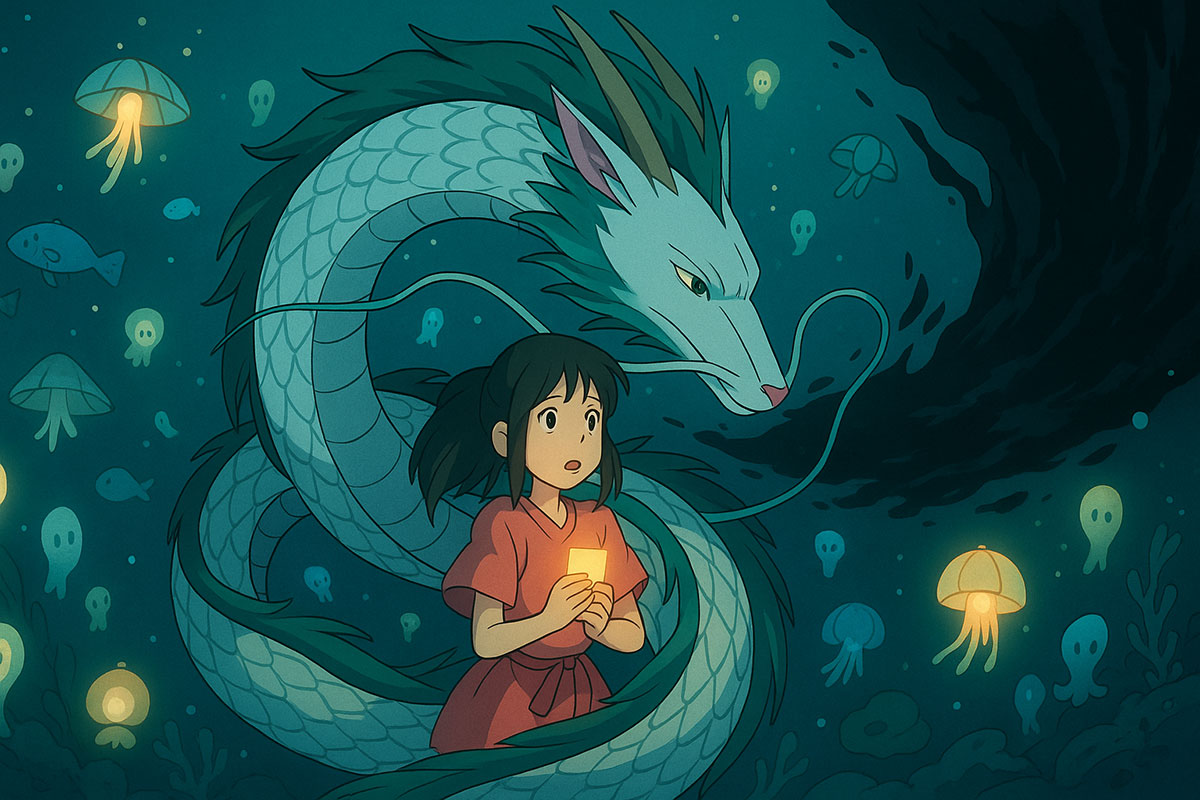
Inside was not inside. It was under. The world turned to water with the casual rudeness of a trick floor. One blink and she was no longer walking but drifting down a green corridor that had forgotten how to end. She flailed and then remembered—water will hold you if you don’t argue with it—and let herself be carried.
She did not drown. The River’s Domain doesn’t stand on ceremony with air; it has its own ideas. She breathed water the way you breathe a particularly damp fog: not pleasant, but possible. Around her, the traffic of the deep went about its day. Shoals of bottlecaps darted like fish. A school of umbrellas opened and closed themselves in a stately dance. A lantern jelly pulsed past, lighting the silt in moody blues. Far below, a long, paler shape coiled and uncoiled like a thought remembering itself.
“Hello?” Chihiro called, which sounded like bubbles arguing.
A boy-dragon drifted up from the stones and stopped in front of her, uncertain in the way of things that have misplaced themselves. He was white-scaled and river-quick, except where he wasn’t: his edges flickered, his eyes were fogged as a winter morning. For a thudding heartbeat she thought Haku, and joy pinched her ribs. Then the eyes told the truth: this spirit had never been hers, only someone’s, once.
“I… am,” he said slowly, like a person sounding out a language. “I was stream. I was south. I was under cedar and behind mill.” His voice trailed into silt.
“South Stream,” Chihiro repeated softly. “Do you have a name now?”
He shivered, not with cold but with thinning. “They forgot. I am thin.”
She understood too well. “I brought a name for a river,” she said, showing the tin. “But not yours. A friend’s.” The slip with Kohaku glowed in its paper skin, hopeful as a chick pecking inside an egg.
The South Stream watched it with hunger that wasn’t greed. “Names are medicine,” he whispered. “But medicine must be taken in the right place.”
“And where is that?” Chihiro asked.
He turned, his body unspooling to point into the dark. “The Weir. The place where all waters decide. The Court keeps it. They will not be pleased.”
“Courts rarely are,” Chihiro said, because she had learned things. “Can you take me?”
He flickered again. “I can remember the way if you say me.”
“Say you… what?”
“Say me a name,” he murmured. “If none remember, I will go out like breath on glass.”
Chihiro looked at him hard. He was stream-shape and boy-shape and nearly-nothing shape. She thought of words the world throws away: brook, rill, runnel. She thought of how his voice had said cedar, mill, and how he had the patience of a path that chooses the low places.
“You’re Midori-kawa,” she said. “Green because of the cedars, river because of yourself.”
The water trembled. The spirit flared along his length like a match finding itself. His eyes cleared. “Yes,” he said, surprised and pleased. “I am Midori-kawa.” The name settled on him like armor he’d been wearing all along but had forgotten to feel.
He swirled around her, delighted, and the current caught them both. They sped through groves of drowned pillars, under archways built of roots, past lazy catfish that had evolved the faces of retired shopkeepers. On a ridge of shale, a committee of washing machines debated the ethics of spin; a rain spirit, thin as glass, chimed mournfully as they passed. Chihiro waved because it felt polite. The rain spirit tinkled back, which is what rain does when it’s trying not to weep.
“Mind your pockets,” Midori-kawa said lightly as they entered a canyon of reeds taller than towers. “The reed folk are thieves.”
“That’s all right,” said a reed, offended, and went through Chihiro’s pockets with scandalous efficiency anyway. It stole three lint, a crumb of biscuit, and returned the lucky button because it had standards.
Beyond the reeds, a glow grew—not warm, but inevitable. The Weir. It was not a gate so much as a decision the river had chosen to turn into architecture: a vast spill of water held in the moment before falling, silver and thick, humming with all the names ever spoken over it. In its face were cut four niches, and in those niches sat four keepers dressed like bureaucratic otters who had traded their whiskers for pens.
“Petitioners,” said the eldest, peering at Chihiro as if she were a badly filled form.
“Hello,” Chihiro said, because you should always be civil to anything that looks like it files paperwork for a living. “I have a name that belongs home.” She held up the tin.
“Kohaku,” the elder read without moving its mouth (otters are talented). “Misplaced. Paved over. Ownership: contested.”
“Contested by whom?” Chihiro asked.
The otter glanced at a ripple where nothing was. “Forgetting,” it said. “He claims everything that isn’t claimed.”
A low cold slid through the water, and the Weir dimmed as if a cloud had passed across it from the inside. Chihiro recognized the feel of that cold. She’d felt it in the City’s hollow laughter and the Market’s bright bargains.
“I’d like to return it,” she said. “Before he… files it.”
“Procedure,” declared a younger otter, eager to demonstrate knowing a word. “Rite. Witness. Source-stone.”
“What’s a source-stone?” Chihiro asked.
Midori-kawa nudged her gently toward a slope of pebbles that had arranged themselves into a very earnest staircase. “Every river keeps a piece of its first heart,” he murmured. “A stone that remembers the direction home. If you place the name there, the river will take it back.”
“And if I can’t find it?”
Midori-kawa looked past her, where the water had begun to blacken at the edges like paper meeting flame. “Then forgetting will.”
“Right,” Chihiro said briskly, because briskness is a rope you can throw yourself. “Let’s fetch a heart.”
They went down into a valley where the river kept its old things. It had shelves, because even water likes to pretend to be tidy: jars filled with storm smells; sand in envelopes labeled with summers; a shoal of laughter caught under a net; a butter-yellow bucket with a child’s name scratched along the lip—that made her throat tight for reasons she didn’t examine. The shelves tilted gradually until they were caves, and the caves narrowed until Chihiro had to turn sideways, and then there it was: not spectacular, not shining, just a stone the exact size and shape of the word beginning.
She held it and felt the direction of the world tilt toward a place under an apartment block where once frogs had sung. The stone did not glow. It simply remembered. That was better.
They hurried up. The Weir roared louder, and the air-water tasted of iron. A shadow fanned across the face of the fall, not a shape so much as the refusal to be one.
“Forgetting,” Midori-kawa breathed, coil tightening. “He is early.”
The otter-keepers straightened, pens like spears. “Proceed,” the elder snapped.
Chihiro set the source-stone in a shallow bowl at the Weir’s lip. She took Kohaku’s name from the tin. It was warm, as if it had walked beside her the whole way. The black in the water flexed, and whispers skittered: No river here. Never was. You imagined it. You were small. You misremembered. You made it up to feel important.
She had heard these voices before, wearing people’s mouths.
Chihiro did not argue. She had learned from cities and markets that arguing with a thing that wants your attention is how you feed it. She did the impolite thing: she ignored the dark and spoke to the stone.
“Home,” she told it simply, and placed Kohaku atop.
For a heartbeat nothing. Then the Weir bowed. Water folded itself backward, remembering the path under concrete, around footings, between foundations, down and down to the bed it had been forced to forget. The name sank like a seed, and the stone made a sound so small only rivers hear it.
The blackness snapped. It lunged with a thousand un-mouths. The otters flung signatures at it, which is a surprisingly effective spell. Midori-kawa wrapped himself around Chihiro as if she were the fragile thing, which she was, and the wave struck.
It went through them the way loneliness goes through a room. It took what it could: half a memory of a New Year’s shrine visit; the exact taste of persimmons one autumn; the feeling of the lucky button being unlucky. Chihiro felt the snatches tear away and kept her hands steady on the bowl.
“Enough,” she said—not loud, but with weight. “Enough.”
The Weir answered. It became a clear, indifferent sheet, and the blackness ran off it like oil off a leaf. The elder otter scowled severely, which is how otters say well done if you’re lucky.
The water brightened. The cold left the way a bad thought leaves when you remember to laugh. Somewhere far above—or below; rivers don’t mind directions—the sound of frogs resumed, tentative and puzzled.
Chihiro sagged, not because she had failed, but because she hadn’t. Success is heavy when you’re small.
“Kohaku?” she whispered.
Nothing appeared in front of her, which would have been too easy. Instead, the water near her hand rippled in that tidy, familiar way it had when he used to turn and look at her as if she were an answer to a question he hadn’t known he was asking.
A voice—not a sound, a being—moved through the water like light through leaves. Thank you, it said, without words, but exactly so.
She smiled and didn’t cry because the water would only make a spectacle of it. The otters made a great deal of stamping that probably meant ceremony, and Midori-kawa preened shamelessly, which made the reed folk roll their eyes and return to pilfering lint elsewhere.
“Take this,” the elder said, reluctantly generous, and handed her a token that looked like a bus ticket and a scale and a promise had been argued into agreement. On it was written a single word: Return.
“In case you forget the way out,” added the youngest, who was secretly kind beneath all that procedure.
Chihiro tucked the token into the tin. The tin vibrated, satisfied. The Weir shivered once, as if settling into a better memory, and the current turned companionable.
“Home?” Midori-kawa asked.
“For now,” Chihiro said. “There’s a Court I owe a thank-you to. And a shadow city that’s planning to be clever.”
Midori-kawa laughed like water over stone. “Then keep your breath and your name.”
“I will,” she said, and, because she had learned to hold things properly, she let the river carry her—up and up, through green light and jelly-lanterns and umbrella-fish, out through the culvert’s mossy mouth and into a world that pretended to be ordinary.
The garden was winning harder than ever, which somehow felt fine. She set the tin on her window ledge, and it hummed once, like a kettle that knows when to stop.
That night, rain came—not on the roof, but under it, in the walls, quietly, as if the house had decided to practice remembering. Chihiro listened to it breathing, and for a small, shining moment, the whole place smelled like river stones left in sun.
She slept with the token under her pillow and dreamed of a bus stop sign that had finally decided what to say.
RETURN.
Chapter 5: The Court of Seasons
The token decided the weather.
It jingled in the tin like a coin having second thoughts, and outside the window the sky rearranged itself briskly: one corner winter, one corner spring, a stripe of summer heat down the middle, and a neat border of autumn behaving like a cat in a sunpatch. Chihiro opened the tin. The token hopped out, politely ignored gravity, and floated to the door.
“All right,” she said, fetching her scarf that disapproved of drafts. “But no detours for snacks; last time we ended up in a market that sold my childhood.”
The token pretended not to hear and slipped through the keyhole, which is the sort of thing tokens do when they’ve read too many myths. When she stepped outside, the ordinary street had given up and become a long colonnade of trees in every stage of their opinions: buds, bloom, fruit, flame, bare. She walked, and the air clicked from chill to warm to sweet to crisp and back again. Somewhere a bird discussed an egg. Somewhere else, snow practiced landing without breaking.
At the end of the colonnade stood a hall with the look of something that had been four buildings once and then decided to be one piece by sheer stubbornness. Its doors were impossibly tall, carved with vines, icicles, wheat, and wind. When Chihiro raised her hand, they opened, relieved to be useful.
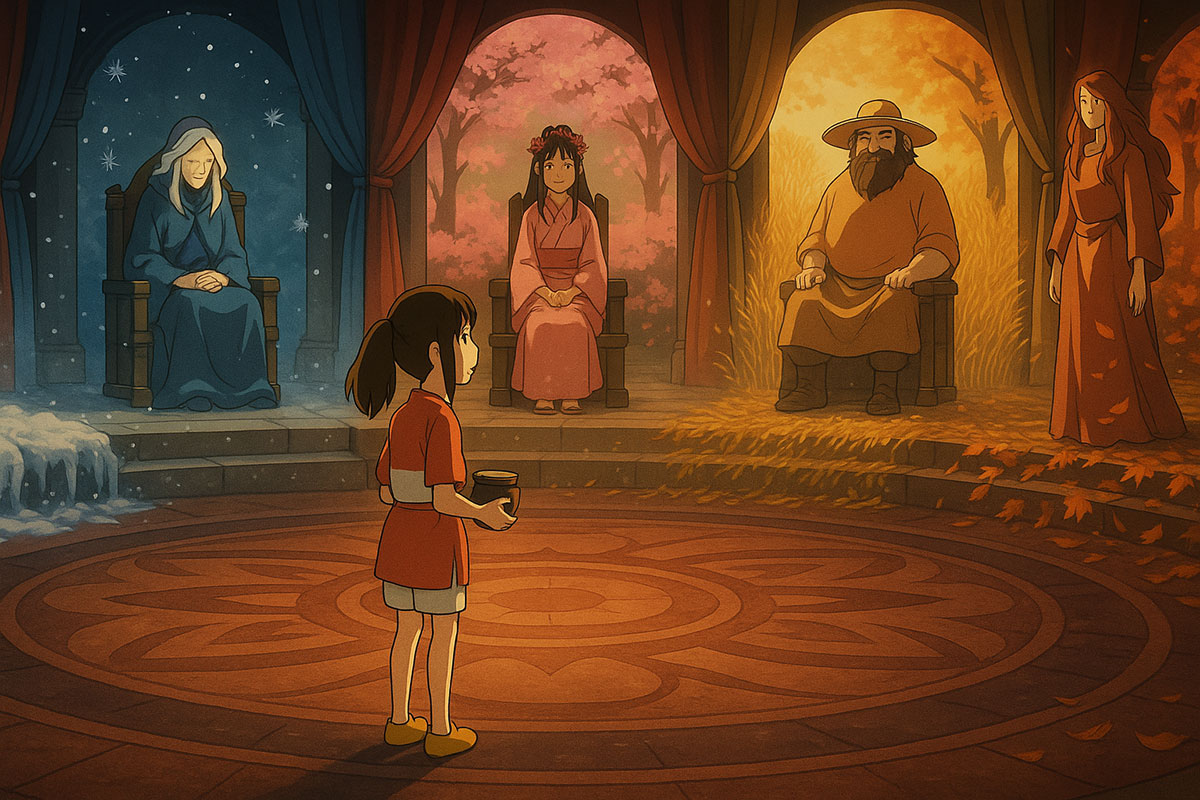
Inside waited the Court of Seasons.
They were not allegories. They were themselves and in a mood about it.
Winter sat to the left, tall and narrow as a glacier, furred and frosted, the kind of presence that makes you lower your voice and tuck your hands into your sleeves. Spring perched beside, a catastrophe of blossoms, ankles swinging, trailing pollen like confetti on an overexcited parade. Summer sprawled opposite, abundant and generous, as if she’d brought too much harvest and expected you to help. Autumn hovered near the edge, counting leaves, misplacing two, finding three, and looking pleased with the math.
“Petitioner,” Winter intoned, which frosted the top of Chihiro’s ears. “State your weather.”
“My… weather?” she said, startled.
“Your condition,” Summer translated kindly. “Your state of being. We dislike small talk.”
Chihiro took a breath. “I’ve returned a river’s name. I’m keeping another safe. The City of Shadows has me on a list. Forgetting follows where I walk. I would like to go home without leaving what matters behind.”
“Ambitious,” Autumn said, dropping a maple leaf and pretending it had slipped. “The world is sticky. Things cling.”
Spring leaned forward. “Do you have any snacks?”
“I brought biscuits,” Chihiro admitted, and Spring, delighted, accepted one, sneezed thrice from the crumbs, and declared the offering ceremonial.
Winter’s eyes, which were the sort that see through polite nonsense, rested on the tin. “You carry names properly,” he said. “Not too hard, not too soft.”
“I learned,” Chihiro said.
“Good,” said Winter. “Then you may be tested.”
The floor decided to become a circle, quartered neatly: frost, petals, sand, leaves. The token drifted to the center and became a small bell with ideas above its pay grade.
“Trial of Bearings,” Autumn announced, producing a broom he probably slept with. “Stand where you belong when we call you.”
That sounded easy in the way riddles sound easy to people who don’t mind embarrassment. Spring sang a note like a skylark dropping pennies, and the air filled with beginnings: damp soil that wants a seed, light that wants a window, plans that want to be made. The petaled quarter chimed like teacups.
Chihiro almost stepped there—beginnings were friendlier than most things—but stopped. She thought of how she’d wanted to be anyone else, anywhere else, and how wanting had nearly eaten her alive. She took a step into frost instead.
“Reasoning?” Winter asked, faintly amused.
“Beginnings can be greedy,” Chihiro said. “I’m steadier when I cool first.”
Winter’s mouth did not smile, but the room warmed an inch. Spring sniffled, impressed.
“Trial of Plenty,” Summer declared, and the sand quarter became beach and market and table at once: fruit piled like laughter, friends calling from umbrellas, the theatre of triumph purring she could be adored if she would only try less hard at being herself. The coins fountain of the City stuttered into a shower of cold, bright desire.
Chihiro stood very still. The tin hummed softly in her pocket, as if voting. “I have enough,” she said, and stepped into leaves. Autumn nodded, sweeping a path that didn’t exist and then did.
“Trial of Loss,” said Autumn, and the leaves blazed and let go. Visions blew in: her parents turned away at the tunnel mouth; Haku fading into river-light; her notebook empty of the things she had written; a house without the smell of river stones; a name cupped in hands that weren’t careful. Everything she feared to forget gathered, clung, unhanded her.
Chihiro did something very rude to visions: she did not chase them. She pressed the tin lightly and moved to sand.
“Reasoning?” Summer asked, fanning herself with a sunflower and a small moon.
“Loss writes itself into you,” Chihiro said. “Grief is grit. It hurts. But it’s how pearls happen.”
Spring clapped, knocking petals into everyone’s drinks. Winter allowed the corners of the air to thaw, which was the Court’s version of applause.
“Trial of Name,” Winter said last, and the four quarters went dark and then starry, then not-star but the feeling of being seen correctly. A whisper pushed at her—polite at first, then nagging, then insistent: You were never brave. That wasn’t you. You were carried. You only got lucky. Give it back, give it back, give it back.
Forgetting had found a microphone.
Chihiro did not argue. She had learned the shape of that trap. She took the tin out, opened it, and let the token bell ring once. The sound was small and extremely stubborn. “I am Chihiro,” she said—not loud, but anchored. “I keep my name in my mouth and in my hands. I share, but I do not trade.”
The whisper snarled, then tangled itself, the way weeds do when they can’t find a fence to climb. The stars went out, then came back more comfortable.
“Passed,” Winter pronounced.
“Pleased!” Spring squealed, sprinkling pollen disastrously.
“Peckish,” Summer added, finishing the biscuits.
“Predictable,” Autumn muttered, which, for him, was praise.
Chihiro sagged, full of the particular exhaustion that comes of winning where no one will give you a trophy because the prize is walking yourself out.
“Boons,” Winter said briskly, because even courts with weather enjoy paperwork done right. “One: a Season’s Thread.” A skein of something not-quite-string and not-quite-breeze spun into being. It gleamed frost-white, blossom-pink, wheat-gold, leaf-amber all at once. “Tie it to your door. It will lead you to balance when you forget how.”
“Two,” announced Summer, “Receipt of Enough.” She handed over a tatty paper that looked unimpressive and was therefore immensely powerful. In tidy letters: Enough has been paid. “Show it to anything that insists you must be more to be loved.”
“Three,” said Autumn, producing a set of keys that had never been near a lock and didn’t intend to start. “Spare Season. If you open the wrong door and get July when you need January, turn this, once.”
“Four,” Spring chimed, ducking under a cascade of their own hair. “A Return that returns properly.” The token in Chihiro’s palm brightened and now clearly wanted to be useful rather than ceremonial.
Chihiro tucked the gifts into the tin. It hummed with the satisfaction of a drawer that finally holds the right things.
“Thank you,” she said, and meant it.
“You are not finished,” Winter said, as kindly as a glacier. “You never are. But you may go home.”
The doors opened. Beyond them—heart-stoppingly—was only a hallway of light and the smell of the slightly leaky kitchen tap at two in the morning. Her knees went soft.
Something cold and sly slid under the threshold. The lights dimmed at the edges. The City of Shadows had sent a last offer.
It was not a person. It was options. The corridor budded doors as fast as mushrooms after rain: this one to a life with applause, that one to a life with no fear, another to a family who never argued, another to a river that had never been buried, another to a world where she had never been small. Each door whispered Now with the intimacy of a friend who borrows too much.
Chihiro set the tin down, opened it, and took out the Receipt of Enough. The paper was crumpled, unimpressive, slightly tea-stained. She held it up to the corridor like a cashier too tired to be argued with.
“Paid,” she said.
The doors shivered, tried to pose as windows, failed, and sulked back into wall. A last one lingered, smelling of lilies and applause. She looked at it, and it looked at her, and they both decided they were better as strangers.
The corridor became what corridors are: a place you go through to get somewhere honest.
She turned back once. The Court watched, an unseasonable weather system of approval.
“Remember to eat oranges in winter,” Summer called. “And to sleep in August.”
“Plant something foolish,” Spring added. “And let it surprise you.”
“Sharpen your shovel,” Autumn advised. “You’ll need it.”
“Keep your breath,” Winter said, which, from him, was an embrace.
Chihiro walked the light. It changed into the musty warmth of home between one step and the next. The tin clinked. The keys jingled. The thread lay across her palm like a promise you don’t have to rush.
She tied the Season’s Thread to the inside of her bedroom door, just above the handle where a person’s uncertainty tends to reach. It settled as if it had always been there, which is what good magic does when it’s in a kind house.
In the kitchen, her parents were arguing cheerfully about a lamp. The lamp insisted on being crooked. The argument insisted on being affectionate. Chihiro poured water and listened to its small river-noise. She set the tin on the sill. The token blinked RETURN once, modest as a well-behaved star.
That night, the house breathed the way houses do when they are deciding to belong to you. She fell asleep to the tick of pipes remembering rain. In her dream, the bus stop sign was perfectly content with its job, and the bus arrived on time for nobody but her.
In the morning, the world was ordinary in the most miraculous way: the kind of ordinary you have to work to deserve. Chihiro brushed her teeth, packed her bag, tucked the Receipt of Enough into the tin for days when she forgot, and stepped outside.
The air tried to be spring and autumn at once. She laughed. “You don’t have to impress me,” she told the sky. “I’ll be here either way.”
The sky, considerably reassured, decided to be bright and a little windy. Leaves chased her down the walk to see if she needed company. She didn’t, but she let them tag along.
At the gate, she touched the thread on her door, the tin in her pocket, the place in her chest where her name sits when it’s behaving.
“I am Chihiro,” she said, to the street, to the city, to the markets that might return, to the rivers that would, to the seasons that would not apologize for being themselves.
And she went on—small, determined, entirely herself—into a day that would be exactly enough.
Final Thoughts by Hayao Miyazaki
When I first told Chihiro’s story, I wanted to show that courage does not come from defeating great enemies, but from remembering who you are when the world tries to make you forget. She was small, frightened, and uncertain—but she carried her name through a place that devours names, and in that she grew strong.
Now, as we follow her into new places—the markets of forgetting, the cities of desire, the rivers that sleep under concrete, and the seasons that govern our lives—we see that the spirit world has not finished with her, just as the world has not finished with any of us. Each place asks the same question in a different disguise: Are you enough as you are?
The answer, of course, is never simple. We live in an age where voices surround us, asking us to want more, to trade ourselves away piece by piece. But Chihiro shows another path. She learns to walk steadily, to say “enough” even when the world insists otherwise, to return names not by force but by remembering their place.
Her story reminds us that magic is not in spells or lanterns, but in the courage to hold your heart carefully, without selling it or crushing it. And perhaps most of all, it reminds us that home is not a place you run from or return to—it is what you carry with you, if you do not lose yourself along the way.
If there is one message I would leave with you, it is this: protect your names, your rivers, your seasons. Protect what is ordinary, for in it lies the true wonder. And if you are ever asked to prove who you are, stand quietly, breathe, and say, I am enough.
Short Bios:
Leave a Reply