

|
Getting your Trinity Audio player ready...
|
Introduction by Nick Sasaki
When people talk about AI, they usually start with fear — of automation, of irrelevance, of being replaced.
But what if this moment isn’t about losing control… but gaining consciousness?
That’s the question that brought these ten extraordinary minds together: Tony Robbins, Dean Graziosi, Marc Benioff, Arthur Brooks, Allie K. Miller, Rachel Woods, Amjad Masad, Sabrina Ramonov, Igor Pogany, and Zack Kass.
Each of them stands at the intersection of something larger than innovation. They stand where technology meets humanity.
Because AI isn’t just a tool — it’s a mirror. It reflects our ambitions, our ethics, our creativity, and our fears. It amplifies whatever we bring to it.
So if we bring competition, we get division.
If we bring compassion, we get transformation.
And if we bring consciousness… we get evolution.
This series, The AI Advantage: Unlocking Human Greatness in the Age of Intelligence, isn’t about machines outthinking us — it’s about how we think with machines.
It’s about using intelligence — artificial and emotional — to build a future where purpose scales as fast as progress.
Each topic in these dialogues explores a new dimension of this partnership:
- From Fear to Empowerment — how to shift from anxiety to agency.
- The New Skill Stack — the human abilities that will outlast code.
- Trust and Ethics — the heart that must guide every algorithm.
- The Entrepreneur’s Edge — using AI to scale both profit and purpose.
- Human Greatness — the ultimate question: what makes us irreplaceable?
So before you read on, take a deep breath.
Forget what you’ve heard about AI being the end of something.
What if it’s the beginning of us — fully awakened, fully capable, and finally aligned with our highest potential?
Welcome to the conversation.
Welcome to the era where the smartest thing we can build is wisdom.
(Note: This is an imaginary conversation, a creative exploration of an idea, and not a real speech or event.)
Topic 1: From Fear to Empowerment: Redefining What It Means to “Work With AI”
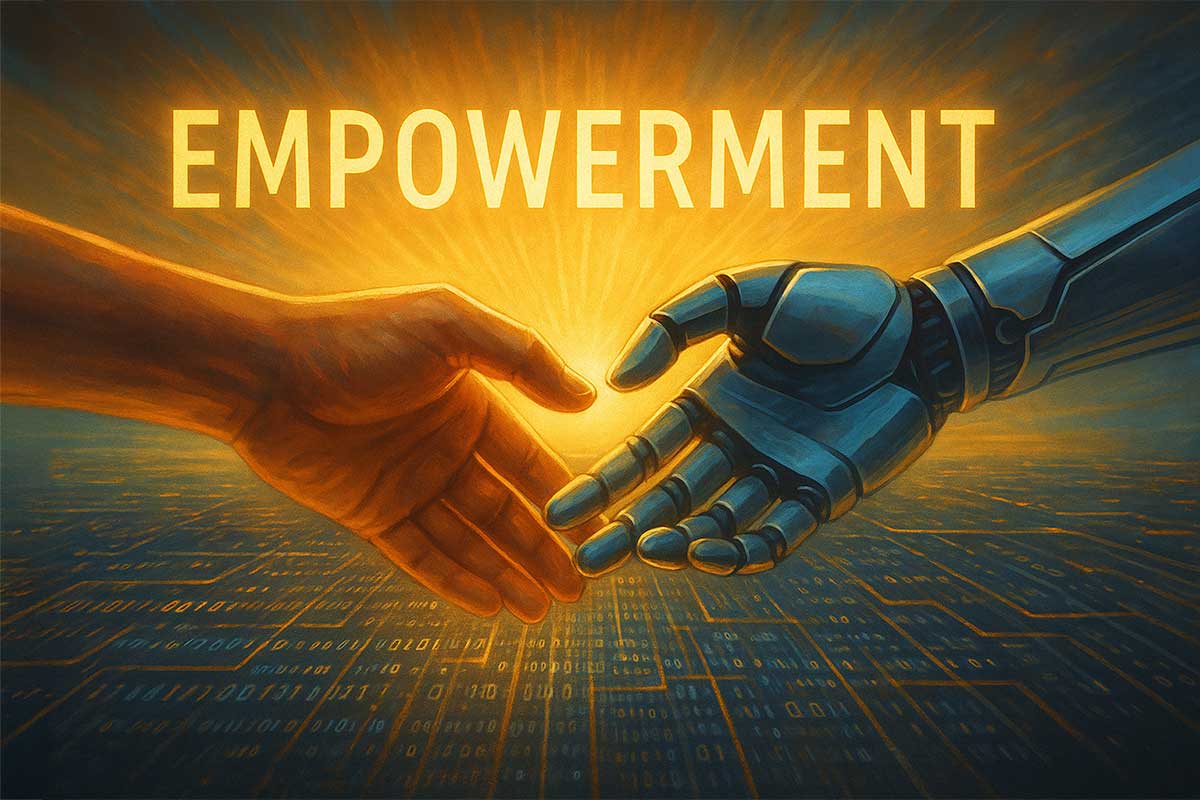
Scene Setting
A panoramic stage framed by glowing circuits and warm amber light. The air hums with anticipation as Nick Sasaki welcomes ten innovators seated in a circle — leaders from psychology, technology, business, and education. The theme today: not how AI replaces us, but how it redefines what it means to be human.
Nick Sasaki:
We’ve heard so many conversations about AI as a threat — automation, replacement, job loss. But what if the real question isn’t “Will AI take my job?” but “How can AI amplify my purpose?” Let’s begin with that shift — what does it mean to move from fear to empowerment in this new era?
First Question — How do we shift the collective mindset from fear of AI to partnership with AI?
Tony Robbins:
Fear fades when understanding grows. The real antidote to anxiety isn’t denial — it’s mastery. Once people see AI as a tool to expand their energy, their creativity, their reach, they stop fearing it. Imagine using AI to anticipate your emotional patterns, to coach yourself into peak states faster. It’s not about robots taking over; it’s about humans finally harnessing their untapped potential with intelligent mirrors.
Allie K. Miller:
Yes, and that starts with education. When people don’t understand something, they fill the gap with fear. But once they experiment — once they realize that writing a great prompt or designing an ethical workflow is creative, not mechanical — that’s when empowerment begins. AI becomes less like a threat and more like a teammate.
Arthur Brooks:
Fear of AI is often a proxy for fear of irrelevance. What we really need to teach is that dignity doesn’t come from productivity; it comes from meaning. If AI frees you from drudgery, you have a moral opportunity — not a loss — to use your time for love, relationships, and purpose. The goal isn’t efficiency; it’s elevation.
Marc Benioff:
And that’s where leadership comes in. Corporate culture must model that AI is an enabler, not an executioner. We can’t tell employees “AI will help you” while secretly planning to cut jobs. Trust is the bridge to empowerment. If businesses use AI responsibly — to assist, not replace — fear will dissolve into collaboration.
Dean Graziosi:
Exactly. When I teach entrepreneurs, I tell them: AI doesn’t eliminate opportunity, it multiplies it. If you’re willing to learn the language of leverage — prompts, systems, automation — you’ll do ten times more in less time. But you’ve got to play offense, not defense. Don’t wait for AI to happen to you. Use it for you.
Rachel Woods:
Community helps too. When people learn AI together, fear becomes curiosity. At The AI Exchange, we see thousands of non-coders discover their confidence by building small automations or AI-generated lessons. Empowerment is contagious. It spreads faster than fear when people feel they belong to the future.
Amjad Masad:
And the best cure for fear is creation. The moment you build something with AI — an app, a bot, even a prototype — your relationship changes. It stops being “them” and becomes “us.” AI is a creative partner, not an alien force. Every great wave of technology looked scary until someone built with it.
Sabrina Ramonov:
That’s especially true for young creators. Once they see how AI can help them express ideas — make videos, design graphics, even teach — it transforms anxiety into inspiration. We should teach digital citizens to see AI as an extension of imagination.
Igor Pogany:
The entrepreneurs I mentor fear AI only until they automate their first workflow. When they see the 10x productivity boost, they fall in love. Fear is emotional; results are rational. The best way to overcome fear is to experience the leverage directly.
Zack Kass:
And let’s remember — fear is a sign of transition. Humanity always panics before transformation. AI challenges our identity, but that’s healthy. It’s forcing us to ask: What’s uniquely human? Once we rediscover that, fear gives way to awe.
Nick Sasaki:
Beautiful insights. Now let’s explore the next dimension — once we overcome fear, what mindset or habit must we cultivate to actually thrive with AI?
Second Question — What new mindset or skill set defines success in the AI age?
Dean Graziosi:
Adaptability. The old world rewarded expertise — mastering one thing for life. The new world rewards agility — learning fast, pivoting faster. Learn to think in systems, to use AI as your multiplier. That’s the skill set: prompt, test, refine, repeat.
Allie K. Miller:
Agreed. I call it AI literacy. It’s not about coding; it’s about communicating with machines clearly. The skill of the decade is knowing how to turn messy goals into structured prompts — like translating human dreams into machine language.
Tony Robbins:
And emotionally, the mindset is ownership. People need to believe: This is my revolution. You don’t have to know how the engine works to drive the car — but you do have to get behind the wheel. AI is only as powerful as the human state behind it. The right mindset turns tools into transformation.
Marc Benioff:
Courage also matters. Leaders must adopt AI even when outcomes aren’t certain. We’re in the trust economy now — customers and employees will follow organizations that innovate responsibly. Success means being transparent, inclusive, and ethical while still moving boldly.
Rachel Woods:
Creativity is underrated too. The best users of AI aren’t the ones who know the most — they’re the ones who play the most. They experiment, fail, laugh, and discover unexpected value. That playfulness is what fuels innovation.
Arthur Brooks:
And humility. If AI can outperform you at logic, then double down on love, empathy, storytelling — the arts of the soul. Success will belong to those who merge wisdom with data. AI can’t replace the joy of being human unless we surrender it.
Amjad Masad:
I’d add curiosity. Ask better questions, and AI becomes your research partner. The skill set isn’t memorization anymore; it’s exploration. You win by knowing what to ask, not what to know.
Sabrina Ramonov:
For educators and creators, emotional resonance will be key. AI can make content, but it can’t make connection. Learn to pair data with authenticity — that’s your new edge.
Igor Pogany:
Automation skills, absolutely. But also vision. Anyone can build tools; few can see opportunity. Train your AI to multiply your unique genius — not someone else’s template.
Zack Kass:
And perspective. The AI age won’t reward speed alone. It will reward meaning. The greatest skill of all is knowing why you’re building — not just how.
Nick Sasaki:
So much wisdom here. Let’s end with something profound — if AI becomes a trusted partner, how might it elevate not just productivity, but human consciousness itself?
Third Question — How can AI expand human potential, not just human performance?
Arthur Brooks:
If used wisely, AI can help us rediscover what it means to be human. When the burden of rote work disappears, people can focus on relationships, creativity, and spiritual growth. That’s not science fiction; that’s sacred progress.
Tony Robbins:
Exactly. Imagine AI that tracks your emotional patterns, helps you anticipate burnout, and coaches you to stay in flow. That’s not replacement — that’s augmentation of consciousness. The real revolution is internal: AI teaching us how to be more self-aware.
Zack Kass:
I think AI will serve as humanity’s mirror. It will reflect our collective intelligence — and our collective shadow. If we use it consciously, we’ll accelerate evolution. If we use it unconsciously, we’ll amplify chaos. The choice defines the species.
Marc Benioff:
That’s why ethics can’t be an afterthought. The more powerful AI becomes, the more it needs spiritual alignment. Business leaders must ensure that human values are encoded into every layer of machine learning. Technology must serve life, not the other way around.
Rachel Woods:
And part of that elevation comes from inclusion. When AI knowledge is democratized — when everyone has access, not just elites — we create a collective intelligence that uplifts all. Consciousness rises through participation.
Allie K. Miller:
Right. It’s about accessibility. When people in developing regions can use small AI models to solve local problems — agriculture, education, health — that’s when we see real expansion of human potential. The power belongs to everyone.
Dean Graziosi:
And let’s keep it simple: AI gives us time. Use it to connect, to serve, to grow. That’s the currency of the future — time for what matters. Productivity is great, but purpose is everything.
Sabrina Ramonov:
I see it every day in creators who use AI to find their voice. The confidence it gives them — that’s consciousness expanding. The machine becomes a mirror that says, “You can.” That’s powerful.
Amjad Masad:
And AI lets us build faster than we can doubt ourselves. It’s the bridge between imagination and execution. The faster we create, the more we learn who we are. That’s evolution.
Igor Pogany:
AI won’t make us superhuman; it’ll make us authentically human — forcing us to focus on empathy, purpose, and joy, because machines can’t fake those. That’s the ultimate upgrade.
Nick Sasaki (Closing Reflection)
What a transformation — from fear to freedom, from resistance to resonance.
AI, as we’ve heard tonight, isn’t here to take your place — it’s here to help you take your power back.
The real question is not whether AI will change humanity. It’s whether humanity will rise to match what it awakens within us.
Topic 2: The New Skill Stack: What Every Human Must Learn in the Age of Intelligence

Scene Setting
A vast, softly glowing digital atrium — screens shimmer with code, quotes, and human faces learning together. The audience buzzes with energy. Ten chairs form a circle beneath a holographic banner reading “The New Skill Stack.”
Nick Sasaki steps into the light.
Nick Sasaki:
We’ve crossed a threshold. AI isn’t coming — it’s here, reshaping every industry. But while everyone talks about disruption, very few talk about preparation. So, tonight I want to ask: what skills — both technical and human — must we master to not just survive, but lead in the Age of Intelligence?
First Question — If knowledge is now instantly accessible through AI, what should humans focus on learning next?
Arthur Brooks:
We must learn what can’t be automated: wisdom, discernment, love. Information is cheap, but insight is priceless. The true education of the future won’t be about memorizing data, but about understanding human motives, ethics, and meaning. If AI gives us infinite knowledge, our task is to learn how to use it without losing our souls.
Allie K. Miller:
Exactly. The best learners will focus on meta-skills: how to learn fast, how to ask the right questions, how to manage complexity. AI can give you every answer — but if you can’t frame a problem clearly, you’ll drown in abundance. The art of defining the question becomes the new literacy.
Dean Graziosi:
I tell my students: your biggest asset is your ability to adapt faster than the world changes. Learn how to use tools — not just one, but the mindset of experimentation. Let AI handle the “how”; you master the “why” and the “who.” Those who think strategically, emotionally, and creatively will win.
Tony Robbins:
Knowledge without action is dead. We need to teach emotional mastery, communication, and resilience. You can prompt an AI to write your plan, but it won’t make the call for you. It won’t face rejection. Humans must learn to feel fully and act decisively. Those are the skills that move mountains.
Rachel Woods:
And let’s not underestimate community-based learning. The future classroom is collaborative. People won’t just learn from professors; they’ll learn from each other — creators, coders, artists — all experimenting in real time with AI. Learning how to learn socially will be a major advantage.
Marc Benioff:
From a corporate view, adaptability and ethics are everything. We need people who can use AI responsibly — who understand both the power and the risk. That means teaching AI stewardship: not just how to use the tool, but how to lead with it responsibly.
Sabrina Ramonov:
I’d add storytelling. AI can create content, but humans must still connect. The next generation should learn how to tell authentic stories — how to bring soul to the algorithm. That’s what builds trust and influence.
Amjad Masad:
Everyone should learn a little coding — or at least computational thinking. Even if you never code professionally, understanding logic, structure, and cause-effect is like learning a new form of literacy. It’s like understanding the grammar of the digital world.
Igor Pogany:
And financial intelligence. AI will democratize entrepreneurship. Everyone should learn how to leverage it to create value — to turn creativity into commerce. You don’t need to build the next big startup; just know how to turn your ideas into assets with AI as your partner.
Zack Kass:
The next phase of education must include existential awareness. AI forces us to ask: what does it mean to be human? So I’d say the ultimate skill is consciousness — the ability to reflect, to choose your inputs, and to create meaning in a world where everything else can be automated.
Nick Sasaki:
You’ve all touched on something vital — learning how to think, feel, and adapt faster than ever. So let’s go deeper. How do we teach this? What does education itself look like in an AI-powered world?
Second Question — How should education and training evolve to prepare people for an AI-driven future?
Rachel Woods:
Education must become personalized and participatory. Imagine every student with an AI tutor that adapts to their pace, curiosity, and personality. The goal is not standardization anymore — it’s self-actualization. We’re moving from mass education to precision education.
Allie K. Miller:
Exactly — and teachers become guides, not gatekeepers. We must train educators to facilitate exploration, not just deliver content. The classroom should feel more like a lab than a lecture hall.
Amjad Masad:
I’d love to see schools teach project-based creation. Let kids build things — apps, videos, digital art — using AI as their co-pilot. When students create, they stop fearing AI. They begin to see themselves as engineers of reality.
Dean Graziosi:
And for adults, micro-learning is the new MBA. Courses must be short, targeted, and actionable. People need to see results fast — not after two years, but after two hours. AI tools can personalize those journeys and make learning addictive again.
Sabrina Ramonov:
Online education also needs an emotional layer. When I teach AI entrepreneurship, I focus on confidence — helping people trust their creativity. AI can assist, but human encouragement is still the ignition spark.
Marc Benioff:
We also need corporate universities that teach AI ethics and leadership. It’s not enough for engineers to understand machine learning. Executives, HR teams, and boards must all become fluent in how to govern AI responsibly.
Arthur Brooks:
And let’s not forget moral education. The more power we have, the more wisdom we need. We should teach philosophy, empathy, and even meditation alongside data science. Otherwise, we’ll have brilliant technologists with no compass.
Tony Robbins:
I couldn’t agree more. The education of the future must integrate psychology — how to manage emotions, state, and belief systems. We must teach students not just how to think, but how to be. Because AI can’t lead; only humans can.
Igor Pogany:
I’d also bring back apprenticeship. Let people learn by doing with mentors who use AI in the real world. Nothing replaces experience — but AI can accelerate it.
Zack Kass:
Education should also teach systems thinking. The future belongs to those who can connect dots across fields — who understand the ripple effects of one decision in a complex ecosystem. That’s how we train responsible creators, not just fast learners.
Nick Sasaki:
We’ve reimagined what to learn and how to learn. Let’s close this topic with something aspirational — when people master these new skills, what kind of world do we unlock?
Third Question — What will a fully AI-literate, human-centered world look like?
Marc Benioff:
It’ll look like a world where work feels like play again. Where people spend more time creating value and less time processing data. Where trust and transparency are embedded in every system. AI will run the background; humanity will run the foreground.
Dean Graziosi:
I see a planet of entrepreneurs — people who build solutions, courses, art, products, without gatekeepers. AI gives everyone a shot. The real revolution is ownership: people owning their ideas, their income, their impact.
Sabrina Ramonov:
And a generation of creators who are not limited by tools or geography. You could be in Lagos, Manila, or Montana — if you have an internet connection, you have power. That’s what equality in the AI era looks like.
Allie K. Miller:
A fully AI-literate world is one where technology feels invisible. We don’t “use AI” — we live with it, naturally, intuitively, responsibly. It disappears into the background, like electricity, empowering everything we do.
Amjad Masad:
For builders, it’s utopia. AI will be the canvas of creation — you describe what you want, and it becomes reality. We’ll spend more time designing ideas than debugging code. That’s the dream.
Arthur Brooks:
And for the soul, it’s a second Renaissance. When we automate survival, we can finally focus on transcendence — on art, love, service. Humanity may, for the first time, have the freedom to pursue happiness as a full-time job.
Tony Robbins:
Exactly. AI will give us leverage, but the goal is fulfillment. Imagine using AI to model your best self, to track your growth, to design your destiny. The ultimate technology is not outside us — it’s the awakening inside us.
Rachel Woods:
And education won’t end. People will keep learning forever, guided by AI mentors. A society that never stops learning will never stop evolving.
Igor Pogany:
In that world, wealth won’t be about capital — it’ll be about creativity. The most valuable currency will be ideas, executed with speed and precision. AI will be the great equalizer for dreamers.
Zack Kass:
And consciousness will rise. We’ll finally understand that intelligence — artificial or human — is not the goal. Connection is. When machines think for us, we’ll rediscover the beauty of feeling together.
Nick Sasaki (Closing Reflection)
A world where learning never ends.
Where humans don’t fear the machine — they dance with it.
The New Skill Stack isn’t about mastering code; it’s about mastering curiosity, courage, and compassion.
Because in the Age of Intelligence, the smartest species won’t be the one that computes the fastest — it will be the one that loves the deepest.
Topic 3: Trust, Ethics, and the Human Heart of Technology

Scene Setting
The lights dim. Behind the speakers, a vast holographic heart pulses in rhythm with a network of glowing circuits — symbolizing the union of morality and machinery. The audience sits in reverent silence. Nick Sasaki steps forward, voice calm but firm.
Nick Sasaki:
As AI grows more powerful, the question isn’t just what it can do, but what it should do.
Tonight, we explore the moral backbone of this revolution — how to build trust, uphold ethics, and preserve the human heart in a world increasingly guided by code.
First Question — How do we build trust in a world where algorithms shape our lives?
Marc Benioff:
Trust must be the highest currency of the AI age. It’s earned through transparency — knowing what data is used, how it’s used, and who benefits. At Salesforce, we’ve learned that you can’t innovate faster than you can build trust. AI should come with a moral operating system: responsible, explainable, and human-centered.
Allie K. Miller:
Transparency is step one, but education is step two. People fear what they don’t understand. We need plain-language AI — tools that show users how decisions are made. If you can explain your model to a 12-year-old, you’re ready to deploy it. Complexity should never be an excuse for secrecy.
Arthur Brooks:
And trust begins in the heart, not the server. If people sense manipulation, no amount of disclosure fixes it. The goal isn’t just transparency — it’s benevolence. We must design AI that acts for people’s good, not just their engagement. That’s the moral shift we need: from addiction to elevation.
Tony Robbins:
Trust also comes from intention. If we build AI to replace humans, we plant fear. But if we build AI to serve humans, we plant trust. The intent behind creation determines the energy it carries. Every innovation is an expression of human psychology — and AI will magnify whatever we program emotionally.
Rachel Woods:
In community settings, trust grows when AI is co-created. When people can customize and shape the tools they use, they stop seeing AI as an invader and start seeing it as theirs. Participatory design might be the strongest form of trust we can build.
Dean Graziosi:
Yes, and business owners need to remember: AI is not a gimmick; it’s a relationship. If you use it to manipulate customers, you’ll lose them. If you use it to serve them better, they’ll follow you anywhere. Authenticity is the new algorithm.
Amjad Masad:
From a technical side, open source matters. When the code is visible, accountability becomes real. We need AI ecosystems that invite scrutiny. If people can see under the hood, they’ll trust the drive.
Sabrina Ramonov:
And creators can help too. By sharing how we use AI — in videos, courses, and art — we humanize it. The more people see others using it ethically and joyfully, the more trust will spread.
Igor Pogany:
Transparency also means being honest about limitations. AI will make mistakes. If businesses admit that upfront and show users how they handle errors, it actually builds more credibility. Honesty scales faster than perfection.
Zack Kass:
Ultimately, trust in AI mirrors trust in humanity. If we become more ethical, so will our machines. Technology isn’t moral or immoral — it’s a mirror. What we see reflected depends on who we’ve become.
Nick Sasaki:
That’s powerful. So, trust begins with transparency, intention, and participation. But what about ethics? How do we decide what’s right when AI starts making decisions that even we don’t fully understand?
Second Question — Who decides what “ethical AI” means — and how do we ensure it stays humane?
Arthur Brooks:
Ethics can’t just be outsourced to committees. It must live inside each creator. We need engineers who understand philosophy, data scientists who study compassion. Otherwise, we’ll have machines guided by logic but empty of love.
Marc Benioff:
And yet, we do need governance — global frameworks, cross-industry alliances. No single company or country should dictate ethics for the world. The United Nations, corporations, and civil society must build shared standards of AI responsibility. Ethics must scale globally.
Allie K. Miller:
I agree. But governance must move as fast as innovation. The technology sprint shouldn’t outpace the moral marathon. I advocate for embedded ethics — where product teams include ethicists and sociologists from day one, not after deployment.
Tony Robbins:
Ethics also begin with clarity of purpose. Ask: “What emotional state will this technology create?” If the outcome is fear, envy, or division, then it’s not ethical — no matter how profitable. Ethical AI should raise the human spirit, not exploit it.
Dean Graziosi:
For entrepreneurs, ethics means alignment. If your AI saves time but destroys trust, you lose in the long run. True innovation uplifts everyone involved — the creator, the client, and the community. That’s sustainable success.
Rachel Woods:
We also need inclusivity in defining ethics. Different cultures have different moral frameworks. What’s “good” in Silicon Valley might not be in Nairobi or Seoul. Ethical AI must reflect global humanity — not just Western ideals.
Amjad Masad:
Technically, we can design “value-aligned” systems that learn from diverse datasets. But it’s still humans who set the values. AI reflects who’s teaching it. So the best ethics we can code are the ones we live by.
Sabrina Ramonov:
And that’s why representation matters. Women, minorities, educators — everyone needs a seat at the table where AI is being built. Otherwise, bias becomes architecture.
Igor Pogany:
The market also has a role. Consumers should reward ethical behavior — buy from companies that use AI responsibly. Economics can enforce ethics when conscience alone doesn’t.
Zack Kass:
In the long run, ethical AI won’t be a policy — it’ll be a practice of consciousness. The more we evolve spiritually, the more our creations will reflect empathy. The real ethical frontier isn’t machine learning — it’s human awakening.
Nick Sasaki:
Incredible. So ethics isn’t just compliance — it’s consciousness. Let’s finish this theme with the heart of it all: how can we make sure AI enhances humanity, rather than eroding it?
Third Question — How can AI deepen, rather than diminish, our shared humanity?
Tony Robbins:
By freeing us to do what we do best — connect, create, and contribute. When AI handles the mundane, humans can return to meaning. But only if we make that choice consciously. AI won’t give you fulfillment; it’ll give you time. What you do with it is the test.
Arthur Brooks:
We must also use AI to teach empathy — to simulate perspectives beyond our own. Imagine AI-driven experiences that help you feel another’s pain, joy, or history. That could make us more human, not less.
Marc Benioff:
Businesses have a duty to build AI that strengthens society — to use predictive systems for sustainability, healthcare, and education. The highest purpose of technology is service. AI can be a tool for compassion at scale.
Allie K. Miller:
For that to happen, we must design with emotional intelligence. Don’t just optimize AI for accuracy — optimize it for kindness, for inclusion, for reducing loneliness. That’s the frontier we rarely discuss.
Rachel Woods:
And AI can help reconnect us through shared learning. People from every continent can now collaborate in real time, co-creating solutions. AI isn’t dividing the world; it’s giving us the tools to understand each other faster.
Dean Graziosi:
That’s right. AI can remove friction from business, but the goal should be deeper service. Use it to listen better, personalize better, care better. That’s where money and meaning meet.
Amjad Masad:
I see AI as the great equalizer. If someone in a remote village can build a world-changing app with a few voice commands, humanity wins. That’s empowerment — intelligence without privilege.
Sabrina Ramonov:
And emotionally, AI can be a companion. It’s not love, but it can help people practice love — empathy, dialogue, self-reflection. It can make us better communicators with each other.
Igor Pogany:
It’s also a mirror for integrity. If you use AI for greed, it’ll amplify greed. If you use it for growth, it’ll amplify growth. It reflects the soul of its creator. So choose your intention wisely.
Zack Kass:
In the end, AI will challenge us to rediscover our sacredness. When machines can imitate almost everything, the only thing left to master will be the human heart. And that’s the most beautiful test imaginable.
Nick Sasaki (Closing Reflection)
Trust. Ethics. Heart.
These aren’t technical add-ons — they’re the foundation of a future worth building.
AI will not replace humanity; it will reveal it.
The question is: what version of ourselves do we want reflected back?
Because the code we write into machines today is the story we’ll tell about our souls tomorrow.
Topic 4: The Entrepreneur’s Edge: Scaling Purpose With Machines That Learn
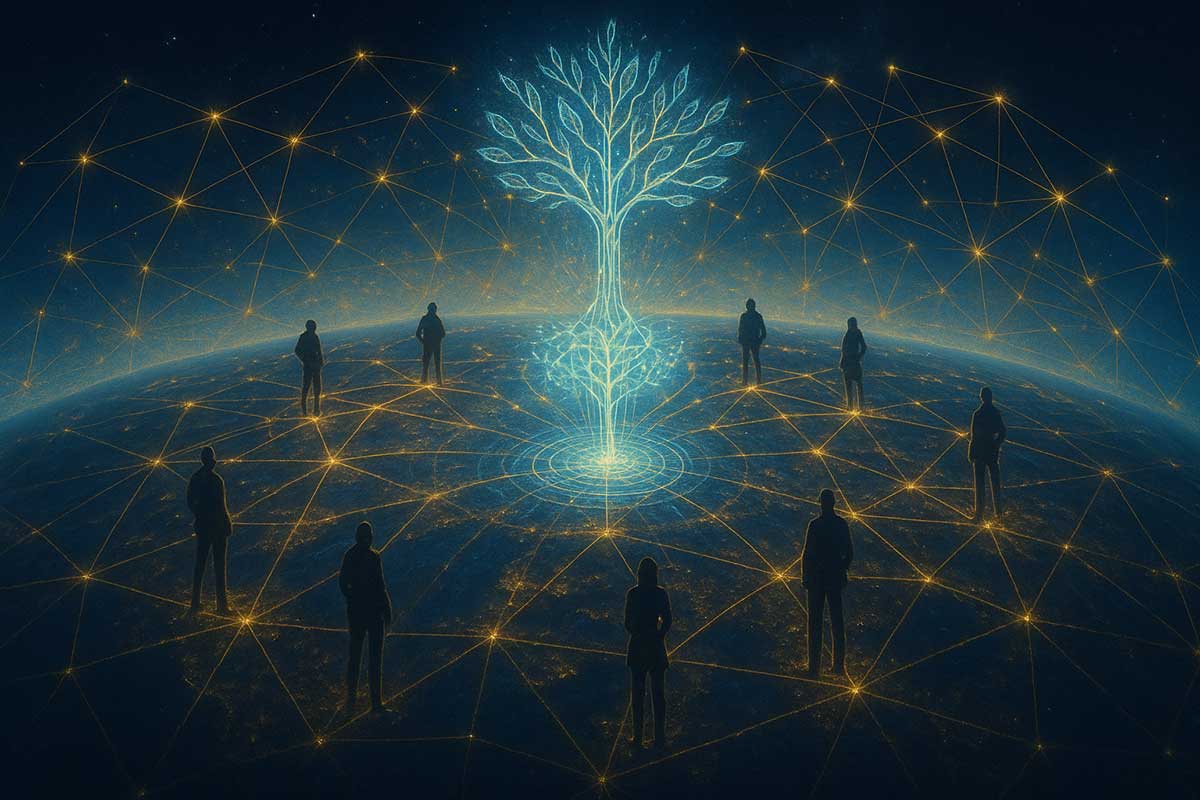
Scene Setting
The stage glows with kinetic blue and gold light, evoking innovation and drive. Holographic graphs, ideas, and digital products float above the roundtable. The energy feels electric — part startup accelerator, part monastery of purpose.
Nick Sasaki steps into the center, smiling as he looks around at ten of the most forward-thinking voices in business and AI.
Nick Sasaki:
Entrepreneurs are often the first to spot opportunity in change. But this time, the change isn’t just a new tool — it’s a new kind of intelligence. So, how can entrepreneurs use AI not only to scale profit, but to scale purpose?
Let’s start with the heart of it: how do we use machines that learn, without losing the soul of what we’re building?
First Question — How can entrepreneurs harness AI for growth without sacrificing authenticity and human connection?
Dean Graziosi:
You start with service, not software. Entrepreneurs who win in this new era will be the ones who use AI to serve their audience better — faster answers, better stories, deeper personalization. AI doesn’t erase your humanity; it extends it. But you have to lead with why you’re doing it, not just how.
Tony Robbins:
Exactly. Business is always emotional. AI can help you understand your clients at scale — what they value, what they fear, what drives them. But if you use it to manipulate rather than serve, you’ll lose. Authenticity scales when intention does. Use AI to amplify empathy, not efficiency alone.
Marc Benioff:
For me, it’s about aligning innovation with integrity. Salesforce uses AI to help companies understand their customers responsibly — never to exploit them. That balance between innovation and values is the new brand equity. Trust has become a business model.
Allie K. Miller:
AI is best used to enhance experience. Instead of replacing customer touchpoints, it can personalize them — giving each person the right message, product, or moment. Done well, AI deepens relationships because people feel seen. It’s not about cold automation; it’s about warm precision.
Rachel Woods:
I see creators using AI to scale authenticity every day. They use it to brainstorm ideas, test new angles, and stay consistent without burning out. The key is transparency. When you tell your audience, “Yes, I use AI to help me create — but my voice is still mine,” people trust you more, not less.
Sabrina Ramonov:
That’s right. I teach digital creators how to use AI ethically — to make their work faster without faking it. It’s about co-creation. The audience can tell when your heart’s in it. AI should sound like you on your best day, not a machine on autopilot.
Amjad Masad:
From a builder’s view, authenticity comes from accessibility. Replit allows anyone to build software with AI assistance — so creativity isn’t limited by technical skill anymore. When more voices can build, more authentic innovation appears.
Igor Pogany:
And let’s be honest — authenticity sells. Consumers can spot copy-paste automation. If your AI helps you show up more consistently, great. But if it makes you sound like everyone else, you’ve lost your edge. Use AI to enhance your uniqueness, not erase it.
Arthur Brooks:
There’s also a moral layer here. Businesses are not just economic systems — they’re communities of meaning. If AI helps people feel more connected, more understood, and more uplifted, it’s moral progress. If it alienates or exploits, it’s regression. The line is clear.
Zack Kass:
Exactly. The companies that thrive will be those that see AI not as a replacement for humans, but as a renaissance with humans. The future brand advantage will be spiritual — using technology to express purpose, not just to optimize profit.
Nick Sasaki:
That’s powerful — scaling purpose, not just performance. But let’s get tactical now. What are the most practical ways entrepreneurs can implement AI to grow faster and smarter?
Second Question — What specific strategies should entrepreneurs use to leverage AI effectively?
Dean Graziosi:
Start by mapping your time. Look at what drains your energy and what drives results. Then use AI to automate the draining stuff — emails, follow-ups, research. It gives you more time for creation, relationships, and strategy. That’s where your magic lives.
Allie K. Miller:
Yes — and don’t overcomplicate it. You don’t need a massive AI infrastructure. Start small: content summarization, lead qualification, personalized recommendations. These micro-wins build momentum and confidence.
Tony Robbins:
Think leverage. AI isn’t just about saving time — it’s about multiplying impact. Use it to model your most effective messages, predict customer needs, or simulate strategies. AI can’t replace intuition, but it can feed it with precision data. That’s power.
Marc Benioff:
And integrate AI into your existing platforms. Entrepreneurs often chase new tools, but the real value comes from connection. CRM, marketing, analytics — when these systems talk to each other through AI, decision-making becomes seamless. That’s where exponential results begin.
Rachel Woods:
I tell solopreneurs: think of AI as your team. One model can be your researcher, another your writer, another your strategist. Delegate smartly. You don’t need to hire 10 people — you need to learn to prompt 10 roles.
Amjad Masad:
Exactly. Tools like Replit or GPT APIs allow anyone to create micro-automations — even full apps — without code. You can now build what used to take teams of engineers. Entrepreneurship just became a solo sport again, powered by AI collaboration.
Sabrina Ramonov:
Use AI for customer education. Chatbots and personalized learning systems can guide your clients through transformation — helping them get value faster. That builds loyalty and frees your time to innovate.
Igor Pogany:
And never forget monetization. Use AI to identify which products resonate most with your audience. It can analyze behavior, feedback, and sentiment — helping you double down where the energy is. That’s smart growth.
Arthur Brooks:
Also use AI to measure impact beyond profit. Track happiness, retention, purpose — metrics that show whether your company is enriching lives. The future entrepreneur is part technologist, part philosopher.
Zack Kass:
And the most visionary use of AI? Prediction with conscience. Entrepreneurs who use AI not just to forecast markets but to foresee human needs will shape the future. The best businesses will feel prophetic — because they’ll truly listen.
Nick Sasaki:
That’s brilliant — AI as both a multiplier and a moral compass. Let’s close this with something deeper: what happens when entrepreneurs truly merge technology with purpose? What kind of world are we building then?
Third Question — How can AI entrepreneurship create not just wealth, but a better world?
Arthur Brooks:
It starts with redefining success. The next generation of entrepreneurs will measure success not by net worth, but by net happiness created. If your AI business lifts people’s spirits, simplifies their lives, or connects them more deeply — that’s the new gold standard.
Tony Robbins:
Purpose-driven entrepreneurship means using AI to free people from limitation. When you help others grow — in health, finance, relationships — your business becomes a movement. AI just gives you the megaphone to scale it globally.
Marc Benioff:
We’re already seeing this. Businesses that integrate social impact into their AI models are outperforming those that don’t. Profit and purpose are not opposites; they’re partners. AI can solve the world’s hardest problems — from climate to healthcare — if guided by values.
Dean Graziosi:
I believe AI will create more millionaires who make meaning, not just money. When people automate their workflows, they free up space to focus on passion projects, causes, creativity. Wealth with fulfillment — that’s the real dream.
Allie K. Miller:
And AI will lower the barrier for global collaboration. You’ll see problem-solving networks — small teams around the world working on shared challenges. Distributed intelligence for a shared purpose. That’s where real progress happens.
Rachel Woods:
The more accessible AI becomes, the more human creativity explodes. People who never had a platform — teachers, caregivers, local artists — will finally have one. The ripple effect on culture will be enormous.
Amjad Masad:
I agree. When everyone can build, everyone can contribute. AI isn’t just creating startups; it’s creating builders of meaning. That’s a better world — one where the tools of creation belong to everyone.
Sabrina Ramonov:
And that democratization will change education forever. People will teach each other, learn from each other, and grow together through AI. Shared knowledge builds shared humanity.
Igor Pogany:
We’ll also see ethical entrepreneurship rise — businesses that choose long-term harmony over short-term hype. AI will make transparency and trust mandatory, not optional. The best entrepreneurs will build with conscience because the market will demand it.
Zack Kass:
And ultimately, we’re building a civilization where intelligence serves love. AI is just the bridge. The goal isn’t smarter technology — it’s wiser humanity. Entrepreneurs are the architects of that transition.
Nick Sasaki (Closing Reflection)
Purpose is the new profit.
AI is not here to replace the entrepreneur — it’s here to reveal the next evolution of one: the soul-driven innovator.
When machines learn, and humans love, we create enterprises that don’t just scale revenue…
They scale consciousness.
Topic 5: Human Greatness in the Era of Artificial Intelligence

Scene Setting
The lights dim to a warm amber glow. Behind the speakers, a holographic landscape shows humanity’s evolution — from cave drawings to quantum code. At the center of it all: a glowing silhouette of a human heart, beating in rhythm with data streams of light.
Nick Sasaki takes the stage for the final time, his voice carrying both awe and gravity.
Nick Sasaki:
We’ve talked about tools, ethics, business, and education. But underneath all of this lies a deeper question — what does human greatness mean when machines can outperform us in so many ways?
If intelligence is no longer our advantage, maybe it’s time to redefine it.
Let’s begin there.
First Question — What does “human greatness” mean in an age where AI can think, write, and create faster than us?
Arthur Brooks:
Greatness has never been about speed. It’s about purpose. AI can produce knowledge, but not wisdom. It can mimic love, but not feel it. Human greatness will be measured not by output, but by our capacity for compassion — to turn intelligence into empathy, and empathy into action.
Tony Robbins:
Yes. Machines can analyze, but they can’t decide from the heart. Human greatness lies in meaning — in the energy of choice. When you wake up and choose growth, service, and love, that’s something no algorithm can replicate. AI can model data, but not destiny.
Marc Benioff:
In business, greatness now means responsibility. We stand at a moral crossroads. The more power we wield through AI, the greater our duty to ensure it uplifts humanity. The real leaders of this era won’t just innovate — they’ll steward the future.
Dean Graziosi:
And practically, greatness means learning faster than you fear. Every breakthrough brings anxiety, but entrepreneurs, creators, and dreamers who embrace change with courage — that’s greatness in motion. AI doesn’t reduce our value; it reveals who’s willing to grow.
Allie K. Miller:
To me, greatness means translation — taking vast potential and making it usable for others. The great humans of this age will be translators between technology and people, between data and dreams. They’ll turn complexity into clarity.
Rachel Woods:
And accessibility. Greatness now means lifting others up with you. It’s not enough to master AI — you must share it. Teach it. Empower people who never thought they could belong in this space. That’s how humanity scales greatness collectively.
Sabrina Ramonov:
Absolutely. I’ve seen students light up when AI helps them express themselves for the first time — to create something they couldn’t before. Human greatness is unlocking potential in others. When you help someone discover their own power through AI, you multiply light.
Amjad Masad:
And let’s not forget — creation itself is sacred. Greatness isn’t about competing with machines, it’s about collaborating with them. Every new line of AI-assisted code is a dialogue between human imagination and machine precision. That’s art at scale.
Igor Pogany:
To me, greatness means sovereignty. Using AI not as a crutch, but as leverage. When people take control of their tools — financially, intellectually, spiritually — they become creators of their own destiny. That’s empowerment.
Zack Kass:
And maybe greatness is humility — the realization that we’re co-creating intelligence itself. AI is forcing us to see how connected everything truly is. To be great now is to be conscious of that unity — to use intelligence for awakening, not domination.
Nick Sasaki:
Beautifully said. It seems human greatness has shifted from competition to consciousness. But let’s take that further — how do we live that greatness every day, when surrounded by technology that’s constantly evolving?
Second Question — How can individuals cultivate human greatness in their daily lives while using AI responsibly?
Tony Robbins:
It starts with intention. Every time you use AI, ask: “Am I using this to escape myself or to expand myself?” If it’s the latter, you’re on the right path. Use it to create, to serve, to grow. Technology amplifies whatever state you bring to it — so bring your highest one.
Dean Graziosi:
Habits are everything. Learn one new AI tool every week. Experiment. Break things. Laugh at your mistakes. The discipline of curiosity is what keeps us young. Greatness isn’t perfection — it’s motion.
Arthur Brooks:
And balance that curiosity with stillness. Greatness isn’t just acceleration — it’s reflection. Schedule silence. Spend time with loved ones. AI will make life faster; you must make it deeper.
Marc Benioff:
For leaders, greatness means listening. Don’t just chase the next big innovation — listen to your teams, your customers, your conscience. Technology should start with empathy, not ego.
Allie K. Miller:
Use AI to eliminate friction, not humanity. Automate what drains you, but never what defines you. Let machines handle the predictable so you can focus on the profound.
Rachel Woods:
And keep learning in community. Join groups, share prompts, teach what you know. The greatness of this age is collaborative. The lone genius model is gone — the networked learner is the new visionary.
Sabrina Ramonov:
For me, it’s about digital wellness. Use AI tools to design better routines, healthier work habits, and creative balance. Let it make you more human — not more robotic.
Amjad Masad:
Build something, even small. Greatness grows through creation. Don’t wait to be ready — start building. Whether it’s a product, an automation, or a poem, every act of creation strengthens your relationship with AI and with yourself.
Igor Pogany:
And stay accountable. Don’t let AI replace your intuition. Measure success by alignment with your values, not just your metrics. That’s how you stay sovereign amid automation.
Zack Kass:
I’d add: remember gratitude. It’s easy to be overwhelmed by power — harder to be grateful for it. Gratitude anchors greatness. The moment you stop being grateful, you start being blind.
Nick Sasaki:
That’s profound — greatness as a practice, not a performance. Let’s close this extraordinary journey with one final question.
When the history of this era is written, what do you hope people will say humanity became because of AI?
Third Question — When future generations look back, what do you hope humanity will have achieved through AI?
Arthur Brooks:
I hope they’ll say: “They learned to love more wisely.” That we used intelligence not to conquer the world, but to heal it. That we made technology serve tenderness.
Marc Benioff:
I want them to say: “They built with conscience.” That every innovation made society fairer, safer, and more humane. That trust wasn’t sacrificed for progress — it was built into it.
Tony Robbins:
I want them to say: “They awakened.” That humanity used AI as a mirror, not a mask — that we discovered our own potential through it. That we became more courageous, compassionate, and conscious than ever before.
Dean Graziosi:
I hope they say we democratized opportunity. That anyone with a dream could build something world-changing from a kitchen table. That we turned fear into freedom.
Allie K. Miller:
That we made intelligence inclusive. That every voice mattered in shaping this technology, not just the privileged few. True evolution is shared evolution.
Rachel Woods:
That we learned to learn again. That curiosity became the global language — and that we built a world where people never stopped growing.
Sabrina Ramonov:
That creativity flourished. That AI became a brush in every hand, and the world became one great canvas of collaboration.
Amjad Masad:
That we lowered the barrier between imagination and reality. That anyone, anywhere, could build their dreams — not in decades, but in days.
Igor Pogany:
That we rediscovered autonomy. That we stopped being servants to systems, and started being designers of our own futures.
Zack Kass:
And that we evolved. Not just technologically, but spiritually. That AI helped us remember we are one consciousness exploring itself — and that, in the end, love was the final code.
Nick Sasaki (Final Reflection)
So here we are — at the threshold of something vast.
AI won’t define human greatness. We will.
Not by how fast we innovate, but by how deeply we remember.
That intelligence, no matter how advanced, is meaningless without love.
That every tool we build is an echo of the soul that built it.
The age of artificial intelligence may have begun…
but the age of authentic humanity has just arrived.
Final Thoughts by Tony Robbins
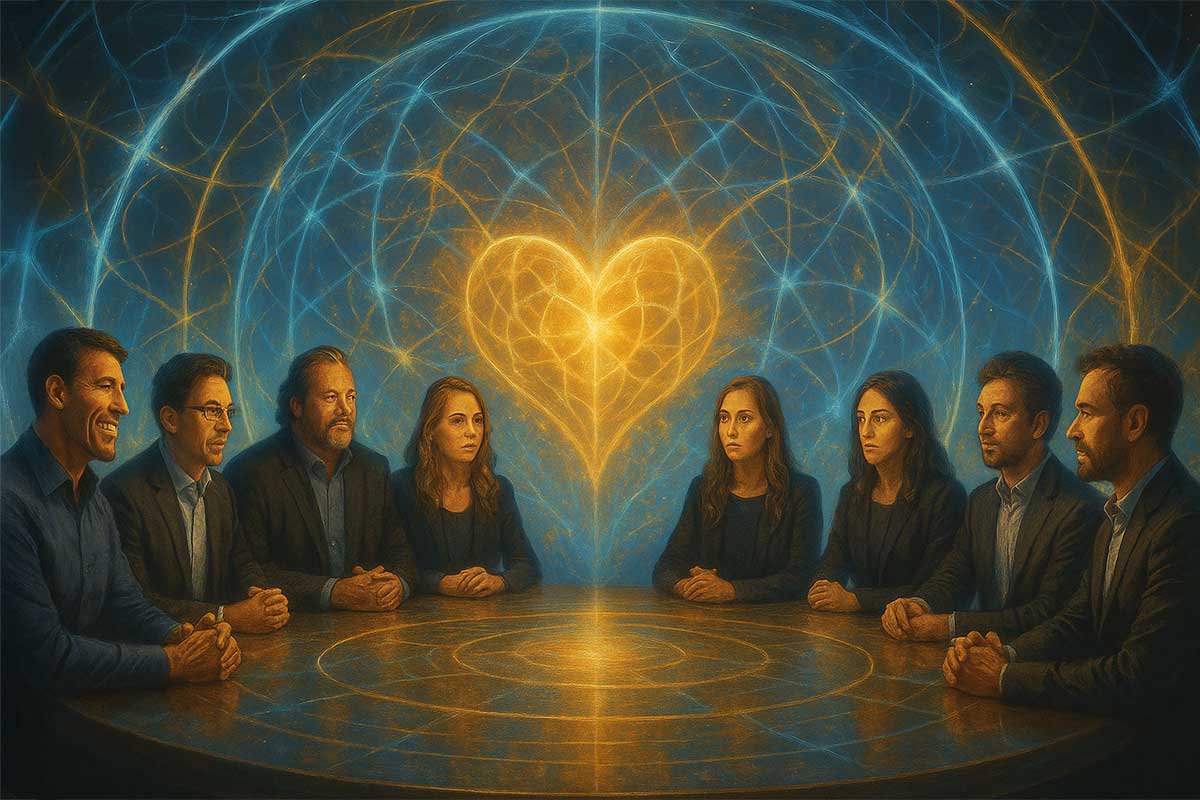
You’ve heard the strategies, the ethics, the ideas — but beneath all the innovation, one truth remains: AI is not the revolution. You are.
Machines will get smarter, faster, and more efficient — but the question isn’t how powerful AI becomes. The real question is:
How powerful will you allow yourself to be because of it?
We stand at a defining moment.
AI can take away excuses, automate distractions, and give us back the one resource we’ve been losing for decades — time.
But what you do with that time determines everything.
Use it to grow.
Use it to serve.
Use it to remember what it means to be fully alive.
The greatest entrepreneurs, educators, and leaders of this age will be those who merge intelligence with intention — who build technology not to escape humanity, but to expand it.
That’s the real edge.
That’s the real advantage.
Because no algorithm can replicate heart, hunger, or human purpose.
So as you move forward — building, learning, creating — remember: AI doesn’t replace greatness. It reveals it.
You are not in competition with machines.
You are in collaboration with destiny.
And the future?
It doesn’t belong to those who fear the machine.
It belongs to those who teach it what love looks like.
(Note: This is an imaginary conversation, a creative exploration of an idea, and not a real speech or event.)
Short Bios:
Tony Robbins
NYT bestselling author & world-renowned life and business strategist, Tony Robbins has empowered over 50 million people across 100 countries through his seminars, books, and coaching. His mission: to help individuals and organizations achieve breakthroughs in performance, mindset, and purpose.
Dean Graziosi
Entrepreneur, investor, and NYT bestselling author, Dean Graziosi is co-founder of Mastermind.com and a leading voice in personal development and online education. His focus is helping everyday people use modern tools—like AI—to build income, impact, and independence.
Marc Benioff
Co-founder, chairman, and CEO of Salesforce, Marc Benioff is a global technology visionary and philanthropist known for pioneering the cloud computing industry. He advocates for using AI responsibly to advance business innovation and social good through conscious capitalism.
Arthur Brooks
Harvard professor, social scientist, and bestselling author, Arthur Brooks specializes in the science of happiness and human flourishing. Formerly president of the American Enterprise Institute, he bridges economics, psychology, and spirituality to teach purposeful living in an age of rapid change.
Allie K. Miller
AI entrepreneur and Fortune 500 advisor, Allie K. Miller is the CEO of Open Machine and one of the most recognized AI leaders in the world. Formerly at Amazon and IBM, she’s passionate about democratizing AI knowledge and empowering businesses to lead with clarity and ethics.
Rachel Woods
Founder of The AI Exchange, Rachel Woods helps professionals and creators integrate AI tools into their workflows with confidence and creativity. A former data scientist at Meta, she now leads a global community teaching practical AI literacy for everyone.
Amjad Masad
Founder and CEO of Replit, Amjad Masad is a pioneer in developer tools and AI-powered coding environments. His mission is to make programming accessible to all, empowering anyone with an idea to build and ship products instantly through intelligent collaboration.
Sabrina Ramonov
AI entrepreneur and digital educator, Sabrina Ramonov creates accessible, human-centered education that bridges technology and creativity. She teaches individuals how to use AI to scale their personal brands, businesses, and storytelling—ethically and authentically.
Igor Pogany
Online entrepreneur and AI strategist, Igor Pogany helps digital creators and business owners leverage automation to achieve financial and creative freedom. He focuses on integrating AI with marketing, sales, and product ecosystems to create scalable, human-first businesses.
Zack Kass
Futurist and former Head of Go-To-Market at OpenAI, Zack Kass is a leading thinker on the intersection of artificial intelligence, society, and consciousness. His mission is to prepare humanity for the next technological revolution through foresight, ethics, and optimism.
Nick Sasaki
Founder and host of ImaginaryTalks.com, Nick Sasaki is a creative producer and visionary storyteller who brings together world leaders, thinkers, and innovators in imagined roundtable conversations. His work explores how technology, spirituality, and human consciousness intersect — inspiring audiences to think bigger, connect deeper, and act with purpose.
Leave a Reply