

|
Getting your Trinity Audio player ready...
|
Thomas Harding:
(A quiet voice, as if walking beside you on a misty morning)
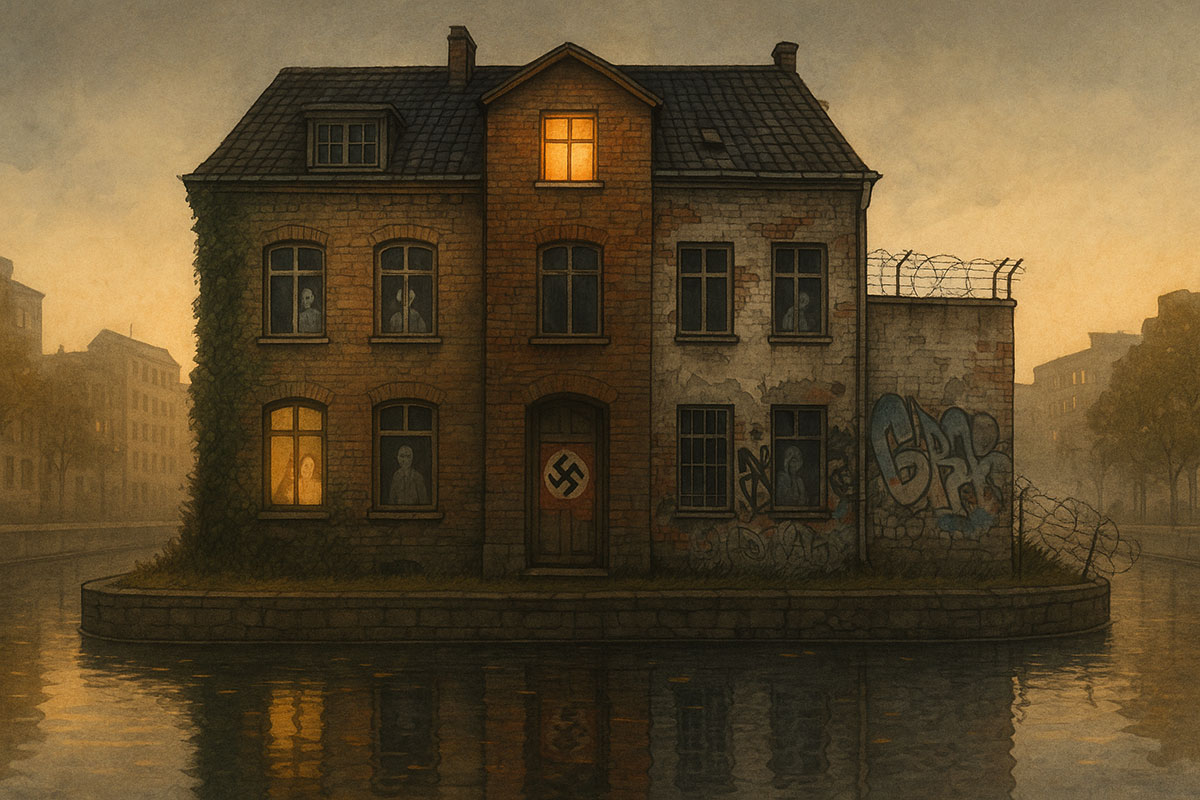
When I first saw the house again, it was nearly gone. Ivy had claimed its bones. Windows stared like blind eyes. And yet, I felt it breathing—barely, stubbornly.
I wrote The House by the Canal not to rebuild brick and mortar, but to uncover the hidden conversations that time had tried to silence.
This house, once built by my great-grandfather Alfred Alexander, did not just hold lives. It held histories. Families of every kind—Jewish, Nazi-era, East German, post-unification youth—all passed through its doors, each leaving behind not just objects, but echoes.
What if we could hear them now?
This series is a meditation on those echoes. Five imagined conversations that never happened, but should have. Between walls and water, ghosts and survivors, guilt and healing.
The house remembers. Maybe we can, too.
(Note: This is an imaginary conversation, a creative exploration of an idea, and not a real speech or event.)

Topic 1: The House and the Canal — A Conversation Across Time
Setting:
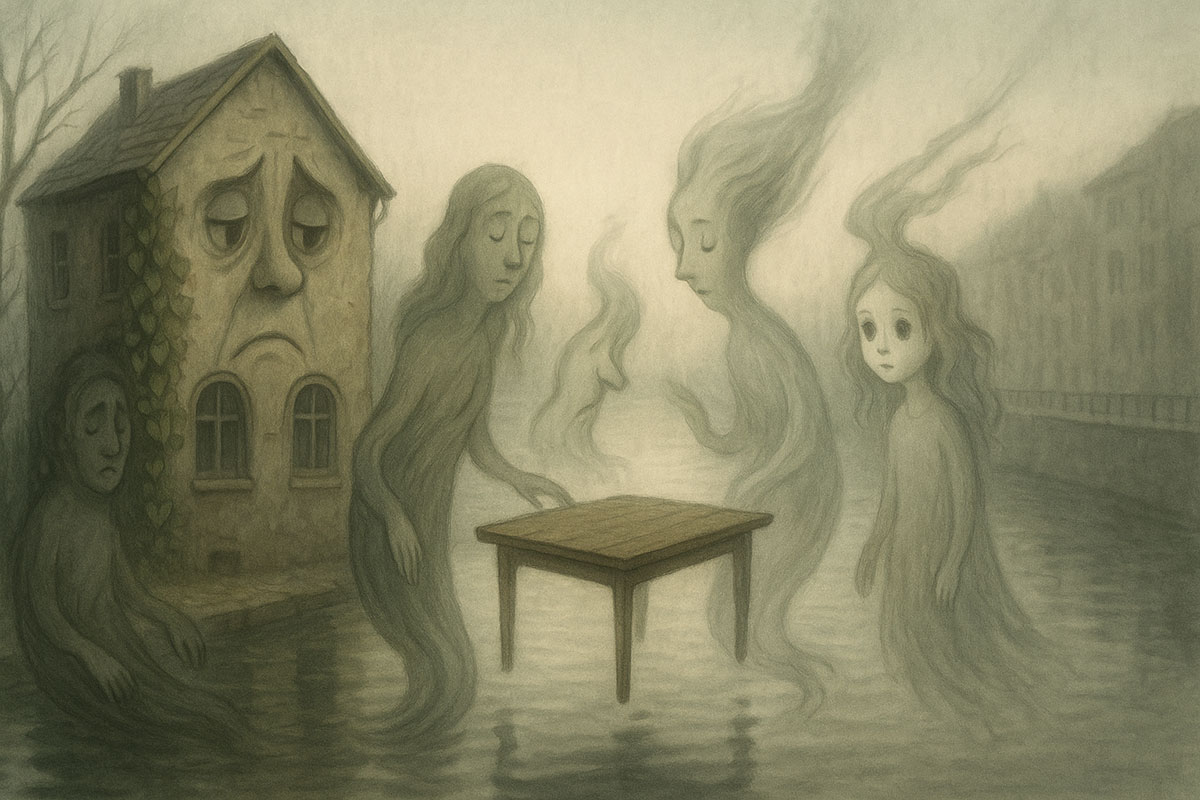
A misty Berlin morning. The house stands half-reclaimed by ivy, its windows watching the world like tired eyes. The canal beside it ripples softly, carrying fallen leaves and forgotten echoes. The air smells of wet stone and old paper. A floating roundtable appears between the house and the canal. Present are:
🎙️ Moderator:
W.G. Sebald – The late German writer known for blending memory, architecture, and melancholy.
🗣️ Participants:
The House – Weathered, whispering, full of memory.
The Canal – Flowing, detached yet observant, always moving forward.
The Wind – Messenger of time, carrying whispers and dust between epochs.
The Ghost of Anne Alexander – Daughter of the original Jewish family, curious, quiet, wounded.
The Ivy – Growing across the walls, listening more than speaking.
Sebald (gazing around the fog):
We are gathered here not for answers, but for resonance. You—house, canal, wind, ivy, ghost—have all lived beyond years. I ask this: What does it mean to witness without being able to act?
The House:
I held them all. Feet on floorboards, tears in pillows. I did not choose who came or left—only opened or shut my doors. I watched the laughter fade into silence. I saw names on walls scrubbed out like chalk on slate.
I held on. Is that not action?
The Wind:
You held breath while I carried screams. I swept away announcements before they were read. When they locked your door, I rattled it—futile, yes, but not nothing.
The Canal:
I remember the children dipping their toes. I remember blood. I flowed through all of it—never stopping. Witnessing is what I do. But I must forget, too. Or I’d drown in memory.
Anne (softly):
You were the only ones who stayed. Everyone else left, or was taken. Did you feel helpless… when no one listened? When I was forced away?
The Ivy:
I crept quietly, covering pain. Not hiding it. Preserving it. Sometimes healing looks like wrapping the wound in green.
Sebald (turning toward the canal):
Then tell me—do you envy the house, who remembers everything? Or pity it?
The Canal:
Neither. We play different roles in the same tragedy. I carry away. It holds on. But sometimes, in my depths, a reflection of the house stares back—and I feel… remorse. A river shouldn’t need to forget to survive.
The House:
And I… I envy your release. I cannot cry. My walls echo with voices I cannot hush.
The Wind:
And I? I envy neither. I return always, but belong nowhere.
Anne:
I left and became memory. But part of me returned. When I stand in that overgrown garden, I know: the house remembers me. Even if no one else does.
The Ivy:
You are never gone when something still grows in your name.
Sebald (closing his notebook, looking at the mist rising):
Let me ask you this: Is there such a thing as healing for buildings, rivers, and ghosts?
The House:
Healing is when someone comes and listens again. Touches the walls with reverence. Doesn’t turn away from the dust.
The Canal:
Healing is allowing the current to carry both the beautiful and the unbearable. Without damming one or the other.
The Wind:
Healing is in the stories we scatter, hoping someone catches them.
Anne:
Healing is being remembered as more than a victim. A girl who once danced on those floors.
The Ivy:
Healing is slow. But I am patient.
Sebald (standing):
Then let this be recorded not in ink, but in the veins of trees and ripples of water. Your silence has spoken. The past is not gone—it is just waiting to be heard.
Topic 2: A Dinner Table in Eternity — All the Families Meet
Setting:
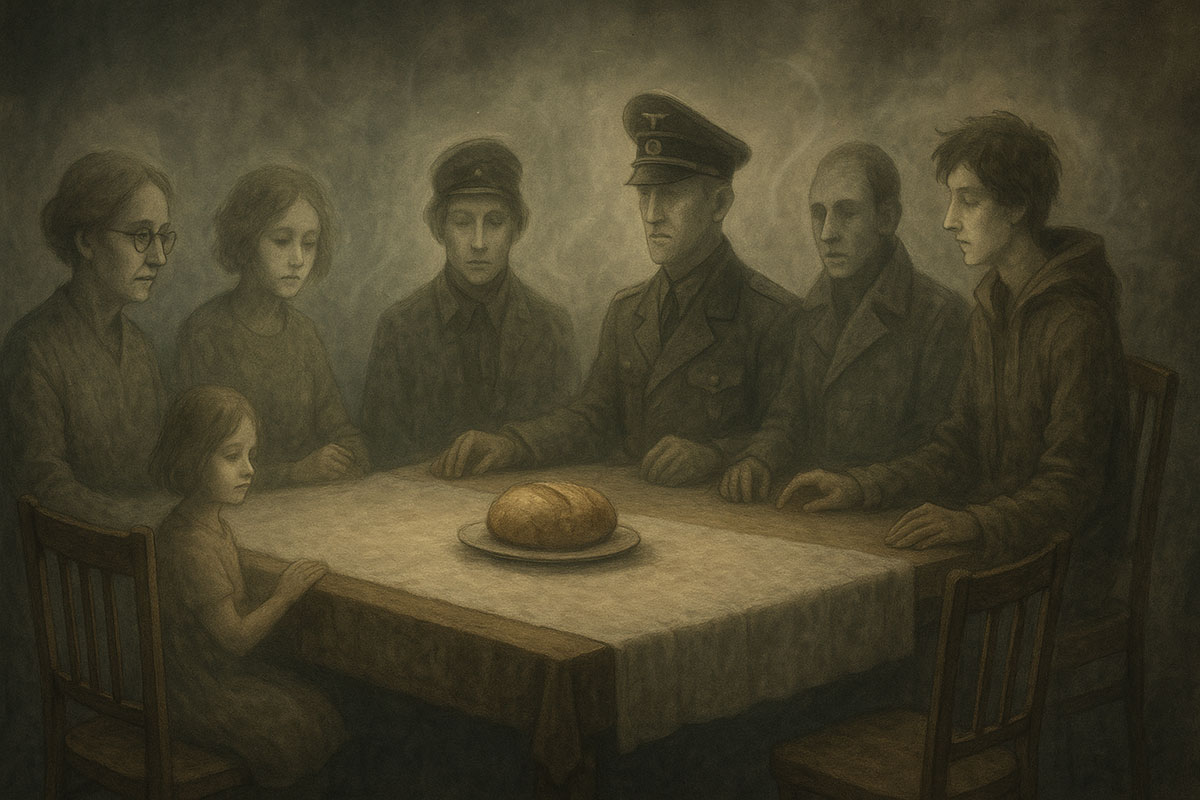
A candlelit dinner table floats in a timeless space—half inside the old Berlin house, half suspended in memory. Chairs are mismatched from different decades. On the table: old bread, preserved fruit, wartime rations, and a half-finished birthday cake. The guests who once lived in the house have been gathered by time to share one surreal meal.
🎙️ Moderator:
Marina Abramović – Performance artist known for confronting memory, pain, and human presence.
🗣️ Participants:
Dr. Alfred Alexander – Jewish doctor, original builder of the house, wise and restrained.
Irmgard Schröder – Widow of a mid-level Nazi official, moved in after the Alexanders fled.
Herr Müller – Stasi informant who lived in the house during the East German era, defensive but aging.
Lena Schneider – A teenage girl who squatted in the abandoned house after the Berlin Wall fell.
Thomas Harding – Great-grandson of Dr. Alexander, writer and restorer of the story.
Marina (leaning forward, eyes steady):
Let’s begin not with blame, but with memory. You all lived in the same house, but under very different skies. What did that house mean to each of you?
Dr. Alexander:
I built it for light. For silence. For my children to feel safe. Not once did I imagine the walls would be owned by shadows. When we left, I thought the house would dissolve without us. But it did not.
Irmgard Schröder:
We did not ask questions. My husband told me it was available—empty. I cleaned every floorboard. It was our home. My children were born there. Does that make us thieves?
Lena:
I didn’t know who built it. It was just a shell—walls with holes and vines inside. But I felt… stories in the corners. I lit candles for ghosts I never met.
Herr Müller:
The state assigned us the property. My son was a soldier. I monitored people from that attic window. It was not love. It was duty. And silence was safety.
Thomas Harding:
I returned when it was nearly lost to dust. I didn’t come to claim. I came to listen. To ask: what remains when people are forced to forget?
Marina (placing a glass of wine before them):
Now tell me—did you ever think of the ones who came before or after? Or were you only aware of your own moment?
Irmgard Schröder:
I found a drawer with a child’s shoe. I hid it. I didn’t want to explain. But some nights I looked at it and whispered, “I’m sorry.” I didn’t know her name.
Dr. Alexander:
I thought of the house every day in exile. Wondered if it was warm. If it missed us.
Lena:
I thought it was mine. Then I read your book, Thomas. I was just a ripple. It was never mine—just borrowed.
Herr Müller:
I never thought of the doctor. Only the dossiers. I regret that.
Thomas Harding:
And yet all of you are the house. That’s what I learned. It is not owned. It is held—for a time.
Marina (softly):
Final question. If the house could hear you now, what would you say?
Dr. Alexander:
We forgive what time cannot repair.
Irmgard Schröder:
We tried to build love on borrowed floors. I hope that matters.
Lena:
I would have stayed forever, but ghosts asked me to go.
Herr Müller:
I am sorry. For watching people and not seeing them.
Thomas Harding:
Thank you… for holding the weight when no one else would.
Marina (closing her eyes, hands pressed together):
Then let this dinner be our ritual. In remembering, we restore. In sharing bread, we undo a little silence. And perhaps that is how a house becomes whole again.
Topic 3: Anne and Her Father — A Walk by the Canal
Setting:
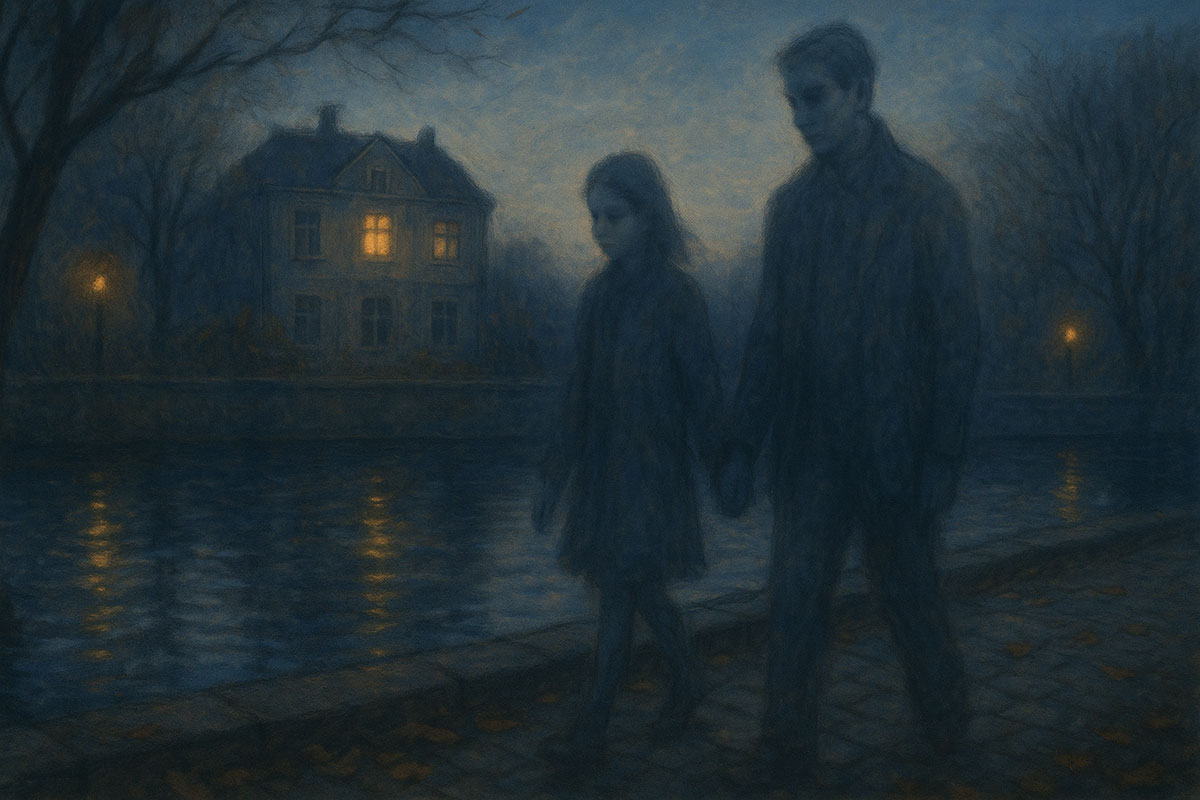
A golden twilight along the edge of the canal near the house. The water reflects the pale orange sky, rustling softly. Fallen leaves scatter with each step. The house is distant, blurred in the background. In this in-between space—between exile and memory—Anne Alexander walks beside her father, Dr. Alfred Alexander, both in spirit. Their shoes make no sound. Their voices do.
🎙️ Moderator:
Viktor E. Frankl – Psychiatrist, Holocaust survivor, and author of Man’s Search for Meaning, known for finding hope amid despair.
🗣️ Participants:
Anne Alexander – Daughter of the original Jewish family, inquisitive, caught between childhood innocence and inherited trauma.
Dr. Alfred Alexander – Her father, a man of reason, medicine, and quiet sorrow.
The Canal – Flowing quietly beside them, occasionally speaking as if the voice of time itself.
The House – Observing from afar, distant yet emotionally present, speaking rarely but powerfully.
Memory – A shifting figure appearing and disappearing like mist; not human, not place—just presence.
Frankl (walking behind them with hands behind back):
Meaning often emerges not in resolution, but in conversation. I invite you both—father and daughter—to speak the words history never allowed. What was left unsaid when you were forced to leave that house?
Anne:
You told me we had to go. But you never said why. I heard whispers. I saw suitcases. You said it was a trip. Then we never came back. Why did you not tell me the truth?
Dr. Alexander:
Because I wanted to protect what little peace you still had. The truth, Anne, was not safe for a child. I believed… silence might be kinder than fear.
The Canal:
And yet, silence becomes its own ghost. I carried your reflection many times, Anne—wondering if you’d speak to me. I remember your laughter echoing off the reeds.
Memory:
And I remember your scream when you understood you would not return.
The House (softly):
I kept your drawing on the wall until someone painted over it. But it bled through, faintly. You never truly left.
Frankl (pausing near a bench):
So let me ask you—Anne, what would you have needed to feel safe again?
Anne:
To be told that the loss wasn’t my fault. That leaving didn’t mean we stopped belonging. I wanted someone to say, “It wasn’t fair, but you are still part of this place.”
Dr. Alexander:
I see now that I robbed you of mourning. I packed your grief into silence. I thought I was sparing you—but I buried your questions instead.
Memory:
Buried questions always rise again. Usually in the children of children.
The Canal:
And they always come back to walk my edge—searching for a language their parents never spoke.
The House:
She still belongs here. Not as owner, but as heartbeat.
Frankl (gently):
One more question, for both of you. If you could return to that day—the last day in the house—what would you do differently?
Dr. Alexander:
I would sit her on the porch. Tell her the truth—not all of it, but enough. And say, “This home is in you now.”
Anne:
I would have taken one stone from the garden. Just one. To hold when I forgot what home looked like.
Memory:
Even without the stone, you carried more than you know.
The Canal:
And I carried it too. Every ripple remembers.
The House:
Then let this walk be your return. No walls, no locks. Just presence.
Frankl (placing his hand on both their shoulders):
We find meaning not because suffering vanishes, but because we dare to speak across the silence. And so, in this walk—across water, time, and shadow—you have come home in the only way that matters.
Topic 4: The Suitcases Speak — Forgotten Objects and the Stories They Hold
Setting:
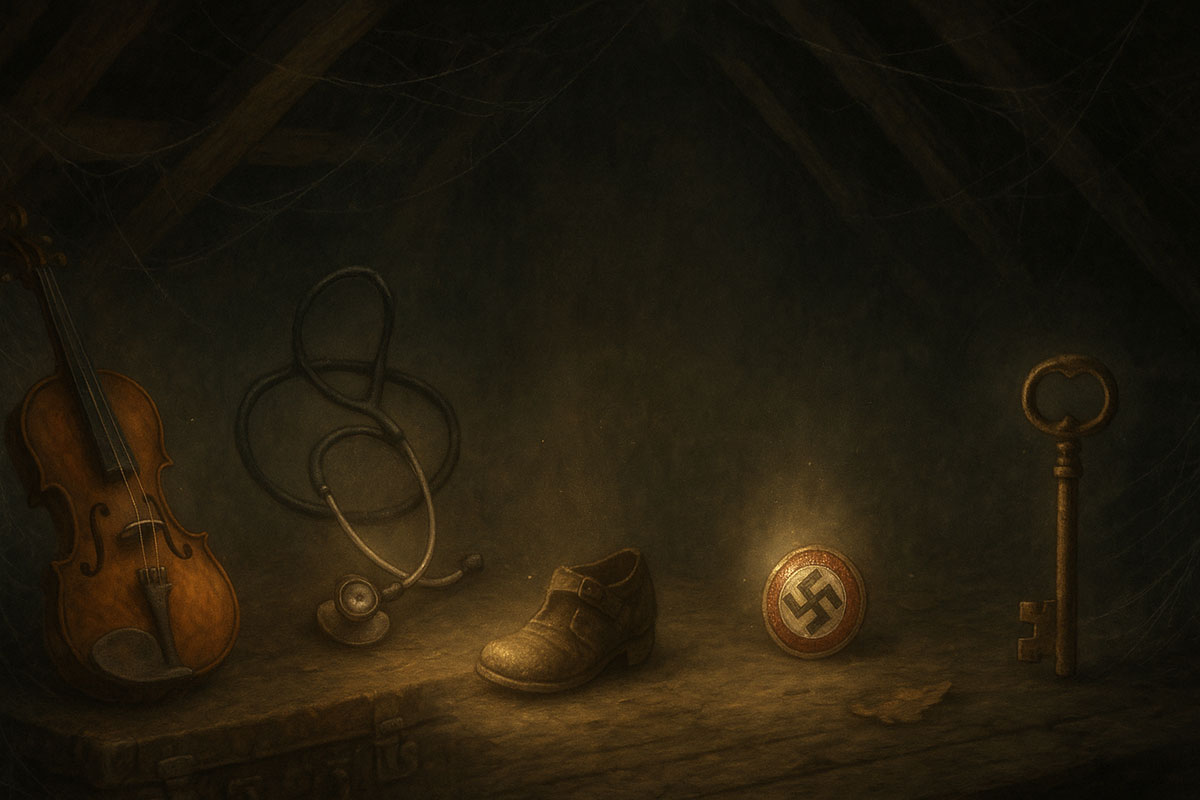
A dusty attic filled with cobwebs and quiet. Moonlight pours through a cracked window. Five objects sit in a circle under a single beam of soft light: an old violin, a child’s shoe, a rusted key, a soldier’s pin, and a stethoscope. They are animated not by movement, but by voice. Each once belonged to someone who lived in the house. Tonight, they remember.
🎙️ Moderator:
Rainer Maria Rilke – Poet of things unseen and the soul’s quiet music, guiding the objects with reverence.
🗣️ Participants:
The Violin – Once belonging to a child of the Alexanders. Carved wood, fragile voice, trembles when it speaks.
The Shoe – A small leather girl’s shoe, once hidden in a drawer by the Schröders.
The Rusted Key – Given to the Stasi officer by the government. Cold and utilitarian.
The Soldier’s Pin – Worn by a Nazi youth, polished with pride, now dulled with disillusion.
The Stethoscope – Once Dr. Alexander’s, placed carefully in his suitcase as he fled.
Rilke (softly, kneeling by the circle):
Objects do not forget. They wait. What did you carry for your owners that they could not carry themselves?
The Violin:
She couldn’t bring her voice. So she gave it to me. I still hum when no one listens. I remember her hands—so small. She stopped playing the night before they left. Her father said, “One last lullaby.” I played silence after that.
The Key:
I opened nothing joyful. I held the weight of control, not comfort. My owner turned me in every night—mechanical, cold. But once, I felt his hand tremble.
The Shoe:
I was hidden. Not lost. Not thrown away. Someone found me and couldn't bear to look—so they hid me again. I carry her last steps. Dust settled where laughter once was.
The Soldier’s Pin:
He believed I made him strong. I glittered when he marched. But the day the wall fell, he threw me into the canal. I was fished out. I still have the stain of rust—of shame.
The Stethoscope:
He laid me down so gently. I was his tool of care. His hand healed, even while the world hurt. When he packed me, he whispered, “You’ll be needed elsewhere.” He was right. I still echo with heartbeats.
Rilke (placing a hand over the violin):
Do you long to be remembered? Or are you weary of your burden?
The Violin:
Both. I want to sing again, but not in mourning.
The Shoe:
I want someone to trace my stitches and say, “She was here.”
The Key:
I want to be melted down. Forged into something kind.
The Soldier’s Pin:
I want to be looked at—not with pride, but with understanding.
The Stethoscope:
I want to rest on a new shoulder, and listen.
Rilke (gazing at the cobwebs above):
And if the house heard you now, what would you say?
The Violin:
Thank you for the acoustics.
The Shoe:
Thank you for holding my steps.
The Key:
Forgive me for what I opened.
The Soldier’s Pin:
Forgive me for who wore me.
The Stethoscope:
I am ready, if ever called again.
Rilke (standing, slowly fading into moonlight):
You were never just things. You were altars. You were vessels of memory. And now, tonight, you are voices. Let the silence know: it is no longer alone.
Topic 5: Germany’s Inner Voices — What Will We Become Now?
Setting:
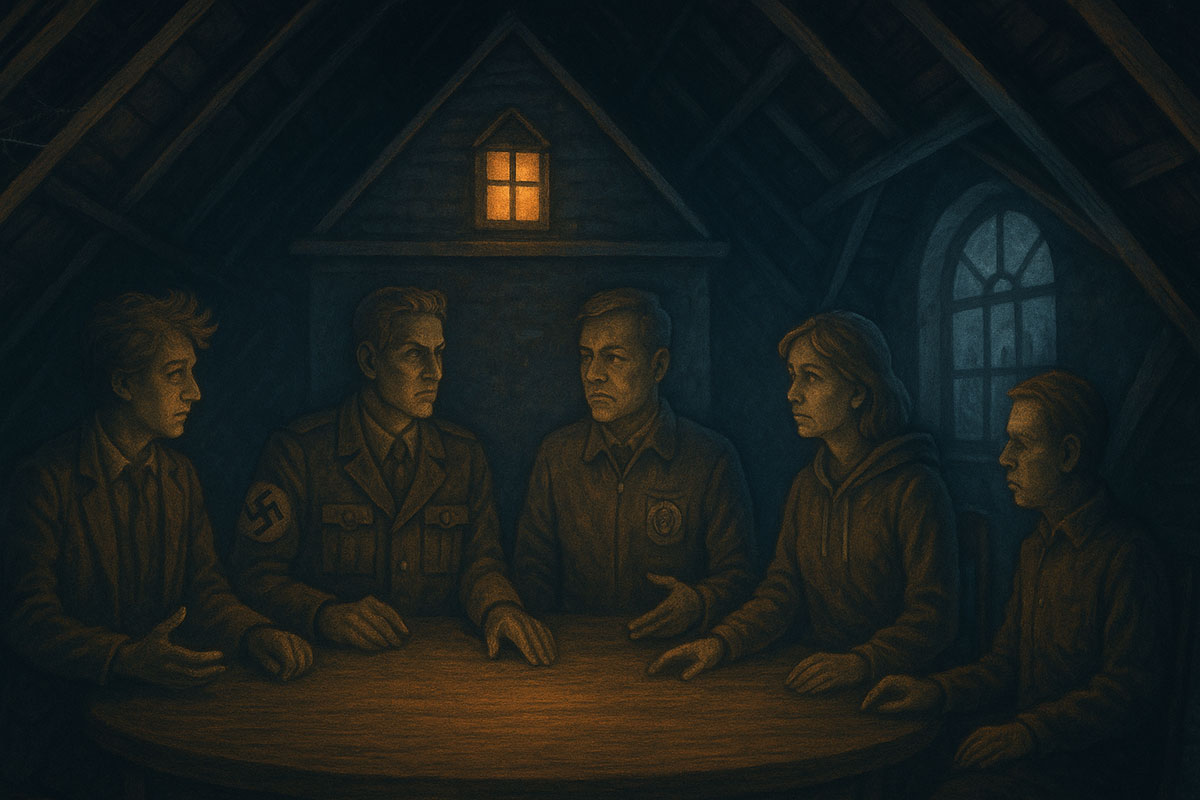
The attic of the House by the Canal has transformed into a timeless forum. Four windows open in each direction: one looks out to 1920s Berlin cafés, another to a marching crowd with red banners, a third to grey tenement walls of East Berlin, and the last to today’s bustling multicultural city. Light flickers across old wallpaper as if caught between decades.
🎙️ Moderator:
Hannah Arendt – Philosopher of responsibility and remembrance, she guides without judgment.
🗣️ Participants:
Weimar Germany – An idealistic intellectual in pince-nez and threadbare suit, sensitive and hesitant.
Nazi Germany – A severe figure with posture like steel, voice now quieter but not free of delusion.
East Germany (GDR) – An older woman with a file folder in one hand and a broken transistor radio in the other.
Modern Germany – A young adult of mixed heritage in streetwear, earbuds in one ear, passport in pocket.
The House – Aging, weary, but holding a steady presence; its voice sounds like footsteps on old wood.
Arendt (writing in a small notebook):
The house has held you all, yet none of you stayed. What did each of you leave behind—intentionally or not?
Weimar Germany:
I left books. Debates. The illusion that intelligence alone could save us. And fear—yes, I left fear in the corners.
Nazi Germany:
I left ashes. Uniforms. Order that cost the soul. I called it pride. It was ruin. I do not ask for forgiveness—but I know I left scars.
East Germany:
I left silence. Children grew up not knowing who to trust, only what to say. I taught people to survive. But not to dream.
Modern Germany:
I’ve left… ambiguity. Identity tangled with guilt and growth. I inherited your memories, but sometimes I want to forget. Sometimes I want to scream, “Let me be more than your museum.”
The House:
You all left your breath in my walls. Some of it sweet. Some of it choking. I hold it still.
Arendt (looking out the open window):
What does each of you still fear becoming?
Nazi Germany:
I fear being remembered as just a monster. That no one sees the humanity in how monstrous I became.
Weimar Germany:
I fear nostalgia—when people say, “It was a golden time,” forgetting how fragile I truly was.
East Germany:
I fear being laughed at. Reduced to a grey joke. My intentions were serious, even if my methods failed.
Modern Germany:
I fear becoming numb. That “Never Again” becomes a slogan, not a stand. That I post, but do not act.
The House:
I fear being renovated without reverence. That memory will be scraped clean for resale.
Arendt (quietly):
And now, if you could bless the next occupant of this house—whoever they are—what would you offer them?
Weimar Germany:
Offer them the freedom to speak, and the courage to listen.
Nazi Germany:
Offer them truth—unfiltered, even if it burns.
East Germany:
Offer them dignity, without surveillance.
Modern Germany:
Offer them wholeness. Not perfect. Just honest. A place where history isn’t hidden, but lived with.
The House:
Offer them a table with no empty chairs. Let all who were exiled return—if not in body, then in story.
Arendt (closing her notebook):
A house cannot vote, nor wage war, nor heal a nation. But it holds what you leave behind. And tonight, it has spoken through you.
Let us leave this attic not with answers, but with a better question: What kind of silence will we leave behind? And what kind of voice will echo in the walls when we are gone?
Final Thoughts by Thomas Harding
(Spoken softly, as if standing in the attic once more)
We often speak of history in terms of nations, ideologies, wars. But what if the truest history lives in the quietest places—in a child’s shoe left in a drawer, or a violin never played again?
The house by the canal did not choose its residents. It simply held them. It endured their joy, their betrayal, their grief, and their attempts to begin again.
These imagined conversations were not meant to rewrite history, but to acknowledge the spaces where memory lingers—unfinished, unresolved, but still alive.
If a house can remember, so can we.
And if we can remember—not to dwell in pain, but to speak with honesty—then maybe, just maybe, we can begin to build homes of our own.
Not just with bricks. But with listening. With courage. With love.
Short Bios:
W.G. Sebald: German writer known for his haunting blend of memory, architecture, and melancholy, exploring the trauma of modern European history through poetic narrative.
The House: A quiet yet sentient witness to a century of German history. Once a home, now a keeper of memory, sorrow, silence, and resilience.
The Canal: Ever-flowing and impartial, the canal watches history unfold without stopping, carrying reflections, blood, and memory downstream.
The Wind: A restless force moving between eras, whispering secrets, scattering voices, and echoing the unspoken through time.
Anne Alexander: Daughter of Alfred Alexander, forced into exile as a child. A symbol of innocence lost and memory preserved.
The Ivy: A silent observer that grows over time, covering wounds not to hide, but to preserve and protect what remains.
Marina Abramović: Performance artist known for exploring pain, presence, and remembrance, guiding others to confront the past with raw honesty.
Dr. Alfred Alexander: A Jewish physician who built the house with hope and dignity, only to lose it under Nazi persecution. A symbol of integrity and loss.
Irmgard Schröder: A German woman who lived in the house during the Nazi era. Complicit in silence, torn by memory and uncertain guilt.
Herr Müller: A former Stasi informant assigned to the house. Loyal to the East German state but privately burdened by ethical ambiguity.
Lena Schneider: A post-reunification squatter who lived briefly in the abandoned house. Young, lost, and seeking meaning in forgotten places.
Thomas Harding: British journalist and author who retraced the story of his family’s house in Berlin, revealing its layered, painful history.
Viktor E. Frankl: Holocaust survivor and psychiatrist whose teachings centered on meaning found through suffering and remembrance.
Memory: A spectral, shifting presence that appears across generations. Not a person, but the emotional echo of everything that was once felt and forgotten.
Rainer Maria Rilke: Austrian poet and mystic, whose voice guides inanimate objects to speak truths hidden in silence and form.
The Violin: Once belonging to a Jewish child. Its wood still carries the last lullaby before exile and the ache of interrupted music.
The Shoe: A small child’s shoe left behind, hidden away. A relic of innocence, quietly testifying to what was erased.
The Rusted Key: A utilitarian object tied to surveillance and power. Once a tool of control, now corroded with regret.
The Soldier’s Pin: A Nazi-era badge once worn with pride, now carrying the weight of complicity and shame.
The Stethoscope: Belonging to Dr. Alexander, this instrument of healing became a silent companion in exile and memory.
Hannah Arendt: Political philosopher who explored totalitarianism, the banality of evil, and moral responsibility in post-war thought.
Weimar Germany: A fragile figure representing Germany’s democratic experiment between wars—idealistic, cultured, but ultimately overwhelmed.
Nazi Germany: The embodiment of Germany’s darkest chapter, defined by propaganda, violence, and ideological extremism.
East Germany (GDR): A symbol of controlled society under Soviet influence. Structured and protective, but also secretive and emotionally cold.
Modern Germany: A thoughtful young figure shaped by inheritance of all past eras. Striving to reconcile pride with guilt, progress with reflection.
Leave a Reply