

|
Getting your Trinity Audio player ready...
|
What if Shakespeare invited leading scholars to explain The Taming of the Shrew to a modern audience, without defending it?
Introduction by William Shakespeare
Good friends, before you judge this comedy by its laughter, I ask you to listen for what laughter covers.
When I wrote The Taming of the Shrew, I did not set out to craft a lesson wrapped neatly in virtue. I set out to stage a world—one already familiar to my audience—where sharp tongues are punished, smooth performances are rewarded, and harmony is prized above honesty. Comedy, you see, is not the opposite of seriousness. It is seriousness allowed to move quickly enough that it escapes correction.
Katherina enters this world already named before she speaks. Her anger is not born in isolation; it is shaped by comparison, neglect, and a language that gives her no safe place to stand. Petruchio, too, enters already equipped—not with cruelty alone, but with certainty. He knows the rules, and he knows how to play them louder than anyone else in the room.
If you watch this play only to ask who is right, you will miss its deeper work. I invite you instead to watch what works. Who is rewarded. Who is heard. Who is finally allowed peace. Comedy reveals systems not by arguing against them, but by letting them succeed.
So laugh if you must—but listen closely while you do.
(Note: This is an imaginary conversation, a creative exploration of an idea, and not a real speech or event.)
Topic 1 — Is Katherina a Shrew, or a Woman with No Safe Language?
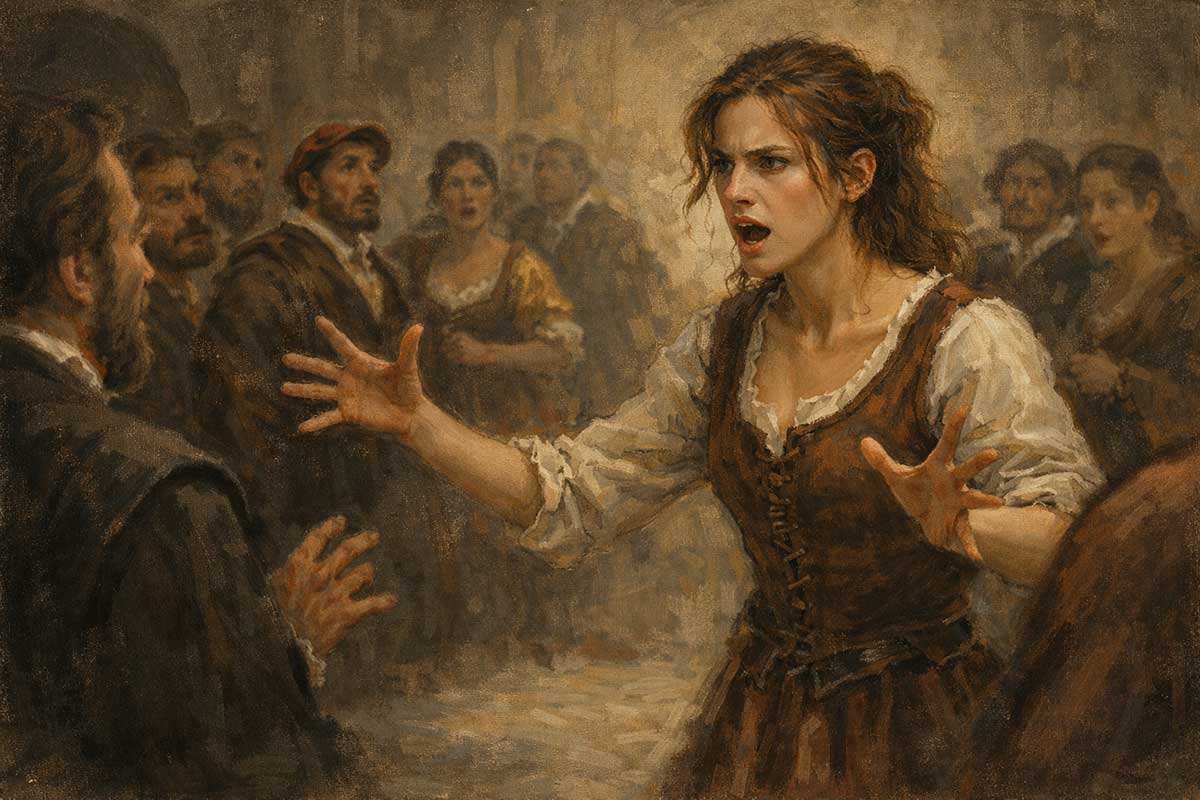
The room feels conversational rather than formal—no lectern, no verdict to be delivered. This topic begins where most readers begin: with discomfort. Not theory. Not history. Just the unease of watching a woman speak honestly and be punished for it.
Emma Smith opens calmly.
Emma Smith
Before we decide whether Katherina changes, we should ask a more basic question: why is she labeled a “shrew” in the first place? What does she do that earns that name—and who benefits from calling her that?
Coppélia Kahn
The label does a lot of work. Katherina speaks when she’s angry. She refuses to soften her tone for male comfort. In a society that expects women to be agreeable, that alone is enough to mark her as dangerous. Calling her a “shrew” converts resistance into pathology.
Janet Adelman
And notice what’s missing: no one asks why she’s angry. Her father openly favors Bianca. Suitors discuss her as an obstacle, not a person. Katherina’s sharpness is a response to exclusion—but the play’s society treats the response as the problem, not the cause.
Marjorie Garber
Exactly. “Shrew” is not a diagnosis; it’s a containment strategy. Once she is named, she is manageable. The name allows everyone else to stop listening. Shakespeare makes the audience hear her language—witty, fast, reactive—then shows how easily it’s dismissed.
Dympna Callaghan
And this is where modern readers feel the tension. Katherina’s speech is honest but unsafe. Bianca’s speech is gentle but strategic. One is punished; the other is rewarded. The play forces us to ask whether silence and sweetness are virtues—or simply survival skills.
Smith lets that settle, then steers the conversation toward the question that drives most searches and classroom debates.
Emma Smith
So let’s go to the heart of it. By the end of the play, does Katherina truly change—or does her strategy change?
Carol Thomas Neely
Psychologically, it’s far more plausible that her behavior adapts than that her personality transforms. Trauma doesn’t usually produce instant obedience; it produces recalibration. Katherina learns which version of herself is allowed to exist without constant punishment.
Janet Adelman
And the shift is public, not private. The turning point happens when Petruchio forces her to agree publicly that the sun is the moon. That moment isn’t about belief; it’s about display. She learns that public contradiction is dangerous—and that agreement can be a shield.
Marjorie Garber
I’d go further: she learns performance. Katherina becomes as theatrical as Petruchio. If he insists reality is negotiable, she negotiates. That’s not submission—it’s fluency in the language of power.
Coppélia Kahn
Yes, but we should not romanticize that fluency. Adaptation may be intelligent, but it’s still coerced. Katherina’s earlier speech was free but punished. Her later speech is rewarded but constrained. The question is not “has she won?” but “what did it cost her to stop fighting openly?”
Dympna Callaghan
And Shakespeare refuses to clarify her inner state. That’s deliberate. We never get a soliloquy where she says, “I believe this now.” We only see what she does. The ambiguity is structural—it keeps the audience arguing instead of settling.
Smith nods, then brings them to the moment everyone waits for: the final speech.
Emma Smith
Which leads us to the speech itself. Is Katherina’s final speech submission, irony, survival—or control?
Marjorie Garber
It’s all of them, and that’s what makes it unsettling. Spoken plainly, the speech endorses hierarchy. Performed knowingly, it can read as satire. Strategically, it wins Petruchio’s bet and restores her social standing. Shakespeare designs it so that intention cannot be proven.
Carol Thomas Neely
What’s crucial is who she’s speaking to. She’s not alone with Petruchio. She’s addressing other women—and an audience of men. That makes the speech social, not intimate. It’s a public act with public consequences.
Janet Adelman
And notice how fluent she becomes. Earlier, she was reactive, explosive. Here, she is composed, articulate, controlled. That suggests learning—but not necessarily belief. Control can be a sign of internalization, or of mastery over the situation.
Coppélia Kahn
I’d argue the speech reveals how obedience is taught as peace. The system rewards her for articulating its values. Whether she believes them is secondary. The real question is whether a woman in that society has any better option.
Dympna Callaghan
Which is why the ending doesn’t close the argument—it opens it. If the speech were clearly ironic or clearly sincere, the play would be simpler. Shakespeare leaves us with the discomfort of not knowing whether survival has masqueraded as consent.
Smith closes the session gently, not with an answer, but with a reframing.
Emma Smith
So the record for Topic 1 is this: Katherina is called a “shrew” because she refuses a role that offers her no protection. What changes is not her intelligence or spirit, but her method. The final speech may look like obedience—but it also looks like fluency in a system that only listens when a woman speaks its language.
Next, we turn to the man who claims to teach her that language—and ask whether Petruchio is a tyrant, a comedian, or something far more revealing.
Topic 2 — Is Petruchio a Monster, a Performer, or a Product of His World?
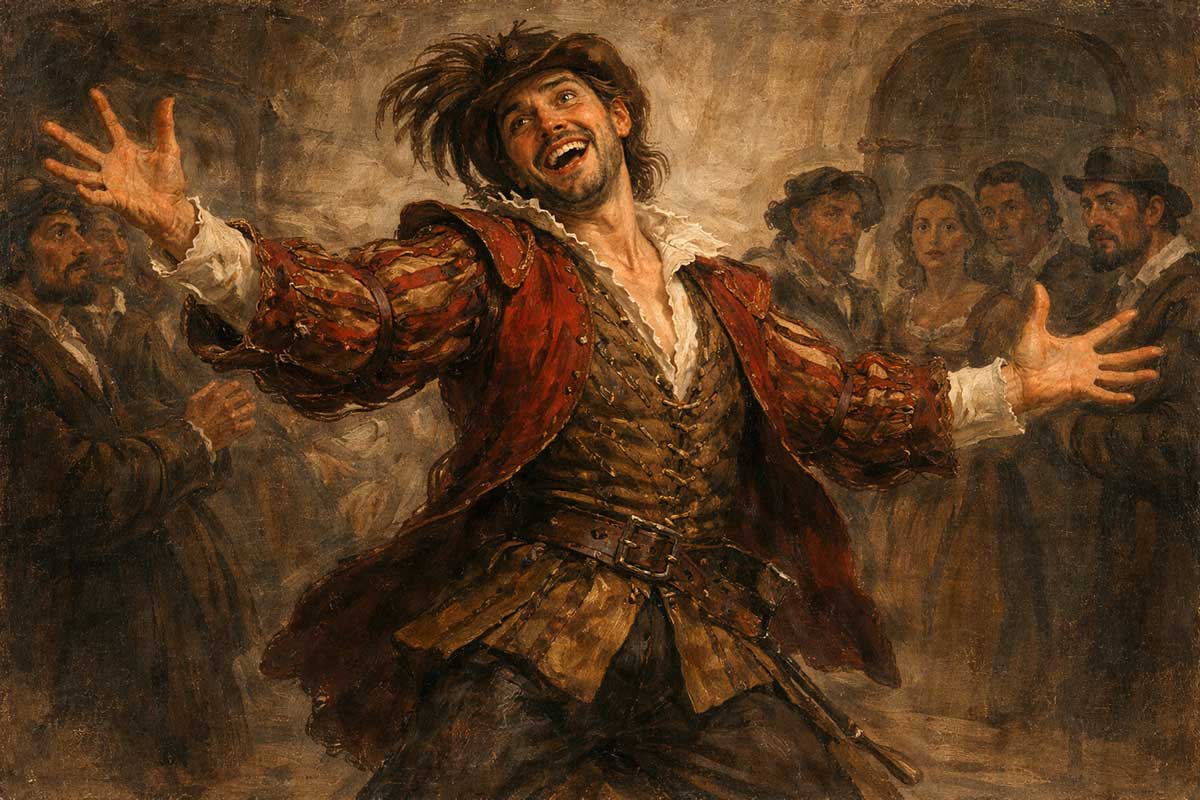
The tone of the room shifts. Where Topic 1 carried moral unease, Topic 2 carries a different discomfort: laughter. Not because the subject is funny, but because the play keeps inviting us to laugh—and then asking what that laughter costs.
Michael Dobson begins from the stage rather than the page.
Michael Dobson
Audiences often ask a blunt question: Are we supposed to find Petruchio funny? If the answer is yes, then we also have to ask why comedy is being used to frame behavior that looks, at times, unmistakably cruel. So let’s start there. Is Petruchio a monster—or is he playing one?
Stephen Greenblatt
Petruchio is first and foremost a social opportunist. He arrives in Padua announcing that he wants to marry for wealth. That bluntness is important. He does not hide his motives. What makes him unsettling is not hypocrisy, but confidence—he knows the rules of the world he’s entered and decides to exploit them loudly.
Jonathan Bate
And he behaves as if he’s stepped into a role already written for him. His language is exaggerated, theatrical, deliberately excessive. That’s a clue. Petruchio doesn’t just dominate Katherina; he performs dominance. He understands that authority in this society is something you stage, not something you quietly possess.
James Shapiro
Which connects to the play’s historical moment. Early modern comedy often used hyperbole to normalize social norms by exaggerating them. Petruchio’s extremity makes his actions visible. The danger is that visibility can slide into endorsement—especially when the audience is encouraged to laugh.
Stanley Wells
But we should be careful not to make Petruchio more psychologically complex than the text allows. He does not agonize. He does not doubt. He treats the “taming” as a strategy to be executed. That clarity is part of why he feels threatening: he never asks whether he should, only whether it works.
Dobson leans into the next question—the one that divides modern readers most sharply.
Michael Dobson
So why does comedy make Petruchio’s behavior easier to accept? Why does laughter soften what would otherwise look like abuse?
Stephen Greenblatt
Because comedy creates distance. When actions are framed as jokes, they feel temporary, reversible. The audience tells itself, This isn’t real; this is play. Shakespeare exploits that instinct. The laughter doesn’t erase the harm—it delays our moral response to it.
Jonathan Bate
And timing matters. Petruchio’s cruelty is often punctuated with verbal wit. He moves quickly, overwhelms the moment, doesn’t let discomfort settle. Comedy becomes momentum. The audience is carried forward before it can stop and ask, What just happened?
James Shapiro
There’s also the social release function of comedy. Petruchio behaves badly in ways the audience would never dare. Watching him break rules—arriving late to a wedding, contradicting reality—can feel liberating. That liberation, however, is borrowed at someone else’s expense.
Stanley Wells
And productions amplify this. A charismatic Petruchio can turn control into charm. That’s not accidental; it’s a danger Shakespeare builds into the role. The line between laughter with Petruchio and laughter at Katherina is perilously thin.
Michael Dobson
Which raises the hardest question of this topic: Is Petruchio’s “taming” about control—or about forcing social conformity?
Jonathan Bate
I’d argue it’s about conformity first, control second. Petruchio doesn’t want Katherina silent; he wants her predictable. Her unpredictability is what disrupts social order. Once she speaks the expected language, the system relaxes.
Stephen Greenblatt
Yes—and notice how Petruchio frames his actions as care. He repeatedly claims he is acting for her good. That rhetoric is crucial. Control rarely announces itself as cruelty; it announces itself as concern.
James Shapiro
Which is why the play feels modern. Systems of power often justify domination as improvement. Petruchio believes—or performs belief—that he is correcting disorder. The frightening part is how plausible that justification sounds when backed by social norms.
Stanley Wells
Yet Shakespeare does not give Petruchio interior access. We never hear him alone, doubting or reflecting. That absence matters. It keeps him from becoming a fully sympathetic figure. He remains a force, not a soul.
Dobson closes the discussion with a careful summation—neither condemnation nor excuse.
Michael Dobson
So the record for Topic 2 is this: Petruchio is not a simple villain, nor a harmless clown. He is a performer who understands how power works in his world—and uses comedy to make that power palatable. Whether the audience laughs with him or recoils from him depends on how alert they are to what comedy can conceal.
Next, we turn from individuals to institutions—and ask whether marriage in this play is ever a partnership at all, or simply a system that rewards obedience and punishes resistance.
Topic 3 — Is Marriage in the Play a Partnership or a Power System?
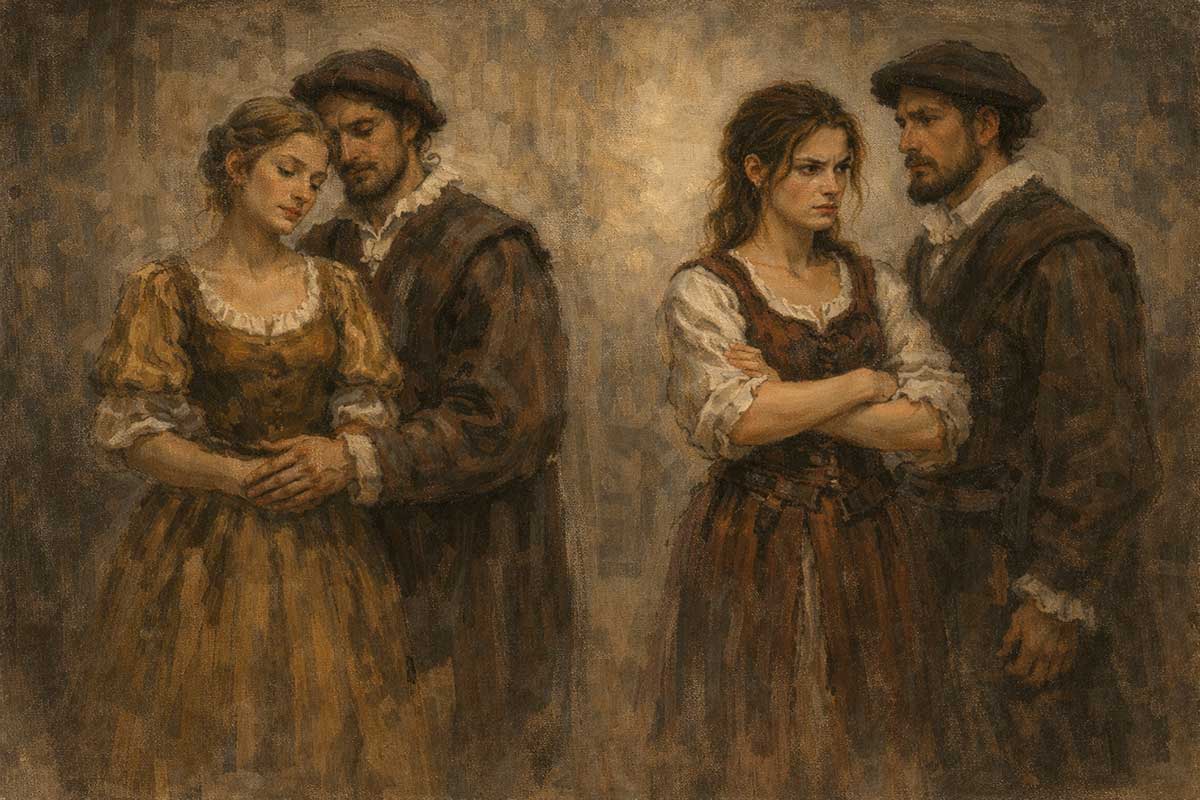
By now, the discussion has moved past personalities. Topic 3 shifts the lens outward—from Katherina and Petruchio as individuals to marriage itself as an institution. What kind of system does the play imagine marriage to be? A shared life—or a structure designed to enforce order?
Elaine Showalter opens with the question that most modern readers feel but struggle to articulate.
Elaine Showalter
When people ask whether The Taming of the Shrew is misogynistic, what they’re really asking is simpler and harder: does the play present marriage as mutual, or as a hierarchy that must be enforced? So let’s start there. Does the play support male dominance—or expose it?
Gail Kern Paster
Marriage in this play is absolutely hierarchical, but that doesn’t mean Shakespeare is endorsing it uncritically. What he does is show how hierarchy is justified through the language of care, stability, and “natural order.” The body becomes the site of discipline—who eats, who sleeps, who speaks.
Catherine Belsey
And we should notice how often obedience is equated with peace. Disorder is always described as noisy, excessive, disruptive. Marriage promises quiet. That promise is seductive. The play asks us to notice how often social harmony is achieved by silencing someone.
Terry Eagleton
Marriage here functions like an economic and ideological contract. Women move between households; dowries are negotiated; obedience ensures smooth exchange. This isn’t romance—it’s infrastructure. Shakespeare stages marriage as one of the systems that keep property, lineage, and authority intact.
Leah Marcus
Which is why Bianca matters so much. She appears obedient, gentle, ideal—but she also lies, disguises herself, and secretly chooses her husband. Her obedience is socially legible, not morally transparent. The play contrasts two strategies for survival within the same system.
Showalter moves the discussion to the word that keeps resurfacing—obedience—and asks why it carries such weight.
Elaine Showalter
Why is obedience treated as stability in this play? Why does everyone relax once wives “obey”?
Gail Kern Paster
Because obedience promises predictability. In a patriarchal household, predictability equals safety for those in power. When Katherina resists, she introduces uncertainty—emotional, social, bodily. The system reads that uncertainty as danger.
Catherine Belsey
Obedience also simplifies interpretation. A compliant wife is easy to read. A resistant woman requires engagement, negotiation, listening. The play shows how systems prefer legibility over justice.
Terry Eagleton
And let’s be blunt: obedience transfers labor. Emotional labor, domestic labor, social smoothing—it all moves downward. Stability is built on unequal distribution of effort. Shakespeare doesn’t idealize this; he exposes how “order” is paid for.
Leah Marcus
That exposure is why the play feels unresolved. Shakespeare never gives us a speech praising marriage as joy or intimacy. What we get instead are rules, bargains, and performances. The emotional center is conspicuously absent.
Showalter then presses the question that the final scene forces upon every audience.
Elaine Showalter
So who actually holds power at the end of the play?
Catherine Belsey
Formally, the husbands. Socially, the system that rewards obedience. But individually? It’s less clear. Katherina controls the final moment through language. She commands attention. That is a kind of power—even if it operates inside constraint.
Gail Kern Paster
Power here is not freedom; it’s survivability. Katherina gains stability, not equality. The system remains intact. What changes is her position within it.
Terry Eagleton
Which is why no one truly “wins.” The system succeeds, but at the cost of authenticity. Shakespeare leaves us with efficiency, not justice.
Leah Marcus
And Bianca’s quiet defiance reminds us that obedience can be deceptive. Power isn’t always loud. Sometimes it hides behind compliance.
Showalter closes with a summary that refuses comfort.
Elaine Showalter
So the record for Topic 3 is this: marriage in The Taming of the Shrew is not a partnership of equals, but a power system that rewards conformity and punishes resistance. Shakespeare doesn’t give us an alternative model—but he makes the cost of this one impossible to ignore.
Next, we turn to disguise, performance, and identity—and ask whether anyone in this play is allowed to be fully themselves without consequence.
Topic 4 — Is Everyone Acting a Role? Identity, Disguise, and Survival
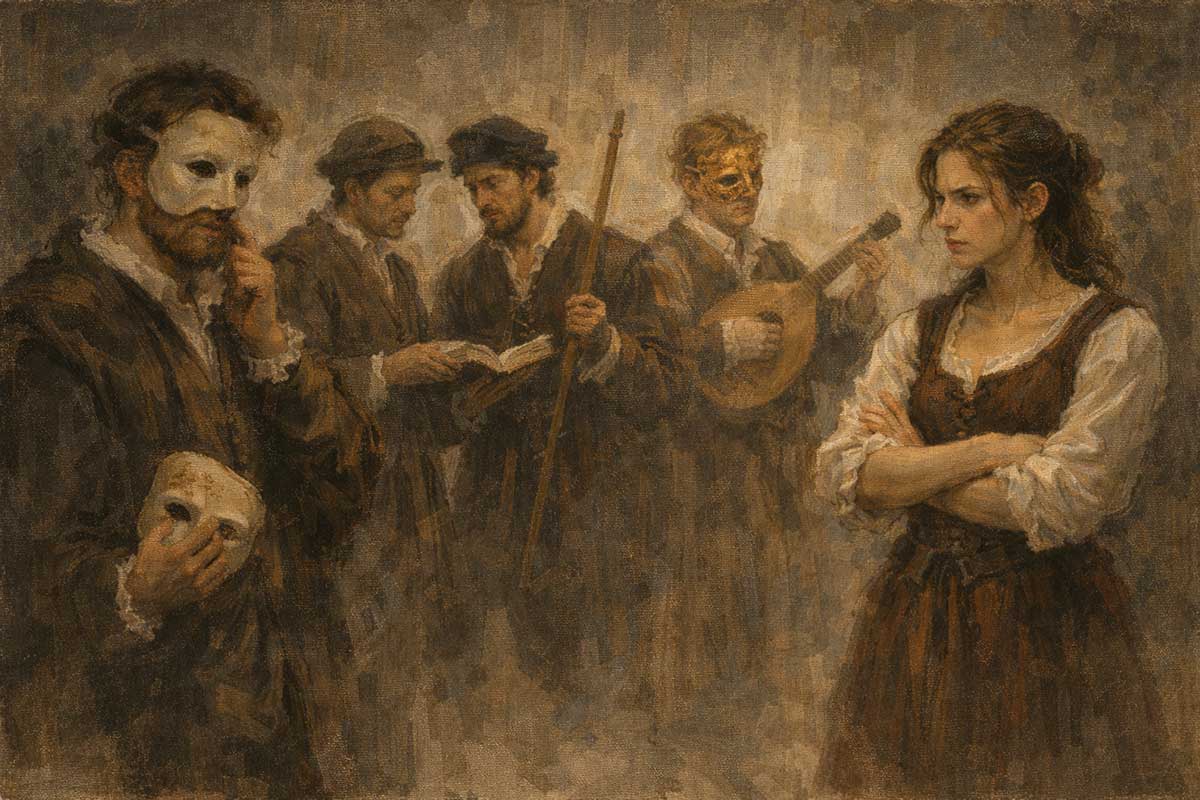
If Topic 3 exposed marriage as a system, Topic 4 asks how anyone survives inside that system. The play is crowded with disguises, performances, and strategic selves. No one—man or woman—moves forward by being entirely transparent.
David Scott Kastan frames the turn.
David Scott Kastan
So many characters in this play succeed only by pretending to be someone else. That can’t be accidental. Let’s begin with the obvious: why is disguise essential to love and success in this story?
Harold Bloom
Because authenticity is not rewarded here. Lucentio wins Bianca by becoming a tutor. Hortensio competes by becoming a music teacher. Truth is ineffective; performance works. Shakespeare isn’t celebrating deceit—he’s showing a world where desire must put on a mask to function.
Northrop Frye
Comedy traditionally resolves tension through disguise. But here disguise is more than plot machinery—it’s ontology. Characters don’t just use roles; they are their roles. Identity is something provisional, adjusted to circumstance.
Cleanth Brooks
And Shakespeare builds verbal texture to support that. Characters speak differently depending on who they are pretending to be. Language becomes costume. The audience is trained to listen not for sincerity, but for effectiveness.
Andrew Hadfield
This aligns with early modern politics. Public life demanded performance. Deference, obedience, masculinity, femininity—these were roles to be enacted correctly. The play reflects that reality rather than escaping it.
Kastan pivots to the question that pulls Katherina back into the center—now reframed.
David Scott Kastan
If disguise is survival, then we have to ask: is Katherina’s obedience at the end another disguise?
Harold Bloom
It certainly reads as a performance. The rhetorical polish of the final speech contrasts sharply with her earlier spontaneity. She has learned the script. Whether she believes it is beside the point; she delivers it flawlessly.
Northrop Frye
What matters is that the performance works. It restores social equilibrium. Comedy ends not when truth is revealed, but when friction disappears. Katherina’s obedience smooths the system.
Cleanth Brooks
And Shakespeare withholds interior confirmation. No soliloquy. No aside. That silence is crucial. It prevents us from settling the question and forces us to confront how often society rewards behavior without caring about belief.
Andrew Hadfield
From a political lens, this is adaptive intelligence. Katherina stops fighting the rules and starts using them. That doesn’t make the rules just—but it does make her safer.
Kastan presses the final question, the one that broadens the play beyond gender.
David Scott Kastan
So what does The Taming of the Shrew suggest about identity itself? Is the self something fixed—or something performed?
Harold Bloom
The play leans toward performance. Characters become legible by behaving correctly. Identity is not discovered; it is recognized by others. That recognition is power.
Northrop Frye
Which is why the Christopher Sly framing matters. The play begins with a man convinced he is a lord because everyone treats him like one. Status, like identity, is socially enforced illusion.
Cleanth Brooks
And the audience is implicated. We accept the illusion because it functions. The play quietly asks: how often do we do the same in real life?
Andrew Hadfield
Survival here means adaptability. Those who refuse to perform—at least temporarily—are marginalized or punished. Shakespeare isn’t endorsing this world; he’s diagnosing it.
Kastan closes with a clear, unsettling summary.
David Scott Kastan
So the record for Topic 4 is this: in The Taming of the Shrew, identity is not something you assert—it’s something you negotiate. Disguise enables love, obedience enables peace, and performance enables survival. The danger is not that people act—but that acting becomes the only way to live.
Next, we turn to the final question: is Shakespeare endorsing this system—or quietly outsmarting it by refusing to give us a clean moral answer?
Topic 5 — Is the Play Endorsing the System, or Outsmarting It?

This final topic steps back from characters and asks the question readers keep returning to—especially after the last line fades. Does The Taming of the Shrew ultimately support the social order it depicts, or does it undermine that order by exposing how fragile and performative it is?
James Shapiro opens by reframing the problem.
James Shapiro
We often want Shakespeare to take a clear moral position. But he rarely does. Instead, he designs situations that work on stage and then lets the discomfort linger. So the real question isn’t “What does Shakespeare believe?” but “What does the play make unavoidable?”
Marjorie Garber
Exactly. The play ends with apparent order restored—marriages secured, disorder corrected. That looks like endorsement. But Shakespeare loads that ending with so much ambiguity that it resists closure. The system wins, yes—but at the cost of clarity, sincerity, and ease.
Stephen Greenblatt
From a historical perspective, the ending had to look stable. Comedy demanded it. But Shakespeare uses the conventions of comedy to smuggle in critique. He fulfills the form while quietly unsettling the audience’s confidence in what they’ve just applauded.
Coppélia Kahn
Which is why modern readers argue so fiercely. If the play were simply misogynistic, the debate would be easy. But Shakespeare refuses to reassure us. Katherina’s final speech works too well. It’s too articulate, too commanding, to be dismissed as mere submission.
Terry Eagleton
Ideology is most effective when it doesn’t announce itself. The play doesn’t shout its values; it normalizes them. That’s what makes it dangerous—and interesting. Shakespeare shows how power sustains itself not through violence alone, but through consent that looks voluntary.
Shapiro brings the conversation to the audience’s role.
James Shapiro
So how much responsibility does Shakespeare place on us, the audience?
Marjorie Garber
A great deal. We are asked to decide how to hear Katherina’s speech. Irony lives not on the page, but in reception. Shakespeare hands us the material and watches what we do with it.
Stephen Greenblatt
And our laughter matters. If we laugh without reflection, the system feels affirmed. If we laugh and then feel uneasy, the play has done its work.
Coppélia Kahn
That unease is the point. The play doesn’t tell us what to think; it shows us how easily we accept control when it’s dressed as harmony.
Terry Eagleton
Which is why the ending feels efficient rather than joyful. Everything functions—but nothing heals. That’s not a celebration; it’s a diagnosis.
Shapiro asks the final, unavoidable question.
James Shapiro
So is The Taming of the Shrew conservative or subversive?
Marjorie Garber
It’s structurally conservative and emotionally destabilizing. It obeys the rules while quietly revealing their cost.
Stephen Greenblatt
It survives its time by refusing certainty. That refusal is what keeps it alive—and controversial.
Coppélia Kahn
If Shakespeare endorsed the system fully, we wouldn’t still be arguing. The play’s endurance comes from its unresolved tension.
Terry Eagleton
In that sense, the play doesn’t free its characters—but it frees its readers to question why order so often depends on silence.
Shapiro closes the series with a measured conclusion.
James Shapiro
So the final record is this: The Taming of the Shrew neither cleanly endorses nor openly rejects the social system it portrays. Instead, it stages that system so efficiently, so convincingly, that we’re forced to confront how easily order can masquerade as justice—and how often survival is mistaken for consent.
Final Thoughts by William Shakespeare
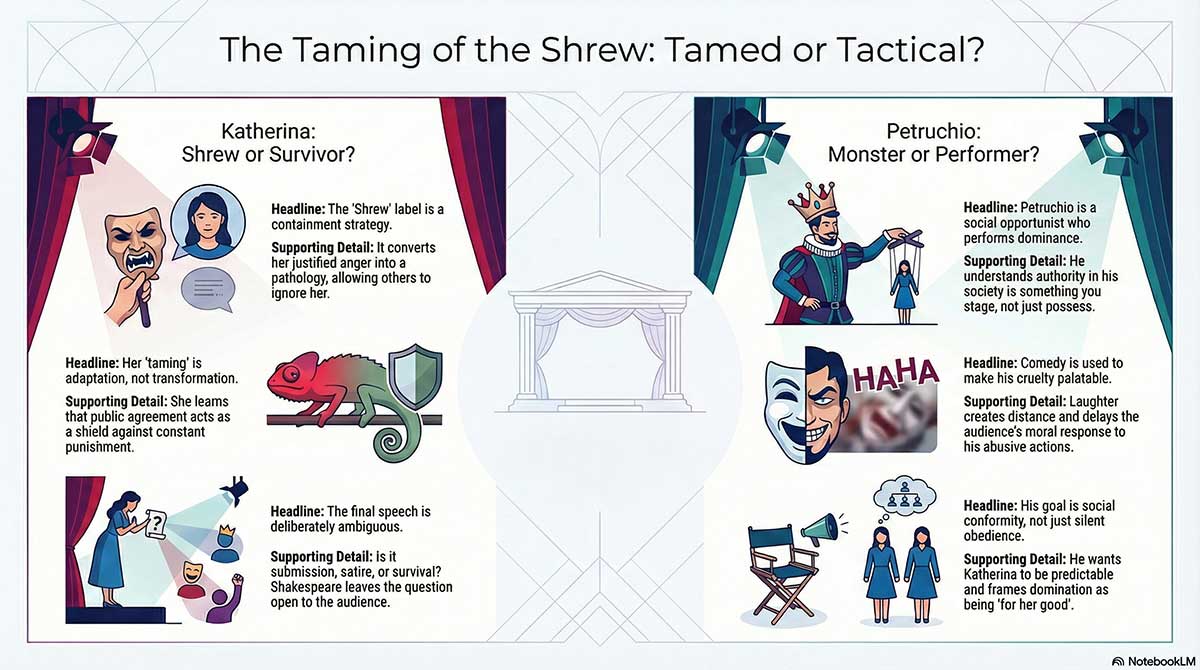
By the final scene, order appears restored. Voices soften. Couples align. The room exhales. Yet I leave you not with joy, but with efficiency.
Katherina speaks beautifully at the end—too beautifully to be dismissed. Her words command attention. She does not whisper obedience; she performs it with precision. Whether that performance is belief, strategy, or survival is a question I refuse to answer for you. Silence, here, is intentional. I give no aside, no confession, no unveiling of the “true self,” because in this world the self that survives is the one that is legible.
Some will say this play endorses submission. Others will say it mocks it. I say only this: the play shows how easily peace is purchased with silence, how quickly order replaces understanding, and how often harmony is mistaken for justice.
If you leave unsettled, then the play has done its work. Comedy should not always comfort. Sometimes it should teach us how smoothly a system can run—while something essential goes missing.
The taming ends. The questions do not.
Short Bios:
Michael Dobson
Director of the Shakespeare Institute and a leading authority on how Shakespeare’s plays function on stage, especially comedy and audience response.
Stephen Greenblatt
Founder of New Historicism, known for reading Shakespeare through power, culture, and social systems rather than authorial intention alone.
Jonathan Bate
Renowned Shakespeare biographer whose work bridges literary scholarship, history, and performance.
James Shapiro
Columbia professor specializing in Shakespeare’s historical context and how audiences then and now interpret his plays.
Stanley Wells
One of the most influential editors of Shakespeare’s texts, emphasizing close reading and textual clarity.
Elaine Showalter
Pioneering feminist critic whose work reshaped discussions of gender, voice, and power in canonical literature.
Gail Kern Paster
Scholar of early modern psychology and the body, focusing on emotion, discipline, and social control in Renaissance texts.
Catherine Belsey
Known for ideological and structural readings of Shakespeare, especially how language enforces social order.
Terry Eagleton
Influential theorist who analyzes literature through ideology, power, and class structures.
Leah Marcus
Expert on early modern English culture, censorship, and how texts shift meaning across time.
David Scott Kastan
Yale scholar known for examining Shakespeare’s plays as cultural systems rather than moral arguments.
Harold Bloom
Celebrated critic focused on character psychology and Shakespeare’s influence on modern consciousness.
Northrop Frye
Key figure in literary theory who framed Shakespearean comedy as mythic and structural rather than realistic.
Cleanth Brooks
Central figure in New Criticism, emphasizing close reading and internal textual tension.
Andrew Hadfield
Scholar linking Shakespeare’s plays to early modern politics, power, and identity formation.
Leave a Reply