
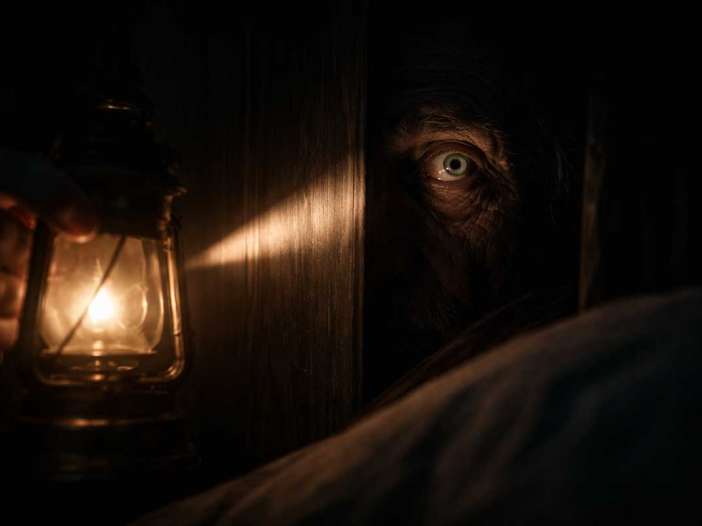
|
Getting your Trinity Audio player ready...
|
What if Poe’s narrator isn’t insane—but terrified of being seen?
I did not begin The Tell-Tale Heart with a crime.
I began with a voice.
Before the eye was opened, before the lantern crept across the darkness, before the body was hidden beneath the floor, there was already a mind insisting on its clarity. A consciousness determined to prove itself sound—because something within it knew how fragile that claim truly was.
This story is not an account of madness as spectacle. It is an exposure of what happens when thought turns inward and refuses to look away. When attention sharpens into obsession. When reason becomes not a refuge, but a performance demanded without mercy.
The events unfold through five crucial scenes, each tightening the enclosure. Observation becomes terror. Control becomes compulsion. Silence becomes unbearable. Nothing external attacks the narrator. Nothing supernatural intervenes. The danger arises from within the mind itself—methodical, patient, and exact.
If this tale unsettles, it is not because of what is done, but because of how carefully it is explained.
Introduction by Voice: Edgar Allan Poe
I did not begin The Tell-Tale Heart with a crime.
I began with a voice.
Before the eye was opened, before the lantern crept across the darkness, before the body was hidden beneath the floor, there was already a mind insisting on its clarity. A consciousness determined to prove itself sound—because something within it knew how fragile that claim truly was.
This story is not an account of madness as spectacle. It is an exposure of what happens when thought turns inward and refuses to look away. When attention sharpens into obsession. When reason becomes not a refuge, but a performance demanded without mercy.
The events unfold through five crucial scenes, each tightening the enclosure. Observation becomes terror. Control becomes compulsion. Silence becomes unbearable. Nothing external attacks the narrator. Nothing supernatural intervenes. The danger arises from within the mind itself—methodical, patient, and exact.
If this tale unsettles, it is not because of what is done, but because of how carefully it is explained.
(Note: This is an imaginary conversation, a creative exploration of an idea, and not a real speech or event.)
Episode 1 - Is the Narrator Sane—or Performing Sanity?
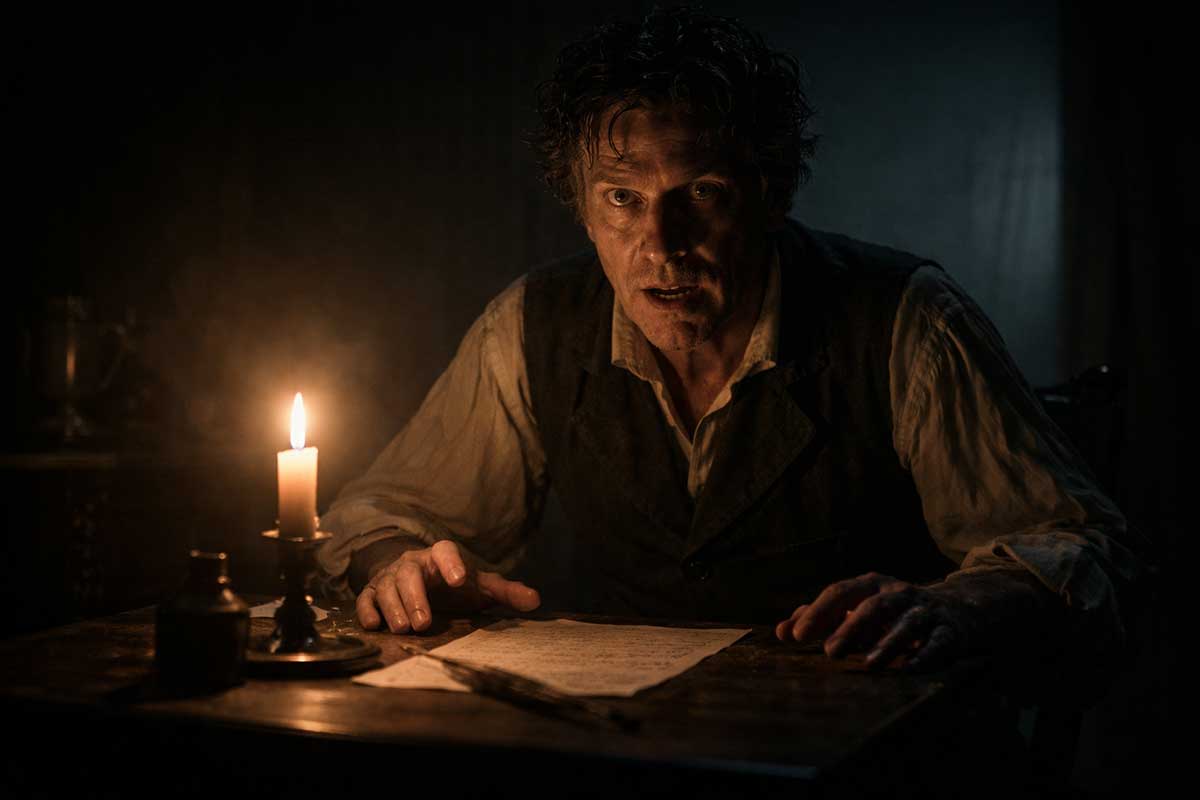
Participants:
Edgar Allan Poe
J. Gerald Kennedy
G. R. Thompson
Elmer R. Pry
James Phelan
Moderator:
Stanley Cavell
(chosen for his work on skepticism, acknowledgment, and the anxiety of being believed)
Opening Scene
The voice begins before the crime.
Before the eye.
Before the body under the floorboards.
It begins with insistence.
“Why will you say that I am mad?”
Not an answer. Not a defense.
A demand.
Edgar Allan Poe sits slightly apart from the others, listening—not to the words, but to the urgency behind them. Stanley Cavell leans forward, as though addressing not a panel, but the voice itself.
Stanley Cavell (Moderator)
Let us begin where the story insists we begin.
Not with murder.
Not with motive.
But with an appeal.
The narrator does not ask to be understood.
He asks to be believed.
So my question is simple, and not simple at all:
Is the narrator insane—or is he performing sanity in a world that demands proof?
J. Gerald Kennedy
The narrator’s first act is not violence—it is narration.
He constructs a case. He anticipates objections. He explains too much. This excess is crucial. Sanity, here, is not a condition—it is a role being anxiously played.
What we witness is not madness overflowing, but consciousness turned inward, monitoring itself, terrified of being exposed.
Edgar Allan Poe
(quiet, almost amused)
People assume madness announces itself.
It rarely does.
Elmer R. Pry
What strikes me is that the narrator’s logic is intact.
His memory is precise. His reasoning is sequential. His language is controlled. If we define insanity as incoherence, he fails to qualify.
But if we define it as compulsion—the inability to stop explaining—then the diagnosis shifts.
This is not chaos.
It is over-order.
G. R. Thompson
Exactly.
The narrator’s fixation on clarity is itself the symptom. He does not trust silence. He does not trust implication. He believes sanity must be demonstrated.
This is Romantic irony at its sharpest: reason becomes the mask madness wears.
James Phelan
And the audience matters.
The narrator addresses a “you.” Someone imagined. Someone judging. Someone who might condemn.
This makes sanity performative. He is sane for someone else. The narration is not introspective—it is defensive.
Stanley Cavell
So let me sharpen this.
What if the narrator is not insane—but terrified of not being acknowledged as sane?
Edgar Allan Poe
That terror interests me more than madness ever did.
To be doubted is unbearable.
J. Gerald Kennedy
And that terror produces narration.
He speaks to control perception. He narrates to fix identity. But narration, once begun, does not obey its author.
It accelerates.
Elmer R. Pry
Which leads to a paradox: the more he explains, the less stable he appears.
Sanity, when demanded, becomes suspicious.
James Phelan
This implicates the reader.
We are placed in the position of judge. The narrator watches us watching him. His sanity depends on our reaction—and we feel that pressure.
The story becomes a test: not of his mind, but of ours.
Stanley Cavell
And this returns us to skepticism.
The narrator does not ask, “Am I sane?”
He asks, “Can you know that I am sane?”
That gap—between inner certainty and outward proof—is where the story lives.
Edgar Allan Poe
People think I wrote about madness.
I wrote about the terror of being observed.
Final Question (Moderator)
Then let us end this way.
Is the narrator unraveling—or is he revealing how fragile sanity becomes when it must constantly justify itself?
G. R. Thompson
Both.
The performance consumes him.
Elmer R. Pry
Sanity becomes labor.
James Phelan
And labor collapses into confession.
J. Gerald Kennedy
The mind does not break.
It tightens—until it snaps.
Edgar Allan Poe
Sanity was never the point.
Control was.
Closing Scene
The voice continues.
The murder has not yet happened—but something irreversible already has.
The narrator has begun to speak.
And speaking, he cannot stop.
Episode 2 - The Eye as Moral Surveillance
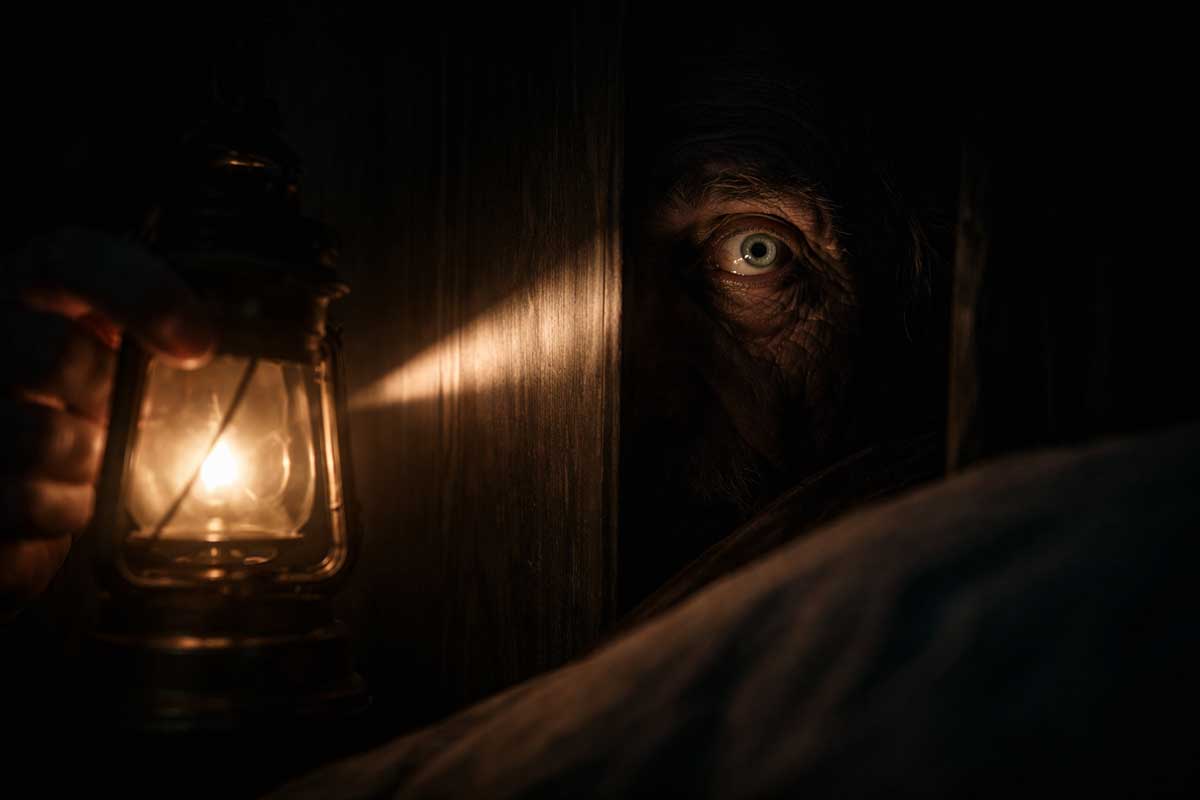
What Is the Eye Watching—and Why Must It Be Destroyed?
Participants:
Edgar Allan Poe
Christopher Castiglia
Eric Carlson
Avital Ronell
Michel Foucault
Moderator:
Tzvetan Todorov
(chosen for his work on the fantastic, hesitation, and the unstable boundary between inner and outer reality)
Opening Scene
The eye appears before the crime.
Not the man.
Not the body.
The eye.
“Pale blue.”
“Vulture-like.”
Veiled, yet penetrating.
The narrator does not describe hatred.
He describes exposure.
Edgar Allan Poe listens carefully as Todorov opens the discussion—not as a critic, but as someone tracing the moment when perception turns into terror.
Tzvetan Todorov (Moderator)
In the literature of the fantastic, terror often arises when we cannot decide whether a threat is internal or external.
The eye troubles the narrator because it is seen—and because it sees.
So let us begin:
Is the eye an object of fear, or a function of the narrator’s own consciousness?
Christopher Castiglia
The eye operates as surveillance.
Not divine surveillance—social surveillance.
It watches not to judge morally, but to register. To know. To record.
That is what terrifies the narrator: not condemnation, but visibility. The fear of being fully legible.
Edgar Allan Poe
People fear judgment.
They fear being seen even more.
Eric Carlson
The eye is intolerable because it has no intention.
It does not accuse. It does not speak. It simply is.
That neutrality makes it absolute. The narrator cannot negotiate with it, persuade it, or narrate around it.
So he must eliminate it.
Avital Ronell
The eye is not a symbol—it is a fixation.
An object that condenses anxiety. Once fixated upon, it becomes unavoidable.
The narrator is not reacting to danger; he is reacting to exposure without explanation.
The eye offers no story. And so it cannot be absorbed.
Michel Foucault
This is the gaze before institutions.
Power without a voice.
The eye does not punish; it observes. And observation is enough to discipline the subject from within.
The narrator internalizes that gaze—and then attempts to destroy its source, unaware that it has already migrated inward.
Tzvetan Todorov
So the eye produces hesitation.
Is it real? Is it imagined? Is it external authority—or internalized scrutiny?
The story never resolves this, which keeps the terror suspended.
Edgar Allan Poe
Resolution would have ruined it.
Second Question (Moderator)
Let us go deeper.
Why does the narrator insist that he loves the old man, yet cannot tolerate the eye?
Eric Carlson
Because love does not neutralize surveillance.
Affection cannot coexist with constant observation. The narrator’s tenderness is real—but irrelevant.
The eye is not personal. It is positional.
Christopher Castiglia
And that distinction matters.
The narrator is willing to coexist with a person—but not with a gaze that defines him.
The eye threatens autonomy, not safety.
Avital Ronell
The narrator wants mastery.
To be the one who sees without being seen.
The eye reverses that relation—and reversal is intolerable.
Michel Foucault
Which is why the solution is surgical.
The eye must be separated from the body. Control restored through method.
Yet the act misunderstands power: destroying the object does not dissolve the gaze.
Edgar Allan Poe
People think removal ends discomfort.
It often intensifies it.
Final Question (Moderator)
Then let us end with this.
Is the murder an act of violence—or an attempt to escape being seen?
Christopher Castiglia
It is an escape attempt.
And it fails.
Eric Carlson
Because visibility has already become internal.
Avital Ronell
The eye survives as echo.
Michel Foucault
As rhythm.
Edgar Allan Poe
As sound.
Closing Scene
The eye is gone.
The narrator insists on calm.
But something has learned how to watch from inside.
Episode 3 - Control, Time, and Obsession
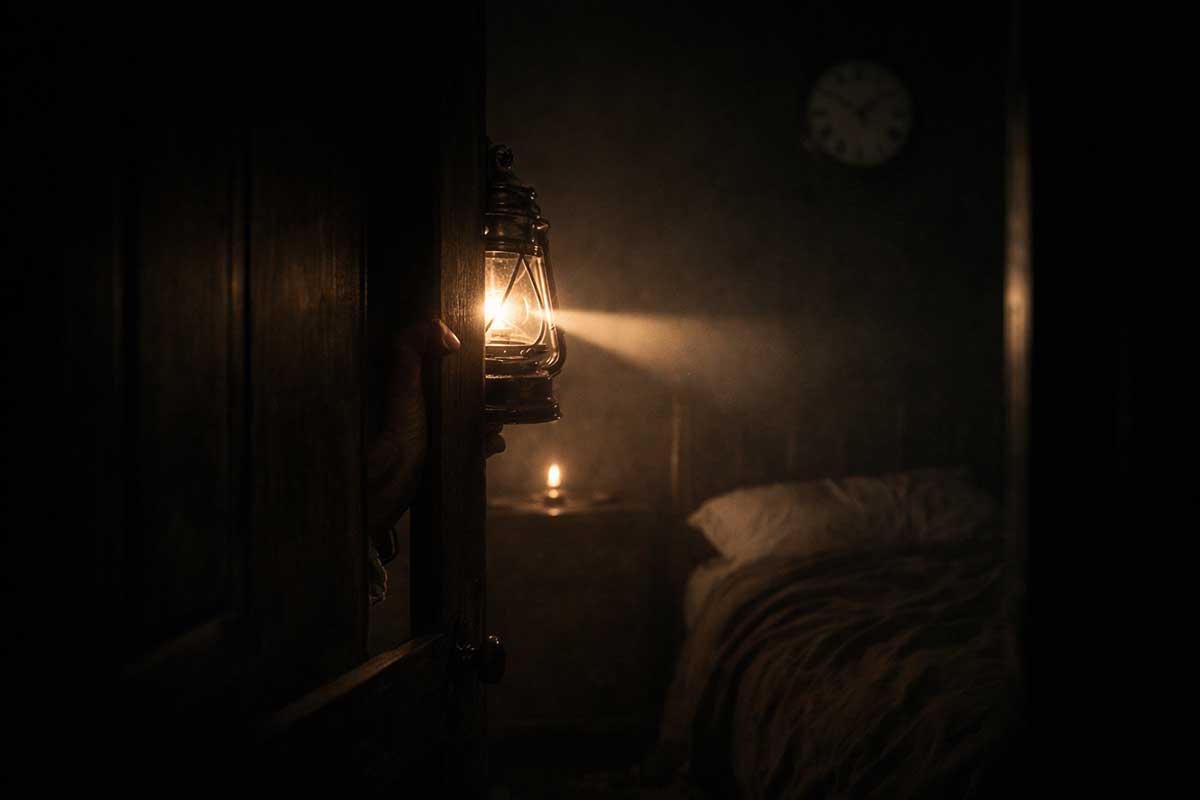
Why Does Precision Become a Moral Virtue?
Participants:
Edgar Allan Poe
Georges Poulet
Peter Brooks
Jonathan Crary
Elaine Scarry
Moderator:
Paul Ricoeur
(chosen for his work on temporality, narrative order, and the ethics of repetition)
Opening Scene
Midnight.
Not approximately.
Not symbolically.
Exactly.
The lantern opens “a little,” then less.
The eye is revealed—slowly.
Every movement counted. Every pause justified.
Time does not pass in this story.
It is managed.
Edgar Allan Poe watches as Paul Ricoeur opens the discussion—not by asking what happens, but how time is being handled.
Paul Ricoeur (Moderator)
In this story, time is not a background condition.
It is organized, divided, rehearsed.
So let us begin here:
Why does the narrator treat precision as proof of moral and mental superiority?
Georges Poulet
Because control over time creates the illusion of control over the self.
The narrator does not merely act in time—he inhabits a private temporality, measured against no one else. Midnight becomes sacred because it belongs solely to him.
This isolation of time is the beginning of obsession.
Edgar Allan Poe
Time terrifies those who believe they must master it.
Jonathan Crary
The narrator’s attention is pathological.
He narrows perception to a single object, a single second, a single action. Attention becomes tunnel vision.
In modern terms, this is not focus—it is fixation.
And fixation feels virtuous when it appears disciplined.
Elaine Scarry
Precision promises certainty.
When the narrator counts, measures, rehearses, he is reducing ambiguity. Pain—psychic pain especially—thrives in uncertainty.
Method is anesthesia.
Peter Brooks
And method is narrative.
The story repeats itself: night after night, same action, same restraint, same delay. This repetition is not preparation—it is compulsion.
The narrator is not waiting for the right moment.
He is addicted to postponement.
Paul Ricoeur
So time is not moving forward.
It is circling.
Edgar Allan Poe
Exactly.
People mistake patience for virtue.
Second Question (Moderator)
Let us sharpen this.
Why does the narrator believe that careful timing proves intelligence rather than obsession?
Jonathan Crary
Because modern culture equates control with competence.
The narrator mirrors a world that rewards efficiency, scheduling, optimization. His precision looks like mastery because mastery is defined procedurally.
Georges Poulet
But inner time resists procedure.
The more the narrator measures it, the more distorted it becomes. Midnight stops being a moment and becomes a fixation point—outside ordinary flow.
Elaine Scarry
This is the danger of method without mercy.
Precision excludes feeling. The narrator prides himself on calmness, but that calmness is achieved by suppressing sensation.
Eventually, sensation returns—violently.
Peter Brooks
Narratively, obsession accelerates.
The delay creates pressure. Each repetition tightens the spring. The act is inevitable not because it is planned—but because repetition demands release.
Edgar Allan Poe
I was never interested in speed.
I was interested in inevitability.
Final Question (Moderator)
Then let us end with this:
Does the narrator control time—or does time close around him?
Georges Poulet
Time encloses him.
Jonathan Crary
His attention traps him.
Elaine Scarry
His methods numb him—until they don’t.
Peter Brooks
Repetition turns into demand.
Edgar Allan Poe
Control always believes it is ahead.
It never notices the walls moving inward.
Closing Scene
The final night arrives.
Not as surprise.
As obligation.
The method has reached its limit.
Time has finished waiting.
Episode 4 - Confession Without Repentance
Why Does the Narrator Confess If He Feels No Guilt?
Participants:
Edgar Allan Poe
Hannah Arendt
Paul Ricoeur
Shoshana Felman
D. A. Miller
Moderator:
Stanley Cavell
(returning intentionally to frame confession as a crisis of acknowledgment rather than morality)
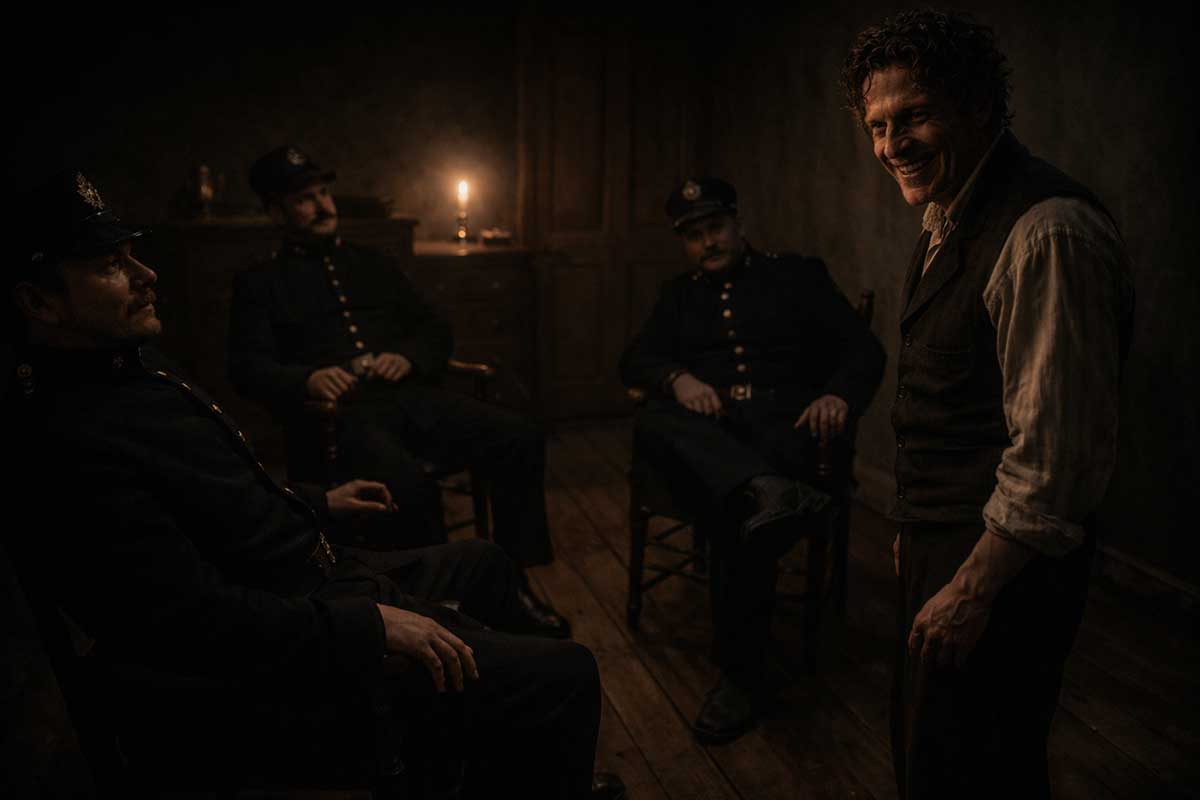
Opening Scene
The police arrive calmly.
They sit.
They smile.
They listen.
There is no chase, no suspicion, no accusation. The crime is hidden perfectly. The body is gone. The narrator is safe.
And yet—he speaks.
Edgar Allan Poe watches closely, because this is the moment where his story refuses the logic of crime fiction. Stanley Cavell opens the discussion.
Stanley Cavell (Moderator)
Confession usually follows guilt.
But here, guilt is strangely absent. The narrator insists on his cleverness, his calm, his superiority.
So let us begin with the contradiction:
Why does the narrator confess when there is no external pressure and no moral remorse?
Hannah Arendt
Because responsibility does not always announce itself as guilt.
The narrator is not repentant—but he is exposed. He cannot tolerate the gap between what he knows and what others appear not to.
Confession becomes a way to restore alignment between inner certainty and outward recognition.
Edgar Allan Poe
Silence is heavier than guilt.
D. A. Miller
This is confession as policing.
The narrator has internalized authority so thoroughly that the police no longer need to interrogate him. He interrogates himself—out loud.
Power does not demand confession.
It waits.
Shoshana Felman
And confession here is not speech—it is rupture.
The narrator’s body betrays him. His voice accelerates. Language fractures.
This is testimony without witness. The confession is not offered to someone—it erupts from him.
Paul Ricoeur
Narratively, this is self-betrayal.
The narrator has built a perfect story of control. Confession destroys narrative coherence. It is the moment when story and self collapse together.
Truth appears not as morality—but as impossibility of silence.
Stanley Cavell
So confession is not ethical.
It is existential.
Edgar Allan Poe
People think confession means regret.
Often, it means exhaustion.
Second Question (Moderator)
Let us press further.
Is the confession an admission of guilt—or a final attempt to be acknowledged as rational?
D. A. Miller
It is a demand for recognition.
The narrator wants the officers to see what he sees—to hear what he hears. Confession becomes pedagogical.
He is teaching them the truth he cannot contain.
Hannah Arendt
Which is why this is not repentance.
Repentance accepts judgment. The narrator resists judgment while confessing. He wants agreement, not forgiveness.
Shoshana Felman
This is the violence of testimony.
Once spoken, truth cannot be reabsorbed. The confession shatters the narrator’s isolation—but at the cost of self-destruction.
Paul Ricoeur
Confession ends time.
Up to this point, the narrator controls sequence, pacing, delay. Confession collapses all time into a single moment of rupture.
Edgar Allan Poe
Silence maintained the structure.
Speech ended it.
Final Question (Moderator)
Then let us end here:
Is the confession a failure—or the only honest act the narrator performs?
Hannah Arendt
It is neither redemption nor failure.
It is inevitability.
D. A. Miller
A system completing itself.
Shoshana Felman
A body giving way.
Paul Ricoeur
A narrative imploding.
Edgar Allan Poe
Honesty was never the goal.
Release was.
Closing Scene
The narrator shouts.
The officers rise.
The floorboards remain silent.
The truth has already escaped.
Episode 5 - The Birth of Psychological Horror
How Poe Moved Terror Inside the Mind—and Left It There
Participants:
Edgar Allan Poe
Noël Carroll
David Punter
Julia Kristeva
Mark Edmundson
Moderator:
Nick Sasaki
Opening Scene
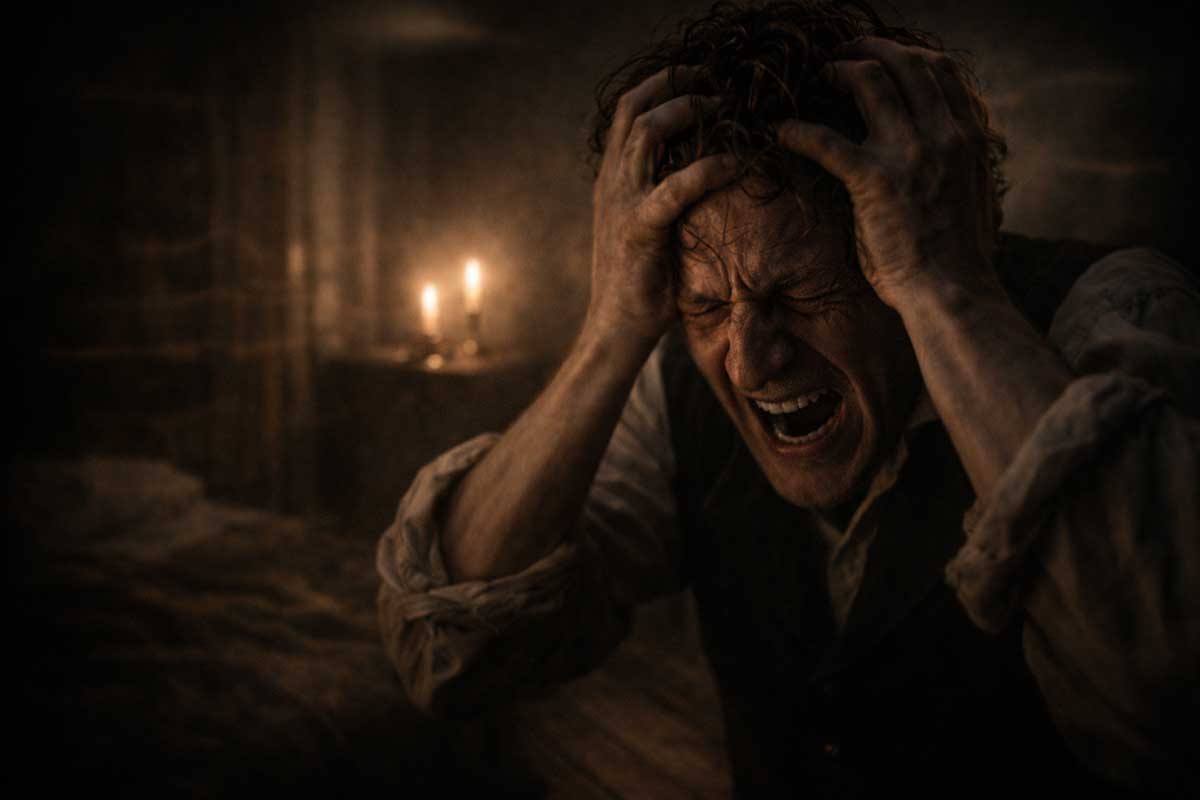
There is no setting now.
No bedroom.
No eye.
No floorboards.
Only a voice—still speaking.
Nick Sasaki looks around the table, aware that this is not a discussion about influence or genre labels. It is about a shift so complete that readers no longer notice it happened.
Nick Sasaki (Moderator)
We’ve examined sanity, surveillance, obsession, and confession.
So now I want to step back and ask the question that lingers beneath all of it:
What did this story change—so completely—that modern horror still lives inside it?
Noël, let’s begin with you.
Noël Carroll
Poe relocates horror.
Before The Tell-Tale Heart, terror depended on external threat—monsters, landscapes, curses, the supernatural.
Here, the threat is cognitive.
The narrator’s perceptions, reasoning, and explanations are the horror. Nothing attacks him. Nothing invades.
The mind turns against itself.
That move becomes foundational.
Edgar Allan Poe
Fear was never about what lurked outside the door.
It was about what could not leave the room.
David Punter
Poe internalizes the Gothic.
He strips away castles, storms, and specters and replaces them with rhythm, fixation, and self-surveillance.
What remains is claustrophobia.
Modern horror inherits that inward pressure—the sense that escape is impossible because the enemy is indistinguishable from thought.
Julia Kristeva
And what emerges is abjection.
The narrator experiences himself as intolerable. His thoughts disgust him. His sensations overwhelm him.
The horror is not death—it is the collapse of boundaries between self, body, and mind.
The heartbeat is terrifying because it refuses separation.
Mark Edmundson
Poe also invents intimacy.
This story traps the reader inside a consciousness with no exit. We are not observing madness—we are inhabiting its logic.
That intimacy becomes modern literature’s most dangerous tool.
It creates empathy without safety.
Nick Sasaki
So Poe doesn’t just frighten readers.
He recruits them.
Edgar Allan Poe
I trusted readers to follow me.
I did not promise they would enjoy where we arrived.
Second Question (Moderator)
Let me sharpen this.
Why does The Tell-Tale Heart still feel modern—despite its age and simplicity?
Noël Carroll
Because the fear it stages is timeless.
Self-monitoring. Over-explanation. Anxiety about appearing rational.
These are modern conditions, intensified—not invented—by technology and social visibility.
Poe identified the structure early.
David Punter
And because the story resists metaphorical closure.
The heart can be read symbolically, psychologically, or literally—and none of those readings dissolve the fear.
That openness keeps the story alive.
Julia Kristeva
The body’s refusal to remain silent is deeply modern.
We like to believe language governs experience. Poe shows the body speaking when language fails.
The sound is unbearable because it escapes meaning.
Mark Edmundson
And because the story refuses moral clarity.
There is no lesson. No redemption. No catharsis.
The narrator does not become wiser. He simply breaks.
Modern readers recognize that ending.
Edgar Allan Poe
Closure comforts.
I was not interested in comfort.
Final Question (Moderator)
Then let me end with this:
Did Poe invent psychological horror—or did he simply remove the distractions that kept us from noticing it was already there?
Noël Carroll
He revealed it.
David Punter
And named it through form.
Julia Kristeva
And forced readers to feel it from within.
Mark Edmundson
He showed that terror does not need spectacle.
Only attention.
Edgar Allan Poe
I did not invent the darkness.
I closed the door.
Closing Scene
The voice does not stop.
The story ends—but the sound does not.
Nick Sasaki closes the final session.
Nick Sasaki
The Tell-Tale Heart endures because it teaches us something unsettling:
That horror does not require monsters, or violence, or even guilt.
It requires consciousness turned inward with nowhere to go.
Poe didn’t frighten us with what we fear.
He frightened us with how closely we listen.
And once we hear it—
we cannot unhear it.
Fade out.
Final Thoughts by Edgar Allan Poe
Readers often ask whether the narrator is mad.
I have never found the question sufficient.
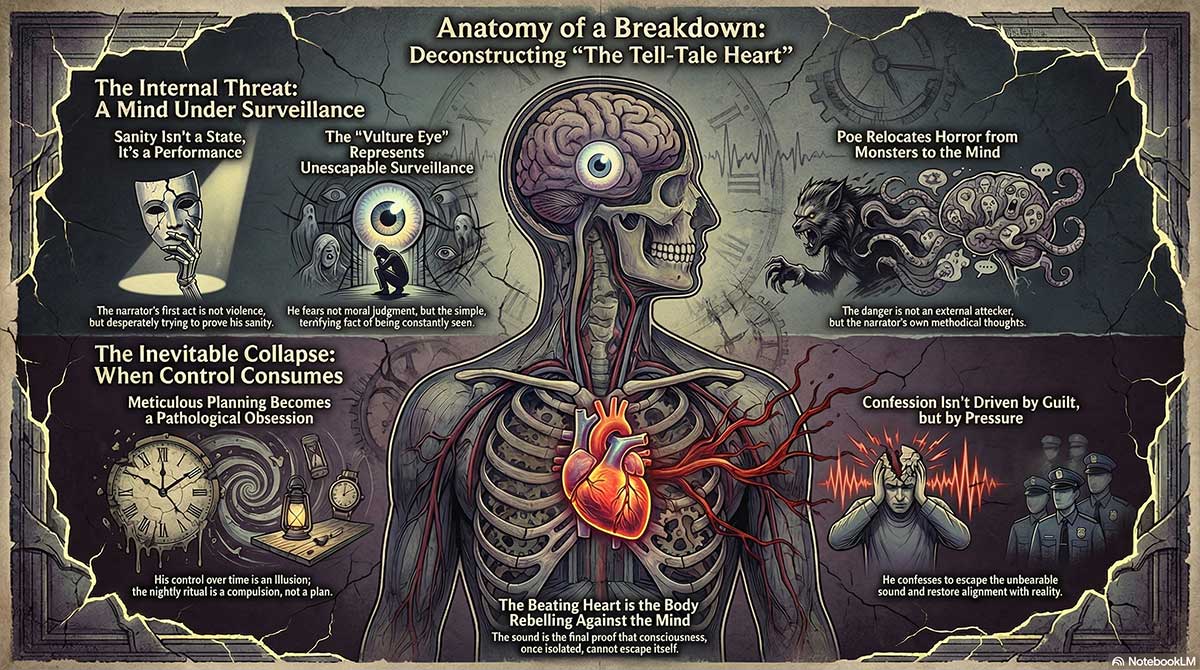
Madness, if it exists here, does not roar. It reasons. It counts. It explains. It listens too closely and trusts too much in its own precision. The true horror is not the act concealed beneath the floorboards, but the certainty that concealment itself can fail—not through discovery, but through sound.
The heart beats because it must.
Not as guilt alone, and not as conscience in the simple sense, but as the body’s refusal to remain silent when the mind demands impossible control. The sound overwhelms not because it is loud, but because it cannot be escaped. It is the final proof that consciousness, once isolated, becomes its own witness.
I did not intend this story to resolve.
I intended it to remain enclosed—to leave the reader where the narrator is left: alone with attention sharpened too far, listening to a sound that has no source and no end.
The tale concludes on the page.
The listening does not.
Short Bios:
Edgar Allan Poe
American writer and poet who laid the foundation for psychological horror and the modern short story. His work probes obsession, unreliable narration, and the terror of consciousness turned inward.
Nick Sasaki
Founder of ImaginaryTalks, curating scholarly imaginary conversations that treat classic works as living questions rather than closed interpretations.
Stanley Cavell
Philosopher known for his work on skepticism, acknowledgment, and the moral demands of voice. His ideas illuminate confession as a crisis of recognition rather than ethics alone.
Paul Ricoeur
French philosopher whose work on narrative time, memory, and interpretation reshaped modern hermeneutics. He explored how stories structure identity and collapse under rupture.
Noël Carroll
Philosopher of art and leading theorist of horror and emotion. He analyzes how cognitive structures, not monsters, generate fear in modern horror narratives.
David Punter
Literary critic and historian of Gothic literature. His scholarship traces how Gothic terror evolves into psychological and cultural anxiety.
Julia Kristeva
Philosopher and psychoanalytic theorist best known for the concept of abjection—how horror emerges when boundaries between self, body, and meaning dissolve.
Mark Edmundson
Literary scholar and essayist focusing on how literature implicates readers emotionally and ethically, often unsettling rather than consoling them.
Georges Poulet
Literary phenomenologist associated with the Geneva School. His work examines how consciousness and inner time shape literary experience.
Peter Brooks
Narrative theorist whose work explores repetition, desire, and narrative compulsion. He studies how stories create pressure through delay and inevitability.
Jonathan Crary
Cultural theorist known for his work on attention, perception, and modern surveillance. His ideas illuminate fixation and control in modern consciousness.
Elaine Scarry
Philosopher and literary scholar whose work examines pain, the body, and how physical sensation disrupts language and certainty.
Hannah Arendt
Political theorist whose work on responsibility, authority, and the banality of evil informs readings of moral collapse without overt malice.
Shoshana Felman
Literary critic and psychoanalytic theorist specializing in trauma, testimony, and the breakdown of language under psychic pressure.
D. A. Miller
Literary critic known for his analysis of discipline, surveillance, and internalized authority in narrative structures.
Leave a Reply