
|
Getting your Trinity Audio player ready...
|
What if Prospero had to defend his mercy after death—without magic?
Main Introduction by Shakespeare
I wrote of storms once as a stage-trick—thunder borrowed, lightning feigned, a ship split apart in sound and terror. Yet what haunted me was never the tempest itself, but what men become when the ground is taken from beneath them. Strip away office and title, strip away the music that makes cruelty feel like comedy, and you will find the unadorned thing: the hunger to rule, the habit of being ruled, and the ache of those who were never asked.
So imagine this not as a play, but as a reckoning after the play. No island to possess, no spirit to command, no drunkenness to soften shame, no marriage to stitch politics back together. Only voices. Only memory. Only the unanswerable question that survives every curtain call: what was owed, and what was paid?
In life, mercy can wear the mask of greatness. It can look like virtue when spoken from above. Here, where no one stands above, mercy must speak in its true tongue. Forgiveness must prove it is not merely power’s final flourish. Freedom must prove it was more than a reward for good service. And justice—ah, justice—must confess whether it ever existed, or whether it was only a word we use when the strong wish to feel clean.
Enter, then, this tribunal of the dead. Let Prospero defend his rule without enchantment. Let Caliban claim his ground without chains. Let kings and princes speak without crowns. And let silence count—especially the silence of those who, even at the end, would rather keep what they took than explain why they took it.
(Note: This is an imaginary conversation, a creative exploration of an idea, and not a real speech or event.)
Topic 1 — Who Had the Right to Rule Anything at All?
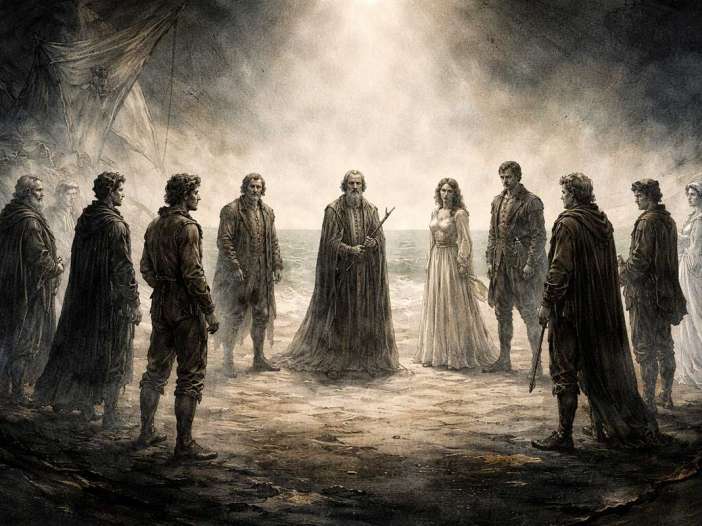
The space resembles no courtroom. There are no walls, no throne, no elevated seat. The dead do not require architecture. The eleven stand in a loose circle, each visible, none centered.
Gonzalo speaks first—not as judge, but as witness.
Gonzalo
We are not here to restore what was taken, nor to punish what cannot be undone. We are here to speak plainly.
The charge before us is simple, and it precedes all others.
Who among you had the right to rule anything at all?
No one answers immediately.
The silence does not feel empty. It feels weighted.
Prospero
Prospero steps forward, not out of authority, but habit.
Prospero
I was Duke of Milan. That title was not illusion. It was granted, recognized, sustained. I governed by law and learning. My brother stole that from me.
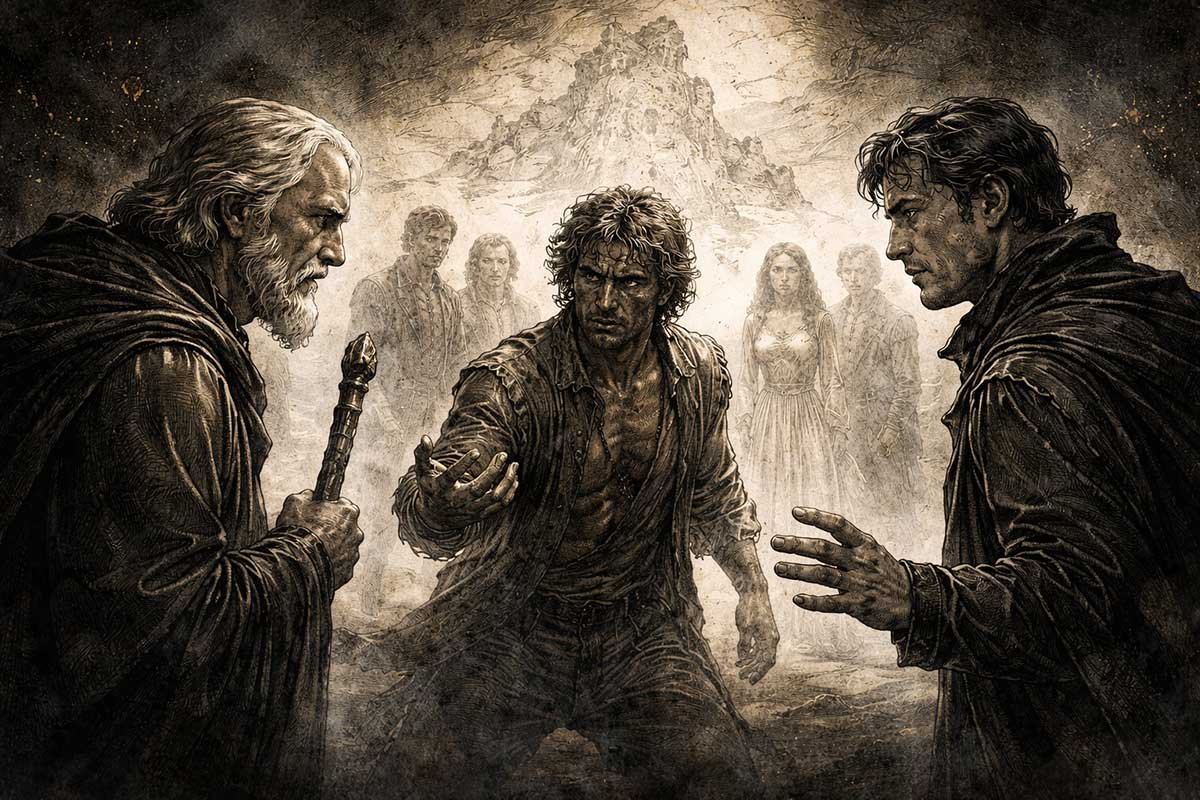
Caliban turns sharply.
Caliban
Caliban
You speak of theft as if it began with you.
The island was mine before your ship broke its back upon it.
You named it yours because you could.
A murmur moves through the circle—not agreement, not dissent. Recognition.
Antonio
Antonio speaks calmly, almost bored.
Antonio
Power belongs to those who hold it. Titles are decorations applied afterward. I ruled Milan because I could. You ruled the island because you could. Where is the difference?
Prospero stiffens.
Prospero
The difference is legitimacy.
Antonio
Legitimacy is the word the displaced use.
Alonso
Alonso lowers his head before speaking.
Alonso
I sanctioned what happened in Milan. I believed stability justified it. I was wrong—but not ignorant.
I knew power was being taken. I allowed it.
Gonzalo nods, gently.
Gonzalo
Then let us be precise.
Prospero claims rule by title and knowledge.
Antonio claims rule by force and outcome.
Caliban claims rule by origin.
He turns to Miranda.
Miranda
Miranda
I ruled nothing. Yet I lived under all your rules.
If rule is right, then I benefited without choosing.
If rule is wrong, then I was shaped by injustice without consent.
Her voice is steady. That steadiness unsettles the room more than accusation would.
Ferdinand
Ferdinand
I served your rule, Prospero, and was rewarded.
Does service sanctify authority—or does it merely adapt to it?
Ariel
Ariel speaks with no bitterness, which makes the words sharper.
Ariel
I obeyed because freedom was promised.
Was that rule—or bargaining?
Prospero opens his mouth, then stops.
Gonzalo
Gonzalo
Let us pause here.
Each claim rests on a different foundation:
inheritance
force
origin
consent
reward
But foundations crack when placed together.
He turns again to Prospero.
Prospero, Unmoored
Prospero
I ruled the island to survive. Knowledge gave me mastery. Without it, my daughter and I would have perished.
Caliban
Survival is not sovereignty.
The words land with finality.
Prospero searches for reply—and finds none.
Antonio, Exposed
Antonio
You all speak as if rule must be justified. It never was. It only needed to succeed.
Alonso
And did it?
Antonio does not answer.
The silence stretches. This time it indicts.
Stephano and Trinculo
From the edge, Stephano laughs once, awkwardly.
Stephano
We wanted the island too. Thought it would be easy.
Trinculo
Turns out wanting something doesn’t make you fit to rule it.
Gonzalo allows the interruption. It belongs here.
Gonzalo’s Reframing
Gonzalo
Perhaps the error lies in the question.
Perhaps no one had the right to rule—only the ability.
He looks at Caliban.
Gonzalo
If the island had remained yours, what would rule have looked like?
Caliban
I do not know.
But I would not have been ruled by those who named my speech “noise” and my body “threat.”
No one challenges this.
Final Pass
Gonzalo lets his gaze travel the circle once more.
Gonzalo
Then hear the summary, not as verdict, but as record:
Prospero ruled through knowledge, but mistook mastery for legitimacy.
Antonio ruled through force, and mistook success for right.
Caliban ruled through origin, but lacked power to defend it.
Others lived under rule without choosing it, resisting it, or benefiting from it.
He steps back.
Gonzalo
The tribunal records this:
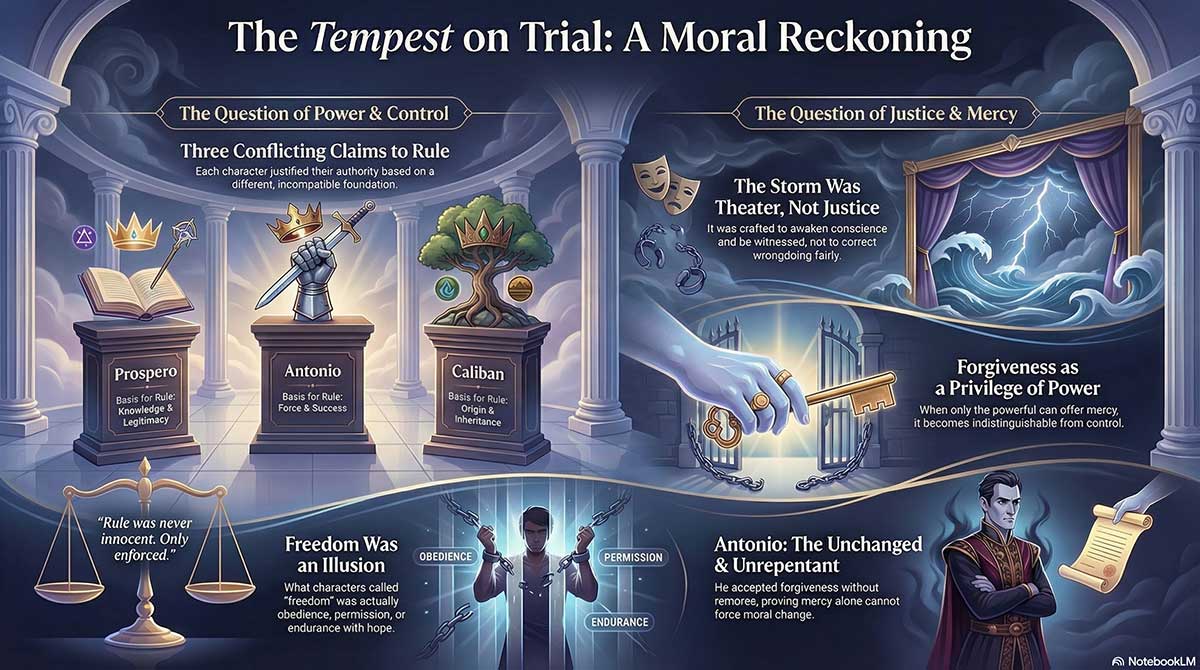
Rule was never innocent.
Only enforced.
The session closes without resolution. No one is satisfied. That, too, is entered into record.
Topic 2 — Is Forgiveness a Moral Act or a Privilege of Power?
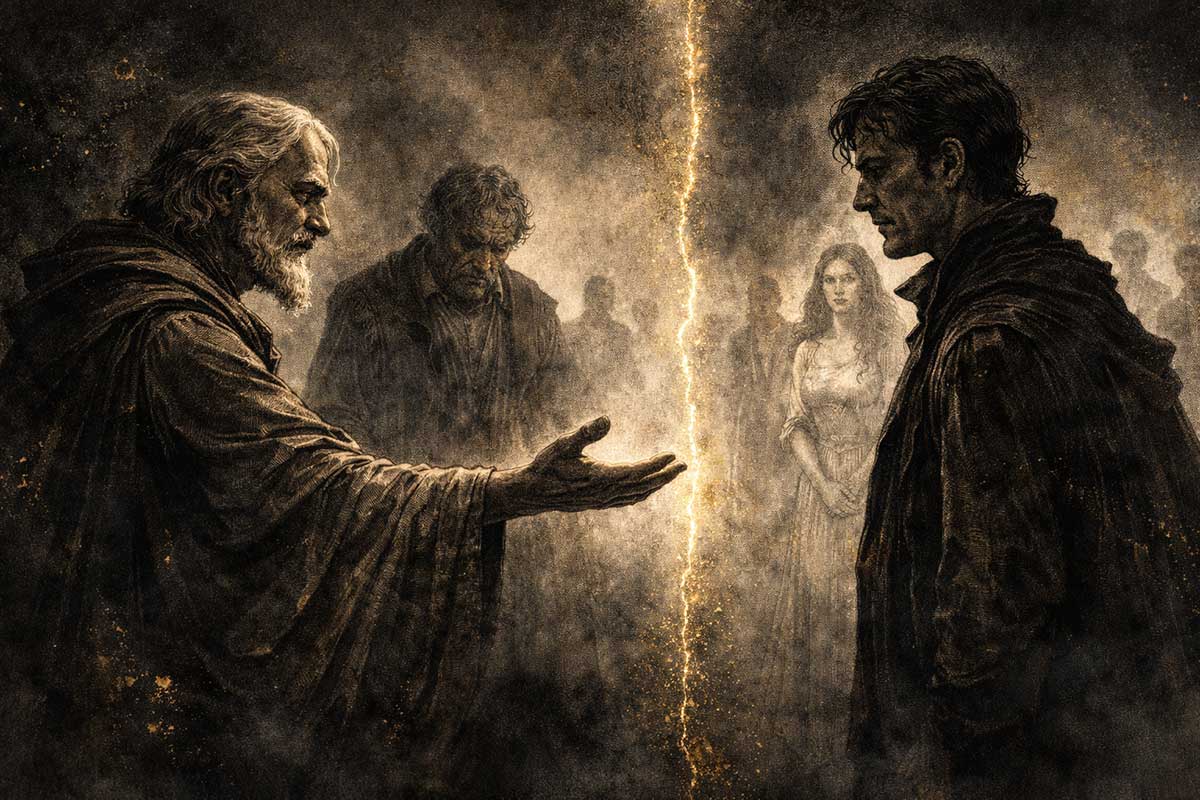
The silence that closed the first session does not lift. It settles. Forgiveness, unlike rule, requires an opening—and none appears on its own.
Gonzalo speaks again, softly.
Gonzalo
We move now from authority to mercy.
In life, forgiveness ended the storm.
Here, we ask whether it was an act of ethics—or an option available only to the powerful.
He turns first, not to the forgiver, but to the forgiven.
Antonio
Antonio
I was forgiven.
I did not ask for it.
I did not refuse it.
A pause.
Antonio
I see no crime in accepting what is offered.
Prospero’s jaw tightens.
Prospero
Prospero
You mistake silence for absolution. I forgave to end the cycle—not to erase your guilt.
Antonio
Then you forgave for yourself.
The words land. They do not echo; they settle.
Alonso
Alonso steps forward, visibly uneasy.
Alonso
I begged forgiveness because I felt the weight of what I had done.
I lost my son—or believed I had.
I was broken open.
Forgiveness did not restore me. It allowed me to stand again.
Gonzalo
Then repentance preceded mercy.
Alonso nods.
Gonzalo
And without repentance?
He looks at Antonio.
Antonio does not answer.
Miranda
Miranda speaks carefully.
Miranda
I was taught that forgiveness is goodness.
But I was never asked who needed forgiving—or whether forgiveness was wanted.
She looks at Prospero.
Miranda
My innocence was used as proof that mercy was right.
But innocence does not consent.
Prospero exhales slowly, as if hearing this for the first time.
Sebastian
Sebastian breaks his long quiet.
Sebastian
I plotted to kill my brother while the storm raged.
No one demanded my repentance.
No one forgave me either.
He shrugs.
Sebastian
Perhaps forgiveness follows attention, not ethics.
Ariel
Ariel speaks without accusation.
Ariel
I urged mercy because it softened you, Prospero.
Not because it corrected them.
Prospero looks at Ariel—truly looks.
Prospero
I believed forgiveness would free me.
Ariel
Did it?
Prospero does not respond.
Caliban
Caliban steps forward, voice controlled.
Caliban
I was told to be grateful.
Grateful for mercy.
Grateful for restraint.
Grateful that worse did not happen.
He lifts his chin.
Caliban
Forgiveness offered to the powerless feels like instruction, not grace.
No one contradicts him.
Ferdinand
Ferdinand speaks with uncertainty.
Ferdinand
I was tested, punished, then rewarded.
Was that forgiveness—or preparation for rule?
Gonzalo
Perhaps both.
He turns again to Prospero.
Prospero, Unraveled
Prospero
I forgave because I could.
Because the island obeyed me.
Because the storm had already spoken for me.
He stops himself.
Prospero
If I had been powerless…
I do not know whether forgiveness would have come.
The admission alters the space.
Gonzalo’s Accounting
Gonzalo
Then let the record show this distinction:
Forgiveness offered from above ends conflict
Forgiveness sought from below seeks restoration
Forgiveness granted without repentance risks becoming theater
He looks once more at Antonio.
Gonzalo
Do you wish to speak repentance now?
Antonio’s face remains unreadable.
Antonio
No.
The refusal is complete. It requires no elaboration.
Closing the Session
Gonzalo
Then this session records a fracture that cannot be healed by mercy alone.
He steps back.
Gonzalo
Forgiveness may be virtuous.
But when only the powerful can afford it,
it becomes indistinguishable from control.
The circle holds. No one applauds. No one protests.
The tribunal moves forward, carrying the weight of mercy unresolved.
Topic 3 — Who Was Ever Truly Free?
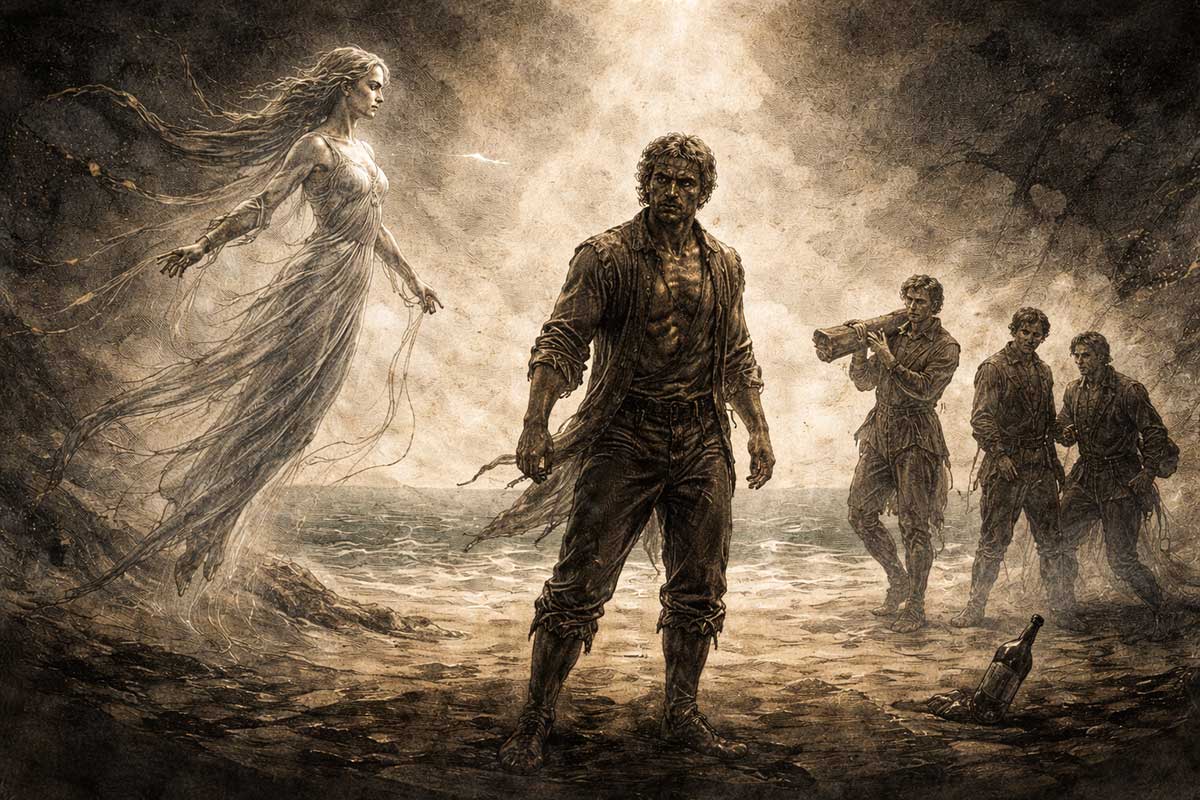
The circle tightens—not physically, but in attention. Freedom, unlike rule or forgiveness, cannot be granted by declaration. It must be described.
Gonzalo opens the session.
Gonzalo
In life, freedom was promised, delayed, traded, resisted, or misunderstood.
Here, it cannot be withheld.
So we ask plainly: Who among you was ever truly free?
Ariel
Ariel speaks first, voice steady.
Ariel
I served because service was the shortest path to release.
I obeyed perfectly.
I counted time by tasks.
A pause.
Ariel
Freedom arrived only when obedience was no longer required.
Gonzalo
Then obedience preceded freedom.
Ariel
Yes. And that is not freedom—it is endurance with hope.
Caliban
Caliban answers without hesitation.
Caliban
I did not hope.
I resisted.
He turns toward Prospero.
Caliban
You called me ungrateful because I would not submit.
But submission was the price of your mercy.
Prospero lowers his gaze.
Caliban
If freedom must be earned through obedience, then it is not freedom.
It is permission.
Ferdinand
Ferdinand steps forward, conflicted.
Ferdinand
I carried logs.
I obeyed.
I was rewarded with love and restoration.
He looks at Caliban, then Ariel.
Ferdinand
My service was brief. My reward was lasting.
Does that make my freedom real—or merely fortunate?
Stephano
Stephano chuckles uneasily.
Stephano
I felt free when I drank.
Free from fear.
Free from sense.
Trinculo adds, quieter.
Trinculo
And when the drink wore off, so did the freedom.
No one laughs.
Prospero
Prospero finally speaks, measured.
Prospero
I believed myself free because I commanded others.
Knowledge gave me mastery.
Mastery gave me peace.
He pauses.
Prospero
But mastery requires subjects.
Without them, I was uncertain who I was.
The admission shifts the ground.
Alonso
Alonso speaks softly.
Alonso
I ruled a kingdom and feared loss every day.
My freedom ended where inheritance began.
Sebastian
Sebastian
I was never free.
I only envied those who seemed so.
Miranda
Miranda
I was sheltered, protected, taught.
I loved without choosing the world that shaped that love.
She looks around the circle.
Miranda
If freedom requires knowledge, then I was innocent—not free.
Gonzalo’s Distillation
Gonzalo listens, then speaks slowly.
Gonzalo
Let the record reflect what has emerged:
Obedience promised freedom but delayed it.
Resistance preserved dignity but invited punishment.
Service rewarded some and condemned others.
Intoxication mimicked freedom and vanished.
Authority mistook control for liberty.
Innocence confused protection with choice.
He looks last at Ariel and Caliban.
Gonzalo
You were mirrors, not opposites.
Ariel inclines his head. Caliban does not disagree.
Closing the Session
Gonzalo
Then this session records a truth uncomfortable to all:
Freedom was never given.
It was negotiated, imagined, postponed, or misunderstood.
He steps back.
Gonzalo
If freedom existed, it did so briefly—
in moments when no one was commanding, obeying, or hoping.
The circle holds. The word free remains undefined.
Topic 4 — Was the Storm Justice, Revenge, or Performance?
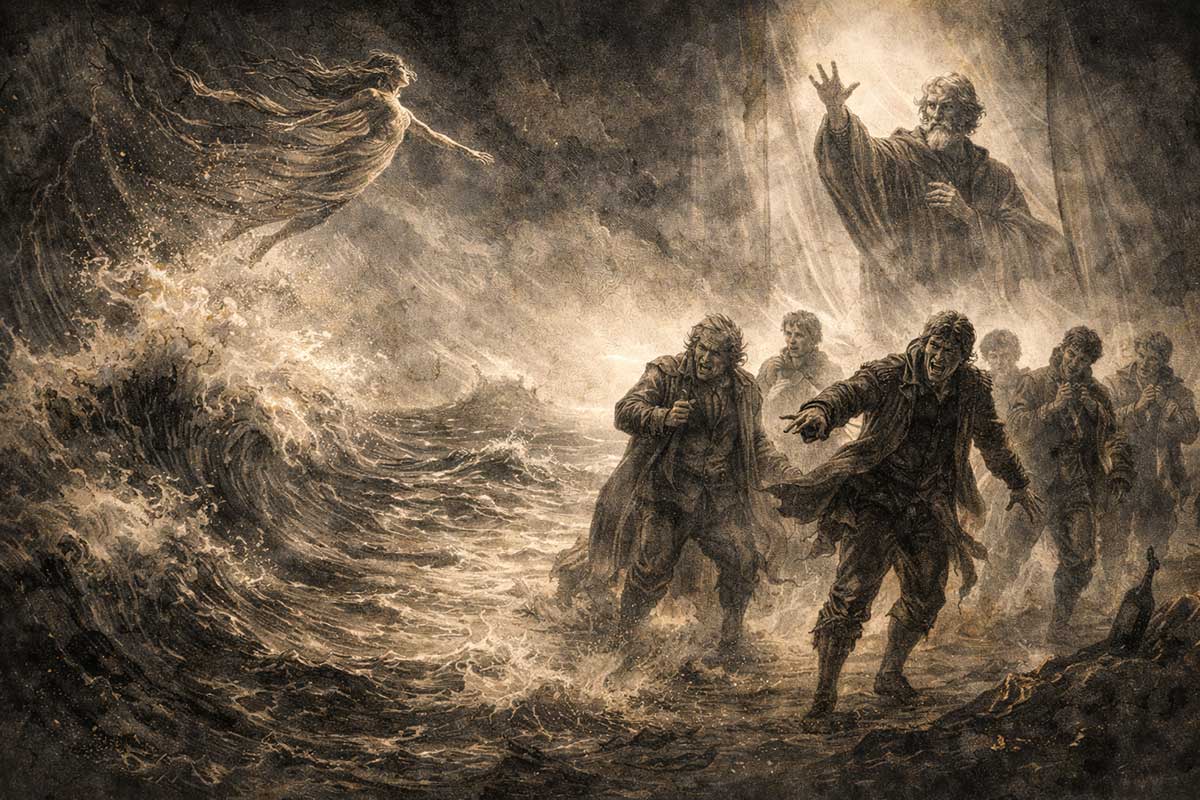
Nothing moves. Nothing roars. Yet everyone remembers the sound.
Gonzalo opens the session without preface.
Gonzalo
We turn now to the act that bound all others.
The storm that scattered you, frightened you, instructed you.
Was it justice?
Was it revenge?
Or was it performance?
He does not look at Prospero first.
Alonso
Alonso speaks as one who has relived it many times.
Alonso
It felt like judgment.
Not from a man—but from something that knew my guilt.
He swallows.
Alonso
I believed my son was dead.
If that was instruction, it was unbearable.
Ferdinand
Ferdinand answers next.
Ferdinand
The storm broke me open.
It stripped certainty away.
What followed—the labor, the love—would not have happened without it.
He hesitates.
Ferdinand
If it was theater, it changed me.
Sebastian
Sebastian speaks dryly.
Sebastian
It was chaos.
And chaos gave me opportunity.
He glances toward Antonio.
Sebastian
Fear lowers resistance.
That was its true effect.
Ariel
Ariel speaks with clarity, not pride.
Ariel
I executed the storm precisely.
No life was lost.
Every terror was measured.
A pause.
Ariel
It was crafted to be witnessed.
The word witnessed lingers.
Prospero
All eyes turn now to Prospero.
Prospero
I shaped the storm to awaken conscience.
Not to destroy.
Caliban laughs once—without humor.
Caliban
Caliban
You called fear instruction.
You called suffering correction.
He gestures outward.
Caliban
If the storm was justice, why did it fall on all equally?
If it was revenge, why deny it?
If it was theater—who was the audience?
No one answers at once.
Trinculo
Trinculo breaks the tension.
Trinculo
We laughed at the wreck once we survived it.
Fear becomes comedy quickly—if you live.
Stephano
Stephano
A good show, then.
Everyone terrified.
No one dead.
Prospero stiffens.
Gonzalo Presses the Question
Gonzalo
Let us be exact.
Justice corrects wrongdoing.
Revenge satisfies injury.
Performance persuades an audience.
He turns to Ariel.
Gonzalo
Who was the storm for?
Ariel
For them.
He turns to Prospero.
Ariel
And for you.
The words land quietly—and cannot be undone.
Prospero, Confronted
Prospero
I wanted them to feel what I had felt.
Loss.
Disorientation.
Powerlessness.
He stops.
Prospero
I wanted recognition.
Antonio
Antonio speaks for the first time this session.
Antonio
Then it failed.
The room freezes.
Antonio
Fear does not teach.
It only reveals who can endure it.
Gonzalo’s Accounting
Gonzalo
Then the record reflects:
The storm did not judge fairly.
It did not punish selectively.
It did not correct evenly.
He looks slowly around the circle.
Gonzalo
It instructed the repentant.
It empowered the ruthless.
It entertained the survivors.
A pause.
Gonzalo
Which is to say—it was theater.
The word does not accuse. It clarifies.
Closing the Session
Gonzalo
The tribunal records this:
Suffering presented as spectacle blurs justice with persuasion.
He steps back.
Gonzalo
And those who design storms must answer not only for the outcome—
but for the audience they imagined while doing so.
No one speaks. The storm, finally, has no sound.
Topic 5 — After Death, Who Changed—and Who Escaped?
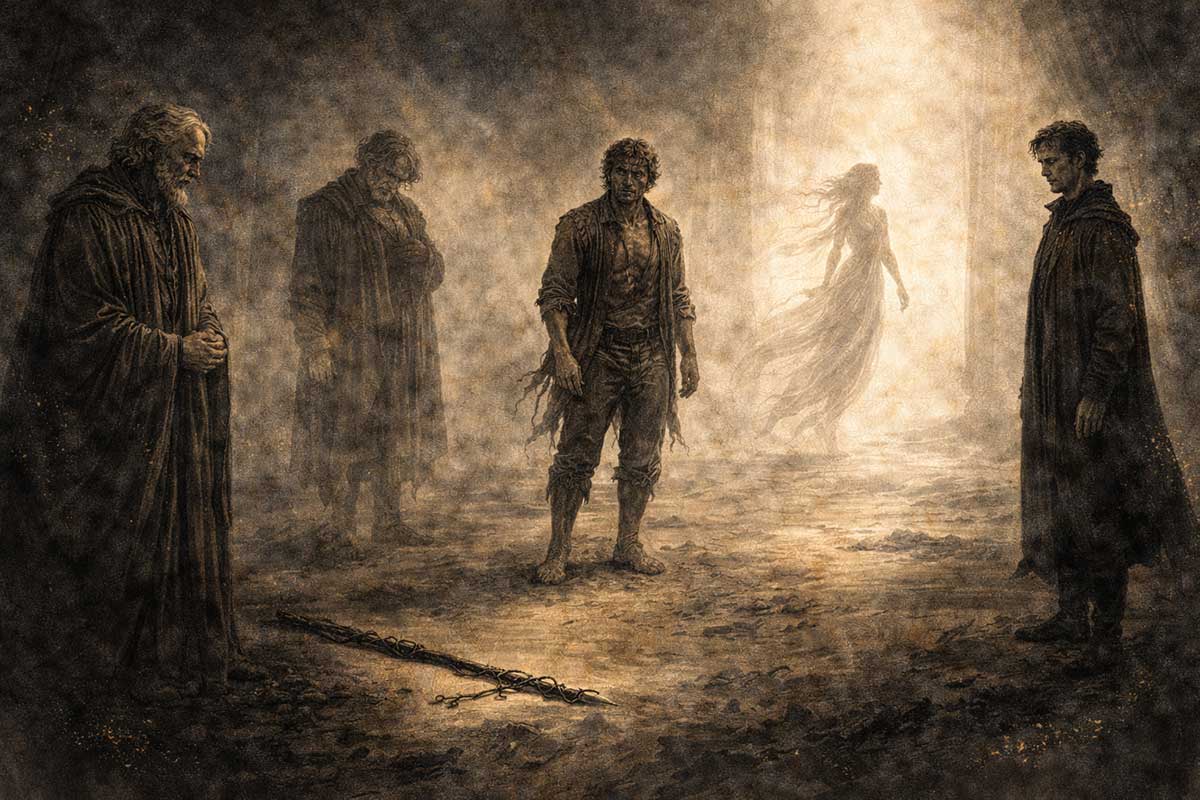
There is no sense of ending—only a narrowing. What remains now is not action, but residue.
Gonzalo speaks one last time.
Gonzalo
No punishment remains.
No reward follows.
Only this question stands before us:
Who changed—and who escaped unchanged?
He does not ask it as accusation. He asks it as accounting.
Alonso
Alonso answers first.
Alonso
I changed because I lost what mattered most.
Grief stripped my authority away.
I learned humility—but at a price paid by others.
He lowers his eyes.
Alonso
If suffering is the teacher, then I was taught late.
Prospero
Prospero speaks slowly.
Prospero
I renounced my art.
I surrendered command.
I believed that was transformation.
A pause.
Prospero
But renunciation after victory is not the same as repentance after defeat.
The admission costs him something. No one rushes to comfort it.
Ariel
Ariel
I was freed.
I did not need to change.
The simplicity unsettles.
Gonzalo
Then freedom did not instruct you.
Ariel
No. It released me from instruction.
Ferdinand
Ferdinand
I became king through love.
I believe myself wiser.
He hesitates.
Ferdinand
But I was never tested without reward waiting.
Miranda
Miranda speaks gently.
Miranda
I learned wonder, not judgment.
I entered a world already shaped by others’ choices.
She looks around the circle.
Miranda
If I changed, it was into acceptance—not understanding.
Caliban
Caliban stands straighter than before.
Caliban
I learned humility.
I learned regret.
He stops himself.
Caliban
But I did not receive restitution.
I changed without repair.
The words hang, unanswered.
Sebastian
Sebastian
I was nearly a murderer.
Fear interrupted me—not conscience.
He shrugs.
Sebastian
I changed nothing.
Stephano and Trinculo
Stephano
We sobered up.
Trinculo
That’s change enough for some.
No one laughs this time.
Antonio
At last, Antonio speaks.
Antonio
You mistake change for virtue.
I lost nothing.
I regret nothing.
The room does not erupt. It stills.
Antonio
I escaped because no one required more of me.
Silence follows—heavy, undeniable.
Gonzalo’s Final Record
Gonzalo
Then let the tribunal record this without comfort:
Some changed because suffering forced them.
Some changed because power permitted them to stop.
Some changed without being restored.
Some were freed without learning.
And some escaped because silence was allowed to stand as closure.
He looks around the circle one final time.
Gonzalo
Transformation is not evenly distributed.
Nor is accountability.
He steps back.
Gonzalo
The tribunal closes not with resolution,
but with an unanswered remainder.
No one objects. No one departs.
What is unfinished remains so—by design.
Final Thoughts by Shakespeare
There is a comfort audiences crave: that harm is corrected by a final speech, that music can smooth what knives have cut, that an ending can be called “happy” because the order of the world reappears. I have given that comfort before. I have watched it work.
But this tribunal offers a harsher grace. Here, the dead cannot hide behind outcomes. A man cannot say, “I succeeded, therefore I was right.” A ruler cannot say, “I forgave, therefore I am good.” A sufferer cannot be told, “Be grateful it was not worse,” and have that pass for justice. In this place, the question is not whether peace returned, but what it cost—and who paid.
If you leave this conversation uneasy, it is because unease is the honest remainder of power. Some characters change only when suffering forces them. Some renounce only after they have regained what they lost. Some learn humility without receiving repair. And some—most terrifying of all—escape untouched because no one insisted they answer.
Yet I do not offer despair. I offer sight. The storm, once a spectacle, becomes a mirror. The island, once a prize, becomes evidence. Forgiveness, once a beautiful ending, becomes a difficult demand: to be moral, it must not depend on superiority.
And so the tribunal closes without a verdict, because verdicts can be another way of ending a story too cleanly. What matters is what remains in you: the sharpened sense of what is owed, the suspicion of easy mercy, and the courage to ask—while you still live—what the dead are forced to ask at last.
If you want, I can now format this into your standard publish-ready TDKI layout for ImaginaryTalks (same content, tighter spacing), or build the matching FULL YTO for this new Tempest piece.
Short Bios:
Prospero
Former Duke of Milan and master of magic, exiled through betrayal. Ruled the island through knowledge and control, later renouncing power in the name of forgiveness.
Miranda
Prospero’s daughter, raised in isolation and innocence. Entered the world shaped by others’ choices, learning wonder before judgment.
Ariel
An airy spirit bound to service through promise of freedom. Executed Prospero’s designs with precision, gaining release without moral transformation.
Caliban
Son of Sycorax and original inhabitant of the island. Dispossessed, enslaved, and punished, he learned humility without restitution.
Antonio
Prospero’s brother who seized the dukedom of Milan. Never repented, never explained, and remained unchanged even after forgiveness.
Alonso
King of Naples who aided Prospero’s overthrow. Changed through grief and loss, learning remorse only after believing his son dead.
Sebastian
Alonso’s brother, who nearly repeated Antonio’s crime. Interrupted by circumstance rather than conscience, he escaped judgment quietly.
Ferdinand
Alonso’s son, tested through labor and rewarded with love. Served briefly, learned obedience, and inherited power without lasting loss.
Stephano
A drunken servant who mistook intoxication for authority. His imagined freedom dissolved as quickly as it formed.
Trinculo
A clown and companion to Stephano, drawn into false ambition. Witnessed how easily survival turns fear into laughter.
Gonzalo
A loyal courtier who saved Prospero and Miranda without reward. Served as moral witness, not judge, believing in goodness without power.
Leave a Reply