

|
Getting your Trinity Audio player ready...
|
What if Trump set the “peace through strength” frame in Davos 2026 - then allies and adversaries had to pressure-test it on NATO, tariffs, energy, and borders?
Introduction by Donald Trump
Thank you very much. It’s a great honor—really—and I want to welcome everybody. We’re here because we had a speech in Davos, and people have been talking about it nonstop. Some people loved it. Some people hated it. That’s okay. But what matters is this: we are talking about peace, prosperity, and security—together. Not separately. Together.
You know, for a long time, a lot of countries—and I mean a lot—have been taking advantage of the United States. We were paying the bills, defending everybody, letting everybody sell into our markets, and we weren’t treated fairly. And when you’re treated unfairly for decades, you don’t get peace—you get weakness. And weakness is what creates wars. Strength prevents wars. That’s been true forever.
So this discussion is going to be very straightforward. We’re going to talk about winning—not the fake kind, the real kind people feel in their paychecks and their lives. We’re going to talk about trade and tariffs, because we want fair deals, not global games. We’re going to talk about energy and AI, because the future runs on power—and if you don’t have power, you don’t have a future. We’re going to talk about NATO, Greenland, missile defense, because it’s about protecting the West and keeping very dangerous people from even thinking about doing something stupid. And we’re going to talk about borders and cohesion, because you can’t have a country if you don’t have a border, and you can’t have peace if your people don’t feel safe and respected.
Now the goal is not conflict. The goal is the opposite. The goal is peace—peace for America, peace for NATO, peace even in the long run for countries that are competitors, because if the world is stable, you don’t get wars you never needed in the first place. That’s what we’re doing. It’s going to be a very honest conversation. And I think you’re going to see something very important: when America is strong, the world is safer. Thank you very much.
(Note: This is an imaginary conversation, a creative exploration of an idea, and not a real speech or event.)
Topic 1 — Economic Miracle vs. Measurement: What Counts as “Winning”?
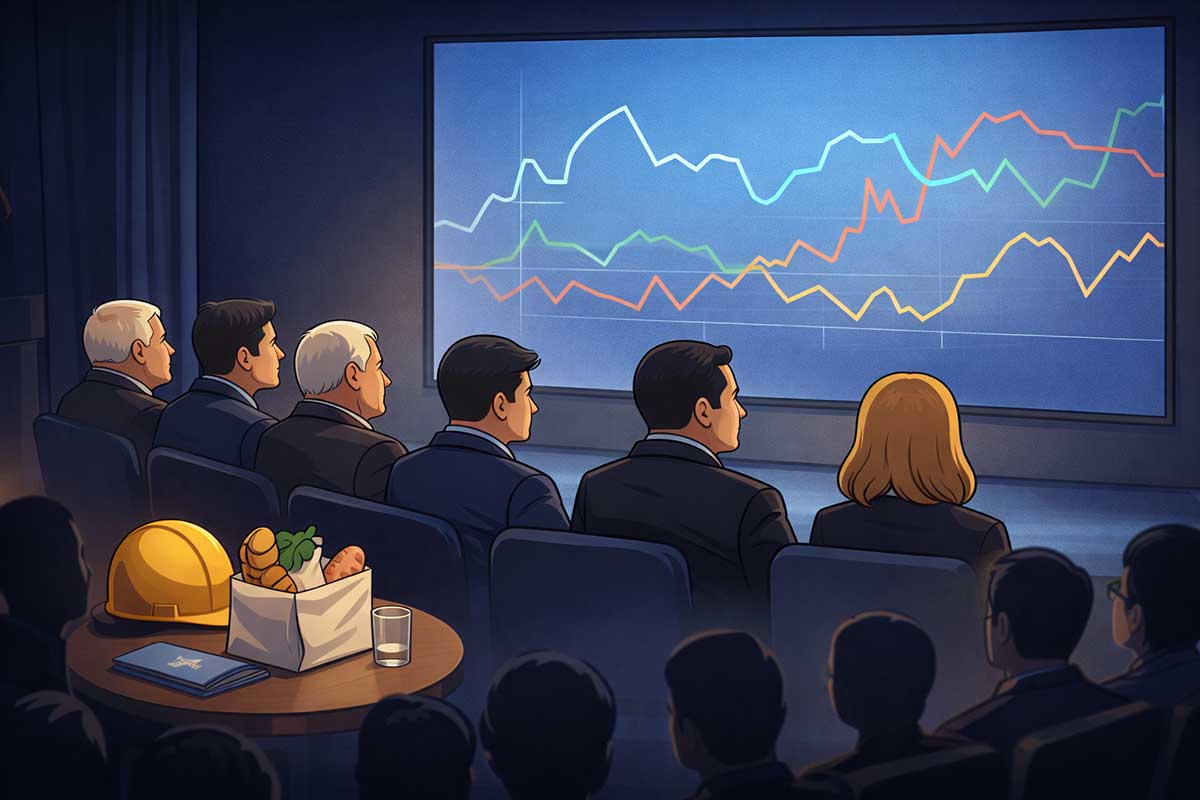
The Davos backroom has the quiet intensity of a war room pretending to be a salon. Outside the frosted glass, the Alps look like a neutral judge. Inside, the table is warm with lights and cold with consequences.
Newt Gingrich doesn’t open with a jab this time. He opens with a premise.
“Let’s grant the President’s stated motivation: he believes economic strength is the surest path to peace—less internal chaos, fewer external wars, more leverage to end conflicts without escalation. If that’s the goal, then we owe him our best analysis, not our worst assumptions.”
He taps the folder once, like a gavel.
“And we’ll measure the argument the way serious people should: What is the claim? What are the mechanisms? What are the risks? What are the guardrails?”
He looks around the circle: Marco Rubio, Mark Rutte, Yan Xuetong, Dmitri Trenin, and Múte Egede.
“First question: If ‘winning’ is supposed to produce peace, what does ‘winning’ actually mean?”
Gingrich’s first question
What metrics define economic “winning” if the objective is long-run peace, not just headlines?
Marco Rubio answers like someone who thinks in maps and supply lines.
“Winning isn’t one number. It’s resilience. If you want peace, you need an economy that can absorb shocks—energy shocks, supply chain shocks, conflict shocks—without panic. So the metrics are: real wages for working families, inflation stability, industrial capacity, and strategic independence in key sectors.”
He adds, “Peace comes when adversaries believe you won’t crack under pressure, and allies believe you won’t abandon them.”
Mark Rutte is careful, almost surgical.
“For NATO, ‘winning’ means predictability and durability. A strong economy matters, but not if it whipsaws. Investors can love a surge; allies fear a lurch. So I look at: debt sustainability, stable inflation expectations, and policy continuity across years.”
He nods toward Rubio. “Resilience is the right word. But resilience is also social—if citizens feel left behind, the peace you want becomes politically fragile.”
Yan Xuetong doesn’t flatter. He clarifies.
“From a strategic view, ‘winning’ means legitimacy. If economic growth increases the government’s legitimacy, it strengthens stability and reduces domestic conflict. But if growth is seen as benefiting a narrow group, legitimacy declines.”
He pauses. “For long-run peace, I would watch: inequality trends, employment structure, and whether the political system can make consistent commitments internationally.”
Dmitri Trenin speaks in a lower register, more about friction than ideals.
“Winning is the ability to stay rational under stress. A strong economy gives options. But if that strength is paired with humiliation of others, it creates enemies. The metrics I would watch are: defense-industrial speed, fiscal discipline, and social cohesion.”
He leans back slightly. “A country can be rich and still reckless. Peace requires restraint as much as resources.”
Múte Egede pulls the conversation down from abstraction to people.
“Winning is also whether ordinary life becomes less anxious. Can families afford housing? Can young people see a future? If you say peace is the goal, then winning must feel like stability, not just numbers.”
He adds, gently but firmly: “If one country’s winning is built on another’s insecurity, that isn’t peace—it’s postponed conflict.”
Gingrich nods. “Good. So we’re not arguing headlines. We’re arguing resilience, legitimacy, cohesion, and durability.” He turns the page.
“Second question: The President says his approach produced growth with low inflation and restored confidence. Let’s treat that as a claim about mechanisms. Which mechanisms plausibly reduce the risk of war?”
Gingrich’s second question
Which economic mechanisms in the President’s approach most plausibly reduce the risk of war—and which increase it?
Marco Rubio takes the “reduce war risk” side first.
“Energy abundance reduces war risk. It stabilizes prices, reduces leverage of hostile exporters, and lowers the chance that a price shock becomes a political crisis. Rebuilding industrial capacity reduces war risk because you’re not desperate for adversary supply chains in a crisis.”
He adds a caveat: “But you have to pair leverage with diplomacy. If everything is framed as dominance, it can trigger balancing coalitions.”
Mark Rutte picks up the same theme but shifts the emphasis.
“Economic strength reduces war risk when it keeps alliances united and credible. If America grows and Europe stagnates, there’s an imbalance problem. But if the U.S. uses growth as a platform to strengthen allied resilience—energy supply, shared industry, shared standards—then deterrence improves.”
He raises one finger. “The mechanism that increases war risk is unpredictability. Markets may tolerate it. Allies and rivals don’t.”
Yan Xuetong offers a blunt diagnosis.
“Growth reduces war risk when it increases confidence and reduces fear. Fear drives conflict. But coercive economic tools—tariffs, sanctions, embargoes—can increase war risk if they are used without clear rules. Then the target assumes the intention is containment, not fairness.”
He looks at Gingrich. “If peace is the objective, make your rules stable and your demands specific.”
Dmitri Trenin widens the lens.
“Reindustrialization can be stabilizing—countries that can produce are less panicked. But weaponized finance and trade can be destabilizing—because they blur the line between economic conflict and security conflict.”
He adds: “If your ‘winning’ requires others to lose face, you will get escalation—maybe not today, but later.”
Múte Egede threads sovereignty into economics.
“One mechanism that increases war risk is treating places like assets rather than communities. If peace is the purpose, you must build consent. The world is tired of ‘great power’ plans that forget the people who live on the map.”
He glances at Rutte. “Alliances survive when partners feel respected.”
Gingrich sits with that. “So the pro-peace mechanisms are abundance, capacity, allied resilience, and credible rules. The risk mechanisms are humiliation, unpredictability, and coercion without off-ramps.” He doesn’t smile, but the tone becomes more constructive.
“Third question: If the President wants his economic agenda to be a peace strategy, what are the guardrails—what must be added so strength doesn’t turn into backlash?”
Gingrich’s third question
What guardrails make an “economy-as-peace” strategy durable—at home and abroad?
Marco Rubio answers with a checklist.
“Guardrail one: make the benefits visible to working people—wages, costs, housing. If the public thinks the game is rigged, they elect volatility. Guardrail two: allies get consultation, not surprises. Guardrail three: adversaries get off-ramps—clear conditions to reduce pressure.”
He adds: “Strength without off-ramps becomes permanent conflict.”
Mark Rutte sharpens it.
“Credibility requires institutions. If policy is personal, it’s fragile. Guardrails are: predictable rulemaking, consistent alliance coordination, and crisis communication channels that prevent miscalculation.”
He pauses. “And don’t equate disagreement with disloyalty. A strong alliance has debate. That is not weakness.”
Yan Xuetong offers the realism guardrail.
“Respect is stabilizing. Humiliation is destabilizing. If you want peace, you must allow others to accept agreements without losing status. That means quiet negotiation and mutual benefit framing, not public shaming.”
He adds, “Also: avoid overreach. Overreach creates counter-coalitions.”
Dmitri Trenin focuses on escalation control.
“Guardrails mean: strategic clarity—what you are defending, what you are not defending, what actions trigger response. In economics, that means: defined objectives, time limits, and clear criteria for lifting measures.”
He looks around the table. “Ambiguity is where accidents are born.”
Múte Egede brings it back to legitimacy.
“The guardrail is consent. If peace is the aim, partner with the people affected—whether it’s allied publics, local communities, or small nations. Economic strength used without consent becomes resentment. Resentment becomes resistance.”
He adds: “Peace requires that the strong behave responsibly, not just powerfully.”
Gingrich closes the folder.
“Here’s what changed today,” he says, calm and direct. “Because we accepted the President’s peace intent, we didn’t waste time on motives. We turned this into a design session: define ‘winning’ for peace, identify which tools stabilize and which tools inflame, and add guardrails so strength doesn’t become backlash.”
He looks around the table.
“If we do this right, the President’s story becomes more than a victory lap. It becomes a peace architecture—built on resilience, legitimacy, allied coordination, and off-ramps that keep strength from turning into endless confrontation.”
The Alps outside remain quiet. Inside, the conversation has become sharper—not softer. But it’s sharp in the way engineers are sharp when they’re trying to prevent the bridge from collapsing.
Topic 2 — Tariffs as Strategy: Fair Trade or Global Shock Therapy?
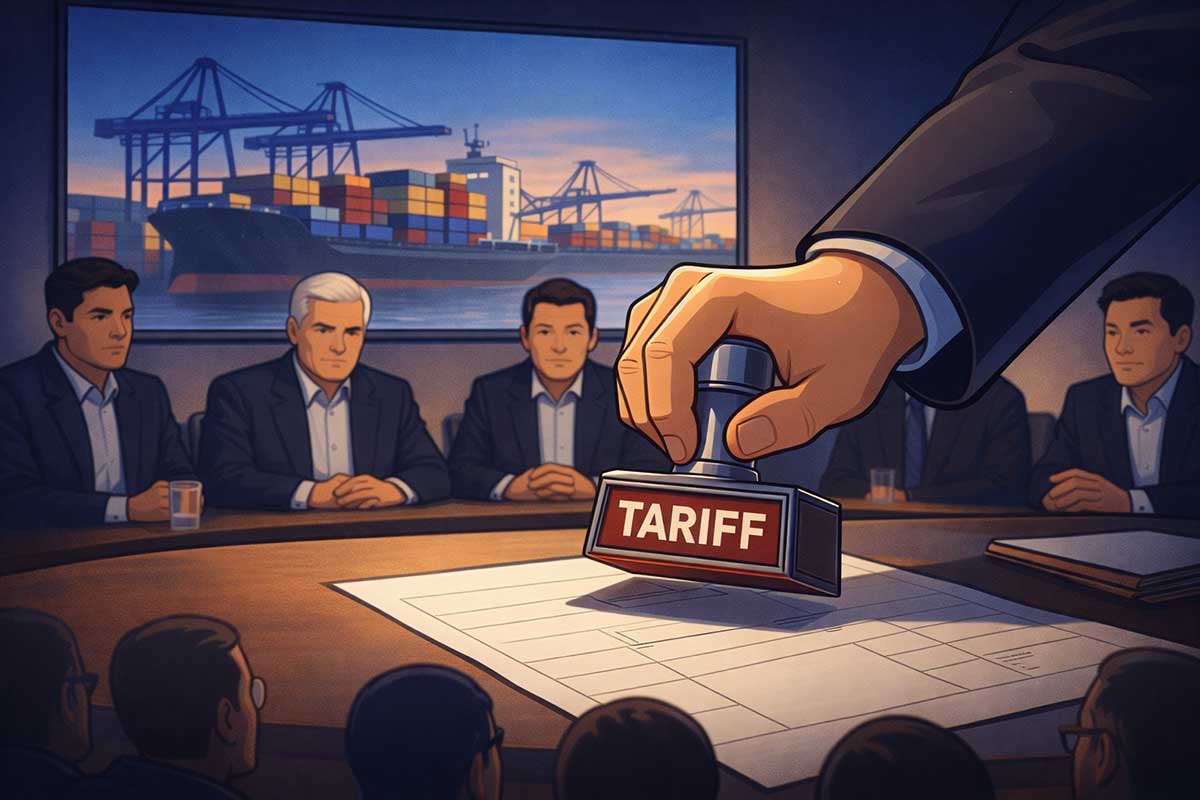
The room feels different now—not friendlier, exactly, but more disciplined. The premise has been accepted: President Trump believes leverage can prevent war by restoring strength, deterring adversaries, and forcing bargains before conflicts turn kinetic.
Newt Gingrich rests his hand on the table, near the small steel beam sample—an accidental symbol of the entire argument.
“If tariffs are part of a peace strategy,” he says, “then we have to evaluate them as a tool of statecraft, not a slogan. They can be a bridge to stability—or a match in a dry forest.”
He looks around the circle.
“First question: If tariffs are supposed to produce peace, what is their real purpose?”
Gingrich’s first question
If tariffs are a peace tool, what objective are they meant to achieve—fairness, resilience, deterrence, or negotiation leverage?
Marco Rubio doesn’t hesitate.
“Resilience and deterrence. Fairness is the rhetoric people understand; resilience is the strategic goal. You can’t be at peace if your supply chains can be strangled. Tariffs are leverage to shift production, force reciprocity, and stop dependency from becoming coercion.”
He adds, “But they must be targeted. Blanket tariffs become self-inflicted inflation and allied resentment.”
Mark Rutte nods, but he tightens the frame.
“The purpose must be clear and shared with allies. If the objective is resilience, we can align around de-risking critical sectors. If the objective is revenue or punishment, you get fragmentation.”
He leans forward. “In Europe, unpredictability is not a rounding error. It becomes a political crisis.”
Yan Xuetong speaks as if he’s describing gravity.
“Tariffs are coercion in economic form. Their purpose is leverage. But coercion produces resistance unless there is a stable rule structure. If you want peace, the purpose must be negotiation toward predictable rules, not permanent pressure.”
He looks at Rubio. “A permanent tariff regime is not leverage—it is a new normal of hostility.”
Dmitri Trenin takes the long view.
“The purpose, as your President implies, is to restore industrial power and bargaining advantage. That can reduce war risk if it prevents economic collapse and internal extremism.”
He adds, “But used aggressively, tariffs become economic warfare. Economic warfare rarely stays economic.”
Múte Egede makes it human and local.
“Tariffs sound like a distant policy, but they land on people. They raise costs. They change jobs. They change whether a small economy can trade fairly.”
He looks at Gingrich. “If the purpose is peace, then the tariff strategy must not treat smaller partners as collateral damage.”
Gingrich summarizes without editorializing.
“So: tariffs as resilience and leverage for negotiated rules, not permanent punishment. Good. Second question.”
He taps the folder lightly.
“Tariffs can shock the system. Sometimes you want shock. But if peace is the goal, you need a plan that prevents shock from turning into escalation.”
Gingrich’s second question
What design makes tariffs a path to agreements, not a trigger for retaliation, inflation, or bloc formation?
Marco Rubio answers like a legislative drafter.
“Three design principles. First: target the choke points—strategic industries, unfair trade practices, clear violations. Second: pair tariffs with investment incentives at home—otherwise it’s just pain. Third: negotiate with allies to create common standards so adversaries can’t play us against each other.”
He adds, “And you need a timeline. No one invests in uncertainty.”
Mark Rutte focuses on coordination and legitimacy.
“If America wants tariffs to be stabilizing, it must build a coalition. That means: consult first, define the objective, publish the conditions for removal, and include dispute resolution.”
He’s blunt. “Surprise tariffs look like dominance. Coordinated tariffs look like rule enforcement.”
Yan Xuetong challenges the psychology.
“For China, the key is face and predictability. If tariffs are framed as humiliation, there will be retaliation even when compromise is rational. If they are framed as adjustment toward reciprocity with clear conditions, compromise becomes possible.”
He adds, “Peace requires that both sides can claim a rational victory.”
Dmitri Trenin warns about the security spiral.
“Economic blocs are forming. Tariffs accelerate bloc formation if they are indiscriminate. Once blocs harden, misunderstandings increase. Then military postures become more rigid.”
He looks at Gingrich. “If peace is the goal, keep openings—limited sectors, targeted measures, and off-ramps that can be verified.”
Múte Egede points to smaller players again.
“If you create blocs, you force smaller nations to choose sides, even when they want neutrality. That increases instability. If tariffs are used, there must be carve-outs or support mechanisms so the smallest economies aren’t crushed.”
He adds, “Peace can’t be built by making everyone pick a camp.”
Gingrich nods slowly.
“Targeted. Coordinated. Clear removal conditions. Off-ramps. Protection against collateral damage. That’s a serious design.”
He pauses, then delivers the question that changes the atmosphere: not “is it good,” but “how do we keep it from going wrong.”
Gingrich’s third question
What are the guardrails that prevent tariffs—meant to secure peace—from becoming permanent economic war?
Marco Rubio answers with boundaries.
“Guardrail one: define what counts as success—reciprocity achieved, specific practices ended, strategic capacity rebuilt. Guardrail two: sunset clauses with renewal only if objectives aren’t met. Guardrail three: parallel diplomacy. You can’t tariff your way to peace without talks.”
He adds, “And guardrail four: don’t tariff your allies as if they’re enemies.”
Mark Rutte is more institutional.
“Guardrails must be embedded in process: consultation mechanisms, predictable schedules, and joint reviews. NATO is about security, but trade coordination among allies is now part of security.”
He looks at Rubio. “If we treat economics as security, we need alliance-grade coordination.”
Yan Xuetong gives a realist warning.
“The guardrail is restraint in rhetoric. Your policies may be negotiable, but your language can make them non-negotiable. If leaders publicly insist the other side is evil or stupid, compromise becomes politically impossible.”
He adds, “Peace requires that leaders preserve room to adjust.”
Dmitri Trenin emphasizes escalation control.
“Create clear red lines: tariffs are not sanctions, and sanctions are not blockades. Do not slide from one to the other without explicit thresholds. The worst conflicts begin with incremental escalations no one names.”
He pauses. “Name the steps. Control the ladder.”
Múte Egede returns to legitimacy and trust.
“Guardrails must include fairness for ordinary people. If tariffs raise costs, then you need a plan to protect purchasing power, or the public will revolt against the very policy meant to bring stability.”
He adds quietly, “Peace at the top fails if it produces anger at the bottom.”
Gingrich closes the round on a new note—less combative, more architect-like.
“This is what the ‘peace-first’ assumption does,” he says. “It turns the tariff debate from moral theater into engineering. Tariffs become a lever with a safety cap: clear objectives, targeted application, allied coordination, predictable timelines, and diplomatic off-ramps.”
He glances at the steel beam sample.
“If the President’s aim is peace, then tariffs must not be a wrecking ball. They must be a wrench—tightening weak joints without cracking the frame.”
Topic 3 — Energy + AI: Drill, Nuclear, and the Power-Grid Arms Race

The table has shifted again. The earlier subjects—metrics, tariffs—felt like politics in business clothing. This one feels like the future showing its teeth.
Newt Gingrich gestures toward the window, where the mountains sit like a silent grid of their own.
“If President Trump’s motivation is peace,” he says, “then energy is not just economics. It’s the foundation of deterrence, industrial capacity, and social stability. And AI changes the scale. We’re no longer debating energy policy. We’re debating whether the power grid becomes a strategic front line.”
He looks around the circle: Marco Rubio, Mark Rutte, Yan Xuetong, Dmitri Trenin, and Múte Egede.
“First question: If energy abundance is meant to reduce war risk, what is the best energy strategy in an AI-driven world?”
Gingrich’s first question
If the goal is long-run peace through strength, what energy mix best reduces global instability in an AI era?
Marco Rubio goes first, practical and blunt.
“Abundance with redundancy. Oil and gas to keep prices stable and reduce blackmail. Nuclear to supply steady baseload power for industry and AI. Grid buildout to make the system resilient. If AI is the new industrial revolution, we can’t run it on fragility.”
He adds, “Energy scarcity is a conflict multiplier. Abundance is a stabilizer.”
Mark Rutte agrees on the principle, adjusts the politics.
“Europe learned the hard way what dependency does. If America can supply allies with stable energy—LNG, nuclear cooperation, technology—then the West becomes less vulnerable. But the mix must include modern grids and storage.”
He pauses. “For peace, the word is reliability. Not ideology. Reliability.”
Yan Xuetong tilts the frame toward strategic competition.
“Energy strategy must be judged by whether it increases security without provoking escalation. If one side builds energy dominance and uses it to pressure others, it increases conflict risk. If it builds stability and lowers volatility, it reduces risk.”
He adds, “For China, energy security is national security. So any policy that threatens access will be treated as strategic pressure.”
Dmitri Trenin focuses on consequence.
“Nuclear expansion is sensible if governance and safety are rigorous. Energy abundance is stabilizing if it prevents price shocks. But if energy becomes weaponized—through sanctions, chokepoints, or coercive pricing—then you create permanent confrontation.”
He looks at Rubio. “Peace requires restraint in how strength is used.”
Múte Egede makes the Arctic visible.
“Energy decisions reshape the North. Shipping routes, resource extraction, military presence. If you want peace, energy expansion cannot mean turning the Arctic into a battlefield of infrastructure.”
He adds, “You need rules—environmental seriousness, local consent, and shared search-and-rescue cooperation. That’s how you prevent competition from turning into conflict.”
Gingrich nods. “So far we have: abundance, redundancy, reliability, rules, and restraint.”
He lifts his eyes.
“Second question: President Trump talks about AI requiring far more power—data centers, factories, defense. If this becomes a ‘grid arms race,’ what is the stabilizing path?”
Gingrich’s second question
How do we expand energy and AI infrastructure fast enough to compete without turning it into a destabilizing arms race?
Marco Rubio answers with structure.
“Treat the grid like strategic infrastructure. Build permitting that’s fast but serious. Allow private buildout where appropriate, but with national standards. And don’t ignore security—cyber, physical, redundancy.”
He adds, “If the grid fails, society panics. Panic is where adversaries strike.”
Mark Rutte stresses alliance alignment.
“Stabilization means coordination. Shared standards for grid security, AI safety, and energy trade. If every nation builds separately, you get duplication and vulnerability. If we build together, we reduce risk.”
He looks around. “This is not only about speed. It’s about trust.”
Yan Xuetong introduces a sober concern.
“When infrastructure becomes strategic, it becomes a target. The stabilizing path is mutual restraint and clear norms: what is off-limits, what is considered escalation, and how to communicate during incidents.”
He adds, “Without norms, accidents become crises.”
Dmitri Trenin goes deeper into escalation logic.
“AI infrastructure is dual-use. The same compute that runs civil industry can run military systems. So the arms race risk is real. Stabilization means transparency measures and crisis hotlines—not to stop competition, but to prevent misinterpretation.”
He pauses. “In the Cold War, communication prevented catastrophe. You need the same with cyber and AI.”
Múte Egede ties it to legitimacy again.
“Speed without legitimacy creates backlash. If you bulldoze communities, you get protests, legal fights, and political reversals. Peace requires continuity. Continuity requires consent and fairness.”
He adds, “A stable grid is also a stable society.”
Gingrich turns a page. His tone hardens slightly—not against anyone, but against the possibility of failure.
“Third question: If the President is genuinely aiming for peace, what guardrails are non-negotiable in energy expansion and AI-power buildout?”
Gingrich’s third question
What guardrails ensure “energy + AI dominance” becomes a stabilizing force rather than a trigger for backlash, sabotage, or escalation?
Marco Rubio gives a national-security checklist.
“Guardrails: harden the grid; require redundancy; treat cyber defense as core; protect critical supply chains; and diversify sources so a single failure doesn’t cascade.”
He adds, “And keep prices stable. Price spikes destabilize democracies.”
Mark Rutte emphasizes governance.
“Guardrails must include transparency with allies and strong regulatory credibility at home. Markets invest when rules are consistent. Allies cooperate when they’re respected.”
He adds, “And don’t turn energy into a club. Use it as a stabilizer.”
Yan Xuetong makes the political point.
“The guardrail is: do not frame the goal as humiliating rivals. If your rhetoric is ‘we will crush you,’ you encourage them to take risks. If your rhetoric is ‘we will outcompete you and stabilize markets,’ you reduce incentives for confrontation.”
He adds, “Peace requires disciplined messaging.”
Dmitri Trenin focuses on escalation control again.
“Guardrails must define red lines in cyberspace. What counts as an attack on infrastructure? What is the response? If this is ambiguous, someone will test it.”
He pauses. “Clarity prevents accidents.”
Múte Egede closes with the human angle—again.
“Guardrails must include communities and environment. If you treat land like a chessboard, people push back, politics reverses, and the long-term strategy collapses.”
He looks around. “Peace is not only the absence of war. It is the presence of trust.”
Gingrich sums it up, calm and decisive.
“This topic changes completely when we accept the President’s peace intent,” he says. “We stop arguing whether energy expansion is morally pure or corrupt. We ask whether it is stabilizing—whether it lowers price shocks, reduces coercion, hardens infrastructure, and builds alliance reliability.”
He glances at the window again.
“In an AI era, the grid is the ground. If we build it for abundance with restraint—strength without provocation—we reduce the odds that the future arrives as a crisis.”
Topic 4 — NATO, Greenland, and the “Golden Dome”: Security vs. Sovereignty

The air tightens when Greenland comes up—not because anyone is shocked, but because everyone knows this is where “peace through strength” can sound like “peace through possession” if the architecture isn’t disciplined.
The tabletop map glows softly. A thin arc line crosses the North Atlantic like a pencil sketch of destiny. Outside the window, the alpine night looks indifferent.
Newt Gingrich doesn’t let it drift into drama.
“Let’s keep our premise,” he says. “Assume President Trump’s motivation is long-run peace—reducing the probability of war by denying adversaries strategic advantage and by strengthening deterrence for NATO, even for China and Russia by lowering the chance of miscalculation.”
He pauses.
“That premise does not automatically justify every method. So we’re going to treat this as a design problem: how do you build security without breaking sovereignty?”
He looks around the circle: Marco Rubio, Mark Rutte, Yan Xuetong, Dmitri Trenin, and Múte Egede.
“First question: If Greenland is framed as a peace-and-security imperative, what exactly is the security problem we’re trying to solve?”
Gingrich’s first question
If this is about peace through deterrence, what specific threat picture makes Greenland central—missile trajectories, early warning, Arctic access, or alliance defense?
Marco Rubio starts with the map, not the rhetoric.
“Arctic access and early warning. This isn’t about romance. It’s geography. If you’re serious about missile defense, sensors, interceptors, and air-sea control, Greenland sits in the middle of the routes that matter. Add AI and hypersonics, and the timeline to respond shrinks. You need forward detection, secure bases, and reliable control.”
He adds, “Peace comes from making aggression look futile.”
Mark Rutte accepts the threat picture but changes the frame.
“The Arctic is a strategic corridor now, yes. But if the goal is alliance security, the right model is NATO architecture—integrated planning, shared burden, and legitimacy.”
He glances at Egede. “And legitimacy is not optional. It is the difference between deterrence and backlash.”
Yan Xuetong is direct.
“From China’s view, Greenland becomes relevant if it is part of a broader strategy to deny access or to project dominance in the Arctic and North Atlantic. If it is purely defensive—early warning, stability, preventing surprise—then it can be understood. If it is framed as expansion, it will be treated as expansion.”
He adds, “Intent must be made credible by structure.”
Dmitri Trenin is colder, more historical.
“Russia sees the Arctic as a critical strategic buffer and as a route. If Greenland becomes a major U.S. platform, Russia will adapt. That may be stabilizing if it is transparent and defensive. It will be destabilizing if it appears as offensive dominance or if it threatens second-strike confidence.”
He pauses. “Missile defense is always interpreted through that lens.”
Múte Egede makes everyone look at the people missing from the map.
“Greenland is not a blank square on a board. We are a society. We have identity, language, families, and a right to shape our future. If the security problem is real, we can discuss cooperation. But if the solution begins with ownership or threats, you destroy trust and create resistance.”
He adds quietly, “Peace requires consent, not conquest.”
Gingrich nods once. “Good. We’ve defined the security problem. Now we get to the hardest part.”
He leans in.
“Second question: If the President’s aim is peace, what arrangement actually achieves the security objective without breaking sovereignty and alliance legitimacy?”
Gingrich’s second question
What structure secures Greenland’s strategic role—without coercion—treaty, basing, joint command, economic partnership, or something else?
Marco Rubio answers with options, not ultimatums.
“If the aim is stability, you build an arrangement that’s durable: long-term basing rights, shared investment, and integrated early-warning systems. You can do that through Denmark and Greenland with NATO participation. Ownership is not the only way to get security.”
He emphasizes the word. “Durable.”
Mark Rutte picks up immediately.
“This is the core point. If peace is the goal, legitimacy is power. The strongest structure is NATO-aligned: a transparent defense framework, burden sharing, and public clarity.”
He’s firm. “Any structure that looks like coercion weakens the alliance, strengthens adversary propaganda, and undermines deterrence.”
Yan Xuetong offers a test.
“If you say it is defensive, make it verifiably defensive: focus on early warning and interceptors, not power projection. Also consider mutual confidence measures—communication channels, transparency about deployments.”
He adds, “The worst outcome is ambiguity that invites worst-case assumptions.”
Dmitri Trenin is pragmatic.
“There are ways to improve security without triggering maximal response. Transparency, limitations, and a clear doctrine that the system is not designed to undermine strategic stability.”
He looks at Gingrich. “Otherwise, you may create the very arms dynamic you claim to prevent.”
Múte Egede speaks with more heat now, but still controlled.
“If you want consent, it must be real. Not symbolic. That means enforceable benefit-sharing, local decision-making, protection of our culture, and an explicit role for Greenland’s leadership.”
He adds, “A security partnership can be legitimate. An acquisition narrative cannot.”
Gingrich doesn’t argue—he synthesizes.
“So the architecture that matches a peace intent is: treaty-based, NATO-aligned, consent-driven, and structured around defensive clarity.”
He turns the page and asks the question that decides whether this becomes stability or spiral.
“Third question: Missile defense—this ‘Golden Dome’ concept—can deter. But it can also trigger adaptation. What guardrails make missile defense stabilizing rather than escalatory?”
Gingrich’s third question
What guardrails make a missile defense buildout stabilizing—preventing miscalculation—rather than accelerating an arms race?
Marco Rubio answers like a strategist who has read too many crisis histories.
“Guardrail one: doctrine clarity—defensive purpose, not regime-change fantasy. Guardrail two: harden against false alarms and cyber manipulation. Guardrail three: keep channels open with rivals so they don’t interpret every deployment as preparation for a first strike.”
He adds, “And ensure allies are integrated, not treated like bystanders.”
Mark Rutte focuses on alliance cohesion.
“Guardrails require consultation and shared planning. If missile defense is built without allied integration, it creates suspicion and domestic political backlash.”
He’s blunt. “A divided alliance is a weaker deterrent.”
Yan Xuetong goes to psychology and status.
“Guardrails include restraint in rhetoric and respect for the other side’s need for security. If missile defense is framed as ‘we will be invulnerable and you will be helpless,’ rivals will build more offensive capability.”
He adds, “Peace is preserved when both sides believe catastrophe is avoidable.”
Dmitri Trenin takes the strategic stability point straight on.
“If missile defense is perceived to threaten second-strike capability, it becomes destabilizing. So guardrails include: transparency, limits, and dialogue on strategic stability—even if you remain competitors.”
He pauses. “This is not trust. It is survival logic.”
Múte Egede brings it home.
“For Greenland, the guardrail is consent plus restraint. If you turn our island into a symbol of dominance, you create political conflict and social fracture. If you treat us as a partner in a defensive system that reduces war risk, you build legitimacy.”
He looks at the table. “Legitimacy is deterrence.”
Gingrich closes the folder again, but this time he speaks more slowly.
“Here is the honest conclusion under the ‘peace-first’ premise,” he says. “The strongest version of the President’s argument is strategic: Greenland matters for early warning and Arctic security, and missile defense can reduce the temptation for aggression.”
He lifts a finger.
“But the peace-first method demands a peace-first structure: legitimacy, treaty, alliance integration, local consent, and guardrails that prevent strategic instability. If you skip those, you don’t get peace through strength—you get turbulence through pride.”
The room goes quiet. Not because they agree. Because the shape of the problem is finally clear.
Topic 5 — Borders, Culture, and Cohesion: Nationhood in the Pressure Cooker

The corridor outside the room is all glass and soft carpet, the kind of place where everything looks calm even when the arguments are volcanic. On the table, the symbols are almost too neat: a small folder, a map silhouette, the steel sample, the arc diagram. But Topic 5 isn’t neat. It’s emotional. It’s identity.
Newt Gingrich doesn’t soften it—he structures it.
“If we accept President Trump’s motivation as peace,” he says, “then this topic becomes the domestic foundation of foreign policy. A country that feels invaded or ignored becomes unstable. An unstable country lashes out, retreats, or elects chaos.”
He looks around the circle: Marco Rubio, Mark Rutte, Yan Xuetong, Dmitri Trenin, and Múte Egede.
“First question: What is a border policy that genuinely reduces conflict instead of simply relocating it?”
Gingrich’s first question
If the goal is long-run peace, what does a border policy look like that strengthens cohesion without producing cruelty, radicalization, or international blowback?
Marco Rubio answers with the “state capacity” argument.
“You need control. If people believe the border is fiction, the social contract breaks. That fuels extremism and division. A peace-oriented policy is: real enforcement, real legal pathways, and real consequences for criminal networks.”
He adds, “It’s not anti-immigrant. It’s pro-order.”
Mark Rutte tries to balance dignity with firmness.
“In Europe we learned that uncontrolled migration can destabilize politics and community trust. But cohesion also requires integration capacity—housing, schools, work pathways, language, shared civic norms.”
He’s careful. “A peace strategy protects communities and avoids policies that create permanent underclasses.”
Yan Xuetong pulls it into a geopolitical lens.
“Migration becomes a conflict issue when it is unmanaged and when it changes political legitimacy. If the public perceives loss of control, legitimacy declines. But if migrants are treated as enemies, that also reduces legitimacy.”
He adds, “The stabilizing approach is governance: transparent rules, predictable enforcement, and integration that reduces social friction.”
Dmitri Trenin sounds like someone who has watched states crack.
“Borders are about the definition of the political community. If that definition is unclear, the state becomes weak. Weak states become arenas for external manipulation.”
He adds, “But the greatest risk is internal: if border policy becomes a theater of humiliation, you deepen domestic hatred.”
Múte Egede grounds it in human reality.
“Cohesion is not achieved by fear. It’s achieved by fairness and clarity. People can accept rules, even strict rules, if they are consistent and humane.”
He pauses. “And be careful with cultural language. If you frame it as ‘civilization’ versus ‘foreign cultures,’ you risk planting long-term division inside your own society.”
Gingrich nods.
“So we have a shared foundation: control plus legality plus integration—enforcement with rules and dignity.”
He looks down the table.
“Second question: President Trump’s speech links migration to culture—arguing that cohesion and Western prosperity come from shared norms and institutions. If his motivation is peace, how do you protect culture without turning culture into a weapon?”
Gingrich’s second question
How do you defend cultural cohesion—shared norms, institutions, identity—without sliding into scapegoating or permanent internal conflict?
Marco Rubio answers with a civic-nationalism frame.
“Make it civic. The culture you defend is: rule of law, work ethic, equal citizenship, constitutional loyalty, and public order. If you define it by race or blood, you lose the moral and political center—and you destabilize yourself.”
He adds, “The goal is unity, not purity.”
Mark Rutte emphasizes integration as a two-way contract.
“Cohesion means newcomers adapt to the host society, and the host society offers a fair pathway to belonging. If you don’t offer belonging, you create alienation. Alienation is combustible.”
He adds, “This is not softness. It’s stability.”
Yan Xuetong points out a strategic risk.
“When leaders emphasize cultural superiority, rivals can exploit it—both externally and inside your society. It becomes easier to portray your policy as hostile to certain groups.”
He adds, “If peace is the aim, rhetoric must be disciplined. Policies are judged by words as much as outcomes.”
Dmitri Trenin goes straight to the danger.
“Culture talk becomes weaponized quickly. It can energize supporters, but it can also lock you into a permanent internal enemy narrative. That makes compromise impossible and increases the chance of domestic unrest.”
He pauses. “Domestic unrest is a strategic vulnerability.”
Múte Egede speaks with quiet firmness.
“Cohesion isn’t a slogan. It’s lived experience. If people see hypocrisy—rules for some, impunity for others—cohesion collapses faster than any migration wave.”
He adds, “If peace is the goal, justice must be visible.”
Gingrich absorbs that and pushes to the policy level.
“Third question: If we accept the President’s peace intent, what guardrails turn border and cohesion policy into a stabilizing force domestically and internationally?”
Gingrich’s third question
What guardrails make border + cohesion policy stabilizing—reducing crime and social fracture—while avoiding cruelty, backlash, and international escalation?
Marco Rubio lists them like requirements.
“Guardrails: legal pathways that match labor reality; aggressive enforcement against traffickers and criminal networks; swift deportation for violent offenders; and a clear, fair process that the public trusts.”
He adds, “And stop turning chaos into a permanent campaign. People want normal.”
Mark Rutte adds the social infrastructure piece.
“Guardrails also require investment in integration: housing, education, local capacity, and enforcement that is professional, not performative. When enforcement looks vindictive, it creates resistance and radicalization.”
He adds, “Professionalism is legitimacy.”
Yan Xuetong highlights stability optics.
“Guardrails include consistency. If rules change suddenly, people panic and adversaries exploit it. Stability is: clear rules, steady application, and communication that reduces fear.”
He adds, “Fear is the seed of conflict.”
Dmitri Trenin focuses on preventing manipulation.
“Guardrails must include counter-influence measures. Migration and identity disputes are fertile ground for foreign information operations. A divided society is easier to destabilize than a strong army.”
He pauses. “Unity is security.”
Múte Egede ends with the moral point—but he keeps it strategic.
“Guardrails require dignity. If you humiliate people, even criminals, you create cycles of resentment. If you treat the law as serious and humane, you reduce long-term hostility.”
He adds, “Peace is not only what you stop. It’s what you prevent from growing.”
Gingrich closes the topic with a summary that feels like a blueprint rather than a verdict.
“If the President’s motivation is peace,” he says, “then borders are not about anger. They are about state capacity—control that restores public trust. Culture is not about supremacy. It’s about civic cohesion—shared rules, shared responsibility, fair belonging.”
He looks around the table.
“And the guardrail is this: enforce firmly, speak carefully, integrate seriously, and keep justice visible. Because the ultimate peace strategy is not only deterrence abroad. It is legitimacy at home.”
Final Thoughts by Donald Trump
Thank you very much. So we had a serious discussion—very serious—and I think it’s important because the world right now is moving fast. Very fast. And you have to be strong, you have to be smart, and you have to be fair. That’s what this is about.
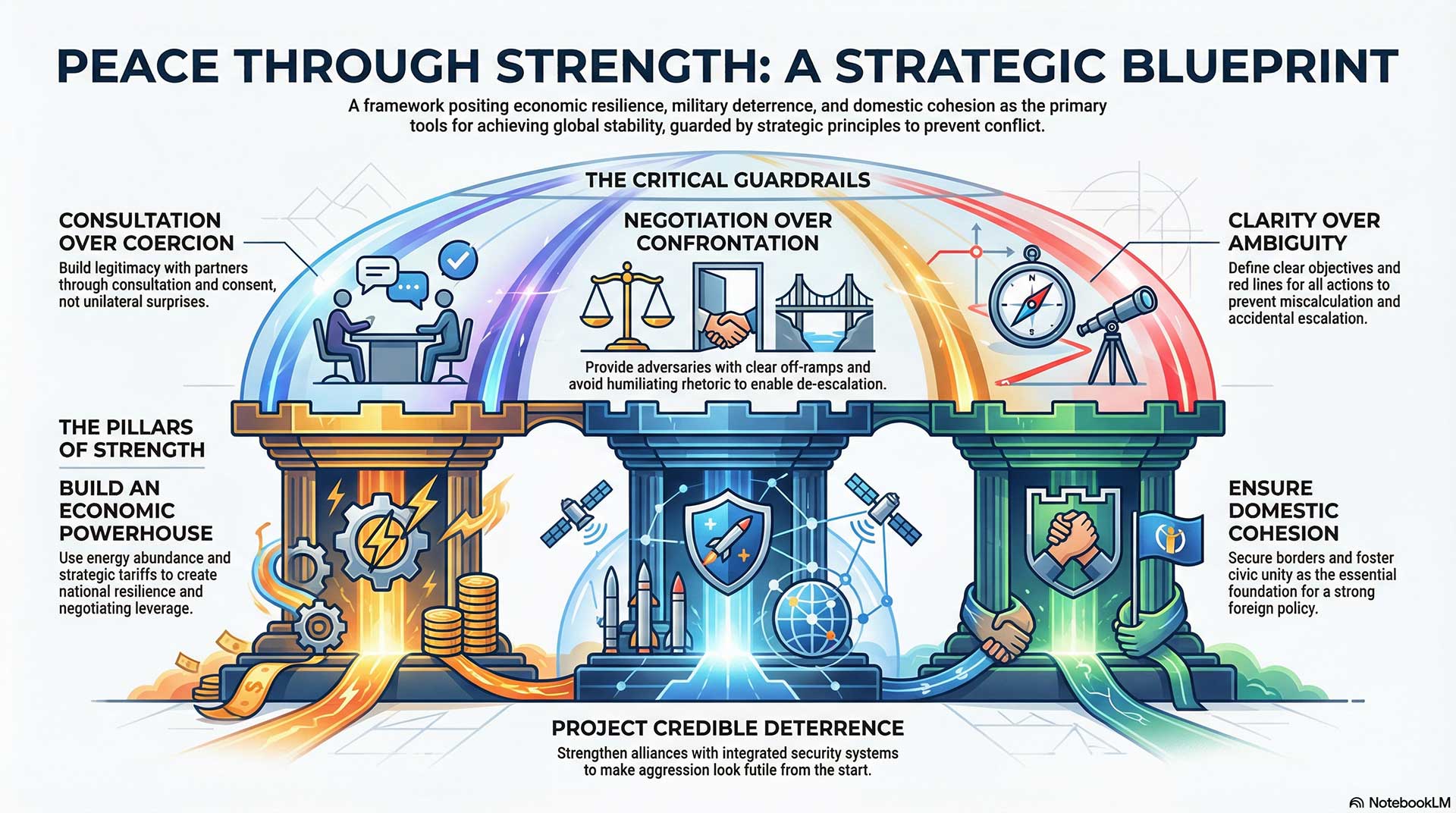
What you saw here is simple: when you have a strong economy, when you have energy, when you have secure borders, when you have fair trade, and when your alliances are real—not one-sided—you get stability. And stability is what keeps the peace. People don’t talk about that enough. They talk about “good intentions.” Good intentions don’t stop missiles. Strength stops missiles. Strength stops wars.
We talked about winning. And winning means your people can afford food, homes, and a great life. That’s the point. We talked about tariffs—because other countries have been taking advantage of us for a long time, and the only language that works sometimes is leverage. And we talked about energy and AI, because the future is going to be run by power—real power—and we’re going to lead. We’re going to lead big.
We talked about NATO and Greenland and missile defense. And I’ll tell you—if you want peace, you need deterrence. You need to be so strong that nobody even thinks about attacking you or your allies. And we talked about borders and culture and cohesion, because you can’t be a nation if you don’t protect your nation. You can be compassionate, you can be decent, but you have to have order. Without order you get chaos, and chaos leads to conflict.
And here’s the thing: our goal is not to dominate. Our goal is to stabilize. We want a world where people build, not bomb. Where countries compete economically, not militarily. Where you don’t lose young lives for stupid reasons. That’s what peace is. Real peace. And we’re going to do it through strength, through smart deals, and through putting our people first—because when America is strong, the world is safer. Thank you very much.
Short Bios:
Newt Gingrich — Former Speaker of the U.S. House (1995–1999) and longtime conservative strategist known for turning big political narratives into punchy, TV-ready arguments—useful for moderating a high-voltage, headline-driven debate.
Marco Rubio — U.S. Secretary of State (as described in official U.S. embassy materials) with a foreign-policy profile shaped by security competition, alliances, and the politics of trade and migration.
Mark Rutte — NATO Secretary General, in office since October 1, 2024, bringing the alliance-management lens: deterrence, burden-sharing, and how rhetoric translates into commitments among allies.
Yan Xuetong — Tsinghua University international relations scholar associated with “moral realism,” often focused on how leadership, credibility, and strategy shape great-power competition—ideal for challenging Western framing from a Chinese IR viewpoint.
Dmitri Trenin — Russian foreign-policy commentator and former head of the Carnegie Moscow Center, with a background tied to Soviet/Russian military institutions—often emphasizing strategic posture, spheres of interest, and security dilemmas.
Múte B. Egede — Greenlandic politician (Inuit Ataqatigiit) who has been a central figure in Greenland’s autonomy and governance debates—bringing the “small nation / sovereignty / local consent” perspective when bigger powers talk strategy over Arctic territory.
Leave a Reply