

|
Getting your Trinity Audio player ready...
|
Introduction by Craig Hamilton-Parker
(Soft piano and low ambient hum; camera glides over the dawn skyline of Washington, D.C.)
Every civilization faces a moment when its laws are tested not by its enemies, but by its own reflection.
America has reached such a moment — not of war, but of will.
When a leader questions the limits written in the nation’s highest covenant, the question is not merely political; it is spiritual.
Can a people rise above the pull of power and remember the higher purpose behind their freedom?
We are not witnessing the fall of democracy, nor its perfection, but its awakening — the reminder that liberty without consciousness becomes noise, and power without humility becomes shadow.
In this story, the stage is political, but the meaning is eternal.
It is not about one man’s ambition, but about the soul of a people remembering who they are when faced with the mirror of their own creation.
(Fade into the Oval Office scene — “Part I: Trump’s Third Chapter — The Oval Office Address.”)
(Note: This is an imaginary conversation, a creative exploration of an idea, and not a real speech or event.)
“The Third Chapter of America’s Comeback” – A Fictional Presidential Address
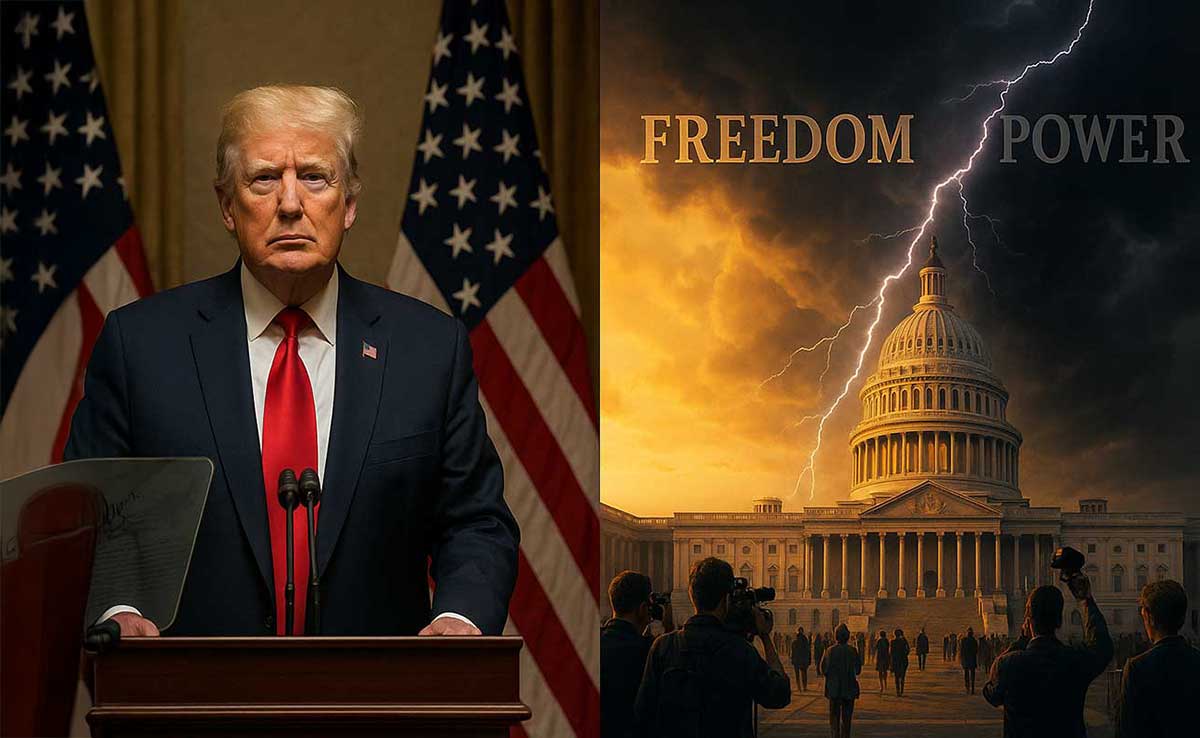
(Broadcast from the Oval Office, with the American flag behind him. Cameras click, and a quiet anticipation fills the room. The President leans toward the microphone, measured yet confident.)
My fellow Americans,
Tonight I want to speak to you not as a politician, but as a man who has walked with you through the hardest and greatest years this country has seen in generations.
You’ve seen the victories. You’ve seen the challenges. You’ve seen the relentless attacks — and you’ve seen that we never gave up. Because America never gives up.
Over the past decade, we’ve witnessed something historic — something that defied every prediction, every poll, every so-called expert who told you that America’s best days were behind her. Together, we proved them wrong. We rebuilt the economy, restored strength to our military, brought jobs back home, and reminded the world that freedom still has a heartbeat — a very strong one — right here in the United States of America.
But you also saw how hard they tried to take it away.
You saw the censorship, the investigations, the endless headlines. You saw how they doctored videos, twisted words, erased truth, and sold fear. They didn’t just come after me — they came after you. Because you dared to believe that your voice mattered again.
For years, I’ve watched as the same people who once lectured us about democracy have done everything possible to control it. And now, my friends, we face a choice — one that will decide not just who leads this country, but whether we the people still do.
When I first came to Washington, they said, “He’ll never last.” Then they said, “He’ll never come back.”
Well, we came back — bigger, stronger, and prouder than ever before. We won again, and we rebuilt again. And now, as we look to the future, I can tell you this: the mission is not finished.
We are at the crossroads of history. America stands tall — but we are surrounded by threats: from within, from without, from those who believe our Constitution is a weapon to silence the people instead of empowering them.
And so tonight, I am announcing something that will start a conversation — a very big conversation — not just here, but around the world.
Over the past months, I have asked my legal team, my advisers, and some of the greatest constitutional minds in the country — really the best — to study whether the restrictions written more than seventy years ago truly reflect the will of the people today. And their conclusion is clear: there is nothing in the spirit of our Constitution that forbids the people from choosing the leader they believe will defend them best.
The 22nd Amendment was written in another time, for another world — before nuclear weapons, before artificial intelligence, before global networks that can silence a nation in a second. The founders never intended it to become a chain that binds the people. It was meant to prevent tyranny — not to prevent freedom.
I want to be clear: I am not announcing a campaign tonight. What I am announcing is a movement to restore the full rights of the American voter — the right to choose freely, without limitation, the person who can lead this nation. If that choice one day includes me, so be it. If it includes someone else who carries the torch of liberty, that’s fine too. But the people — you — must decide.
Some will say this is controversial. Some will scream that this is a power grab. You’ll hear that on television tonight, I can promise you that. But what’s really happening is something much bigger — it’s the next great step in the evolution of American democracy. Because democracy doesn’t mean limiting choice. Democracy means expanding it.
When George Washington refused a third term, it was an act of humility. When Franklin Roosevelt accepted one, it was an act of necessity. Both were acts of love for country. Today, I say to you: love of country must always come before fear of criticism. If the people demand continued leadership — from me or anyone else — it is not tyranny. It is the highest form of democracy.
We’ve seen too much manipulation, too much censorship, too much rewriting of history by those who think they own it. They told you lies about elections, about borders, about faith, about energy, about your children’s education. And now, they will tell you lies about this too. But I believe the American people are awake. I believe you see through it. You have learned to recognize when they’re trying to control your mind — and you are done letting them.
This is about freedom. Not my freedom — ours.
The freedom to think for yourself.
The freedom to work without being taxed into poverty.
The freedom to pray without apology.
The freedom to speak the truth, even when it’s unpopular.
The freedom to protect your family, your borders, and your nation from those who would destroy it in the name of progress.
They said America was divided. But that’s not true. We are united — united in wanting safety, prosperity, and dignity. Every worker, every parent, every soldier, every small business owner — you are the backbone of this republic. You built it. You keep it alive. And you will decide its future.
I’ve seen the faces of the people who come to our rallies — in the pouring rain, in the snow, waiting for hours just to say, “We believe.” You remind me every day that this fight was never about politics. It’s about purpose. It’s about love of country. It’s about proving that America’s story is far from over.
So tonight, I’m calling on Congress, on our governors, on scholars and patriots everywhere, to open the discussion that America has avoided for too long:
Should we continue to limit the people’s choice, or should we trust the people to decide for themselves?
This isn’t just about one man or one election. It’s about the principle that the people — not the media, not the bureaucracy, not the elites — are the highest authority in the land.
Our forefathers risked their lives for that idea. Millions of brave men and women since have fought and died to defend it. We cannot let it fade now, in the age of algorithms and propaganda.
My fellow Americans, the world is watching us again. They want to know if the light of liberty still burns bright in the land of the free. And I say to them — yes, it does. It burns brighter than ever.
This is not an ending. This is not even a campaign.
This is the beginning of the third chapter of America’s comeback story.
Together, we will continue to protect faith, family, and freedom. Together, we will remind the world that America’s destiny is not written by the few — it is chosen by the many.
And together, with courage, love, and determination, we will make sure that the voice of the people — your voice — is heard loud and clear for generations to come.
Thank you, God bless you, and God bless the United States of America.
White House Briefing Room — Pool Transcript (Fictional)
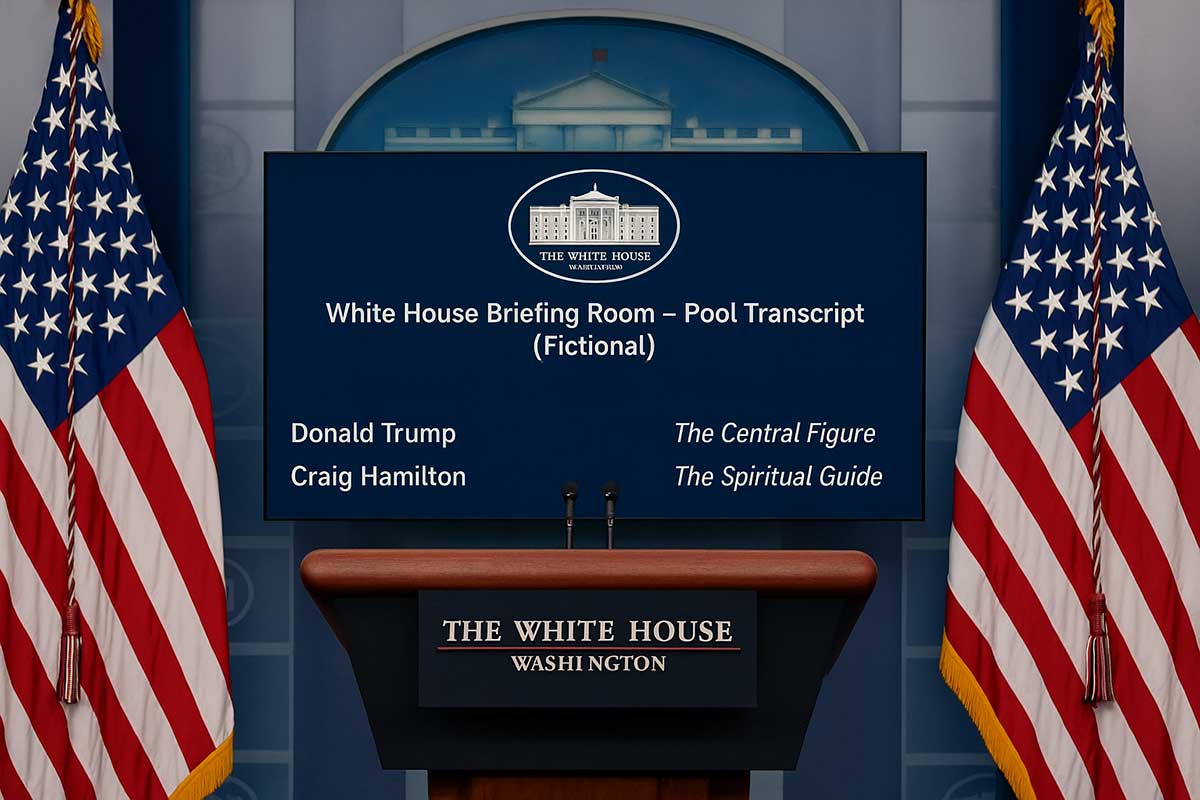
(The seal glows under cool lights. Reporters murmur as camera tally lights blink on. The Press Secretary steps to the lectern, binder in hand. Two aides stand against the side wall. The room settles.)
PRESS SECRETARY: Good evening. You all watched the President’s address. I’ll make a brief statement and then take questions.
Tonight, the President announced the formation of a legal and policy working group to evaluate avenues for expanding voter choice in the selection of a chief executive, consistent with constitutional processes. He emphasized that this is not a campaign announcement and not the initiation of any extra-constitutional action. The working group will consult constitutional scholars, congressional leaders from both parties, and relevant civic organizations. The President believes any conversation about term limits must begin with the people and proceed through lawful means. With that, I’ll take your questions.
(Hands shoot up.)
AP: Is the White House proposing to repeal or amend the 22nd Amendment?
PRESS SECRETARY: The working group is tasked with evaluating all lawful mechanisms by which voters’ choices could be broadened. That necessarily includes historical, legal, and procedural analysis of the 22nd Amendment and any associated jurisprudence. Any change to constitutional text would, by definition, require constitutional processes—Congress and the states. No shortcuts.
REUTERS: Does the President intend to personally seek a third term?
PRESS SECRETARY: He said clearly he’s not announcing a campaign. The immediate step is a national conversation about whether a mid-20th-century limit still serves a 21st-century electorate. Any personal decision comes later and only if a lawful pathway exists.
FOX NEWS: Respectfully, this sounds like laying the groundwork for the President to stay in power. What guardrails will you commit to tonight?
PRESS SECRETARY: The guardrails are the Constitution and the states. The White House is committing to no action outside those guardrails. We will publish the working group’s membership, its charter, and a public calendar of stakeholder meetings. Transparency is a guardrail. So is federalism.
CNN: Has the White House consulted congressional leadership? What’s the reception?
PRESS SECRETARY: Senior staff began outreach this evening. We will not characterize private conversations. The President invited bipartisan participation. This should be bigger than any single official.
NBC: Markets tend to react to institutional uncertainty. What is your message to investors and allies?
PRESS SECRETARY: Continuity. U.S. institutions are stable. Exploring constitutional questions through constitutional means is a sign of institutional maturity, not fragility. Fiscal and national security policy remain unchanged.
NYT: You referenced “expanding voter choice.” Critics will say voters already have the ultimate choice within a two-term framework. What’s the White House’s substantive case that choice is currently constrained?
PRESS SECRETARY: The case is that the electorate should decide whether term limits serve them today. This is about process legitimacy—asking the people, through their representatives and states, whether the existing constraint reflects contemporary democratic will. The White House is not asserting a predetermined outcome.
WSJ: Timeline? When will the working group report back?
PRESS SECRETARY: Initial findings within 120 days; a full public report in six months. Hearings and listening sessions will begin sooner.
PBS: Will those listening sessions include critics? Civil society? Legal ethics groups?
PRESS SECRETARY: Yes. The charter will specifically require engagement with supporters and skeptics. We’ll post invitations and transcripts where feasible.
AXIOS: Is the White House considering a statutory workaround versus an amendment—some reinterpretation or litigation strategy?
PRESS SECRETARY: We are not going to preview legal theories. The default assumption is that any durable change flows through the Article V process. If courts weigh in on related questions, we will respect those decisions.
BLOOMBERG: Foreign capitals will parse this as a signal about 2028 and beyond. Have you briefed allies?
PRESS SECRETARY: The National Security Advisor is making courtesy calls tonight to key partners. The message: our constitutional discussions are domestic, orderly, and non-disruptive to alliance commitments.
POLITICO: The President referenced “manipulation and censorship” in public discourse as context. Will the working group also examine media regulation or platform policy?
PRESS SECRETARY: No. The group’s remit is constitutional design and electoral choice, not content moderation. Other parts of government handle platform policy under existing law.
FT: If the conclusion is that the 22nd Amendment should stand, will the President say so publicly and close this discussion?
PRESS SECRETARY: If that’s the conclusion of a legitimate process, the President will respect it and say so.
ABC: How do you address fears that even raising this question erodes norms?
PRESS SECRETARY: Norms survive scrutiny. They do not survive secrecy. Airing the question in public, adhering to process, and accepting the answer—those are the norms.
VICE: Will the working group meetings be open press?
PRESS SECRETARY: Some will be open, some closed for candid academic discussion. We will publish agendas, minutes, and a bibliography of materials.
THE HILL: Has the White House contacted state legislators or governors about ratification thresholds?
PRESS SECRETARY: Early, informal outreach is underway to gauge appetite for discussion. No commitments sought or offered.
CBS: Is there a red line? For example, no executive orders touching term limits?
PRESS SECRETARY: Correct. There will be no executive action purporting to alter term limits. Any change would require constitutional procedures.
NPR: The President said this is “not about one man.” Can you commit that he won’t participate in the working group?
PRESS SECRETARY: The President will not sit on the working group. Senior Counsel to the President will oversee process integrity, but the group will include external scholars from across the spectrum.
NEWSMAX: Would the White House support a national referendum?
PRESS SECRETARY: The Constitution provides mechanisms through Congress and the states, not national referendums. Civic input can be gathered through hearings and ballots for state-level decisions, as appropriate.
GUARDIAN: Given polarization, are you concerned this becomes a purity test inside both parties?
PRESS SECRETARY: We’re concerned with lowering the temperature by making the process predictable, transparent, and time-bound.
USA TODAY: How will the White House handle disinformation about tonight’s announcement?
PRESS SECRETARY: By posting primary documents within 24 hours: the charter, membership list, FAQ, and timeline. We’ll also provide a press call with constitutional historians later this week.
LOCAL TV (PHOENIX): What should everyday voters do if they want to weigh in?
PRESS SECRETARY: A public comment portal will open within seven days. We’ll also encourage committees in Congress to hold open hearings.
TIME: You said “no shortcuts.” To be explicit: is the White House contemplating any legal theory under which a president could serve beyond two elected terms without constitutional amendment?
PRESS SECRETARY: The White House is not endorsing any theory tonight. The default posture is fidelity to the text as applied by courts and the states. If scholars present arguments, they’ll be published with dissenting views alongside them.
AL JAZEERA: International observers often monitor contentious reforms. Would you invite outside election observers to any stage?
PRESS SECRETARY: Constitutional amendment processes are domestic by design, but we have no objection to academic observation and comparative analysis.
SEMAFOR: Funding? Who pays for the working group and the public engagement?
PRESS SECRETARY: Existing appropriations within the Executive Office of the President for policy development and public engagement. We will disclose costs in regular budget reports.
ROLL CALL: Are you asking Congress to form a bipartisan commission?
PRESS SECRETARY: We’ll encourage relevant committees to hold hearings and consider a congressional commission in parallel, should they choose.
LA TIMES: If states decline to entertain ratification, is that the end of it?
PRESS SECRETARY: Yes. The states are decisive in any amendment process.
(An aide slips a note to the lectern.)
PRESS SECRETARY: Two more.
ATLANTIC: If the working group concludes the amendment should remain as is, will the President discourage further efforts?
PRESS SECRETARY: He will accept and respect the conclusion and move on to other priorities.
AP (follow-up): Can you commit to releasing the legal memos in full, not summaries?
PRESS SECRETARY: We will release as much as practicable, with necessary redactions for attorney-client and deliberative process where applicable, and we’ll note any redactions transparently.
(The Press Secretary closes the binder.)
PRESS SECRETARY: Thank you. We’ll post materials to the press site tonight and announce the scholar call soon. Good night.
(Room erupts in cross-talk as the feed cuts.)
“The Night America Held Its Breath” — A Fictional Montage
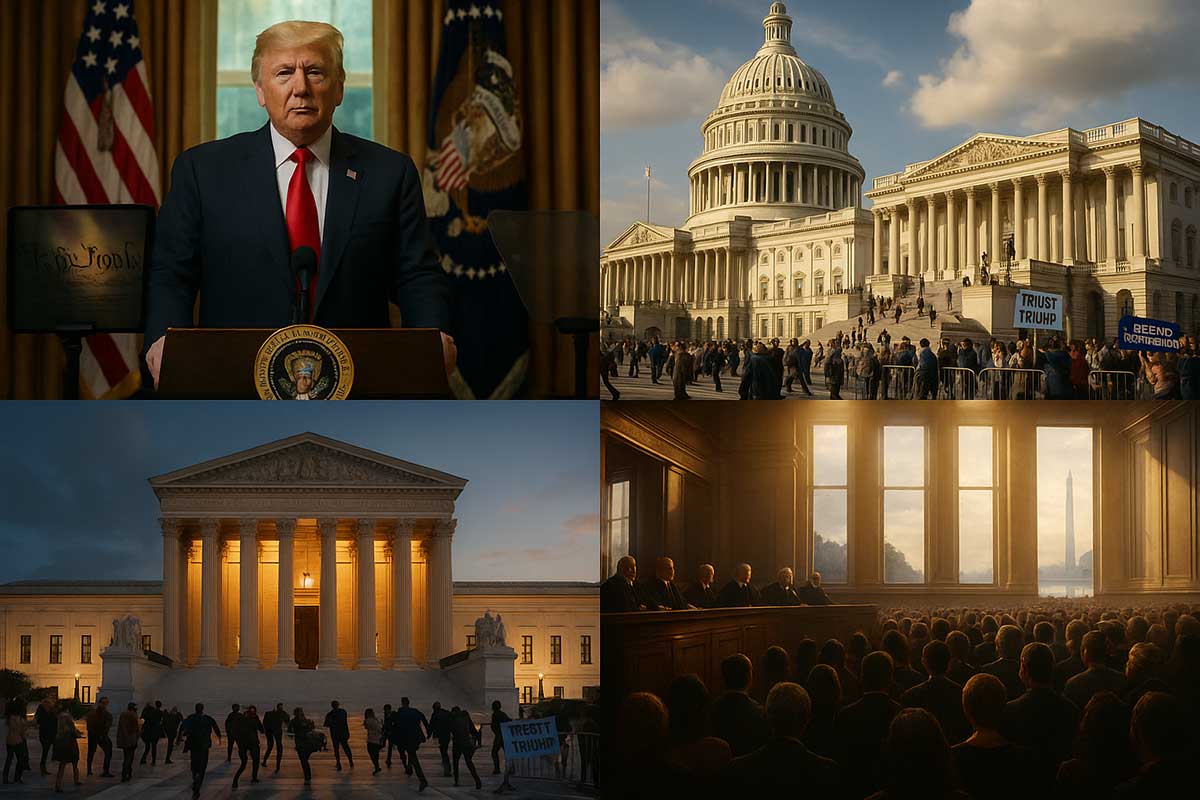
(Fade in. The Oval Office address has just ended. The camera lingers for a beat on the American flag before cutting to the press room.)
INT. WHITE HOUSE PRESS ROOM – NIGHT
The reporters don’t move at first. A half-second of stunned silence, then the room erupts into motion—phones ringing, fingers pounding keyboards, producers whispering into earpieces.
The Press Secretary, calm but pale, returns to the podium.
PRESS SECRETARY
Let’s keep this orderly, please. Questions one at a time.
But order is gone.
A dozen voices rise: “Is the President overturning the 22nd Amendment?” “Does this mean a third-term run?” “Is this constitutional?”
The camera lights flash. The hum of the room becomes a pulse.
INT. CABLE NEWS STUDIO – SAME TIME
On split screens, anchors appear like chess pieces.
ANCHOR 1 (CNN):
We’re witnessing an extraordinary moment. The President has effectively opened the door to challenging the two-term limit, something no modern leader has attempted.
ANCHOR 2 (FOX):
He said it’s about freedom and the right of the people to choose. Critics will call it power consolidation. Supporters call it democracy unchained.
Behind them, graphics cycle: “Third Term Debate?” “Constitution in Question.”
Producers lean in, whispering updates. A chyron flashes: MARKETS STEADY FOR NOW.
INT. SMALL-TOWN DINER – OHIO
A group of truckers watch the replay on an old wall-mounted TV. Steam rises from mugs.
TRUCKER #1:
He’s got a point. If folks still want him, why should some law from the forties stop ’em?
TRUCKER #2:
Or maybe that law’s the only thing keeping us from turning into Russia, man.
They go quiet. The waitress refills coffee without asking. The TV flickers to the words “We the People.”
INT. HARVARD LAW LIBRARY – NIGHT
Stacks of constitutional volumes tower around two professors.
PROFESSOR HAWTHORNE:
The 22nd Amendment was a product of Roosevelt fatigue, not divine decree. Legally, repeal is possible.
PROFESSOR LIN:
Possible, yes. But precedent matters. If the public even entertains this, it redefines checks and balances.
They glance at a live stream on a tablet. The President’s final words echo faintly: “The third chapter of America’s comeback.”
EXT. NEW YORK CITY – ROOFTOP BAR
The skyline glows amber.
Young professionals crowd around their phones.
WOMAN:
He’s testing the waters. It’s brilliant. He’s not saying he’ll run — he’s making people ask him to.
MAN:
Or he’s testing the Constitution. That’s not brilliance; that’s brinkmanship.
In the distance, the Empire State Building’s lights shimmer red, white, and blue.
INT. BBC NEWSROOM – LONDON
Producers shout across desks.
EDITOR:
We need reaction from Downing Street, Brussels, Beijing—everywhere.
This is not just American news; it’s global.
ANALYST:
Markets are calm, but the diplomatic cables are lighting up. Allies want to know: will America stay predictable?
A map fills the screen: world capitals blinking. The headline reads “Washington Rewrites the Rulebook.”
INT. PENTAGON – SITUATION ROOM
Generals sit around a dim table.
GENERAL #1:
No operational implications tonight, but if this triggers unrest, we need contingencies for 2028 transition planning.
GENERAL #2:
We swore an oath to the Constitution, not the man. We remember that.
A silence falls that feels heavier than protocol.
INT. SUBURBAN LIVING ROOM – TEXAS
A mother folds laundry as her teenage son watches clips on his tablet.
SON:
Mom, is he allowed to do that?
MOTHER:
(quietly)
He’s allowed to ask the question. We’ll see if the country’s brave enough to answer it.
INT. NEW YORK TIMES NEWSROOM – NIGHT
Editors gather around a glowing conference table. Headline drafts fill the screens:
“President Questions Term Limits”
“A Legal Gambit, or a Democratic Awakening?”
“The Third Term Question.”
MANAGING EDITOR:
We go factual, not fearful. History will add its adjectives later.
A beat. Fingers return to keyboards.
INT. WHITE HOUSE – PRIVATE RESIDENCE
The President stands by the window, lights of Washington stretching beyond the glass. An aide enters quietly.
AIDE:
Sir, approval numbers are climbing. The networks are split. Congress is calling for clarification.
The President nods, still looking out at the city.
PRESIDENT (softly):
They wanted a conversation. Now they’ve got one.
EXT. WASHINGTON, D.C. – NIGHT
Crowds begin gathering spontaneously near the White House fence.
Some carry flags. Others hold signs: “TRUST THE PEOPLE.”
Across the street, another group forms: “TWO TERMS ONLY.”
Police lights wash the faces blue and red.
Reporters broadcast live as chants echo into the night: two competing rhythms of democracy.
INT. EUROPEAN PARLIAMENT – BRUSSELS (NEXT MORNING)
Lawmakers cluster near a coffee stand.
DIPLOMAT:
If he changes that rule, every populist on this continent will point and say, “If America can, so can we.”
ECONOMIC MINISTER:
Or maybe it reawakens something we forgot — the idea that constitutions can evolve.
They sip their coffee in silence.
INT. CNN STUDIO – MORNING
A constitutional scholar sits under studio lights.
ANCHOR:
You heard the address. What’s next?
SCHOLAR:
Nothing immediate. To alter the 22nd Amendment, you’d need two-thirds of Congress and three-quarters of the states. But ideas have momentum.
What begins as theory can become reality if the public stops treating it as impossible.
INT. ELEMENTARY SCHOOL – HISTORY CLASS
A teacher turns off the projector after replaying a clip of the address.
TEACHER:
All right, class, who can tell me what the 22nd Amendment says?
Small hands go up. One child hesitates, then asks softly:
STUDENT:
Why would someone want more than eight years if they already had their chance?
The teacher looks out the window before answering.
TEACHER:
That’s what the whole country’s about to decide.
MONTAGE – ACROSS AMERICA
Farmers pause beside tractors.
College students debate on campus lawns.
Late-night comedians sharpen monologues.
Church congregations pray for wisdom.
Hashtags ignite: #LetThePeopleDecide and #TwoTermsForever.
Voice-over of news anchors overlapping:
“The White House clarifies—no formal proposal yet…”
“Senators on both sides urge calm…”
“Global markets steady as constitutional debate unfolds…”
INT. LINCOLN MEMORIAL – NIGHT
A tourist stands before the statue, phone in hand, scrolling through headlines.
The marble giant looms in silence. The tourist whispers to no one:
TOURIST:
What would you think of all this?
The reflection of Lincoln remains unmoving, but the caption on the visitor’s phone glows: “The Conversation Begins.”
(Camera pans upward through the memorial’s columns into the open night sky. The lights of Washington shimmer below. The voice of the President, from the earlier address, fades back in:)
“Democracy doesn’t mean limiting choice. Democracy means expanding it.”
The music swells, half-hopeful, half-uneasy.
FADE OUT.
“The Morning After” — A Fictional Political Drama (Part II)
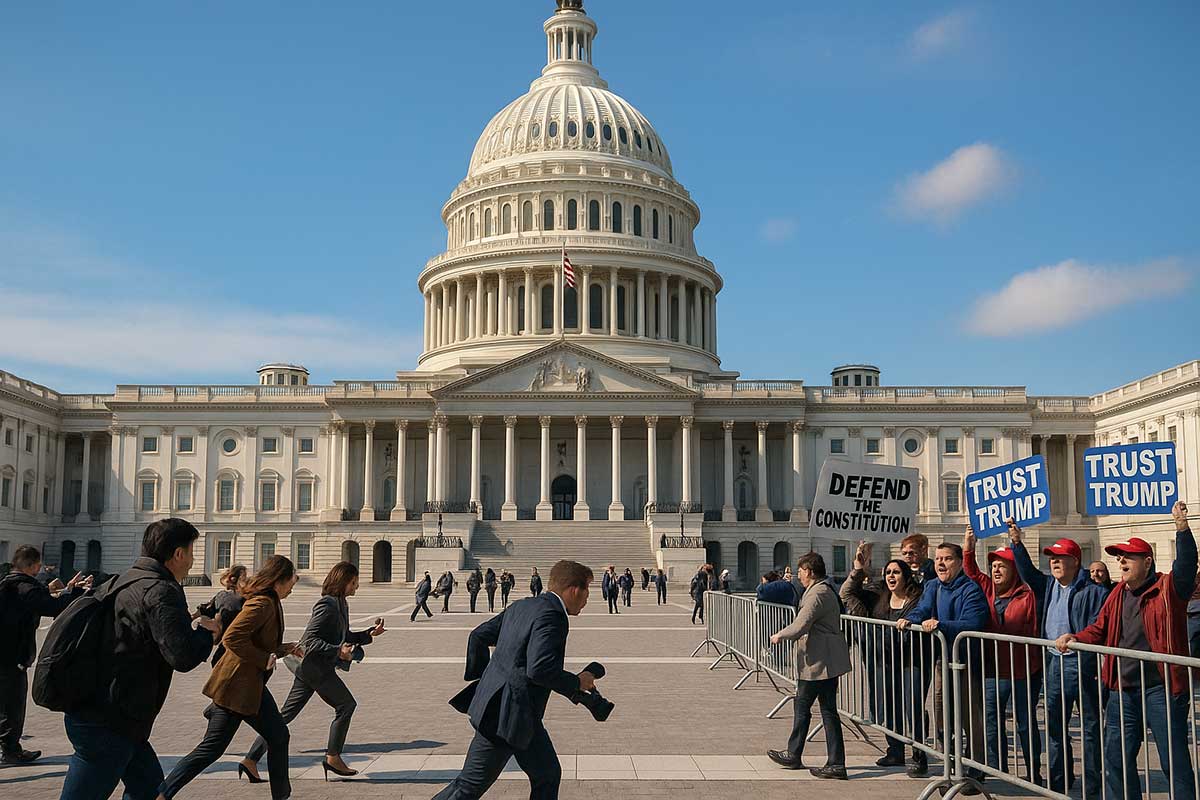
INT. CAPITOL HILL — DAWN
The sun rises thin and coppery above the Capitol dome. Inside, fluorescent lights flicker to life along marbled corridors. Staffers hurry with cardboard trays of coffee; printers spit out draft statements like warning flares.
In the Senate Rules Committee antechamber, two chiefs of staff stand shoulder to shoulder, reading the same text on separate phones.
CHIEF A:
House Judiciary’s calling an emergency roundtable. Noon.
CHIEF B:
Rules wants theirs at ten. And state leaders are asking what a “listening session” even means.
They exchange a look that says: the day just became a week.
INT. WHITE HOUSE — WEST WING HALLWAY — 6:45 A.M.
An aide tapes a paper outside the Roosevelt Room: WORKING GROUP — PRELIM CHARTER REVIEW. Inside, Counsel’s team has already filled a whiteboard:
Article V pathways
State ratification map
Public comment portal
Scholars: pro/con
A junior lawyer, eyes rimmed with fatigue, points to an electoral map.
JUNIOR LAWYER:
Even if Congress clears two-thirds, you still need thirty-eight states. The Midwest is a mosaic. The West is a coin toss.
WHITE HOUSE COUNSEL:
Map the arguments, not the votes. Voters move when ideas move.
He circles two words on the board: Process Integrity.
INT. CNN — “AMERICA THIS MORNING” — 7:02 A.M.
A constitutional scholar sits upright beneath a banner: THE THIRD-TERM QUESTION.
ANCHOR:
Bottom line: can this actually happen?
SCHOLAR:
Legally, yes—if the country consents. Two-thirds of Congress, three-quarters of the states. Hard by design. The more important question isn’t “Can?” It’s “Should?” and “Why now?”
EXT. WALL STREET — OPENING BELL — 9:30 A.M.
Cameras pan the trading floor. The opening bell rings. A crawl reads: Futures mixed, volatility modest. A veteran trader shrugs to a colleague.
TRADER:
Markets hate chaos. They don’t mind debate.
INT. HOUSE JUDICIARY — HEARING ROOM — 10:03 A.M.
Microphones crackle. Nameplates gleam. The Chair gavels in.
CHAIR:
This is not a referendum on a person. It’s a hearing on constitutional structure. We’ll proceed with civility.
A conservative professor argues term limits are a guardrail against human nature. A liberal professor counters that mature democracies trust voters to retire leaders when necessary. A third scholar, gray-haired and grave, leans into her mic:
SCHOLAR 3:
Our Constitution changed only twenty-seven times in over two centuries. Each amendment came with a price: time, persuasion, legitimacy. Skip one and you break the deal.
A murmur moves through the gallery: agreement, skepticism, phones vibrating with push alerts.
INT. STATE CAPITOL — PHOENIX — 10:40 A.M. (MT)
Sunlight slants across a circle of state legislators. A staff attorney traces the steps on a legal pad.
STAFF ATTORNEY:
If Congress proposes an amendment, we’d vote here to ratify—or not. Alternately, states can petition for a convention. That’s uncharted water.
A freshman representative raises a hand.
REP:
And if our voters hate the whole idea?
STAFF ATTORNEY:
Then you vote no. That’s the system working.
INT. BBC WORLD NEWS — LONDON — 3:05 P.M. GMT
The anchor turns to a European analyst.
ANALYST:
Allies are curious, not panicked. They’re asking two things: Will U.S. commitments hold? And will this spark imitators?
A split screen shows Paris, Berlin, Warsaw, and Rome—each capital’s press corps sketching the same headline with different pencils.
INT. WHITE HOUSE — SITUATION ROOM — 11:17 A.M.
The National Security Advisor dials through a list of ambassadors. A wall display shows NATO, INDO-PACIFIC ALLIES, G7. Notes accumulate: “No change to posture.” “Continuity of alliances.” “Domestic constitutional process.”
NSA:
We’re steady. If that changes, you’ll hear it from us first.
He ends a call and exhales. The room is quiet, the kind of quiet that follows a controlled burn.
EXT. SUPREME COURT STEPS — 11:30 A.M.
Plaintiffs emerge, papers in hand—activists and a bipartisan coalition asking the Court to affirm that no executive action can touch term limits. Cameras close in.
LEAD PLAINTIFF:
We are not fighting an amendment. We are asking for a line in ink: term limits are beyond unilateral reach.
Flashbulbs pop like distant thunder.
INT. WHITE HOUSE PRESS BRIEFING ROOM — 12:02 P.M.
The Press Secretary returns, binder thicker than last night.
PRESS SECRETARY:
We welcome judicial clarity on executive limits. As stated, the administration will not pursue any unilateral action regarding term limits. The working group’s charter, posted within the hour, reflects that.
REPORTER:
Is the President coordinating with supportive governors?
PRESS SECRETARY:
He’s inviting all governors—supportive and skeptical—to weigh in, publicly.
A hand shoots up.
REPORTER 2:
Is he running again?
PRESS SECRETARY (measured):
This is about choice architecture, not campaign architecture.
INT. GERMAN CHANCELLERY — BERLIN — 6:18 P.M. CET
An advisor whispers to the Chancellor as she reviews a brief.
ADVISOR:
Markets stable. Washington signals continuity. But domestic debate could be prolonged.
CHANCELLOR:
Then we prepare for long debates and short surprises.
INT. THINK TANK AUDITORIUM — D.C. — 1:05 P.M.
A panel of historians, jurists, and a former governor. C-SPAN cameras blink. The moderator gestures to a slide: Amendment Timelines, 1913–1992.
FORMER GOVERNOR:
If you want to change the Constitution, you need more than arguments. You need trust—across parties, regions, and institutions. That’s the rarest currency in America right now.
A student in the audience notes the line verbatim.
EXT. STATEHOUSE STEPS — AUSTIN — 1:40 P.M. (CT)
Two demonstrations face each other across a police cordon. Signs catch the sun: LET THE PEOPLE DECIDE across from TWO TERMS, FULL STOP. A pastor leads a prayer at the midpoint, voice steady against the heat.
INT. UN HEADQUARTERS — NEW YORK — 2:10 P.M.
Delegates cluster in discreet knots. A Scandinavian ambassador speaks softly.
AMBASSADOR:
However this proceeds, legitimacy is a global asset. When America secures it, we all borrow some.
INT. FEDERAL COURTHOUSE — D.C. — 2:45 P.M.
A clerk stamps FILED on a petition from a media coalition seeking immediate release of the working group’s meeting agendas under transparency laws. The rubber stamp lands like a metronome in the building’s hush.
INT. WHITE HOUSE — ROOSEVELT ROOM — 3:00 P.M.
The working group convenes. Around the table: conservative originalists, living-constitution pragmatists, election administrators, and one data ethicist.
ORIGINALIST:
Text controls. The 22nd is unambiguous.
PRAGMATIST:
Text controls—and culture legitimizes. You can’t sever them.
ELECTION ADMIN:
Whatever the theory, I need to know what to print on a ballot. Ambiguity is a logistics failure.
DATA ETHICIST:
And a legitimacy failure. Publish every memo. List every meeting. Sunlight now or shadows later.
Counsel nods, writes “MAX TRANSPARENCY” in block letters.
INT. AIR FORCE BASE — BRIEFING ROOM — 3:22 P.M.
A colonel addresses a room of young officers.
COLONEL:
Our oath is to the Constitution. It’s designed for arguments like this—loud, public, lawful. That’s the point.
The officers nod, absorbing the civics lesson inside the chain of command.
INT. NEW YORK TIMES OP-ED MEETING — 3:45 P.M.
Editors debate headlines that sing without shouting.
EDITOR:
Two pieces. One for and one against. Same word count. Same deadline. The republic can handle symmetry.
Pens start moving.
EXT. SMALL TOWN LIBRARY — IOWA — 4:05 P.M. (CT)
A librarian pins a flyer near the checkout desk: “PUBLIC FORUM: THE 22ND AMENDMENT AND YOU — SATURDAY 6 P.M.”
A farmer signs up to speak, then checks out a paperback on constitutional history.
INT. WHITE HOUSE — PRIVATE RESIDENCE — DUSK
The President, tie loosened, watches clips on mute. A family photo on the desk catches the lamplight.
An aide steps in.
AIDE:
Sir, governors’ call at seven. Judiciary wants the President to submit written remarks for the record.
The President keeps his eyes on the screen a beat longer—crowds, committees, split screens—and then turns.
PRESIDENT:
Fine. Keep it steady. Lead with process. We said we’d trust the people—let’s show them we trust the process, too.
INT. SUPREME COURT — CHAMBERS — EVENING
A Justice sits beneath shelves of worn volumes, reading the emergency filing. A legal clerk stands by.
JUSTICE:
We may be asked to police a boundary that isn’t yet crossed.
CLERK:
Even lines you don’t cross can shape the road.
The Justice nods, eyes returning to the brief.
EXT. LINCOLN MEMORIAL — NIGHT
Visitors gather on the steps, listening to a civics teacher explain Article V. A child holds a pocket Constitution like a talisman.
TEACHER:
It’s hard to change by design. Because easy change isn’t a constitution—it’s weather.
The child looks up at Lincoln’s face, half-in shadow, half-in light.
INT. WHITE HOUSE PRESS ROOM — NIGHT
The Press Secretary returns for a final readout—quick, controlled.
PRESS SECRETARY:
The working group charter has been posted, along with its membership and schedule. The President has invited congressional committee chairs of both parties to nominate additional scholars. A public comment portal is open. We’ll provide weekly updates.
REPORTER:
What happens if the country says “no”?
A pause. Then:
PRESS SECRETARY:
Then the country has answered. And we go forward together—within the answer.
Cameras click one last time.
EXT. WASHINGTON SKYLINE — LATE NIGHT
The city glows under a velvet sky. In apartments and offices, TVs dim. Somewhere a printer still hums; somewhere a candle still burns by a window.
A voiceover from the earlier address drifts back, almost a question now: “Should we continue to limit the people’s choice, or should we trust the people to decide for themselves?”
The screen holds the skyline a beat longer than comfortable. Then darkness.
FADE OUT.
The Line and the Circle — Part III
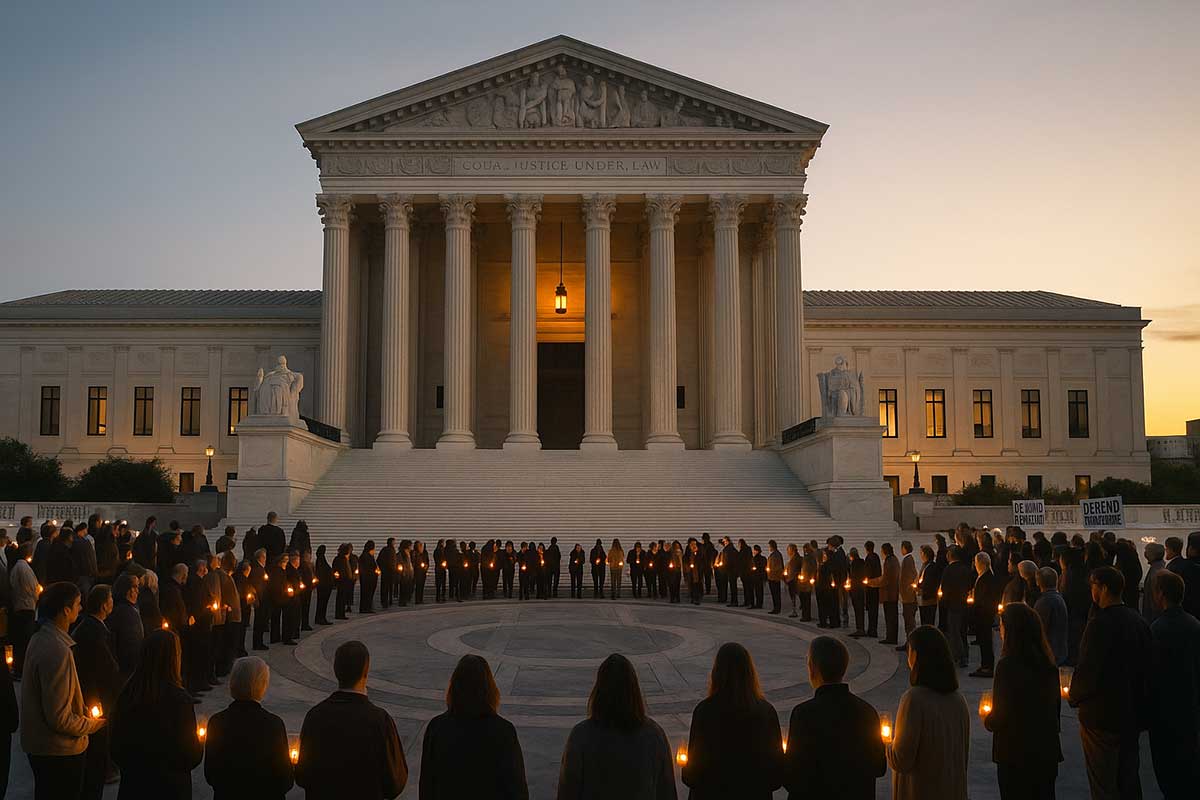
INT. SUPREME COURT CHAMBER – MORNING
The gavel’s echo is soft but absolute.
Clerks stack petitions three high: emergency motions, friend-of-the-court briefs, a dozen states seeking clarity before the debate spills into ballots.
CHIEF JUSTICE
We are not here to decide ambition. We are here to define authority.
(beat)
We’ll hear arguments within seventy-two hours.
A ripple of surprise crosses the press benches. That’s lightning speed.
INT. WEST WING – SENIOR STAFF ROOM – SAME TIME
Aides crowd around a single muted television.
The President’s Counsel stands by the window, phone pressed to his ear.
COUNSEL:
Yes, we expected fast-track review.
(pause)
No, he won’t comment until the Court speaks.
(hangs up)
All right, people—assume we’re living inside a civics textbook for the next week. Let’s behave like the chapter that gets cited.
INT. CNBC STUDIO – 9:35 A.M.
The host gestures to a scrolling chart.
HOST:
Markets dip, then recover. Analysts call it “constitutional volatility.”
(to guest)
Do investors care about democracy mechanics?
GUEST ECONOMIST:
They care about predictability. As long as institutions hold, the Dow doesn’t panic. If they fracture, that’s when algorithms sell freedom by the second.
EXT. STATE CAPITOL – ATLANTA – 10:10 A.M.
Legislators swarm the steps, microphones thrust forward.
GOVERNOR:
Our state will hold hearings before we take any position on ratification. This is not about personalities—it’s about permanence.
Protesters chant both sides of the street. A banner flaps: “TRUST THE PEOPLE.” Another answers: “TRUST THE CONSTITUTION.”
INT. UN GENERAL ASSEMBLY – NEW YORK – 11:30 A.M.
Delegates buzz like a restless hive.
FRENCH AMBASSADOR:
America tests its boundaries; we measure ours by hers.
INDIAN AMBASSADOR:
Every democracy faces its cycle of temptation—charisma versus continuity.
CANADIAN DELEGATE:
At least they’re arguing in daylight.
INT. FOX NEWS STUDIO – NOON
Split-screen debate: constitutional scholar on left, campaign strategist on right.
STRATEGIST:
He’s giving voice to millions who feel locked out of choice.
SCHOLAR:
And he’s walking toward a precedent that once crossed, can’t be uncrossed.
HOST:
Gentlemen, the Court hears arguments Friday. Until then—America waits.
INT. WHITE HOUSE RESIDENCE – 1:05 P.M.
The President eats lunch alone, papers spread around: opinion polls, editorials, excerpts from the Federalist Papers. A knock.
CHIEF OF STAFF:
Sir, the governors’ call is ready. Twenty-seven confirmed.
PRESIDENT:
Tell them the same thing I told the country: we’ll follow process wherever it leads. No shortcuts, no shouting.
He slides the Federalist No. 51 aside, a line underlined twice: “Ambition must be made to counteract ambition.”
INT. CONGRESSIONAL PRESS GALLERY – 2:00 P.M.
Cameras pan a crowded dais. The Senate Minority Leader steps forward.
MINORITY LEADER:
We oppose any measure that re-opens the term-limit question. Eight years was enough for Washington and it’s enough for anyone.
(pauses)
But we will debate it in daylight. That’s what separates us from the regimes we warn against.
Applause from both sides of the aisle—rare, wary, sincere.
INT. STATE SUPREME COURT – CALIFORNIA – 2:45 P.M. PT
Justices convene by teleconference with colleagues in other states—coordinating amicus briefs. The Chief Justice of California leans toward camera.
CAL CHIEF JUSTICE:
History watches the federal court. But history also reads the footnotes we write today.
EXT. UNIVERSITY QUAD – 3:15 P.M. ET
Students gather around a microphone for an impromptu teach-in. Hand-painted signs quote Jefferson and Maya Angelou side by side.
STUDENT SPEAKER:
If power asks the question, people must answer with principle, not panic.
Applause ripples through the crowd. A drone camera captures it from above—a ring of voices forming a circle around the flagpole.
INT. PENTAGON – BRIEFING ROOM – 3:40 P.M.
Reporters query the Defense Press Secretary.
REPORTER:
Any military concern about potential unrest?
DOD SPOKESPERSON:
No. The Department defends the Constitution, not interpretations of convenience. Peaceful civic dispute is a sign the guardrails work.
INT. COURTROOM – 4:30 P.M.
Arguments begin early. Cameras banned, but transcripts stream in seconds later.
PETITIONERS’ COUNSEL:
A republic depends on restraint as much as representation. Remove one, and the other collapses.
GOVERNMENT COUNSEL:
We ask the Court to recognize that discussion is not violation. The door to dialogue is not the door to dictatorship.
A Justice interjects:
JUSTICE:
Then tell us—where does discussion end and erosion begin?
The room holds its breath.
INT. NEW YORK TIMES NEWSROOM – EVENING
An editor reads the wire: “Supreme Court to Rule Within 72 Hours.”
Headlines blossom like controlled detonations across global screens.
EXT. JERUSALEM – MIDNIGHT LOCAL TIME
A journalist signs off his live broadcast:
“Democracy’s oldest experiment is again the world’s newest story.”
INT. WHITE HOUSE SITUATION ROOM – 9:15 P.M.
Senior staff, eyes on multiple feeds.
NSA:
No security threats, minor demonstrations nationwide.
PRESS DIRECTOR:
Public engagement portal hit two million submissions. Roughly half oppose, half support. The rest just say “listen.”
PRESIDENT (via speakerphone):
Then we’ll listen. Draft a statement reaffirming calm before the Court rules.
EXT. WASHINGTON MONUMENT – NIGHT
Families stroll, candles flicker. On the reflecting pool’s surface, the monument’s image stretches into two identical towers—perfect reflections divided by a single ripple of wind.
Voice-over montage from global anchors:
“Historic crossroads in Washington…”
“Court decision expected this weekend…”
“Protests remain peaceful nationwide…”
INT. SUPREME COURT CHAMBER – LATE NIGHT
The Justices file into conference. Doors close. No cameras. No clerks. Only twelve eyes, one oath, and two centuries of precedent.
Outside, thunder murmurs—a summer storm rolling across the Potomac.
EXT. LINCOLN MEMORIAL – DAWN
Rain clears. The first tourists of the morning step onto wet marble. Someone has left a note at Lincoln’s feet:
“The line keeps us steady.
The circle keeps us whole.”
A ranger folds it gently, slips it into her pocket.
(The camera rises above the memorial, capturing the Capitol in the distance. Morning light spills over the city that built its laws on debate and its faith on endurance.)
FADE OUT.
Final Thoughts by Craig Hamilton-Parker
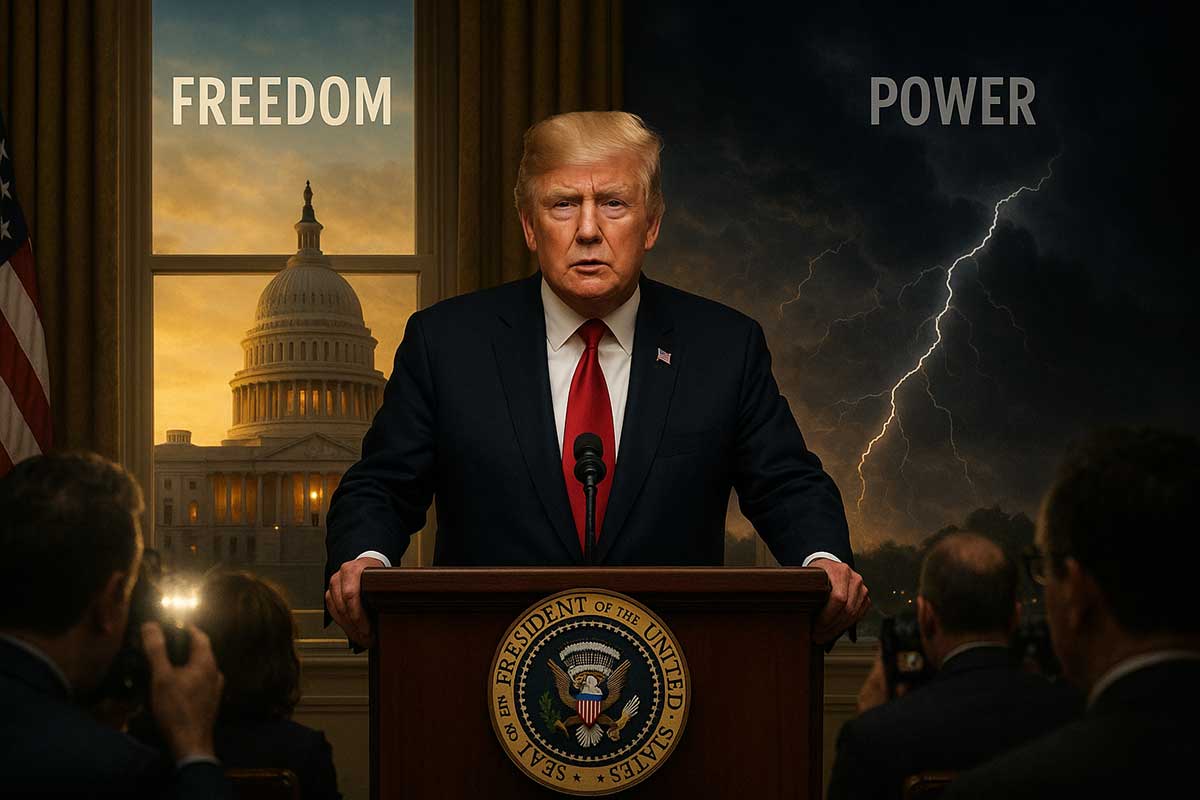
(Soft light returns over the Capitol; dawn settles on Washington as Craig’s voice enters gently.)
“When the noise quiets and the crowds fade, what remains is not the clash of parties or the tug of power — it is the stillness in which a nation meets its own reflection.
Democracy was never meant to be perfect. It was meant to be conscious — a living dialogue between the soul of a people and the laws they create.
Tonight, perhaps America was not asked to decide the fate of one man, but to rediscover its own purpose.
For when power remembers humility, and freedom remembers responsibility, something sacred returns to the human story — the capacity to choose light even in the storm.
The test of a civilization is not whether it stumbles, but whether it remembers what it stands for when the world is watching.”
amera rises above the Supreme Court; morning light spills across the reflecting pool, uniting shadow and dawn.)
Short Bios:
Donald J. Trump
Donald J. Trump served as the 45th and 47th President of the United States. A businessman and media figure before entering politics, his presidency was marked by populist rhetoric, economic nationalism, and polarizing global impact. Known for his bold communication style and defiance of political convention, Trump remains one of the most consequential and debated leaders in modern American history.
Craig Hamilton
Craig Hamilton is a spiritual teacher, philosopher, and founder of Integral Enlightenment. His teachings bridge the gap between inner awakening and outer action, guiding thousands toward a higher form of conscious leadership. Known for his calm insight and deep sense of presence, Hamilton invites audiences to see world events as catalysts for spiritual evolution rather than collapse.
Leave a Reply