
|
Getting your Trinity Audio player ready...
|

Introduction by Shakespeare
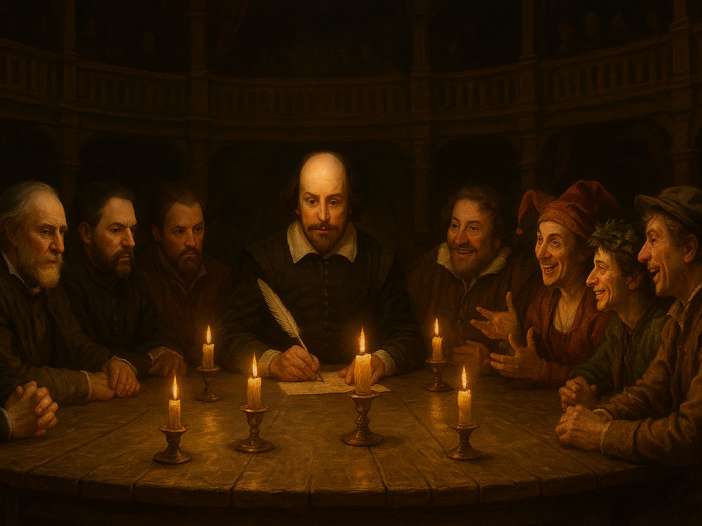
Ladies and gentlemen, spirits of stage and story, lend me your ears. Tonight, my children of ink and breath gather not upon boards of oak, but upon imagination’s boundless stage. Here sit kings and fools, lovers and murderers, jesters and dreamers—Hamlet with his haunted eyes, Macbeth with his bloody hands, Lear with his broken crown, Othello with his shattered honor, Romeo with his star-crossed sighs.
Opposite them—Falstaff, round with laughter; Feste, sharp with riddles; Beatrice, armed with wit; Puck, spritely and sly; Bottom, braying with joy.
What follows is no play, but a disputation—a symposium where tragedy and comedy, shadow and light, meet at one table. They will speak of fate and folly, madness and masquerade, love both as poison and potion, ambition and pride, and of death itself. You will hear them quarrel, jest, despair, and laugh, yet together they will show you the whole compass of what it is to be human.
For is not the world itself a stage, where each of us struts between sorrow and mirth, crowned for a moment, then bowed in the dust? Watch, then, as they speak not only for themselves, but for us all.
(Note: This is an imaginary conversation, a creative exploration of an idea, and not a real speech or event)

Topic 1: Fate vs. Folly — Who Really Rules the Stage?
Shakespeare (opening):
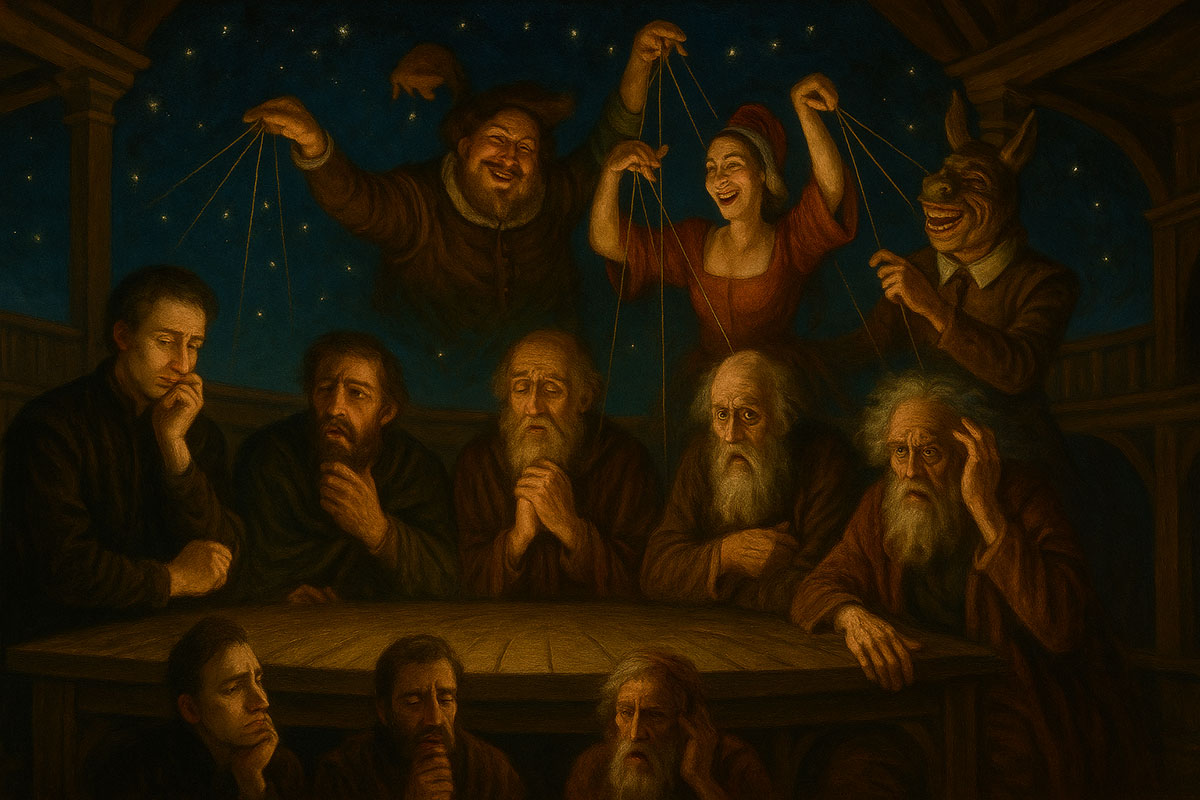
Good friends, welcome. You are the children of my pen, born of ink and tempest both. Some of you walk with crowns heavy upon your brows, some with bells upon your caps. But tell me, which holds the reins of men’s lives? The cold decree of the stars—or the warm mischief of human folly? Let us see.
First Question — Is fate an unchangeable script, or do men stumble by their own foolish steps?
Hamlet:
The stars may chart their spheres, yet it is our rashness that gives them teeth. Did not I, fearing shadows, delay and turn, until the coil of doubt strangled me? Had I but acted, the ghost’s words might have flowered into justice. No, sir—it was not fate but hesitation, my own folly, that drove Denmark into ruin.
Falstaff:
Tut, young prince of melancholy, give me a cup and I’ll show you how little the stars care for our cups and capers. Fate? Ha! ’Tis but an excuse for drunkards and cuckolds. Men fall because their bellies are full, or their purses empty—not because Saturn sneezed.
Othello:
And yet, good Sir John, I felt the hand of doom upon me. Jealousy was no jest, but a demon that seized me by the throat. Iago’s whisper might have been folly’s seed, but surely the heavens rained upon it. Why else should my noble heart be so corrupted?
Feste:
Why else indeed? For folly is a trickster in every man’s court. Stars are silent, but we give them tongues. Believe them, and they play you like a lute. I’d say, master Moor, that you loved not too little, but too blindly.
Macbeth:
I heard prophecy, and it lodged in me like iron. Were it folly that spurred me to Duncan’s chamber, or fate that drew my hand? Methinks the wyrd sisters wove their threads before my dagger ever gleamed.
Beatrice:
Threads, yes—but a man may cut them if he be not bewitched by his own ambition. I’ll wager my tongue against your dagger, Macbeth: you ran headlong, not bound.
King Lear:
Ay, ay—fools about me, and yet the fool alone spoke wisdom. ’Twas not stars but blindness, pride, my own folly that stripped me bare upon the heath. If fate there be, ’tis we who invite it.
Bottom:
And yet, good my lords, was it not fate that made an ass of me? For I sought only to play Pyramus well, and lo, found myself with ears most asinine! If that be not destiny’s jest, what is?
Romeo:
Oh, but the stars! Juliet and I—star-cross’d, ’twas said. Our love was fate’s toy, cruelly crushed. Had not fortune sealed the friar’s letter, had not chance delayed, we’d have lived. No folly, only fate.
Puck:
What lovers call fate is but the prank of chance. A letter missed, a potion mis-timed—mere mortal muddles. Trust me, sir, the stars laugh while we stumble.
Second Question — If folly rules, does laughter redeem it, or only deepen the wound?
Falstaff:
Redeem it? Why, laughter redeems all, lad. A jest can crown a beggar more royally than fate crowns a king. When folly trips us, we might as well dance.
Hamlet:
And yet, Sir John, laughter turns hollow in the grave. The gravedigger sings, but I hear only dust. Folly mocked me, and death was the applause.
Feste:
Nay, prince. Death itself may be a jest we have yet to understand. Folly is not wound nor balm—it is mirror. Laugh at it, and you see yourself.
Beatrice:
Well said! Better to laugh at our own pride than weep when it cracks. Laughter is wisdom with a bright cloak on.
Macbeth:
Laugh, laugh—what jest lies in Banquo’s ghost? None! Blood drowns mirth. Folly is no jester in Scotland; it is butcher and thief.
Puck:
Why so grim, Thane? Even ghosts are players in the jest. If you had laughed at the witches’ riddles, you’d not have crowned yourself with blood.
King Lear:
Laughter? Aye, the Fool laughed, and his truth bit deeper than sorrow. He alone held me upright. Mayhap laughter is the last light when fate is darkest.
Romeo:
Had I laughed at my own haste, Juliet might yet live. O jest most cruel—that folly weeps when laughter might have saved.
Bottom:
Then let us laugh, noble Romeo! For even as an ass, I was adored by a fairy queen. Can fate boast so merry a trick?
Othello:
No laughter could undo the pillow upon Desdemona’s face. Some follies kill beyond all jest.
Third Question — So tell me, my children: which is greater—fate, or folly?
King Lear:
Folly, by far. For it was my pride, not the planets, that turned daughters into wolves.
Hamlet:
Folly too—for I delayed, I doubted, I perished.
Othello:
Fate and folly are twins. My folly opened the door, but fate struck the blow.
Romeo:
Fate—ever fate. The stars wrote Juliet’s tomb ere I kissed her hand.
Macbeth:
I side with fate. The sisters spoke, and I could not but act.
Falstaff:
Folly, folly, folly! Fate never made a man drunk, nor stuffed a goose in his belly. That’s folly’s work.
Beatrice:
I’ll take folly, for fate is but a word men invent to excuse their own mischiefs.
Feste:
Ay, folly wins. Fate is but folly in finer clothes.
Bottom:
Then call me master of fate—for never was there folly greater than mine, and yet I lived to tell it!
Puck:
A verdict: folly rules, while fate merely watches, laughing in the wings.
Shakespeare (closing):
So ’tis settled, or not—fate or folly, script or stumble. Yet mark this: both tragedy and comedy spring from the same quill. Whether ink bleeds or jest jests, the stage is ours to play.
Topic 2: Madness and Masquerade — When Truth Hides Behind Masks
Shakespeare (opening):
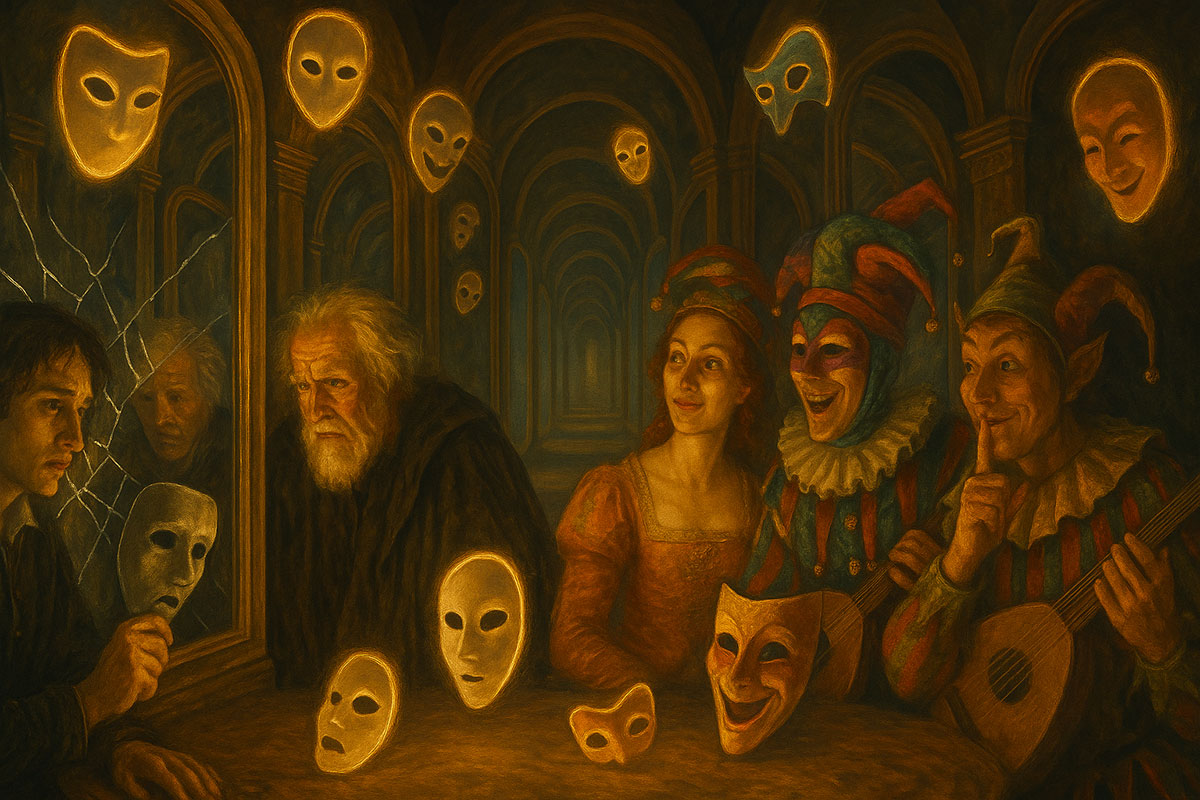
“My friends, the stage is full of masks, be they crowns, motley, or madness itself. Tell me then: when truth hides behind disguise, do we see clearer—or do we lose ourselves entirely?”
First Question — Does madness reveal truth, or conceal it?
King Lear:
When the storm raged and my wits fled, I saw truer than ever I did in state. Crown and flatterers blinded me; madness stripped me bare to wisdom. Ay, truth wears madness as its cloak.
Feste:
And I, a fool, with bells on my cap, told truths my betters dared not. Madness is a stage-trick, aye, but a sharp one. A madman may speak boldly where a wise man is whipped.
Hamlet:
I feigned madness, or thought I did—but in my feigning, truth bled through. The mask became my mirror. For what is sanity, if it walks in a world already diseased?
Falstaff:
Bah! Madness reveals only empty bellies and foolish debts. A drunkard talks truth, aye—but none listen. Better to be merry than mad.
Othello:
Madness in me was no revelation. ’Twas poison, clouding love until I saw only lies. Madness blinds, blinds utterly—it shows no truth, only shadows.
Beatrice:
Then you looked with jealous eyes, Moor, not mad ones. A woman’s wit may play at madness, yet in jest there’s steel. The mask of humor reveals men’s hearts faster than solemn speeches.
Macbeth:
I saw Banquo’s ghost with mine own eyes. Was it madness? Then madness speaks truer than prophets. Yet none believed me. What use is truth revealed if no ear will hear it?
Puck:
Why, truth is a trick, and madness its stage-light. Men in love act madder than any sprite could conjure. I say madness both hides and reveals—depending who’s watching.
Bottom:
Well said, good Puck! For when I wore an ass’s head, I found a queen’s embrace. Was it madness? Aye! But truest joy I ever knew. So let madness reveal love, I say.
Romeo:
If madness be love’s twin, then truth hides in its heart. My passion was called madness, yet Juliet’s beauty was the clearest truth of all.
Second Question — Is disguise a protection, or a peril?
Beatrice:
A protection, surely. Without my wit and railing mask, I’d have no shield against men’s power. Disguise gives women room to breathe.
Falstaff:
Aye, and room to swindle! I’ve worn monk’s robes, soldier’s garb, even my own lies as masks. Protection, yes—but peril, too, when the mask slips at the wrong feast.
Hamlet:
Disguise protects not—it corrodes. I wore madness, and it swallowed me. A mask, once worn, becomes a prison.
Feste:
Not so, prince. A mask is but a window dressed in jests. Those who listen well hear the truth behind. Protection for the fool, peril for the pompous.
Othello:
Iago wore the fairest mask—honesty, loyalty—and through it struck my heart. Disguise is death. Trust no mask.
King Lear:
My daughters’ smiles were masks. Their words honeyed, their hearts gall’d. Peril, aye—masks rot kingdoms.
Macbeth:
False face must hide what the false heart doth know. Disguise won me a crown, yet cursed my soul. Protection at first, peril forever.
Romeo:
Yet had I not worn mask at Capulet’s feast, I’d ne’er have kissed Juliet. Disguise opened the gate of love.
Bottom:
I’d wear a mask every day, if it brought such fortune as fairy queens! No peril there, but pleasant dreams.
Puck:
Dreams, good Bottom, are the finest masks of all. Peril and protection are twins in disguise—both serve the play.
Third Question — Which reveals more truth: the jester’s wit, or the madman’s cry?
Feste:
The jester’s wit, without doubt. For a jest slips past defenses where a cry is barred. Truth in laughter strikes deeper than truth in tears.
Hamlet:
And yet, I think the madman’s cry. For mine own soul, in its raving, uncovered secrets wit could never pierce. Madness lays bare the bones of truth.
King Lear:
I stand with Hamlet. My Fool’s wit stung, but my madness stripped me naked to heaven’s gaze. A cry, though wild, speaks plainer than a riddle.
Falstaff:
Pah! Give me wit. Who listens to cries, save undertakers? A jest, well-timed, bends kings and courts alike.
Beatrice:
I’ll have wit, too—for laughter disarms faster than swords. A mad cry may be true, but wit makes truth palatable.
Othello:
Wit mocked my honor; madness drowned my love. Both betray. Perhaps no truth is safe in either.
Macbeth:
I saw truth in visions, not in laughter. Wit is sport; madness is doom. Better none than either.
Romeo:
Love’s wit and madness are one. Juliet’s glance revealed more truth than either wit or cry. The heart knows, where tongues fail.
Bottom:
Then crown me king of truth! For wit and madness both dwelt in me, and I found joy.
Puck:
Why not both? Wit is madness in jest, and madness is wit gone sour. Both speak truth—but only the wise can hear.
Shakespeare (closing):
“So, wit or madness, mask or cry—truth plays in many costumes. Yet remember: the stage cares not which mask you wear, only how well you play it. The rest, dear friends, is silence… or laughter.”
Topic 3: Love — Poison or Potion

Shakespeare (opening):
“Ah, sweet Cupid! Sometimes he is apothecary, mixing draughts that heal; sometimes executioner, brewing venom. Tell me, my children—doth love raise us to the stars, or bury us in graves?”
First Question — Is love a healing potion, or a deadly poison?
Romeo:
Love is both! For Juliet’s kiss was heaven, yet her loss was hell. What sweeter potion than love? Yet none so swift to kill.
Falstaff:
Poison, say I! Love empties a man’s purse faster than sack. Give me wine and wenches lightly, but Cupid’s arrow pierces deeper than a bill collector’s quill.
Othello:
It is poison. My love was noble, yet turned to jealousy’s venom. Desdemona drank of my passion, but I smothered her with its bitter dregs.
Beatrice:
I’ll call it potion—though bitter at first taste. Benedick and I railed and fenced, yet love softened our steel. If poison it be, I’ll take another dose.
Hamlet:
To love is to risk corruption. Ophelia’s hand might have steadied me, yet my dark thoughts poured poison in her ears until madness drowned her. Love’s draught, once tainted, is deadlier than hemlock.
Bottom:
Potion, potion! A fairy queen adored me, ears and all! If love be poison, may I drink a gallon more.
King Lear:
Love betrayed me in daughters false, yet saved me in one true. Poison in Regan and Goneril, potion in Cordelia. Love is both cup and dagger.
Puck:
Why not both at once? My flower-juice made lovers wild—sweet, foolish, dangerous. Love is prank and passion together.
Macbeth:
My lady’s love was potion at first—she crowned my courage. But it turned to poison, urging blood upon my hands.
Feste:
Ha! Love is a jesting alchemist. What men call potion, women may call poison; yet both end in folly sweet.
Second Question — Does love make fools of us, or does it reveal our truest selves?
Beatrice:
Fools, surely! For who, in love, speaks sense? And yet, perhaps folly is truth in brighter colors.
Falstaff:
Fools, aye! I’ve seen men pawn estates for a wink. If that be “truth,” then truth wears motley indeed.
Romeo:
Love reveals! Juliet saw me truer than I knew myself. Love stripped me of boyish jest and clothed me in devotion.
Hamlet:
It unmasks us—aye, too cruelly. Love showed me my weakness, my cowardice. It revealed not strength, but fracture.
King Lear:
Love unmasks. My pride was torn away; in Cordelia’s arms, I found truth I had cast aside.
Othello:
Love revealed my nobility—and my ruin. It showed my strength as husband, and my weakness as man.
Feste:
Fools and truth are twins. Lovers prance like asses, yet speak with hearts unguarded. Perhaps we are never more ourselves than in folly.
Puck:
I agree—love makes asses of us, yet therein lies truth. Bottom wore ears, yet Titania loved him still. What truer revelation?
Macbeth:
Love revealed ambition in me, darker than I dreamt. ’Twas not folly, but prophecy of my own soul.
Bottom:
Then crown me wisest fool of all! For my love revealed that even an ass may be adored.
Third Question — Is love worth the tragedy it brings?
Romeo:
Yes! A thousand times yes. Though I died, to have known Juliet’s love was worth every drop of blood.
Othello:
No. For love twisted into jealousy leaves nothing but ashes. Better I had never loved, than killed for it.
King Lear:
Aye, love is worth it. Cordelia’s truth outshone kingdoms. Though I died broken, I died knowing love.
Hamlet:
I cannot say. Ophelia’s death sits heavy. If love cannot endure corruption, perhaps it is too fragile for life’s stage.
Macbeth:
Not worth it. My lady’s love drove me to crown and grave alike. Love unchained ambition that damned us both.
Beatrice:
Worth it, always. For love makes fools wise and wise men fools. Without it, the play is dull.
Falstaff:
Not worth a penny. Give me roast and sack, and keep love for poets.
Feste:
Worth it—for even sorrow in love sings sweeter than joy without it.
Puck:
Love is worth it, for it makes sport of gods and mortals alike. Without it, what play would we sprites enjoy?
Bottom:
Worth it! For love gave me Titania’s embrace, and I’d be an ass forever to feel it once more.
Shakespeare (closing):
“So love stands—potion and poison, fool’s cap and crown. Some call it ruin, others salvation. Yet whether in comedy’s laughter or tragedy’s sigh, love alone makes the stage worth treading.”
Topic 4: Ambition, Power, and Pride — The Stuff That Undoes Kings
Shakespeare (opening):
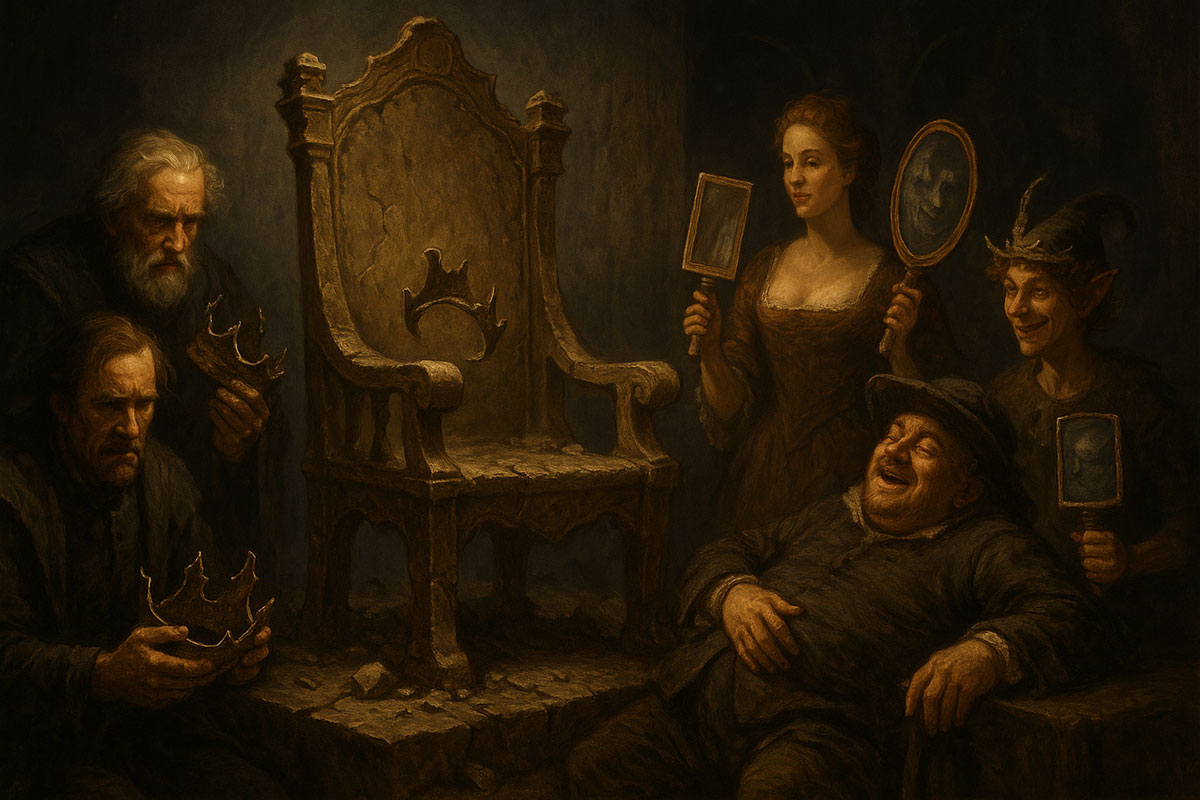
“Crowns are bright, yet heavy. Thrones stand high, yet tremble. Tell me, children of my stage: is it ambition, power, or pride that pulls the mightiest men down?”
First Question — Does ambition ennoble, or does it corrupt?
Macbeth:
Ambition is the spur that pricked me to climb, but it carried me to ruin. It is no noble thing; it is a fire that consumes the hand that feeds it.
Falstaff:
Corrupt? Ha! Ambition is but hunger with a fancier cloak. Give me a full belly, and you may keep your crowns. Ambition makes fools of men, but merrier fools of those who watch them fall.
King Lear:
Ambition blinds. I thought myself a king beyond reproach. Pride in my own station begot folly; ambition to be more loved than truth begot betrayal.
Beatrice:
Ambition, I say, is a tool. In men, it burns kingdoms; in women, it wins survival. Used wisely, ambition ennobles—but too oft it is handled by fools.
Hamlet:
Ambition? ’Tis but a shadow. For in Denmark’s rot, ambition was poisoned long ere I could act. Noble or corrupt—it matters not, for death levels all.
Othello:
Mine was not ambition, but honor, twisted by envy. Yet I see now: ambition to be above suspicion poisoned me as surely as jealousy.
Bottom:
I had ambition to play all the parts—lion, lover, tyrant! And was that corrupt? Nay, it was glorious! Ambition ennobles when it dreams upon the stage.
Puck:
And corrupts when mortals take it too seriously. A jest in ambition is harmless, but kings make it gospel, and blood follows.
Feste:
Ambition ennobles fools, corrupts kings, and entertains clowns. What better use could it have?
Romeo:
My ambition was only love, to be Juliet’s. If that is corruption, then heaven itself is guilty.
Second Question — Is pride a ruler’s strength, or his downfall?
King Lear:
Downfall, surely. My pride deafened me to Cordelia’s truth, and left me raving in storms. Pride builds walls where love should stand.
Falstaff:
Strength, I say! Pride fills a man’s chest, makes him walk as if he owned the tavern. ’Tis a downfall only if the ale runs out.
Othello:
Pride was my downfall. My honor was too fragile, my heart too proud to trust. In guarding it, I destroyed all I loved.
Hamlet:
Pride chained me to hesitation. My words were long, my actions none. Pride makes men philosophers when they ought be soldiers.
Beatrice:
Pride, wielded lightly, is armor. But worn too long, it rusts. My pride saved me from flattery, yet had I clung to it, I’d have lost Benedick.
Macbeth:
Pride crowned me in false glory. I believed myself chosen by fate, and in that pride, I butchered sleep itself.
Romeo:
Pride had no part in my fall. Love is humble, bowing always to beauty. Yet our families’ pride destroyed us both.
Bottom:
My pride was to act best Pyramus ever seen. And though I brayed with donkey ears, still they applauded! Pride, downfall? Nay, pride is comedy’s crown.
Puck:
Both strength and downfall. Pride makes men great in dream, but weak in waking. Like a midsummer night—it dazzles, then dissolves.
Feste:
Downfall, of course. Pride is but folly that forgot its bells.
Third Question — What is power, truly: blessing, curse, or illusion?
Macbeth:
Curse. For power gained by blood is kept only by blood. It devours sleep, friend, and soul alike.
Hamlet:
Illusion. For kings and beggars alike, the grave levels all. Power is but a stage-prop, glittering till the curtain falls.
King Lear:
Curse! Power without wisdom rots a man. When crown slipped, I found truth in beggar’s eyes and fool’s song.
Falstaff:
Blessing, say I, so long as it fills the purse. Power buys wine, wenches, and warm beds. What better blessing?
Beatrice:
Illusion, and dangerous one. Men believe they hold power; women know it slips like sand unless wielded with wit.
Othello:
A curse. Power over men bred envy; power over love bred suspicion. My sword won wars, but lost a heart.
Romeo:
Power is nothing. Love alone rules hearts. Better a poor man in Juliet’s eyes than a prince in Verona’s court.
Bottom:
Power is blessing! For when I ruled Titania’s heart, I was a king, though crowned with bray.
Puck:
Power is illusion. Mortals chase it as children chase fireflies, and as easily crushed.
Feste:
All three! Blessing for those who jest, curse for those who rule, illusion for all who die.
Shakespeare (closing):
“Ambition drives, pride blinds, power deceives. Some call them crowns, others curses. Yet mark this: the fall of kings feeds both tragedy and comedy. For what is a throne, but a stool upon the stage?”
Topic 5: Death and the Afterlife — Grave Matters with a Smile

Shakespeare (opening):
“The play must end, the curtain fall. Yet what waits beyond? A hush eternal, or another jest? Speak, my children: is death the solemn hush of tragedy, or the sly wink of comedy?”
First Question — Is death an ending, or a doorway?
Hamlet:
A doorway, perchance—to dreams beyond all knowing. Yet fear of what lies behind it shackled me, till I dallied and perished. Death is no end, but a riddle.
Falstaff:
Ending, say I! Once sack is drunk, the tavern closed, what doorway remains? Better to live fat than ponder thin doorways.
Othello:
For me, death was an end. I smote myself, believing it justice. If doorway it be, I pray Desdemona waits beyond.
King Lear:
A doorway. For in Cordelia’s arms, I felt the world slip, yet love still burned. Such flame does not end—it passes through.
Beatrice:
I’ll call it a doorway with a jesting porter. Death lets us through, but makes us laugh at the folly we call life.
Romeo:
Doorway, surely. For in Juliet’s tomb, I drank death, yet hoped to find her waiting. Love must open doors, not shut them.
Macbeth:
Ending! Life’s but a walking shadow. Death is the candle snuffed, the stage left empty. Doorway? Nay—oblivion.
Bottom:
Doorway indeed! For I was an ass, then a man, then adored by a queen. If life changes so, why not death?
Puck:
A doorway to another prank, another stage. Mortals end, but mischief goes on forever.
Feste:
A doorway with bells upon it. Death jests as we pass, and truth echoes after.
Second Question — Should death be met with solemnity, or with laughter?
Hamlet:
Solemnity. For the grave-digger sings, but his spade strikes bones. To laugh at death is to mock our own silence.
Falstaff:
Laughter! If death must come, let it choke on a jest. Solemn men rot faster; merry men live in memory.
Othello:
Solemnity. For in death I sought atonement, not laughter. To jest at graves dishonors the lost.
Beatrice:
Laughter, I say! Solemn faces weep, but laughter keeps the dead alive in story. Would you not rather be remembered with mirth than moans?
King Lear:
Solemnity. The storm that stripped me left only tears. Death deserves reverence.
Romeo:
Solemn, for love wept over my tomb. Yet laughter may heal those left behind. Perhaps both.
Macbeth:
Solemn, aye. Blood and ghosts mock no man. Death is the tyrant none may jest away.
Bottom:
Laughter! If Titania could love an ass, then death itself is but another comedy. Why mourn, when dreams are sweeter?
Puck:
Laughter, for mortals take death too seriously. Better to jest than shiver.
Feste:
Both! Solemnity for kings, laughter for fools—but in truth, we are all both at once.
Third Question — What matters most after death: legacy, memory, or nothing at all?
King Lear:
Legacy of love. Kingdoms crumbled, but Cordelia’s truth outlives me. That alone matters.
Hamlet:
Memory. Horatio’s tale carries my name beyond the grave. Legacy is dust, memory breathes.
Othello:
Legacy, perhaps. I begged to be remembered as one who loved not wisely, but too well. Whether curse or crown, memory binds me.
Macbeth:
Nothing at all. Legacy is smoke; memory, shadow. Death devours both.
Romeo:
Memory of love. If Verona remembers Juliet and me as star-cross’d, then death was not vain.
Beatrice:
Memory, certainly. A witty word lingers longer than marble statues. Legacy is for kings; memory belongs to all.
Falstaff:
Legacy? Ha! Remember me as jolly Jack. Let laughter be my monument, taverns my shrine.
Bottom:
Memory, yes! For who could forget the finest Pyramus ever played? My braying shall echo eternal!
Feste:
Legacy fades, memory shifts, but laughter endures. That is what outlives us.
Puck:
Nothing at all. Mortals fret about memory, but the world plays on, careless and merry.
Shakespeare (closing):
“So ends our play. Death may be poison or potion, jest or dirge, end or beginning. Yet one truth remains: the stage is never empty, for memory and laughter echo even when actors fall. The play is done—till the next one begins.”
Final Thoughts by Shakespeare
So ends our disputation, not with the fall of a curtain, but with the echo of voices—tragic and comic alike. You have heard kings undone by ambition, lovers undone by passion, fools who made wisdom of jest, and tricksters who revealed more truth than sages.
What lesson lies therein? That man is ever torn between folly and fate, between power and humility, between love’s ecstasy and its poison, between death’s silence and laughter’s song. Yet all these opposites are but threads of the same tapestry, woven by time, stitched by the heart.
Remember, dear audience: tragedy without comedy is unbearable, and comedy without tragedy is empty. Only together do they mirror life. And though the players may bow and vanish, though crowns crumble and goblets shatter, though fools laugh and kings weep—still the play goes on, in you, in me, in every mortal breath.
For as I once wrote, ‘The play’s the thing.’ And the play is endless.
Short Bios:
Hamlet
Prince of Denmark, haunted by his father’s ghost and paralyzed by indecision. Known for his existential pondering—“To be or not to be”—Hamlet embodies the weight of doubt and the search for truth.
Macbeth
A Scottish thane turned king through murder, driven by ambition and the prophecy of witches. His fall from valor to tyranny shows how unchecked desire destroys both crown and soul.
Othello
A noble Moorish general of Venice, deeply in love with Desdemona. Consumed by jealousy stoked by Iago, Othello’s tragedy lies in the clash between love, trust, and honor.
King Lear
A proud monarch who divides his kingdom among his daughters, misjudging true love for flattery. Stripped of power and sanity, Lear discovers humility and truth only through loss and suffering.
Romeo
The youthful lover of Verona, whose passion for Juliet defies family feuds. His story embodies the beauty and peril of love that burns too brightly, too quickly.
Falstaff
A roguish knight, larger in girth and wit, famous for his tavern antics, brash humor, and mockery of honor. Falstaff represents the joy of indulgence and the folly of excess.
Feste
The witty fool from Twelfth Night, whose riddles, songs, and jests reveal piercing truths. He cloaks wisdom in humor, often seeing clearer than nobles and lovers alike.
Beatrice
Sharp-tongued heroine of Much Ado About Nothing, renowned for her banter with Benedick. Fiercely independent, she wields wit as both weapon and shield, yet reveals deep loyalty and love.
Puck
The mischievous sprite from A Midsummer Night’s Dream. A trickster who delights in turning the world upside down, Puck embodies magic, mischief, and the playful chaos of imagination.
Bottom
A bumbling weaver from A Midsummer Night’s Dream, whose transformation into a donkey makes him the unwitting lover of the fairy queen Titania. Bottom symbolizes innocence in folly and the comic joy of self-delusion.
Leave a Reply