
|
Getting your Trinity Audio player ready...
|
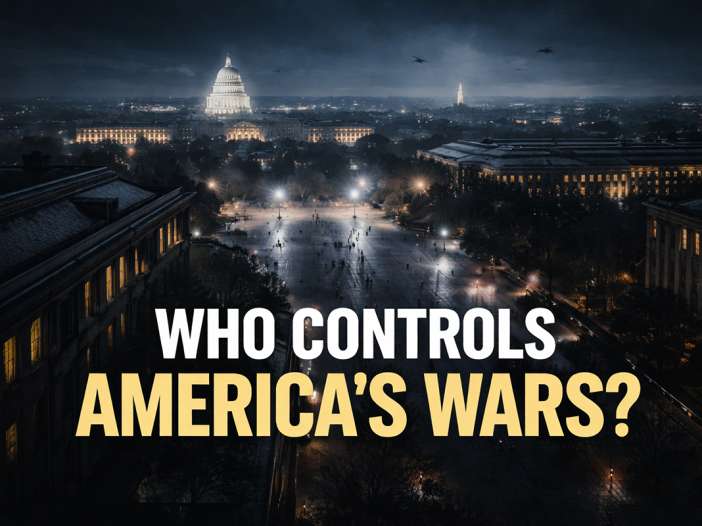
What if presidents no longer fully control when America goes to war?
Introduction by Tucker Carlson
Good evening.
Tonight’s question is simple, but it cuts to the core of the American republic:
Who really controls America’s wars?
We’re told the answer is the president. Or Congress. Or the voters. But if that were fully true, why does the same foreign policy keep reappearing no matter who wins? Why do promises of restraint so often end in escalation? Why does war always seem to arrive with the same moral pressure, the same fear, the same demand that you stop asking questions the moment the stakes get high?
At some point, you have to wonder whether the public story is the real story at all.
This conversation is not about defending foreign regimes or pretending threats do not exist. It is about whether Americans still have meaningful control over decisions made in their name. It is about whether hidden pressure, alliance demands, intelligence filtering, media management, and institutional inertia have become stronger than democratic consent.
Because if citizens can vote for peace and still get war, then something deeper is wrong.
Tonight, we’re going to ask the questions that free people still have a right to ask:
Who decides?
Who benefits?
Who pays?
Who gets silenced?
And if the truth ever fully came out, would this country still be able to bear it?
That is where we begin.
(Note: This is an imaginary conversation, a creative exploration of an idea, and not a real speech or event.)
Topic 1 — Has America Lost Control of Its Own Foreign Policy?
Moderator: Tucker Carlson
Participants: Saagar Enjeti, John Mearsheimer, Tulsi Gabbard, Glenn Greenwald, Jeffrey Sachs
Opening by Tucker Carlson
Good evening.
Tonight, we begin with a question that may be more unsettling than any missile strike, diplomatic statement, or news headline: Does the United States still control its own foreign policy in any meaningful democratic sense?
Americans are told that presidents lead, Congress authorizes, voters choose, and the system more or less reflects the will of the public. But if you step back and watch what keeps happening, that explanation starts to feel less convincing. Administrations change. Slogans change. Campaign promises change. Yet somehow the broad direction of foreign policy seems to remain strangely intact. The pressure toward intervention remains. The deference to intelligence claims remains. The alliance obligations remain. The moral blackmail remains. And, perhaps most strikingly, the public is almost always the last to be honestly told what is happening and why.
So tonight’s question is not just whether America is making mistakes abroad. Great powers make mistakes. The real question is whether the American people still possess meaningful authority over the decisions made in their name.
If a population votes for restraint, and still gets escalation, what exactly is that called?
Let’s begin there.
Discussion
Saagar Enjeti:
I think the first thing to say is that control hasn’t vanished completely, but it has clearly narrowed. The American voter can still affect tone, staffing, and surface priorities. But when it comes to foreign policy, especially war and security, the actual menu of options is much smaller than people imagine. You can vote against endless war. You can vote against intervention. You can vote against nation-building. And still, when the pressure comes, you find yourself right back inside the same script.
That tells me there is a permanent foreign-policy structure in Washington that is more durable than elections.
John Mearsheimer:
That is exactly right. In theory, foreign policy is supposed to be subordinate to democratic control. In practice, it is shaped by a very small number of actors operating inside a national security framework that ordinary citizens do not see clearly and cannot influence effectively. Intelligence agencies, major donors, organized lobbies, senior military figures, think tanks, media institutions, and foreign-policy professionals all play a role in setting the boundaries of acceptable action.
Once a crisis begins, those boundaries become even tighter. Public debate does not disappear, but it becomes much less consequential than people think.
Tulsi Gabbard:
And the tragedy is that the people with the least say often pay the highest price. It’s the soldier. It’s the military family. It’s the taxpayer. It’s the veteran who comes home with wounds people in Washington will never carry. So when leaders say, “We had no choice,” I always want to ask: who exactly is “we”? Because the American people are almost never brought honestly into that choice at the front end.
They’re usually told afterward that the machinery was already moving and that now patriotism requires silence.
Glenn Greenwald:
That’s one of the most important parts of how this works. You don’t always need overt censorship. You just need synchronized assumptions. If the media, the security state, political elites, and moral influencers all define the same narrow range of respectable opinion, then dissent becomes costly even before it becomes illegal. You can still object, technically. But you’ll be smeared as reckless, fringe, or somehow sympathetic to the enemy.
That is how public consent gets manufactured in a society that still wants to think of itself as free.
Jeffrey Sachs:
I would add that by the time the public sees a crisis, much of the real decision-making architecture has already been built over years, sometimes decades. Military partnerships, intelligence relationships, donor influence, regional strategy, alliance expectations, sanctions frameworks, arms flows — all of that creates momentum. So when people ask, “Who decided?” they often imagine a moment. But it is usually not one moment. It is a structure.
That structure can carry a country toward conflict long before any public vote or presidential speech catches up.
Tucker Carlson:
So then what are Americans really voting for? That’s the obvious question. If the public can elect someone who says, “No more stupid wars,” and then still find the country moving toward confrontation, are we talking about hypocrisy, weakness, capture, or something more systemic than that?
John Mearsheimer:
A mixture of all of those things. Presidents do have agency. I don’t want to erase that. But presidents operate under severe pressure in foreign policy. If they resist escalation, they don’t just face partisan criticism. They face pressure from the intelligence world, from military leadership, from powerful domestic factions, from allied governments, and from media institutions that can instantly frame restraint as negligence.
So yes, the president still decides. But he decides inside a cage.
Saagar Enjeti:
And that cage is exactly what produces so much cynicism. Because from the voter’s point of view, it looks like this: you’re told the old system is broken, you vote to reject it, and then in the first real test, the old system reappears wearing the face of your own candidate. That’s devastating. It teaches people that elections can change the marketing but not the machinery.
That’s a poisonous lesson for a republic.
Tulsi Gabbard:
It is. And it’s one reason trust has collapsed so badly. Americans were very clear over the last decade. They wanted realism. They wanted restraint. They wanted fewer lies and fewer wars. They wanted a government that puts the safety and well-being of Americans first. When those hopes get overridden by the same familiar escalation cycle, it doesn’t just create disappointment. It creates alienation.
People start to feel that the government speaks in their name but no longer listens in theirs.
Glenn Greenwald:
And then comes the second insult. First the public is bypassed. Then it is shamed. If you oppose the next war, you’re told you’re unserious, disloyal, naive, compromised, or morally defective. That ritual is very useful because it shifts scrutiny away from the people who pushed the policy. They move the country toward danger, and then they present themselves as the guardians of decency once anyone objects.
It’s one of the oldest tricks in political rhetoric, and it still works remarkably well.
Jeffrey Sachs:
And we should remember that foreign policy is never just foreign. The public feels it domestically through inflation, oil prices, debt, anxiety, instability, and the diversion of attention from urgent needs at home. Yet the people who talk most casually about escalation often behave as if economics is secondary to moral theater. Citizens know that’s false. They live inside the consequences.
So when the public senses that foreign policy is disconnected from daily American life, it is not being unsophisticated. It is noticing reality.
Tucker Carlson:
Let me sharpen the question then. Why does this keep happening? Why does a country with elections, a Congress, a Constitution, and all the rhetoric of self-government keep finding itself pulled into the same kind of foreign-policy pattern over and over again?
John Mearsheimer:
Because great powers build establishments that come to see restraint as weakness. Over time, those establishments become self-reinforcing. They elevate credibility, posture, influence, and alliance maintenance into permanent obligations. And then any attempt to pull back is framed as dangerous. So failure reproduces itself through doctrine.
That is one of the central pathologies of American foreign policy.
Saagar Enjeti:
I’d put some of it more bluntly. There’s a class divide here. The people managing these choices often live far from the consequences. Their kids usually aren’t going to the front. Their neighborhoods aren’t transformed by the blowback. Their careers often rise with crisis. For them, foreign policy is access, status, and influence. For the average American, it’s cost, risk, and instability.
That difference explains why the same mistakes can repeat with so little humility.
Tulsi Gabbard:
And from the military side, humility isn’t optional. It should be the minimum requirement. If you are asking young Americans to risk their lives, then your purpose should be clear, your intelligence should be honest, your objectives should be achievable, and your exit should be real. Too often those standards are treated as inconveniences.
Then years later the people responsible move on, write books, go on television, and call it a hard lesson.
Glenn Greenwald:
Congress deserves blame here too. It has surrendered far too much of its responsibility. Members posture, moralize, outsource judgment, then later act shocked when things go badly. That arrangement is very convenient. The executive branch absorbs immediate blame, the intelligence agencies hide behind secrecy, the media hides behind sourcing, and Congress hides behind outrage after the fact.
In that system, accountability becomes almost theatrical.
Jeffrey Sachs:
And the international layer is often completely hidden from view. Foreign governments lobby intensely. Defense sectors lobby intensely. ideological networks lobby intensely. By the time the average citizen hears the official case for action, a long invisible campaign has already happened. That’s why so many Americans feel manipulated without being able to map every mechanism. Their intuition is often ahead of the documentation.
Tucker Carlson:
So what would it look like if Americans really did control their own foreign policy again?
Tulsi Gabbard:
It would start with one simple principle: the lives, liberties, and well-being of the American people come first. That means force only when there is a real and direct threat. It means diplomacy before war. It means honesty before emotion. It means no blank checks, no endless missions, and no asking service members to carry burdens the public was never willing to debate openly.
That would be a very different posture from what we have now.
John Mearsheimer:
Strategically, it would mean restraint and prioritization. Great powers get into trouble when they confuse peripheral interests with core interests. The United States should husband its power, avoid unnecessary wars, and think much more carefully about where its vital interests truly lie.
A foreign policy shaped by citizens rather than ideology would be much less ambitious and much more disciplined.
Saagar Enjeti:
It would also mean telling the public the truth. If a conflict risks higher gas prices, say that. If an ally’s interests diverge from ours, say that. If intelligence is uncertain, say that. The public can handle difficult facts. What destroys trust is not hardship. It’s manipulation.
People become cynical when they keep hearing moral slogans used to hide practical realities.
Glenn Greenwald:
And it would mean treating dissent as patriotic rather than contaminating. A country that cannot argue honestly about war is already in danger. The suppression of criticism is not a side issue. It is one of the main warning signs that democratic control is slipping.
A free society should become more open before war, not less.
Jeffrey Sachs:
And finally, it would mean restoring diplomacy to the center of policy rather than using it as decoration before coercion. Many wars become inevitable only after diplomacy is quietly made impossible. If citizens want peace, prosperity, and stability, then negotiation and realism have to regain legitimacy.
That is not weakness. It is statecraft.
Closing by Tucker Carlson
What you’ve heard tonight is not the claim that elections mean nothing or that presidents are mere puppets. The point is more troubling than that.
It is that around every ballot box there may now stand a much larger structure: intelligence systems, military bureaucracy, donor pressure, alliance obligations, media enforcement, class insulation, and a permanent habit of intervention that narrows the choices long before the public ever casts a vote.
If that is true, then the problem is bigger than one war, one administration, or one scandal.
It means the deepest crisis may not be foreign policy alone.
It may be self-government itself.
Topic 2 — When Does an Ally Become the Driver of American Policy?
Moderator: Tucker Carlson
Participants: John Mearsheimer, Tulsi Gabbard, Jeffrey Sachs, Douglas Macgregor, Chas Freeman
Opening by Tucker Carlson
Welcome back.
Our second question may be the one that makes people most uncomfortable, because it cuts across one of the holiest assumptions in Washington: that alliances are always evidence of strength, wisdom, and moral seriousness.
But are they?
An alliance can protect a country. It can deter enemies. It can create stability. That part is obvious. The harder question is what happens when an ally’s fears, ambitions, and timelines become so urgent that they begin to shape American action more than American interests do. At that point, are we still looking at partnership? Or are we looking at something closer to strategic capture?
This is not a sentimental question. It is not about whether one country likes another. It is about sovereignty. It is about who decides what risks Americans take, what wars Americans fund, what enemies Americans inherit, and what costs Americans are expected to absorb.
If an ally sees a conflict as existential, and Washington does not, who yields?
Let’s start there.
Discussion
John Mearsheimer:
In international politics, alliances are marriages of convenience, not sacred bonds. States align when interests overlap, and they pull apart when interests diverge. The mistake Washington often makes is treating an ally’s strategic priorities as if they were automatically identical to our own. They are not. They never are.
The moment policymakers forget that, they stop thinking like realists and start thinking like dependents.
Tulsi Gabbard:
That is exactly the danger. Americans are constantly told that support for an ally is a test of character, when it should first be a test of judgment. The real question is simple: does this action serve the safety, freedom, and prosperity of the American people? If the answer is unclear, then wrapping it in moral pressure does not make it wiser.
It just makes it harder for citizens to object.
Jeffrey Sachs:
And once that pressure system is in place, it becomes self-reinforcing. Intelligence sharing, military cooperation, joint planning, donor influence, media narratives, congressional habit, arms sales, diplomatic language — all of it starts to form one atmosphere. Then anyone who asks whether the alliance itself is distorting policy is treated as if he has violated some taboo.
But that question is not illegitimate. It is one of the first questions a sovereign nation should ask.
Douglas Macgregor:
The military side of this is very concrete. You can be pulled into escalation one “limited” step at a time. First it is support. Then it is logistics. Then intelligence. Then force protection. Then retaliation. Then deterrence. Then suddenly you are in a conflict you never honestly debated. That is how countries drift into wars they do not control.
And once that process starts, the ally with the greatest urgency often has the strongest psychological hold over the decision-making chain.
Chas Freeman:
That is why statecraft requires distance. Friendship between states is useful, but strategic distance is essential. If you lose the ability to distinguish your own interests from those of your ally, then policy becomes emotional rather than rational. A great power should be capable of sympathy without surrendering judgment.
That balance has not always been present in Washington.
Tucker Carlson:
So let me press the point. If one country thinks, “This threat is existential. We need action now,” and the United States thinks, “This is serious, but not central to our survival,” who usually wins that argument inside Washington?
John Mearsheimer:
Often the more urgent party does, because urgency is politically contagious. It narrows debate. It creates moral drama. It lets advocates say, “If we do not act now, catastrophe is on us.” That is a powerful argument inside any bureaucracy. People do not want responsibility for the worst-case outcome, so they move toward action.
That does not mean action is wise. It means fear is persuasive.
Tulsi Gabbard:
And fear moves fastest when citizens are denied the full picture. The public is rarely shown the full difference between an ally’s interests and our own. Instead they are told that there is one shared moral struggle and that hesitation is dishonorable. That is not honest leadership.
If you want Americans to support a dangerous policy, then explain clearly what America gains, what America risks, and why diplomacy or restraint failed.
Jeffrey Sachs:
Right, and in many cases that honest explanation would expose a serious mismatch. An ally may want regime change, regional dominance, expanded deterrence, or a long conflict that weakens a rival. The United States may want stable shipping lanes, lower energy shocks, calmer markets, and reduced military exposure. Those are not the same goals. If policymakers blur them together, they are not clarifying reality. They are hiding divergence.
That is where bad policy begins.
Douglas Macgregor:
And divergence matters most when war begins. It is easy to pretend interests are aligned at the start. It becomes harder when casualties rise, stockpiles shrink, costs mount, and escalation gets harder to control. Then the ally may say, “Stay in. Double down. Finish it.” The United States may quietly realize the mission is no longer worth it.
That is the moment when you find out who has really been steering.
Chas Freeman:
There is another point here. States with a local stake often think in historical, civilizational, or religious terms. Great powers should be cautious about inheriting those frames. Once Washington starts speaking in the emotional vocabulary of another state’s trauma or destiny, it becomes much harder to define a distinct American interest.
Foreign policy then becomes fused with someone else’s memory, fear, and ambition.
Tucker Carlson:
That may be the heart of it. Americans are asked to step into another country’s emotional universe and then to behave as if refusing that role is immoral. But is it really immoral to ask whether another country’s emergency is automatically our war?
John Mearsheimer:
No. It is responsible. A serious state must always distinguish between sympathy and self-preservation. You can support an ally without adopting every one of its enemies as your own, every one of its priorities as your own, or every one of its deadlines as your own. That is what mature alliance management looks like.
Without that, the alliance starts managing you.
Tulsi Gabbard:
And that has consequences for democracy here at home. Citizens begin to sense that some questions are somehow forbidden. They can ask how much money, maybe. They can ask how long, maybe. But the deeper question — why exactly are we taking this risk in the first place? — becomes radioactive. That should alarm everyone.
Any policy that cannot survive honest public scrutiny probably should not survive at all.
Jeffrey Sachs:
There is also the economic burden. Americans are not only asked to approve military exposure. They are asked to absorb inflation, debt, instability in energy markets, and domestic neglect while being told this is all part of a noble mission. Yet many of these burdens arise from strategic choices that were never plainly argued before the public.
That is not democratic maturity. That is elite insulation.
Douglas Macgregor:
And military readiness suffers too. Every time the United States gets drawn into someone else’s regional timetable, it burns resources, attention, and deterrent capacity that may be needed elsewhere. You cannot pretend these commitments are free. They are paid for in readiness, in stockpiles, and in strategic flexibility.
No great power can afford endless emotional decision-making.
Chas Freeman:
The old diplomatic principle was that alliances should expand your room for maneuver, not shrink it. If an alliance makes it harder to say no, harder to negotiate, harder to de-escalate, and harder to define your own national interest, then it is no longer functioning as a tool of statecraft. It is functioning as a constraint upon it.
That is the moment when policymakers should become very careful.
Tucker Carlson:
So what would a healthy alliance look like? Because no one is saying the United States should have no allies. The question is what kind of alliance avoids this trap.
John Mearsheimer:
A healthy alliance begins with clarity. Interests overlap in some areas and diverge in others. That should be stated openly. The stronger party, especially a superpower, should never allow moral rhetoric to replace strategic analysis. You help where it serves your interests. You decline where it does not.
That may sound cold, but it is much safer than self-deception.
Tulsi Gabbard:
It would also require leaders who are willing to tell the public the truth. Support for an ally does not mean obedience to an ally. Friendship does not mean surrendering judgment. And caring about lives abroad does not mean forgetting your first duty to the people you serve.
Americans can handle that honesty. Washington often acts as if they cannot.
Jeffrey Sachs:
A healthy alliance would preserve diplomacy. It would not treat every dispute as a final showdown. It would not let the most maximalist voices set the agenda. It would leave room for negotiation, regional balancing, and the possibility that stability sometimes matters more than triumph.
That is the difference between strategy and crusade.
Douglas Macgregor:
It would also require military limits. No blank checks. No vague commitments. No open-ended support detached from defined American objectives. If troops, weapons, intelligence, or logistics are involved, then the American purpose has to be concrete and finite.
Otherwise, you are writing a check that history will cash in blood.
Chas Freeman:
And above all, it would restore sovereignty of judgment. An ally may advise, warn, request, or plead. But it must never become the moral or strategic author of American action. That line has to remain bright. Once it fades, confusion follows.
And confusion in foreign policy is often fatal.
Closing by Tucker Carlson
What emerges from this is not hostility to alliances, but suspicion of what alliances can become when they are surrounded by fear, urgency, taboo, and emotional leverage.
A sovereign country should be able to say: we understand your danger, we hear your case, we may help you, but we will still judge events through the interests of our own people. That should not be controversial. It should be the minimum standard of self-government.
The trouble begins when that standard disappears.
Then alliance turns into pressure. Pressure turns into obedience. And obedience, dressed up as virtue, becomes one more way a nation can lose control of its own destiny.
Topic 3 — Is War Being Sold to the Public Through Fear Again?
Moderator: Tucker Carlson
Participants: Glenn Greenwald, Matt Taibbi, Tulsi Gabbard, John Mearsheimer, Noam Chomsky
Opening by Tucker Carlson
Welcome back.
Our third question is not really about missiles or maps. It is about persuasion. It is about the emotional machinery that makes war possible in a country that still likes to think of itself as free.
Every generation is told that this time is different. This threat is unique. This enemy is irrational. This window is closing. This action is urgent. And if you hesitate, if you ask for proof, if you wonder whether the policy actually serves the United States, you are no longer treated as cautious. You are treated as suspect.
That pattern is old. Fear first. Moral pressure second. Debate last, if it comes at all.
The article we are drawing from put this question plainly: “Is war being sold to the public through fear again?”
So tonight, that is our focus. When fear becomes the main currency of persuasion, can a democracy still make a sane decision about war?
Let’s begin there.
Discussion
Glenn Greenwald:
Yes, it is being sold through fear again, but in a slightly updated form. It is rarely just “be afraid of the enemy.” It is also “be afraid of being seen as the wrong kind of American.” That is what makes modern war messaging so effective. It fuses danger abroad with social punishment at home. So if you question the policy, you are not merely disagreeing. You are risking reputational exile.
That is a very efficient way to shrink debate before censorship is ever needed.
Matt Taibbi:
And the press is central to that process. News institutions no longer just report the case for war. They create a moral atmosphere around it. They decide which emotions are respectable, which doubts are unserious, which sources are safe, and which questions are already too impure to ask. Then they call that neutral coverage.
The most powerful form of propaganda is often not a lie. It is a pre-selected frame.
Tulsi Gabbard:
That frame matters because it reaches real people before the facts do. Military families, ordinary citizens, young Americans who may one day be asked to serve — they are all absorbing a climate before they are hearing an argument. The climate says this is urgent, this is righteous, this is necessary, and skepticism is dangerous. That is not how a republic should deliberate over war.
If force is truly necessary, it should survive honest scrutiny without emotional coercion.
John Mearsheimer:
Fear works in foreign policy because it compresses time. Once leaders convince the public that the danger is immediate and existential, normal caution starts to look irresponsible. At that point, strategy gives way to panic management. The conversation becomes less about long-term interests and more about avoiding moral blame for not acting now.
That is one reason threat inflation is so common. It is politically useful.
Noam Chomsky:
It is more than useful. It is structural. States seeking war have always needed public passivity or support, and fear is one of the oldest ways to produce both. You elevate the enemy, simplify the narrative, narrow the field of discussion, and then assign virtue to obedience. The details change across eras, but the grammar remains recognizable.
What is called national unity is often organized emotional discipline.
Tucker Carlson:
So when people hear, “If we do not act now, catastrophe is coming,” what should they listen for?
Glenn Greenwald:
They should listen for what has disappeared. What facts suddenly became unknowable? What evidence cannot be tested? Which experts are presented as neutral when they have been wrong repeatedly? Which assumptions are treated as settled before the public has even heard them clearly? Fear is often most visible in what it pushes out of the room.
And the first thing it pushes out is proportion.
Matt Taibbi:
I’d add memory. Fear-based persuasion depends on historical amnesia. Every new campaign is presented as if prior exaggerations, prior fiascos, prior emotional manipulations never happened. The same people who got everything wrong return as guardians of sobriety. The same institutions that misled the public present themselves as filters against disinformation. It is a remarkable cycle.
Failure almost never disqualifies anyone in this business.
Tulsi Gabbard:
That’s what makes it feel so insulting to ordinary people. Americans have seen this before. They have seen emotional language used to rush debate, sideline dissent, and present escalation as maturity. Then years later, after the cost in blood and trust, the same class of people says mistakes were made. That is not enough.
If the price is paid by service members and citizens, then honesty has to come before the action, not after it.
John Mearsheimer:
There is another reason fear is so effective. It allows policymakers to avoid a serious discussion of interests. Once a conflict is moralized in absolute terms, asking whether it benefits the United States starts to sound cold or indecent. But that is the central question states are supposed to ask. Fear works by making prudence appear shameful.
That is how strategic thought gets displaced by moral theater.
Noam Chomsky:
And moral theater is often directed inward as much as outward. It disciplines the domestic population. It tells citizens what kind of emotions they are permitted to have, what kind of questions they may ask, and what kind of silence counts as loyalty. That is why propaganda in nominal democracies must be subtle enough to feel voluntary.
People are not merely informed. They are arranged.
Tucker Carlson:
That seems connected to something else in the article: the idea that dissent is not answered so much as morally discredited. The piece argued that criticism is often met with shame rather than reasoning, and that a shared narrative can raise the cost of speaking even before formal censorship appears. Is that where fear becomes most dangerous?
Glenn Greenwald:
Yes, because at that point fear has moved from foreign policy into the civic bloodstream. You are no longer just afraid of the enemy. You are afraid of what happens to you if you speak plainly. And once that happens, public consent becomes easier to engineer. Many people will simply remain quiet rather than absorb reputational punishment.
A democracy can survive disagreement. It cannot stay healthy once fear makes candor socially radioactive.
Matt Taibbi:
And that is why the media class so often focuses on policing tone instead of testing claims. It is much easier to say, “This question is irresponsible,” than to answer the question. Once tone-policing takes over, the public is no longer watching an argument. It is watching a ritual of exclusion.
That ritual is very useful when the facts are shaky.
Tulsi Gabbard:
The deepest harm is that citizens begin to doubt their own moral right to question war. That is a terrible place for a free country to end up. Asking whether Americans should die, kill, spend, escalate, or risk wider conflict is not betrayal. It is citizenship.
If leaders cannot tolerate that question, then the problem is not public weakness. It is elite fragility.
John Mearsheimer:
Quite right. And when fear dominates, escalation becomes easier than reflection. Leaders can always say, “We had to act under uncertainty.” That may sometimes be true. But uncertainty should make states more cautious, not less. Fear flips that logic. It turns uncertainty into an argument for movement.
That inversion is one of the great recurring dangers of foreign policy.
Noam Chomsky:
And it persists because institutions are rewarded for it. Media gain urgency. political actors gain conformity. security bureaucracies gain discretion. industries tied to war gain contracts. Fear is not merely an emotion in these situations. It is an organizing resource.
Once that is understood, the repetition becomes much less mysterious.
Tucker Carlson:
So what would a healthy response look like when the next wave of urgency arrives?
Glenn Greenwald:
Slow down the timetable. Demand evidence before moral panic hardens into consensus. Protect dissent early, before the social cost becomes too high. Treat independent skepticism as a public service, not a contaminant. That would already change a great deal.
The rush is often the whole trick.
Matt Taibbi:
Restore consequences for professional failure. If the same voices repeatedly exaggerate threats, misread events, and then reappear as expert guides, the public is being trained to forget. A functioning culture would not do that. It would remember who sold what and with what result.
Memory is one of the few defenses against managed fear.
Tulsi Gabbard:
Bring the cost back into the room. Ask who fights, who pays, who benefits, who bears the blowback, and who will still be living with the consequences ten years from now. Fear thrives when policy is discussed as abstraction. It weakens when human reality enters the conversation.
That is why honest war debate must stay concrete.
John Mearsheimer:
And return to interests. Not slogans, not identity tests, not emotional blackmail — interests. What exactly is the threat? How direct is it? What are the alternatives? What is the likely outcome of force? What does success even mean? Those are sober questions. They are often missing precisely because they obstruct escalation.
A republic that cannot ask them is in trouble.
Noam Chomsky:
Most of all, teach citizens to recognize the pattern. Fear, simplification, urgency, moral sorting, and managed consensus — once people can see those steps, propaganda loses some of its force. Not all of it, but some. Political literacy is never a perfect shield, but it is better than emotional reflex.
The first defense is to notice the script before you perform your part in it.
Closing by Tucker Carlson
If this conversation has a single lesson, it is that fear does not merely prepare a nation for war. It prepares a nation to stop thinking.
That is the danger.
A free society can survive bad judgment, bad leaders, and bad institutions for a while. What it struggles to survive is a public climate in which urgency replaces evidence, shame replaces debate, and skepticism itself begins to feel forbidden.
Then war is no longer sold through persuasion in any honest sense.
It is sold through psychological pressure.
And once a country accepts that pattern too many times, it may wake up to find that it no longer knows where conviction ends and conditioning begins. The article’s larger warning is that media framing, donor pressure, alliance demands, and the moral narrowing of dissent can all weaken self-government long before formal censorship arrives.
If that is where we are, then resisting fear is no longer a personality trait.
It is a civic duty.
Topic 4 — Is Criticizing War Becoming Dangerous in America?
Moderator: Tucker Carlson
Participants: Glenn Greenwald, Tulsi Gabbard, Rand Paul, Nadine Strossen, Matt Taibbi
Opening by Tucker Carlson
Welcome back.
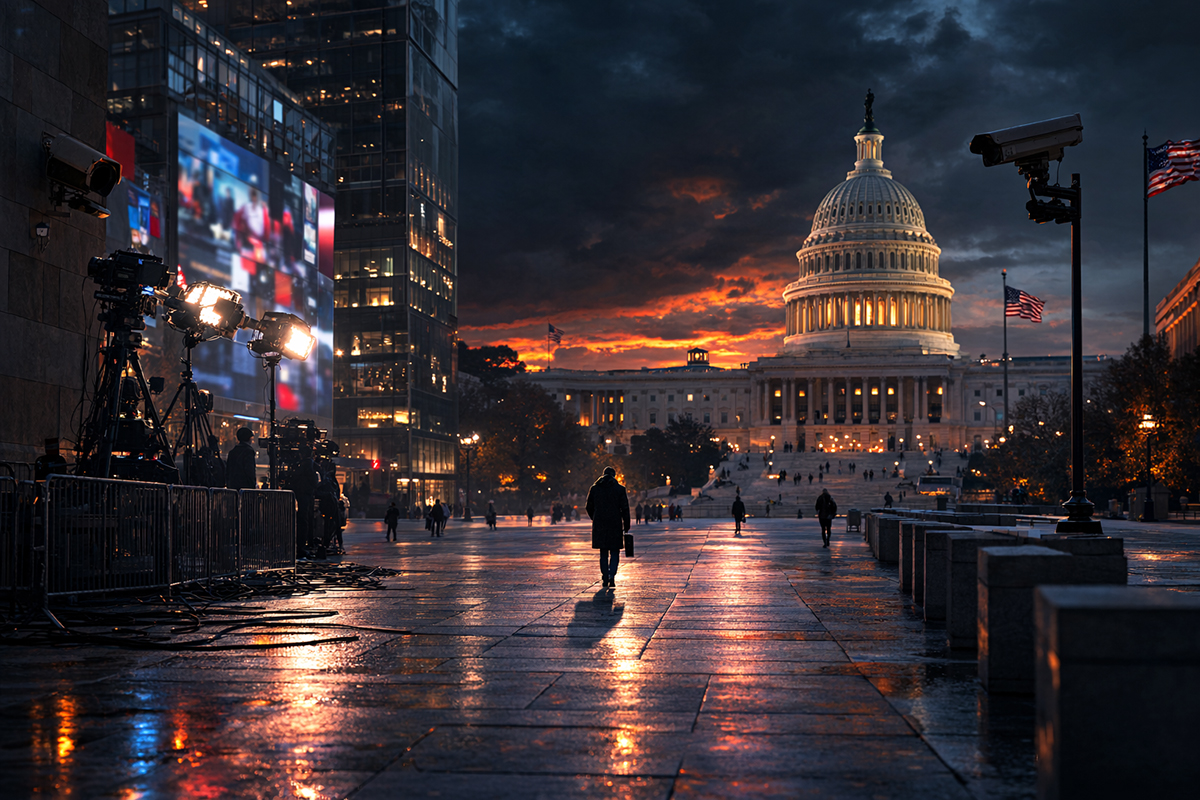
Our fourth discussion begins with a hard question, one that free societies must face honestly if they hope to remain free: Is criticizing war becoming dangerous in America? That is the exact framing of Topic 4 in your piece, and it follows directly from the earlier argument that fear, media pressure, and elite consensus can narrow public debate long before any formal censorship appears.
In theory, the answer should be simple. In a constitutional republic, citizens have the right to question their government, challenge military action, reject official narratives, and speak openly without fear of punishment. That is not extremism. That is citizenship. But wartime has a way of changing the emotional climate of a country. Suspicion rises. Speech becomes moralized. Skepticism starts to sound disloyal. Institutions stop answering criticism and begin managing it. That is the concern your article sets up here.
So tonight, we ask whether that process is happening again, and what it would mean if it is.
Discussion
Glenn Greenwald:
Yes, I think it is happening, though the form is more refined than in the past. In earlier eras, people imagined repression as direct state action. That still matters, of course. But now the first layer is often softer and, in a way, more effective: reputational attack, platform throttling, employer pressure, advertiser pressure, coordinated media framing, and the repeated suggestion that dissent itself is a kind of contamination. That does not always put you in jail. But it can make a lot of people decide silence is safer.
And once people begin censoring themselves, the system hardly needs to censor them directly.
Tulsi Gabbard:
That is exactly what worries me. A free society does not lose freedom only through a single law or one dramatic raid. It can lose freedom by creating a climate in which ordinary people begin asking themselves, “Can I still say what I actually think about this war? Will I be punished? Will I lose my reputation? Will my family be dragged into it?” By the time that fear is common, the damage is already underway.
You do not need bars to create obedience. Sometimes you just need consequences people can imagine clearly enough.
Rand Paul:
And that is why constitutional limits matter most in times of crisis. Wartime and emergency rhetoric have always been the easiest routes to state expansion. Surveillance grows. Secrecy grows. Executive discretion grows. Public patience for dissent shrinks. Then everyone is told the extraordinary measures are temporary and necessary. But governments are very good at keeping powers once they gain them.
That is why citizens should become more skeptical during wartime, not less.
Nadine Strossen:
From a civil-liberties standpoint, the principle is straightforward. Speech does not become less protected because it is unpopular, provocative, or unwelcome to those in authority. In fact, that is when protection matters most. The First Amendment is built on the insight that open contest is safer than enforced silence. Once public institutions begin to imply that criticism is dangerous merely because it is upsetting or politically inconvenient, they are eroding one of the deepest safeguards of a free people.
And they often do so in the language of safety, which makes the erosion harder for people to recognize at first.
Matt Taibbi:
A lot of this begins with language games. First a critic is called irresponsible. Then reckless. Then maybe “helpful to the enemy.” Then the person is recoded as somehow extreme, toxic, or compromised. And once that progression takes hold, almost nobody is discussing the original argument anymore. The argument has been replaced by a stigma campaign attached to the person making it.
That is one of the easiest ways to shrink a public argument without formally banning it.
Tucker Carlson:
So when Americans hear phrases like “dangerous rhetoric,” “harmful narratives,” or “amplifying enemy propaganda,” what are they really hearing?
Glenn Greenwald:
Very often, they are hearing an attempt to end the argument without winning it. If your criticism can be reclassified as harm, then no one needs to refute it. It is enough to contain it, isolate it, algorithmically reduce it, or morally dirty it. That is the function of a lot of modern speech policing. It bypasses persuasion and moves right to management.
And in wartime, the temptation to do that rises very quickly.
Nadine Strossen:
That is why legal distinctions still matter. The American constitutional standard is intentionally high because the framers understood that passions run hottest when the public is frightened. Mere criticism, harsh opinion, dissent from official claims, or even wrongheaded argument are all part of protected discourse. The moment institutions begin treating emotional discomfort as equivalent to danger, they prepare the public to tolerate restrictions that should never be normalized.
A society that confuses disagreement with threat is already drifting.
Tulsi Gabbard:
And the stakes get even higher when the subject is war. If people are frightened into silence, then they stop asking the questions that might save lives. Is the intelligence solid? Are the goals changing? Who benefits? What is the cost? Where does this end? We know from experience how much damage can be done when those questions are suppressed until after the fact.
The tragedy is that by then, families are already carrying the consequences.
Rand Paul:
Congress has failed badly here too. Legislators should be defending the public’s right to criticize policy without intimidation. Too often they do the reverse. They join the moral pile-on. They talk as if questioning escalation is itself irresponsible. That is not just weak leadership. It is a surrender of the legislative duty to guard liberty, especially when passions are high.
It is easier to accuse than to answer. Washington has learned that lesson very well.
Matt Taibbi:
And much of the press now behaves less like a defender of open argument and more like a compliance mechanism. It used to be that journalists saw their role as protecting the space in which the public could argue. Now a lot of them act like curators of acceptable thought. They do not merely report the conflict. They help enforce the boundaries of what can be said about it.
That is a very deep cultural shift, and it changes everything downstream.
Tucker Carlson:
How much of this is actually government pressure, and how much is corporate pressure, media pressure, and institutional fear?
Glenn Greenwald:
The answer is: enough of all of it that the distinction becomes less comforting than people think. Government can signal what it wants. Corporations can anticipate it. Platforms can internalize it. Employers can mirror it. Media outlets can moralize it. And citizens, watching all of that, can begin to discipline themselves before any explicit order is even given.
That is how a chilling effect becomes a social ecosystem.
Tulsi Gabbard:
Which is why the question is not only “Has the government censored this?” The question is also “Has the whole culture of dissent become more dangerous?” Because if someone is formally free to speak but realistically afraid to, we still have a serious problem. The badge may be absent, but the pressure is real.
Freedom has a psychological dimension, not just a legal one.
Rand Paul:
And once emergency logic enters politics, there is always pressure to blur public criticism with security risk. That is a very dangerous move. Citizens are not required to support every war posture in order to count as loyal. Quite the opposite. A healthy republic depends on the ability of people to oppose official policy without being recast as a threat.
If the state starts treating criticism as an instability problem, citizens should take that very seriously.
Nadine Strossen:
There is an old constitutional wisdom here: rights that are not exercised in hard times become fragile in easy times. If people only feel safe speaking when nothing important is at stake, then free speech has already become ornamental. The real test is whether people can still dissent when the pressure to conform is strongest.
That is when liberty stops being theory and becomes character.
Matt Taibbi:
And there is a feedback loop here. Once enough people go quiet, the official story starts to look more universally accepted than it really is. Then journalists report that consensus. Politicians cite it. Platforms reward it. And dissenters look even more isolated than they are. That illusion of unanimity is very powerful.
It makes many people think they are alone when they are not.
Tucker Carlson:
So what would it look like if America handled this well instead?
Glenn Greenwald:
It would mean defending criticism of war as a democratic necessity, not tolerating it as a nuisance. It would mean refusing to let anonymous officials, media panic, and social stigma decide which questions may be asked. It would mean treating anti-war dissent as something that protects the country from catastrophe, not as something that weakens it.
Because historically, some of the most important warnings have come from people willing to be unpopular early.
Tulsi Gabbard:
It would also mean re-humanizing the cost. Once the public remembers that war is measured in sons, daughters, amputations, funerals, trauma, debt, and broken trust, it becomes harder to bully people into silence. Speech grows braver when reality gets more concrete.
That is why truth and accountability are inseparable here.
Rand Paul:
A healthier country would reassert constitutional discipline. Congress would debate openly. Emergency claims would be challenged, not rubber-stamped. Surveillance and secrecy would be narrowed, not expanded by default. And no one would treat patriotic criticism as some kind of contamination.
That would look less dramatic on television, but it would be much healthier for the republic.
Nadine Strossen:
And our institutions would stop teaching people that safety lies in silence. The real safety lies in a culture confident enough to permit disagreement, even sharp disagreement, without collapsing into panic. A people that cannot tolerate dissent during crisis will slowly lose the habits that make self-government possible.
Speech is not the threat. Suppression is.
Matt Taibbi:
And the press would recover its memory. It would remember how often wartime atmospheres have narrowed debate, and how often early skeptics turned out to be asking the right questions. If journalism cannot protect the space for argument when national emotion is running hot, then it is not really journalism. It is atmospheric management.
And a managed public is not a free public.
Closing by Tucker Carlson
What we heard tonight is simple, but not comforting.
A country does not become unfree all at once. It becomes unfree when people learn, step by step, that honesty carries a penalty. When asking questions brings risk. When criticizing war means being marked, smeared, isolated, or quietly watched. When the safest opinion becomes no opinion at all. That is precisely the concern your article raises in Topic 4.
And once that lesson spreads, the constitutional forms can remain in place even as the spirit beneath them changes. Elections still happen. Speeches are still given. Rights are still praised. But fewer people are willing to test those rights where it matters most.
That is how fear enters a free country through the side door.
And if citizens cannot safely challenge war, then war may become the issue through which many other freedoms begin to disappear.
Topic 5 — If the Truth Came Out, Could America Still Be Repaired?
Moderator: Tucker Carlson
Participants: Brett Weinstein, Glenn Greenwald, Tulsi Gabbard, Edward Snowden, Jordan Peterson
Opening by Tucker Carlson
Welcome back.
Our fifth and final discussion begins with the only hopeful question in this entire series, and maybe the most painful one too.
What if the truth actually came out?
Not a fragment of it. Not another controlled leak, another half-redacted memo, another carefully managed scandal that gives the public just enough detail to inflame suspicion but not enough clarity to restore trust. I mean the full thing. How decisions are really made. Who pressures whom. What intelligence is filtered. What alliances distort. What institutions lie. What interests profit. What elected leaders know and when they know it.
Would the country be able to bear it?
Or have we reached the point where truth itself would feel too destabilizing to absorb?
This is the final question because all the others point here. If Americans have been manipulated, bypassed, shamed into silence, and drawn into wars they did not truly choose, then the only peaceful beginning of repair would seem to be honesty. But honesty has a cost. It threatens power. It threatens reputation. It threatens the myths that keep institutions standing.
So tonight we ask the hardest question of all: if the truth came out, could America still be repaired?
Let’s begin there.
Discussion
Brett Weinstein:
I think the answer is yes, but only if the truth comes with enough force to break the spell of managed reality. What I fear most is not that people would hear the truth and collapse. What I fear is that they will continue receiving fragments, hints, symbols, contradictions, and obvious lies, and will never be given enough coherence to act like citizens again. Human beings can metabolize painful truth. What destroys them is permanent disorientation.
So the first requirement of repair is not comfort. It is clarity.
Glenn Greenwald:
That’s exactly right. Institutions always claim the public cannot handle too much truth. But what they really fear is not chaos. It is accountability. The argument for secrecy is almost always wrapped in paternal language: “We have to preserve order, confidence, stability.” But very often what they mean is: “We cannot survive public scrutiny if people see how this actually works.”
And once citizens grasp that, they start to understand that concealment is not protecting democracy. It is protecting the people who have hollowed it out.
Tulsi Gabbard:
And the harm from concealment is not abstract. It lands in real homes. It lands in the life of a soldier who was told one thing and sent into another. It lands in families who trusted their government and later find out the public story was incomplete or false. It lands in a generation that no longer knows whether public service still means service to the people.
So yes, truth can be destabilizing. But lies are worse. Lies keep the wound open.
Edward Snowden:
That’s one of the central lessons of modern secrecy. People are told that hidden systems are necessary because the world is dangerous. Sometimes that’s true in a limited sense. But what no one says is that hidden systems accumulate incentives of their own. They begin protecting themselves first. They classify embarrassment, not just vulnerability. They hide misconduct, not just methods. And once that happens, the public is no longer dealing with secrecy as a shield. It is dealing with secrecy as a governing instrument.
A country cannot really consent to a system it is forbidden to understand.
Jordan Peterson:
And at the psychological level, a society organized around lies cannot remain healthy. Individuals can sometimes tolerate small personal falsehoods for a while, but when the falsehood becomes civilizational, the effects are profound. People become cynical, fragmented, resentful, and unable to tell what is worth defending. If language itself becomes corrupted, then judgment becomes unstable, and if judgment becomes unstable, fear rushes in.
Truth is not merely morally admirable. It is structurally necessary.
Tucker Carlson:
But let’s say someone at the top did tell the truth. A president. A former intelligence chief. A coalition of insiders. What happens next? Do people become freer, or does the whole country just descend into bitterness and revenge?
Brett Weinstein:
That depends on whether truth is delivered as confession or as weapon. If it comes out merely as factional ammunition, then the country will likely absorb it into tribal combat and nothing fundamental will improve. But if it comes out as a recognition that the public has been denied reality and must now be treated like adults again, then something else becomes possible.
The country does not need purity. It needs re-entry into reality.
Glenn Greenwald:
And that requires a different posture from both media and political actors. If every revelation is instantly sorted into partisan advantage, then the old machine survives by turning truth into one more television event. The danger is not just suppression. It is trivialization. Real scandals get digested as content and then forgotten.
That is why disclosure alone is not enough. The public has to insist on consequences.
Tulsi Gabbard:
Consequences matter because without them, the lesson is that deception works. If leaders can mislead the public into war, distort intelligence, hide failures, shame critics, and then simply move on to the next crisis, people will stop believing reform is possible. The public does not need vengeance. But it does need to know that truth changes something concrete.
Without that, “transparency” becomes another performance.
Edward Snowden:
Yes, and one of the most dangerous myths in public life is that exposure automatically produces reform. It does not. Exposure gives a society a chance. That’s different. It creates a moment in which the public can no longer claim ignorance. But the system being exposed is often resilient, wealthy, legally protected, and skilled at waiting for attention to fade.
So truth is necessary, but truth without civic stamina gets absorbed and neutralized.
Jordan Peterson:
That is true for individuals too. Revelation is not redemption. Revelation is the beginning of responsibility. Once you know what has happened, then you inherit the burden of acting differently. That is why truth frightens people. It does not merely accuse the guilty. It summons the witness.
A nation shown its own corruption is being offered a choice, not a guarantee.
Tucker Carlson:
So who could actually tell the truth in a way the public would hear?
Glenn Greenwald:
It would almost certainly have to come from multiple directions at once. A lone whistleblower can reveal important facts, but the system is very good at isolating one person, discrediting one biography, or burying one leak under endless commentary. What changes things is convergence: insiders, documents, independent media, credible former officials, maybe even a sitting leader, all confirming enough of the same pattern that denial becomes harder to maintain.
Truth becomes politically dangerous only when it is corroborated.
Brett Weinstein:
I agree, though I’d add that moral courage still has to begin somewhere singular. Systems don’t confess. Individuals do. Someone close enough to power to know the machinery, and detached enough from it to risk speaking plainly, would have to decide that protecting the country is more important than protecting the structure. That is a terrifying threshold. But it is also how history sometimes turns.
The real question is whether such a person still exists.
Tulsi Gabbard:
There are people who know pieces. The challenge is whether enough of them are willing to stand up at once. People fear losing careers, status, protection, relationships, maybe more than that. Those fears are not imaginary. But the longer truth is delayed, the more dangerous the consequences become, both abroad and here at home.
Silence can feel safe in the short term. It is often catastrophic in the long term.
Edward Snowden:
And we should be clear: people inside these systems often do know more than they say. They may not know everything. Large institutions are compartmentalized. But many know enough to understand that the public story is incomplete. The problem is that secrecy regimes are designed to make conscience feel like betrayal. That inversion is one of their greatest strengths.
It takes an unusual person to decide that loyalty to the Constitution outranks loyalty to the apparatus.
Jordan Peterson:
And unusual people often pay dearly for that. That is why the public cannot merely romanticize truth-tellers after the fact. It has to defend them while they are under attack. If society waits until courage is safely historical, then it is encouraging cowardice in the present.
To ask for truth without preparing to bear its human cost is itself a kind of moral evasion.
Tucker Carlson:
Let me ask the bleak version of this. What if the truth came out and the public just shrugged? What if people are too exhausted, distracted, tribal, or frightened to respond in any serious way?
Brett Weinstein:
That is possible. But I still think truth matters because it changes the moral structure of the situation. Once something is spoken plainly, the lie has lost some of its power, even if institutions remain intact. The public may not act at once. It may not act wisely. But reality, once named, begins exerting pressure.
And that pressure accumulates.
Glenn Greenwald:
I think public exhaustion is real, but so is public hunger. People are much more ready for honesty than our ruling institutions seem to believe. The problem is that they are rarely offered truth in a coherent, sustained, adult form. They are offered spectacle, fragments, and partisan bait. That degrades the appetite for serious judgment.
But that appetite is not gone. It is waiting to be treated with respect.
Tulsi Gabbard:
And Americans are still capable of sacrifice when they trust the mission. The deeper issue is not that the country has lost its moral core. It is that too many people no longer trust the people managing the mission. Truth would not solve everything. But it could reopen the relationship between citizens and reality.
That alone would be a major beginning.
Edward Snowden:
And practically speaking, reform after truth would require more than symbolic outrage. You would need declassification reform, real oversight, legal protections for dissenters and whistleblowers, tighter war powers, stronger limits on surveillance, and much less deference to anonymous authority. Otherwise the next generation inherits the same hidden machinery.
The public needs facts. Then it needs redesign.
Jordan Peterson:
And spiritually, a nation would have to decide whether it prefers innocence or maturity. Innocence says, “Please do not tell me, because then I will have to choose.” Maturity says, “Tell me, however painful it is, because only truth makes responsibility possible.” Civilizations decline when they choose managed innocence over hard reality for too long.
Repair begins when enough people prefer the burden of truth to the comfort of illusion.
Closing by Tucker Carlson
Maybe that is the final dividing line.
Not left and right. Not party and party. Not even war and peace.
Maybe the line is between people who still want to know, and people who would rather not.
Because if the truth about power in this country ever does come out — how wars are sold, how intelligence is shaped, how dissent is punished, how the public is managed, how leadership is pressured — then Americans will face a choice more serious than any election. They will have to decide whether self-government is still something they are willing to carry.
Truth would not save the country by magic.
But without it, nothing will.
And if there is any hope left, it probably begins there: with the old and dangerous idea that a free people, told the truth plainly, might still prove equal to it.
Final Thoughts by Brett Weinstein
What worries me most is not just that the system may be broken.
It is that the visible system may no longer explain what is happening.
A free country can survive mistakes. It can survive corruption. It can survive bitter disagreement. But it cannot remain healthy if the public is asked to consent to decisions it is not allowed to understand. That is when citizenship begins to decay into theater.
And theater cannot govern a serious nation for long.
So I come back to the same place: truth.
Not fragments. Not managed leaks. Not another round of selective revelation that gives people just enough to be angry but not enough to see clearly. Real truth. Enough truth to restore reality. Enough truth to let citizens judge honestly. Enough truth to make self-government possible again.
That truth would be costly. It would threaten powerful people. It would shake institutions. It would force the country to confront things many would rather leave buried.
But without it, there is no peaceful way back.
My hope is that ordinary people are still better than the structures now acting in their name. And if that is true, then maybe the country is not lost yet.
Maybe the first step back is still the oldest one:
Tell the truth. Then face what it means.
Short Bios:
Tucker Carlson — American political commentator and interviewer, formerly the host of Tucker Carlson Tonight on Fox News, now hosting The Tucker Carlson Show and publishing interviews on X since 2023.
Bret Weinstein — Evolutionary theorist, author, and host of the DarkHorse Podcast, known for systems-level commentary on science, culture, and politics.
Glenn Greenwald — Journalist, author, and former lawyer, widely known for adversarial reporting on civil liberties, surveillance, national security, and media power.
Tulsi Gabbard — Former U.S. representative from Hawaii, military veteran, and current U.S. Director of National Intelligence.
Saagar Enjeti — American journalist and political commentator, best known as co-host of Breaking Points and for his reporting and commentary on populism, media, and foreign policy.
John Mearsheimer — Political scientist and leading realist thinker in international relations, known for his work on great-power politics and U.S. foreign policy.
Jeffrey Sachs — Economist and public policy scholar at Columbia University, where he serves as University Professor and directs the Center for Sustainable Development.
Ray McGovern — Former CIA analyst who helped prepare the President’s Daily Brief, later becoming a public critic of war, intelligence abuse, and official deception.
Douglas Macgregor — Retired U.S. Army colonel, defense consultant, and foreign-policy commentator known for blunt criticism of U.S. military overreach.
Chas Freeman — Veteran American diplomat, former U.S. ambassador to Saudi Arabia, and former senior State Department official with long experience in strategic and regional diplomacy.
Matt Taibbi — Journalist, author, and publisher of Racket News, known for writing on media, finance, politics, and institutional misconduct.
Noam Chomsky — Linguist, political critic, and public intellectual whose work on propaganda, power, and U.S. foreign policy has shaped generations of debate. He has been recovering from a stroke since 2023.
Rand Paul — U.S. senator from Kentucky since 2011 and chair of the Senate Homeland Security Committee, known for libertarian-leaning views on war powers, surveillance, and civil liberties.
Nadine Strossen — Law professor emerita at New York Law School and former president of the ACLU, widely known for her work defending free speech and civil liberties.
Edward Snowden — Former NSA contractor and whistleblower who exposed large-scale U.S. surveillance programs in 2013.
Jordan Peterson — Canadian psychologist, author, and media commentator, formerly a professor at the University of Toronto and now professor emeritus there.
Leave a Reply