

|
Getting your Trinity Audio player ready...
|
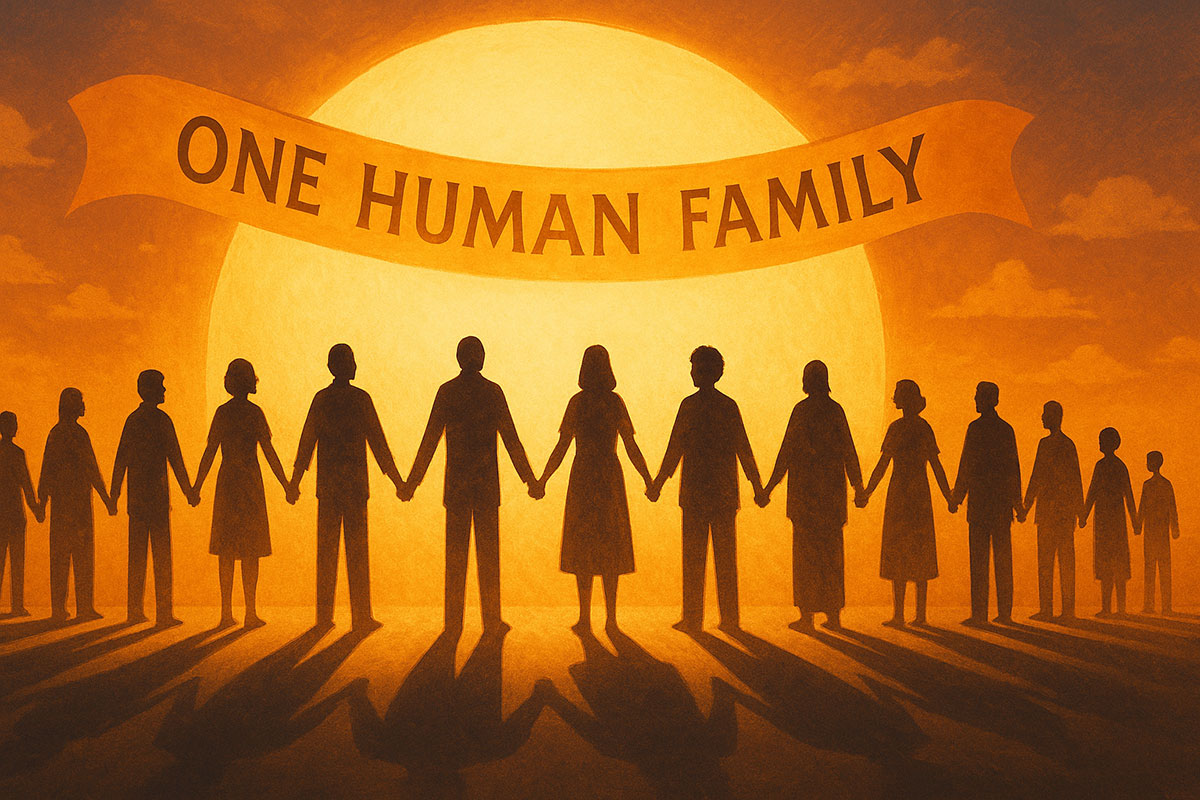
Introduction — Desmond Tutu
My dear brothers and sisters, we find ourselves in a world that too often divides — nations against nations, tribes against tribes, even neighbors against neighbors. The tragedy of our time is not simply the wars we fight, but the walls we build in our hearts. And yet, I believe with all my soul that we were created not to be enemies, but to be one family.
This series of conversations is not merely a dialogue among great leaders of history — it is a call to each of us to awaken. We will explore why we create enemies, how religion has been twisted and yet redeemed, how politics can profit from division but also heal it, how education can raise children beyond borders, and finally, how we might imagine a shared future where we live as one human family.
The voices you will hear — Jesus, Buddha, Gandhi, Mandela, Rumi, Mother Teresa, Lincoln, Heschel, Reverend Moon, and Martin Luther King Jr. — are not voices of the past only. They echo now, urging us to see with new eyes, to listen with open hearts, to love even when it is hardest.
Let us step onto this path together. Let us look honestly at the wounds, but also at the light that is breaking through. For it is in our hands to choose — hatred or love, division or unity, despair or hope. And I tell you, hope is stronger. Love is stronger. God’s dream is stronger.
(Note: This is an imaginary conversation, a creative exploration of an idea, and not a real speech or event)
Topic 1: The Psychology of Othering — Why We Create Enemies

Moderator: Desmond Tutu
Desmond Tutu
My dear friends, we gather here to look deep into the human heart and ask: why do we so often divide ourselves into “us” and “them”? It is a wound that has fueled war, injustice, and hatred. If we are to heal, we must uncover the roots of this sickness. Let us begin.
Question 1: Why do humans so easily create enemies, even when our faiths and values teach us love?
Buddha
Hatred arises from ignorance, from the illusion of separateness. When a man believes he is a fixed self, apart from others, fear takes root. Fear leads to defense, and defense to hostility. Yet, just as the ocean has one taste—the taste of salt—life has one essence: interconnectedness. If people could awaken to this, the urge to divide would dissolve.
Nelson Mandela
During apartheid, I saw how power thrived on division. People were taught to fear difference, to see a neighbor as a threat. Enemies are often created not by truth but by propaganda, by those who benefit from separation. Once I understood that, I realized my jailers were victims of the same lie. Recognizing their humanity freed me from hatred.
Jesus
The human heart is restless and quick to judge. It sees a brother and yet calls him stranger. Enemies are born when love is absent. But I say, “Love your enemies and pray for those who persecute you.” For when you bless instead of curse, you no longer see an enemy—only a soul like your own.
Rumi
The mind carves boundaries, the heart erases them. Why do we create enemies? Because we forget we are mirrors of one another. A man who hates his brother is really striking at a reflection of himself. Beyond ideas of wrong and right, there is a field. To walk there is to forget the notion of enemy.
Mahatma Gandhi
Fear, greed, and anger are the architects of enemies. But the truest enemy is not outside; it is the violence within us. When I resisted the British, I resisted injustice, not the person. The lesson is simple: oppose the wrong without hating the wrongdoer. Otherwise, you only mirror the very hatred you wish to overcome.
Desmond Tutu
Ah, you speak of fear, ignorance, propaganda, and inner violence. Now let us go deeper.
Question 2: What breaks the cycle of “us versus them” in practical life, not just in theory?
Mandela
Reconciliation. When I left prison, I chose not vengeance but dialogue. Practical peace begins when former enemies sit at the same table, share bread, and build a future together. You disarm hatred with relationship. Without forgiveness, there is no future.
Jesus
Break bread together. Serve one another. Wash the feet of your brother, even if he despises you. In action, love becomes real. Words alone do not heal enmity; compassion must touch the body, the wound, the hunger. When love becomes flesh, division loses its grip.
Buddha
Begin with mindfulness. A man who pauses before reacting to anger has already broken the chain. In families, villages, and nations, if even one person practices non-harming, it ripples outward. Train the mind in compassion, and soon there is no “them,” only “we.”
Gandhi
Nonviolent resistance is the practice that transforms enemies into teachers. When one refuses to strike back, the other sees his own violence reflected like a mirror. In time, even the oppressor’s conscience awakens. This is how tyrannies crumble—through moral power, not weapons.
Rumi
Poetry, music, dance—these too are practical. They remind people of their shared longing for beauty. When hearts join in song, they forget to hate. The reed flute has no enemy. Its song calls all to the same fire.
Desmond Tutu
Marvelous! You remind us that reconciliation, service, mindfulness, nonviolence, and beauty are the tools that mend division. Yet one final question remains.
Question 3: If our children are to inherit a different world, how must we change the story we tell them about “us” and “them”?
Rumi
Tell them not of enemies but of fellow travelers. Teach them that the stars do not shine in rivalry, yet all together make the night sky beautiful. Replace the story of conquest with the story of shared belonging.
Mandela
Teach them that courage is not the absence of fear but the triumph over it. Let them see that no child is born hating another. Hatred is taught, and therefore it can be untaught. Give them classrooms where difference is celebrated, not feared.
Buddha
Teach them the story of impermanence—that everything changes, including enemies. Today’s foe may be tomorrow’s ally. If children grow up knowing that nothing is fixed, they will not cling to divisions as eternal truths.
Jesus
Tell them parables of the Good Samaritan—that love comes not only from kin but from strangers. Show them that every neighbor is worthy of compassion. Let them see that God’s family has no outsiders.
Gandhi
Show them by example. Children believe what they see more than what they hear. If they see parents, leaders, and teachers refusing to hate, they will follow. If they see love practiced in daily life, the seed of peace will root deeply.
Desmond Tutu
My beloved friends, you have given us a vision. You have shown us that enemies are born of fear, broken by compassion, and forgotten when love rewrites the story. If our children inherit that story, the world may finally awaken to the truth: there is no “them”—only us.
Topic 2: Religion’s Paradox — Love Thy Neighbor vs. Fear Thy Enemy
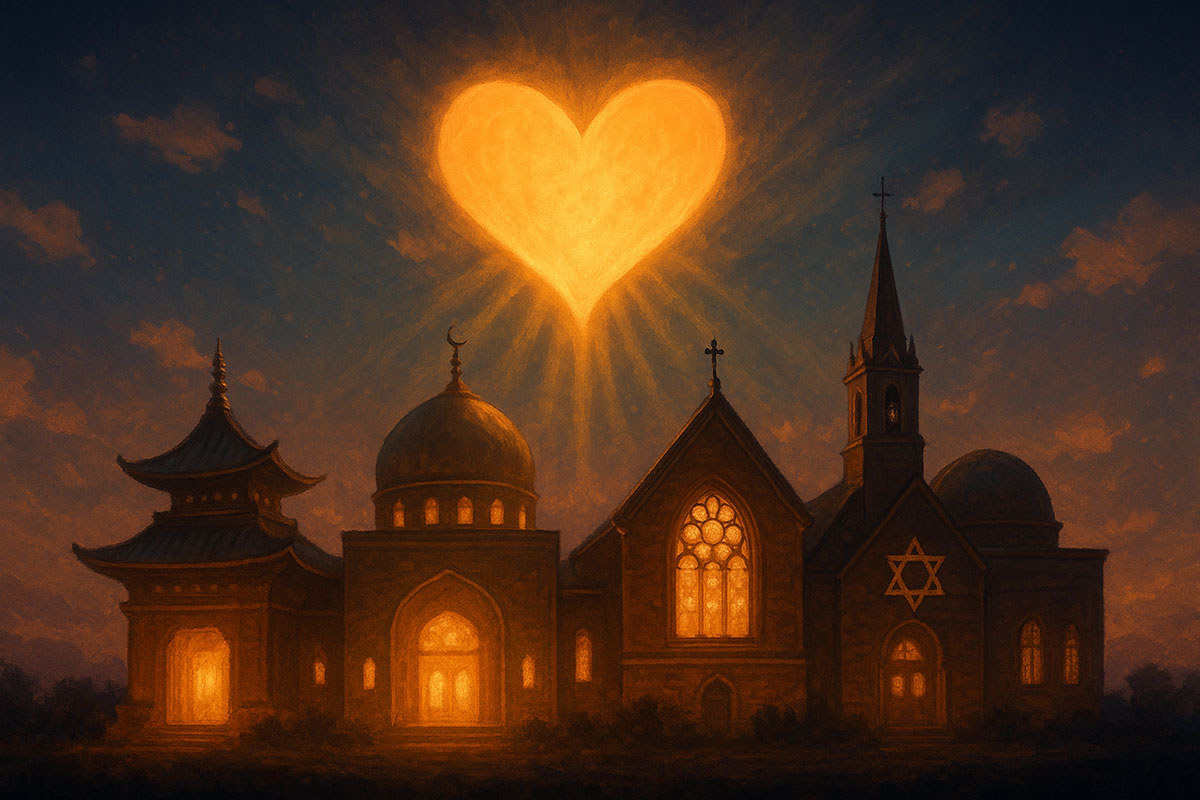
Moderator: Nick Sasaki
Nick Sasaki
Friends, across the ages, religion has taught us to love, forgive, and treat one another as family. Yet history also shows us that religion has been used to divide, to condemn, even to wage war. This is a painful paradox we must confront. Let me ask you all to reflect.
Question 1: Why has religion, though rooted in love, so often been twisted into a tool of fear and division?
Rev. Sun Myung Moon
Religion was meant to be God’s school of love, but men have often turned it into a weapon of pride. When believers think God belongs only to them, they create a false boundary. God is not a tribal chief. He is the Parent of all humanity. The tragedy is that people forget this and use faith to justify their own superiority.
Abraham Lincoln
I witnessed in my own country how both sides of a civil war prayed to the same God, each certain He was on their side. The problem lies not with God, but with the human heart that presumes to know His will. When scripture is used to sanctify ambition, war becomes holy and love is forgotten.
Rabbi Abraham Joshua Heschel
Yes, indeed. Religion loses its soul when it becomes self-righteous. True faith is not certainty about one’s own holiness, but trembling before the divine mystery. Fear and division creep in when people cling to religion as an ideology, instead of as a relationship with the Eternal.
Mother Teresa
We sometimes make the mistake of worshiping religion instead of God. When faith becomes a badge, it divides. But when faith becomes love in action, it unites. Jesus never said, “Love only your own.” He said, “Love one another as I have loved you.”
Mahatma Gandhi
Religion, like fire, can warm or burn. The misuse comes when it is divorced from truth and nonviolence. I have said: “God has no religion.” The divine is not Christian, Hindu, or Muslim; He is truth and love. Division begins when religion forgets its universal core.
Nick Sasaki
You have all named the human heart as the source of distortion. So let me ask:
Question 2: How can religion today rediscover its original purpose—to heal and unite, not to divide?
Mother Teresa
By small acts of love. It is not great sermons that heal, but feeding the hungry, tending the sick, comforting the abandoned. When we meet the poor and forgotten with dignity, religion finds its true face again.
Heschel
Through awe and wonder. When a child gazes at the stars, he does not ask whether they are Christian or Jewish stars. He only feels wonder. Religion must return to wonder—the shared reverence that makes all of us kin before God.
Lincoln
Religion must also learn humility. In politics, in church, in temple, we must stop claiming that God is a partisan. When leaders admit they do not fully know God’s mind, the door opens to dialogue, to compromise, to peace.
Gandhi
I believe interfaith dialogue is itself a form of prayer. When Hindus, Muslims, Christians, Jews, and others gather not to argue but to serve humanity together, religion is reborn. The truest temple is the human heart. The truest ritual is service.
Moon
Religion must rediscover family. God is our Parent; we are His children. If churches, mosques, and temples taught this, we would not see each other as strangers, but as brothers and sisters. A parent does not choose among his children—nor should we.
Nick Sasaki
Beautiful. Now, one last question, for the sake of our children’s future.
Question 3: What story of religion should we pass on to the next generation so they do not repeat the mistakes of “us versus them”?
Lincoln
Tell them that religion is not a license to divide, but a responsibility to heal. If children grow up believing that the highest devotion to God is kindness to neighbor, they will resist those who preach hatred in holy robes.
Moon
Teach them that they belong to one divine family. Let them know they have brothers and sisters in every nation, every race, every faith. If this truth is written in their hearts, “us versus them” will vanish.
Gandhi
Teach them that truth is God, and God is truth. Let them seek truth with humility, respecting all paths. If they grow with reverence for truth above pride, religion will be a bridge, never a sword.
Mother Teresa
Tell them the story of the Good Samaritan, again and again. Show them that holiness is not in the robe one wears, but in the hand that lifts the fallen. If they live this story, love will be their religion.
Heschel
Tell them that God is not a theory, but a cry for justice and compassion. Teach them that to walk with God is to walk with the oppressed, the orphan, the widow, the stranger. Let them inherit a faith that embraces, never excludes.
Nick Sasaki
Thank you, my friends. You have shown that the paradox of religion is not unsolvable. At its heart, faith is love. If we strip away pride, fear, and ideology, we uncover the truth: all faiths point to one God, one family, one love. If our children learn this story, perhaps they will not repeat the sins of division.
Topic 3: The Politics of Division — Who Profits from “Us vs. Them”?
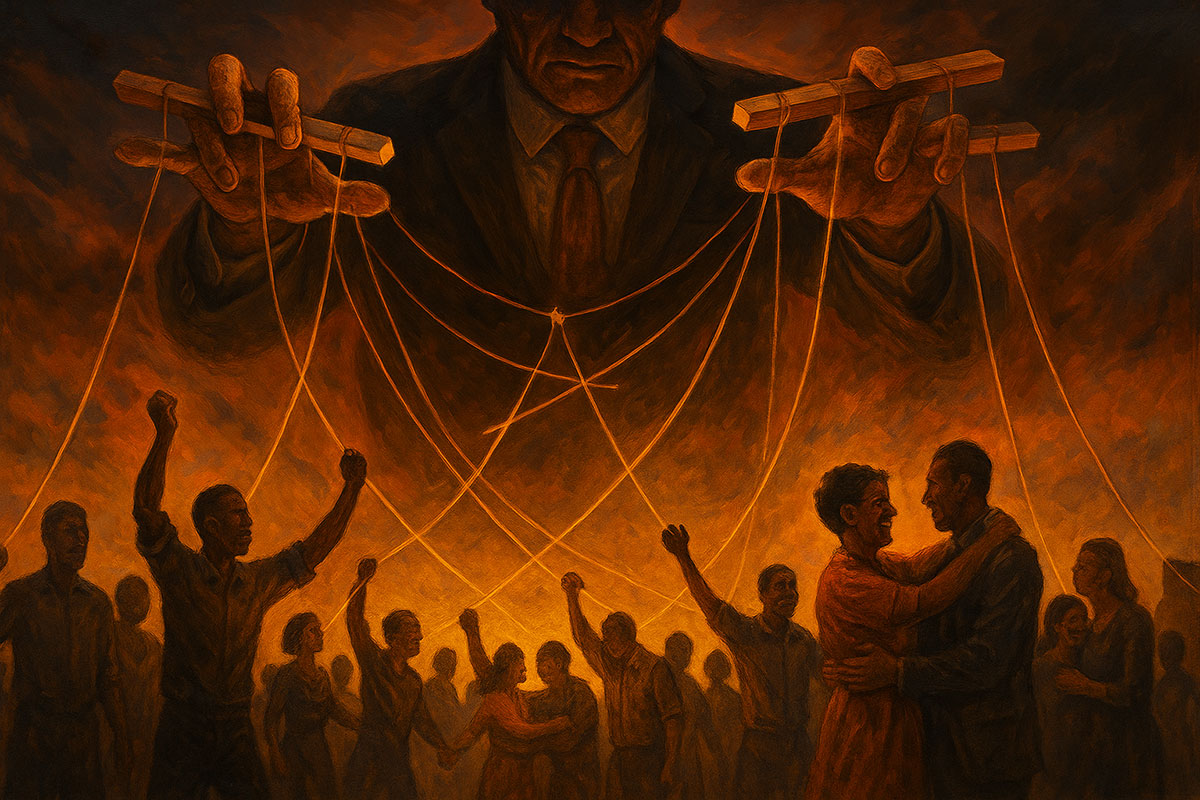
Moderator: Martin Luther King Jr.
MLK Jr.
Brothers and sisters, if we are to dismantle the enemy-making machine, we must ask who benefits from it. Division is not accidental—it is often designed. Let us examine together:
Question 1: Who profits when people are divided into “us versus them”?
Buddha
Those who profit are the ones whose minds are clouded by craving—craving for power, wealth, and control. Division is like a fire; leaders feed it with fear to keep their thrones warm. But no fire lasts forever. When people awaken to their common humanity, the fire starves.
Nelson Mandela
During apartheid, it was the ruling minority who gained. By dividing Black from white, rich from poor, they preserved privilege. The politics of division always serves the powerful, never the people. The masses pay in blood and suffering, while the rulers drink the spoils.
Rumi
The merchants of fear profit most. They sell you the illusion of safety, if only you keep hating the other. Yet in truth, they are paupers. For what does it profit a man to gain the world but lose his soul?
Abraham Lincoln
Indeed, in my time it was slaveholders who profited by declaring an entire race inferior. Division gave them cheap labor and political might. But the cost was a nation torn asunder. Beware: any profit made from hate is paid for in the currency of human misery.
Rev. Sun Myung Moon
Behind all divisions stands the hand of selfishness, and yes, the influence of evil. Satan divides to conquer. God unites to liberate. When politicians or powers profit from “us versus them,” they are not serving Heaven’s will but enslaving humanity.
MLK Jr.
So the few gain, and the many suffer. Then let us ask:
Question 2: How can ordinary people resist those who exploit division for power?
Mandela
Through unity. When workers, farmers, students stood together in South Africa, apartheid trembled. Ordinary people must recognize that their strength lies not in separation but in solidarity.
Buddha
Resist not with anger, but with wisdom. When people see clearly—see that they are being manipulated—the spell is broken. Awareness is the greatest act of resistance.
Lincoln
Citizens must demand leaders who appeal to the better angels of our nature, not the basest instincts. Democracy fails when demagogues thrive. But if people remain vigilant, they can deny power to those who peddle hate.
Moon
Families are the frontline of resistance. Teach children to see every person as a brother or sister under God. If hearts are trained in love from the beginning, politicians of division will find no audience.
Rumi
Resist with song, with laughter, with open arms. When you dance with your neighbor, the tyrant loses his grip. Ordinary people resist not only with protests but with joy that cannot be stolen.
MLK Jr.
Yes, I hear you: solidarity, awareness, vigilant democracy, family love, and joy. Let us press further.
Question 3: What new story of politics could replace “us versus them,” one that future generations might believe in?
Lincoln
A story of unity in diversity. A nation conceived in liberty can endure only if it proves that government of the people, by the people, and for the people includes all the people.
Rumi
The new politics must be poetry. Not slogans of division, but verses of belonging. Imagine leaders who speak not of enemies, but of one human caravan, journeying together.
Mandela
The story must be of reconciliation. That enemies can sit at the same table, draft laws together, and raise nations together. The future will believe this story when they see it lived.
Moon
The new politics must be the politics of true parentship. Leaders should not behave as masters of their people, but as parents who love all their children equally. When politics takes this form, “us versus them” will vanish.
Buddha
The story must be of interdependence. Just as a tree needs both roots and branches, society needs all its members. When children grow up knowing their lives are bound to others, politics will reflect compassion, not division.
MLK Jr.
My friends, you have spoken of unity, reconciliation, compassion, and belonging. You remind me of a dream I once had—that one day, people will not be judged by the color of their skin, nor by their creed, but by the content of their character. If we pass that story to our children, perhaps the politics of division will finally give way to the politics of love.
Topic 4: Education for Empathy — Raising Children Beyond Borders
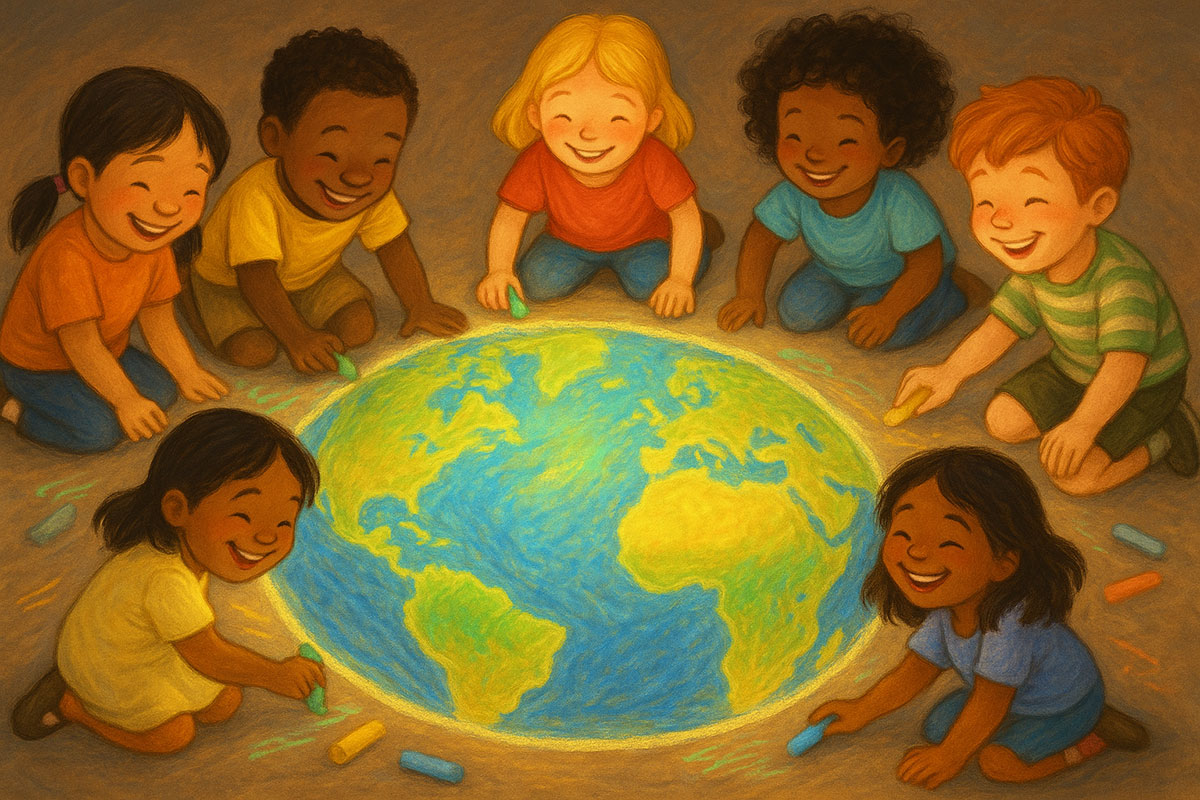
Moderator: Mother Teresa
Mother Teresa
If we want peace tomorrow, we must begin with the children today. A child is like soft clay — what story we shape in them is what they will carry into the world. Let us explore together how we can teach empathy, so that no child grows up seeing another as an enemy.
Question 1: What is the most important lesson we must teach children if they are to see every human being as family?
Gandhi
The lesson of nonviolence. Not just in grand struggles, but in the daily act of not striking back, not speaking harshly, not harboring bitterness. If a child learns that strength is found in restraint and love, he will see enemies not as foes but as teachers.
Jesus
Teach them love. Love God, love your neighbor, love even those who wrong you. Children grasp this faster than adults, for their hearts are pure. If they are taught early that love is not limited by tribe or creed, they will grow into peacemakers.
Mandela
Teach them that courage is not domination, but respect. If a child learns to respect differences — skin color, language, belief — then fear loses its soil. Respect builds bridges before hatred has time to plant roots.
Heschel
Teach them wonder. A child who marvels at the mystery of creation does not ask, “Is this flower Christian or Muslim?” Wonder opens the door to reverence, and reverence to compassion. Education must preserve wonder, not replace it with arrogance.
Moon
Teach them they are children of God, and that all people are brothers and sisters under one Parent. If this truth is written in their hearts, they will not need to be told whom to love — love will flow as naturally as breathing.
Mother Teresa
Yes, love, respect, wonder, and the knowledge of being one family. But how do we make these lessons real in practice?
Question 2: What practical steps can schools, families, and communities take to raise empathetic children?
Mandela
Children must meet across divides. Exchange programs, shared classrooms, joint sports teams — these teach that differences are not threats but opportunities. Apartheid taught separation; reconciliation taught me the power of contact.
Moon
Families should create traditions of service. Let children, from the youngest age, serve meals to the needy, visit the elderly, and care for neighbors. Service engraves empathy into the heart more deeply than any textbook.
Jesus
Stories are powerful. Tell them stories of the Good Samaritan, of kindness across boundaries. Let them act these stories out, not just hear them. A story lived becomes a truth remembered.
Gandhi
Schools should make truth and nonviolence as central as mathematics. Teach children conflict resolution, meditation, and cooperation. Let them learn to solve disputes not with fists, but with dialogue.
Heschel
Let prayer and reflection be part of education. Not dogma, but a quiet time where children remember they are small before the vast mystery. In silence, empathy grows, for the heart hears what the mind forgets.
Mother Teresa
Beautiful. Finally, let us look ahead.
Question 3: If the next generation is to inherit a world without “us versus them,” what vision of humanity should we give them?
Moon
A vision of one family under God, where nations are like siblings and war is unthinkable. Tell them that humanity’s destiny is unity, and that their role is to build the home of love for all.
Heschel
A vision of reverence — that every person is a fragment of the divine. Teach them that to harm another is to wound God Himself. Then cruelty will lose its mask.
Gandhi
A vision of truth, that no lie of division can last. Let them grow up knowing that truth is indivisible, and that peace is its fruit.
Mandela
A vision of reconciliation. Let them see that even after centuries of hatred, forgiveness can triumph. If they inherit this vision, they will never despair that peace is impossible.
Jesus
A vision of the Kingdom of God — not in heaven only, but here on Earth, where the meek are honored, the poor are lifted, and love rules all. Tell them this is not a dream, but a calling.
Mother Teresa
Thank you, my friends. You remind us that education is not just about knowledge, but about the heart. If we can raise children in love, respect, wonder, service, and truth, then perhaps we will finally see the world God intended — a world where every child knows that no one is a stranger, only a brother or sister.
Topic 5: A Shared Future — Building Identities Beyond Nationality or Tribe
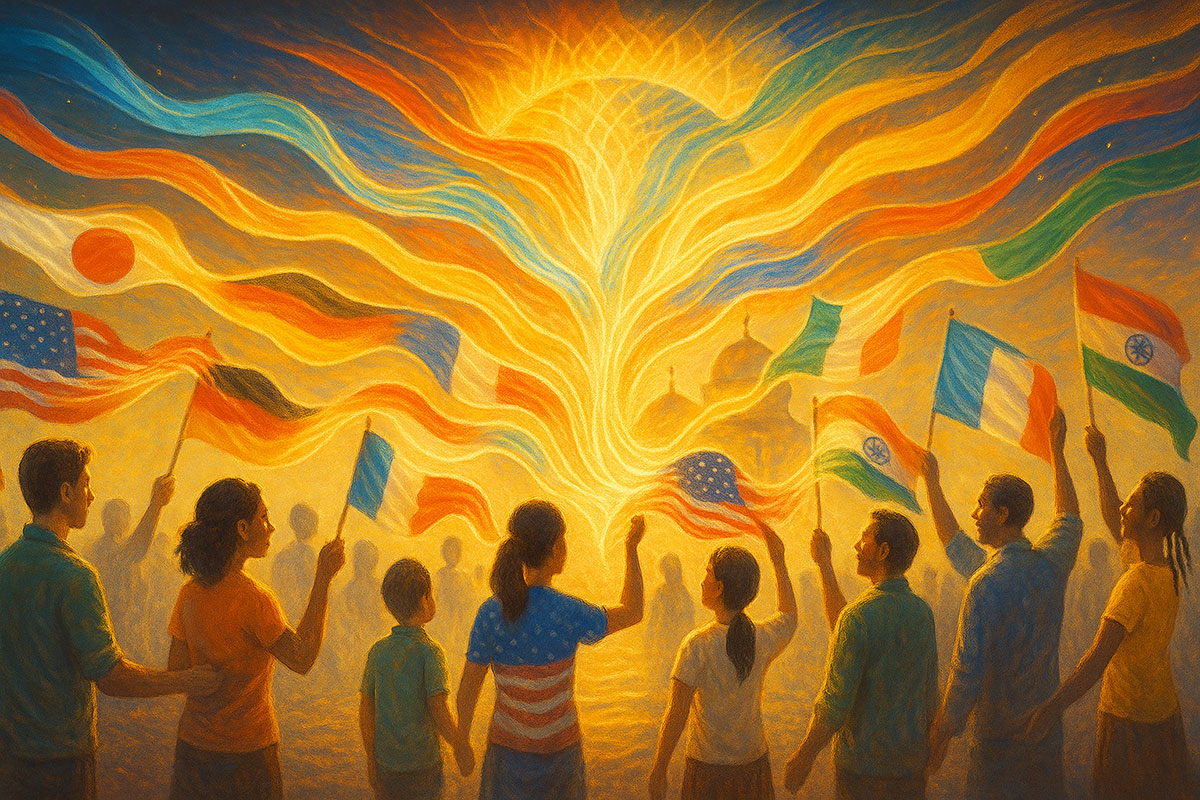
Moderator: Rumi
Rumi
My friends, the caravan of humanity has wandered long, carrying banners of tribe, nation, and creed. Yet perhaps it is time to lift a new banner — one that says only “human.” Let us seek what identity the future must embrace.
Question 1: Why do people cling so fiercely to national or tribal identity, even when it divides us?
Buddha
Because the self clings. Just as a man grasps his possessions, so too he grasps his tribe. Identity is a fortress against impermanence. Yet this fortress is made of sand. Only when one sees the illusion of self does he let go of these smaller boundaries.
Lincoln
Nations are born of necessity — to organize, to protect, to prosper. But when patriotism becomes idolatry, it blinds. In my country, men fought brother against brother under banners of North and South. They clung to their “us” even unto death. Such clinging comes from fear of losing power or place.
Jesus
People cling to tribe because they forget they belong to God’s kingdom first. They seek safety in numbers, but I tell you: “You are the salt of the earth, the light of the world.” Your worth does not come from tribe or flag, but from being a child of God.
MLK Jr.
Tribalism is a counterfeit belonging. It promises dignity but delivers division. People cling to it because the deeper belonging — the beloved community — has not yet been realized. When the human family is fractured, men turn to smaller circles for identity.
Mother Teresa
It is loneliness. When people feel unseen, they cling to tribe as proof they matter. But true belonging comes not from tribe, but from knowing you are loved. When love fills the heart, borders lose their grip.
Rumi
Yes, fear, loneliness, false belonging. But if this is the sickness, what is the cure?
Question 2: What new form of identity can unite us beyond nationality or tribe?
Jesus
The identity of being children of God. Not subjects of Rome, not Jews or Greeks, but one family under the Father. This identity is eternal and cannot be divided.
Lincoln
The identity of liberty and equality. A nation may stand divided, but humanity must stand united on the principle that all men and women are created equal. This truth can bind us across borders.
Mother Teresa
The identity of love. When we serve the hungry, the sick, the forgotten, we no longer ask, “Where are you from?” We see only a brother, a sister. Service dissolves all labels.
Buddha
The identity of interbeing. Not “I am American” or “I am Indian,” but “I am because you are.” A tree is not just a tree — it is soil, rain, sunlight. So too a human being is all of humanity. This is the identity that frees.
MLK Jr.
The identity of the beloved community. A vision where justice rolls down like waters and righteousness like a mighty stream. This identity affirms that my destiny is tied to yours, that none of us are free until all are free.
Rumi
Beautiful. Now one final question — for the children who will inherit the earth.
Question 3: What vision of the future must we pass on, so our children no longer live by “us and them,” but only by “we”?
Mother Teresa
Tell them that every hungry child is their child, every suffering person their neighbor. Let them grow seeing the face of Christ in each one. If they believe this, there will be no “them,” only “us.”
Lincoln
Pass on a vision of a world where liberty is not the possession of a few, but the inheritance of all. Let them see that government and society exist to serve the common good, not factions.
Buddha
Give them the vision of compassion. Teach them to breathe deeply and see that anger passes, fear dissolves, and love remains. If they inherit this practice, they will not inherit our hatreds.
MLK Jr.
Let them inherit the dream: that one day, the human family will sit together at the table of brotherhood. A world house where the doors are never locked, and justice is the foundation.
Jesus
Give them the vision of the Kingdom of Heaven on earth — where the meek are honored, the peacemakers called blessed, and love reigns. Tell them it is not far off, but within them, waiting to be lived.
Rumi
Ah, my friends. You have painted a vision of liberty, compassion, beloved community, and divine family. This is the song we must leave for our children. Let them sing it until there are no borders left in the heart, only the wide field where we meet beyond right and wrong.
Final Thoughts by Nick Sasaki
As I listen to these voices, I feel both humbled and uplifted. What strikes me most is that despite coming from different times, traditions, and struggles, they all point to the same truth: the “us versus them” story is an illusion. We are one family, bound not by borders or ideologies, but by our shared humanity.
The challenge before us is not to admire these words, but to live them. To refuse to be manipulated by fear. To see our neighbor — and even our so-called enemy — as part of ourselves. To raise children who are not confined by walls, but who walk freely into the wide field of love.
If we can do this — in our homes, in our schools, in our nations — we will fulfill the dream of those who came before us. A dream of peace, of reconciliation, of unity beyond measure.
So I invite you, as you finish this journey with us, to carry the torch forward. Be the one who forgives when it is difficult. Be the one who bridges when others build walls. Be the one who lives as though “us versus them” never existed.
For when enough of us do this, the illusion of division will collapse, and the truth will shine through: there has only ever been one human family.
Short Bios:
Desmond Tutu
South African Anglican archbishop and Nobel Peace Prize laureate, Tutu chaired the Truth and Reconciliation Commission, guiding his country through healing after apartheid with his message of forgiveness and human dignity.
Nick Sasaki
Creator of ImaginaryTalks.com, Nick Sasaki curates dialogues across history and culture to inspire unity and deeper understanding, weaving together wisdom for a world that seeks peace.
Jesus of Nazareth
Spiritual teacher and central figure of Christianity, Jesus preached love, forgiveness, and compassion, famously teaching “love your enemies” and calling all to live as children of God.
Buddha (Siddhartha Gautama)
Founder of Buddhism, the Buddha taught the Four Noble Truths and the path of compassion, mindfulness, and liberation from suffering, emphasizing that hatred never ceases by hatred, only by love.
Mahatma Gandhi
Leader of India’s independence movement, Gandhi pioneered the philosophy of nonviolent resistance (ahimsa), showing the world that justice can be won through truth, courage, and compassion.
Nelson Mandela
South African anti-apartheid revolutionary and the nation’s first Black president, Mandela spent 27 years in prison before leading his country into reconciliation and unity instead of vengeance.
Rumi (Jalal al-Din Rumi)
13th-century Persian Sufi poet and mystic, Rumi’s writings transcend religious boundaries, calling humanity to dissolve separation in love and to meet “beyond right and wrong.”
Mother Teresa (Saint Teresa of Calcutta)
Catholic nun and missionary, Mother Teresa devoted her life to serving the poorest of the poor in India, teaching that holiness is found in small acts of love and service.
Abraham Lincoln
16th President of the United States, Lincoln led the nation through its Civil War, preserved the Union, abolished slavery, and urged reconciliation with “malice toward none, with charity for all.”
Rabbi Abraham Joshua Heschel
Jewish theologian and civil rights activist, Heschel emphasized faith as a call to justice and compassion, famously marching alongside Martin Luther King Jr. in Selma.
Rev. Sun Myung Moon
Founder of the Unification Movement, Moon taught that God is the Parent of all humanity and that peace can only come when people love even their enemies as brothers and sisters.
Martin Luther King Jr.
American Baptist minister and Nobel Peace Prize laureate, King led the Civil Rights Movement through nonviolence and inspired generations with his dream of a beloved community rooted in justice and love.
Leave a Reply