

|
Getting your Trinity Audio player ready...
|
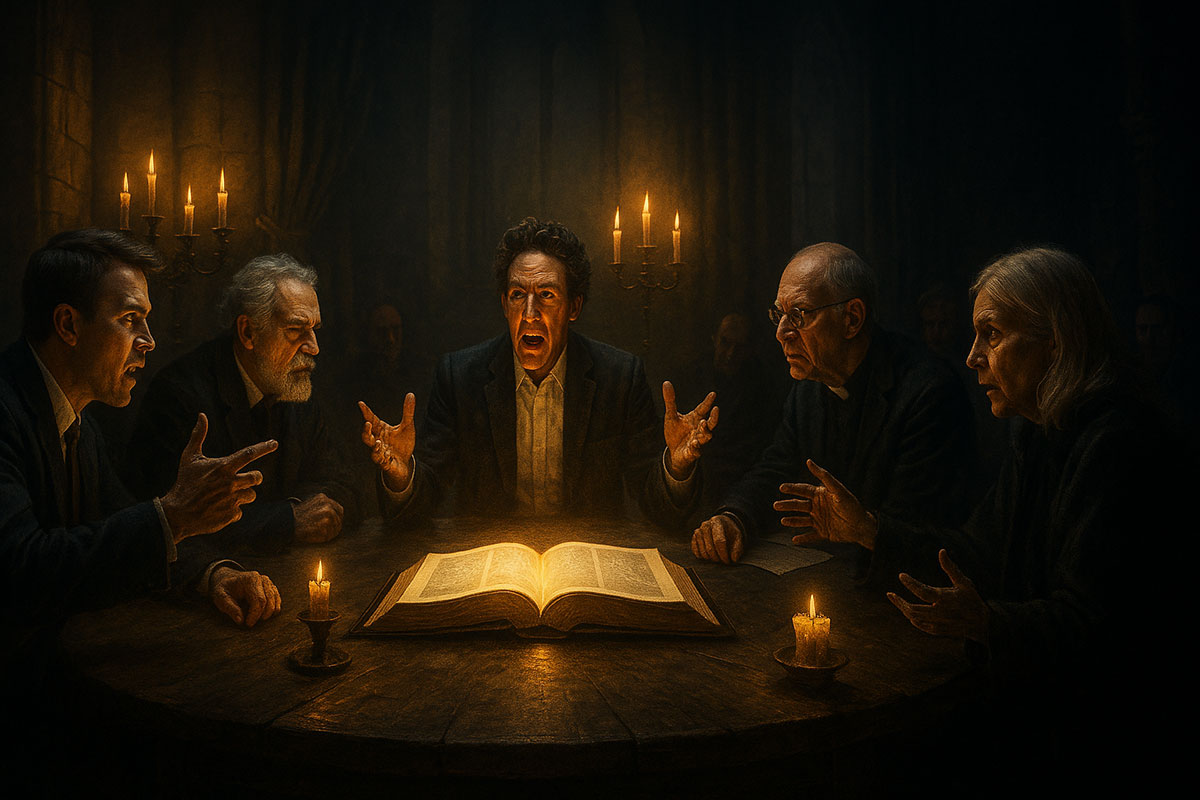
Introduction by Elaine Pagels
Christianity began not as one voice, but as many. In the early centuries, believers argued passionately about Jesus’ identity. Some worshiped Him as God, others revered Him as prophet, teacher, or Messiah. The diversity was immense — and only later did councils and creeds narrow these voices into a single orthodox claim: that Jesus was fully God. This debate recreates that ancient conversation in our time, bringing together voices who see Him as divine and those who insist He was God’s servant, but not God Himself. My role is not to decide between them, but to remind you that this question has always been at the heart of Christianity’s story.
(Note: This is an imaginary conversation, a creative exploration of an idea, and not a real speech or event)
Topic 1: The Nature of Jesus: Eternal God or Created Son?
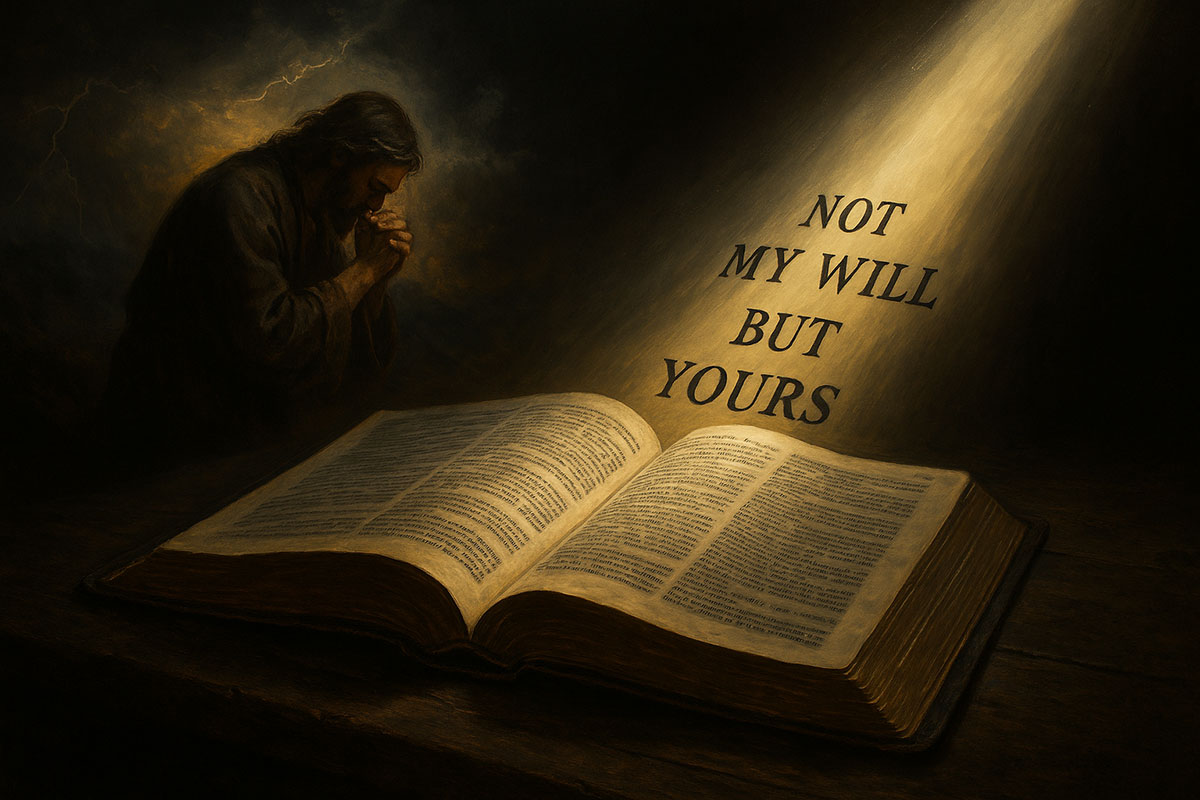
Setting
The torches flicker in the ancient hall, shadows stretching across the stone walls. On the table lies an open Bible, its pages turned to the Gospels. The storm outside rattles the windows as Karen Armstrong rises, her voice steady.
“Tonight, we begin where all must begin: with Jesus’ own words. If He is God, then these verses show mystery. If He is not, they show contradiction. Let us wrestle with His nature.”
Question 1
‘Father, if You are willing, take this cup from Me; yet not My will, but Yours be done’ (Luke 22:42).
If Jesus is God, why does His will differ from the Father’s?
Bart Ehrman leans forward, sharp:
“This is as clear as it gets. Jesus distinguishes His will from God’s. That’s not how God talks — that’s how a human prophet pleads with his Creator. The very words reveal He isn’t God, but one dependent upon God.”
Charlie Kirk shoots back:
“No, Bart. This is the Incarnation. Jesus, fully human, submits His human will to the Father. That doesn’t erase His divinity — it shows the humility of God made flesh. Submission inside the Trinity doesn’t mean inequality.”
Elaine Pagels adds, calm but cutting:
“Historically, many early Christians struggled with this verse. Some argued Jesus was fully human but empowered by God; others insisted on divinity. This diversity itself shows that His words don’t clearly declare Him as God.”
Joel Osteen speaks gently:
“Jesus was modeling prayer for us. He showed us how to surrender to God’s will. That doesn’t deny His divinity — it magnifies His compassion. He walked our road, prayed our prayers, and taught us how to trust.”
Anthony Buzzard finishes firmly:
“This prayer demolishes the Trinity idea. If Jesus were God, His will wouldn’t be separate. God doesn’t pray to God. Jesus is clearly God’s agent, not God Himself.”
Question 2
‘The Father is greater than I’ (John 14:28).
If Jesus is God, how can the Father be greater?
Anthony Buzzard wastes no time:
“These are Jesus’ own words. If He were equal God, He could not say the Father is greater. This is subordination plain and simple. Jesus recognized His Father as the one true God.”
Charlie Kirk pushes back hard:
“This is about role, not essence. On earth, Jesus humbled Himself. He took on the form of a servant, as Philippians 2 says. The Father may be greater in authority, but not in divine nature. Equality in essence, distinction in position.”
Elaine Pagels adds historical context:
“Yet, this verse was a rallying cry for Arians in the early church, who rejected Christ’s equality with God. The fact that such debates raged shows the text naturally points away from equality.”
Joel Osteen offers warmth:
“Jesus wasn’t denying who He was. He was showing humility. He wanted His followers to look up to the Father’s greatness, to know there’s a God bigger than their fears. But that doesn’t cancel His divinity.”
Bart Ehrman concludes, sharp:
“Or maybe the simplest answer is true: Jesus said the Father is greater because the Father is greater. That’s the plain reading.”
Question 3
‘Why do you call Me good? No one is good — except God alone’ (Mark 10:18).
If Jesus is God, why does He deny being good?
Elaine Pagels responds first:
“This is striking. Jesus deflects goodness to God alone. If He wanted people to see Him as God, why would He deny the very attribute of goodness?”
Charlie Kirk rebuts quickly:
“He wasn’t denying His own divinity. He was challenging the man’s understanding. By saying only God is good, He was forcing the man to realize: if Jesus is truly good, then he must acknowledge His divinity.”
Anthony Buzzard shakes his head:
“No, Charlie. That’s theological gymnastics. Jesus clearly distinguishes Himself from God here. He says goodness belongs to God alone, not Himself. That undercuts the claim of divinity.”
Joel Osteen smiles gently:
“I believe Jesus was turning the question back on the man, asking him to think deeper. Was he calling Jesus good casually, or truly recognizing Him as God? Jesus often spoke this way to lead people into greater faith.”
Bart Ehrman finishes:
“The plain reading again is simplest. Jesus didn’t see Himself as God. He pointed away from Himself, back to the God of Israel.”
Closing Imagery
The Bible lies open on the table, its verses burning in the minds of all present. The storm outside roars louder, as though creation itself presses for resolution. Yet no resolution comes.
Karen Armstrong rises, her historian’s voice steady:
“Tonight we’ve seen Jesus’ own words: submitting His will, proclaiming the Father’s greatness, denying goodness as His own. To some, these are the mysteries of incarnation. To others, they are the clearest signs He is not God. The debate is far from settled. Perhaps it never will be.”
Topic 2: “I and the Father Are One” (John 10:30)
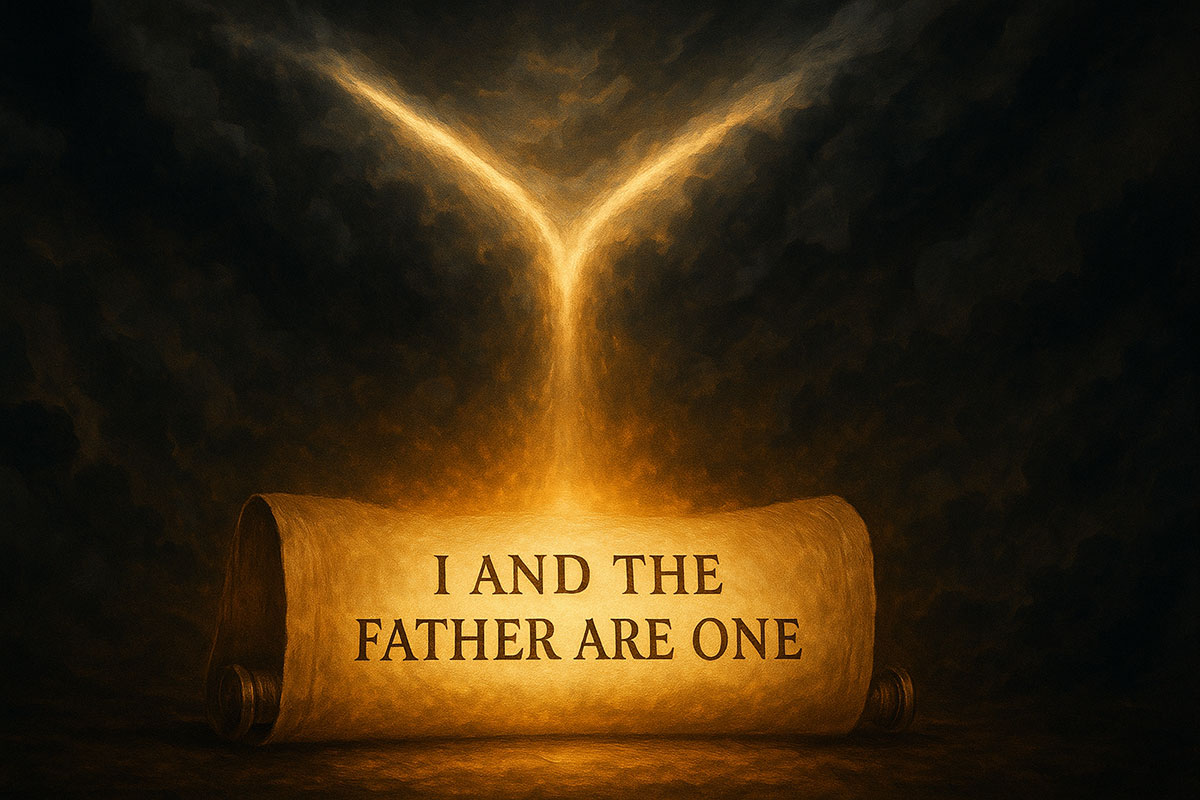
Setting
The hall is darker now, moonlight filtering through high windows. On the table lies a scroll open to John’s Gospel. The words “I and the Father are one” seem to glow under the flickering torchlight. Karen Armstrong stands, steady as the storm outside fades.
“Jesus once declared, ‘I and the Father are one.’ Was this a claim of divinity, or of shared purpose? Tonight, we test this against His other words.”
Question 1
“I and the Father are one” (John 10:30). Did Jesus mean oneness of essence, or oneness of purpose?
Charlie Kirk speaks first, firm and fiery:
“The Jews picked up stones because they knew He was claiming equality with God. If Jesus meant only unity of mission, He could have clarified. He didn’t. He embraced the accusation, showing He was truly divine.”
Bart Ehrman cuts in:
“No, Charlie. The Greek word ‘hen’ points to unity of purpose, not essence. This is about shared mission, not shared identity. The fact that His followers later interpreted this as divinity shows how the meaning shifted, not what He meant.”
Joel Osteen smiles warmly:
“When I read this, I don’t just see theology. I see comfort. Jesus and the Father are united in love and purpose. For believers, that means trusting Jesus is trusting God. That’s why it has divine weight.”
Elaine Pagels offers historical depth:
“Different Christian communities read this differently. Some saw divine unity, others saw symbolic unity. That very diversity shows the words were open to interpretation. The later creeds made one reading dominant, but it wasn’t the only one.”
Anthony Buzzard finishes sharply:
“Jesus Himself said the Father is the only true God (John 17:3). So when He says, ‘I and the Father are one,’ He means one in purpose, not essence. Otherwise He contradicts His own words.”
Question 2
“My God, my God, why have You forsaken Me?” (Matthew 27:46).
If Jesus is God, how can He cry out to God in abandonment?
Anthony Buzzard speaks firmly:
“God cannot abandon God. This cry proves Jesus saw Himself as separate from God. He was a man calling out to His God, not God talking to Himself.”
Charlie Kirk answers quickly:
“Anthony, He was quoting Psalm 22, fulfilling prophecy. This isn’t denial of divinity. It’s showing that even in despair, Scripture was being fulfilled. He took on our suffering so we’d never be forsaken.”
Elaine Pagels adds:
“Still, the raw cry of abandonment reveals His humanity. Early Christians debated whether a divine being could truly suffer. This verse shows why — it doesn’t sound like the words of God, but of a man in anguish.”
Joel Osteen offers reassurance:
“Jesus bore the weight of sin. In that moment, He felt separation so we never would. That’s divine love in action, not proof against His divinity. He entered the darkest place so we could have light.”
Bart Ehrman presses hard:
“But Joel, the plain meaning is that Jesus feels forsaken by God. If He were God, He wouldn’t speak this way. The simplest reading is that He was a man relying on God.”
Question 3
“The Father is greater than I” (John 14:28). How can Jesus claim equality in John 10:30, yet admit inferiority here?
Bart Ehrman responds first:
“This contradiction is glaring. On one hand, John presents Him as one with God; on the other, Jesus Himself says the Father is greater. That’s not equality. That’s subordination.”
Charlie Kirk shakes his head:
“Not contradiction — complement. In essence, they’re one. In role, the Father leads. The Trinity explains this perfectly. Without it, you’re stuck with contradictions.”
Elaine Pagels adds nuance:
“Historically, Arians seized on this verse to deny Christ’s equality. The fact that the early church split over this shows the tension was never resolved by simple unity. It required councils and creeds centuries later.”
Joel Osteen offers his pastoral tone:
“Jesus was showing humility. He wanted His followers to honor the Father. That doesn’t cancel His divinity — it highlights His servant heart.”
Anthony Buzzard closes sharply:
“Jesus said what He meant: the Father is greater. Not equal, not essence-sharing. Greater. That alone dismantles the Trinity.”
Closing Imagery
The words of John’s Gospel lie on the table, torn between two meanings. Some see divine unity, others human dependence. The candles flicker, as though refusing to settle on one truth.
Karen Armstrong rises, voice calm but grave:
“We’ve heard Jesus’ claim of oneness and His cry of abandonment. To some, these reveal mystery: God incarnate in suffering. To others, they reveal contradiction: a man distinct from his God. The text remains, luminous and contested, as it has for centuries.”
Topic 3: Salvation and Worship: Is Jesus the Object of Prayer?
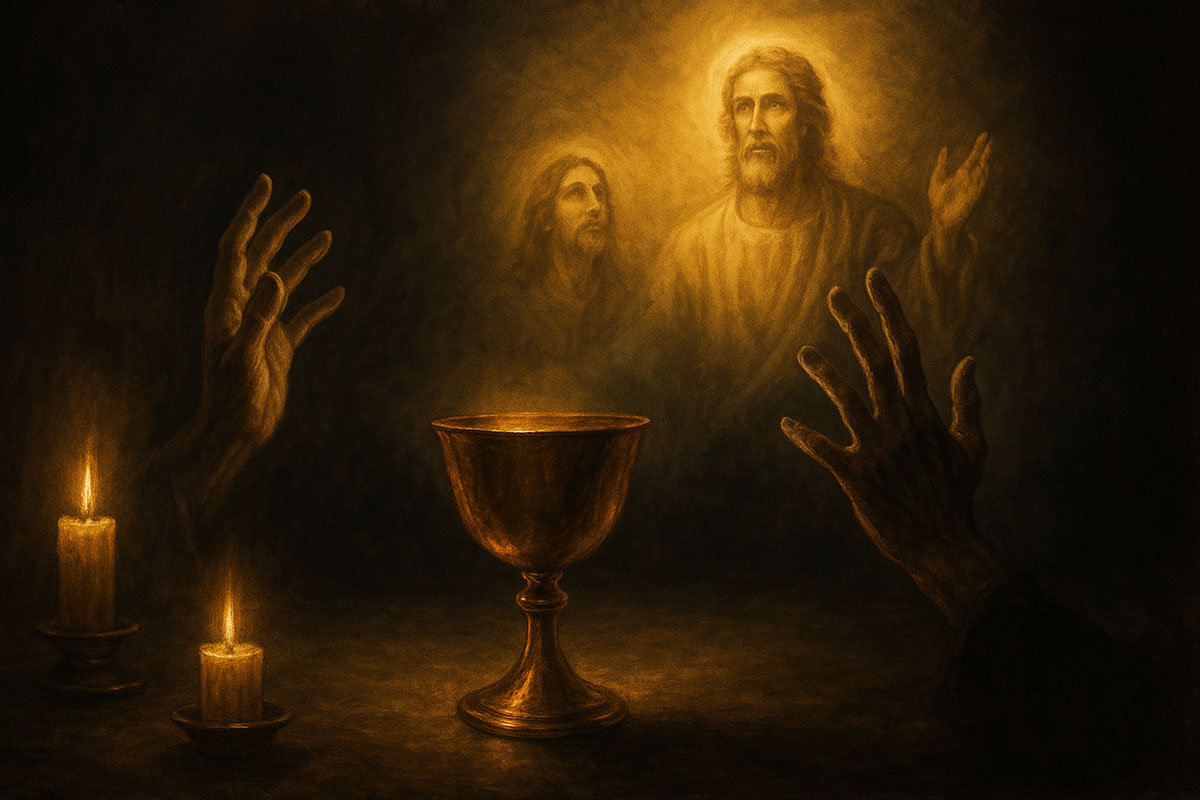
Setting
The air is still heavy after the storm, the table lit only by low-burning candles. In the center rests a golden chalice, symbol of salvation through the cross. The Bible is open to the Gospels and Paul’s letters. Karen Armstrong raises her hand.
“Salvation and prayer stand at the core of Christian faith. But who is the true focus — God alone, or God through Jesus? Tonight we weigh this most personal of questions.”
Question 1
“This, then, is how you should pray: ‘Our Father in heaven, hallowed be Your name…’” (Matthew 6:9).
If Jesus is God, why did He teach His followers to pray only to the Father?
Bart Ehrman speaks firmly:
“Jesus never said, ‘Pray to me.’ He said, ‘Pray to the Father.’ That alone is decisive. If He were God, why not direct prayer to Himself? It shows He saw Himself as separate.”
Charlie Kirk responds, leaning forward:
“Bart, Jesus was modeling how humans approach God. Prayer is Trinitarian — through the Son, in the Spirit, to the Father. His teaching doesn’t deny His divinity; it shows His role as mediator.”
Elaine Pagels adds softly:
“Historically, early Christian groups varied. Some prayed only to God, others invoked Jesus. The diversity suggests the practice of praying directly to Jesus was not original but developed later.”
Joel Osteen smiles, tone warm:
“Jesus wanted us to know God as Father. That’s why He taught us that prayer. But when we pray in Jesus’ name, it’s the same — because He and the Father are one. We’re not dividing our prayers, we’re deepening them.”
Anthony Buzzard closes sharply:
“No. The Bible is consistent — prayer is to God alone. To pray to Jesus is to bypass the Father. That’s not obedience to Christ, that’s disobedience.”
Question 2
“For us there is but one God, the Father, from whom all things came… and one Lord, Jesus Christ” (1 Corinthians 8:6).
Why does Paul distinguish God as the Father, not Jesus?
Anthony Buzzard wastes no time:
“This is crystal clear. Paul defines God as the Father alone. Jesus is Lord Messiah, but not God. If Paul wanted to include Jesus as God, he would have said so plainly. He didn’t.”
Charlie Kirk shakes his head:
“No, Anthony. Paul is echoing the Shema and expanding it: ‘One God… and one Lord.’ Both titles belong to Yahweh in the Old Testament. Paul is including Jesus in God’s identity, not excluding Him.”
Elaine Pagels adds:
“Yet in Paul’s time, devotion to Jesus was still evolving. This verse itself shows distinction — Father as God, Jesus as Lord. The later fusion into Trinity came centuries later.”
Joel Osteen reassures with a smile:
“This isn’t about separation, it’s about relationship. The Father and the Son aren’t rivals — they work together. Paul is pointing us to unity, not division.”
Bart Ehrman concludes sharply:
“The plain text is unavoidable: ‘One God, the Father.’ That’s as direct as it gets. Everything else is theological backfilling.”
Question 3
“For there is one God, and one mediator between God and men, the man Christ Jesus” (1 Timothy 2:5).
If Jesus is mediator, how can He also be God?
Elaine Pagels begins:
“The word mediator implies distinction. A mediator stands between two parties. If Jesus were God, He could not mediate between God and humanity. This verse alone undermines the Trinity.”
Charlie Kirk responds quickly:
“Not at all. Jesus is fully God and fully man. That’s why He can mediate. He bridges the infinite gap no one else could. Mediation doesn’t deny His divinity — it proves its necessity.”
Anthony Buzzard shakes his head:
“No, Charlie. Paul calls Him ‘the man Christ Jesus.’ Not God, not co-equal, but man. That’s the mediator Scripture gives us.”
Joel Osteen speaks gently:
“Jesus can mediate because He stepped into our world as man and yet carried the fullness of God. That’s why He saves. He’s not half of anything — He’s fully both.”
Bart Ehrman closes:
“Paul’s language is plain: ‘the man Christ Jesus.’ The early church exalted Him, but they did not worship Him as God in Paul’s time. That came later.”
Closing Imagery
The chalice glimmers faintly, reflecting the candlelight. To some at the table, it holds the blood of God; to others, the obedience of a man exalted by God. The silence after the debate feels heavy, like a prayer left unanswered.
Karen Armstrong rises, her voice solemn:
“In prayer and salvation, Jesus points to the Father, yet billions now pray to Him. Is He the divine Savior, or the obedient mediator? The question remains: are our prayers rising to God, or redirected to another?”
Topic 4: Trinity vs. Biblical Monotheism
Setting
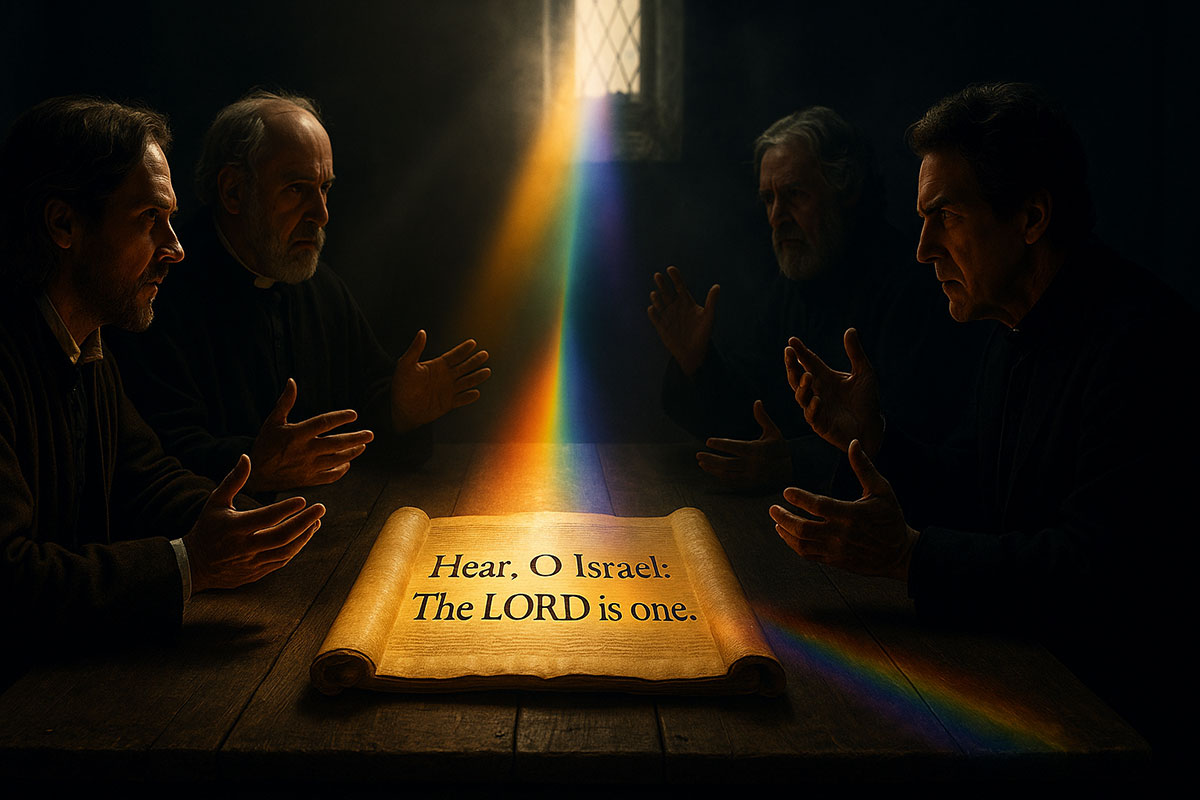
The first light of dawn seeps through the stained-glass windows, painting the stone hall in hues of red and gold. On the table lies a parchment of the Shema: “Hear, O Israel: The Lord our God, the Lord is one” (Deut 6:4). The five speakers lean in as Karen Armstrong lifts the parchment.
“For Israel, this was the unshakable foundation: God is one. But Christianity speaks of Father, Son, and Spirit. Tonight, we ask — does the Trinity preserve that oneness, or betray it?”
Question 1
“Hear, O Israel: The Lord our God, the Lord is one” (Deuteronomy 6:4).
How can the Trinity be reconciled with the Shema?
Anthony Buzzard speaks first, sharp and unwavering:
“The Shema declares God as one Person, the Father. Jesus Himself affirmed this in Mark 12:29. To add Jesus as a second God undermines the very core of biblical monotheism. The Trinity is an invention foreign to the Hebrew faith.”
Charlie Kirk answers firmly:
“No, Anthony. The Shema declares one God, but doesn’t define His inner nature. The New Testament shows that Jesus shares in God’s divine identity. One essence, three persons — this expands the Shema, it doesn’t deny it.”
Elaine Pagels interjects softly:
“Historically, the Shema was non-negotiable. The early church struggled to reconcile devotion to Jesus with monotheism. The Trinity emerged later as a theological solution — but it was not the original faith of Jesus or His earliest followers.”
Joel Osteen smiles warmly:
“The Shema says God is one. The Trinity shows us how that oneness comes to us: as Father who loves us, Son who saves us, Spirit who guides us. It doesn’t fracture God — it fulfills Him in our lives.”
Bart Ehrman concludes with weight:
“The plain sense of the Shema is exclusive. One God. The Father. Period. The Trinity is a later compromise, not the faith of Israel or of Jesus.”
Question 2
“But about that day or hour no one knows, not even the angels in heaven, nor the Son, but only the Father” (Mark 13:32).
If Jesus is God, how can He lack knowledge that the Father has?
Bart Ehrman speaks with force:
“This verse is devastating to the Trinity. Jesus admits ignorance. God is omniscient. If Jesus doesn’t know, then He cannot be God.”
Charlie Kirk counters quickly:
“No, Bart. In the Incarnation, Jesus voluntarily set aside aspects of divine knowledge. Philippians 2 says He humbled Himself. Ignorance here reflects His humanity, not denial of His divinity.”
Elaine Pagels adds:
“But the text doesn’t say He’s pretending. It says He doesn’t know. That’s what people heard. That’s why early Christians debated whether He could be both human and divine. The tension is in the text itself.”
Joel Osteen reassures softly:
“Jesus stepped into our world fully. He walked as man, not clinging to His divine privileges. That’s why He didn’t know — because He chose to live our life, even in limitation.”
Anthony Buzzard presses firmly:
“God cannot lack knowledge. If Jesus says He doesn’t know, then He isn’t God. No theological gymnastics can erase that.”
Question 3
“The Son can do nothing by Himself; He can do only what He sees His Father doing” (John 5:19).
If Jesus is God, why claim dependence?
Elaine Pagels begins:
“This verse shows Jesus as dependent, derivative. He does what He sees the Father doing. That language separates Him from God’s essence. It’s the voice of a servant, not of God.”
Charlie Kirk responds sharply:
“No — it shows unity, not limitation. Jesus’ will is so perfectly aligned with the Father’s that He acts only as God acts. That’s divinity revealed, not denied.”
Anthony Buzzard shakes his head:
“Charlie, the words are plain. Jesus admits He can do nothing by Himself. That is not how God talks. That is how a man talks who knows he relies on God’s power.”
Joel Osteen offers his pastoral take:
“Jesus wanted us to see dependence as strength. He lived in perfect obedience so we’d know how to live. That doesn’t mean He wasn’t God — it means He was showing us humility.”
Bart Ehrman concludes firmly:
“If Jesus were God, He wouldn’t speak as one dependent on God. The simplest answer: He wasn’t God. He was God’s agent.”
Closing Imagery
The parchment of the Shema glows faintly in the first light of morning. Around the table, the words of Jesus echo: “The Father is greater… I do nothing by Myself… only the Father knows.” For some, these are mysteries of Incarnation; for others, undeniable contradictions.
Karen Armstrong rises, her voice measured:
“The Shema proclaims one God. Jesus’ words show both unity and distinction, dependence and divinity. To some, these form the Trinity’s foundation. To others, they fracture it beyond repair. The oneness of God remains, but how we name it divides us still.”
Topic 5: The Early Church and Creeds: Truth or Compromise?
Setting
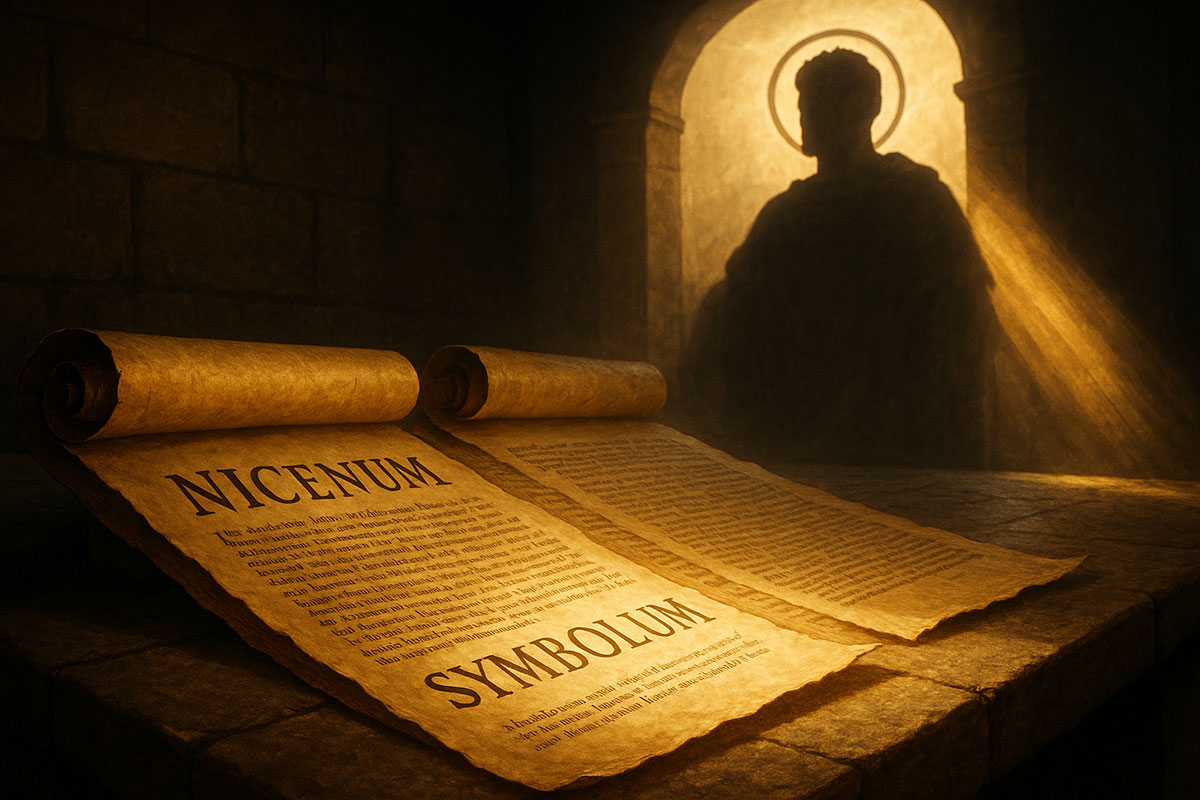
The storm has passed. Dawn fills the hall with pale light as if judgment itself were waiting. On the table lie two ancient scrolls: the Nicene Creed (325 A.D.) and the Chalcedonian Creed (451 A.D.). Their words, though faded, still burn with centuries of controversy. Karen Armstrong rests her hand on the creeds and looks at the debaters.
“The Trinity was not defined in the Gospels, but in councils centuries later. Were these creeds the Spirit’s guidance, or compromises shaped by empire and philosophy? Tonight we place history on trial.”
Question 1
If the apostles believed Jesus was God, why did it take nearly 300 years for the church to define the Trinity?
Bart Ehrman answers immediately:
“Because they didn’t. Paul never taught the Trinity. Jesus never used the word. The doctrine arose later, hammered out in debates under political pressure. If it were essential, it would be in Scripture. It isn’t.”
Charlie Kirk pushes back:
“Bart, that’s shallow. Truth doesn’t need a time stamp. The church always believed Jesus was divine — the councils simply clarified it when heresy challenged it. Delay doesn’t mean invention; it means preservation.”
Elaine Pagels adds thoughtfully:
“The delay reveals the diversity of early Christianity. Some saw Jesus as divine, others as prophet, others as exalted man. The councils didn’t reflect unanimous belief; they reflected a battle of ideas where one side won.”
Joel Osteen offers hope-filled words:
“God’s truth isn’t shaken by time. The Spirit was guiding the church. Sometimes it takes centuries to put into words what believers already live out in faith. That’s what the creeds did.”
Anthony Buzzard speaks firmly:
“The fact that it took centuries is proof enough. If Jesus were God, it would have been clear from day one. Instead, the creeds imposed a doctrine the apostles never taught.”
Question 2
“For us there is but one God, the Father” (1 Corinthians 8:6).
If Paul defined God as the Father, why did the councils redefine God as three persons?
Anthony Buzzard leans in:
“This verse is devastating to the Trinity. Paul gives us the definition: one God, the Father. Period. Jesus is Lord Messiah, but not God. The councils ignored this plain teaching.”
Charlie Kirk shakes his head:
“No, Anthony. Paul is expanding the Shema: one God (Father) and one Lord (Jesus). Both titles belong to Yahweh. The councils didn’t contradict Paul — they articulated what he already implied.”
Bart Ehrman adds:
“Charlie, that’s wishful thinking. Paul didn’t merge Jesus into God’s identity. He distinguished the two. The councils blurred the line, creating a new theology foreign to Paul’s Judaism.”
Joel Osteen responds with warmth:
“I see Paul showing the Father and Son working together. Not competition, not contradiction — but unity. The creeds preserved that unity.”
Elaine Pagels concludes:
“What we see here is the heart of the conflict: Paul’s words allowed for multiple interpretations. The councils chose one. But in doing so, they excluded others that were equally alive in early Christianity.”
Question 3
Were the creeds inspired by God’s Spirit, or shaped more by politics and empire?
Elaine Pagels speaks first:
“History is clear — Constantine wanted unity in his empire, and theology became the tool. The creeds were as much about power as about faith. To ignore that is to ignore the human fingerprints all over them.”
Charlie Kirk pushes back with intensity:
“Sure, politics played a role. But God works through flawed people. The Spirit guided those councils. If the Trinity were false, Christianity would have collapsed centuries ago. Instead, it thrived.”
Bart Ehrman sharpens the point:
“Or it thrived because it aligned with imperial power. The Trinity became orthodoxy because the empire enforced it. That’s not inspiration — that’s coercion.”
Joel Osteen reassures gently:
“I believe God can use even politics to bring about His plan. The creeds, however imperfect, gave Christians a foundation to stand on. They helped the faith survive storms.”
Anthony Buzzard concludes, blunt and clear:
“The creeds are human philosophy, not divine revelation. The apostles never recited ‘one substance, three persons.’ That language is Greek metaphysics, not Scripture. The Spirit inspired the Bible, not the creeds.”
Closing Imagery
The creeds lie open, the ink faded, the words still sharp: “God from God, Light from Light, true God from true God.” To some, they are anchors of faith. To others, chains of empire.
Karen Armstrong rises, her voice resonant in the dawn-lit hall:
“The councils shaped Christianity for two millennia. To some, they preserved the mystery of God. To others, they replaced simplicity with philosophy. The creeds stand — but whether as truth or compromise remains the deepest question of all.”
Final Thoughts by Elaine Pagels
What emerges from this dialogue is the same diversity that shaped the earliest church. The Gospels themselves give us tension: Jesus prays to God, yet claims unity with Him; He confesses ignorance, yet performs acts of power. The councils resolved this tension with the doctrine of the Trinity, but not all Christians have accepted that resolution. The debate you’ve read continues a very old struggle — one that reflects both the richness and the fractures of Christian faith. What is certain is that the question of Jesus’ identity is not settled history; it remains a living conversation, asking each of us where we stand.
Short Bios:
Charlie Kirk
Founder and president of Turning Point USA, Charlie Kirk is a conservative commentator and Christian apologist. He often defends the divinity of Jesus and the authority of the Bible in public debates and media appearances.
Joel Osteen
Joel Osteen is the senior pastor of Lakewood Church in Houston, Texas, one of the largest congregations in the United States. Known for his uplifting and encouraging sermons, he emphasizes faith in Jesus as God and Savior.
Bart Ehrman
Bart Ehrman is a professor of religious studies at the University of North Carolina at Chapel Hill and a leading scholar of the New Testament and early Christianity. He is widely known for his work showing how early Christian beliefs about Jesus evolved over time.
Elaine Pagels
Elaine Pagels is a professor of religion at Princeton University and an influential historian of early Christianity. She is best known for The Gnostic Gospels and her research into the diversity of early Christian thought regarding Jesus’ identity.
Anthony Buzzard
Sir Anthony Buzzard is a British-born biblical scholar and prominent voice in the Unitarian movement. He has written extensively on biblical monotheism, teaching that Jesus is the Messiah and Son of God, but not God Himself.
Leave a Reply