

Krista Tippett:
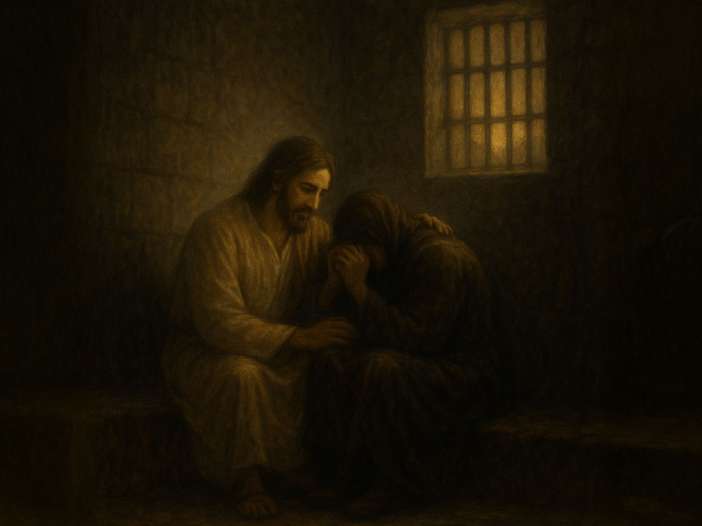
Across centuries and continents, few figures have stirred more passion, debate, and devotion than Jesus of Nazareth. Was he a prophet or God? A revolutionary or a redeemer? A man of peace or the founder of a faith that would shape empires?
In this series, we gather diverse voices—historians, theologians, mystics, and moral leaders—from across traditions to revisit not just who Jesus was, but who we’ve made him to be.
These are not debates to win or lose. They are invitations to reflect on how belief is formed, how power evolves, and how the divine continues to reach us—sometimes in surprising, even contradictory, ways.
Whether you see Jesus as the Son of God, the voice of God, or the servant of God, this journey offers a deeper encounter with one of history’s most enduring and transformative presences.
(Note: This is an imaginary conversation, a creative exploration of an idea, and not a real speech or event.)

Topic 1: Did Jesus Intend to Be Worshiped as God—or Was He Misunderstood by History?

Moderator: Krista Tippett
Speakers: Bart D. Ehrman, N.T. Wright, Elaine Pagels, Reza Aslan, Rabbi David Wolpe
Krista Tippett opens:
"Thank you all for joining us for this rich conversation. Today we ask something foundational yet deeply nuanced: Did Jesus intend to be worshiped as God—or did history misunderstand him? Let’s start from the heart of the matter."
Krista: What do you believe Jesus actually meant when he called himself the “Son of Man” and the “Son of God”? Was he claiming divinity?
Reza Aslan:
"Jesus calling himself 'Son of Man' was a way to tie himself to prophetic traditions in Jewish apocalypticism—not to divinity. It’s a poetic phrase that means ‘human’ but with a messianic undertone. He was saying: God is about to act decisively, and I’m part of that movement. That’s radically different from saying, I am God."
N.T. Wright:
"In the Jewish context, 'Son of Man' is drawn from Daniel 7—a vision of one like a son of man given authority. Jesus used that deliberately. Not as a claim to be 'God' in the abstract, but as the human agent through whom Israel’s God would act. To say he wasn’t making extraordinary claims sells him short."
Elaine Pagels:
"The diversity in early Christian writings shows this wasn’t a settled idea. In some Gnostic texts, for instance, Jesus speaks as a revealer of hidden knowledge, not as God. The canonized Gospels already reflect different Christologies. His self-reference as 'Son of God' may have meant kingly or chosen by God—much like David."
Bart Ehrman:
"Historically, Jesus did not walk around Galilee claiming to be God. He spoke as a prophet. Titles like 'Son of God' were later interpretations layered by his followers. Paul’s letters and especially the Gospel of John show a high Christology that evolved decades after his death."
Rabbi David Wolpe:
"From a Jewish lens, 'Son of God' was a known idiom for someone with divine mission, not literal divinity. We’ve had plenty of prophets and kings called that. Jesus seemed to see himself as called by God—perhaps even as Messiah—but not as Yahweh in the flesh."
Krista: Why do you think the early Church eventually decided to declare Jesus as fully God? Was it theological clarity, spiritual experience, or something else?
Elaine Pagels:
"It was all three—but with strong pressure for unity. The early church was fractured: some groups saw Jesus as divine spirit only, others as purely human. Declaring Jesus as God was partly an act of consolidation, especially as the church grew more institutional. The Nicene Creed didn’t just fall from heaven—it was forged in argument."
N.T. Wright:
"Let’s not forget that many early Christians genuinely experienced something divine through Jesus. Resurrection wasn’t just a metaphor—it redefined their understanding of what it meant for God to be present. They weren’t making things up to gain power. They were responding to something real, something transformative."
Bart Ehrman:
"But those interpretations were influenced by Greco-Roman thought. As Christianity moved into the Gentile world, where divine men and demi-gods were common, the idea of Jesus being divine made more cultural sense. The divinization of Jesus was not inevitable—it was a historical development."
Rabbi David Wolpe:
"It’s also worth noting that the elevation of Jesus to God blurred monotheism in a way Judaism never accepted. From the outside, it looks like an effort to merge God's transcendence with a need for personal intimacy. Spiritually meaningful, perhaps—but doctrinally, it's a big leap."
Reza Aslan:
"And politically useful, too. Once Rome embraced Christianity, it needed one orthodoxy. Jesus as God gave a central figure to unify around—far more effective than a peasant prophet challenging empire."
Krista: If Jesus were here today, how do you think he’d respond to being worshiped as God? Would he accept it—or redirect it?
Bart Ehrman:
"I think he’d be shocked. Jesus was a devout Jew. The idea of anyone—even himself—receiving worship due only to God would’ve been blasphemous in his own mind. He’d likely say, Why are you worshiping me? Worship the Father."
N.T. Wright:
"I disagree. Jesus revealed God in a radically new way. I think he would still challenge people, yes—but not reject worship. He might redefine what being God means: not power over others, but sacrificial love through which heaven and earth are reunited."
Reza Aslan:
"He’d call it a misunderstanding. He came to announce the Kingdom of God, not himself as God. He might look at church cathedrals and say, What happened to the poor, the outcasts, the revolution?"
Rabbi David Wolpe:
"He would weep, I think. Not because he was against love, but because the focus shifted. He’d want people to follow his teachings, not fixate on his identity. Worship without ethics is noise."
Elaine Pagels:
"He might say, You’ve made me into a symbol, but missed the message. The Gnostic tradition sometimes imagined the divine spark is in everyone. Maybe Jesus would turn the question back: Are you living as if the divine lives in you?"
Final Thought – Krista Tippett:
“Perhaps the most revealing truth is not in whether Jesus claimed divinity—but how people needed him to be divine. Whether that need was theological, emotional, or political, it tells us as much about us as it does about him. Thank you all for this soul-stretching conversation.”
Topic 2: How Political Power Shaped the Image of Jesus as God

Moderator: Karen Armstrong
Speakers: John Dominic Crossan, Cornel West, Diarmaid MacCulloch, Yuval Noah Harari, Elaine Pagels
Karen Armstrong opens:
“Today we’re not just exploring faith—we’re confronting history. Was the divinization of Jesus purely spiritual… or shaped by the rise of political power and empire? Let’s begin at the roots.”
Karen: To what extent do you believe the Roman Empire influenced the development of Jesus’s divine image?
Diarmaid MacCulloch:
"The influence was profound. The moment Constantine adopted Christianity, the Church gained a seat at the imperial table. That required a unified theology—and a divine Christ was much more stable and less controversial than a prophet who might still challenge empire."
Yuval Noah Harari:
"Religions evolve through political pressures, not just revelation. Once Christianity aligned with imperial power, it adopted many tools of Roman rule—hierarchy, authority, and divine status for its leader figure. Turning Jesus into a divine king matched Rome’s model of divine emperors."
Elaine Pagels:
"I agree. In the early centuries, there were many views of Jesus: teacher, prophet, spirit, logos. But the imperial church needed a single version—one that reflected order and obedience. The choice of divinity wasn’t just theology. It was strategic."
Cornel West:
"Jesus was a threat to empire. He flipped tables, not endorsed thrones. But once Christianity was wedded to Caesar, it had to tame him. The divine Christ of the empire looks nothing like the crucified carpenter who said, Blessed are the poor."
John Dominic Crossan:
"Exactly. The historical Jesus challenged empire, but the Christ of creed supported it. The move from Jesus the nonviolent sage to Christ the ruler of heaven mirrored Rome’s own needs—control, order, legitimacy. The divine title became a political tool."
Karen: Can we still separate genuine spiritual experience from the institutional interests that shaped doctrine?
Cornel West:
"We must. Otherwise we betray the soul of the faith. The church has too often swapped love for loyalty, justice for control. But people still meet the living Jesus in suffering, in service, in struggle. That’s not empire. That’s grace."
Elaine Pagels:
"Genuine spiritual experience doesn’t always match what institutions codify. In early Christian communities, people had visions, dreams, revelations of Jesus in many forms. But once doctrine hardened, those were labeled heresy. So yes—spiritual truth lives beyond official doctrine."
John Dominic Crossan:
"It’s a tension we have to hold. The creed reflects some truths—but not all. Much of what made Jesus radical and liberating got trimmed away for clarity’s sake. Yet even within the empire, people still found spiritual renewal through Jesus’s story."
Yuval Noah Harari:
"Institutions always sanitize mysticism. That’s how religions become scalable. The personal encounter with Jesus had to become a repeatable formula. So over time, experience took a backseat to conformity."
Diarmaid MacCulloch:
"And yet, doctrine provided stability too. Without structure, Christianity may have splintered and disappeared. Perhaps the tragedy is that unity came at the cost of spiritual diversity—but it also preserved the faith through immense political pressure."
Karen: If Jesus returned today, what would he say about the way empires—ancient and modern—used his name?
John Dominic Crossan:
"He would grieve. He’d look at cathedrals named after him built by colonizers, and say, That’s not me. He’d see soldiers bearing crosses on shields and weep. Jesus didn’t die to found an empire. He died because of empire."
Diarmaid MacCulloch:
"He might quote his own words: Give to Caesar what is Caesar’s, and to God what is God’s. He drew lines between power and holiness. But we blurred them. We used his name to endorse too many Caesars, past and present."
Cornel West:
"He’d flip the tables again—maybe in the Vatican, maybe on Wall Street. His gospel was not about dominance but deliverance. If he returned today, he’d be among the marginalized, the incarcerated, the refugees—not the powerful speaking on his behalf."
Yuval Noah Harari:
"He might not speak at all. He might just act—healing, protesting, refusing to conform. He would be as disruptive now as he was then. The irony is that modern institutions would probably reject him just as fiercely as ancient Rome did."
Elaine Pagels:
"He might say, You’ve built thrones in my name, but I walked with the outcast. If the divine exists in humility and love, then the imperial Jesus would be unrecognizable to the man who washed feet."
Final Thought – Karen Armstrong:
“The question isn’t just who Jesus was—but what we’ve made of him. And how power, over centuries, reshaped a spiritual revolution into a political religion. Yet, even in those ruins, his message still echoes: not dominion, but love.”
Topic 3: Jesus the Prophet vs. Jesus the God — Can These Views Coexist?

Moderator: Krista Tippett
Speakers: Imam Omar Suleiman, Bishop Robert Barron, James Tabor, Rabbi Jonathan Sacks (archival excerpts), Elaine Pagels
Krista Tippett opens:
“Today we’re entering sacred, often contested territory—trying to understand whether Jesus can be both a prophet and God across faith traditions. Can these seemingly opposing views coexist, or are they fundamentally incompatible?”
Krista: How do you understand the meaning of Jesus as a prophet, and does that conflict with calling him God?
Imam Omar Suleiman:
"In Islam, we honor Jesus—Isa—as one of the greatest prophets, born of a miraculous virgin birth, who performed incredible miracles. But never once did he claim to be God. Calling him divine diminishes the core message of tawhid—that God is absolutely One. Jesus's role as prophet elevates him without violating that principle."
Elaine Pagels:
"In early Christianity, especially among marginalized or Gnostic groups, Jesus was seen as a divine revealer—yes—but often still a human being deeply connected to the divine. To call him a prophet isn’t an insult; it’s a recognition of his unique wisdom and closeness to God, without requiring full divinity."
Bishop Robert Barron:
"Jesus is more than a prophet. Prophets speak for God—Jesus spoke as God. That’s the turning point. His words—‘I am the way, the truth, and the life’—would be hubris from a mere prophet. The Gospels present him as the Word made flesh. If he wasn’t God, we wouldn’t be talking about him 2,000 years later."
James Tabor:
"From a historical standpoint, Jesus fits the mold of a Jewish prophet-apocalyptic preacher. His followers later interpreted his words to mean more. But during his lifetime, he likely did not claim divinity in the way post-Nicene Christianity teaches. That’s an interpretive leap, not a direct claim."
Rabbi Jonathan Sacks (archival):
"Prophets don’t seek worship. They seek justice, humility, and repentance. Whether Christian or Jew, we must honor Jesus’s ethical legacy without needing to deify him. There is dignity in prophetic voice—it doesn’t require divine status."
Krista: Can followers of different faiths hold their views of Jesus side by side—without needing to “correct” each other?
Bishop Robert Barron:
"That’s a pastoral question as much as a theological one. We can love and respect each other deeply, but at some point, doctrines diverge. If Jesus truly is the Son of God, that’s not a negotiable detail—it changes everything. But I also believe truth invites, not forces."
Imam Omar Suleiman:
"Islam teaches us to honor Jesus without needing to override others. We don’t ask Christians to renounce their view—we ask them to reflect. We can live in harmony by understanding each other’s reverence, even if we don’t agree on the nature of that reverence."
Elaine Pagels:
"Religious language is often metaphor. ‘Son of God’ didn’t always mean literal divinity in Jewish texts. If we hold space for metaphor, then perhaps we can coexist by hearing each other more poetically than dogmatically."
James Tabor:
"Interfaith coexistence is possible if we’re honest about history vs. theology. The historical Jesus may be a figure we all share. The theological Christ is where lines are drawn. We can debate lovingly if we separate person from persona."
Rabbi Jonathan Sacks (archival):
"God is bigger than our certainties. Dialogue means listening without demanding surrender. You don’t lose your truth by hearing someone else’s."
Krista: If Jesus were here today, would he insist on being seen as divine—or simply hope we followed his message?
Elaine Pagels:
"I believe he’d point us back to the message. He’d ask, Are you loving your enemies? Are you feeding the poor? Whether you call him God or prophet, if you miss the message, the title becomes noise."
Imam Omar Suleiman:
"He would clarify that worship belongs to God alone. Jesus taught submission to the Creator, not to himself. His humility speaks louder than any title we’ve imposed."
Bishop Robert Barron:
"I believe he’d affirm his divinity, but not with pride—with purpose. His claim wasn’t about status; it was about salvation. If Jesus is truly God, then following his message isn’t just moral—it’s eternal."
James Tabor:
"Jesus was about the Kingdom of God, not building a new religion around himself. He’d probably be confused by how we made creeds more important than compassion."
Rabbi Jonathan Sacks (archival):
"He’d ask us to walk with God, not argue over definitions of God. Titles divide; love unites."
Final Thought – Krista Tippett:
“Today, we saw how a prophet can be sacred and how God can speak in many forms. The bridge between divinity and humanity may not be as rigid as doctrine suggests. And maybe—just maybe—that’s where the deepest truth lives.”
Topic 4: Was the Doctrine of the Trinity a Spiritual Revelation—or a Political Compromise?

Moderator: Krista Tippett
Speakers: Richard Rohr, Alister McGrath, Karen King, Hamza Yusuf, Rowan Williams (representing Athanasius's legacy)
Krista Tippett opens:
“Few doctrines in Christian history are as revered, misunderstood, and debated as the Trinity. Was it a profound spiritual insight—or a necessary compromise to hold the early church together? Today, we ask whether the Trinity was born from divine mystery or historical necessity.”
Krista: What do you believe was the true origin of the Trinity? Did it emerge from spiritual revelation—or political and theological necessity?
Karen King:
"It was both. The Trinity didn’t drop from heaven—it evolved through fierce debate. The 2nd and 3rd centuries were full of competing ideas about Jesus. When Constantine legalized Christianity, there was pressure to unify doctrine fast. Nicaea and later councils defined the Trinity—but that was a response to conflict, not just revelation."
Alister McGrath:
"The early Church absolutely experienced Jesus and the Holy Spirit as divine. The Trinity was an attempt to make coherent sense of those encounters. Yes, there were political forces—but the core idea was driven by faith, not bureaucracy."
Hamza Yusuf:
"From an Islamic perspective, the Trinity looks like a later theological construction. Jesus preached pure monotheism. Elevating him to divine status—and adding the Holy Spirit—complicated the message of God’s oneness. That’s not spiritual simplicity; it’s layered theology shaped by councils."
Richard Rohr:
"Mystics have long embraced the Trinity as a spiritual dance—a flow between Lover, Beloved, and Love. But the problem is, the institutional Church turned it into a math problem. They codified a living mystery into rigid doctrine, losing the poetry of relationship."
Rowan Williams (representing Athanasius):
"Athanasius didn’t see the Trinity as compromise. He saw it as protection of the Gospel—the truth that God came to us not as a messenger, but as God Himself. Without the Trinity, you risk unraveling the experience of salvation through Christ."
Krista: Did defining the Trinity unify the Church—or suppress diversity of belief?
Richard Rohr:
"It unified the Church institutionally, yes—but at great cost. The beautiful spiritual variety of early Christianity—like the Desert Fathers, Gnostics, mystics—got pushed aside. It was about control. Once the Trinity became a test of orthodoxy, people lost permission to wonder."
Alister McGrath:
"That’s fair, but doctrine also guarded against confusion. The early church needed boundaries. There were many distorted views of Jesus—some denied his humanity, others his divinity. The Trinity wasn’t meant to suppress, but to preserve core truth."
Karen King:
"I believe it did both. It suppressed heterodox voices—many of them female or Eastern. But it also gave the Church a strong identity. We just have to remember: unity achieved through exclusion always leaves spiritual casualties."
Hamza Yusuf:
"From the outside, the move toward Trinitarianism alienated both Jews and emerging Muslims. It made interfaith harmony harder. That shift was not inevitable—it was a theological choice with consequences, not divine necessity."
Rowan Williams:
"But we shouldn’t romanticize chaos either. Diversity is beautiful, but it needs coherence. Athanasius saw heresies threatening the Gospel’s clarity. The Trinity brought doctrinal stability that helped Christianity endure persecution and empire alike."
Krista: In today’s world, does the Trinity still serve as a meaningful spiritual framework—or is it outdated?
Richard Rohr:
"The mystical vision of the Trinity—as flow, communion, relationship—is more needed now than ever. The problem isn’t the Trinity—it’s how we taught it. If we stop trying to explain it and start experiencing it, we’ll find relevance again."
Hamza Yusuf:
"Respectfully, I don’t see it as relevant to most of humanity. It’s the simplicity of God's oneness that speaks across cultures. Three-in-one remains confusing even to many Christians. If truth is universal, it shouldn’t require theological gymnastics."
Alister McGrath:
"It’s deeply relevant—because it tells us God is relational at the core. In a fragmented world, the idea of a divine community is radical. It challenges isolation and invites unity—not uniformity."
Karen King:
"The Trinity remains symbolically rich, but it doesn’t need to be exclusive. We might reimagine it as one of many ways to describe divine presence. Clinging to rigid definitions limits the Spirit, which is always moving beyond our categories."
Rowan Williams:
"It’s not outdated—it’s eternal. But our way of teaching it must evolve. The Trinity isn’t a dogma to memorize. It’s a doorway into divine mystery, if we’re willing to enter with humility."
Final Thought – Krista Tippett:
“Perhaps the Trinity is less about proving doctrine and more about practicing divine relationship. Whether seen as compromise, insight, or poetry, it reminds us that even God—at least in Christian thought—doesn’t exist alone.”
Topic 5: What Kind of God Do We Want? A Distant Ruler or a Suffering Servant?
Moderator: Krista Tippett
Speakers: Henri Nouwen (represented by his disciple), Desmond Tutu (archival voice), Tim Keller (archival excerpts), Thich Nhat Hanh (interpreted reflections), Sister Helen Prejean
Krista Tippett opens:
“The image of God profoundly shapes how we live, love, and respond to pain. Today we ask: In a world full of suffering, what kind of God do we need—or want? Is it the distant ruler on the throne? Or the God who suffers with us?”
Krista: When you think of God, do you feel more drawn to an all-powerful ruler—or a God who suffers alongside humanity?
Sister Helen Prejean:
"Always the God who suffers. I’ve sat next to people on death row and families ripped apart by violence. The God who matters is the one who shows up in those spaces—not as a king handing down laws, but as a presence whispering, I’m with you in this pain."
Thich Nhat Hanh (via interpreter):
"In the Buddhist understanding, divinity is not outside us. When we breathe mindfully, we touch the suffering and the joy of the world. If God exists, God must be present in the compassion we offer each other, not in distant commands."
Henri Nouwen (represented):
"Henri believed in the Wounded Healer. He saw Christ not as someone to be admired from afar, but as someone who enters our loneliness. Power without vulnerability never changes the heart. God, to Henri, was broken bread and shared tears."
Tim Keller (archival):
"What made Christianity revolutionary was its claim that God didn’t avoid suffering—He entered it. Jesus on the cross isn’t weakness; it’s divine strength. The God of the Bible bleeds, and because of that, He understands us in ways a distant deity never could."
Desmond Tutu (archival):
"When apartheid crushed my people, I didn’t need a theory—I needed a God who groaned. And I found Him in Jesus. Not the Jesus of cathedrals, but the Jesus of slums, prisons, protests. A suffering God is the only God worth trusting."
Krista: Why do you think the idea of a suffering God has become more meaningful in the modern world?
Tim Keller:
"Because power has failed people. Political power. Institutional power. Even religious power. People are skeptical of lofty gods. But a God who lays down His power to draw near? That’s a story modern hearts can hear. Especially those who feel unseen."
Henri Nouwen (represented):
"Henri felt the loneliness of success and the silence of applause. He knew that even in ministry, we can feel abandoned. The suffering God is not abstract theology—it’s intimate presence. That’s why so many modern people resonate with it: they’re tired of being alone."
Desmond Tutu (archival):
"Because our world is hurting. From Gaza to refugee camps, from racism to loneliness. People don’t want more commandments. They want someone to sit in the ashes with them. A weeping God does more than a judging one."
Thich Nhat Hanh (interpreted):
"Because suffering is universal. And healing begins not with escape, but with presence. The idea of a God who shares our suffering is close to Buddhist compassion. It's not about belief—it’s about inter-being."
Sister Helen Prejean:
"You walk into a prison, and if God is only a judge, the story ends in condemnation. But if God is a fellow prisoner—an innocent who suffers with the guilty—then maybe there's a future for all of us. The modern world needs that kind of mercy."
Krista: If we fully embraced the God who suffers, how would that change how we live?
Thich Nhat Hanh (interpreted):
"We would stop trying to escape pain and instead hold it gently. We would stop blaming and begin embracing. If God is suffering, then every act of kindness is sacred. Each time we hold another’s pain, we touch the divine."
Desmond Tutu (archival):
"We would become less obsessed with winning. Less addicted to being right. If God is wounded, then power means healing, not dominance. Imagine politics shaped by mercy. Imagine justice laced with forgiveness."
Henri Nouwen (represented):
"Henri believed we’d be less ashamed of our own wounds. We’d stop pretending we’re strong and start living in deeper communion. The Church would become a hospital again, not a courtroom."
Tim Keller (archival):
"It would change everything. Our pride. Our fear. Our relationships. The suffering God makes forgiveness possible, because He absorbed the pain Himself. If we believe that, we’re free to forgive as we’ve been forgiven."
Sister Helen Prejean:
"We’d stop asking, Who deserves love? and start asking, Who needs it most? When I sat with a man minutes before execution, I realized: if God is with him now, then no one’s too far gone. That changes how we see every human being."
Final Thought – Krista Tippett:
“If God is far off, we may revere Him but never truly know Him. But if God walks with us in suffering—then even in our darkest moments, we are not alone. And maybe that’s the God we’ve been waiting for all along.”
Final Thoughts by Krista Tippett
After five conversations, one truth rises above all disagreement: the story of Jesus is not finished. It continues to be written—in churches and prisons, across doctrines and doubts, in quiet acts of compassion and in bold calls for justice.
For some, he is God incarnate. For others, he is a prophet, a teacher, or a mirror of divine truth. But across these perspectives, we saw something astonishing: a shared longing for a God who is close, who suffers, who uplifts, and who invites us into something greater than belief—relationship.
In the end, perhaps the most faithful question isn’t Who was Jesus? but What does his life still ask of us today? And in asking that, we may come closer not only to understanding him—but to becoming who we were meant to be.
Short Bios:
Alister McGrath – Christian theologian and apologist, known for defending orthodox theology including the Trinity and Christ’s divinity.
Bart D. Ehrman – New Testament scholar and historian who explores the historical development of Christian belief, especially the evolution of Jesus’s identity.
Bishop Robert Barron – Catholic bishop and theologian widely respected for articulating the traditional Christian view of Jesus as divine and the Church’s teachings.
Cornel West – Philosopher and public intellectual known for connecting prophetic Christianity with social justice and political critique.
Diarmaid MacCulloch – Historian of Christianity and author of A History of the Church, focused on how institutional power shaped theology.
Desmond Tutu (archival) – South African archbishop and activist who emphasized a God who suffers with the oppressed, especially during apartheid.
Elaine Pagels – Religious historian and expert on early Christian texts, especially Gnostic gospels and alternative views of Jesus.
Hamza Yusuf – Islamic scholar and co-founder of Zaytuna College, known for presenting the Islamic view of Jesus as a revered prophet.
Henri Nouwen (represented by disciple) – Catholic priest, spiritual writer, and theologian of compassion, known for his concept of the “Wounded Healer.”
Imam Omar Suleiman – American Muslim scholar and activist who eloquently explains the Quranic perspective of Jesus as a prophet and miracle worker.
James Tabor – Biblical historian and author focused on the historical Jesus and early Jewish Christianity before doctrinal developments.
John Dominic Crossan – Jesus Seminar scholar and theologian who sees Jesus as a radical teacher challenging empire rather than claiming divinity.
Karen Armstrong – Former nun and renowned religious historian known for her interfaith insights and critique of rigid theological systems.
Karen King – Harvard professor and scholar of early Christianity, specializing in lost Christianities and theological diversity in the early church.
Krista Tippett – Peabody Award-winning host of On Being, celebrated for moderating profound interfaith and philosophical conversations.
Rabbi David Wolpe – Conservative Jewish rabbi and writer who provides a respectful Jewish perspective on Jesus as teacher and moral voice, not divine.
Rabbi Jonathan Sacks (archival) – Former Chief Rabbi of the UK, remembered for his eloquent, bridge-building reflections on faith and ethics.
Reza Aslan – Author of Zealot and scholar of religions who portrays Jesus as an apocalyptic Jewish prophet misunderstood by history.
Richard Rohr – Franciscan friar and contemplative teacher who presents the Trinity as relational flow rather than rigid doctrine.
Rowan Williams – Former Archbishop of Canterbury and theologian who defends classical doctrine like the Trinity while engaging with modern questions.
Sister Helen Prejean – Catholic nun and death penalty abolitionist known for her work with prisoners and belief in a merciful, suffering God.
Thich Nhat Hanh (interpreted) – Vietnamese Zen master and peace activist who emphasized mindfulness, compassion, and interbeing over doctrinal divides.
Tim Keller (archival) – Presbyterian pastor and theologian known for his gospel-centered approach to modern life and the suffering Christ.
Yuval Noah Harari – Historian and author of Sapiens, known for analyzing religion through sociopolitical and evolutionary lenses.
Athanasius of Alexandria (represented by Rowan Williams) – 4th-century Church Father and key defender of Christ’s divinity and the doctrine of the Trinity at the Council of Nicaea.
Leave a Reply