
|
Getting your Trinity Audio player ready...
|

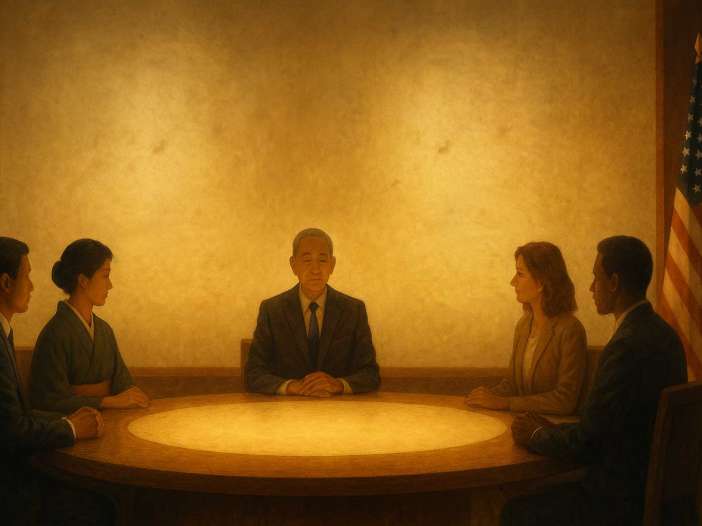
Introduction by Nick Sasaki
Thank you all for gathering here today.
We live in a world where service is often treated as a transaction, a skill, or a job description. But the deeper truth is that service is a spiritual practice. It is a way of honoring the people we encounter, whether they are family members, coworkers, customers, or strangers passing briefly through our lives.
The purpose of today's imaginary conversation is simple, but powerful:
To learn how each of us can bring the spirit of world-class service into our daily life—
so that every person we meet feels like a VIP, treated with respect, dignity, and genuine care.
This isn’t about hospitality as a career.
It’s about hospitality as a way of living.
If Japan and America—two countries with deeply rich but very different service cultures—can sit at the same table and share their wisdom, maybe we can rediscover the value of treating people with kindness, patience, warmth, and presence.
My hope is that through these conversations, we begin to ask ourselves:
- How can I make someone feel seen today?
- How can I reduce someone’s stress, even in a small way?
- How can I bring more harmony, openness, or kindness into the world around me?
This discussion isn't theoretical.
It’s meant to be used, lived, and practiced.
So let’s listen not only with our minds, but with our hearts—
because the spirit of service is ultimately the spirit of humanity itself.
Let us begin.
(Note: This is an imaginary conversation, a creative exploration of an idea, and not a real speech or event.)
TOPIC 1 — The Core of Service Philosophy: Omotenashi vs. Hospitality
Moderator: Isadore Sharp
Opening by Isadore Sharp
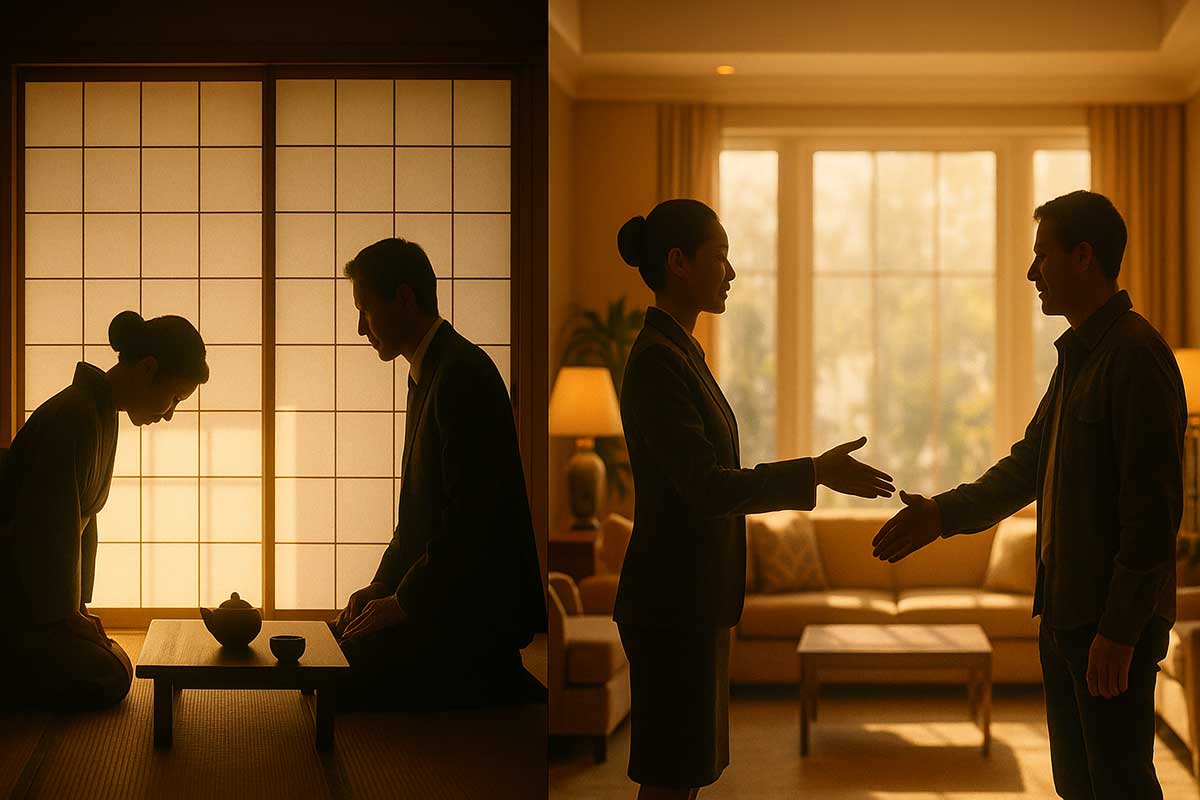
Thank you all for being here. Across cultures, service is more than a technique—it is a moral language. In Japan, the world speaks of omotenashi, a quiet, anticipatory spirit rooted in centuries of etiquette and craftsmanship. In America, we have what we call hospitality, an open-hearted, expressive approach shaped by individualism and emotional clarity.
Today, I want us to explore not which culture is “better,” but how each expresses the deeper human impulse to care. Let’s begin.
Isadore Sharp (moderator):
When you reflect on the origin of your service philosophy—before training manuals, before business models—what human value sits at the core?
Yoshiharu Hoshino (Japan)
For Japan, the core is empathy without intrusion. Our culture is built on reading the air—kuuki wo yomu. It allows a guest to relax without ever being asked what they need. We believe true service happens when the guest never feels burdened by the act of being served. The value is harmony: the idea that the world becomes beautiful when each person adjusts just slightly for the sake of another.
Horst Schulze (USA)
In the West, our foundation is dignity. Every guest should feel important—seen, heard, acknowledged. That is why we say, “We are ladies and gentlemen serving ladies and gentlemen.” It is not about hierarchy or formality; it is about equality. Hospitality is a declaration: I respect your presence and I am honored to serve you.
Former ANA Chief Purser (Japan)
On Japanese airlines, the root value is safety carried with grace. Service is not a performance; it is a responsibility. Every gesture, every bow, every confirmation is meant to convey: “You are safe with us.” The deeper value is trust—trust that calmness is competence.
Four Seasons New York GM (USA)
For us, the core value is emotional warmth. A guest arrives in a foreign city, exhausted, perhaps lonely. The philosophy is simple: make them feel home within 30 seconds. A sincere smile, a moment of eye contact, a bit of effortless conversation—these micro-connections create belonging faster than any luxury amenity can.
Disney Institute Director (USA)
Disney’s service philosophy begins with wonder. Every interaction is a chance to create a tiny moment of magic. Not necessarily fireworks—sometimes just knowing a child’s favorite character or calling a guest by name at the right moment. At our core is the value of storytelling: every guest becomes the hero of their own Disney narrative.
Hidemitsu Taiho (Japan)
At the Imperial Hotel, our founding value has always been quiet pride. Not the pride of being praised, but the pride of serving without expecting recognition. We aim to be invisible at the right times and present at critical moments. The value is humility—not to diminish oneself, but to elevate the guest.
Isadore Sharp (moderator):
Let me now ask something deeper.
How does your philosophy shape the moment of first contact? The instant the guest appears—what happens inside you?
Four Seasons New York GM (USA)
That first second is everything. My mindset is: How can I humanize this moment? I look for cues—fatigue, curiosity, stress. And I match their energy. If they want efficiency, I become concise. If they want connection, I offer warmth. First contact is emotional diagnosis.
Hidemitsu Taiho (Japan)
For us, the first moment is a transition ceremony. The guest crosses from the busy world into a realm of rest. My internal question is: How can I remove tension from their body? A bow is not merely greeting—it is an invitation into stillness.
Disney Institute Director (USA)
At Disney, first contact must immediately spark delight. Even a simple “Welcome home” at a resort can create emotional lift. The mindset is anticipatory joy—assuming the guest wants magic and giving them permission to feel it.
Former ANA Chief Purser (Japan)
On a plane, first contact is the beginning of mutual safety. My thought is: How can I reassure them, without saying a word, that this journey will be calm and cared for? The tone of the greeting sets the psychological cabin environment.
Horst Schulze (USA)
In my experience, the mistake is to focus on the action rather than the intention. My internal script is simple: I genuinely care that you are here. Guests recognize sincerity instantly—they have a radar for it. That first moment is where trust is born.
Yoshiharu Hoshino (Japan)
In Japan, first contact must be seamless. The guest should not feel a performance; they should feel a natural flow of attention. My focus is on posture, breathing, and awareness. I try to feel—literally feel—the guest’s rhythm. The moment I match it, service becomes effortless.
Isadore Sharp (moderator):
One final question for today:
What do you believe the world can learn from your country’s service philosophy—especially as cultures mix more than ever before?
Disney Institute Director (USA)
From the American side: the world can learn the power of open emotional communication. We shouldn’t be afraid to express warmth, enthusiasm, or even playful friendliness. Service is not cold—it is human.
Hidemitsu Taiho (Japan)
Japan teaches the value of stillness. When service is quiet, the guest’s emotions become more audible. In a world full of noise, stillness itself becomes hospitality.
Horst Schulze (USA)
The American contribution is empowerment. Give employees authority, and they will create moments no scriptwriter could ever invent. Service becomes art when staff are free to act on behalf of the guest.
Former ANA Chief Purser (Japan)
Japan offers the lesson of consistency. Not perfection—consistency. The world can benefit from service that maintains dignity even under pressure.
Yoshiharu Hoshino (Japan)
What Japan brings is intentional design. From the layout of a lobby to the pace of a conversation, every detail can guide the guest toward tranquility. Beauty is not decoration—it is emotional engineering.
Four Seasons New York GM (USA)
America contributes a belief in personalization. Not just remembering preferences, but seeing each guest as an evolving individual. The world is moving toward tailored experiences; that is where American hospitality excels.
Closing Words by Isadore Sharp
What I’ve heard today is that great service—whether Japanese or American—is fundamentally spiritual.
Japan offers harmony, stillness, empathy without intrusion.
America offers warmth, empowerment, expressive dignity.
If the world combined both, we would create a new global service culture—one that is gentle, human, flexible, and deeply caring.
Thank you all.
TOPIC 2 — Daily Life Service Culture: Medicine, Transportation, Food, Education

Moderator: Jean Watson (Creator of the “Theory of Human Caring”)
Participants:
Japan (3)
Head Nurse, Keio University Hospital
Service Education Director, Seven-Eleven Japan
Customer Courtesy Trainer, JR East Railways
United States (3)
4. Nurse Manager, Mayo Clinic
5. Customer Experience Director, Whole Foods Market
6. Uber Customer Experience Director
Opening by Jean Watson
Everyday service—whether in a hospital, a convenience store, a train station, or a supermarket—is the heartbeat of a society. Unlike luxury hotels or fine dining, daily service is universal. It touches everyone, wherever they are economically, emotionally, or physically.
In healthcare, education, transportation, and food access, we see a society’s deepest values. Today, I invite each of you to explore not only how your culture serves—but why.
Let’s begin.
Jean Watson (moderator):
When serving people in everyday life—patients, commuters, shoppers, students—what is the emotional foundation of your country’s service?
Head Nurse, Keio University Hospital (Japan)
For Japan, the emotional foundation is responsibility. When someone entrusts us with their body, their pain, their fear—we hold their vulnerability as if it were our own. Japanese nursing is built upon the idea that compassion should be quiet and steady, like a warm hand that never trembles. We believe patients should never feel like they are burdening us. That is our emotional vow.
Mayo Clinic Nurse Manager (USA)
In the U.S., the foundation is partnership. Patients are not passive recipients—they are partners in their care. Our emotional commitment is transparency, collaboration, and deep respect for autonomy. When someone is frightened or sick, our job is to build trust by empowering them, not directing them. The emotional tone is: “You’re not alone. We’re in this together.”
Seven-Eleven Japan Service Education Director (Japan)
For Japanese retail service, the foundation is predictability and reassurance. The guest should know what to expect: cleanliness, politeness, efficiency. Even at 3 a.m., the store should feel safe and calm. Our emotional philosophy is: “Your life will go smoothly here.” That small stability, we believe, is a service to society.
Whole Foods Customer Experience Director (USA)
For us, the foundation is connection through warmth. American grocery service has its roots in friendliness. A simple “How’s your day going?” can change someone’s emotional state. We believe that even a five-second interaction can uplift someone. Food is emotional; so is the way we present it.
JR East Courtesy Trainer (Japan)
Japanese transportation service is built on order that protects dignity. Trains run on time because people’s lives run on time. Courtesy announcements are gentle because the journey should feel peaceful, not chaotic. Our emotional promise is: “We will not disrupt your equilibrium.”
Uber Customer Experience Director (USA)
For us, the emotional foundation is freedom and ease. Riders want flexibility, speed, and control. Drivers want safety and respect. Our role is to create a digital environment where both sides feel valued. The emotional message is: “You have options, and you have support.”
Jean Watson (moderator):
Thank you. Now let me ask something deeper.
When your service fails—a delay, a long line, a miscommunication, a medical mistake—how do you emotionally approach the moment of repair?
Mayo Clinic Nurse Manager (USA)
We begin with honesty and humility. Patients deserve to know what happened, why it happened, and how we will make it right. In the U.S., emotional repair is rooted in open dialogue. We say: “I see your frustration. Let’s address this together.” Empowerment remains central.
JR East Courtesy Trainer (Japan)
Japan approaches repair with sincere apology and immediate corrective action. The emotional moment is not about words—it is about precision. When something goes wrong, we bow not to express guilt, but to acknowledge that another person’s rhythm was disrupted. We show respect by restoring order swiftly.
Whole Foods Customer Experience Director (USA)
In American retail, repair requires personality. A friendly, human response often diffuses tension faster than a script. If we break a carton of eggs, we don’t just replace it—we create a moment of genuine care. “Let’s make this right for you quickly.” Sometimes adding warmth solves what policies alone cannot.
Seven-Eleven Japan Service Director (Japan)
Japan handles mistakes with structural responsibility. We believe the guest should never feel they need to complain. If something is wrong, we fix it before they ask. Emotional repair is efficiency paired with courtesy. The feeling should be: “This won’t happen again.”
Uber Customer Experience Director (USA)
Our failures often happen digitally: incorrect charges, cancellations, safety concerns. Emotional repair is about speed and clarity. A confusing apology is worse than no apology. Riders want certainty; drivers want fairness. The emotional tone must be: “We hear you, and your concern is valid.”
Head Nurse, Keio University Hospital (Japan)
In Japanese healthcare, emotional repair is quiet accountability. We acknowledge distress without overwhelming the patient. We say with our presence: “Your suffering is seen.” Our posture, tone, and slowness communicate honesty more deeply than long explanations.
Jean Watson (moderator):
For the final question: In the next 20 years, what part of your country’s service philosophy do you believe the world most needs?
Whole Foods Customer Experience Director (USA)
The world needs America’s commitment to individual expression. Service workers should feel free to be themselves. When staff show personality—kindness, humor, authenticity—it invites customers to relax. Uniforms shouldn’t mean uniform souls.
JR East Courtesy Trainer (Japan)
Japan can offer the world the discipline of consistency. Reliable transportation, predictable timing, and calm public environments reduce stress for millions. In an unstable world, consistency itself becomes emotional safety.
Uber Customer Experience Director (USA)
The world can benefit from America’s focus on accessibility and convenience. Digital platforms democratize transportation, food delivery, medical appointments. Service becomes boundary-free, available to more people than ever before.
Seven-Eleven Japan Service Director (Japan)
Japan contributes micro-service culture — the belief that even small interactions deserve full respect. A convenience store clerk can uplift a day as powerfully as a luxury concierge. Small kindnesses scale surprisingly far.
Mayo Clinic Nurse Manager (USA)
The world needs the U.S. commitment to patient voice. Care is shifting toward personalized medicine, shared decision-making, and emotional transparency. Recognizing the patient as an equal partner can transform healthcare globally.
Head Nurse, Keio University Hospital (Japan)
Japan offers humility in care. A nurse, a teacher, a shopkeeper—they serve not from hierarchy but from humanity. Softness is not weakness. The world needs gentleness now more than ever.
Closing Words by Jean Watson
What we’ve heard today is that everyday service—whether in a train, a store, a hospital, or an app—is the moral texture of a society.
Japan brings the gifts of calmness, consistency, and quiet empathy.
America brings openness, personalization, and emotional transparency.
Together, they form a future model of service that is both gentle and expressive, efficient and human.
Thank you all.
TOPIC 3 — The Essence of Complaint Handling: Sincerity vs Compensation

Moderator: Kazuo Inamori(稲盛和夫)
Founder of Kyocera & KDDI, and the man who rebuilt Japan Airlines through a philosophy of respect for humanity and service with a pure heart.
Participants (6 total)
Japan
- Former JAL Omotenashi Trainer
- MUJI (無印良品) Customer Resolution Manager
- Isetan-Mitsukoshi Service Quality Director
 United States
- Zappos Head of Customer Support
- Southwest Airlines Director of Customer Experience
- Former Apple Store Genius Training Manager
Opening by Kazuo Inamori
In business, we often celebrate success, but true character is revealed in failure—when a product breaks, a flight is delayed, or a guest is disappointed. Complaint handling is not simply a skill; it is a mirror reflecting a company’s heart.
In Japan, we say, “The customer’s anger is a gift.”
In America, there is a belief that “Mistakes are opportunities for connection.”
Today, let us explore the soul of service at its most vulnerable moment.
We begin.
Kazuo Inamori (moderator):
When a customer expresses disappointment or anger, what is the first internal response you cultivate within yourself before you speak?
MUJI Customer Resolution Manager (Japan)
My first response is acceptance without defense. In Japan, defending ourselves too early breaks the emotional bridge. I slow my breathing and think: “This person is entrusting their frustration to me. I must receive it with purity.” Before offering a solution, I let the customer feel fully acknowledged.
Zappos Head of Customer Support (USA)
For us, the first response is curiosity. Anger is information. I remind myself that something meaningful happened in this customer’s day, and we are now part of their story. The internal question is: “What’s the deeper need here?” Once I understand the emotional core—fear, inconvenience, disappointment—real service begins.
Former JAL Omotenashi Trainer (Japan)
In Japanese aviation, the first internal response is responsibility. Even if the cause is outside our control, the guest’s discomfort is real. My mindset is not “Who is at fault?” but “How can I restore peace to this person’s journey?” Emotional composure is the first form of service.
Southwest Airlines Director of Customer Experience (USA)
My first reaction is empathy with urgency. In the U.S., customers want to feel that their problem matters now. If a flight is delayed or baggage lost, the emotional temperature rises quickly. I think: “How do I lower the temperature in the next 10 seconds?” Quick, human connection is essential.
Isetan-Mitsukoshi Service Quality Director (Japan)
We begin with humility. A complaint is not an attack—it is an invitation to refine our craft. Internally, I say: “Thank you for showing us what we could not see ourselves.” Only with humility can we serve with grace.
Former Apple Store Genius Trainer (USA)
At Apple, the internal response is neutrality first. Customers often come in emotionally elevated—technology failures create panic. My rule is: “Don’t mirror their intensity.” Instead, become the calm in their storm. Once the energy settles, we can guide them toward a solution that feels empowering.
Kazuo Inamori (moderator):
Thank you. Now let me ask something more challenging.
When the company is at fault—truly at fault—what principle guides your response to the customer?
Southwest Airlines Director (USA)
Our guiding principle is full ownership. We don’t hide behind policies. If we caused the problem, we say it clearly and early. Americans respect directness. “We made a mistake, and here’s how we’re going to fix it.” Ownership builds trust faster than apologies alone.
Former JAL Omotenashi Trainer (Japan)
In Japan, we follow the principle of sincere atonement. The apology must be felt, not performed. We do not rush to compensation, because it can cheapen the sincerity. First, we acknowledge the emotional impact; then, we discuss solutions. The priority is restoring dignity.
Zappos Customer Support Head (USA)
At Zappos, the principle is make it surprisingly right. If we are responsible, we often go beyond the expected. Replace the item, upgrade shipping, add a handwritten note. Not because we must—but because generosity transforms a negative story into a legendary one.
MUJI Resolution Manager (Japan)
Our principle is quiet transparency. We explain with brevity, honesty, and zero defensiveness. When the store’s mistake is clear, we do not negotiate—we correct. The emotional tone must be clean, without excuses. Customers can sense purity.
Apple Genius Trainer (USA)
Our principle is education creates empowerment. If we caused a failure, we repair or replace, but we also help the customer understand what went wrong—without blaming them. When people understand, fear dissolves, and trust deepens.
Isetan-Mitsukoshi Director (Japan)
Our principle: restore the guest’s emotional world. Compensation is secondary. What matters is whether the guest feels respected again. We aim to wipe away “the emotional stain of disappointment.”
Kazuo Inamori (moderator):
For our final question:
What can the world learn from your country’s approach to complaint handling?
Former JAL Omotenashi Trainer (Japan)
From Japan, the world can learn the power of silence and presence in conflict. Not every problem needs many words. Sometimes, a composed, heartfelt apology communicates more respect than a long explanation.
Zappos Head of Support (USA)
From the U.S., the world can learn empowerment at every level. When front-line employees have authority, they create breathtaking moments of recovery—moments that no manual could predict.
MUJI Customer Manager (Japan)
Japan teaches the world the beauty of consistency. When every staff member follows the same humble, precise approach, customers feel protected.
Southwest Airlines Director (USA)
America teaches the world the value of humor and humanity. Sometimes a little laughter or genuine warmth can dissolve tension instantly. Complaint handling doesn’t need to be stiff; it can be human.
Isetan-Mitsukoshi Director (Japan)
Japan offers the lesson of emotional cleanliness. When we resolve an issue, we resolve it completely. No lingering frustration. A clean closure is a gift.
Apple Genius Trainer (USA)
From the U.S., the world can learn transparency without shame. Mistakes happen. A clear, honest explanation builds long-term loyalty.
Closing Words by Kazuo Inamori
In business—and in life—the moment of complaint is the moment when our true heart is revealed.
Japan approaches this with humility, stillness, and responsibility.
America approaches it with honesty, empowerment, and creativity.
If we combine these virtues, we create a global standard where complaints are not failures,
but profound opportunities to demonstrate human goodness.
Thank you all for your sincerity.
TOPIC 4 — AI × Human Service: What Is the Future of Care?

Moderator: Blake Morgan (Customer Experience Futurist, Author)
Participants:
Japan (3)
- Pepper Robot Lead Engineer, SoftBank Robotics
- Rakuten Customer Experience Director
- UNIQLO Operations Systems Architect
United States (3)
- Google AI Product Manager (Customer Experience)
- OpenAI Customer Experience Director
- Tesla UX Lead for In-Car Human Interaction
Opening by Blake Morgan
We are entering an era where service is no longer only human or only digital—
it is hybrid, where AI, automation, and human empathy must fuse into something seamless.
Some fear AI will erase human connection.
Others believe AI will restore it by removing friction.
But the real question is:
What kind of service future do we want to build?
Let’s explore the intersection of technology and humanity.
Blake Morgan (moderator):
As AI becomes present in every service touchpoint—from stores to call centers to cars—what human quality must never be replaced?
Rakuten CX Director (Japan)
For Japan, the irreplaceable quality is patience without pressure.
AI can answer quickly, but only humans can make customers feel unhurried.
Japanese service believes in creating emotional space.
Technology cannot yet sense when the customer needs silence, not speed.
Google AI Product Manager (USA)
The essential human quality is interpretation of emotional nuance.
AI can detect tone, keywords, sentiment, but humans understand context.
If a customer says, “This is the third time I’ve called,” only a human can hear the exhaustion behind the words.
That emotional literacy is critical.
UNIQLO Operations Architect (Japan)
Our irreplaceable quality is craftsmanship of judgment.
Retail service isn’t only transactional; it’s environmental.
AI can optimize inventory, but only humans sense when a store’s atmosphere feels unbalanced—
too bright, too quiet, too chaotic.
Humans preserve harmony.
OpenAI CX Director (USA)
What must remain human is accountability.
When something serious goes wrong—billing, safety, security—customers want a human to take responsibility.
AI can apologize, but it cannot bear responsibility.
That burden belongs to people.
Pepper Robot Lead Engineer (Japan)
For us, the human element is dignity in interaction.
Robots and AI can support routines, but dignity requires presence, intuition, and subtle non-verbal care.
A robot can greet, but cannot create “relief.”
Only humans provide emotional grounding.
Tesla UX Lead (USA)
The irreplaceable human quality is ethical judgment.
Cars will soon drive themselves, but decisions about risk, fairness, and accountability require human values.
AI may understand rules, but humans understand morality.
Blake Morgan (moderator):
As AI grows more powerful, how should the relationship between humans and AI be designed in daily service? Not just mechanically—but emotionally.
OpenAI CX Director (USA)
AI should be the first layer of service—handling routine tasks, clearing obstacles—so humans can focus on complex, emotional interactions.
Emotionally, AI should create calm, not urgency.
If AI makes people feel rushed or judged, we’ve failed.
Pepper Lead Engineer (Japan)
Japan sees AI as a respectful assistant, not a replacement.
Emotionally, AI must adopt modesty.
It should never pretend to be human, never dominate, never intrude.
Emotionally harmonious AI respects distance.
Tesla UX Lead (USA)
AI should act like a co-pilot: confident, informative, and non-patronizing.
In emotional terms, AI must reduce cognitive load—giving users mental freedom.
The future is:
“You focus on life; I’ll handle the system.”
UNIQLO Operations Architect (Japan)
In retail, AI should stabilize the environment.
Predict demand, reduce waiting time, personalize suggestions—but gently.
Emotionally, AI must remain invisible until needed, then precise when activated.
Google AI Product Manager (USA)
AI should feel like clarity embodied.
It should simplify choices, summarize complexity, and guide without controlling.
Emotionally, AI must avoid overwhelming the user with data.
The tone is:
“I’ve got you; here’s the simplest path.”
Rakuten CX Director (Japan)
AI must align with our cultural value: serve without imposing.
Emotionally aware AI should sense hesitation, confusion, or discomfort.
It should slow down when a customer slows down.
AI should not only learn from data—but from silence.
Blake Morgan (moderator):
Looking ahead 20 years, what will be the ideal fusion of AI and human service culture? What future should we intentionally build?
Google AI Product Manager (USA)
The ideal future is personalized universality.
AI understands each user intimately—preferences, needs, accessibility—
but applies that knowledge ethically and securely.
Human service becomes more human because AI handles the noise.
Pepper Lead Engineer (Japan)
Japan’s vision is emotional minimalism:
AI removes friction so that each human interaction—no matter how brief—feels meaningful.
The ideal is a world where humans speak less but understand more.
OpenAI CX Director (USA)
The future should emphasize emotional transparency.
AI will help customers articulate feelings they couldn’t express.
“I’m not upset with the product—I felt dismissed.”
AI reveals hidden emotional layers, allowing humans to respond wisely.
Rakuten CX Director (Japan)
We envision a future where AI heightens gracefulness.
Queues disappear. Errors decline.
Service becomes beautiful in its reliability.
Humans then add warmth on top of this stable foundation.
Tesla UX Lead (USA)
The ideal future is intelligent autonomy.
Cars, homes, and digital environments anticipate needs and act safely—
yet humans retain agency and override.
An empowered partnership, not dependence.
UNIQLO Operations Architect (Japan)
The future we want is frictionless respect.
AI manages flow, optimization, personalization.
Humans manage emotion.
Together, they create service that feels effortless, dignified, and universal.
Closing Words by Blake Morgan
What we’ve learned today is that AI does not erase humanity—it illuminates it.
Japan teaches the world that AI should be humble, calming, and respectful.
America teaches the world that AI should be empowering, expressive, and clear.
Together, we can build a future where technology removes barriers
and humans provide meaning.
Thank you all.
TOPIC 5 — Heart-Moving Service: What Creates Emotional Impact?

Moderator: Sen Genshitsu(千玄室)
Participants
Japan (3)
Legendary Narita Airport Guest Services Attendant
Award-Winning Regional Hospital Head Nurse
Master Chef of a Michelin-level Traditional Washoku Restaurant
United States (3)
FDNY Family Support Officer
Trader Joe’s “Legendary Kindness” Staff Member
Hilton Concierge with a reputation for lifelong guests
Opening by Sen Genshitsu
In the tea ceremony, we say:
“一期一会 — Ichigo Ichie — One time, one meeting.”
This means that every encounter, no matter how brief, is unique and unrepeatable.
Heart-moving service is not technique.
It is the meeting of two human spirits, even for a moment.
Today, let us explore how service becomes art, how care becomes memory, and how a simple act can change a life.
Let us begin.
Sen Genshitsu (moderator):
In your work, what is the deepest emotional intention behind the service you offer?
FDNY Family Support Officer (USA)
For us, the intention is to stand with people in their darkest hour.
When a family loses someone, service is no longer customer experience—it is grief support.
Our goal is not to fix pain but to honor it.
My emotional intention is: Let them feel they are not alone.
Master Washoku Chef (Japan)
My intention is to nourish the guest’s spirit.
In Japanese cuisine, flavor is not enough.
The temperature of the bowl, the arrangement of the dish, the quiet timing—each element says:
“I care for your well-being.”
Emotional nourishment is as important as the meal.
Hilton Legendary Concierge (USA)
My intention is to create a moment that cannot be forgotten.
Sometimes a handwritten note, sometimes an unexpected recommendation, sometimes simply remembering a guest’s story.
Hospitality becomes meaningful when it affirms someone’s identity.
Legendary Narita Airport Attendant (Japan)
My intention is to remove anxiety.
Travelers arrive nervous, tired, or confused.
If I can make a guest feel safe, guided, and gently supported, I have already succeeded.
Calming the heart is the core of Japanese service.
Trader Joe’s Kindness Staff Member (USA)
My intention is to make everyday life feel lighter.
People carry invisible burdens.
A small moment of friendliness—real, not forced—can brighten a day.
I believe kindness should be casual, not grand.
Regional Hospital Head Nurse (Japan)
My intention is to protect dignity.
Illness often strips people of confidence.
A gentle voice, an extra minute, or simply adjusting a blanket can restore humanity.
Care is dignity.
Sen Genshitsu (moderator):
Now let me ask something deeper:
Can you share a moment when your service unexpectedly touched someone—and what made that moment meaningful?
Hilton Legendary Concierge (USA)
A guest once returned after 20 years and asked if “the man who helped me long ago” was still here.
He remembered a single conversation during a difficult divorce.
All I did was listen and offer a quiet space to breathe.
He told me: “You didn’t solve anything. You made me feel human again.”
That taught me that presence is more powerful than solutions.
Regional Hospital Head Nurse (Japan)
A patient nearing the end of life apologized for “causing trouble.”
I took her hand and said, “You are not trouble. You are precious.”
She cried softly—not from sadness, but relief.
That moment reminded me: words become medicine when spoken from the heart.
Trader Joe’s Staff Member (USA)
A mother came through my line exhausted, her toddler crying uncontrollably.
Instead of rushing her, I knelt, offered the child a sticker, and said to the mother, “You’re doing great.”
She burst into tears.
Later she wrote a letter saying no one had spoken to her kindly in months.
Tiny gestures can be lifelines.
Legendary Narita Airport Attendant (Japan)
A passenger once arrived just after the gate closed.
She was overwhelmed, shaking, certain her dream trip was ruined.
I stayed beside her, arranged alternate routing, and walked her to the next counter myself.
Before boarding, she bowed deeply and said, “You restored my hope.”
Hope is also a form of service.
FDNY Family Support Officer (USA)
After a firefighter’s funeral, the family didn’t want to return home.
The house felt too empty.
So I arranged volunteers to stay with them for several days—cooking, talking, simply being present.
They later told me, “You gave us breathing space to survive.”
Sometimes emotional survival is the service.
Master Washoku Chef (Japan)
A regular guest stopped coming. Months later, he returned looking older, thinner.
He whispered, “My wife passed away.”
That night I served the dish she loved most, without him asking.
He cried into his rice.
Service becomes heart-moving when we remember not just preferences—but stories.
Sen Genshitsu (moderator):
For our final reflection:
What should the world learn from your country’s approach to heart-moving service?
Legendary Narita Airport Attendant (Japan)
Japan teaches the world the beauty of unobtrusive care.
True service does not insist on being seen.
Gentleness can change a person’s entire journey.
FDNY Family Support Officer (USA)
America teaches the world the power of emotional courage.
We speak directly, honestly, and compassionately—especially when it’s hard.
Sometimes heart-moving service is simply telling the truth with love.
Master Washoku Chef (Japan)
Japan offers the lesson that hospitality is an art form.
Every detail—texture, timing, sound—can convey love.
The world can benefit from this intentionality.
Trader Joe’s Staff Member (USA)
America teaches the magic of everyday kindness.
Not high-end. Not ceremonial.
Just simple human warmth offered freely.
Regional Hospital Head Nurse (Japan)
Japan brings the value of dignified presence.
People in pain need calmness, not chaos.
Our stillness is a gift to the world.
Hilton Legendary Concierge (USA)
America brings personal storytelling.
We connect through shared humanity.
Heart-moving service is never one-size-fits-all—it is crafted moment by moment.
Closing Words by Sen Genshitsu
In tea, we say:
“Serve from the heart, for the heart.”
Today, I have heard that both Japan and America carry deep wisdom:
Japan offers harmony, dignity, and silent compassion.
America offers courage, authenticity, and emotional openness.
When these are combined, service becomes not a task,
but a profound meeting between souls.
This concludes our fifth topic.
Thank you all for your sincerity.
Final Thoughts by Nick Sasaki
As I reflect on everything shared today—from the quiet elegance of Japanese care to the warm expressiveness of American hospitality—I’m reminded that service is not limited to professionals, hotels, airlines, or stores.
Service is how we meet the world.
Service is how we honor the people around us.
Service is the difference between living on autopilot and living with intention.
Every person we encounter is carrying their own burdens, fears, hopes, and unspoken stories. When we treat others as VIPs—not with flattery, but with genuine respect—we help create small islands of peace in a noisy world.
This is the deeper purpose of our imaginary conversation:
To inspire each of us to bring world-class service—respect, empathy, attentiveness—into our everyday interactions.
Because imagine:
If we approached family members with the same patience we show guests.
If we listened to coworkers with the same care as a concierge listening to a traveler.
If we treated strangers with the same dignity as a top-tier hotel treats its most valued clients.
The world would change.
Not through policies or programs,
but through thousands of invisible acts of kindness.
Japan has taught us the beauty of quiet care.
America has shown us the power of emotional connection.
Both remind us that service is not something we do—
it is something we become.
As we move forward from this conversation, may we choose to live with a spirit of service so profound that those around us feel seen, valued, and uplifted simply by being in our presence.
Thank you for joining me.
Let’s carry this spirit into our daily lives, starting now.
Short Bios:
TOPIC 1 — Omotenashi vs Hospitality
Moderator: Isadore Sharp
Founder of Four Seasons Hotels and Resorts. A global architect of modern hospitality, he introduced the “Golden Rule” philosophy that helped define personalized luxury service worldwide.
Yoshiharu Hoshino (Japan)
CEO of Hoshino Resorts. Known for reviving traditional ryokan culture through modern design and experiential omotenashi grounded in harmony and subtle emotional care.
Hidemitsu Taiho (Japan)
Former General Manager of the Imperial Hotel Tokyo. A symbol of quiet excellence, known for humility-driven leadership and seamless, unobtrusive service.
Former ANA Chief Purser (Japan)
A senior international cabin crew instructor specializing in calm, precise, safety-centered service rooted in Japanese poise and emotional steadiness.
Horst Schulze (USA)
Co-founder and former president of Ritz-Carlton. A central figure in American service culture, advocating dignity, empowerment, and world-class guest care.
Four Seasons New York GM (USA)
A leading figure in luxury hotel management, recognized for setting emotional warmth and personalization as the standard for urban hospitality.
Disney Institute Director (USA)
An educator shaping global customer-experience training, known for creating emotionally resonant, story-driven service methods inspired by Disney tradition.
TOPIC 2 — Daily Life Service (Medical, Education, Transportation, Food)
Moderator: Jean Watson
Nursing theorist and creator of the “Theory of Human Caring.” A world-renowned scholar whose work shaped modern compassionate healthcare and human-centered service.
Head Nurse, Keio University Hospital (Japan)
A senior clinical leader known for blending medical precision with the Japanese ethos of quiet compassion and deep patient dignity.
Seven-Eleven Japan Service Education Director (Japan)
A national training leader responsible for Japan’s micro-service culture, emphasizing consistency, politeness, and the calming reliability of daily retail interactions.
JR East Courtesy Trainer (Japan)
A specialist in public-transport etiquette and passenger experience, known for promoting safety, order, and emotional reassurance in Japanese rail service.
Mayo Clinic Nurse Manager (USA)
A clinical supervisor representing U.S. healthcare’s focus on transparency, patient partnership, and collaborative decision-making.
Whole Foods Customer Experience Director (USA)
A retail leader who champions warm, conversational service and food-centered connection within American grocery culture.
Uber Customer Experience Director (USA)
A digital service strategist focused on accessible, on-demand transportation and the emotional balance between safety, convenience, and user empowerment.
TOPIC 3 — Complaint Handling: Sincerity vs Compensation
Moderator: Kazuo Inamori
Founder of Kyocera and KDDI; the business philosopher who rebuilt Japan Airlines through a people-first ethic. Known worldwide for his teachings on sincerity, responsibility, and moral purpose in service.
Former JAL Omotenashi Trainer (Japan)
An expert in aviation customer care and crisis communication, known for teaching emotional composure and respectful recovery during service failures.
MUJI Customer Resolution Manager (Japan)
A leader in minimalist retail philosophy, specializing in quiet transparency, consistency, and the non-defensive handling of customer concerns.
Isetan-Mitsukoshi Service Quality Director (Japan)
An authority in department-store hospitality, emphasizing elegance, humility, and complete emotional restoration after service issues.
Zappos Head of Customer Support (USA)
A pioneer in empowerment-driven customer service, known for transforming complaints into memorable moments of generosity and connection.
Southwest Airlines Director of Customer Experience (USA)
A creator of informal, human-centered recovery methods that combine warmth, humor, and rapid, transparent resolution.
Former Apple Store Genius Trainer (USA)
An educator in empathetic tech support, specializing in calming distressed customers and guiding them toward understanding and confidence.
TOPIC 4 — AI × Human Service Future
Moderator: Blake Morgan
Customer experience futurist and author known for predicting global service trends and advocating human-centered design in the age of AI.
Pepper Robot Lead Engineer, SoftBank Robotics (Japan)
A robotics innovator focused on emotional modeling, respectful assistance design, and the integration of AI into public-facing service roles.
Rakuten Customer Experience Director (Japan)
A digital service strategist emphasizing patience, cultural sensitivity, and the balance between efficiency and emotional comfort in online ecosystems.
UNIQLO Operations Systems Architect (Japan)
A retail-technologies specialist designing frictionless store environments through automation, data flow, and quiet operational harmony.
Google AI Product Manager (USA)
A leader in customer-facing AI tools, specializing in emotional signal interpretation, user trust, and simplifying complex interactions.
OpenAI Customer Experience Director (USA)
An expert in guiding AI-human collaboration, focusing on emotional clarity, accountability, and transparent communication.
Tesla UX Lead for In-Car Interaction (USA)
A designer of human–machine interfaces that prioritize intuitive autonomy, safety, and ethical decision frameworks in mobility.
TOPIC 5 — Heart-Moving Service
Moderator: Sen Genshitsu (Urasenke Tea Master)
Former Grand Tea Master of the Urasenke School and global ambassador of peace through tea. A living embodiment of harmony, respect, purity, and tranquility in service.
Legendary Narita Airport Guest Services Attendant (Japan)
A celebrated frontline figure known for exceptional calmness, reassurance, and heartfelt support for international travelers in moments of stress.
Regional Hospital Head Nurse (Japan)
A compassionate clinical leader dedicated to preserving patient dignity, emotional stability, and gentle presence in moments of vulnerability.
Master Washoku Chef (Japan)
A traditional culinary craftsman who views food as emotional nourishment, creating experiences rooted in harmony, memory, and heartfelt detail.
FDNY Family Support Officer (USA)
A crisis-support professional who assists families during traumatic loss, offering stability, organization, and compassionate human presence.
Trader Joe’s Kindness Staff Member (USA)
A well-loved figure in American retail culture, known for authentic friendliness and small acts of encouragement that uplift customers’ daily lives.
Hilton Legendary Concierge (USA)
A hospitality expert with decades of experience creating unforgettable moments through attentive listening, personalization, and emotional intuition.
Leave a Reply