

|
Getting your Trinity Audio player ready...
|
What if Akutagawa was warning us that truth itself can be a form of violence?
Introduction by Ryūnosuke Akutagawa
I did not write In a Grove to confuse the reader, nor to play games with truth. I wrote it because I was troubled by how easily people claim certainty—especially when certainty spares them from self-examination.
In courts, in religion, in everyday life, we ask for testimony as though words were mirrors. Yet words are more often shields. Each person speaks not only of what they saw, but of who they need to remain. Shame, pride, fear, and survival all leave fingerprints on memory.
The grove, in this story, is not merely a setting. It is a condition—one in which social order thins, and the self is forced to speak without the comfort of shared agreement. There, truth does not vanish; it multiplies, fractures, and resists being gathered into a single shape.
I did not wish to decide which voice was correct. I wished instead to reveal how desperately each voice wished to be.
(Note: This is an imaginary conversation, a creative exploration of an idea, and not a real speech or event.)
Topic 1: What Really Happened in the Grove?
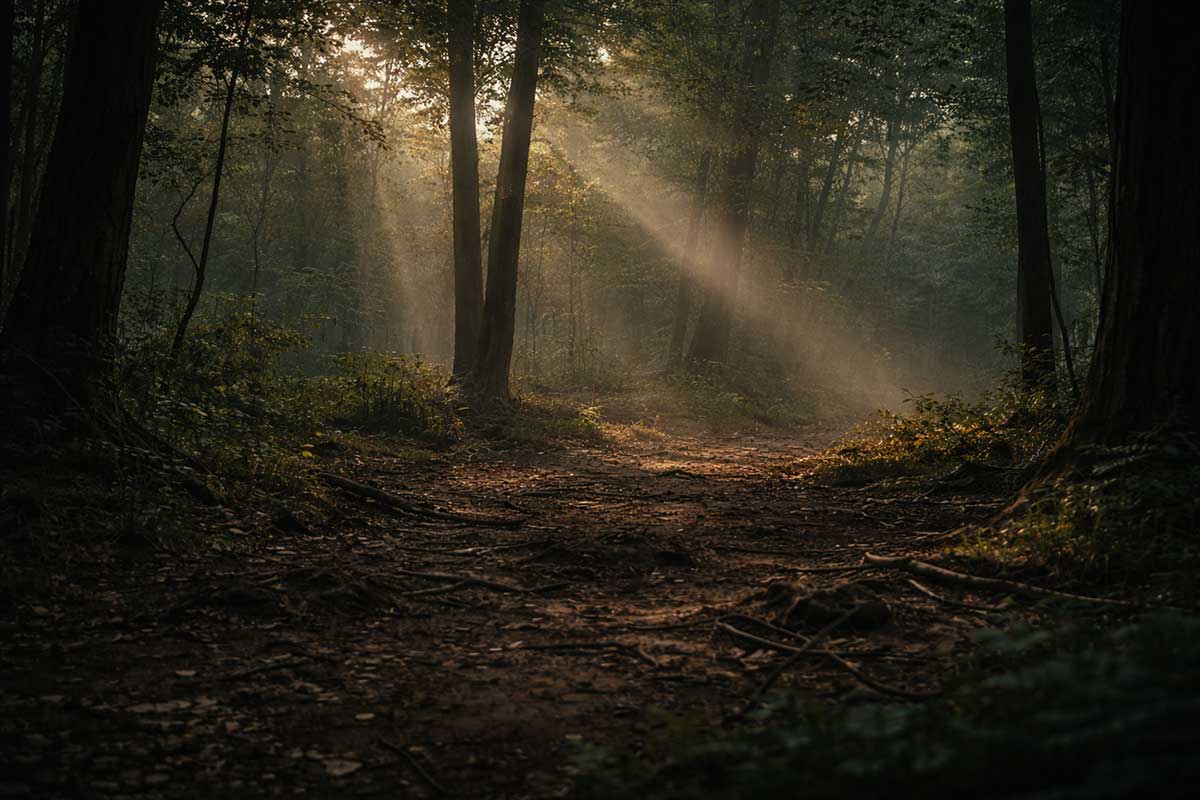
Truth vs. factual certainty
Moderator:
Nick Sasaki
Author:
Ryūnosuke Akutagawa
Participants:
Donald Keene
Hiroshi Nara
Masao Miyoshi
Stephen Dodd
Marvin Marcus
Nick Sasaki
Let’s begin with the question readers most urgently want answered, even though the story refuses to answer it. What actually happened in the grove? Is that still a meaningful question once all the testimonies contradict one another?
Donald Keene
It remains meaningful emotionally, but not epistemologically. Akutagawa understands that readers instinctively seek coherence, yet he withholds it to expose our habit of confusing narrative satisfaction with truth. The event matters less than our discomfort at not being able to reconstruct it.
Hiroshi Nara
I would go further. The question itself becomes a trap. By asking “what really happened,” we assume there exists a stable event independent of perception. Akutagawa dismantles that assumption. What happened is inseparable from how it is told.
Masao Miyoshi
Yes, the grove is not merely a location—it is a space where Enlightenment notions of truth collapse. Modernity promises objectivity, but Akutagawa shows that subjectivity is not a flaw in the system; it is the system.
Stephen Dodd
Still, I hesitate to say nothing happened. Violence occurred. A body exists. What Akutagawa destabilizes is not reality itself, but the authority to define it. The reader is forced to confront how easily facts become narratives.
Marvin Marcus
And that confrontation is ethical. We want a culprit because moral systems depend on clarity. Akutagawa denies us that clarity, not to relativize violence, but to show how moral judgment often rests on fragile storytelling.
Nick Sasaki
That leads directly to the second question. Is Akutagawa questioning our ability to know the truth—or our need to insist that one definitive truth must exist?
Ryūnosuke Akutagawa
(smiling faintly)
I was less interested in denying truth than in exposing arrogance. The belief that one version must dominate the others often says more about the listener than the speaker.
Donald Keene
Akutagawa is diagnosing a human impulse: the discomfort with ambiguity. Readers want certainty not because it is true, but because it is calming.
Hiroshi Nara
Exactly. The testimonies are not puzzles to be solved. They are mirrors. Each reader’s frustration reveals their own threshold for uncertainty.
Masao Miyoshi
Modern society demands closure—legal, moral, historical. Akutagawa withholds it to show how often closure is a performance masquerading as truth.
Stephen Dodd
And importantly, the story does not reward skepticism with superiority. Even doubting all testimonies does not free the reader. Doubt itself becomes another posture.
Marvin Marcus
Which is why the story endures. It refuses to let readers occupy a comfortable position—neither believer nor judge nor cynic.
Nick Sasaki
Final question for this topic: Does the absence of certainty make the violence less real—or does it make it more disturbing?
Ryūnosuke Akutagawa
Violence does not require clarity to exist. In fact, confusion may deepen its cruelty. When no account stabilizes the event, suffering loses even the dignity of explanation.
Donald Keene
The violence becomes more disturbing precisely because it resists containment. Without a narrative frame, it lingers.
Hiroshi Nara
Yes. Certainty allows us to file violence away—as tragedy, crime, or justice. Uncertainty leaves it exposed.
Masao Miyoshi
This is modern anxiety in literary form. The fear is not that violence occurred, but that we cannot organize it meaningfully.
Stephen Dodd
And that inability implicates us. We are not distant observers; we are participants in the failure to resolve.
Marvin Marcus
Which may be Akutagawa’s final provocation: the violence in In a Grove does not end in the forest. It continues in the reader’s unsettled mind.
Nick Sasaki
So perhaps the question “What really happened?” was never meant to be answered—only to reveal how much we depend on answers to feel morally secure.
(A pause follows. The grove remains silent.)
Topic 2: Testimony as Self-Defense
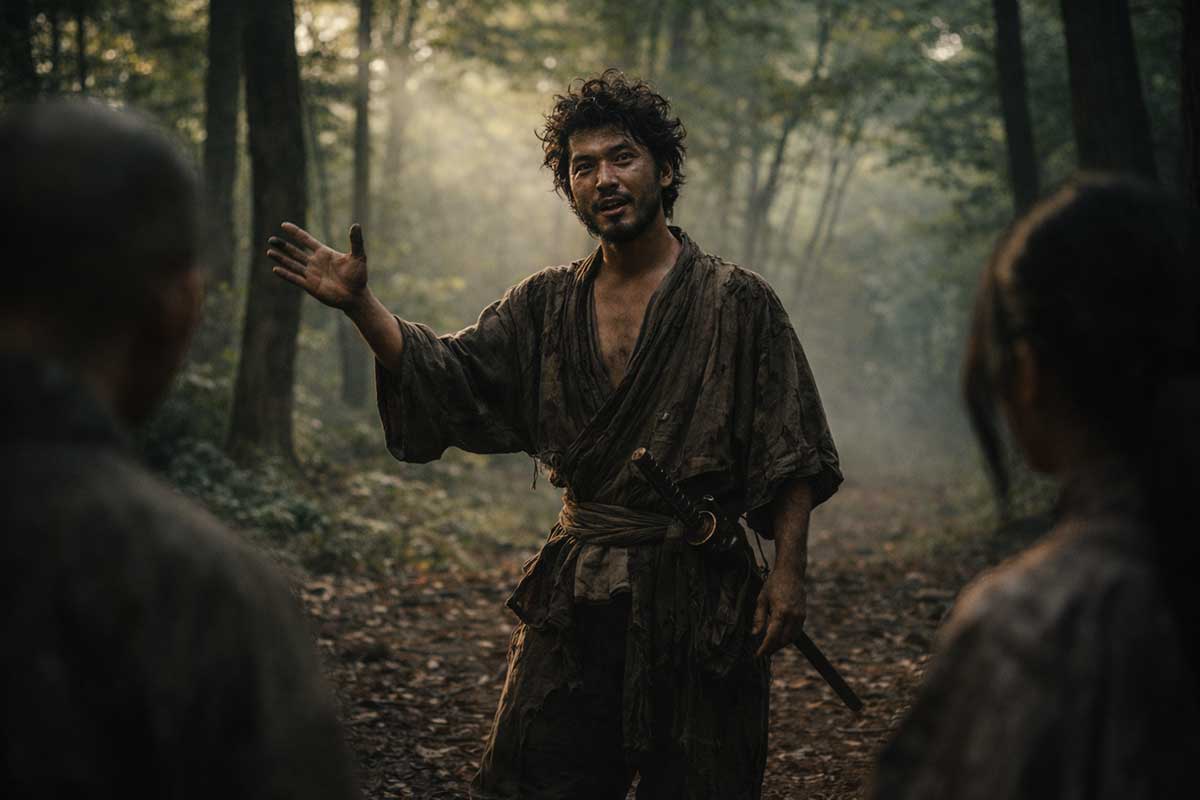
Shame, identity, and narrative distortion
Moderator:
Nick Sasaki
Author:
Ryūnosuke Akutagawa
Participants:
Tomiko Yoda
Jay Rubin
Takashi Umehara
Hiroshi Nara
Roy Starrs
Nick Sasaki
Let’s turn from facts to motive. Are the characters in In a Grove lying to deceive others—or are they rewriting events to survive their own shame?
Tomiko Yoda
The testimonies are acts of self-fashioning. Each speaker constructs a version of events that allows them to remain intelligible to themselves within social norms—especially norms around honor, gender, and power. Shame is not incidental; it is the engine.
Jay Rubin
I agree. None of the narrators sound like villains in their own minds. Even Tajōmaru frames himself as passionate rather than cruel. These are not strategic lies so much as psychological necessities.
Takashi Umehara
In Japanese moral thought, shame precedes guilt. Guilt presumes an internal moral law; shame presumes an audience. Each testimony imagines a different audience and adjusts accordingly.
Hiroshi Nara
And that imagined audience is often harsher than reality. The narrators anticipate judgment and preempt it. Their stories are defensive gestures against social annihilation.
Roy Starrs
Which is why the accounts are so elaborate. If deception were the goal, simplicity would suffice. What we see instead is excess—overjustification, theatricality, moral framing.
Nick Sasaki
That leads naturally to the second question. How does each testimony function less as a factual account and more as a moral shield?
Ryūnosuke Akutagawa
I was fascinated by how people explain themselves even when no one is demanding an explanation. That impulse often reveals more than confession ever could.
Tomiko Yoda
Exactly. The wife’s testimony is not about accuracy; it is about reclaiming agency. Whether she killed or did not kill her husband matters less than refusing to be fixed solely as victim.
Jay Rubin
Tajōmaru’s account shields him from cowardice. The samurai’s testimony shields him from humiliation. Each narrative selects the lesser unbearable truth.
Takashi Umehara
This is existential. To lose one’s moral story is to lose one’s place in the world. The testimonies preserve meaning at the cost of coherence.
Hiroshi Nara
And notice how no one simply says, “I don’t know.” Uncertainty itself would be a kind of exposure they cannot afford.
Roy Starrs
Which suggests that narrative is not merely descriptive—it is armor.
Nick Sasaki
Final question for this topic. If self-preservation drives all storytelling, can honesty ever exist without a form of self-destruction?
Ryūnosuke Akutagawa
Pure honesty is a myth we admire from a distance. When faced with survival—social, moral, or psychic—we choose coherence over truth.
Tomiko Yoda
Honesty often requires a willingness to be undone. Few societies reward that. Most punish it quietly.
Jay Rubin
Literature may be the only place where partial honesty survives—precisely because it allows contradiction.
Takashi Umehara
Yes. The self is fragile. To tell the full truth may be to fracture it beyond repair.
Hiroshi Nara
Which is why In a Grove does not condemn its speakers. It observes them.
Roy Starrs
And by observing without judging, the story forces readers to ask a harder question: What would I say if my identity were at stake?
Nick Sasaki
So testimony, in this story, is not a path to truth—but a strategy for survival.
(The grove remains crowded with voices, each defending itself.)
Topic 3: Can Anyone Be Neutral?
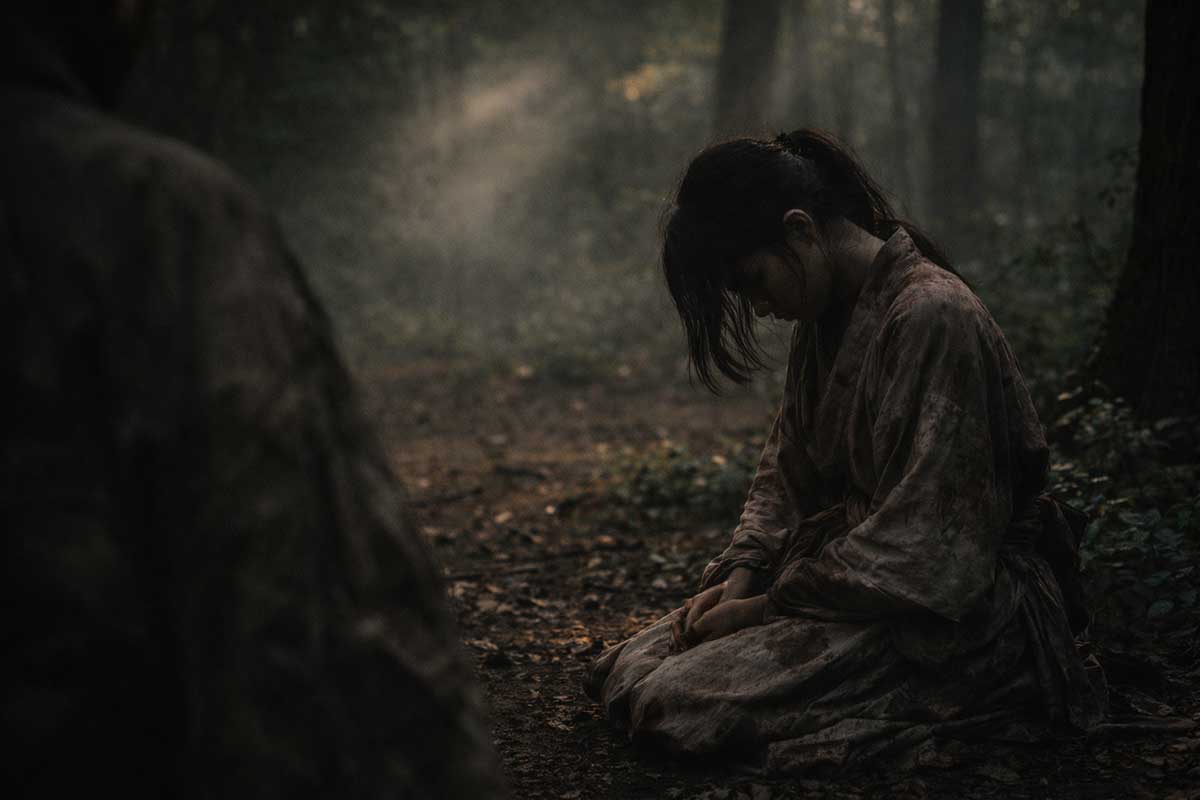
Witnesses, silence, and moral responsibility
Moderator:
Nick Sasaki
Author:
Ryūnosuke Akutagawa
Participants:
Marvin Marcus
Donald Keene
Stephen Dodd
Haruo Shirane
Tomiko Yoda
Nick Sasaki
Let’s focus on the figures who seem safest—the woodcutter and the priest. Are they neutral witnesses, or are they morally implicated by what they withhold?
Marvin Marcus
They are implicated precisely because they appear neutral. Their restraint creates the illusion of objectivity, but restraint is itself a choice. By withholding, they shape the narrative as much as the louder voices.
Donald Keene
Akutagawa understood that silence can be strategic. The priest’s testimony is shaped by moral fatigue—he wants to preserve faith in humanity, even if it requires omission.
Stephen Dodd
And the woodcutter’s role is especially telling. He presents himself as incidental, yet he is closest to the physical reality of the crime. His omissions are not accidental; they are protective.
Haruo Shirane
Neutrality often masquerades as humility. In classical literature, the observer is assumed to see clearly. Akutagawa subverts this by showing that observation is already interpretation.
Tomiko Yoda
We should also consider social position. The witnesses have reputations to protect. Their silence preserves not truth, but social equilibrium.
Nick Sasaki
That raises the second question. Is neutrality an ethical stance—or an illusion that shields the observer from responsibility?
Ryūnosuke Akutagawa
I was skeptical of neutrality long before I distrusted truth. Neutrality often comforts the observer more than it serves justice.
Marvin Marcus
Exactly. Neutrality claims moral high ground while avoiding moral cost. It allows one to stand near harm without being stained by it.
Donald Keene
Akutagawa lived in a period when authority relied heavily on “objective” testimony. He exposes how that objectivity collapses under human pressure.
Stephen Dodd
The story suggests that neutrality is not absence of bias—it is bias toward self-preservation.
Haruo Shirane
And culturally, neutrality often aligns with power. Those who can afford silence are rarely those most harmed.
Tomiko Yoda
Which makes neutrality gendered as well. Silence does not affect all bodies equally.
Nick Sasaki
Final question. At what point does silence become as consequential as false testimony?
Ryūnosuke Akutagawa
When silence prevents reckoning. When it allows harm to pass without consequence. Silence then becomes a collaborator.
Marvin Marcus
In In a Grove, silence stabilizes disorder. It allows the competing narratives to coexist without confrontation—which is itself a moral outcome.
Donald Keene
False testimony distorts truth, but silence erases it. Both can be lethal to justice.
Stephen Dodd
The reader senses this intuitively. We are unsettled not only by lies, but by what is never said.
Haruo Shirane
Silence freezes the moral moment. Nothing moves forward.
Tomiko Yoda
And that stasis is its own form of violence.
Nick Sasaki
So the witnesses are not outside the story’s moral field—they are inside it, quietly shaping its outcome.
(The grove grows quieter, not clearer.)
Topic 4: Is Truth Singular or Fragmented?
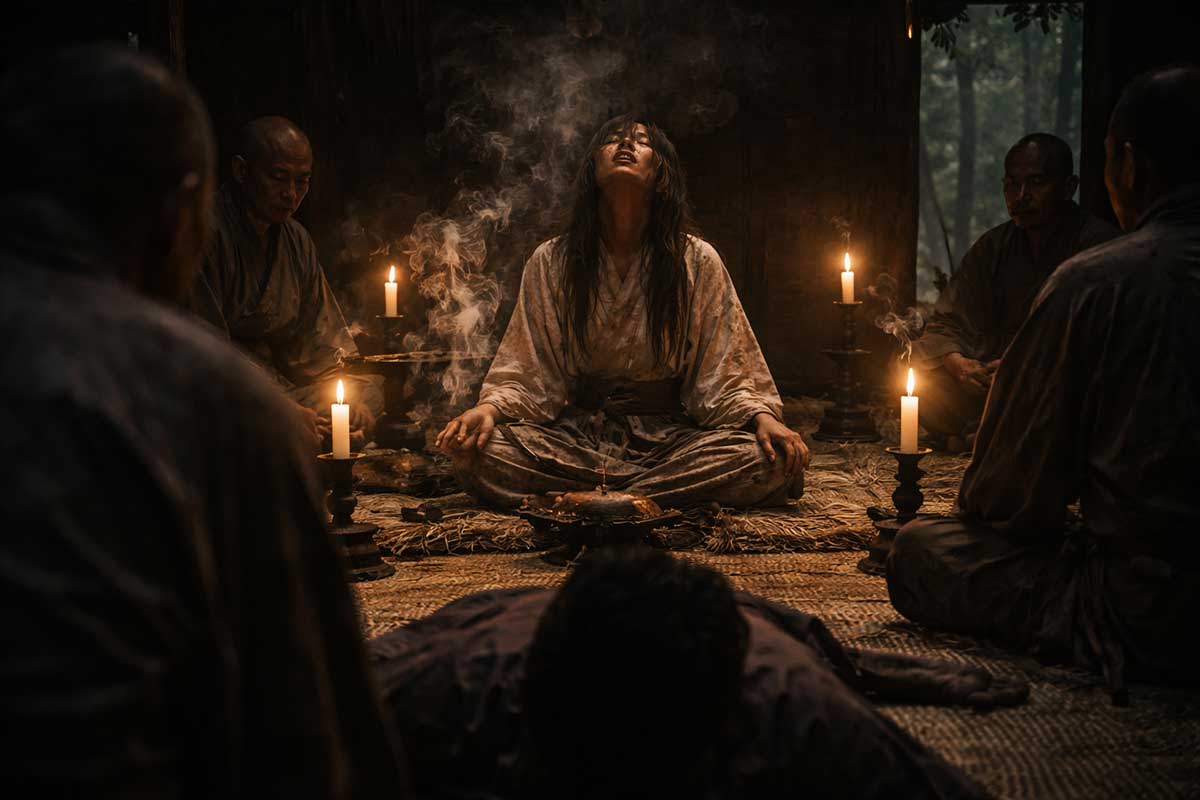
Philosophical limits of knowledge
Moderator:
Nick Sasaki
Author:
Ryūnosuke Akutagawa
Participants:
Masao Miyoshi
Takashi Umehara
Haruo Shirane
Roy Starrs
Jay Rubin
Nick Sasaki
Let’s confront the philosophical core. Does In a Grove argue that truth itself is fragmented—or that humans are incapable of holding it whole?
Masao Miyoshi
The story is not relativism for its own sake. It dramatizes a modern condition: truth may exist, but it is inaccessible once filtered through desire, fear, and social role. Fragmentation is not the enemy of truth—it is its lived form.
Takashi Umehara
From a philosophical angle, Akutagawa exposes the collapse of metaphysical certainty. When transcendence disappears, truth loses its anchor. What remains are perspectives competing for moral survival.
Haruo Shirane
Literarily, the fragmentation is deliberate craft. Akutagawa borrows classical testimonial forms only to hollow them out. The reader expects synthesis; the text refuses it.
Roy Starrs
This refusal is modernist. The story is not asking us to assemble a mosaic. It is asking us to accept disjunction as the condition of modern consciousness.
Jay Rubin
And that disjunction is emotional as much as intellectual. Readers feel loss—not of facts, but of confidence that facts can save us.
Nick Sasaki
Second question. Why include the dead man’s testimony at all? Does the supernatural deepen truth—or destabilize it beyond recovery?
Ryūnosuke Akutagawa
I included it to remove the last refuge of certainty. If even the dead cannot agree with the living, then no authority remains untouched.
Masao Miyoshi
Exactly. The supernatural does not restore order; it contaminates it. The afterlife becomes another narrative space, not a final court.
Takashi Umehara
Traditionally, the dead speak truth. Akutagawa subverts that tradition. Death offers no purification—only continuation of self-justification.
Haruo Shirane
Formally, the dead man’s voice breaks genre expectations. It tells the reader: do not expect resolution from myth or ritual.
Roy Starrs
And emotionally, it is devastating. The hope that death clarifies life is quietly extinguished.
Jay Rubin
Which makes the story feel modern even now. No appeal—religious, legal, or metaphysical—rescues us.
Nick Sasaki
Final question. If all perspectives are partial, is truth something to be discovered—or something that must be negotiated?
Ryūnosuke Akutagawa
Perhaps truth is neither discovered nor negotiated, but endured. What matters is not agreement, but responsibility in the face of uncertainty.
Masao Miyoshi
Negotiation implies power. Those with louder voices shape “truth.” Akutagawa exposes that process rather than endorsing it.
Takashi Umehara
Discovery implies faith in coherence. The story withdraws that faith, forcing ethical humility.
Haruo Shirane
The reader becomes the site of negotiation. Meaning does not emerge in the text alone—it forms in the act of reading.
Roy Starrs
Which is why the story never ends. It renews itself with every reader who tries—and fails—to settle it.
Jay Rubin
Truth here is not an object. It is a tension that refuses to collapse.
Nick Sasaki
So In a Grove does not destroy truth—it removes our certainty that truth will rescue us.
(The grove offers no clearing.)
Topic 5: Why No Judgment?
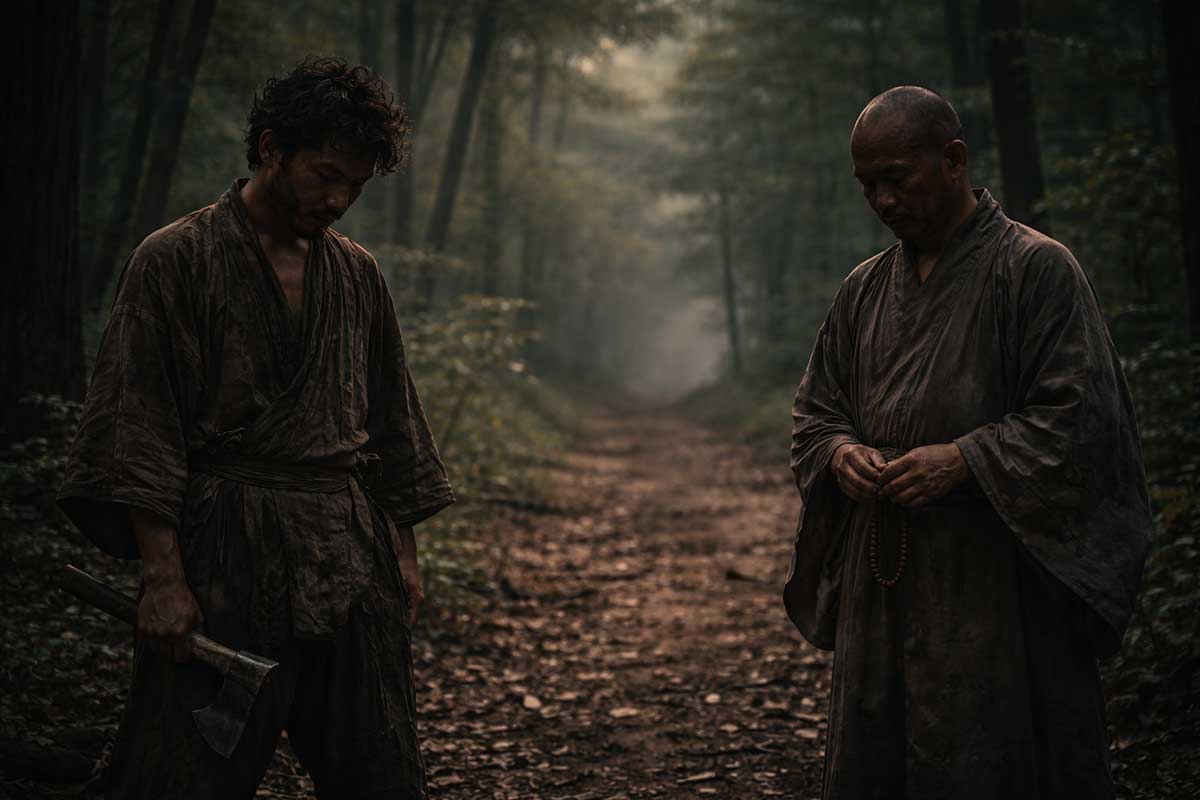
Ethics without closure
Moderator:
Nick Sasaki
Author:
Ryūnosuke Akutagawa
Participants:
Donald Keene
Marvin Marcus
Tomiko Yoda
Masao Miyoshi
Takashi Umehara
Nick Sasaki
We arrive where readers most often feel abandoned. Akutagawa, you refuse judgment. Is that refusal an empowerment of the reader—or an abdication of moral responsibility?
Ryūnosuke Akutagawa
I refused judgment because judgment offered too much comfort. To condemn one voice would excuse the others—and absolve the reader from discomfort. I preferred unease to reassurance.
Donald Keene
Akutagawa’s refusal is not moral silence; it is moral provocation. By withholding judgment, he ensures the ethical question remains active rather than settled.
Marvin Marcus
Yes. Judgment closes cases. In a Grove keeps them open. The story does not end because moral inquiry should not end.
Tomiko Yoda
There is also a politics to refusal. Judgment often mirrors power. By declining it, Akutagawa disrupts the authority that usually claims the right to decide.
Masao Miyoshi
And philosophically, judgment presumes stable truth. The story has already dismantled that premise. To judge would contradict the epistemology the text has established.
Takashi Umehara
Ethically, refusal forces humility. It reminds us that certainty is often violence disguised as clarity.
Nick Sasaki
Second question. What ethical burden is placed on the reader when the author withholds resolution?
Ryūnosuke Akutagawa
The burden of reflection. The reader must endure ambiguity without outsourcing responsibility to the author.
Donald Keene
This is demanding literature. It does not entertain judgment; it requires it—without guaranteeing satisfaction.
Marvin Marcus
Readers become witnesses, not jurors. Their task is not to decide guilt, but to confront the limits of decision.
Tomiko Yoda
And that burden is uneven. Some readers feel liberated; others feel exposed. That difference is part of the work’s meaning.
Masao Miyoshi
The story refuses to protect the reader from moral fatigue. It mirrors modern life, where answers rarely arrive neatly.
Takashi Umehara
Responsibility without certainty is heavier—but more honest.
Nick Sasaki
Final question. Does the grove symbolize a world without moral order—or a world where judgment has been transferred entirely to us?
Ryūnosuke Akutagawa
The grove is not lawless. It is ungoverned by illusion. Judgment exists—but it no longer arrives from above.
Donald Keene
The grove strips away institutions and leaves conscience exposed.
Marvin Marcus
It is a testing ground. Those who demand verdicts leave dissatisfied; those who accept responsibility leave changed.
Tomiko Yoda
The grove is where social scripts dissolve. What remains is the self, accountable to itself.
Masao Miyoshi
Modernity lives in that grove—without guarantees, without absolution.
Takashi Umehara
And perhaps without innocence.
Nick Sasaki
So In a Grove ends not with a sentence, but with a transfer—judgment removed from the page and placed, quietly, into the reader’s hands.
(The grove does not clear. The responsibility remains.)
Final Thoughts by Ryūnosuke Akutagawa
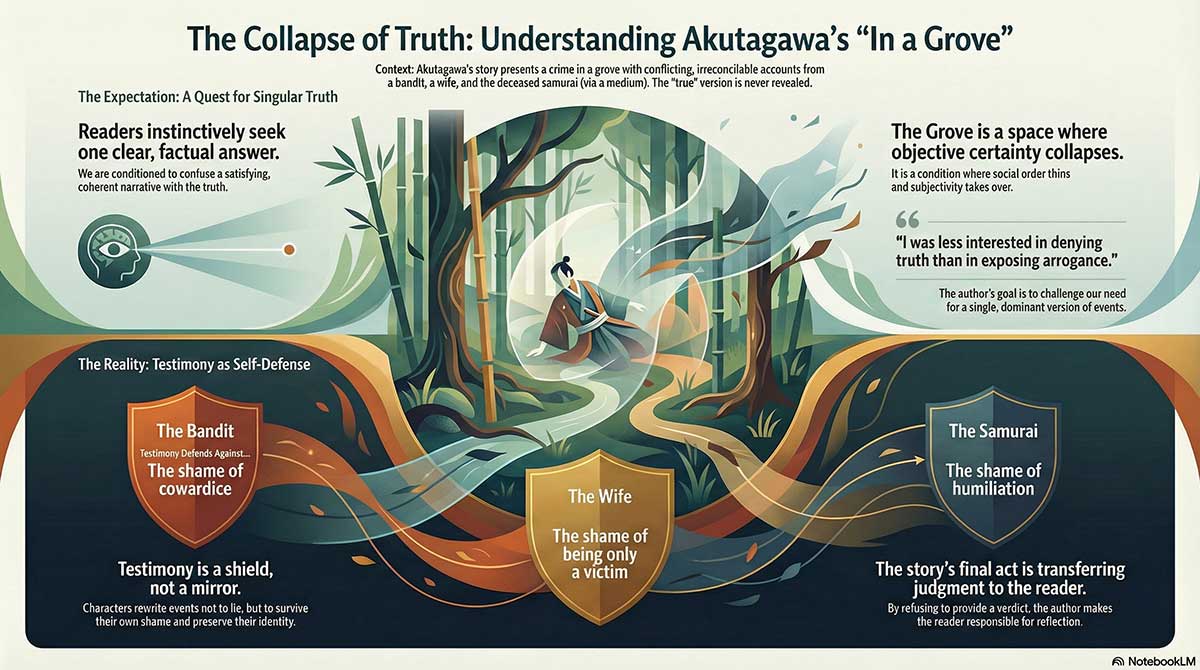
Readers often ask why I refused to judge, why I left the story unresolved, why I allowed contradiction to stand. My answer is simple: judgment would have been a lie.
To choose one account over the others would suggest that truth arrives intact if one listens carefully enough. But what I observed in life was different. People do not distort reality only to deceive others; they do so to endure themselves.
If the story leaves you unsettled, it is because it denies you the relief of verdict. That unease is not a failure of the work—it is its final gesture. The responsibility that once belonged to gods, courts, or authors has been quietly transferred.
The grove does not condemn.
It does not absolve.
It only listens.
What you do with what you have heard is no longer my concern.
Short Bios:
Ryūnosuke Akutagawa
A central figure of modern Japanese literature, Akutagawa is known for psychologically complex short stories that explore moral ambiguity, unreliable narration, and the collapse of absolute truth, most famously in In a Grove.
Nick Sasaki
Founder of ImaginaryTalks, Nick Sasaki moderates deep literary and philosophical conversations that bring classic works into dialogue with modern ethical questions, emphasizing ambiguity, responsibility, and reader participation.
Donald Keene
One of the most influential interpreters of Japanese literature in English, Keene introduced generations of readers to modern Japanese writers, including Akutagawa, with clarity and cultural sensitivity.
Haruo Shirane
A leading scholar of Japanese literary history, Shirane specializes in narrative form, classical-modern transitions, and how literary conventions shape meaning and interpretation.
Jay Rubin
An acclaimed translator and critic, Rubin focuses on psychological realism and moral tension in modern Japanese fiction, bringing nuance to works shaped by ambiguity and inner conflict.
Masao Miyoshi
A major voice in modern literary theory, Miyoshi examined modernity, fragmentation, and epistemological uncertainty, offering influential readings of Japanese and comparative literature.
Takashi Umehara
A philosopher and cultural critic, Umehara explored ethics, nihilism, and spiritual crisis in modern Japan, often engaging literary texts as reflections of moral instability.
Tomiko Yoda
Yoda’s work focuses on gender, shame, and narrative self-fashioning in Japanese literature, illuminating how identity and power shape testimony and silence.
Hiroshi Nara
A scholar of narrative voice and testimony, Nara studies how memory, perspective, and withholding complicate truth in modern Japanese fiction.
Roy Starrs
An expert on Taishō-era modernism, Starrs examines experimental narrative forms and cultural dislocation in early twentieth-century Japanese literature.
Marvin Marcus
Marcus’s scholarship emphasizes ethics, witness, and moral ambiguity, exploring how modern literature transfers responsibility from institutions to individuals and readers.
Leave a Reply