
|
Getting your Trinity Audio player ready...
|
Trevor Noah:
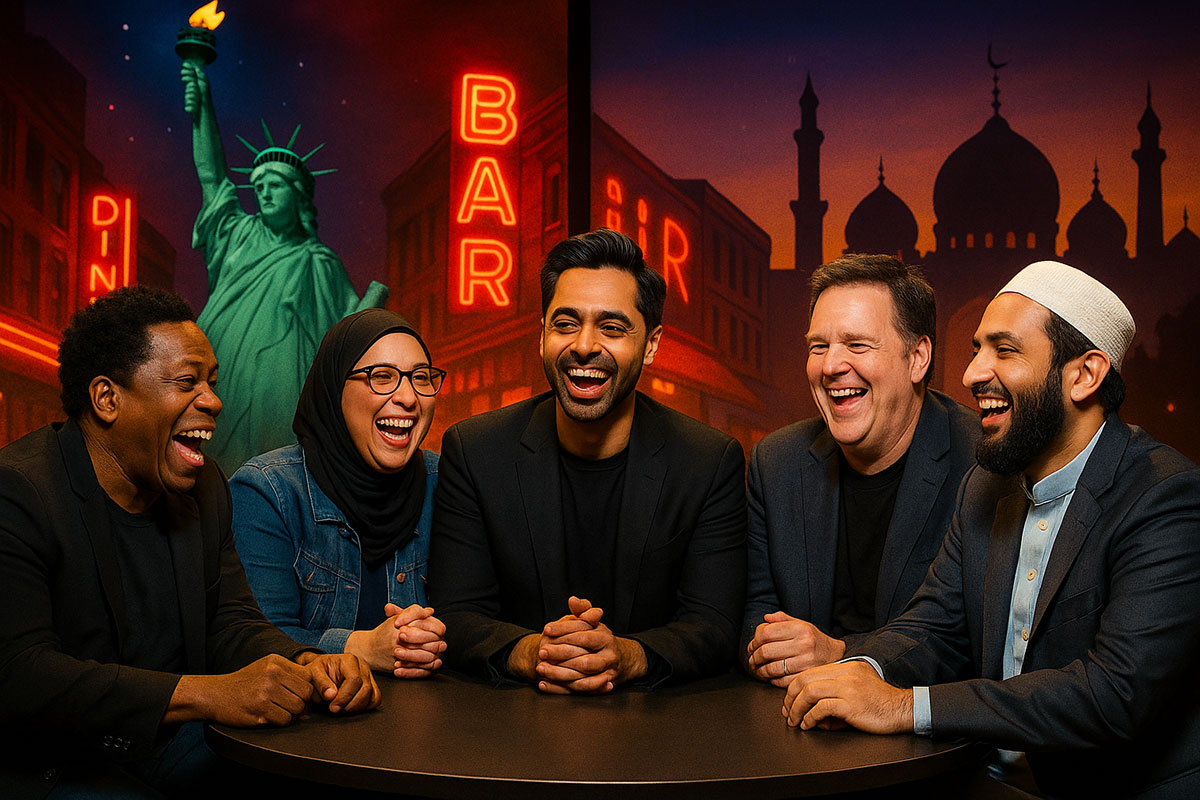
You know, when people talk about world peace, they often imagine politicians shaking hands, signing treaties, maybe a dove or two flying across the sky. But I’ve always thought — what if instead of politicians, we sent comedians? Imagine the UN General Assembly, but instead of speeches, you get a tight five from Chris Rock, a story from Mo Amer, and a closing bit from Hannah Gadsby. The truth is, laughter is universal — it crosses borders faster than any passport, it breaks tension faster than any peace accord. Today, we’re bringing together voices from different worlds — Muslim, American, East, West — to see if humor can really do what politics has failed at for centuries: make us understand each other. Not just tolerate, but laugh together. And if we can laugh together, maybe, just maybe… we can live together.
(Note: This is an imaginary conversation, a creative exploration of an idea, and not a real speech or event.)
Topic 1: Laughter Without Borders — Can Comedy Heal Divides?
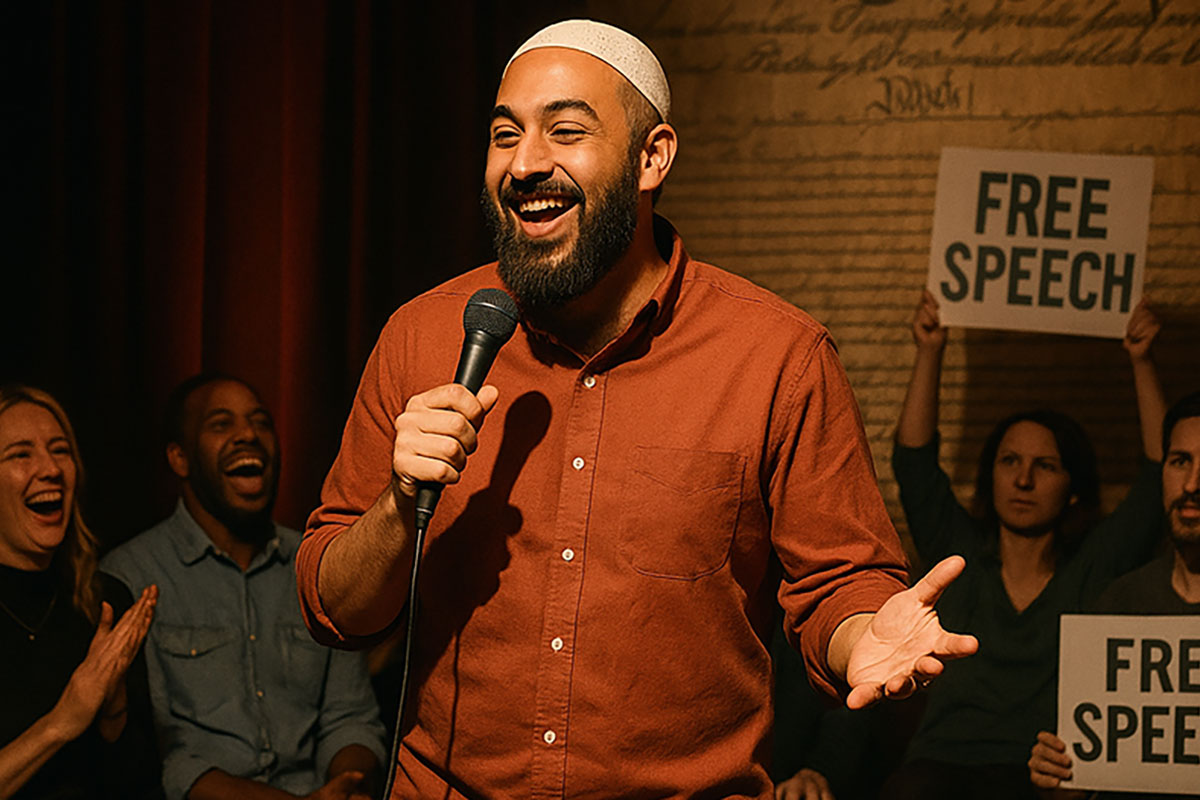
Moderator: Hasan Minhaj (Muslim-American comedian, skilled at balancing humor and tough topics)
Hasan Minhaj
We all know comedy can break down walls… and sometimes start new ones if you’re not careful. So let me start here — can humor truly heal divides between people who deeply disagree on culture, religion, or politics, or are we just kidding ourselves?
Rowan Atkinson (British comedian, known for universal, nonverbal humor)
I believe humor can be a bridge because it speaks a language everyone understands — like tripping over a chair. But the trick is to trip without accidentally insulting someone’s mother, their country, and their holy book in one fall.
Sheikh Omar Suleiman (Islamic scholar, peace advocate)
From an Islamic perspective, laughter is not haram — but it should never come at the expense of another’s dignity. If humor is used to humble ourselves, or to bring light to shared human experiences, then it can soften even the hardest hearts.
Trevor Noah (comedian, peace advocate)
When I lived between different worlds in South Africa, I found that humor was the safest passport. You could joke about misunderstandings, about yourself, about food — and suddenly people stop seeing “the other” and start seeing “the neighbor.”
Dr. Ingrid Mattson (Muslim peace scholar)
Humor works when it’s rooted in empathy. If your laughter excludes or humiliates, it builds higher walls. If it invites others in, it turns a joke into an act of peacemaking.
Jim Gaffigan (comedian, known for clean, observational humor)
I just avoid the political minefields. Talk about hot dogs, ice cream, and how we all get sleepy in the afternoon — nobody starts a holy war over that.
Hasan Minhaj
Okay, let’s take this deeper — if we say comedy is a tool for peace, what’s the line you will never cross, even in the name of a good joke?
Sheikh Omar Suleiman
I would never mock someone’s faith. You can challenge ideas, but not ridicule the sacred. The Prophet Muhammad himself smiled often, but his humor never demeaned.
Jim Gaffigan
I won’t joke about tragedy while the wound is fresh. People need time before they can laugh at the pain. Unless it’s my own pain — then I can roast it immediately.
Trevor Noah
I avoid punching down. If the joke makes the powerless feel smaller, I’ve failed. If it makes the powerful uncomfortable, I’ve succeeded.
Rowan Atkinson
For me, it’s important to aim at the universal absurdities of human behavior rather than the identities people hold dear.
Dr. Ingrid Mattson
The line is dignity. Once you cross into stripping someone of it, you’re not joking — you’re harming.
Hasan Minhaj
Last question — if you had to tell one joke that could make the whole world laugh, without offending anyone, what would it be about?
Trevor Noah
It would be about how every country thinks their weather is the worst… until they visit London.
Jim Gaffigan
Probably about overeating during holidays. No matter your religion, we all agree dessert is mandatory.
Dr. Ingrid Mattson
I’d choose a joke about misunderstandings in translation — something harmless that also reminds us how much we need to listen.
Rowan Atkinson
I would say nothing… and fall down the stairs. Physical comedy is the last truly universal language.
Sheikh Omar Suleiman
I’d tell a joke about everyone showing up at the same interfaith dinner… and realizing they all brought hummus.
Topic 2: Faith Under the Spotlight — Can Religion Take a Joke?
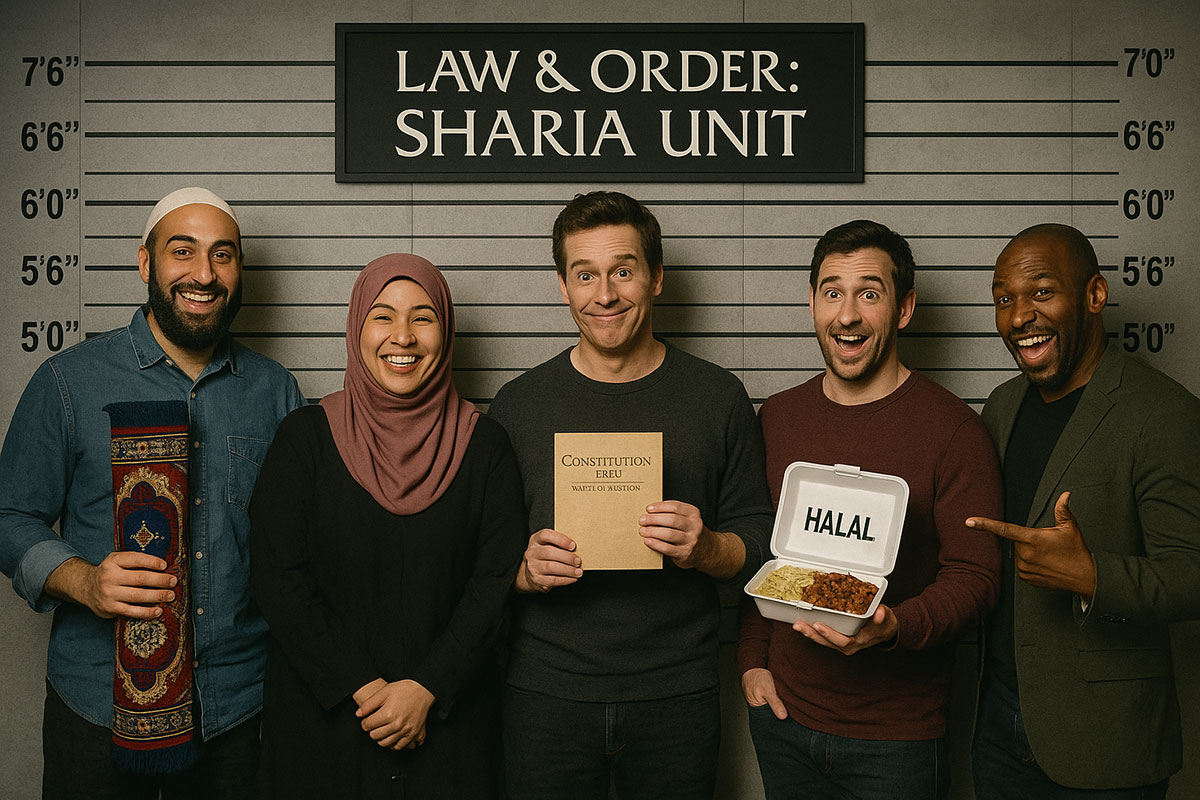
Moderator: Maz Jobrani (Iranian-American comedian, known for Middle East humor that bridges East & West)
Maz Jobrani
So, here’s the big question. Can religion actually take a joke? Or are we forever walking on eggshells when faith enters the comedy club?
Russell Peters (Canadian-Indian comedian, skilled at cultural humor)
I think religion can take a joke — but it depends who’s telling it. If you’re part of that community, people will laugh with you. If you’re outside, it’s more like… “What did he just say about my grandma’s prayer beads?”
Linda Sarsour (Palestinian-American Muslim activist)
Faith isn’t fragile, but people’s egos are. As a Muslim, I can laugh at our quirks — like the fact that no matter where you go in the world, someone’s mom will try to feed you way more than you can eat during Ramadan.
John Oliver (comedian, political satirist)
Religions have survived wars, famines, and plagues. I think they can handle a joke. The real issue is whether the followers can resist the urge to send you 500 angry emails about it.
Imam Khalid Latif (Muslim chaplain, peace advocate)
It’s not about whether faith can handle humor — it’s whether the joke is used to bring understanding or to tear people apart. I’ve seen humor be a beautiful tool for dialogue… and I’ve seen it shut down the room entirely.
Wanda Sykes (American comedian, known for sharp social commentary)
Honestly, some people treat their religion like it’s a 5-year-old — you can’t even raise your voice around it. But humor is like oxygen — it keeps the conversation alive.
Maz Jobrani
So, what’s the secret to making a religious joke that actually unites people instead of dividing them?
Linda Sarsour
Keep it real but keep it kind. The funniest jokes about Muslims are usually about things we all share — big family gatherings, food obsessions, or the eternal hunt for the shoes you left outside the mosque.
John Oliver
Punch up, not down. Don’t mock the believers in the pews — mock the televangelist who’s using the money to buy a gold-plated swimming pool.
Russell Peters
Relate it to universal human behavior. If you make people laugh at something they’ve also done, they won’t feel targeted — they’ll feel included.
Imam Khalid Latif
I think it’s about intention. If the heart behind the joke is respect, people will feel it. If it’s arrogance, they’ll feel that too.
Wanda Sykes
You gotta test it. Try it on a friend in that faith before you unleash it on a stadium. Saves you from getting canceled and saves them from calling their lawyer.
Maz Jobrani
If you had to choose one religion-related joke that could work in front of the Pope, an Imam, a Rabbi, and a Buddhist monk — what would you go with?
John Oliver
Something about how every faith says “be nice to people”… and somehow that message gets lost in the group chat.
Wanda Sykes
I’d do something about religious holidays overlapping — like all of them landing on the same weekend and everyone fighting for parking spots at the same hall.
Linda Sarsour
Probably about the universal tradition of kids falling asleep during sermons, no matter the religion.
Russell Peters
I’d do a bit about how every faith has at least one dessert that’s so sweet it could put you in a sugar coma.
Imam Khalid Latif
I’d joke about everyone bringing their own prayer mat to a potluck and accidentally mixing them up like a coat check.
Topic 3: When Belief Meets Belly Laughs — Can Humor Heal Division?
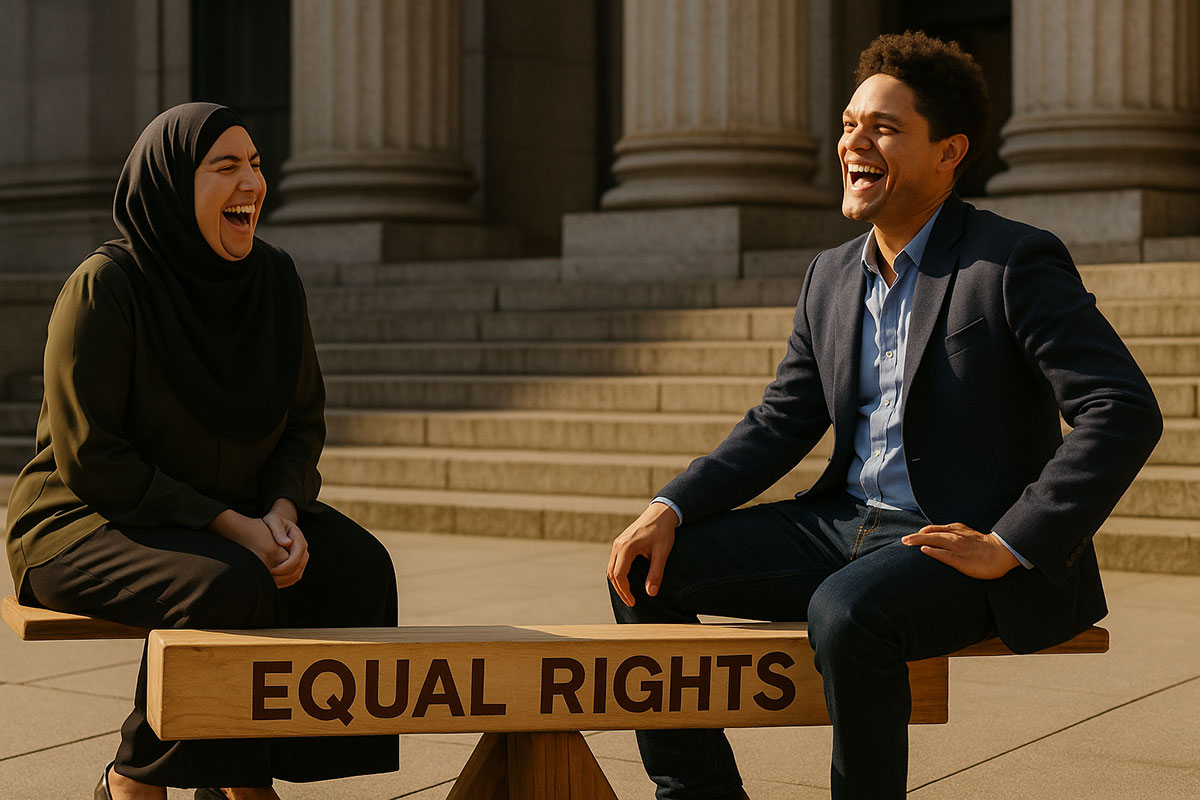
Moderator: Hasan Minhaj (American comedian of Indian Muslim heritage, known for blending political satire with personal storytelling)
Hasan Minhaj
I’ve been thinking… every time the world feels divided, people say we need “serious dialogue.” But what if we tried serious laughter instead? Can humor actually be a bridge between belief systems?
Trevor Noah (South African comedian, global perspective on race & culture)
Humor is like the universal translator. I’ve been in rooms where people didn’t share a language, but they still laughed when someone slipped on a banana peel. Imagine applying that same simplicity to religion — finding that one shared human “oops” moment.
Aasif Mandvi (British-American Muslim comedian, The Daily Show)
The tricky part is humor is so tied to culture. A joke that kills in Brooklyn might flop in Karachi. But when you hit that sweet spot of shared humanity — food, parents, love, death — that’s where you get the magic.
Jim Gaffigan (American comedian, clean humor style)
I talk about food a lot because it’s safe territory. You can joke about overeating during Ramadan or Christmas, and suddenly everyone’s picturing the same post-meal nap. That’s unity, my friend.
Dalia Mogahed (Muslim scholar, advocate for interfaith dialogue)
Humor lowers defenses. When you laugh, you let your guard down. That’s when you can plant a deeper idea — like “Hey, maybe we’re not so different.”
Tig Notaro (American comedian, known for deadpan and personal stories)
I think humor works because it’s vulnerable. The best jokes come from exposing your own flaws. That vulnerability is the same thing faith is supposed to teach us — humility.
Hasan Minhaj
So, if you had to design a comedy set whose goal was specifically to promote world peace, what would be your approach?
Jim Gaffigan
Start with food jokes. Food diplomacy is underrated. People who laugh over shawarma or burgers aren’t thinking about politics in that moment.
Trevor Noah
I’d do travel stories — show how ridiculous we all are when we’re in someone else’s culture. If we can laugh at ourselves, we can respect each other more.
Dalia Mogahed
I’d weave in little truths about how similar our values are. Humor is the sugar that makes the medicine go down.
Aasif Mandvi
I’d poke fun at the assumptions people make about each other’s faith — the funny, harmless ones. It’s like clearing the air without making it awkward.
Tig Notaro
I’d make it personal. Stories about me and people from completely different worlds finding something absurd in common.
Hasan Minhaj
What’s the one joke you think could make even the most hardline skeptic laugh — no matter their religion or background?
Aasif Mandvi
A joke about airport security. That experience unites us all in awkward humiliation.
Trevor Noah
A joke about trying to explain your culture’s weirdest dish to someone who’s never heard of it — “No, it’s not soup, it’s… complicated.”
Tig Notaro
I’d go with something about family weddings — because no matter the faith, someone’s uncle is going to ruin the dance floor.
Jim Gaffigan
A joke about leftovers. Whether it’s halal lamb, Thanksgiving turkey, or Passover brisket — someone’s keeping it in the fridge for way too long.
Dalia Mogahed
I’d do something about how prayer in any religion can be interrupted by the same thing — a child, a pet, or your phone buzzing.
Topic 4: Sacred Laughter — When Faith and Funny Share the Stage
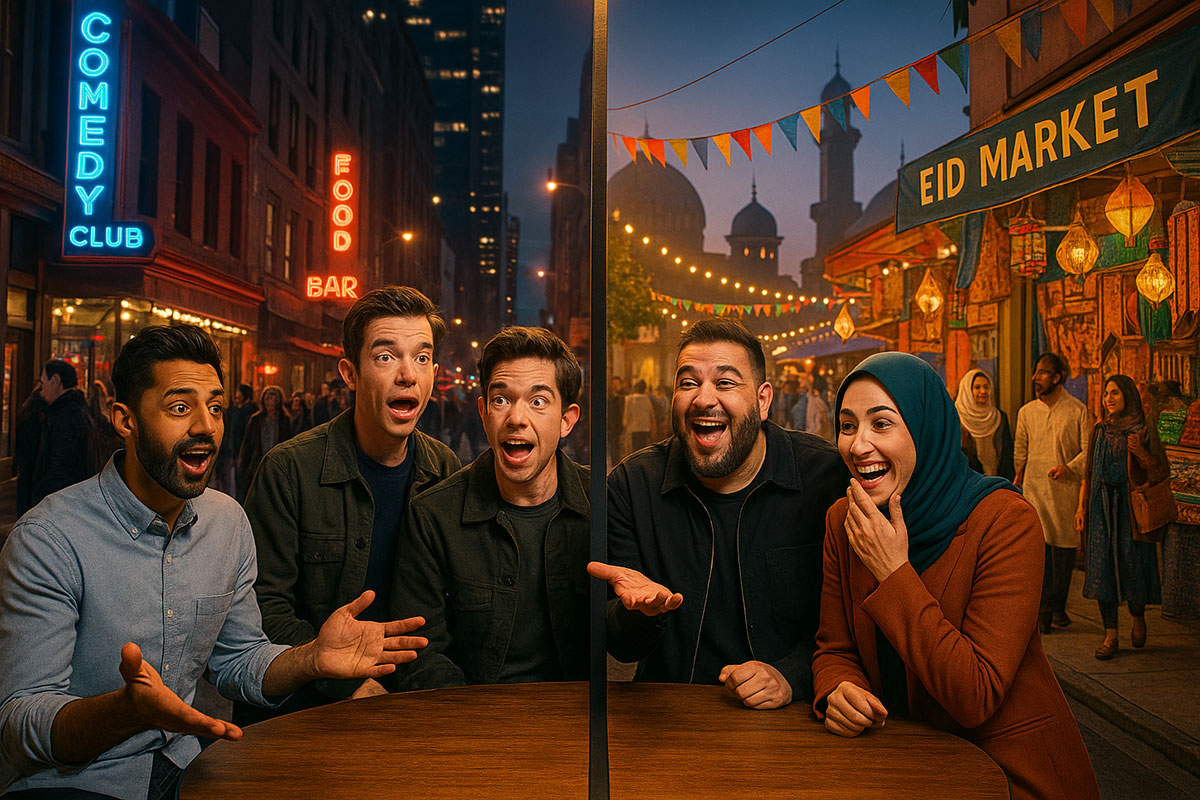
Moderator: Azhar Usman (American Muslim comedian, known for interfaith humor and cross-cultural comedy)
Azhar Usman
Some people think faith is all about solemnity, but I’ve seen how laughter can be an act of worship — a way to celebrate life. Can the sacred and the silly coexist without disrespecting either?
Negin Farsad (Iranian-American Muslim comedian, political satirist)
Absolutely. Humor can be reverent in its own way. It says, “I love this enough to laugh with it, not at it.” It’s like family — you tease the ones you love.
Brian Regan (American comedian, clean, observational humor)
I think humor works best when it’s punching up, not down. Making fun of the powerful, not the vulnerable, keeps it ethical — and faith can actually guide that.
Mohammed Zeyara (Palestinian-Canadian Islamic educator, peace advocate)
From an Islamic perspective, the Prophet himself smiled often. There’s a difference between laughter that heals and laughter that harms.
Ellen DeGeneres (American comedian, known for kindness-focused humor)
Kindness is underrated in comedy. If your joke makes people feel included rather than excluded, it’s going to reach more hearts.
Sheikh Omar Suleiman (American Muslim scholar, interfaith leader)
Faith is meant to bring joy, not fear. If humor helps remind people of our shared humanity, then it’s a tool for peace, not a threat to religion.
Azhar Usman
If you could perform one joke in a mosque, church, or temple without offending anyone, what would it be?
Ellen DeGeneres
Probably something about the universal struggle of keeping kids quiet during a prayer or sermon. That’s cross-cultural comedy gold.
Sheikh Omar Suleiman
A gentle joke about how everyone races to the snacks after a religious event — it’s the same in every tradition.
Brian Regan
A bit about trying to follow religious rituals without messing up — like kneeling at the wrong time or mixing up the words.
Mohammed Zeyara
Something about fasting and how the first bite after sunset tastes like the greatest food in history — even if it’s just a date.
Negin Farsad
A joke about how every faith has that one person who takes forever to finish their prayer while everyone else is waiting to eat.
Azhar Usman
What’s the biggest danger — and biggest opportunity — when mixing faith and comedy?
Brian Regan
Danger: crossing the line into mockery. Opportunity: helping people relax and see each other as human.
Negin Farsad
Danger: people hearing only the joke and missing the heart behind it. Opportunity: opening a door for dialogue.
Ellen DeGeneres
Danger: alienating people who are already skeptical. Opportunity: winning them over with warmth.
Mohammed Zeyara
Danger: using comedy to divide. Opportunity: using it to break stereotypes.
Sheikh Omar Suleiman
Danger: feeding prejudice. Opportunity: dismantling it with a smile.
Topic 5: Punchlines for Peace — Can Comedy Heal Global Divides?
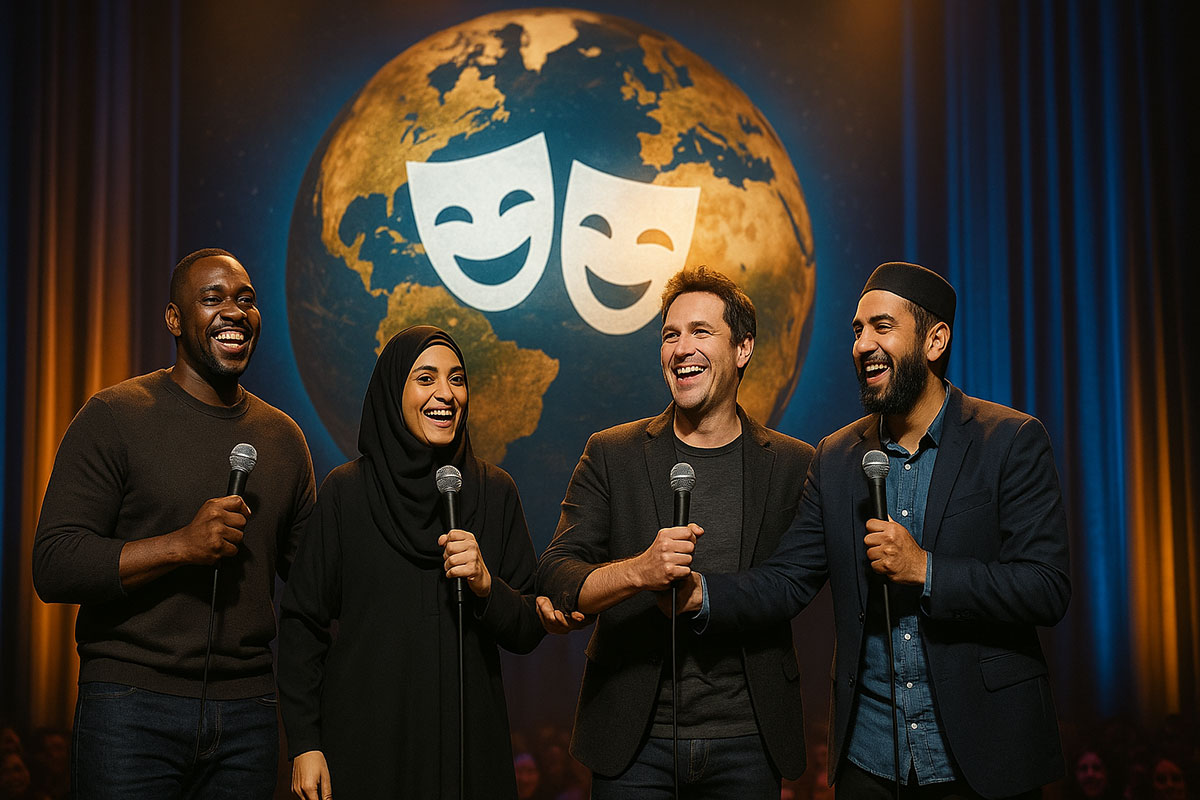
Moderator: Hasan Minhaj (American Muslim comedian and political commentator)
Hasan Minhaj
We’ve seen jokes start wars on Twitter — and jokes defuse tension in real life. Today I want to know: can comedy be a serious tool for diplomacy, or are we just kidding ourselves?
Jim Gaffigan (American comedian, family-friendly humor)
Comedy’s a universal language, but it’s not always translated correctly. If we find that sweet spot — food, family, shared awkwardness — we can connect across any border.
Maysoon Zayid (Palestinian-American comedian and disability advocate)
It works when people see you as a person first. Humor lets me walk into spaces where politics can’t.
Russell Peters (Canadian comedian of Indian descent, global cultural humor)
Exactly. I’ve made jokes in countries where I don’t speak the language, and people still got it. Laughter bypasses policy and hits the heart.
Imam Khalid Latif (American Muslim chaplain, NYU)
Humor can disarm fear. If you’re laughing together, you can’t simultaneously hold the same level of suspicion.
Tig Notaro (American comedian, deadpan style)
It’s like emotional aikido — you take the tension, flip it, and nobody’s hurt afterward.
Hasan Minhaj
If you could perform for leaders of conflicting nations, what would your opener be?
Maysoon Zayid
Something about how even presidents can’t figure out Zoom filters.
Russell Peters
A joke about how every country’s politicians promise change but can’t even change their own ringtone.
Jim Gaffigan
A bit about how airplane food is terrible no matter what airline or nation you’re flying with.
Tig Notaro
I’d just stare at them silently for 30 seconds, then say, “See? Awkwardness is our shared heritage.”
Imam Khalid Latif
A light jab about how “peace talks” always start with too much coffee and not enough listening.
Hasan Minhaj
What’s the one thing comedy can do for peace that politics can’t?
Russell Peters
Comedy makes people admit they’re wrong without making them defensive.
Imam Khalid Latif
It creates trust quickly — a smile is faster than a treaty.
Jim Gaffigan
It humanizes the “other” — even the guy you think you’d never understand.
Tig Notaro
It sneaks truth in through the back door while everyone’s laughing.
Maysoon Zayid
It reminds us we’ve all fallen flat on our face — sometimes literally.
Final Thoughts By Trevor Noah
After today’s conversation, I’m reminded that peace doesn’t start with a summit — it starts with a moment. A moment when you hear a joke, and for a second, you forget who’s 'us' and who’s 'them.' You just think, ‘Oh, that’s funny.’ And that’s the beauty — comedy doesn’t ask you to agree, it asks you to relate. We might never solve all our global problems on a stage with a microphone, but we can chip away at the walls between us one laugh at a time. And who knows? If a room full of people from completely different backgrounds can leave tonight with sore cheeks from laughing, maybe we’ve already taken the first step toward a kind of peace worth keeping.
Short Bios:
Trevor Noah – South African comedian, former host of The Daily Show, known for sharp political satire and cultural insights.
Mo Amer – Palestinian-American stand-up comedian and actor, star of Netflix’s Mo, blending humor with personal stories about immigration, identity, and Muslim life in America.
Hasan Minhaj – Indian-American comedian, writer, and political commentator, creator of Patriot Act, known for mixing comedy with investigative storytelling on social issues.
Tig Notaro – American stand-up comedian, writer, and actress, celebrated for her dry wit and deeply personal storytelling style.
Bassem Youssef – Egyptian comedian and satirist, called “the Jon Stewart of the Arab World,” famous for using humor to challenge authority and bridge cultural divides.
Negin Farsad – Iranian-American comedian, writer, and filmmaker using humor to tackle social justice issues, particularly Islamophobia and cultural misunderstandings.
Dave Chappelle – American stand-up comedian and actor celebrated for fearless, thought-provoking comedy blending satire, social commentary, and storytelling.
Aamer Rahman – Australian stand-up comedian of Bangladeshi descent, known for incisive humor on race, politics, and identity.
Maysoon Zayid – Palestinian-American comedian, actress, and disability advocate using humor to address stereotypes about Arabs and people with disabilities.
Colin Jost – American comedian, actor, and head writer for Saturday Night Live, known for sharp, quick-witted Weekend Update segments.
Ali Wong – American stand-up comedian, actress, and writer, known for bold, unapologetic humor and hit Netflix specials.
Dean Obeidallah – Palestinian-Italian-American comedian and political commentator mixing stand-up with activism, particularly on Muslim-American issues.
Russell Peters – Canadian comedian of Indian descent, famous for observational humor about multiculturalism and global communities.
Sami Shah – Pakistani-Australian comedian, writer, and broadcaster known for blending satire, cultural critique, and personal storytelling.
Hari Kondabolu – Indian-American comedian and writer, recognized for incisive political humor and his documentary The Problem with Apu.
Aisling Bea – Irish comedian, actress, and writer, acclaimed for her witty and heartfelt comedic voice.
Maz Jobrani – Iranian-American comedian and actor, member of the “Axis of Evil” comedy tour, focusing on Middle Eastern identity and breaking stereotypes.
Aparna Nancherla – American comedian and writer, known for surreal, self-reflective humor and sharp observational comedy.
Kumail Nanjiani – Pakistani-American comedian, actor, and writer, acclaimed for blending personal narratives with cultural commentary.
Ramy Youssef – Egyptian-American comedian, actor, and creator of Hulu’s Ramy, exploring faith, culture, and the complexities of being Muslim in modern America.
Leave a Reply