

|
Getting your Trinity Audio player ready...
|
Introduction by Lex Fridman
The systems that hold our world together were built on trust — fragile, invisible, and increasingly programmable.
For decades, we’ve treated money as freedom: the power to move, to trade, to choose. But in 2026, that freedom stands on the edge of a switch. The same technologies that connect us can now confine us. Digital IDs, programmable currencies, and central controls promise efficiency — but what they deliver may be obedience.
A ‘bank freeze’ isn’t just an economic event. It’s a test of humanity’s dependence on systems it no longer understands. When your balance still shows but your access disappears, you don’t just lose money — you lose motion, autonomy, identity.
Over the next five chapters, we’ll dissect the architecture of control disguised as modernization — how it begins, who benefits, and what choices remain when every transaction becomes a decision about who gets to live freely in a world run by code.”
(Note: This is an imaginary conversation, a creative exploration of an idea, and not a real speech or event.)
Topic 1 — The Trigger Point: How Bank Freezes Start and Spread

Scene:
A quiet, minimalist roundtable in a softly lit studio. Screens behind the panel display subtle visualizations of liquidity flows and digital maps of global banking networks. The tone is analytical, calm, and deeply curious — exactly the way Lex Fridman navigates complexity.
Lex Fridman:
We’ve heard warnings lately about the possibility of “bank freezes” — account lockouts, ATM shutdowns, capital controls. Some frame it as conspiracy; others as an inevitable response to systemic fragility. Let’s start at the core: what could actually cause such an event? Is it policy, panic, or technology?
Ray Dalio:
When liquidity dries up, everything stops moving — that’s the real freeze. It doesn’t have to start with panic. It can begin with policy mistakes, excessive leverage, or geopolitical shocks. History shows this over and over. In 1933, Roosevelt closed the banks for a “holiday” to prevent collapse. In 2008, central banks created liquidity on command. The difference today is digital speed. If confidence erodes in a highly leveraged, interconnected system, contagion moves in seconds, not days. A single cyber event or sovereign default could cascade through payment rails faster than anyone can respond.
Catherine Austin Fitts:
I agree, Ray, but I’d emphasize something deeper: design. Over the past twenty years, financial infrastructure has quietly been centralized — databases, settlement systems, identity verification layers. That means a small number of control points can throttle access globally. A “freeze” doesn’t need to look like chaos; it can look like an administrative update. For example, governments could invoke emergency powers — national security, cyber threat, pandemic — and flip the switch. Funds stay “safe,” but you can’t move them. Technically legal, politically useful.
Mohamed El-Erian:
Let’s be careful, though. A coordinated banking freeze would be an act of desperation, not design. Central banks want stability above all else. But we’re entering an era where traditional tools — interest rates, QE — are losing potency. If inflation stays sticky while growth stalls, policymakers may choose targeted controls to contain capital flight. Think of the UK gilt crisis or Lebanon’s capital restrictions — these weren’t conspiracies; they were triage under pressure.
Lyn Alden:
That’s true, Mohamed, but structurally, our system’s fragility is baked in. The global dollar network depends on constant liquidity provision — repo markets, swap lines, shadow banks. If one large node fails, liquidity evaporates instantly. Add cyber risk or regulatory overreach, and you have both mechanical and human triggers for a freeze. We’re far more interconnected than 2008, yet less transparent.
Pippa Malmgren:
And we can’t ignore geopolitics. Economic warfare now includes financial choke points. Sanctions, SWIFT exclusions, and asset seizures have normalized weaponizing finance. When Russia was cut from SWIFT, that precedent changed everything. Other nations learned: “If we can be frozen externally, we must build alternatives.” That accelerates fragmentation — parallel systems, digital yuan, BRICS payment networks. Ironically, preparing for freezes may make them more likely.
Lex Fridman:
That’s fascinating. Let’s move deeper. If a bank freeze were to occur, would it be a temporary safeguard or a gateway to something larger — say, the rollout of programmable money or tighter social control? In other words, is a freeze a symptom or a strategy?
Catherine Austin Fitts:
It’s both. Short-term, it’s a symptom of failing trust. Long-term, it becomes a strategy for restructuring control. Once accounts are frozen “for your safety,” it’s easy to condition access on behavior — taxes, speech, health compliance. The infrastructure already exists in payment rails tied to digital ID. The freeze is the training exercise.
Ray Dalio:
I’d frame it in terms of transition. Every empire redefines its monetary system when debt, politics, and productivity misalign. Sometimes that transition is violent; sometimes it’s administrative. A freeze can facilitate that shift — to restructure balance sheets, devalue liabilities, and implement a new unit of account. It’s painful but historically consistent.
Pippa Malmgren:
Exactly — crises are moments of creative destruction. Policymakers don’t waste them. After 2008, we saw regulatory consolidation. After COVID, we saw rapid digital acceleration. The next financial shock may justify programmable currencies as “safer alternatives.” Whether that’s benign or coercive depends on governance — and transparency, which we currently lack.
Lyn Alden:
There’s also the issue of incentives. Once a mechanism exists to selectively freeze or monitor funds, it tends to be used more broadly over time. Even if introduced as “temporary,” such controls rarely disappear. The inflation tax and the surveillance layer serve political interests too conveniently.
Mohamed El-Erian:
Still, we should distinguish between plausible systemic responses and dystopian projections. Most central bankers genuinely believe digital currencies improve efficiency and reduce fraud. The danger is not intent but overreach. We need institutional checks that evolve as technology evolves — otherwise the cure becomes worse than the disease.
Lex Fridman:
Let’s conclude with this: If a freeze scenario emerged tomorrow — ATMs offline, transfers delayed, digital wallets restricted — what should individuals and institutions do in those critical first days? How do we protect trust in the system when access itself is gone?
Lyn Alden:
Liquidity redundancy. Keep some physical cash, diversified custodians, and multiple payment options. A single point of failure is no longer acceptable.
Ray Dalio:
Think in systems, not panic. The goal is resilience — assets diversified across geographies and instruments, and awareness that debt assets depend on policy discretion.
Catherine Austin Fitts:
Community matters. Systems fail hierarchically, but recover locally. Build relationships with real people who can trade, share, and support when networks freeze.
Pippa Malmgren:
Communication is key. Don’t let panic narratives spiral faster than recovery efforts. In financial shocks, perception management is half the battle.
Mohamed El-Erian:
And above all, transparency. Authorities must communicate clearly and quickly, or trust evaporates permanently. Restoring access is mechanical; restoring belief is existential.
Lex Fridman (closing):
What I hear from all of you is that a bank freeze isn’t a single moment — it’s a chain reaction of trust, policy, and technology. It could start as a safeguard, end as a restructuring, or evolve into a new paradigm of control.
Maybe the real question isn’t if money can be frozen — but whether freedom itself can stay liquid in the systems we’re building.
Topic 2 — Digital ID and Financial Lockouts: The Hidden Levers of Control
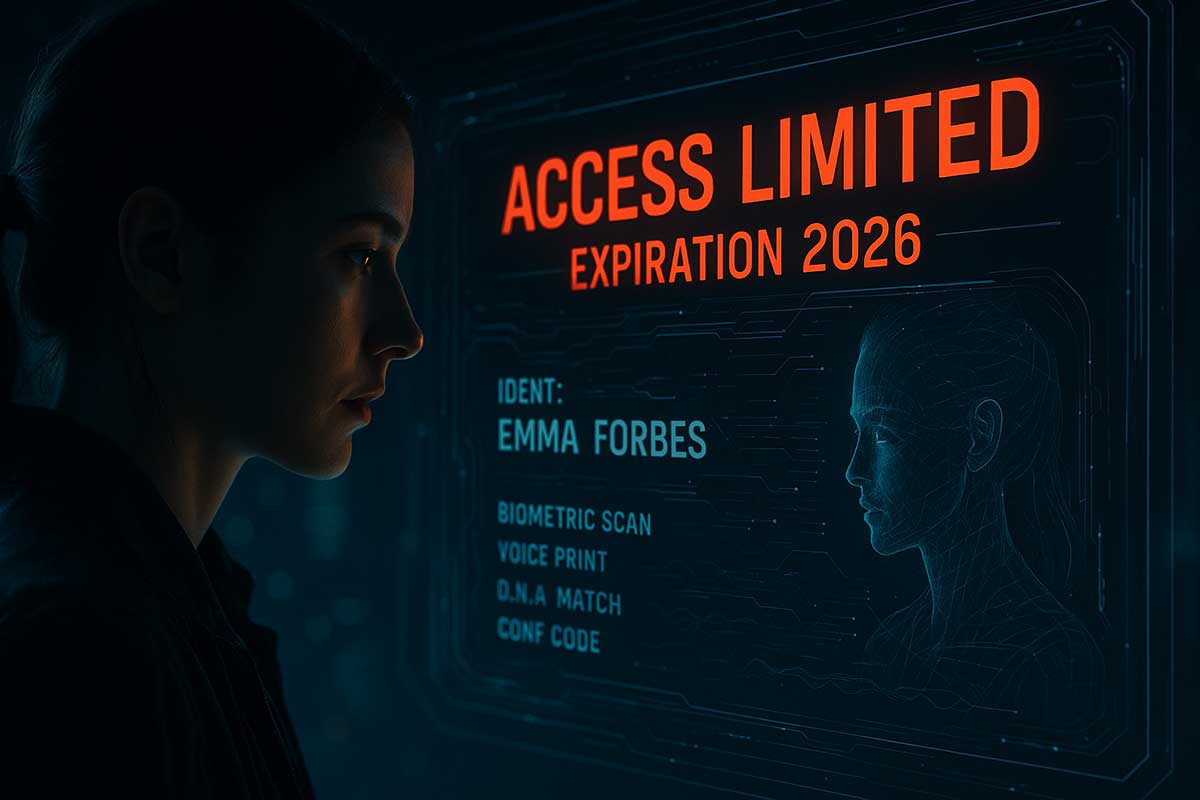
Moderator: Patrick Bet-David
Participants: Catherine Austin Fitts, Edward Snowden, Saifedean Ammous, Christine Lagarde, Michael Saylor
Setting:
A modern studio overlooking a nighttime skyline. Screens behind the panel display glowing data streams and biometric ID graphics. Patrick Bet-David leans forward, animated but focused, steering between confrontation and curiosity.
Patrick Bet-David:
Let’s cut straight into it. Governments are testing digital IDs that link identity, payment, and access to services. They say it’s for convenience and safety, but critics warn it’s a backdoor to financial control.
So let’s start here — is a digital ID system inevitable, and what happens when money and identity merge?
Christine Lagarde:
Digital identification isn’t a conspiracy; it’s infrastructure. We can’t modernize payment systems without trust anchors. The European Central Bank, for instance, sees digital ID as a way to reduce fraud and improve access. The question isn’t if — it’s how. We must ensure oversight, data protection, and democratic governance so efficiency doesn’t become surveillance.
Edward Snowden:
With respect, Christine, the architecture itself is the danger. Once identity and money merge, every transaction becomes a report. Imagine a ledger that records not only what you buy but what you believe — that’s programmable compliance. Even if you build it with good intentions, power shifts over time. Governments fall. Ideologies change. But databases don’t forget.
Catherine Austin Fitts:
Exactly. We’ve already seen “policy-based access” in practice — look at Canada’s trucker protests, where accounts were frozen under emergency law. Add digital ID, and you have automated obedience. The narrative says it’s about safety, but the mechanics say otherwise: control through liquidity throttling. Who needs handcuffs when you can just switch off a wallet?
Michael Saylor:
To me, this is a natural evolution of money, not an apocalypse. The question is whether individuals can opt out. Bitcoin gives everyone that option — self-custody, self-audit, global portability. I don’t oppose CBDCs; I just don’t trust monopolies. Freedom means parallel systems, not blind resistance.
Saifedean Ammous:
Michael, I agree with your goal but not your optimism about coexistence. Governments won’t allow true competition. When your paycheck, taxes, and social services all run through one programmable network, “opting out” becomes illegal. Digital ID is the final centralization — the opposite of sound money.
Patrick Bet-David:
Let’s push this further. If a government can freeze or limit digital wallets based on “behavior,” what are the first real-world signs we should watch for that the system is shifting from efficiency to control?
Catherine Austin Fitts:
The first sign is conditional access — when spending categories appear. “You can buy this, but not that.” It’ll start with carbon scores, then migrate to health compliance, then speech and dissent. Each step justified by a noble cause.
Edward Snowden:
Another early warning: when “fraud prevention” expands to “misinformation prevention.” We’ll see content and commerce merged — you’re de-banked not for stealing, but for disagreeing. Once financial reputation equals ideological reputation, the market disappears. You’re left with obedience economies.
Christine Lagarde:
I don’t accept that dystopia as inevitable. Regulation evolves through public debate. We already have frameworks like GDPR and independent auditors. The danger isn’t the tool; it’s the absence of transparency. We should be arguing for public algorithms, not abandoning modernization.
Saifedean Ammous:
But public oversight means nothing if the money itself is digital debt. You can’t code ethics into fiat. Inflation, debasement, and confiscation are already hidden taxes. Digital ID just automates that theft.
Michael Saylor:
I think the key is ownership of the private keys. If individuals hold their identities and wallets directly — cryptographically, not institutionally — we can keep innovation while protecting autonomy. Governments will adapt because innovation always wins, eventually.
Patrick Bet-David:
Let’s get practical. If we woke up tomorrow and our accounts required digital verification — biometric, QR, whatever — how can people prepare without turning paranoid? What’s the smart middle ground?
Edward Snowden:
Understand your dependencies. If you rely on one app or one government database for access to life, you’re already locked in. Redundancy is freedom — multiple accounts, cash reserves, local networks, peer-to-peer tools.
Catherine Austin Fitts:
Don’t wait for permission to decentralize. Move some of your assets outside the grid — community banks, local producers, tangible goods. Build trust horizontally, not vertically.
Christine Lagarde:
And engage civically. Demand oversight before rollout, not after. A digital system can be both efficient and ethical, but only if citizens treat finance as governance, not convenience.
Saifedean Ammous:
Own real money — Bitcoin, gold, productive assets. That’s the firewall. Once your value depends on policy, you no longer own it.
Michael Saylor:
And build literacy. The average person doesn’t need to fear technology; they need to understand it. If enough people learn to self-custody, no government can turn off freedom.
Patrick Bet-David (closing):
So what we’re hearing tonight is that the future of money isn’t just a financial debate — it’s a question of sovereignty. Digital ID could make transactions faster, or it could make obedience mandatory. The line between modernization and control might depend not on what the system is — but on who controls the switch.
And if history’s any guide, that’s never a neutral hand.
Topic 3 — Banking Without Banks: Surviving Financial Censorship

Moderator: Anthony Pompliano
Participants: Lyn Alden, Caitlin Long, Saifedean Ammous, Jim Rickards, Balaji Srinivasan
Setting:
A sleek industrial studio with dim blue lighting. A digital ticker scrolls behind the speakers, showing volatile crypto prices and global fiat exchange rates. Anthony Pompliano, “Pomp,” sits forward in his signature black T-shirt, notebook open, ready to cut through both hype and fear.
Anthony Pompliano:
We’ve talked about digital control and the risk of bank freezes. But let’s be honest — if that day comes, people won’t care about macro theory. They’ll ask: How do I actually pay for food, rent, and life when the bank says “access denied”?
So let’s start here — if traditional banking infrastructure becomes politicized or restricted, how do people survive financially without banks?
Lyn Alden:
It starts with redundancy. People assume “banking” means storing money, but it’s really about moving it. You need multiple payment channels — crypto, local credit unions, even prepaid debit systems — and some physical cash. In 2022, Canadian protesters saw that having multiple rails mattered. We can’t rely on one central node for everything. The system was built for resilience, but we’ve turned it into a monoculture.
Caitlin Long:
Exactly, Lyn. That’s why I founded Custodia Bank — a bridge between traditional finance and blockchain custody. You can’t unplug from fiat overnight, but you can demand institutions that respect property rights and transparency. A “banking without banks” model doesn’t mean anarchy — it means accountability. Imagine an FDIC-insured institution where you actually own your collateral, not just a promise.
Jim Rickards:
It’s a good vision, but let’s be clear: the elites won’t surrender control easily. When you threaten the dollar system, you threaten global power. During a freeze, they’ll use capital controls, reporting requirements, and taxes to push people back into the grid. That’s why precious metals, land, and commodities still matter — they’re assets beyond policy. Bitcoin’s fine, but it’s still in the crosshairs of every regulator.
Saifedean Ammous:
Jim, that’s precisely why Bitcoin exists. It’s not about profit — it’s about property rights in the digital age. Governments can freeze banks, but they can’t freeze math. A properly secured Bitcoin wallet is jurisdictionless. Yes, it’s volatile, but so is any freedom during transition. The volatility is the sound of liberation.
Balaji Srinivasan:
Saifedean’s right, but we must think bigger. “Banking without banks” means civilization without choke points. We’re entering a world of network states — digital communities that operate their own economies. Think of DAOs, decentralized exchanges, and tokenized local currencies. If the 20th century was about nations building banks, the 21st is about networks building nations.
Anthony Pompliano:
That’s big-picture thinking, Balaji, but let’s bring it down to earth for a moment. If someone watching this wants to prepare today, not next decade, what’s step one? What’s the realistic playbook for financial independence in an unstable system?
Jim Rickards:
Diversify across jurisdictions. If all your money’s under one government, you’ve already surrendered. Use multiple currencies and legal entities. Even a small percentage offshore can buy you time when domestic systems freeze.
Caitlin Long:
Educate yourself about custody. “Not your keys, not your coins” is true, but so is “not your contract, not your cash.” Read the fine print on your accounts. If the bank holds a lien, you’re an unsecured creditor, not an owner.
Lyn Alden:
Focus on liquidity tiers: cash for emergencies, hard assets for value retention, crypto for portability. That triangle creates resilience across time horizons.
Saifedean Ammous:
And stop chasing yield. The system tempts you with returns so it can control your capital. Sound money isn’t about making 10x — it’s about staying unconfiscated.
Balaji Srinivasan:
Also, build digital literacy. Learn to transact peer-to-peer: Lightning Network, privacy coins, decentralized exchanges. In the next crisis, the people who can move value without permission will be the new financial elite.
Anthony Pompliano:
Let’s talk risk. If decentralization is the answer, it also creates exposure — hacks, scams, volatility, custody loss. How do we make “banking without banks” safe enough for the average person, not just crypto natives?
Lyn Alden:
Hybridization. We need layered solutions — institutional-grade custody with cryptographic proof of reserves. That’s how trust scales without surrendering autonomy.
Caitlin Long:
Regulation must evolve too. Crypto shouldn’t be the Wild West, but neither should it be captured by Wall Street. Transparency is the new trust — verifiable, not rhetorical.
Saifedean Ammous:
Security begins with education. You can’t outsource sovereignty. If you hand your keys to a custodian, you’ve rebuilt the same trap you tried to escape.
Jim Rickards:
And never underestimate human error. A single lost passphrase can erase your wealth. In my world, diversification beats ideology. A balanced portfolio survives what maximalism destroys.
Balaji Srinivasan:
True — and that’s why we need open-source financial literacy. Imagine a “GitHub for survival finance” — templates for local currencies, multisig wallets, co-ops. When the old system freezes, code becomes community.
Anthony Pompliano (closing):
What I’m hearing is this: “banking without banks” isn’t about escaping the system — it’s about rebuilding it on different terms. The question isn’t whether decentralization is perfect — it’s whether centralization has already failed.
When trust is frozen, movement is freedom. And in the digital age, freedom might just be the best currency we have left.
Topic 4 — From Inflation to Confiscation: The Slow Freeze You Didn’t Notice

Moderator: Josh Brown (The Compound & Friends)
Participants: Ray Dalio, Stephanie Pomboy, Nouriel Roubini, Lyn Alden, Jim Rickards
Setting:
A bright Manhattan studio filled with graphs, charts, and coffee cups. The vibe feels like CNBC meets Socratic seminar. Josh Brown, known for his wit and grounded realism, leans into the discussion with the skepticism of a man who has seen both Wall Street optimism and its blind spots.
Josh Brown:
We’ve been talking about sudden freezes — but what if the real freeze is already here? Inflation quietly eats savings, taxes rise, interest rates climb, and somehow, you feel poorer even when your balance looks the same. So my first question: Are we already living through a slow-motion wealth confiscation, disguised as “policy”?
Stephanie Pomboy:
Absolutely. It’s the most polite heist in history. Inflation is a transfer mechanism — from savers to debtors, from households to governments. When inflation runs higher than interest on deposits, you’re losing purchasing power every day. You can call it monetary stimulus or “soft landing,” but the result is identical: erosion of value disguised as management.
Ray Dalio:
Inflation is a political choice. When debt outpaces productivity, policymakers face two bad options: default or devalue. They’ll always choose devalue. It’s a hidden default through currency debasement. What makes this era different is transparency — everyone can see the printing in real time, yet there’s no alternative reserve asset to absorb the trust collapse. That’s the trap.
Nouriel Roubini:
Let’s not romanticize it — this is structural. Decades of underinvestment, deglobalization, and demographic decline are colliding. Inflation isn’t just printing; it’s scarcity. Energy shocks, climate costs, supply-chain fragmentation — they all create cost-push inflation. Governments respond with spending, which feeds the loop. It’s not theft; it’s incompetence, multiplied by inertia.
Lyn Alden:
The system’s fragility comes from feedback loops. Central banks suppress rates for a decade, pushing investors into risk. Then inflation hits, and they tighten, crushing liquidity. It’s not a conspiracy — it’s the logical end of financial repression. The “slow freeze” happens when your nominal assets rise but your real purchasing power declines. The illusion of safety becomes the mechanism of loss.
Jim Rickards:
It’s both incompetence and intent. Inflation is the oldest form of confiscation — kings clipped coins, now central banks expand balance sheets. The endgame is always the same: wipe out debt through dilution. The 2020s will be remembered not for hyperinflation, but for selective defaults masked as “policy transitions.” That’s how you reset a global system without admitting failure.
Josh Brown:
So if the game is rigged at the policy level, where does the individual investor fit in? How can ordinary people protect themselves from a system designed to erode their savings?
Ray Dalio:
Think in terms of real assets — things that survive currency shifts: commodities, infrastructure, select equities, and geographic diversification. The key is balance — avoid being all-in on any one asset or nation.
Stephanie Pomboy:
Forget chasing yield. Cash flow is king in inflationary times. Own businesses, not promises. Dividends and tangible production beat speculative growth narratives every time.
Lyn Alden:
And study liquidity. Inflation ends when liquidity is withdrawn — usually brutally. People forget: tightening cycles destroy the weakest balance sheets first. Don’t be one of them.
Jim Rickards:
Gold still matters. It’s not old-fashioned — it’s unhackable. In an era of negative real rates, a zero-yield hard asset is a store of integrity.
Nouriel Roubini:
Or you hedge across regimes — part inflation hedges, part deflation trades. Hold inflation-linked bonds, cash buffers, and equities with pricing power. Survival isn’t ideological; it’s adaptive.
Josh Brown:
Let’s be blunt. If inflation and policy are eroding wealth, what comes next? Do we end up with outright confiscation — digital taxes, “wealth levies,” or forced conversions into new currencies? Or does this resolve without social upheaval?
Jim Rickards:
History says resets rarely happen peacefully. Confiscation begins softly — windfall taxes, capital controls, “temporary” emergency measures. Then it becomes permanent. You’ll see governments justify it as fairness or sustainability. The language of equity hides the mechanics of seizure.
Stephanie Pomboy:
Exactly. The messaging will be moral — “the rich must pay,” “we’re all in this together.” But the middle class carries the cost. They don’t have lobbyists or offshore accounts.
Nouriel Roubini:
I don’t think we’ll see outright confiscation in developed economies. What we’ll see is stealth redistribution through inflation differentials and controlled defaults. The danger isn’t seizure — it’s stagnation. A system that punishes prudence and rewards leverage eventually breaks social trust.
Ray Dalio:
Trust is the currency now. Every empire falls when people stop believing that their money stores value. Whether through revolution or reform, that disbelief forces a new contract between citizens and the state.
Lyn Alden:
And when that contract fails, people build alternatives — Bitcoin, commodities, or community-based trade. The irony is that the state’s attempt to control inflation accelerates the exodus from its own currency.
Josh Brown (closing):
So the “slow freeze” isn’t a headline event — it’s a quiet erosion of trust. You don’t see it on your statement; you feel it in your grocery bill, your rent, your retirement that never quite catches up.
The big question isn’t how to stop inflation — it’s how to keep integrity when even money forgets what it’s worth.
Topic 5 — After the Freeze: The Architecture of the New Financial Order

Moderator: Peter McCormack (What Bitcoin Did)
Participants: Pippa Malmgren, Catherine Austin Fitts, Ray Dalio, Chamath Palihapitiya, Lyn Alden
Setting:
A modern studio in London with a circular glass table. The Thames glimmers beyond the window. Digital projections of blockchain networks and CBDC prototypes flicker on the walls. Peter McCormack sits at the center, direct and unfiltered, guiding the discussion with a journalist’s curiosity and a Bitcoiner’s skepticism.
Peter McCormack:
We’ve talked about the triggers, the controls, the slow confiscation. Let’s look beyond the storm. If the banking system we know freezes or fractures, what comes next?
Is it a clean reset, a technocratic redesign, or the rise of something radically decentralized?
Ray Dalio:
Every monetary system ends when debt and productivity diverge. The old order collapses; a new one emerges around credibility. After a freeze, the world won’t abandon money — it’ll redefine it. Expect a multipolar reserve system: part digital, part commodity-backed, partly state-coordinated. Think less “collapse,” more “controlled demolition.” The U.S. dollar won’t die overnight, but it’ll share power with new blocs — BRICS, crypto reserves, and digital settlement layers.
Catherine Austin Fitts:
I call it The Financial Coup 2.0. The new order isn’t just about replacing the dollar — it’s about redefining ownership. Smart contracts, ESG scoring, programmable income — all sound efficient, but they can erase autonomy if not checked. Post-freeze, they’ll tell you: “You still have your money; you just can’t spend it the wrong way.” The architecture will merge surveillance and currency — the perfect compliance tool unless people resist early.
Chamath Palihapitiya:
That’s one scenario, Catherine, but I think we’re also seeing opportunity. If you look at every reset in history, it redistributes not just wealth but innovation. After 2008, fintechs were born. After COVID, digital infrastructure exploded. The post-freeze world will empower individuals who can build trustless systems faster than governments can regulate them. Whoever solves decentralized identity at scale wins the next century.
Lyn Alden:
Chamath’s right — but those systems won’t emerge in a vacuum. They’ll need bridges to legacy finance and liquidity. The reset won’t replace institutions; it’ll rewire them. Expect a hybrid world: CBDCs for compliance and settlement, Bitcoin for optionality, and commodities for stability. The smartest actors will operate across all three simultaneously.
Pippa Malmgren:
I agree with parts of all of you. What’s forming isn’t a conspiracy or a liberation — it’s a merger. The state, the corporation, and the algorithm are converging. Call it stakeholder capitalism, call it global governance — but after the freeze, monetary policy will be coordinated through AI-driven feedback systems. Whether it’s benevolent or authoritarian depends on who programs the code and who audits it.
Peter McCormack:
You’ve each painted a different version of “what comes next.” Let’s go deeper: Who actually builds and runs the new system — central banks, tech giants, or decentralized networks? Who ends up with the real power?
Chamath Palihapitiya:
Power follows liquidity. The players who control data and capital flows — that’s who wins. Big Tech and sovereign wealth funds will dominate Phase 1. But in Phase 2, the edges win. Open-source finance scales faster than bureaucracy. Bitcoin didn’t need a board meeting to globalize.
Ray Dalio:
Governments will still lead, because legitimacy is power. You can’t collect taxes or enforce contracts without state authority. But legitimacy is fragile. When trust erodes, people create shadow systems — crypto, gold, barter — until a new legitimacy emerges. Every empire has repeated this cycle.
Catherine Austin Fitts:
Except this time, the “shadow systems” are ahead of the state. Look at what communities can already do with peer-to-peer tech. After the freeze, local currencies, cooperative ownership, and tokenized real assets will thrive. But they’ll be criminalized first — as all true competition is.
Lyn Alden:
The battleground is interoperability. Whoever controls the rails connecting these systems — CBDCs, stablecoins, Bitcoin, real-world assets — will quietly own the future. It’s not just who builds money, but who routes it.
Pippa Malmgren:
And don’t underestimate soft power. Narrative shapes adoption. The next financial order won’t declare itself with a press release. It’ll seep in through language — “green finance,” “inclusive growth,” “digital equality.” The words are comforting; the mechanics are revolutionary.
Peter McCormack:
Final question: In this coming order, where’s the hope? How do ordinary people keep their sovereignty when money, data, and governance merge into one system?
Catherine Austin Fitts:
Hope lives in transparency. Refuse to transact blindly. Demand to know where your money goes, how your data is used, and who profits from your compliance. Hidden systems thrive on silence; visibility kills corruption.
Ray Dalio:
And education. Cycles don’t punish the wise — they reward those who adapt. The world’s changing, but human nature isn’t. Study history. Understand credit. Learn how incentives shape policy. That’s how you stay ahead of resets.
Lyn Alden:
I’d add discipline. Own real things, stay liquid, and don’t chase every new “revolution.” Freedom isn’t just having options — it’s knowing which ones matter.
Chamath Palihapitiya:
Build. Every crisis redistributes power to the builders. Whether it’s code, infrastructure, or communities — whoever creates value outside the old system becomes the new system.
Pippa Malmgren:
And remember, evolution isn’t optional. The system will change, but we can still shape the values behind it. Whether it becomes technocratic tyranny or decentralized prosperity depends on the ethics of the people building it.
Peter McCormack (closing):
So maybe the real “new order” isn’t a system, but a question — who deserves our trust when trust itself has been monetized?
After the freeze, money won’t just buy things. It’ll define who we’re allowed to be.
And maybe the only true currency left will be freedom backed by proof of integrity.
Final Thoughts by Ray Dalio
Every civilization builds its walls of trust — invisible structures made of promises, systems, and belief. For a time, those walls hold. Then slowly, almost imperceptibly, they begin to crack.
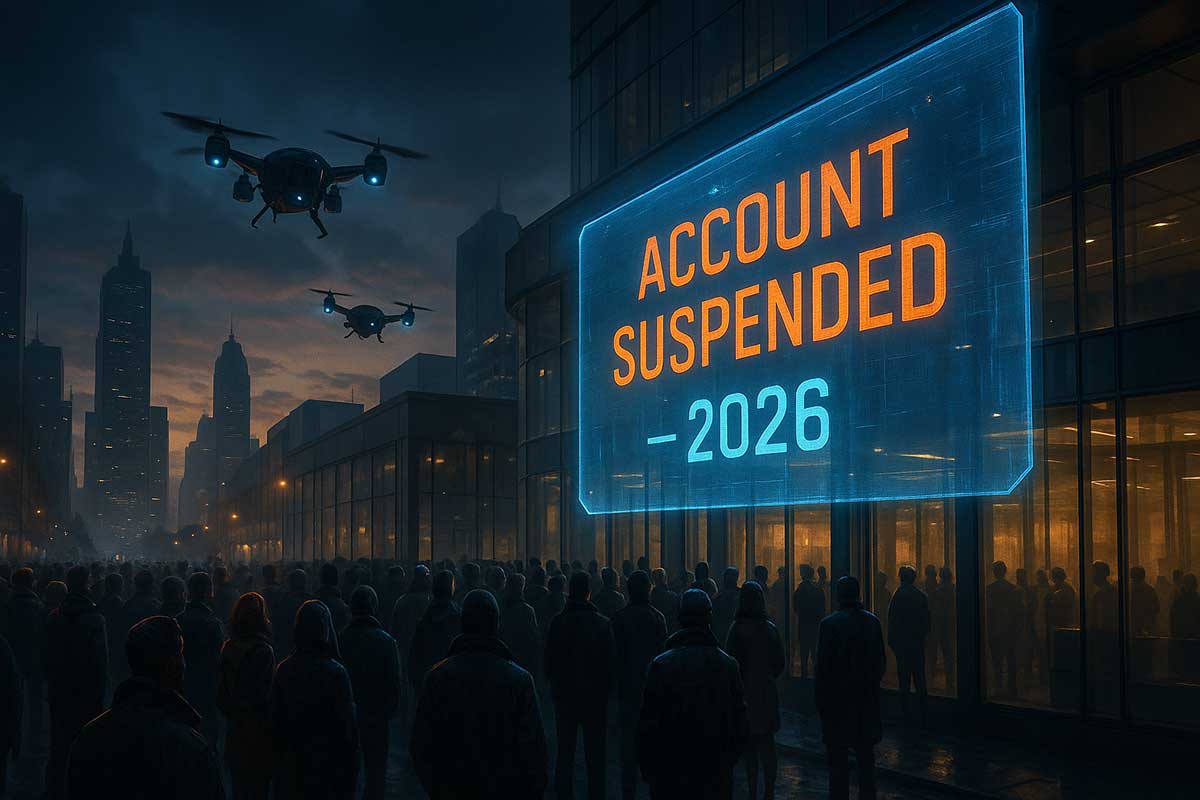
The bank freezes of 2026 will not be remembered as an accident or a conspiracy, but as the culmination of decades of imbalance — too much debt, too little transparency, too much dependence on systems that promised convenience in exchange for control. When people discovered that access to their own money could be switched off by policy or algorithm, they also discovered what freedom had quietly become: a subscription service.
Yet in that realization lies the possibility of renewal. Crises strip away illusion. They remind us that wealth is not digits on a screen but cooperation among human beings — trust, production, and creativity. When the system locks, communities unlock. When centralized power seizes, decentralized networks adapt. Every freeze becomes an audit of what still works and what no longer serves.
The next financial order will not be defined by who holds the currency, but by who holds the conscience to use it wisely. Whether it’s built on blockchain, code, or new institutions, the deeper test will be moral, not technical.
History teaches that money follows integrity. Empires fall when they forget that. Perhaps this time, in the silence after the freeze, we’ll remember that trust is the only currency that never devalues.
Short Bios:
Lex Fridman
AI researcher and podcast host known for his deep, philosophical interviews exploring the intersection of technology, ethics, and human consciousness. His calm curiosity and empathy make him a leading voice in bridging science and soul.
Patrick Bet-David
Entrepreneur, investor, and founder of Valuetainment Media. Renowned for his sharp analysis of politics, business, and freedom, he challenges conventional narratives with bold, thought-provoking conversations.
Anthony Pompliano
Investor and host of The Pomp Podcast, known for translating complex ideas in crypto, finance, and economics into practical insights. His focus is on decentralization, digital assets, and the future of money.
Josh Brown
CEO of Ritholtz Wealth Management and co-host of The Compound & Friends. A Wall Street veteran with a gift for plainspoken insight, he connects market behavior to everyday financial reality with humor and depth.
Peter McCormack
British entrepreneur and host of What Bitcoin Did, one of the world’s most respected cryptocurrency podcasts. He blends journalism with advocacy, exploring how Bitcoin intersects with politics, finance, and freedom.
Ray Dalio
Founder of Bridgewater Associates and one of the world’s leading macro investors. Author of Principles, he studies long-term debt cycles and the evolution of economies through history’s recurring patterns.
Catherine Austin Fitts
Former Assistant Secretary of Housing under President George H.W. Bush and founder of The Solari Report. She exposes the hidden mechanics of finance and governance, advocating for transparency and local resilience.
Lyn Alden
Investment strategist recognized for her lucid macroeconomic research bridging traditional finance and digital assets. Her work focuses on liquidity cycles, fiscal policy, and global monetary transitions.
Jim Rickards
Economist, author, and former advisor to the U.S. intelligence community. Known for connecting geopolitics to currency systems, he offers a sober perspective on risk, debt, and monetary strategy.
Pippa Malmgren
Economist, author, and former White House adviser specializing in geopolitics and technology. She explores how unseen shifts in policy and innovation reshape global economics.
Chamath Palihapitiya
Tech investor and CEO of Social Capital. A former Facebook executive turned critic of short-term capitalism, he advocates for systemic change through data-driven innovation and long-term thinking.
Stephanie Pomboy
Founder of MacroMavens, she is a leading voice in identifying structural weaknesses in the global economy, known for her bold forecasts and contrarian insights on fiscal and monetary policy.
Nouriel Roubini
Professor of economics at NYU Stern and one of the first to predict the 2008 financial crisis. His realism and sharp commentary have made him a key figure in global economic forecasting.
Balaji Srinivasan
Technologist, investor, and former CTO of Coinbase. He envisions the rise of “network states” — decentralized communities powered by technology and aligned around shared values.
Caitlin Long
Founder and CEO of Custodia Bank. A pioneer in Bitcoin and blockchain regulation, she works to bridge traditional banking with transparent, crypto-backed financial systems.
Leave a Reply