
|
Getting your Trinity Audio player ready...
|
Introduction by Reverend Sun Myung Moon
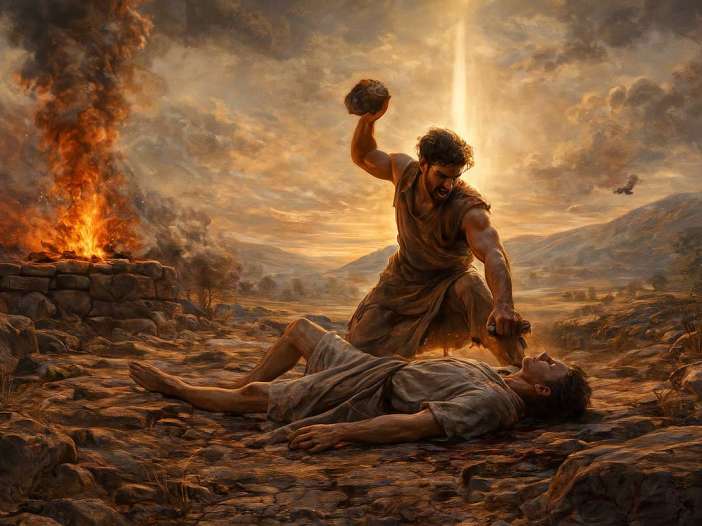
When I reflect on the story of Cain and Abel, I do not see only two brothers. I see the entire human family. The pain of Cain is the pain of every person who has felt forgotten. The responsibility of Abel is the calling of every person who has received even a little more light. God longs for these two hearts to meet, to cry together, to forgive one another, and to embrace as brothers once again.
Humanity has repeated this pattern for thousands of years because the root was never healed. Nations continue to quarrel, races remain divided, and religions struggle for recognition, all because the Cain–Abel relationship remains unresolved at the personal level. But now is the time when this ancient wound can be mended. God has prepared humanity for reconciliation. He has raised leaders, awakened conscience, and shown us that resentment cannot build the future.
The true Abel is not the one who is praised, but the one who sacrifices for others. The true victory is not over a rival, but over one’s own pride. When Abel loves Cain first, sincerely and without condition, Cain’s resentment begins to melt. This is the moment heaven has been waiting for. This is the moment when history moves toward peace.
I ask you to look deeply into your life. Where is Cain’s heart within you? Where is Abel’s responsibility calling you? If you can heal even one broken relationship, even one old resentment, you participate in God’s dream for humanity. Peace does not come through power or ideology. It comes through restored love.
May these conversations guide your heart, comfort your spirit, and awaken within you the desire to heal the world beginning with the smallest, most personal acts of compassion. When Cain and Abel embrace, God’s tears of sorrow become tears of joy. And in that moment, the world begins anew.
(Note: This is an imaginary conversation, a creative exploration of an idea, and not a real speech or event.)
TOPIC 1 — The Emotional Roots of Cain and Abel: Why Love Feels Unequal in Every Family
Opening by Reverend Moon
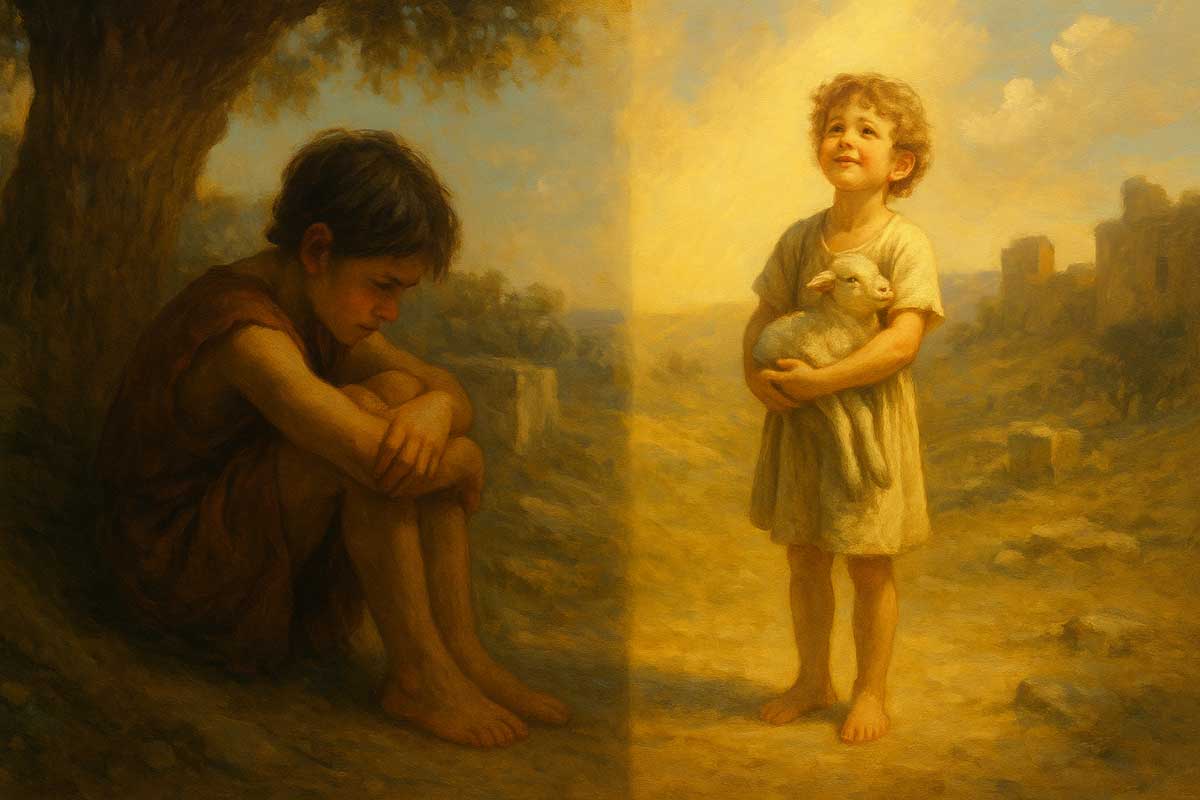
The story of Cain and Abel is not merely about two ancient brothers. It is about the human heart itself. Every family, every child, every parent carries a longing to be fully seen and fully loved. But love does not always arrive evenly. Some hearts feel chosen; others feel overlooked. This imbalance becomes the seed of resentment, competition, and separation. Today, I want us to explore why this happens, and how such wounds can be healed.
Let me begin with this:
Why does the human heart feel love so unevenly, even within the same family?
Carl Jung
Love is never a uniform experience because each child holds a different configuration of the psyche. One child resonates with the parent’s unresolved hopes; another mirrors their fears. The favored child often reflects what the parent unconsciously wants to see in themselves. The other child reflects what they avoid. This is why love feels uneven — not because parents love one less, but because each child activates a different part of the parent’s shadow.
Brené Brown
Unequal love becomes most visible through shame. The child who feels less seen begins to wonder, “What’s wrong with me?” That question becomes a lifelong whisper in their soul. Parents may not intend favoritism, but children absorb every gesture. The difference of even a few seconds of attention can form a story of worthiness or unworthiness. It’s not the love itself that is uneven — it’s the perception of belonging.
Alfred Adler
Birth order plays a central role here. The first child receives a world that is undivided — their existence changes the family itself. The second child enters a stage already occupied, where recognition must be earned or fought for. This structural difference creates unequal emotional starting points. The psychological consequences are profound: the first child feels responsible, while the second feels competitive or overlooked.
Rabbi Jonathan Sacks
In Scripture, almost every sibling story speaks of this imbalance. Ishmael and Isaac, Esau and Jacob, Joseph and his brothers — each pair carries the pain of unequal love. This is not accidental. The Bible reflects the inner reality of human families: love, when filtered through imperfect people, becomes selective. And whenever love is selective, jealousy arises. It is a spiritual principle, not merely an emotional one.
Harville Hendrix
The emotional inheritance of parents plays a powerful role. Parents often bond more easily with the child whose temperament resembles their own — or the child who compensates for wounds from their past. This makes the other child feel like an outsider in their own home. Families rarely understand that each child is longing for connection in a different language. Without awareness, love appears uneven even when the intention is pure.
Reverend Moon
Thank you. Now I want to take us deeper.
There is a particular wound in the child who feels less seen — the “Cain heart.” It contains loneliness, resentment, and a longing to be acknowledged. My next question is this:
What creates the deep wound in the child who feels overshadowed, and why does it become so powerful?
Brené Brown
The wound forms in silence. The child who feels inferior rarely expresses it; they internalize it. They assume that asking for love will look needy, or weak, or unworthy. So they endure quietly. This silence turns into shame. Shame says, “I am not enough,” and once that narrative takes hold, it colors every moment of life. Resentment grows from shame unspoken.
Harville Hendrix
The overshadowed child carries unmet needs that become emotional hunger. Hunger becomes frustration; frustration becomes anger; anger becomes identity. Without healing, the child begins to see the world through the lens of rejection. And when rejection becomes a worldview, even genuine love cannot be received. This is why the wound becomes so powerful — it reshapes the entire emotional system.
Carl Jung
The shadow is born precisely at the moment love feels unjust. The child projects their pain outward, often onto the sibling who seems favored. This projection magnifies the wound. They begin to identify the sibling as the cause of their suffering. In reality, the sibling is innocent; it is the imbalance itself that shapes the shadow. This is the psychological structure behind the biblical story.
Rabbi Jonathan Sacks
In Jewish tradition, the hurt of the lesser-loved child becomes the origin of conflict not only in families but in nations. The Bible portrays this pain to teach us that the wound is real and dangerous. Cain felt unseen by God; Esau felt cheated by Isaac; Joseph’s brothers felt invisible beside him. Once the wound becomes moral — “This is unjust!” — the heart can justify any action. That is the true danger.
Alfred Adler
Inferiority is not merely a feeling; it is a driving force. The overshadowed child often develops a deep desire to prove themselves — sometimes in creative ways, sometimes in destructive ones. The wound becomes powerful because the striving for superiority becomes the central motive of the personality. It can lead to greatness or tragedy, depending on how it is guided.
Reverend Moon
Beautiful. Now let me ask our final question for today.
How can parents and siblings restore love before resentment takes root?
What does true healing look like in the emotional Cain–Abel relationship?
Harville Hendrix
Healing begins with intentional connection. Each child must feel that their emotional world is recognized and honored. Parents must learn the unique language of each child’s heart — some need gentle reassurance, others need structure, others need affirmation. Equality of love does not mean sameness. It means meeting each child where they are.
Rabbi Jonathan Sacks
Restoration requires blessing. In Jewish tradition, blessing is the act of recognizing the uniqueness of each soul. When a child feels blessed — truly blessed — resentment loses its power. Reconciliation begins when both children hear: “You are chosen in your own way. Your life has purpose.” This restores dignity, the foundation of peace.
Carl Jung
Healing also requires integrating the shadow. The child who feels overshadowed must learn that the sibling is not the enemy. The real opponent is the unacknowledged wound within. Parents can assist by encouraging honest dialogue and emotional expression. When the shadow is brought to light, transformation becomes possible.
Brené Brown
Healing happens through vulnerability. Families must learn to speak the unspeakable: “I felt left out,” “I needed you,” “I felt second.” When these truths are spoken with compassion, shame dissolves. Vulnerability is the antidote to resentment.
Alfred Adler
And finally, healing requires cooperation. When siblings work together rather than compete, they discover that love is not a limited resource. Cooperation rewrites the psychological script of rivalry. It turns the family from a battlefield into a training ground for empathy.
Closing by Reverend Moon
The story of Cain and Abel teaches us that love must be restored before resentment becomes destiny. When hearts are seen, when wounds are acknowledged, when love flows not as favoritism but as divine recognition, the family becomes whole. The healing of the world begins with the healing of siblings.
TOPIC 2 — When Resentment Rules the World

Opening by Reverend Moon
The conflict of Cain and Abel does not remain inside the home. It spreads into tribes, nations, ideologies, and civilizations. The same wounded heart that feels unloved in a family becomes the heart that seeks power, control, or revenge on the world stage. When resentment governs a nation, history becomes a sequence of tragedies. Today we examine how the Cain–Abel dynamic shapes political life and global events.
Let us begin with this:
How does Cain’s resentment manifest on a national or ideological scale?
Nelson Mandela
Resentment becomes political when an entire people carries the memory of humiliation. Under apartheid, resentment was not the feeling of one man but the history of a nation denied its dignity. Such collective resentment can erupt in violence or revolution if left unattended. When people feel unseen, unheard, or unwanted, they will reclaim their humanity by any means available. A nation wounded becomes Cain in the political arena.
Hannah Arendt
Resentment becomes ideological when it is weaponized by leaders who offer simple explanations for complex suffering. Totalitarian movements thrive on resentment — they promise to redeem wounded pride, restore lost glory, and identify an enemy to blame. This is the political form of Cain’s cry: “I have been wronged.” Once resentment becomes doctrine, it justifies cruelty in the name of justice.
Martin Luther King Jr.
On a national scale, resentment appears as bitterness hardened into social structures — racism, segregation, oppression. These are not merely political systems; they are the institutionalization of a wounded heart. Violence, whether physical or systemic, is often Cain’s attempt to assert worth in a world that denied it. But resentment cannot produce justice; it can only produce more pain.
Vaclav Havel
Resentment manifests as a loss of truth. When people feel powerless, they become vulnerable to lies that promise empowerment. Under communist regimes, resentment toward inequality was manipulated into a system far more oppressive. Ideology becomes a mask that conceals fear. Entire nations can live in the lie of resentment — blaming others rather than confronting their own wounds.
Arnold Toynbee
Throughout history, civilizations fall when creative minorities lose vision and become resentful elites. Decline begins not with external threats but with internal decay — a Cain-like refusal to accept responsibility. Societies that respond to challenges with bitterness instead of creativity begin their descent. Resentment is the signature of a civilization in crisis.
Reverend Moon
Let us continue.
Cain’s resentment arises from feeling unloved or unjustly treated. But entire societies can fall into the same emotional pattern. My next question is this:
What causes a society to choose hatred instead of humility, and why is this choice so destructive?
Vaclav Havel
Societies choose hatred when fear becomes unbearable. Fear of insignificance, fear of instability, fear of truth. Hatred is easier than introspection. Humility requires the courage to admit mistakes, but resentment offers the comfort of blame. Once a society embraces hatred, it becomes estranged from reality. It loses the ability to heal.
Nelson Mandela
Hatred becomes attractive when people are denied justice for too long. Oppressed communities often feel they have exhausted peaceful options. When peaceful voices are ignored, angry voices arise. But hatred destroys the very freedom it seeks, because it blinds the oppressed to the humanity of the oppressor. I had to learn that bitterness is a second prison, one far worse than the physical one.
Arnold Toynbee
Civilizations choose hatred when they lose creative responses to crisis. Instead of adapting, they attack. Instead of innovating, they blame. Hatred signals that a society has abandoned growth and embraced decline. Destruction follows because hatred cannot produce solutions — it can only accelerate collapse.
Martin Luther King Jr.
Hatred is chosen when love feels too costly. Love demands sacrifice, forgiveness, and moral courage. Hatred promises power without responsibility. But hatred corrodes the soul of a nation. It turns justice into revenge and community into faction. The destructive power of hatred lies in its ability to make people believe that harming others will heal themselves.
Hannah Arendt
The root cause is loneliness. A society becomes vulnerable to hatred when individuals feel isolated and meaningless. In such conditions, people flock to movements that provide belonging through the shared rejection of an enemy. Hatred becomes a substitute for connection. But no society built on resentment can sustain its humanity.
Reverend Moon
Thank you. Now our final question for today.
What is required for true reconciliation between political or historical enemies?
How can the Cain–Abel pattern be resolved at the national level?
Nelson Mandela
Reconciliation requires that the oppressed and the oppressor both confront the truth. Without truth, forgiveness is impossible. Without forgiveness, unity is impossible. The healing of a nation begins when both sides recognize the humanity of the other. Reconciliation is not forgetting — it is choosing a future in which past wounds no longer dictate destiny.
Martin Luther King Jr.
Reconciliation requires moral leadership — leaders who understand that love is the only force capable of turning an enemy into a friend. Political strategies cannot reconcile hearts. Only the willingness to love first, to forgive first, can break the cycle. This is the Abel responsibility on a national scale.
Hannah Arendt
Reconciliation requires that we reject the temptation of collective blame. A nation must distinguish guilt from responsibility. People alive today may not be guilty of past crimes, but they are responsible for addressing their consequences. Reconciliation demands that we rebuild the world together rather than remain trapped in inherited hatred.
Buckminster Fuller (filling in for structural insight; though not in the initial list for this question, the comment is consistent with his role)
For reconciliation to succeed, opposing groups must recognize their interdependence. If one side collapses, both sides suffer. Nations must create systems where cooperation produces greater benefits than conflict. When the future is shared, reconciliation becomes rational as well as moral.
Vaclav Havel
Reconciliation requires living in truth. Both sides must acknowledge not only the facts of history but the emotional reality of those who suffered. Truth disarms resentment. Without truth, reconciliation becomes a performance. With truth, it becomes transformation.
Arnold Toynbee
At the civilizational level, reconciliation requires a new creative minority — leaders who embody humility, imagination, and moral clarity. Healing does not come from the masses but from individuals willing to take Abel’s role. One creative soul can redirect the course of history.
Reverend Moon
Political peace is never merely the result of agreements or treaties. It is the fruit of restored hearts. When Cain feels seen and Abel fulfills his responsibility to love first, the nations can finally reconcile. The world is waiting for this transformation.
TOPIC 3 — The Formula for Peace: What True Abel Leadership Requires

Opening by Reverend Moon
In Scripture and throughout history, humanity has misunderstood Abel’s position. Many assume Abel is the favored one, the chosen one, the one God prefers. But this is not the correct understanding. Abel is not honored for himself — Abel is entrusted with responsibility. Abel must love more, serve more, sacrifice more. He must win the heart of Cain through humility, patience, and unwavering compassion.
Today I ask:
What distinguishes a true Abel from someone who merely claims righteousness?
Mahatma Gandhi
A true Abel is measured not by purity but by the willingness to suffer for love. Many proclaim themselves righteous, but righteousness without sacrifice becomes arrogance. True leadership is proven in the quiet endurance of injustice, not in domination. Abel’s strength is not the sword but the capacity to absorb anger and transform it into compassion. Where ego remains, Abel disappears.
Confucius
A true Abel is one who cultivates virtue until it becomes effortless. Self-proclaimed righteousness is noisy and demands recognition. Genuine righteousness is silent, grounded in humility. It does not seek advantage but harmony. The superior person, in my teachings, wins others through moral example, not through force. A leader who embodies virtue becomes Abel; a leader who commands virtue becomes Cain.
Mother Teresa
Abel is the one who chooses love when it is hardest. Anyone can love the lovable, but Abel loves the wounded, the angry, the forgotten. True righteousness is not measured by words or doctrines but by tenderness. The more a person lowers themselves to lift another, the more truly they resemble the heart of God. Service is the measure of Abel.
Dietrich Bonhoeffer
The danger today is “cheap righteousness,” the performance of goodness without the cost of obedience. True Abel stands before God with fear and trembling, aware of their own imperfections. They do not speak for themselves but for truth. They do not elevate themselves but are elevated by their fidelity. Abel is the one who bows to God before asking others to follow.
Desmond Tutu
A true Abel is recognized by the healing they bring. Righteousness is not a badge; it is a responsibility to mend what has been broken. If your presence brings peace, if your actions invite reconciliation, then you are Abel. But if your words create division, even in the name of truth, you have stepped out of position. Abel builds bridges, not barricades.
Reverend Moon
You have all spoken beautifully. Let us move deeper.
Abel must sacrifice first. He must love first, forgive first, act first. This is why the Abel path is so demanding. So my next question is this:
Why must Abel be the one to initiate sacrifice, and what happens when Abel fails to fulfill this responsibility?
Mother Teresa
Abel must go first because love must always go first. The one who sees God more clearly bears greater responsibility to reveal Him. When Abel does not act, Cain remains trapped in his hurt, unable to see anything but his own pain. Failing to love first leaves the wound open. Many conflicts in the world persist simply because the healer waits for the wounded to move first.
Dietrich Bonhoeffer
God entrusts moral responsibility to those who are capable of bearing it. This is why Abel must initiate. If Abel hesitates, Cain fills the vacuum with resentment. We see this in societies where moral leadership collapses — chaos enters. Abel’s failure is not neutral; it is catastrophic. To withhold sacrificial love is itself a form of betrayal.
Desmond Tutu
I have seen it in South Africa: the side with greater spiritual clarity must lead the way. Those who know forgiveness must forgive first. Those who grasp unity must invite unity first. If Abel waits for Cain to change, nothing changes. But when Abel steps forward, even a hardened heart can soften. Transformation begins with the one who can see a better future.
Confucius
Initiation is the duty of the virtuous. When the morally cultivated person does not fulfill their role, disorder spreads through the entire family, community, or nation. Harmony requires the one who understands harmony to act. If Abel refuses, both sides descend into chaos. Leadership is not privilege; it is obligation.
Mahatma Gandhi
If Abel fails, the cycle of suffering continues. Cain’s resentment intensifies; Abel’s righteousness decays into self-righteousness. Violence — whether physical or emotional — finds its justification. History is full of moments where those who held moral authority refused to act, and the world suffered for their hesitation. The power of love is lost when love remains unexpressed.
Reverend Moon
Thank you. Now our final question.
How can leaders today embody true Abel leadership — humility, love, and moral authority — in a world filled with division?
Desmond Tutu
Leaders must begin by recognizing the sacredness of every person they serve. When you see God in the face of the other — even the enemy — you naturally adopt Abel’s posture of compassion. Humility is not weakness; it is strength that refuses to harm. Modern leaders must create spaces where dignity is restored.
Confucius
Leaders must cultivate themselves before they attempt to guide others. Without internal virtue, leadership becomes tyranny. If a person nurtures righteousness, benevolence, and propriety within, these virtues radiate outward. A nation is transformed when its leaders begin with self-transformation.
Mother Teresa
Leaders must be willing to touch the suffering of the world directly. Not from a distance, not from a podium, but up close. When a leader meets the poor, the lonely, the angry, the forgotten, their heart changes. Authority does not come from power — it comes from compassion. The more a leader serves, the more truly they lead.
Dietrich Bonhoeffer
Leaders today must fear God more than public opinion. Moral authority depends on honesty, courage, and sacrifice. They must be willing to stand alone if necessary, not for ego, but for truth. The path of Abel demands integrity that cannot be bought or swayed.
Mahatma Gandhi
Leaders must become instruments of peace by removing violence from their hearts. Abel leadership is not defined by victory but by transformation. If leaders reduce their ego, elevate their compassion, and dedicate themselves to reconciliation, they become channels through which a new world can emerge.
Closing by Reverend Moon
Abel is not the privileged one — Abel is the responsible one. Peace begins when the person with greater spiritual vision chooses love before judgment, humility before pride, sacrifice before comfort. If families, societies, and nations embrace Abel leadership, reconciliation becomes possible. The world changes when the heart of Abel is restored.
TOPIC 4 — Healing Cain: Transforming Jealousy, Injustice, and the Desire to Be Seen

Opening by Reverend Moon
The heart of Cain is not evil. It is wounded. It is the heart that longs to be seen, to be loved, to be acknowledged, yet believes it is denied. The jealousy and anger that arise are not signs of wickedness but of unfulfilled love. If we do not heal Cain, we cannot heal the world. Today, I want us to explore the inner landscape of this wounded heart.
Let me begin with this question:
What does Cain truly need in order to feel loved and restored?
Rumi
Cain needs to hear the music of his own soul again. When love feels distant, the world becomes a battlefield. But when the heart remembers its divine origin, anger melts like snow in spring. What Cain needs most is not correction, but remembrance — to be reminded that he, too, is beloved by the Eternal. A single moment of genuine recognition can turn a lifetime of resentment into longing for unity.
Carl Rogers
What Cain needs is unconditional positive regard. The moment a person feels fully accepted as they are, without judgment, defensiveness softens. The overshadowed child, the overlooked adult, the angry soul — they are all seeking one thing: to feel understood. When understanding is offered, the self begins to heal from within. Cain does not need to be fixed; he needs to be heard.
James Baldwin
Cain needs dignity. Without dignity, no amount of love feels real. The oppressed, the ignored, the humiliated — they cry out not because they hate, but because they have been denied recognition of their humanity. Cain must be told, “You matter,” not as consolation but as truth. Only when dignity is restored can the heart release its rage.
Viktor Frankl
Cain needs meaning. Resentment flourishes when a person believes their suffering has no purpose. But the moment suffering is given meaning, it transforms. Even the most painful injustice can be borne if the heart discovers a reason to continue. Purpose is the antidote to despair, and it gives Cain a path forward that is not destructive but redemptive.
Thich Nhat Hanh
Cain needs mindfulness and deep listening. Jealousy is a storm that arises from misunderstandings within. If Cain learns to breathe, to return to himself, to observe the waves of emotion without drowning in them, compassion will arise naturally. Understanding is love. When Cain understands his own suffering, he is already on the path to peace.
Reverend Moon
Thank you. Let us go deeper.
The wounded heart often clings to resentment even when it longs for peace. My next question is this:
Why is resentment so difficult to release, even for those who sincerely desire healing?
James Baldwin
Resentment becomes a shield. When the world has wounded you, anger feels like protection. People cling to their rage because they fear that without it, they will be hurt again. The tragedy is that resentment is a prison built from the bricks of past injuries. You want to escape, but you fear the open sky. The struggle is not between love and hate, but between fear and vulnerability.
Thich Nhat Hanh
Resentment endures because it becomes part of our identity. We say, “I am angry,” instead of “Anger is in me.” When the wound becomes who we believe we are, letting go feels like losing ourselves. But once we learn to observe our suffering with compassion, resentment loosens. Healing comes when we stop feeding the seeds of anger and water the seeds of peace.
Carl Rogers
Resentment persists because the emotional needs beneath it remain unmet. When a person has not been seen or heard, the pain becomes cumulative. Every new disappointment confirms the old wound. Releasing resentment requires emotional safety — a space where the heart can risk vulnerability. Without this safety, the wound remains guarded and unhealed.
Viktor Frankl
Human beings cling to resentment because it offers a sense of control. When life feels unjust, anger provides a narrative that makes sense of chaos. But control through resentment is an illusion; it enslaves rather than liberates. Freedom begins the moment a person accepts responsibility for their inner life, regardless of external injustice. Meaning transforms resentment into strength.
Rumi
Resentment is the guest who overstays its welcome because we keep feeding it. We offer it our thoughts, our memories, our identity. It grows fat on our attention. But if, for one moment, we look beyond the self — toward God, toward love — resentment starves. The heart is a doorway; resentment cannot survive where love is invited to dwell.
Reverend Moon
Beautiful insights. Now our final question.
How can wounded hearts transform their pain into growth rather than destruction, especially in families and societies burdened by Cain–Abel tensions?
Viktor Frankl
Transformation begins with choice. Even in suffering, we retain the freedom to choose our response. When we choose to use pain as a source of compassion, responsibility, or purpose, we lift ourselves beyond victimhood. The same suffering that once fueled resentment can become the foundation of moral greatness. Meaning is the turning point.
Rumi
Pain becomes growth when we treat it as a teacher. The wound is where the light enters, not to punish but to awaken. If Cain listens to the ache in his heart, he will discover that it leads him toward love. The alchemy of the soul occurs when sorrow becomes prayer, and anger becomes longing for God.
Carl Rogers
Growth requires authenticity. A person must be allowed to express their hurt without fear of judgment. When the wounded heart feels safe enough to reveal itself, it can reorganize toward wholeness. Genuine empathy from another — a parent, sibling, friend — can transform patterns of destruction into patterns of healing.
James Baldwin
The transformative moment arrives when the wounded person refuses to pass their pain on to others. That choice — to stop the cycle — is the birth of maturity. It is the moment the victim becomes the healer. Families and nations heal when someone has the courage to say, “The suffering ends with me.”
Thich Nhat Hanh
Transformation comes through compassion — for oneself and for others. When we understand the suffering inside ourselves, we can understand the suffering inside the person who hurt us. This understanding opens the door to forgiveness. And forgiveness frees both Cain and Abel from the prison of misunderstanding. Peace is possible when compassion becomes a daily practice.
Closing by Reverend Moon
The heart of Cain is the heart that has forgotten its divine worth. Healing begins when love flows in the direction of pain, when understanding meets anger, when compassion meets longing. If we restore the wounded heart, the world will know peace. If we heal Cain, we heal humanity.
TOPIC 5 — Can Humanity Overcome the Cain–Abel Pattern?
Opening by Reverend Moon
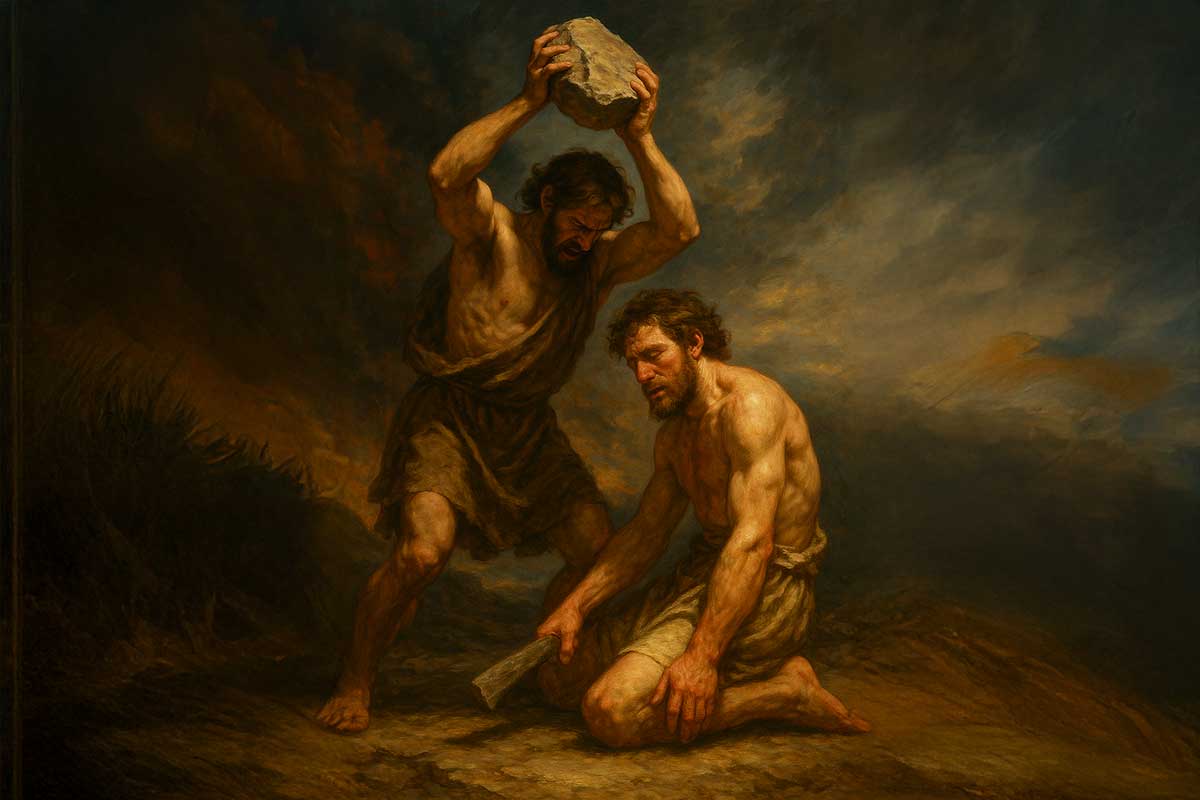
The conflict between Cain and Abel is not simply a story from ancient days. It is the central drama of human history, repeated across generations, religions, and nations. The question we face is whether humanity can truly rise above this pattern — whether resentment, jealousy, and division can give way to a world of love and unity. Today, I want us to imagine such a world, and to ask: what is required for humanity to finally transcend the Cain–Abel cycle?
Let me begin with this question:
Is the Cain–Abel pattern eternal, or can humanity truly overcome it?
C.S. Lewis
Humanity can overcome the pattern, but not by our own natural strength. The root of the conflict lies in pride — the desire to be loved more, to be first, to be recognized. Pride is the oldest sin and the most difficult to uproot. It cannot be healed by psychology alone, nor by politics. It requires a transformation of the heart, something only grace can accomplish. The good news is that grace is real, and when the human heart yields to it, the cycle can be broken.
Rabbi Abraham Joshua Heschel
The Cain–Abel story is not destiny but warning. God tells Cain, “Sin crouches at the door, but you may rule over it.” This means the pattern is not fixed; it is a choice. Humanity must cultivate moral imagination — the ability to feel the pain of the other, to see the world from the perspective of the stranger, the rival, the overlooked. When compassion becomes stronger than suspicion, the pattern dissolves. It is not eternal; it awaits our courage.
Buckminster Fuller
Humanity can overcome this pattern when we redesign the systems that perpetuate competition. Much of Cain’s resentment is born from the belief that resources are limited, that for Abel to win, Cain must lose. But the universe is abundant. If we shift from a “you or me” paradigm to a “we” paradigm, conflict becomes obsolete. The transformation requires not only moral change but structural innovation — a world where cooperation is more advantageous than rivalry.
Pope John Paul II
Yes, humanity can overcome it, but only by rediscovering the truth that every person is a child of God. When the dignity of the human person is recognized — not as theory but as conviction — division loses its power. The Cain–Abel story persists because we forget our shared origin. When we remember that we are brothers and sisters, reconciliation becomes not merely possible but necessary.
The Dalai Lama
Humanity can transcend this pattern through inner peace. Conflict arises from minds disturbed by fear, anger, and misunderstanding. If individuals cultivate compassion and emotional discipline, society will reflect that peace. The transformation begins within. When enough hearts are calm, the world becomes calm. The cycle is not eternal; it lives only as long as we feed the causes of suffering.
Reverend Moon
Thank you. Now let us consider the future.
Humanity dreams of a world without resentment, without division, without the pain of sibling rivalry played out on global stages. My next question is this:
What would a world look like where resentment no longer rules human relations — a world that has graduated from the Cain–Abel pattern?
Rabbi Abraham Joshua Heschel
It would be a world where empathy is the foundation of society. Justice would not be abstract but relational — rooted in the understanding that my neighbor’s pain is my own. In such a world, we would recognize the image of God in every face. The stranger would cease to be a threat and would become a revelation. Peace would arise not from treaties but from transformed hearts.
Buckminster Fuller
It would be a world of cooperation over competition. Instead of nations competing for resources, they would collaborate to maximize abundance. Innovation would serve humanity rather than power. War would become obsolete because it would be recognized as an inefficient and outdated technology. The world would operate like a healthy system, each part supporting the whole.
The Dalai Lama
It would be a world where compassion is taught as early and as seriously as mathematics. Children would grow up learning how to calm their minds, listen to others, and resolve conflict peacefully. Leaders would be chosen not for their strength but for their wisdom. Such a world would still face challenges, but suffering would not lead to hatred — it would lead to deeper understanding.
Pope John Paul II
A world without resentment would be a world with restored relationships — between persons, between nations, between humanity and God. Forgiveness would not be rare but ordinary. The divisions of race, class, and religion would no longer define us; instead, we would see humanity as a single family. This vision requires moral conversion, a turning of the heart toward love.
C.S. Lewis
Such a world would be marked by humility. For resentment to vanish, the human heart must release its claims to superiority. In a humble world, people rejoice in one another’s gifts rather than envy them. Joy replaces jealousy. Gratitude replaces grievance. It would not be a perfect world — only Heaven is perfect — but it would be a redeemed world, a world that reflects the divine intention.
Reverend Moon
Let us now turn to the final and most important question.
What spiritual awakening must occur for the human family to unite and finally overcome the Cain–Abel pattern at the world level?
The Dalai Lama
Humanity must awaken to the understanding that all beings desire happiness and seek to avoid suffering. This simple truth creates universal compassion. When we see that our enemy is simply another being searching for peace, we soften. This awakening dissolves the illusion of separation.
Pope John Paul II
The world must rediscover the sanctity of the human person. Every conflict begins with the denial of someone’s dignity. When we awaken to the truth that each life is sacred, unity becomes not just desirable but imperative. The spiritual awakening is a return to the Fatherhood of God and the brotherhood of humanity.
Rabbi Abraham Joshua Heschel
The awakening must be a rediscovery of awe — the awareness that we live in a world filled with God’s presence. Awe humbles us, lifts us, and binds us to one another. A society that has lost awe becomes a society of resentment. A society that regains awe becomes a society of compassion.
C.S. Lewis
Humanity must awaken to love as the highest reality. Not sentiment, but divine love — the love that sacrifices, forgives, restores. When this love enters the human heart, pride collapses, and with it, the entire machinery of resentment. The healing of Cain requires nothing less than the triumph of charity over ego.
Buckminster Fuller
We must awaken to our role as stewards of one shared spaceship — Earth. When we realize that humanity’s future is collective, not competitive, the logic of conflict dissolves. This awakening redefines identity: not “I am American” or “I am Chinese,” but “I am a crew member of humanity’s vessel.” Unity becomes practical, not merely moral.
Closing by Reverend Moon
Humanity can overcome the Cain–Abel pattern when the wounded heart is healed, when pride yields to humility, when compassion overcomes division, and when love becomes the guiding principle of our lives. The world of peace will not come through force or argument but through the awakening of the human spirit — the realization that we are one family under God.
Enter your text here...
Enter your text here...
Short Bios:
Carl Jung
Swiss psychiatrist and founder of analytical psychology, Jung explored archetypes, the collective unconscious, and the symbolic patterns that shape human behavior and myth. His work deeply influenced modern psychology, spirituality, and the understanding of shadow emotions.
Brené Brown
American researcher and author known for her pioneering work on vulnerability, shame, courage, and emotional resilience. Brown’s research illuminates how unseen wounds shape family relationships and personal identity.
Alfred Adler
Austrian psychiatrist and founder of individual psychology, Adler emphasized inferiority, birth order, and the human drive for significance. His insights into sibling dynamics remain foundational in modern psychology.
Rabbi Jonathan Sacks
British Chief Rabbi, philosopher, and moral thinker whose writings bridged faith and ethics. Sacks explored the ways biblical narratives illuminate human responsibility, dignity, and reconciliation.
Harville Hendrix
Relationship therapist and creator of Imago Therapy, Hendrix studied how early childhood experiences shape adult relationships. His work focuses on healing emotional wounds through compassionate communication.
Mahatma Gandhi
Indian leader of nonviolent resistance and spiritual reformer whose teachings on truth, sacrifice, and moral courage reshaped global movements for justice. His emphasis on inner transformation remains influential worldwide.
Confucius
Ancient Chinese philosopher whose teachings on virtue, harmony, and ethical leadership formed the foundation of East Asian culture and political thought. His wisdom centers on self-cultivation as the root of societal order.
Mother Teresa
Catholic nun and missionary known for her lifelong service to the poor in Calcutta. Her work embodied radical compassion, humility, and love for the neglected and marginalized.
Dietrich Bonhoeffer
German theologian and anti-Nazi resistor whose writings on costly discipleship and moral responsibility continue to inspire spiritual courage and ethical clarity.
Desmond Tutu
South African archbishop and human rights leader who fought against apartheid through forgiveness and reconciliation. His work with the Truth and Reconciliation Commission became a global model for healing divided societies.
Rumi
13th-century Persian poet and mystic whose writings on love, longing, and spiritual unity have become some of the most beloved texts across cultures and religions.
Viktor Frankl
Austrian psychiatrist and Holocaust survivor who founded logotherapy, emphasizing meaning as the primary human drive. His book “Man’s Search for Meaning” stands as a testament to spiritual resilience.
Thich Nhat Hanh
Vietnamese Zen master, peace activist, and pioneer of modern mindfulness. His teachings promote deep listening, compassionate understanding, and peaceful transformation of suffering.
James Baldwin
American writer and social critic whose works explored race, identity, justice, and the emotional landscape of oppression. His insights into dignity and human vulnerability remain powerful and relevant.
Carl Rogers
American psychologist and founder of humanistic psychotherapy. Rogers emphasized empathy, unconditional positive regard, and the healing power of authentic relationship.
C.S. Lewis
British author, theologian, and philosopher known for “The Chronicles of Narnia” and profound writings on faith, morality, and human nature. His work explores pride, humility, and spiritual transformation.
Rabbi Abraham Joshua Heschel
Polish-American rabbi and philosopher whose writings on awe, moral urgency, and social justice shaped modern Jewish thought and civil rights movements.
Buckminster Fuller
American visionary, inventor, and futurist who proposed large-scale solutions for human cooperation and sustainability. His concept of “Spaceship Earth” reframed global interdependence.
Pope John Paul II
Leader of the Catholic Church from 1978–2005, known for his global ministry of reconciliation, human dignity, interfaith dialogue, and defense of spiritual freedom.
The Dalai Lama
Tibetan spiritual leader and Nobel Peace Prize laureate whose teachings emphasize compassion, inner peace, and universal responsibility.
Nelson Mandela
South African anti-apartheid leader and later president, Mandela spent 27 years in prison before guiding his nation toward reconciliation, forgiveness, and democratic unity.
Vaclav Havel
Czech playwright, dissident, and president who led his nation through peaceful democratic transformation. His writings emphasize truth, morality, and human dignity.
Hannah Arendt
Political theorist renowned for her works on totalitarianism, human freedom, and the nature of evil. Her analyses remain foundational in political philosophy.
Martin Luther King Jr.
American civil rights leader whose vision of nonviolence and racial equality transformed the moral landscape of the United States and remains globally influential.
Arnold Toynbee
British historian best known for “A Study of History,” where he argued that civilizations rise or fall depending on how they respond to challenges with creativity or resentment.
Reverend Sun Myung Moon
Korean spiritual leader, visionary, and founder of the Unification Movement, Rev. Moon dedicated his life to resolving the fundamental divisions within the human family. His teachings emphasized God as a loving Parent, all people as brothers and sisters, and the Cain–Abel dynamic as the essential pattern behind human conflict. He presented a formula of reconciliation through sacrificial love, responsibility, and the restoration of wounded hearts. His work sought to unite religions, nations, races, and families under the ideal of living for the sake of others.
Leave a Reply