

|
Getting your Trinity Audio player ready...
|
What if Kya Clark’s real mother was the marsh itself?
Introduction by Delia Owens
When I began imagining Kya Clark, I was not trying to write only a mystery, or only a love story, or only a novel about a girl alone in the marsh. I was drawn to something deeper and older: the question of what becomes of a human soul when it is left outside the circle of ordinary care, and what kind of wisdom may still grow there.
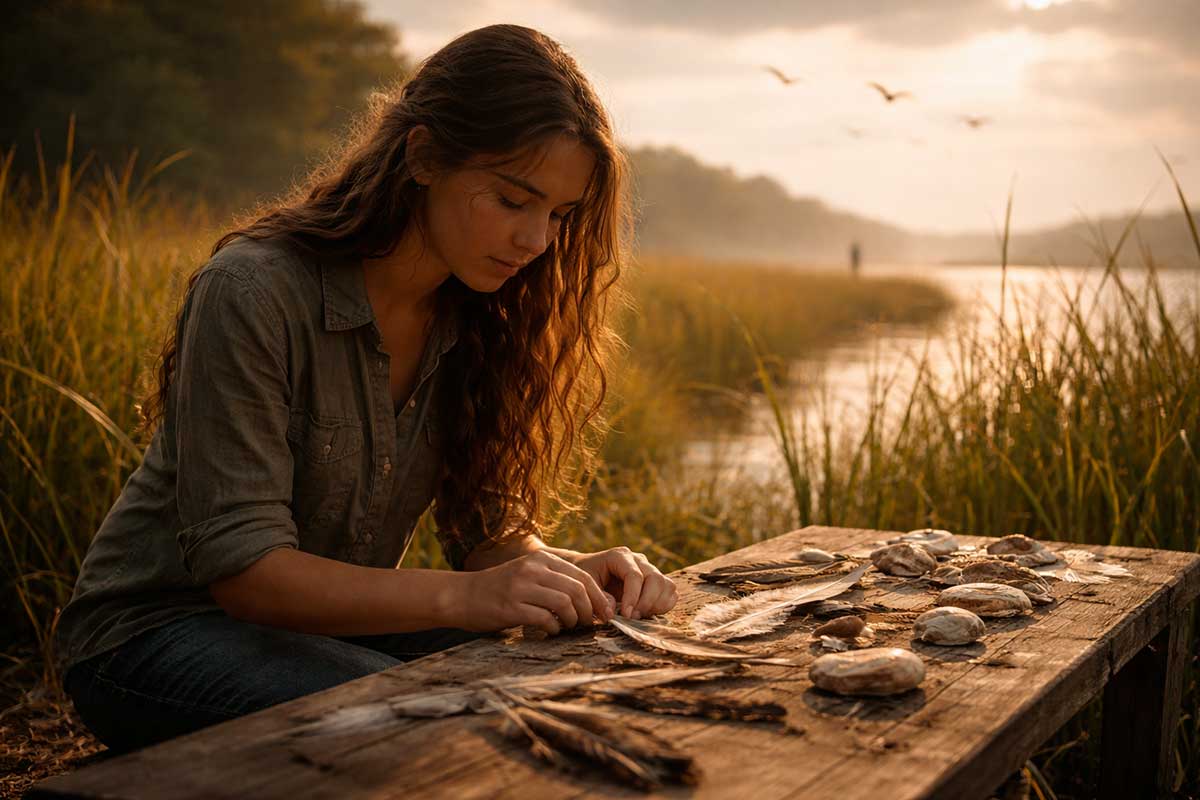
The marsh, for me, was never background. It was breath, shelter, hunger, rhythm, danger, beauty. It was a living world with its own laws, its own patience, its own exactness. Kya grows up in that world not as a visitor, but as someone formed by it. She learns from feathers, tides, mud, gulls, fireflies, mating rituals, hiding places, and storms. She is abandoned by people, yet she is never entirely abandoned by life itself. The natural world keeps speaking.
At the center of this story is loneliness, though not emptiness. Kya’s solitude wounds her, yet it sharpens her vision. She becomes a close observer of things many others pass by. She learns how to read the marsh because she must, but in reading it, she begins to read herself. Her life asks a painful question: if a child is denied tenderness, can attention become a form of love? Can place become a kind of parent? Can beauty help hold together what sorrow might otherwise break apart?
I wanted this story to live in the tension between the so-called civilized world and the wild one. People in town look at Kya and call her strange, suspect, less than one of them. Yet the marsh, often called wild, contains a kind of honesty that human society does not always offer. Nature does not gossip. It does not pretend. It does not flatter. It can be harsh, but it is rarely false. So one of the questions beneath this novel has always been simple: who, in truth, is wild?
Love enters Kya’s life carrying both promise and risk. That felt true to me from the start. Someone shaped by abandonment does not come to love innocently. She comes alert, hungry, guarded, hopeful, afraid. To be chosen matters greatly to a person who has been left. To trust can feel beautiful and perilous in the same breath. I wanted to honor that tension without smoothing it over.
And then there is judgment. Communities can be quick to name, to reduce, to decide. Once a person has been turned into a story in other people’s minds, truth becomes harder for them to see. Kya is called the Marsh Girl long before she is ever fully known. That naming is no small thing. It is one of the quiet violences of the book. A label can become a cage.
So as we begin this conversation, I hope we can sit inside the novel’s deeper currents: abandonment, belonging, desire, stigma, survival, and the old intimacy between human life and the natural world. Kya’s story is not about perfection or purity. It is about adaptation. It is about what a heart protects, what it risks, and what it becomes when left to grow in difficult ground.
(Note: This is an imaginary conversation, a creative exploration of an idea, and not a real speech or event.)
Topic 1 — Abandonment and the Making of the Self

Moderator: Oprah Winfrey
Participants:
Bessel van der Kolk
bell hooks
Jeanette Winterson
Gabor Maté
Sue Monk Kidd
Oprah Winfrey:
Welcome, everyone. In Where the Crawdads Sing, Kya’s life begins with a wound that never really leaves her: one person after another walks away. Her mother leaves. Her siblings leave. Her father leaves. She is still a child, yet she is forced to become her own parent, protector, and witness. What makes this story hit so deeply is that abandonment does not stay in childhood. It enters the nervous system. It shapes how love is recognized, how danger is sensed, and how silence becomes a way of life. So tonight, I want us to look closely at this question: when a child is left behind, what kind of self gets built from that emptiness?
Jeanette Winterson:
What strikes me first is that abandonment creates a split reality. There is the outer child, who still must fetch food, endure weather, and get through the day. Then there is the inner child, who keeps asking the same question again and again: Why was I not worth staying for? That is the hidden engine. Kya survives in a practical sense, yes, but survival is never the full story. A child left alone becomes a translator of absence. She reads every silence as meaning something. She reads every departure as truth. That is why, in a novel like this, abandonment is not one event. It is a climate.
Bessel van der Kolk:
Yes, and that climate lives in the body long before it becomes language. A child does not think, “I am forming an attachment pattern.” The child feels terror, confusion, numbness, vigilance. What I see in Kya is someone whose nervous system has learned that safety is unreliable. People often think trauma is only about one shocking event. In many lives, trauma is the steady absence of attunement, protection, and comfort. The body then organizes itself around one mission: do not depend too much, do not relax too much, do not need too much. Kya becomes highly observant, highly self-protective, deeply sensitive to signs of leaving. That makes perfect sense.
bell hooks:
And this is why love must be discussed with honesty. Many people say love heals, yet before healing can happen, we have to admit that what many children receive is not love at all. Control is not love. Neglect is not love. Violence is not love. Disappearance is not love. A child raised without dependable care does not simply miss affection; she learns a broken grammar of love. She may come to believe that love is unstable, that love vanishes, that love must be earned through silence or pleasing or endurance. Kya’s tragedy is not only that she is abandoned. It is that abandonment starts teaching her what to expect from every bond that follows.
Gabor Maté:
That is beautifully put. A child always adapts. This is one of the deepest truths about human development. The question is never whether the child adapts, but what the adaptation costs. Kya’s adaptations are brilliant. She learns self-reliance. She learns perception. She learns not to waste energy on false hope. Yet the gift and the wound are bound together. The very strategies that let her live also make closeness harder later. This is common. People often admire resilience without seeing the grief hidden inside it. Resilience is precious, but it may be built on necessary emotional amputations.
Sue Monk Kidd:
What moves me is that she still remains capable of tenderness. That matters. She is not erased by abandonment. She is shaped by it, yes, but not emptied of feeling. There is still longing in her. There is still wonder in her. There is still this almost sacred hunger to be seen without being mocked or discarded. That is part of why readers love her. She is not made of one thing. She is fierce, shy, wounded, intelligent, wary, open in flashes. That complexity feels true to the inner life of many girls and women who learned early that softness could be costly.
Oprah Winfrey:
I want to stay on that point, because people often praise Kya by calling her strong. Yet sometimes “strong” becomes a way of skipping over what she had to endure. Are we too quick to celebrate strength in people who were never given another option?
Gabor Maté:
Yes, very often. We romanticize survival. We see the competent adult and forget the child who had no business carrying such a burden. A child should not have to become impressive in order to stay alive. When we admire Kya, we should admire her spirit, yes, but we should also feel the sorrow of what was required of her.
Bessel van der Kolk:
Exactly. Strength can be a form of emergency organization. It can look admirable from the outside. Inside, it may mean that the body never learned rest. Hyper-independence is often praised in our culture, but clinically, it can be a sign that dependence once felt dangerous. A person says, “I need no one,” and people applaud. What I hear is, “Needing someone once hurt too much.”
Jeanette Winterson:
And literature has a special way of making that visible. Kya’s solitude can look almost mythic, even beautiful, because the marsh surrounds her with this immense living world. Yet what makes the book poignant is that beauty does not cancel deprivation. A child can stand in a gorgeous place and still ache for one hand on her shoulder. The natural world may hold her, but it does not tell her, “I choose you.” Human beings need that sentence.
bell hooks:
Yes. Belonging is not a luxury. It is part of what lets the self unfold without fear. When children are abandoned, they often build identities organized around not asking. Not asking for food. Not asking for comfort. Not asking for reassurance. Not asking why. Then, later, as adults, they may confuse self-erasure with maturity. Kya’s silence is not simply personality. It is history.
Sue Monk Kidd:
And still, there is a form of wisdom born in such silence. I do not mean that suffering is good. I mean that some people become deep listeners because nobody listened to them. They learn to hear what others miss. Kya’s intimacy with the marsh feels connected to that. She notices details because detail became safer than people. She trusts feathers, tides, birdsong, mud paths. The world of nature does not lie to her in the way human beings have lied or vanished.
Oprah Winfrey:
That leads us to something important. Is Kya’s bond with the marsh partly a healing bond, or is it also an expression of trauma?
Bessel van der Kolk:
Both. Healing and adaptation often coexist. Nature gives rhythm, sensory grounding, predictability. Those things help regulate a stressed nervous system. The marsh is not only scenery for her; it is a regulating environment. It offers patterns that make sense. Tides return. Seasons return. Creatures behave according to instinct. That reliability is deeply soothing for someone whose caregivers were not reliable.
Gabor Maté:
Yes, and a child always seeks attachment. If attachment from humans is broken, the child may attach to place, animals, ritual, imagination, anything that gives continuity. That is not pathology. It is life preserving itself.
Jeanette Winterson:
I would go further and say that place becomes biography. Kya is not merely living in the marsh. She is being written by it. Since people did not reflect her back to herself in a stable, loving way, the landscape takes on that role. It becomes the mirror in which she can still exist.
bell hooks:
Yet we should not lose sight of the social wound. It is tempting to turn this into a poetic tale of a girl and nature. The harder truth is that children need community. They need structures of care. They need adults who intervene. Part of the pain of this story is that many people see Kya and fail to become responsible for her. So the book is not only about one family’s abandonment. It is about collective abandonment.
Sue Monk Kidd:
That is a profound point. The community decides she is “other,” and once that happens, compassion weakens. People can live very near suffering when they have named the sufferer as strange. That too is part of abandonment: being left not only by family, but by the human circle itself.
Oprah Winfrey:
I keep thinking about how a child makes meaning out of being left. Children almost always blame themselves first. They do not say, “My parents were wounded, limited, broken.” They say, “Something is wrong with me.” How much of adult life is then spent trying to escape that original conclusion?
Gabor Maté:
A great deal. Children are egocentric in the developmental sense. They naturally interpret events through the self. So abandonment becomes identity: I am the one left. That can later turn into many adult patterns: clinging, distancing, choosing unavailable partners, hiding one’s needs, mistrusting kindness. The person is not choosing freely in the full sense. The person is living inside an old adaptation.
Bessel van der Kolk:
And the body remembers before the mind understands. Someone may consciously desire closeness, yet their body reacts to intimacy as danger. That contradiction is common in trauma survivors. Kya can want connection and still be unable to rest inside it.
Jeanette Winterson:
Which is why the novel resonates with so many readers who may never have lived in a marsh, may never have been literally abandoned, yet recognize the emotional pattern. Many people know the sensation of waiting to be left. Many know the habit of pre-grieving the relationship before it ends. Many know how painful it is to need love and distrust it at the same time.
bell hooks:
And there is a political dimension to this too. We often raise children in cultures where emotional neglect is normalized. We call it toughness, discipline, privacy, self-sufficiency. Then we are surprised when adults struggle to love well. Kya’s story is dramatic, but many readers respond because the core wound is familiar in quieter forms.
Sue Monk Kidd:
Which may be why her longing feels so alive on the page. She does not stop wanting love. She does not become cold stone. That is her courage. She keeps the lamp lit, however dimly. She keeps alive the possibility that someone might stay.
Closing Reflection
Oprah Winfrey:
What I hear in all of you is that abandonment does not only leave emptiness. It also builds patterns, defenses, brilliance, fear, self-reliance, vigilance, and longing. Kya becomes who she is through absence, yet she is never only the product of what was done to her. She is still choosing, still sensing, still learning, still reaching in her own guarded way. That may be why this novel stays with readers. It understands that a child who is left behind does not simply become broken. She becomes complicated. And in that complication, we may see pieces of ourselves.
Topic 1 Takeaway
Kya’s abandonment is not just backstory. It is the shaping force behind her identity, her caution, her hunger for connection, and her fierce instinct to survive. The novel invites readers to ask not, “Why is she so distant?” but, “What kind of world taught her distance was safer than trust?”
Topic 2 — Nature as Mother, Teacher, and Witness
Moderator: Krista Tippett
Participants:
Robin Wall Kimmerer
Annie Dillard
Terry Tempest Williams
Sy Montgomery
Delia Owens
Krista Tippett:
In Where the Crawdads Sing, the marsh is never just a backdrop. It is shelter, teacher, rhythm, silence, warning, beauty, and memory. For Kya, when human beings fail to care for her, the natural world becomes the place that does not turn away. It feeds her, steadies her, trains her attention, and gives her a language for life that is older than society. So tonight I want to begin here: when a child is left without dependable human care, what does it mean for the land itself to become mother, witness, and guide?
Robin Wall Kimmerer:
What touches me first is that Kya’s relationship with the marsh is not ownership, but reciprocity. She learns by watching. She survives by paying attention. She takes from the marsh, yes, but she also gives it her devotion, her listening, her patience. That matters. The natural world becomes trustworthy to her because it does not pretend. Tides come when they come. Birds follow their seasons. Shells, reeds, mud, wind, all speak in patterns. For a child who has known human unpredictability as pain, the grammar of the earth can feel like a form of truth.
Annie Dillard:
Yes, and the truth of nature is never soft in the sentimental sense. That is one of the strongest things in the book. The marsh is beautiful, but it is not tame. It contains hunger, mating, camouflage, death, birth, waiting, stillness, violence, and splendor all at once. Kya is formed by this honest world. She is not learning from a nursery. She is learning from a living system where beauty and brutality are braided together. That gives the book much of its force.
Terry Tempest Williams:
Place can hold a person when people cannot. I think many readers know this in their bones. A landscape can become the keeper of your sorrow. It can become the space where you remain whole when the social world has split you apart. Kya’s intimacy with the marsh feels like that to me. It is not escapism. It is a way of remaining alive inside reality. She reads the marsh as others might read scripture or family history. It becomes her continuity.
Sy Montgomery:
And there is this deep companionship she forms with nonhuman life. That is beautiful and real. People often think animals and wild spaces are emotionally neutral, but for many people they are not. They can be companions, teachers, stabilizers. The creatures Kya studies are not abstract to her. They are neighbors. Through them she learns patterns of attachment, territory, seduction, vulnerability, and survival. Her scientific eye is born from love, and her love is sharpened by close observation.
Delia Owens:
That was deeply important to me in writing the novel. The marsh had to feel alive in every sense. I did not want it to function as scenery behind human drama. I wanted it to be one of the shaping presences in Kya’s life. When society turns away from her, the marsh does not. It gives her food, solitude, and a way of learning the world. It gives her metaphors before she has formal language for them. Much of who she becomes rises from watching the natural world carefully enough that it begins to speak back.
Krista Tippett:
There is something almost spiritual in that, though not in a formal religious sense. The marsh becomes a place of revelation. I wonder whether what Kya receives from nature is comfort, or whether it is something closer to formation.
Robin Wall Kimmerer:
I would say both, but formation may be the deeper word. Comfort soothes. Formation shapes. Kya is shaped by paying attention. She learns that life is relational, that timing matters, that silence carries information, that every living thing exists within a web of response. This is not passive beauty. It is education. The marsh teaches her how to read a world that human society never explained to her kindly.
Annie Dillard:
And it teaches scale. Human beings often live trapped inside their dramas, as though our heartbreak is the whole weather system. Nature breaks that illusion. In the marsh, life goes on with immense indifference and immense intimacy at once. A heron waits. Insects rise. Water shifts. Kya’s suffering is real, but the marsh places it inside a larger order. There is a hard mercy in that.
Terry Tempest Williams:
Yes, a larger order, and yet one that does not erase the self. In many landscapes, solitude can make a person feel more present, not less. I think that is part of Kya’s development. In town she is reduced to a label: Marsh Girl. In the marsh she becomes particular. Her eye sharpens. Her senses sharpen. Her inner life sharpens. The place grants her specificity. She is no longer what people call her. She is a consciousness moving through reeds, tides, feathers, and light.
Sy Montgomery:
That is such a lovely point. Animals do not care about human stigma. A gull does not think, “There goes the strange girl.” A shell does not mock. A marsh rabbit does not gossip. There is relief in that for anyone who has felt judged by human communities. The nonhuman world can offer a kind of pure encounter. You still must be alert. You still must respect danger. Yet you are not trapped in the same games of social humiliation.
Delia Owens:
Exactly. Kya finds honesty there. Not safety in the sense of no risk, but honesty. A storm is a storm. A predator is a predator. A tide is a tide. Human beings, by contrast, can smile and betray, desire and deceive, include and reject. The natural world in the novel is full of harsh realities, yet it is still more legible to Kya than people are.
Krista Tippett:
That raises a striking question. Why does nature feel more trustworthy to Kya than society does? Is it simply because the marsh does not lie, or because it never promised her love in the first place?
Robin Wall Kimmerer:
That is wise. The earth does not make false vows. It offers relationship through pattern, through reciprocity, through presence. Human care, when it is given and then withdrawn, leaves a wound that raw nature does not create in the same way. Kya can trust the marsh because she meets it as it is. There is no betrayal in a winter. No insult in a tide. No malice in migration.
Annie Dillard:
And no flattery either. Which is a relief. Nature does not seduce us with moral claims. It simply is. Human beings often prefer charming lies to plain truth. Kya does not have that luxury. Her education in the marsh is an education in what is actual.
Terry Tempest Williams:
This is why place can become sacred without becoming idealized. Sacred places are not always gentle places. Sometimes they are stern, demanding, exposing. The marsh asks Kya to notice. It asks her to adapt. It asks her to participate. That kind of relationship can save a life.
Sy Montgomery:
And from that comes her science. People sometimes split wonder from knowledge, as though one cancels the other. In Kya they belong together. She loves the marsh enough to study it carefully. She studies it carefully because she loves it. That combination is one of the most moving things in the novel. Her observational life becomes her intellectual life.
Delia Owens:
Yes, and that was vital to me. Kya is often underestimated by the town, but the marsh reveals her intelligence early. Her mind is alive long before society recognizes it. She is capable of classification, patience, pattern recognition, memory, inference. The natural world does not merely soothe her loneliness. It gives her a way to become fully herself.
Krista Tippett:
So would you say that the marsh gives Kya a self when society is trying to deny her one?
Delia Owens:
In many ways, yes.
Robin Wall Kimmerer:
I agree. Identity can be formed in relationship. If your community refuses to mirror your worth, another form of relationship may still answer you. Kya’s answer comes from place. The marsh tells her, again and again, that she exists within a living world and can know it deeply.
Annie Dillard:
And that deep knowing is not separate from survival. To know where mussels are, when birds move, how weather turns, how mud records passing creatures, this is practical knowledge. Yet it is also contemplative knowledge. Her life dissolves the false divide between intellect and instinct.
Terry Tempest Williams:
That may be one reason readers respond so strongly to the book. Many people hunger for a life where attention still matters, where the world is not all speed and noise and performance. Kya’s life is painful, yes, but it contains an intimacy with place that many modern readers miss in their own lives.
Sy Montgomery:
And there is healing in that intimacy. Not total healing. Nature does not erase trauma like magic. Yet it can steady the heart, widen perception, and return a person to rhythms older than fear. I think many animal lovers and naturalists feel that in this novel very strongly.
Krista Tippett:
I want to ask one final thing. Is the marsh a substitute for human love, or something different altogether?
Robin Wall Kimmerer:
Different. Human love and earth-relationship are not interchangeable. A child should not have to choose one in place of the other. But when one is missing, the other can still sustain life.
Terry Tempest Williams:
Yes. The marsh does not replace mother, father, community, or beloved. It creates room where the soul can continue.
Annie Dillard:
And perhaps where perception can become devotion.
Sy Montgomery:
And where companionship can arrive in forms the town would never understand.
Delia Owens:
For Kya, the marsh is the first place that does not ask her to become someone else before it lets her belong.
Closing Reflection
Krista Tippett:
What I hear in all of you is that the marsh is not a decorative setting, but a living force that shapes Kya’s mind, body, intelligence, and sense of belonging. It gives her rhythm when family gives rupture. It gives her truth when society gives labels. It gives her forms of relationship that are quiet, exacting, and real. Perhaps that is why the novel lingers in so many readers. It suggests that the natural world can do more than surround a life. It can witness it, tutor it, and in a strange way, help rescue it.
Topic 2 Takeaway
For Kya, the marsh becomes far more than home. It is a source of trust, knowledge, and identity. The novel suggests that when human care collapses, the natural world can still offer pattern, meaning, and a place where a self may keep growing.
Topic 3 — The Violence of Being Seen as an Outsider

Moderator: Malcolm Gladwell
Participants:
Brené Brown
Toni Morrison
Erving Goffman
Min Jin Lee
James Baldwin
Malcolm Gladwell:
One of the deepest tensions in Where the Crawdads Sing is that Kya is never allowed to be just a person. Before many people know her, they name her. They reduce her. They turn her into a local story: “the Marsh Girl.” Once that happens, every action of hers gets filtered through that label. Her silence becomes strange. Her independence becomes suspicious. Her difference becomes proof. So tonight I want us to stay with this question: what happens to a human being when a community decides who she is before it ever truly sees her?
Erving Goffman:
What happens is stigma becomes social fact. A label is never just a word. It reorganizes interaction. People approach the labeled person with expectation already in place. They do not encounter her freshly. They encounter the category. Kya is not received as an individual with a history, abilities, fears, and dignity. She is received as a type. Once that type hardens, ordinary social interpretation shifts. Neutral actions appear meaningful. Difference appears threatening. The labeled person must then live inside a theater she did not write.
Brené Brown:
And shame lives right there. Shame is the fear that if people truly see you, they will decide you are unworthy of love and belonging. Kya is put in an even harsher position, because she is not simply afraid of that judgment. She is already carrying it. The town has made her into a symbol of lack, dirt, wildness, and social failure. When a person is treated that way long enough, shame is no longer a passing feeling. It becomes atmosphere.
Toni Morrison:
Yes, and communities often need such figures. People do not merely misread outsiders by accident. They use them. The outsider becomes a vessel into which the town pours its fear, disgust, fantasy, superiority. This is why a name like “Marsh Girl” carries such force. It is diminishment disguised as familiarity. It sounds local, almost harmless, but it performs violence. It strips away complexity. Once stripped, she can be judged with comfort.
James Baldwin:
That comfort is the key. People like innocence in themselves. They like to think they are simply reacting to what is there. But very often they are protecting an image of themselves by creating someone beneath them. Then they call their cruelty common sense. They call it order. They call it knowing the type. What they cannot bear is the thought that the person they made into an outsider might possess an interior life as rich as their own, perhaps richer.
Min Jin Lee:
And in many communities, once a social script begins, it is handed down quietly. Children hear how to think. Adults reinforce it. A whole place learns who belongs and who does not. Kya’s poverty, her isolation, her lack of polish, her refusal or inability to perform town norms, all of this places her outside the circle. Then the circle protects itself by acting as though exclusion is just realism. That is one of the saddest truths in human groups. Exclusion often presents itself as practicality.
Malcolm Gladwell:
So the label is doing much more than describing. It is creating a lens. Is that fair to say?
Erving Goffman:
Yes, more than a lens. It structures encounter. Once a person is stigmatized, every meeting is shaped in advance. Others watch for confirmation. They collect signs that fit the label and ignore signs that do not. The outsider is forced into a position of over-performance, under-acceptance, or withdrawal. Kya often withdraws, and that withdrawal is then read as confirmation of her strangeness.
Brené Brown:
That is what shame does. When people experience chronic judgment, they either perform harder for acceptance, or they hide, or they fight. Kya’s way is often hiding. Yet what I find powerful is that her hiding is not emptiness. It is protection. People often misread guardedness as coldness, when in truth it may be the smartest thing a wounded person knows to do.
Toni Morrison:
And we should note the role of language. Communities can wound through ordinary speech long before any grand act occurs. Nicknames, gossip, tones of voice, pauses, the refusal to invite, the refusal to imagine, these are not minor things. They build the architecture of exclusion. By the time formal accusation arrives, the emotional trial has already been underway for years.
James Baldwin:
Yes. A courtroom may come later, but the verdict is often old. That is what makes stories like this so painful. People like to tell themselves that justice begins when officials appear. It often begins much earlier in kitchens, schools, sidewalks, whispers, churches, shops, little glances, the accumulated education of contempt.
Min Jin Lee:
What strikes me as well is that class and gender shape how Kya is read. A poor boy can sometimes be imagined as rough, unruly, salvageable, maybe even charming in some mythic way. A poor, isolated girl does not receive the same story. Her difference unsettles people more deeply. She does not fit their feminine script. She is not properly sheltered, not properly socialized, not properly under supervision. That alone can make a community see her as threatening.
Malcolm Gladwell:
That is fascinating. So part of the town’s discomfort may come from the fact that she is not readable within their normal map of womanhood.
Min Jin Lee:
Exactly. She is a girl alone. Then a woman alone. Self-contained. Poor. Observant. Outside the rituals that tell society how to place a female body and voice. Such women often attract projection. People decide what they must be.
Brené Brown:
And women who are outside the script are often punished through shame. Too quiet, too wild, too smart, too sexual, too withdrawn, too independent, too poor, too different. There is almost always a “too much” or “not enough” waiting for them. Kya carries many at once.
Erving Goffman:
From a sociological angle, what is striking is that the town needs consistency in its story more than truth. A stable narrative about Kya helps preserve the town’s own sense of order. If she were truly seen, the town might have to revise its view of itself. It might have to admit neglect, cruelty, and carelessness. Such revisions are costly. Stigma is often maintained because it protects the majority from self-examination.
Toni Morrison:
Beautifully said. The outsider is often the mirror no one wants. If they really looked at her, they would have to ask: why did we let a child become this alone? Why did we speak of her this way? Why were we more attached to the story of her strangeness than to the fact of her vulnerability? People fear those questions because moral responsibility follows.
James Baldwin:
And moral responsibility is exactly what many social worlds are arranged to avoid. There is always a way to say, “That is just how things are.” But “how things are” is often a human arrangement disguised as fate.
Malcolm Gladwell:
I want to push on something. Is there a point where the outsider begins to internalize the label so deeply that it shapes identity from the inside?
Brené Brown:
Yes, but not in a simple way. A person may reject the label and still organize their life around it. They may say, “That is not who I am,” yet still expect rejection, still hide, still anticipate humiliation. Shame gets under the skin. Kya may not believe every lie about herself, yet she has learned what other people are likely to see. That changes how a person enters the world.
Erving Goffman:
One could say she develops what might be called anticipatory self-management. She organizes behavior around probable rejection. She minimizes exposure. She becomes strategic about presence. That is a rational adaptation to stigma.
Min Jin Lee:
And there is sorrow in that. People speak of resilience, which is real, but there is grief in how much life gets planned around avoiding harm. The outsider often loses spontaneity first. Before dignity is fully taken, ease is taken.
Toni Morrison:
Yes, ease. That is a lovely and painful word here. Kya is rarely granted the luxury of unguarded being. She must carry watchfulness like clothing. This is why readers feel for her so deeply. They sense the cost of always having to arrive in the world prepared to be misread.
James Baldwin:
And yet, in being cast out, she may see things the town cannot. The outsider often becomes a fierce observer of the social world, because survival requires it. Those on the margins study the center more carefully than the center studies itself.
Malcolm Gladwell:
That feels very true of Kya. Her isolation does not make her less perceptive. It makes her more so.
Brené Brown:
Yes, and this matters. Being excluded can wound, but it can also sharpen insight. Kya is not socially powerful, yet she is emotionally and observationally acute. Many people who have lived outside belonging become exquisite readers of tone, mood, danger, and sincerity. They have had to.
Min Jin Lee:
There is dignity in that, though I resist romanticizing it. The outsider’s sensitivity often comes at a price no child should have to pay.
Toni Morrison:
Quite right. We should never mistake adaptation for justice.
Erving Goffman:
Nor should we mistake social consensus for truth.
James Baldwin:
Nor respectability for innocence.
Closing Reflection
Malcolm Gladwell:
What I hear across this conversation is that Kya’s suffering does not come only from solitude. It comes from being socially authored by others. The town gives her a name, and inside that name it stores suspicion, class contempt, gender anxiety, and moral distance. Once she is placed outside belonging, every later judgment comes easier. The great sadness is that what appears to be simple local opinion is actually a slow kind of violence. It reduces a person before it condemns her. And the great challenge the novel leaves us with is this: how often do communities protect their own self-image by turning one human being into a category?
Topic 3 Takeaway
Kya’s outsider status is not a side detail in the novel. It is one of the main engines of her suffering. The book shows how a community can wound a person through naming, stigma, shame, and suspicion long before any official accusation appears. To be misseen over many years is its own form of violence.
Topic 4 — Love, Desire, and the Danger of Trust

Moderator: Glennon Doyle
Participants:
Esther Perel
Clarissa Pinkola Estés
Alain de Botton
Cheryl Strayed
Deborah Tannen
Glennon Doyle:
One of the most heartbreaking tensions in Where the Crawdads Sing is this: Kya longs for love, yet love is the very place where she has been hurt most deeply. When someone grows up abandoned, every relationship later in life carries a quiet question underneath it: Will you stay, or will you leave too? In Kya’s story we see two different kinds of love appear in her life, and they awaken very different parts of her. So tonight I want us to explore this: when someone has learned that closeness can disappear without warning, how do they decide whether love is safe?
Esther Perel:
Love and fear often sit closer together than people expect. When a person has experienced abandonment early in life, intimacy becomes charged territory. On one hand there is hunger for connection. On the other hand there is vigilance. The person may desire closeness deeply yet remain watchful for signs of betrayal. This creates a paradox: the more meaningful the relationship becomes, the more threatening it can feel to the nervous system.
Cheryl Strayed:
Yes, and I think many readers recognize that instinct immediately. When you grow up in chaos or neglect, you learn to read relationships the way other people read weather. You look for signs: tone of voice, distance, a missed promise, a sudden silence. Some people think that makes you paranoid. Sometimes it simply means you have learned the cost of not paying attention.
Deborah Tannen:
And communication patterns are central here. Two people may care for one another and still misunderstand each other profoundly. Someone like Kya may speak through quietness, observation, and small gestures, because those are the languages she has learned. Someone raised in a more conventional environment may expect reassurance through words or social rituals. When those languages do not match, both people may feel uncertain even when affection exists.
Alain de Botton:
This is one of the tragedies of love. We often imagine that love will arrive as recognition and clarity. In reality, love frequently arrives between two people who carry invisible histories. Each person brings childhood expectations into adulthood without fully knowing they are doing so. One partner may fear abandonment. Another may fear suffocation. One partner may crave reassurance. Another may assume love is obvious and does not need constant expression. Much suffering in romance comes from these quiet mismatches.
Clarissa Pinkola Estés:
And there is another layer for women. Women carry ancient stories about trusting the wrong figure, about being seduced by charm that later reveals danger. In many old tales the young woman must learn to read the hidden nature of the suitor. Is he the one who protects life, or the one who feeds on innocence? The instinct for reading this difference lives deep in the feminine psyche, but it is often clouded when the heart is hungry.
Glennon Doyle:
That hunger feels important. Kya is not simply evaluating relationships calmly. She is experiencing the possibility of belonging for the first time. Does longing sometimes override instinct?
Clarissa Pinkola Estés:
Yes, very often. When someone has been starved of affection, attention can feel like water to a desert traveler. The soul moves toward it quickly. Yet instinct may whisper warnings at the same time. The difficulty is that instinct speaks quietly, and desire speaks loudly.
Esther Perel:
Exactly. Desire is powerful because it promises transformation. Someone who has felt invisible may suddenly feel seen. Someone who has felt alone may suddenly feel chosen. That experience can be intoxicating. Yet it can also make a person vulnerable to overlooking signals that would normally create caution.
Cheryl Strayed:
And I think readers recognize the courage it takes even to try. When you have been hurt before, opening your heart again is not naive. It is brave. People sometimes judge characters harshly for trusting someone who later proves harmful. But the alternative is a life sealed against connection. That is not really living either.
Deborah Tannen:
There is also the question of how people interpret promises. Different individuals assign different meanings to words like commitment, loyalty, or future. One person may treat such words as sacred declarations. Another may use them casually, believing that affection in the present moment is enough. When those interpretations collide, betrayal can occur without either person fully grasping what the other expected.
Alain de Botton:
Yes, and romantic culture makes the confusion worse. Stories often tell us that love will feel obvious, effortless, and certain. But in real life love is entangled with uncertainty. We rarely know someone completely. We often fall in love with a possibility rather than a fully known person.
Glennon Doyle:
That makes me wonder whether trust is ever rational in the early stages of love. Or whether it is always, in some sense, a leap.
Esther Perel:
Trust is always partly a leap. We cannot eliminate vulnerability from intimacy. The question is whether the relationship gradually earns that trust through consistent care. When trust is repeatedly confirmed through action, the nervous system relaxes. When trust is repeatedly broken, the nervous system returns to vigilance.
Clarissa Pinkola Estés:
And the body often knows before the mind admits it. Many women speak of a moment when something felt wrong, yet they dismissed the feeling. That inner knowing is part of what traditional stories tried to protect. The old tales warned that charm alone is not proof of goodness.
Cheryl Strayed:
I think many readers recognize that moment of doubt. Sometimes you notice a small thing — a lie, a tone, a pattern — and you tell yourself you are imagining it. You want the love story to work. You want the person to be who you hoped they were.
Deborah Tannen:
Yes, and communication can complicate that moment further. People often soften their own concerns in order to preserve harmony. They phrase worries indirectly or keep them unspoken. The other person may then remain unaware of the tension building beneath the surface.
Alain de Botton:
Which shows how fragile romantic understanding can be. Two people may believe they are sharing the same story while actually living very different versions of it. One imagines loyalty. The other imagines adventure. One imagines permanence. The other imagines possibility.
Glennon Doyle:
So when someone like Kya steps into love, she is carrying all these forces at once: longing, caution, hope, fear, instinct, and imagination.
Esther Perel:
Yes, and that complexity is precisely why her emotional life feels believable. She is not simply naive. She is navigating intimacy with limited guidance and enormous emotional stakes.
Clarissa Pinkola Estés:
And her heart remains alive. That is important. Even after abandonment, even after disappointment, the wild heart continues searching for connection. That is part of the feminine life force. It does not die easily.
Cheryl Strayed:
There is a quiet heroism in that. Loving again after loss is an act of faith in the future.
Deborah Tannen:
And it requires learning new ways of speaking and listening, both to others and to oneself.
Alain de Botton:
Yes. Love is often less about finding the perfect person and more about learning how to see clearly — including seeing our own needs and illusions.
Closing Reflection
Glennon Doyle:
What I hear in this conversation is that love is never simple, especially for someone whose earliest lessons about connection were painful ones. For Kya, the longing to belong is powerful, but so is the instinct to protect herself. Every gesture of affection carries possibility and risk at the same time. Perhaps that is why this part of the story feels so human. Love does not arrive in a vacuum. It arrives in hearts already shaped by memory, hope, and fear. The courage lies in allowing that heart to open at all.
Topic 4 Takeaway
Kya’s experience with love reveals how deeply early abandonment can shape later relationships. Desire, vulnerability, instinct, and trust all collide in complicated ways. The novel shows that the search for love is rarely only about romance. It is also about healing, identity, and the courage to risk being hurt again.
Topic 5 — Survival, Justice, and the Wild Edge of Morality

Moderator: Bryan Stevenson
Participants:
Martha Nussbaum
Jordan Peterson
Judith Butler
Cormac McCarthy
Michael Sandel
Bryan Stevenson:
One reason Where the Crawdads Sing stays with readers is that it does not leave morality in a clean, comfortable place. By the end, we are no longer asking only what happened. We are asking how a person shaped by abandonment, danger, isolation, and the laws of survival should be judged. Kya is not formed by stable community standards. She is formed by the marsh, by fear, by watchfulness, by learning that life does not always protect the vulnerable. So tonight I want us to sit with a hard question: when someone has lived at the edge of survival for most of their life, do we judge that person by society’s rules alone, or do we first ask what kind of world made those choices thinkable?
Martha Nussbaum:
What interests me first is the fragility of human flourishing. Moral judgment often arrives after the fact, neat and confident, but a life is rarely lived under neat conditions. Kya’s life is marked by deprivation, loneliness, fear, and social abandonment. Those conditions do not erase responsibility, but they do alter the moral landscape. If we want to judge justly, we must ask not only, “What did she do?” but, “What options did she really experience as available?”
Michael Sandel:
Yes, because moral reasoning becomes distorted when it pretends all people stand on equal ground before a choice. We like stories in which individuals act freely and then receive praise or blame. But real lives are shaped by luck, circumstance, class, vulnerability, and power. Kya’s story presses against the fantasy of equal moral starting points. It asks whether justice can be real when society judges a person without first reckoning with the conditions that formed her.
Judith Butler:
And those conditions are social before they are individual. A person becomes precarious in part through collective failure. Kya is not merely unlucky. She is neglected by family, misrecognized by community, made vulnerable by gender, and treated as disposable by a social order that does not regard her life as equally grievable or equally legible. Any moral analysis that isolates her from those structures is already incomplete.
Jordan Peterson:
At the same time, one must be careful not to dissolve agency entirely into circumstance. Human beings still act. They still confront chaos and make choices within it. What is compelling about Kya is that she is forged in a brutal environment and develops extraordinary competence. That competence suggests that she is not merely passive material shaped by forces. She has strength, intelligence, and will. The moral question is not removed by suffering. In some sense it is intensified.
Cormac McCarthy:
The world is older than our courts and sterner than our speeches. Out in the wild a creature learns quick what it is to be hunted and what it is to hide. Men build towns and laws and reckon themselves apart from that old machinery, but the blood remembers. A body cornered long enough comes to know a different arithmetic. Not innocence. Not goodness. Something closer to necessity.
Bryan Stevenson:
That word, necessity, sits at the center of so many legal and moral debates. People who live in safety often judge necessity from a distance. They imagine alternatives that may not have felt real to the person inside the danger. How much should fear matter in our moral assessment?
Martha Nussbaum:
Fear matters deeply, because it shapes perception, imagination, and the felt horizon of possibility. A person under threat does not deliberate as a protected observer does. Fear narrows the world. It sharpens some perceptions and blocks others. This is why compassion must belong inside judgment. Compassion is not softness. It is disciplined imagination about the conditions of another life.
Michael Sandel:
And yet compassion alone is not enough. We must still ask what kind of moral community we wish to be. A society cannot simply say, “Circumstances were hard, so standards disappear.” The challenge is to hold two truths together: that human beings are shaped by conditions they did not choose, and that moral norms still matter. The difficulty lies in refusing both cruelty and simplification.
Judith Butler:
But whose norms, and enforced upon whom? That is always the deeper issue. Social norms do not descend from nowhere. They are maintained unevenly. The vulnerable are judged under harsher light. People like Kya are often called to account by institutions that never accounted for them in the first place. There is violence in that asymmetry.
Jordan Peterson:
True, though one could argue that norms exist precisely to restrain vengeance, predation, and chaos. If individuals decide morality solely from private suffering, society fragments quickly. The reason justice must be public is that personal pain can justify almost anything in the mind of the sufferer. We need order, however imperfect, to prevent the collapse into raw retaliation.
Cormac McCarthy:
Order is a thin fence in a dark country. Men speak of it proud enough, but when the hour comes each soul stands more solitary than the town would admit. What a creature does in that hour may not fit the hymns sung over daylight tables.
Bryan Stevenson:
That line between public order and solitary survival is where this novel becomes haunting. Kya is a person who has lived much of her life outside ordinary protection. Can the law fully understand someone who has learned survival outside society’s shelter?
Martha Nussbaum:
Often it cannot, because law tends toward generality, and lives are particular. That is why narrative matters. Literature gives us access to what legal forms flatten. It lets us inhabit dependence, humiliation, danger, and endurance from within. A just society needs law, yes, but it also needs imagination, or else judgment becomes mechanical.
Michael Sandel:
That may be one reason novels are morally powerful. They resist abstraction. They remind us that ethical life is lived in concrete histories, not in clean hypotheticals. Kya’s story forces readers to ask whether a person formed in radical abandonment can be measured by standards designed for the securely socialized.
Judith Butler:
And the answer cannot be merely individual. We must ask what social arrangements produce the conditions under which violence becomes imaginable. When a life is cast outside recognizability, outside protection, outside reciprocal belonging, the whole framework of moral expectation has already been compromised.
Jordan Peterson:
Still, tragedy does not grant sainthood. One may understand a person without absolving everything. That tension is real and necessary. The fact that suffering explains a choice does not automatically justify it.
Martha Nussbaum:
Agreed. Explanation is not identical with exoneration. But condemnation without explanation is morally shallow. That is the point. The richer the context, the more demanding the judgment becomes.
Cormac McCarthy:
There are deeds the earth keeps and men debate. The reeds know what passed though the courthouse may not. The wild has no speech for innocence. It has weather and tooth and the long patience of consequence.
Bryan Stevenson:
There is something in this novel about the clash between legal justice and moral understanding. Courts ask for evidence, sequence, proof. Literature asks for interiority. Are those two visions ever fully reconcilable?
Michael Sandel:
Never fully, I think. Law requires decisions. Moral understanding often deepens ambiguity. A verdict must end a process. A novel can leave it open, pressing the reader into uncomfortable reflection.
Judith Butler:
Which is valuable. Closure can conceal violence. Ambiguity can force ethical wakefulness.
Jordan Peterson:
And ambiguity can also test character. Readers must decide what they believe about responsibility, instinct, protection, and the limits of order.
Martha Nussbaum:
Yes, and what kind of mercy they are willing to extend to lives unlike their own.
Bryan Stevenson:
Mercy is a good word here. I have often believed that each of us is more than the worst thing we have done. But there is another truth too: many people are judged for acts without anyone weighing what was done to them, what fear they lived with, what vulnerability shaped them, what isolation narrowed their choices. The novel presses us toward a justice big enough to hold both accountability and mercy.
Cormac McCarthy:
A hard mercy then. The kind that does not look away from blood and does not mistake the night for morning.
Closing Reflection
Bryan Stevenson:
What I hear in this conversation is that Where the Crawdads Sing leaves us at the edge where morality becomes difficult, which is the place serious stories often take us. Kya’s life cannot be understood apart from abandonment, precarity, fear, and the knowledge of survival she learns from the natural world. Yet neither can she be reduced to those conditions. She remains a person, acting within a world that failed her long before it judged her. The novel asks whether justice without context is truly justice, whether mercy without truth is truly mercy, and whether the line between civilization and wildness is thinner than we like to believe.
Topic 5 Takeaway
This final theme turns the novel into more than a mystery or survival story. It becomes a meditation on how human beings should be judged when they have lived under extreme isolation and threat. The book does not offer easy answers. It asks readers to wrestle with accountability, necessity, fear, mercy, and the uneasy border between society’s rules and nature’s law.
Final Thoughts by Delia Owens
When I think about Kya now, I do not think of her first as a symbol, or a suspect, or a mystery to be solved. I think of her as a life shaped by absences, yes, but never defined by absence alone. What moves me most is not only what she loses, but what she still manages to become. She remains attentive. She remains intelligent. She remains capable of wonder. She remains, in her own guarded way, open to love. That feels important to me.
I have always felt that the natural world tells the truth about many things people try to hide from themselves. In nature there is beauty, camouflage, attraction, hunger, defense, brutality, patience, and astonishing tenderness. Human life is not separate from those patterns, however much we may wish it were. Kya sees this early. The marsh teaches her that survival is not abstract. It is lived in the body, in instinct, in observation, in timing, in choosing when to reveal oneself and when to disappear.
Yet I never wanted the novel to suggest that suffering is noble in itself. A child should be loved. A child should be kept safe. A child should not have to build her world from scraps. Part of the ache of this story is that so many chances for care are missed. Family fails her. The town fails her. The larger human circle fails her. If readers feel grief, I think that grief belongs there.
At the same time, I hope the story asks us to look more carefully at the people society names from a distance. The lonely one. The strange one. The poor one. The one who does not fit. It is easy to turn a person into a rumor. It is much harder, and much more human, to imagine the inner life behind the silence. Kya’s story asks for that act of imagination.
I think many readers stay with this novel because it does not rest in one category. It lives between tenderness and danger, nature and society, longing and fear, judgment and mercy. It asks not only what happened, but what kind of life made that ending possible. That is a harder question, and perhaps a more honest one.
In the end, the marsh remains what it always was: witness, teacher, refuge, mirror. It holds Kya’s solitude, her hunger, her intelligence, her secrets, and her becoming. If there is a final feeling I would want to leave with, it is this: a life can be wounded deeply and still remain full of perception, dignity, and fierce beauty. Sometimes the world calls such a life wild. I am not sure that is the right word. Sometimes it is simply alive in a way the rest of us have forgotten how to be.
Short Bios:
Delia Owens
Delia Owens is an American author and wildlife scientist. She spent many years studying animal behavior in Africa before writing the bestselling novel Where the Crawdads Sing, known for its vivid nature writing and exploration of loneliness, survival, and human connection to the natural world.
Oprah Winfrey
Oprah Winfrey is a media leader, interviewer, and cultural voice whose work has shaped public conversations about identity, trauma, healing, and personal growth. Through her book club and interviews, she has introduced millions of readers to influential literary works.
Bessel van der Kolk
Bessel van der Kolk is a psychiatrist and trauma researcher known for his groundbreaking work on how traumatic experiences affect the brain and body. His book The Body Keeps the Score explores how early life experiences shape emotional patterns and healing.
bell hooks
bell hooks was an influential cultural critic, feminist thinker, and author whose writings explored love, identity, race, gender, and community. Her work challenged readers to rethink the meaning of love, belonging, and social justice.
Jeanette Winterson
Jeanette Winterson is a British novelist known for deeply personal and philosophical fiction exploring identity, memory, and transformation. Her memoir Why Be Happy When You Could Be Normal? reflects on childhood abandonment and self-creation.
Gabor Maté
Gabor Maté is a physician and writer known for his work on trauma, addiction, and emotional development. His research focuses on how early experiences of stress and attachment influence lifelong patterns of behavior and health.
Sue Monk Kidd
Sue Monk Kidd is an American novelist best known for The Secret Life of Bees. Her work often explores female identity, healing, spirituality, and the search for belonging.
Krista Tippett
Krista Tippett is a journalist and host of the radio program and podcast On Being. Her work explores spirituality, ethics, and human meaning through thoughtful conversations with writers, scientists, and philosophers.
Robin Wall Kimmerer
Robin Wall Kimmerer is a botanist, author, and member of the Citizen Potawatomi Nation. Her book Braiding Sweetgrass blends ecology with Indigenous wisdom, emphasizing the relationship between humans and the natural world.
Annie Dillard
Annie Dillard is an American writer celebrated for her reflective essays about nature and spirituality. Her Pulitzer Prize–winning book Pilgrim at Tinker Creek explores observation, wilderness, and the mystery of existence.
Terry Tempest Williams
Terry Tempest Williams is an American author and environmental writer whose work connects landscape, memory, activism, and personal history. She is known for powerful writing about the American West and environmental stewardship.
Sy Montgomery
Sy Montgomery is a naturalist and author whose books explore the intelligence and emotional lives of animals. Her work celebrates the deep connections between humans and other living creatures.
Malcolm Gladwell
Malcolm Gladwell is a journalist and bestselling author known for exploring how hidden patterns shape human behavior and society. His books include Outliers, Blink, and Talking to Strangers.
Brené Brown
Brené Brown is a research professor and author known for her studies on vulnerability, shame, courage, and belonging. Her work has influenced conversations about emotional resilience and human connection.
Toni Morrison
Toni Morrison was a Nobel Prize–winning American novelist whose works explore history, memory, identity, and the legacy of social injustice. Her novels, including Beloved, are widely regarded as modern literary classics.
Erving Goffman
Erving Goffman was a sociologist known for his influential studies on social interaction and identity. His work on stigma and everyday social behavior reshaped how scholars understand human relationships and perception.
Min Jin Lee
Min Jin Lee is a novelist best known for the bestselling epic Pachinko. Her writing explores identity, belonging, migration, and the complex lives of individuals navigating cultural expectations.
James Baldwin
James Baldwin was an American writer and public intellectual whose essays and novels examined identity, injustice, love, and the moral struggles within society. His voice remains one of the most powerful in modern literature.
Glennon Doyle
Glennon Doyle is an author and activist known for writing about courage, authenticity, relationships, and emotional growth. Her bestselling memoir Untamed encourages readers to trust their inner voice.
Esther Perel
Esther Perel is a psychotherapist and relationship expert known for her work on love, desire, and intimacy. She hosts the podcast Where Should We Begin? and explores the complexities of modern relationships.
Clarissa Pinkola Estés
Clarissa Pinkola Estés is a psychoanalyst, storyteller, and author of Women Who Run With the Wolves. Her work explores myth, instinct, and the inner emotional life of women.
Alain de Botton
Alain de Botton is a philosopher and writer whose books explore love, culture, work, and emotional life. He is the founder of The School of Life, an organization focused on practical philosophy.
Cheryl Strayed
Cheryl Strayed is an American writer known for the memoir Wild, which recounts her transformative journey along the Pacific Crest Trail. Her work explores grief, healing, and resilience.
Deborah Tannen
Deborah Tannen is a linguist and author whose research focuses on communication styles and gender differences in conversation. Her books explore how language shapes relationships and understanding.
Bryan Stevenson
Bryan Stevenson is a lawyer, author, and social justice advocate known for his work defending the wrongfully convicted and marginalized. He founded the Equal Justice Initiative and wrote the memoir Just Mercy.
Martha Nussbaum
Martha Nussbaum is a philosopher known for her work on ethics, justice, emotions, and human dignity. Her writings explore how compassion and moral imagination shape a just society.
Jordan Peterson
Jordan Peterson is a psychologist and author known for his work on meaning, responsibility, and personal development. His lectures and books explore mythology, psychology, and cultural values.
Judith Butler
Judith Butler is a philosopher and theorist known for influential work on identity, ethics, and social recognition. Their writings examine how society shapes concepts of gender, vulnerability, and power.
Cormac McCarthy
Cormac McCarthy was an American novelist known for stark, poetic storytelling about survival, morality, and the human condition. His works include The Road, No Country for Old Men, and Blood Meridian.
Michael Sandel
Michael Sandel is a political philosopher and Harvard professor known for making ethical questions accessible to wide audiences. His book Justice: What’s the Right Thing to Do? explores moral dilemmas in public life.
Leave a Reply