• Skip to main content
  • Skip to primary sidebar
  • Skip to footer
ImaginaryTalks.com
  • Spirituality and Esoterica
    • Afterlife Reflections
    • Ancient Civilizations
    • Angels
    • Astrology
    • Bible
    • Buddhism
    • Christianity
    • DP
    • Esoteric
    • Extraterrestrial
    • Fairies
    • God
    • Karma
    • Meditation
    • Metaphysics
    • Past Life Regression
    • Spirituality
    • The Law of Attraction
  • Personal Growth
    • Best Friend
    • Empathy
    • Forgiveness
    • Gratitude
    • Happiness
    • Healing
    • Health
    • Joy
    • Kindness
    • Love
    • Manifestation
    • Mindfulness
    • Self-Help
    • Sleep
  • Business and Global Issues
    • Business
    • Crypto
    • Digital Marketing
    • Economics
    • Financial
    • Investment
    • Wealth
    • Copywriting
    • Climate Change
    • Security
    • Technology
    • War
    • World Peace
  • Culture, Science, and A.I.
    • A.I.
    • Anime
    • Art
    • History & Philosophy
    • Humor
    • Imagination
    • Innovation
    • Literature
    • Lifestyle and Culture
    • Music
    • Science
    • Sports
    • Travel

imaginary conversation

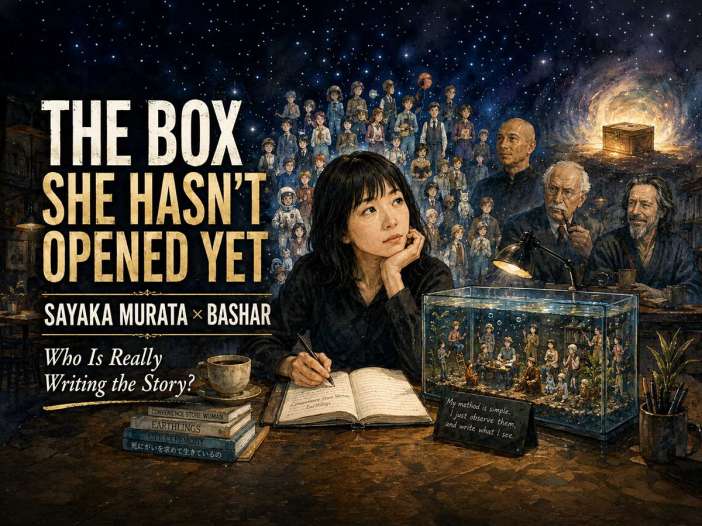
Sayaka Murata Imaginary Friends: The Mystery Behind Her Inner World
August 27, 2026 by Nick Sasaki Leave a Comment

sayaka murata imaginary friends

IntroductionSayaka Murata has spent much of her life asking a question that refuses to settle into a simple answer:What is a human being beneath the roles, language, morality, fear, and expectations that shape us?Her fiction often begins by changing one rule of the world and then watching what people become inside it. She has described her creative process as … [Read more...] about Sayaka Murata Imaginary Friends: The Mystery Behind Her Inner World

Filed Under: Consciousness, Literature, Psychology, Spirituality Tagged With: 30 imaginary friends, active imagination, Alan Watts, Bashar, Carl Jung, consciousness, Convenience Store Woman, Creativity, Earthlings, Higher Mind, imaginary conversation, imaginary friends, imagination, Japanese literature, Life Ceremony, parallel realities, psychology, Sayaka Murata, True self, unconscious

Madeline Miller Circe: What If No One Ever Chose You?

August 23, 2026 by Nick Sasaki Leave a Comment

Madeline Miller Circle Characters

IntroductionWhat happens when the person everyone remembers as a hero is experienced very differently by the people who loved him?Madeline Miller’s Circe takes a woman who once appeared at the edge of another man’s epic and places her at the center of her own life. Circe begins as a daughter desperate for approval, becomes a woman shaped by rejection and anger, … [Read more...] about Madeline Miller Circe: What If No One Ever Chose You?

Filed Under: Literature, Psychology, Relationship Tagged With: Book Discussion, character analysis, Circe, forgiveness, Greek mythology, Homer, imaginary conversation, literary fiction, Madeline Miller, meaning of life, mortality, Motherhood, Mythology Retelling, Odysseus, Penelope, Rejection, Scylla, Telegonus, Telemachus, The Odyssey

Could Japanese Culture Succeed Where Religion Has Failed?

August 22, 2026 by Nick Sasaki Leave a Comment

could japanese culture succeed where religion has failed

IntroductionJapan presents a fascinating contradiction to many visitors.It is a country where relatively few people organize their daily lives around exclusive religious belief, yet visitors frequently encounter behaviors traditionally associated with moral teaching: honesty, consideration, cleanliness, respect for shared spaces, social responsibility, and … [Read more...] about Could Japanese Culture Succeed Where Religion Has Failed?

Filed Under: History & Philosophy, Lifestyle and Culture, Religion, Spirituality Tagged With: Buddhism, Christianity, Dalai Lama, Hamza Yusuf, imaginary conversation, Islam, Japan, Japanese culture, Japanese Morality, Japanese Philosophy, Japanese Society, Japanese Values, Jesus, Jonathan Sacks, Judaism, morality, Religion, Shunmyo Masuno, social harmony, spirituality

Siddhartha Explained Through Its Characters: Love, Loss, and Enlightenment

August 14, 2026 by Nick Sasaki Leave a Comment

Siddhartha explained

IntroductionHermann Hesse’s Siddhartha is often remembered as a novel about enlightenment, spiritual searching, and the wisdom of the river.But there is another way to read it.What if Siddhartha’s greatest lessons did not come from the Brahmins, the Samanas, Buddha, or even the river?What if they came from the people who loved him?His father had to watch him … [Read more...] about Siddhartha Explained Through Its Characters: Love, Loss, and Enlightenment

Filed Under: Literature, Nobel 100 Best Books, Spirituality Tagged With: Enlightenment, father and son, Gautama Buddha, Govinda, Hermann Hesse, imaginary conversation, Kamala, literary analysis, love and attachment, Nobel Prize literature, self discovery, Siddhartha, Siddhartha analysis, Siddhartha characters, Siddhartha son, Siddhartha summary, Spiritual awakening, spiritual fiction, Vasudeva, wisdom

Han Kang Human Acts Explained by Leading Scholars

August 12, 2026 by Nick Sasaki Leave a Comment

The Scholars and the Unworn Shoes

IntroductionHan Kang’s Human Acts begins with a murdered boy, but its questions reach far beyond one death.How does a government transform citizens into enemies? Can the body preserve a truth that official history suppresses? Does a survivor owe testimony to the public? Can poetic language represent torture without making suffering beautiful? What responsibility … [Read more...] about Han Kang Human Acts Explained by Leading Scholars

Filed Under: Literature, Nobel 100 Best Books Tagged With: bodily memory, censorship, collective memory, Dong-ho, Gwangju Uprising, Han Kang, historical trauma, Human Acts, Human Rights, imaginary conversation, Korean literature, literary analysis, literary scholars, Nobel Prize literature, political violence, reader responsibility, state violence, survivor testimony, translation studies, trauma theory

Han Kang Human Acts: An Imaginary Conversation with the Dead

August 12, 2026 by Nick Sasaki Leave a Comment

IntroductionIn May 1980, the South Korean military entered Gwangju and opened fire on citizens calling for democracy. Among the dead was a fifteen-year-old boy whose brief life became the emotional center of Han Kang’s Human Acts.In the novel, his name is Dong-ho.He remains at the provincial office gymnasium, helping volunteers identify bodies and care for the … [Read more...] about Han Kang Human Acts: An Imaginary Conversation with the Dead

Filed Under: Literature, Nobel 100 Best Books Tagged With: censorship, Dong-ho, Grief, Gwangju Uprising, Han Kang, historical trauma, Human Acts, Human Rights, imaginary conversation, Jeong-dae, Korean History, Korean literature, literary analysis, memory, mothers and sons, Nobel Prize literature, political violence, state violence, survivor guilt, testimony

Snow Country Explained Through Its Characters

August 9, 2026 by Nick Sasaki Leave a Comment

snow-country-was-their-love-real

IntroductionYasunari Kawabata’s Snow Country is a story of beauty, distance, longing, and impermanence.Shimamura repeatedly returns from Tokyo to a remote hot-spring town, where Komako grows deeply attached to him. Yoko remains mysterious and unforgettable, and Yukio’s presence adds another layer of care, illness, and unresolved feeling.In this imaginary … [Read more...] about Snow Country Explained Through Its Characters

Filed Under: Literature, Nobel 100 Best Books Tagged With: book analysis, Book Discussion, Classic Literature, imaginary conversation, impermanence, Japanese Fiction, Japanese literature, Komako, literary analysis, Love and Loss, Mono no Aware, Nobel Prize literature, Shimamura, Snow Country, Snow Country Ending, Unrequited Love, Yasunari Kawabata, Yoko

Pachinko by Min Jin Lee: An Imaginary Conversation Across Generations

July 12, 2026 by Nick Sasaki Leave a Comment

pachinko imaginary talks

What If the Characters of Pachinko Could Finally Speak Freely? Few novels capture the quiet weight of history as powerfully as Pachinko by Min Jin Lee. Rather than telling the story of kings, generals, or revolutions, it follows ordinary people whose daily choices ripple across four generations. Love, sacrifice, identity, shame, ambition, forgiveness, and … [Read more...] about Pachinko by Min Jin Lee: An Imaginary Conversation Across Generations

Filed Under: Family, History & Philosophy, Literature, Movie Tagged With: Apple TV Pachinko, Book Discussion, Discrimination, Family Legacy, historical fiction, Identity, imaginary conversation, Immigration, Isak, Japan, Koh Hansu, Korean History, Literature, Min Jin Lee, Mozasu, Multi-Generational Story, Pachinko, Solomon, Sunja, Zainichi Koreans

Min Jin Lee on Time, Failure, and Falling Behind in Life

July 12, 2026 by Nick Sasaki Leave a Comment

are-you-falling-behind

What if the years you call wasted are preparing you for work you cannot yet see? Introduction By Min Jin Lee For many years, I believed I was late. I was late to trust my own voice. I was late to leave the law. I was late to publish my first novel. I was late to finish Pachinko, a book whose earliest questions had followed me since college. When I … [Read more...] about Min Jin Lee on Time, Failure, and Falling Behind in Life

Filed Under: Literature, Personal Development Tagged With: Chronos, delayed success, falling behind, imaginary conversation, institutional prejudice, Kairos, Korean American writers, literary inspiration, Min Jin Lee, moral courage, Pachinko, personal growth, wasted time, writing life, Yale University

Gad Saad on Happiness: 8 Secrets for the Good Life

April 9, 2026 by Nick Sasaki Leave a Comment

the saad truth about happiness

What if Gad Saad sat down with the world’s sharpest minds on happiness and exposed what really makes life good? What does it really mean to live a good life? That question sounds simple at first, yet it keeps opening into deeper ones. Is happiness something we feel, or something we build? Is it found in pleasure, or in truth? Does it come from peace, from … [Read more...] about Gad Saad on Happiness: 8 Secrets for the Good Life

Filed Under: Lifestyle and Culture, Mindset, Personal Development, Psychology Tagged With: 8 secrets happiness, adult play and joy, emotional resilience, flourishing life, Gad Saad good life, gad saad happiness, good life lessons, happiness and meaning, happiness psychology, ideal life partner, imaginary conversation, life purpose, lifestyle wisdom, meaningful work, moderation and discipline, novelty and commitment, overcoming regret, persistence after failure, stop worrying, The Saad Truth About Happiness

  • Page 1
  • Page 2
  • Go to Next Page »

Primary Sidebar

RECENT POSTS

  • of mice and men modern day storiesOf Mice and Men: 5 Modern Stories About Love, Care and Responsibility
  • of mice and men analysisOf Mice and Men: Was George Right to Kill Lennie?
  • of mice and men 5Of Mice and Men: Was George’s Final Choice an Act of Love?
  • grapes of wrath modern storiesThe Grapes of Wrath Today: 5 Modern Stories About “I” and “We”
  • grapes of wrath questionsThe Grapes of Wrath Explained: 5 Questions Readers Still Ask
  • the grapes of wrath john steinbeckThe Grapes of Wrath: When Does “Me” Become “We”?
  • Stand With Jesus: What If People Tried to Stop the Crucifixion?
  • East of Eden Today: 5 Stories About Breaking Family Cycles
  • john steinbeck east of edenEast of Eden: Does Timshel Still Make Sense Today?
  • East of Eden: Are We Born Bad or Free to Choose?
  • Convenience Store Woman: 5 American Stories About Marriage and Freedom
  • convenience-store-women-analysis-Convenience Store Woman: Is the New Normal Really Normal?
  • convenience store womenConvenience Store Woman: Who Decides What Is Normal?
  • sayaka murata imaginary friendsSayaka Murata Imaginary Friends: The Mystery Behind Her Inner World
  • Social Health Stories: 5 Ways We Lost Our Sense of Belonging
  • Social Health: Why Modern Life Is Making Us Lonely
  • nickel-boys-modern-stories-The Nickel Boys: 5 Modern Stories About Truth, Trauma and Hope
  • coloson whitehead the nickel boys discussionThe Nickel Boys: What Kind of Hope Survives Injustice?
  • the nickel boys colson whiteheadThe Nickel Boys: Elwood and Turner on Justice, Survival and Truth
  • AI Resource Consumption: Can AI Give More Than It Takes?
  • madeline-miller-circe-modern-stories-5 Modern Stories Inspired by Circe by Madeline Miller
  • Circle-Madeline-Miller-analysis-Circe Explained: Myth, Meaning, and Madeline Miller
  • Madeline Miller Circle CharactersMadeline Miller Circe: What If No One Ever Chose You?
  • 5 Modern Stories Inspired by Keigo Higashino’s Silent Parade
  • could japanese culture succeed where religion has failedCould Japanese Culture Succeed Where Religion Has Failed?
  • keigo-Higashino-when-love-becomes-too-much-5 Modern Stories Inspired by The Devotion of Suspect X
  • The Devotion of Suspect X Explained by Psychologists: Is Ishigami’s Love Really Love?
  • the devotion of suspect xThe Devotion of Suspect X Explained: Was Ishigami’s Sacrifice Really Love?
  • 5 Modern Midnight Library Stories About Regret, AI, and Choice
  • Matt Haig The Midnight LibraryThe Midnight Library Explained by Scholars and Matt Haig
  • The-Midnight-Library-explainedThe Midnight Library Explained Through Its Characters
  • 5 Modern Siddhartha Stories About Wisdom, Love, AI, and Choice
  • Siddhartha explained by leading scholarsSiddhartha Explained by Leading Hermann Hesse Scholars
  • Siddhartha explainedSiddhartha Explained Through Its Characters: Love, Loss, and Enlightenment
  • before-the-names-are-carved-Before the Names Are Carved: Five Connected Stories
  • The Scholars and the Unworn ShoesHan Kang Human Acts Explained by Leading Scholars
  • Han Kang Human Acts: An Imaginary Conversation with the Dead
  • The Years We Thought We Had: A Story of Love and Waiting in Japan
  • snow-country-analysis-Snow Country Analysis: Kawabata Scholars Explain It
  • snow-country-was-their-love-realSnow Country Explained Through Its Characters
  • the-man-who-never-took-the-day-off-The Man Who Never Took the Day Off: A Modern Ishiguro Story
  • The Remains of the Day Explained by Leading Ishiguro Scholars
  • the-remains-of-the-day-imaginary-talks-The Remains of the Day Explained Through Its Characters
  • the-pastor-who-couldnt-be-forgiven-The Pastor Who Couldn’t Be Forgiven: A Modern Story of Grace
  • disgrace-j-m-coetzee-Disgrace Explained Through Its Characters
  • disgrace-explained-leading-jm-coetzee-scholarsDisgrace Explained by Leading J. M. Coetzee Scholars
  • Forty-One Could Live. Nine Had to Die.
  • The Gospel According to Jesus Christ explainedThe Gospel According to Jesus Christ Explained Through Its Characters
  • SARAMAGO’S GOSPEL EXPLAINEDThe Gospel According to Jesus Christ Explained by Top Scholars
  • the last safe floorThe Last Safe Floor: A Modern Lord of the Flies Story for 2026
  • william golding explained by top scholarsWilliam Golding Explained by Top Scholars: Evil, Faith, and Redemption
  • lord-of-flies-character-conversation-Lord of the Flies Explained Through Its Characters: Is the Beast Inside Us?
  • never complain never explainNever Complain Never Explain: Henry Ford & Disraeli
  • The Empty Chair: A Modern Brothers Karamazov Story
  • the brothers karamazov explained top dostoevsky scholarsThe Brothers Karamazov Explained by Top Dostoevsky Scholars
  • Brothers Karamazov explainedThe Brothers Karamazov Explained Through Its Characters
  • before yesBefore Yes: A Modern American Story Inspired by Albert Camus
  • The Stranger Explained by Top Albert Camus Scholars
  • the stranger explainedAlbert Camus’s The Stranger Explained Through Its Characters
  • What is Worth Saving?The Last Store on Main Street: Inspired by The Sound and the Fury
  • The Sound and the Fury Scholar discussionThe Sound and the Fury Explained by Top William Faulkner Scholars
  • The Sound and the Fury Family SpokenThe Sound and the Fury Explained by Its Characters
  • The Building That Stopped Seeing | Modern Camus Story
  • The Plague Explained by Top Albert Camus Scholars
  • albert camus the plague explainedThe Plague explained by its characters
  • the last good sentenceThe Last Good Sentence: A Story About Fame and Loneliness
  • hemingway scholars debateThe Old Man and the Sea Explained by Top Scholars
  • The Old Man and the Sea Explained by Its Characters
  • the new meaning of survivalThe New Meaning of Survival: Top Scholars on Human Flourishing
  • true meanig of survivalThe True Meaning of Survival: Living, Not Just Existing
  • the last affordable roadThe Last Affordable Road: A Modern Grapes of Wrath Story
  • the-grapes-of-wrath-explained-by-top-scholars-The Grapes of Wrath Explained: Top Steinbeck Scholars
  • the grapes of wrath conversationThe Grapes of Wrath Explained Through Its Characters
  • the white silenceThe White Silence: A Japanese Novel of Loneliness
  • jose-saramago-blindness-explained-Blindness Explained by Top Scholars | José Saramago’s Greatest Warning
  • José-Saramago-Blindness-Explained-Blindness Explained Through Its Characters and José Saramago
  • Can the Bhagavad Gita Still Guide Humanity in 2026?
  • The Crown of AshesThe Crown of Ashes: A Modern Shakespearean Tragedy
  • the-fourth-bowl-If Toni Morrison Wrote a Japanese Family Novel: The Fourth Bowl
  • Beloved Ending Explained: 25 Questions Answered by Morrison Scholars
  • Toni-Morrison-Beloved-Explained-Beloved Explained Through Its Characters and Toni Morrison
  • house with the black stoneThe House With the Black Stone: A Korean Family Saga
  • Be Kind to Your Mother Before It’s Too LateBe Kind to Your Mother Before It’s Too Late
  • Gabriel-García-Márquez-one-hundred-years-of-solitude-explained-One Hundred Years of Solitude Explained by Top Scholars
  • one-hundred-years-of-solitude-explained-One Hundred Years of Solitude Explained
  • are-any-lives-truly-ordinary-Hateship Friendship Courtship Loveship Marriage explained
  • The Overstory explainedThe Overstory Explained: Themes, Ending, and Meaning
  • Demon Copperhead Explained: Barbara Kingsolver’s Pulitzer-Winning Novel
  • can you judge trump by his enemiesCan You Judge Donald Trump by His Enemies?
  • The Warmth of Other Suns Explained
  • America Iran strategyCan America Prevent a Wider Middle East War?
  • Lincol in the BardoLincoln in the Bardo Ending Explained:
  • God-as-Original-Parent-If God Created Man and Woman, Is God Our Original Parent?
  • can creation reveal godDoes Creation Reveal the Nature of God? Five Great Thinkers Discuss
  • Are Therapists to Blame for the Rise of Adults Cutting Off Their Parents?
  • your seventh year is changingJoel Osteen’s Seventh Year: When Suffering Is Not the Final Chapter
  • Joel Osteen’s Best Messages: Hope, Favor, and Faith
  • Hilary Mantel Wolf-Hall ending explainedWolf Hall Ending Explained: Can a Good Man Survive Political Power?
  • i-never-said-i-was-god-What If Jesus Never Claimed to Be God?
  • did-jesus-say-he-was-god-Did Christianity Reverse the Message of Jesus?

Footer

Recent Posts

  • Of Mice and Men: 5 Modern Stories About Love, Care and Responsibility September 1, 2026
  • Of Mice and Men: Was George Right to Kill Lennie? August 31, 2026
  • Of Mice and Men: Was George’s Final Choice an Act of Love? August 31, 2026
  • The Grapes of Wrath Today: 5 Modern Stories About “I” and “We” August 31, 2026
  • The Grapes of Wrath Explained: 5 Questions Readers Still Ask August 31, 2026
  • The Grapes of Wrath: When Does “Me” Become “We”? August 30, 2026

Pages

  • About Us
  • Contact Us
  • Disclaimer
  • Earnings Disclaimer
  • Privacy Policy
  • Terms and Conditions

Categories

Copyright © 2026 Imaginarytalks.com