


The immigration debate in America is far more than a question of borders—it's a collision of history, identity, morality, and survival. It's easy to forget, but the Democratic Party once defended slavery and founded groups like the KKK. The Republican Party, meanwhile, was born to abolish slavery and stood for liberty and law. Over time, both parties changed drastically. Even Donald Trump was once a Democrat, highlighting just how fluid political lines can be.
Today, that historical reversal adds complexity to modern issues like immigration. One side argues that compassion is America's highest virtue. The other warns that unguarded compassion without accountability leads to national collapse. Somewhere in the middle, millions of Americans are caught in a crisis—working-class citizens watching resources dwindle, border towns overwhelmed, and families both American and migrant facing impossible choices.
These five conversations are designed to go beyond the slogans. They bring together voices from both sides of the aisle—six speakers per topic, moderated by independent thinkers—to tackle the deepest tensions. The questions are not easy. The answers are not uniform. But if America is to heal its fractured debate, it must start by asking hard questions, together.
(Note: This is an imaginary conversation, a creative exploration of an idea, and not a real speech or event.)

Topic 1: Can a Nation Be Compassionate Without Losing Control?
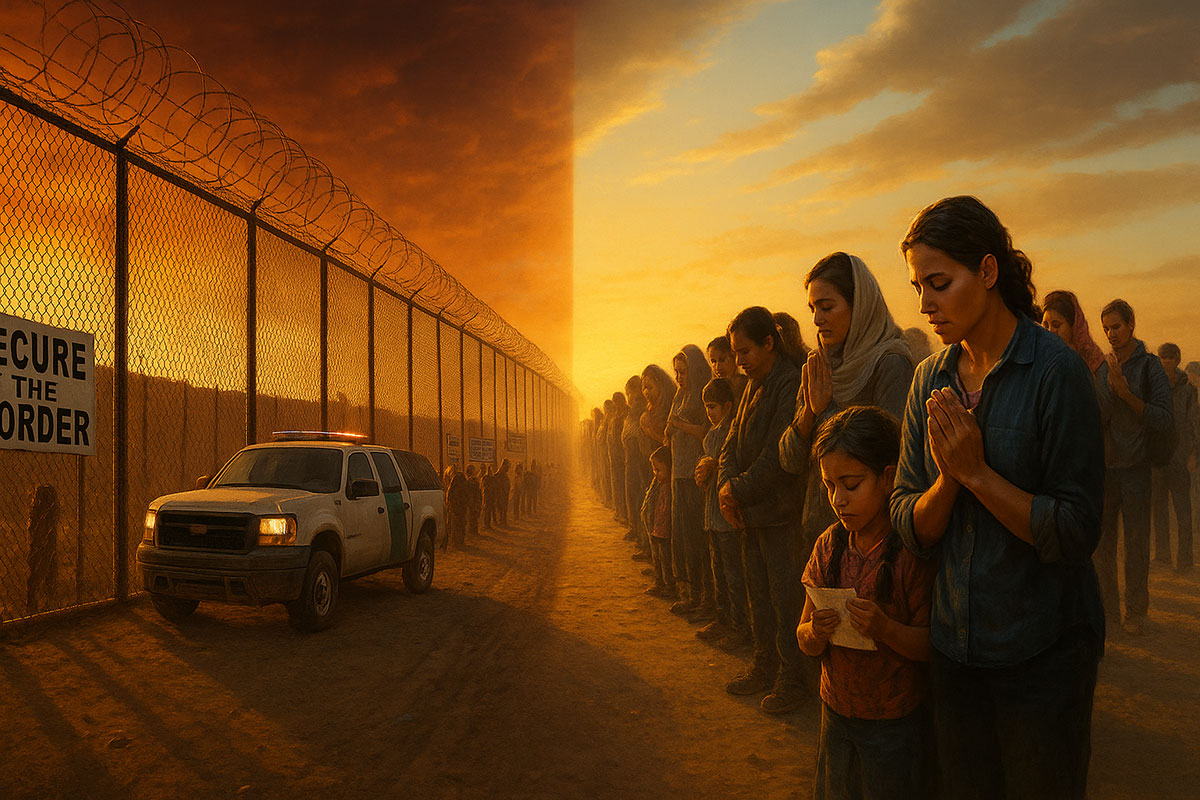
Moderator: Bari Weiss
Panelists: Ben Shapiro, Charlie Kirk, Senator J.D. Vance, Julian Castro, Alexandria Ocasio-Cortez, Van Jones
Bari Weiss:
Let’s start with the question at the center of America’s immigration debate. Can a nation maintain compassion in its immigration policies without losing control of its borders and legal system?
Charlie Kirk:
Compassion without structure is chaos. Letting people flood in, unchecked, under the banner of kindness isn’t moral—it’s dangerous. Cartels are exploiting our open-door policies. The real compassion is building a system that protects both Americans and those seeking help, not one that endangers both.
Julian Castro:
Charlie, I understand the frustration, but people coming here are often fleeing violence, poverty, and instability we helped create. America has always stood for being a refuge. That doesn’t mean open borders. It means a fair, functional, and humane process. Compassion and control aren't enemies. We need both.
Ben Shapiro:
Julian, nobody’s arguing against legal immigration. But we have to start by recognizing that a country without border enforcement isn’t a country. Our system’s being gamed. Millions cross illegally, burdening cities, draining public services, and compromising safety. Compassion that sacrifices citizens is not noble. It’s reckless.
Alexandria Ocasio-Cortez:
Ben, the real danger isn’t people seeking safety. It’s the fearmongering around them. When we treat asylum seekers like invaders, we ignore our own values. These systems are broken because we refuse to invest in humane processing and community-based solutions. If you want order, stop criminalizing need.
Senator J.D. Vance:
I appreciate the idealism, Alexandria, but I represent people in Ohio who are drowning. Working-class Americans are losing jobs, facing higher rents, and watching their communities strain under a broken immigration system. Prioritizing outsiders before our own citizens isn’t sustainable—and it isn’t compassionate to the people who built this country.
Van Jones:
J.D., I hear you. And I hear my neighbors who are also struggling. But blaming immigrants for that struggle misses the mark. It’s not migrants setting wages or gutting communities—it’s corporations and policy failure. The solution isn’t to close the door. It’s to fix the system so it works for everyone, not just the elite.
Bari Weiss:
Let me push this further. Do you believe America’s current immigration crisis is a failure of compassion—or a failure of political courage to make hard choices?
Alexandria Ocasio-Cortez:
It’s cowardice. Leaders have used immigration as a political football for decades. They promise reform and deliver fear. Real compassion would mean real action—and accountability for those who benefit from the chaos.
Ben Shapiro:
It’s a failure of priorities. We’ve allowed emotion to override law. That’s not courage, it’s collapse. We need enforcement, not endless empathy with no responsibility.
Julian Castro:
It’s a structural failure. Our systems haven’t adapted. Legal immigration takes years. Asylum claims are clogged. If you want order, invest in modernizing—not militarizing.
Charlie Kirk:
It’s a moral failure. We’ve told the world we’ll accept everyone, and now we act surprised when millions show up. That’s not courage. That’s naive delusion.
Van Jones:
It’s a listening failure. We stopped listening to poor Americans and desperate migrants. We pretend their struggles are disconnected. They’re not. This is about dignity for both.
Senator J.D. Vance:
It’s a leadership failure. The people in charge are disconnected from the impact on the ground. They live behind gates while our neighborhoods bear the cost.
Bari Weiss:
Let’s end on this. In one sentence, describe what balanced immigration reform looks like to you—right now.
Charlie Kirk:
Secure the border, end illegal entry, and prioritize merit-based immigration.
Julian Castro:
Create fair, efficient asylum pathways while modernizing the legal system.
Ben Shapiro:
Enforce the law first—then reform legal channels to be faster and stricter.
Alexandria Ocasio-Cortez:
Fund humane processing, restore dignity, and build community-driven oversight.
Senator J.D. Vance:
Put American citizens first, enforce the law, and end elite manipulation of the system.
Van Jones:
Build a smart, secure, and compassionate system that honors both safety and hope.
Topic 2: Who Deserves Help First — Citizens or Everyone?
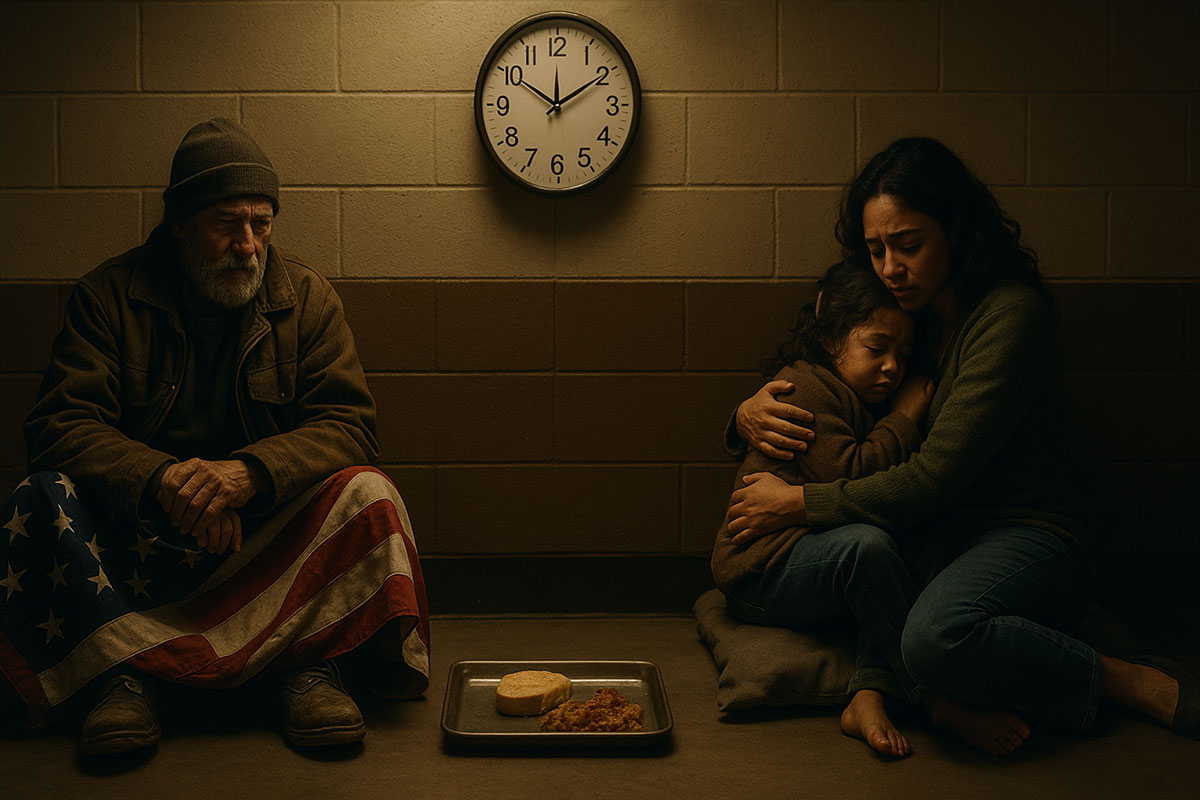
Moderator: Joe Rogan
Panelists: Tucker Carlson, Candace Owens, Stephen Miller, Bernie Sanders, Ilhan Omar, Marianne Williamson
Joe Rogan:
Let’s get straight to the question. When resources are limited—jobs, housing, healthcare—who should be prioritized: American citizens, or anyone in need, regardless of legal status?
Tucker Carlson:
It’s not even a question. If you’re a government, your duty is to your people—citizens. We’ve got veterans on the street, Americans going bankrupt over hospital bills, and we’re spending billions on people who broke our laws to get here. That’s not generosity—that’s betrayal.
Ilhan Omar:
I came to this country as a refugee, legally. I’ve seen suffering up close, and I can tell you: compassion doesn’t have to be a zero-sum game. We can prioritize citizens and protect the vulnerable fleeing death, war, or starvation. The problem is greed at the top—not the poor at the border.
Stephen Miller:
With all due respect, that’s a false narrative. No country on earth gives away benefits like we do to non-citizens. It undermines our social contract. You can’t build a stable nation while importing dependency. America must put Americans—especially the struggling working class—first.
Bernie Sanders:
Stephen, working people are being crushed—but not by immigrants. They’re being crushed by billionaires, by healthcare corporations, by an economy rigged for the one percent. Immigrants didn’t close your factory. Wall Street did. We fix this by going after the real exploiters, not scapegoating the powerless.
Candace Owens:
But Bernie, let’s be honest—mass illegal immigration does impact poor Americans, especially Black communities. It drives down wages, crowds schools, strains hospitals. We’re told it’s compassionate, but it hurts the very citizens Democrats claim to champion. That’s not justice—it’s political theater.
Marianne Williamson:
Both sides are naming real pain, but we’re missing the spiritual crisis. A nation can’t stay whole if it only asks, “What’s in it for me?” But it also can't survive if it abandons its own people. Compassion must begin at home and extend beyond it. That’s the tightrope we walk.
Joe Rogan:
Let me challenge you all on this: When a homeless veteran and an undocumented family both need help—who gets the bed? The food? The shelter? Real-world situation. What’s the moral choice?
Tucker Carlson:
The veteran. Every time. No hesitation. That’s your responsibility as a nation. You take care of those who served before anyone else.
Ilhan Omar:
Of course veterans need care. But it’s not either/or. If a mother and child are running from a war zone, we don’t slam the door—we build a bigger table. The richest nation on earth can do both, if it chooses to.
Stephen Miller:
We can’t even take care of our own. Expanding the system while it’s collapsing is madness. This is about hard decisions—not abstract ideals.
Bernie Sanders:
The moral choice is to restructure the system so neither group has to compete for basic survival. That means healthcare for all, housing for all, fair wages. We’re rich enough to do it. The issue is political will.
Candace Owens:
But while you wait for utopia, real citizens suffer. Prioritize them. Illegal entry should not come with free rewards.
Marianne Williamson:
The moral choice isn’t about choosing one over the other. It’s about refusing to build systems where suffering becomes a currency we trade for political power. True leadership lifts everyone.
Joe Rogan:
Alright, let’s bring it home. One sentence from each of you. In practice—not theory—who comes first in a time of crisis?
Tucker Carlson:
Citizens, always. That’s the meaning of a nation.
Ilhan Omar:
We can save lives without abandoning our own—we just have to choose compassion.
Stephen Miller:
Law-abiding Americans must come first, or we lose our country.
Bernie Sanders:
Working families, regardless of where they come from, must be protected from exploitation.
Candace Owens:
American citizens—especially those most neglected—deserve the front of the line.
Marianne Williamson:
A nation guided by conscience will care for both, not pit them against each other.
Topic 3: Do Open Borders Empower Criminals or Save Lives?

Moderator: Lex Fridman
Panelists: Governor Ron DeSantis, Victor Davis Hanson, Ann Coulter, Senator Cory Booker, Sheriff Alex Villanueva (former, LA County), Representative Pramila Jayapal
Lex Fridman:
Let’s begin with a straightforward but loaded question. Are lenient border policies empowering criminals—or are they saving lives by giving the vulnerable a chance to survive?
Governor Ron DeSantis:
Let’s stop pretending this is theoretical. Criminal cartels are absolutely exploiting our open border. Fentanyl, human trafficking, illegal guns—these are not side effects, they’re direct consequences. You cannot say you care about safety and then tolerate a lawless border.
Representative Pramila Jayapal:
Governor, the idea that we have “open borders” is a political talking point—not reality. What we have is an overwhelmed system, broken by decades of neglect. Families are coming to survive, not to destroy. Let's fix the asylum system—not fearmonger about criminals to shut it down.
Victor Davis Hanson:
Pramila, with respect, the idea that economic migrants are all innocent victims is naive. When borders collapse, civilizations decay. The Roman Empire learned that too late. Criminals hide among the crowds. You don’t need to vilify migrants to admit that truth.
Senator Cory Booker:
Victor, we do need to differentiate between criminal smugglers and desperate families. Lumping them together undermines the rule of law and our moral credibility. A better system would screen faster, protect the innocent, and jail the predators. But right now, we do neither well.
Ann Coulter:
Let’s be blunt: open borders do empower criminals. Period. People with violent records are slipping in. Sanctuary cities are shielding them. And the worst part? American citizens are dying—killed by people who never should’ve been here. That’s the real human cost nobody wants to talk about.
Sheriff Alex Villanueva:
Ann, as someone who’s actually run law enforcement in a major county, I can tell you the truth is more complex. Yes, we’ve seen repeat offenders slip through. But we’ve also seen immigrants victimized by crime, too scared to report it. When people live in fear of deportation, they don’t cooperate. That’s what empowers gangs—not just the border, but silence.
Lex Fridman:
Let me push further. If someone commits a violent crime and is found to be undocumented, should they be deported immediately—even if they’ve lived here for decades?
Ron DeSantis:
Yes. Without hesitation. You break the law, you go. We can’t protect criminals over citizens.
Pramila Jayapal:
No. It depends on the circumstances. If someone has served time and rebuilt their life, especially if they came here as a child, we need room for justice that includes redemption.
Victor Davis Hanson:
There’s no moral calculus that justifies keeping criminals here. If a foreign national hurts an American citizen, their presence should end. That’s a basic duty of government.
Cory Booker:
We need to balance accountability with compassion. But we cannot allow our system to forget its humanity. Yes, deport violent criminals—but don’t apply that logic to people whose only “crime” was crossing a line to survive.
Ann Coulter:
The compassion argument is tired. Try explaining “compassion” to a parent whose child was killed by a twice-deported felon. Justice starts by protecting your own people first.
Sheriff Villanueva:
If we had better coordination between ICE and local agencies—and actual resources—we wouldn’t be playing catch-up. It’s not about slogans. It’s about funding, data, and real cooperation, not political games.
Lex Fridman:
Final round. In one sentence, what does a just and effective border policy look like?
Ron DeSantis:
Secure the border, deport lawbreakers, protect American families.
Pramila Jayapal:
Modernize the system to protect both national safety and human dignity.
Victor Davis Hanson:
Enforce the law, screen with rigor, and preserve national cohesion.
Cory Booker:
Build a fair system that distinguishes between crime and survival.
Ann Coulter:
Shut down illegal entry, end sanctuary cities, and stop coddling criminals.
Sheriff Villanueva:
Use smart enforcement, build trust in communities, and give law enforcement the tools to do both.
Topic 4: Why Is the U.S. So Lenient Compared to Other Nations?

Moderator: Fareed Zakaria
Panelists: Senator Josh Hawley, Tom Fitton, Kris Kobach, Dean Spade, Raul Grijalva, Linda Sarsour
Fareed Zakaria:
Let’s begin with a global lens. Compared to nations like Russia, China, or India, the United States is viewed by many as unusually lenient on immigration. Why do you think that is—and is it a weakness or a strength?
Senator Josh Hawley:
We’ve forgotten the meaning of sovereignty. Other nations enforce their laws unapologetically. The U.S., on the other hand, has turned enforcement into a political game. We should be leading with strength, not apologizing for expecting people to follow our laws.
Dean Spade:
I think the comparison is flawed. The U.S. shouldn’t aspire to be like authoritarian regimes. Immigration leniency, at its best, reflects values of human rights and dignity. The issue isn’t leniency—it’s whether our system serves justice or just power.
Tom Fitton:
Dean, that sounds noble, but we’ve made a mockery of our laws. When millions cross illegally and face no real consequences, we don’t look compassionate—we look incompetent. No serious country operates this way. It invites abuse, and Americans are paying the price.
Raul Grijalva:
I represent a border district. What we see isn’t leniency—it’s chaos. People fleeing for their lives, children stranded, families broken apart. What we need isn’t more punishment—it’s smart, humane, and enforceable reform. Enforcing brutality doesn’t make us strong. It makes us inhumane.
Kris Kobach:
The facts don’t lie. Other countries—like Japan or Israel—strictly control immigration to protect national identity, security, and economy. The U.S. has been captured by ideology that says any enforcement is racist. That’s not sustainable. It’s weakness, and the world knows it.
Linda Sarsour:
I reject the idea that toughness equals strength. What makes America unique is its moral aspiration, not just its power. Yes, we need an orderly system—but one that sees immigrants as people, not threats. Other nations may use fear; we should aim higher.
Fareed Zakaria:
So here’s the follow-up. Is America’s leniency a result of compassion, political cowardice, or global hypocrisy?
Josh Hawley:
It’s cowardice. Leaders are afraid to stand up to activists, to corporations wanting cheap labor, and to media pressure. And everyday Americans pay the cost.
Dean Spade:
It’s more like selective compassion. We’re lenient toward those who can be exploited and brutal to those who can’t be useful to the system. That’s not compassion—it’s control with a smile.
Tom Fitton:
It’s systemic dysfunction, yes—but driven by globalist elites who don’t care about borders. They see America as just another market, not a country. And they’ve trained our leaders to follow suit.
Raul Grijalva:
It’s a mix of failure and idealism. We claim to be a beacon of hope, but we don’t build systems to uphold that promise. So we swing between slogans and suffering.
Kris Kobach:
It’s a failure of will. If we wanted to secure the border, we could. We’ve chosen not to—and the consequences are visible every day.
Linda Sarsour:
It’s a crisis of conscience. We’re torn between who we say we are and how we actually treat people. Until we resolve that, no policy will feel right—on either side.
Fareed Zakaria:
Last round. In one sentence, what lesson should the U.S. take from how other nations handle immigration?
Josh Hawley:
Don’t be ashamed to protect your borders—every real country does.
Dean Spade:
Don’t copy cruelty and call it order; build justice instead.
Tom Fitton:
Respect for the rule of law is the foundation of national survival.
Raul Grijalva:
Look beyond fear—other countries aren’t perfect models for freedom.
Kris Kobach:
The world respects strength—so should we.
Linda Sarsour:
America should lead with heart and strength—not choose between them.
Topic 5: Has the Immigration Debate Replaced the Class War?

Moderator: Glenn Greenwald
Panelists: Senator Josh Hawley, Peter Thiel, J.D. Vance, Naomi Klein, Chris Hedges, Sarah Smarsh
Glenn Greenwald:
Tonight we’re asking a tough but necessary question. Has America’s immigration debate become a distraction—or even a substitute—for the class war? Are we blaming the border for problems caused by the elite?
Senator Josh Hawley:
Immigration is a class issue. Who benefits from open borders? Not the working class. It’s the corporate elite who get cheap labor and drive down wages. Meanwhile, rural and blue-collar Americans shoulder the cost—in schools, hospitals, and lost jobs. That’s not compassion. That’s exploitation.
Naomi Klein:
Josh, I agree it’s a class issue—but not in the way you frame it. Immigrants aren’t the villains here. They’re fellow workers being squeezed by the same system that’s crushing American labor. The real culprits are the corporations profiting off deregulation, tax breaks, and division. They pit us against each other so we don’t turn on them.
Peter Thiel:
The border crisis is part of a larger breakdown. When elites are globalist in mindset, national interests become optional. Immigration is used—strategically—to disrupt cultural cohesion and undercut the middle class. It’s not accidental. It’s engineered instability.
Chris Hedges:
Peter, you’re right about the elite agenda—but wrong to frame it as a cultural war. This is a class war, plain and simple. Immigrants are not the problem. They’re cannon fodder for the same system that sent your jobs overseas and gutted unions. The rage should be directed upward, not sideways.
J.D. Vance:
Look, I came from the working class. I know what it feels like to be forgotten. Mass immigration isn’t abstract. It affects wages, housing, and jobs. And elites love it because they don’t feel it. They live in gated communities and then shame anyone who raises a concern as a bigot.
Sarah Smarsh:
There’s truth on both sides here. Where I come from—rural Kansas—people are struggling, and yes, they’re frustrated. But blaming immigrants is easier than confronting the corporations and politicians who abandoned us. The problem isn’t who’s crossing the border. It’s who’s holding the reins of power.
Glenn Greenwald:
Let’s go deeper. Are politicians using immigration as a way to avoid dealing with corporate corruption, wage stagnation, and inequality?
Senator Josh Hawley:
Absolutely. It’s a convenient diversion. Talk tough on immigration, stir cultural fears, and meanwhile let Wall Street keep winning. Both parties have been guilty of this.
Naomi Klein:
Yes—and the media plays right into it. We don’t cover wage theft, monopolies, or housing speculation with the same urgency. Immigrants become scapegoats while the top one percent escapes scrutiny.
Peter Thiel:
They’re not just avoiding it—they’re accelerating it. Disruption benefits the powerful. The chaos creates new markets, new dependencies, and new political leverage.
Chris Hedges:
When you let private interests set the rules, everything becomes a transaction—including human beings. The system doesn’t just ignore suffering—it profits from it.
J.D. Vance:
But we still have to talk about the real-world impact of immigration. It’s not racist to say that Americans should come first. Ignoring that just feeds resentment—and pushes people to extremes.
Sarah Smarsh:
And when people feel unheard, they fall for simple answers. That’s how working people get turned against each other. Immigration debates aren’t just about borders—they’re about fear, dignity, and being left behind.
Glenn Greenwald:
Final question. In one sentence, what would true class-conscious immigration reform look like?
Josh Hawley:
Reform that protects American wages and ends corporate-driven migration flows.
Naomi Klein:
Policy that uplifts all workers by targeting exploitation at the top.
Peter Thiel:
Reassert national identity and stop weaponizing immigration to destabilize the middle class.
Chris Hedges:
Reform that restores labor rights, protects the poor, and breaks corporate power.
J.D. Vance:
Put American families first—and stop using immigration to undercut them.
Sarah Smarsh:
Create an economy where no one—immigrant or citizen—has to fight for scraps.
Final Thoughts
What these conversations reveal is that the immigration debate isn't really about walls or open borders. It's about trust—who we trust, what we prioritize, and whether the system still serves ordinary people. For some, the fear is invasion; for others, abandonment. For many, it's both.
What unites all sides—whether it's a sheriff on the border, a refugee from war, or a rural American watching his town decline—is a desire for fairness, order, and dignity. That is not a left or right issue. It’s a human one.
To protect the nation is noble. To show mercy is moral. The real challenge is balancing both without being manipulated by political extremes or corporate interests.
As we move forward, we must remember: history is always evolving. Parties change. Policies shift. But the soul of a country is defined by how it treats both its people and its principles.
The question is no longer “which side are you on?”—
It’s “can we create a future where safety and compassion don’t cancel each other out?”
Short Bios:
Bari Weiss – Former New York Times columnist known for centrist and independent views, often challenging ideological extremes.
Joe Rogan – Podcast host with a wide-ranging audience, known for open dialogue across political lines.
Lex Fridman – AI researcher and podcast host known for deep, empathetic interviews with thinkers from all backgrounds.
Fareed Zakaria – Global affairs analyst and CNN host, known for bridging international perspectives with U.S. policy.
Glenn Greenwald – Investigative journalist and free speech advocate, critical of both left-wing and right-wing elites.
Ben Shapiro – Conservative commentator and co-founder of The Daily Wire, focused on law, order, and personal responsibility.
Charlie Kirk – Founder of Turning Point USA, a prominent voice for conservative youth and American nationalism.
Senator J.D. Vance – Republican Senator from Ohio, advocate for working-class Americans and national populism.
Tucker Carlson – Political commentator known for his critiques of immigration and globalism from a nationalist lens.
Candace Owens – Conservative activist and author focused on race, culture, and American values.
Stephen Miller – Architect of Trump-era immigration policy, staunch advocate of strict enforcement and national interest.
Governor Ron DeSantis – Florida governor known for aggressive policy on border security and state sovereignty.
Victor Davis Hanson – Historian and commentator known for analyzing Western decline and immigration’s cultural impact.
Ann Coulter – Author and provocateur who promotes hardline immigration policies and nationalist rhetoric.
Senator Josh Hawley – Republican Senator from Missouri, critical of globalism and focused on rebuilding American labor.
Tom Fitton – President of Judicial Watch, focused on legal accountability and enforcement of immigration laws.
Kris Kobach – Former Kansas Secretary of State and immigration hardliner known for voter ID and border policy reform.
Peter Thiel – Tech billionaire and venture capitalist who critiques mass immigration from an elite manipulation angle.
Julian Castro – Former HUD Secretary under Obama, advocate for comprehensive immigration reform and housing justice.
Alexandria Ocasio-Cortez (AOC) – Congresswoman from New York, known for progressive stances on immigration and equity.
Van Jones – CNN analyst and advocate for criminal justice reform, known for bridging divides on progressive issues.
Senator Bernie Sanders – Longtime progressive Senator from Vermont, focused on wealth inequality and working-class uplift.
Ilhan Omar – Somali-American Congresswoman advocating for refugee rights and global humanitarianism.
Marianne Williamson – Spiritual author and activist who emphasizes compassion and moral clarity in policy.
Senator Cory Booker – Democratic Senator from New Jersey, focused on justice reform and moral accountability.
Sheriff Alex Villanueva – Former LA County Sheriff with nuanced views on immigration enforcement and public safety.
Representative Pramila Jayapal – Chair of the Congressional Progressive Caucus, advocating for humane immigration systems.
Dean Spade – Legal scholar and activist who focuses on state violence and the intersection of law and inequality.
Raul Grijalva – Arizona Congressman known for progressive environmental and immigration reform efforts.
Linda Sarsour – Palestinian-American activist advocating for immigrant and Muslim rights within progressive coalitions.
Naomi Klein – Author and activist who critiques neoliberalism and highlights exploitation in global and domestic policy.
Chris Hedges – Pulitzer-winning journalist and moral critic of U.S. militarism, inequality, and capitalist systems.
Sarah Smarsh – Journalist and author focusing on rural America and the impact of policy on working-class lives.
Leave a Reply