
|
Getting your Trinity Audio player ready...
|
Introduction by James Clear
Design your day — because the day is the smallest unit of a meaningful life.
When most people think about improvement, they imagine dramatic reinventions: new careers, new habits, new identities. But the truth is simpler and more powerful. You don’t change your life in one motion — you change your life one day at a time.
A day is a complete cycle: a beginning, middle, and end.
It contains intention, action, emotion, and reflection.
When you learn to shape one day well, you learn to shape your future.
Designing your day is not about squeezing in more tasks.
It’s about aligning your time with your values, your energy with your purpose, and your attention with what matters. Whether you’re experimenting, subtracting noise, choosing a daily highlight, or setting the tone through ritual, the practice is the same:
small, intentional decisions that compound into a meaningful life.
This series gathers thinkers who understand this deeply. Each conversation explores a different lens through which a day can be shaped — focus, energy, creativity, simplicity, or experimentation. Their perspectives aren’t just philosophical; they are practical tools you can use tomorrow morning.
If you can design one day well, you can design your life well.
And today is the perfect place to begin.
(Note: This is an imaginary conversation, a creative exploration of an idea, and not a real speech or event.)
TOPIC 1 — The Day as Your Smallest Canvas: Creating Instead of Reacting

Scene Opens — A Minimalist Studio Filled with Morning Light
A long oak table stands at the center. Sunlight pours through large windows, illuminating scattered notebooks, pencils, and the faint smell of coffee. Today’s conversation is simple yet profound:
How do we design a day, not just live through one?
Nick Sasaki smiles gently, ready to begin.
Nick (Moderator)
Welcome, everyone. Today we explore something deceptively simple: the day. Not the year, not the life—the small, irreplaceable unit we wake inside each morning. Let’s start with the first question.
QUESTION 1 — “What transforms an ordinary day into a designed day?”
Seth Godin
A designed day begins when you decide, on purpose, what emotional tone carries you. Most people wake up and borrow their mood from their inbox. That’s reacting, not designing. A creator says, “Today I choose to be generous,” or “Today I choose to build something meaningful.” Design starts with a declaration, not a to-do list. The list is secondary. The posture is primary.
Julia Cameron
For me, a designed day begins with listening. Morning Pages empty the clutter. Once the noise is cleared, what remains is guidance — small nudges from the inner artist. A designed day is not forced; it’s shaped by intuition. Creativity is not squeezed into the margins. It leads.
James Clear
I think a day becomes designed when environment and identity align. If your environment supports who you want to become — even in small, frictionless ways — the day naturally moves toward intention. Most people try to design a “perfect day.” I say design a repeatable one. A tiny, consistent design beats a grand, unsustainable one.
Austin Kleon
A designed day is one where you leave space for the unexpected. Creativity needs oxygen. If your entire day is planned, nothing new can arrive. So I steal time: a quiet walk, an unsent email, a messy notebook sketch. These small pockets let the day breathe. The design is in the whitespace.
Claire Diaz-Ortiz
A designed day is a values-based day. If it doesn’t reflect what matters, it’s decoration, not design. When I choose my three priorities in the morning, I’m choosing alignment—not productivity. A designed day has integrity. It feels like you, not like the world’s demands.
Nick nods, letting the silence settle before continuing.
QUESTION 2 — “Is a well-designed day defined by productivity, or by the quality of experience?”
Austin Kleon
Experience, always. Productivity without soul is just noise. Some of my best days have one tiny accomplishment but a huge emotional shift. The day is a story—what story did today tell? A boring productivity story or a day where something alive happened?
Claire Diaz-Ortiz
A designed day honors both, but the hierarchy matters. Experience first. Productivity becomes meaningful only when it serves your values. If you chase output, you will feel empty. If you chase meaning, you will naturally produce—because you’re aligned.
Seth Godin
Productivity is industrial. Experience is human. Factories optimize productivity. Artists optimize meaning. Your day is not a spreadsheet. It's a practice. And your practice shapes your life. We need to stop worshipping “more” and start designing “enough.”
Julia Cameron
A day is well-designed when it feels like partnership—with life, with yourself, with your creativity. Productivity can be a joyful partner, but never the master. The quality of experience feeds creativity. Without nourishment, productivity becomes mechanical and dull.
James Clear
From a systems perspective, quality of experience creates better long-term productivity. Yet I agree: experience is the priority. If the system feels oppressive, you won’t maintain it. A well-designed day feels like a home you enjoy living in, not a factory you’re trapped inside.
Nick smiles — this is the kind of depth ImaginaryTalks is built for.
QUESTION 3 — “If a day is a canvas, what are the colors you personally choose to paint with?”
Julia Cameron
Gentleness is my base color. I want my day to begin softly. From there, curiosity. Then courage — the courage to follow the creative impulse. My palette is emotional, not logistical. And it changes with the seasons of my life.
Seth Godin
Mine are generosity and consistency. Small acts that signal, “I’m here to contribute.” And “I show up regardless of mood.” When you paint with generosity, every interaction becomes a stroke. When you paint with consistency, the canvas actually gets filled.
Austin Kleon
I choose playfulness. Every day should contain something that wasn’t on any list — something slightly rebellious and alive. A silly sketch. A song fragment. A walk with no purpose. My day must include a spark that reminds me I'm human, not a machine.
Claire Diaz-Ortiz
Presence is my color. If I’m truly in the moment with my kids, my work, or my inner voice, the day becomes vibrant. When presence disappears, everything becomes gray. For me, presence is the color that brings the whole painting to life.
James Clear
Simplicity. A few deliberate strokes, not a thousand frantic ones. When I simplify my actions, I can see the design clearly. Simplicity creates clarity, clarity creates momentum, and momentum creates satisfaction. Those are my colors.
Nick takes a breath, letting the weight of these truths settle into the room.
Closing Reflection — Nick Sasaki
Thank you, everyone. What I’m hearing is this:
A designed day is not a schedule.
It is a stance,
a tone,
a choice to create rather than react.
A day is your smallest canvas —
a fresh sheet every sunrise,
waiting for the colors you choose.
And design, ultimately,
is the courage to paint your life
with intention.
TOPIC 2 — Choosing a Daily North Star: The One Thing That Makes Today Matter

Opening Scene — A Quiet Library at Dawn
Golden morning light spills across long wooden tables. Stacks of books, soft leather chairs, and a gentle stillness fill the air. Five thinkers sit around a circular table, each with a notebook, each with a sense of intention.
Nick Sasaki enters, smiling.
Nick:
Welcome back, everyone. Today we explore a profound yet simple idea:
a single focus can transform an entire day.
Let’s begin.
QUESTION 1 — “If you strip away everything non-essential, what remains as the one thing that defines today?”
Cal Newport
What remains is the task that demands your highest form of attention. Not the easiest. Not the most urgent. The truest. Deep work is not just a practice — it’s a filter. Ask: “What single action would create disproportionate value?” The answer is your North Star.
Hal Elrod
For me, it begins before the day starts. The ONE thing is born during silence, visualization, and clarity rituals. Once you connect to your purpose in the morning, the rest becomes obvious. Strip everything away and you’re left with the action that moves your future forward.
Greg McKeown
When you say yes to one thing, you say no to everything else. The one thing that defines today is what aligns with your highest contribution. Not what others want from you—what your life is asking of you. Essentialism is not minimalism; it's clarity.
Gary Keller
Your “one thing” is the domino that knocks over all other dominoes. Strip everything away and ask:
“What’s the one thing I can do today such that by doing it, everything else becomes easier or unnecessary?”
That question never lies. It forces honesty.
Jake Knapp
I think of it like choosing the “highlight of the day.” It's not necessarily work. It might be connecting with someone, fixing something emotional, or doing something creative that matters. The highlight is your anchor — the memory that will remain when the day is over.
Nick nods, absorbing the nuance in each perspective.
QUESTION 2 — “Is choosing one highlight an act of discipline — or an act of self-love?”
Greg McKeown
It is self-love disguised as discipline. When you protect what is essential, you honor your deeper self. Discipline is simply the guardrail that prevents your energy from leaking into trivialities. The essence of focus is tenderness toward your future.
Jake Knapp
Definitely self-love. We often think our day belongs to the world. Choosing one meaningful highlight is reclaiming your day for yourself. It says: “I deserve to experience something that matters.” That’s not discipline. That’s humanity.
Gary Keller
It’s both. Discipline provides the structure; self-love provides the reason. The one thing is often uncomfortable — real change usually is — but the act of choosing it affirms that your priorities matter. You matter. And that is love.
Hal Elrod
I believe it starts as discipline and becomes self-love as the results show up. In the early days of Miracle Morning, discipline was necessary. But once you feel the payoff — clarity, energy, momentum — it transforms into the most life-affirming practice you can give yourself.
Cal Newport
Focus is a gift you give yourself. Attention is life. And in a world engineered to steal it, reclaiming your focus is an act of resistance — and yes, of self-respect. I see it as honoring your cognitive potential. Discipline is simply the container for that honor.
Nick smiles, feeling the power and softness blended in this truth.
QUESTION 3 — “How does your life change when every day has a single, emotionally charged purpose?”
Hal Elrod
You stop surviving and start creating. Life feels intentional. When each day has a purpose that resonates with your heart, the momentum makes you almost unstoppable. You’re no longer dragged by life; you’re leading it.
Cal Newport
You experience flow more often. Focus compounds. Instead of scattering fragments of attention everywhere, you spend your mental energy on what truly moves the needle. Over time, this creates a life that feels cohesive instead of chaotic.
Gary Keller
Everything aligns. Your actions, your energy, your relationships. A daily purpose creates a through-line — like a spine holding your entire life upright. Small focused days build extraordinary lives. Purpose compounds.
Greg McKeown
You become lighter. The burden of too many priorities dissolves. When you choose one, you liberate yourself from noise. Life becomes a cleaner signal. You begin to feel clarity not as a concept, but as a lived experience.
Jake Knapp
And you notice the beauty again. A purposeful day feels like a story, not a blur. You remember it. You appreciate it. The feelings you create become the memory your future self thanks you for.
Nick lets the silence breathe. The table glows with morning light — not just from outside, but from within the speakers themselves.
Closing Reflection — Nick Sasaki
Thank you all. What I’m hearing is this:
A daily North Star is not a productivity hack —
it is a declaration of who you are becoming.
When you choose one purpose
that carries emotion, meaning, or soul,
your day becomes a message rather than a reaction.
A message to yourself.
A message to the world.
A message that says:
“Today matters — because I chose what it means.”
TOPIC 3 — Rituals vs. Routines: Designing Energy, Not Just Time
Opening Scene — A Zen-Inspired Morning Space
Soft morning light spills through tall windows. Tatami mats. A small fountain produces a quiet trickle. Incense burns gently at the edge of the room. Five thinkers sit cross-legged in a semi-circle, notebooks nearby but untouched.
Nick Sasaki enters, grounded, calm.
Nick:
Welcome, everyone. Today we explore something powerful:
that a day isn’t shaped by time management — it’s shaped by energy management.
Let’s begin.
QUESTION 1 — “Which rituals lift your energy instantly — and which drain it without you noticing?”
Mel Robbins
Activation lifts energy instantly. Movement, decision, forward motion. The 5 Second Rule works because hesitation is the thief of energy. If you let your mind negotiate, your energy plummets. So anything that interrupts overthinking — standing up, drinking water, making the call — instantly elevates you.
Jay Shetty
Stillness lifts my energy. Silence is misunderstood. People think stillness drains momentum, when in fact it creates the space where energy regenerates. On the flip side, comparison drains me. Looking at what others are doing pulls you out of your own rhythm and into a false timeline.
Robin Sharma
For me, nature is the greatest battery. Dawn walks, solitude, a journal on a cold morning. These rituals deepen the reservoir from which the rest of the day flows. What drains me? Overexposure — too much news, too much noise, too many small digital interactions. They fragment the soul.
James Nestor
Breathing patterns lift or drain energy more than people realize. Just a few minutes of slow nasal breathing shifts the chemistry of your body. Shallow mouth breathing, tension, and unconscious breath all drain energy quietly — they’re invisible thieves. Breath is the steering wheel of the nervous system.
Claire Diaz-Ortiz
Intentionality lifts me. When I choose my three priorities before my day begins, energy flows toward clarity. But multitasking — even small multitasking — drains me without warning. Splitting attention is like splitting a current: each stream becomes weak.
Nick lets these truths hang in the air.
QUESTION 2 — “Is ritual the architecture of inner change — or simply the doorway to it?”
James Nestor
Breath is both architecture and doorway. You can build an entirely new biological reality through repeated breathing rituals. Yet each practice is also an entryway — a moment where the body remembers how to return to balance. Rituals modify physiology, and physiology modifies consciousness.
Claire Diaz-Ortiz
I see ritual as architecture. Structure creates freedom. When you build a ritual that reflects your values, you construct a container for your best self. But it’s also a doorway — because rituals give you access to a version of yourself that might be dormant without them.
Jay Shetty
A ritual is the architecture of meaning. Routines are mechanical; rituals are mindful. A ritual transforms the ordinary into the sacred. It shapes the inner world, not just the outer schedule. It is also the doorway to presence. My monk teachers always said: “Do not walk through the day. Walk into it.”
Mel Robbins
Doorway. Always doorway. Ritual opens the door; you have to walk through it. People over-romanticize ritual — it’s the action that matters. Ritual gets you started, but courage and consistency take you the rest of the way. Ritual is ignition, not destination.
Robin Sharma
I believe ritual is the architecture of transformation. A well-designed ritual builds a new identity. You rise at 5AM long enough, you become the kind of person who values mastery. Rituals shape who you are becoming. They’re not just doorways — they are the rooms you live in.
Nick smiles softly — each perspective paints a different kind of truth.
QUESTION 3 — “What emotional tone do you want your day to start with — and how do you design for it?”
Jay Shetty
Compassion. I begin with gratitude and reflection because compassion softens the mind and strengthens the heart. If my day starts with compassion, my choices follow that vibration. To design it, I avoid screens for the first hour — no noise before nourishment.
Mel Robbins
Momentum. The tone I want is “Let’s go.” Not rushed, not panicked — activated. I design for it by eliminating friction. Clothes ready. Coffee ready. No thinking. Action immediately. Action creates confidence, and confidence creates emotional energy.
Robin Sharma
Reverence. I want the day to feel like a blessing. Sunrise journaling, reading something noble, writing something intimate — these make the day feel sacred. When the first hour is rich, the remaining hours inherit its glow.
James Nestor
Equilibrium. I want my nervous system calm. I start with breathing — slow inhales, longer exhales. If the body is balanced, the mind follows. If the breath is chaotic, the day becomes chaotic. Breath is the emotional thermostat.
Claire Diaz-Ortiz
Alignment. I want to feel connected to what matters. This means starting with a short values check-in — asking, “What would make today meaningful?” When alignment is the tone, clarity takes care of the rest.
Nick absorbs the warmth and wisdom flowing through the room.
Closing Reflection — Nick Sasaki
What I hear is this:
A routine controls time.
A ritual shapes energy.
One manages the clock;
the other awakens the soul.
Ritual is not about efficiency —
it is about identity, tone, and emotional resonance.
Design your energy,
and your day will design itself.
TOPIC 4 — Prototyping Your Perfect Day: Treating Life as an Experiment

Opening Scene — A Creative Loft Filled with Tools, Sketches, and Light
Sunlight pours through tall warehouse windows. A massive worktable sits in the center, covered with notebooks, whiteboards, sticky notes, and tiny objects representing ideas in progress — a symbolic laboratory for life experiments.
Tim Ferriss adjusts his chair. BJ Fogg arranges sticky notes. Marie Forleo smiles with bright energy. Nir Eyal observes quietly. James Clear flips open a small notebook.
Nick Sasaki steps into the center with a calm presence.
Nick:
Welcome, everyone. Today we explore a radical idea:
what if your life is not a fixed plan, but a series of playful prototypes?
Let’s begin.
QUESTION 1 — “What would happen if you prototyped seven different mornings — which version of you might emerge?”
Marie Forleo
Seven different mornings = seven different universes.
People think they need to find “the right” routine. False. You need to discover what works for you through play. Maybe you’re creative at 5AM. Maybe you come alive at 9. Maybe movement first. Maybe stillness. Prototyping gives you data, not guilt. You can’t figure out your best life from the couch — you uncover it by trying.
BJ Fogg
Behavior is design. If you prototype seven mornings, you’ll uncover emotional truths that no book can tell you. Tiny changes reveal big patterns. One day might show your body prefers light stretch. Another reveals journaling unlocks calm. Each morning teaches you something. It’s a gentle experiment — no judgment, only curiosity.
Tim Ferriss
You’d discover your “minimum effective dose.”
Not the fantasy routine — the routine that actually works. Maybe you only need five minutes of meditation, not thirty. Maybe cold exposure changes your mood more than journaling. Prototyping seven mornings uncovers leverage points. And once you find leverage, your life gets easier.
Nir Eyal
You’d also learn which mornings are distractions in disguise. Some routines feel productive but create avoidance. Others feel uncomfortable but build traction. When you prototype, you separate what moves you forward from what merely feels good in the moment. This distinction is everything.
James Clear
The version of you who emerges is the one whose systems fit his identity. Through experimentation, you find the habits that feel natural rather than forced. Most people copy routines from others. Prototyping lets you build routines that reflect your biology, energy, and personality.
Nick nods, pleased with the strong start.
QUESTION 2 — “Why do we freely experiment with technology, but rarely with our own lives?”
Nir Eyal
Because uncertainty is uncomfortable. Tech experiments feel external — low stakes. Life experiments feel personal — high stakes. But that’s a cognitive illusion. Most life experiments are completely reversible. We forget that trying a new morning routine won’t break anything. Yet psychologically, we treat it like risk.
Tim Ferriss
We’re conditioned to fear mistakes. School punishes experimentation. Jobs reward predictability. But life rewards the opposite: agility, curiosity, adaptability. People don’t prototype because they think there’s a “right” way to live. There isn’t. There’s just data. And data is your friend.
Marie Forleo
Perfectionism kills experimentation. People want guarantees before they try. They want certainty before they act. But certainty is a fantasy. Action creates clarity, not the other way around. The people who succeed are the ones who are willing to look silly, try things, and adjust.
BJ Fogg
The problem is emotional friction. Trying something new feels vulnerable. Our brains prefer predictable patterns, even painful ones. By making experiments tiny — microscopically small — we bypass emotional resistance. When behavior feels easy, experimentation becomes joyful instead of scary.
James Clear
Because identity gets in the way. “I’m not a morning person.” “I’m not organized.” “I can’t meditate.” These identity statements block experimentation. But if you shift identity from “I am X” to “I am someone who tests what works,” everything changes. The experimenter identity unlocks life.
Nick smiles — that line lands deeply.
QUESTION 3 — “What is one small, reversible experiment someone can try tomorrow that might change everything?”
BJ Fogg
The two-breath experiment.
Just two slow, intentional breaths before each task. It’s tiny, reversible, and powerful. It reshapes your emotional state repeatedly, throughout the day. It becomes a pattern of pause → presence → action. That small shift can change everything.
Tim Ferriss
Do a “fear-setting” micro experiment. Write down one thing you’re avoiding. Then define the smallest possible test — five minutes max. Not the entire task. Not the project. Just the test. Fear shrinks when you dissect it. Five minutes can change a life direction.
Marie Forleo
Try the “10-minute magic window.”
For 10 minutes tomorrow morning, work on the dream you claim you “don’t have time for.” Just 10 minutes. That tiny experiment often reveals that your dream requires less time and more consistency. And people feel emotional relief almost immediately.
James Clear
Try the “one-stroke” rule.
Do the smallest atomic version of a habit: write one sentence, do one push-up, meditate for one minute. The goal isn’t completion — it’s identity. Once you act, you become the type of person who does it. Small is reversible, small is sustainable.
Nir Eyal
Open your calendar and schedule one “traction block” — 20 minutes for something meaningful — and defend it fiercely. Treat it like a meeting with your future self. This experiment teaches you that traction must be planned or distraction will win. It’s small, but life-changing.
Nick breathes slowly, absorbing the field of possibilities created.
Closing Reflection — Nick Sasaki
Thank you all. What I’m hearing is this:
A prototype is a promise to your future self.
It says:
“You don’t need perfection.
You need curiosity.”
Your life is not something to master before you begin —
it is something to test, explore, and evolve.
When you treat each day as an experiment:
fear softens, identity expands,
and possibility takes the lead.
Life becomes less about pressure
and more about discovery.
TOPIC 5 — The Art of Subtraction: Designing Your Day by Removing Instead of Adding
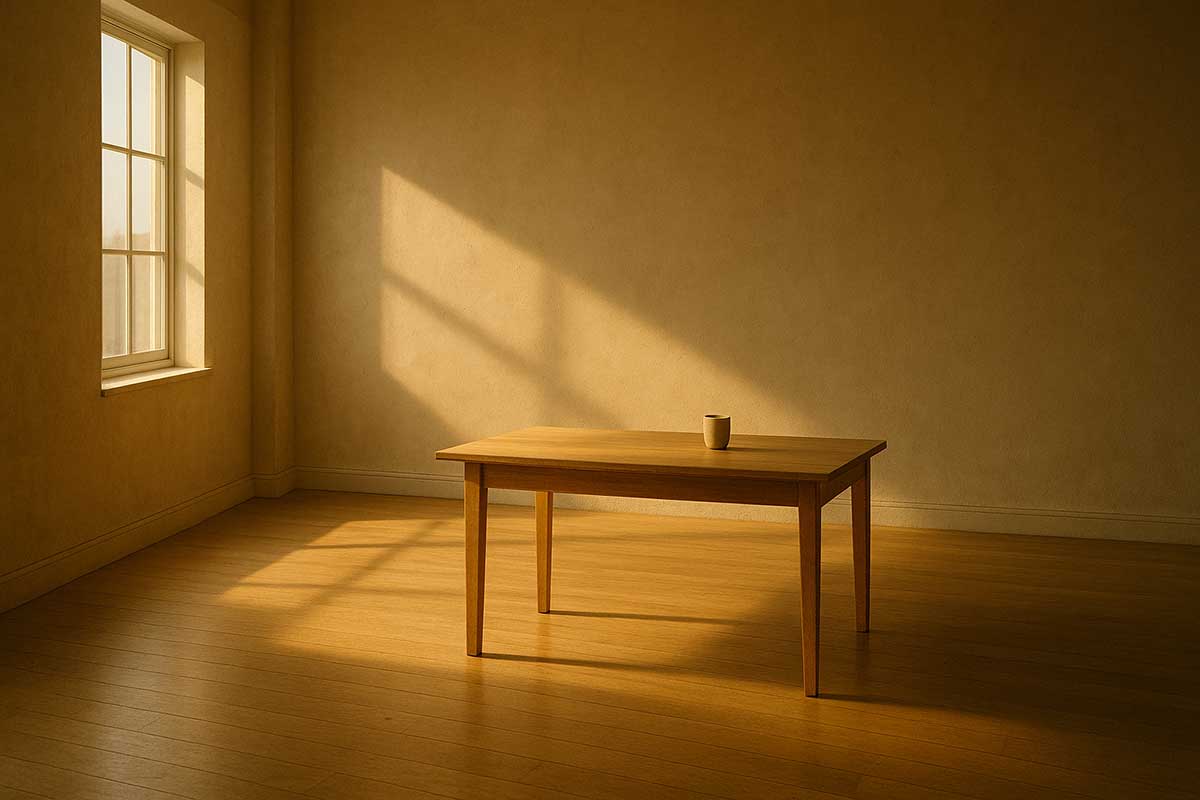
Opening Scene — A Vast Empty Room Bathed in Soft Afternoon Light
A single wooden table sits at the center. No clutter, no noise. Sunlight falls gently across the floor, creating long quiet shadows. This is not emptiness — this is intentional space.
Leo Babauta sits cross-legged on the floor.
Joshua Becker leans forward, hands loosely clasped.
Ryan Holiday stands near the window, contemplative.
Cal Newport has a small notebook.
Greg McKeown’s expression is serene.
Nick Sasaki steps into the center.
Nick:
Welcome, everyone. Today we explore a paradox:
that sometimes the most powerful way to design your day… is to remove.
Let’s begin.
QUESTION 1 — “What would your day look like if nothing unnecessary remained — what would finally have room to breathe?”
Joshua Becker
Your day would feel lighter, calmer. When we remove the non-essential, we make room for meaning. Most of what we think we “must do” is inherited — culture, habit, expectation. Strip that away, and your day becomes a canvas for purpose rather than pressure.
Cal Newport
Focus would return. Cognitive space doubles when you subtract digital noise. A day without unnecessary inputs would allow for depth — the kind of work and presence that modern life erodes. The mind cannot breathe when it is constantly switching contexts.
Leo Babauta
You would feel stillness — and that stillness becomes creativity. When the mind isn’t cluttered with obligations, it softens. It becomes available. The day would feel spacious, gentle, meaningful in its simplicity. Without clutter, awareness expands.
Ryan Holiday
And clarity. Stoics believed that most suffering comes from excess — not lack. Too many desires. Too many distractions. Too many imagined obligations. Remove what is unnecessary, and what remains is virtue, action, and peace. The day becomes clean.
Greg McKeown
What would finally have room to breathe is your highest contribution. Energy that was once scattered becomes aligned. When you remove the trivial many, the vital few rise to the surface. Essentialism is not about having less — it’s about making space for more of what matters.
Nick nods, feeling the weight of the room grow quieter, clearer.
QUESTION 2 — “Is subtraction an act of discipline, or an act of courage?”
Cal Newport
Courage. It takes courage to disconnect, to step away from expectations, to be unreachable. The world rewards availability, noise, busyness. Subtraction challenges those norms. Choosing depth over distraction is a radical act of self-respect.
Joshua Becker
Courage, absolutely. Letting go threatens our identity. We fear that without doing more, we will become less. But the opposite is true. Subtraction reveals our true values. It’s not discipline that stops us — it’s fear of losing what no longer serves us.
Ryan Holiday
Discipline supports subtraction, but courage initiates it. The Stoics taught that letting go is harder than holding on. Anyone can add. Few can remove. It takes courage to say: “My life is not defined by accumulation.” Subtraction is strength.
Leo Babauta
Subtraction is love. Discipline plays a role, but courage is the deeper source. Removing what overwhelms us is an act of compassion toward ourselves. The courage to simplify comes from recognizing our worth beyond achievement and busyness.
Greg McKeown
Subtraction is an act of courage wrapped in clarity. Discipline is the maintenance; courage is the leap. When you subtract, you reclaim your agency. You decide what matters instead of being carried by the tide of obligations.
Nick breathes in the calmness that fills the room.
QUESTION 3 — “Which part of your day would you eliminate if you were designing a life for peace instead of pressure?”
Leo Babauta
I would eliminate the second-guessing — the endless internal commentary that says you should be doing more. Peace is not found in doing everything; it’s found in doing one thing fully, with presence.
Cal Newport
I’d remove the constant low-level digital grazing — the idle checking, scrolling, scanning. These micro-distractions fragment the day into tiny, meaningless shards. Remove them, and peace emerges through focus.
Joshua Becker
I’d eliminate obligations rooted in guilt. Many of the things people do daily are done not out of purpose but out of fear of disappointing someone. A peaceful life is one aligned with chosen commitments, not inherited ones.
Ryan Holiday
I’d remove hurry. The need to rush. The belief that speed equals success. Hurry is a form of violence against the self. When you remove hurry, you reconnect with the world. You slow down enough to see clearly again.
Greg McKeown
I’d eliminate the reflexive “yes.” Peace comes from boundaries. When you stop saying yes to everything, your day becomes a sanctuary. Saying no is not rejection — it is direction.
A long silence fills the room — the good kind of silence, the kind that feels like freedom.
Closing Reflection — Nick Sasaki
Thank you, everyone.
What I’m hearing is this:
Subtraction is not emptiness —
it is space.
Space for clarity.
Space for depth.
Space for meaning, presence, and peace.
The day becomes beautiful
not when it is filled,
but when it is freed.
Design your day like a sculptor:
remove everything that does not belong
until what remains
is your truest life.
Final Thoughts by Nick Sasaki
When I look back on my life, the turning points were never grand moments. They were quiet ones.
A single morning when I chose clarity over chaos.
A single afternoon when I removed one unnecessary obligation.
A single evening when I asked, “What actually matters tomorrow?”
Those small choices, repeated day after day, gave me a sense of peace and momentum I didn’t know I was missing.
Designing your day isn’t about perfection.
It’s about alignment.
Alignment with your energy.
Alignment with your values.
Alignment with the person you want to become.
Every day offers you a new chance to realign.
A fresh canvas.
A quiet invitation.
You don’t need to overhaul your life.
Just shape the next 24 hours with a little more awareness, a little more intention, and a little more love.
Because when you design your day, you’re not just managing time —
you’re sculpting your future, one beautiful moment at a time.
And that, to me, is the real art of living.
Short Bios:
Nick Sasaki
Nick Sasaki is a writer, creative strategist, and founder of ImaginaryTalks.com, known for producing deeply reflective, dialogue-driven content that blends timeless wisdom with modern storytelling. His work centers on personal transformation, emotional clarity, and intentional living.
Cal Newport
Cal Newport is a computer science professor and bestselling author of “Deep Work” and “Digital Minimalism.” He studies focus, attention, and the ability to produce meaningful work in a distracted world.
Gary Keller
Gary Keller is the cofounder of Keller Williams Realty and author of “The ONE Thing.” His work emphasizes focus, priority, and choosing the single action that creates disproportionate results.
Greg McKeown
Greg McKeown is a leadership strategist and author of “Essentialism” and “Effortless.” He teaches how to eliminate the trivial and invest energy into what truly matters.
Jake Knapp
Jake Knapp is a designer and author of “Make Time” and “Sprint.” He specializes in designing days for focus, clarity, and meaningful personal highlights.
Hal Elrod
Hal Elrod is the author of “The Miracle Morning,” known for his transformative morning routines that emphasize inner clarity, mindset, and energy.
Robin Sharma
Robin Sharma is a leadership expert and author of “The 5AM Club.” He teaches early-morning mastery and rituals that elevate focus, creativity, and performance.
James Nestor
James Nestor is a science journalist and author of “Breath,” known for exploring the power of breathing to transform physical and emotional well-being.
Jay Shetty
Jay Shetty is a former monk, author of “Think Like a Monk,” and host of a global podcast. His teachings revolve around purpose, inner peace, and building rituals that shape the mind.
Mel Robbins
Mel Robbins is a motivational author and speaker known for “The 5 Second Rule.” She helps people overcome hesitation and build momentum through simple activation strategies.
Claire Diaz-Ortiz
Claire Diaz-Ortiz is an author and productivity expert known for “Design Your Day,” specializing in values-based scheduling and intentional daily structure.
Tim Ferriss
Tim Ferriss is an entrepreneur and author of “The 4-Hour Workweek,” known for lifestyle experimentation, testing high-leverage habits, and optimizing performance.
BJ Fogg
BJ Fogg is a Stanford behavior scientist and author of “Tiny Habits.” His work focuses on how small, easy behaviors create sustainable change.
Nir Eyal
Nir Eyal is the author of “Indistractable” and “Hooked.” He studies the psychology of attention, distraction, and behavioral design.
Marie Forleo
Marie Forleo is an entrepreneur and author of “Everything Is Figureoutable,” known for empowering people to act boldly through clarity, creativity, and experimentation.
James Clear
James Clear is the bestselling author of “Atomic Habits.” He focuses on identity-based habits, small improvements, and systems that compound over time.
Leave a Reply