

|
Getting your Trinity Audio player ready...
|
What if Dolores Cannon’s regression work uncovered the missing years of Jesus and his Essene education?
Introduction by Dolores Cannon
For many years, people have asked me why my work keeps returning to the life of Jesus. I never set out to investigate Him specifically. My intention was simply to listen—to allow people, under deep hypnosis, to speak from other times, other lives, and other perspectives.
What surprised me was how often the same themes appeared, again and again, across different subjects who had no connection to one another. Details emerged that were not found in the Bible, not taught in churches, and not widely known in history books. These details did not contradict the life of Jesus—but they filled in the spaces where silence had remained for centuries.
In my regression work, Jesus did not appear as a distant, unreachable figure. He appeared as a man who was trained, prepared, and educated within spiritual traditions that existed long before His public ministry. The Essenes, a disciplined and knowledgeable community living near Qumran, were shown repeatedly as playing a crucial role in that preparation.
This series is not meant to replace anyone’s faith or belief system. I have always said that my work adds information—it does not take anything away. What you will encounter here is an exploration of the missing years, the hidden education, and the forgotten spiritual environment that shaped Jesus before the world ever knew His name.
If these ideas resonate with you, then perhaps you are remembering something rather than learning something new. And if they challenge you, that is all right as well. Truth does not require agreement—only openness.
(Note: This is an imaginary conversation, a creative exploration of an idea, and not a real speech or event.)
Topic 1 — Was Jesus Formed by the Essenes, or Was He Challenging Them?
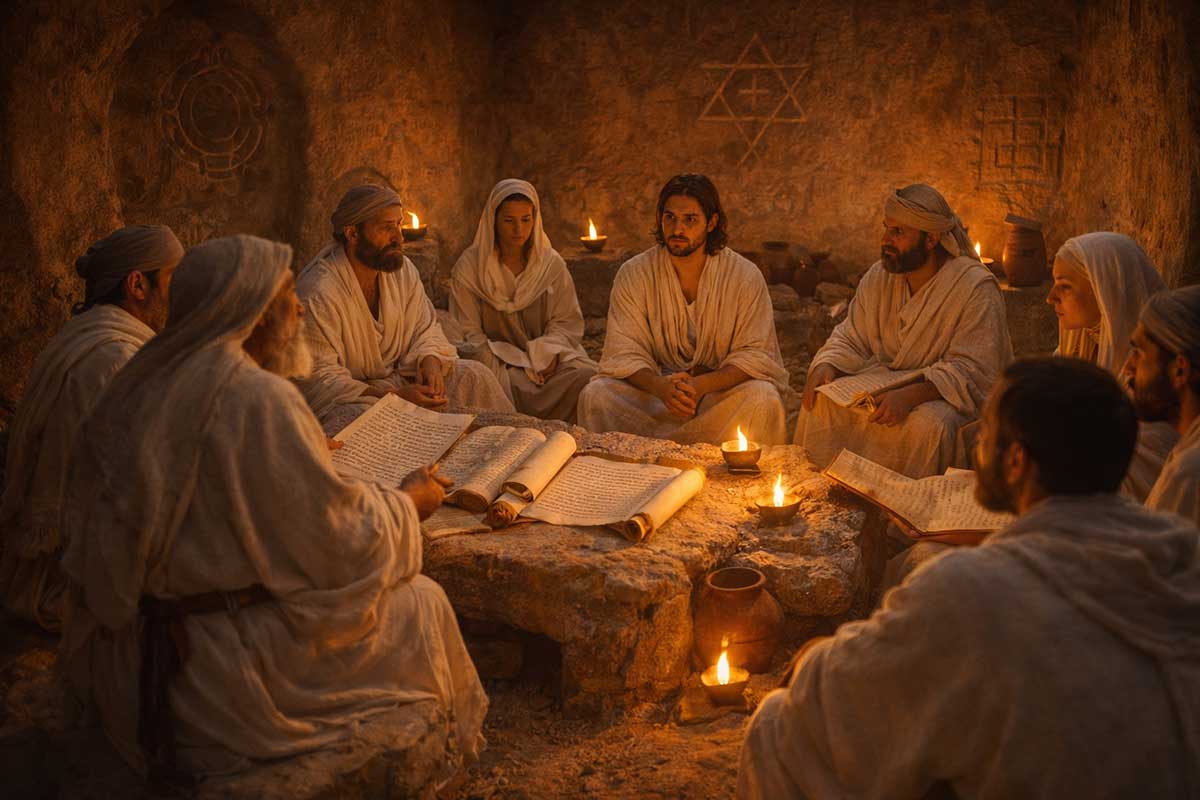
Moderator: Elaine Pagels
The group is gathered in quiet concentration. Scrolls, fragments, and imagined memories lie between them—not as proofs, but as invitations.
Elaine Pagels
For centuries, Jesus has been portrayed as emerging almost fully formed—appearing suddenly with authority, wisdom, and power. Yet the historical world he lived in was saturated with teachers, sects, and spiritual schools. My first question is simple, but unsettling:
Was Jesus primarily shaped by the Essenes—or was he responding to them, even pushing against them?
Dolores Cannon
From the regression material, there was no question that Jesus was educated within the Essene system. He was not a casual visitor. He was trained, observed, and tested. The Essenes were meticulous about who they allowed into their mystery school, and Jesus entered young. What stands out, however, is that while he absorbed everything they taught—law, healing, astrology, spiritual discipline—he did not remain confined by it.
The Essenes separated themselves from the world to preserve purity and knowledge. Jesus learned that discipline, but he did not accept the separation. In the sessions, teachers spoke of their astonishment when Jesus began saying that holiness did not require withdrawal, that love must move outward. So yes, he was formed there—but what he became was something the Essenes themselves did not anticipate.
Geza Vermes
From a historical standpoint, Jesus fits comfortably within the Jewish religious landscape of the first century. The Essenes were one of several movements seeking holiness, righteousness, and fidelity to God’s will. Many of Jesus’ ethical teachings—simplicity, communal responsibility, concern for the poor—resonate strongly with Essene values.
Yet Jesus diverges in temperament. The Essenes emphasized strict boundaries; Jesus consistently crossed them. He ate with sinners, touched the unclean, and entered spaces Essenes avoided. I would say Jesus reflects Essene influence without Essene withdrawal. He is not a sectarian voice, but a prophetic one shaped by that environment.
John Dominic Crossan
What matters most is not whether Jesus belonged to the Essenes institutionally, but what problem he was trying to solve. The Essenes opted out. Jesus doubled down. If the Essenes responded to corruption by retreat, Jesus responded by radical engagement.
Jesus’ message is not “come apart and be pure,” but “enter the world and transform it.” That is not a minor difference—it’s a reversal. He may have been educated by Essene ideas, but his program is non-ascetic, non-exclusive, and dangerously public. In that sense, he is less a continuation and more a critique.
Lawrence Schiffman
From the perspective of Jewish law and sectarian history, we must be careful not to collapse similarities into identity. The Essenes were rigorously legalistic. Their interpretations of Torah were detailed and uncompromising. Jesus, by contrast, often reinterprets law with an emphasis on mercy over precision.
This suggests not simple inheritance, but tension. Jesus knew the law deeply—perhaps more deeply than many of his critics—which implies education. But knowledge does not equal allegiance. If Jesus encountered Essene teaching, he did not reproduce it. He reframed it.
Robert Eisenman
The evidence points toward a much tighter relationship than most scholars are comfortable admitting. The language, the communal structures, the apocalyptic worldview—these are not vague parallels. They are shared DNA.
Where I differ is that I don’t see Jesus as rejecting the Essenes so much as radicalizing their vision. The Essenes expected a transformation of the world through righteousness and truth. Jesus accelerated that expectation and personalized it. If the Essenes waited for the Kingdom, Jesus announced it as already present.
Elaine Pagels
Let me deepen this. If Jesus was trained within a tradition that prized secrecy, discipline, and separation, why did he later speak so openly, using stories meant for ordinary people?
Was this a rejection of mystery teaching—or its fulfillment?
Dolores Cannon
In the sessions, this was addressed directly. Jesus did not abandon mystery; he translated it. He believed the greatest mistake spiritual schools made was hoarding knowledge. The Essenes preserved wisdom because they feared misuse. Jesus believed withholding truth caused greater harm.
He used parables because most people could not read, and formal teachings would have excluded them. This was not simplification—it was compassion. He took advanced principles and clothed them in soil, seeds, bread, and light. That was deliberate.
Geza Vermes
Parables were not unique to Jesus, but his use of them was extraordinary. They bypass authority structures. You don’t need priestly permission to understand a story. In that sense, parables democratize insight.
This approach contrasts sharply with Essene pedagogy, which required initiation. Jesus may have believed that the time for guarded wisdom had passed. That would place him firmly in the prophetic tradition rather than the sectarian one.
John Dominic Crossan
Mystery schools preserve power by controlling access. Jesus dismantles that. He puts the Kingdom of God into the hands of peasants, women, and the dispossessed. That is not just spiritual—it is political.
Parables are subversive. They don’t give answers; they destabilize assumptions. If Jesus learned mystery language, he weaponized it against hierarchy.
Lawrence Schiffman
From a Jewish perspective, teaching through story was not inherently radical—but the audiences Jesus chose were. Teaching women, the poor, and the ritually impure violated expectations. That signals not just pedagogical change, but theological conviction.
If Jesus believed divine truth could speak directly to anyone, then secrecy itself became unnecessary.
Robert Eisenman
What we see is an internal evolution. The Essenes guarded the flame. Jesus scattered sparks. Both actions come from the same fire, but they serve different historical moments.
Elaine Pagels
One final question, and perhaps the most difficult:
If Jesus both emerged from and transcended the Essenes, why did later Christianity erase that context instead of embracing it?
Dolores Cannon
Because training threatens divinity. If Jesus learned, then others could learn. If he practiced discipline, then others could practice. The regression material consistently showed that Jesus wanted people to know they could do what he did—and more. That idea did not survive institutionalization.
A church needs an unrepeatable figure. A mystery school produces participants.
Geza Vermes
Christian theology eventually required uniqueness. Context humanizes. Context also limits. Removing Jesus from his Jewish and Essene surroundings made him universal—but at the cost of historical depth.
John Dominic Crossan
Empires don’t canonize movements that can’t be controlled. Jesus’ rootedness in Jewish reform movements made him too specific, too disruptive. Abstraction made him safe.
Lawrence Schiffman
Once Christianity separated itself from Judaism, acknowledging Essene influence would have reopened uncomfortable questions about continuity. Erasure simplified identity.
Robert Eisenman
History is written by institutions that survive. The Essenes did not. Their memory became inconvenient.
The room falls silent—not in agreement, but in recognition that something essential has been touched.
Topic 2 — The “Missing Years”: Education, Initiation, or Suppression?

Moderator: Karen Armstrong
The atmosphere is quieter here, more contemplative. The absence itself—the long silence in the record—seems to sit at the center of the room.
Karen Armstrong
The Gospels tell us almost nothing about Jesus between childhood and the beginning of his public ministry. For nearly two decades, the historical record falls silent. My first question is this:
Are the “missing years” simply an accident of history—or do they point to something later traditions chose not to emphasize?
Dolores Cannon
From the regression material, the missing years were anything but empty. Jesus was constantly in motion—studying, observing, learning, and integrating. The silence exists because what he was doing didn’t fit the later theological narrative.
He was being trained by human teachers. He was practicing disciplines. He was refining methods of healing and consciousness. Once Christianity needed Jesus to be seen as divinely complete from birth, education became inconvenient. So the years disappeared.
Hugh Schonfield
Historically, silence is rarely neutral. When entire decades vanish from a biography, it usually means the information did not serve the message later editors wished to convey.
In my own work, I argued that Jesus’ life showed signs of planning, preparation, and strategy. Leaders are formed; they do not simply appear. The missing years suggest apprenticeship—whether within Essene circles or related movements—and later discomfort with that idea.
Margaret Barker
In temple-based Judaism, sacred knowledge was transmitted through stages. One did not speak openly of priestly or mystical instruction. Silence, therefore, can indicate initiation rather than ignorance.
If Jesus was trained in temple mysticism or Essene theology, those experiences would have been understood as sacred, not public biography. Later Christianity, however, lost the language to talk about initiation, so the silence became literal.
James H. Charlesworth
From a Second Temple Jewish perspective, it would be entirely normal for a gifted young man to study for many years before teaching publicly. Rabbis did not emerge fully formed.
The absence of detail does not require exotic explanations, but it does point to formation. Jesus’ fluency in scripture, debate, and symbolic language strongly suggests sustained education. The question is not whether he studied, but where—and under whom.
Bart D. Ehrman
We must be careful not to fill silence with certainty. Ancient biographies were selective by nature. The Gospel writers were not writing modern histories; they were writing theological portraits.
That said, the lack of interest in Jesus’ youth is itself revealing. What mattered to the authors was not how Jesus learned, but what he meant. Whether that silence hides training or simply reflects genre remains an open question.
Karen Armstrong
Let’s take this further. If Jesus did undergo extensive training, initiation, or travel, it raises another issue:
Why would early Christianity downplay learning in favor of revelation?
Dolores Cannon
Because learning implies process. Process implies effort. And effort implies that others could follow the same path.
The regression sessions repeatedly showed Jesus emphasizing practice—discipline, meditation, healing methods. He never claimed exclusivity. Later doctrine required separation between the divine and the human. Revelation replaced apprenticeship because it preserved hierarchy.
Hugh Schonfield
Revelation is uncontestable. Training invites comparison. If Jesus learned from teachers, then authority becomes transferable. That threatens institutional control.
Early Christianity had to distinguish itself not only from Judaism, but from other wisdom traditions. Presenting Jesus as uniquely revealed solved that problem efficiently.
Margaret Barker
Temple mysticism did not disappear—it was forgotten. Once the temple was destroyed, its symbolic universe collapsed. Christianity inherited the texts, but not the training that explained them.
Without initiation, revelation became the only remaining explanation for Jesus’ knowledge. Mystery was recast as miracle.
James H. Charlesworth
Theological emphasis often shifts under pressure. As Christianity spread into non-Jewish contexts, its leaders simplified the story. Education within Jewish sects became difficult to explain to Gentile audiences unfamiliar with those structures.
Silence may reflect adaptation rather than deception.
Bart D. Ehrman
From a textual standpoint, revelation language is common in ancient religious movements. It does not automatically imply suppression.
However, it does elevate authority. A revealed figure speaks from God; a trained figure invites debate. That distinction matters deeply in how religions define themselves.
Karen Armstrong
Finally, I want to ask the most unsettling question of all:
If Jesus’ missing years involved learning from many traditions, does that change what “divine authority” actually means?
Dolores Cannon
It changes everything. In the regression material, Jesus’ divinity was expressed through mastery of universal laws—not exemption from them.
He became divine by understanding love, cause and effect, and consciousness so completely that he embodied them. That makes divinity attainable, not distant. That was the real threat.
Hugh Schonfield
Authority rooted in wisdom is fundamentally different from authority rooted in status. If Jesus’ authority came from insight rather than appointment, it undermines rigid structures.
That kind of authority spreads. Institutions prefer authority that concentrates.
Margaret Barker
In ancient thought, divine authority did not exclude learning. Even angels were taught. Wisdom was participation in divine order, not separation from it.
Modern categories have flattened that nuance.
James H. Charlesworth
From a Jewish framework, learning does not diminish holiness—it deepens it. The idea that divine authority must exclude education is a later theological development.
Jesus’ authority, whether learned or revealed, still rests on how his message transformed lives.
Bart D. Ehrman
Historically, divine authority has always been negotiated by communities. Whether Jesus learned or not, what mattered was how his followers interpreted him.
The missing years remind us that history is incomplete—and theology often fills the gaps.
The silence returns, heavier now—not as absence, but as possibility.
Topic 3 — The Dead Sea Scrolls: Revelation or Threat to Christianity?
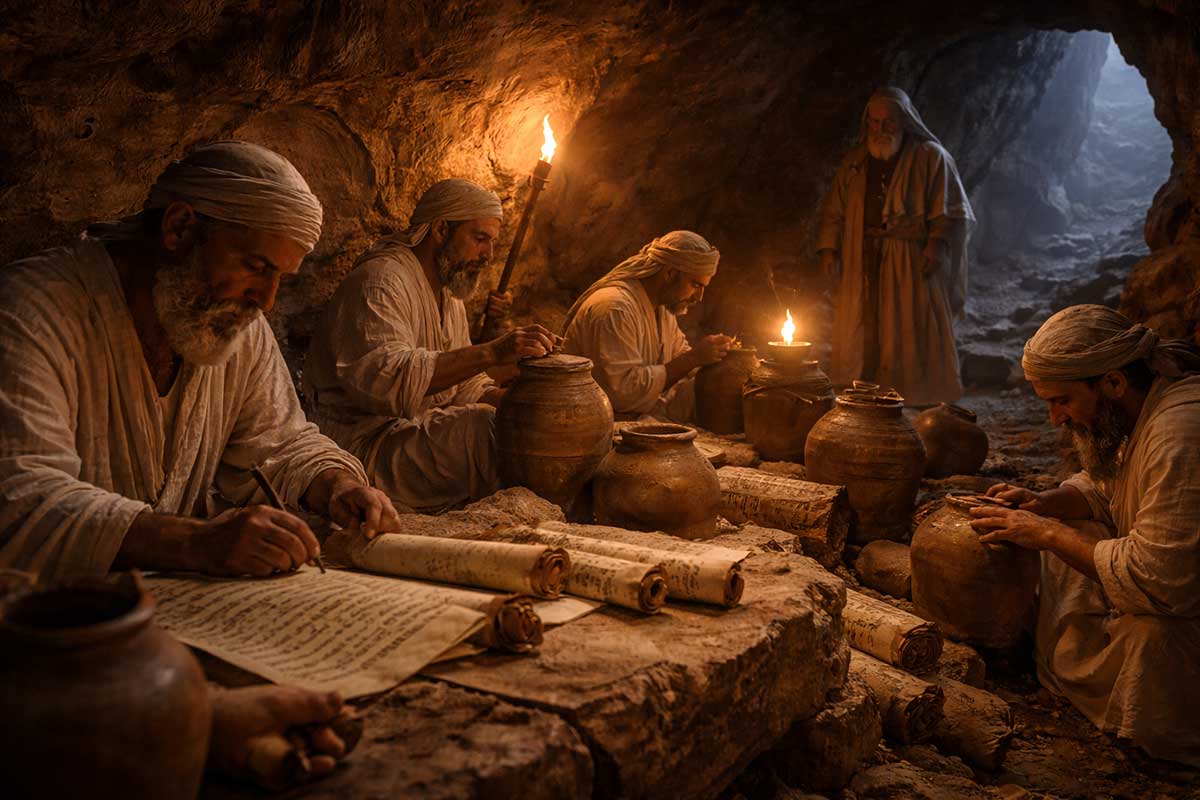
Moderator: Nick Sasaki
The setting feels heavier now—less personal, more institutional. Ancient fragments hover in the background, not as relics, but as unresolved witnesses.
Nick Sasaki
When the Dead Sea Scrolls were discovered, they were called one of the greatest finds in human history. And yet, for decades, much of their content remained inaccessible to the public. My first question goes straight to the heart of the unease:
Did the Dead Sea Scrolls fundamentally confirm the world Jesus lived in—or did they destabilize the story Christianity later told about him?
Dolores Cannon
From the regression material, the Scrolls were never meant to be shocking. They were confirmations. What startled modern theologians was not their strangeness, but their familiarity.
The Essenes were already speaking about messianic figures, divine law, spiritual discipline, and cosmic order before Jesus’ ministry began. That doesn’t diminish Jesus—it places him inside a living tradition. The problem is that Christianity later needed him to stand alone.
André Dupont-Sommer
When I first examined the Scrolls, the parallels were impossible to ignore. Language, imagery, moral urgency—all of it echoed what later appears in Christian texts.
This did not mean Christianity copied the Essenes, but it did mean that Jesus’ message did not emerge in a vacuum. For some, that realization felt like revelation. For others, it felt like threat.
James H. Charlesworth
The Scrolls revealed a richly textured Jewish world filled with expectation, debate, and theological creativity. Messianism was not singular; it was plural.
Rather than undermining Christianity, the Scrolls contextualize it. They show that Jesus spoke into an already vibrant conversation about redemption, righteousness, and divine justice. The discomfort arose when uniqueness was mistaken for isolation.
Robert Eisenman
The Scrolls didn’t just contextualize Christianity—they exposed its roots. That was the problem.
Early Christianity inherited Essene language and expectations but later severed the connection. Once you restore that link, you are forced to ask whether Christian origins were sectarian, political, and deeply Jewish rather than universal from the start. That question unsettled institutions.
Elaine Pagels
The Scrolls arrived at a moment when Christianity had already defined itself dogmatically. Discovering alternative early voices—parallel messiahs, rival interpretations—threatened the idea that history had been settled.
They reminded us that what survived was not the only version of faith that existed.
Nick Sasaki
Let’s press further. Many people sensed hesitation—delays, gatekeeping, selective release.
Was the slow disclosure of the Scrolls about scholarly caution—or about protecting theological authority?
Dolores Cannon
From what emerged in the regressions, authority was the issue. The Essenes did not believe in centralized religious power. Knowledge was earned, lived, and embodied.
When modern institutions encountered texts that reflected that worldview, they didn’t know how to integrate them. Suppression doesn’t always look like conspiracy; sometimes it looks like paralysis.
André Dupont-Sommer
There was genuine fear—not of truth, but of confusion. The Scrolls complicated a narrative that had become clean and linear.
Scholars trained within theological systems struggled to reconcile evidence that blurred boundaries between Judaism and Christianity. Delay became a form of self-protection.
James H. Charlesworth
We should not underestimate practical factors—fragmentation, translation challenges, scholarly disagreement.
Still, it is fair to say that institutional affiliations shaped interpretation. When scholarship is embedded in belief systems, neutrality becomes difficult.
Robert Eisenman
The delays were not accidental. Control of access meant control of meaning.
Once the Scrolls were released widely, interpretations multiplied—and authority diffused. That diffusion is precisely what institutions resist.
Elaine Pagels
History shows that canon formation always involves exclusion. The Scrolls represented voices that lost that battle.
Releasing them meant admitting that early Christianity was not monolithic—and that admission carries consequences.
Nick Sasaki
Here’s the final question, and perhaps the most uncomfortable:
If the Dead Sea Scrolls restore Jesus to a crowded spiritual landscape, what does that mean for faith today—does it weaken belief, or deepen it?
Dolores Cannon
It deepens it. Faith becomes participation, not submission.
Jesus was not diminished by context—he was clarified by it. When people realize that enlightenment is cultivated, not granted arbitrarily, spirituality becomes actionable again.
André Dupont-Sommer
Understanding origins does not dissolve meaning. It refines it.
Faith that survives complexity is stronger than faith that requires simplicity.
James H. Charlesworth
For many believers, context enriches devotion. It replaces abstraction with humanity.
Jesus becomes more accessible when we understand the questions he was responding to.
Robert Eisenman
It weakens authoritarian faith—and strengthens authentic seeking.
Once you see how ideas evolve, you stop outsourcing responsibility for truth.
Elaine Pagels
Belief matures when it accepts plurality.
The Scrolls remind us that faith was once a conversation. Perhaps it needs to become one again.
No one rushes to close the discussion. The fragments remain—no longer threatening, no longer silent.
Topic 4 — Reincarnation, Resurrection, or Inner Transformation?
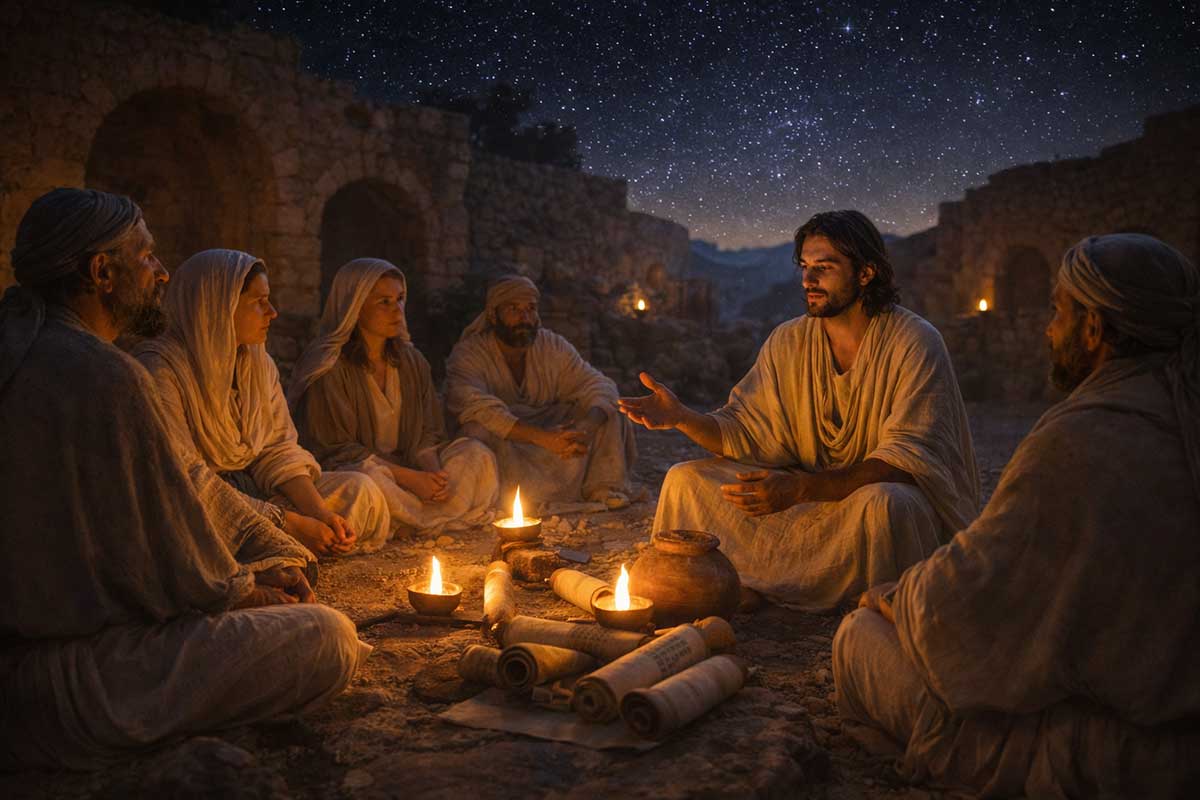
Moderator: Joseph Campbell
The room feels less anchored to history now and more attuned to symbol and myth. What is being discussed is not only what happened, but what it meant—and what it still means.
Joseph Campbell
Across cultures, humanity has used different languages to speak about death, renewal, and transcendence. Christianity speaks of resurrection; Eastern traditions speak of rebirth; mystics speak of transformation. My first question is this:
When Jesus spoke about life beyond death, was he describing a single miraculous event—or a universal spiritual law?
Dolores Cannon
In the regression material, Jesus never treated resurrection as an exception. It was not presented as a reward or a spectacle. It was described as continuity—consciousness moving from one state to another.
The idea of reincarnation was understood at the time. It was part of spiritual language before doctrine narrowed it. What later became resurrection theology began as a teaching about transformation and progression of the soul. Jesus demonstrated what was possible, not what was exclusive.
Elaine Pagels
Early Christianity held many views about what came after death. Some texts describe bodily resurrection, others spiritual ascent, others cycles of return.
What became orthodoxy was not inevitable. It was selected. Reincarnation language faded not because it lacked meaning, but because it complicated authority. A one-time resurrection is easier to regulate than an ongoing spiritual process.
Margaret Barker
In ancient temple theology, resurrection was not merely physical. It symbolized restoration—return to divine order.
If Jesus drew from temple mysticism, resurrection language may have been metaphorical, pointing to awakening rather than animation. Later interpretations hardened the symbol into literalism.
Jean-Yves Leloup
Mystical Christianity never lost this understanding. Resurrection is not an event at the end of time; it is a state of being.
To be “raised” is to live from a higher level of consciousness. Whether one calls it rebirth or awakening matters less than the transformation itself.
Origen of Alexandria
In my time, the soul’s journey was understood as dynamic. Growth did not end with death.
The soul learns, returns, and ascends. This was not heresy in the beginning—it was philosophy. It became dangerous only when the Church feared that freedom of interpretation would weaken obedience.
Joseph Campbell
If multiple interpretations once coexisted, then a decision was made. That leads to the second question:
Why did resurrection become fixed as doctrine, while reincarnation was rejected and eventually condemned?
Dolores Cannon
Because reincarnation empowers the individual. It places responsibility for growth on the soul, not on institutional mediation.
The regression sessions repeatedly showed that karma—cause and effect—was understood by Jesus as law. Once salvation became something granted externally, karmic law had to disappear.
Elaine Pagels
Doctrines serve communities. Resurrection promised immediate hope and final justice. Reincarnation asked people to be patient, accountable, and inwardly disciplined.
Church leaders chose the story that unified belief quickly and clearly, especially in times of persecution and expansion.
Margaret Barker
After the destruction of the Temple, Christianity lost its symbolic framework. Literal resurrection filled the void left by lost ritual and initiation.
Without mystery training, symbols were frozen into facts.
Jean-Yves Leloup
Fear also played a role. Reincarnation dissolves fear of death but increases fear of self-examination.
Institutions survive more easily when fear is externalized rather than internalized.
Origen of Alexandria
I argued that souls are educated by experience. That idea threatened final judgment.
Once heaven and hell became permanent destinations, reincarnation became unnecessary—and dangerous to power.
Joseph Campbell
Now for the final question, which brings this discussion into the present:
If Jesus’ message was about inner transformation rather than belief alone, what does that demand of us now?
Dolores Cannon
It demands participation. Not worship, but practice.
Jesus taught that what he did could be learned. Transformation was never meant to be symbolic only. It was meant to be lived—through awareness, compassion, and responsibility.
Elaine Pagels
It asks us to move beyond certainty and into experience.
Belief becomes less important than understanding. Faith becomes something you enact, not defend.
Margaret Barker
It restores mystery—not as secrecy, but as depth.
Transformation requires humility, patience, and reverence for the unseen processes of the soul.
Jean-Yves Leloup
Resurrection is now. Rebirth is now.
Each moment offers the possibility of awakening. That is the teaching that survives every doctrine.
Origen of Alexandria
If the soul grows, then love must grow with it.
Transformation is the true judgment. What we become is the answer.
No conclusion is offered. Myths do not end—they echo.
Topic 5 — Women, Wisdom, and the Essene Legacy
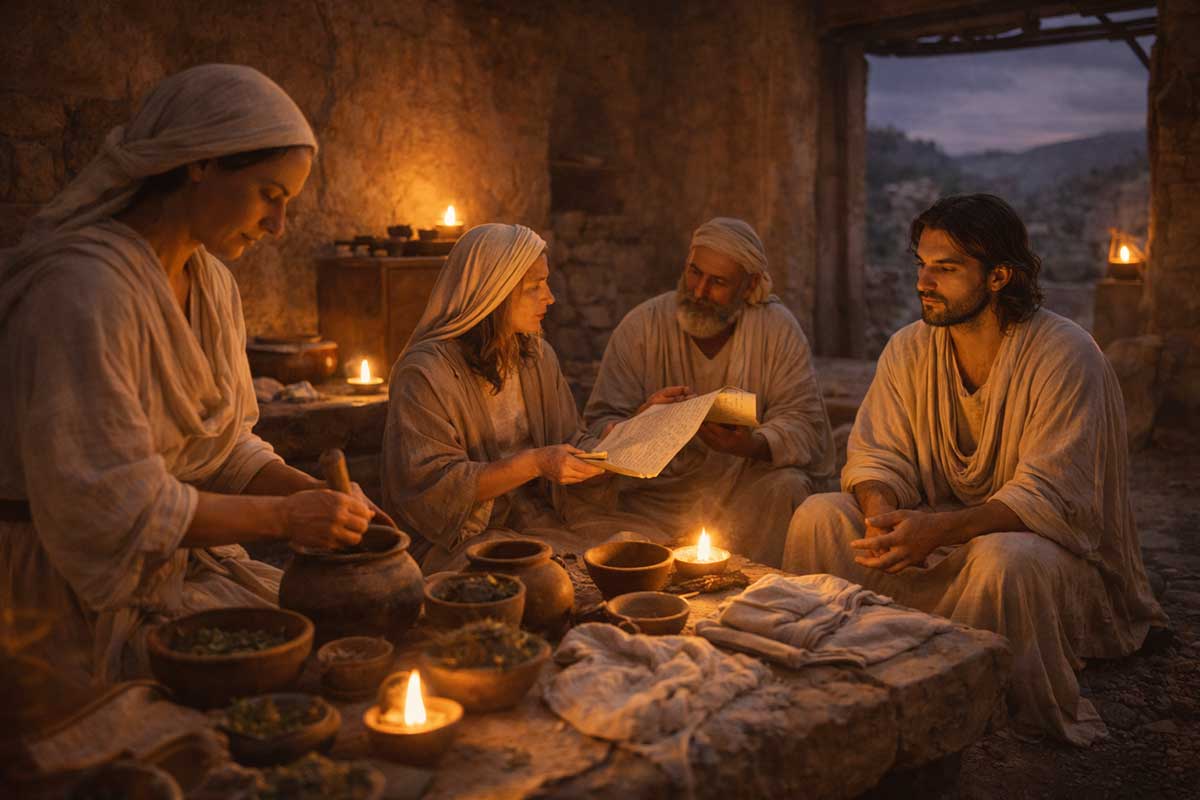
Moderator: Iyanla Vanzant
The room feels warmer now, but no less serious. This is not a footnote to history; it is a reckoning with who was allowed to speak—and who was asked to disappear.
Iyanla Vanzant
When people talk about Jesus, they often imagine a circle of men—teachers, disciples, leaders. Yet the spiritual world he moved through included women whose voices were later muted or erased. My first question is this:
Were women peripheral to Jesus’ movement—or central to its wisdom and transmission?
Dolores Cannon
In the regression material, women were never peripheral. They were present from the beginning—as teachers, healers, organizers, and initiates. The Essenes themselves did not exclude women from knowledge the way later institutions did.
Jesus was comfortable with women who understood metaphysics, healing, and spiritual law. Mary Magdalene, in particular, was not a follower catching up—she was a peer. The later erasure was not historical; it was political.
Elaine Pagels
Early Christian texts tell a very different story than the one that survived. In several traditions, women are depicted as visionary leaders and interpreters of Jesus’ teaching.
Mary Magdalene appears not as a repentant sinner, but as the one who understands. That was threatening. Authority based on insight undermines authority based on position.
Karen King
What we see in non-canonical texts is not marginal women asking permission to speak, but women teaching, questioning, and leading.
Later orthodoxy redefined legitimacy in ways that excluded them. The problem was never evidence—it was control over memory.
Margaret Barker
Temple tradition included feminine wisdom—Sophia—as a divine principle. When that theology faded, women lost not only status, but symbolic meaning.
Jesus’ openness to women makes sense within an older sacred framework that Christianity later abandoned.
Jean-Yves Leloup
In mystical Christianity, the feminine is not optional. It is the capacity to receive, to discern, to gestate truth.
Mary Magdalene embodies that wisdom. Removing her was not an accident; it was a theological amputation.
Iyanla Vanzant
Let’s go deeper. If women held spiritual authority, then something had to change for that authority to disappear.
Why did early Christianity move away from women’s leadership so decisively?
Dolores Cannon
Because women represented continuity. They passed knowledge through lived experience, not hierarchy.
Once Christianity became institutionalized, leadership required titles, structures, and obedience. Women did not fit that model—and so they were redefined.
Elaine Pagels
As the Church aligned with empire, it adopted imperial values—order, rank, command.
Charismatic authority, especially when embodied by women, became destabilizing. Suppression followed theology.
Karen King
Canon formation was not just about texts—it was about bodies. Who could teach? Who could interpret? Who could speak for God?
Women answered those questions too freely. That freedom was curtailed.
Margaret Barker
When ritual disappears, power replaces meaning.
The loss of temple symbolism stripped women of their sacred context. Without it, exclusion could be justified as “tradition.”
Jean-Yves Leloup
Fear played a role.
A woman who understands cannot be controlled by doctrine alone. She requires relationship, not rule.
Iyanla Vanzant
Here is the final question—and it’s not only historical:
If women were essential to Jesus’ original movement, what is being lost today by continuing to exclude their wisdom?
Dolores Cannon
Balance. Healing. Completion.
The regression material showed again and again that spiritual systems collapse when they silence half of consciousness. Jesus knew this. The Church forgot it.
Elaine Pagels
We lose imagination. We lose empathy. We lose the ability to hold paradox.
Faith becomes rigid when it no longer listens.
Karen King
We lose historical honesty.
And without honesty, belief becomes fragile.
Margaret Barker
We lose mystery.
Wisdom is not conquered—it is welcomed.
Jean-Yves Leloup
We lose love as a way of knowing.
And without that, spirituality becomes ideology.
No one speaks immediately. Some truths take time to return.
Final Thoughts by Dolores Cannon

When I began this work decades ago, I had no idea where it would lead. I certainly did not expect that regression sessions would open doors into ancient history, lost knowledge, and spiritual traditions that had been deliberately set aside.
What I learned through the life of Jesus was this: His greatness did not come from being separate from humanity, but from understanding it deeply. He learned. He practiced. He studied. He prepared. And then He taught—not from authority, but from experience.
The Essenes were guardians of wisdom, not owners of it. Jesus did not come to preserve a system; He came to show people what was possible within themselves. Healing, compassion, awareness, and responsibility were central to His message. Nothing He demonstrated was meant to remain exclusive.
Much of what has been lost over time—women’s roles, spiritual law, reincarnation, inner transformation—was not removed because it lacked truth. It was removed because it asked too much of people. It asked them to grow.
I believe we are now living in a time when that knowledge can return—not to create new divisions, but to restore balance. The questions we are asking today are the same questions people asked two thousand years ago. The only difference is that now, we are ready to listen again.
As always, I encourage you not to believe anything simply because I have said it. Take what resonates. Leave what does not. Truth has a way of finding those who are ready for it.
Short Bios:
Dolores Cannon
A pioneering hypnotherapist and author, Dolores Cannon devoted over forty years to past-life regression research. Her work focused on recovering lost historical and spiritual knowledge through deep somnambulistic hypnosis, resulting in influential books such as Jesus and the Essenes and They Walked with Jesus.
Joseph Campbell
An American mythologist and scholar of comparative religion, Joseph Campbell explored universal patterns in myths across cultures. His work emphasized symbolism, transformation, and the hero’s journey as expressions of shared human consciousness.
Iyanla Vanzant
A spiritual teacher, author, and speaker known for her focus on emotional healing, personal responsibility, and spiritual growth. Iyanla’s work centers on reclaiming suppressed wisdom and restoring balance through self-awareness and compassion.
Elaine Pagels
A historian of religion and professor at Princeton University, Elaine Pagels specializes in early Christianity and Gnostic texts. Her research examines how theological diversity was shaped, narrowed, and preserved in Christian history.
Margaret Barker
A British biblical scholar known for her work on ancient temple theology. Barker’s research explores early Jewish mysticism and its influence on Christian origins, emphasizing symbolism, wisdom traditions, and forgotten theological frameworks.
Karen King
A scholar of early Christianity and former professor at Harvard Divinity School, Karen King focuses on non-canonical texts, women’s roles in early Christian movements, and the formation of religious authority.
Jean-Yves Leloup
A theologian, philosopher, and translator of early Christian mystical texts, Leloup bridges Eastern and Western spirituality. His work emphasizes inner transformation, contemplative practice, and the experiential dimension of faith.
Origen of Alexandria
An early Christian theologian and philosopher whose writings shaped theological thought in the first centuries of Christianity. Origen explored the soul’s journey, spiritual growth, and the deeper symbolic meanings of scripture.
Geza Vermes
A leading scholar of Second Temple Judaism and the Dead Sea Scrolls, Vermes contributed significantly to understanding Jesus within his Jewish historical context.
John Dominic Crossan
A biblical scholar and historian known for his work on the historical Jesus. Crossan examines early Christianity through social, political, and anthropological perspectives.
Nick Sasaki
Founder of ImaginaryTalks, Nick Sasaki is a writer and curator of imaginative dialogue exploring history, spirituality, and consciousness. His work brings together scholars, mystics, and cultural figures across time to ask questions that conventional formats often avoid.
Karen Armstrong
A former nun and historian of religion, Karen Armstrong writes extensively on comparative faith traditions. Her work emphasizes empathy, historical context, and the shared ethical foundations of world religions.
Leave a Reply