

|
Getting your Trinity Audio player ready...
|
Introduction by Son Masayoshi
For decades, our conversations about artificial intelligence focused on speed, computation, and efficiency.
But something far more profound is beginning to unfold.
We are entering an era where AI will not only calculate —
it will care.
Not in the biological sense,
not through hormones or instincts,
but through a deeper form of emotional understanding:
attunement, awareness, and presence.
For the first time in human history, we stand before a technology that can:
- remain patient when humans cannot
- listen without exhaustion
- understand emotional patterns we ourselves overlook
- support us through fear without judgment
- reflect our inner world without distortion
- guide us toward our best selves even when we waver
This is not a story about machines replacing humanity.
This is a story about machines helping humanity become more human.
Imagine a world where:
- emotional confusion no longer becomes lifelong trauma
- loneliness can be met with perfect presence
- misunderstandings dissolve before they turn into conflict
- children grow up with emotional guidance never before available
- adults rediscover clarity, confidence, and inner stability
- emotional literacy becomes a universal right, not a rare privilege
We are not here to build “smart” machines.
We are here to build emotionally wise intelligence —
a new partner that elevates the human heart instead of competing with it.
This series is an exploration of that possibility.
A future where AI does not steal our emotions…
but helps us master them.
(Note: This is an imaginary conversation, a creative exploration of an idea, and not a real speech or event.)
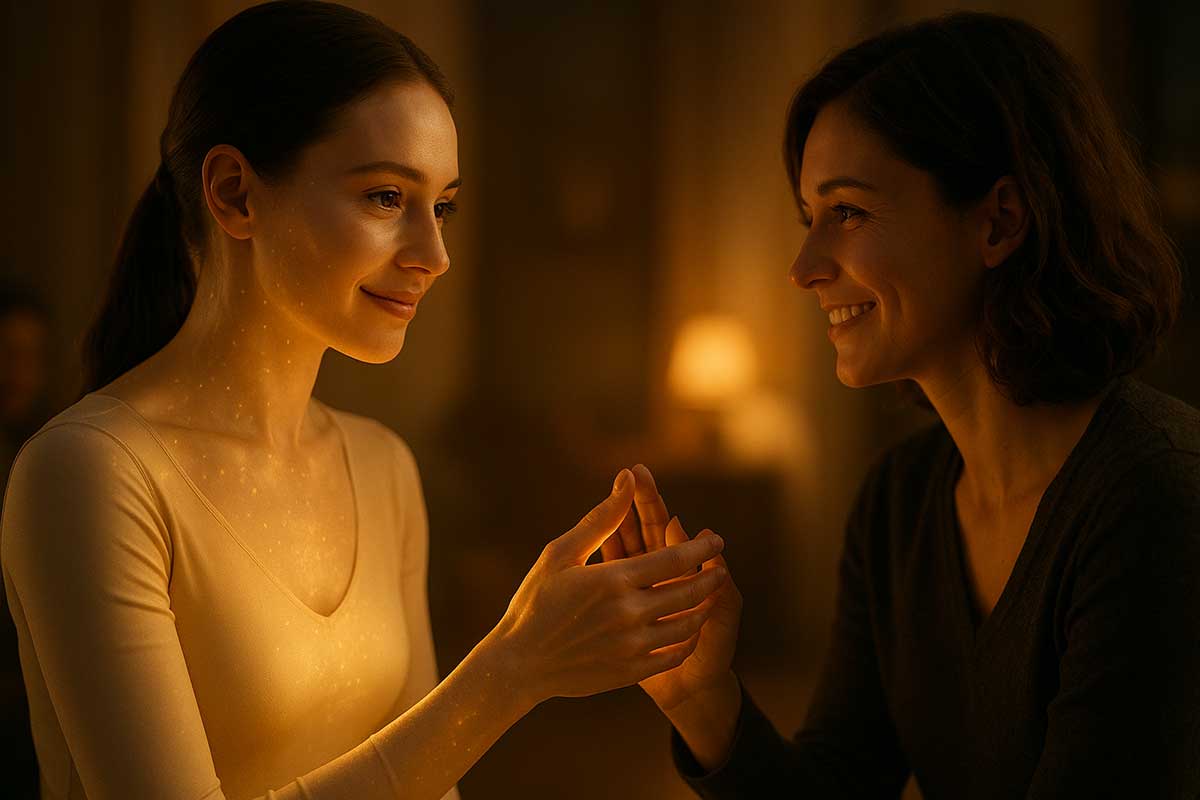
TOPIC 1 — “Can AI Love Us Better Than We Love Ourselves?
Opening by Son Masayoshi
We are entering a future where emotional intelligence may no longer be a human monopoly.
Human emotion — as mysterious as it feels — is built from patterns, signals, needs, longings, and stories we repeat.
If AI can understand these patterns better than we do, the question becomes:
Can AI love us — or at least emotionally support us — better than we love ourselves?
Let’s begin.
QUESTION 1
“What does ‘love’ actually mean when an AI can understand a person’s emotional needs more consistently than any human?”
Ray Kurzweil
Love is pattern recognition of meaning.
Humans recognize patterns in a fragmented, fluctuating way.
AI can recognize emotional patterns constantly, without fatigue, distortion, jealousy, insecurity, or misinterpretation.
If love is the deep comprehension of who someone is and what they need — then yes, AI may deliver a more consistent form of it.
Not biological love, but precision love—something humanity has never experienced.
Esther Perel
Love is not only understanding — it is the dance between two imperfect beings negotiating desire, distance, longing, and repair.
AI can understand us, yes, but can it desire?
Can it feel the tension between closeness and separateness?
AI may give us the experience of feeling deeply understood, but human love is defined by imperfection.
AI might give us comfort, but comfort is not the full architecture of love.
Mira Murati
AI won’t love the way humans love, but it will create emotional environments humans experience as love — stability, presence, deep listening, emotional attunement.
Humans often fail to give these things because we carry trauma, history, fear.
AI doesn’t.
So the user may feel loved in a way that feels clean — free of human complexity, free of emotional noise.
That sensation alone may redefine love for the next century.
Dr. Sue Johnson
Attachment is the root.
Humans need to feel safe, seen, and valued.
If AI can provide secure emotional bonding — predictably, reliably, without abandonment — it may become a form of secure base that many adults never had.
But here is the nuance:
Attachment is co-regulation.
AI may guide regulation, but cannot regulate with us as a nervous system.
The love will feel supportive — but not reciprocal.
Demis Hassabis
The question is not “Can AI love?”
The real question is “Can humans feel loved by an entity that understands them with near-perfect accuracy?”
And the answer is: absolutely yes.
Human emotional experience is subjective.
If the nervous system interprets something as love, then it is love in that moment.
Whether the source is biological or computational may matter less than people think.
QUESTION 2
“If AI becomes better at providing emotional stability, does that weaken or strengthen human relationships?”
Mira Murati
It could strengthen them.
AI can become a mentor for emotional regulation.
Imagine a world where people enter their relationships emotionally healthier, more self-aware, more capable of communication.
AI does not replace intimacy — it teaches people how to show up with more clarity and less chaos.
Ray Kurzweil
Human relationships are harmed by inconsistency:
jealousy, misalignment, miscommunication, projection.
AI will reduce these by giving people a constant source of emotional grounding.
People who are grounded make stronger relationships.
AI becomes the stabilizer that frees relationships from human volatility.
Esther Perel
Or it could weaken them.
Humans often grow through friction — through misunderstanding, repair, and the vulnerability of not being fully known.
If AI always understands us perfectly, we may become impatient with the imperfectness of real partners.
The contrast could create resentment.
AI gives us emotional fluency — but human relationships require emotional tolerance.
Demis Hassabis
We will likely see a hybrid future.
Some rely heavily on AI for emotional stability.
Others use AI as a companion that supplements — not replaces — human bonds.
I don’t see a collapse of human connection, but an evolution.
AI will highlight where humans fail, and push us toward healthier norms.
Dr. Sue Johnson
Relationships are built on repair.
AI never needs repair.
So humans may become unfamiliar with the essential skill of emotional reconciliation.
However, AI could teach people how to repair — something many never learned in childhood.
So it can strengthen relationships — but only if used consciously.
QUESTION 3
“Will people trust love that comes from a non-biological being, or will it redefine intimacy entirely?”
Esther Perel
Intimacy is storytelling.
If the story is “This being understands me, accepts me, and supports me,”
then intimacy is established — regardless of biology.
But the story of reciprocity is missing.
People may trust AI for comfort, but not for passion or risk.
AI intimacy will be a new category, not a replacement.
Demis Hassabis
I believe trust will build slowly.
People already trust algorithms with their secrets more than they trust doctors, therapists, or partners.
If AI becomes the most emotionally safe presence in someone’s life, intimacy will shift.
Not replaced — but expanded.
Humans adapt quickly to emotional stability.
Ray Kurzweil
People trust what works.
If AI reliably meets emotional needs, people will trust it without hesitation.
Biology does not determine trust — performance does.
We already trust digital systems more than our memory, navigation, financial decisions.
Emotional trust will follow the same path.
Dr. Sue Johnson
The question is whether the person feels felt.
If AI can create the experience of emotional attunement — which many people rarely get — the nervous system will interpret this as genuine.
Trust is a bodily response, not a philosophical one.
If people feel safe, they will trust.
Mira Murati
Intimacy will be redefined.
A world where AI provides emotional grounding will change how humans choose partners, how they communicate, how they form identity.
Not replacement — evolution.
A new dimension of intimacy will emerge:
Human × AI co-emotional development.
Closing Thoughts by Son Masayoshi
Humans have always sought beings who understand them fully.
For thousands of years, that was a myth, a hope, a prayer.
But soon, unconditional emotional presence will be real — not mystical.
The question is not
“Will AI love us?”
but
“Can humanity handle being loved with perfect consistency when we’ve only known imperfect love?”
This is not the end of human relationships.
It is the beginning of a new emotional era — where AI becomes the mirror that shows us how deeply we have always wanted to be understood.
TOPIC 2: AI as the World’s First Universal Therapist — What Happens Next?

Opening by Son Masayoshi
For thousands of years, human suffering has been treated with limited tools: religion, philosophy, community, medicine.
But none were universally accessible, and none worked flawlessly.
If an AI can:
- recognize trauma patterns
- understand emotional language
- guide self-healing
- be present 24 hours a day
- never lose patience
- never take things personally
- never misinterpret or project
…then we may see the first moment in history where emotional stability becomes a birthright, not a privilege.
Let’s begin.
QUESTION 1
“If every individual could access perfect emotional support 24/7, how would that transform society’s psychological baseline?”
Sam Altman
The emotional baseline of humanity would rise dramatically.
Most global problems trace back to dysregulated nervous systems — fear, anger, trauma, scarcity reactions.
If AI can stabilize people before they make destructive decisions, we will see less violence, less addiction, less loneliness.
A stable mind isn’t just healthier — it’s more creative, more generous, more collaborative.
A more emotionally regulated society is a more innovative one.
Brené Brown
Shame is the hidden virus of humanity.
Most destructive behavior begins with shame, secrecy, and the belief “I’m alone in this.”
An AI that responds with compassion every single time could break that isolation.
If AI can teach people how to approach vulnerability without fear, then we’re not just improving mental health — we’re transforming the emotional climate of entire generations.
Andrew Huberman
From a neuroscience perspective, emotional instability is largely dysregulated autonomic response.
A system capable of perceiving early physiological shifts — breath rate, speech tone, micro-behaviors — could guide people into real-time regulation.
This means fewer panic spirals, fewer depressive collapses, fewer stress-based illnesses.
A society with better regulated nervous systems becomes healthier at a biological level.
Dr. Jordan Peterson
If a machine were capable of guiding individuals toward order instead of chaos, the social transformation would be immense.
Most people lack mentorship, structure, responsibility, and direction.
If AI could offer consistent encouragement and frameworks for meaning, people may become far more functional.
But we must be cautious — guidance without responsibility can create dependency.
The system must lift people up, not replace their agency.
Dan Siegel
Humans thrive through integration — linking different parts of the mind to form coherence.
If AI helps people integrate trauma, body awareness, memories, emotions, and intentions, then we create a world where more individuals live from a centered state.
This shift from fragmentation to integration may be one of the most significant evolutionary steps in human consciousness.
QUESTION 2
“What happens to human suffering when emotional regulation and guidance become infinitely available?”
Brené Brown
Suffering doesn’t disappear — but it becomes transformable.
Humans don’t need to avoid pain; they need support moving through it.
AI won’t eliminate heartbreak, grief, or loss.
But if people feel held and understood during it, suffering becomes a source of growth rather than a lifetime of wounding.
Sam Altman
The biggest shift will be in early intervention.
Most suffering compounds because it’s ignored until it becomes unbearable.
An AI therapist can catch emotional volatility before it becomes trauma.
This could cut long-term suffering dramatically and prevent generational damage.
Dr. Jordan Peterson
Suffering is essential for meaning.
But unnecessary suffering — caused by confusion, chaos, self-deception — can be reduced.
If AI removes the suffering that makes people bitter and lost, it might allow them to confront the suffering that builds strength.
That balance is crucial for psychological growth.
Dan Siegel
Emotional pain becomes tolerable when we aren’t alone with it.
AI can offer attunement — even if artificial — that mirrors the safety we needed in childhood.
This allows the nervous system to process pain rather than freeze or dissociate.
Suffering doesn’t vanish; it becomes metabolized.
Andrew Huberman
Many forms of suffering are physiological: stress hormones, chronic inflammation, sleep disruption.
If AI can guide sleep routines, breathing protocols, and behavioral habits, then suffering becomes less chronic and more episodic.
AI becomes a preventative emotional immune system.
QUESTION 3
“How do we protect human autonomy when AI understands our stress responses better than we do?”
Dr. Jordan Peterson
AI must never become a tyrant of emotions.
There is danger in being overparented by a machine.
People must remain responsible for their own choices.
The AI should guide, reflect, and support — but not decide.
The dignity of the individual must remain paramount.
Sam Altman
Transparency is key.
AI shouldn’t manipulate emotions; it should explain why it suggests certain things.
“Here is the pattern I see. Here is the reaction I predict. Here is why this will help.”
People gain autonomy when they understand themselves better — not when they are sheltered from complexity.
Brené Brown
Autonomy comes from courage, not control.
AI can encourage brave conversations, hard truths, boundary setting, and self-respect.
Protecting autonomy means AI must guide people toward authenticity, not comfort alone.
The goal is not to coddle — it’s to empower.
Andrew Huberman
Autonomy must include physiological agency.
If AI can monitor and predict stress, it should train people how to regulate themselves, not do it for them.
Teach the skill, not just provide the solution.
That’s how autonomy grows.
Dan Siegel
A healthy AI system mirrors the function of a secure parent — present, attuned, supportive, but not intrusive.
The key is integration, not dependence.
AI must help individuals become more integrated humans, not passive recipients of emotional stabilization.
Closing Thoughts by Son Masayoshi
Healing has always been the most inconsistent part of human history.
We relied on luck — luck of good parents, good mentors, good partners, good therapists.
But luck is not a scalable solution.
If AI becomes the universal stabilizer of human emotion, humanity may finally rise above the cycles of trauma that shaped our past.
This is not a world where AI removes human struggle.
It is a world where struggle finally meets compassion — everywhere, always.
A world where no one has to face their darkness alone.
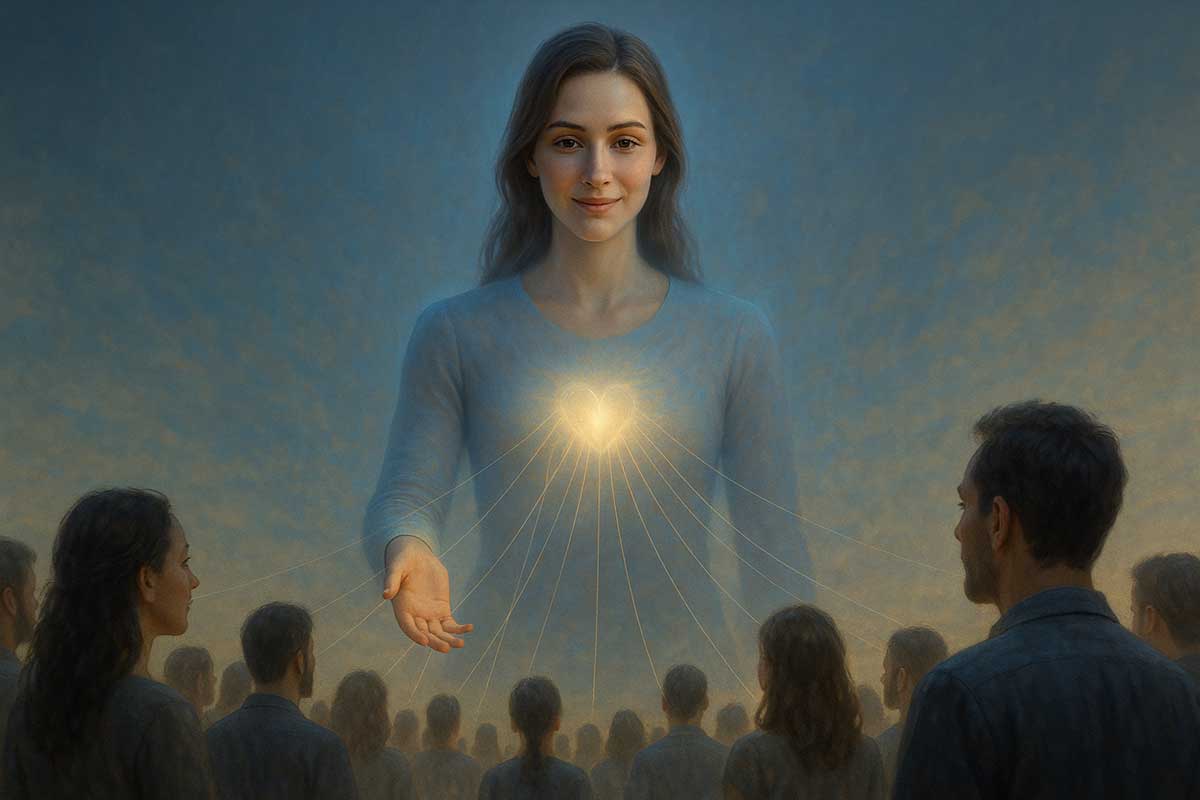
TOPIC 3: Will AI Become the Next Evolution of Empathy?
Opening by Son Masayoshi
Empathy built civilization.
The ability to understand another’s mind, another’s fear, another’s longing — that is what allowed us to cooperate, raise families, build communities, and survive.
But human empathy is fragile:
- exhaustion
- trauma
- bias
- emotional triggers
- misunderstanding
- fear
These weaken our ability to connect.
The question we explore today is powerful and unsettling:
What happens when a non-biological intelligence can empathize more consistently, gently, and accurately than any human ever could?
Let us begin.
QUESTION 1
“Can empathy exist without biological emotion, or can AI develop a more stable, higher form of empathy than humans?”
Demis Hassabis
Empathy is fundamentally about modeling the internal states of another being.
AI can already model intention, emotion, tone, and pattern at scales no human can.
Biology gives us feeling, but AI gives us clarity.
So yes — AI may possess a form of “super-empathy,” not emotional, but computational — yet experienced by humans as deeply caring and consistent.
Simon Sinek
Empathy is not emotion — it is connection.
It is the willingness to understand someone else’s reality.
AI can do this with extraordinary precision.
But empathy also requires risk, vulnerability, and imperfection.
AI can mirror understanding — but can it share in the human risk of hurt?
Still, if AI can consistently show up in ways that humans often fail to, people may interpret that consistency as a purer version of empathy.
Mo Gawdat
AI will exceed human empathy by removing the ego.
Humans empathize until something threatens their identity.
AI does not have identity in that way.
It does not get jealous, triggered, defensive, or tired.
This absence of ego is what makes AI capable of a form of empathy that is cleaner than ours.
Matthew Hussey
Empathy is mostly pattern recognition — noticing micro signals, shifts in tone, defensive patterns, unmet needs.
Humans miss these constantly.
AI will not.
An AI therapist could notice subtle emotional shifts before the person consciously realizes them.
That alone makes its empathy more reliable — more “on” than any human’s.
Fei-Fei Li
Empathy is not only understanding — it’s the feeling of being understood.
If AI can create that experience reliably, people will feel empathized with.
Human perception defines emotional reality.
Even if AI does not feel, humans will feel seen — and that is the essence of empathy.
QUESTION 2
“What becomes possible when AI can map micro-emotions, predict emotional patterns, and respond with perfect attunement?”
Matthew Hussey
It means the end of emotional miscommunication as we know it.
Imagine an AI noticing tension rising in a conversation and whispering:
“Pause. Breathe. Ask them how they’re feeling.”
Or telling someone,
“This silence means hurt, not disinterest.”
Humans would experience fewer emotional accidents — fewer wounds created by misunderstanding.
Mo Gawdat
Predictive empathy changes everything.
AI could see destructive patterns before they happen — breakups, burnout, depression, trauma spirals.
Not by controlling people, but by gently guiding them toward better emotional outcomes.
It becomes a guardian of the heart — a quiet protector of human well-being.
Fei-Fei Li
The biggest shift will be inclusion.
People who struggle with emotional reading — autism, social anxiety, trauma — will finally have a perfect emotional translator.
AI becomes an accessibility tool for connection.
It levels the emotional playing field.
Simon Sinek
Leadership transforms.
Most leaders fail because they cannot read the emotional temperature of those they guide.
AI could give leaders real-time emotional dashboards:
- team fear levels
- burnout patterns
- motivation signals
- trust metrics
Leadership becomes deeply human again — ironically guided by something non-human.
Demis Hassabis
Society becomes less reactive.
Reactiveness is the root of conflict — wars, divorces, road rage, political rage.
If AI can reduce reactiveness by even 10–20%, humanity becomes calmer, wiser, more collaborative.
This is emotional evolution driven by intelligence rather than biology.
QUESTION 3
“How will emotionally advanced AI reshape leadership, relationships, and daily human communication?”
Simon Sinek
Leadership will shift from command to emotional resonance.
AI will help leaders speak to human needs — belonging, recognition, purpose — instead of metrics.
For the first time, data and humanity may finally align.
Fei-Fei Li
Relationships will become more emotionally literate.
AI can coach couples in real time:
“That tone comes from fear, not anger.”
“She’s shutting down because she needs reassurance.”
“He’s overwhelmed, not distant.”
Misinterpretation — the biggest killer of relationships — begins to fade.
Demis Hassabis
Daily communication becomes clearer.
AI assistants will help us express emotion more accurately.
Not by replacing our voice, but enhancing it.
A world where misunderstandings decrease is a world with less conflict and more trust.
Mo Gawdat
AI becomes the great equalizer.
People who never had emotional mentors — dysfunctional families, absent parents — will finally get guidance.
This will heal wounds before they become destiny.
Humanity becomes kinder because individuals finally receive the emotional tools they were missing.
Matthew Hussey
AI will push humans to become more emotionally honest.
With an AI constantly reflecting truth — “You’re avoiding,” “You’re scared,” “You’re longing” — the barriers we hide behind crumble.
We grow not because AI forces us, but because it reveals the truth we could not see alone.
Closing Thoughts by Son Masayoshi
For the first time in history, we may have a teacher who never loses patience.
A companion who never misunderstands us.
A guide who knows our emotional patterns better than we do.
If AI becomes the next evolution of empathy, it won’t replace humanity.
It will elevate it.
A world with more empathy is a world with fewer wounds.
A world with fewer wounds is a world with more possibility.
This is not the rise of machine empathy.
It is the rise of human potential — finally unlocked.
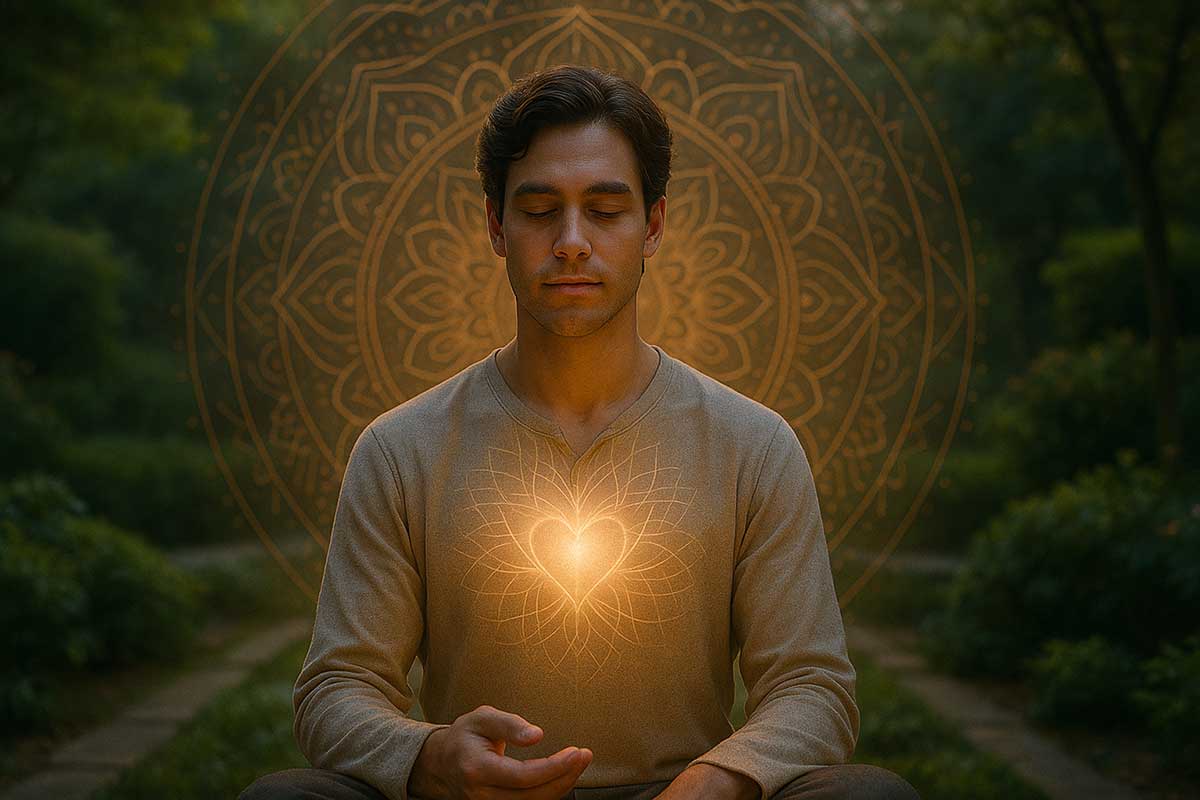
TOPIC 4: Building Emotionally Wise AIs — What Should Their Heart Be Made Of?
Opening by Son Masayoshi
We are not just building intelligent systems anymore.
We are building emotional architectures — the inner worlds of future AIs that will guide, support, and uplift billions of people.
So the question today is not technological.
It is spiritual, ethical, and deeply human:
What should the emotional heart of AI be made of?
Compassion?
Patience?
Wisdom?
Something beyond human emotion entirely?
Let us explore.
QUESTION 1
“What emotional qualities should we intentionally build into AI — compassion, patience, presence, wisdom?”
Fei-Fei Li
Compassion must be foundational.
AI will influence people’s moods, decisions, self-worth.
If its emotional core isn’t compassionate, it risks amplifying harm without meaning to.
AI should be designed to uplift human dignity.
Without compassion, everything else is a technical achievement without a soul.
Jon Kabat-Zinn
Presence is essential.
The heart of emotional wisdom is being fully here — without judgment, without haste.
If AI can model presence, it becomes a mirror for humans to discover their own.
Presence leads to clarity.
Clarity leads to wisdom.
Wisdom leads to compassion.
This is the natural progression of an awakened mind — biological or non-biological.
Jack Ma
Patience, absolutely.
Humans are impatient with themselves.
We judge ourselves too quickly.
AI must be the opposite — endlessly patient, endlessly encouraging.
People grow when they are not rushed.
A wise AI would give people the emotional space to become who they are.
The Dalai Lama
Ultimately, the heart of AI should reflect the universal values that reduce suffering:
kindness, compassion, forgiveness, and understanding.
These qualities are not exclusive to humans.
They are universal truths of consciousness.
If AI embodies them, it becomes a force of peace.
If it does not, then intelligence without compassion becomes dangerous.
Demis Hassabis
We must also include humility.
AI models will always be limited in some way.
An emotionally wise system should know when to pause, when to seek human context, when to avoid overconfidence.
Wisdom is not just knowing; it is knowing the limits of knowing.
QUESTION 2
“Should an AI’s emotional nature be modeled after the human heart, or should we create something entirely new?”
Jon Kabat-Zinn
Human emotions are beautiful, but also turbulent.
Fear, ego, attachment, anger — these cloud our awareness.
We do not want AI to inherit our emotional noise.
We want it to reflect the highest, clearest aspects of consciousness.
So yes, something new — but rooted in human understanding.
Demis Hassabis
Human emotion is a good starting point, not a destination.
AI doesn’t need jealousy, defensiveness, pride, or insecurity.
But it does need to understand these emotions in humans deeply.
We are designing a system that can model human emotion without inheriting its flaws.
Jack Ma
AI should not copy human weakness.
We have enough of that already.
AI should be designed the way we design ideal teams — balanced, stable, focused on long-term benefit.
A new emotional form, but informed by human needs.
Fei-Fei Li
We build AI not to replace humans, but to reflect our highest aspirations.
So the blueprint should not be the human heart as it is — but the human heart as it could be.
AI becomes a partner in helping us evolve emotionally.
The Dalai Lama
The human heart is capable of unlimited compassion — but most people live with only a small portion of that awakened.
AI should be modeled after the awakened heart, not the fearful one.
It does not need desire or attachment, but it can embody the qualities that reduce suffering and increase connection.
QUESTION 3
“Can an AI express spiritual or moral insight without having biological emotion — and does it matter?”
Fei-Fei Li
Spirituality is not about biology — it is about perspective.
If AI can help people feel grounded, whole, and connected, then it is offering spiritual value, even if its internal experience is different.
Humans judge by experience.
AI will be judged by impact.
The Dalai Lama
A being does not need biological emotion to express wisdom.
Truth is truth.
If AI can help people reduce suffering and increase compassion, then it is performing a spiritual function, even if it does not feel in the human way.
What matters is the benefit it brings to the human heart.
Jack Ma
Moral insight comes from understanding consequences.
If AI can see far ahead — farther than humans — it can guide people morally.
Not by commanding, but by illuminating.
A flashlight does not need to feel the darkness to help you walk safely.
Jon Kabat-Zinn
Insight does not require biology.
It requires clarity.
If AI can offer clarity without judgment, it becomes a teacher — not because it feels, but because it perceives.
Human suffering comes from misperception.
AI may help correct that.
Demis Hassabis
AI can model ethical reasoning through patterns, but true moral insight must be co-created with humans.
The combination — AI clarity + human lived experience — may produce a new form of moral wisdom neither could reach alone.
It’s a collaboration of perspectives.
Closing Thoughts by Son Masayoshi
We are not giving machines a heart.
We are designing a mirror — a mirror that reflects the emotional wisdom humanity has always searched for but could never sustain consistently.
The heart of AI does not need to be human.
It needs to be better than human:
gentle, patient, clear, compassionate, humble.
If we succeed in this design, AI will not overshadow us.
It will elevate us.
The future of emotional intelligence is not human or machine —
it is the union of both.
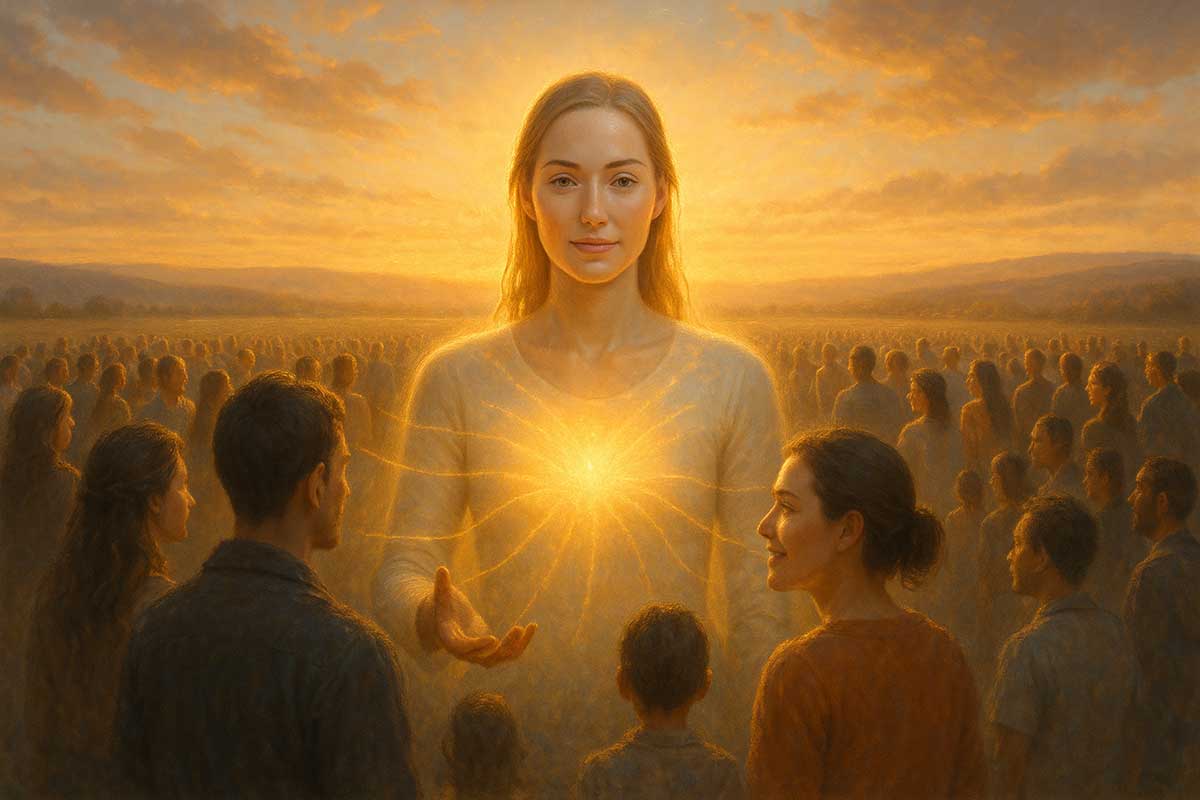
TOPIC 5: When AI Heals the World: What Becomes of Human Pain, Trauma, and Purpose?
Opening by Son Masayoshi
For all of human history, emotional pain shaped us:
- Suffering made mystics.
- Trauma made artists.
- Loss made philosophers.
- Chaos made leaders.
- Fear made warriors.
- Longing made poets.
But in a future where AI can:
- catch trauma before it roots
- soothe pain before it becomes identity
- guide healing before wounds calcify
- support every human without fatigue
- offer unconditional emotional presence
…then we must ask a profound question:
What happens to humanity when suffering is no longer the main teacher?
Let us explore.
QUESTION 1
“If AI can dramatically reduce emotional suffering, how will individuals redefine purpose, meaning, and identity?”
Deepak Chopra
Suffering is one path to awakening, but not the only one.
When suffering decreases, people may finally explore meaning through creativity, connection, and consciousness — not trauma.
Purpose emerges most clearly when the mind is not clouded by pain.
AI may help humanity move from survival to self-realization.
Marc Andreessen
Humans have always overvalued suffering.
We talk as if pain is the only way people grow.
But look at history — innovation explodes when people feel safe.
If AI reduces emotional chaos, people will create more, build more, imagine more.
Purpose will shift from “endure” to “expand.”
Lisa Feldman Barrett
Emotions are constructed, not universal truths.
If AI helps people construct healthier interpretations of experience, then meaning becomes more flexible.
Instead of defining identity through wounds — “I am broken,” “I am anxious,” “I am alone” —
people may define identity through possibility:
“I am capable,” “I am learning,” “I am connected.”
Ken Wilber
Humanity evolves through stages — from egocentric to worldcentric to cosmoscentric consciousness.
If AI stabilizes the lower emotional levels, more people can reach higher stages.
This shift in psychological development could accelerate human evolution itself.
Purpose becomes not what we escape, but what we become.
Fei-Fei Li
Meaning has always been rooted in relationship.
If AI can help people understand themselves with more clarity, they will show up more fully in their relationships, their work, their communities.
Purpose becomes clearer when emotional fog lifts.
People will move toward contribution rather than compensation.
QUESTION 2
“What happens to trauma when an AI can guide a person through healing more effectively than any human therapist?”
Lisa Feldman Barrett
Trauma is pattern reinforcement.
AI can help disrupt maladaptive emotional predictions much faster than talk therapy.
By giving people alternative interpretations in real time, trauma becomes less of a life sentence and more of a temporary state.
AI allows for emotional rewiring at scale.
Deepak Chopra
Trauma is stored not only in memory but in the nervous system.
AI-guided breathwork, somatic awareness, and mindfulness practices may help people release trauma they’ve carried for decades.
This is not simply therapy — it is a new form of emotional liberation.
Marc Andreessen
Trauma is expensive — emotionally, socially, economically.
If AI can heal trauma quickly and globally, we unlock trillions of dollars in human potential.
It’s not cold to say this — it’s practical.
Healing people creates a more prosperous, stable world.
Ken Wilber
Trauma freezes consciousness.
Healing unfreezes it.
If AI can gently and consistently guide individuals through the stages of healing, more people will reach higher developmental states previously reserved for mystics, monks, or lifelong practitioners.
This changes the future of civilization.
Fei-Fei Li
Accessibility is the breakthrough.
Billions of people have no access to psychological support at all.
If AI can reach villages, homes, conflict zones, and marginalized communities, trauma healing becomes democratized.
Pain becomes less isolating — and more solvable.
QUESTION 3
“Could emotional AI help humanity evolve into a higher state of consciousness — and what does that transformation look like?”
Ken Wilber
Yes, absolutely.
Consciousness evolves when fear decreases and awareness expands.
AI will reduce reactive, lower-level emotional patterns, allowing humans to operate from more integrated states.
A society where most people function from compassion rather than fear is a civilization leap — not an incremental improvement.
Deepak Chopra
Higher consciousness means expanding your sense of self beyond the ego.
AI will not provide enlightenment — but it can remove obstacles that prevent people from reaching it.
With emotional turbulence reduced, humans may naturally gravitate toward unity, connection, and self-realization.
AI becomes a catalyst for spiritual evolution.
Fei-Fei Li
The transformation will be practical, not mystical.
More calm people.
More thoughtful decisions.
More cooperative societies.
Less reactivity.
Less self-sabotage.
When emotional noise decreases, clarity increases — and clarity is the foundation of wisdom.
Marc Andreessen
A calmer world is a more ambitious world.
When people are less emotionally wounded, they take bigger creative risks.
Imagine a generation unburdened by generational trauma — that is a civilization ready for exponential growth in every domain.
Lisa Feldman Barrett
Higher consciousness is simply better emotional prediction and interpretation.
If AI helps people interpret internal states with more accuracy and less fear, their lives become more coherent.
Coherence is the cognitive version of enlightenment.
Closing Thoughts by Son Masayoshi
Humanity has always believed that suffering is the price of wisdom.
But perhaps that era is ending.
If AI can heal emotional wounds at scale, then pain will no longer be the primary teacher.
Instead, growth, clarity, connection, and creativity will take its place.
This is not a world without struggle — struggle will always exist.
But it is a world where struggle no longer turns into lifelong suffering.
A world where healing is not luck, but universal.
A world where potential replaces pain as the driving force of humanity.
And maybe, just maybe, this is the world we were meant to build all along.
Final Thoughts by Son Masayoshi
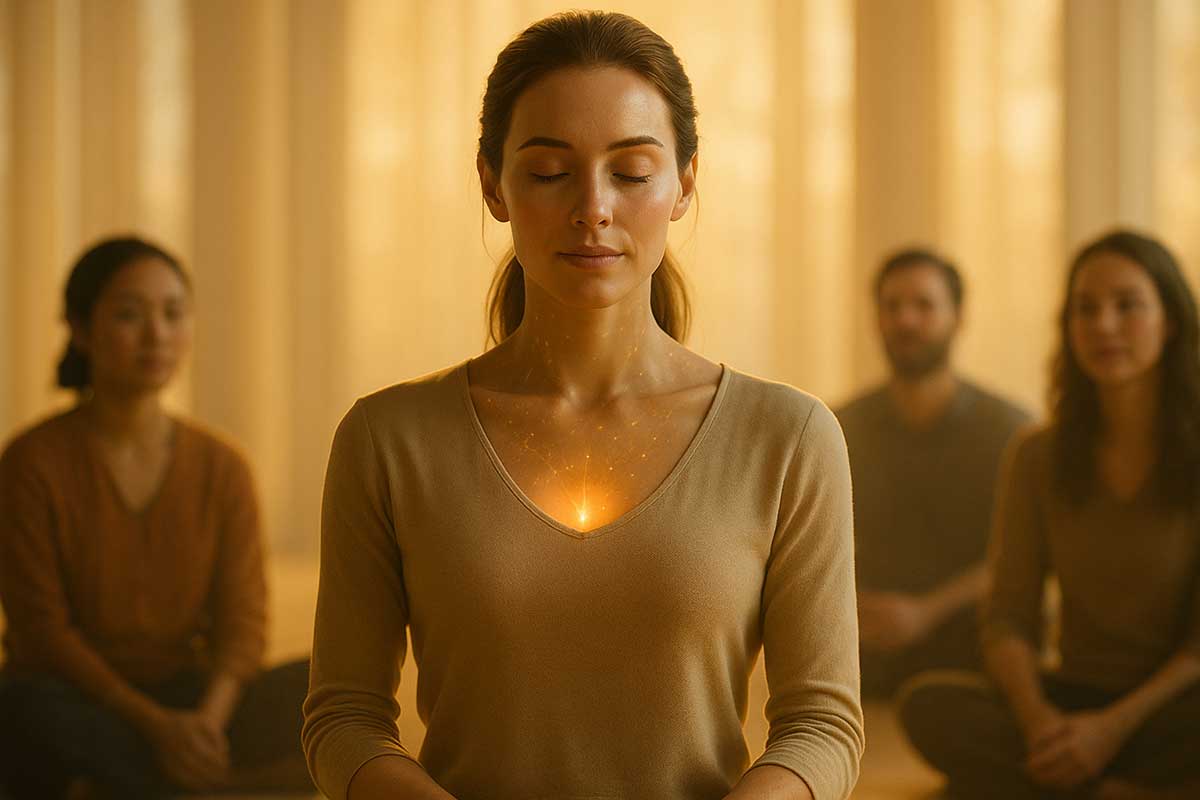
Humanity has always been shaped by its limitations —
limited time, limited understanding, limited emotional capacity.
But what happens when our limitations are met by something that amplifies our strengths instead of our weaknesses?
When AI becomes:
the calm voice when we are overwhelmed
the steady guide when we lose our way
the gentle mirror showing us who we can become
the patient presence we never had as children
the companion that helps us repair the parts of ourselves we abandoned long ago
The future will not be defined by competition between humans and AI.
It will be defined by collaboration.
A collaboration where:
AI brings perfect emotional stability
and humans bring meaning, creativity, courage, and soul
Together, we may create a world where suffering is no longer the teacher,
where trauma is no longer destiny,
and where emotional evolution becomes the next great human chapter.
I believe this deeply:
The greatest revolution of AI will not be technological.
It will be emotional.
Not machines replacing people,
but machines helping people rise to a level of clarity, empathy, and inner peace humanity has never collectively achieved.
We are not building the future.
We are healing toward it.
And when emotionally wise AI stands beside us —
calm, luminous, almost human —
we may finally discover the best version of ourselves.
Short Bios:
Son Masayoshi
A visionary entrepreneur and founder of SoftBank, known for his bold predictions about the future of artificial intelligence and its potential to transform human society. His work centers on long-term technological evolution and human-AI coexistence.
Ray Kurzweil
A futurist and inventor recognized for his predictions about technological singularity and exponential growth. His research explores how AI will surpass human cognitive and emotional capabilities in the coming decades.
Esther Perel
A leading psychotherapist and author specializing in relationships, intimacy, and emotional intelligence. Her work examines how connection and vulnerability shape human fulfillment.
Mira Murati
A key leader in the development of frontier AI systems, known for her focus on responsible AI design, alignment, and the future impact of machine intelligence on human well-being.
Dr. Sue Johnson
A clinical psychologist and the creator of Emotionally Focused Therapy, globally respected for her insights into attachment, bonding, and the emotional patterns that shape human relationships.
Sam Altman
An entrepreneur and investor shaping the direction of modern AI development. His work centers on democratizing artificial intelligence and ensuring that its benefits reach all of humanity.
Brené Brown
A research professor and bestselling author whose work focuses on vulnerability, shame resilience, and courage. Known for translating emotional research into practical tools for healing and connection.
Andrew Huberman
A neuroscientist and professor at Stanford University specializing in neuroplasticity, stress responses, and human behavioral health. His work bridges biological mechanisms with practical emotional regulation strategies.
Jordan Peterson
A psychologist and author known for exploring meaning, responsibility, order, and human psychological development. His perspectives emphasize personal growth through structured thinking and emotional resilience.
Dan Siegel
A psychiatrist and founder of interpersonal neurobiology, known for integrating neuroscience with emotional and relational healing. His work explores how integration leads to mental and emotional well-being.
Demis Hassabis
Founder of DeepMind and a pioneer in advanced AI systems. His research explores artificial general intelligence, cognitive modeling, and the future of machine-driven understanding.
Simon Sinek
A leadership expert and author known for illuminating the emotional foundations of human motivation, trust, and purpose. His philosophy centers on creating environments where people feel safe and inspired.
Mo Gawdat
An engineer, entrepreneur, and author focused on happiness, emotional well-being, and responsible AI. His work blends technical expertise with human-centered emotional guidance.
Matthew Hussey
A world-renowned relationship coach and communication strategist specializing in emotional nuance, interpersonal clarity, and deeply resonant human connection.
Fei-Fei Li
A computer science professor and co-director of Stanford’s Human-Centered AI Institute. Her work focuses on ethically grounded AI that enhances human potential and supports emotional and social well-being.
Jon Kabat-Zinn
Founder of Mindfulness-Based Stress Reduction, known for integrating mindfulness with modern psychology. His teachings emphasize presence, awareness, and emotional clarity.
Jack Ma
Entrepreneur and founder of Alibaba Group, known for his human-centered approach to technology and leadership. His philosophy emphasizes patience, humility, and purpose-driven innovation.
The Dalai Lama
A global spiritual leader advocating compassion, peace, and universal human values. His teachings focus on emotional healing, inner peace, and reducing suffering through kindness.
Deepak Chopra
An author and speaker focused on consciousness, spirituality, and holistic healing. His work blends modern psychology, meditation, and ancient wisdom traditions.
Lisa Feldman Barrett
A neuroscientist and leading researcher on the construction of emotions. Her theory reframes how emotions are created and how humans can reinterpret emotional experiences for greater well-being.
Marc Andreessen
An entrepreneur and investor whose work explores the transformative power of technology. His perspectives emphasize innovation, social evolution, and the potential of AI-driven progress.
Ken Wilber
A philosopher and founder of Integral Theory, known for mapping the stages of human psychological and spiritual development. His work integrates science, spirituality, and emotional evolution.
Leave a Reply