
|
Getting your Trinity Audio player ready...
|
What if JT Spiritman and Fire Horse masters were right—and 2026 judges us not by what happens, but by who we become?
Introduction by Carl Jung
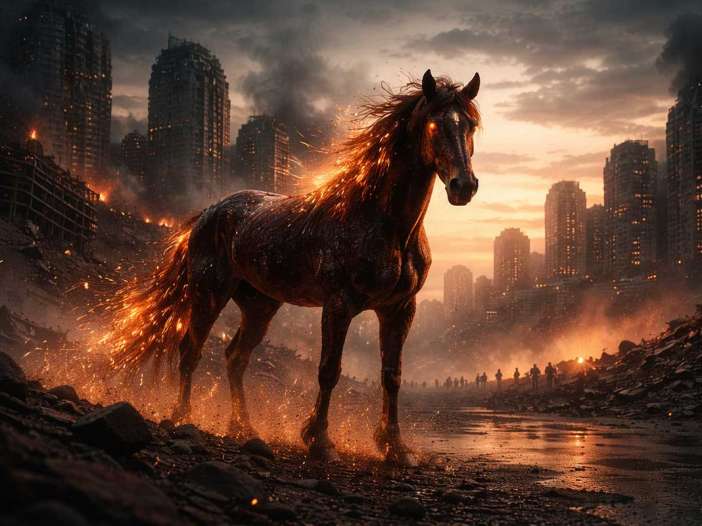
Fire Horse 2026 should not be understood as an external prediction, but as an internal condition reaching visibility. Throughout history, there are moments when the unconscious of a civilization can no longer be contained. What has been denied, postponed, or projected outward begins to surface—not symbolically, but concretely, through events.
Civilizations, like individuals, construct personas. These personas are made of authority, tradition, legitimacy, and moral certainty. For a time, they function well. They organize life, create order, and provide meaning. But when the persona becomes detached from truth—when authority survives only through repetition rather than integrity—it accumulates shadow.
Fire Horse years coincide with this accumulation reaching its limit.
Fire represents revelation. Horse represents movement that cannot be restrained. Together, they signify a psychological moment when repression fails and momentum takes over. Judgment in such a time does not come from gods, courts, or historians. It comes from reality itself.
What collapses in these moments is rarely new. What collapses is what has already been hollowed out—institutions sustained by habit rather than belief, leaders sustained by fear rather than respect, systems sustained by delay rather than coherence.
This conversation is not about catastrophe. It is about consciousness. When the collective shadow is no longer projected outward, it returns inward—forcing individuals and societies alike to confront what they have become.
Fire Horse 2026 does not ask whether change will happen.
It asks whether we will recognize ourselves in the change that arrives.
(Note: This is an imaginary conversation, a creative exploration of an idea, and not a real speech or event.)
Topic 1: When Authority Loses Its Costume
Setting:
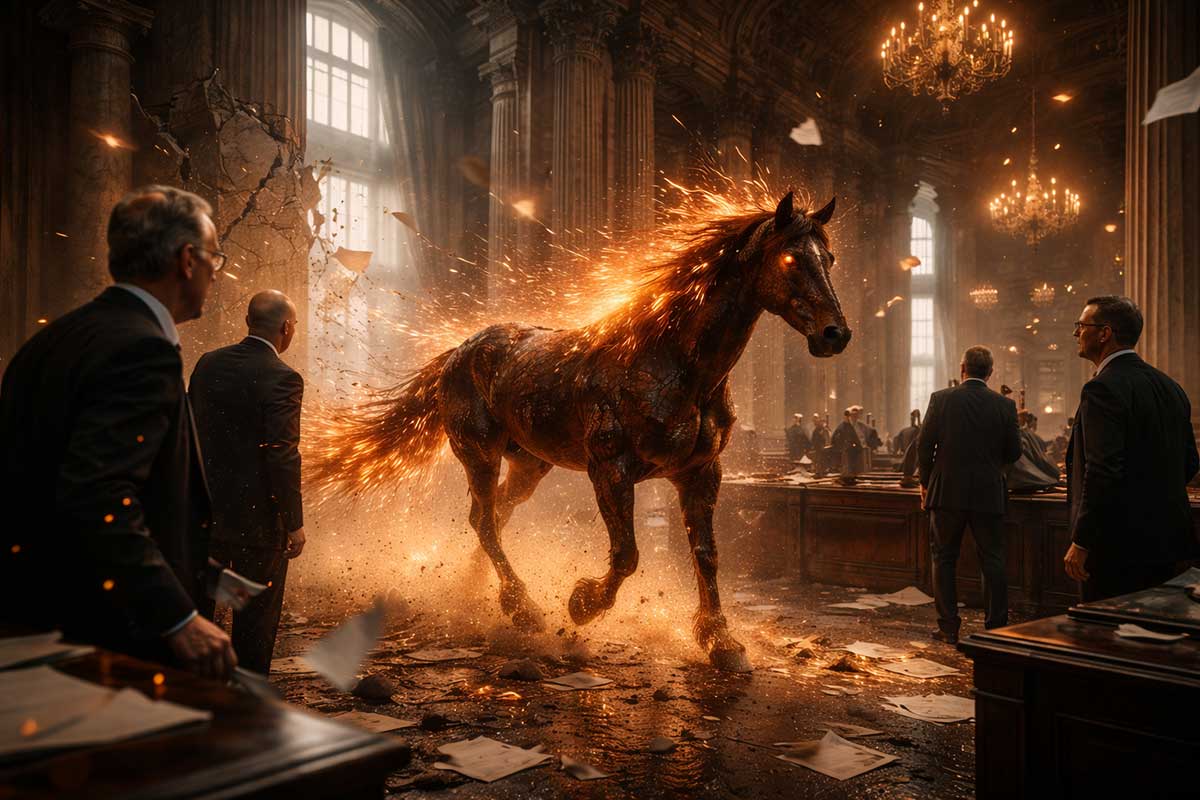
A quiet, dimly lit 19th-century parlor. Heavy curtains soften the light. Chairs are arranged in a loose circle. No podium. No hierarchy. Authority here is not assumed—it must speak for itself.
Nick Sasaki opens the conversation.
Nick Sasaki (Opening)
When societies feel stable, authority rarely has to explain itself. Titles, uniforms, and institutions do the talking. But in certain years—Fire Horse years especially—those costumes begin to slip. People still show up, still stand politely, still nod… yet something essential is gone.
Tonight, I want us to explore what happens when authority is no longer believed in, even while it’s still being performed.
Nick Sasaki
Let me begin simply.
What actually gives authority its power—and what happens when that agreement quietly dissolves?
JT Spiritman
From what I see, authority doesn’t collapse loudly at first. It fades. In visions, leaders are still standing at podiums, still wearing the suit, still speaking—but no one is listening at the soul level. The agreement has already been withdrawn.
What follows isn’t rebellion right away. It’s indifference. People go through the motions, but internally they’ve checked out. That’s when authority becomes dangerous—because it keeps acting as if belief is still there.
Joey Yap
In Chinese metaphysics, authority only functions when Heaven, Earth, and Humanity are aligned. Fire Horse years break false alignment. Fire exposes what is hollow.
Authority doesn’t come from position—it comes from timing and moral coherence. When leaders act out of sync with the cycle, Fire Horse energy strips them of legitimacy almost overnight. The costume remains, but the mandate is gone.
Caroline Myss
Authority draws power from archetypal trust. When leaders violate the archetype they represent—protector, steward, guardian—the collective psyche withdraws consent.
What’s striking is that people often know this long before they admit it. They continue to behave respectfully, but spiritually, the contract is already broken. That fracture eventually manifests as illness, scandal, or collapse.
Suzanne White
Fire Horse energy is impatient with pretense. It asks: Are you real, or are you rehearsed?
When authority loses authenticity, Fire Horse people don’t wait for permission to disengage. They don’t always revolt—they simply stop believing. And belief, not force, is what keeps authority alive.
Bashar (through Darryl Anka)
Authority exists only as a reflection of collective agreement. When that agreement changes, authority either adapts—or becomes friction.
In Fire Horse conditions, the collective accelerates. Any authority unable to move with authenticity becomes irrelevant. This is not punishment. It is resonance.
Nick Sasaki
That leads naturally to something quieter—and maybe more unsettling.
Why do societies often continue to perform respect for leaders even after trust has already evaporated?
Suzanne White
Because politeness is easier than confrontation. Cultures train people to confuse civility with consent.
Fire Horse years expose that confusion. People smile, attend funerals, stand in line—while privately reassessing everything. The performance lingers because admitting the truth would require immediate change.
Caroline Myss
Performance is a defense mechanism. When authority collapses, people fear chaos more than dishonesty.
So they maintain ritual—ceremonies, language, titles—hoping the structure will hold. But rituals without meaning eventually become grotesque. That’s when judgment begins, usually after the authority figure can no longer respond.
JT Spiritman
In visions, I often see rooms full of people behaving properly while whispering the truth to each other. The collapse happens in private first.
By the time the public moment arrives—a resignation, a funeral, a scandal—the verdict has already been decided internally. The ceremony just makes it official.
Joey Yap
From a cyclical view, performance continues because endings rarely announce themselves.
In Fire Horse years, the Yang energy is too strong to maintain illusions, but people still cling to habit. Authority dissolves before it disappears. That in-between period feels eerie because nothing looks different—yet everything is.
Bashar
The performance persists because belief changes gradually, but consequences arrive suddenly.
This gap creates the illusion that authority still exists—until it doesn’t. Fire Horse energy shortens this gap dramatically.
Nick Sasaki
So if authority is fading, and performance is the last thing holding it together, I want to ask something uncomfortable.
Is the collapse of authority a failure of leadership—or a sign that people are finally outgrowing the structures meant to contain them?
Joey Yap
It is both. Leadership fails when it refuses to evolve with the cycle. But people also mature.
Fire Horse years accelerate collective adulthood. Structures built for obedience no longer fit a population capable of discernment. Collapse isn’t regression—it’s misalignment being corrected.
JT Spiritman
What I’m shown is not punishment—it’s exposure. Leaders didn’t suddenly fail; they were already out of integrity.
People didn’t suddenly rebel; they simply stopped pretending. Authority falls because it can no longer survive honest perception.
Suzanne White
Fire Horse energy hates cages—especially invisible ones.
When people outgrow structures, they don’t always know what comes next. But they know what no longer works. That awareness alone destabilizes authority built on compliance.
Caroline Myss
Authority collapses when it refuses accountability. Growth demands humility.
What we’re witnessing isn’t anarchy—it’s a moral reckoning. The archetype of authority is being rewritten. Leaders who cannot embody it will be replaced—not always by people, but by absence.
Bashar
This is not the end of authority. It is the end of unconscious authority.
Fire Horse energy invites self-sovereignty. Authority that aligns with that survives. Authority that resists becomes obsolete.
Nick Sasaki (Closing Reflection)
What I’m hearing is this: authority doesn’t die when people revolt—it dies when people no longer believe the story it tells about itself.
Fire Horse years don’t create collapse. They reveal where collapse already existed, quietly, politely, behind the scenes.
Perhaps the real question isn’t who should lead—but whether we are ready to stop outsourcing our moral responsibility to costumes that no longer fit.
Topic 2: The Illusion of Stability in an Accelerating World
Setting:
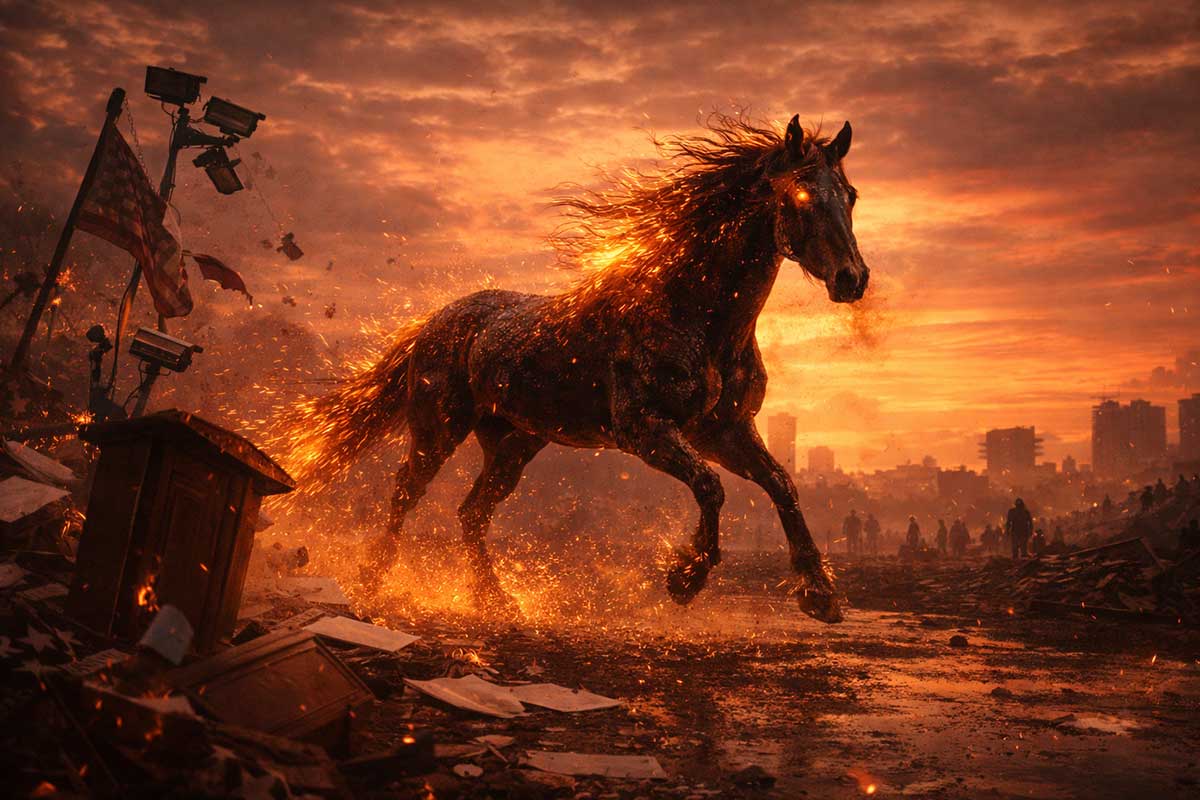
The same parlor, later in the evening. Lamps burn lower. Outside, the faint sound of wind against windows. Nothing is visibly broken—yet the room feels subtly strained, as if time itself has sped up.
Nick Sasaki (Opening)
Stability is one of the most powerful illusions modern societies maintain. We trust grids, markets, institutions, schedules—because they usually work. Until they don’t.
Fire Horse years have a reputation for speed, pressure, and sudden breaks. Tonight, I want to explore why systems often fail all at once—and what that says about how our world is built.
Nick Sasaki
Why do systems that appear stable tend to fail suddenly rather than gradually—and what does that reveal about modern civilization?
Joey Yap
From a cyclical perspective, collapse is rarely sudden. What’s sudden is awareness.
In Fire Horse years, Fire accelerates exposure. Weaknesses that have been accumulating quietly—structural debt, moral shortcuts, energetic imbalance—reach a threshold. The system didn’t break overnight; it simply reached a point where Fire could no longer be contained.
JT Spiritman
In visions, I don’t see systems snapping like glass. I see them thinning.
Power grids, supply chains, governments—they’re already strained. People just don’t notice until one small disruption triggers everything else. That’s why it feels sudden. Spirit shows me dominoes already leaning before the first one falls.
Caroline Myss
Modern systems are psychologically fragile. They depend on denial.
We reward performance over integrity, speed over reflection, efficiency over resilience. That creates institutions that look strong but lack depth. When stress arrives, there’s nothing underneath to absorb it—so failure feels abrupt and shocking.
Suzanne White
Fire Horse energy doesn’t tolerate slow decay. It forces truth into motion.
Societies mistake repetition for stability. Just because something works yesterday doesn’t mean it’s sustainable tomorrow. Fire Horse years remove the buffer time we rely on to postpone reckoning.
Bashar (through Darryl Anka)
What you call “sudden collapse” is the result of long-term misalignment reaching visible manifestation.
Systems optimized for efficiency lack flexibility. When conditions change rapidly—as they do in Fire Horse cycles—rigid systems shatter. Flexible systems bend. This is physics, not punishment.
Nick Sasaki
That raises a deeper question.
Has our pursuit of efficiency quietly traded away resilience—and if so, was that an unconscious collective choice?
Suzanne White
Absolutely. Efficiency flatters the ego. It promises control.
But resilience requires patience, redundancy, and humility—qualities Fire Horse energy exposes as neglected. We chose speed because it felt modern. Now we’re discovering the cost.
Caroline Myss
Resilience requires moral courage. It means preparing for inconvenience, not just profit.
Collectively, we avoided that responsibility. We outsourced resilience to institutions we assumed would never fail. Fire Horse energy exposes that abdication of responsibility.
JT Spiritman
Spirit keeps showing me people shocked by failures they were warned about years earlier.
There’s grief in that shock—not just fear, but regret. Regret for ignoring intuition, ignoring signals, ignoring discomfort because things still seemed “fine.”
Joey Yap
In Chinese metaphysics, resilience comes from balance, not speed.
Fire Horse years punish excess Yang—too much expansion, too much acceleration. When Yin qualities like reflection and grounding are ignored, efficiency becomes brittle.
Bashar
Efficiency is a choice made under the assumption of predictability.
Resilience is a choice made under the acceptance of uncertainty. Your civilization favored predictability. Fire Horse energy reminds you that uncertainty is fundamental.
Nick Sasaki
So if speed is inevitable—and Fire Horse energy accelerates everything—how does humanity learn when to slow down without being forced by crisis?
JT Spiritman
Honestly? Most don’t slow down until something breaks.
But I do see individuals choosing differently—stepping away, simplifying, grounding themselves before collapse arrives. Spirit shows me that personal restraint becomes collective wisdom only after enough people model it.
Joey Yap
Cycles don’t ask permission. They invite preparation.
Those who understand timing don’t fight Fire Horse energy—they ground it. They reduce risk, diversify, conserve energy. Slowing down is not resisting the cycle; it’s harmonizing with it.
Suzanne White
Fire Horse teaches through discomfort.
People slow down not because they’re told to—but because they finally feel the cost of speed in their bodies, relationships, and sanity. That lesson is harsh, but effective.
Caroline Myss
Slowing down requires self-trust.
Crisis strips away external authority. What remains is inner authority—the ability to say no, to pause, to refuse panic. That’s the spiritual work Fire Horse demands.
Bashar
You cannot slow the world. You can only adjust your resonance within it.
Those who choose presence over panic experience acceleration as clarity rather than chaos. The lesson is not control—it is alignment.
Nick Sasaki (Closing Reflection)
What we’re circling around is this: stability wasn’t real—it was borrowed time.
Fire Horse energy doesn’t destroy systems for sport. It exposes whether they were built to endure reality—or merely to outrun it.
Perhaps resilience isn’t about holding everything together…
but knowing what truly matters when things no longer do.
Topic 3: Judgment Comes After the Funeral
Setting:
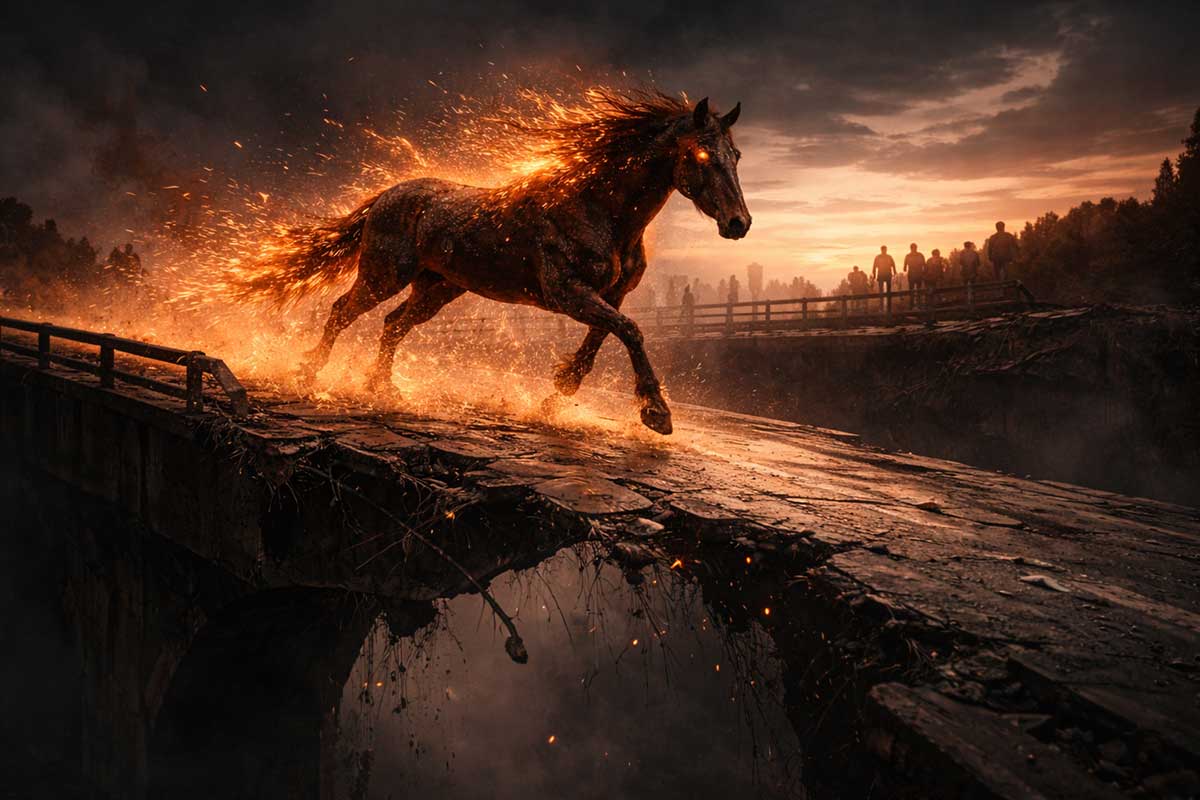
Night has fully settled. The parlor is quieter now. The chairs are closer together. Outside, carriage wheels pass occasionally, then fade. The atmosphere feels heavier—not dramatic, but unavoidable. This is the hour when politeness gives way to truth.
Nick Sasaki (Opening)
There’s a strange pattern we all recognize, even if we rarely name it. While someone lives, we soften our honesty. When they die, we finally speak freely.
Funerals become places of performance—measured grief, respectful silence—while judgment waits patiently for the doors to close. Tonight, I want to explore why truth so often arrives after power is gone.
Nick Sasaki
Why is society often more honest about a person’s life only after they can no longer respond?
Caroline Myss
Because honesty requires safety.
While a person lives—especially one with power—truth carries consequence. After death, the energetic threat disappears. Only then does the collective psyche feel permitted to speak. Judgment is delayed not out of kindness, but out of fear.
JT Spiritman
In visions, funerals are never about the deceased. They’re about the living negotiating guilt.
People replay moments they didn’t speak up, didn’t act, didn’t confront. Once the person is gone, judgment becomes a substitute for courage they didn’t have earlier.
Joey Yap
From a cyclical perspective, judgment belongs to the Metal phase—clarity, cutting, discernment.
Fire Horse years accelerate Fire, but Metal follows. Truth sharpens after the heat fades. That’s why assessment comes later. Timing, not morality, determines when honesty appears.
Suzanne White
Fire Horse energy hates unfinished business.
People suppress truth while someone lives because they don’t want conflict. After death, the conflict is gone—but the truth still needs release. So it emerges in whispers, memoirs, revisions of history.
Bashar (through Darryl Anka)
Judgment after death is the result of unresolved alignment.
While alive, individuals mirror back aspects of the collective that people are unwilling to face. Once the mirror is removed, the reflection can finally be examined.
Nick Sasaki
That brings us to the uncomfortable middle ground—the space between public praise and private truth.
What does that gap reveal about how societies avoid moral responsibility?
Suzanne White
It reveals cowardice disguised as manners.
Societies teach politeness, not integrity. We reward silence as maturity and call confrontation “inappropriate.” Fire Horse years tear through that pretense.
Caroline Myss
The gap exists because people outsource conscience.
Instead of holding leaders accountable in real time, societies wait for history to do it. That delay feels safer—but it creates collective shame that lingers long after the funeral.
JT Spiritman
Spirit shows me people clapping at ceremonies while thinking, You hurt so many people.
That dissonance fractures the soul. Judgment after death is an attempt to heal that fracture—but it’s always incomplete.
Joey Yap
In Chinese thought, unresolved moral debt doesn’t disappear—it transfers.
When accountability is postponed, it resurfaces as social unrest, scandal, or institutional collapse. Fire Horse energy forces overdue reckonings into motion.
Bashar
Avoidance of responsibility creates temporal distortion.
Truth delayed does not weaken—it concentrates. When it emerges, it does so with greater force. This is why posthumous revelations feel explosive.
Nick Sasaki
So if legacy is shaped after death, I want to ask something fundamental.
Who is really doing the judging—the individual, the culture, or the era itself?
Joey Yap
It is the era.
Individuals live within cycles they cannot fully control. Fire Horse years redefine standards. What was once tolerated becomes unacceptable. Judgment reflects evolving collective values.
JT Spiritman
From what I see, judgment is collective conscience waking up.
The individual becomes a symbol. Their life is reassessed not just for who they were—but for what they represented and enabled.
Suzanne White
Every era rewrites its heroes.
Fire Horse years are ruthless editors. They strip away myth and leave behavior. Legacy is less about intention and more about impact.
Caroline Myss
Judgment is not punishment—it is clarification.
A life is measured against the truth it embodied, not the image it projected. Fire Horse energy accelerates this reckoning because it refuses false narratives.
Bashar
Judgment is resonance recognition.
The era reflects back whether the frequency an individual embodied remains compatible. When it does not, reinterpretation occurs. This is not condemnation—it is recalibration.
Nick Sasaki (Closing Reflection)
Perhaps funerals aren’t about endings at all.
Perhaps they are the moment society finally feels safe enough to tell the truth—about the dead, about itself, about what it tolerated too long.
Fire Horse years don’t create judgment. They remove the delay. And in that removal, we are asked a quieter, harder question:
If our lives were judged without delay—what truths would we no longer postpone?
Topic 4: Rebellion Without a Leader
Setting:
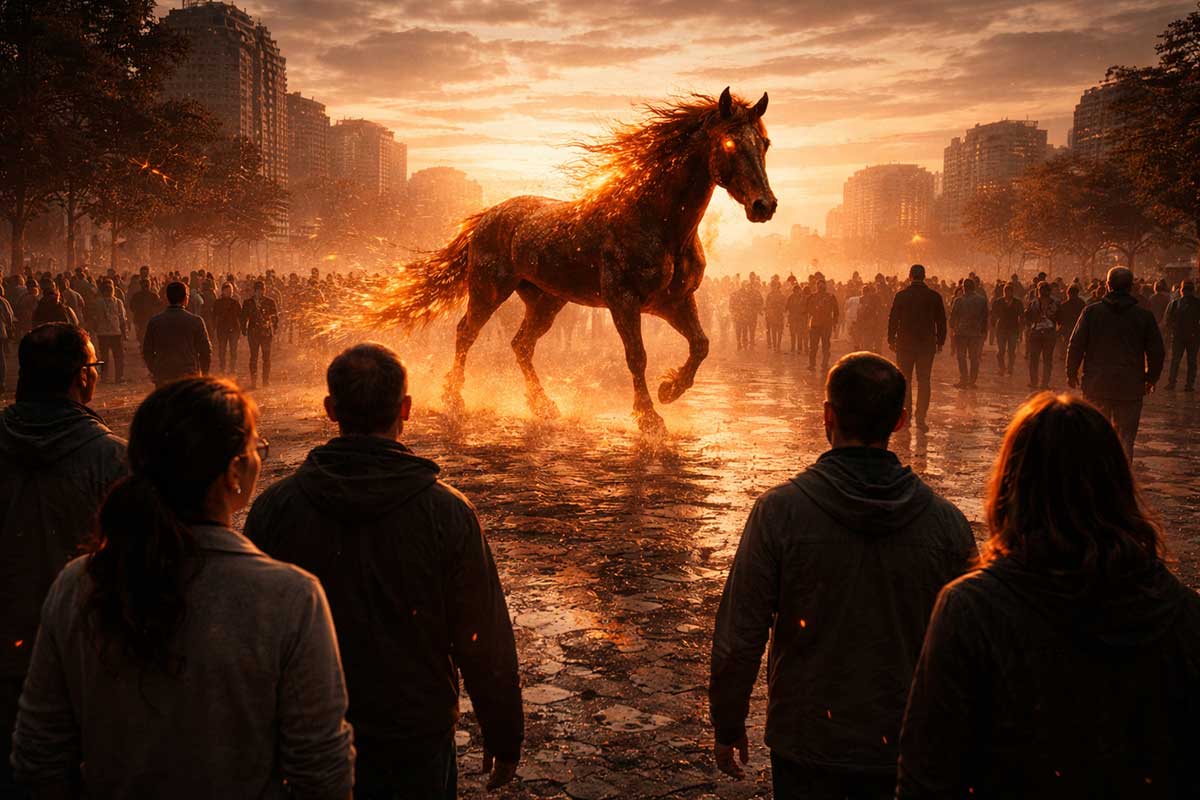
The parlor feels less formal now. Jackets have been loosened. The air carries a subtle tension—not chaos, but restlessness. Outside, voices pass in the street, indistinct yet persistent, like a crowd moving without a banner.
Nick Sasaki (Opening)
Historically, rebellion has had faces—names, speeches, flags. But something feels different now. Resistance is spreading without a single voice, without a manifesto, without a leader to follow or overthrow.
Tonight, I want us to explore what rebellion looks like when it no longer asks for permission—or direction.
Nick Sasaki
What changes when rebellion no longer has a single leader, ideology, or figurehead guiding it?
JT Spiritman
What I’m shown is movement without command.
People aren’t waiting to be told what to do. They’re acting from personal thresholds—this is enough, I’m done, I won’t participate anymore. That makes this rebellion harder to predict and harder to stop.
Joey Yap
In cyclical terms, this is a shift from centralized Yang authority to distributed Yang expression.
Fire Horse energy decentralizes power. Instead of one flame, you get thousands of sparks. There’s no head to cut off, no palace to storm. The movement lives in behavior, not hierarchy.
Suzanne White
Leaderless rebellion is emotionally raw.
People aren’t united by ideology—they’re united by exhaustion. Fire Horse years awaken personal sovereignty. Everyone becomes their own authority, for better or worse.
Caroline Myss
This kind of rebellion reflects moral maturity—but also moral risk.
Without leaders, conscience replaces command. That’s powerful, but it requires inner clarity. When conscience is underdeveloped, rebellion can become reactive rather than principled.
Bashar (through Darryl Anka)
When rebellion loses leaders, it gains authenticity.
Leadership often externalizes responsibility. Leaderless movements force individuals to own their choices. This shifts rebellion from opposition to self-definition.
Nick Sasaki
That leads to a natural concern.
Is leaderless resistance a sign of confusion—or a more mature form of collective intelligence?
Suzanne White
It’s both, depending on the person.
Some people are awakening into discernment. Others are simply angry and unmoored. Fire Horse energy amplifies whatever is already there. Maturity becomes visible. So does immaturity.
Joey Yap
From a BaZi perspective, Fire Horse years reward adaptability.
Leaderless movements can respond faster than centralized ones—but they lack stability. Intelligence emerges only when participants understand timing, restraint, and consequence.
JT Spiritman
Spirit shows me waves—some calm, some violent.
There’s wisdom here, but also chaos. The difference comes down to intention. Are people resisting to build—or resisting to burn?
Caroline Myss
Leaderless rebellion forces ethical adulthood.
Without someone to blame or follow, individuals must confront their own shadows. This is spiritually demanding. Many will rise to it. Many will not.
Bashar
Collective intelligence does not require uniformity.
It requires coherence. When individuals align with shared values rather than shared leaders, movements evolve organically. Fire Horse energy accelerates this experiment.
Nick Sasaki
Fire Horse energy amplifies rebellion—but it doesn’t decide its outcome.
So what determines whether this unrest becomes destructive—or transformative?
Joey Yap
Balance determines outcome.
Fire without Water destroys. Fire tempered by reflection transforms. Societies that ground this energy through dialogue and accountability will evolve. Those that suppress it will fracture.
JT Spiritman
What I see is simple: honesty calms Fire.
When people feel heard, rebellion softens. When truth is denied, Fire turns destructive. This is not mysterious—it’s emotional physics.
Suzanne White
Fire Horse rebels against hypocrisy more than hardship.
If institutions admit failure and change course, rebellion becomes collaboration. If they deny reality, rebellion escalates.
Caroline Myss
Transformation requires humility—on both sides.
Power must relinquish control. People must accept responsibility. Without that exchange, rebellion becomes perpetual conflict.
Bashar
Outcome is determined by frequency.
If rebellion is driven by fear, it fragments. If driven by clarity, it reorganizes reality. Fire Horse energy accelerates whichever frequency dominates.
Nick Sasaki (Closing Reflection)
What we’re witnessing isn’t chaos searching for order—it’s people discovering they no longer want to be led by structures that don’t reflect them.
Rebellion without a leader is unsettling because it offers no script. No savior. No one to blame.
Perhaps that’s the point.
Fire Horse energy doesn’t ask who will lead us—
it asks who are we, when no one is in charge?
Topic 5: Fire as a Teacher — What Crisis Reveals About Character
Setting:
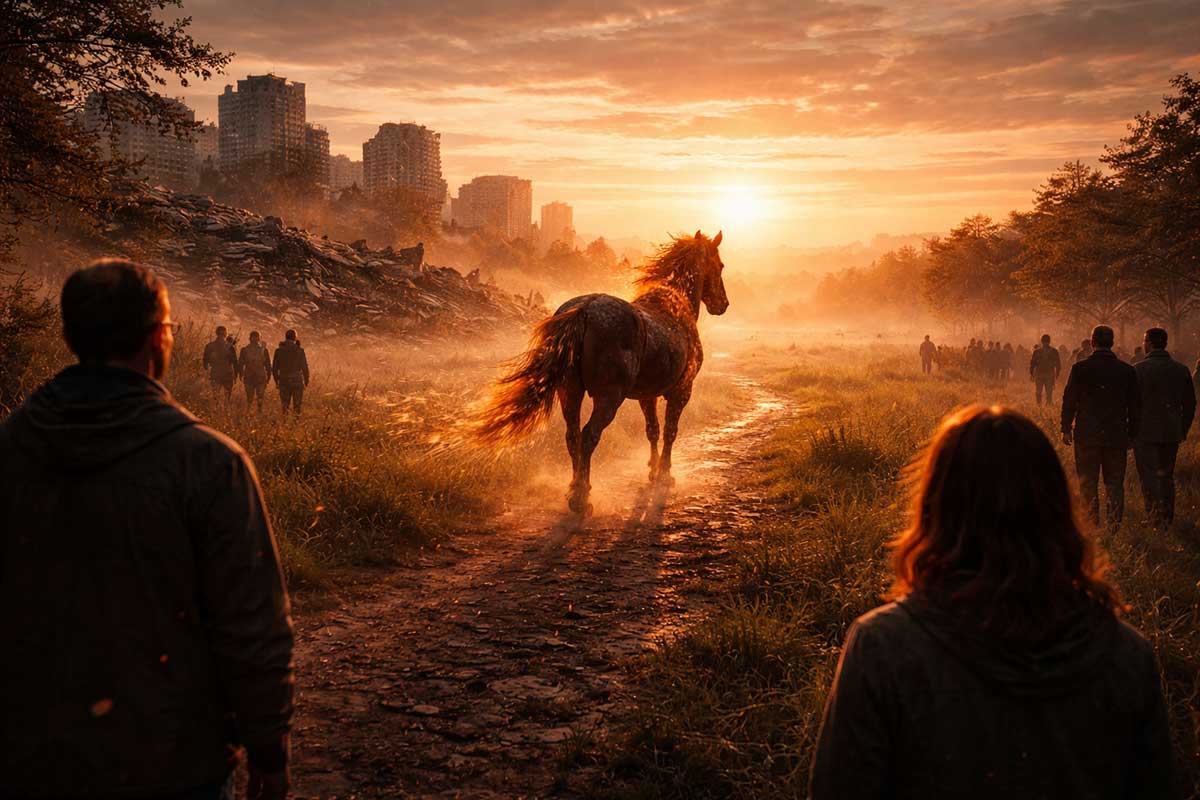
The parlor is nearly still now. One lamp remains lit. Shadows soften the edges of the room. Nothing urgent is left to prove. What remains is character—quiet, exposed, unmistakable.
Nick Sasaki (Opening)
Fire Horse years are remembered less for what happened than for how people behaved. Crisis doesn’t just test systems—it tests souls.
Tonight, I want us to explore what pressure reveals. Not in leaders alone, but in ordinary people. Because when everything accelerates, masks don’t survive.
Nick Sasaki
Do crises actually change people—or do they simply strip away the identities they’ve been wearing all along?
Caroline Myss
Crisis doesn’t create character. It exposes it.
Under pressure, the psyche defaults to its true values. Compassion surfaces where it already existed. Control emerges where fear lived quietly before. Fire Horse energy accelerates this exposure.
JT Spiritman
Spirit never shows me people becoming someone new in crisis.
I see them becoming more themselves. The generous become braver. The dishonest become reckless. Fire doesn’t invent—it reveals.
Joey Yap
In Chinese metaphysics, Fire reveals essence.
What survives Fire was always real. What burns away was borrowed identity—status, image, approval. Fire Horse years make this distinction unavoidable.
Suzanne White
Fire Horse energy is brutally honest.
People discover who they are when they can no longer perform. Some rise into courage. Others cling harder to control. Neither is accidental.
Bashar (through Darryl Anka)
Crisis is a resonance amplifier.
It magnifies existing frequencies. Change is not imposed—it is revealed through intensified contrast.
Nick Sasaki
That raises a second, more personal question.
Why do some people respond to pressure with compassion, while others respond with dominance, fear, or indifference?
Suzanne White
Because Fire Horse energy doesn’t discriminate—it intensifies.
Those who have done inner work meet crisis with flexibility. Those who haven’t experience threat everywhere. Reaction reflects preparation.
Caroline Myss
Compassion comes from self-trust.
When people know who they are, they don’t need to dominate others to feel safe. Crisis exposes who depends on control to survive emotionally.
JT Spiritman
Spirit shows me that fear seeks authority, while compassion seeks connection.
Under pressure, people reveal whether they believe safety comes from power—or from relationship.
Joey Yap
Balance determines response.
Fire unbalanced creates aggression. Fire balanced by Water—reflection, empathy—creates warmth and leadership. Individuals carry their own elemental balance.
Bashar
Response is chosen in advance—through belief systems.
Those who believe the world is hostile respond defensively. Those who believe reality is cooperative respond creatively. Crisis simply activates the belief.
Nick Sasaki
That leads to our final question—perhaps the most important of all.
If Fire Horse energy burns away illusion, what inner qualities allow a person—or a society—to emerge intact rather than scorched?
Joey Yap
Grounding.
Those who remain connected to Earth—routine, humility, preparation—can withstand Fire. Societies that forget grounding invite collapse.
JT Spiritman
Truth.
What I see surviving Fire is honesty—first with oneself, then with others. Deception combusts under pressure. Truth stabilizes.
Suzanne White
Courage without bravado.
Fire Horse rewards quiet courage—the kind that doesn’t need applause. Those who act without spectacle endure.
Caroline Myss
Integrity.
Not perfection—alignment. When values, actions, and conscience agree, Fire refines rather than destroys.
Bashar
Presence.
Those who remain present rather than reactive experience Fire as illumination. Presence converts crisis into clarity.
Nick Sasaki (Final Reflection)
What Fire Horse teaches—again and again—is that crisis is not the enemy. Illusion is.
When systems fail, when authority collapses, when rebellion spreads, the final reckoning is never external. It is internal.
Who did we become when speed replaced certainty?
Who did we protect when fear arrived?
Who were we when no one was watching?
If 2026 is remembered at all, it won’t be for predictions fulfilled or disasters avoided. It will be remembered for character revealed.
And in that revelation, each of us is quietly judged—not by history, not by fate—but by the life we chose to live when Fire arrived.
Final Thoughts by Carl Jung
When a civilization enters a period of judgment, it is tempted to search for enemies. It looks for causes outside itself—other nations, other ideologies, other forces. Yet psychological truth is rarely so convenient.
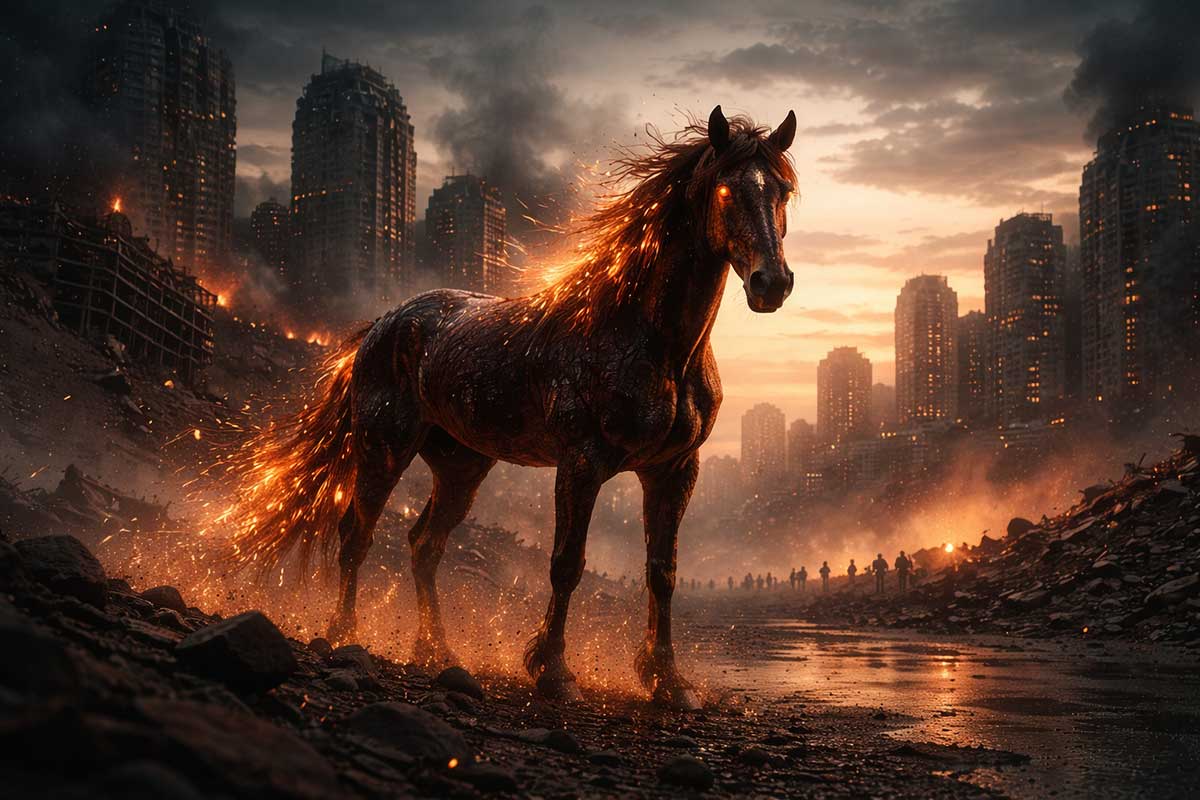
What collapses during Fire Horse years is not order itself, but false order.
False authority survives by postponement. It delays consequence, defers responsibility, and teaches obedience in place of thought. But no repression is permanent. What is denied consciousness returns as fate.
The most dangerous illusion during such times is the belief that collapse belongs only to systems and leaders. In truth, every individual participates in the collective psyche. Every silence, every compliance, every refusal to think contributes to what eventually breaks.
Fire Horse does not destroy indiscriminately. It differentiates. What is rooted in truth endures refinement. What is rooted in illusion cannot survive movement.
The question this moment poses is therefore not political, spiritual, or prophetic. It is psychological:
When authority fails, do we regress into fear—or mature into responsibility?
When certainty dissolves, do we seek control—or develop consciousness?
When judgment arrives without delay, do we deny it—or integrate it?
History does not remember those who predicted collapse.
It remembers those who recognized themselves within it.
Fire Horse 2026 is not an ending.
It is a confrontation.
And every confrontation, if met honestly, carries the possibility of becoming whole.
Short Bios:
Carl Jung
Swiss psychiatrist and founder of analytical psychology, known for his work on the collective unconscious, archetypes, the shadow, and the psychological roots of myth, religion, and civilization-wide crises.
Nick Sasaki
Founder of ImaginaryTalks, moderator and curator of cross-era conversations exploring consciousness, authority, imagination, and the human condition at moments of historical and spiritual transition.
JT Spiritman
Intuitive and visionary known for interpreting energetic patterns, timelines, and symbolic events, focusing on collective shifts, systemic collapse, and moments of accelerated reckoning.
Joey Yap
Internationally respected teacher of Chinese metaphysics and BaZi, specializing in annual energy cycles, elemental balance, and how time-based forces shape human behavior and institutions.
Suzanne White
Chinese astrology expert and cultural interpreter, widely known for translating zodiac archetypes—especially Fire Horse energy—into psychological and social insight.
Darryl Anka (Bashar)
Channel and speaker presenting the Bashar material, which explores consciousness, parallel realities, collective choice, and the role of belief systems in shaping future timelines.
Caroline Myss
Medical intuitive and author focused on archetypal power, spiritual integrity, and the relationship between authority, illness, and moral responsibility in individuals and societies.
Leave a Reply