
|
Getting your Trinity Audio player ready...
|
Introduction by Robin Williams
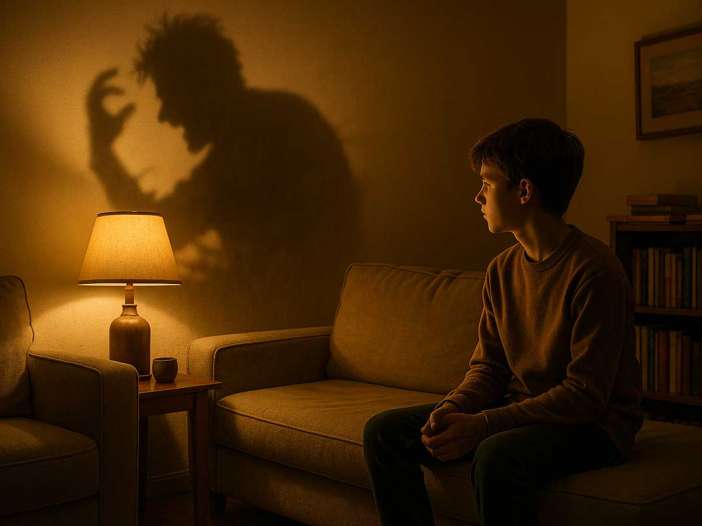
You know, if you’ve lived long enough, you start to realize something kind of funny about life. Not “ha-ha” funny, but the kind of funny that makes you smile and hurt at the same time. It’s that every generation thinks the next one is the problem — right up until they realize the next one was just paying attention.
Look at Gen Z. People say so many things about them:
“They’re too sensitive.”
“They’re too anxious.”
“They’re too online.”
But maybe — just maybe — they’re simply holding up a mirror.
And let’s be honest… it’s not always flattering.
Because they learned sensitivity from watching adults break under pressure.
They learned anxiety from the chaos that grown-ups broadcast every day.
They learned escaping into screens from parents who were too tired, too wounded, or too distracted to look up from their own.
Gen Z didn’t build this world.
They inherited it — like a hand-me-down sweater three sizes too big and full of holes.
But here’s the beautiful part: they’re not judging us.
They’re trying to figure us out.
They’re trying to love us, even when we don’t always make it easy.
They’re trying to fix a world while still learning how to be in it.
And if we want them to shine, to thrive, to become the brilliant souls they already are…
We have to give them something worth reflecting.
Not perfection.
Not invincibility.
Just adults willing to get real.
Adults willing to heal.
Adults willing to show joy even in the cracks.
If we do that — if we choose to model courage, curiosity, kindness, and a little humor along the way — then the future isn’t just safe.
It’s bright.
Let’s begin.
(Note: This is an imaginary conversation, a creative exploration of an idea, and not a real speech or event.)
Topic 1: The Mirror Generation: Why Gen Z Reflects the Adults They Were Shaped By
Moderator: Nick Sasaki
Speakers: Jonathan Haidt, Brené Brown, Esther Perel, Andrew Huberman, Simon Sinek
Nick Sasaki opens the room with a steady, thoughtful voice.
“Today we’re looking at something most people avoid: the idea that Gen Z—far from being broken—is simply reflecting us. Our politics. Our media. Our anxieties. Our habits. If their behavior feels difficult or chaotic, maybe the real question is what they’re showing us about ourselves. And if the future is going to be bright, we adults have to start modeling the world we want them to inherit.”
He turns to the panel. “Let’s begin.”
Question 1:
If Gen Z is mirroring us, what aspects of adult behavior are they reflecting most clearly?
Esther Perel speaks first.
“When I look at Gen Z, I see a generation raised in the emotional residue of adult disconnection. They watched adults withdraw into their phones, disconnect in marriages, argue instead of communicate, and suppress instead of express. Children absorb relational atmosphere long before they understand language. Gen Z’s distance, caution, and emotional intensity didn’t appear from nowhere—they grew up inside our unresolved tensions.”
Jonathan Haidt follows.
“From a psychological standpoint, Gen Z reflects adult hypervigilance. The adults who raised them were increasingly anxious, politically polarized, doom-oriented. Kids internalize this. They learned to see the world as unsafe, unpredictable, and overwhelmingly stressful because adults were modeling that worldview every day, consciously or not.”
Simon Sinek adds.
“When young people appear impatient, adrift, or cynical, they’re echoing the example set by leaders, corporations, and parents who prioritized quick rewards, constant busyness, and reactive decision-making. Gen Z didn’t invent the culture of urgency and dissatisfaction. They inherited a world built without long-term thinking, and they’re simply reacting to it honestly.”
Andrew Huberman nods.
“Neurologically, adults demonstrated a lifestyle based on compulsive dopamine seeking—scrolling, multitasking, overstimulation. Gen Z grew up watching adults outsource emotional regulation to devices. For them, that pattern is normal, not a deviation. The brain adapts to the behaviors it sees most frequently.”
Brené Brown concludes.
“And when we see Gen Z struggling with shame, perfectionism, or fear of failure, we must remember—they watched adults hustle for worthiness, hide their vulnerabilities, and criticize themselves relentlessly. They learned that emotional safety comes from performance, not authenticity. They learned that from us.”
Nick takes a breath. “So Gen Z is reflecting our political chaos, our digital addictions, our fears, our disconnection, our emotional habits. Not their fault—our mirror.”
Question 2:
How did the world adults built—social media, outrage culture, instability—shape Gen Z’s coping mechanisms and worldview?
Andrew Huberman begins this round.
“Children adapt to survive the environment they grow up in. And for Gen Z, the environment adults built was a constant stream of attention-grabbing stimuli. Outrage, fear, novelty, reward loops. They developed shorter attention spans not because they’re weaker, but because adults designed systems that rewired their brains to expect fast, emotional input. Their coping mechanisms match the architecture we gave them.”
Brené Brown comes next.
“This entire generation grew up in an emotional climate dominated by adult fear. Fear about the economy, the future, the climate, politics, identity. And when fear dominates, vulnerability becomes dangerous. Gen Z learned to armor themselves with sarcasm, detachment, and self-protection because adults showed them that being open often leads to being attacked.”
Jonathan Haidt jumps in.
“Polarization among adults taught Gen Z that disagreement is dangerous and belonging is conditional. So they became cautious—sometimes overly cautious—about expression. They weren’t born fragile. They adapted to a world adults made hostile to nuance.”
Esther Perel adds.
“Adults also modeled a culture where everything is public and everything is permanent. Privacy vanished. Gen Z learned to curate themselves because adults normalized surveillance disguised as connection. Their coping mechanisms—withdrawal, hyper-self-awareness, overthinking—are logical responses to a world without emotional shelter.”
Simon Sinek closes.
“And perhaps the biggest influence: adults abandoned long-term vision. Politics became reactive. Media became sensational. Companies chased quarterly profits. Families rushed through their days. Gen Z watched adults choose convenience over meaning, and so they struggle to imagine a future built on purpose rather than survival.”
Nick nods. “They are adapting to the world we created, not the world they chose.”
Question 3:
What would adults need to change first to alter the reflection Gen Z is showing us today?
Simon Sinek begins this final round.
“Adults need to model long-term thinking—delayed gratification, patience, responsibility, steadiness. If adults stop chasing quick dopamine hits and shallow status, kids will naturally follow. Great leadership begins with modeling behavior worth imitating.”
Esther Perel follows.
“We must repair our relationships—with our partners, with our children, with ourselves. Kids need to witness adults resolving conflicts, listening deeply, expressing emotions maturely. If we want them to be emotionally healthy, adults must stop outsourcing emotional labor to screens and start doing the slow work of connection.”
Jonathan Haidt contributes.
“Adults need to regulate their own anxiety before expecting young people to regulate theirs. If we want calmer kids, we need calmer adults. Stability is taught through example, not lectures. The adult nervous system is the template for the child’s nervous system.”
Brené Brown adds.
“The most transformative shift would be adults modeling courage—the courage to admit mistakes, apologize, be vulnerable, set boundaries, and practice self-compassion. When adults stop performing strength and start practicing authenticity, Gen Z will follow suit almost immediately.”
Andrew Huberman ends the round.
“And we need to recreate environments that reward stillness, focus, and presence. If adults reduce their own dependence on digital stimulation, practice intentional attention, and show what a regulated nervous system looks like, Gen Z’s brains will adapt accordingly. Biology follows example.”
Nick closes with a quiet conviction.
“Gen Z is not a generation gone wrong. They are a generation responding perfectly to the world adults created. They are our reflection, not our failure. And the moment adults choose to grow, everything changes. The future becomes bright the second we become the example worth imitating.”
Topic 2: If We Want Better Kids, We Must Become Better Adults
Moderator: Nick Sasaki
Speakers: Dr. Shefali Tsabary, Jordan Peterson, Gabor Maté, Angela Duckworth, Martha Beck
Nick Sasaki opens the conversation with a reflective calm.
“Today we’re asking a deeper question: If we want to see transformation in Gen Z, is it possible the first transformation must happen in us? We spend so much time analyzing young people, critiquing them, diagnosing them. But what if the real problem is not that Gen Z has changed—it's that adults stopped showing them what adulthood looks like? If their behavior frustrates us, maybe it's time to ask what we modeled.”
He turns to the panel. “Let’s explore.”
Question 1:
What specific adult behaviors—at home, in society, or online—are directly teaching Gen Z the habits we later criticize?
Gabor Maté begins.
“Adults taught Gen Z emotional avoidance. When children saw adults soothing stress with work, alcohol, shopping, screens, or distraction, they learned that regulation comes from escape, not presence. We criticize Gen Z for numbing themselves, but we handed them the blueprint. Addiction is never about substances; it's about unresolved pain. And adults modeled that pain constantly.”
Angela Duckworth follows.
“We also modeled inconsistency. Adults talked about discipline but didn’t practice it. We preached grit while giving up quickly. We demanded resilience from our kids while reacting impulsively to our own stress. Children can see hypocrisy faster than anyone. If we want disciplined kids, we need disciplined adults.”
Martha Beck smiles gently.
“One of the biggest things we modeled was self-abandonment. Adults rushed, overcommitted, pushed themselves past exhaustion, pretended everything was fine, and called it being responsible. Gen Z looked at that and said, ‘If that’s adulthood, I’d rather opt out.’ Their refusal isn’t laziness—it’s clarity.”
Jordan Peterson leans forward.
“Adults also demonstrated that truth is flexible. Politicians lie. Media manipulates. Corporations spin narratives. Parents avoid difficult conversations. Children internalize that honesty is optional. So when we criticize Gen Z for lacking forthrightness, we’re ignoring the culture of dishonesty adults created.”
Dr. Shefali Tsabary closes this round.
“And let’s not forget ego. Adults modeled ego-driven living—competition, comparison, performance, status. Children learned that worth comes from achievement, approval, appearance. When Gen Z experiences burnout or identity confusion, it’s not a flaw—it’s a reflection of adults who lost sight of authenticity.”
Nick nods. “So the behaviors we dislike in Gen Z are echoes of what we modeled—avoidance, inconsistency, dishonesty, ego, burnout. Not their fault. Their reflection.”
Question 2:
Why is modeling more powerful than lecturing, and how can adults begin modeling the emotional maturity we want young people to embody?
Jordan Peterson starts this round.
“You can’t tell young people who to be—you must show them. A child watches how you act under stress, how you speak when you’re angry, how you treat people who disagree with you. This is how values are transmitted. So if adults want emotionally stable kids, adults must become emotionally stable themselves. Order your own life first—then you can genuinely guide others.”
Dr. Shefali Tsabary adds softly.
“Children don’t listen to what you say. They absorb who you are. If we want to model emotional maturity, adults must stop pretending they are finished products. Healing is contagious. Calm is contagious. Presence is contagious. The most powerful teaching tool is an adult who has done their own inner work.”
Angela Duckworth follows.
“Consistency matters. Young people thrive around adults who are predictable, grounded, and aligned with their values. If adults expect young people to build strong character, we need to demonstrate perseverance, follow-through, and emotional regulation—not demand it from them while abandoning it ourselves.”
Martha Beck smiles.
“We need to model peace. Young people don’t want to copy stressed people. They want to copy joyful, grounded, authentic beings. If adults want influence again, we must become emotionally safe places. That means stopping the performance of perfection and living in our truth.”
Gabor Maté closes.
“The reason modeling is more powerful is simple: authenticity communicates at a deeper level than instruction. When adults take responsibility for their wounds, regulate their emotions, and stop living reactively, children feel it. You don’t have to lecture them into health—your presence becomes the lesson.”
Nick breathes deeply. “So it’s not about teaching kids emotional maturity—it’s about becoming emotional maturity.”
Question 3:
What are the first practical steps adults can take to transform themselves before expecting transformation in youth?
Martha Beck begins the final round.
“The first step is to pause. Adults are caught in a loop of reacting, rushing, forcing, and fixing. To change ourselves, we must create space to notice our patterns. When we slow down, we realize most of our behavior is inherited survival programming. Awareness is the beginning of transformation.”
Angela Duckworth follows.
“The next step is building small habits. Kids need to see adults who finish what they start, who work toward goals consistently, who handle setbacks with grace instead of panic. Adults don't need to become superhuman—just reliable.”
Gabor Maté adds gently.
“We must also acknowledge our emotional injuries. Children cannot learn stability from adults who haven’t processed their own pain. Healing ourselves is an act of service to the next generation. When adults regulate their emotions instead of suppressing them, children learn emotional safety by example.”
Jordan Peterson leans in.
“Adults must adopt responsibility—not as punishment but as purpose. Young people model what we embody. If adults behave as victims of circumstance, kids will too. But if adults demonstrate agency, discipline, and meaning, young people will rise to the level of that example.”
Dr. Shefali Tsabary closes the topic with clarity.
“The most important transformation is dropping ego. If adults stop pretending to know everything, stop blaming younger generations, stop defending outdated identities, and instead step into humility and growth, children naturally follow. The adult who evolves becomes the adult who leads.”
Nick offers a quiet reflection.
“The message is unmistakable: If we want Gen Z to rise, adults must become the example worth rising toward. The future brightens the moment we decide to grow, heal, and live with integrity. This is not their burden—it is our opportunity.”
Topic 3: They’re Not the Problem — They’re the Feedback
Moderator: Nick Sasaki
Speakers: Adam Grant, Malcolm Gladwell, Dan Siegel, Alain de Botton, Nassim Nicholas Taleb
Nick Sasaki begins with a slow, thoughtful breath.
“Today we’re unpacking one of the most important—and most uncomfortable—ideas in this whole series: Gen Z isn’t the problem. They’re the feedback. Their behaviors, their fears, their frustrations, their coping mechanisms... they’re signals pointing back to the culture adults created. If we stop blaming them and start listening to what they’re showing us, we might finally understand what needs to change.”
He looks around the table.
“Let’s explore what Gen Z is really telling us.”
Question 1:
If Gen Z’s behavior is feedback, what is it telling us about the culture adults created and the systems we allowed to decline?
Malcolm Gladwell begins.
“Gen Z is telling us that the systems adults built—education, political discourse, media, community—are no longer functional in the way we pretend they are. Their disengagement is a signal, not rebellion. Young people stop participating when the game is rigged, when the rules feel arbitrary, or when the structure no longer inspires trust. Their frustration is a direct reflection of systems that have stopped serving their purpose.”
Dan Siegel follows.
“From a neurobiological perspective, Gen Z’s heightened anxiety, emotional intensity, and sensitivity are not personal flaws. They are the nervous system’s response to a world that overwhelms. Adults created a climate of constant uncertainty—economic instability, climate threat, political volatility, rapid technological overload. Their feedback—through anxiety and disconnection—is the body’s way of saying the environment is dysregulating.”
Alain de Botton adds gently.
“They’re also signaling that adults failed to create a culture of emotional literacy. For decades, society taught ambition, achievement, productivity—yet neglected wisdom, self-understanding, and compassion. Gen Z’s mental health struggles are feedback that the emotional foundations provided by adults were too thin to withstand modern pressures.”
Adam Grant nods.
“What I see is that Gen Z is pointing out a hypocrisy crisis. Adults say teamwork matters, but model tribalism. Adults preach resilience, but exhibit burnout. Adults talk about truth, but reward misinformation. When an entire generation points out inconsistencies, that’s data. The feedback is clear: adults are not practicing what they preach.”
Nassim Nicholas Taleb speaks last, his voice precise.
“Gen Z is exposing fragility. Not theirs—ours. Adults built fragile institutions, fragile economics, fragile personal identities. When stress tests arise, fragile systems break. Gen Z is the stress test revealing the structural weaknesses we refused to address. It’s not failure—it’s diagnosis.”
Nick folds his hands. “So their behavior is the pulse check on our culture. And the pulse is telling us adults have work to do.”
Question 2:
Why do adults often misinterpret Gen Z’s reactions as rebellion instead of signals pointing to deeper societal cracks?
Adam Grant goes first.
“Adults misinterpret feedback when it threatens their identity. If Gen Z says the workplace is unhealthy, adults hear criticism of their generation. If Gen Z says politics is broken, adults feel personally attacked. When feedback hits ego, it gets labeled as rebellion instead of insight.”
Alain de Botton follows.
“Adults also struggle with shame. It’s painful to admit that we, as the older generation, may have contributed to the distress of the younger one. So we defend ourselves. We protect our self-image by blaming youth instead of listening to them. Criticizing them feels safer than confronting our own inadequacies.”
Malcolm Gladwell adds.
“In every era, the younger generation has spotted changes before the older generation did. Gen Z is simply faster because information travels faster. Adults interpret speed as disrespect, when in reality, it’s responsiveness. Gen Z is reacting in real time to issues adults have tolerated for decades.”
Dan Siegel nods thoughtfully.
“There is also a misunderstanding of emotional expression. Adults grew up suppressing emotions; Gen Z grew up naming them. When adults see emotional transparency, they sometimes perceive it as weakness or rebellion. But it’s simply a different—and healthier—way of processing experience.”
Nassim Nicholas Taleb ends the round.
“And adults confuse fragility with sensitivity. Gen Z is not fragile—they are sensitive to systemic instability. When you’re sensitive to risk, you speak up. Adults mistake that for rebellion because they’ve grown accustomed to tolerating dysfunction quietly.”
Nick leans back. “So adults misread Gen Z because listening would require humility—and change.”
Question 3:
How can adults learn from this feedback rather than resisting, shaming, or dismissing it?
Dan Siegel begins the final round.
“The first step is attunement. Adults need to observe without judgment. When a young person expresses anxiety, frustration, or confusion, adults must ask: ‘What is this emotion pointing to?’ Not ‘How do I make it stop?’ Feedback becomes wisdom when adults shift from defensiveness to curiosity.”
Adam Grant follows.
“We need to treat Gen Z’s reactions as data, not disrespect. If an entire generation is disengaging from work, relationships, or society, something structural is wrong. Adults can start learning by adopting a scientist’s mindset: listen, test assumptions, revise models. Curiosity must replace ego.”
Alain de Botton adds.
“Adults should also take responsibility for the emotional tone they create. If we want Gen Z to trust us, we must show humility. Apologies are powerful. Admitting ‘We didn’t get everything right’ creates space for intergenerational healing. Wisdom grows when older generations lead with vulnerability rather than authority.”
Malcolm Gladwell continues.
“Adults must also reexamine the stories they tell. Every generation is shaped by narratives. If the dominant adult story is ‘kids today are the problem,’ we guarantee division. But if the story becomes ‘kids today are showing us what needs to be fixed,’ we shift from blame to solution.”
Nassim Nicholas Taleb finishes with his signature clarity.
“Adults need to build antifragility—in themselves and in the systems they influence. That means embracing stressors instead of avoiding them, learning from mistakes instead of defending them, and designing institutions that benefit from feedback instead of collapsing under it. Gen Z’s criticism is not an attack—it’s free stress testing. Adults should welcome it.”
Nick closes with quiet conviction.
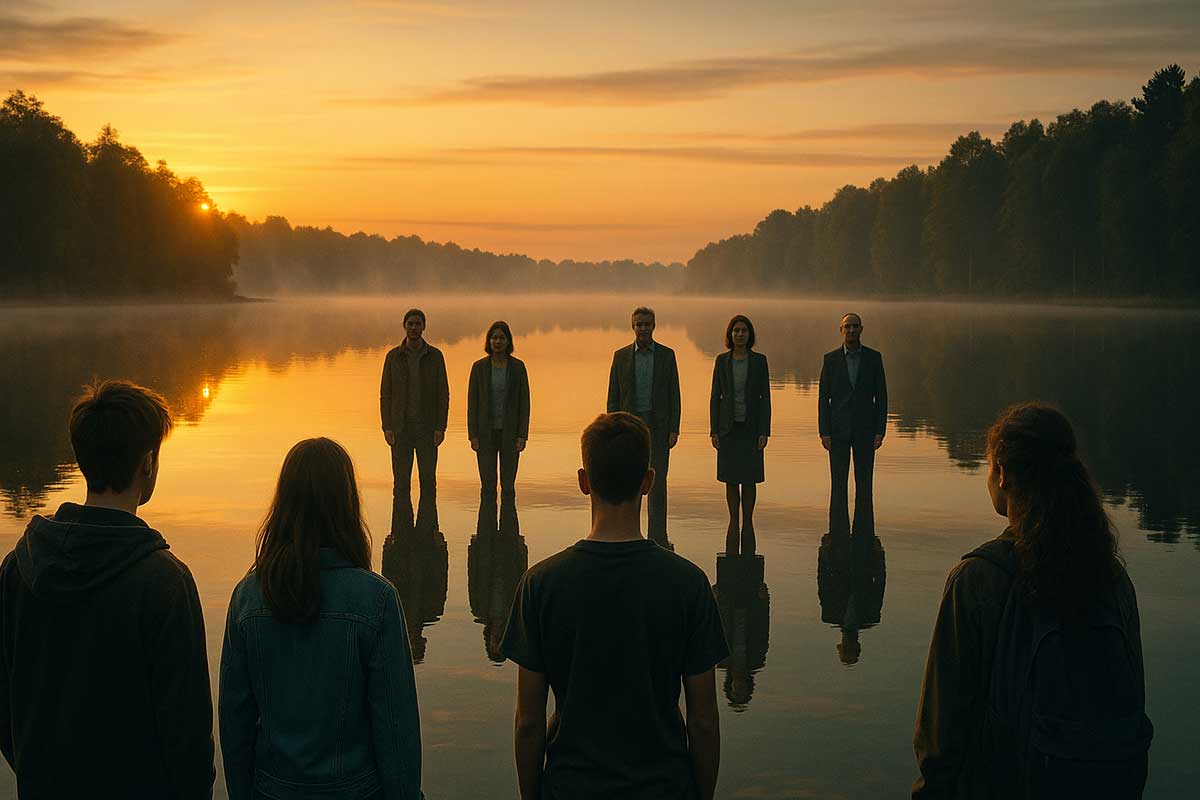
“Gen Z is not the problem. They are the flashlight shining on the cracks. They are the early-warning system. They are the opportunity for us to confront what we ignored. The moment adults stop dismissing their behavior and start learning from it, the entire culture can evolve.”
Topic 4: A Culture That Shapes Kids Starts With Adults Who Shape Themselves First
Moderator: Nick Sasaki
Speakers: Thomas Friedman, Sherry Turkle, Robert Waldinger, Joe Dispenza, Tim Ferriss
Nick Sasaki opens with a slow, thoughtful pause, as if weighing the importance of every word.
“Today we’re exploring something that sounds simple but is actually revolutionary: children don’t grow inside a vacuum. They grow inside us. Inside our culture. Inside our example. Gen Z isn’t shaped by childhood alone—they’re shaped by the adults who run our politics, our media, our technology, our workplaces, our families. If the adult world is chaotic, anxious, disconnected, or numb, then naturally the next generation absorbs the emotional climate. So the question becomes: What would it look like for adults to shape themselves first, so the culture our kids inherit becomes healthier, more stable, and more hopeful?”
He turns to the panel.
“Let’s dive deeper.”
Question 1:
How do political leaders, media personalities, and corporate influencers shape youth behavior long before parents ever get a chance?
Thomas Friedman begins with his global, big-picture clarity.
“Kids grow up watching adults in power behave badly. They see leaders shouting instead of listening, parties dividing instead of solving, and media treating outrage as entertainment. They see corporations designing platforms to keep everyone distracted, angry, or addicted. By the time parents try to teach values at home, the broader culture has already shaped the emotional expectations. Gen Z didn’t invent chaos—they grew up swimming in it.”
Sherry Turkle follows.
“And we must remember that this shaping isn’t neutral—it’s intentional. Social platforms created by adults were engineered to capture attention, not to nurture well-being. Children learned emotional habits from the way adults interacted online. They saw adults attacking strangers, curating identities, and performing outrage. The digital environment taught children that connection is transactional, performative, and fragile.”
Robert Waldinger adds a soft, grounded perspective.
“Our long-term research on adult development shows that relationships are the strongest predictor of happiness. But modern culture—shaped by adult decisions—has devalued human connection. Kids saw adults replace conversations with multitasking, family dinners with screens, intimacy with distraction. Youth internalize what they see, not what adults say.”
Joe Dispenza speaks next.
“When adults constantly operate from stress, fear, or anger, they broadcast energetic signals—states of being—that children absorb subconsciously. The emotional signature of the adult world literally shapes the inner world of a child. Kids don’t need adults to speak for them to learn; they feel us.”
Tim Ferriss finishes with precision.
“Our culture rewards busyness instead of presence, consumption instead of reflection, status instead of substance. Adults built a machine that prioritizes productivity over peace. Gen Z simply learned to navigate the machine we created. They didn’t choose the cultural operating system—they inherited it.”
Nick nods slowly.
“So the culture adults built shapes kids long before parents ever do.”
Question 2:
What does it look like for adults to take cultural responsibility rather than blaming young people for absorbing what adults modeled?
Robert Waldinger begins.
“It means adults acknowledging their influence. Instead of saying, ‘Kids today are disconnected,’ adults might ask, ‘How did our generations normalize disconnection?’ Responsibility begins with humility—recognizing that children mirror the society we built. Change begins when adults stop pointing fingers outward and start looking inward.”
Thomas Friedman follows.
“Adults need to stop romanticizing their own past. Every generation thinks the next one is weaker, softer, lazier. But if we step out of nostalgia, we see that kids are responding to the world we handed them. Taking responsibility means dropping the illusion that we were perfect and acknowledging the pressures we allowed to escalate.”
Sherry Turkle adds.
“One form of responsibility is reclaiming presence. Children learn emotional stability from adults who are grounded, attentive, and available. When adults chronically split their attention between devices and relationships, children internalize divided attention as normal. Responsibility means showing up with our full selves.”
Joe Dispenza contributes.
“Adults must regulate their emotional states. Children learn nervous system patterns from adults. If adults live in constant fight-or-flight—rushing, overworking, reacting—kids learn stress as their baseline. Cultural responsibility means adults learning to calm their minds and bodies, so children experience emotional safety instead of emotional turbulence.”
Tim Ferriss ends the round.
“Responsibility also means designing our lives more intentionally. If adults prioritize reflection, boundaries, rest, and meaningful work, kids will see adulthood as something worth growing into—not something to escape. Blame is easy. Responsibility is transformative.”
Nick exhales.
“So taking responsibility is about humility, presence, emotional awareness, and intention.”
Question 3:
How can adults become the emotional stabilizers of society instead of contributors to chaos?
Joe Dispenza speaks first.
“Adults become stabilizers when they learn to break their own emotional patterns. Children do not need adults to be perfect—they need adults to be conscious. If adults learn to shift from stress to coherence, from fear to awareness, they become anchors. A regulated adult nervous system calms an entire room.”
Sherry Turkle follows.
“Emotional stability requires reclaiming our attention. Chaos thrives when adults are fragmented, reactive, and constantly stimulated. If we reduce our digital dependency and model deep listening, empathy, and presence, we show children what real connection feels like.”
Robert Waldinger adds.
“Stability also comes from prioritizing relationships. When adults invest in healthy marriages, friendships, and community—rather than living in isolation—they create emotional ecosystems that nourish kids. Children feel the quality of the adult relationships around them. When those are stable, kids internalize stability.”
Tim Ferriss jumps in.
“Adults need to simplify. Chaos often comes from taking on too much, doing too much, and being available to too many people except the ones who matter. When adults set boundaries, practice stillness, and reduce noise, they model a healthier pace for children who are overwhelmed by the speed of modern life.”
Thomas Friedman concludes.
“And adults must start behaving like adults in public spaces. Politics, media, and leadership have become theaters of immaturity—performative outrage, tantrums, tribalism. When adults in positions of influence behave responsibly, with patience and reason, the entire cultural tone shifts. Kids need adults who show what dignity looks like in unpredictable times.”
Nick brings the topic together with a gentle strength.
“Children don’t become who we lecture them to be—they become who we are. When adults shape themselves, they shape the culture. And when the culture becomes healthier, safer, calmer, and more conscious, our young people flourish naturally. The work begins with us. The opportunity begins now.”
Topic 5: The Future Is Bright — If We Become the Example Worth Imitating
Moderator: Nick Sasaki
Speakers: Simon Bailey, Ken Robinson, Iyanla Vanzant, Daniel Goleman, Eckhart Tolle
Nick Sasaki opens the final discussion with a sense of warmth and steady hope.
“We’ve spent this entire series looking at why Gen Z seems the way they are—not as a failure, but as a reflection. And now we shift toward the light: the future really is bright, but only if we, the adults, rise into the kind of people children want to become. Gen Z is incredibly perceptive, emotionally aware, and eager for authenticity. If we model courage, compassion, presence, honesty, and purpose… they will mirror that too. The future doesn’t depend on changing them—it depends on transforming ourselves.”
He turns to the panel with a quiet smile.
“Let’s explore what that brighter future looks like.”
Question 1:
What qualities must adults embody—kindness, resilience, honesty, emotional balance—in order to become role models that truly inspire Gen Z?
Ken Robinson begins with his signature clarity and imagination.
“Young people need adults who demonstrate curiosity rather than cynicism. Creativity rather than conformity. Playfulness rather than rigidity. For too long, adulthood has been presented as something dull and exhausted. But the qualities that inspire kids are the same ones that make life meaningful: wonder, integrity, courage, and a genuine love of learning.”
Daniel Goleman follows.
“The qualities you listed—kindness, resilience, honesty—are all facets of emotional intelligence. Children learn emotional intelligence not from textbooks but from emotional modeling. When adults respond thoughtfully rather than reactively, when we listen deeply, regulate our emotions, and remain present even under stress, young people internalize those patterns automatically.”
Iyanla Vanzant adds a grounded, soulful voice.
“Young people need adults who are whole. Not perfect—whole. Adults who have faced their pain, healed their wounds, owned their mistakes, and show what accountability looks like. We inspire youth not by hiding our struggles, but by showing the strength it takes to rise above them.”
Simon Bailey speaks with uplifting energy.
“Kids want to feel possibility. Adults who inspire them are adults who radiate hope. Optimism is a leadership skill. When adults speak about the future with belief instead of fear, when they demonstrate that challenges can be overcome, they open a pathway for young people to imagine their own potential.”
Eckhart Tolle concludes softly.
“The most important quality adults must embody is presence. Young people are drawn to authenticity, to stillness, to groundedness. When adults are fully here—without judgment, without ego, without noise—they create a space of peace that children naturally rise into. Presence is the greatest form of teaching.”
Nick nods with gratitude.
“So the future brightens when we embody the qualities we want them to inherit.”
Question 2:
How do we shift from criticizing youth to building a culture where young people want to follow our lead?
Iyanla Vanzant begins.
“We shift by honoring them. Not belittling them. Not comparing them to the past. When adults stop judging youth and start appreciating their gifts—creativity, sensitivity, courage—we build a bridge. Young people follow adults they feel respected by, not adults who shame them.”
Simon Bailey follows.
“We need to speak to their potential, not their deficiencies. When we consistently criticize, we shut down connection. When we uplift, they lean in. A culture of encouragement is magnetic. It pulls youth upward. The shift begins with how adults speak—not just to young people, but about them.”
Ken Robinson adds.
“If we want young people to follow, we must make adulthood look worth following. Show them that adulthood can be filled with purpose, creativity, passion, and joy—not just stress, complaining, and routine. Kids don’t reject responsibility; they reject lives that look devoid of meaning.”
Daniel Goleman nods.
“We must also create emotionally safe environments. Criticism pushes youth away because it activates defensiveness. But environments filled with empathy draw them in. Emotional safety becomes the foundation for mentorship.”
Eckhart Tolle finishes.
“Criticism is rooted in ego. When adults release the need to be superior, to be right, to cling to the past, we become open. Openness invites connection. And in connection, young people find their own desire to grow.”
Nick leans in.
“So the key is making adulthood inspiring—not intimidating.”
Question 3:
What future becomes possible when adults finally show the example Gen Z has been waiting for?
Eckhart Tolle begins the final round.
“When adults embody presence, a peaceful generation emerges. The future becomes calmer, less reactive, less divided. A culture built on consciousness rather than fear. This is not fantasy—it is the natural outcome of adults who choose awareness.”
Ken Robinson adds.
“We also unlock creativity on a societal scale. If adults model curiosity and originality rather than conformity, we empower a generation capable of reimagining education, work, and community. The future becomes a canvas rather than a crisis.”
Simon Bailey speaks with a spark.
“When adults lead with vision instead of fear, we activate possibility in young people. They begin to see themselves as creators of the future, not victims of it. Innovation flourishes. Leadership emerges from unexpected places. Trust rebuilds itself.”
Daniel Goleman contributes thoughtfully.
“A future shaped by emotionally intelligent adults is a future with healthier relationships, workplaces, and communities. Conflict becomes dialogue. Stress becomes resilience. Empathy becomes an everyday skill. These shifts ripple across generations.”
Iyanla Vanzant concludes with a deep, healing certainty.
“When adults show up healed, present, accountable, and loving, we break generational cycles. We unlock generational blessings. Young people inherit stability instead of chaos, wisdom instead of fear, compassion instead of judgment. This is how the future becomes bright—not by changing them, but by transforming ourselves.”
Nick brings the entire series to a close.
“If Gen Z is a reflection of us, then the future they build depends on what we choose to become today. Kids do not need perfect adults—they need conscious adults. They need adults who embody the values they hope to see. And when we rise, they rise. The moment adults model the best of what humanity can be, the future opens. And it shines.”
Final Thoughts by Robin Williams
You know, after talking through all this, I keep coming back to one simple truth:
Kids don’t need superheroes.
They just need humans who try.
Gen Z isn’t waiting for perfect adults.
They’re waiting for present ones.
They’re waiting for adults who look them in the eye, admit their mistakes, laugh at themselves, cry when it hurts, apologize when they get it wrong, and keep going anyway. The kind of adults who show that life can be messy and beautiful in the same breath.
We keep thinking the younger generation is lost.
But they’re not lost — they’re looking at us, trying to figure out which direction we’re actually pointing.
And if we don’t like what we see in their behavior?
Well… maybe that’s the universe giving us a little tap on the shoulder:
“Hey. Time to grow up. Time to model something better.”
But here’s the thing:
This isn’t a burden — it’s a chance.
A chance for redemption.
A chance for reconnection.
A chance to choose the kind of adults we always wished we had.
Because when adults heal, kids don’t have to.
When adults love openly, kids learn to trust.
When adults show joy, kids breathe easier.
And when adults lead with hope — oh, that’s when the world changes.
Gen Z is not our downfall.
They’re our invitation.
Our invitation to rise.
To soften.
To wise up.
To show love with our whole hearts.
And if we do?
They’ll run farther than we ever dreamed.
And maybe — just maybe — they’ll laugh a little along the way.
Short Bios:
Jonathan Haidt
A social psychologist known for his work on moral and cultural psychology, examining how generational differences arise from political, social, and technological shifts.
Brené Brown
A research professor specializing in vulnerability, shame, courage, and emotional resilience, emphasizing how adults model emotional behavior for younger generations.
Esther Perel
A psychotherapist and bestselling author who explores relational dynamics, communication, attachment, and the emotional patterns children inherit from adults.
Andrew Huberman
A Stanford neuroscientist studying brain function, stress, attention, and how environmental conditions shape neurological and emotional development.
Simon Sinek
A leadership expert focused on purpose-driven behavior, long-term thinking, and how leaders set cultural norms that influence younger generations.
Dr. Shefali Tsabary
A clinical psychologist known for conscious parenting, helping adults understand how their unhealed patterns shape their children’s emotional world.
Jordan Peterson
A clinical psychologist studying responsibility, meaning, and the psychological impact of adult behavior on developing minds.
Gabor Maté
A physician and trauma specialist whose work centers on emotional wounds, addiction, and the ways adult pain unconsciously passes to children.
Angela Duckworth
A psychologist known for her research on grit and discipline, highlighting how perseverance is transmitted through consistent adult modeling.
Martha Beck
A life coach and sociologist who teaches authenticity, inner peace, and how adults can create healthier emotional ecosystems for children.
Adam Grant
An organizational psychologist who analyzes motivation, culture, and how generational behaviors reflect deeper structural issues in society.
Malcolm Gladwell
A journalist and author examining social behavior, hidden patterns, and cultural shifts that shape generational identity.
Dan Siegel
A psychiatrist and founder of interpersonal neurobiology, studying how relationships and emotional attunement mold the developing mind.
Alain de Botton
A philosopher and writer exploring emotional intelligence, cultural forces, and how modern society shapes psychological well-being.
Nassim Nicholas Taleb
A risk analyst and philosopher focused on fragility, resilience, and how stress reveals the weaknesses in social and cultural systems.
Thomas Friedman
A journalist analyzing globalization, political trends, and how large-scale societal changes influence generational behavior.
Sherry Turkle
A sociologist studying technology’s impact on relationships, empathy, communication, and the emotional life of young people.
Robert Waldinger
A psychiatrist and director of the Harvard Study of Adult Development, known for his research on happiness, relationships, and long-term emotional health.
Joe Dispenza
A researcher and speaker on neuroscience and the mind-body connection, emphasizing how adult emotional states shape their environments.
Tim Ferriss
An author and strategist focused on habit formation, lifestyle design, and how intentional adult choices set healthier examples for youth.
Simon Bailey
A motivational speaker who teaches possibility thinking, optimism, and how adults inspire the next generation through hopeful leadership.
Ken Robinson
An education innovation advocate known for championing creativity, imagination, and meaningful learning experiences for young people.
Iyanla Vanzant
A spiritual teacher whose work centers on emotional healing, accountability, and generational transformation.
Daniel Goleman
A psychologist famous for his work on emotional intelligence, demonstrating how empathy, regulation, and awareness are learned through adult behavior.
Eckhart Tolle
A spiritual teacher focused on presence and consciousness, showing how calm, mindful adults create emotionally grounded children.
Leave a Reply