
|
Getting your Trinity Audio player ready...
|
N. T. Wright:
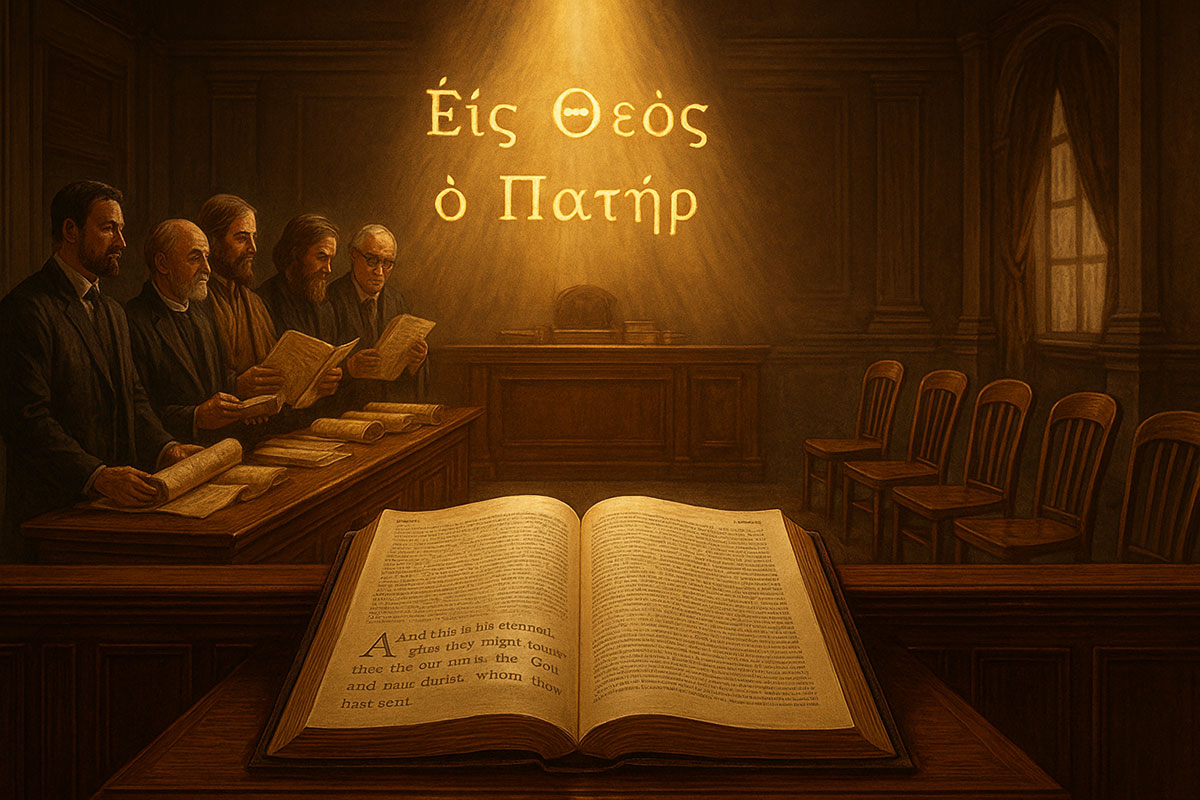
“Few questions have stirred as much conversation, devotion, and debate in the Christian story as this: Is Jesus God, or is He the Son of God?
When we open the New Testament, we do not step into a world of abstract philosophy, but into the living drama of Israel’s God fulfilling His promises. The language we find is steeped in Jewish monotheism — one God, the Father — and yet it is brimming with devotion, authority, and glory given to Jesus, the Messiah. How these fit together has occupied believers and thinkers for centuries.
In our time, the conversation has become layered with creeds, councils, and centuries of tradition. But to begin anywhere else than the earliest witnesses is to risk hearing only the echo of later debates, rather than the voices of those who walked with Him. The Gospels, Acts, and letters of Paul and others invite us to listen again — not for what we expect to hear, but for what the apostles actually said.
What follows is not a shouting match between camps, but a careful hearing of voices — some convinced that the Scriptures present Jesus as God Himself, others persuaded that He is God’s appointed Son and Messiah. Both speak, and we must attend closely, for the way we answer this question will shape not only our understanding of Scripture but also the way we live out our faith.”
(Note: This is an imaginary conversation, a creative exploration of an idea, and not a real speech or event.)

Topic 1: Jesus’ Own Words Distinguishing Himself from God

Moderator: Dale Tuggy — philosopher of religion and master at drawing precise distinctions in biblical language.
Participants:
Sir Anthony Buzzard – Biblical Unitarian scholar.
J. R. Daniel Kirk – NT scholar, non-Trinitarian Christology.
James D. G. Dunn – Historical NT scholar, developmental Christology.
Bart D. Ehrman – Historian, documents evolution of Jesus’ divine status.
John Stott – Trinitarian Anglican minister, included for credibility and strategic admissions.
Opening by Dale Tuggy
“Today, we focus on what Jesus Himself said about His relationship to God. We won’t start with church creeds or later councils, but with His own words as recorded in Scripture. If Jesus is God Himself, we should expect His words to reflect that — yet what we find may surprise us.”
First Question
"When you read the Gospels, what strikes you most about how Jesus speaks of God?"
James D. G. Dunn:
“In the Synoptic Gospels, Jesus consistently refers to God as another — the One who sent Him, empowered Him, and to whom He prayed. This is the language of distinction, not identity. His dependence on the Father runs through every account.”
John Stott:
“I affirm Jesus’ deity, but I can’t ignore that He often spoke of the Father as someone to whom He was accountable. ‘The Father is greater than I’ (John 14:28) is one of several verses showing a relationship where authority rests with the Father.”
Bart D. Ehrman:
“Historically speaking, Jesus didn’t go around proclaiming ‘I am God.’ Instead, He spoke as a prophet, a Messiah, pointing to the coming Kingdom — the Father’s Kingdom. His language places God above Himself.”
Sir Anthony Buzzard:
“Jesus’ own confession in John 17:3 is definitive: the Father is the ‘only true God,’ and Jesus is the one sent by that God. That alone should settle the matter.”
J. R. Daniel Kirk:
“I’d add that in the Synoptics, Jesus aligns Himself with Israel’s prophets. He is God’s chosen agent, not God Himself. This agent/King motif fits perfectly within Jewish monotheism without requiring Jesus to be the God of Israel.”
Second Question
"Why do you think Jesus prayed to God if He Himself was God?"
Bart D. Ehrman:
“Prayer is communication. If Jesus was God, He would be talking to Himself — but the Gospels depict genuine dialogue between distinct persons, especially in Gethsemane.”
Sir Anthony Buzzard:
“Exactly. In Mark 14:36, Jesus prays, ‘Not my will, but Yours.’ That is the clearest evidence of two wills — one belonging to God, the other to Jesus. Two wills cannot belong to the same being.”
John Stott:
“As a Trinitarian, I see prayer as communication within the Godhead. But I admit, the plain reading suggests separation — Jesus’ human will yielding to the Father’s divine will.”
J. R. Daniel Kirk:
“Within Second Temple Judaism, the idea of God Himself praying would be incomprehensible. Prayer assumes a subordinate position. Jesus’ prayers affirm His role as the faithful Son.”
James D. G. Dunn:
“And let’s not forget Hebrews 5:7 — Jesus ‘offered prayers… to the one who could save him from death.’ This is language about dependence, not equality.”
Third Question
"If someone asked you for the single clearest verse showing Jesus is not God, which would you choose and why?"
Sir Anthony Buzzard:
“John 17:3 — Jesus calls the Father ‘the only true God’ and Himself the one sent. It’s straightforward and unambiguous.”
James D. G. Dunn:
“I’d choose Acts 2:36 — God made Jesus both Lord and Messiah. If God made Him so, He wasn’t inherently so from eternity.”
J. R. Daniel Kirk:
“Mark 13:32 — Jesus does not know the day or hour, only the Father does. Omniscience belongs to God alone.”
John Stott:
“For me, Philippians 2:9 — God ‘exalted’ Jesus. That implies Jesus wasn’t in that exalted state by default.”
Bart D. Ehrman:
“Mark 10:18 — ‘Why do you call me good? No one is good except God alone.’ This is distancing language, not identification.”
Closing Summary by Dale Tuggy
“What we’ve heard today is striking. Even from those who affirm Jesus’ deity, the biblical data shows a pattern: Jesus speaks to God, distinguishes Himself from God, and acknowledges God as greater. These are not the words of someone claiming to be God in an absolute sense. They are the words of the Messiah — the Son of God, sent by the one true God. If our goal is to believe Jesus, then we must take Him at His word.”
Topic 2: The New Testament Pattern: God the Father as “the One God”
Moderator: Sir Anthony Buzzard — seasoned at focusing debates on the Shema and NT monotheism.
Participants:
Dale Tuggy – Philosopher of religion, expert on precise language distinctions.
J. R. Daniel Kirk – NT scholar, non-Trinitarian Christology.
James D. G. Dunn – Historical NT scholar, developmental Christology.
Bart D. Ehrman – Historian, documents evolution of Jesus’ divine status.
Billy Graham – Evangelist, Trinitarian, but in many sermons highlighted the Father as the “one true God” to whom Jesus points.
Opening by Sir Anthony Buzzard
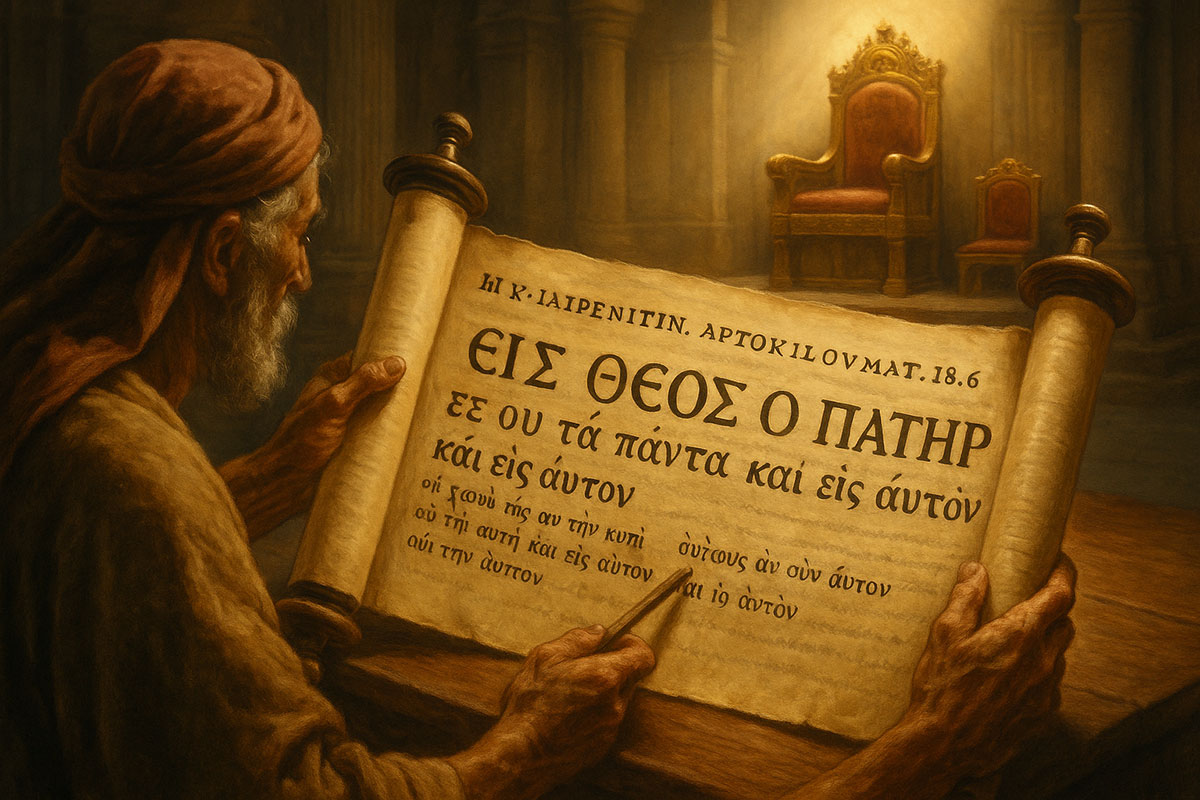
“In the New Testament, the phrase ‘one God’ is never applied to a Trinity. Instead, it consistently identifies the Father. Our conversation today will ask — if Jesus were God Himself, why didn’t the apostles ever write it that way?”
First Question
"When the apostles write ‘one God,’ who are they referring to?"
Dale Tuggy:
“1 Corinthians 8:6 is the clearest — ‘one God, the Father… and one Lord, Jesus Christ.’ The ‘one God’ is the Father alone, while Jesus is the appointed Lord and Messiah. The verse actually distinguishes their roles.”
Billy Graham:
“In my preaching, I often quoted John 17:3 — calling the Father ‘the only true God.’ As a Trinitarian, I see Jesus sharing divine nature, but the text itself assigns the title ‘one God’ to the Father, not to the Son.”
J. R. Daniel Kirk:
“Ephesians 4:6 speaks of ‘one God and Father of all.’ Again, the Father is the referent, while Jesus is described in other ways, as Lord or Christ.”
Bart D. Ehrman:
“Historically, the earliest Christian confessions preserve Jewish monotheism without alteration. They exalt Jesus without equating Him to the God of Israel in essence.”
James D. G. Dunn:
“Paul’s letters, Peter’s speeches in Acts — all present God as the Father. Jesus is central, yes, but always under the Father’s supremacy.”
Second Question
"If the early church believed Jesus was God, why didn’t they ever phrase it ‘one God, Father, Son, and Spirit’ in the New Testament?”
Billy Graham:
“The Bible’s language is inspired. God’s Word often lets mystery stand rather than using philosophical formulas. Still, you have to admit — the NT writers consistently center the Father when using ‘one God’ language.”
J. R. Daniel Kirk:
“This isn’t oversight — it’s theological clarity. The apostles knew the Shema — ‘Hear, O Israel, the LORD our God, the LORD is one.’ They preserved it by keeping the Father as the one God and Jesus as the Messiah.”
Bart D. Ehrman:
“Doctrinal statements like ‘one God in three persons’ come centuries later. The absence of such formulations in the NT reflects the reality that these concepts weren’t yet in play.”
James D. G. Dunn:
“The NT pattern matches Jewish monotheism and doesn’t disrupt it. Any claims of Jesus’ deity must be read in harmony with that, not as a replacement.”
Dale Tuggy:
“If the apostles had believed in co-equal persons of God, this was their chance to say it. Their silence on such a phrase speaks volumes.”
Third Question
"Which NT verse most clearly shows the Father alone as God?"
James D. G. Dunn:
“Ephesians 4:6 — ‘One God and Father of all, who is over all.’ That’s as plain as it gets.”
Billy Graham:
“John 20:17 — Jesus says, ‘I ascend to my Father and your Father, to my God and your God.’ Those words are direct and personal.”
Bart D. Ehrman:
“1 Timothy 2:5 — ‘One God and one mediator between God and humanity, the man Christ Jesus.’ Two distinct entities, not one being.”
J. R. Daniel Kirk:
“Mark 12:29 — Jesus quotes the Shema verbatim. No adjustments, no hint of multiple persons.”
Dale Tuggy:
“1 Corinthians 8:6 — the defining creed: one God, the Father; one Lord, Jesus Christ. The grammar itself shows they are not the same.”
Closing Summary by Sir Anthony Buzzard
“Across the New Testament, the pattern holds: ‘One God’ means the Father, and Jesus is always identified in distinction — as Lord, Messiah, mediator. Even our Trinitarian brother here agrees the text never once calls Jesus ‘the one God.’ If we take the apostolic writings at face value, the Father alone is God in the highest sense, and Jesus is His appointed Son.”
Topic 3: The Exaltation Christology of the Early Church
Moderator: James D. G. Dunn — pioneer of the “Christology in the Making” view, showing how the NT presents Jesus’ divine status as something given after His resurrection.
Participants:
Dale Tuggy – Philosopher of religion, precise in pointing out biblical distinctions.
J. R. Daniel Kirk – NT scholar, non-Trinitarian Christology.
Sir Anthony Buzzard – Biblical Unitarian, focuses on post-resurrection exaltation language.
Bart D. Ehrman – Historian of early Christian development.
Tim Keller – Presbyterian pastor (Trinitarian), respected for his ability to handle Scripture with nuance; will acknowledge the “God exalted Him” language.
Opening by James D. G. Dunn
“The book of Acts, the early creeds, and Paul’s letters show a recurring pattern: Jesus is appointed, made, and exalted by God. Our task is to ask — if Jesus was already fully equal with God, why do the earliest sources speak of His authority and glory as things He received later?”
First Question
"What do you see in Acts about how the early church understood Jesus’ position?"
Bart D. Ehrman:
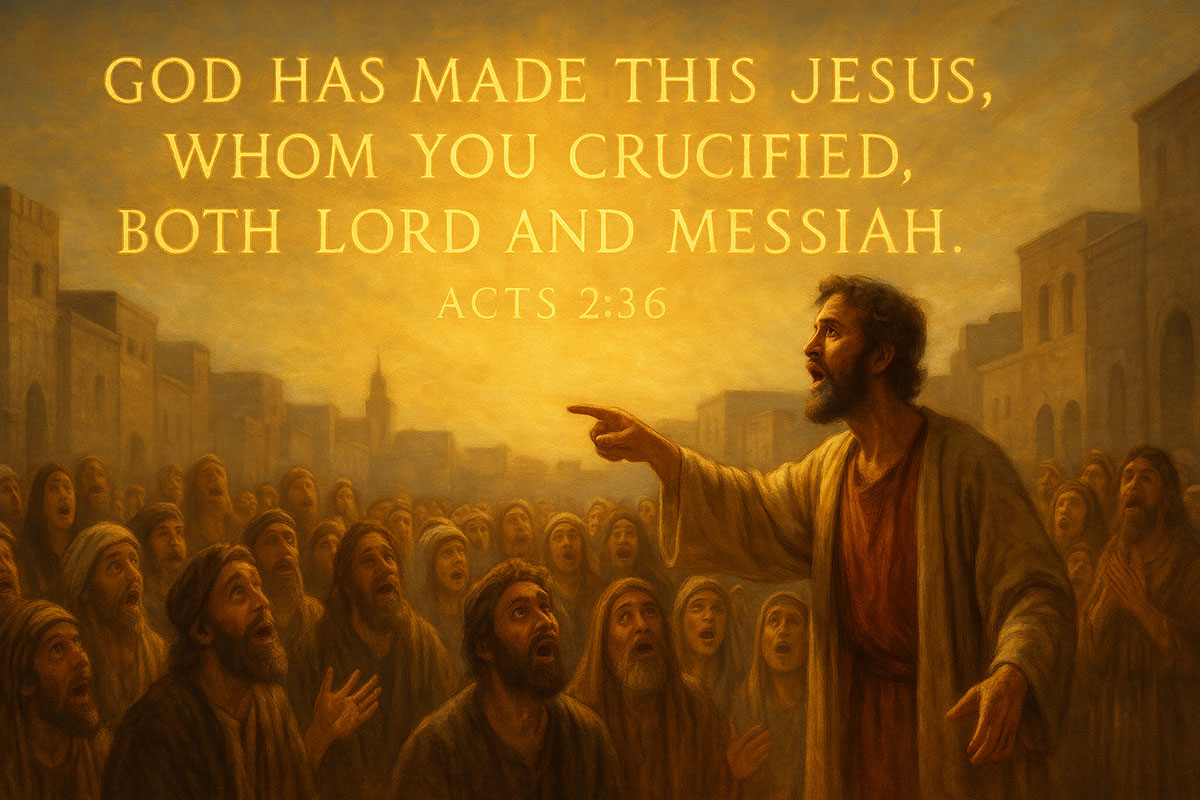
“Acts 2:36 is key — ‘God has made this Jesus, whom you crucified, both Lord and Messiah.’ That’s an elevation, not a statement about eternal co-equality.”
Sir Anthony Buzzard:
“Exactly. You don’t make someone what they already inherently are from eternity. The Father raised and exalted Him because He was a man approved by God (Acts 2:22).”
Tim Keller:
“I affirm Jesus’ eternal divinity, but the language in Acts undeniably shows a moment of exaltation. The early believers experienced this as God vindicating Jesus and giving Him a name above every name.”
Dale Tuggy:
“If the apostles had believed in an eternal co-equal Son, their language would not focus on appointment and exaltation — it would focus on recognition of what was always true.”
J. R. Daniel Kirk:
“The exaltation motif matches the pattern for messianic kings in Jewish tradition — they are enthroned by God, not self-installed.”
Second Question
"What about Paul’s letters — do they also show this ‘exaltation after resurrection’ theme?"
Dale Tuggy:
“Philippians 2:9 is decisive — ‘Therefore God exalted Him to the highest place.’ The ‘therefore’ links the exaltation to His obedience, not His eternal essence.”
Tim Keller:
“As a Trinitarian, I see Philippians 2 describing the Son’s humility in taking human form, followed by the Father’s exaltation of Him. Still, the text’s emphasis is on something given by the Father, not assumed by the Son.”
Sir Anthony Buzzard:
“Romans 1:3–4 says Jesus was ‘declared to be the Son of God with power by the resurrection from the dead.’ The power and authority are results of the resurrection.”
J. R. Daniel Kirk:
“1 Corinthians 15:27–28 even envisions a future where Jesus Himself is subjected to the Father so that ‘God may be all in all.’ That’s not eternal co-equality — that’s eternal submission.”
Bart D. Ehrman:
“Paul’s letters reflect a consistent pattern: Jesus is the risen Messiah who now shares God’s rule, not an eternally co-ruling God.”
Third Question
"If exaltation is central, what does that imply about who Jesus was before the resurrection?"
Sir Anthony Buzzard:
“It implies He was the promised human Messiah, God’s anointed, who had to be obedient and faithful before being given all authority.”
Bart D. Ehrman:
“From a historian’s standpoint, it implies the earliest believers didn’t see Him as an eternal being equal to God. That view emerges later.”
Dale Tuggy:
“It also implies His authority and glory are derived — they depend on the Father’s action, not on inherent self-existence.”
J. R. Daniel Kirk:
“It fits perfectly with the narrative of the Gospels — a Spirit-filled man chosen and vindicated by God.”
Tim Keller:
“Even from my Trinitarian view, the NT doesn’t erase the distinction: the Father gives, the Son receives. That’s the pattern the early church preserved.”
Closing Summary by James D. G. Dunn
“From Acts to Paul’s letters, the earliest sources emphasize what God did for Jesus: raising Him, exalting Him, giving Him authority. This is not the language of an eternal co-equal simply continuing in His position — it is the language of promotion, vindication, and divine appointment. For those willing to hear it, the pattern speaks loudly: Jesus is God’s Messiah and Son, exalted by the one true God.”
Topic 4: Text & Timeline — Did “God the Son” Grow In Later?

Moderator: Bart D. Ehrman — historian of early Christianity and textual criticism.
Participants:
Dale Tuggy — philosopher of religion (one God = the Father).
Jason D. BeDuhn — translation scholar (bias in rendering deity texts).
Maurice Wiles — historian of doctrine (Arianism as coherent early option).
Isaac Newton — yes, that Newton; in theology, a critic of later textual corruptions.
Charles Stanley — Trinitarian pastor; included to acknowledge what the biblical text actually says.
Opening by Bart D. Ehrman
“Our focus: What does the textual record and the timeline of doctrine say? If Jesus were clearly presented as God Himself in the earliest sources, we’d expect unambiguous phrasing from the start and stable manuscripts. Instead, we encounter development: councils, creeds, and even a few suspect verses that later readers leaned on.”
Question 1
“Name one text-critical or translation issue that, in your view, inflated claims about Jesus being God—and explain why.”
Jason D. BeDuhn:
“John 1:1 is Exhibit A. Translators often render theos ēn ho logos as ‘the Word was God’ without noting the anarthrous theos. A more cautious reading is ‘the Word was divine’ or ‘godlike,’ preserving distinction from the God mentioned in the same verse. Overconfident translation can create theology the Greek itself doesn’t require.”
Isaac Newton:
“1 John 5:7—the so-called Johannine Comma—‘the Father, the Word, and the Holy Ghost: and these three are one.’ This line intruded into Latin tradition and then into some later English Bibles; it’s absent from the earliest Greek witnesses. If you have to import a verse to prove the Trinity, that proves something else.”
Charles Stanley:
“I affirm the Trinity, but I’ll admit 1 Timothy 3:16 is tricky: some manuscripts read ‘God was manifested in the flesh,’ others ‘He was manifested.’ If the latter is original, you lose a direct ‘God’ reference. Doctrine shouldn’t hang on a contested letter-form in a later hand.”
Dale Tuggy:
“Titus 2:13 and 2 Peter 1:1 are routinely translated to force ‘our God and Savior Jesus Christ.’ But Greek grammar (e.g., variable application of the Granville Sharp rule, context, and parallel uses) allows readings that keep God and Jesus distinct. Ambiguity isn’t proof.”
Maurice Wiles:
“I’d add the accumulation effect: a handful of ambiguous or later-inflated texts get strung together as if each were decisive. Remove the disputed readings and over-interpretations, and the New Testament’s dominant pattern re-emerges: the Father is God; Jesus is His Messiah and Son.”
Question 2
“What does the timeline of doctrine tell us—earliest preaching vs. later creeds?”
Maurice Wiles:
“Earliest proclamation (Acts; Paul) speaks of Jesus as a man approved by God, then exalted (Acts 2:22, 36; Phil 2:9). Centuries later, councils (Nicaea 325, Constantinople 381) define co-equality and co-eternity. That’s development—from functional exaltation to ontological identification.”
Bart D. Ehrman:
“Historically, you can track a trajectory: from Jesus as apocalyptic prophet/Messiah → exalted Lord → eventually, full metaphysical identity claims. The farther from the Palestinian Jewish context you go—and the more you enter Greek philosophical debates—the more ‘God the Son’ hardens.”
Charles Stanley:
“From the pulpit I emphasize Scripture, not councils. But I can’t deny the creedal language isn’t in the New Testament verbatim. The church later coined formulas to guard mysteries it believed were there. Still, the NT itself keeps saying ‘one God, the Father’ and presents Jesus as the Son whom the Father glorifies.”
Dale Tuggy:
“If the apostles had believed ‘one God in three co-equal persons,’ they had countless chances to say it. Their consistent formulas—‘one God, the Father’ (1 Cor 8:6), ‘one God and one mediator … the man Christ Jesus’ (1 Tim 2:5)—show what they actually believed.”
Isaac Newton:
“When I examined variants, I concluded: where the text speaks plainly, it distinguishes God and His Christ; where it seems to merge them, often scribal or interpretive hands are at work, or the Greek permits more modest readings than translators admit.”
Question 3
“If someone says, ‘But look at the worship of Jesus!’—how do you account for that without equating Him with God Himself?”
Dale Tuggy:
“Scripture describes mediated honor: we glorify God through Jesus (Phil 2:11), pray to the Father in Jesus’ name, and confess Jesus as Lord to the glory of God the Father. Honor given to the Son does not make Him the God.”
Charles Stanley:
“I’d frame it as ordered worship. The Father is the fountain; the Son is the appointed Lord and Savior. Even Trinitarians preach that the Son submits to the Father’s will and that the Father exalts the Son—roles remain distinct.”
Jason D. BeDuhn:
“Linguistically, ‘worship’ terms cover a range—from courtly homage to divine latreia. The NT reserves God’s unique worship for the Father while depicting Jesus receiving homage as God’s enthroned Messiah.”
Maurice Wiles:
“Historically, early devotion was binitarian in practice—strong reverence for Jesus within the framework of Jewish monotheism, not a collapse of Jesus into the identity of the One God.”
Isaac Newton:
“And 1 Corinthians 15:27–28 clinches the order: when all things are subjected to the Son, the Son Himself is subjected to God, ‘that God may be all in all.’ However high the Son, the Most High remains the Father.”
Closing Summary by Bart D. Ehrman
“Today’s record shows three converging lines: (1) The text of the NT never once states in unambiguous, creed-like terms that Jesus is ‘the one God’; a few favorite proof-texts are either textually unstable or translatable in less-than-deity ways. (2) The timeline moves from Jesus as exalted by God in the earliest sources to later creedal definitions of co-equality. (3) The worship of Jesus in the NT is best understood as honor to God’s Messiah, ordered under the Father’s supremacy.
If your aim is to believe what the apostles wrote—rather than what later councils concluded—the evidence points in one direction: the Father is the one true God; Jesus is His appointed, exalted Son.”
Topic 5: Jesus as the Image of God — Not God Himself

Moderator: Dale Tuggy — philosopher of religion, adept at showing the logical consequences of biblical language.
Participants:
- Sir Anthony Buzzard – Biblical Unitarian, focuses on Shema and Christ’s subordinate role.
- J. R. Daniel Kirk – NT scholar, sees Jesus as God’s idealized human agent.
- Jason D. BeDuhn – Translation scholar, precise about terms like “image” and “form.”
- Bart D. Ehrman – Historian, expert on early Christology.
- Billy Graham – Evangelist (Trinitarian), respected pastoral voice, often highlighted Jesus reflecting God’s will and character.
Opening by Dale Tuggy
“In our final session, we’ll examine a phrase used often in Scripture — that Jesus is the ‘image of God’ (Col 1:15; 2 Cor 4:4; Heb 1:3). Images represent, reflect, and reveal something greater than themselves. But are they the very thing they represent? That’s the question.”
First Question
"When the Bible calls Jesus the image of God, what does that imply?"
Bart D. Ehrman:
“Historically, an ‘image’ is never the original. In Jewish thought, being the image means representing God’s character and authority, not being God Himself.”
Billy Graham:
“When I preached on Colossians 1:15, I told people Jesus shows us exactly what God is like. I believe He shares God’s nature, but the word ‘image’ still means He reveals the Father rather than replaces Him.”
Sir Anthony Buzzard:
“An image is definitionally distinct from the one it images. Adam was made in God’s image — no one concludes Adam was God. The same applies to Jesus, who is the perfect image of the invisible God.”
Jason D. BeDuhn:
“In Greek, ‘eikōn’ is representation, likeness, manifestation. It points to a visible expression of an invisible reality — but the image’s existence depends on the original.”
J. R. Daniel Kirk:
“Paul’s language ties this to royal imagery: kings were images of the gods in the ancient world. They acted on behalf of the deity, but no one thought they were the deity itself.”
Second Question
"How does Hebrews 1:3 — ‘the exact representation of His being’ — fit with this?”
Jason D. BeDuhn:
“The Greek term here (charaktēr) refers to an imprint, like a stamp or seal. The imprint shares the shape, but it’s not the seal itself — it comes from it and depends on it.”
Billy Graham:
“I used this verse to assure people they could know God’s heart by looking at Jesus. Even so, the verse still speaks of Jesus as distinct — He ‘sits at the right hand’ of the Majesty, not as the Majesty.”
Sir Anthony Buzzard:
“Right — the Son reflects God’s glory and bears His image perfectly, but the text says the Son sat beside God after making purification for sins. That’s two beings: the one who purifies, and the one who enthrones.”
J. R. Daniel Kirk:
“This fits the exaltation pattern — God exalts the Son to His right hand. The Son is God’s agent in creation and redemption, but the Father remains supreme.”
Bart D. Ehrman:
“And Hebrews 1 distinguishes the Son from God multiple times in a single chapter — God speaks through the Son, appoints Him heir, anoints Him above His companions.”
Third Question
"What’s the danger of conflating the image with the original in theology?”
Sir Anthony Buzzard:
“You erase the relationship. The Bible’s drama is about God working through His Messiah. If you merge them, you lose the Father-Son dynamic entirely.”
Bart D. Ehrman:
“From a historical perspective, conflating them is anachronistic — reading later creedal categories back into a first-century Jewish framework.”
Billy Graham:
“Even as a Trinitarian, I warned people: don’t confuse Jesus’ mission with the Father’s identity. Jesus always pointed people to the Father as the source.”
Jason D. BeDuhn:
“It leads to interpretive distortions — turning metaphors and functional titles into ontological claims they were never meant to carry.”
J. R. Daniel Kirk:
“It also flattens Scripture. The richness comes from seeing Jesus as the perfect, obedient Son — the one who makes the Father known.”
Closing Summary by Dale Tuggy
“Throughout Scripture, Jesus is the image, imprint, and reflection of God — terms that inherently imply distinction. The image can be perfect, flawless, and fully authorized, yet it remains dependent on the original. This preserves the relationship the Bible presents: the one God is the Father, and Jesus is His Messiah, Son, and perfect representative. Confessing Him as such aligns us with Jesus’ own words and the earliest Christian faith.”
Final Thoughts By N. T. Wright
“If we’ve learned anything from tracing this question through the biblical and historical record, it is that the earliest Christians spoke of Jesus in the language of exaltation, enthronement, and divine appointment. They did not begin with philosophical abstractions but with the conviction that Israel’s one God had acted decisively in and through His Messiah.
To call Jesus the Son of God was not to strip Him of significance — it was to place Him exactly where Scripture places Him: at the right hand of the Father, ruling as Lord because God Himself has given Him that place. The New Testament’s own shape preserves a distinction: one God, the Father; one Lord, Jesus the Messiah.
For some, the later doctrines of co-equality and co-eternity seem to complete this picture. For others, they obscure the very patterns of the apostolic witness. Wherever you land, the challenge remains the same: let the Scriptures speak in their own voice.
We do not honor Jesus less by calling Him the Son; we honor Him as the One through whom the Father has brought His rescue plan for the world to its glorious fulfillment. And in that light, perhaps the greater question is not merely who Jesus is in relation to God, but how we will live under His lordship today.”
Short Bios:
N. T. Wright – Former Bishop of Durham and leading New Testament scholar, renowned for his work on the historical Jesus and the early church.
Sir Anthony Buzzard – Biblical Unitarian theologian and author, known for his defense of the one-God view of the Father.
Dale Tuggy – Philosopher of religion specializing in the Trinity debate, host of the Trinities podcast.
J. R. Daniel Kirk – New Testament scholar, author of A Man Attested by God, focusing on high yet non-divine Christology.
James D. G. Dunn – Influential biblical scholar and pioneer of the “Christology in the Making” approach, emphasizing Jesus’ exaltation by God.
Bart D. Ehrman – Historian of early Christianity and textual critic, known for documenting the historical development of Christian doctrines.
Jason D. BeDuhn – Scholar of religious studies and Bible translation, recognized for his work on bias in rendering key Christological texts.
Maurice Wiles – Historian of doctrine and theologian, noted for his research on Arianism and early Christian diversity.
Isaac Newton – Famed scientist and Bible scholar, critical of later textual additions supporting the Trinity.
Billy Graham – Evangelist whose worldwide ministry emphasized the centrality of Christ and the authority of Scripture.
Tim Keller – Presbyterian pastor and author, respected for his thoughtful engagement with theology and culture.
Charles Stanley – Baptist pastor and broadcaster, known for clear, practical Bible teaching.
Leave a Reply