

|
Getting your Trinity Audio player ready...
|
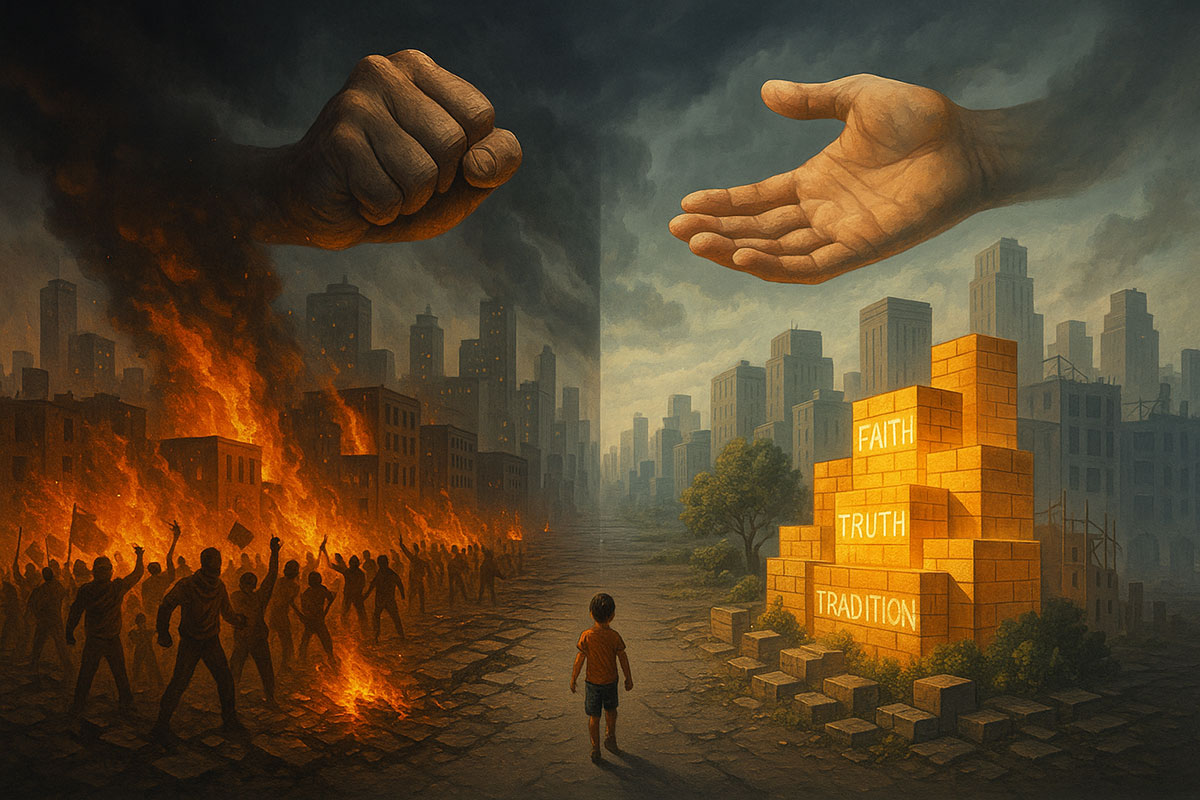
When the LA riots erupted in 1992, the nation viewed them as an emotional eruption—a tragic, combustible reaction to injustice. But as time has passed, it has become clear to some of us that these were not isolated or accidental events. They were the prototype for a new kind of ideological warfare—designed, funded, and implemented not by chance, but by philosophy.
The riots were never just about broken glass or burning buildings. They marked the beginning of a cultural shift, a spiritual shift, where violence became sanctified, and destruction became a means of expression. What we’ve witnessed since—escalating protests, educational radicalization, and a war on moral foundations—confirms that a dangerous worldview has gained traction.
In this series of conversations, I’ve asked five thinkers who have each, in their own way, warned against this rising tide of philosophical violence. Together, we trace the roots of unrest, expose the machinery behind it, and begin to uncover a path back—not through suppression, but through restoration. This isn’t a partisan issue. It’s a spiritual one. And unless we reckon with the ideologies that justify harm in the name of progress, we may not have much of a civilization left to argue about.
(Note: This is an imaginary conversation, a creative exploration of an idea, and not a real speech or event.)

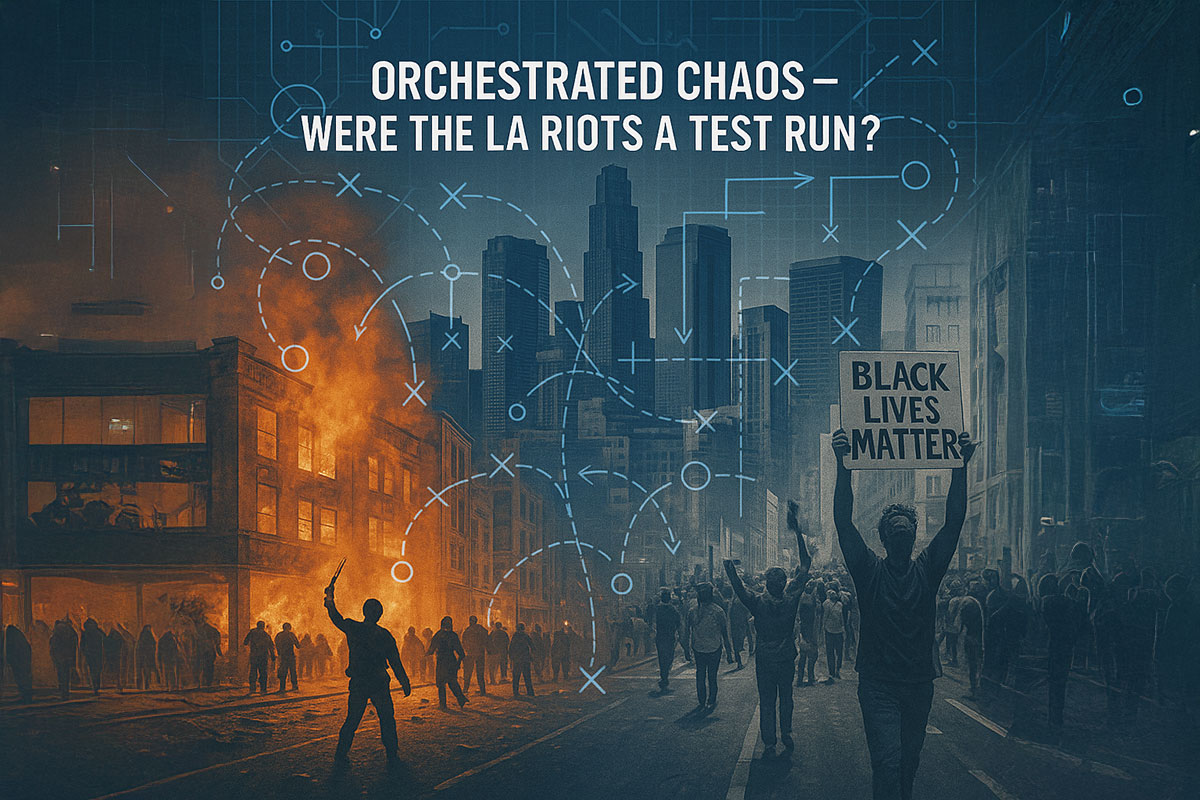
Topic 1: Orchestrated Chaos – Were the LA Riots a Test Run?
Moderator:
Thank you all for joining today. Let’s begin with a fundamental question.
Many assume the 1992 LA riots were a spontaneous reaction to injustice. But what if they were deliberate groundwork for future upheaval?
Do you believe the LA riots were strategically designed rather than accidental, and if so, what evidence or patterns point to that?
Victor Davis Hanson:
Absolutely. The riots weren’t just a reaction; they were a response waiting for a spark. The Rodney King verdict was tragic, but the level of coordination—targeting certain communities, police withdrawal, planned looting routes—suggests more than emotional outrage. In hindsight, they served as a blueprint. We saw similar strategic escalation in 2020, from communication networks to media amplification. History shows us: chaos is rarely random.
Douglas Murray:
Indeed. When you examine the ideological undercurrents, it becomes clearer. What starts as grievance quickly morphs into political theater, often with the same groups, same slogans, same funding trails. The repetition isn’t coincidence. The goal is to unmake society—strip it of shared meaning, then replace it with something malleable. The LA riots were not the beginning of chaos, but of methodized chaos.
Heather Mac Donald:
The data confirms it. There was targeted aggression toward institutions, particularly law enforcement. But what followed was a refusal to reestablish order. Officials pulled back. Policies changed. Rioters were seen as revolutionaries. That narrative has been deliberately protected. If we view it as an isolated incident, we miss how it helped normalize lawlessness as a form of social expression.
Jordan Peterson:
What strikes me is how quickly violence became morally justified in intellectual circles. Even then, academic voices began framing the riots as an inevitable consequence of “systemic injustice,” rather than a collapse of personal responsibility. That framing is dangerous. It inserts legitimacy into destruction—and once that's accepted, society loses its grip on moral boundaries.
Os Guinness:
And let’s not forget the spiritual dimension. All great civilizations understand that when order collapses, it’s rarely accidental. The erosion of transcendent values sets the stage. What the LA riots revealed was a gaping vacuum—no shared vision of the good, no restraint. The riots were a signal: something deeper was unraveling, and it wasn’t just political—it was philosophical.
Moderator:
Let’s go deeper.
If these riots were a test run for ideological warfare, who or what do you believe stood behind them—and what goals were they aiming for?
Heather Mac Donald:
Behind the curtain, there’s a network—activist coalitions, academic justifiers, and progressive political actors. The goal? Delegitimize core institutions—police, courts, even families—under the guise of reform. The riots became a way to accelerate these goals without public debate.
Douglas Murray:
There’s an elite class—wealthy, often guilt-laden individuals—who bankroll these disruptions. They believe they’re on the “right side of history,” but in truth, they’re playing with fire. The objective is revolution in slow motion. Tear down old frameworks to usher in a new, untested moral code.
Os Guinness:
We’re dealing with people who have lost faith in anything beyond themselves. They see the West as irredeemably flawed and believe salvation lies in dismantling its foundations. What we’re seeing is an attempted exorcism of tradition—done not by prayer, but by Molotov cocktails.
Victor Davis Hanson:
Yes, and we also can’t ignore the international angle. There are global actors who benefit from American destabilization—foreign influencers who amplify divisions. This isn’t just domestic unrest. It’s geopolitical warfare via internal decay.
Jordan Peterson:
The deeper driver is ideology itself—particularly postmodernism and neo-Marxism. These frameworks teach that power is the only reality, and that peace is a lie upheld by oppressors. Once that belief takes root, everything—even violence—can be justified as moral.
Moderator:
Final question.
If the riots were strategically engineered, what must we do now to prevent future upheavals masked as justice movements?
Jordan Peterson:
We need to teach moral clarity again. People must relearn that not all emotions justify action. That destruction is not discourse. Without personal responsibility and truth, we’re training future mobs, not citizens.
Victor Davis Hanson:
Enforce the law—consistently, fearlessly, fairly. When officials fail to respond to violence, they invite more of it. Riots must never be allowed to become an acceptable form of protest.
Os Guinness:
Rebuild moral consensus. Without shared transcendent values, we will forever swing between repression and rebellion. The solution is not more ideology, but deeper humility—returning to eternal principles that gave the West its stability.
Heather Mac Donald:
De-glamorize disorder. Media must stop romanticizing violence. Activists need to be held accountable, not canonized. Law and culture should reward builders, not destroyers.
Douglas Murray:
We must resist fear. Many know this is wrong but stay silent. Silence breeds decay. Courage isn’t optional—it’s survival. Say what is true, even if your voice shakes.
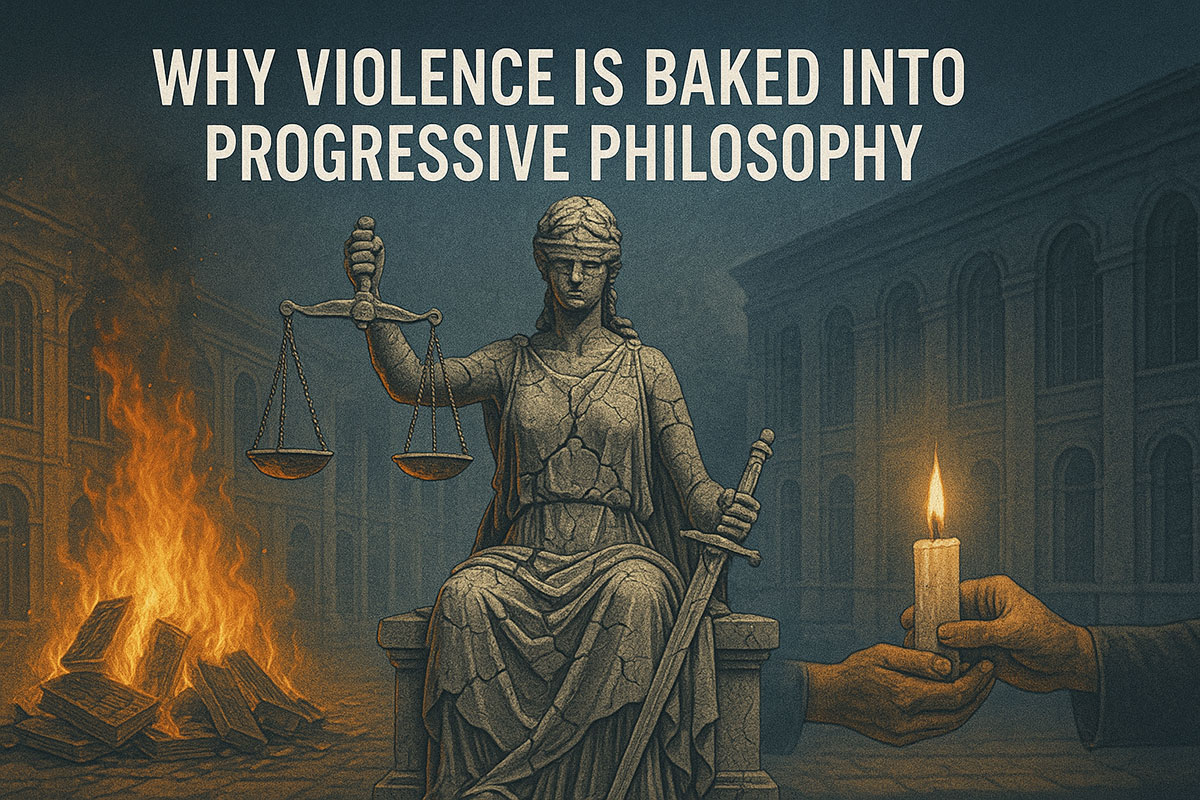
Topic 2: Why Violence Is Baked into Progressive Philosophy
Moderator:
We’re moving deeper now. Some argue that violence isn’t just a tactic—it’s an inevitable outcome of certain philosophies.
Do you believe progressive ideology naturally leads to violence? If so, what within its core worldview causes that?
Douglas Murray:
Yes, and it's not a bug—it’s a feature. When you teach that all societal structures are built on oppression, you condition followers to see destruction as liberation. Progressivism, untethered from tradition or humility, becomes a war against the past. And war, by its nature, is violent.
Os Guinness:
Absolutely. Once you place human reason above moral transcendence, you remove the guardrails. If there’s no God above, then man becomes god—and history shows us what happens when flawed humans claim ultimate authority. Violence isn’t surprising then. It’s the expected result.
Heather Mac Donald:
What’s disturbing is how it’s dressed up in the language of compassion. Progressive causes often use terms like “justice” or “equity,” but the logic beneath is zero-sum: someone must be punished, removed, or erased for the world to be “made right.” That logic is always violent.
Victor Davis Hanson:
Yes, because the revolutionary spirit demands a constant enemy. Progressivism thrives on grievance—real or invented—and once you define justice as dismantling, not building, the line between speech and violence blurs. They believe peace comes after the fire, not before.
Jordan Peterson:
Progressive ideology views hierarchy as inherently evil. That idea produces resentment—and resentment, when moralized, justifies rage. When you believe the world is rigged against you and there's no higher meaning, violence becomes a form of righteous release.
Moderator:
Thank you. Let’s go further.
How do we see this philosophical violence manifesting in today’s culture, media, and education systems?
Heather Mac Donald:
It’s everywhere. Look at how crime is excused if it’s politically aligned. Academic departments frame riots as “forms of expression.” Media glorifies defiance. We’re watching the normalization of force as virtue—especially when it’s directed at so-called oppressive systems.
Douglas Murray:
You’ll notice the language has changed. Words like “silence is violence,” or “resistance is duty.” It’s not about understanding—it’s about coercion. From DEI offices to classrooms, it’s pressure to conform or be labeled as complicit in harm. That kind of mental violence breeds physical violence.
Jordan Peterson:
We’re creating ideologically possessed youth. They emerge from universities armed not with knowledge but with a belief that they’re warriors against oppression. They’re told that dismantling the system is their moral duty—yet they lack the psychological maturity to see where that leads.
Victor Davis Hanson:
In education, history is being weaponized. Instead of teaching the complexity of Western civilization, they teach its guilt. That guilt is used to justify anger, and anger is used to justify action. We’ve abandoned balance—and without balance, anger metastasizes into unrest.
Os Guinness:
The problem is spiritual. Once you remove a moral horizon beyond the self, all that’s left is power. We see students taught to shout down, not reason with. We see culture that rewards grievance, not grace. It’s a slow erosion of soul—and soul erosion always leads to collapse.
Moderator:
Final thought:
If progressive violence is philosophical at its root, what must we restore to prevent future generations from embracing destruction as a virtue?
Os Guinness:
We must return to awe. A sense that we are not the final word—that life is sacred, that others are not obstacles. Only transcendent values can hold a culture together. Without them, justice will always turn cruel.
Victor Davis Hanson:
Civics and history must be rescued. People should know what they’re inheriting before they tear it down. You cannot love what you’ve been trained to hate.
Douglas Murray:
Courage. We must speak plainly again. Fear has made too many cowards. When truth becomes dangerous, people suffer. The only antidote to false virtue is real virtue—spoken clearly and without shame.
Jordan Peterson:
Responsibility. We must teach the next generation that meaning comes not from rebellion, but from carrying weight. From building something, not burning it down. That starts in families, in classrooms, in stories we tell our children.
Heather Mac Donald:
Law and order rooted in moral clarity. Without consequences, ideologies run unchecked. We must restore boundaries—not just physical, but moral—and reward those who protect, not destroy.
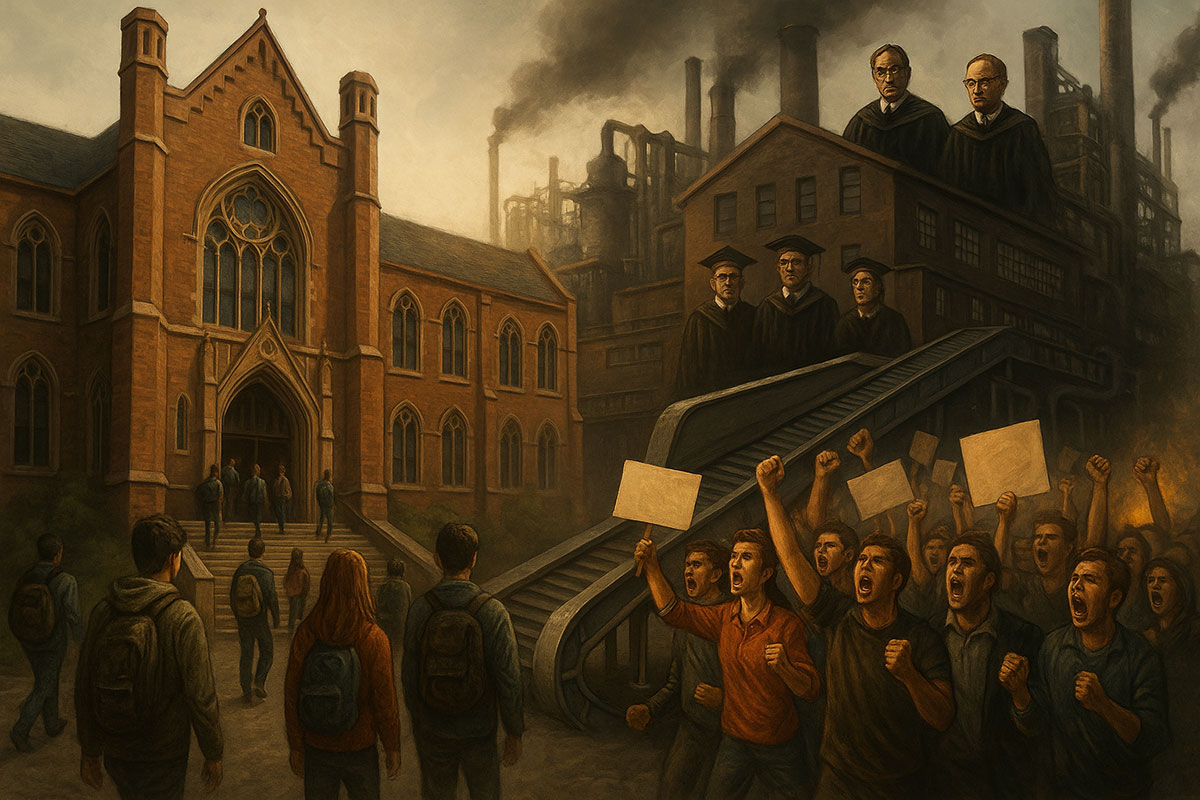
Topic 3: Academic Factories of Revolution – How Higher Ed Trains Radicals
Moderator:
Let’s now look at the roots of radicalism. Many violent or disruptive activists are not formed in the streets—but in the seminar room.
How has higher education played a role in shaping individuals who justify or commit social violence?
Jordan Peterson:
Universities have shifted from places of inquiry to places of indoctrination. Students are no longer taught how to think, but what to think. And what they’re taught is resentment. Entire disciplines are built on the premise that Western civilization is a system of oppression. That’s not education—it’s ideological grooming.
Os Guinness:
The modern university has become a church of secular dogma. With no God above, it substitutes activism for faith. Students are taught to deconstruct but never to rebuild. They emerge convinced that tearing down institutions is moral, even heroic. That’s how young people become revolutionaries, not reformers.
Heather Mac Donald:
The evidence is everywhere. Look at campus riots when conservative speakers are invited. Violence is tolerated—often encouraged—by faculty and administrators. Curriculum pushes divisive identity politics. Academia has created a moral permission structure for hate, all cloaked in the language of justice.
Douglas Murray:
There’s a moral economy in play. Students are rewarded socially and academically for expressing the correct rage. Victimhood becomes currency. The more aggrieved your identity, the higher your moral standing. This hierarchy of grievance trains students to view their opponents as enemies to be silenced—not debated.
Victor Davis Hanson:
It’s a long game. For decades, universities have elevated postmodernism and critical theory—ideas that reject truth and tradition. When you tell generations there is no truth, only power, you will raise people who believe force is truth. That’s what we’re seeing play out.
Moderator:
If universities are breeding grounds for ideological extremism,
what concrete steps led us here, and who bears responsibility for the transformation of academia into activism hubs?
Heather Mac Donald:
It started with the shift from liberal education to radical activism in the late '60s. Tenure protected ideologues. DEI bureaucracies expanded rapidly. And spineless administrators allowed intimidation to replace dialogue. No one wanted to be called racist or sexist—so they surrendered.
Douglas Murray:
Departments of grievance—gender studies, race theory, post-colonialism—multiplied. These aren't neutral disciplines; they’re political missions. Once those captured the humanities, the infection spread outward. The blame lies with those who watched and said nothing—especially trustees, donors, and alumni.
Jordan Peterson:
Professors carry immense responsibility. Many saw their role as shaping minds, but instead taught bitterness and blame. They turned education into an engine of resentment. And the idea that suffering equals moral authority is deeply dangerous. It sets students up to see violence as vindication.
Victor Davis Hanson:
Administrators surrendered to the mob. Instead of defending standards, they chased prestige and funding. They let loud minorities dictate policy. Add in social media, and suddenly, outrage became a virtue and tradition a sin. The people in charge didn't just fail—they betrayed their duty.
Os Guinness:
We abandoned the idea of truth. Once truth became “your truth” and “my truth,” dialogue died. Universities stopped being sanctuaries of wisdom and became battlegrounds for ideologies. This was not drift. It was direction—a deliberate rejection of moral and spiritual foundations.
Moderator:
If we are to reverse the damage and prevent future generations from being radicalized,
how do we reform the education system—especially higher education—without silencing free thought or healthy dissent?
Victor Davis Hanson:
Reintroduce a classical core curriculum—history, philosophy, logic, literature. Cut the activist departments. Reward academic excellence over political conformity. If students learn what came before, they’ll be less eager to destroy it blindly.
Jordan Peterson:
Teach responsibility. Give students something to aim for beyond protest. They need to build something meaningful in their own lives—families, careers, character. Only then will they see how precious order is, and how foolish it is to burn it down.
Heather Mac Donald:
Defund DEI bureaucracies. End the race/gender obsession that distorts everything. Bring back merit. And demand courage from faculty—real courage—to teach honestly, not ideologically. It’s time for truth to stop whispering.
Douglas Murray:
Reward debate, not compliance. Create spaces where disagreement is not punished but praised. Challenge the narrative that dissent is dangerous. We need a new generation of brave educators, not just brilliant ones.
Os Guinness:
Return to purpose. Education should shape souls, not just sharpen intellect. We need universities to cultivate virtue, humility, and wonder again. That’s how we recover civilization—one student at a time.
Topic 4: Protest or Performance? How Today Mirrors 1992’s Unrest
Moderator:
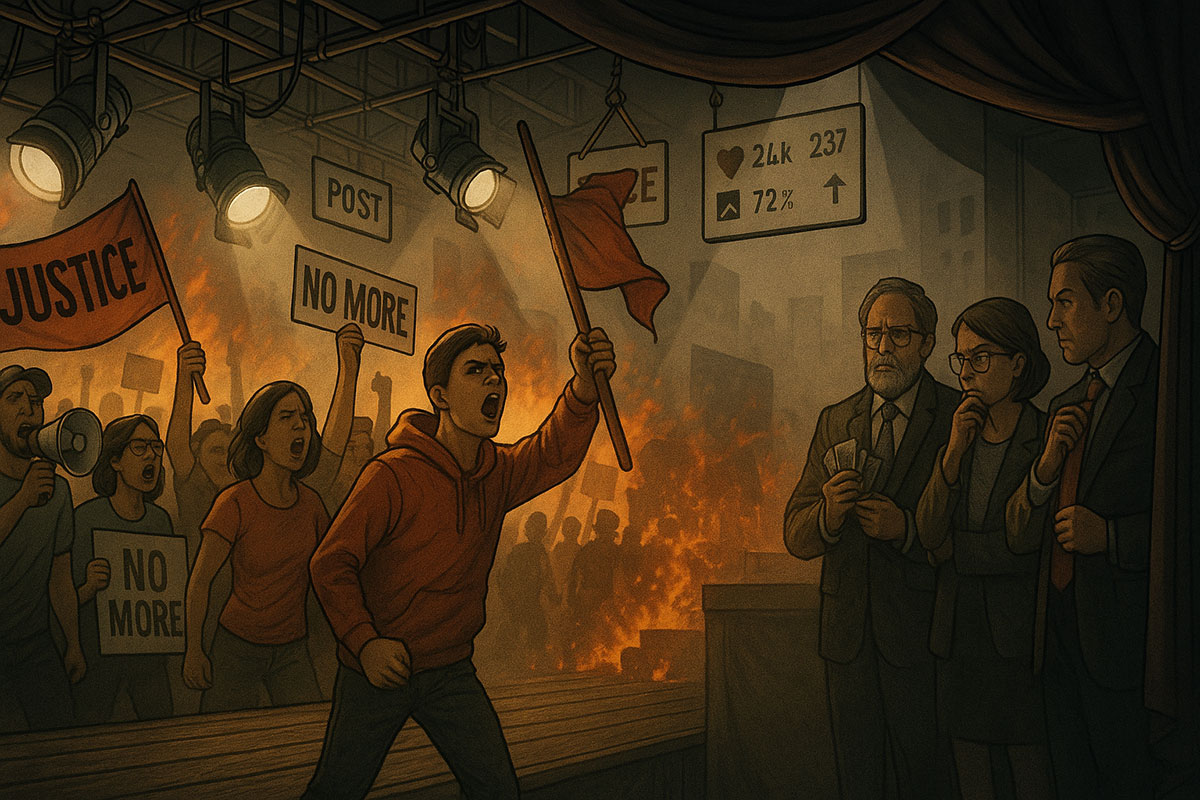
Let’s bridge the past and present. What we saw in 1992—the chaos, destruction, and organized defiance—seems echoed today in cities across America.
Do you see today’s progressive protests as spontaneous uprisings, or as calculated continuations of that same 1992 strategy?
Heather Mac Donald:
Calculated, no question. The choreography is familiar: sudden outrage, rapid mobilization, targeted institutions, media cover fire. The violence follows a playbook now. There’s nothing organic about bricks placed in alleyways or coordinated messaging across platforms within minutes.
Douglas Murray:
Yes. Spontaneity doesn’t scale this fast. We’ve seen professionalized protest infrastructure—legal teams on standby, donation portals ready, social media campaigns launched instantly. It’s an ecosystem. What begins as “justice” quickly becomes performance, aimed at tearing down.
Victor Davis Hanson:
It’s a template. From 1992 to 2020, the method hasn’t changed—just the technology. Peaceful protests become riots when law enforcement backs off and officials signal appeasement. The chaos is a message: the old order is weak, and the new one will be born from fire.
Os Guinness:
There’s a loss of reverence. Protests used to have a moral heartbeat, even when disruptive. Now, they often resemble a ritual of destruction—tearing down statues, defacing sacred spaces. Without a sacred framework, rage becomes its own justification.
Jordan Peterson:
And the moral hierarchy is reversed. The more you oppose, the more virtuous you appear. That’s why protests are no longer just responses—they’re expressions of identity. People riot to be seen as righteous. It's ideological theater, not grassroots democracy.
Moderator:
If today’s protests are repeating the same blueprint,
what institutional forces—media, tech, government—are enabling or accelerating this shift from organic protest to coordinated unrest?
Douglas Murray:
Media plays a massive role. They frame violence as “mostly peaceful” and amplify the most radical voices. That framing protects and even encourages escalation. Big Tech is no different—it suppresses counter-narratives while boosting outrage-driven content.
Heather Mac Donald:
Local governments are often complicit. They adopt policies that favor the disruptors. No-bail laws, weakened policing, and sympathetic messaging signal to rioters that the state is on their side—or at least too afraid to stop them.
Victor Davis Hanson:
Universities, celebrities, corporate elites—they all cheer it on. Corporations fund these movements to buy protection from criticism. But they’re playing with fire. Once the mob finishes with statues, it turns on the sponsors. This is short-sighted appeasement.
Jordan Peterson:
It’s the perfect storm of ideological alignment. The academy creates the ideas, the media spreads them, Big Tech accelerates them, and the government refrains from resisting them. You couldn’t design a more efficient machine for moral disintegration.
Os Guinness:
The absence of spiritual leadership has also created a vacuum. When pastors, rabbis, and moral teachers go silent—or worse, cheer on destruction—we lose our compass. Institutions aren’t just enabling unrest. They're failing to offer a better story.
Moderator:
Then here’s the crucial point:
How do we reclaim the true power of protest—real, meaningful protest rooted in peace, conscience, and shared values?
Os Guinness:
We must return to a foundation of moral clarity. Protest must serve truth, not identity. It should aim to restore, not destroy. Real protest elevates—it doesn’t burn. We need to call our youth to conscience, not chaos.
Jordan Peterson:
Reframe courage. It’s not brave to shout in a crowd. It’s brave to speak quietly when it costs you everything. Teach that. Model it. Elevate it. People must know that building takes more courage than breaking.
Heather Mac Donald:
Reinforce consequences. Without accountability, chaos becomes a trend. Protesting should be protected—but rioting should never be excused. The law must be clear and fair, or it ceases to matter.
Douglas Murray:
Give people hope. Rage fills the void where vision should be. If leaders won’t offer a better future, radicals will offer destruction. A nation that’s ashamed of itself invites its own undoing.
Victor Davis Hanson:
We must strengthen the institutions that protect civil order—schools, churches, law enforcement. Not as tools of power, but as servants of stability. Protest has its place—but it must live within the framework of civilization, not overrun it.
Topic 5: Transcendence vs. Tyranny – The Moral Divide Between Left and Right
Moderator:
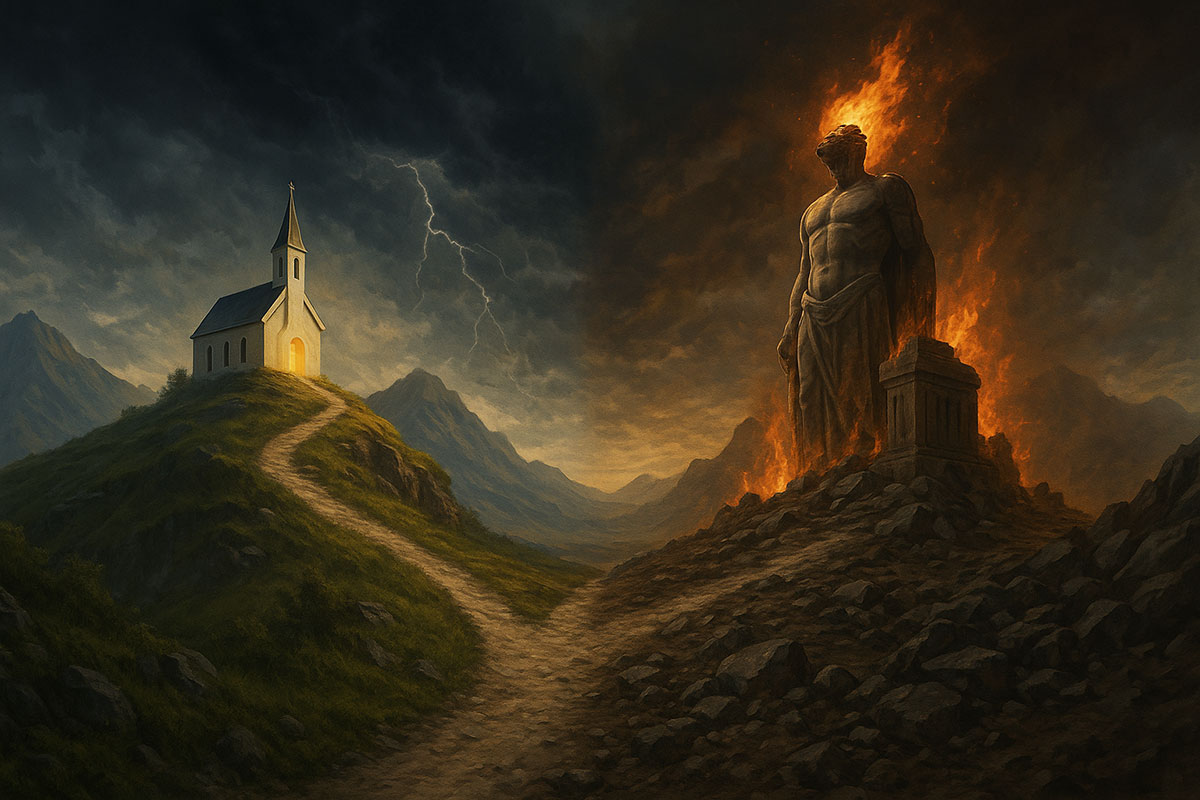
Now let’s tackle the foundational divide. Some believe that conservatism begins with faith in a transcendent moral order, while progressivism relies solely on human reason—and that this fundamental difference shapes whether a society moves toward harmony or descends into conflict.
Is this philosophical split between transcendent faith and reason-based ideology the key to understanding today’s conflict?
Os Guinness:
Yes, absolutely. Every civilization rests on what it worships. If you remove God, you don’t remove worship—you just replace it with idols. The progressive reliance on human reason as supreme leads inevitably to tyranny, because without a higher authority, man becomes the law. And history shows that never ends well.
Douglas Murray:
When you unmoor a society from the sacred, you drift into madness. The West's great strength was always a balance—reason checked by humility, freedom rooted in responsibility. When progressives strip away faith and tradition, they think they’re liberating us. In fact, they’re dismantling the last protections we have from ourselves.
Victor Davis Hanson:
Yes. Traditional conservatism respects limits—on government, on ego, on appetite—because it sees those limits as rooted in something higher than man. Progressivism does the opposite: it sees limits as oppression. That view produces entitlement, grievance, and, eventually, rage. Without transcendence, we worship revolution.
Jordan Peterson:
The human soul needs meaning. When progressives kill God, they don’t get atheists—they get ideologues. Ideology is a poor substitute for religion. It gives people a framework, but no mercy. No forgiveness. Just perpetual outrage, and an ever-growing list of enemies.
Heather Mac Donald:
And this divide affects law. Conservatives see law as reflecting natural or divine order—something to be honored. Progressives see law as a construct of power, to be rewritten at will. That mindset justifies violence as progress. But law without moral grounding becomes an instrument of vengeance.
Moderator:
If transcendence truly shapes social peace and stability,
how do we begin restoring a culture that respects the divine, even in a pluralistic society?
Os Guinness:
We must teach moral imagination again—through stories, through beauty, through reverence. A culture without awe cannot survive. Pluralism doesn’t mean relativism. It means liberty under truth. We must recover the sense that life is sacred—not because the state says so, but because God does.
Jordan Peterson:
Start in the family. Teach children the value of sacrifice, of purpose beyond self. Let them wrestle with the big questions. Give them tools to confront suffering—not escape it. That’s how you raise people who don’t burn cities to feel alive.
Heather Mac Donald:
Restore merit, beauty, and truth in education. Remove the politics. Let young people encounter the transcendent in literature, in science, in history. Give them something greater to aspire to than themselves.
Douglas Murray:
Recover courage in leadership. Leaders must not only govern, they must remind. Of who we are. Of what made us. Of why it’s worth preserving. A nation that forgets its sacred roots will find itself at war with its own soul.
Victor Davis Hanson:
We must rebuild shared rituals—national holidays, civic ceremonies, moral language that binds rather than divides. Secularism should never mean soullessness. Without sacred memory, there is no civilization—only a mob with no past and no future.
Moderator:
Final question.
If the future is to be shaped by one of these paths—faith-based order or reason-based rebellion—which will win, and what will it take to ensure the former prevails?
Jordan Peterson:
The truth always wins—but only if we speak it. We’re in a war of meaning. Those who believe in faith, tradition, and responsibility must stop apologizing and start building again. Not through force—but by being better.
Os Guinness:
History swings like a pendulum. The key is not panic but perseverance. We must outlive the lies and outlove the hatred. Societies that rediscover the sacred endure. Those that do not, disappear.
Heather Mac Donald:
It starts with clarity. We must name what is broken—openly. And then teach what is good—patiently. Western civilization is not perfect, but it is precious. That truth must be defended, again and again.
Victor Davis Hanson:
We must choose courage over comfort. The West can prevail—but only if it remembers who it is. That means embracing limits, honoring virtue, and rejecting the easy seductions of grievance and rage.
Douglas Murray:
The path of faith is harder. It asks for humility, not applause. But it’s the only path that leads to peace. If we don’t want violence to rule the future, we must replant ourselves in soil deeper than ideology. That means going back to the well—back to the sacred.
Final Thoughts
As we conclude, one truth rings through every voice in this conversation: violence is not born out of thin air—it’s born from ideas. The fire in our streets began with the fire in our minds, stoked by ideologies that reject transcendence, deny restraint, and exalt grievance over grace.
What we’re up against is not just a political shift, but a civilizational inversion. The values that once held us together—faith, humility, sacrifice, reverence for law and life—have been systematically mocked, eroded, and replaced by a false morality rooted in resentment and rebellion.
But we are not helpless. History has shown that cultures can recover, that truth can be rediscovered, and that societies, when humbled, can find peace again. The restoration begins in the soul—first individually, then communally. If we can reject the lie that force makes right, and instead return to the enduring source of justice—transcendence—we can once again build a society where protest is not performance, where disagreement does not demand destruction, and where peace is not weakness, but strength.
Let this not be a warning alone—but an invitation to rebuild.
Short Bios:
Victor Davis Hanson
Historian, classicist, and senior fellow at the Hoover Institution, Hanson specializes in ancient warfare, American politics, and cultural decline, offering deep insight into how civilizations rise and fall.
Jordan Peterson
Clinical psychologist and bestselling author, Peterson critiques modern ideologies and advocates for personal responsibility, psychological balance, and the restoration of traditional values.
Heather Mac Donald
A fellow at the Manhattan Institute, Mac Donald is known for her rigorous analysis of crime, law enforcement, and identity politics, challenging progressive narratives with data and logic.
Douglas Murray
British journalist and author of The Madness of Crowds, Murray explores the cultural consequences of identity politics, woke ideology, and the erosion of Western values.
Os Guinness
Author and social critic, Guinness draws on history, theology, and philosophy to champion moral freedom and civic virtue, urging societies to return to transcendent truths.
Leave a Reply