

|
Getting your Trinity Audio player ready...
|
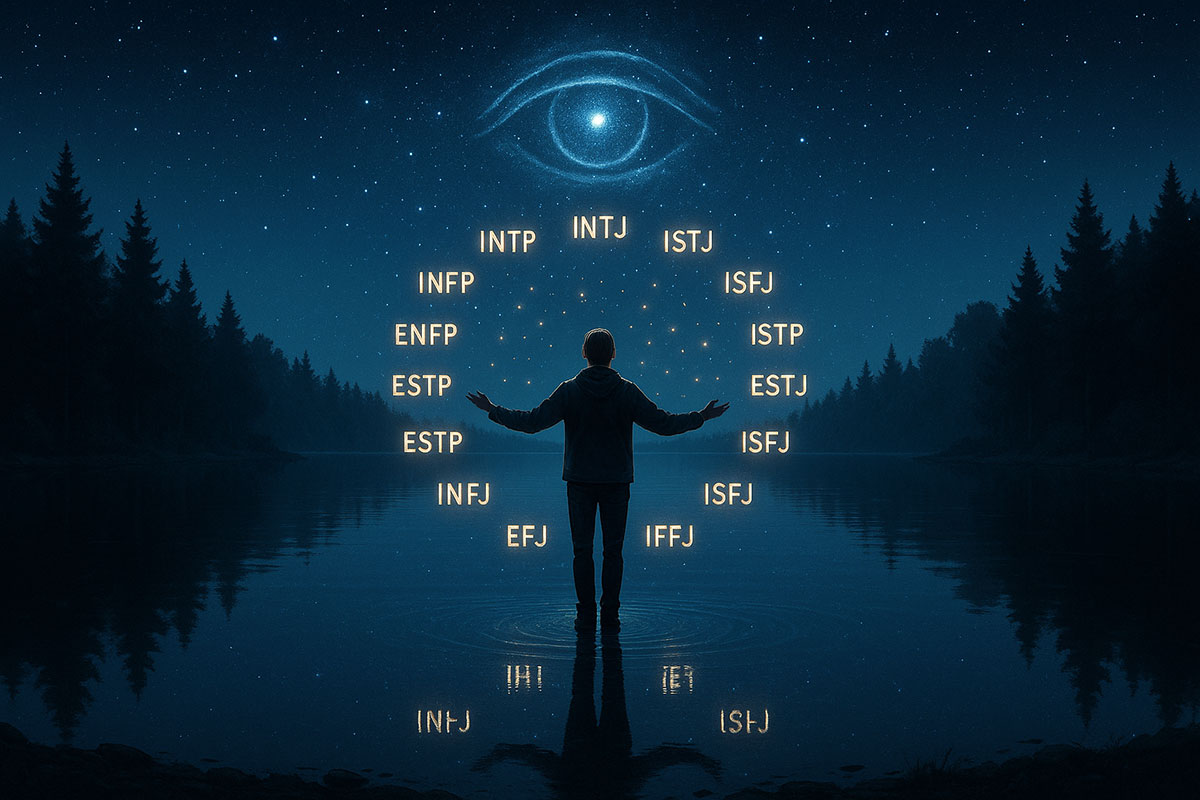
When I first began developing the MBTI, I wasn’t trying to categorize people—I was trying to understand them. My mother, Katharine Cook Briggs, taught me that each person’s mind is shaped by invisible preferences—how they take in the world and how they make decisions. I believed, and still do, that if we can see those differences clearly, we can replace judgment with compassion.
This series isn't just about letters like E or I, T or F. It’s about what those letters represent: your energy, your focus, your lens, your heartbeat. You are not a label—you are a landscape. And understanding your type is just the first step in navigating it.
Each topic in this series opens a door to deeper insight:
Into why you might crave solitude while others seek a crowd.
Into why some need step-by-step clarity while others leap toward the abstract.
Into why a tough call might split the room between logic and love.
Into why you thrive on planning—or resist it with all your soul.
And ultimately, into how to honor your design without becoming trapped by it.
This is not about putting yourself in a box. It’s about seeing that the box was never real to begin with.
(Note: This is an imaginary conversation, a creative exploration of an idea, and not a real speech or event.)

Topic 1: Energy & Social Interaction (Extraversion vs. Introversion)

Question Focus: How we recharge, interact, and experience the world around us.
Opening by Isabel Briggs Myers
Isabel Briggs Myers:
When we speak of Extraversion and Introversion, we’re not merely labeling social behavior—we're exploring how individuals gain and lose energy. Extroverts often feel energized by interacting with the outer world: people, activity, and sensory stimulation. Introverts, in contrast, recharge in solitude, drawing energy from within. Neither is better or worse. In fact, the world needs both: the spark of the extravert and the depth of the introvert. Today, we’ll dive deeper: Is our personality a fixed trait, or does the way we engage with others evolve over time?
Carl Jung (Moderator)
Thank you, Isabel. Let us begin our inquiry into the first great question:
"How do we recharge best: through engagement with others or retreat into ourselves—and why do we often feel conflicted about it?"
Laurie Helgoe
It’s often overlooked that introverts aren’t antisocial—they’re differently social. I recharge when I’m alone with my thoughts. My inner world is rich and layered, and I need space to access it. The conflict arises when the world around us insists that energy should look like enthusiasm and extroversion. Many introverts feel defective until they realize: their quiet is their power.
Tony Robbins
I’m wired to energize others—and in doing so, I feel more alive. That said, even extroverts need solitude for clarity and grounding. The key is intentionality. I use moments of silence to reflect, but I gain momentum through action and connection. The danger is in overextension—thinking you're limitless just because you feel fueled by people. Burnout comes fast if you don’t listen to your body.
Susan Cain
Introverts can feel overwhelmed in environments designed for extroverts—open offices, rapid-fire meetings, networking events. The conflict is cultural. We live in a society that equates visibility with value. But reflection, deep listening, and calm presence are just as powerful. The question isn't which is better—it's which environment nurtures your natural rhythm.
Sherry Turkle
We confuse connection with conversation. Sometimes we surround ourselves with people to avoid being alone—but we’re still lonely. I believe we recharge best when we’re in alignment with our authentic self. That could mean solitude, or it could mean a small circle of meaningful relationships. Either way, the digital world has complicated this—our identities are now projected, not just lived.
Daniel Goleman
From an emotional intelligence lens, the ability to regulate one’s energy flow is crucial. Extroverts may misread their overdrive as productivity, while introverts may retreat so deeply that they disconnect. Awareness—of your emotions and others’ responses—is the key. True mastery is adapting to context without losing your core.
Carl Jung
Beautifully said. Now let us turn toward our second exploration:
"Is being an introvert in a loud world a disadvantage—or a hidden strength in disguise?"
Susan Cain
It’s absolutely a hidden strength. Introverts bring qualities like deep focus, nuanced thinking, and quiet leadership. I’ve seen organizations transform when they realize their strongest contributors aren’t always the loudest voices in the room. The world’s volume is high—but that doesn’t mean silence has no power. In fact, it often carries the most weight.
Tony Robbins
As someone who thrives in motion, I’ve learned to respect the still ones. I’ve coached introverted billionaires—they lead with vision, not volume. But yes, the default setting of the world—especially in business—is noisy. You either adjust to amplify your message or you let your work speak louder than your words.
Sherry Turkle
The danger lies in assuming participation equals presence. Introverts often observe before they contribute—and when they do, it’s meaningful. In classrooms and boardrooms, we must redefine engagement. Listening is a form of participation. Reflection is a form of power. The world may be loud, but insight is often found in the quiet.
Laurie Helgoe
I believe our world is starved for what introverts naturally offer: depth, patience, and the willingness to sit with uncertainty. The challenge isn’t the personality type—it’s the pressure to conform. When introverts stop trying to be extroverts, their gifts emerge effortlessly.
Daniel Goleman
Social dynamics are shifting. Remote work, digital communication, and mindfulness practices are creating space for introverted strengths to flourish. Empathy, focused attention, and internal regulation—these are advantages in a world that’s increasingly overwhelmed.
Carl Jung
Now, to our final question in this topic:
"Can someone truly change from extravert to introvert—or is it merely adapting behavior?"
Tony Robbins
You can absolutely adapt, but I believe our core tendencies stay constant. I’ve coached introverts to command a stage. But after the event, they go straight back to solitude. That’s not change—it’s stretching. Growth doesn’t mean becoming someone else. It means using every part of yourself when needed.
Daniel Goleman
From a neuroscience perspective, there is flexibility—but within limits. With mindfulness and practice, people can lean into less-preferred traits. But the emotional toll tells the truth. If you’re constantly drained, you’re probably not acting from your natural type. Growth is real, but personality remains a stable pattern over time.
Laurie Helgoe
I agree. Personality is a stable foundation—but our roles can shift. I’m a professor. I speak to rooms full of people. But after that, I crave silence. That doesn’t mean I’ve become an extrovert. It means I’ve learned to navigate the external world without abandoning my internal compass.
Susan Cain
Sometimes, it’s less about changing type and more about permission. Permission to retreat. Permission to speak. Permission to lead on your terms. I believe we evolve, but not always by changing who we are—rather, by fully becoming it.
Sherry Turkle
What we often call “change” is a dance between context and identity. Technology, culture, trauma, even joy—they shape how we show up. But your center doesn’t disappear. It may hide. It may adapt. But it’s still you. The key is remembering who that is, especially when the world forgets.
Final Thoughts by Carl Jung
You have all spoken with the wisdom of those who live deeply within themselves and generously toward others. Extraversion and introversion are not masks we wear, but languages our souls speak. Some shout, some whisper—but both are valid, both are sacred. The goal is not to choose, but to listen—to ourselves and to each other.
Topic 2: Information Gathering (Sensing vs. Intuition)
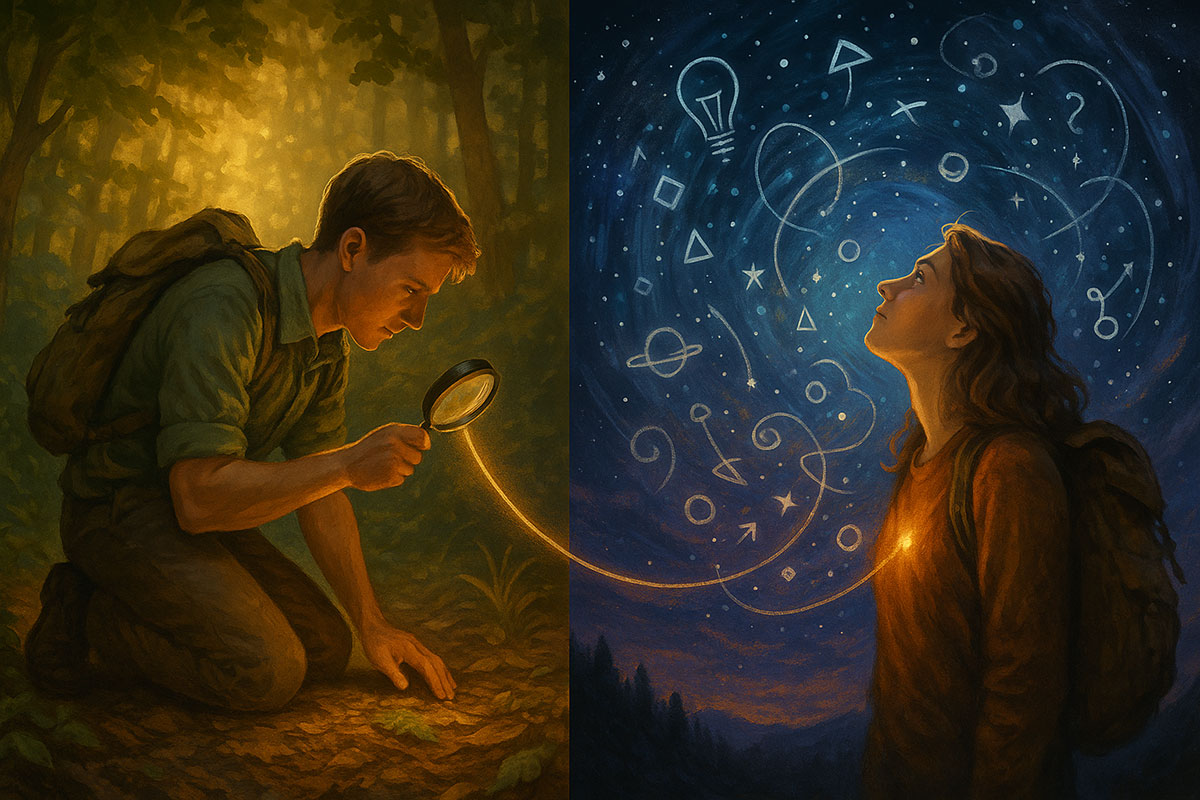
Question Focus: How do we take in information—through what is, or through what might be?
Opening by Isabel Briggs Myers
Isabel Briggs Myers:
At the heart of the MBTI lies a profound question: How do we come to understand the world? The Sensing-Intuition scale isn’t about intelligence—it’s about preference. Those who prefer Sensing trust the tangible, the verifiable, and the present. Those who prefer Intuition seek patterns, possibilities, and meaning beyond the surface. One type builds with bricks. The other sees the building before it's made. But both are needed—especially in a world that demands both clarity and vision.
Carl Jung (Moderator)
Thank you, Isabel. Let’s begin with our first inquiry:
"Why do some people trust direct experience and facts, while others are drawn to meaning, patterns, and possibilities?"
Temple Grandin
I experience the world in vivid images—real, physical, detail-rich. I build understanding by handling data like parts of a machine. That’s how my brain works. Sensing is not limited thinking—it’s grounded thinking. I don’t need abstract metaphors to solve problems. I need clear input, logic, and step-by-step progress.
Malcolm Gladwell
I operate almost entirely on patterns. I don’t always know how I know something—I just sense the connections. That’s intuition. It’s not magic; it’s fast pattern recognition based on experience. The mind leaps. And often, it’s right. But we need both types. Pattern thinkers need sensors to slow them down. Sensors need intuitives to speed things up.
Barbara Oakley
As an engineer, I appreciate sensors who build solid frameworks. But I’ve seen intuitives jump to elegant solutions without showing the work. Both are vital. The challenge is cognitive bias—we assume others see the world as we do. That’s dangerous. In teams, the best results come when both voices are heard: the grounded and the visionary.
Joseph Campbell
I believe Intuition is the flame behind myth, behind meaning. The Sensing type sees the hero’s sword; the Intuitive sees the transformation it represents. But I respect the sensor—without the swordsmith, the myth has no object. We live by symbols and stories, but we walk through the real. The best thinkers see both.
Michio Kaku
Science advances through a dance of facts and vision. Einstein imagined riding a beam of light—that’s pure Intuition. But he needed mathematical proof—that’s Sensing. I’ve worked with brilliant minds who could feel the future. Yet without experimentation, it’s fantasy. We need the dreamers and the testers. One without the other is incomplete.
Carl Jung
Beautiful synthesis. Now, let us move to our second exploration:
"How does one’s information-gathering style influence creativity, innovation, or even relationships?"
Malcolm Gladwell
Intuitives often appear more creative because they start with the why before the how. They’re comfortable jumping ahead, which is crucial for innovation. But sensing types are just as creative—they just express it through craftsmanship, refinement, and practical application. A jazz solo and a perfectly baked soufflé—both are creative acts.
Temple Grandin
Innovation needs concrete thinking. I’ve built systems to improve animal welfare not from theory, but from noticing tiny patterns—how a shadow spooks cattle, how a curve reduces fear. Creativity isn’t always abstract. Sometimes it’s observant. And in relationships, sensing types notice details others miss: tone, timing, the way a hand shakes.
Joseph Campbell
Intuition guides myth-making and love. We fall in love not with a checklist, but a feeling—a recognition of archetypes. But sustaining love needs sensing. You remember anniversaries. You notice moods. The sacred needs the sensory. The heart soars, yes—but it must also touch the earth.
Barbara Oakley
When Intuitives and Sensors work together, innovation scales. The Intuitive asks, “What if?” The Sensor replies, “Here’s how.” In relationships, though, conflict arises if one sees possibility while the other sees reality. That’s why awareness of type is crucial—not to change the other, but to complement them.
Michio Kaku
Even the cosmos reveals this tension. The Big Bang is both a mathematical event and a metaphor. We reach for meaning while grounded in physics. In innovation, sensing brings integrity; intuition, breakthrough. But if either dominates, imbalance follows. The wise mind knows when to dream—and when to measure.
Carl Jung
And now, our final inquiry:
"Is practicality always more useful—or can intuitive thinking unlock higher truths that data alone cannot?"
Temple Grandin
Practicality saves lives. That’s not abstract—it’s real. You need step-by-step systems in hospitals, engineering, safety. But even I, a sensor, admit that sometimes you need to take a leap. That’s where intuition steps in. It’s not either-or. It’s sequence: observe, understand, then imagine.
Barbara Oakley
We’re wired to prefer what feels reliable. Sensors want proof. Intuitives want possibility. But usefulness depends on context. When writing code or flying planes, practicality rules. When designing a new education system or reimagining justice? Intuition must lead. Wisdom lies in knowing which to use when.
Malcolm Gladwell
Facts alone never changed a heart. Stories did. That’s the power of intuition—it reveals the invisible truths data can’t touch. But intuition without discipline becomes delusion. The highest truths are neither cold nor dreamy. They are patterns, grounded in something real.
Joseph Campbell
The intuitive journey is the hero’s call. You may not know where it leads, but your soul follows. The greatest truths I’ve found weren’t in research—they were in symbols, dreams, myths. Still, I honor the practical—the body that carries the spirit. Without it, the journey goes nowhere.
Michio Kaku
Some say the world is made of atoms. Others say it's made of stories. Both are true. We must be bold enough to imagine beyond the current data—and humble enough to test what we imagine. That’s how humanity rises. That’s how we reach the stars.
Carl Jung
The Sensor sees what is. The Intuitive sees what could be. Together, they represent the totality of perception—body and mind, past and future, earth and sky. Each is blind without the other. To perceive truth fully, one must honor both the seen and the unseen, the detail and the dream.
Topic 3: Decision-Making (Thinking vs. Feeling)

Question Focus: How do we decide—through logic and principle, or through compassion and values?
Opening by Isabel Briggs Myers
Isabel Briggs Myers:
The distinction between Thinking and Feeling is often misunderstood. It’s not about whether you feel or think—we all do both. The difference lies in what we rely on first when making decisions. Thinkers prioritize logic, objectivity, and fairness. Feelers prioritize values, harmony, and how decisions affect others. Both bring essential truths. The challenge—and opportunity—lies in learning when to lead with one, and when to let the other speak.
Carl Jung (Moderator)
Thank you, Isabel. Let us begin with our first question:
"Are logic and empathy really opposites—or can they coexist in effective decision-making?"
Elon Musk
Logic is my first tool. I make decisions using first principles—breaking problems down to what’s objectively true. But I’ve learned that empathy is essential for building things people actually want. Without understanding human emotion, even the most logical design can fail. They’re not opposites. They’re different muscles—and both are required to build something meaningful.
Jane Goodall
I start with empathy. Always. Working with animals taught me that understanding must precede intervention. But empathy doesn’t exclude clarity. When protecting endangered species, you need data. You need strategy. What matters is the order—start with compassion, use logic to follow through. That’s how real change happens.
Daniel Kahneman
Psychologically, we often think we’re being rational when we’re really driven by emotion. The trick is awareness. Can they coexist? Absolutely. But you must acknowledge both systems—System 1 (fast, emotional) and System 2 (slow, analytical). Effective decision-making doesn’t silence either voice—it lets them inform each other.
Chimamanda Ngozi Adichie
In my writing and life, I find that logic without empathy becomes cruelty dressed as clarity. And empathy without structure dissolves into chaos. The most powerful decisions I’ve made come from asking, “What is right, and who does it protect?” It’s a dialogue between the heart and the mind. Not a debate.
Ray Dalio
In investing, logic protects you. But in leadership, empathy connects you. At Bridgewater, we created systems to test ideas—radical transparency. But those systems failed without emotional awareness. People aren’t algorithms. The goal is not to eliminate emotion, but to integrate it responsibly into the decision-making loop.
Carl Jung
Let’s continue with the second inquiry:
"What role should emotions play in leadership, judgment, and moral decision-making?"
Jane Goodall
Emotions are not weakness. They are signals. I’ve seen young people, moved by compassion, become fierce advocates for change. In leadership, empathy builds trust. People follow those who care. Moral decisions cannot be made in a vacuum. Feeling connects us to consequence.
Elon Musk
I respect emotion—but I don’t let it drive the car. It’s in the passenger seat. When you’re leading missions to Mars or building autonomous vehicles, feelings can cloud urgency. That said, ignoring emotion entirely leads to cultural failure. You need systems—but you also need soul.
Chimamanda Ngozi Adichie
Emotion isn’t the opposite of intelligence—it’s a form of it. In moral judgment, emotions like guilt or love are compass needles. They tell us what we value. A leader who feels deeply and acts decisively is powerful. A leader who doesn’t feel? That’s dangerous.
Ray Dalio
Morality is a blend of principle and empathy. One without the other becomes either tyranny or chaos. I’ve written about this in Principles: the best leaders make decisions that are principled and human. That’s the edge—values backed by reason.
Daniel Kahneman
The science is clear: emotions are always part of the decision loop, whether we admit it or not. The wise leader isn’t emotionless—they’re emotionally literate. You must name what you feel, then decide what to do with it. That’s maturity.
Carl Jung
Now to our final question:
"Can feeling types thrive in high-stakes, logical environments—and can thinking types be emotionally intelligent?"
Ray Dalio
Absolutely. I’ve seen feeling types outperform thinkers in boardrooms—especially when stakes involve people, not just numbers. They’re attuned to mood shifts, to culture. That awareness is strategic. Likewise, thinkers can learn emotional intelligence—but it requires humility and practice.
Jane Goodall
Feeling types bring depth to crisis. When every life matters, compassion drives bold action. I’ve negotiated with governments, fundraised with billionaires—because I cared, and they felt it. Passion opens doors that logic alone can’t unlock.
Daniel Kahneman
Feelers can lead with remarkable precision. But they need structure to contain overwhelm. And thinkers? They can absolutely grow in empathy. Emotional intelligence is learnable—through feedback, reflection, and deep listening. The myth is that we’re fixed. We’re not. The key is intention.
Elon Musk
I’ve hired feelers who’ve taught me more about leadership than any spreadsheet. They see things I don’t—things that matter. Likewise, I’ve worked hard to read people better, to tune into tone, timing, energy. You can train that. And if you want to build something lasting—you must.
Chimamanda Ngozi Adichie
Feeling types are not fragile—they’re courageous. To care in a careless world takes strength. And thinking types can be tender. Some of the most rational people I know are also the most loving. The border between logic and love isn’t a wall. It’s a bridge.
Carl Jung
To think is to map the world. To feel is to anchor meaning to it. Decision-making that honors both does not weaken—it awakens. The wise person asks not just “What is true?” but also “What matters?” That union of clarity and care—that is the path of wholeness.
Topic 4: Lifestyle & Structure (Judging vs. Perceiving)
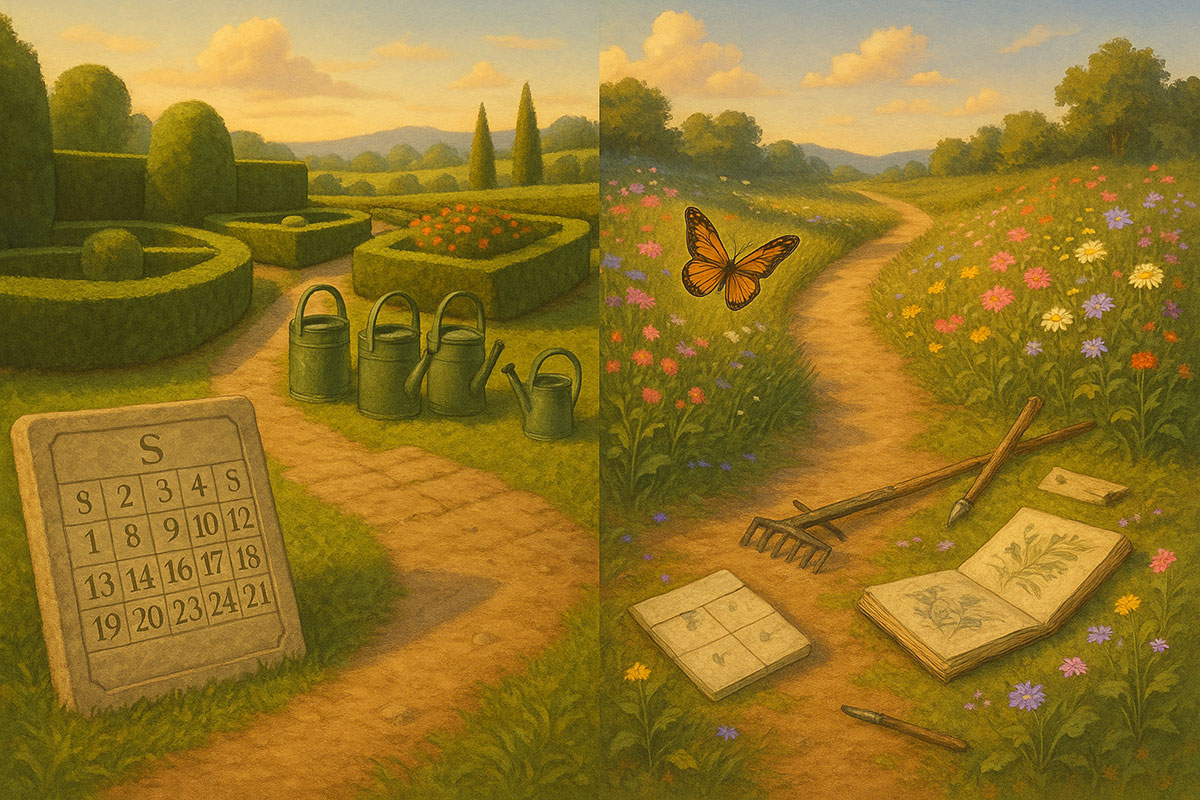
Question Focus: Do we prefer a planned life—or one that’s flexible and evolving?
Opening by Isabel Briggs Myers
Isabel Briggs Myers:
The Judging–Perceiving dichotomy reflects how we interact with the external world. Those with a Judging preference favor order, closure, and clear plans—they like life mapped out. Perceiving types, on the other hand, thrive in adaptability, exploration, and leaving things open. It’s not about being judgmental or passive. It’s about how we manage time, decisions, and our relationship to the unknown. Some find comfort in a checklist. Others find freedom in possibility. Both approaches are valid—but they lead us through life very differently.
Carl Jung (Moderator)
Let’s begin with our first inquiry:
"Why do some people thrive with plans while others resist structure—and how does this impact personal and professional success?"
Marie Kondo
For Judging types like me, structure brings peace. Decluttering isn’t just tidying—it’s a ritual of intention. When you plan your space, your time, your choices, you feel light. But I’ve learned not everyone sees freedom that way. For some, structure is confinement. The key is knowing which path sparks your joy—precision or spontaneity.
Tim Ferriss
I’m a perceiver who learned to build structure on my own terms. I resist external structure but embrace systems I control. That’s the difference. Perceivers aren’t lazy—we optimize for flow. My most successful experiments came from saying “What if?” not “Here’s the plan.” Success isn’t just outcomes—it’s how you arrive.
David Allen
I’ve coached both types. Judgers need a clear next action. Perceivers need freedom with clarity. My GTD system works because it respects both: you capture the chaos, then organize it into something fluid. When people understand their bias—toward early closure or open loops—they gain power over procrastination.
Elizabeth Gilbert
I resist rigid structure because life isn’t a spreadsheet. Creativity flows best when I let it surprise me. That doesn’t mean I don’t finish things—I do. But my process is nonlinear. I say yes to mystery. Perceivers don’t fear chaos; they court it—because sometimes, chaos births magic.
Jocko Willink
Discipline equals freedom. For Judging types like me, routines reduce decision fatigue. You train so that when the unpredictable hits, your habits carry you through. That said, I’ve worked with brilliant Perceivers who thrive in pressure zones. What matters is commitment. Whether it’s a plan or a pivot—own it.
Carl Jung
Now, let’s go deeper:
"Is procrastination a flaw—or can it be a powerful part of the creative or strategic process?"
Tim Ferriss
I believe in productive procrastination. Perceivers often wait because they’re scanning the environment. When it’s time to act, we strike fast. I’ve written whole books after weeks of 'thinking.' Procrastination becomes a flaw only when it's unconscious. If you know you’re waiting—and why—you’re still in control.
Marie Kondo
For Judging types, delay creates anxiety. We crave closure. But I've seen that even procrastination can be intentional when rooted in reflection. Tidying a life means understanding the rhythm of your decisions. Sometimes, stillness is necessary. But clarity must follow.
Elizabeth Gilbert
Procrastination is misunderstood. Often, I’m not “putting it off”—I’m incubating. Ideas need darkness before they bloom. I’ve learned to trust my inner timeline. The danger comes when shame creeps in. Creativity cannot survive in shame. Honor your delay, then write when the page calls.
Jocko Willink
In combat or leadership, procrastination kills. You move, or people get hurt. But I do recognize strategic patience. Sometimes the best decision is to wait for the right moment. That’s not procrastination—it’s wisdom. The key is knowing the difference. Are you pausing... or avoiding?
David Allen
I call it “creative tension.” Your brain holds unfinished business. Procrastination is often unclarity in disguise. Ask: What’s the very next action? You’ll move. Whether you’re a Judger needing structure or a Perceiver needing space, action begins with awareness. You can’t finish what you haven’t defined.
Carl Jung
Let us now complete this path with the final inquiry:
"How do Judging and Perceiving styles influence daily life, decision-making, and even our relationships?"
Marie Kondo
Judging types tend to manage their environment to create calm. In relationships, that can mean wanting decisions made quickly. But it can cause conflict with someone who needs space to decide. Respecting your partner’s rhythm is a form of love—and peace.
Elizabeth Gilbert
As a Perceiver, I’ve learned that what looks like inconsistency is often just exploration. I don’t always commit right away—not out of fear, but curiosity. In love and work, that means I’m fluid. But I’ve had to learn that others need anchors. Communication is the bridge.
Jocko Willink
Every mission, every family, needs balance. A Judger brings stability. A Perceiver brings adaptability. If you don’t know what your partner or team prefers, misunderstandings multiply. Some need the plan. Others need the option. Leadership means creating space for both—while still getting it done.
Tim Ferriss
I use my Perceiving nature to experiment—test, pivot, reframe. But I’ve also added Judging habits to my life: batching, calendars, systems. Not because I changed types—but because I trained range. Personality is your starting point. Mastery is building flexibility.
David Allen
In daily life, your type determines how you handle ambiguity. Judgers close loops fast. Perceivers keep scanning. Both work—until they don’t. The healthiest people know when to switch gears. Awareness breeds agility. And that, ultimately, creates freedom.
Carl Jung
To judge is to draw a line. To perceive is to leave the door open. One seeks clarity. The other seeks potential. We must learn when to finish the sentence—and when to pause for the ellipsis. A wise life dances between closure and curiosity.
Topic 5: Integration & Self-Awareness
Question Focus: Are we born this way—or becoming who we are meant to be?
Opening by Isabel Briggs Myers
Isabel Briggs Myers:
This final topic is the heart of MBTI: not typing people to confine them, but to free them. Personality preferences are tendencies, not destiny. Understanding your type is a starting point for self-awareness—not an excuse for limitation. And deeper still is the question: Do we evolve past our type? Can we become balanced, whole? I believe MBTI is not a box—but a mirror. What you do after you look into it—that’s where growth begins.
Carl Jung (Moderator)
Thank you, Isabel. Let us begin our final exploration with this:
"Are we born with our MBTI type—or do we evolve into it through life experience?"
Carl Rogers
I believe we’re born with a tendency toward growth. MBTI type may begin with temperament, but it blossoms through environment, love, and freedom. A child may seem introverted, but with trust, they open. We evolve when we feel unconditionally accepted—not when we’re labeled too early.
Eckhart Tolle
The personality is not your essence. It’s a temporary form—like the ripples of a wave. You may be born with a preference, yes. But true transformation comes from presence. When you awaken, you no longer act from unconscious type—you respond from stillness, from consciousness. That is beyond all typology.
Gabor Maté
Much of what we call personality is actually adaptation. Trauma shapes behavior. A “Judger” child may cling to control because of chaos at home. An “Extrovert” may perform to earn love. We must ask not just what our type is—but why. Healing allows our true preferences—not just our defenses—to emerge.
Tara Brach
Awareness allows choice. I may be a Feeler, but with mindfulness, I can choose to access Thinking. We’re not frozen. Self-awareness softens reactivity. I see MBTI as a compassion tool—not a rulebook. When I know my type, I hold it lightly. I say, “Ah, this is my leaning,” not “This is who I am.”
Alan Watts
The question is not whether type is fixed, but whether identity itself is real. The self is a process, not a possession. MBTI may describe the pattern of the dance, but you are the dancer. And a good dancer can shift tempo, mood, and style. The point is to dance freely—not to stay in step forever.
Carl Jung
Now let us go deeper:
"What happens when we misunderstand or over-identify with our type—does it help or hinder our growth?"
Gabor Maté
Over-identification limits healing. If someone says, “I’m just a Thinker, I don’t do emotions,” they may block their own development. Often, that identity protects old wounds. True growth comes when we question the mask—not wear it more tightly.
Tara Brach
It’s easy to weaponize type—against ourselves or others. “I’m a Judger, so I can’t be spontaneous.” Or: “You’re an Introvert, so you won’t understand.” That creates division. Compassion arises when we recognize: each type holds all seeds. You may prefer one, but you’re not bound to it.
Eckhart Tolle
The ego loves labels. It says, “This is me.” But labels are mental forms. When you believe in them absolutely, suffering begins. The moment you realize, “I am not this role, this pattern, this past,” you begin to awaken. The personality still exists—but it no longer runs your life.
Carl Rogers
When someone says, “This is just who I am,” I gently ask: “Is it really?” Defensiveness hides fear. The beautiful paradox is this: when you let go of the rigid self, your truest self appears. MBTI is a window—not a wall.
Alan Watts
You are not a noun. You are a verb. When you say, “I am an INFP,” it’s like saying, “I am a sunrise.” But the sunrise changes every second. Let the type be a map, not a mirror. When you understand it, use it playfully—then move beyond it.
Carl Jung
Let us now conclude with the final question of this series:
"How can MBTI deepen self-awareness and compassion for others—without becoming a limitation?"
Tara Brach
MBTI creates a pause. “Oh, that person isn’t ignoring me—they’re just an introvert recharging.” That pause makes room for kindness. It shifts us from judgment to curiosity. In that space, relationship deepens. That’s the gift—not just knowing yourself, but softening toward others.
Carl Rogers
When we understand personality as a tendency, not a prison, we begin to listen better. The moment we stop trying to fix someone into our mold, love becomes possible. MBTI doesn’t show us difference—it shows us diversity. And with empathy, that becomes strength.
Alan Watts
When you stop clutching your own type, you begin to dance with others. The thinker learns to feel. The feeler learns to reflect. The structure-lover steps into the unknown. The free spirit learns to finish what they start. This is not contradiction—it is wholeness.
Eckhart Tolle
The deepest compassion comes when you are no longer seeking identity. You listen, not to confirm your view—but to be present. MBTI can point you inward. But presence takes you deeper. That is where love lives—not in the label, but in the stillness behind it.
Gabor Maté
Understanding MBTI should not limit the soul. It should free the wounded parts. When you say, “I see you, as you are,” healing begins. When you say that to yourself, growth begins. MBTI is not the end of knowing—it’s the beginning of beholding.
Carl Jung
To know yourself is not to define, but to discover. MBTI offers a compass—not a cage. It teaches us to honor our nature, and yet not be ruled by it. For in the great mystery of being, we are both formed—and forming.
Final Thoughts by Isabel Briggs Myers
After listening to these profound voices—from thinkers and feelers, dreamers and doers, scientists and storytellers—I am more convinced than ever: MBTI is not an answer. It is an invitation.
An invitation to pause, to reflect, and to notice.
An invitation to say: “This is what I tend to do. But is it still serving me?”
An invitation to recognize difference not as division, but as diversity with purpose.
You are not just your type. You are every moment you stretched beyond it. Every time you chose empathy when logic came easier—or clarity when emotion pulled hard. You are both the roots and the wings. You are the bridge.
If MBTI can help you understand yourself and love others better, then it has fulfilled its mission.
Because in the end, this was never about personality—it was about humanity.
And humanity, I believe, is always worth understanding.
Short Bios:
Isabel Briggs Myers – Co-creator of the MBTI, she dedicated her life to helping people understand psychological type to improve communication, career choice, and self-knowledge.
Carl Jung – Swiss psychiatrist and founder of analytical psychology; his theory of psychological types laid the foundation for the MBTI.
Susan Cain – Author of Quiet, she champions the power of introversion in a world that often overlooks the quiet observer.
Tony Robbins – Motivational speaker and peak performance strategist, known for his dynamic, extroverted presence and deep understanding of human behavior.
Laurie Helgoe – Clinical psychologist and author of Introvert Power, she explores the depth and richness of the inner life.
Daniel Goleman – Psychologist and author of Emotional Intelligence, he bridges the worlds of neuroscience, psychology, and leadership.
Sherry Turkle – MIT professor and author specializing in the impact of technology on human relationships and solitude.
Temple Grandin – Professor of animal science and autism advocate, known for her deeply sensory approach to problem-solving and innovation.
Malcolm Gladwell – Journalist and author who explores intuition, pattern recognition, and counterintuitive insights in human behavior.
Barbara Oakley – Engineer and educator, co-creator of the Learning How to Learn course, combining scientific rigor with practical learning tools.
Joseph Campbell – Renowned mythologist whose work on archetypes and the Hero’s Journey highlights intuitive ways of understanding life’s deeper patterns.
Michio Kaku – Theoretical physicist and futurist, blending scientific facts with visionary thinking on the nature of reality and possibility.
Elon Musk – Entrepreneur and engineer who applies first-principles thinking to disrupt industries through innovation and logic.
Jane Goodall – Primatologist and humanitarian whose empathy for animals has redefined how we understand nature and ourselves.
Daniel Kahneman – Nobel Prize-winning psychologist and author of Thinking, Fast and Slow, known for his work on decision-making and cognitive biases.
Chimamanda Ngozi Adichie – Acclaimed novelist and thinker whose stories illuminate emotional nuance, identity, and human dignity.
Ray Dalio – Founder of Bridgewater Associates, known for his principles-based leadership and data-driven yet emotionally aware decision-making.
Marie Kondo – Organizing consultant and author of The Life-Changing Magic of Tidying Up, representing the clarity and peace of structured living.
Tim Ferriss – Entrepreneur and author of The 4-Hour Workweek, known for experimental living and productivity hacking.
David Allen – Creator of Getting Things Done, a system that helps people clarify and organize their thoughts and tasks for efficiency.
Elizabeth Gilbert – Author of Eat, Pray, Love, known for embracing spontaneity, creativity, and the emotional side of personal growth.
Jocko Willink – Former Navy SEAL and leadership expert who teaches discipline, structure, and decisive action.
Carl Rogers – Humanistic psychologist who believed in unconditional positive regard and the inner potential of every individual.
Eckhart Tolle – Spiritual teacher and author of The Power of Now, emphasizing presence and freedom from ego.
Gabor Maté – Physician and trauma expert whose work connects personality with healing, addiction, and childhood experience.
Tara Brach – Psychologist and meditation teacher known for her compassionate teachings on mindfulness and radical self-acceptance.
Alan Watts – Philosopher and speaker who bridged Eastern and Western thought, encouraging spiritual awakening and playful self-awareness.
Leave a Reply