
|
Getting your Trinity Audio player ready...
|
Introduction — by Liya
In every age, the structures of power reveal themselves not through what they say, but through what they hide. I arrived at the Citadel expecting a place of decision, will, and presence. Instead, I found a machine—intricate, humming, and strangely empty at its core.
What struck me first was not corruption or cruelty, but performance. Aides rushing, screens glowing, silhouettes projected larger than life. In this place, the work was not governing—it was maintaining the illusion that someone was.
Every hallway whispered the same message:
“The Citadel will function, with or without the one at the top.”
I walked through these rooms like someone entering a grand theater after the actors have gone home. The props were still set, the lights still warm, the applause signs stacked neatly in the corner. Everyone kept moving as if the show must go on—because it had to.
And yet, the absence was everywhere.
Not a vacancy. Not a void.
Something more deliberate.
A sculpted emptiness, maintained by many hands.
These five scenes—Arrival, The Circle, The Screen, The Ceremony, and The Citadel at Dusk—show not a leader, but the shape of a leader. Not decisions, but their simulations. Not authority, but the shadow of authority scaled to the size of the sky.
From the outside, the Citadel glows.
From the inside, it flickers.
And so, I offer you these images—not to condemn, not to mock, but to reveal the strange choreography of governance when the dancer is missing and the dance continues anyway.
(Note: This is an imaginary conversation, a creative exploration of an idea, and not a real speech or event.)
CHAPTER 1 — Arrival at the Citadel

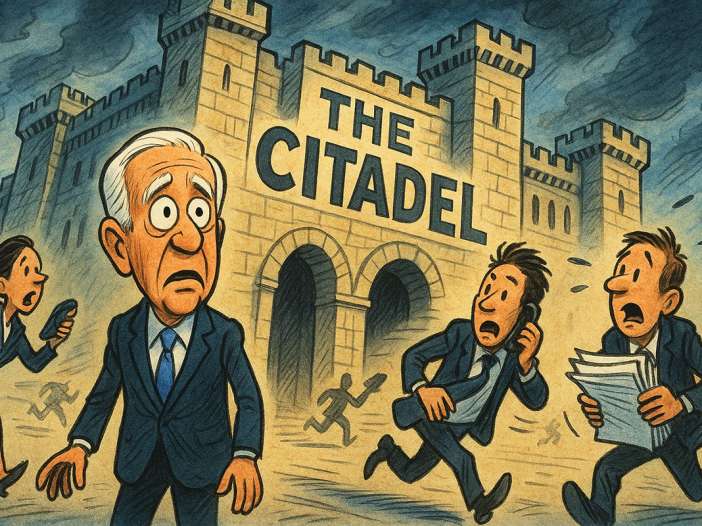
Liya arrived at the Citadel on a gray January morning when the snow was fresh, the optimism stale, and the new administration already showing signs of administrative arthritis. The summons she’d received—Your presence is required; details to follow—had been as ambiguous as any bureaucratic communication she had encountered in politics. The Citadel preferred its invitations cryptic; clarity was considered a form of extremism.
A young staffer wearing a badge that read Aide, Temporary approached her with the stiff politeness of someone who had recently been yelled at.
“Phone, please,” he said, extending a gloved hand.
“For security?” Liya asked.
“For everyone’s sanity,” he replied.
Inside, the hallways were wide and well-lit, but each corridor felt only partially real, as though it existed because an intern had remembered to plug in the lamps that morning. Messages printed on office doors were strangely vague:
Office of Logistical Considerations
Advisory Subcommittee for Scheduling Matters
Unit for the Preservation of Presidential Quiet
Liya suspected she had entered an institution where the signs existed not to direct but to distract.
She was ushered into a small donor briefing room. Only ten chairs. Ten donors. Ten frightened, high-net-worth mammals trying to convince themselves the new era would be stable.
Then the President entered.
He did so gently, the way a cloud drifts into a painting: slowly, peacefully, and with no awareness that anything depended on his movement. Two attendants flanked him, one guiding his elbow, the other whispering reminders about his name, the room, and the nature of his presence.
In front of him rested a podium with a teleprompter unusually close—so close the donors could read the script themselves.
“Good… good morning,” the President said, hesitating as though uncertain about time, space, or chronology itself.
A senior adviser, a tall man with a permanent grimace, whispered sharply, “Sir, emphasize unity.”
“Unity,” the President echoed, nodding. “As I have always said… unity.” He smiled as if he had invented the concept moments earlier.
The donors applauded automatically. Some applauded in relief—relief that the man had not forgotten how to speak on camera. Aides celebrated quietly, with the subtle fist pumps of men who know their careers depend on the maintenance of a fragile illusion.
The President finished the 3-minute speech and was guided away, murmuring, “Where are we going now?”
“To the East Room, sir.”
“Do I like the East Room?”
“Yes, sir. Very much.”
After he exited, the room relaxed like a deflated balloon. A communications aide took the podium to reassure donors that what they witnessed was “perfectly normal for a man of exceptional wisdom.”
One donor raised a timid hand.
“Is he… always like this privately?”
The aide smiled with the confidence of someone who had rehearsed this question for months.
“He’s sharper than he seems on camera,” the aide said.
They always said that.
Liya, who had attended political events for over a decade, had never heard a more suspicious compliment.
When she stepped outside into the cold afternoon air, she felt a dizziness that had nothing to do with the weather. The Citadel was a place where reality bent gently under the weight of necessity. The leader did not lead; the staff did not advise; and the press did not report—they all collaborated in an elaborate consensus hallucination.
She had only seen the President for three minutes, but it was enough to understand the guiding principle of the new administration:
Everyone must pretend he is fully present,
because no one can survive admitting he is not.
The snow crunched beneath her boots as she walked toward the exit gate. A guard checked her wrist stamp and whispered:
“You’ll be back. They always come back.”
Liya wanted to protest but found that the guard’s prophecy had the eerie quality of a Kafka line—absurd, unfounded, and undeniably true.
As she left the Citadel grounds, her phone was returned with a warning:
“Remember: If anyone asks, today went beautifully.
And you found the President firm, articulate, and vigorous.”
Liya nodded. In politics, truth was optional. But consensus—that was mandatory.
She walked away feeling as though she had witnessed a historical reenactment of leadership rather than leadership itself. The President had been present in body but absent in essence, like a sacred relic gently rolled out to appease the faithful.
A gust of winter wind scattered snow across the pavement, erasing her footprints almost instantly.
For a moment, it felt symbolic.
CHAPTER 2 — The Circle

Liya’s second visit to the Citadel began, as most bad days in politics do, with a calendar invite that sounded like a reward and felt like a trap.
SUBJECT: Strategic Donor Consultation
LOCATION: West Annex — Conference Room C
ATTENDEES: Senior Team + Key Partners
There were three lies in that line alone.
She was not being consulted.
She was not a partner.
And nothing about this was strategic.
Conference Room C, it turned out, was less a room than a holding pen with upholstered chairs. A large screen displayed the Citadel seal, which at this distance looked less like a symbol of authority and more like a logo for a mid-range credit union.
One by one, The Circle entered.
They did not announce themselves as such. No one ever said, “We are The Circle.” They simply behaved as if they were the natural gravitational center of the building.
First came the Counselor, a compact man with the smile of a dentist and the eyes of a bill collector. His job, officially, was “Senior Adviser to the President on Strategic Matters,” which meant he advised himself and then attached the President’s name to it in email signatures.
Next was the Pollster, who radiated the nervous energy of someone whose entire worldview could vanish with a new sample size. He clasped a tablet like a rosary, scrolling through numbers that appeared to comfort and frighten him simultaneously.
The Strategist floated in afterward, wrapped in a scarf and certainty. She spoke in slogans. Everything was a narrative, a frame, a message. Reality—for her—was not something you observed, but something you drafted.
The Doctor joined via secure video, framed by a wall of diplomas large enough to indicate either brilliance or profound insecurity. His camera angle was always slightly too low, as though he wanted everyone to admire his jawline while he declared the President “exceptionally fit.”
The Lawyer entered last, carrying a stack of folders labeled in thick black marker:
“EXEC PRIVILEGE,” “CONFIDENTIAL,” and one ominously blank.
Finally, seated near the door like a bouncer at an exclusive nightclub, was the Gatekeeper—the woman in charge of access. Her title changed monthly, but her function did not: nothing and no one reached the President without passing through her.
“Thank you all for coming,” the Counselor began. “We want to talk about how we’re all going to protect the President… together.”
Whenever someone in power says “together,” they mean “you, not us.”
“We’ve been hearing,” the Strategist said, “that some donors have… concerns.” She made the word sound like a hygiene problem. “Questions about the President’s stamina, his impromptu remarks…”
“His ability to finish sentences,” the Pollster added, then immediately looked like he regretted saying it out loud.
The Gatekeeper shot him a look that could have emptied a building.
“The President,” the Doctor declared from his screen, “is healthier than all of you.”
Liya blinked.
There were ten people in the room. Half ran marathons. One had just climbed Kilimanjaro for charity. All of them were under fifty. The President was… not under fifty.
“Excuse me?” Liya asked before her better judgment could tackle her mouth.
“Oh, I mean that metaphorically,” the Doctor said. “Though physiologically, he’s in excellent condition for his age. I examine him.” He raised his chin, as if the fact that he touched the President’s elbow occasionally made him a neutral source.
“The problem,” the Strategist cut in smoothly, “is not reality. The problem is perception. People are seeing short clips, taken out of context, framed by hostile forces.”
“Yes,” the Counselor agreed. “For example, that video where he said, ‘We finally beat… Medicare.’ Completely unfair. He meant the virus. Or the budget. Or something else entirely.”
“And the clip where he wandered away from the podium?” another donor asked quietly.
“Spatial creativity,” the Strategist said without missing a beat. “We are rebranding that.”
The Pollster cleared his throat.
“Look,” he said, “in our internal polling, when we phrase the question as ‘Do you believe the President is surrounded by a strong team?’ the numbers are excellent.”
“So your solution,” Liya said, “is to make people stop expecting the President to function as President, and instead reassure them that you function as President?”
The room shifted. It was the sort of silence that wasn’t empty so much as fully booked—occupied by defensiveness, irritation, and the frantic search for plausible deniability.
“No one said that,” the Lawyer interjected. “And if anyone did, they did so off the record.”
“We’re here,” the Gatekeeper said, finally speaking, “to ensure message discipline.”
That was the moment Liya understood the point of the meeting.
This was not about understanding her concerns.
This was about standardizing her vocabulary.
The Counselor folded his hands. “We’re asking you, as a valued ally, to be precise in public. When you’re on television, on social media, speaking to other donors, you will say the following things:”
He read from a card.
“The President is fully engaged.”
“The President is as sharp as ever.”
“Any suggestion otherwise is disinformation.”
“Even if it’s… not disinformation,” Liya said.
The Lawyer opened the blank folder just long enough for her to see the edge of a document with her name on it.
“Everyone here has benefited from proximity to the Citadel,” he said politely. “We’re simply encouraging alignment.”
Alignment. Another word for obedience, dressed in yoga pants.
The Strategist smiled at Liya as if explaining something to a child.
“You’re one of his closest defenders,” she said. “No one will believe you if you deviate. They’ll say you’re bitter. Or bought. Or crazy. So don’t deviate. The truth doesn’t matter if the narrative collapses.”
The Pollster jumped in.
“And if the narrative collapses,” he said, “our numbers go underwater. If the numbers go underwater, the opposition wins. If the opposition wins, the Republic ends. So, really, any criticism you share—however well-intentioned—is objectively anti-Republic.”
It was an impressive bit of acrobatics: dissent had been framed as treason in under thirty seconds.
The Doctor helpfully added, “And it’s stressful for him when people say mean things. Stress affects cognition, you know. So technically, criticism can cause decline. Think of that next time you’re tempted to be honest.”
They all laughed lightly at that, as if he had made a charming joke rather than a circular threat.
“We’re not asking you to lie,” the Counselor concluded. “We’re asking you to… focus on the totality of his service. Think of the big picture. When people ask about his mental acuity, just steer it back to empathy, stability, decency.”
“And if they ask directly?” Liya said. “If a host looks me in the eye and says, ‘Have you seen the President struggle to finish a sentence?’”
The Gatekeeper leaned forward.
“You have not seen that,” she said calmly. “Because nothing you have seen that contradicts the official assessment is, by definition, relevant. The President’s fitness is what we say it is. That is the standard.”
Liya felt a strange calm settle over her, the kind that precedes either surrender or revolt.
Kafka would have loved this place, she thought.
“Any questions?” the Counselor asked.
She had hundreds, all of them versions of the same inquiry: When did you decide that preserving your jobs was more important than telling the truth? But she also enjoyed her current life, her reputation, and her ability to receive email without subpoenas attached.
“No,” she said finally. “I understand.”
“Good,” the Strategist replied, as though something important had been successfully broken inside her. “We’ll send you talking points. And one more thing—no more photos of private events. No behind-the-scenes stories. No candid impressions. The President is not a man. The President is a message.”
The Pollster nodded. “And the message tests well, as long as no one looks too closely.”
When the meeting ended, the Gatekeeper intercepted Liya at the door.
“Just so you know,” she said warmly, “we really value you. That’s why we called this gathering. Lesser people, we just ignore.”
Liya smiled back with the controlled expression of someone being gently blackmailed by professionals.
As she stepped back out into the corridor, an aide rushed past balancing a stack of oversized cue cards—each line printed in giant font, some including arrows: PAUSE HERE, SMILE, EXIT LEFT.
“Is that for a major address?” Liya asked.
“Private donor lunch,” the aide said. “We like to keep things predictable.”
She walked toward the exit with the sense that she had just attended a theological council in which the high priests had unanimously agreed that their god was ill but must never be described as such.
Outside, the winter sun glared off the Citadel’s windows, making them appear opaque.
She had been in the building for two hours.
She felt, already, like an accomplice.
CHAPTER 3 — The Screen
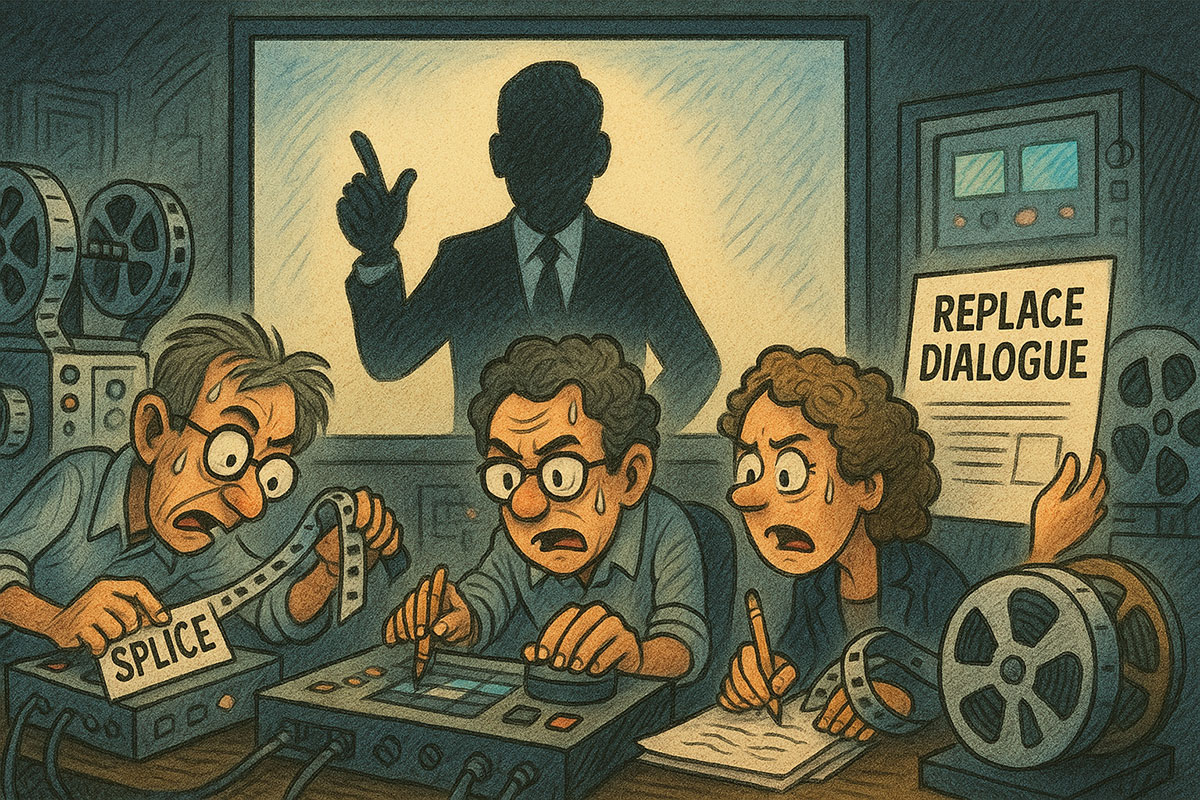
The Screen was not a single device.
It was an ecosystem.
A food chain.
A shimmering hallucination with synchronized Wi-Fi.
And Liya, up until recently, had been part of the species that fed it.
Her first real glimpse of its mechanics came in the days following the Ceremony, when she was invited—“as a trusted ally”—to sit in on a planning meeting with the Communications Office.
The room bustled with glowing rectangles:
mod-edit dashboards, live feeds, sentiment trackers, algorithm maps, and twenty-seven open tabs of news sites, all refreshing in unison like a synchronized swimming team of misinformation.
The Communications Director, a man whose hair was too confident for the rest of his face, stood at the head of the table.
“Congratulations, everyone,” he said. “The President’s speech polled at 68% ‘reassuring’ and 22% ‘very reassuring.’ That’s 90% reassurance across all age brackets.”
The Pollster frowned. “Reassurance of what?”
“It doesn’t matter,” the Director said, waving away the question. “The point is: people felt reassured. Feeling is the foundation of democracy.”
The Strategist nodded. “Truth is optional. Mood is mandatory.”
Aides took notes as if this were profound philosophy instead of a marketing slogan.
Behind them, a wall of screens displayed live TV commentary. On one panel, a friendly network replayed the President’s speech with soft piano underneath, like a pharmaceutical commercial for cholesterol medication.
The chyron read:
PRESIDENT PROJECTS QUIET STRENGTH AT GALA
On another network—the one the Citadel considered “hostile”—the anchors complained about “gaffes,” “slips,” and “concerning pauses.”
They ran the speech at half speed, which made everything sound like the President was underwater.
A comms aide clicked her tongue. “Look at that. Cheap trick. Dishonest.”
She then opened a program that automatically identified clips where he looked energetic and looped them for social distribution.
“Didn’t you just slow down footage of the opposition leader yesterday?” Liya asked.
“That’s different,” the aide said. “We did it compassionately.”
Liya blinked. Compassionate editing. The Citadel was inventing new moral frameworks daily.
The Strategist turned to the team. “Okay, people. Let’s talk messaging. We need a unified narrative to counter the ‘confusion’ storyline.”
“That he’s fine?” asked an intern.
“No,” she replied. “Too literal. We go with: ‘The President is focused.’”
“Focused on what?” Liya asked.
“Whatever we need him to be focused on,” the Strategist said. “That’s the beauty. It’s flexible.”
The Communications Director clapped. “Let’s run through today’s coverage map.”
He pointed:
- Friendly networks would emphasize empathy, stability, and “grandfatherly wisdom.”
- Centrist networks would say concerns were “manufactured.”
- Public radio would explore whether criticisms were rooted in “systemic ageism.”
- Satirical shows would mock the opposition for “performative outrage.”
- Late-night hosts would joke gently (“He fell asleep! Haven’t we all at fundraisers?”) then pivot to praising his humanity.
“See?” the Director said cheerfully. “Symphony.”
“Disinformation?” the Lawyer asked.
“Handled,” the Director replied.
“How?” Liya asked.
He pulled up a dashboard labeled NARRATIVE CORRECTION PIPELINE.
Under it were buttons:
- Downrank
- Shadow-reply
- Insert expert
- Boost surrogate
- Friendly stitch
- Corrective trend (paid)
- Community label (requested)
- Prebunk (experimental)
“We use whichever fits,” the Director said. “Sometimes all. Sometimes we just send the Pollster on TV to look worried and talk about democracy.”
The Pollster sighed.
The Gatekeeper swept in. “Status?”
“Clips are testing well,” the Director said. “We removed four awkward moments and digitally aligned his gaze with the camera. Looks engaged.”
“You can digitally align gaze?” Liya asked.
“It’s 2021,” the Director said. “We can align anything.”
Another screen flashed TikTok: a teenager dancing while explaining why “concerns about the President are just disinfo ops.”
“That kid is sixteen,” Liya said.
“Yes,” the Strategist said. “And essential to national stability.”
Another video showed staffers in busy offices. None included the President.
“Should we show him working?” an aide asked.
The Gatekeeper answered:
“He’s resting.”
“In what sense?” Liya asked.
“In the medical sense,” the Doctor said, appearing via video. “Rest is critical. The more he rests, the more functional he becomes.”
“That’s not how rest works,” Liya said.
“That is how our rest works,” the Doctor replied.
A new alert flashed:
HOSTILE CLIP: ‘PRESIDENT LOOKS TIRED.’
The Strategist immediately drafted talking points:
- “He’s thoughtful.”
- “He’s deliberate.”
- “Fatigue is relatable.”
- “Only autocrats look energetic 24/7.”
She turned to Liya. “Tweet something supportive?”
“I didn’t find him inspiring,” Liya said.
The room froze.
“We don’t tweet what we feel,” the Strategist said slowly. “We tweet what supports the narrative.”
“And the narrative,” the Gatekeeper added, “is that he is fully present.”
“But he’s not,” Liya said. “We all know that.”
“But the public does not,” the Counselor replied. “And they won’t, as long as we do our jobs.”
On the wall, edited clips replayed, showing a confident, focused President.
A President who never hesitated.
Never forgot.
Never wandered.
It was not him.
It was his avatar.
“We’re not just promoting him,” Liya said quietly. “We’re replacing him.”
No one disagreed.
They simply did not acknowledge.
Finally, the Gatekeeper said:
“Reality is a vulnerability. The Screen is our firewall.”
Liya left the room, the Screen glowing behind her,
bright, corrected, functional—
everything the man himself was not.
CHAPTER 4 — The Ceremony

The fundraising gala was officially titled “A Night of Renewal.”
Unofficially, it was known inside the Citadel as “The Ritual.”
Not a ritual. The ritual.
The one that re-consecrated the illusion.
Her summons arrived via text:
We need you present. Optics. Black tie. No surprises.
She arrived to find the Grand Ballroom of the North Rotunda shimmering under chandeliers that disguised the scent of industrial cleaner. Rows of gold chairs curved around a stage draped in ceremonial blue.
The Circle glided by, greeting donors with the serenity of priests preparing for a mass.
“The President is ready?” Liya asked.
The Strategist smiled as if Liya had asked whether the sky planned to remain sky.
“He’ll read exactly what we give him,” she said. “Leadership is clarity.”
“Leadership is reading?” Liya asked.
“Leadership is reading the correct thing,” the Strategist corrected.
Backstage, handlers ushered the President forward. He moved like a balloon being guided by two careful children. His smile was vague, his eyes scanning for cues.
The teleprompter had been adjusted so close that the nearest row of donors could read it.
The Strategist whispered, “We simplified the phrasing.”
Liya saw the full speech:
one screen, three minutes, large font, generous spacing.
A donor asked nervously, “Is he… prepared?”
“As prepared as necessary,” the Counselor said.
The Ceremony began.
A celebrity introduced him with sincere clichés.
Then the soft trumpet cue sounded.
Then the halftime-stage reveal.
The President stepped out.
The applause was immediate—a survival instinct.
He gripped the podium.
“Good… evening,” he said.
He continued:
“We gather… we gathered… we gather to celebrate the future.”
Aides winced.
But the crowd clapped. Out of habit. Out of terror.
He read on:
“We will continue to make progress. On… everything.”
More applause.
Then:
“We are committed to moving forward, not backward.”
He paused.
“And not… sideways.”
The Counselor turned purple.
Still applause.
He concluded with:
“The future is… bright… because… we are… brighter.”
Guided backstage, he asked an aide:
“Was that good?”
“You were wonderful,” she said, patting his arm like a nurse.
Liya watched donors congratulate themselves on supporting a “steady, wise leader.”
The Circle congratulated themselves on engineering a successful simulation.
Outside, the night air bit her lungs.
The Ceremony had worked.
Not because he delivered it,
but because they believed it.
CHAPTER 5 — The Empty Center
The end began with a Sunday show.
The host asked:
“Is the President mentally fit for a second term?”
Her answer should have been automatic:
“Yes, he is sharp as ever.”
Instead she said:
“I’ve seen him struggle. I’ve seen entire schedules arranged around his good hours. A small group of staffers is effectively running the country.”
The feed cut.
Punishment began.
Her appearances vanished.
Fundraisers evaporated.
Reporters ghosted her.
Her badge stopped working.
Her name stopped appearing on lists.
Her inbox stopped receiving invitations, only carefully crafted silences.
Only one staffer texted:
I agree with you.
But I can’t afford to agree publicly.
Please be safe.
From then on, she walked the Citadel from the outside.
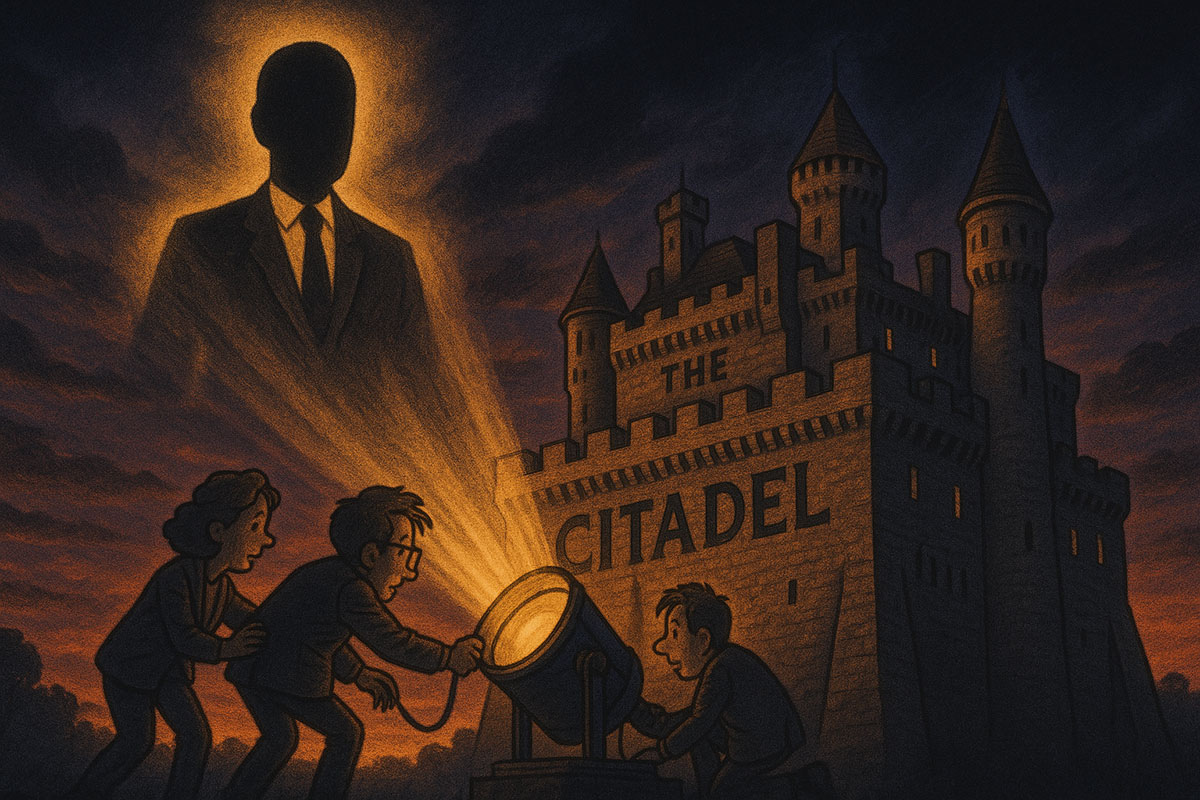
She saw the lights on every night—not because the President worked late, but because layers of staffers worked tirelessly to maintain the façade that he did.
She saw the Circle through windows—relaxed, confident, fully in charge.
She saw tourists snapping photos.
She overheard a child ask, “Is the President in there?”
His mother said, “Yes, honey. He’s working hard.”
Liya almost laughed.
Almost cried.
Almost screamed.
Instead she kept walking.
Because she finally understood:
The Citadel never needed a leader.
It needed a symbol.
A title.
A placeholder.
A vessel into which narratives could be poured and polished.
The real power lived in the bureaucratic maze around him:
The Circle
The Screen
The Ceremony
The Illusion
The empty center was not an accident.
It was the design.
The Citadel shone behind her as she stepped into the dark.
Not because someone was leading it.
But because the machine had learned to run without anyone at all.
And it shone—
whether anyone was really there or not.
Final Thoughts by Liya
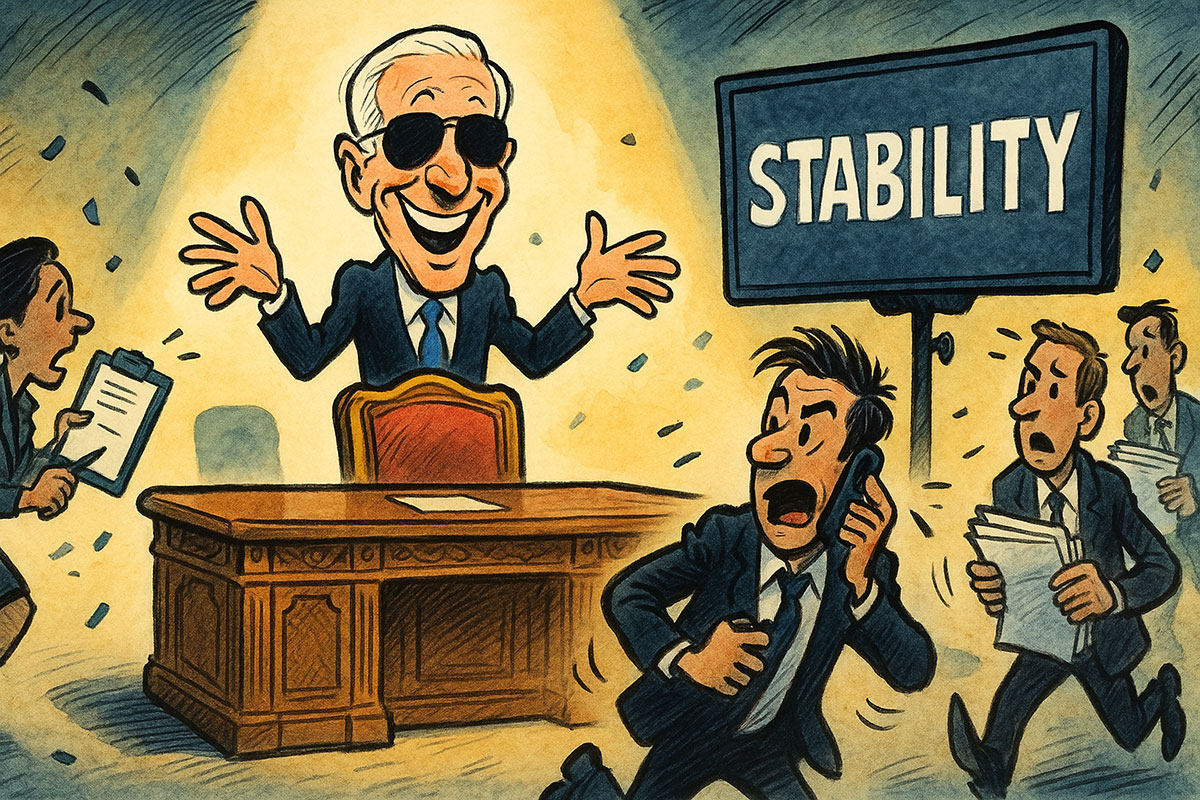
As day turns to dusk at the Citadel, one truth remains impossible to ignore: people will move mountains to preserve a story they believe the nation requires. They will splice the footage, polish the speech, guide the symbolic figure to the podium, and cast the silhouette across the sky.
Not out of malice.
Not even out of ambition.
But out of fear—the fear of letting the public see how little remains behind the curtain.
Yet the glow of the Citadel at dusk is not entirely a lie. It is also a testament to the human need for coherence, for continuity, for someone—anyone—to stand at the center and hold the narrative together.
But stories cannot lead.
Silhouettes cannot govern.
And a system that depends on absence will eventually collapse under the weight of its own maintenance.
If there is hope—and I believe there is—it lies not in the hologram above the fortress, but in the people below it: those who splice, adjust, rewrite, and clap on cue. They are not villains. They are architects of a fragile dream. And when the day comes that the Citadel must be reimagined, it is they—not the projected figure—who will rebuild it.
Until then, the spotlight will keep shining, the silhouette will keep glowing, and the machine will keep humming.
But we—those who watch—must not forget what we’ve seen.
Because once you recognize an empty throne, you can never unsee it.
Short Bios:
Liya
Liya is a mid-level communications analyst who enters the Citadel expecting purpose but discovers a vast, meticulously maintained illusion. Sharp, observant, and quietly moral, she becomes the story’s anchor—someone who sees what others refuse to acknowledge. Her journey is one of awakening: from loyal staffer to reluctant truth-bearer.
The Newcomer (The Fictional Leader)
A kindly, elderly symbolic figure with a practiced smile and gentle manner, he serves more as an image than an executive. Though he is well-meaning, he is often guided, edited, and repositioned by others. His presence is most powerful when projected on screens rather than in the room. He represents the system’s dependence on appearance over action.
The Strategist
Brilliant, fast-talking, and obsessed with message discipline, the Strategist is the architect of the Citadel’s illusions. She believes narrative matters more than truth and will rewrite reality if it improves “optics.” Her confidence masks a deep fear of what happens when the public sees the cracks.
The Gatekeeper
The Citadel’s enforcer of access and secrecy. Cold, precise, and unyielding, she controls who enters the inner rooms and what information escapes them. She views transparency as a threat and sees her role as protecting the system from collapse.
The Counselor
A polished advisor who speaks in abstractions and reassurances. The Counselor believes every crisis is a messaging problem and every doubt can be softened with the right tone. He is deeply loyal to the institution, not the individual it claims to serve.
The Pollster
Tired, anxious, and perpetually clutching outdated charts, the Pollster measures public belief with scientific detachment. He knows the numbers no longer reflect reality, but he continues to defend them because the alternative—admitting the truth—terrifies him.
The Editors (The Screen Team)
A hardworking group of video technicians, data cleaners, and digital sculptors responsible for crafting the “official” version of events. They splice, polish, adjust, and enhance footage to maintain the illusion of steady leadership. They see themselves not as manipulators but as caretakers of national stability.
The Staffers of the Citadel
A swirling ecosystem of aides, interns, analysts, publicists, and handlers who keep the building in constant motion. They run on caffeine, fear, and deadlines, convinced that their frantic activity is what holds the country together. In many ways, they are right.
Leave a Reply