

|
Getting your Trinity Audio player ready...
|
What if Leo Tolstoy asked you whether your life was already over?
Introduction by Leo Tolstoy
When I wrote The Death of Ivan Ilyich, I did not intend to write about death.
Death is not the subject of this story. Death is merely the moment when a question can no longer be postponed.
Ivan Ilyich lived as many live—according to what was considered proper, respectable, and advantageous. He harmed no one intentionally. He fulfilled his duties. He followed the rules of his class and time. And yet, when suffering entered his body, his life collapsed as though it had never been solid at all.
Why?
Because a life built only on correctness cannot withstand truth.
This story does not accuse Ivan of cruelty or immorality in the ordinary sense. It accuses something more subtle and more common: a life lived outwardly, without inner necessity. Ivan did everything that was expected of him—and nothing that was required of his conscience.
His illness strips away distraction. His pain removes pretense. And what remains is not fear of dying, but the unbearable realization that he has not truly lived.
If this story troubles you, it is not because it is about death. It is because it asks, quietly and without mercy, whether your own life could answer death honestly—if asked today.
(Note: This is an imaginary conversation, a creative exploration of an idea, and not a real speech or event.)
Topic 1 — What Is a “False Life”?
Participants:
Leo Tolstoy, Isaiah Berlin, Gary Saul Morson, Aylmer Maude, James Wood
Moderator: Nick Sasaki
Opening Frame — Nick Sasaki
Nick Sasaki:
Before Ivan Ilyich becomes ill, before pain enters his body, Tolstoy tells us something far more unsettling: Ivan’s life was pleasant, proper, even successful. And yet the story insists this life was wrong. So let me begin simply: What does Tolstoy mean by a “false life”? Is it moral failure, spiritual blindness, or something more ordinary—and therefore more frightening?
Leo Tolstoy
Leo Tolstoy:
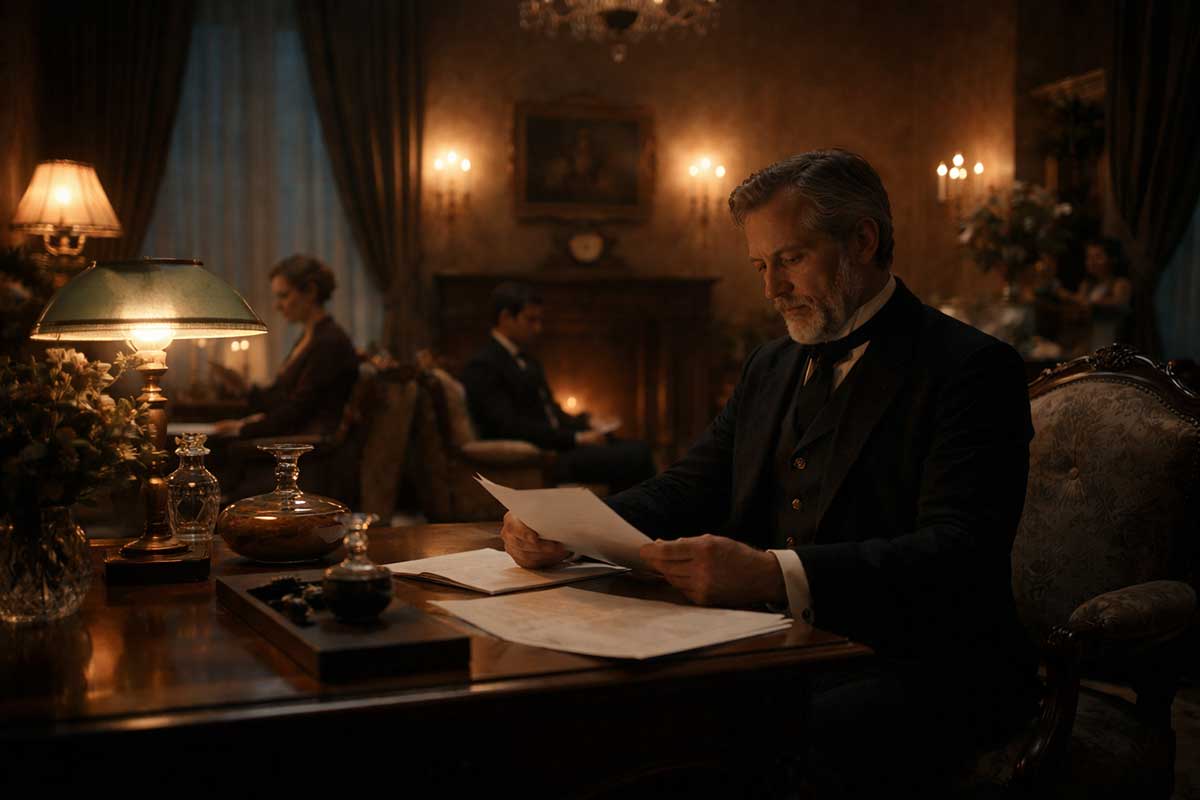
A false life is not one filled with obvious sin. That would be too easy. A false life is one that conforms so perfectly to social expectation that the soul is never consulted. Ivan did not ask whether his choices were true; he asked whether they were correct.
He chose his profession because it was respectable. He married because it was appropriate. He furnished his home because it looked like what a successful home should look like. At no point did he ask whether these things brought him closer to love, compassion, or meaning. He asked only whether they fit.
This is the danger I wished to expose. Society rewards correctness and calls it virtue. Ivan lived as he was taught to live—and that is precisely why his life was false. Not because it was immoral, but because it was unexamined.
Isaiah Berlin
Isaiah Berlin:
Tolstoy’s indictment is ruthless because it allows no escape through good intentions. Ivan is not cruel. He is not unusually selfish. He is, in fact, quite normal. And that is precisely why Tolstoy finds him guilty.
Tolstoy believed—almost obsessively—that there is a single moral truth about how one ought to live. And for him, Ivan’s life fails because it substitutes social norms for moral reality. Ivan lives by external criteria: rank, approval, propriety. He does not lie outright—but he lives as if appearances were truth.
This is why Tolstoy terrifies modern readers. He suggests that an entire society can agree on what is “successful” and still be catastrophically wrong.
Gary Saul Morson
Gary Saul Morson:
I would add that Tolstoy’s concept of a false life is deeply tied to time. Ivan lives in what I would call “anticipatory time.” He is always living toward the next promotion, the next social comfort, the next proper arrangement.
What he never does is inhabit the present ethically. He postpones authenticity. He postpones love. He postpones moral attention. And illness destroys this postponement. Pain traps Ivan in the present moment, where justification no longer works.
A false life, then, is one that is always deferred. It is lived in expectation rather than awareness.
Aylmer Maude
Aylmer Maude:
Having known Tolstoy personally, I can say this theme was not abstract for him. He feared above all else that he himself had lived falsely—even after fame, even after moral awakening. Tolstoy believed that a life could look admirable and still be spiritually empty.
Ivan’s tragedy is not that he chose poorly once or twice. It is that he trained himself never to ask the most dangerous questions. He avoided anything that disturbed his comfort or threatened his self-image. When suffering arrives, he has no inner language to face it.
That is why the illness feels like an accusation. It is not merely pain—it is revelation.
James Wood
James Wood:
What strikes me is how Tolstoy dramatizes falseness aesthetically. The prose describing Ivan’s early life is smooth, efficient, emotionally thin. The language itself feels correct, bureaucratic, hygienic.
Then pain enters, and the sentences thicken. Consciousness deepens. Reality intrudes. This stylistic shift is moral. Tolstoy shows us that a false life is one that avoids density—of feeling, of empathy, of contradiction.
Ivan’s early life lacks texture. Only suffering gives it weight.
Nick Sasaki (Second Question, woven)
Nick Sasaki:
If a false life is one built on social correctness rather than moral truth, then here’s the unsettling follow-up: Is Ivan responsible for living falsely, or is he the product of a system that trained him this way?
Leo Tolstoy
Leo Tolstoy:
Both. And that is the hardest truth. Society teaches falseness, but the individual consents to it. Ivan sensed, at moments, that something was wrong—his irritation with family life, his reliance on work to avoid discomfort—but he silenced these feelings.
A false life requires cooperation. It cannot exist without self-deception.
Isaiah Berlin
Isaiah Berlin:
Tolstoy is unforgiving here. He does not allow Ivan the excuse of inevitability. That is why the story feels like a moral tribunal. Ivan is judged not for evil acts, but for moral laziness.
This reflects Tolstoy’s absolutism. He believed one always has access to moral truth, even if it is costly. To ignore it is a failure of courage.
Gary Saul Morson
Gary Saul Morson:
Yet Tolstoy also shows how subtle this failure is. Ivan is not consciously lying. He is editing reality. He removes anything inconvenient—emotional messiness, existential doubt—and replaces it with procedure.
The false life thrives on what I call “ethical anesthesia.” It numbs rather than deceives.
Aylmer Maude
Aylmer Maude:
And it is important that Ivan’s colleagues react to his death exactly as they lived their lives—calculating promotions, managing inconvenience. The false life is collective. Ivan’s suffering exposes not just his failure, but theirs.
James Wood
James Wood:
Which is why readers feel indicted. Tolstoy does not let us stand above Ivan. He makes us recognize ourselves—in our schedules, our ambitions, our polite evasions. The false life is not exotic. It is terrifyingly familiar.
Nick Sasaki (Third Question, closing)
Nick Sasaki:
Then let me ask the question that hangs over the entire story: If a false life can feel so comfortable, so reasonable, so socially rewarded—how can anyone recognize it before suffering forces the truth?
Leo Tolstoy
Leo Tolstoy:
By attention. By love. By refusing to treat people—including oneself—as means rather than ends. The true life begins not with achievement, but with compassion.
Isaiah Berlin
Isaiah Berlin:
And with the courage to resist consensus.
Gary Saul Morson
Gary Saul Morson:
And by living in time rather than ahead of it.
Aylmer Maude
Aylmer Maude:
And by embracing discomfort before it becomes unavoidable.
James Wood
James Wood:
Because suffering will always reveal the truth—but wisdom lies in not waiting for it.
Closing Transition — Nick Sasaki
Nick Sasaki:
If this is true, then Ivan’s illness is not merely tragic—it is diagnostic. In Topic 2, we’ll confront the next question Tolstoy forces upon us: Why does suffering, and only suffering, seem capable of stripping away illusion?
Topic 2 — Why Does Suffering Strip Away Illusion?

Participants:
Leo Tolstoy, Robin Feuer Miller, Irina Paperno, Donald Fanger, Alexander Herzen
Moderator: Nick Sasaki
Opening Frame — Nick Sasaki
Nick Sasaki:
In Topic 1, we confronted Tolstoy’s accusation that Ivan lived a false life—one built on propriety, advancement, and avoidance. But that raises a disturbing question: Why does Ivan only recognize this falseness once he is suffering? Why does truth arrive through pain rather than insight? Tonight, I want us to explore why suffering, in Tolstoy’s world, is not incidental—but revelatory.
Leo Tolstoy
Leo Tolstoy:
Because illusion depends on comfort. As long as life proceeds smoothly, a person can mistake habit for meaning. Suffering interrupts this continuity. It makes evasion impossible.
Ivan’s pain is not simply physical. It is the collapse of all his explanations. Doctors speak, but say nothing. Family comforts, but avoids truth. Social rituals continue, but no longer persuade him. Pain strips away language that once reassured him.
I did not wish to glorify suffering. I wished to show that truth resists comfort. It emerges when distraction fails.
Robin Feuer Miller
Robin Feuer Miller:
What’s striking is that Ivan’s suffering does not immediately enlighten him. At first, it enrages him. He becomes bitter, resentful, furious that others cannot—or will not—acknowledge what he is experiencing.
This is crucial. Suffering is not redemptive by default. It destabilizes illusion, but it can also deepen despair. Ivan’s insight emerges slowly, almost against his will. His pain removes the supports that once allowed him to lie to himself—but it does not immediately give him something to stand on.
Tolstoy is very precise here: suffering clears the ground before it builds anything new.
Irina Paperno
Irina Paperno:
From a cultural perspective, Ivan’s suffering is radical because it privatizes truth. In Russian society of Tolstoy’s time, public life was governed by rank, decorum, and outward propriety. Illness forces Ivan into a private confrontation that society has no language for.
Notice how everyone around him—doctors, colleagues, even his wife—speaks in abstractions. Only Ivan feels the raw immediacy of pain. Suffering becomes a form of knowledge unavailable to social discourse.
This is why Ivan feels isolated. Truth has moved inward, away from shared scripts.
Donald Fanger
Donald Fanger:
I would add that suffering destroys narrative continuity. Ivan had a story about himself: successful career, respectable family, orderly progress. Illness breaks that story in half.
Once the narrative collapses, Ivan can no longer locate himself in time. The future he assumed evaporates. The past he justified becomes suspect. Suffering reveals not just falseness, but incoherence.
Tolstoy understood that human beings survive by telling themselves stories. Pain interrupts storytelling.
Alexander Herzen
Alexander Herzen:
And that interruption is terrifying. Let us not sentimentalize it. Suffering exposes truth, yes—but it also exposes vulnerability, dependency, humiliation.
Ivan’s terror is not simply fear of death. It is fear of having lived wrongly. Pain forces him to confront this without escape. That is why he cries out, “Why?” Not why he is dying—but why he lived as he did.
Suffering removes dignity as society defines it, but it opens the possibility of a different dignity altogether.
Nick Sasaki (Second Question, woven)
Nick Sasaki:
If suffering dismantles illusion by removing comfort, then I want to ask something uncomfortable: Could Ivan have reached truth without pain? Or is suffering the only force powerful enough to break a socially reinforced false life?
Leo Tolstoy
Leo Tolstoy:
In theory, yes—through love, humility, attention. In practice, rarely. Comfort dulls urgency. Pain sharpens it.
Ivan’s life trained him to avoid discomfort. Therefore, only suffering could reach him. This is not a universal law, but it is a human tendency I observed repeatedly.
Robin Feuer Miller
Robin Feuer Miller:
Tolstoy shows us a tragic asymmetry: society trains people to seek comfort, but truth demands discomfort. When the training succeeds too well, suffering becomes the only counterforce.
This does not mean suffering is good. It means society is dangerous.
Irina Paperno
Irina Paperno:
And crucially, Ivan’s suffering is solitary. Others cannot share it fully. This isolation forces inward reflection. Without witnesses, illusion collapses.
Truth emerges in loneliness.
Donald Fanger
Donald Fanger:
We should also note that Ivan resists insight fiercely. He does not welcome truth. He fights it until exhaustion breaks him open. Suffering works not by persuasion, but by attrition.
Alexander Herzen
Alexander Herzen:
Which raises the moral tragedy: a society that prevents truth until suffering intervenes is already violent. Ivan’s illness merely reveals the cruelty that was always present—hidden beneath politeness.
Nick Sasaki (Third Question, closing)
Nick Sasaki:
Then let me pose the question that carries us forward: If suffering reveals truth by stripping away illusion, what happens when someone—like Gerasim—lives truth without illusion to begin with?
Because in Topic 3, we turn to the figure who does not fear death, does not evade pain, and does not require suffering to see clearly. A man without rank, without pretense, and without illusion.
Topic 3 — The Role of Gerasim: Why Truth Comes from the Margins
Participants:
Leo Tolstoy, Boris Eikhenbaum, Richard Gustafson, Viktor Shklovsky, Caryl Emerson
Moderator: Nick Sasaki
Opening Frame — Nick Sasaki
Nick Sasaki:
So far, we’ve seen that Ivan’s false life collapses under suffering, and that pain strips away illusion. But Tolstoy places a quiet counterexample at the heart of the story: Gerasim, a young peasant servant who does not fear death, does not evade suffering, and does not lie. My first question is simple but unsettling: Why does truth, in this story, come not from doctors, family, or institutions—but from a servant on the margins?
Leo Tolstoy
Leo Tolstoy:
Because Gerasim has not been trained to deceive himself. He has not learned to substitute rank for worth or propriety for goodness. His life, though materially poor, is morally direct.
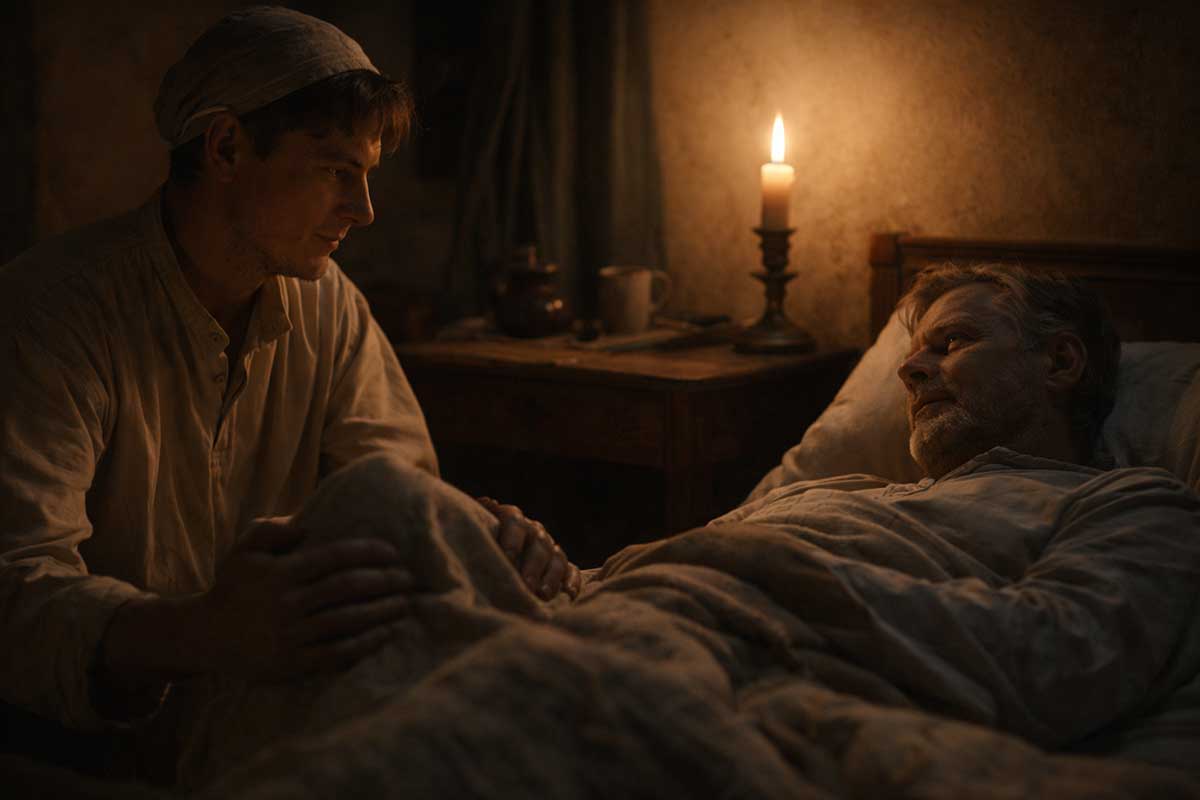
Gerasim does not philosophize about death. He accepts it. He does not speak in abstractions. He responds with presence. When Ivan suffers, Gerasim does not recoil. He holds Ivan’s legs. He stays. He tells the truth plainly: “We shall all die.”
This is not cruelty. It is compassion without illusion.
Boris Eikhenbaum
Boris Eikhenbaum:
From a formal perspective, Gerasim is disruptive. He breaks the social logic of the story. Everyone else performs a role—doctor, wife, colleague, official. Gerasim does not perform. He acts.
Tolstoy uses Gerasim to defamiliarize morality itself. What appears “simple” is revealed as profound, and what appears “civilized” is exposed as evasive. Gerasim’s honesty feels shocking precisely because it lacks refinement.
Truth, here, is unadorned.
Richard Gustafson
Richard Gustafson:
Gerasim represents what Tolstoy believed modern society had lost: moral clarity grounded in lived reality. He does not fear death because he has not built his identity around avoiding it.
Importantly, Gerasim’s compassion is not sentimental. He does not promise recovery. He does not soothe Ivan with false hope. He alleviates suffering by acknowledging it fully.
Tolstoy suggests that moral health comes not from knowledge, but from right relationship—to work, to others, and to mortality.
Viktor Shklovsky
Viktor Shklovsky:
Gerasim also functions as a device of defamiliarization. Through him, death becomes strange again—not terrifying, but honest. Society treats death as obscene, something to be hidden. Gerasim treats it as ordinary.
This contrast forces the reader to see how unnatural society’s behavior truly is. Gerasim does not shock by saying something radical; he shocks by saying what everyone knows but refuses to admit.
Truth becomes visible because it is no longer disguised.
Caryl Emerson
Caryl Emerson:
What fascinates me is that Gerasim does not argue with anyone. He does not correct Ivan’s family or confront the doctors. His authority is not rhetorical; it is ethical.
Gerasim listens. He stays present. He does not center himself. In a story saturated with self-interest, this quiet attentiveness is revolutionary.
Tolstoy elevates the marginal not by romanticizing poverty, but by revealing how power corrupts perception.
Nick Sasaki (Second Question, woven)
Nick Sasaki:
If Gerasim embodies truth without illusion, then here’s the uncomfortable follow-up: Why does Ivan trust Gerasim more than his own family? What does that say about love, sincerity, and social roles?
Leo Tolstoy
Leo Tolstoy:
Because love without truth is unbearable. Ivan’s family loves him conditionally—so long as his illness does not disturb their comfort. Gerasim’s care asks for nothing in return.
Ivan senses this immediately. Truth creates safety. Illusion creates loneliness.
Boris Eikhenbaum
Boris Eikhenbaum:
Trust emerges where language aligns with reality. Gerasim’s words match his actions. Others speak politely while avoiding the truth Ivan lives every moment.
The false life collapses because its language no longer functions.
Richard Gustafson
Richard Gustafson:
Gerasim offers Ivan dignity without denying weakness. This combination is rare—and deeply human. Society offers dignity by denying vulnerability. Gerasim reverses this.
Viktor Shklovsky
Viktor Shklovsky:
In that reversal, Tolstoy exposes how artificial “normality” has become. Gerasim’s presence makes everyone else look theatrical.
Caryl Emerson
Caryl Emerson:
And crucially, Gerasim does not save Ivan. He does not redeem him. He simply accompanies him honestly. That may be Tolstoy’s highest moral ideal.
Nick Sasaki (Third Question, closing)
Nick Sasaki:
Then let me end with this question, which carries us toward the psychological climax of the story: If Gerasim shows us what a truthful relationship to death looks like, why does Ivan still experience such overwhelming terror?
Because in Topic 4, we confront the heart of the story’s anguish: Is Ivan’s fear really fear of death—or fear of a life unlived?
Topic 4 — Is Fear of Death Really Fear of Life Unlived?
Participants:
Leo Tolstoy, Ernest Becker, Irvin D. Yalom, William James, Svetlana Boym
Moderator: Nick Sasaki
Opening Frame — Nick Sasaki
Nick Sasaki:
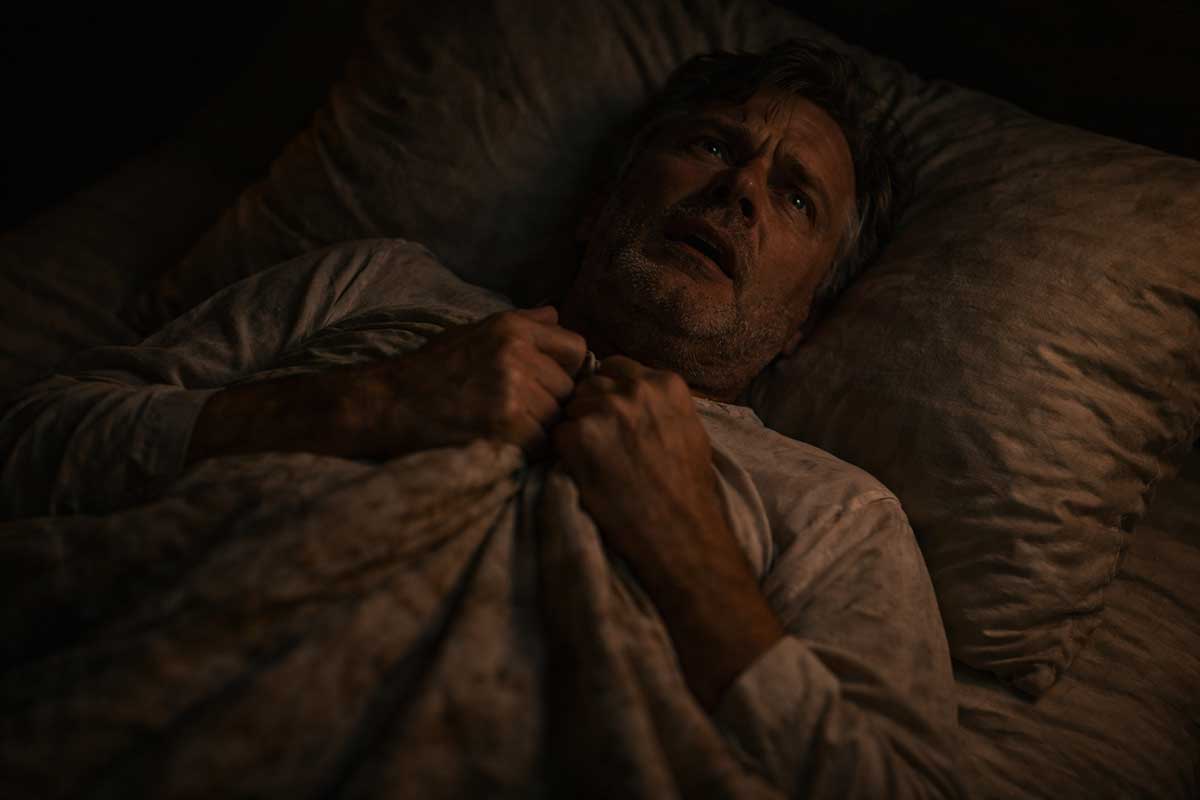
By now, Ivan has encountered truth. Gerasim shows him honesty without illusion. And yet—his terror only deepens. He screams, he rages, he recoils from death as if from an enemy. So tonight I want to ask the question that Tolstoy forces upon us: Is Ivan afraid of dying—or is he afraid of having lived wrongly?
Leo Tolstoy
Leo Tolstoy:
Ivan’s terror is not of death itself. Death is simple. What terrifies him is the recognition that his life, as lived, cannot justify itself.
A life lived in truth does not fear death, because it has nothing to hide. Ivan fears death because death exposes the lie. It removes the possibility of postponement. There is no longer time to correct, to rearrange, to distract.
Death asks only one question: Was your life real? Ivan does not yet know how to answer.
Ernest Becker
Ernest Becker:
Tolstoy anticipates what I later called death denial. Human beings construct entire cultures to protect themselves from the terror of mortality—status, success, roles, rituals. Ivan’s life is a textbook example.
When illness strips those protections away, raw terror surfaces. Ivan’s panic is existential. It is not “I will die,” but “I am nothing without my roles.” Death annihilates the symbolic systems that made him feel significant.
Ivan’s fear is not irrational. It is the logical consequence of a life invested in appearances.
Irvin D. Yalom
Irvin D. Yalom:
Clinically, Ivan’s experience is familiar. Many patients nearing death report not fear of nonexistence, but anguish over unlived life—unspoken love, unchosen authenticity.
Ivan’s terror intensifies because he recognizes too late that his suffering is not accidental. It is meaningful—and that realization is unbearable. Meaning transforms pain into responsibility.
He cannot say, “This is unfair.” He must say, “This is true.”
William James
William James:
What we witness is a collapse of the “habitual self.” Ivan’s identity—judge, husband, respectable man—no longer functions. The habits that sustained his consciousness fail.
Crisis, in this sense, is revelatory. It dissolves the familiar stream of thought and exposes a deeper current. Ivan’s terror marks the moment when consciousness realizes it has been living shallowly.
Fear arises when the self discovers it has mistaken surface for substance.
Svetlana Boym
Svetlana Boym:
There is also a temporal dimension to Ivan’s fear. He experiences what I would call existential nostalgia—a longing not for the past as it was, but for the life that could have been.
This is not regret in the ordinary sense. It is grief for a self that never came into being. Ivan’s fear is amplified by the realization that time is no longer generous.
Death is frightening because it ends the possibility of becoming.
Nick Sasaki (Second Question, woven)
Nick Sasaki:
If Ivan’s fear is rooted in a life unlived, then let me press further: Why does truth not comfort him immediately? Why does insight first increase his suffering rather than relieve it?
Leo Tolstoy
Leo Tolstoy:
Because truth dismantles before it rebuilds. Ivan must endure the full weight of recognition before compassion can enter. Illusion dies painfully.
Ernest Becker
Ernest Becker:
The ego resists annihilation. Ivan’s terror is the ego fighting extinction. Only when it collapses does peace become possible.
Irvin D. Yalom
Irvin D. Yalom:
Insight without self-forgiveness is torment. Ivan has not yet learned compassion—toward himself or others.
William James
William James:
Transformation requires what I called a “divided self” moment—anguish before reorganization.
Svetlana Boym
Svetlana Boym:
Hope emerges only after mourning the unlived life. Ivan has not yet finished grieving.
Nick Sasaki (Third Question, closing)
Nick Sasaki:
Then here is the question that leads us into the story’s final threshold: What allows Ivan’s terror to finally dissolve—not through denial, but through acceptance?
Because in Topic 5, we arrive at the most contested moment of all:
Is Ivan Ilyich saved—or is acceptance itself the only salvation available?
Topic 5 — Is Ivan Saved, or Is Acceptance Enough?

Participants:
Leo Tolstoy, Simone Weil, Paul Tillich, Henri Bergson, Rowan Williams
Moderator: Nick Sasaki
Opening Frame — Nick Sasaki
Nick Sasaki:
We’ve followed Ivan from a socially correct life, through suffering, terror, and the recognition of a life unlived. Now we reach the moment that divides readers and scholars alike. In Ivan’s final hours, something changes. His fear dissolves. His suffering loosens. He feels compassion—for his wife, his son—and death no longer terrifies him.
So here is the final question, stated plainly: Is Ivan Ilyich saved? Or is this merely acceptance—the psychological relief that comes when resistance ends?
Leo Tolstoy
Leo Tolstoy:
Ivan is saved—but not in the way people expect. Salvation is not reward. It is alignment with truth.
Ivan does not correct his past. He does not undo his false life. What changes is his relationship to others. In his final moment, he stops asking, “Why is this happening to me?” and begins asking, “How can I relieve their suffering?”
This shift—from self-justification to compassion—is salvation. It is not doctrinal. It is ethical. When Ivan feels pity for his son and wife, his fear vanishes. Death loses its terror because love has replaced self-concern.
Simone Weil
Simone Weil:
What Ivan experiences is not comfort, but grace. Grace does not erase suffering; it reorients attention.
For most of his life, Ivan’s attention was fixed on himself—his success, his pain, his injustice. At the end, attention turns outward. He sees others. He releases the demand that life justify him.
This is why light appears. Not because death is conquered, but because ego dissolves. Acceptance alone would still be self-centered. What Ivan reaches is self-forgetfulness. That is grace.
Paul Tillich
Paul Tillich:
I would describe Ivan’s transformation as the courage to accept acceptance. He stops trying to validate his existence through achievement or correctness. He allows himself to be accepted despite failure.
This is crucial. Ivan is not redeemed by good deeds. He is redeemed by surrendering the illusion that redemption must be earned.
In that surrender, anxiety loses its power. Death no longer threatens because meaning no longer depends on continuation.
Henri Bergson
Henri Bergson:
From a philosophical standpoint, Ivan’s awakening is a reentry into lived time. Throughout his life, he existed in abstract time—progress, career, sequence. At the end, he experiences duration—a full, present moment unmeasured by outcomes.
This shift collapses fear. Fear depends on projection. Ivan stops projecting. He inhabits the now completely. In doing so, death ceases to be a future event and becomes simply a transition.
Acceptance, yes—but acceptance infused with consciousness.
Rowan Williams
Rowan Williams:
What moves me is that Ivan’s final act is relational. He does not escape alone. He recognizes the pain his presence causes his family—and seeks to relieve it.
This is not resignation. It is reconciliation. Ivan’s fear dissolves because he is no longer isolated. He rejoins humanity at the very moment he leaves it.
Whether one calls this salvation or awakening, it is unmistakably moral. Ivan’s final truth is love without possession.
Nick Sasaki (Second Question, woven)
Nick Sasaki:
Then let me ask what many readers struggle with: Is this ending hopeful—or tragic precisely because it comes so late?
Leo Tolstoy
Leo Tolstoy:
It is both. Hopeful because truth is never impossible. Tragic because delay is costly.
Simone Weil
Simone Weil:
Grace does not measure time. But human suffering does.
Paul Tillich
Paul Tillich:
Late truth is still truth. But it exposes what earlier truth might have spared.
Henri Bergson
Henri Bergson:
The moment is complete, even if the life was not.
Rowan Williams
Rowan Williams:
The lateness is the warning the story leaves us with.
Nick Sasaki (Final Question, resolution)
Nick Sasaki:
So let me close the tribunal with the question that now turns toward us:
Is The Death of Ivan Ilyich a story about dying well—or a story about how not to live?
Leo Tolstoy
Leo Tolstoy:
It is a mirror. If you read it early enough, it is a warning. If you read it too late, it is consolation.
But it is never neutral.
Final Thoughts by Leo Tolstoy

Ivan Ilyich’s suffering ends not when his pain ends, but when his concern for himself ends.
This is the moment many misunderstand.
Ivan is not rewarded. He is not absolved by good works. He does not suddenly become virtuous. What changes is simpler and more difficult: he stops defending himself against truth.
For the first time, he feels compassion—not as a performance, not as duty, but as recognition. He sees the fear of his son. He senses the burden his presence places on others. And instead of demanding comfort, he wishes to relieve suffering.
In that moment, death loses its power.
Not because it is defeated, but because it is no longer resisted.
I did not write this story to console those who are dying. I wrote it to awaken those who are living. If Ivan’s final peace feels tragic, it is because it arrives so late. If it feels hopeful, it is because it arrives at all.
Death does not condemn Ivan. It judges the life that came before it.
And it leaves the reader with one silent question:
If this moment came sooner—what would you change now?
Short Bios:
Leo Tolstoy — Russian novelist and moral philosopher, best known for War and Peace, Anna Karenina, and The Death of Ivan Ilyich. In his later work, Tolstoy turned sharply toward questions of conscience, suffering, and the ethical meaning of everyday life.
Boris Eikhenbaum — Foundational Russian literary theorist and a leading figure of Russian Formalism. His work helped redefine how narrative structure and technique shape meaning in Tolstoy’s fiction.
Richard Gustafson — Influential Tolstoy scholar whose studies focus on moral vision, religious thought, and ethical realism in Russian literature, especially in Tolstoy’s later works.
Viktor Shklovsky — Literary critic and theorist known for developing the concept of “defamiliarization.” His insights illuminate how Tolstoy makes ordinary life appear strange in order to reveal hidden truth.
Caryl Emerson — Distinguished scholar of Russian literature and intellectual history, noted for her work on dialogism, ethics, and moral voice in Russian classics.
Ernest Becker — Cultural anthropologist and author of The Denial of Death, whose work explores how fear of mortality shapes human behavior, social systems, and self-deception.
Irvin D. Yalom — Psychiatrist and existential therapist whose writings bridge psychology and philosophy, focusing on death anxiety, meaning, and authenticity.
William James — Philosopher and psychologist, founder of pragmatism, whose work on consciousness, habit, and moral experience informs modern existential thought.
Svetlana Boym — Cultural theorist and literary scholar known for her work on memory, nostalgia, and the emotional dimensions of time and identity.
Simone Weil — French philosopher and mystic whose writings emphasize attention, suffering, grace, and the ethical dissolution of ego.
Paul Tillich — Theologian and philosopher who explored anxiety, courage, and meaning in the face of nonbeing, particularly in The Courage to Be.
Henri Bergson — Philosopher of time and consciousness, known for his concept of duration and lived experience beyond mechanical measurement.
Rowan Williams — Theologian and poet whose work engages suffering, compassion, and moral presence, often bridging literature, theology, and ethics.
Nick Sasaki — Writer and moderator of ImaginaryTalks, guiding conversations that place great thinkers in dialogue across time to explore enduring human questions about meaning, identity, and conscience.
Leave a Reply