
|
Getting your Trinity Audio player ready...
|
Elie Wiesel:
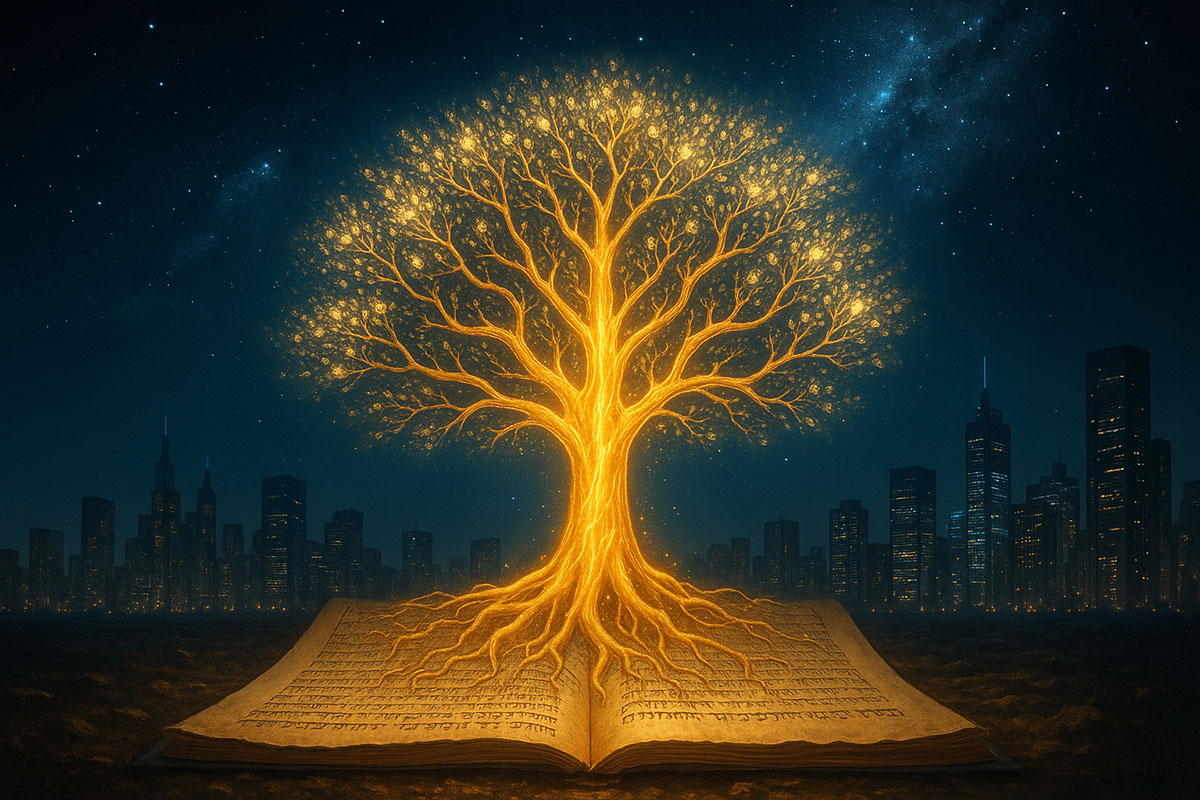
When we speak of Jewish thought, we are speaking of a dialogue that has lasted more than three thousand years. It began in the desert, under the stars, when a people first heard the voice of God and responded with the words, “We will do, and we will hear.” From then on, every generation has added its questions, its cries, its hopes to the dialogue. We are heirs to Abraham’s faith, to Moses’ law, to David’s songs, to the wisdom of prophets and sages, to the anguished prayers of exiles, and to the luminous teachings of scholars and poets.
But what is Jewish thought today? Is it only the memory of the past, preserved as sacred text? Or is it the cry of the present, struggling to make sense of an ever-changing world? When we survived the destruction of the Temple, we reinvented ourselves in exile through Torah study and prayer. When we survived pogroms and inquisitions, we created new songs, new mysticism, new philosophy. After the unspeakable darkness of the Holocaust, Jewish thought confronted the abyss itself, and still found a way to affirm life.
To gather here, across time, with voices of great Jewish writers and thinkers, is to participate in that sacred chain. Saul Bellow, Philip Roth, Bernard Malamud, Norman Mailer, and Isaac Bashevis Singer — each in their way carried Jewish thought into the modern world. They wrestled with God, with history, with identity, with exile, with humor, and with despair. And yet they never abandoned the conversation.
What I hope we explore together is not simply what Jewish thought was, but what it can yet become. Is its future continuity — a faithful preservation of tradition? Or is it transformation — daring reinvention for an age that demands new answers? Perhaps it is both: rooted in Sinai, yet stretching toward the stars.
Jewish thought has always been a dialogue between memory and imagination, between the eternal and the immediate. Today, let us enter that dialogue once more. Let us ask: What is demanded of us, as Jews, as writers, as human beings, so that the chain will not be broken?
(Note: This is an imaginary conversation, a creative exploration of an idea, and not a real speech or event.)
Topic 1 — The Torah as Living Voice: Ancient Text, Modern Life
Moderator: Rabbi Jonathan Sacks
Rabbi Sacks: Friends, the Torah has been the bedrock of Jewish identity for millennia. But many young people ask: Is it still alive in our modern lives? Let me begin with this: How do we understand the Torah as something more than an ancient book—how do we see it as a living voice speaking to us today?
Rabbi Adin Steinsaltz: The Torah is not a history book, nor simply law. It is like a mirror. When you look into it in 2025, you don’t see only Moses, Abraham, or Sinai—you see yourself reflected in its words. Every generation receives Torah anew because the Torah is not finished; it grows when we read it. That is why a young boy studying one verse can discover insights even the greatest sages did not write. It lives because it meets us where we are.
Rabbi Abraham Joshua Heschel: I once said that the Torah is not just information but an invitation. It invites us into God’s dream for humanity. To see it as alive, we must approach not as archaeologists digging up ruins, but as lovers listening for a heartbeat. The Torah speaks because we stand ready to be spoken to. Its words are eternal, but the cry for justice, compassion, and wonder within them is what makes it living.
Rabbi Joseph Soloveitchik: The Torah lives because we live within it. Halakhah is not abstract. When I put on tefillin, when I sit at a Passover table, when I recite the Amidah—I am not reenacting history. I am in covenant, now. The Torah becomes a living voice when it shapes the texture of daily life. Without halakhic action, it risks becoming a museum piece. With practice, it is oxygen.
Maimonides: I must add that the Torah is divine wisdom adapted to human capacity. If it seems ancient, it is because human knowledge changes, but God’s wisdom does not. Yet we must interpret—always interpret—so that eternal truths find their place within new sciences, new ethics, new societies. That is why my Guide for the Perplexed was necessary. The Torah’s voice lives in how we translate it without betraying it.
Rabbi Akiva: When I read, “Love your neighbor as yourself,” I see Torah as eternal. It lives whenever a Jew kisses the mezuzah, gives bread to the hungry, or forgives another. If you want Torah to speak, live it with love. That is its living voice.
Rabbi Sacks: Thank you. Now let me press deeper: In a modern world of secularism, technology, and global crisis, how can Torah still guide Jewish destiny?
Rabbi Heschel: We live in a technological age that risks making people tools rather than souls. The Torah’s guidance is clear: “You are in the image of God.” That phrase is the greatest protest against treating human beings as machines, data, or profit margins. The Torah gives us the power to resist dehumanization.
Rabbi Akiva: When Rome outlawed Torah, I still taught it. Why? Because without Torah, Israel would not survive. Today, Rome is not here, but assimilation, comfort, and forgetfulness are. The guidance is the same: cleave to the words of Torah, for they are life, they are strength, they are identity.
Maimonides: Modernity brings new perplexities, but Torah endures as the anchor of reason. Its laws train us in ethics, its stories in humility, its rituals in discipline. A Jew without Torah is a ship without a compass. Our destiny must be rooted in covenant, even as we navigate modern winds.
Rabbi Steinsaltz: Young Jews ask, “Why be Jewish?” Torah answers not with ideology, but with belonging. To study Torah is to belong to the chain of Sinai, to Abraham and Sarah, to a people that has crossed exiles and returned. Guidance comes not from abstraction but from the lived miracle of continuity.
Rabbi Soloveitchik: The Torah guides Jewish destiny by binding us to both God and peoplehood. The modern Jew must not choose between faith and modernity but learn to stand at the “Lonely Man of Faith” crossroads—committed to halakhah while engaging the world. The Torah ensures we remain Jews, not merely citizens of empires.
Rabbi Sacks: A final question: The Torah is studied endlessly, but how do we keep it from becoming intellectual alone? How do we ensure it inspires not just thought but action, not just learning but transformation?
Maimonides: Study without action is like medicine never taken. The Torah was given not to scholars only but to a people at Sinai. Every Jew must live mitzvot, for action perfects the soul. Philosophy is beautiful, but halakhah heals.
Rabbi Steinsaltz: Too often we turn Torah into a library instead of a ladder. It is meant to lift us. Every daf of Talmud studied must end with: “So what must I do differently today?” Without this question, Torah is theory. With it, Torah is transformation.
Rabbi Heschel: I tremble at the thought of Jews who study Torah without awe. The danger is religiosity without spirituality, knowledge without compassion. To study Torah is to learn how to live in the presence of God. If we walk away without more reverence, more mercy, more love, we have not studied.
Rabbi Akiva: My whole life was Torah—yet my life was also sacrifice, martyrdom, and love for my people. Torah must flow from page to hand, from heart to deed. Give charity, teach a child, forgive an enemy—that is how Torah breathes.
Rabbi Soloveitchik: I echo: Torah must not be sterile. In halakhic life, study leads to obligation. You cannot read Shabbat laws and not welcome Shabbat; you cannot read of justice and not fight injustice. Transformation comes through obligation lived, not merely admired.
Rabbi Sacks (closing): What we’ve heard is this: the Torah is a mirror, a covenant, a protest against dehumanization, a compass in modern winds, and a ladder of transformation. It is not only a text, but a life lived in response to God’s call.
This is why the Torah remains a living voice—because each generation must decide not only how to understand it, but how to embody it.
Topic 2: The Authority of Torah in a Modern Age
Moderator: Leon Wieseltier
Leon Wieseltier: The Torah has shaped Jewish life for millennia, yet today, Jews live in vastly different circumstances — secular democracies, modern Israel, pluralistic societies. So let me ask: What does it mean, in our time, to say that the Torah still has authority?
Jonathan Sacks: Authority today must be understood less as coercion and more as inspiration. The Torah doesn’t force; it invites. In an age where personal autonomy is sacred, the challenge is to show how Torah speaks to the deepest moral intuitions. When people see that its wisdom addresses loneliness, community, justice, and covenant, they will feel its authority in their hearts, not because of fear of transgression but because they recognize it as truth.
Avivah Zornberg: I think of authority less in terms of law and more in terms of story. The Torah continues to be authoritative because it tells us who we are. Its narratives are endlessly interpretable, endlessly reread. Even if Jews live in worlds where halakhic observance isn’t central, the Torah’s voice continues to echo, demanding that we wrestle with it. That wrestling itself is a form of submission to its authority.
Moshe Halbertal: Authority today is not about obedience to external command but about covenantal identity. The Torah has authority because it creates the space of belonging, a tradition that shapes values across time. The modern Jew may not follow every mitzvah, but they are still touched by Torah through the categories it has given us — justice, memory, hope. Authority becomes an ongoing relationship.
Ruth Calderon: I see Torah authority as cultural oxygen. Even Jews who do not practice halakhically breathe Torah through language, metaphors, and shared imagination. Its authority is less about enforcement and more about shaping the Jewish imagination. If the Torah still generates meaning in art, literature, education, and politics, then it still governs us in a profound sense.
Adin Steinsaltz: Authority is often misunderstood as something heavy, imposed. In truth, the Torah is a gift — a manual for life. Authority comes from its eternal relevance: each generation finds itself inside it. Modernity may alter how we keep it, but not the fact that Torah speaks across centuries. Authority remains because Torah is eternal, even as societies change.
Leon Wieseltier: Thank you. Let me press deeper. Some argue that when Jews no longer live in a halakhic society, Torah authority fragments — one Jew follows halakha, another treats it as literature, another as history. Is it possible for the Torah to maintain shared authority when Jews interpret it so differently?
Avivah Zornberg: Perhaps fragmentation is itself part of the Torah’s authority. The Torah doesn’t dictate one meaning; it opens the space for multitudes. Our very differences — Orthodox, secular, feminist, mystical — are a continuation of midrash. The danger isn’t diversity of interpretation, but forgetting that Torah is what we are interpreting together.
Jonathan Sacks: Shared authority does not mean uniform practice. It means shared conversation. We can disagree passionately about halakha, theology, or politics, but if Torah remains our common text, it remains authoritative. A family may argue, but the table around which they argue still holds them together. The Torah is that table.
Ruth Calderon: In Israel, I see secular Jews opening Gemaras in public libraries, just for the joy of the text. They may not believe in halakhic obligation, but they still grant the Torah authority as a source of meaning. Authority doesn’t need uniformity; it needs vitality. As long as the Torah is studied, sung, argued with — it lives as our shared root.
Adin Steinsaltz: Yes, authority can look different, but Torah is like a mountain. You may climb from different sides, but it remains the same summit. Whether halakhic or poetic, the Torah exerts authority by remaining the highest reference point. What is dangerous is not fragmentation but indifference.
Moshe Halbertal: Authority requires both pluralism and boundary. Without shared recognition that Torah matters, fragmentation collapses into disconnection. But so long as Jews — however differently — look back to Torah as foundational, there remains a shared structure of belonging. In fact, the Torah’s ability to sustain multiple interpretations is what has preserved its authority across exile and modernity.
Leon Wieseltier: Let me ask one final question. The modern world demands adaptation. Science challenges Torah’s cosmology, secular law replaces halakha in public life, ethics evolves beyond ancient codes. How can Torah retain authority without becoming either irrelevant or fossilized?
Adin Steinsaltz: Torah has always been dynamic. The Talmud itself is evidence of interpretation and change. Authority is not lost when Torah adapts; authority is fulfilled. If Torah were static, it would have died long ago. Instead, it lives precisely because each generation adds its own commentary.
Moshe Halbertal: The Torah’s authority is not in specific cosmological claims but in shaping a moral world. Science may explain the stars, but Torah explains covenant. Secular law may govern contracts, but Torah insists on justice for the widow, orphan, and stranger. Its authority rests in its moral demands, which remain timeless.
Ruth Calderon: Authority can be reimagined as cultural continuity. We can read Torah alongside Darwin, Freud, or Simone de Beauvoir — not as fossil, but as conversation partner. Authority is not undermined by dialogue; it is strengthened. The Torah’s voice still joins the great human conversation, insisting that Jews remain part of it.
Jonathan Sacks: The Torah survives not because it resists the world but because it teaches how to sanctify it. The Sabbath, for example, sanctifies time; kashrut sanctifies eating. Authority is not diminished by modernity; it becomes more needed. In a world of consumerism and loneliness, Torah offers covenant and meaning. That is enduring authority.
Avivah Zornberg: To me, Torah authority endures through its poetry. It is a text that refuses to die, even when challenged. Science may describe the world, but Torah addresses the human heart — its griefs, its hopes, its longings. Authority is retained because the Torah continues to name what it means to be human.
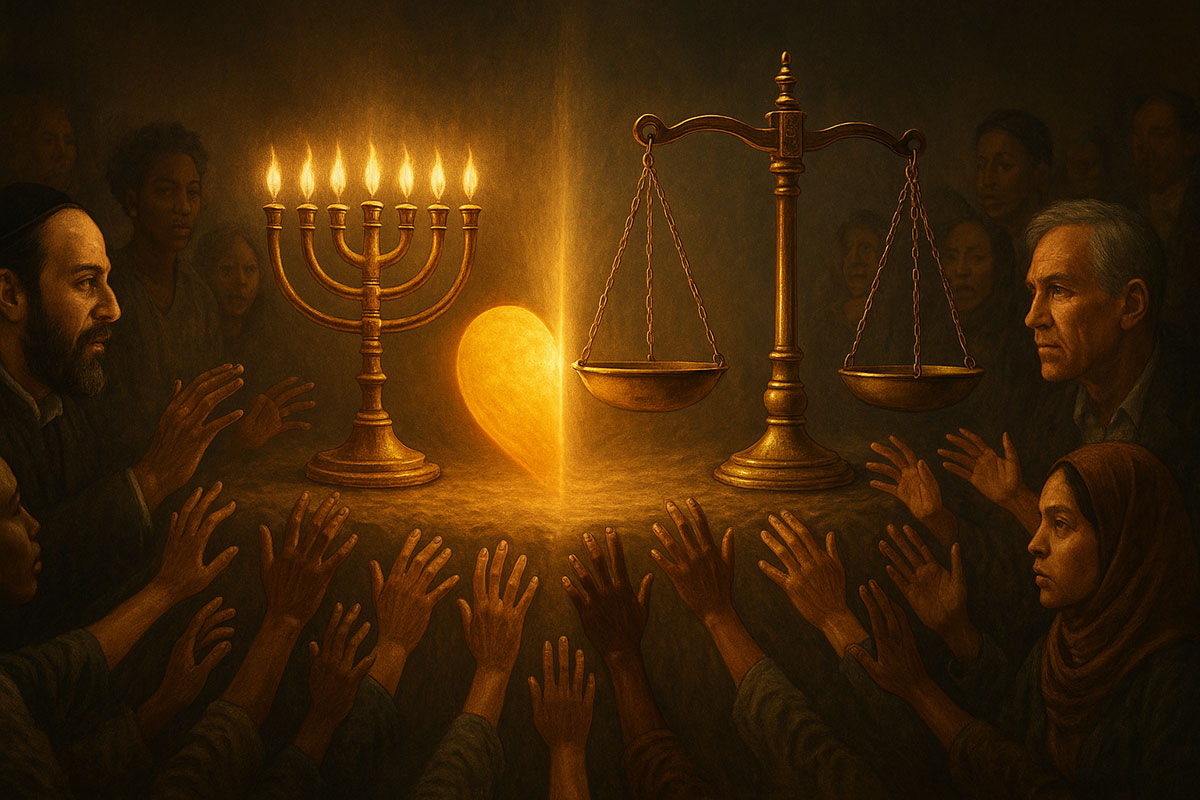
Topic 3: Justice and Mercy — Can the Torah Teach Us Balance?
Moderator: Jonathan Sacks
Jonathan Sacks:
When we turn to the Torah, we find commandments about justice, law, and accountability — but also about mercy, forgiveness, and compassion. In our fractured societies today, how can the Torah guide us toward a balance between these two?
Rabbi Adin Steinsaltz:
Justice is the structure of the world, but mercy is the soul that fills it. Without justice, society collapses into chaos; without mercy, justice becomes cruelty. The Torah’s genius is that it binds the two. For instance, in the laws of Shabbat year and Jubilee, we see that debts are forgiven — not to erase responsibility, but to prevent justice from becoming a prison. Today, our problem is that governments often lean on one side: either cold legality or sentimental forgiveness. The Torah insists we keep both in tension.
Rabbi Jill Jacobs:
Yes, and this tension is not abstract — it is deeply practical. In Jewish communities, we see how laws around workers’ rights, treatment of the stranger, and ethical business are grounded in justice. But the Torah reminds us not to humiliate, not to oppress, and to leave gleanings for the poor. That is mercy in action. In modern society, particularly with mass incarceration and economic inequality, we must ask: Are we applying Torah’s principles of mercy to temper the heavy hand of justice?
Rabbi Jonathan Sacks:
If I may respond — it seems you both point to mercy as a corrective. But can mercy also distort justice? Let’s keep exploring.
Jonathan Sacks:
Second, I wonder: how does the Torah help us know when to apply justice firmly and when to let mercy prevail?
Rabbi Lord Immanuel Jakobovits:
This is where halakha (Jewish law) is so extraordinary. It doesn’t leave such questions to vague feelings but to deliberation, precedent, and guidance. For example, a judge is forbidden to favor the poor simply because they are poor — that would undermine justice. But outside the court, charity is a duty — that is mercy. The Torah separates spheres: justice in the courts, mercy in the home and community. This dual structure prevents confusion while still allowing compassion to flourish.
Rabbi Rachel Adler:
And yet, we must remember that Torah is also narrative. The stories of Joseph forgiving his brothers, or God showing mercy after the Golden Calf — these shape our moral imagination. Law tells us the rules; narrative shows us the heart. So when we are unsure, we look to both. The law might say one thing, but the story reminds us that mercy is a divine attribute, too.
Rabbi Jill Jacobs:
Building on that, I think modern Jews are called to interpret mercy expansively. For instance, immigrant rights, healthcare, housing — these are areas where strict justice might say, “Everyone must earn their place,” but Torah’s mercy says, “Remember you were strangers in Egypt.” To me, that memory pushes us toward mercy even in the civic sphere.
Jonathan Sacks:
Finally, in a world of political extremes — some calling for absolute justice, others for boundless mercy — what does the Torah’s balance teach us about repairing our societies?
Rabbi Adin Steinsaltz:
Extremes destroy community. Justice without mercy builds prisons of stone; mercy without justice builds prisons of chaos. The Torah insists on covenant — mutual responsibility. That is the balance. If we re-centered our politics on covenant, both justice and mercy would find their rightful place.
Rabbi Lord Immanuel Jakobovits:
I would add: the Torah’s call is not to governments alone but to individuals. We can’t demand perfect balance from the state while ignoring our own responsibilities. If each Jew practiced justice and mercy in their daily dealings — business, family, community — society would begin to heal. That is how Torah imagines redemption: one act of justice and mercy at a time.
Rabbi Rachel Adler:
And perhaps the prophetic voice still speaks here. Micah says, “What does the Lord require of you? To do justice, love mercy, and walk humbly with your God.” It’s a triad — justice, mercy, humility. Without humility, we weaponize both justice and mercy. With humility, we hold them gently, as God does with us.
Rabbi Jill Jacobs:
Yes, and our task today is urgent. We live in a time of widening inequality, rising hostility, and brittle politics. The Torah offers a middle path not of compromise, but of integrity — where justice and mercy walk hand in hand. We must have the courage to bring that vision into the public square.
Jonathan Sacks (closing reflection):
You’ve all shown us that the Torah doesn’t choose between justice and mercy — it commands both. Law disciplines us toward fairness; narrative and memory soften us with compassion. In a fractured age, the Torah’s wisdom is radical: only when justice is tempered by mercy, and mercy guided by justice, can societies endure.
Topic 4: Jewish Identity in a Global Age — Nation, Religion, or Culture?
Moderator: Anita Shapira
Anita Shapira: Throughout history, Jewish identity has been defined in multiple ways—sometimes as faith, sometimes as peoplehood, sometimes as shared memory. In today’s globalized, multicultural world, my first question is: What, in your view, most essentially defines Jewish identity now?
Rabbi Lord Jonathan Sacks: The heart of Jewish identity is covenant—a shared destiny with God and with one another. We are a people of faith and history, not just culture. Even in secular expressions, the root is covenantal responsibility. Without that, Jewish identity risks becoming merely a label.
Amos Oz: For me, Jewish identity is first and foremost a story. A collective narrative woven through exile, survival, and renewal. Some live that story through prayer, others through literature or the Israeli landscape. The richness of Jewishness lies in its plurality, not in a single definition.
Shimon Peres: I see Jewish identity as a vision. Beyond survival, it is about creating, building, contributing. Israel gave Jewish peoplehood its body again, but it is culture—our innovation, ethics, and contributions to the world—that keeps identity vibrant.
Rabbi Adin Steinsaltz: I would say Jewish identity is a soul-memory. Even Jews who walk far from practice feel something stir at a Seder table, a funeral kaddish, or hearing Hebrew. That spark transcends definitions—religion, nation, culture—it is the root of all of them.
Ruth Bader Ginsburg: For me, Jewish identity has always meant justice. My upbringing was less about religious ritual and more about an ethical calling: to defend the vulnerable. That sense of tikkun olam—repairing the world—has defined my Jewishness throughout my life.
Anita Shapira: Thank you. Let’s press deeper. In today’s fractured Jewish world—between religious and secular, Israeli and diaspora, progressive and conservative—how can Jewish identity remain unified without erasing diversity?
Shimon Peres: Unity must come through shared projects, not uniform beliefs. When we work together—building peace, advancing science, supporting communities—we rediscover our common destiny.
Amos Oz: I often said Israel is like a family arguing at the dinner table—loud, messy, but bound by love. Unity does not mean agreement; it means refusing to disown one another. The challenge is not to silence differences, but to keep the dialogue alive.
Ruth Bader Ginsburg: In the U.S., I saw how Jews of all denominations could unite around defending civil rights. Unity comes when we elevate justice and compassion above doctrinal disputes.
Rabbi Jonathan Sacks: Precisely. We need a covenant of conversation—where we commit to staying in relationship even when we disagree. What threatens us most is not diversity but disengagement.
Rabbi Adin Steinsaltz: Yes, and I would add: unity is spiritual. Beneath our divisions, we share a soul-root. When Jews meet across the world, even strangers, they recognize each other. That recognition is not political, it is eternal.
Anita Shapira: Finally, let me ask: What does Jewish identity contribute to the wider world in this global age? Why does it matter not only to Jews, but to humanity?
Ruth Bader Ginsburg: Jewish identity brings a moral voice—a stubborn refusal to accept injustice as normal. That has global relevance.
Rabbi Jonathan Sacks: Indeed. The Jewish message is that humanity is a family under one God. That vision shaped Western ethics and continues to inspire.
Shimon Peres: Our contribution is innovation—turning adversity into progress. A people so small, yet so influential, proves that ideas matter more than numbers.
Amos Oz: I would say storytelling. The Jewish tradition has kept alive one of humanity’s richest literatures—biblical, rabbinic, modern. That reservoir feeds imagination across the globe.
Rabbi Adin Steinsaltz: And at its deepest, Jewish identity offers a path to holiness in everyday life. It teaches that every meal, every word, every act can connect the finite to the infinite. Humanity needs that reminder.
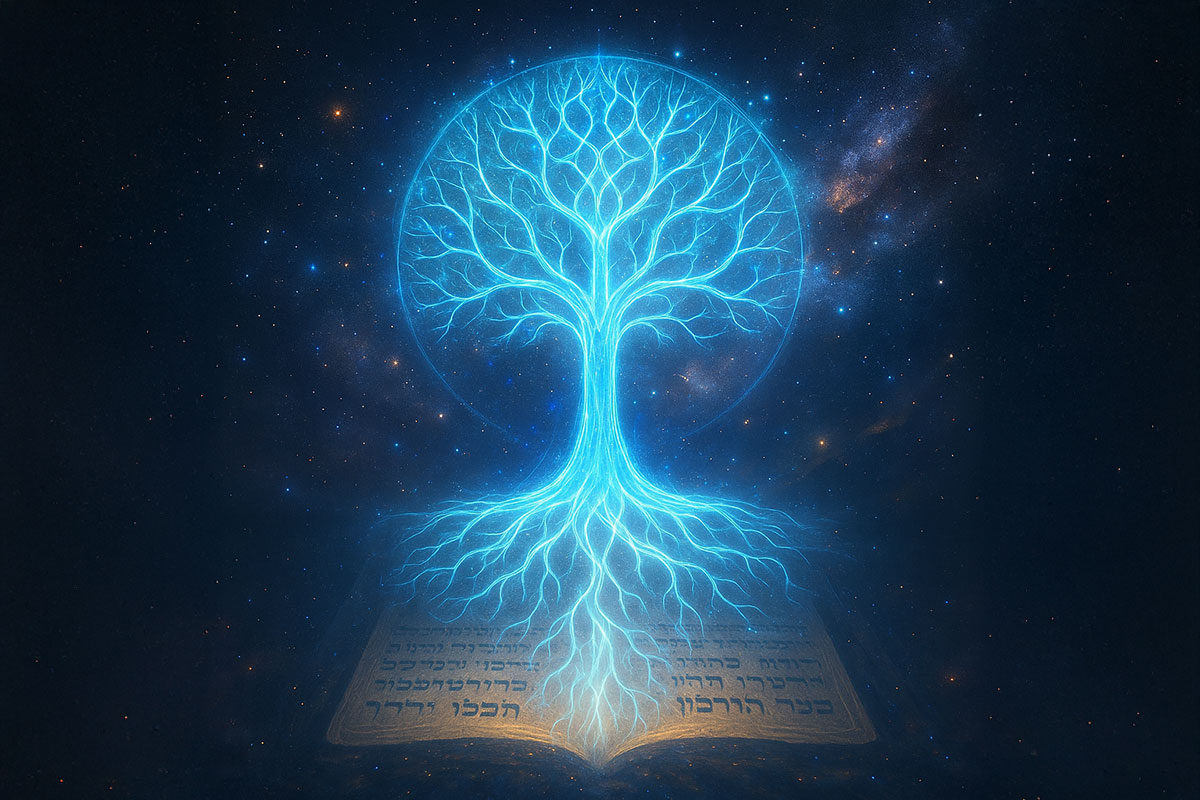
Topic 5: The Future of Jewish Thought — Continuity or Transformation?
Moderator: Anita Shapira
Anita Shapira: As we close this dialogue, let me begin with a forward-looking question. Do you believe Jewish thought in the 21st century should primarily preserve continuity with its past traditions, or should it transform radically to address new global realities?
Rabbi Adin Steinsaltz: Continuity is vital. If a tree forgets its roots, it withers. Jewish thought must remain anchored in Torah, in Talmud, in the eternal covenant. Yet continuity is not stagnation—it is a river, flowing, adapting, but always connected to its source.
Ruth Bader Ginsburg: I lean toward transformation. Tradition is important, but law and ethics must evolve to reflect new realities. When I applied Jewish values to questions of gender equality or civil rights, I was not discarding tradition, but extending it into spaces our ancestors never imagined.
Amos Oz: I see Jewish thought as an ongoing conversation. It does not have to choose between continuity and transformation—because it is both. Each generation interprets the past with the tools of the present. The danger is not change, but silence.
Rabbi Jonathan Sacks: I would emphasize covenant across time. Jewish continuity is not fossilization—it is dialogue with our ancestors and with our children yet unborn. Transformation is part of continuity when it is faithful to that covenantal chain.
Shimon Peres: I believe Jewish thought must be bold. Our history teaches resilience through reinvention. The world faces challenges—climate, technology, peace—that demand fresh vision. Jewish wisdom must not be a museum; it must be a laboratory of hope.
Anita Shapira: Let me turn to a second question. What do you see as the greatest challenge for Jewish thought and identity in the coming century?
Amos Oz: The challenge is indifference. For many young Jews, Jewishness feels irrelevant. If we cannot make it speak to their lives—through literature, culture, or moral imagination—continuity will be an illusion.
Rabbi Jonathan Sacks: I agree, though I would phrase it as assimilation. When Jews forget the covenantal call to be different, to be holy, to be a blessing, they dissolve into the background noise of history. The challenge is to inspire pride in distinctiveness.
Ruth Bader Ginsburg: For me, the challenge is justice delayed. If Jewish identity does not consistently side with the oppressed, it risks becoming parochial. Our survival means nothing if it does not elevate human dignity universally.
Shimon Peres: The greatest challenge is peace. The Jewish people cannot flourish while locked in endless conflict with our neighbors. Jewish thought must find a way to transcend hatred, or else identity will be chained to fear.
Rabbi Adin Steinsaltz: I see the greatest challenge as spiritual amnesia. Jews today know how to code computers, run businesses, win Nobel Prizes—but many cannot read a page of Hebrew prayer. Without that soul-language, much will be lost.
Anita Shapira: Thank you. Let’s close with a final, personal question. If you could leave one message—one legacy—for the Jewish people and the wider world about the future of Jewish thought, what would it be?
Shimon Peres: My message would be: dream. Never stop dreaming of peace, of progress, of building a better tomorrow. That is the Jewish genius—turning impossible dreams into reality.
Rabbi Jonathan Sacks: Mine would be: remember you are part of a covenant. With God, with one another, with humanity. Do not break faith with that destiny.
Ruth Bader Ginsburg: I would say: pursue justice relentlessly. Justice is not an option—it is the core of who we are and what we bring to the world.
Rabbi Adin Steinsaltz: My message: learn. Study Torah, Talmud, stories, prayers. Every Jew a student, every day a classroom. Through study, souls awaken.
Amos Oz: And I would say: tell the story. Tell it in novels, in songs, in kitchens, in classrooms. A people lives as long as its story is told. Keep telling it—always, everywhere.
Final Thoughts By Rabbi Jonathan Sacks
What we have heard in this conversation is precisely what Jewish thought has always been: an argument for the sake of Heaven. Jewish writers and thinkers have disagreed — sometimes fiercely — but always within a shared covenant of destiny. Bellow sought the moral clarity of tradition. Roth wrestled with its contradictions. Malamud humanized suffering through stories of compassion. Mailer embodied the restless spirit of the modern Jew. Singer gave voice to the vanished world of Eastern European mysticism, yet also to the universal soul.
And this is the paradox of Jewish thought: it thrives not in uniformity, but in multiplicity. The Talmud itself preserves minority opinions, because even dissenting voices have truth. Jewish thought is less about arriving at one final answer and more about ensuring the questions are never silenced.
So, is the future continuity or transformation? I would suggest it is both — continuity without rigidity, transformation without forgetting. Jewish thought must remain anchored in Torah, in memory, in the sacred texts that gave us identity. But it must also be renewed by each generation, translated into its language, its struggles, its possibilities.
We live in an age of extraordinary challenge: assimilation, secularism, political division, technological upheaval. Yet I believe the Jewish voice has never been more needed. In a world fractured by tribalism and fear, Jewish thought teaches that humanity is one family under the sovereignty of a God who created us all in His image. In a culture consumed by instant gratification, Jewish wisdom reminds us to sanctify time, to pause, to make room for the holy. In a century where the future feels uncertain, Jewish thought insists on hope — that history is not meaningless, but covenantal, moving toward redemption.
The Jewish people are few in number, but great in responsibility. Our task is not only to remember but to renew, not only to preserve but to imagine. As the prophet Isaiah said, “You are My witnesses.” We are witnesses to the faith that life is sacred, that words matter, that memory redeems, and that hope can triumph over despair.
The chain of Jewish thought is unbroken. Its roots are deep in Scripture, its branches stretch into eternity. Whether through continuity or transformation, the question is not whether Jewish thought will survive — it will. The question is: what will we add to it? That is the legacy we leave for those yet to come.
Short Bios:
Amos Oz was an Israeli novelist, essayist, and peace activist whose works explored moral responsibility, Zionism, and the deep struggles of Jewish identity. Serving as moderator, his voice bridged literature, politics, and spirituality with empathy.
Rabbi Jonathan Sacks was the former Chief Rabbi of the United Kingdom and one of the most influential Jewish thinkers of the modern era, known for his eloquent writings on morality, faith, and the dialogue between tradition and modernity.
Ruth Bader Ginsburg was a U.S. Supreme Court Justice and cultural icon, whose Jewish identity informed her lifelong fight for justice, equality, and the defense of the vulnerable in society.
Rabbi Adin Steinsaltz was a preeminent Talmudic scholar, author, and teacher whose groundbreaking translation and commentary of the Talmud opened Jewish wisdom to people worldwide.
Elie Wiesel was a Holocaust survivor, Nobel Peace Prize laureate, and moral witness whose works like Night preserved memory and gave voice to Jewish suffering, resilience, and ethical responsibility.
Hannah Arendt was a Jewish philosopher and political theorist whose analysis of totalitarianism, exile, and Jewish responsibility challenged how people think about morality and justice in modern society.
Martin Buber was a philosopher and theologian whose “I-Thou” philosophy emphasized the sacredness of dialogue, community, and authentic human encounter.
Shimon Peres was the ninth President of Israel, Nobel Peace Prize laureate, and statesman who envisioned a balance between security, peace, and the global role of Jewish responsibility.
Golda Meir was Israel’s fourth Prime Minister, remembered for her strong leadership and unwavering commitment to Jewish survival and identity in times of conflict and transition.
Gershom Scholem was the leading scholar of Jewish mysticism and Kabbalah, who revealed the hidden spiritual dimensions of Jewish tradition and how they shape Jewish identity.
David Grossman is an Israeli novelist and peace activist whose writings explore grief, love, war, and reconciliation, offering a deeply human voice to the story of modern Jewish life.
Yehuda Amichai was Israel’s most celebrated poet, blending biblical echoes with contemporary life, and expressing the beauty and struggles of Jewish identity in the modern world.
Primo Levi was a Holocaust survivor, chemist, and author of If This Is a Man, whose testimony continues to shape Jewish and universal moral consciousness about suffering and survival.
Rabbi Abraham Joshua Heschel was a theologian and civil rights activist whose works on prayer, prophecy, and social justice gave Jewish spirituality a voice in the global pursuit of human dignity.
Albert Einstein was a Nobel Prize–winning physicist who also engaged deeply with Jewish identity, Zionism, and ethics, advocating for peace, education, and the survival of Jewish culture.
Leave a Reply