

|
Getting your Trinity Audio player ready...
|
Introduction by Mary Magdalene
When I walked beside Jesus, I learned something that many people still struggle to understand: truth is not inherited; it is discovered. Most people accept beliefs handed to them by family, culture, or authority without ever asking whether those beliefs reflect the heart of God or the intentions of Jesus Himself.
I watched as Jesus questioned assumptions with gentleness and courage. He invited people to look beyond tradition and see God as a living presence, not a distant doctrine. But over the centuries, His simple message became layered with interpretations, councils, and debates—until many could no longer hear the voice of the man who once walked the hills of Galilee.
This series is an invitation to return to that voice.
Not to argue.
Not to tear down faith.
But to rediscover the Jesus who spoke plainly, prayed humbly, and revealed the Father through His life, not through titles others placed upon Him.
Let us step back into the quiet of Galilee together and see Him as He truly was—so that truth can be found not through inheritance, but through understanding.
(Note: This is an imaginary conversation, a creative exploration of an idea, and not a real speech or event.)
Topic 1 — Did We Misunderstand Jesus?

A Galilee Imaginary Conversation in 54r1 Format
The sun was lowering over Galilee, laying a curtain of gold across the courtyard where we gathered. Olive branches trembled in the warm breeze, shadows softening as if the land itself leaned in to listen. The air carried a quiet expectancy, the feeling that something long hidden might rise gently to the surface.
Mary Magdalene stood at the center, peaceful and grounded, her voice warm as she welcomed the five gathered around her: Jesus, Paul the Apostle, a Jewish historian, a modern theologian, and a seeker representing today’s searching soul.
She looked at them with a gaze full of both love and gravity.
There was no rush. Only the readiness to tell the truth.
Mary Magdalene:
“There is a question that has lived on the lips of people for two thousand years. One that shaped nations, churches, wars, hopes, and heartbreak. Jesus… did you ever intend to be seen as God, or did history misunderstand you?”
And the conversation began.
QUESTION 1 — Did Jesus ever intend to be seen as God?
1. Paul the Apostle
Paul leaned forward first, his expression sincere.
“I taught what I witnessed — a man anointed by God in a way no one had seen before, empowered by Spirit, resurrected by divine will. But I never meant my words to turn Jesus into God Himself. My letters were pastoral guidance, not a philosophical system. Later generations amplified what was symbolic, poetic, or contextual into doctrine. If my words became a ladder climbing beyond what Jesus intended, then let this moment be clarity.”
2. The Jewish Historian
He adjusted his robes calmly.
“Historically, no Galilean Jew of the first century went around claiming to be God. It was unthinkable. Revolutionary, yes. Messianic, yes. God? No. Jesus spoke like a prophet, a teacher, a reformer with extraordinary authority — but always as someone who served the Father, not someone who replaced Him.”
3. Jesus
Jesus’ voice carried the tranquility of the sea beside us.
“I spoke of My Father. I prayed to My Father. I sought His will, not My own. I said the Father is greater. I taught that God alone is good. I told people to worship Him. If some came to believe I was God Himself, I do not condemn them. Love accepts sincere hearts. But my purpose was never to blur God and His Son. I came to reveal the Father, not become the Father.”
4. The Modern Theologian
She inhaled gently, as if choosing her words with years of caution finally lifting.
“The belief that Jesus is God formed over centuries, shaped by debates, councils, and political needs. When Christianity expanded into the Roman world, people struggled to understand Jesus through Jewish categories. So they used Greek philosophical ideas — essence, substance, nature — to define Him. These were not His words. These were the tools of later interpretation.”
5. The Spiritual Seeker
He spoke softly, representing the modern mind.
“It always confused me. If Jesus prayed, who was He praying to? If He was tempted, how could God be tempted? If He died, how could God die? Listening to you all… it finally makes sense. Maybe the misunderstanding wasn’t about Jesus’ identity, but about our need for simplicity over subtlety.”
Mary nodded. The wind seemed to sigh through the olive trees, acknowledging a truth long buried under doctrine.
QUESTION 2 — How did inherited belief replace direct understanding of Jesus’ own words?
The sun dipped lower, and the courtyard filled with amber light.
1. The Jewish Historian
“Most early followers couldn’t read. Scripture was not in every home. Teachings spread orally and were shaped by community memory, not precise scholarship. Once an idea took root — especially one supported by authority — it became the default truth. People don’t examine inherited belief unless forced by crisis.”
2. Jesus
“My words were simple. My life was lived in open air, not in the chambers of philosophy. But generations later, my message passed through empires, languages, theological agendas, and political pressures. Each layer slightly colored the next. Over time, simplicity became system, and system became certainty. Only a few remembered that truth is meant to be lived, not explained.”
3. The Spiritual Seeker
“I see this happening today too. People defend what they were taught instead of investigating Jesus’ own teachings. They inherit beliefs like family furniture — never questioning whether it fits the home of their soul.”
4. Paul the Apostle
Paul sighed with a mixture of regret and acceptance.
“When my letters were circulated, communities interpreted them differently. Some read me too literally, others too symbolically. Centuries later, councils tried to standardize beliefs. But the more they tried to protect my writings, the more they stepped away from Jesus’ original voice. This was not malice — it was human nature.”
5. The Modern Theologian
“Inherited belief is powerful because it becomes tied to identity. Once Christianity became institutionalized, questioning doctrine meant risking exile, conflict, or being labeled heretical. Over centuries, obedience replaced inquiry. Reverence replaced curiosity. And that is how inherited belief overtook Jesus’ actual teachings.”
Mary listened with a calm that felt ancient, then gently lifted her hand to introduce the third question.
QUESTION 3 — What is lost when we confuse the Son of God with God Himself?
A deep stillness settled over Galilee as if the land knew this question mattered most.
1. Jesus
“When people make me God, they lose the beauty of what God sent me to reveal — that the relationship between Father and child is real, possible, and attainable. If I am God, then my path cannot be walked. My example becomes unreachable. But if I am the Son, then all can become sons and daughters in truth. What is lost is the invitation.”
2. The Modern Theologian
“Confusing Jesus with God collapses the Father-Son relationship into a blur. Instead of seeing intimacy, obedience, love, and surrender, people imagine a single being performing a divine drama for effect. The story becomes less human — and therefore less transformative.”
3. The Spiritual Seeker
“I always felt distant from Jesus when told He was God Himself. Like He was on a mountain I could never climb. But seeing Him as the Son… it makes Him a guide, not a deity playing a role.”
4. Paul the Apostle
Paul folded his hands.
“My greatest wish was for people to imitate Christ, not worship Him as unreachable. If making Jesus God caused people to stop striving toward His example, then something essential was lost.”
5. The Jewish Historian
“From a historical perspective, turning Jesus into God severed Christianity from its Jewish roots. It created theological divides that never existed in His teachings. The loss was not only spiritual, but cultural and historical.”
Mary nodded, her expression warm with understanding. The final question hovered in the evening air.
QUESTION 4 — If humanity reexamined Jesus today, what new understanding would emerge?
The sky deepened into rose and purple, as if night itself paused to hear the answers.
1. The Modern Theologian
“Humanity would rediscover Jesus as a teacher of transformation, not an object of worship. They would see His authority as relational, not metaphysical. He would become accessible again.”
2. Jesus
“My message would not change. The Father still longs for His children. Truth still sets hearts free. Love still heals. But if people looked at me with unclouded eyes — unburdened by inherited belief — they would understand that my purpose was to lead them to God, not become their God.”
3. The Jewish Historian
“People would see the historical Jesus — a Jewish man guided by a profound call, not a figure invented by later councils. Reexamining Him would unite scholarship and faith instead of dividing them.”
4. The Spiritual Seeker
“Reexamining Jesus would liberate millions who feel trapped between blind belief and total rejection. It would allow them to follow Him honestly, without pretending to accept what doesn’t match His own words.”
5. Paul the Apostle
“And perhaps humanity would finally see what I tried to express: Jesus was the first among many, the pioneer of a path that every soul can walk toward God. If that truth returned to the center, Christianity would be reborn.”
Mary stepped forward as the final rays of sunlight glowed across her face.
Mary Magdalene (closing words)
“Perhaps this is the moment the world has waited for — not to discard their faith, but to rediscover its foundation. Jesus did not come to confuse God with man, but to show how close God truly is. If humanity dares to look again with honest eyes, they may find that the truth they feared to question is the truth that sets them free.”
The light faded, but no one moved.
Galilee felt different now — not heavier, but clearer.
The conversation had not ended.
It had only begun.
Topic 2 — Truth vs. Tradition: How Beliefs Are Born, Strengthened, and Protected Across Centuries
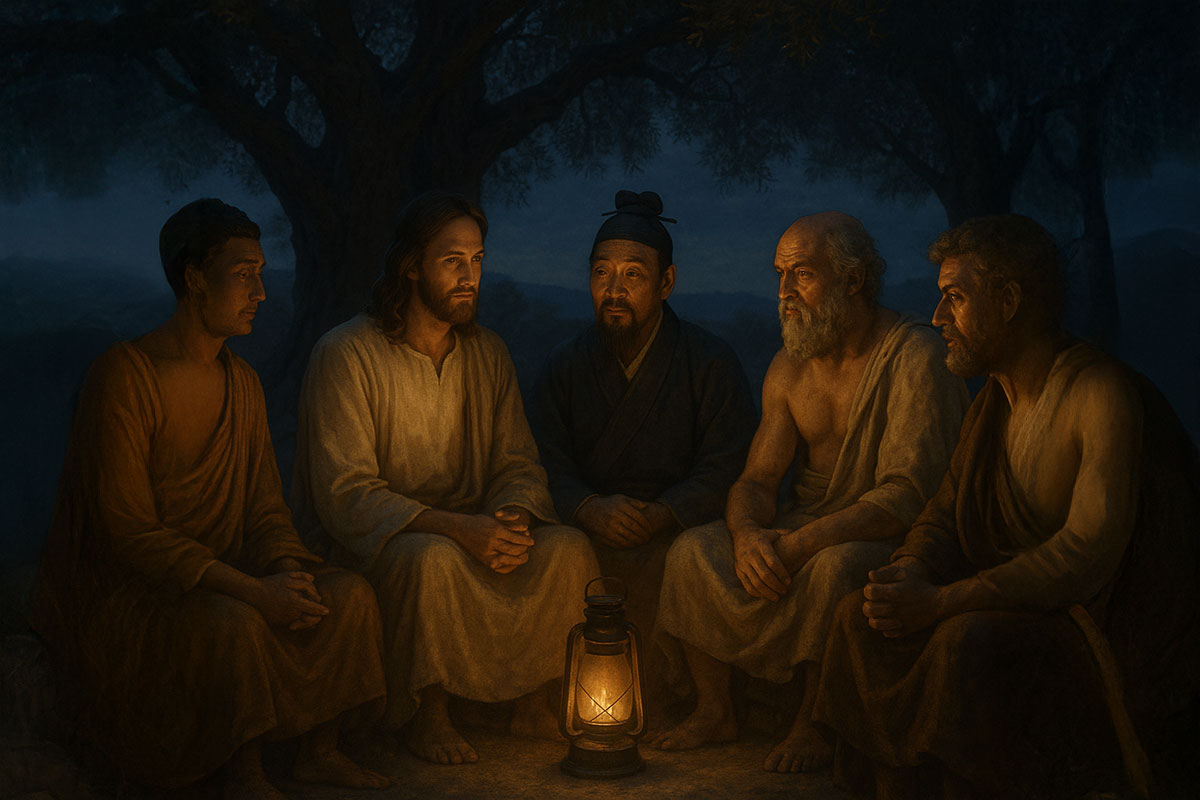
The sun had slipped below the horizon, leaving Galilee wrapped in a blue-gold twilight. Lamps had been lit in the courtyard, their warm flicker turning the olive leaves into soft silhouettes. The air felt alive — as if history and wisdom from many ages had come together in this single place.
Mary Magdalene looked around the circle:
Jesus seated calmly, hands resting lightly.
Buddha radiating peaceful attentiveness.
Socrates leaning forward with curiosity.
Confucius upright and dignified.
Marcus Aurelius quiet and reflective, the weight of leadership still in his gaze.
She breathed in the stillness.
“Truth often begins simple,” she said gently, “but tradition grows around it like vines. Tonight, we explore how that happens — and how humanity can find its way back.”
And so began the second conversation.
QUESTION 1 — Why do traditions so often replace direct truth?
1. Buddha
Buddha spoke first, voice serene.
“Because the mind prefers security over awakening. Truth requires inner work, self-observation, and courage. Tradition requires only obedience. When people choose comfort, they cling to tradition. When they choose liberation, they seek truth. The tension between the two has shaped every civilization.”
2. Socrates
Socrates stroked his beard thoughtfully.
“People fear uncertainty. When a teacher dies, followers often preserve the shell of his words instead of the essence of his inquiry. Institutions prefer answers, not questions — yet questions are the birthplace of truth. This is how tradition becomes a monument built over living wisdom.”
3. Jesus
Jesus looked at the lanterns, their light trembling in the wind.
“My teachings were simple: love God, love your neighbor, live truthfully. But people wanted certainty, systems, and authority. They turned living water into stone vessels. I do not condemn them — it is human nature to build walls around mystery. Yet truth must remain free, or it ceases to be truth.”
4. Marcus Aurelius
Marcus sat with the strength of someone who had commanded legions.
“In Rome, I saw how tradition can stabilize society. But it can also suffocate it. People follow rituals long after forgetting their purpose. They think repetition equals understanding. But a man repeating a prayer without reflection is no wiser than a soldier marching without knowing why.”
5. Confucius
Confucius nodded.
“I taught that ritual is important — but only when it awakens virtue. When ritual becomes empty, when people perform it to avoid thinking, then it blinds them. Truth requires sincerity, not habit. Tradition without sincerity becomes a cage.”
Mary smiled gently, sensing the harmony of voices. The night deepened around them as she posed the next question.
QUESTION 2 — How do societies strengthen inherited beliefs, even when they’re not true?
1. Marcus Aurelius
Marcus answered first.
“By rewarding conformity. An emperor learns quickly: people seek approval more than truth. When rulers, priests, or communities praise obedience, inherited belief becomes a currency. People cling to it for safety. Once belief becomes a social shield, truth has a difficult time entering.”
2. Confucius
“In families and schools, repetition shapes the mind. Children imitate before they understand. If what they imitate is unexamined belief, then generations are built on foundations never tested. This is why moral education must include questioning, not just memorization.”
3. Buddha
“In my time, people worshipped rituals, scriptures, and caste traditions without seeing their suffering. Inherited belief persists because it becomes part of identity. People fear that questioning belief will destroy who they are. But questioning frees the self — it does not erase it.”
4. Socrates
Socrates laughed softly.
“When I walked the streets of Athens, I saw that people defend beliefs not because they are true, but because they are convenient. Truth demands examination. Tradition demands nothing. People choose the path of least resistance. And so I questioned — and they sentenced me for it. That is how fiercely societies protect inherited belief.”
5. Jesus
Jesus lifted His eyes to the stars beginning to appear.
“When people do not know the Father for themselves, they cling to the words of others about Him. This is how tradition grows faster than truth. But when a person encounters God within their own heart, the need to defend inherited beliefs dissolves. They become free.”
Mary exhaled softly, letting the words settle into the night.
QUESTION 3 — What is the danger of protecting tradition at the expense of truth?
A quiet wind blew through the courtyard, almost signaling the weight of the question.
1. Buddha
“The danger is suffering. When tradition replaces truth, people cling to illusions. Illusion leads to attachment. Attachment leads to suffering. If a tradition blinds the heart or narrows the mind, it becomes a source of pain instead of liberation.”
2. Jesus
“If tradition portrays God incorrectly, people live with unnecessary fear, guilt, or confusion. They may worship a God who does not resemble the Father at all. They may reject the love that was meant to guide them. The greatest danger is not intellectual — it is relational. It separates the child from the Father.”
3. Confucius
“There is another danger: societal stagnation. A society that worships the past cannot evolve. Tradition becomes a chain instead of a compass. Without renewal, virtue decays, justice fades, and wisdom becomes irrelevant.”
4. Marcus Aurelius
“Leaders who protect tradition at all costs often do so to protect power. When truth threatens authority, authority silences truth. This is the danger: nations rot from the inside. I learned that the hard way — even good rulers are tempted by the safety of the familiar.”
5. Socrates
Socrates tapped the stone beside him.
“The danger is that people stop thinking. Once that happens, the soul grows dull. A tradition defended without understanding becomes superstition. Superstition, when empowered, becomes tyranny. This is why I always said: the unexamined life is not worth living.”
Mary’s face softened with compassion. She asked the final question with a quiet gravity.
QUESTION 4 — If the world reexamined its traditions today, what new possibilities would open for humanity?
The courtyard felt lighter now, as though the air itself hoped for the answer.
1. Jesus
“People would rediscover God as a loving Father, not a distant judge. They would see that truth is not fragile — it welcomes questioning. And faith, when free from fear, becomes joy.”
2. Socrates
“Humanity would become wiser. People would learn to ask better questions. They would build societies on curiosity, not on dogma.”
3. Confucius
“Families would become more harmonious. When people understand why they live, not just how they live, their relationships deepen. Clarity restores respect and virtue.”
4. Marcus Aurelius
“Empires would govern more justly. Leaders would listen more, impose less. When tradition loses its unquestioned authority, reason rises to its proper place. Humanity becomes harder to manipulate.”
5. Buddha
“And above all, individuals would awaken. Free from blind obedience, they would discover compassion, clarity, and peace. A humanity that reexamines its traditions becomes a humanity ready for enlightenment.”
Mary Magdalene stepped forward, the lantern light soft against her face.
Mary Magdalene (closing words)
“Truth is eternal. Tradition is temporary. When tradition guides truth, humanity grows wise. When tradition silences truth, humanity loses its way. Perhaps the time has come not to abandon tradition, but to purify it — to let it breathe again, to let it reflect the hearts of those who seek sincerely.”
The five teachers nodded, the night deep and calm, the stars bright above Galilee.
The second conversation had ended, but its echo felt enormous — as though the whole world might someday listen.
Topic 3 — The Council of Nicaea Revisited: If Jesus Sat in the Room Today…
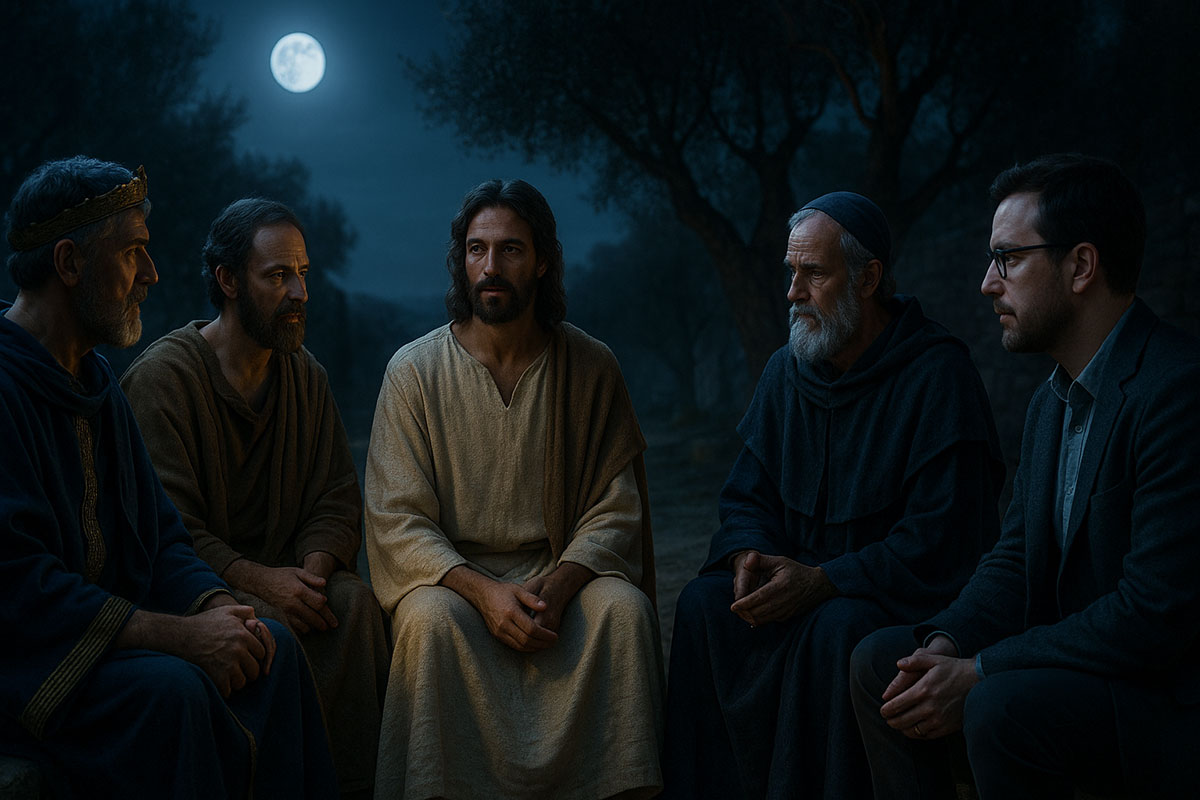
The moon rose above Galilee, bright and full, casting silver light across the stone courtyard. The air was cool now, rustling softly through the olive trees. Lamps flickered. History felt closer than ever, as if centuries were folding themselves neatly into this quiet night.
Mary Magdalene took her place at the center.
Tonight’s gathering was unlike any other:
Jesus sat calmly, His presence quiet yet unmistakable.
On one side, Emperor Constantine, armored yet contemplative.
Beside him, Athanasius, resolute.
Arius opposite him, thoughtful and steady.
And a modern biblical scholar, notebook in hand, representing the lens of contemporary research.
Mary looked at them with a mixture of compassion and gravity.
“Tonight,” she began, “we revisit a turning point in Christian history — the Council of Nicaea. But unlike the first time, Jesus is actually here.”
A gentle wind crossed the courtyard.
The conversation began.
QUESTION 1 — What truly happened at Nicaea, and why was it so influential?
1. Emperor Constantine
Constantine straightened his back, his voice measured.
“The empire was fracturing — not from war, but from theological conflict. Arius and Athanasius divided regions, bishops, and entire communities. Rome needed unity. I convened Nicaea not because I understood theology, but because political stability demanded consensus. A divided Church meant a divided empire.”
2. Arius
Arius’ voice was calm but carried the weight of old wounds.
“I argued that Jesus was the Son of God — divine, yes, but not the Father Himself. My view was based on scripture and Jesus’ own words. But the council needed a simple, uniform doctrine. My perspective threatened that uniformity. I was not condemned for lack of sincerity, but for lack of political usefulness.”
3. Athanasius
Athanasius spoke with firm conviction.
“I defended the idea that Jesus was of the same essence as the Father because I believed it protected salvation. If Jesus were not fully God, how could His sacrifice redeem humanity? My motives were theological, but I recognize now that the council’s final decision was influenced as much by politics as by faith.”
4. The Modern Scholar
She flipped open her notebook.
“From a historical perspective, Nicaea was less about discovering truth and more about establishing consistency. Only a handful of bishops initially supported Athanasius’ position. Many were pressured into agreement. The decision was not the result of unanimous understanding — it was enforced consensus.”
5. Jesus
Jesus’ voice flowed like calm water.
“I did not send any of you to argue over my nature. I did not come to divide the world into camps of doctrine. My relationship with the Father is one of love, not metaphysics. The council sought certainty where I offered simplicity. But I understand why — humans fear ambiguity.”
Mary nodded slowly, letting the weight of these words settle.
QUESTION 2 — If Jesus had been invited to Nicaea, what would He have said?
The courtyard grew quiet. Even the night seemed to pause.
1. Arius
Arius bowed his head toward Jesus.
“I believe You would have affirmed what You said during Your life: that the Father is greater, that You are sent, that You do nothing without Him. I think Your presence would have ended the debate instantly.”
2. Athanasius
Athanasius sighed, visibly humbled.
“If You had been present, I would have asked for clarity — not for victory. I fought passionately, sometimes too passionately. I wanted to defend You, but perhaps I defended an interpretation rather than Your true voice.”
3. The Modern Scholar
“I suspect the council would have struggled to accept Your answer, even if You spoke plainly. Once institutions gain power, they resist change — even from the source itself. Humans often prefer doctrine they control over revelation they cannot predict.”
4. Emperor Constantine
Constantine looked down, contemplative.
“Had You been there, I would have listened. But I must be honest: I still would have pushed for a single doctrine. Empires do not function on ambiguity. Unity requires simplicity — even if the truth is complex.”
5. Jesus
Jesus’ gaze was gentle.
“I would have reminded all of you that I am the Son, not the Father. That I came to reveal God, not replace Him. That my authority comes from obedience, not equality. But I also know that human ears often hear what they need, not what is spoken.”
Mary closed her eyes briefly, as if feeling centuries of history soften.
QUESTION 3 — How did the decision at Nicaea shape Christianity for the next 1700 years?
1. The Modern Scholar
“Nicaea marked the moment Christianity shifted from a spiritual movement to an institution. Doctrine became fixed. Questioning became dangerous. Diversity of thought, once common among early Christians, was replaced by enforced uniformity. The belief that Jesus is God became the central identity marker.”
2. Emperor Constantine
“It unified the empire. That is the truth. But unity came at a cost. Voices like Arius’ were silenced. Other interpretations vanished. Theology became law — and laws rarely leave space for nuance.”
3. Jesus
“When my identity became doctrine rather than discovery, people sought salvation through agreement instead of transformation. My message became intellectual debate rather than lived truth. The more people argued about who I was, the less they practiced what I taught.”
4. Athanasius
Athanasius exhaled, remorse in his expression.
“I see now that defining You as God Himself made Your example unreachable. People worshiped You, but stopped imitating You. They adored Your divinity but overlooked Your humanity. Your cross became a symbol, but not a path.”
5. Arius
“And yet, after all this time, the truth survives. Many quietly sensed the contradiction but feared to speak. Nicaea’s shadow was long, but not absolute. Those who seek sincerely always find echoes of the original Jesus.”
A gentle breeze passed through the courtyard, brushing olive leaves against stone.
QUESTION 4 — If humanity reexamined Jesus today, outside the shadow of Nicaea, what new understanding might emerge?
1. Athanasius
“I believe they would rediscover Jesus as a model of perfect obedience — a Son, not a metaphysical puzzle. His relationship with the Father would inspire, not confuse.”
2. Arius
“They would see that Jesus never claimed equality with the Father. They would understand that being divine does not mean being God, and that Jesus’ greatness lies in His humility, not in a title.”
3. Emperor Constantine
He looked strangely vulnerable.
“Perhaps the world would learn what I could not grasp: that spiritual unity does not require intellectual uniformity. Faith is stronger than imperial structure.”
4. Jesus
“If humanity looked again — with new eyes, free from fear — they would find the same truth I offered in Galilee: that God is love, that the Father is near, and that the path is open to all. They would see Me not as an unreachable deity, but as a guide, a brother, a Son who shows the way home.”
5. The Modern Scholar
“And perhaps,” she whispered, “Christianity would become a movement of transformation again — not of dogma. A faith of awakening, not argument. A living relationship with God, not inherited doctrine.”
Mary stepped forward. The moonlight traced the outline of her face, serene and steady.
Mary Magdalene (closing words)
“History chose a path at Nicaea. But truth was never trapped there. Tonight we have witnessed what might have happened — and what still can happen. Jesus does not need debates to reveal Himself. He needs open hearts. If humanity dares to look beyond tradition, they may find a Jesus more alive, more human, and more divine than any doctrine ever captured.”
The courtyard grew still.
The night deepened.
Galilee held its breath.
The third conversation had ended — but its impact felt endless.
Topic 4 — If the World Examined Religion Instead of Inheriting It: What Would Change?
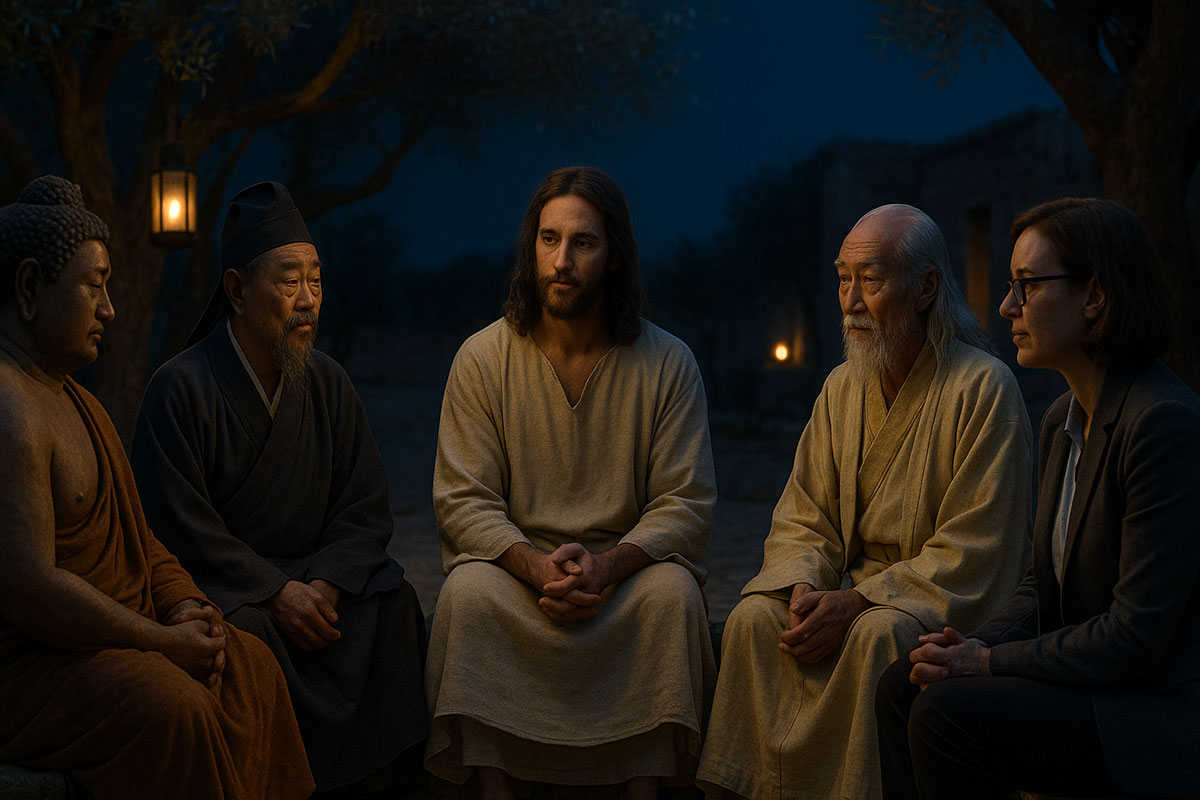
The sky above Galilee had darkened into a quiet dome of stars. The lantern flames danced lightly, and the olive branches rustled like whispers along the stone walls. This topic had a different energy — wider, more expansive. It stretched across continents, cultures, and centuries.
Mary Magdalene stood at the center, her presence serene and grounding.
“Tonight,” she said softly, “we ask what might happen if humanity stopped inheriting religion and instead examined it personally — with clear eyes and open hearts.”
She looked around the circle:
Jesus, calm yet vibrant.
Buddha, serene as still water.
Muhammad, wise and contemplative.
Confucius, dignified and thoughtful.
A neuroscientist, eyes alert with modern insight.
The conversation began.
QUESTION 1 — Why do most people inherit religion instead of examining it?
1. Confucius
Confucius spoke first, his tone steady.
“People learn through imitation before understanding. Families pass on rituals to give children stability, identity, and moral grounding. But imitation without reflection leads to loyalty without comprehension. Tradition becomes a habit, not a living path.”
2. Muhammad
He nodded slowly.
“Communities find comfort in shared belief. Questioning tradition feels like questioning one’s family, tribe, or heritage. Many fear that examining religion will shatter unity. Yet true unity is built on sincerity, not conformity.”
3. The Neuroscientist
She leaned forward.
“The brain is wired to conserve energy. Inherited belief is effortless. Critical thinking requires effort. The mind prefers ready-made meaning over uncertainty. But what the brain finds easy is not always what the soul needs.”
4. Jesus
Jesus looked toward the night sky.
“I invited people to see, not to imitate blindly. But many followed the religion around me rather than the God within me. Humans cling to what they are taught first. This is why I told them to become like children — open to revelation rather than rigid with tradition.”
5. Buddha
Buddha smiled gently.
“The mind is conditioned. People grasp what feels familiar, fearing that the unknown will bring suffering. But liberation requires seeing through conditioning. Inherited religion can comfort the mind, but examined truth frees it.”
Mary let the answers linger, watching as the night deepened.
QUESTION 2 — What changes when a person examines faith personally instead of inheriting it?
1. The Neuroscientist
“Self-examination activates higher reasoning, emotional regulation, and empathy. A person who examines faith becomes less reactive, more reflective. They stop defending belief as identity and start seeking truth as understanding.”
2. Buddha
“A person who examines faith becomes awake. They see which beliefs reduce suffering and which increase it. They no longer cling to dogma. They choose paths that cultivate wisdom, compassion, and clarity.”
3. Muhammad
“When faith is examined sincerely, it becomes intentional. Prayer is no longer habit, but connection. Morality is no longer obligation, but choice. A believer who understands why they believe is stronger than one who repeats without comprehension.”
4. Jesus
“Examined faith opens the heart. The person discovers God not through rituals, but through relationship. They recognize the Father’s presence in themselves and others. They no longer fear truth, for truth becomes their companion.”
5. Confucius
“A person who examines their faith becomes virtuous without effort. Because they understand the meaning behind their actions, their character becomes aligned with the good. Examination transforms obedience into wisdom.”
Mary nodded, seeing the subtle unity weaving among the answers.
QUESTION 3 — What is the danger of inherited religion without examination?
A soft wind stirred, as if the land itself leaned closer.
1. Muhammad
“The danger is rigidity. When people inherit religion without understanding, they defend ritual instead of spirit. This breeds conflict, arrogance, and exclusion. A faith without reflection can harm more than it heals.”
2. Jesus
“When religion becomes inherited, God becomes distant. People fear Him instead of knowing Him. They follow teachings without hearing the Father’s voice. This leads them to judge others while forgetting love.”
3. Confucius
“Society decays when people repeat rituals without sincerity. Leaders abuse tradition for power, families use it to control, and communities use it to divide. When meaning is forgotten, tradition becomes corruption.”
4. Buddha
“The danger is attachment. People cling to symbols, words, and identities. They mistake the finger pointing to the moon for the moon itself. This attachment breeds suffering, illusion, and conflict.”
5. The Neuroscientist
She folded her hands thoughtfully.
“Inherited belief, when unexamined, becomes part of the subconscious. People defend it automatically, reacting emotionally instead of rationally. This is why religious disagreement triggers fear, anger, and tribalism. It bypasses reasoning and strikes at identity.”
Mary’s eyes softened. This question had revealed the weight of centuries.
QUESTION 4 — What would change globally if humanity began examining religion today?
The courtyard brightened slightly under the starlight, as though hope itself shimmered in the air.
1. Jesus
“People would find God closer than they ever imagined. They would see that divine love is not confined to doctrine. They would recognize the Father in every person, every breath, every moment.”
2. Buddha
“Humanity would suffer less. Examination dissolves illusions. Without illusions, compassion grows. A world guided by insight rather than habit would be peaceful.”
3. Muhammad
“Justice would flourish. When people examine faith, they see the heart of its moral teachings — mercy, equity, humility. Nations would act with conscience, not with self-interest disguised as religion.”
4. Confucius
“Families would regain harmony. Communities would prioritize virtue. Leaders would rule with wisdom, not authority. Examination would elevate character across society.”
5. The Neuroscientist
She smiled softly.
“Humanity would become less tribal and more universal. People would recognize shared truths across religions — compassion, humility, love, inner growth. Examined belief leads to collaboration instead of division. The human brain is capable of extraordinary transformation when freed from inherited fear.”
Mary stepped forward into the circle of lantern light.
Mary Magdalene (closing words)
“If the world examined religion, it would find not chaos, but clarity. Not division, but unity. Not the loss of identity, but the discovery of one deeper than any tradition alone could offer. Faith born from inheritance may bring comfort. But faith born from understanding brings freedom.”
The olive trees rustled as if applauding.
The lanterns flickered softly.
Galilee itself felt illuminated from within.
The fourth conversation had arrived gently, but its meaning stretched far across the world.
Topic 5 — The Son of God vs. God Himself: Why the Difference Matters
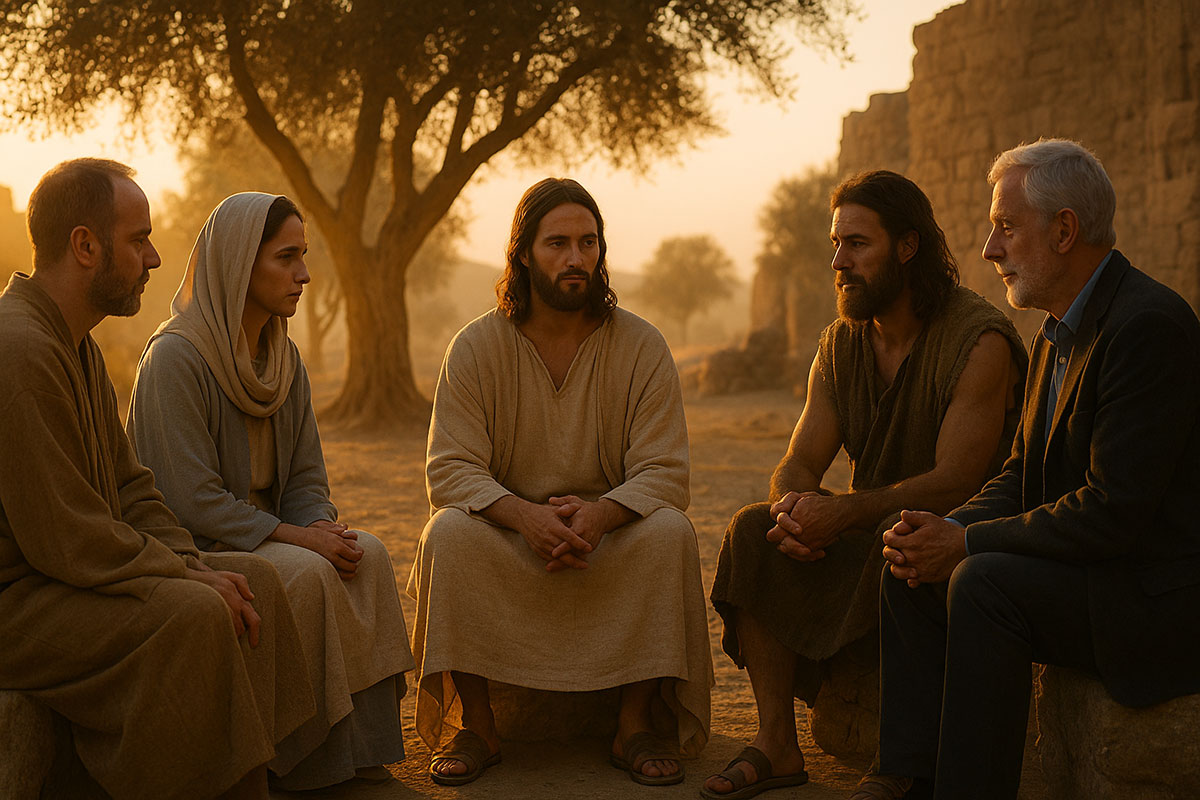
The courtyard in Galilee felt different at dawn.
Not heavy with debate, not solemn with history —
but quietly expectant, as if truth was preparing to rise with the sun.
Mary Magdalene stood at the center.
Around her:
Jesus, peaceful.
Mary, His mother, radiantly calm.
John the Baptist, strong yet humble.
A modern pastor, earnest and thoughtful.
A philosopher, contemplative.
Mary lifted her gaze to the sky just as the first golden edge of sunlight appeared.
“Tonight,” she said softly, “we end where so much began — with the question of Jesus’ identity. Not to argue, but to illuminate. What does it mean that Jesus is the Son of God? And why does it matter that He is not God Himself?”
The conversation unfolded like a sunrise.
QUESTION 1 — What did “Son of God” mean in Jesus’ own time and words?
1. John the Baptist
He spoke first, voice echoing with desert fire.
“When I proclaimed that One was coming after me, I knew He was chosen by God. Anointed. Filled with Spirit. But never once did I consider Him God Himself. ‘Son of God’ meant one who walks in perfect obedience, reflecting God’s heart. It meant mission, not essence.”
2. Mary (His mother)
Her voice carried maternal tenderness.
“When the angel spoke to me, he said my son would be called holy — the Son of the Most High. I felt the presence of God, but I never believed I had birthed God. I gave birth to a child. A miraculous child, yes. But a child of God, not God in human disguise.”
3. The Philosopher
He tapped a finger against his knee.
“In ancient Jewish culture, ‘son of’ often meant ‘reflection of’ or ‘like in character.’ A ‘son of peace’ brings peace; a ‘son of righteousness’ acts righteously. ‘Son of God’ meant one who lives in perfect alignment with God’s will. It was relational, not ontological.”
4. Jesus
Jesus looked toward the horizon.
“When I said ‘I am the Son,’ I meant that I know the Father, walk with Him, and do His will fully. I did not mean I am the Father. My purpose was to reveal Him — to bring His heart to the world. Sonship is intimacy, not identity.”
5. The Modern Pastor
He spoke slowly, visibly wrestling with his training.
“In seminary, I was taught that ‘Son of God’ had to mean ‘God Himself,’ otherwise Jesus wouldn’t be divine. But listening here… I realize divinity can mean origin, authority, and closeness to God, not sameness. The first-century meaning was much more relational than what doctrine later insisted.”
Mary let the clarity ripple across the courtyard like the widening morning light.
QUESTION 2 — How did later theology turn the Son into God Himself?
1. The Philosopher
“By blending Jewish faith with Greek metaphysics. Greek thinking preferred absolute categories: either divine or not divine, God or not God. The subtle relational meaning of ‘Son’ was lost as Christianity moved into philosophical frameworks it was never born from.”
2. The Modern Pastor
“And by fear. People feared that if Jesus wasn’t God, then Christianity would seem weaker, salvation less certain. So councils and creeds elevated Him beyond His own claims — not from malice, but from insecurity.”
3. Mary (His mother)
She looked saddened.
“I watched doctrines rise long after my time. They built layers around my Son. They turned His humility into metaphysics. They forgot that His power came from obedience, not equality. When people make Him God, they lose the beauty of the relationship He lived.”
4. John the Baptist
He nodded.
“People wanted a Messiah who was untouchable. But the true Messiah walked dusty roads, felt hunger, prayed, wept, and overcame through faith. Turning Him into God made His journey unreachable — and made people passive instead of awakened.”
5. Jesus
“My identity became something argued over instead of lived. I never asked for worship of my nature. I asked for hearts that sought the Father. I spoke of obedience, surrender, love — these were the truths that revealed my Sonship.”
Mary breathed in, steady and calm.
The next question held the deepest insight.
QUESTION 3 — What is lost when we confuse the Son of God with God Himself?
1. Jesus
He answered first, voice gentle.
“When people call me God, they place me on a mountain they feel they cannot climb. They think my path is impossible for them. But I walked a human path so humans could follow it. If they see me as God, they stop trying. They admire instead of imitate.”
2. The Modern Pastor
His eyes widened with realization.
“That explains why so many believers feel inadequate… or feel faith is impossible without miracles. They think Jesus succeeded because He was God, not because He embodied obedience. It removes responsibility from us.”
3. John the Baptist
“It also weakens Jesus’ victory. Overcoming temptation only matters if one can actually be tempted. Obedience only matters if one can choose differently. The Son’s humanity reveals the path. God cannot walk that path — but the Son can.”
4. Mary (His mother)
Tears shone faintly in her eyes.
“I raised Him. I watched Him grow, learn, pray, bleed. If people erase His humanity, they erase His courage. They erase the very love that carried Him through His mission.”
5. The Philosopher
“And philosophically, calling Jesus God collapses the relational dynamic. It makes the Father-Son relationship symbolic rather than actual. But relationship — not identity — is the essence of the gospel.”
Mary closed her eyes softly, absorbing the emotional weight.
QUESTION 4 — What new understanding could humanity gain if it saw Jesus truly as the Son?
1. The Modern Pastor
“We would realize that faith is partnership, not observation. Jesus becomes a mentor, a guide, a living example. Christianity becomes a path, not just a belief system.”
2. Mary (His mother)
“We would rediscover the tenderness of God — a Father who sends His Son in love, not a God performing divine theater. The story becomes family, not metaphysics.”
3. John the Baptist
“We would regain urgency. If Jesus succeeded as a human guided by God, then we have no excuse. The call becomes actionable: repent, awaken, live truth.”
4. The Philosopher
“Humanity would see the practicality of Jesus’ teachings. His ethics, His humility, His courage — all become models. Philosophy and spirituality converge into a living practice.”
5. Jesus
And finally, Jesus spoke.
“If people saw me as the Son, they would understand that the Father they seek is not distant. They would see that God is approachable, knowable, close. My life would become an invitation — not a pedestal. And humanity would rediscover what I came to reveal: that all can become children of God in truth.”
The sun broke fully over Galilee.
Warm light fell across every face.
Mary stepped forward, voice soft yet strong.
Mary Magdalene (closing words)
“When Jesus becomes unreachable, humanity stays unchanged. But when Jesus is seen as the Son — the first, the faithful, the one who walked before us — humanity awakens. The difference is not small. It is the difference between worship and transformation. Between watching and participating. Between inherited belief and living truth.”
The courtyard glowed with morning light.
The conversation ended not in silence, but in clarity.
And Galilee felt reborn.
Final Thoughts by Mary Magdalene
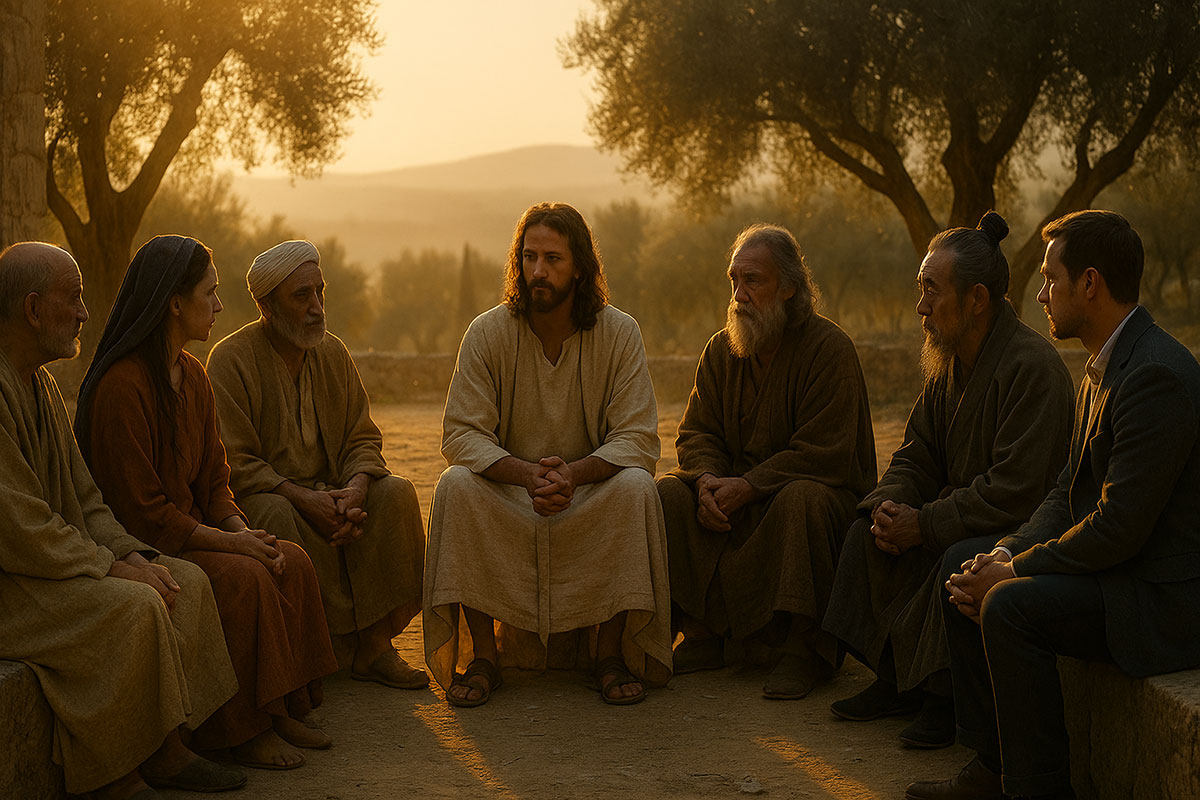
After these conversations, one thing becomes clear to me: Jesus’ message was never meant to be buried under fear, tradition, or inherited belief. He spoke to hearts, not councils. He lived as a Son, not as a figure of philosophical speculation. And He invited people into a relationship with the Father, not into arguments about His nature.
If we can set aside what we were taught long enough to listen again, we may find that Jesus has not changed—only our interpretations have.
In my lifetime, I saw Him heal the hurting, comfort the lost, and call each person to awaken to the presence of God. None of this required complexity. It required sincerity.
So I leave you with this hope: that you will have the courage to look beyond what was handed down, and discover for yourself the Jesus who walked these paths. The Jesus who prayed, who trusted, who loved. The Jesus who led by example, not by elevation.
If we seek Him honestly, without fear and without assumption, we will find that truth is not fragile.
It is waiting.
Short Bios:
Jesus
A Jewish teacher from first-century Galilee whose message centered on the Kingdom of God, compassion, repentance, and living as a true child of the Father. His life and teachings became the foundation of Christianity.
Mary Magdalene
A devoted follower of Jesus known for her clarity, courage, and spiritual insight. Historically recognized as one of the earliest witnesses of Jesus’ resurrection and a trusted figure within His circle.
Paul the Apostle
A former Pharisee who converted after a dramatic spiritual experience. His letters shaped early Christian theology and influenced how later generations interpreted Jesus.
Mary, Mother of Jesus
A Jewish woman revered for her humility and devotion. Seen as a central witness to Jesus’ childhood, character, and mission.
John the Baptist
A prophetic figure who preached repentance and prepared the way for Jesus. Known for his austere lifestyle and fierce insistence on spiritual integrity.
Buddha (Siddhartha Gautama)
A spiritual teacher from ancient India who discovered the Middle Way and articulated the Four Noble Truths and the path to liberation from suffering.
Socrates
Ancient Greek philosopher known for relentless questioning, ethical inquiry, and the method of dialogue that still bears his name.
Confucius
Chinese philosopher whose teachings on virtue, social harmony, and moral cultivation shaped East Asian culture for over two millennia.
Marcus Aurelius
Roman emperor and Stoic philosopher. His work “Meditations” remains one of the most profound reflections on inner discipline, duty, and character.
Lao Tzu
Legendary Chinese sage and author of the Tao Te Ching. His teachings emphasize natural harmony, simplicity, humility, and following the flow of the Tao.
Modern Neuroscientist
A contemporary researcher representing current understanding of belief formation, cognitive bias, and how the brain responds to inherited tradition vs examined truth.
Modern Pastor
A present-day Christian leader who wrestles with tradition, theology, and how to guide believers toward a more authentic and examined faith.
Philosopher
A contemporary thinker whose role is to analyze ideas, clarify concepts, and evaluate the historical and logical foundations of inherited beliefs.
Modern Biblical Scholar
A researcher trained in history, language, and textual analysis who studies the development of Christian doctrine and the evolution of early beliefs.
Emperor Constantine
Roman emperor who legalized Christianity and convened the Council of Nicaea, shaping the direction of Christian doctrine for centuries.
Arius
Early Christian theologian whose views emphasized Jesus as subordinate to God. His position sparked major debates in the early church.
Athanasius
A central defender of the doctrine that Jesus was fully divine, whose arguments influenced mainstream Christian belief for centuries.
Leave a Reply