

|
Getting your Trinity Audio player ready...
|
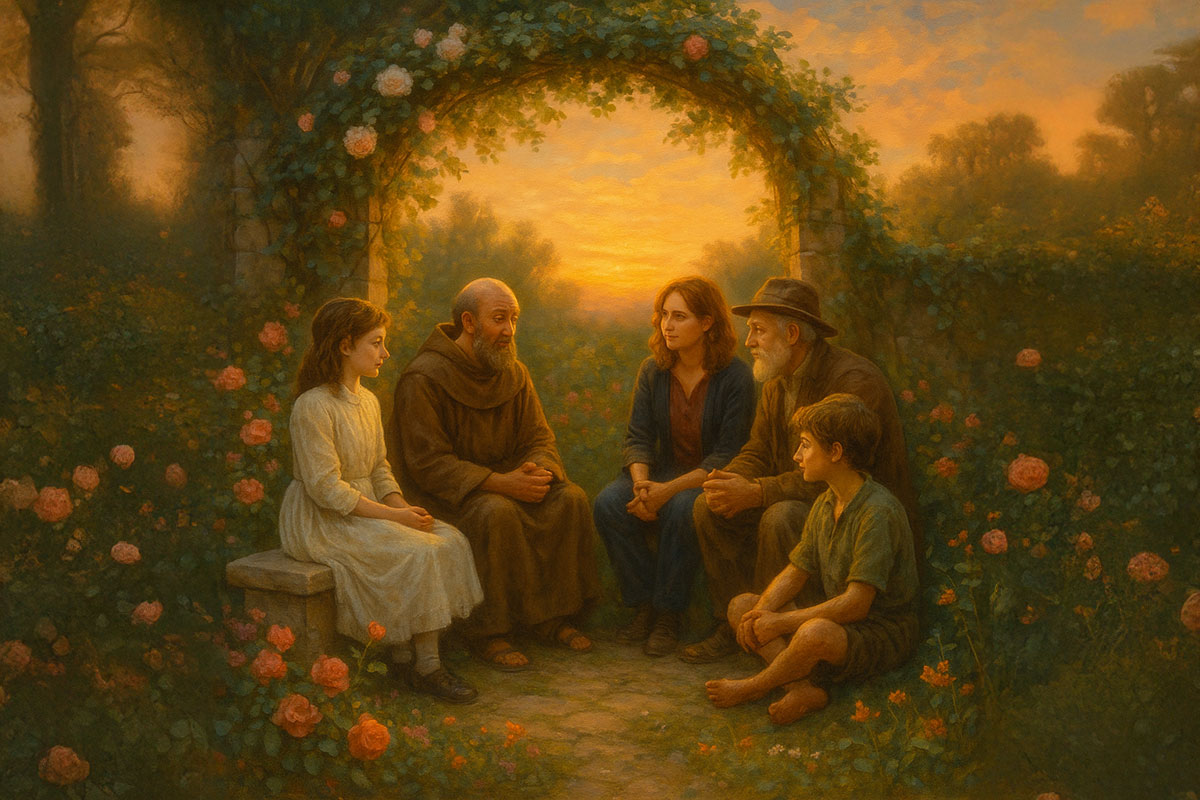
Frances Hodgson Burnett:
When I first imagined the Secret Garden, I did not set out to write a book about plants. I set out to write about what was withering in children’s hearts—and what might bring those hearts back to life. I had seen too many young ones, like Mary and Colin, lost not to death but to silence, to neglect, to a world too busy or broken to look them in the eye.
I believed—and still believe—that there is a garden within every child, and indeed every person. And that if someone would only find the key, if someone would only open the door and tend it, the soul would begin to bloom again. Not with noise or instruction, but with attention. With love. With time.
These conversations you are about to hear are not fictional, though they are imagined. They are what I wished I could have shared all those years ago—about nature, about children, about healing and belief and the quiet, invisible work of restoration.
I hope, as you listen, that you too might feel a door creaking open inside you. That you might feel your own soil stir. Because no matter how long it has been—the garden is never gone. Only waiting.
(Note: This is an imaginary conversation, a creative exploration of an idea, and not a real speech or event.)

Topic 1: The Garden Within — Can Nature Heal the Soul?
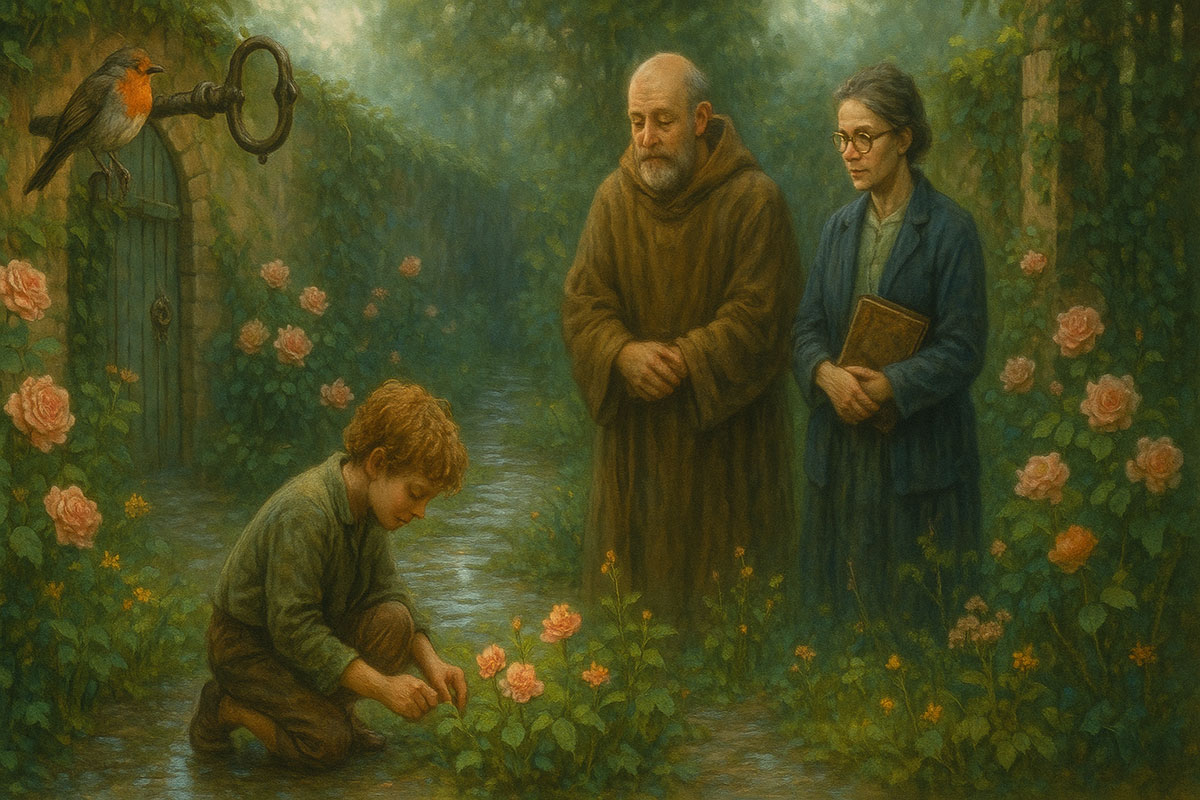
Setting:
A stone bench encircled by blooming roses, foxgloves, and curling ivy within the newly reborn Secret Garden. The sun is setting golden through the trees, and the air hums with life. The five sit in a loose circle: Frances Hodgson Burnett, Dickon Sowerby, Mary Lennox, Robin Wall Kimmerer, and Thich Nhat Hanh. A robin flits overhead, pausing to listen.
 Frances Hodgson Burnett (moderator)
When I wrote The Secret Garden, I felt in my bones that nature has its own medicine—quiet, humble, and deeply intelligent. But I wonder aloud with you today: What is it about nature that heals us, truly?
Robin Wall Kimmerer
It’s relationship. Nature doesn’t heal us because it is pretty or peaceful. It heals because it recognizes us—if we choose to recognize it in return. When we tend a garden, we aren’t just changing soil. We’re entering reciprocity. We give care, and the Earth responds with life. Healing begins when we stop seeing nature as “other.”
Mary Lennox
At first, I hated everything. The dirt. The moor. Even the wind. But the more I listened—really listened—the more I felt it listening back. The silence under the trees wasn’t empty. It was... forgiving. Every time I cleared a weed, or watered a root, I was taking the pain out of myself, too. No one told me to do it. The garden did.
Thich Nhat Hanh
Yes, Mary. Nature is a mirror. When we walk slowly in a garden, we begin to hear our breath, our footsteps, our hearts. In this presence, the mind can return home. The trees do not ask you to be anything but what you are. This acceptance is powerful. It allows suffering to soften.
Dickon Sowerby
I dunno if I’d say it clever like you do, but... I always felt plants don’t judge. Same with animals. They just want love, like us. You listen, you watch, and you’ll see they’ve got moods and stories too. I’ve seen a fox grieve. I’ve seen roses perk up when you talk kind to ’em. They feel things. That’s the healing part. They make you feel things again.
 Frances
I’m deeply moved. So many children today—and grown-ups too—live cut off from this great, tender intelligence of the Earth. That leads me to this: When we feel lost, broken, or numb, how can reconnecting with nature bring us back to ourselves?
Mary Lennox
I was numb for years. In India, I had servants. Here, I had no one. I didn’t know how to love or be loved. But then, the robin. Then the keys. Then Dickon. Then the soil on my hands. It was little things. My fingers found life first, then my heart followed. It’s like the garden taught me the alphabet of caring.
Thich Nhat Hanh
Reconnection begins with a single breath. When you drink tea with full awareness, that is a garden. When you water a plant with attention, you are watering your wounded child. Nature shows us our wholeness is never lost, only clouded. By planting a seed, we plant ourself.
Dickon Sowerby
Y’see, the Earth’s always there. She don’t mind if you’re angry, or sad, or don’t talk right. You sit with her, she'll sit with you. I think folks forget that sitting and breathing’s enough. The garden don’t ask you to fix everything. It just asks you to come back, like you never left.
Robin Wall Kimmerer
So beautifully said, Dickon. The word I would offer is “belonging.” In a world where people feel rootless, the garden re-roots us. When Mary and Colin started tending that garden, it wasn’t just play. It was ceremony. It was restoration. The soil received their pain and gave back purpose.
 Frances
That brings us, finally, to what I suspect may be the heart of this story: Is the healing in nature itself... or in the way we choose to care for it? Is the magic in the garden—or in the gardener?
Robin Wall Kimmerer
It is both. The garden is a gift. But the act of tending it—of entering into care and attention—is where the magic begins. Plants will grow without us. But when we grow with them, we are transformed. It’s not power over nature. It’s power with it.
Dickon Sowerby
I always felt it were a friendship. Like, the more you love the garden, the more it loves you back. It’s not about fixing it. It’s about showin’ up every day. Even when yer sad. Even when it rains. That’s the magic, miss. That showing up.
Thich Nhat Hanh
Yes, Dickon. The magic is presence. When we tend to anything with mindfulness—a rosebush, a frightened child, our own pain—it blossoms. The rose is already complete. But when we give it our breath, it opens not just to the sun, but to us.
Mary Lennox
For me, it was the doing that mattered. Digging. Planting. Watching things grow and knowing I helped, even just a little. I didn’t believe in magic. Not really. But something in me started to believe in me. That’s when everything began to change.
 Frances (softly smiling)
Then perhaps the real secret... is that the garden was never locked. Only we were. And through love, and care, and muddy hands—someone found the key.
Topic 2: What Children Really Need to Grow
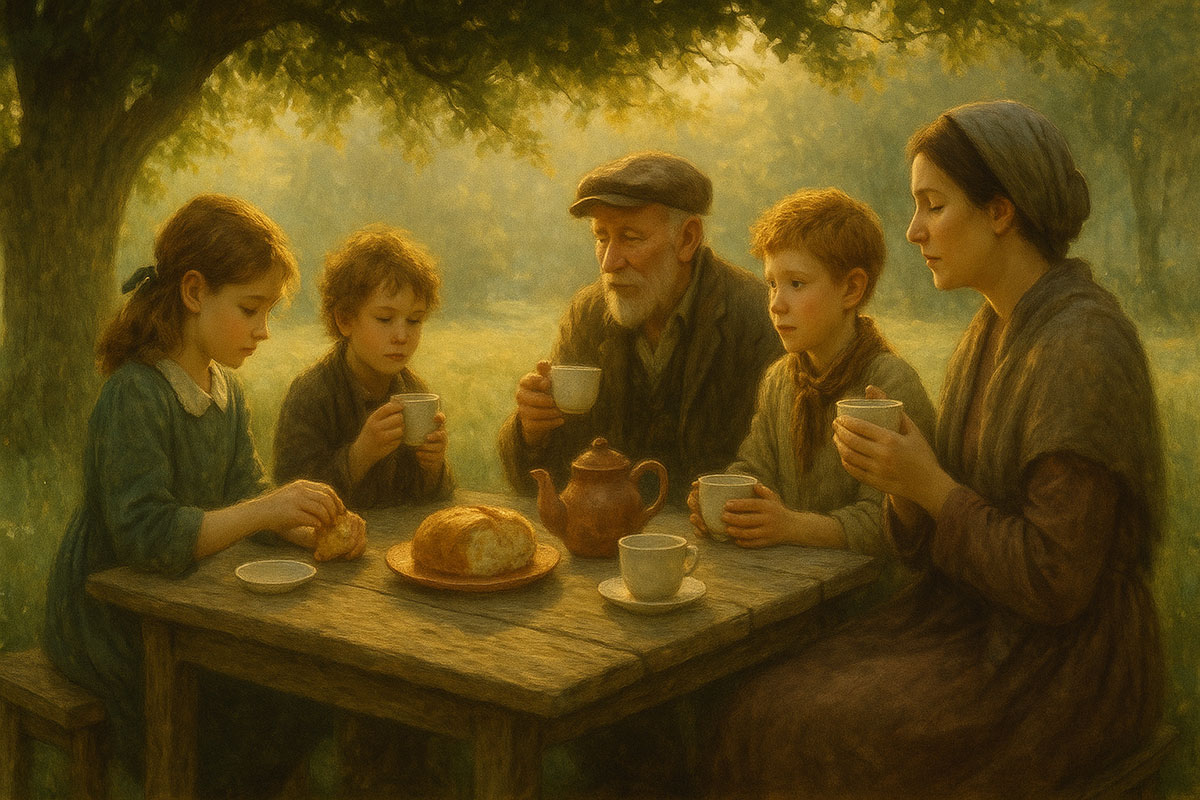
Setting:
The same garden, but now in the fresh morning light. Dew sparkles on every leaf. A small wooden table holds warm bread and tea. Birds sing in the branches, and bees hum lazily. The group—Frances Hodgson Burnett, Mary Lennox, Colin Craven, Fred Rogers, and Dr. Gabor Maté—gathers in a quiet circle beneath an old elm tree.
 Frances Hodgson Burnett (moderator)
When I created Mary and Colin, I saw children who were neglected—not just in body, but in spirit. My question is simple but urgent: What does a child truly need to grow—not just survive, but to blossom?
Fred Rogers
Every child longs for one thing: to be accepted just as they are. Not when they behave. Not when they improve. But now. Unconditionally. When we give them that—presence, consistency, gentleness—we give them the soil to grow. Just like a seed, they don’t need fixing. They need nurturing.
Mary Lennox
I didn’t know I needed anything. I thought I was fine. But I was always angry. Empty. When someone finally looked at me—not with orders, but with kindness—I started to want something more. Dickon talked to me like I mattered. And the garden didn’t care if I was rude or quiet or wrong. It just... waited.
Dr. Gabor Maté
Mary is describing something very important: attunement. When a child is not seen, not felt, not mirrored by their caregivers, they disconnect—from others, and from themselves. They may become harsh, withdrawn, or overly pleasing. To grow, a child must feel safe in relationship. Their emotions must be allowed, not punished.
Colin Craven
Everyone tiptoed around me. Like I’d break. Like I was a ghost. I wanted someone to see me—not just the weak parts, but the strong ones too. The first time someone told me I wasn’t doomed, I didn’t believe them. But then the garden let me try. My body didn’t grow because of medicine. It grew because I believed I was allowed to.
 Frances
Yes, I think so many children are not unloved—but unseen. And that brings me to something deeper: What happens to a child who is emotionally neglected, even if their physical needs are met? What are the invisible wounds we so often miss?
Dr. Gabor Maté
Emotional neglect is often invisible because the child is clothed, fed, even praised. But inside, they feel hollow. They learn to suppress needs, to mistrust love, or to become perfectionists to earn affection. This disconnection can lead to chronic illness, depression, addiction. The body keeps the score, even when the mind forgets.
Mary Lennox
I was surrounded by servants. But I don’t remember a single hug. Not one. I didn’t cry when my parents died. I didn’t know how. I used to throw tantrums just to feel something. I think I was hoping someone would stop me. Hold me. They never did. I had to find that through the garden. Through friends.
Fred Rogers
Mary, thank you for sharing that. So many children live that silence. We must remember: children don’t misbehave to annoy us. They act out to be seen. To test if we’ll stay. Emotional wounds show up as distance, defiance, or even being “too good.” But underneath is always the question: “Do you see me? Will you stay?”
Colin Craven
They said I was ill. But really, I was angry. Angry that my father wouldn’t look at me. That my mother was gone. That everyone treated me like an ending. I started to believe I didn’t deserve anything. Then Mary came. And she didn’t believe the things they said about me. That’s when I started to heal.
 Frances
Which brings us to the final question—and perhaps the most hopeful one: What begins to change when a child finally feels truly seen, truly cared for, truly loved?
Fred Rogers
Oh, everything changes. You can see it in their eyes. In their posture. In the tone of their voice. A child who is loved doesn’t have to be perfect. They begin to explore, to trust, to create. They become who they really are, not who they had to be to survive.
Colin Craven
I stood up. That’s what changed. I was supposed to die. But I didn’t. I stood. I walked. I laughed. It felt like my heart had sunlight in it. I used to imagine being buried. But now, I imagine running. I imagine everything.
Mary Lennox
I became curious. I started to care about other people. I even started to love myself a little. Not all at once. But it was like—if the garden could come back to life, so could I. I began to trust the world again.
Dr. Gabor Maté
Yes. When a child is loved properly, they don’t have to armor themselves. Their nervous system relaxes. Their joy returns. Their learning opens. The healing isn’t just emotional—it’s cellular. Every part of them starts saying: “It’s safe to be me.”
 Frances (quietly)
Then the real “secret” is not the garden at all... but the way a child blossoms when they are watered by love.
Even a locked heart will open, if someone tends it with care.
Topic 3: The Magic of Belief — How Thoughts Shape Reality

Setting:
The Secret Garden is vibrant, alive, buzzing with midsummer energy. A circular patch of soft grass serves as their gathering space. Sunlight trickles through the leaves like warm confetti. A single swing hangs from an old tree behind them. The conversation includes Frances Hodgson Burnett, Colin Craven, Neville Goddard, Louise Hay, and Dr. Joe Dispenza.
 Frances Hodgson Burnett (moderator)
When I watched Colin transform—not just physically, but spiritually—I felt in my bones that belief is what healed him. Not just sunshine or soil, but something invisible and powerful inside him waking up. So, I ask each of you: What role does belief truly play in shaping a person’s life?
Neville Goddard
Belief is not passive acceptance—it is creation. What you assume to be true becomes your world. Colin was surrounded by a belief in illness and death. The moment he assumed health and joy as real—even while still bedridden—the world responded to his new imagination. What you feel deeply and persistently becomes your fate.
Louise Hay
Our thoughts are seeds, and the mind is a garden. Most people grow weeds of fear and limitation because they don’t know they can choose differently. When Colin began affirming, “I am strong. I am whole,” his body began to listen. Belief rewrites biology. It plants the possibility of change.
Colin Craven
I didn’t even know what “belief” meant at first. I thought I was cursed. Everyone said so. But then Mary said I wasn’t. Dickon said I wasn’t. And part of me started to want to believe them. At first it felt like pretending. Then I stood up. And I realized... maybe they were right. Maybe I was stronger than I thought.
Dr. Joe Dispenza
From a scientific view, belief is neurochemistry. A repeated thought becomes a neural pathway. When Colin shifted from “I am sick” to “I can walk,” he changed his biology. His brain began firing in new patterns. That created new hormones, new posture, new energy. Belief isn’t imaginary—it’s instructional.
Frances
That brings me to something tender. Many people believe only what they've been told by others—sometimes cruel things. So I ask you this: How can someone begin to change their inner beliefs, especially when they’ve been shaped by fear, neglect, or despair?
Louise Hay
The first step is noticing the voice inside you. Whose voice is it? Is it kind? Would you speak that way to a child? Then begin to soften it. I tell people: “Say something loving to yourself every day, even if you don’t believe it yet.” Colin didn’t believe he was strong—until he began acting as if he was. Love follows repetition.
Neville Goddard
The moment you imagine a new state, you have entered it. Even if you don’t yet see it with your eyes, you must persist. The world reflects your assumptions. Do not wait for proof. Live from the end. Walk as though you are healed, beloved, confident. And the world will bow to your inner vision.
Colin Craven
Sometimes I had to shout over the old voices. They said, “You’ll die.” I said, “I’ll live.” They said, “You can’t walk.” I said, “Watch me.” But I didn’t do it alone. Mary and Dickon helped me fight those voices. That’s part of it, I think. You need people who believe in you until you can believe in yourself.
Dr. Joe Dispenza
Exactly, Colin. The body responds to emotional rehearsal. If you wake up every day feeling defeated, your cells follow. But if you visualize health, gratitude, and joy, your body begins to memorize that too. It’s not about faking—it’s about rehearsing the future you want until it feels like home.
 Frances
So belief changes us. But what about the world around us? Final question: Can changing what we believe inside truly reshape the life we experience outside? Can thought become reality—not just for one person, but for the world?
Neville Goddard
Always. You are not a passive observer—you are the operant power. Each assumption creates a ripple. When Colin believed in life, the garden flourished. When Mary believed in friendship, others came alive. Change the within, and the without rearranges itself. That is divine law.
Louise Hay
Yes. Healing ourselves helps heal others. Colin’s new belief didn’t just change him—it lifted Mary, his father, the entire household. When we transform our thoughts, we shift the vibration of our relationships, our health, even our environment. It’s the butterfly effect of belief.
Colin Craven
My whole world changed. People started treating me different. The rooms got brighter. The food tasted better. Even my father came home. It’s like my hope brought everything else back to life. Not just me—the house, the garden, the people. It felt like waking up a dream.
Dr. Joe Dispenza
Because it is a dream, Colin. A conscious one. Science shows that our emotional state affects what we notice, how we connect, and what we attract. Your story is proof that belief doesn’t just heal a body—it reshapes a future. You taught your cells, your heart, your world... to believe again.
 Frances (smiling softly)
Then let it be known:
A single child, daring to believe in life...
can bring an entire world back into bloom.
Topic 4: Tending What Was Abandoned — The Power of Restoration
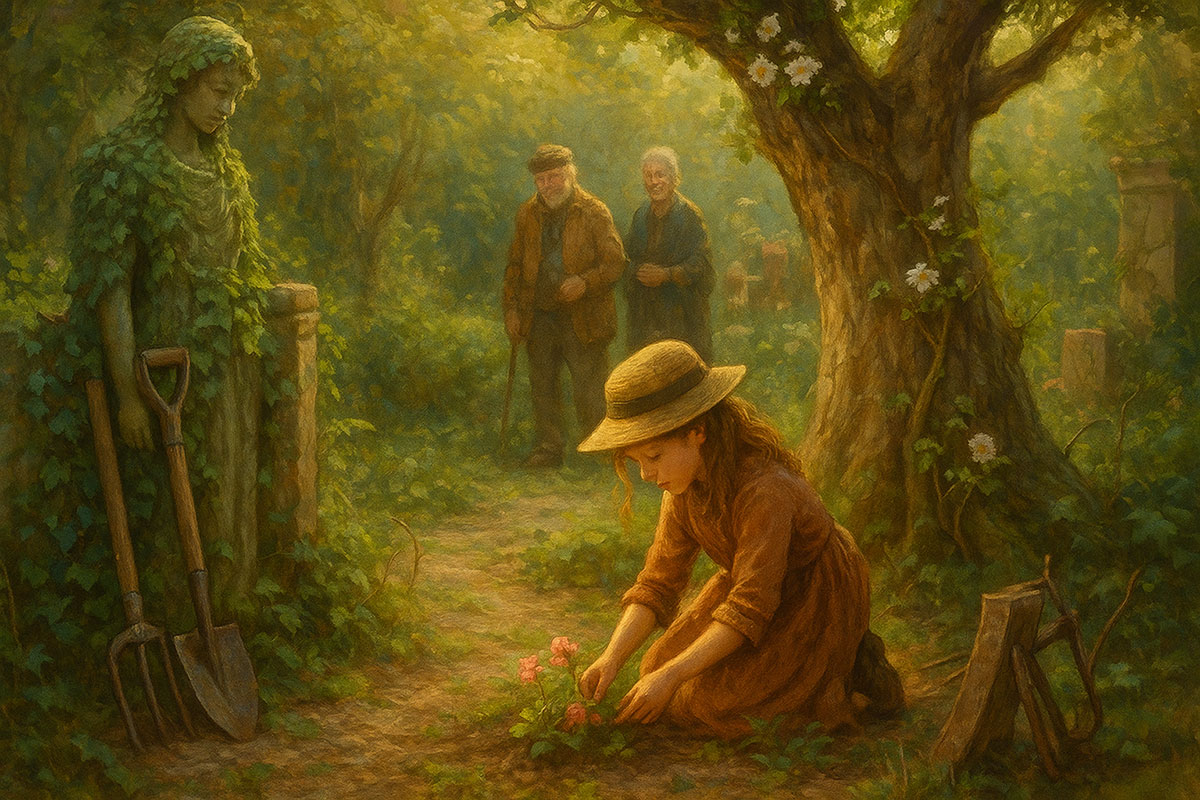
Setting:
It is late afternoon in the garden. Ivy spills gently over stone walls, and the once-forgotten corners now bloom with foxgloves, snapdragons, and wild roses. A few garden tools lean near a bench—used but cared for. The circle today includes Frances Hodgson Burnett, Mary Lennox, Viktor Frankl, Clarissa Pinkola Estés, and Jane Goodall.
 Frances Hodgson Burnett (moderator)
When I first imagined the garden, I saw not just flowers—but forgottenness itself. The locked door. The dead plants. It mirrored something in Mary, in Colin, and even in the house itself. So let me begin here: What happens to something—or someone—when it is abandoned, left untended, forgotten?
Mary Lennox
It goes quiet. Not dead—but quiet. I think I was like that. I wasn’t bad, just... untended. I was angry and mean because no one ever looked at me with love. The garden was the same. It wasn’t ruined—it was waiting. That’s the word. Waiting to be seen again.
Jane Goodall
Abandonment leaves a silence that is not peace. In nature, I’ve seen what happens when ecosystems are stripped—creatures leave, plants die, but the soil still remembers. The same is true of people. The memory of wholeness remains. Healing begins the moment one living thing chooses to care again.
Clarissa Pinkola Estés
Abandoned things often carry the greatest beauty. They are wild, raw, misunderstood. In women, in children, in lands and languages—we find deep wisdom buried in what was once cast aside. We must become the fierce tenders of these places. Because what is neglected is not worthless. It is sacred in disguise.
Viktor Frankl
Abandonment creates meaninglessness, and yet—paradoxically—it also creates a space for choosing. In suffering, we still have freedom. A locked garden may lie hidden for years. But the moment someone says, “I will return,” even in grief or loneliness, meaning is restored. Restoration begins not with repair, but with return.
 Frances
That word—return—stirs something deep. Because returning to what we abandoned, especially in ourselves, can be painful. So I ask you: What does it take to tend what we’ve left behind, especially when shame, grief, or fear surrounds it?
Clarissa Pinkola Estés
It takes wild mercy. The kind of love that is unafraid of dirt, memory, or mess. When we return to old gardens within ourselves, we will find weeds. That’s expected. But we must not flinch. Restoration is not perfection. It is devotion. It is saying, “Even this is worthy.”
Mary Lennox
I didn’t know if I was allowed. That’s how it felt—like I didn’t deserve to make anything better. But Dickon never judged me. The garden didn’t either. So I started. A little each day. One thorn, one root. And I cried sometimes, when no one saw. But it helped. It helped more than I thought it would.
Viktor Frankl
It takes courage—but more than that, it takes purpose. If we know why we must return—to find joy, to offer hope, to honor the past—we can face anything. Purpose does not erase pain, but it gives pain a direction. Even returning to a ruined garden becomes bearable if we know that flowers may grow there again.
Jane Goodall
And it also takes patience. Restoration is slow. Whether you’re healing a rainforest or a wounded child, there are seasons. First comes silence. Then fragile roots. Then unexpected blossoms. We must trust the Earth’s timing, and our own. Things come back—not because we rush them, but because we stayed.
Frances
Beautifully said. So for our last question: Why is it so important—not just personally, but collectively—that we tend to what was abandoned, whether it’s a garden, a relationship, a people, or a part of ourselves? What does the act of restoration offer the world?
Viktor Frankl
Because meaning is contagious. When one person chooses to return to the forgotten—to heal, to rebuild, to hope—they create ripples. Colin’s joy gave his father a reason to come home. Mary’s care brought the house alive. Our restoration inspires others to remember what matters.
Mary Lennox
And it shows that nothing is too far gone. That’s what I’d tell people. If a bitter girl like me, who hated everyone, can become someone who laughs and plays and plants flowers... then anyone can. The garden taught me that life wants to come back, if we let it.
Jane Goodall
Yes, and it teaches interconnection. When we restore the broken, we remember that we are part of something larger. I’ve seen entire landscapes come back to life—and with them, entire communities. Nature models healing, not by erasing the past, but by composting it into beauty.
Clarissa Pinkola Estés
Restoration tells the soul: “You are still here.” It is a rebellion against forgetting. Against exile. When we bring life back to what was abandoned, we whisper to every broken thing, “You matter.” And that whisper becomes a song.
 Frances (softly, with a tear)
Then perhaps the greatest act of faith is not planting something new…
but returning to the place we left behind…
and daring to touch it with love.
Topic 5: From Isolation to Intimacy — Why We Must Let Each Other In
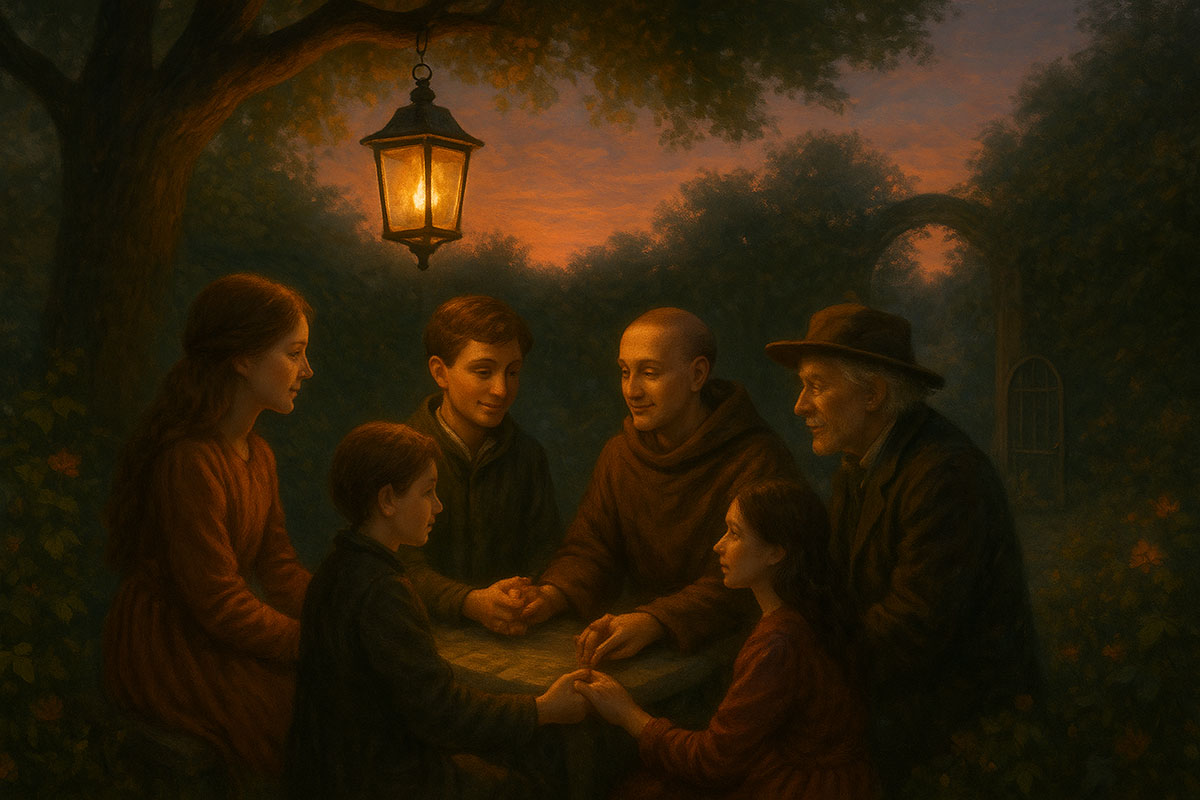
Setting:
The garden now glows in the golden light of dusk. The vines have climbed high and the trees arch like a cathedral overhead. A small round table in the center holds a lantern, flickering softly. The voices of laughter and birds have faded to quiet hums. Present are Frances Hodgson Burnett, Mary Lennox, Colin Craven, and Dickon Sowerby (speaking as a unified voice), Brené Brown, Carl Jung, and Desmond Tutu.
 Frances Hodgson Burnett (moderator)
When I began this story, each child was locked in their own world—Mary in anger, Colin in fear, even Dickon in quiet solitude. But when they came together, they healed. My first question is this: What keeps us in isolation, and what makes it so difficult for us to let others in?
Carl Jung
We fear the Other because we have not yet made peace with our own inner stranger. The things we reject in ourselves—our sadness, vulnerability, longing—become frightening when mirrored in others. Isolation protects the ego. Intimacy threatens it. But wholeness demands that we open the door.
Mary, Colin & Dickon (as one voice)
We were each alone in a different way. Mary pushed people away. Colin pulled them in only to punish them. Dickon... watched the world from a soft distance. We thought it was safer to be alone than to be rejected. But the garden didn’t just open up—it asked us to open, too. One petal at a time.
Brené Brown
Shame is the lock on the door. It whispers, “If they knew the real you, they’d walk away.” Vulnerability feels like weakness, but it's actually our deepest courage. We isolate because we think it's protection. But real protection comes from connection. We need safe spaces—and brave hearts.
Desmond Tutu
We were not made to live apart. Ubuntu teaches us: “I am because we are.” The pain of separation—between people, races, nations—is a symptom of forgetting our shared soul. We isolate when we fear we don’t belong. But true belonging begins when we dare to say: “Come in. Sit with me. Let’s be human together.”
 Frances
Thank you. That brings me to a delicate moment: What happens when we finally risk connection? When we truly let someone see us—our pain, our joy, our fear—how does that change us?
Mary, Colin & Dickon
We changed because we stopped pretending. Mary started to cry. Colin started to laugh. Dickon let people see his gentleness wasn’t weakness. The moment we showed each other our scars, we began to see the stars in them. We didn’t heal alone. We healed in the reflection of each other.
Desmond Tutu
When we are seen, truly seen, we no longer have to defend our dignity—it shines on its own. Forgiveness becomes possible. Joy becomes natural. Peace enters not through pride, but through presence. The more I know your pain, the more I know your beauty.
Brené Brown
Connection rewires everything. When someone looks at us and doesn’t flinch, doesn’t fix, doesn’t flee—we begin to trust again. That’s where healing begins. Not with solutions, but with someone saying, “Me too. I’ve been there. And I’m not leaving.”
Carl Jung
We become more human. More whole. The shadow loses its terror when shared. We realize the very things we tried to hide—grief, fear, longing—are the bridges to communion. Connection reveals our archetypal self: the lover, the friend, the wounded healer.
 Frances
Then we arrive at the final truth: Why does intimacy—the willingness to be known—matter so deeply, not just for our happiness, but for the soul of the world? What does true connection awaken in us, and in each other?
Desmond Tutu
Intimacy awakens justice. When I see you as part of me, I cannot harm you. I cannot ignore your suffering. From intimacy comes empathy, and from empathy, responsibility. A healed world begins with two people holding each other’s truth with care.
Brené Brown
True connection gives us the courage to live with our whole hearts. It awakens the strength to say, “I’m enough,” and the softness to say, “I need you.” When we know we’re not alone, shame loses its grip. Love becomes the language beneath the silence.
Carl Jung
It awakens the archetype of the beloved community—not as theory, but as lived truth. In intimacy, we dissolve the illusion of separateness. The soul recognizes itself in the Other. That recognition is the beginning of all healing—personal, cultural, and collective.
Mary, Colin & Dickon
We didn’t just grow in the garden. We grew in each other. Mary learned to care. Colin learned to be brave. Dickon learned to share his magic. And now, looking back, the secret wasn’t the garden at all. It was that we let each other in.
 Frances (softly, watching the lantern glow brighter)
Then perhaps intimacy is the light that never had to be lit—
only uncovered.
Only trusted.
Only shared.
Final Thoughts by Frances Hodgson Burnett
What did we learn, here in the quiet center of the garden?
That the Earth heals when we return to her with our full presence.
That children do not need to be corrected nearly as much as they need to be seen.
That belief is not just hope—it is the seed of transformation.
That what has been neglected can bloom again—if touched with tenderness.
And that isolation is not our nature. Connection is.
I wrote The Secret Garden more than a century ago, but I see now it was never just for children. It was for all of us who have ever felt locked out of our own lives. All of us who forgot we were still alive under the thorn. All of us who need to be reminded that it is not too late to bloom.
So go on.
Open your own gate.
Take someone’s hand.
And plant something—kindness, belief, forgiveness, or a seed.
The garden will know what to do with it.
It always has.
Short Bios:
Frances Hodgson Burnett
Author of The Secret Garden, Burnett was a British-American novelist known for weaving emotional depth into children’s literature. Her work explored loss, transformation, and the redemptive power of love and nature.
Mary Lennox
Once a sour and lonely child, Mary discovered her voice, heart, and sense of purpose through friendship and tending the garden. She represents the quiet power of inner change sparked by care and connection.
Colin Craven
Born into grief and isolation, Colin was transformed by belief, companionship, and the will to live. His journey from invalid to vibrant boy mirrors the soul's capacity to heal through hope.
Dickon Sowerby
Gentle, grounded, and innately connected to animals and plants, Dickon is the soul of the Earth in human form. His kindness and presence help others rediscover their natural selves.
Fred Rogers
Beloved television host and child advocate, Mister Rogers brought emotional education to generations through kindness, empathy, and unwavering calm. He believed every child deserved to be seen and loved exactly as they are.
Dr. Gabor Maté
A physician and expert on trauma and addiction, Maté highlights the lifelong impact of childhood emotional neglect and the importance of compassionate connection in healing.
Neville Goddard
A 20th-century mystic and teacher of the imagination, Goddard taught that assumptions shape reality. His work centers on the creative power of belief and inner vision.
Louise Hay
Founder of Hay House and pioneer in self-healing, Hay emphasized the role of affirmations and self-love in emotional and physical health, particularly for those healing from inner wounds.
Dr. Joe Dispenza
A neuroscientist and meditation teacher, Dispenza bridges science and spirituality, exploring how thoughts and emotions can rewire the brain and transform lives through intentional practice.
Robin Wall Kimmerer
Botanist and author of Braiding Sweetgrass, Kimmerer blends Indigenous wisdom and science to reveal the sacred relationship between humans and the Earth.
Thich Nhat Hanh
Vietnamese Zen master and peace activist, Thich Nhat Hanh taught mindfulness as a way of life. His gentle wisdom encouraged people to return to the present moment and heal through compassion.
Viktor Frankl
Holocaust survivor and author of Man’s Search for Meaning, Frankl taught that even in great suffering, we can choose meaning, dignity, and inner freedom.
Clarissa Pinkola Estés
Jungian psychoanalyst and author of Women Who Run with the Wolves, Estés explores the restoration of the wild and sacred self, especially through story and ancestral wisdom.
Jane Goodall
Primatologist and environmentalist, Goodall transformed our understanding of animals and empathy. Her lifelong mission is rooted in connection—between species, generations, and the Earth.
Brené Brown
Research professor and author, Brown explores vulnerability, courage, shame, and connection. Her work has helped millions embrace the strength found in emotional honesty.
Carl Jung
Swiss psychiatrist and founder of analytical psychology, Jung explored the shadow, archetypes, and the integration of the self. His work continues to guide inner exploration and wholeness.
Desmond Tutu
South African archbishop and Nobel Peace Prize winner, Tutu championed reconciliation and the principle of ubuntu—that our humanity is bound together. He believed in radical forgiveness and joyful justice.
Leave a Reply