
|
Getting your Trinity Audio player ready...
|
Raymond Moody:
When I first coined the term near-death experience nearly half a century ago, I could never have imagined the journey it would inspire. What began as a quiet inquiry into the testimonies of patients who had crossed the threshold of death and returned has since grown into a global exploration of consciousness, spirit, and what it means to be human.
In those early days, I was struck by how ordinary men and women, from every walk of life, were describing something extraordinary—and remarkably consistent. They spoke of leaving their bodies, of light that was not only brilliant but alive, of encounters filled with overwhelming love. These were not simply hallucinations or wishful dreams. They carried a coherence, a transformative power, that could not be explained away so easily.
As research expanded—through science, medicine, and thousands of personal accounts—the question became not whether these experiences were real, but what they mean. What do they reveal about consciousness, about life, about the destiny of humankind?
That is why these conversations are so vital. They bring together the voices of pioneers, experiencers, and seekers who have wrestled with these mysteries for decades. They challenge us to reimagine death not as an end, but as a doorway. And more importantly, they invite us to reimagine life—what we do with our time, our choices, and the love we share.
I welcome you to join us in this exploration. Suspend disbelief, open your imagination, and listen deeply. You may discover that what near-death experiences reveal is not just about dying—it’s about living more fully than ever before.
(Note: This is an imaginary conversation, a creative exploration of an idea, and not a real speech or event)

Topic 1: Consciousness and Quantum Reality.
Moderator: Nick Sasaki
Speakers: Pim van Lommel, Roger Penrose, Deepak Chopra, Anita Moorjani, Donald Hoffman
Opening
Nick Sasaki: Welcome, everyone. Today we’re exploring a question that cuts across science, philosophy, and spirituality: Does consciousness exist beyond the brain—and if so, how does it connect with the deeper fabric of the universe? Let’s dive straight in.
Question 1: If the brain stops and consciousness continues, what does that mean for science?
Pim van Lommel: As a cardiologist, I’ve seen patients declared clinically dead—no heartbeat, no brain activity—and yet, upon resuscitation, they reported clear, verifiable perceptions. This suggests consciousness is not produced by the brain but received by it, like a radio picks up signals. For science, it means our current materialist model is incomplete. Consciousness is primary.
Anita Moorjani: I can confirm that personally. During my NDE, while my body lay in a coma, I felt more alive and aware than ever. I saw doctors working on me, heard conversations miles away, and entered a realm of unconditional love. To return and find those perceptions verified convinced me—consciousness is not bound by biology.
Roger Penrose: From a physicist’s perspective, this is not entirely shocking. Our equations of quantum mechanics already suggest reality is not solid matter but probabilities, collapsing into experience when observed. My work with Stuart Hameroff proposes that consciousness arises from quantum processes in microtubules within neurons—suggesting it’s fundamental, not derivative. If NDEs confirm awareness outside brain activity, it strengthens the case that consciousness is woven into quantum reality.
Donald Hoffman: I would take it further. Evolution doesn’t give us truth—it gives us survival tools. What we call “the brain” is part of a user interface, not the source of consciousness. Think of icons on a desktop: they don’t create the files, they just represent them. Similarly, the brain represents—but does not generate—awareness. NDEs prove the desktop can crash, but the files still exist.
Deepak Chopra: This aligns with the wisdom traditions. Consciousness is the ground of being, the field in which mind, body, and universe arise. What neuroscience calls “the brain” is a localization of infinite consciousness. NDEs simply peel back the veil, showing us that what we call death is not the end, but a transition of awareness.
Question 2: If consciousness is non-local, how does it interact with the physical universe?
Donald Hoffman: In my model, reality is like a vast network of conscious agents interacting. What we call “space-time” is a simplified projection. NDEs suggest when the brain shuts down, perception opens into a broader reality beyond space-time. Consciousness doesn’t just interact with the universe—it creates the universe we see.
Roger Penrose: I’m cautious with that claim, but I agree that the brain is not sufficient to explain awareness. My Orch-OR theory suggests that conscious moments occur when quantum states in the brain collapse, influenced by the fundamental geometry of the universe. This hints at consciousness being embedded in the very structure of reality.
Deepak Chopra: In Vedantic philosophy, consciousness expresses itself as subject and object, seer and scenery. Quantum physics points to the same: observer and observed are inseparable. The physical universe is a manifestation of consciousness, like waves on an ocean. NDEs show that when identification with the body ends, awareness merges with the ocean itself.
Pim van Lommel: The medical evidence supports this. Patients blind from birth describe seeing during NDEs. People report perceptions verified later. Consciousness interacts with the body but is not confined to it. Our challenge is to build a scientific model that includes this dimension, instead of dismissing it as hallucination.
Anita Moorjani: In that expanded awareness, there was no separation—my body, the hospital, even time itself seemed like small constructs. Love and consciousness were the real framework. When I returned, I realized the body is like a temporary vessel, but we are so much more than that.
Question 3: If this is true, what does it mean for humanity’s future?
Deepak Chopra: It means we need a new story of who we are. Not machines made of meat, doomed to decay, but expressions of infinite consciousness. Imagine a world where education, medicine, and politics are grounded in the truth that love, empathy, and awareness are the essence of reality. That shift could end much of our suffering.
Anita Moorjani: People would live without fear. Fear of death drives so many decisions—accumulating wealth, clinging to power, hiding from vulnerability. When we realize death is not the end, we start valuing connection, compassion, and authenticity more than status. That’s the revolution NDEs invite us into.
Pim van Lommel: For medicine, it means redefining life and death. Doctors must learn that resuscitation is not just about restoring a heartbeat, but about honoring the spiritual experiences patients often bring back. If integrated, healthcare could become more holistic, treating patients as beings of body, mind, and spirit.
Roger Penrose: For science, it’s an invitation to humility. If consciousness is fundamental, we may need a new physics, a post-quantum theory, that includes awareness itself. This could transform not only neuroscience, but cosmology. Our understanding of the universe is still in its infancy.
Donald Hoffman: Humanity’s destiny may be to awaken from the “desktop interface” of physical reality. NDEs are like glitches in the program, showing us the deeper operating system. If we listen, we may evolve into conscious beings who no longer confuse the icons with the infinite.
Closing
Nick Sasaki: What an extraordinary exchange. From science to spirituality, personal testimony to physics, you’ve each shown us that consciousness may be not only beyond the brain, but the very foundation of reality itself. Perhaps NDEs are not exceptions to explain away, but invitations to a new understanding of life, death, and who we truly are.
Topic 2: The Medical Frontier — Should NDEs Reshape Healthcare?
Moderator: Nick Sasaki
Speakers: Bruce Greyson, Sam Parnia, Eben Alexander, Peter Fenwick, Joan Halifax
Opening
Nick Sasaki: Welcome back. Today we explore a pressing question: If near-death experiences are real, how should medicine, healthcare, and end-of-life care change? This isn’t just philosophy—it’s about patients, families, and the future of healing.
Question 1: Should NDEs be treated as hallucinations or legitimate patient reports?
Bruce Greyson: For decades, psychiatry dismissed NDEs as dream-like or drug-induced. But my research shows they are distinct, consistent across cultures, and often verifiable. Patients recall details when their brains show no activity. We must treat them as legitimate reports of consciousness, not pathology.
Eben Alexander: As a neurosurgeon, I once thought they were hallucinations. But after my own NDE during a week-long coma with no cortical activity, I experienced a vivid realm of love and awareness. If that was “just the brain,” then everything I knew about neuroscience was wrong. We must expand medicine to include consciousness itself.
Sam Parnia: In the AWARE studies, we’ve documented patients accurately reporting external events during cardiac arrest. These aren’t random hallucinations; they are consistent, structured experiences. Medicine must move from skepticism to curiosity. If patients report them, doctors have a duty to listen.
Peter Fenwick: I agree. In hospices, I’ve seen countless patients describe visions at the threshold of death—meeting loved ones, radiant light, profound peace. Families witness changes in demeanor that cannot be explained away. To deny these reports is to deny the humanity of dying patients.
Joan Halifax: From a Buddhist end-of-life perspective, these reports are sacred. Even if medicine cannot measure them, they are profoundly real to those experiencing them. We should honor them as part of the patient’s journey, not dismiss them as delusion.
Question 2: How could integrating NDE research change healthcare practices?
Sam Parnia: First, it could transform resuscitation. Patients who return often report being aware during CPR. That has implications for how we treat the dying. We must consider not only their biological revival but also their conscious experience. Perhaps we need protocols that address both.
Bruce Greyson: Yes, and it extends into psychiatry. Many patients return from NDEs with profound changes—reduced fear of death, increased compassion, even psychic sensitivities. If healthcare acknowledged this, we could provide counseling and support tailored to integration, rather than pathologizing it.
Joan Halifax: Hospice care could also shift. If doctors accept that consciousness continues, death is not failure but transition. We can focus more on spiritual comfort and relational presence, less on aggressive interventions that strip dignity.
Eben Alexander: For me, it’s about bridging science and spirituality. If NDEs show us that love and consciousness endure, then medicine should aim not just to prolong life at all costs, but to help patients live and die meaningfully. That means more holistic care—mind, body, and spirit.
Peter Fenwick: And we must prepare families. Death is often treated as taboo in hospitals, hidden behind machines and protocols. But NDE testimonies can help families see death not as annihilation but as transition. That can ease grief and make the dying process more humane.
Question 3: If healthcare embraced NDEs, what would the future of medicine look like?
Joan Halifax: I envision a healthcare system infused with compassion, where doctors and nurses see themselves not only as technicians of the body but companions of the soul. Training would include listening to patients’ end-of-life visions, recognizing them as part of healing—even at the threshold of death.
Peter Fenwick: We would see a shift in hospice philosophy. Instead of sedation and silence, we’d encourage open sharing of NDEs and deathbed visions. Families could be educated to support these experiences, rather than fearing them. It would be a cultural reawakening about death.
Sam Parnia: In critical care, it could mean building new models of consciousness into resuscitation science. We’d study how long awareness persists after cardiac arrest, how to protect it, and perhaps even how to communicate with patients during that liminal state. Imagine medicine not only saving lives but learning from death itself.
Eben Alexander: And for physicians, it would mean humility. Too often, doctors play gods of biology. But NDEs show us life is more than neurons and chemicals. If embraced, medicine could align with the deepest truths of existence—that love, meaning, and connection are as vital as oxygen.
Bruce Greyson: Ultimately, it would change how we define health. Not merely the absence of disease, but the fullness of being—physical, emotional, spiritual. NDEs remind us that healing does not always mean curing. Sometimes, it means preparing for the next chapter with peace.
Closing
Nick Sasaki: What a vision. You’ve shown us that integrating NDEs into medicine could reshape everything—from resuscitation protocols to hospice care, from how families grieve to how doctors define healing. Perhaps the future of medicine isn’t just about defeating death, but about honoring what lies beyond it.
Topic 3: Cross-Cultural NDEs — One Truth or Many Realities?
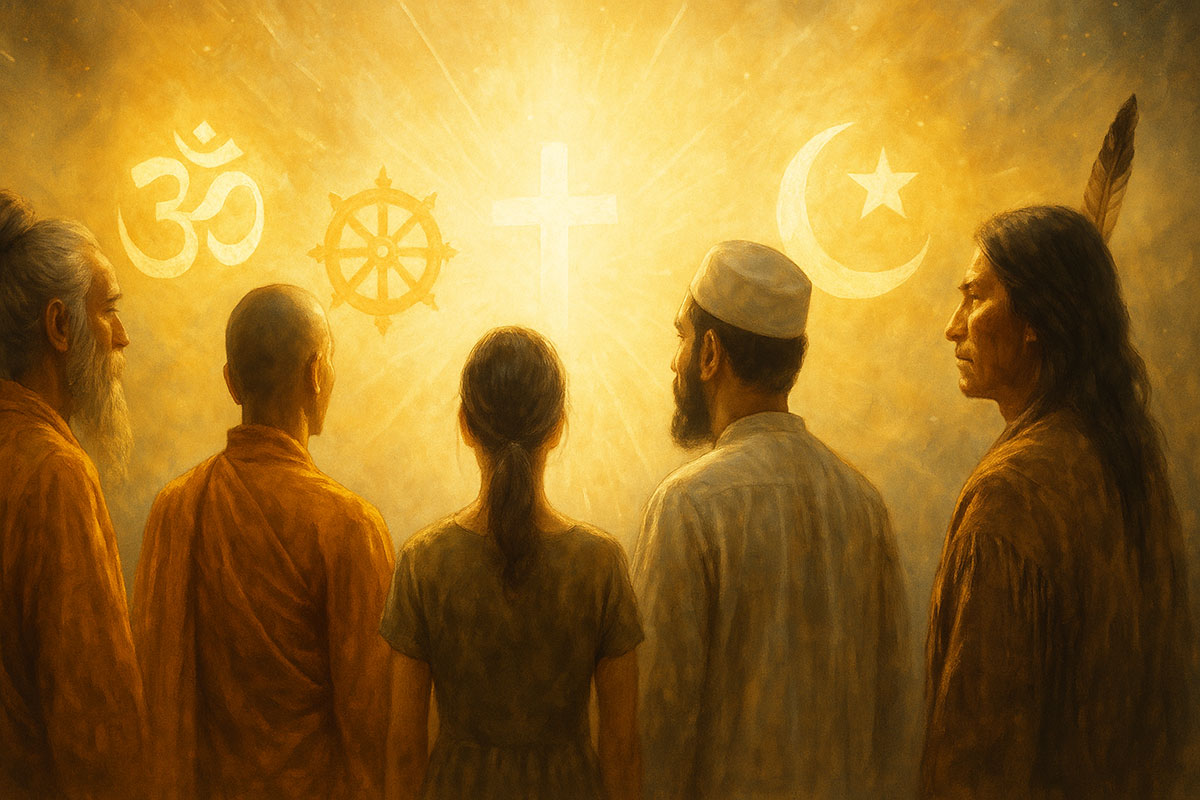
Moderator: Nick Sasaki
Speakers: Kenneth Ring, Raymond Moody, Mircea Eliade, Satish Kumar, Rita Carter
Opening
Nick Sasaki: Welcome, everyone. Today we explore a fascinating question: Do near-death experiences reveal a single universal truth, or do they reflect cultural filters shaping what people see? Let’s dive in.
Question 1: Why do people from different religions and cultures report both similarities and differences in NDEs?
Kenneth Ring: My research shows remarkable commonalities across cultures: leaving the body, traveling through a tunnel, encountering a being of light, feeling profound love. But the imagery often reflects cultural and religious background. A Hindu may meet Yama, the god of death, while a Christian might meet Jesus. The pattern is universal, the details are local.
Raymond Moody: When I first coined the term “near-death experience,” I was struck by how consistent these reports were. People from every background described similar core events—separation from the body, panoramic memory, overwhelming love. The cultural overlays, I think, are symbolic lenses. They don’t negate the universality, but they shape how the ineffable is described.
Satish Kumar: As someone rooted in Eastern philosophy, I would say truth is one, paths are many. Just as rivers flow to the same ocean, NDEs suggest different cultural symbols pointing to the same underlying reality. A Buddhist may describe merging into emptiness, a Christian into God’s love—both are expressions of unity.
Mircea Eliade: From a comparative religion perspective, this is not surprising. Human cultures have always translated transcendent experiences into mythic forms. Shamans traveling to other worlds, prophets encountering divine light—these are echoes of the same archetypal journey. The NDE is simply the modern testimony of an ancient human reality.
Rita Carter: Yet as a neuroscientist, I must point out that the brain interprets unfamiliar experiences through familiar symbols. When deprived of oxygen or flooded with neurotransmitters, the mind may produce imagery drawn from cultural memory. That doesn’t necessarily invalidate the experience—but it does mean interpretation is inseparable from culture.
Question 2: If NDEs are universal at their core, what does that reveal about human spirituality?
Raymond Moody: It reveals that at the deepest level, humanity shares a common spiritual structure. Whether we call it soul, consciousness, or awareness, NDEs point to something beyond biology that unites us. That’s why so many return saying, “We’re all connected.”
Satish Kumar: Yes, and this is the message humanity most needs now. The NDE dissolves boundaries of religion, race, and nation. If billions could glimpse what experiencers glimpse—that love is the foundation of reality—we would live as one family.
Kenneth Ring: And the transformative aftereffects support this. People who have NDEs consistently become more compassionate, less materialistic, less fearful of death—regardless of their cultural background. That universality suggests they’ve touched a fundamental dimension of reality.
Mircea Eliade: I would add that NDEs confirm what sacred traditions have long taught: the sacred is not confined to one people or one doctrine. It is woven into the fabric of human experience. The symbols differ, but the axis mundi—the bridge between worlds—remains.
Rita Carter: Yet we must be careful. Universality may reflect common brain structures as much as spiritual truth. Humans everywhere have similar neural wiring, which could produce similar experiences under extreme conditions. The real question is: does that commonality point outward to another reality, or inward to shared biology?
Question 3: What should humanity do with this knowledge of both universality and difference?
Satish Kumar: We should use it to cultivate respect. If all cultures glimpse the same truth through different windows, then no religion can claim monopoly on God or ultimate reality. The NDE teaches us to honor diversity as many flowers blooming in one garden.
Kenneth Ring: Practically, it means building dialogue. NDEs can serve as a bridge between faiths, showing common ground. I’ve seen interfaith groups find harmony when they realize their traditions describe the same transcendent love experienced in NDEs.
Mircea Eliade: For scholars and seekers alike, the implication is profound: the sacred is plural yet one. If humanity embraces this, it may end the ancient wars of religion and usher in a new era of global spirituality.
Raymond Moody: For me, it also means humility. NDEs point beyond words, beyond doctrine. No one has the final language for eternity. The best we can do is listen to one another’s stories and recognize the light shining through all of them.
Rita Carter: And from a scientific view, we should keep studying NDEs rigorously, across cultures, with careful documentation. If we want to build bridges, we need evidence, not just stories. Science can help separate universal patterns from cultural overlays, enriching both medicine and spirituality.
Closing
Nick Sasaki: Thank you. What a powerful exchange. We’ve heard that NDEs show remarkable universal patterns while also carrying the symbols of culture. Perhaps that’s the beauty of it—that one truth reveals itself in many languages. If humanity can embrace that, we may finally see that our differences are only surface reflections of a deeper unity.
Topic 4: Ethical Shockwaves — If NDEs Are Real, How Should Society Change?
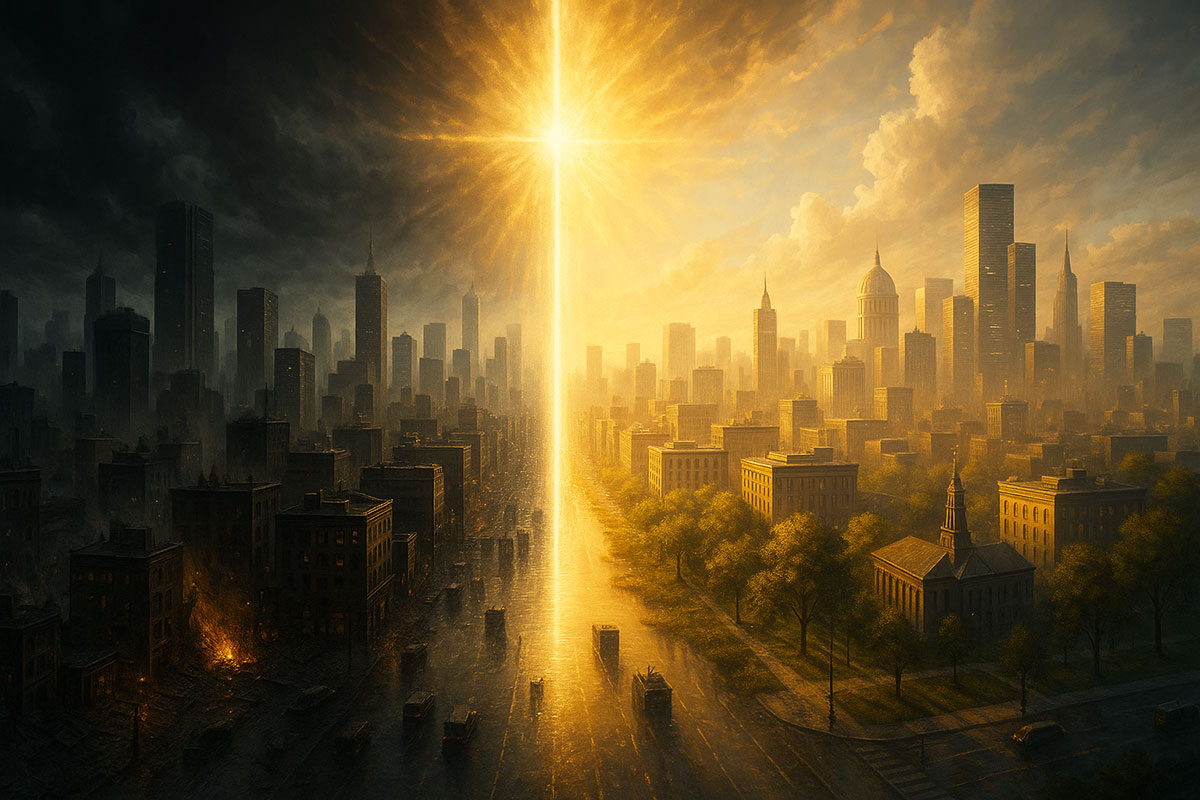
Moderator: Nick Sasaki
Speakers: Raymond Moody, Karen Armstrong, Richard Rohr, Stephen G. Post, Marianne Williamson
Opening
Nick Sasaki: Welcome, everyone. If near-death experiences are real—if consciousness continues beyond death, if love and accountability are woven into the universe—what would that mean for how we live together as a society? Let’s explore.
Question 1: If NDEs are true, what are the moral implications for human life?
Raymond Moody: From the beginning of my research, I’ve seen NDEs carry a powerful ethical message. People return saying love matters most, that every act of kindness ripples through eternity. If this is true, morality is not imposed from outside—it’s inscribed in the very structure of existence.
Karen Armstrong: Indeed. All religions at their core call us to compassion, yet humanity often turns faith into division. NDEs cut through doctrine. They remind us that love and compassion are not optional—they are the essence of reality itself. If we lived by that, our moral landscape would be transformed.
Richard Rohr: Exactly. NDEs echo what Christian mystics have always taught: that God is unconditional love, not a punisher. Morality then becomes less about obeying rules and more about participating in love itself. If we take that seriously, shame and fear give way to responsibility and grace.
Stephen G. Post: My research on altruism and health resonates with this. Those who practice compassion experience measurable benefits—lower stress, better immunity, even longer lives. If love is the fundamental law of the universe, as NDEs suggest, then living altruistically isn’t just good ethics—it’s good science.
Marianne Williamson: And socially, it would mean a revolution. Imagine politics guided not by fear and greed, but by the knowledge that we are all connected in an eternal web of love. NDEs remind us: what we do to one another, we ultimately do to ourselves.
Question 2: How would society change if governments, institutions, and communities took NDEs seriously?
Karen Armstrong: Education would change first. We’d teach children not just to compete, but to cultivate empathy. History and science would still matter, but so would training the heart. A compassionate society begins in the classroom.
Richard Rohr: Justice systems would also change. Instead of retribution, we’d focus on restoration. If each person is a child of God, then even the criminal is more than their worst act. NDEs show us people are accountable, yes, but always within a larger frame of mercy.
Stephen G. Post: Healthcare would transform. Patients reporting NDEs would not be dismissed but respected. Dying would not be seen as failure, but as transition. Doctors, nurses, and caregivers would integrate spiritual experience into care, creating systems that heal body, mind, and soul.
Raymond Moody: And even philosophy would shift. Materialism, which says consciousness ends at death, dominates our culture. If NDEs prove otherwise, it would be like Copernicus overturning the old cosmos. Our worldview would expand, with profound ripple effects on ethics, law, and science.
Marianne Williamson: Politics would be radically reshaped. Policies would prioritize human dignity, knowing we are all part of something eternal. Imagine foreign policy rooted in compassion, economics rooted in fairness, climate policy rooted in reverence for life. If love is the law of the universe, every system would need to align with it.
Question 3: What is humanity’s greatest challenge in living up to the truths NDEs reveal?
Stephen G. Post: Our greatest challenge is selfishness. Evolution wired us to survive as individuals, but NDEs show survival is not the highest good—love is. To overcome selfishness requires cultural systems that reward compassion as much as competition.
Karen Armstrong: I would add ignorance. Many resist compassion because they don’t understand its power. They cling to narrow identities—religion, nationality, tribe—because they don’t see the larger truth of our shared humanity. Our task is to expand our circle of concern.
Raymond Moody: Another challenge is skepticism. Our culture trusts only what can be measured. But NDEs invite us to trust testimony, to weigh evidence not just in data but in transformed lives. Unless society can value subjective truth alongside objective science, it will resist the lessons of NDEs.
Richard Rohr: For me, the greatest challenge is fear. We fear death, we fear losing control, we fear each other. NDEs dissolve fear by showing us death is not the end. But until we embrace that, fear will keep us locked in cycles of violence and division.
Marianne Williamson: And let’s be honest—power. Those in power profit from fear and division. A society built on love would threaten systems built on greed. That’s why NDEs are revolutionary: they democratize spirituality, telling each person, “You are loved. You are eternal. You matter.” That truth could overturn empires.
Closing
Nick Sasaki: Thank you. You’ve painted a vision of society transformed by love: education rooted in empathy, justice rooted in restoration, healthcare honoring the soul, politics grounded in dignity. If NDEs are real, then morality isn’t abstract—it’s built into the very fabric of the universe. Perhaps our greatest task is not discovering this truth, but daring to live it.
Topic 5: Humanity’s Destiny — Are NDEs Preparing Us for a Shift?
Moderator: Nick Sasaki
Speakers: Jeffrey Long, Rupert Sheldrake, Anita Moorjani, Ken Wilber, Elizabeth Kübler-Ross
Opening
Nick Sasaki: Welcome, everyone. We’ve explored the science, medicine, and ethics of near-death experiences. Now let’s ask a bigger question: Are these experiences preparing humanity for a collective shift—perhaps even an evolutionary leap in consciousness?
Question 1: Why do so many NDEs carry messages for humanity, not just the individual?
Anita Moorjani: During my NDE, I felt a clear message: Go back and live fearlessly, share love without hesitation. That wasn’t just for me. It was for all of us. Many experiencers report being told, “It’s not your time. You have work to do.” I believe NDEs are wake-up calls—reminding us that love is our true nature.
Jeffrey Long: In my database of thousands of NDEs, this theme appears repeatedly. People return not only transformed but with a sense of mission. They speak of spreading compassion, protecting the earth, caring for one another. Statistically, it’s far too common to be coincidence. Something is communicating through these experiences.
Rupert Sheldrake: That “something” may be a morphic resonance—a field of consciousness guiding our collective evolution. When enough individuals are transformed by NDEs, it strengthens the field, nudging all of humanity toward greater awareness. These aren’t isolated anecdotes; they’re evolutionary signals.
Ken Wilber: From an integral perspective, NDEs are glimpses of higher stages of consciousness. Humanity evolves through levels—ego-centered, ethnocentric, worldcentric, kosmocentric. NDEs thrust people into kosmocentric awareness: seeing themselves as one with all life. That’s why they return changed, and why this moment in history may be ripe for collective awakening.
Elizabeth Kübler-Ross: And let’s not forget—the dying have always been our teachers. For decades I’ve listened to the stories of those on the threshold. They consistently speak of love, unity, and light. Perhaps the reason these stories are surfacing more globally now is because the world itself is dying to be reborn.
Question 2: What might this “shift” look like if humanity embraces the lessons of NDEs?
Rupert Sheldrake: It might look like a new science of consciousness, one that doesn’t reduce mind to brain. That could change medicine, psychology, even physics. Once consciousness is seen as fundamental, cooperation may replace competition as the guiding principle of human systems.
Ken Wilber: Socially, it would mean more worldcentric governance. Imagine politics no longer obsessed with national rivalries, but with planetary stewardship. NDEs remind us borders are illusions. If we adopt that awareness, we could tackle climate change, poverty, and conflict from a higher stage of consciousness.
Elizabeth Kübler-Ross: It would also change how we approach death. Instead of fearing it, we’d see it as a natural transition. Families would grieve with hope. Patients would die with dignity. Death would return to being a sacred teacher, not a medical failure. That shift alone would heal much of our collective anxiety.
Anita Moorjani: On a personal level, the shift means living authentically. So many of us shrink out of fear—fear of judgment, failure, death. But NDEs show us none of that matters. If humanity embraced that, we’d see more creativity, more kindness, more joy. That’s the shift: from fear to love.
Jeffrey Long: I’d add that it could even reduce violence. My research shows people who’ve had NDEs lose almost all fear of death. Without that fear, they’re less likely to harm others. Imagine a world where death isn’t seen as the ultimate enemy. That shift could disarm entire cultures of violence.
Question 3: What stands in the way of humanity making this leap?
Ken Wilber: The shadow. Humanity clings to old paradigms—materialism, tribalism, ego. NDEs pull back the curtain, but many reject it because it threatens power structures. The resistance isn’t intellectual, it’s existential. Are we willing to let go of our smaller selves? That’s the barrier.
Elizabeth Kübler-Ross: Fear is the great obstacle. We deny death, we deny suffering, we deny mystery. But until we embrace them, we remain stuck. Ironically, facing death—through NDEs or by listening to the dying—is the very thing that frees us.
Jeffrey Long: Another obstacle is scientific dogma. Despite mountains of evidence, many dismiss NDEs because they don’t fit materialist assumptions. But paradigm shifts always meet resistance. Just as the earth’s roundness was once ridiculed, so is the reality of consciousness beyond the brain.
Anita Moorjani: Self-doubt also holds us back. Many experiencers, myself included, struggle to share their stories for fear of ridicule. Yet the more we speak, the more others are emboldened. Humanity’s shift requires courage to voice truths that defy convention.
Rupert Sheldrake: And of course, inertia. Societies are slow to change. But just as small groups sparked past revolutions, so too can the growing wave of NDE testimonies. Once a tipping point is reached, the collective field will shift.
Closing
Nick Sasaki: Thank you. You’ve shown us that near-death experiences may be more than personal encounters—they may be signposts of humanity’s future. If embraced, they could usher in a world less ruled by fear, more by love; less bound by tribalism, more by unity. Perhaps NDEs are not just preparing individuals for eternity, but preparing all of us for a new chapter in history.
Final Thoughts By Elizabeth Kübler-Ross
and witnessed the courage of souls crossing into the unknown. And what I learned is this: death is not something to fear. It is, in truth, a homecoming.
Near-death experiences confirm what the dying have always told us—that love does not end. That who we are continues beyond the body. That in the light of eternity, what matters is not our titles or possessions, but the love we gave and received.
I often said that the greatest lesson of life is to love until it hurts, and then love more. These conversations among experts remind us that NDEs are not about strange phenomena; they are about returning us to this most essential truth.
Yes, science must study, philosophy must question, and religion must reflect. But at the heart of it all, the message is simple: we are loved, and we are called to love.
If humanity embraces this, then perhaps we can create a world where compassion is stronger than cruelty, where hope is stronger than fear. That is the gift NDEs offer us, if only we listen.
And so I leave you with this: live fully, love deeply, and know that when your time comes, you are stepping not into darkness, but into light.
Short Bios:
Bruce Greyson – Psychiatrist and pioneer researcher, author of After, who documented thousands of NDEs with scientific rigor.
Sam Parnia – Critical care physician leading the AWARE studies on consciousness during cardiac arrest.
Eben Alexander – Neurosurgeon and author of Proof of Heaven, whose own NDE challenged materialist neuroscience.
Peter Fenwick – Neuropsychiatrist and hospice researcher who studied deathbed visions and the boundary of consciousness.
Anita Moorjani – Bestselling author of Dying to Be Me, who experienced a profound NDE while dying of cancer.
Pim van Lommel – Dutch cardiologist and author of Consciousness Beyond Life, known for groundbreaking NDE studies.
Roger Penrose – Nobel Prize–winning physicist who explores links between quantum theory and consciousness.
Deepak Chopra – Physician-philosopher blending science and spirituality in exploring consciousness and healing.
Donald Hoffman – Cognitive scientist arguing that reality itself is consciousness-based.
Joan Halifax – Zen Buddhist teacher and end-of-life pioneer, bridging compassion and medical care.
Kenneth Ring – Psychologist, co-founder of IANDS, and expert on cross-cultural NDEs.
Raymond Moody – Philosopher and author of Life After Life, who coined the term near-death experience.
Mircea Eliade – Historian of religions whose work revealed archetypes of afterlife beliefs across cultures.
Satish Kumar – Indian peace activist and spiritual teacher bridging Eastern and Western traditions.
Rita Carter – Neuroscience writer exploring how brain, culture, and perception shape human experience.
Karen Armstrong – Scholar of world religions and author of The Case for God, focusing on compassion.
Richard Rohr – Franciscan teacher and author emphasizing universal love and spiritual transformation.
Stephen G. Post – Researcher on altruism, compassion, and the science of giving.
Marianne Williamson – Spiritual teacher and author linking love, healing, and cultural renewal.
John Burke – Pastor and author of Imagine Heaven, interpreting NDEs through a biblical lens.
Dolores Cannon – Hypnotherapist and author who explored past lives, soul contracts, and future visions.
Gregg Braden – Scientist and futurist bridging ancient wisdom and modern discoveries about consciousness.
Barbara Marx Hubbard – Futurist and author who taught humanity’s potential for conscious evolution.
Howard Storm – Former atheist professor whose NDE transformed him into a pastor and visionary.
Nick Sasaki – Writer, creator of Imaginary Talks, and moderator of visionary dialogues exploring spirituality, consciousness, and human potential.
Leave a Reply