
|
Getting your Trinity Audio player ready...
|
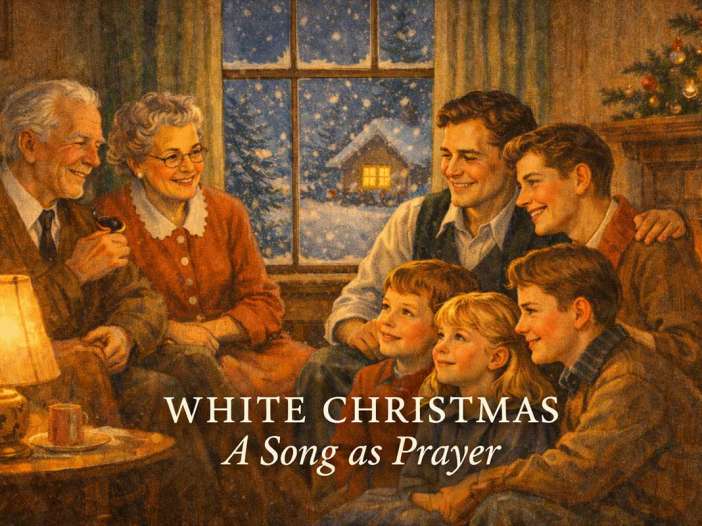
What if Bing Crosby wasn’t singing—but blessing you?
There are songs we enjoy…
and then there are songs that live with us.
White Christmas belongs to the second kind.
It doesn’t demand attention. It doesn’t explain itself.
It simply arrives—year after year—like a familiar knock at the door.
When Bing Crosby sang, “I’m dreaming of a white Christmas,” he wasn’t asking us to remember snow. He was inviting us into something quieter: a shared inner picture of gentleness, safety, and human closeness.
This song was born during war, carried through loss, and held together by longing. And somehow, without preaching or insisting, it shaped how generations imagine Christmas itself—not as perfection, but as presence.
In this imaginary conversation, we don’t analyze White Christmas as music history.
We listen to it as a prayer.
A prayer spoken softly:
- for memory without bitterness
- for innocence without denial
- for blessings without guarantees
- for a future still worth imagining together
These five topics follow the song line by line, the way one follows a quiet voice in the dark. Not to escape the world—but to remember what kind of world we’re trying to build.
So take your time.
Listen the way people once listened.
(Note: This is an imaginary conversation, a creative exploration of an idea, and not a real speech or event.)
Topic 1 — I’m Dreaming of a White Christmas

Is dreaming an escape, or an act of courage?
Nick Sasaki (Moderator)
Before we begin, let me say this softly.
When a song starts with “I’m dreaming,” it doesn’t ask us to agree.
It doesn’t ask us to remember correctly.
It simply asks us to sit with it.
So tonight, let’s not rush.
Let’s listen the way people once listened—when radios glowed in dark rooms, when silence meant something, when hope didn’t need proof.
I want to begin by asking something simple, and maybe not simple at all.
When you hear the words “I’m dreaming of a white Christmas,” what kind of dreaming is this really?
Irving Berlin
For me, it was never sleep-dreaming.
It was standing still long enough for something honest to rise up.
People think I wrote it out of nostalgia. I didn’t.
I wrote it out of loss.
When you’ve lost something—someone—you don’t dream because you’re comfortable. You dream because reality is too sharp to hold all at once.
“White” wasn’t snow to me.
It was quiet.
It was a world without the sound of grief crashing every minute.
Dreaming was the only place where that world still existed.
Carl Jung
Dreaming, in this sense, is not fantasy.
It is compensation.
When the outer world becomes fractured, the psyche produces images of wholeness. Snow, whiteness, silence—these are archetypes of psychic rest.
What’s remarkable about this song is that it bypasses intellect entirely. It goes straight to the collective unconscious.
Everyone knows what that “white” feels like, even if they’ve never seen it.
That’s not escape.
That’s the psyche healing itself.
Nick Sasaki
That’s beautifully said.
And it makes me wonder—especially knowing when this song first reached people—
If dreaming becomes more important when reality grows unbearable.
Viktor, from your experience, is dreaming something fragile… or something strong?
Viktor Frankl
Dreaming is often misunderstood as weakness.
In the camps, the people who survived were not always the strongest physically—but those who could still imagine meaning beyond the present suffering.
To dream is to assert that this moment does not own you entirely.
When someone says, “I’m dreaming of a white Christmas,” they are quietly saying, “This darkness is not the final word.”
That is not denial.
That is spiritual defiance.
WWII Soldier (Unnamed)
I didn’t analyze it when I heard it.
We were overseas. The nights were long.
Someone turned on the radio, and suddenly that voice came through—calm, steady, almost ordinary.
When he said “I’m dreaming,” it felt like permission.
Not to forget where I was.
Just to remember who I still was.
For three minutes, I wasn’t a soldier.
I was a son again.
Nick Sasaki
Thank you for saying that.
I want to stay with this idea for a moment—that dreaming gives permission.
Let me ask it another way.
Is this dreaming backward-looking… or is it pointing forward?
Are we escaping into the past, or preparing for something that hasn’t arrived yet?
Bing Crosby
When I sang it, I didn’t picture snow.
I pictured someone listening alone.
I wanted the song to feel like a hand on the shoulder, not a performance.
No big emotion. No drama.
Dreaming, to me, felt like holding a candle—not lighting up the whole room, just enough to remind you there’s light at all.
That’s not the past.
That’s endurance.
Irving Berlin
People often forget—this song came out in the middle of war.
Nobody believed the world was about to become peaceful.
But they still wanted to name peace.
Dreaming forward doesn’t mean predicting.
It means refusing to let ugliness define what’s possible.
I wasn’t saying, “This will happen.”
I was saying, “This is still worth wanting.”
Carl Jung
Yes—and wanting matters.
A future that is not imagined cannot arrive.
By dreaming collectively, people rehearse the world they hope to inhabit.
Rituals begin that way. Traditions begin that way.
This song didn’t describe Christmas.
It taught people how to feel it.
Nick Sasaki
That feels important.
So perhaps dreaming isn’t retreat—it’s rehearsal.
Let me ask one final question, and I want us to sit with it gently.
If dreaming is an act of courage, what does this particular dream ask of us—not just at Christmas, but as human beings?
Viktor Frankl
It asks us to remember that meaning precedes comfort.
White does not promise happiness.
It promises clarity.
To dream of whiteness is to long for a life where conscience is clean, where relationships are repaired, where the noise pauses long enough to hear one another again.
The dream asks responsibility, not nostalgia.
WWII Soldier
For me, it asked me to come home alive.
Not just breathing—but human.
Every time I heard it, I promised myself I wouldn’t let the war turn me into someone my family wouldn’t recognize.
That was the dream.
Bing Crosby
I think it asks us to sing softly when the world is loud.
To not add more noise.
To not demand attention.
Just to wish people well—and mean it.
Irving Berlin
I’d say it asks honesty.
To admit we still want goodness, even when it feels naïve.
Especially then.
Dreaming doesn’t make you weak.
Giving up does.
Nick Sasaki (Closing)
Thank you. All of you.
Listening to this, I’m struck by something simple.
This song never tells us the dream will come true.
It never promises snow.
It never guarantees peace.
It only says: I’m dreaming.
And maybe that’s the bravest sentence a human being can say—
especially when the world gives them every reason not to.
Let’s carry that with us as we move forward together.
Topic 2 — Just Like the Ones I Used to Know
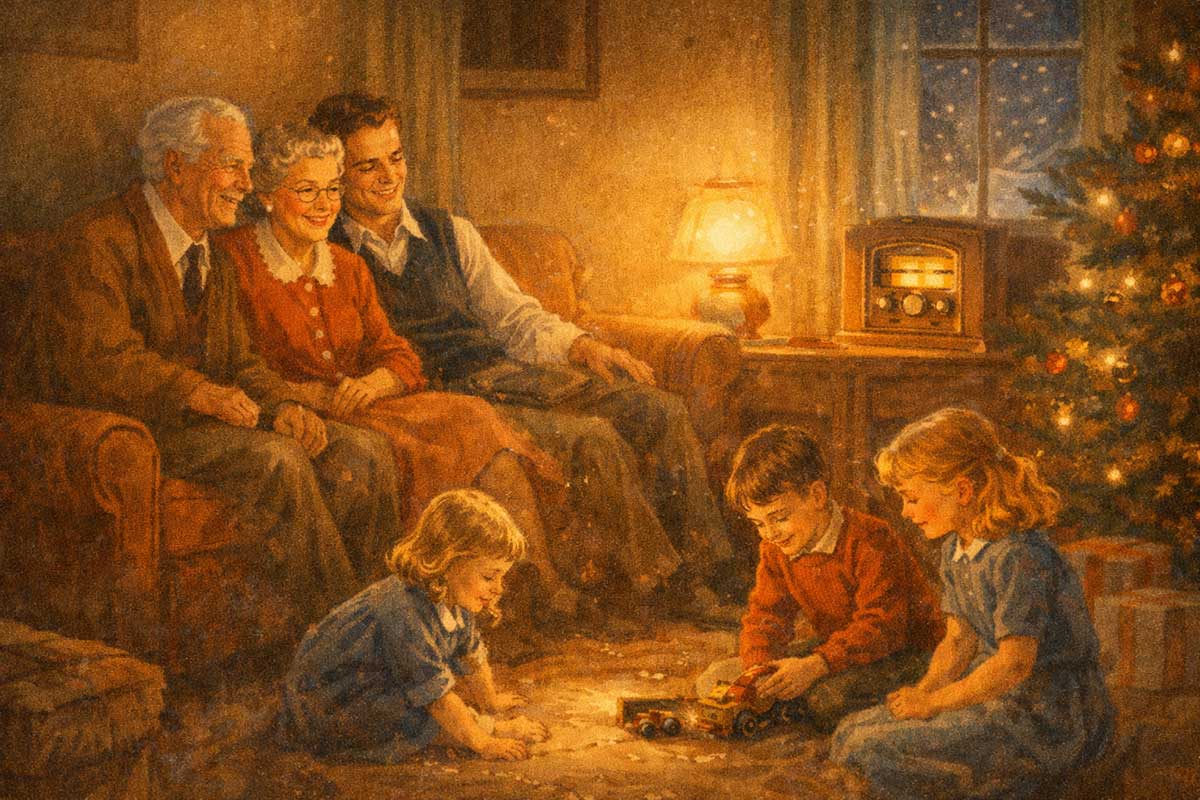
Are we remembering the past… or remembering ourselves?
Nick Sasaki (Moderator)
If Topic 1 was about dreaming forward,
this line gently turns us backward.
“Just like the ones I used to know.”
It sounds simple. Almost casual.
But I’ve noticed something over the years.
People don’t lean into this line because they remember perfectly.
They lean into it because they remember tenderly.
So let me begin here.
When we say “the ones I used to know,” what are we really reaching for?
A real past… or a feeling we’re afraid to lose?
Carl Jung
Memory is never a recording.
It is a reconstruction.
We do not recall events as they happened—we recall them as they are needed.
“The ones I used to know” does not point to historical Christmases.
It points to an inner orientation—a time when the world felt coherent, and the self felt at home inside it.
This is not deception.
It is the psyche preserving continuity.
Without such memory, identity fragments.
Irving Berlin
I’ll be honest.
The Christmases I “used to know” weren’t always peaceful.
There were arguments. Absences. Longings.
But when time passed, something gentle happened.
The sharp edges softened.
What remained wasn’t fact—it was warmth.
That line came from the realization that memory edits pain, not to lie—but to let us live.
Nick Sasaki
That feels very human.
And it makes me think—especially for those who lived through upheaval—
That maybe memory becomes a refuge not because it was perfect, but because it’s finished.
Viktor, how does memory function when people endure extreme suffering?
Viktor Frankl
Memory becomes an anchor.
In suffering, the present can become unbearable. Memory then serves a different purpose.
It reminds the person that this moment is not the whole of existence.
When someone recalls “the ones I used to know,” they are not escaping the present; they are restoring proportion. They are saying: I have lived before this pain, therefore I can live after it.
Memory, when infused with meaning, becomes a bridge—never a hiding place.
WWII Soldier (Unnamed)
For me, that line hit hardest.
I didn’t remember specific days.
I remembered sounds—plates clinking, someone laughing in the other room, a door closing softly.
The past felt… smaller. Human-sized.
Out there, everything was enormous—fear, noise, orders, explosions.
Back home, life fit inside a room.
When he sang “the ones I used to know,” I wasn’t longing for snow.
I was longing for scale.
Nick Sasaki
That’s such an important word—scale.
Maybe what we miss isn’t time, but the size of life when it felt manageable.
Bing, when you sang that line, did you imagine people remembering specific scenes… or something else entirely?
Bing Crosby
I imagined pauses.
Moments where nothing urgent was happening.
People tend to remember Christmas as quiet—even if it never really was. That tells you something.
They’re remembering how it felt to be unhurried. To be unjudged. To belong without effort.
When I sang that line, I tried not to color it emotionally.
If I did, it would take their memory away and replace it with mine.
That line had to stay open.
Carl Jung
Yes—because the listener must project.
That’s the genius of the lyric. It is deliberately unfinished.
It invites the unconscious to fill in the blanks.
Everyone hears their past.
And through that, they rediscover a self that once felt whole.
The past becomes a mirror, not a museum.
Nick Sasaki
A mirror—not a museum. I love that.
So let me gently press a little further.
If the past we remember is partly imagined, is that dangerous?
Or does that imagination serve a deeper truth?
Irving Berlin
I don’t think people want the past back.
They want permission to feel safe again.
Memory gives us proof that safety once existed—even if briefly, even imperfectly.
That proof matters.
Without it, hope becomes abstract. With it, hope becomes personal.
Viktor Frankl
Exactly.
Hope grounded in memory becomes durable.
Even when the memory is idealized, it preserves a truth about human possibility.
The danger is not in remembering too warmly.
The danger is forgetting that warmth ever existed.
WWII Soldier
There’s something else.
When I got home, things weren’t the same.
People had changed. I had changed.
But that song didn’t promise I’d return to the past.
It just reminded me I came from somewhere worth returning from.
That helped me forgive the present.
Nick Sasaki
That’s very quietly profound.
It sounds like memory, in this song, isn’t about going backward—
but about giving the present a softer landing.
So let me ask one final question for this topic.
If “the ones I used to know” isn’t a place we can return to, what does it ask us to do now?
Carl Jung
It asks us to recreate the conditions inwardly.
What once came from the world must now be cultivated within.
The past teaches the soul how to host itself.
Bing Crosby
I’d say it asks us to slow down enough to notice who’s in the room.
Those old Christmases felt special because people were present—
not because everything was perfect.
We can still do that.
Irving Berlin
It asks us to protect tenderness.
The world hardens quickly.
Memory reminds us that hardness is not inevitable.
Viktor Frankl
And it asks responsibility.
If we remember kindness, we are called to embody it.
Memory becomes obligation.
WWII Soldier
For me, it asks me to be someone worth remembering.
So that someday, someone else can say,
“Just like the ones I used to know.”
Nick Sasaki (Closing)
Thank you.
Listening to all of you, I’m realizing something.
This song doesn’t trap us in the past.
It teaches us how to carry it forward—quietly, gently, without demand.
We don’t remember the past to live there.
We remember it so we don’t forget who we are capable of being.
Let’s hold that as we continue.
Topic 3 — Where the Treetops Glisten and Children Listen
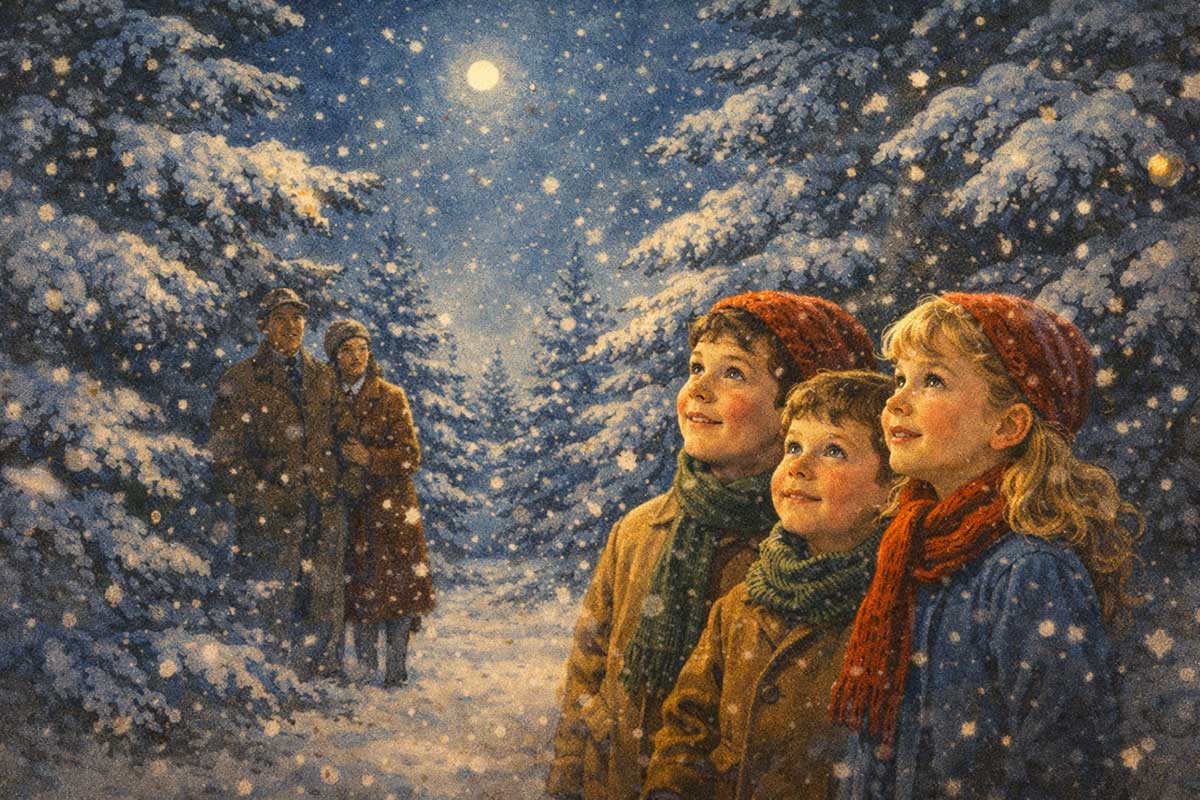
Why does innocence sit at the center of our longing?
Nick Sasaki (Moderator)
If the first line of the song opens a dream,
and the second carries us into memory,
this line does something very gentle.
It lowers the camera.
Suddenly, we’re not talking about seasons or history or even adults.
We’re talking about children.
“Where the treetops glisten and children listen.”
I’d like to begin simply.
Why do you think this song places children at the center of the image?
What do they represent that nothing else quite can?
Carl Jung
Children symbolize the unspoiled self.
Not innocence as ignorance, but innocence as original orientation—
the part of the psyche that trusts life before it learns to defend itself.
When cultures fracture, they instinctively return to images of children.
Not because children are weak—but because they remind us of what the soul looks like before it becomes armored.
In this lyric, children are not doing anything dramatic.
They are listening.
That is essential.
Nick Sasaki
That’s striking—that they’re not speaking, performing, or being instructed.
They’re simply listening.
Irving, when you wrote this line, what were you reaching toward emotionally?
Irving Berlin
Stillness.
I wasn’t thinking about toys or laughter.
I was thinking about attention.
Children listening means the world hasn’t frightened them yet.
It means they expect something good to arrive.
After loss, after war, after noise, that expectation feels almost sacred.
I wanted a place where nothing was demanded of them—
where wonder could exist without explanation.
Nick Sasaki
That word—expectation—feels important.
Viktor, from your experience, what happens to a person when that expectation disappears?
Viktor Frankl
When a human being loses the expectation of goodness, suffering becomes corrosive.
Children listen because they believe something meaningful is about to be said.
That posture—open, receptive, undefended—is the foundation of hope.
In the camps, people often spoke about children—not sentimentally, but reverently.
They represented continuity. A future that suffering had not yet touched.
To protect that image inwardly was to protect meaning itself.
WWII Soldier (Unnamed)
I didn’t think about children much—until I heard that line.
Then suddenly, I thought about how quiet kids get when they’re really listening.
Not bored. Not distracted. Just… present.
That kind of silence didn’t exist where I was.
The line made me realize what we were fighting for—
not territory, but that kind of quiet.
Nick Sasaki
That’s powerful—a silence worth protecting.
Bing, when you sang that lyric, did you feel the shift in tone?
From memory into something more delicate?
Bing Crosby
Very much so.
That line had to be handled carefully.
If you lean too hard, it turns sentimental.
If you rush it, it disappears.
Children don’t need emphasis.
They need space.
I sang it almost like a whisper—
as if the song itself didn’t want to disturb them.
Carl Jung
Yes—and notice something subtle.
The treetops glisten.
The children listen.
Nature reflects light.
Human beings receive meaning.
That pairing is not accidental.
It suggests harmony—an outer world that still speaks gently enough for the inner world to hear.
When that harmony breaks, cynicism replaces listening.
Nick Sasaki
That resonates deeply.
So perhaps this line isn’t just about children.
It’s about a way of being we’re afraid we’ve lost.
Let me ask this gently.
Is innocence something we outgrow…
or something we’re meant to recover in another form?
Viktor Frankl
Innocence does not survive unchanged—but it can be transformed.
What is lost in naïveté can be regained as wisdom without bitterness.
The child listens without suspicion.
The mature soul must relearn listening without despair.
That is harder—but more meaningful.
Irving Berlin
I think adults still want to listen like that.
They just don’t feel safe doing it.
This song gives them a few minutes where they can.
WWII Soldier
When I came home, kids listened to me differently.
They didn’t judge. They didn’t interrupt.
That taught me something.
Listening isn’t passive.
It’s trust.
Nick Sasaki
Trust—that might be the heart of it.
So let me ask one last question for this topic.
If children listening represents trust in the world,
what responsibility does that place on the rest of us?
Carl Jung
It places a moral demand.
A world that cannot be listened to is a world that has failed its soul.
Bing Crosby
It asks us to speak more gently.
And sometimes, not at all.
Irving Berlin
It asks us not to poison wonder.
Once it’s gone, it’s very hard to restore.
Viktor Frankl
It asks us to live in a way that justifies hope.
WWII Soldier
It asks us to come home human.
Nick Sasaki (Closing)
Thank you.
Listening to this, I’m realizing something quietly hopeful.
This song doesn’t ask us to become children again.
It asks us to become worthy of children.
To create a world where listening still makes sense.
Let’s hold that as we move forward—
because the next line turns that innocence into a blessing.
Topic 4 — May Your Days Be Merry and Bright

Why does the song turn into a blessing instead of a promise?
Nick Sasaki (Moderator)
Up to now, the song has been dreaming… remembering… listening.
And then, almost without warning, it shifts.
“May your days be merry and bright.”
Not they will be.
Not everything will be okay.
Just may.
I’ve always felt that word mattered.
So let me begin here.
Why do you think the song chooses to bless rather than promise?
Viktor Frankl
Because a promise would be dishonest.
A blessing respects reality.
To say may acknowledges uncertainty, suffering, and freedom.
It does not deny hardship—it refuses to let hardship have the final word.
In the darkest circumstances, the most humane speech is not prediction, but goodwill.
A blessing says: I cannot control your fate, but I can meet you with dignity.
Nick Sasaki
That feels deeply true.
Irving, when you wrote this line, were you consciously avoiding certainty—or did it come naturally?
Irving Berlin
It came naturally.
After loss, you stop making guarantees.
You learn that joy isn’t something you can schedule.
It arrives—or it doesn’t.
But wishing someone well… that always feels appropriate.
I didn’t want to tell people what Christmas would be.
I wanted to stand beside them and hope with them.
Nick Sasaki
That image—standing beside rather than instructing—feels very important.
Bing, when you sang this line, what posture did you imagine yourself in?
Bing Crosby
Seated.
Not on a stage—on a chair.
Like you’re talking to one person, not a crowd.
A blessing shouldn’t sound elevated.
It should sound reachable.
I didn’t sing it louder or sweeter.
I sang it steady.
As if to say: I mean this.
Carl Jung
This steadiness is crucial.
A blessing functions psychologically as containment.
It holds anxiety without attempting to resolve it prematurely.
“Merry and bright” are not grand ideals.
They are modest virtues.
Merriness implies shared joy.
Brightness implies clarity—not perfection.
Together, they offer a life that is livable.
Nick Sasaki
I love that—a life that is livable.
Soldier, when you heard this line far from home, how did it land?
WWII Soldier (Unnamed)
It felt… personal.
Nobody had told us things would be merry.
That would’ve sounded wrong.
But wishing brightness?
That felt like someone remembering we were still human.
Sometimes brightness just meant surviving the night.
Sometimes it meant getting a letter.
The line didn’t insult our reality.
It honored it.
Nick Sasaki
That’s such a subtle distinction—honoring rather than denying reality.
So let me ask this next.
Why do you think people respond so deeply to blessings, even when they don’t believe everything will turn out well?
Carl Jung
Because blessings restore moral order.
They remind the listener that goodwill still exists—even when justice seems absent.
In times of chaos, knowing that someone wishes you well reaffirms belonging.
A blessing says: You are still inside the circle.
Viktor Frankl
Yes.
Hope imposed from outside often collapses.
Hope offered as a wish can be carried inward.
A blessing invites participation.
It says: If brightness appears, receive it. If not, you are still seen.
Nick Sasaki
That invitation—to receive rather than be convinced—feels essential.
Irving, did you ever imagine how long this blessing would travel?
Irving Berlin
No.
I thought it would belong to that moment.
But I think blessings travel well because they don’t expire.
They don’t depend on circumstances.
Every generation still needs permission to hope without embarrassment.
Nick Sasaki
That resonates deeply.
So let me ask one final question for this topic.
If this line is a blessing spoken across time, what does it quietly ask of us in return?
Bing Crosby
To speak gently to one another.
Especially when we don’t know what to say.
Carl Jung
To resist cynicism.
Cynicism pretends to be intelligence, but it corrodes trust.
Viktor Frankl
To choose meaning even when joy is incomplete.
Irving Berlin
To keep wishing people well—even when life has disappointed us.
WWII Soldier
To pass the blessing on.
Nick Sasaki (Closing)
Thank you.
Sitting with this, I’m realizing something simple and important.
A blessing doesn’t change the world all at once.
But it changes the space between people.
And sometimes, that’s where the real light appears.
Let’s carry that with us—
because the final line widens this blessing beyond one season, and into a way of being.
Topic 5 — And May All Your Christmases Be White
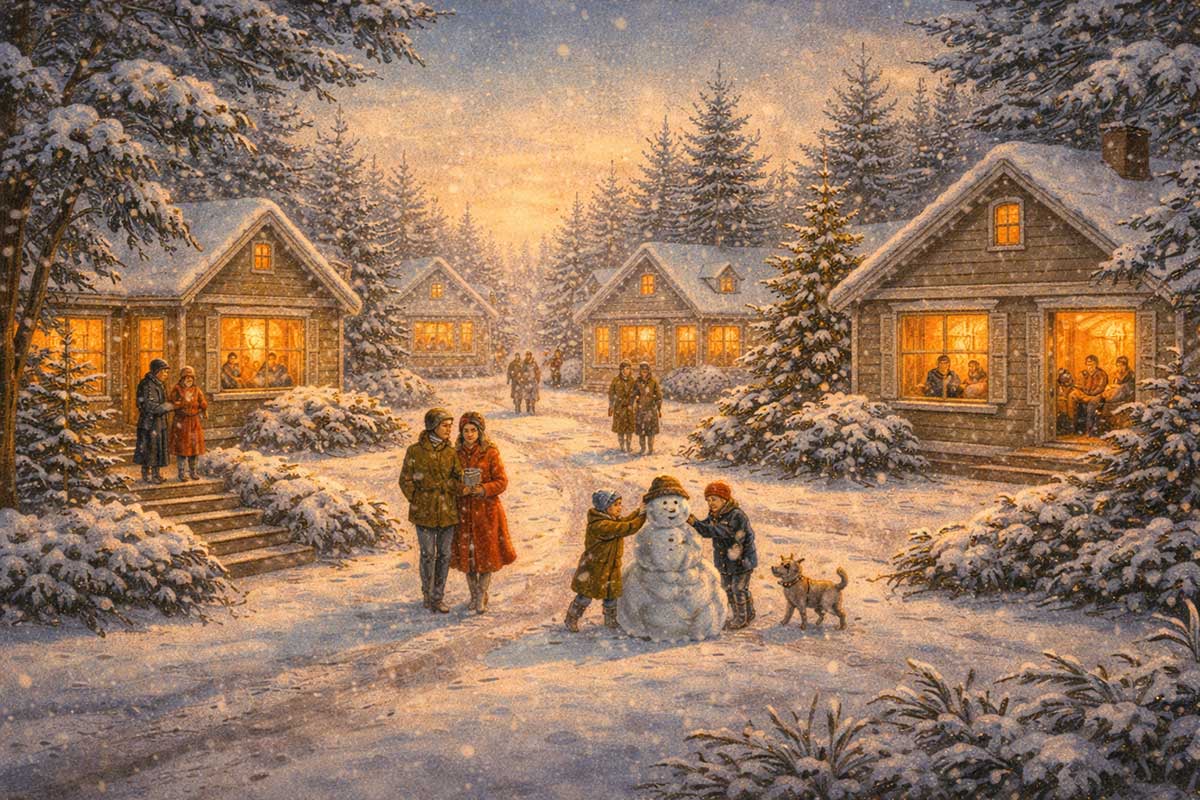
Can a shared wish quietly reshape the world?
Nick Sasaki (Moderator)
The song ends the way prayers often do—not with explanation, but with expansion.
“And may all your Christmases be white.”
Not just this one.
Not just mine.
All of them. Yours. Across time.
I’d like to begin with this.
Why does the song end by widening the wish instead of resolving it?
Why leave us with a horizon instead of a conclusion?
Carl Jung
Because conclusions close meaning.
Horizons keep it alive.
This final line moves the song from the personal psyche into the collective imagination. It transforms an individual longing into a shared symbol.
When many people hold the same image gently, it begins to structure culture.
That is how rituals are born—not through instruction, but through repetition of a wish.
Nick Sasaki
That feels important—held gently.
Irving, when you wrote this line, were you thinking about permanence?
Or was it simply the most honest way to let the song go?
Irving Berlin
I didn’t want to end it sharply.
Life doesn’t.
Ending with all your Christmases felt like releasing the song from my hands.
I wasn’t claiming the dream would come true every year.
I was saying it was worth returning to—again and again.
A wish doesn’t need fulfillment to be faithful.
Nick Sasaki
That’s beautifully said.
Viktor, from your perspective, what happens when a wish becomes collective rather than private?
Viktor Frankl
It gains ethical weight.
A private hope sustains the self.
A shared hope shapes responsibility.
When we say “may all your Christmases be white,” we are no longer speaking about snow or memory—we are expressing a desire for a world that remains human across time.
Such a wish quietly asks: What must I become so this hope is not betrayed?
WWII Soldier (Unnamed)
When I heard that line, I didn’t think about future Christmases.
I thought about whether I’d survive to see another one.
But the line did something strange—it made me imagine myself older. Still alive. Still hoping.
That mattered.
It made the future feel reachable.
Nick Sasaki
That’s incredibly moving—that the line gives permission to imagine oneself still here.
Bing, as the voice that carried this line into so many homes, what did it mean to you?
Bing Crosby
It meant continuity.
I wanted the song to feel like it could return every year without wearing out its welcome.
That line isn’t dramatic.
It’s dependable.
Like a neighbor who shows up quietly every winter and says,
I’m still wishing you well.
Carl Jung
Yes—and note the subtle brilliance.
The line does not say perfect.
It says white.
White absorbs light.
It reflects.
It allows meaning to be projected rather than imposed.
This is why the song survives changing eras.
Each generation paints its own understanding onto that whiteness.
Nick Sasaki
So perhaps that’s the key.
The song doesn’t lock Christmas into one image—it keeps it open.
Let me ask this next.
If this line has shaped how people imagine Christmas for generations, what does that say about the power of shared wishing?
Viktor Frankl
It says that reality is not shaped only by force or policy—but by repeated inner orientation.
When people return to the same ethical image year after year, they slowly align their actions with it.
Not perfectly.
But meaningfully.
Irving Berlin
I think people wanted Christmas to be a moral pause.
This song helped give them that.
Not by preaching—by imagining.
WWII Soldier
When I came home, Christmas wasn’t magical.
But it was quieter.
And because of that song, I expected quiet to matter.
That changed how I treated people.
Nick Sasaki
That’s a powerful ripple.
So let me ask the final question of this conversation.
If “White Christmas” is less a song and more a recurring wish,
what responsibility does that place on us—as listeners, as adults, as human beings?
Carl Jung
To not contaminate the symbol.
To resist turning whiteness into emptiness, or innocence into denial.
Bing Crosby
To keep the tone gentle.
Loudness would break it.
Irving Berlin
To keep wishing—even when it feels naïve.
Especially then.
Viktor Frankl
To live in a way that makes the wish credible.
WWII Soldier
To become someone who makes the dream feel possible for someone else.
Nick Sasaki (Final Thoughts)
Thank you.
As we close, I’m struck by something very simple.
This song never told us what Christmas is.
It showed us how to wish.
And maybe that’s why it lasts.
Because as long as people still long for gentleness, clarity, and shared peace—
they’ll return to this wish.
Not to escape the world.
But to remember what kind of world they’re trying to build.
And that, to me, feels like a prayer worth repeating.
Final Thoughts by Nick Sasaki

When the song ends with “And may all your Christmases be white,” it doesn’t close the door.
It leaves the light on.
That line doesn’t promise happiness. It doesn’t deny sorrow.
It simply says: Let us keep wishing well—for each other, across time.
And that may be the reason White Christmas endures.
Not because it describes reality as it is,
but because it reminds us of reality as it could be—if we treat one another gently enough.
In a loud world, the song stays soft.
In a divided world, it stays inclusive.
In a complicated world, it stays human.
Perhaps that’s what a real prayer sounds like.
Not dramatic.
Not demanding.
Just steady enough to carry us through another winter—
together.
And if we’re lucky,
maybe that shared wish does more than comfort us.
Maybe it teaches us how to live.
Short Bios:
Nick Sasaki
A writer, moderator, and founder of ImaginaryTalks, Nick Sasaki brings historical voices into gentle conversation, guiding discussions with warmth, curiosity, and a fatherly presence focused on meaning, memory, and shared humanity.
Irving Berlin
One of America’s greatest songwriters, Irving Berlin wrote White Christmas not from nostalgia, but from loss—transforming personal grief into a song that became a shared cultural prayer.
Bing Crosby
The voice that carried White Christmas into millions of homes during wartime, Bing Crosby sang with quiet steadiness, offering reassurance, gentleness, and human closeness rather than performance.
Viktor Frankl
A psychiatrist and Holocaust survivor, Viktor Frankl explored how meaning sustains life even under suffering, reminding us that hope, memory, and responsibility are acts of moral courage.
Carl Jung
A pioneering psychologist, Carl Jung studied symbols, archetypes, and the collective unconscious, helping explain why certain songs and images resonate across generations.
WWII Soldier (Composite Voice)
An unnamed voice representing millions who heard White Christmas far from home, carrying the song as comfort, memory, and a reminder of who they were still fighting to remain.
Leave a Reply