

|
Getting your Trinity Audio player ready...
|
Introduction
Why are we here?
It is one of the oldest questions humanity has ever asked—and one of the few that never loses relevance. No matter our culture, beliefs, or background, there comes a moment when this question quietly rises: What is the purpose of a human life?
For some, the question appears during moments of loss or suffering.
For others, it surfaces in success—when achievement alone no longer feels sufficient.
And for many, it arrives unexpectedly, in silence.
This series does not begin with answers. It begins with listening.
Across five conversations, we explore what it might mean for a human life to matter. We examine meaning and choice, repetition and growth, suffering and memory, responsibility and possibility. Some perspectives are philosophical, some psychological, some spiritual—and some challenge the assumption that this single lifetime is the whole story.
No belief is required to enter these conversations. You do not need to accept reincarnation, the afterlife, or any specific worldview. Instead, this series invites a simpler posture: curiosity.
If there is a deeper purpose to being human, it may not reveal itself all at once. It may unfold gradually—through questions we are brave enough to ask, and lives we are willing to examine honestly.
(Note: This is an imaginary conversation, a creative exploration of an idea, and not a real speech or event.)
Topic 1 — Why Are We Here at All?

Is this life a test, a classroom, or a creative experiment for the soul?
Moderator: Karen Armstrong
Participants: Plato · Viktor Frankl · Paramahansa Yogananda · Carl Jung · Bashar
Opening Scene
The setting is deliberately simple:
a circular table, no symbols of any single tradition. Light enters from above, not as spectacle, but as clarity.
Karen Armstrong looks around the table before speaking—not to command attention, but to acknowledge the weight of the question.
Karen Armstrong
We begin with a question humanity has never stopped asking, even when it pretended to.
If the soul existed before birth and continues after death, then why does this single life matter so much?
Is this life an examination, a school, or something closer to an experiment in becoming?
She pauses—not for drama, but to let the question land.
Question One
Is this life a test, a classroom, or a creative experiment for the soul?
Plato
If I may begin—
I would say this life is not a test in the sense of judgment, but a recollection.
The soul once beheld truth directly. Birth is forgetting. Life is the struggle to remember what we already know but no longer see clearly.
Viktor Frankl
I must gently disagree.
If life were only recollection, suffering would be redundant.
This life confronts us with situations that demand response. Meaning is not remembered—it is created through responsibility.
Paramahansa Yogananda
Both of you speak truth from different levels.
From the soul’s perspective, Earth is a classroom.
From God’s perspective, it is a playground of divine self-discovery.
The soul is not tested to be judged, but trained to remember its oneness with the Infinite.
Carl Jung
I would add a psychological dimension.
This life is an individuation process.
The soul does not arrive complete. It arrives with potential—and shadow.
Life is the tension between what we are and what we are meant to become.
Bashar
From our perspective, you might call it a frequency exploration chamber.
You are not here to pass or fail.
You are here to experience what it feels like to believe you are separate—and then choose what to do with that belief.
Karen nods slightly. No summary yet.
Question Two
If the soul existed before and continues after, what makes this single lifetime so important?
Karen leans forward—not as an authority, but as a listener who wants precision.
Karen Armstrong
If existence is vast and ongoing, why does this moment—this brief human life—carry such urgency?
Viktor Frankl
Because this is where choice is irreversible.
In eternity, one can contemplate.
Here, one must decide—under pressure, uncertainty, and limitation.
That is why this life matters.
Carl Jung
Yes. This is where the unconscious becomes conscious—or does not.
What is not lived here becomes fate.
The soul cannot bypass embodiment without cost.
Plato
The urgency comes from embodiment itself.
Only here does the soul experience contradiction:
knowing the good, yet failing to do it.
This friction sharpens understanding.
Paramahansa Yogananda
This lifetime is precious because it allows direct realization.
In higher realms, knowledge is effortless.
Here, realization is earned—through devotion, discipline, and love.
Bashar
We would say this lifetime matters because it is high-resolution.
Density amplifies consequence.
A small shift here produces enormous ripple effects across timelines.
Karen lets silence do part of the work.
Question Three
Is Earth meant for personal growth—or for contributing something unique to the universe?
This time, Karen asks softly—but the question cuts deeper.
Karen Armstrong
Are we here primarily to grow ourselves… or to serve something larger than ourselves?
Paramahansa Yogananda
There is no separation.
Personal growth without service becomes spiritual ego.
Service without inner realization becomes exhaustion.
Earth demands both.
Viktor Frankl
I would emphasize contribution.
Meaning emerges not from self-actualization, but from self-transcendence.
We are pulled forward by something that needs us.
Plato
And yet, one cannot serve wisely without knowing the Good.
The just soul contributes because it sees clearly.
Carl Jung
Individuation is not selfish.
A person who has faced their shadow becomes less dangerous to the collective.
That alone is service.
Bashar
From a cosmic standpoint, Earth contributes novelty.
You generate perspectives that cannot exist elsewhere because of your constraints.
The universe learns through you.
Karen looks around the table once more.
Closing Reflection (Moderator)
Karen Armstrong
What I hear is this:
This life is not a test to be passed, nor merely a lesson to be completed.
It is a meeting point—
between memory and choice,
between growth and service,
between the eternal and the urgent.
She pauses, then adds:
Perhaps the purpose of this life is not to escape it—but to inhabit it fully enough that the soul is changed forever.
The table grows quiet.
Topic One does not conclude—it opens.
Topic 2 — Reincarnation: Choice, Necessity, or Trap?

Why do some souls return again and again, while others never come back?
Moderator: Karen Armstrong
Participants: The Buddha · Edgar Cayce · Dolores Cannon · Seth · Sri Aurobindo
Opening Scene
The circle remains the same, but the atmosphere subtly shifts.
If Topic 1 asked why life matters, Topic 2 asks something more unsettling:
Karen Armstrong
Across cultures, reincarnation has been described as mercy, punishment, education, evolution—and sometimes as a prison.
Some souls seem to return endlessly. Others appear to leave Earth for good.
So tonight, we ask plainly:
Is reincarnation a choice, a necessity, or a trap we do not yet understand?
She turns first to the quietest presence.
Question One
Why do some souls reincarnate hundreds of times while others never return?
The Buddha
Because craving remains.
As long as desire, fear, and ignorance persist, the wheel continues to turn.
When grasping ends, there is no force left to return.
Edgar Cayce
From what I have seen, it is not punishment.
Each soul carries unfinished patterns—imbalances seeking harmony.
Some require many lifetimes because the lessons are subtle, not because the soul has failed.
Dolores Cannon
I would add: some souls volunteer repeatedly.
Earth is difficult, yes—but that difficulty accelerates growth.
Others complete their contracts and move on. It is not uniform.
Sri Aurobindo
Reincarnation is part of an evolutionary movement.
The soul returns not merely to resolve karma, but to participate in the gradual transformation of consciousness itself.
Some souls linger because the work is not finished—not just personally, but collectively.
Seth
You are assuming linear time.
From our perspective, many of these lifetimes are not sequential.
What appears as “hundreds of returns” may be simultaneous explorations of probability.
Karen absorbs this before moving on.
Question Two
Is reincarnation driven by karma, free choice, unfinished love, or cosmic assignment?
Karen Armstrong
Is the soul compelled to return—or does it choose to?
The Buddha
Karma is not fate imposed from outside.
It is momentum created by intention.
Freedom exists—but only when one sees clearly.
Edgar Cayce
Choice and karma are intertwined.
The soul chooses the conditions that allow balance to be restored.
What looks like destiny is often self-selected necessity.
Dolores Cannon
In many sessions, souls said plainly: “I chose this life.”
Parents, challenges, even suffering—selected not consciously, but deliberately.
Karma explains patterns. Choice explains timing.
Sri Aurobindo
There is also assignment, though not in a punitive sense.
Some souls return because humanity itself is evolving, and certain capacities are needed on Earth at specific moments.
Seth
You choose the themes.
The personality then experiences them as karma.
Love unfinished is simply attention unfinished.
Karen allows a long pause here.
Question Three
Can a soul be “done” with Earth even if it still has imperfections?
This question lands heavier than the others.
Karen Armstrong
Must a soul be perfected to leave Earth—or simply complete its role?
Sri Aurobindo
Perfection is not the requirement.
Alignment is.
A soul may move on once it has stabilized a certain level of consciousness.
The Buddha
Imperfection is not the obstacle.
Attachment is.
Even a flawed being may be free if clinging has ceased.
Edgar Cayce
Some souls leave Earth still learning—but they continue that learning elsewhere.
Earth is not the only classroom.
Dolores Cannon
Many souls said: “Earth is no longer compatible with my frequency.”
They were not perfect—but they were finished here.
Seth
Completion is contextual.
You do not “graduate from existence.”
You simply stop enrolling in a particular course.
Karen exhales slowly, then closes.
Closing Reflection (Moderator)
Karen Armstrong
What emerges is neither condemnation nor compulsion.
Reincarnation appears not as a sentence—but as a relationship
between desire, choice, responsibility, and collective need.
Perhaps the more unsettling thought is this:
Not why we return—but why we might still want to.
The room falls quiet again.
Topic 2 does not resolve the mystery—it deepens it.
Topic 3 — Earth as a School… or Something Harder

Why does Earth feel uniquely dense, painful, and intense compared to other realms?
Moderator: Karen Armstrong
Participants: G. I. Gurdjieff · Simone Weil · Rudolf Steiner · Bashar · Elisabeth Kübler-Ross
Opening Scene
The table feels heavier now—not darker, but more grounded.
This topic does not allow abstraction to float freely. It pulls everything downward.
Karen Armstrong speaks more slowly than before.
Karen Armstrong
Many traditions describe Earth as unusually difficult.
Not simply challenging—but dense, resistant, even cruel at times.
So tonight we ask a question people often avoid because it frightens us:
Is Earth a school designed for growth—or something closer to a spiritual pressure chamber?
She turns first to the man who never softened his language.
Question One
Is Earth a school for souls—or a filter that only certain consciousness can endure?
G. I. Gurdjieff
Most humans are asleep.
Earth is not gentle because sleep is comfortable.
Shock is required.
Earth produces the friction necessary for awakening—or it produces nothing at all.
Rudolf Steiner
I would phrase it differently, but I agree on the density.
Earth is where spirit is compressed into matter.
Only here does the soul experience resistance strong enough to forge moral freedom.
Simone Weil
Earth is gravity.
Not metaphorically—spiritually.
Affliction strips away illusion.
Not everyone survives it inwardly, but truth cannot be known without contact with weight.
Bashar
From our perspective, Earth is not a filter—it is a high-intensity training simulation.
Souls are not selected out. They self-select in or out based on resonance.
Elisabeth Kübler-Ross
In my work with the dying, I saw that those who suffered deeply often developed extraordinary compassion.
Earth does not reward suffering—but suffering reveals what the soul has learned.
Karen does not comment. She lets the discomfort remain.
Question Two
Is suffering necessary for soul evolution—or is it a flaw in the system?
This question hangs longer than the others.
Karen Armstrong
Is suffering a requirement… or an accident we have rationalized?
Simone Weil
Suffering is not good.
But attention born of suffering can be pure.
The danger is glorifying pain instead of allowing it to break us open.
Elisabeth Kübler-Ross
I agree.
Pain is not the teacher—our response to pain is.
Many suffer and learn nothing. Others suffer and awaken to love.
G. I. Gurdjieff
Without suffering, mechanical life continues indefinitely.
But unnecessary suffering exists because humans refuse conscious effort.
Rudolf Steiner
Suffering arises because Earth is the realm where freedom is learned.
Freedom without consequence is not freedom.
Pain is not required—but consequence is unavoidable.
Bashar
Suffering is not designed.
Resistance is.
Suffering emerges when resistance is misunderstood as punishment rather than feedback.
Karen closes her eyes briefly before the final question.
Question Three
Could the soul grow just as deeply without pain—or does density accelerate growth?
Karen Armstrong
If another world offered growth without suffering—why choose Earth at all?
Rudolf Steiner
Because growth without resistance lacks permanence.
What is gained easily dissolves easily.
G. I. Gurdjieff
Growth without effort is fantasy.
Earth does not accelerate growth—it makes growth unavoidable.
Simone Weil
I would caution us here.
Pain does not guarantee depth.
Love freely chosen in affliction—that is what endures.
Elisabeth Kübler-Ross
Many people grow through love, not pain.
But pain often removes the barriers that kept love from reaching the heart.
Bashar
Earth compresses time.
What might take eons elsewhere can occur in a single lifetime here.
That is why souls choose it—even knowing the cost.
Karen exhales, then speaks softly.
Closing Reflection (Moderator)
Karen Armstrong
If Earth is a school, it is not a gentle one.
If it is a filter, it is not imposed—it is chosen.
And if suffering plays a role, it is not sacred—but it is revealing.
Perhaps Earth exists not to perfect us…
but to show us who we truly are when comfort is removed.
The silence that follows is not empty.
It is earned.
Topic 4 — Graduation, Forgetting, and the Mystery of Memory
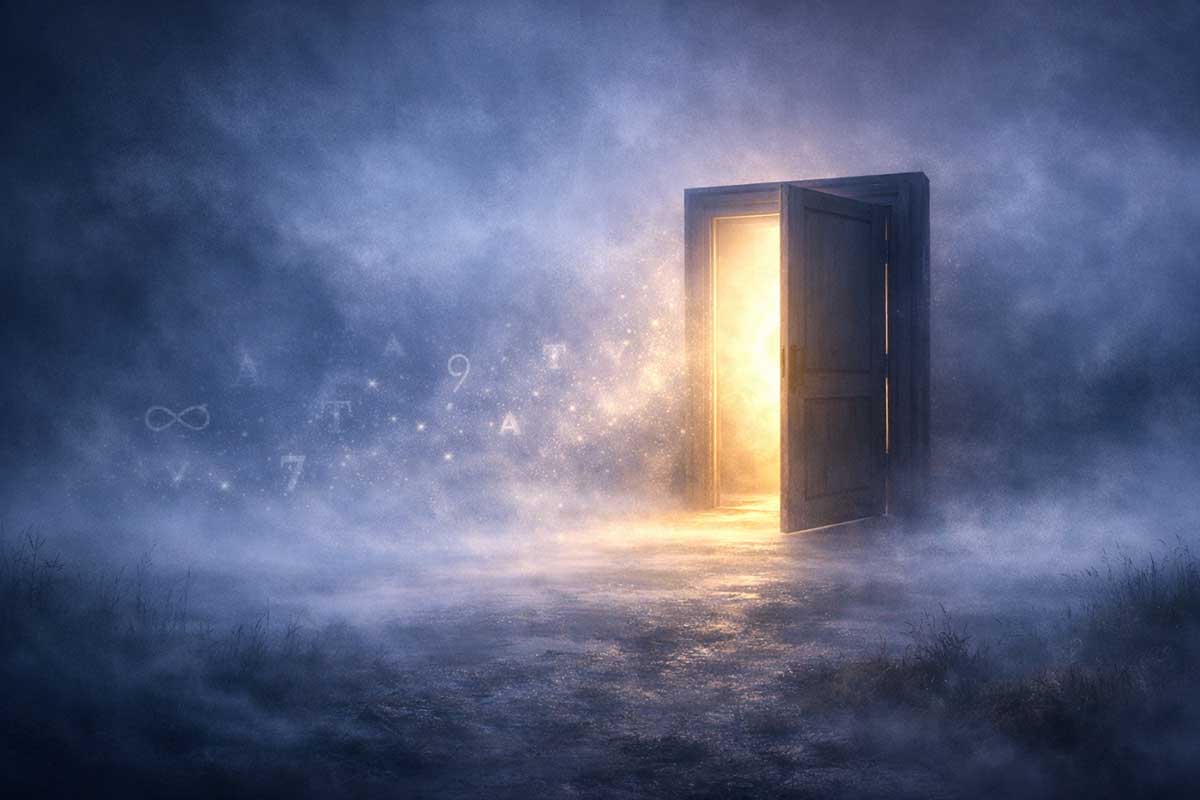
What does it mean to “finish” Earth—and why do we forget why we came?
Moderator: Karen Armstrong
Participants: Plato · Carl Jung · Emanuel Swedenborg · The Buddha · Seth
Opening Scene
The weight of suffering from the previous topic lingers, but something lighter enters the room now—not relief, but curiosity.
Karen Armstrong speaks gently, almost as if she is careful not to disturb something fragile.
Karen Armstrong
If Earth is difficult by design, then forgetting may be the most puzzling part of all.
Many traditions suggest we choose our lives before birth—yet arrive with no memory of that choice.
So tonight we ask:
What does it mean to graduate from Earth, and why does forgetting seem to be part of the curriculum?
She looks first to the philosopher who made forgetting central to human existence.
Question One
What does it actually mean to graduate from Earth?
Plato
Graduation is not departure—it is recollection restored.
A soul graduates when it no longer mistakes shadows for reality.
Whether one remains or leaves matters less than whether one sees truly.
The Buddha
Graduation is the ending of grasping.
When there is no clinging, there is no return.
Not because one escapes Earth, but because Earth no longer binds.
Emanuel Swedenborg
From what I observed, graduation reveals itself immediately after death.
Souls move naturally toward the environments that reflect their inner loves.
Those at peace do not seek Earth again—not from superiority, but from alignment.
Carl Jung
Psychologically speaking, graduation means the ego has yielded to the Self.
A person who has integrated shadow, meaning, and responsibility no longer needs repetition.
What was unconscious has become lived.
Seth
Completion is contextual.
You graduate from Earth when its questions no longer generate novelty for you.
You do not leave because you are finished with life—but because you are finished with this perspective.
Karen lets the answers settle before moving deeper.
Question Two
If we choose our lives before birth, why must we forget everything?
This question feels almost personal.
Karen Armstrong
If forgetting causes confusion, suffering, even despair—why not allow memory?
Plato
Because knowledge without struggle is not wisdom.
Forgetting creates the conditions for philosophy itself—the love of truth rediscovered.
Carl Jung
Memory would collapse individuation.
If you knew your destiny in advance, you would act it out mechanically.
Forgetting allows genuine encounter with choice.
The Buddha
Ignorance is suffering—but it is also the doorway.
Awakening has meaning only because forgetting was complete.
Emanuel Swedenborg
Memory returns gradually in the spiritual world.
But during life, forgetting protects freedom.
Without it, virtue would be imitation, not love.
Seth
Forgetting is a constraint chosen for intensity.
You wanted surprise.
You wanted consequence.
You wanted to discover who you would be without a script.
Karen nods slowly.
Question Three
Is forgetting a limitation—or the very mechanism that makes free will real?
Karen Armstrong
Is amnesia a flaw… or the condition that makes moral life possible?
Carl Jung
Free will requires uncertainty.
Certainty belongs to instinct, not consciousness.
Plato
Only the soul that doubts can ascend.
Certainty belongs to gods, not learners.
The Buddha
Freedom arises when one sees clearly despite forgetting.
That effort is the path.
Emanuel Swedenborg
Love chosen without memory is love made real.
Anything else would be compulsion.
Seth
You forget so that choice has weight.
Otherwise, Earth would be theater—not participation.
Karen allows a long silence before concluding.
Closing Reflection (Moderator)
Karen Armstrong
Perhaps forgetting is not the tragedy we imagine.
Perhaps it is the price of sincerity.
To live without memory—and still choose compassion, courage, and meaning—
may be the clearest evidence that the soul is real.
The room does not feel finished.
But something feels understood.
Topic 5 — Beyond Earth: Where Do Souls Go Next?
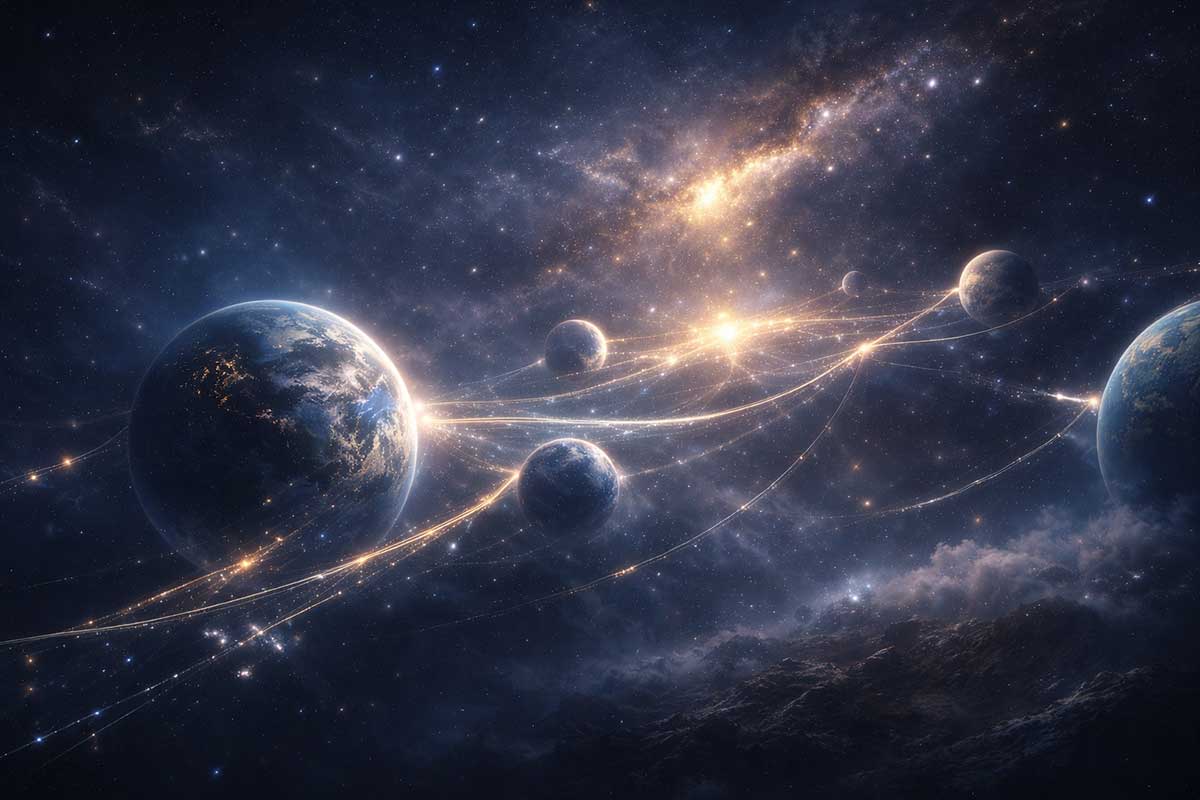
If some souls do not return to Earth, where do they go—and what do they become?
Moderator: Karen Armstrong
Participants: Rudolf Steiner · Dolores Cannon · Bashar · Rev. Sun Myung Moon · Hermes Trismegistus
Opening Scene
There is a subtle shift in the room.
The questions no longer press downward. They expand outward.
Karen Armstrong speaks with a quieter authority now, as if acknowledging that language itself may begin to thin.
Karen Armstrong
If Earth is not the final destination—and many traditions insist it is not—then the question becomes unavoidable:
What lies beyond it?
Do souls continue as individuals, dissolve into something larger, or take on entirely new forms of responsibility?
Tonight, we ask not where souls rest, but where they go to work.
Question One
What happens to a soul that chooses not to reincarnate on Earth?
Rudolf Steiner
Such a soul does not disappear.
After Earth, consciousness moves through planetary and cosmic realms.
There, the soul participates in shaping forces that later influence human evolution—often invisibly.
Dolores Cannon
Many souls I encountered said simply, “Earth is finished for me.”
They moved on to other planets, other dimensions, or non-physical service roles.
Not as escape—but as reassignment.
Bashar
From our perspective, these souls become specialists.
Observers. Guides. Architects of probability.
Earth is one of many classrooms—but it is not mandatory to repeat it.
Rev. Sun Myung Moon
In the spirit world, souls live in the environment shaped by the love they cultivated on Earth.
Those who do not return are not abandoning humanity—they are supporting it from a realm where intention acts immediately.
Hermes Trismegistus
The soul returns to the work of the cosmos.
What was learned in matter is applied in intelligence.
As above, so below—then above again.
Karen allows the answers to echo before continuing.
Question Two
After Earth, do souls remain individuals—or evolve into new forms of existence?
This question touches identity itself.
Karen Armstrong
Does individuality persist—or is it eventually surrendered?
Hermes Trismegistus
Form changes, essence does not.
The drop does not vanish—it learns the ways of the ocean.
Rudolf Steiner
Individuality remains, but becomes transparent.
One acts less from desire, more from insight into the whole.
Dolores Cannon
Some souls retain identity. Others merge into group consciousness.
Both are valid paths.
Choice does not end after Earth—it expands.
Bashar
You keep what is useful.
Personality dissolves. Perspective remains.
Identity becomes function.
Rev. Sun Myung Moon
Love preserves individuality.
Union does not erase the self—it fulfills it.
Karen nods, then asks the final question.
Question Three
Is Earth preparation for rest—or preparation for responsibility?
The room grows very still.
Karen Armstrong
Is this life meant to exhaust us… or prepare us?
Rev. Sun Myung Moon
Earth prepares us for responsibility.
Love matured here determines authority there.
Rudolf Steiner
Responsibility, yes—but also creativity.
Earth trains the soul to act freely, not mechanically.
Dolores Cannon
Souls who finish Earth often take on mentoring roles.
They guide without coercion—because they remember how hard Earth was.
Bashar
Earth is preparation for choice at scale.
Here you learn to choose under limitation.
There, your choices shape realities.
Hermes Trismegistus
The soul that has known matter becomes a bridge.
Between worlds. Between orders of being.
Karen sits back, letting the silence speak first.
Final Reflection (Moderator)
Karen Armstrong
If what we have heard is true, then Earth is not the end of the journey—
nor is it a detour.
It is a forge.
What we become here determines not where we go—but what we are capable of carrying with us.
She pauses, then offers one final thought:
Perhaps the most sobering idea is this:
We are not preparing for paradise.
We are preparing for participation.
The circle does not close.
It opens—into something larger than questions.
Final Thoughts by Karen Armstrong

Perhaps the purpose of human life is not something we are meant to possess as a final answer.
Perhaps it is something we are meant to participate in.
Across these conversations, one theme returns again and again: life seems to place us in situations where our choices matter more than our certainty. Whether one believes this life is singular or part of something larger, the weight of responsibility remains the same. How we love, how we respond to suffering, how we treat one another—these are not abstract ideas. They are lived realities.
If there is something beyond this life, then how we live here may shape what follows.
And if there is nothing beyond it, then this life becomes even more precious.
Either way, the question “Why are we here?” does not demand belief.
It asks for presence.
And perhaps that, in itself, is already part of the answer.
Short Bios:
Karen Armstrong
A former nun and renowned historian of religion, Karen Armstrong is known for her ability to translate complex spiritual traditions into compassionate, human-centered understanding. Her work focuses on shared ethical foundations across belief systems rather than doctrine.
Plato
An ancient Greek philosopher and student of Socrates, Plato explored the nature of truth, reality, and the soul. His writings introduced enduring ideas about knowledge, memory, and the deeper purpose of human existence.
Viktor Frankl
A psychiatrist and Holocaust survivor, Viktor Frankl founded logotherapy, a school of psychology centered on meaning. He argued that the primary human drive is not pleasure or power, but the search for purpose, even amid suffering.
Paramahansa Yogananda
A spiritual teacher who introduced Eastern meditation practices to the West, Yogananda emphasized self-realization and direct experience of the divine. His teachings focus on inner awakening rather than religious identity.
Carl Jung
A Swiss psychologist and founder of analytical psychology, Jung explored the unconscious mind, archetypes, and the process of individuation. He believed a meaningful life requires integrating both light and shadow within the self.
The Buddha (Siddhartha Gautama)
A spiritual teacher who lived in ancient India, the Buddha taught that suffering arises from attachment and can be overcome through awareness, compassion, and insight. His teachings emphasize liberation through understanding rather than belief.
Edgar Cayce
Often called the “Sleeping Prophet,” Edgar Cayce offered intuitive insights while in trance states, addressing health, consciousness, and the soul’s development. His work emphasized personal responsibility and spiritual growth.
Dolores Cannon
A hypnotherapist and researcher, Dolores Cannon documented thousands of past-life and between-life narratives. Her work focuses on soul choice, Earth as a learning environment, and humanity’s evolving consciousness.
Sri Aurobindo
An Indian philosopher, poet, and yogi, Sri Aurobindo viewed human life as part of an ongoing evolution of consciousness. He believed humanity is gradually transforming toward higher levels of awareness and responsibility.
G. I. Gurdjieff
A spiritual teacher and mystic, Gurdjieff taught that most humans live mechanically and must awaken through conscious effort. His work emphasized self-observation, inner discipline, and transformation through friction.
Simone Weil
A philosopher and social activist, Simone Weil wrote deeply about suffering, attention, and moral responsibility. She believed truth is encountered through humility and profound engagement with reality as it is.
Rudolf Steiner
A philosopher and educator, Steiner founded anthroposophy, a spiritual framework integrating science, art, and inner development. He described human life as part of a larger cosmic and evolutionary process.
Elisabeth Kübler-Ross
A psychiatrist known for her work with the dying, Kübler-Ross explored grief, transformation, and compassion. Her research revealed how confronting mortality often deepens love and clarity about life’s priorities.
Emanuel Swedenborg
A scientist-turned-mystic, Swedenborg wrote extensively about consciousness and the afterlife. He described the spiritual world as a continuation of inner character rather than a place of reward or punishment.
Seth
A non-physical entity channeled by writer Jane Roberts, Seth presented a framework in which reality is shaped by consciousness and belief. His teachings challenge linear ideas of time, identity, and existence.
Bashar
An extraterrestrial consciousness channeled by Darryl Anka, Bashar presents a model of reality based on frequency, choice, and resonance. His perspective emphasizes personal alignment over external authority.
Rev. Sun Myung Moon
A religious thinker and founder of the Unification Movement, Rev. Moon taught that the purpose of life is the completion of love through family, responsibility, and service. He emphasized Earth as a preparation ground for spiritual maturity.
Hermes Trismegistus
A legendary figure associated with ancient wisdom traditions, Hermes Trismegistus represents teachings that link the human mind with cosmic order. His ideas emphasize correspondence between inner and outer reality.
Leave a Reply