

|
Getting your Trinity Audio player ready...
|
Introduction by Bill Gates
Good morning, everyone. It’s a privilege to stand before some of the greatest minds of our time. For decades, I’ve believed that science and innovation are the engines that drive human progress. They gave us vaccines that ended smallpox, technologies that connected the world, and crops that feed billions. Today, in this room, we gather at the intersection of breakthroughs that will define the next century: quantum technologies that could transform computation, artificial intelligence accelerating discovery, CRISPR rewriting the code of life, and new materials and energy systems that can stabilize our climate.
But let me be clear—our challenge is not simply to innovate, but to innovate responsibly. Every discovery has two futures: one where it widens divides, and one where it narrows them. One where it fuels conflict, and one where it fosters peace. This conference isn’t just about celebrating what science can do—it’s about shaping what science should do. The responsibility is immense, but so is the opportunity. Together, we have the power to ensure that the breakthroughs of tomorrow benefit not just the few, but all of humanity.
(Note: This is an imaginary conversation, a creative exploration of an idea, and not a real speech or event)
Topic 1: Quantum Science & Quantum Technologies
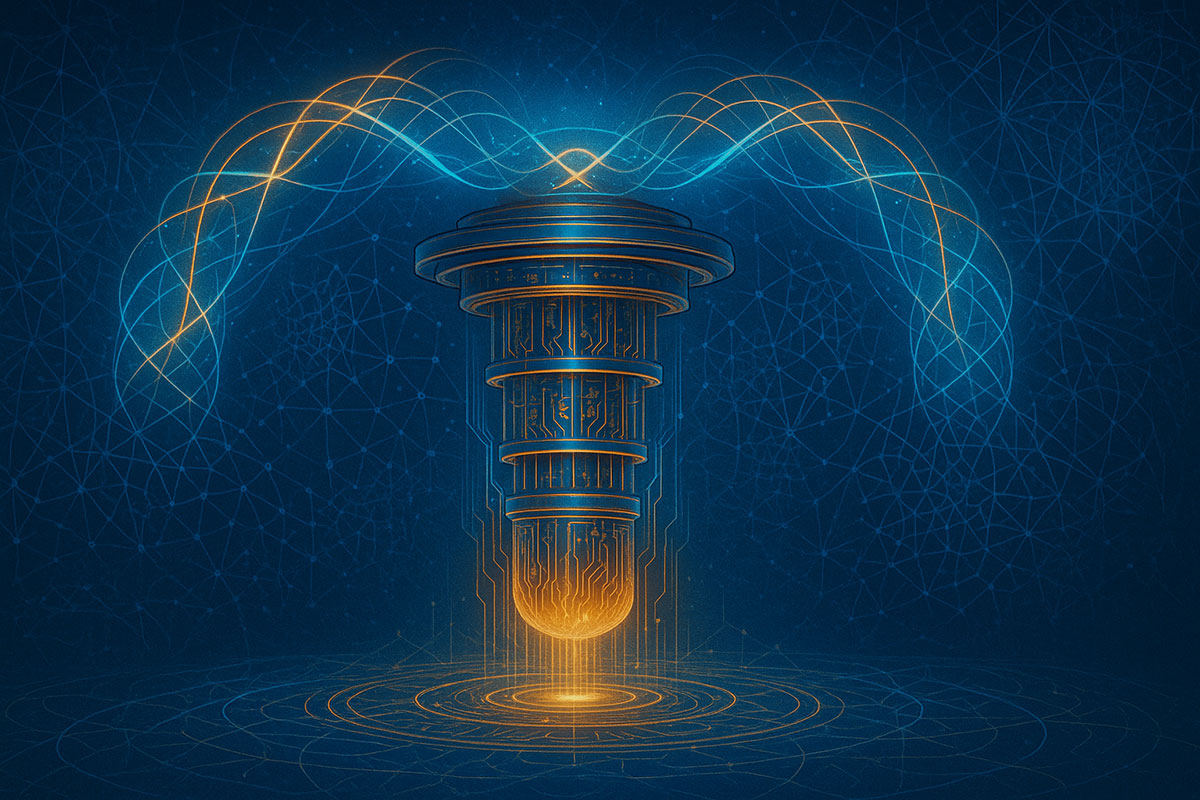
Moderator: David Wineland (Nobel Prize in Physics, trapped-ion quantum computing pioneer)
Speakers: Anton Zeilinger, Alain Aspect, John Preskill, Michelle Simmons, Charles Marcus
Scene: Opening
The great hall hums with anticipation. Thousands of scientists from around the globe fill the seats. On stage, six chairs form a semi-circle. At the center sits David Wineland, leaning forward with quiet intensity.
David Wineland:
“Ladies and gentlemen, welcome. Quantum science is not just a frontier of physics anymore—it is a frontier of civilization. Today, we’ll explore three pressing questions. Let’s begin with the most immediate: How close are we to building a fault-tolerant quantum computer, and what will it realistically achieve first?”
Question 1: Fault-Tolerance & First Applications
Anton Zeilinger:
“Quantum computing is often misunderstood. It’s not about replacing classical computers in all tasks—it’s about solving problems classical systems can’t. Right now, error correction remains the great hurdle. But the roadmap is clearer than ever. Within the next decade, I foresee small-scale, error-corrected machines solving quantum chemistry problems—molecules too complex for any supercomputer.”
Michelle Simmons:
“Building these devices in silicon has taught us humility. Scaling is hard. But we now know pathways exist—atomic precision, isotopically pure materials, and robust control. The first killer applications will be in materials discovery: superconductors, catalysts, even better solar absorbers. These are things that could change both industry and climate.”
John Preskill:
“I coined the term quantum supremacy somewhat playfully, but what matters now is quantum utility. We will achieve error correction, but it will be expensive. So, we must target problems where quantum advantage is decisive—like simulating strongly correlated electrons. The first wins won’t be flashy, but they’ll reshape scientific method itself.”
Alain Aspect:
“Let us not forget the philosophical angle. Each qubit we control is a demonstration of nature’s non-classical reality. Building a fault-tolerant computer is not just engineering—it’s a daily vindication of quantum theory itself.”
Charles Marcus:
“The real question is when. Industry timelines promise five years, but history shows us it may be longer. Yet I see this not as delay but as inevitability. Quantum advantage is coming. Fault tolerance is a matter of stubbornness.”
Question 2: Beyond Computing—Quantum’s Broader Reach
David Wineland:
“Let’s expand. Beyond computing, which quantum applications—sensing, communication, metrology—will transform society the fastest?”
Michelle Simmons:
“Sensing, absolutely. Imagine MRI scans at single-cell resolution or underground mineral mapping without drilling. These are closer than a universal quantum computer.”
Anton Zeilinger:
“Quantum communication excites me most. We are on the threshold of unhackable global networks. Entanglement swapping and satellite links will redefine trust in digital society.”
John Preskill:
“Don’t underestimate metrology. Quantum clocks with unimaginable precision will synchronize navigation, finance, and defense. This may be the most immediate societal impact.”
Charles Marcus:
“There’s also hybridization. Quantum sensors embedded in everyday systems—cars, power grids, even smartphones—could silently enhance resilience without users even knowing.”
Alain Aspect:
“And let us be poetic: each new quantum sensor reveals hidden layers of reality. That, in itself, transforms our relationship with the universe.”
Question 3: Ethics & Power in the Quantum Era
David Wineland:
“Our third and final challenge: What ethical and security frameworks must we establish as quantum reshapes global power dynamics?”
John Preskill:
“If quantum communication becomes the backbone of security, nations without access could be locked out of sovereignty. This demands global treaties, not just patents.”
Anton Zeilinger:
“Yes, science must lead with openness. Entanglement knows no borders. Knowledge hoarded is progress slowed.”
Michelle Simmons:
“But industry will drive deployment. We must insist that equity—access to medicine, materials, climate tech—be built into business models. Otherwise, we repeat past mistakes.”
Charles Marcus:
“Let’s be blunt: quantum computing will be a weapon as much as a tool. Cracking encryption, redesigning energy markets—this is geopolitics. Scientists must not be naïve.”
Alain Aspect:
“Yet, we must also not be cynical. Quantum teaches us cooperation. It reminds us that what is separate can still be entangled. Perhaps this is its greatest ethical lesson.”
Closing Reflections
David Wineland (leaning back, voice steady):
“Today you’ve heard the visionaries. Fault tolerance is within sight, but it is not the only story. Sensing, communication, and metrology may touch our lives sooner. The ethical stakes are profound—quantum could either entangle us in inequality or weave us into a more secure and equitable world. The future is not written. It is in superposition, waiting for us to measure it together.”
The audience rises in applause. Some cheer for the science, some for the hope, all for the shared vision of possibility.
Topic 2: AI–Driven Discovery, Automation & the Science of Science

Moderator: Fei-Fei Li (Stanford, human-centered AI)
Speakers: Geoffrey Hinton, Demis Hassabis, Jennifer Chayes, Yoshua Bengio, Regina Barzilay
Scene: Opening
The conference lights dim, a glowing neural network visualization stretches across the backdrop. Fei-Fei Li steps forward, her voice carrying both warmth and urgency.
Fei-Fei Li:
“Welcome, colleagues. Artificial intelligence is no longer just assisting science—it is beginning to shape it. We stand at a threshold where algorithms may propose hypotheses, run experiments, and even drive the pace of discovery itself. But this brings as many questions as it does breakthroughs. Let’s begin with the heart of the matter: how do we balance AI’s role as a discovery accelerator with the need for interpretability and trust?”
Question 1: Trust and Interpretability in AI Discovery
Geoffrey Hinton:
“We must accept that many powerful systems are, by nature, black boxes. Biology is full of black boxes too—yet we trust it when it works. The task is not to reject opaque systems but to develop standards of reliability, rigorous testing, and reproducibility. Interpretability is desirable, but trust is built on consistent results.”
Jennifer Chayes:
“I see interpretability as a spectrum, not a binary. Sometimes we need human-readable explanations, sometimes we need predictive accuracy. The key is to align the level of interpretability with the risk. In medicine, transparency is critical. In material discovery, perhaps less so.”
Yoshua Bengio:
“I am less comfortable. Black boxes can lead to biases we cannot detect until harm is done. We must invest in causal AI—systems that don’t just correlate, but understand relationships. Without causality, AI will remain brittle.”
Regina Barzilay:
“In my work on AI for drug discovery, I’ve seen both sides. Doctors demand interpretability, but when cancer patients need treatments fast, predictive power saves lives. The balance is pragmatic: speed versus understanding. But ultimately, trust comes from human oversight.”
Demis Hassabis:
“AlphaFold showed us what’s possible when accuracy is prioritized—even with models we don’t fully understand. But we also saw the need for transparency. The future is hybrid: models that perform, validated by communities that verify. Science has always been collective trust-building.”
Question 2: Can AI Truly Generate New Science?
Fei-Fei Li:
“A bold question. Is AI simply remixing human input, or can it generate new science?”
Demis Hassabis:
“AlphaFold did more than remix—it solved a fifty-year grand challenge. That was not just assistance; it was genuine discovery. As we scale similar systems to chemistry, physics, and climate, I believe AI will generate hypotheses that surprise even experts.”
Yoshua Bengio:
“But let’s be clear: AI does not ‘understand’ in the human sense. It generates useful patterns. If science is the act of asking why, then AI is not yet a scientist. It is a remarkable assistant—but not a peer.”
Jennifer Chayes:
“I see a middle ground. AI already proposes candidate molecules or models that no human would imagine. Whether we call that ‘new science’ or not, it extends human imagination. To me, that’s enough.”
Regina Barzilay:
“Scientists often dismiss AI’s creativity, but when an algorithm proposes a novel antibiotic, and it works in the lab, what should we call that? I’d call it science.”
Geoffrey Hinton:
“Perhaps we are asking the wrong question. AI is not a human scientist; it is a new category of scientific agent. It does not think like us, but its discoveries may be no less real.”
Question 3: Governance and Global Equity in AI-Driven Science
Fei-Fei Li:
“Our final challenge: What governance is required to ensure AI-driven science benefits all humanity, not just a few?”
Yoshua Bengio:
“This is urgent. The most advanced models are concentrated in the hands of a few corporations. Without global cooperation, we risk a new colonialism—knowledge concentrated in the Global North, while the rest of the world waits.”
Jennifer Chayes:
“Governance must be layered: open science at the foundation, regulation for high-risk applications, and incentives for equitable sharing. Without that, we will repeat the inequities of the last century.”
Regina Barzilay:
“Equity is also about access to data. If AI for health is trained mostly on Western populations, it will fail the rest of the world. Diversity of data is as much a governance issue as patents or profits.”
Demis Hassabis:
“There is a danger in slowing innovation too much. The breakthroughs that solve climate change or global disease must not be stifled. Governance should accelerate safe sharing, not freeze progress.”
Geoffrey Hinton:
“And we must also remember ethics. AI can accelerate discovery of medicines, but also of weapons. We cannot pretend this is neutral. Governance must include moral responsibility, not just economic balance.”
Closing Reflections
Fei-Fei Li (smiling gently):
“AI in science is like a mirror—sometimes it reflects our ingenuity, sometimes our blind spots. It accelerates, it assists, and perhaps one day it will discover. But the measure of success will not only be faster answers, but fairer ones. Our challenge is not simply to build better AI, but to build a better scientific ecosystem around it—where humanity and machines discover together.”
The hall resounds with thoughtful applause. The scientists on stage exchange knowing glances—excited, but sobered by the weight of their responsibility.
Topic 3: CRISPR, Gene Editing & Synthetic Biology

Moderator: Francis Collins (former NIH Director, leader in genomics and bioethics)
Speakers: Jennifer Doudna, Emmanuelle Charpentier, George Church, Feng Zhang, Craig Venter
Scene: Opening
A luminous double helix glows across the stage backdrop, spiraling into the horizon. The hall quiets as Francis Collins steps forward, his voice blending scientific gravitas with pastoral care.
Francis Collins:
“Good evening, colleagues. Gene editing and synthetic biology represent both breathtaking promise and daunting peril. With tools like CRISPR, we are not only reading the book of life but writing in its margins—and perhaps entire new chapters. Let us begin with a question that haunts both science and society: where should we draw the line between therapeutic editing and human enhancement?”
Question 1: Therapy vs. Enhancement
Jennifer Doudna:
“From the start, I have emphasized that CRISPR should be used to treat disease—sickle cell anemia, muscular dystrophy, cystic fibrosis. These are urgent, tangible benefits. But when it comes to enhancements—height, intelligence, memory—we enter murky ethical territory. The line must be drawn at health, not human preference.”
George Church:
“I respect that view, Jennifer, but history shows us that enhancements are inevitable. Vaccines are enhancements. Glasses are enhancements. If CRISPR can extend life or increase resilience, some society somewhere will use it. Better that we lead ethically than pretend we can forbid it.”
Emmanuelle Charpentier:
“We must remain cautious. CRISPR is powerful, but still imperfect. Off-target effects, mosaicism, and long-term safety are unresolved. To leap to enhancement before therapy is reckless—not only ethically but scientifically.”
Feng Zhang:
“The distinction between therapy and enhancement will blur. Treating Alzheimer’s disease may involve enhancing memory. Preventing obesity may involve enhancing metabolism. We must prepare for nuanced decisions, not rigid categories.”
Craig Venter:
“Let me be provocative: enhancement is already happening through selection—IVF, embryo screening, even mate choice. CRISPR will accelerate what humanity has always done: seek betterment. The real danger is unequal access, not enhancement itself.”
Question 2: Transformative Applications in Medicine, Agriculture, and Climate
Francis Collins:
“Now, looking beyond ethics, what synthetic biology applications could most dramatically reshape medicine, agriculture, and climate response?”
Emmanuelle Charpentier:
“Medicine is the most immediate frontier. From one-time cures for genetic diseases to engineering immune cells against cancer, CRISPR will fundamentally change healthcare.”
Jennifer Doudna:
“I see agriculture as equally transformative. Imagine crops resistant to drought, pests, and disease—engineered with precision rather than blunt modification. This could secure food supply for billions.”
George Church:
“My team has worked on engineering microbes to capture carbon or synthesize fuels. If we can rewire biology at scale, synthetic organisms could become our most powerful allies against climate change.”
Feng Zhang:
“I’m intrigued by epigenetic editing—changing gene expression without altering DNA sequences. This opens doors to reversible, tunable interventions in both medicine and ecology.”
Craig Venter:
“And we must not forget the moonshot possibilities: creating entirely synthetic organisms. Not just editing what nature has given us, but designing new life forms to perform specific tasks—biological machines for cleaning oceans, producing vaccines, or even terraforming environments.”
Question 3: Biosecurity and Global Equity
Francis Collins:
“Finally, the hardest question: how do we create global frameworks for biosecurity and equitable access to these powerful tools?”
George Church:
“We need international registries, much like nuclear treaties, for labs engaging in high-risk synthetic biology. Transparency is key. What we don’t track, we can’t secure.”
Jennifer Doudna:
“Yes. And beyond security, access matters. If only wealthy nations deploy CRISPR cures, we create a genetic divide—some with disease erased, others left behind. Science must not widen inequality.”
Emmanuelle Charpentier:
“Agreed. We also need strict oversight for dual-use risks. Gene editing could just as easily be applied to create pathogens as cures. Ethical training must become as central as lab technique.”
Feng Zhang:
“There should also be open-source platforms for safer, low-risk applications. Democratizing access to benign tools—like bacterial editing for local agriculture—can reduce global inequities.”
Craig Venter:
“But let’s be real: power dynamics will always shape distribution. If governments fail, perhaps private philanthropy, NGOs, and citizen science movements will drive equity. We must prepare for a plural future, not a centralized one.”
Closing Reflections
Francis Collins (hands clasped, tone both firm and hopeful):
“Tonight, we have seen the double helix not just as a symbol of life, but as a canvas. CRISPR offers cures, crops, and even climate tools. But it also forces us to confront the deepest moral questions: what does it mean to be human, and who gets to decide? The line between therapy and enhancement, the balance between innovation and security, the pursuit of equity—all remain unwritten chapters. The future of biology will not be shaped by science alone, but by the values we choose to inscribe alongside it.”
The hall is silent for a moment, then erupts in applause—not the applause of entertainment, but of recognition. The future of life itself has been laid bare.
Topic 4: Clean Energy, Climate Solutions & Sustainability Science
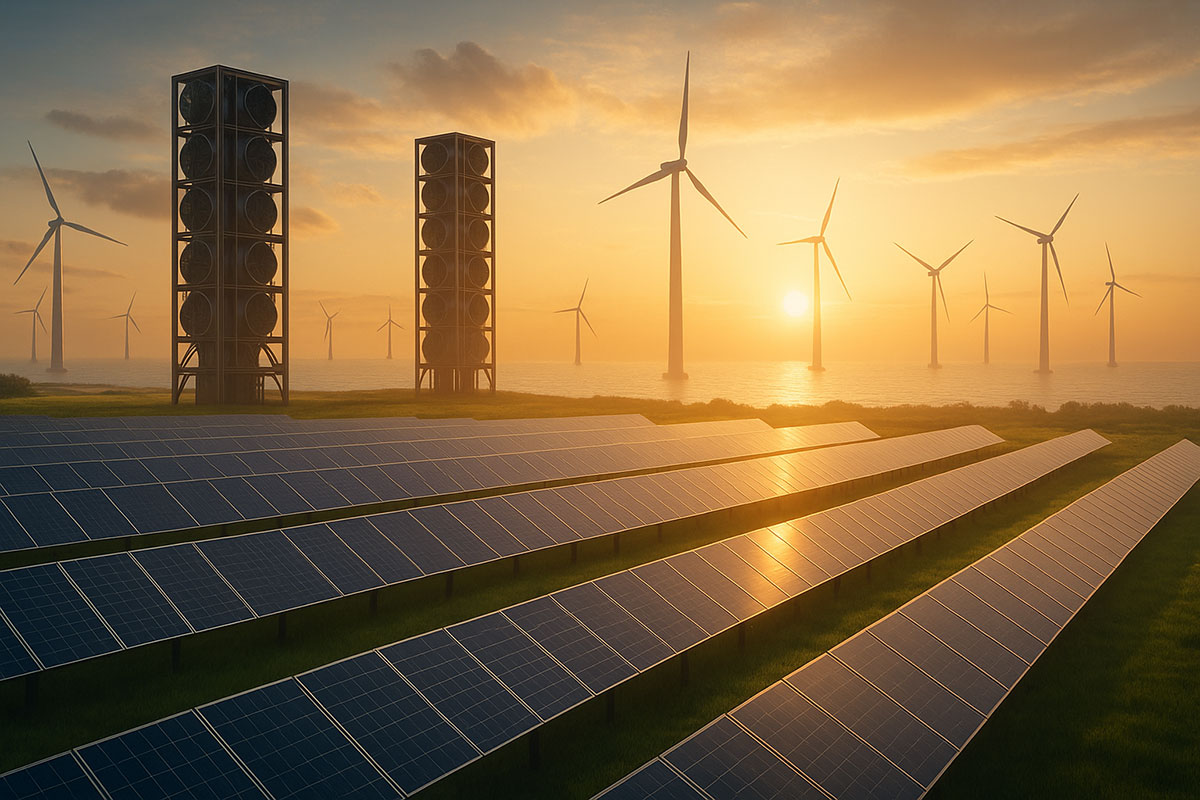
Moderator: Christiana Figueres (architect of the Paris Climate Accord)
Speakers: Klaus Lackner, Steven Chu, Yi Cui, Corinne Le Quéré, Vaclav Smil
Scene: Opening
The stage backdrop glows with images of wind turbines, solar fields, and forests. Christiana Figueres steps forward, her voice full of conviction.
Christiana Figueres:
“Welcome, colleagues and friends. Climate change is the defining crisis of our time—and clean energy the defining opportunity. The science is clear, but the path forward requires courage, ingenuity, and cooperation. Tonight, I will challenge this panel with three questions: Which breakthroughs will scale the fastest, how do we handle geoengineering, and how can we ensure global equity in climate solutions?”
Question 1: Breakthroughs Likely to Scale by 2030
Steven Chu:
“Energy storage will be the keystone. Without scalable batteries, renewables cannot stabilize the grid. Solid-state batteries and new chemistries—beyond lithium—are advancing quickly. By 2030, grid-scale storage will make intermittent renewables competitive everywhere.”
Yi Cui:
“Indeed, materials innovation is the catalyst. Sodium-ion and multivalent batteries are emerging. Perovskite solar cells will also scale—lightweight, cheap, efficient. When combined with storage, they can electrify the developing world.”
Klaus Lackner:
“I must emphasize carbon capture. Even with renewables, we overshoot emissions. Direct air capture, deployed at scale, can remove gigatons of CO₂. The challenge is not science—it’s cost. But with economies of scale, capture plants could be as ubiquitous as wastewater treatment facilities.”
Corinne Le Quéré:
“Mitigation is not enough—adaptation must scale. Coastal defenses, drought-resilient crops, and resilient cities will be as critical as clean energy. By 2030, the real test will be integration—aligning mitigation with adaptation.”
Vaclav Smil:
“Beware techno-optimism. Energy transitions historically take decades, not years. Coal and oil still dominate. The breakthrough of 2030 may not be technical, but behavioral: reducing demand, rethinking consumption. Efficiency is the overlooked giant.”
Question 2: The Role of Geoengineering
Christiana Figueres:
“Some argue we cannot meet climate targets without geoengineering. Promise, peril, or last resort?”
Klaus Lackner:
“Direct air capture is geoengineering, but benign—removing CO₂ rather than altering sunlight. This must be part of the portfolio.”
Steven Chu:
“Solar radiation management—injecting aerosols into the stratosphere—is dangerous. The climate system is too complex. Side effects could devastate rainfall patterns. Research is needed, but deployment should be a last resort.”
Corinne Le Quéré:
“Exactly. It is morally hazardous. The illusion of a technological fix may delay emission cuts. Geoengineering should never substitute for decarbonization.”
Yi Cui:
“I see potential in localized, reversible interventions. Reflective crops, engineered clouds over cities—micro rather than macro. Smaller-scale geoengineering may prove both safer and effective.”
Vaclav Smil:
“I am skeptical. Humanity should first prove it can manage small-scale sustainability before tampering with planetary levers. Geoengineering is a symptom of desperation, not strategy.”
Question 3: Global Equity in Climate Solutions
Christiana Figueres:
“Our final question: How do we ensure clean energy transitions do not leave developing nations behind?”
Corinne Le Quéré:
“Climate justice is non-negotiable. Rich nations created the problem. Financing for adaptation and mitigation in the Global South must be scaled dramatically.”
Steven Chu:
“Technology transfer is key. Open patents for renewable energy and batteries could accelerate adoption worldwide. Hoarding intellectual property slows the transition.”
Yi Cui:
“Decentralization is also equity. Solar microgrids in African villages, for instance, leapfrog centralized grids. Innovation must serve the local context.”
Klaus Lackner:
“And financing models must adapt. Just as cell phones leapfrogged landlines, climate solutions must bypass outdated infrastructure. But investors must see climate equity not as charity, but opportunity.”
Vaclav Smil:
“Yet we must be realistic. Billions still lack reliable electricity. Fossil fuels remain cheap. Unless renewables match that affordability, the South will not abandon them. Equity depends on economic realism.”
Closing Reflections
Christiana Figueres (her voice steady, eyes sweeping the room):
“This conversation has shown us that solutions exist—storage, renewables, capture, adaptation. But the clock is unforgiving. We cannot wait for miracles, nor gamble on planetary-scale interventions. Equity is not an option; it is the measure of our success. A world saved by clean energy but divided by inequality is no victory. Let us commit not only to innovation, but to justice, so that the energy of tomorrow is shared by all.”
The audience rises, not just applauding the science, but affirming the shared moral call.
Topic 5: Advanced Materials, Nanoscience & Interface Phenomena

Moderator: Paul Alivisatos (nanoscience pioneer, UC Berkeley/University of Chicago)
Speakers: Andre Geim, Kostya Novoselov, Shoucheng Zhang (honored in spirit), Omar Yaghi, Zhenan Bao
Scene: Opening
The stage glimmers with projected images of crystalline lattices, layered 2D materials, and glowing nano-structures. Paul Alivisatos steps into the light, his tone both scientific and visionary.
Paul Alivisatos:
“Materials science is where the invisible becomes powerful. What we create at the nanoscale transforms everything—energy, computation, medicine, even the way we interact with the natural world. Tonight, we’ll explore three pressing questions: which innovations are poised to revolutionize, how to accelerate scaling, and what risks accompany these breakthroughs.”
Question 1: Which Innovations Will Revolutionize Energy, Computation, and Medicine?
Andre Geim:
“Graphene remains astonishing. Beyond its fame, its derivatives—layered, twisted, hybridized—unlock superconductivity, filtration, and electronics beyond silicon. Its potential is still unfolding.”
Kostya Novoselov:
“Yes, but 2D materials go beyond graphene. Molybdenum disulfide, boron nitride, heterostructures—each adds a layer of tunability. The real revolution is in combining them, building new physics one atomic layer at a time.”
Omar Yaghi:
“Metal–organic frameworks are equally transformative. They can capture CO₂, store hydrogen, filter water. Think of them as designer sponges, programmable to trap molecules we choose. Their environmental applications may be as important as electronics.”
Zhenan Bao:
“My dream is electronic skin—flexible, stretchable, biocompatible materials that sense touch, pressure, or chemistry. Imagine prosthetics with real feeling, or medical patches that monitor health in real time.”
Shoucheng Zhang (honored through his published legacy):
“Topological materials—insulators that conduct only at their edges—could redefine quantum computing and spintronics. They embody the strange marriage of geometry and physics, promising devices far beyond current logic circuits.”
Question 2: How Do We Accelerate from Lab Breakthroughs to Scalable Technologies?
Paul Alivisatos:
“Discovery is one thing, deployment another. How do we move faster from laboratory marvel to real-world impact?”
Andre Geim:
“We must temper hype. Not every discovery deserves industrial scale. Focus on where materials solve real, unsolved problems, not just where they excite curiosity.”
Kostya Novoselov:
“Partnership is the key. Industry must be involved from the beginning. Too often, academics design beautiful materials with no scalable synthesis. Co-design with engineers from the start accelerates translation.”
Omar Yaghi:
“We also need global manufacturing hubs dedicated to advanced materials—shared infrastructure where small labs can test industrial viability without prohibitive costs.”
Zhenan Bao:
“And human-centered design matters. My electronic skin projects only progress when medical practitioners and patients are part of the loop. Scalability requires user integration, not just technical feasibility.”
Shoucheng Zhang (from his writings):
“History teaches us that when physics meets technology, revolutions occur—semiconductors, lasers, superconductors. But scaling requires patience. The danger is not delay—it is losing public trust by overpromising.”
Question 3: Risks and Ethics of New Materials
Paul Alivisatos:
“Finally, what risks—environmental or ethical—might emerge as new materials reshape industries and ecosystems?”
Andre Geim:
“Nanotoxicity is underexplored. What happens when billions of tons of graphene composites enter waste streams? Science must not wait for accidents to study safety.”
Kostya Novoselov:
“Yes, and geopolitical risks too. Strategic materials may create new dependencies. Nations may compete not only for oil but for rare catalysts or nanofabrication capacity.”
Omar Yaghi:
“Ethically, access again matters. Will advanced materials serve only wealthy nations? Or will water-purifying MOFs be deployed first where water is most scarce? The answer depends on our values as much as our science.”
Zhenan Bao:
“There is also the risk of surveillance—flexible sensors integrated everywhere could empower authoritarian monitoring. Materials are not neutral; they carry the intentions of their applications.”
Shoucheng Zhang (posthumous writings):
“Yet I urge optimism. Materials science is humanity’s dialogue with nature. If we pursue balance—utility with humility—new materials will expand freedom, not constrict it.”
Closing Reflections
Paul Alivisatos (smiling with quiet awe):
“Tonight we’ve heard of sponges that clean air, skins that feel, lattices that compute, and topologies that bend physics itself. The power of matter is the power to shape destiny. But as we weave these atomic fabrics, we must also weave a moral fabric strong enough to guide them. The greatest test of materials science is not what we can make—but what we choose to make for the common good.”
The audience applauds, a wave of energy sweeping the room as if the future itself had entered the hall.
Final Thoughts by Carl-Henrik Heldin
As we close this extraordinary gathering, I am reminded of the words of Alfred Nobel, who believed that scientific discoveries should be dedicated to the benefit of humankind. Over these days, we have witnessed the brilliance of modern science: quantum frontiers unfolding, AI reshaping the pace of discovery, biology offering both healing and profound ethical dilemmas, and energy innovations that may secure the planet’s future.
Yet, knowledge alone is not enough. The responsibility that comes with discovery is what defines us as a scientific community. The Nobel Foundation has long recognized that the pursuit of knowledge must be married to a pursuit of peace, justice, and dignity. The real measure of this conference will not be the elegance of theories or the scale of technologies—but whether we use them to reduce suffering, foster equity, and build a sustainable world.
So, let us leave here not only as scientists and innovators, but as stewards of humanity’s future. The torch of discovery is in our hands. May we carry it with wisdom, humility, and hope.
Short Bios:
Bill Gates — Co-founder of Microsoft and the Bill & Melinda Gates Foundation, Gates is a leading voice in global health, clean energy innovation, and philanthropy.
Carl-Henrik Heldin — Chair of the Nobel Foundation and Professor of Molecular Cell Biology, known for his work on cell growth regulation and cancer research.
David Wineland — Nobel Prize–winning physicist recognized for pioneering trapped-ion quantum computing and ultra-precise atomic clocks.
Fei-Fei Li — Computer scientist and co-director of Stanford’s Human-Centered AI Institute, a global leader in AI vision and ethics.
Francis Collins — Former Director of the NIH and leader of the Human Genome Project, known for advancing genomics and bioethics.
Christiana Figueres — Costa Rican diplomat and key architect of the Paris Climate Accord, champion of global climate action.
Paul Alivisatos — Nanoscience pioneer and President of the University of Chicago, known for breakthroughs in quantum dots and renewable energy materials.
Anton Zeilinger — Nobel laureate in physics, pioneer of quantum entanglement and quantum teleportation.
Alain Aspect — Nobel laureate in physics, known for groundbreaking experiments on Bell’s inequalities.
John Preskill — Theoretical physicist at Caltech, creator of the term quantum supremacy, expert in quantum information theory.
Michelle Simmons — Physicist at UNSW Sydney, leader in silicon-based quantum computing.
Charles Marcus — Physicist specializing in semiconductor quantum devices and scalable qubits.
Geoffrey Hinton — “Godfather of deep learning,” pioneering neural networks and machine learning.
Demis Hassabis — CEO and co-founder of DeepMind, known for AlphaGo and AlphaFold breakthroughs.
Jennifer Chayes — Microsoft Research leader and UC Berkeley dean, expert in network science and AI for discovery.
Yoshua Bengio — Deep learning pioneer, Turing Award laureate, advocate for ethical AI development.
Regina Barzilay — MIT professor, AI researcher focused on natural language processing and AI-driven medicine.
Jennifer Doudna — CRISPR co-inventor, Nobel laureate in chemistry, global leader in genome editing ethics.
Emmanuelle Charpentier — CRISPR co-inventor, Nobel laureate, founder of the Max Planck Unit for pathogen research.
George Church — Harvard geneticist, pioneer in synthetic biology, genome sequencing, and gene drives.
Feng Zhang — MIT/Broad Institute scientist, innovator in CRISPR-Cas systems and gene therapy.
Craig Venter — Geneticist and entrepreneur, sequenced the first human genome and built synthetic cells.
Klaus Lackner — Pioneer of direct air capture technologies for CO₂ removal.
Steven Chu — Nobel laureate in physics, former U.S. Energy Secretary, expert in renewable energy and policy.
Yi Cui — Stanford materials scientist, innovator in advanced batteries and nanotechnology for clean energy.
Corinne Le Quéré — Climate scientist specializing in the global carbon cycle and climate policy.
Vaclav Smil — Energy systems thinker, author on global energy transitions and sustainability.
Andre Geim — Nobel laureate in physics, discoverer of graphene.
Kostya Novoselov — Nobel laureate in physics, co-discoverer of graphene, leader in 2D materials.
Shoucheng Zhang (1953–2018) — Stanford physicist, renowned for work on topological insulators (honored posthumously).
Omar Yaghi — Chemist, inventor of metal–organic frameworks (MOFs) for carbon capture and storage.
Zhenan Bao — Stanford professor, leader in flexible electronics and bio-inspired materials.
Leave a Reply