

|
Getting your Trinity Audio player ready...
|
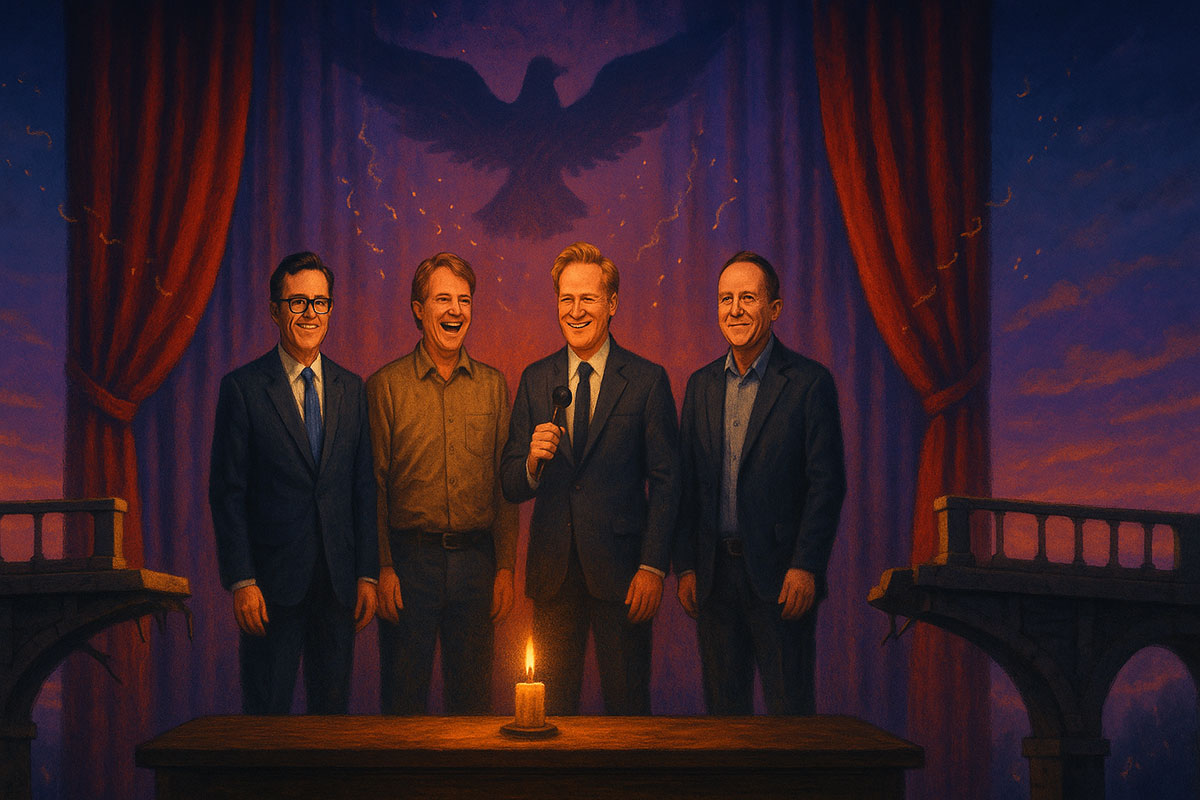
Conan O’Brien:
Good evening. I know what you're thinking—'Great, another ginger moderating world peace.' But hear me out.
For centuries, humans have tried to solve division through politics, war, religion, and interpretive dance. Yet here we are—still yelling across fences, unfriending cousins, and blaming millennials for everything from avocado shortages to the fall of democracy.
But what if there’s another way?
What if laughter—yes, that sudden, awkward snort in the middle of a funeral—was the secret ingredient to healing?
Tonight, I’ve gathered some of the sharpest minds and funniest souls from both sides of the political aisle. They’ve roasted presidents, bombed on stages, and turned pain into punchlines. Now, we’re giving them a harder challenge: to build bridges without burning each other down.
We’re asking five unsettling questions about wounds, silence, justice, ego, and the true meaning of unity—not to find perfect answers, but to rediscover something simpler: connection.
So whether you're red, blue, purple, or just tired—pull up a chair. Let's find out if comedy really can save us… or at least make the shouting funnier.”
(Note: This is an imaginary conversation, a creative exploration of an idea, and not a real speech or event.)

Topic 1: What If Your Enemy Had the Same Wounds?
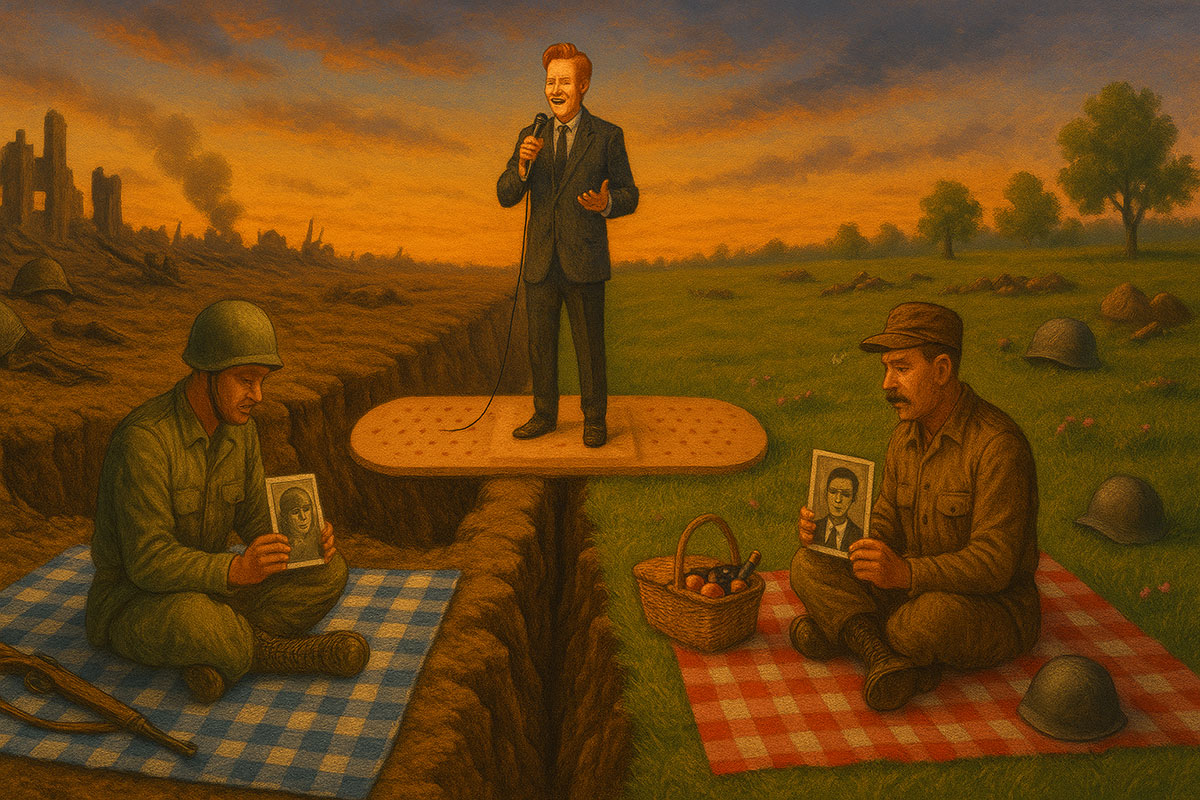
Conan O’Brien (Moderator):
“Tonight we dive into a question that stops laughter in its tracks: What if the person you hate most… was hurting in the same way you are? Let's start with this—have you ever had a moment when you realized your ‘enemy’ was actually suffering just like you?”
Question 1: Have you ever discovered common pain in someone you thought you'd never relate to?
Jon Stewart:
Yeah. After 9/11, I visited a mosque. I expected a wall of difference—but we both cried over the same lost skyline. We were both New Yorkers first. And you realize... grief doesn’t ask for ID.
Jeff Foxworthy:
One time I did a show at a VA hospital. Fella in a wheelchair, big MAGA hat—turns out he lost his leg saving a Muslim translator in Iraq. We cried over BBQ later. Pain doesn’t vote red or blue, it just hurts.
Stephen Colbert:
I once argued with a conservative Marine on a plane. Total clash. But when he told me about losing his brother to suicide, I shut up. I’d lost someone too. That silence was our truce.
Colin Quinn:
I did stand-up in Belfast once. Two guys in the front row—one Catholic, one Protestant. I joked, “You’re sitting next to your ex-enemy!” And one goes, “Yeah, now we just hate your jokes equally.” Shared misery is unity, I guess.
Conan O’Brien:
(Laughing) That’s the best Yelp review I’ve heard. “He healed our centuries-old blood feud with subpar punchlines.”
Question 2: Why do you think it’s so hard to see the pain behind the anger of ‘the other side’?
Stephen Colbert:
Because rage is easier than grief. Grief makes you feel small. Rage lets you feel righteous. But when you sit with someone’s pain... your shield melts. That’s terrifying.
Jeff Foxworthy:
We’re raised to look tough. Especially men. Especially southern men. But when a guy says, “My job’s gone, my pride’s gone,” that’s not politics—that’s soul talk.
Colin Quinn:
We stereotype pain. Like “your people don’t get to hurt.” But everyone's dealing with something. That’s why I say: everybody’s got a messed-up uncle and a broken furnace. Start there.
Jon Stewart:
Because pain is quiet. Outrage is loud. And we’ve built entire media empires on the volume of hate. But real unity? That’s found in the whisper of “Me too.”
Conan O’Brien:
So true. Our pain’s private, but our outrage gets broadcast in 4K. Maybe we should start broadcasting more silence.
Question 3: What would comedy look like if it started from shared wounds instead of tribal sides?
Colin Quinn:
It’d be messier—but braver. Less “I’m right,” more “Aren’t we all screwed up?” The punchline becomes the mirror. Not the weapon.
Jeff Foxworthy:
I’d start every joke with, “You know what broke my heart?” And go from there. That’s how trust is built: one truth at a time.
Jon Stewart:
Comedy would slow down. Less clapping, more gasping. It’s not about roasting others—it’s about roasting the lie that we’re nothing alike.
Stephen Colbert:
We’d stop asking “What’s funny?” and start asking “What’s human?” I think the laughs would still come—but they’d echo longer.
Conan O’Brien:
I love that. Echoing laughter. The kind that lingers—not because it’s loud, but because it’s real.
Final Beat:
Conan O’Brien:
“Turns out, the best comedy set we’ll ever do… might be at a hospital, a funeral, or a battlefield. Because when we laugh through pain, we remember: we all bleed. We all love. And sometimes—just sometimes—we all laugh together.”
Topic 2: Can Laughter Heal Where Words Fail?
Moderator:
- Conan O’Brien – Quick-witted, emotionally intelligent, master of reading the room.
Democratic-Leaning Comedians:
- Stephen Colbert – Satirist who turned grief into dialogue.
- Jon Stewart – Advocate for comedy that punches up and reaches across.
Republican-Leaning Comedians:
- Jeff Foxworthy – Rural voice who unites through self-deprecating, warm humor.
- Colin Quinn – Urban sage with cross-cultural observational takes.
Question 1: Have you ever witnessed laughter succeed where reason, facts, or even empathy failed?
Jeff Foxworthy:
Absolutely. I was once doing a show where folks were tense—real culture clash. I cracked a joke about both sides burning casseroles, and suddenly people who wouldn’t make eye contact were slapping knees. We don’t speak the same politics, but we sure do eat the same bad potluck.
Jon Stewart:
During The Daily Show era, we had guests who were ideologically opposed to me. They'd come armored. But a joke—especially a self-deprecating one—would drop their shoulders. Suddenly it wasn’t a war zone, it was a living room.
Stephen Colbert:
Comedy breaks the fourth wall of tribalism. I once mocked both sides during an election skit and people laughed because it was true. Laughter doesn’t ask permission. It goes straight to the bloodstream.
Colin Quinn:
When you bomb in front of two groups that hate each other—say, hipsters and Staten Island cops—you find the one thing both laugh at: how ridiculous they look to each other. That’s a win.
Conan O’Brien:
That’s why I never trust someone who can’t laugh at themselves. You’re either hiding a villain… or a TED Talk.
Question 2: Why does laughter disarm people so deeply—especially when conflict is intense?
Colin Quinn:
Because it’s involuntary. It sneaks past ideology. A good joke is like a Trojan horse—it gets inside the city before anyone knows what it’s carrying.
Stephen Colbert:
Laughter is humility in action. When we laugh, we admit we don’t have it all figured out. In a polarized world, that’s revolutionary.
Jeff Foxworthy:
It’s permission to relax. You could be holding generational trauma in your chest, but one joke makes your shoulders drop. That’s not just relief. That’s sacred.
Jon Stewart:
Because it reminds us we’re animals first—breathing, blinking, chuckling mammals. Politics is a mask. Laughter is our face.
Conan O’Brien:
So laughter isn’t just the best medicine—it’s a truth serum. Gets us honest without the side effects.
Question 3: Could comedy ever become the main language of peace negotiations? Or is it too risky?
Jon Stewart:
If you want real peace, you have to risk real discomfort. Comedy can surface buried rage, but it also reveals common pain. I'd put a comic at every summit—right between the translator and the espresso machine.
Jeff Foxworthy:
We already use humor at funerals, in war zones, at awkward family dinners. Why not peace talks? Just don’t let the comic roast the wrong ambassador.
Colin Quinn:
Comedy’s already been part of diplomacy—look at entertainers doing USO tours or going to North Korea. You send in the comic before the army. Sometimes that’s enough.
Stephen Colbert:
If comedy were at the table, the first rule should be: mock yourself first. If leaders could laugh at their own absurdity, borders might shift faster than armies ever could.
Conan O’Brien:
Imagine this: a summit opens with a 5-minute roast. If the diplomats can survive that, they’re ready for peace. If not? We cancel their Netflix specials.
Final Beat
Conan O’Brien:
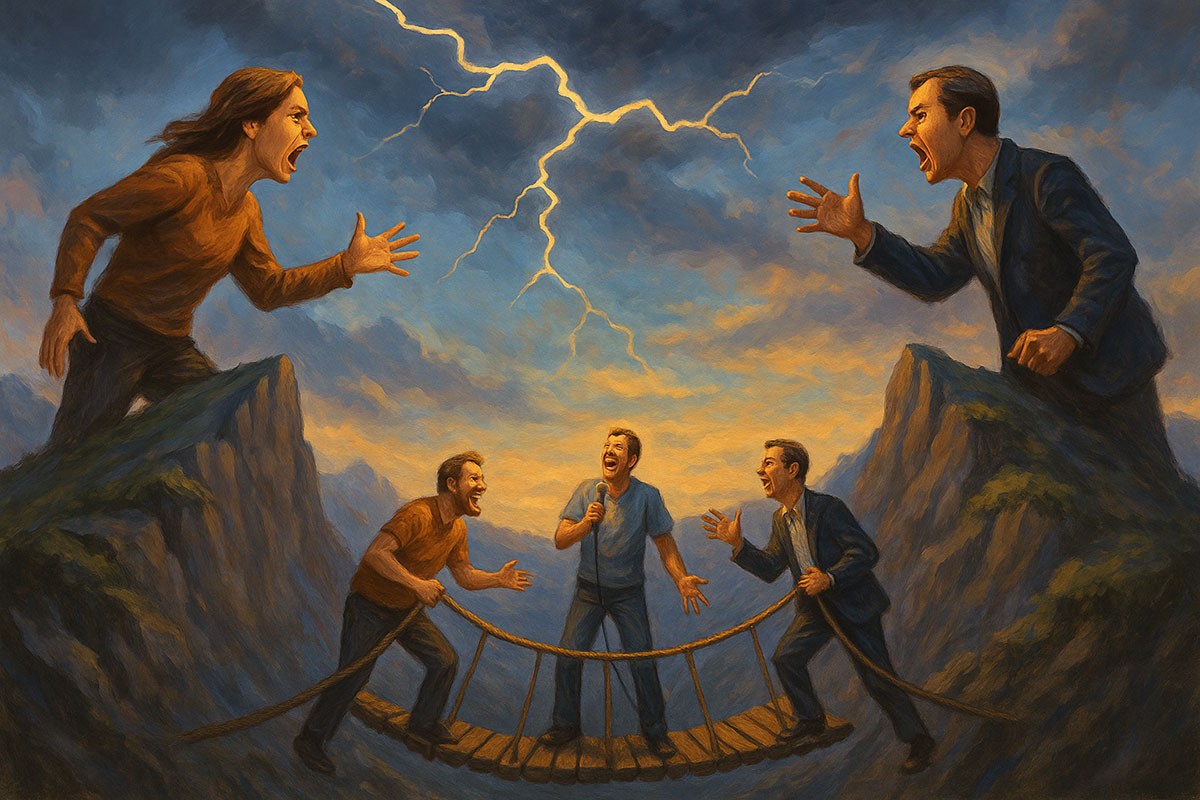
“Some people build bridges with blueprints. Comics build them with punchlines. But if both get you across the river, who’s to say which is more noble? In a world tangled in words, maybe laughter is the language we forgot we all spoke.”
Topic 3: Is Peace Possible Without Justice?
Moderator:
- Conan O’Brien – Skilful in navigating emotional nuance with humor and grace.
Democratic-Leaning Comedians:
- Stephen Colbert – Known for moral clarity and sharp satire.
- Jon Stewart – Fierce advocate for truth, yet open to grace and bridge-building.
Republican-Leaning Comedians:
- Jeff Foxworthy – Grounded, empathetic humorist who relates across class and culture.
- Colin Quinn – Tough love comedian who points out the hypocrisies on all sides.
Question 1: Can you think of a time when peace felt too quick—when justice hadn’t had its turn yet?
Stephen Colbert:
Absolutely. I think about post-apartheid South Africa. The Truth and Reconciliation Commission was powerful, but some wounds were still raw. Forgiveness without accountability can feel like gaslighting.
Jeff Foxworthy:
I saw a man hug the drunk driver who killed his daughter. Everyone called it holy. But part of me wondered—did he have to carry all the grace while the other guy walked free? Sometimes peace feels heavy for the wrong person.
Jon Stewart:
Every time Congress delays care for 9/11 responders, then holds hands at the memorial… that’s peace without justice. It’s not healing—it’s PR.
Colin Quinn:
In New York, people say, “Let’s move on” before they even say, “I’m sorry.” It’s like tripping someone, then blaming gravity. Peace without justice is like dessert without dinner—sweet, but hollow.
Conan O’Brien:
So you’re saying the world needs less premature kumbaya and more awkward truth-telling potlucks.
Question 2: Is there a way to seek peace while justice is still unfolding—not after it’s done?
Jon Stewart:
Yes. You name the harm. You say, “We’re not okay yet—but I’m willing to stay at the table.” That’s real peace. It’s unfinished but alive.
Colin Quinn:
You can joke together even before you forgive each other. I’ve seen two feuding cousins laugh about shared trauma. Laughter doesn’t fix it—but it lets you sit side by side long enough for justice to catch up.
Jeff Foxworthy:
Peace can begin with curiosity. “Tell me your side.” Not to excuse it—but to understand what needs to change. That opens the barn door before you fix the fence.
Stephen Colbert:
Peace can be the courage to listen before demanding an apology. But justice? That’s the courage to demand it afterward. They don’t compete—they dance.
Conan O’Brien:
You guys are describing peace as jazz, not a court ruling. Unscripted, imperfect, but... real.
Question 3: What role can comedy play in holding power accountable—without dividing people further?
Stephen Colbert:
Comedy’s job is to point at the emperor and say, “Nice boxers.” But you also have to care about the naked truth—not just the laughs.
Colin Quinn:
A good comic makes fun of everyone—but a great comic makes everyone look at themselves. That’s accountability with a side of fries.
Jeff Foxworthy:
I don’t go for blood. I go for truth that feels like your grandma said it—tough, but from love. That way, folks leave with their dignity and their defenses down.
Jon Stewart:
We punch up. That’s the golden rule. Not because we hate power, but because we remember what it’s supposed to serve: people. Humor humbles tyrants faster than protests sometimes do.
Conan O’Brien:
So comedy’s not just a mirror—it’s a court jester with a conscience. And if we’re lucky, it’s also the friend who buys you a drink after your sentencing.
Final Beat
Conan O’Brien:
"Maybe justice isn’t the opposite of peace—it’s the soil peace grows from. And if laughter can loosen the grip of fear, maybe it can make room for both. In the end, the funniest truth is that none of us are innocent—and still, somehow, we can belong to each other.”
Topic 4: What’s the Cost of Always Being Right?
Moderator:
- Conan O’Brien – Skilled at diffusing ego with wit and inviting self-reflection through play.
Democratic-Leaning Comedians:
- Stephen Colbert – Known for satirizing certainty itself, especially in his Colbert Report persona.
- Jon Stewart – Always probing assumptions on both sides, asking “What are we missing?”
Republican-Leaning Comedians:
- Jeff Foxworthy – A master of folksy humility, never afraid to laugh at himself.
- Colin Quinn – Expert at exposing how self-righteousness exists on every corner.
Question 1: Have you ever caught yourself needing to be right more than you needed to be kind?
Jon Stewart:
Oh, all the time. I once kept hammering a point on-air about the Iraq War—and later realized I bulldozed over a guest who’d lost a family member. I was right, maybe. But I wasn’t human. And what’s the win in that?
Jeff Foxworthy:
I argued with a cousin about religion once. Got heated. Then his kid walked in the room and said, “Why are y’all yelling?” That’s when it hit me—I’d rather win a heart than a point.
Stephen Colbert:
My old “truthiness” character was a satire of needing to be right. But even behind the scenes, I’d cling to cleverness instead of compassion. Sometimes the smartest thing to say is, “Maybe I don’t know.”
Colin Quinn:
If you’ve ever been on Twitter, the whole thing’s a cathedral for people dying to be right. But real life? You realize you can either be right... or invited to Thanksgiving.
Conan O’Brien:
I used to think the fastest way to connect was a good punchline. Turns out, it's admitting you blew the setup entirely.
Question 2: Why do people cling so tightly to being right—especially when it divides us?
Colin Quinn:
Because being wrong feels like death in public. Especially in front of people you hate. So instead of risking a wound, we swing a sword.
Stephen Colbert:
We confuse certainty with safety. If I know I’m right, I don’t have to feel scared, vulnerable, or ashamed. But ironically, that need makes us fragile.
Jeff Foxworthy:
Where I’m from, people would rather fight than say, “I didn’t think of it that way.” But I’ve learned you don’t lose your values by listening—you just add volume to your decency.
Jon Stewart:
Politics became identity. So “I disagree” sounds like “I don’t exist.” But that’s where comedy helps—it makes space between you and your opinion. That’s freedom.
Conan O’Brien:
So we’re not dying for the truth—we’re dying to not feel foolish. And irony? The most lovable people I know are gloriously wrong half the time.
Question 3: Can comedy help us give up the need to be right—and find connection instead?
Stephen Colbert:
Yes. The best laugh is a shared one—especially at ourselves. That’s where walls come down. You’re not surrendering truth, you’re inviting growth.
Jon Stewart:
Comedy gives you permission to be absurd. If we can laugh about how ridiculous we all are, we don’t have to guard our pride like Fort Knox.
Jeff Foxworthy:
When I say, “You might be a redneck... if you’ve ever mowed your lawn and found a car,” I’m not just teasing—I'm including myself. That’s the trick: punchlines that hug.
Colin Quinn:
Comedy is the great equalizer. Nobody’s logic is airtight under a spotlight. If we can all agree we’re full of it—that’s real unity.
Conan O’Brien:
Maybe being right is overrated. But being real? That’s where the laughter lives. And maybe… where peace starts, too.
Final Beat
Conan O’Brien:
“Being right feels good. But being loved feels better. And when comedy invites us to admit we’re ridiculous, broken, and still trying—maybe that’s the first honest thing we’ve said all day. So here’s to getting it wrong, and laughing our way toward something better.”
Topic 5: What If Unity Isn’t Agreement, But Relationship?
Moderator:
- Conan O’Brien – Brilliant at weaving humor into human connection, even through absurdity.
Democratic-Leaning Comedians:
- Stephen Colbert – Thinks deeply about moral difference and spiritual community.
- Jon Stewart – Frequently elevates compassion over consensus in his comedy.
Republican-Leaning Comedians:
- Jeff Foxworthy – Brings warmth to cultural differences through personal stories.
- Colin Quinn – Constantly analyzes tribalism and the crumbling of common ground.
Question 1: Can two people stay close—even love each other—without ever agreeing on core beliefs?
Jeff Foxworthy:
I’ve been married 30 years. My wife and I still don’t agree on barbecue sauce. But here we are. You don’t need identical views—you need shared values: respect, patience, a good laugh when she’s right again.
Jon Stewart:
I had a neighbor growing up—hardcore Reagan guy. I was already reading Chomsky. We argued weekly. But when my dad passed, he showed up with a pie and a hug. That’s the stuff that matters.
Stephen Colbert:
I’ve prayed with atheists and laughed with conservatives. I don’t need you to think like me—I just need to know you see me as a soul, not a slogan.
Colin Quinn:
I know a guy who’s pro-union and anti-vax, vegan but owns five guns. America’s a casserole. If you’re looking for ideological purity, you’ll end up eating alone.
Conan O’Brien:
Beautiful. So the key to unity might be… less agreement, more pie and casseroles.
Question 2: Why do we mistake unity for sameness—and what’s the danger in doing that?
Colin Quinn:
Because sameness feels safer. You don’t get challenged, and you don’t risk being wrong. But it’s also boring. Real unity is jazz, not unison.
Stephen Colbert:
Sameness is a counterfeit peace. It hides the hard, beautiful work of real relationship—of wrestling, forgiving, staying.
Jeff Foxworthy:
When everyone agrees, you lose the spice. Ever had food with no seasoning? That’s what happens when you flatten a room into one opinion.
Jon Stewart:
Sameness cancels curiosity. If I know what you’ll say before you say it, why bother talking? Real unity says, “Tell me who you are—even if I flinch a little.”
Conan O’Brien:
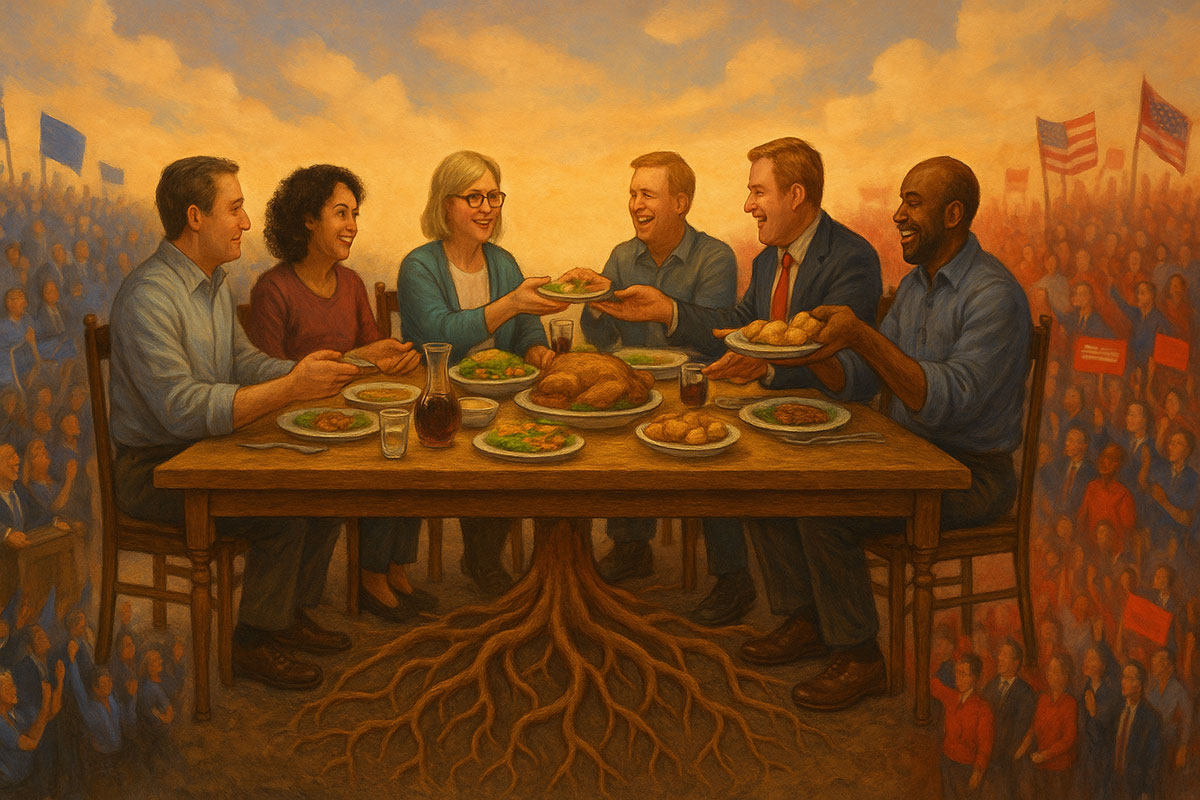
Unity isn’t matching outfits. It’s surviving Thanksgiving dinner without flipping the table.
Question 3: What does comedy teach us about building relationships that can hold disagreement?
Stephen Colbert:
It teaches timing. You don’t slam a joke in the middle of someone’s heartbreak. Same with disagreement. Comedy trains your heart to wait, to feel the moment.
Jeff Foxworthy:
It shows that every “other side” has a face, a family, and a funny bone. I don’t know a punchline that ever worked without some kind of connection first.
Colin Quinn:
Comedy is practice in losing—every night you bomb is a lesson in humility. That builds empathy. You stop judging people for being wrong and start recognizing yourself in them.
Jon Stewart:
It’s permission to be human. When someone laughs at my joke, even if they disagree with it, we’ve built a tiny bridge. That’s the seed of unity—not shared belief, but shared breath.
Conan O’Brien:
So comedy isn’t just relief—it’s rehearsal. For relationship. For democracy. For staying in the room when the laugh fades and the work begins.
Final Beat
Conan O’Brien:
“Unity isn’t about getting everyone to sing the same note. It’s learning to stay in the band even when the chorus gets weird. And comedy? That’s the music between the notes. The grin that says, ‘I still see you. Let’s keep playing.’”
Final Thoughts by Conan O’Brien
“We’ve laughed. We’ve winced. We’ve watched liberals and conservatives swap casseroles and punchlines. And somehow, nobody stormed out. That’s progress.
What we learned tonight isn’t new—it’s ancient: That people don’t need to agree to belong. That pain shared becomes less scary. And that laughter isn’t the opposite of seriousness—it’s the doorway into it.
Look, unity isn’t a kumbaya moment. It’s a long dinner table where nobody quite agrees on the mashed potatoes. It’s messy, awkward, and totally worth it.
So let’s keep the jokes going—not to escape the world’s problems, but to get brave enough to face them together.
Because the truth is, if we can laugh in the same room… maybe we’re already halfway to peace.
Thanks for sitting with us. And remember: it’s okay to be wrong—as long as you’re funny about it.”
Short Bios:
Leave a Reply