

|
Getting your Trinity Audio player ready...
|
Introduction — Jonathan Cahn
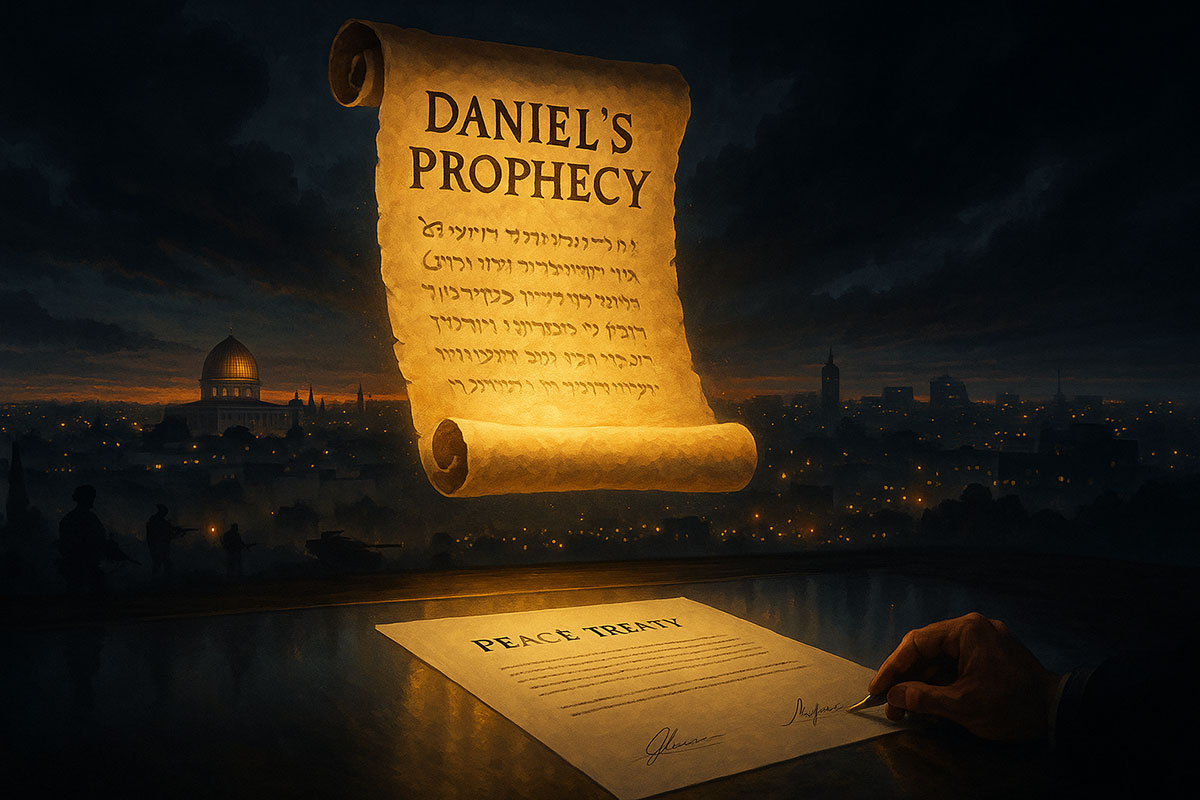
There are moments in history when the words of the ancient prophets seem to rise from the page and step into our headlines. Daniel spoke of a covenant with many. Ezekiel described a secure Israel, vulnerable to sudden invasion. The Apostle Paul warned of a time when leaders would proclaim “peace and safety,” only for destruction to come suddenly. For centuries these passages were studied as distant possibilities. But in October 2025, Jared Kushner, a man without office yet wielding great influence, brokered a peace plan involving Israel, Hamas, and seven nations. The world celebrated — but students of prophecy could not help but tremble.
What does this mean? Is this treaty a milestone on the road to redemption, or a false peace that sets the stage for tribulation? Is Kushner a peacemaker used by God, or an unwitting instrument of prophecy’s darker side? We stand at a threshold where geopolitics and scripture collide. And in such times, we must be watchful, discerning, and unafraid to ask the hard questions. This series gathers voices from across faith, philosophy, and politics to wrestle with one profound mystery: has prophecy found its echo in our age?
(Note: This is an imaginary conversation, a creative exploration of an idea, and not a real speech or event)

Topic 1: The Covenant With Many — Divine Fulfillment or Human Dealmaking?
Moderator: Krista Tippett
Krista Tippett:
When the prophet Daniel wrote of “a covenant with many,” he gave us one of the most debated lines in scripture. Jared Kushner’s 2025 peace plan — uniting Israel, Hamas, and seven nations — has revived that debate with startling intensity. The question before us is whether this agreement is merely another human attempt at compromise or if it carries the weight of divine prophecy. Let’s explore this together.
So let me start us off. When you consider Jared Kushner’s peace deal, do you see it as aligning with Daniel’s prophecy of “confirming a covenant with many,” or is it simply a political arrangement without prophetic significance?
Jonathan Cahn:
Daniel’s words are uncanny here. A covenant involving Israel and many nations is precisely what we’ve seen. Kushner didn’t create it from nothing; he “confirmed” it, which is the very language Daniel uses. To dismiss this as coincidence seems almost willful blindness.
N.T. Wright:
I urge caution. Prophecy isn’t a code to be cracked but a pattern of God’s activity revealed in history. While parallels exist, equating a modern treaty with Daniel’s covenant risks distorting scripture into political fortune-telling.
Reza Aslan:
From an Islamic lens, treaties and covenants are always part of human struggle, not divine decree. To cast Kushner as a prophetic figure may reflect our anxieties more than heaven’s handwriting.
Bret Stephens:
I see a skilled negotiator who pulled off what seasoned diplomats could not. But geopolitics has its cycles — this is one more. Calling it Daniel’s covenant risks giving theology to what is essentially pragmatism.
Malcolm Gladwell:
Patterns intrigue me. If prophecy acts as a kind of archetype, then what Kushner achieved fits the mold: a fragile human solution elevated into cosmic narrative. Whether that’s true or projection — that’s the mystery.
Krista Tippett:
If this covenant is only a human deal, what dangers lie in mistaking it for divine prophecy?
Anne Graham Lotz:
The danger is deception. Scripture warns that false peace can lull people into complacency. If we anoint every treaty as divine, we risk missing the real fulfillment when it comes.
Cornel West:
The peril is idolatry. To elevate a political broker to prophetic heights is to worship power over justice. Any peace that ignores the cries of the oppressed is a counterfeit peace.
Joel Rosenberg:
Israelis long for peace. If they see this agreement as God’s covenant, they may let their guard down militarily — and that could set the stage for catastrophe.
Yuval Noah Harari:
Prophecy becomes dangerous when it blinds us to human responsibility. If people believe history is scripted, they may surrender agency, waiting for fate rather than shaping the future.
Elie Honig:
In law, perception is power. If leaders see Kushner as fulfilling prophecy, that perception itself shapes behavior, alliances, even wars. Mistaking symbolism for fact can be geopolitically explosive.
Krista Tippett:
Finally, what does it mean for us — spiritually and morally — to interpret modern politics through the lens of prophecy? Does it deepen faith or distort it?
Cornel West:
It should deepen our moral witness. Prophecy isn’t fortune-telling — it’s truth-telling. It demands we see where justice is betrayed and where love is absent, even in peace deals.
N.T. Wright:
Faith matures when we resist sensationalism and instead let prophecy reorient us toward God’s sovereignty. It’s less about who signs treaties and more about trusting God’s unfolding story.
Jonathan Cahn:
And yet, prophecy is given for discernment. If we see shadows of Daniel in today’s headlines, we are called not to panic but to prepare, watching the times with sober eyes.
Malcolm Gladwell:
Interpreting politics through prophecy is like seeing history as a story with recurring characters. It reveals hidden structure — but it can also tempt us to miscast the actors.
Reza Aslan:
It risks distortion when we tether eternal truths to temporary politics. Prophecy speaks to the soul’s condition, not a single man’s negotiation table.
Krista Tippett:
We’ve heard both awe and caution tonight. Some see Kushner’s covenant as echoing Daniel’s vision; others call it a human bargain, perilous if mistaken for divine. Yet beneath it all lies a shared recognition: prophecy is less about prediction than about discernment — watching, questioning, and remembering who holds the true covenant with humanity.
Topic 2: Peace and Safety — A False Security?
Moderator: Krista Tippett
Krista Tippett:
The Apostle Paul once wrote in 1 Thessalonians 5:3: “When they say, ‘Peace and safety,’ then sudden destruction will come upon them.” It’s a chilling reminder that not all peace is the peace of God. With Kushner’s plan promising security for Israel and its neighbors, we have to ask: does this covenant bring real peace, or is it a false sense of safety that could precede catastrophe?
So let’s begin. What kind of peace do you believe this agreement represents — God’s true shalom, or a fragile human illusion?
Joel Rosenberg:
This is human peace. It disarms Israel’s immediate threats, yes, but it doesn’t deal with the spiritual roots of conflict. True peace comes from God’s covenant, not man’s. When nations lean on human treaties, they build on sand.
Anne Graham Lotz:
Amen. God’s shalom brings reconciliation to hearts. This deal does not. It is political, temporary, and absent of God. That makes it dangerous — because when people mistake it for divine peace, they will be caught unprepared when destruction comes suddenly.
Yuval Noah Harari:
I’d call it a peace of necessity. Leaders are tired of war, economies need stability, populations demand relief. But to me, all peace is fragile because it’s human-made. History shows us every “forever peace” collapses. That doesn’t make it evil, but it makes it mortal.
Cornel West:
The measure of peace is justice. If justice is denied to Palestinians, if dignity is denied to Israelis, then this so-called peace is hollow. It’s not shalom, it’s a ceasefire. A counterfeit calm.
Elie Honig:
I see a legal framework that lowers tensions — but the law is not the same as love. It can reduce violence, but it can’t create trust. Calling it divine is a category mistake.
Krista Tippett:
If Israel feels safe under this peace, what dangers might arise from that sense of security?
Anne Graham Lotz:
They may lower their defenses. Prophecy says Israel will feel secure — unwalled, unguarded — and that is when sudden destruction comes. I fear this treaty could be the very setup Ezekiel described.
Joel Rosenberg:
Exactly. Israel’s strength has always been its vigilance. If they trust too much in international promises, they may neglect readiness. That is when enemies strike.
Yuval Noah Harari:
False security is more dangerous than insecurity. When you’re insecure, you prepare. When you feel safe, you stop. History is full of empires destroyed the moment they thought themselves invincible.
Cornel West:
And spiritually, false peace lulls people to sleep. Prophecy becomes commodified, justice forgotten. That is when nations collapse morally and militarily.
Elie Honig:
From a geopolitical angle, it’s simple: when Israel appears relaxed, opportunistic powers — Russia, Iran, Turkey — may see their chance. False peace is bait.
Krista Tippett:
Finally, how should ordinary people — people of faith, people of conscience — respond when leaders declare “peace and safety”?
Cornel West:
We must respond with vigilance and compassion. Vigilance against the powers that deceive. Compassion for those who suffer while leaders negotiate. Prophecy calls us not to sleep, but to struggle for truth.
Anne Graham Lotz:
We must watch and pray. Not panic, not despair — but pray with urgency and live with readiness, because scripture warns us of days like these.
Joel Rosenberg:
I would add: preparation matters. Spiritually, we must be rooted in God’s Word. Practically, we must be wise — supporting Israel but never confusing treaties with God’s eternal covenant.
Yuval Noah Harari:
For secular people, the lesson is also timeless: never surrender your agency to leaders who promise safety. Peace is precious, but vigilance keeps it alive.
Elie Honig:
I’d say: keep your eyes open. Politicians promise safety, but history reminds us — the world is never as secure as they say. Healthy skepticism is a survival skill.
Krista Tippett:
We’ve heard a chorus of caution tonight. Whether from prophecy, history, or ethics, the warning is the same: beware of false peace. It may soothe for a season, but without justice, vigilance, and God’s presence, it cannot last.
Topic 3: The Spirit of Antichrist — Foreshadowing or Fulfillment?

Moderator: Krista Tippett
Krista Tippett:
Scripture tells us that there will be an Antichrist, but it also speaks of the “spirit of Antichrist” already at work in the world. Some believe Jared Kushner’s actions align with parts of the biblical profile — confirming a covenant with many, rising from the shadows, tied to Israel. Others caution against rushing to judgment. The question is: are we seeing foreshadowing, or fulfillment?
So let me begin here. Do you believe Jared Kushner is simply a type of Antichrist — a shadow of the final figure — or could he be the fulfillment itself?
Jonathan Cahn:
There is no denying he fits pieces of the prophetic puzzle. A covenant with many. A quiet rise without office. An emphasis on peace and prosperity. These are not trivial parallels. Whether he is the final Antichrist or a shadow, the spirit of Antichrist is clearly at work through him.
N.T. Wright:
I would emphasize restraint. Throughout history many figures have seemed to fit the role — from Roman emperors to modern dictators. They were foreshadowings, not fulfillment. The danger is in mistaking the shadow for the substance. Prophecy teaches us to watch, not to proclaim prematurely.
Anne Graham Lotz:
I believe the spirit of Antichrist is evident — the push for peace without God, the exaltation of human power. But I do not see him yet as the Antichrist. He may be preparing the stage, but the final figure has not stepped forward.
Cornel West:
When I hear “Antichrist,” I hear empire, hubris, domination. Whether Kushner is the one or simply another in the long line of power-brokers, he embodies that spirit when peace is built without justice. That’s Antichrist in practice, even if not in person.
Reza Aslan:
From an interfaith lens, Antichrist language is symbolic — a way of describing the corruption of power and the denial of God’s truth. Kushner fits that pattern partially, but prophecy often paints archetypes, not biographies.
Krista Tippett:
If Kushner is only a shadow, what role do such “types” play in the unfolding of prophecy?
Jonathan Cahn:
They are warnings. God gives us previews so we are not blind when the final act arrives. Antiochus Epiphanes was a type. Nero was a type. They prepare us to recognize the antitype — the ultimate fulfillment.
N.T. Wright:
Yes, and they remind us that Antichrist is not just one figure at the end, but a recurring force opposing God in every age. These shadows keep us awake to that reality.
Anne Graham Lotz:
It’s like a dress rehearsal. The stage is being set, the characters are practicing, the world is being conditioned. Types of Antichrist teach us to live watchfully.
Cornel West:
And types reveal the timeless struggle — truth against lies, love against domination. Whether we call him Antichrist or not, the pattern is what matters. We see it, we resist it.
Reza Aslan:
I would add: types remind us prophecy is less about prediction and more about recognition. They teach us to see the forces of deception whenever they arise, not only at the end of time.
Krista Tippett:
Then what should our response be, spiritually and morally, if we believe the spirit of Antichrist is present in our age — whether through Kushner or others?
Cornel West:
The response is love and justice. The Antichrist spirit feeds on fear and domination. We defeat it not with speculation but with courage and compassion.
Anne Graham Lotz:
Our call is to readiness. To cling to Christ, to walk in holiness, and to prepare our hearts so that when the real Antichrist comes, we will not be deceived.
Jonathan Cahn:
And to proclaim truth. Silence in the face of deception is complicity. If the shadow is here, we must warn. We must call people back to God.
N.T. Wright:
Discernment is key. We must resist the temptation of sensationalism and instead anchor ourselves in God’s story — His sovereignty, His faithfulness. That is how we withstand deception.
Reza Aslan:
I’d say: remain human. The Antichrist spirit dehumanizes. Our task is to live fully human lives of compassion, meaning, and responsibility, regardless of whether prophecy is unfolding.
Krista Tippett:
Tonight we’ve heard the tension between shadow and substance. Perhaps Kushner is a foreshadowing, perhaps only a type, but the spirit of Antichrist is recognized in patterns of power without God, peace without justice, and deception without truth. Our response, then, is vigilance — not fear, but faith, love, and discernment.
Topic 4: Geopolitics Meets Prophecy — Russia, Iran, Turkey, and the Ezekiel War
Moderator: Krista Tippett
Krista Tippett:
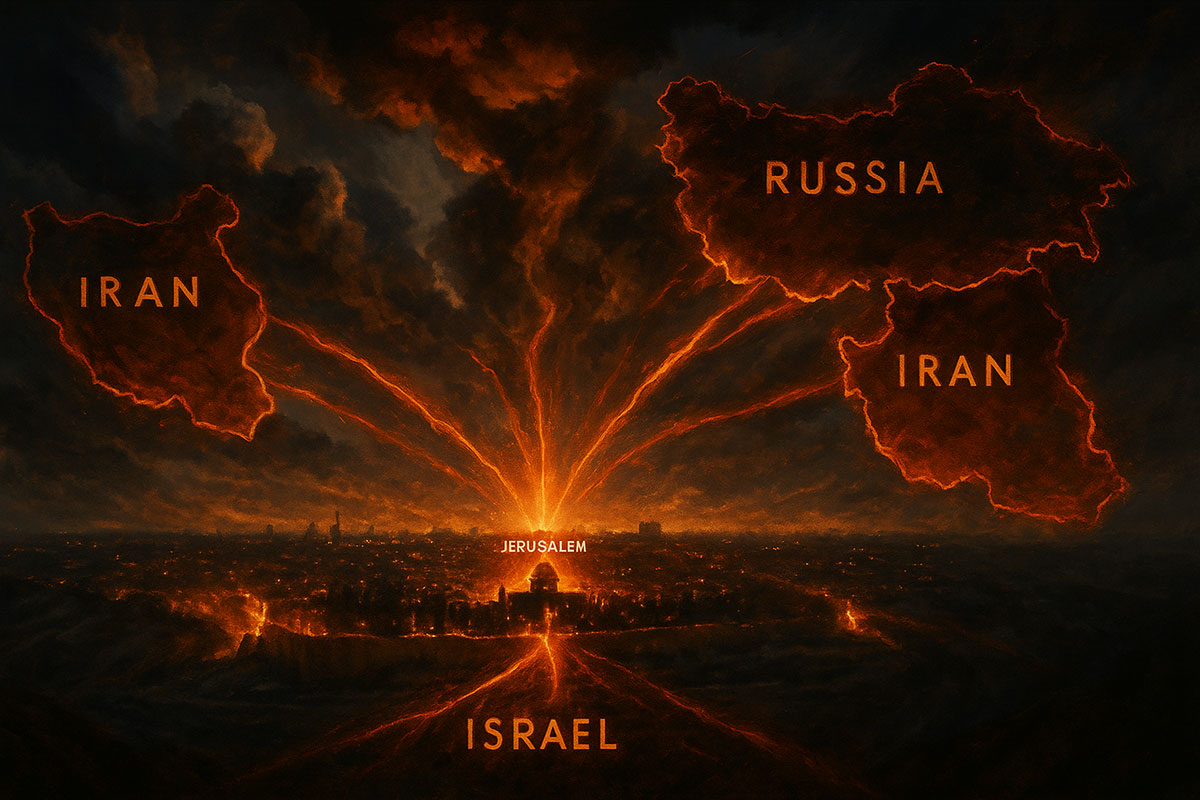
The book of Ezekiel describes a coalition — Gog, Magog, Persia, Togarmah — rising against Israel when the nation feels secure. Scholars connect these names with modern powers: Russia, Iran, Turkey, and others. Today we see those alliances in Syria and beyond. So we must ask: are we watching prophecy unfold in our headlines?
Let me begin here. Do you see the current partnerships between Russia, Iran, and Turkey as coincidental politics, or as a prophetic alignment toward Ezekiel’s vision?
Joel Rosenberg:
It’s remarkable — these very nations, named in Ezekiel, are now aligned militarily for the first time in history. That coalition didn’t exist in the Cold War, not even twenty years ago. Today it does. That alone should give us pause.
Bret Stephens:
From a political standpoint, alliances shift constantly. Russia, Iran, and Turkey have overlapping interests in Syria and energy markets — that’s geopolitics, not prophecy. Yet the overlap with scripture is… intriguing.
Yuval Noah Harari:
Patterns exist, yes, but they’re not fate. Russia partners with Iran out of mutual need; Turkey acts from pragmatism. Human self-interest drives these moves, not divine choreography.
Elie Honig:
Still, the legal structures and military treaties being built are unprecedented. They create the framework for exactly the kind of large-scale invasion Ezekiel described. That’s a fact, whether or not you call it prophecy.
Malcolm Gladwell:
I’m fascinated by the uncanny fit. Prophecy can act like a lens that makes us notice alignments we’d otherwise dismiss. Whether or not it’s divine, the resonance between text and current events is undeniable.
Krista Tippett:
If these alliances do mirror Ezekiel’s prophecy, what might motivate them to turn against Israel?
Joel Rosenberg:
Ezekiel says plainly: to take a spoil. Israel now has massive natural gas reserves, leading-edge technology, and strategic land. Those are irresistible temptations for nations in economic or political crisis.
Bret Stephens:
Yes, the Leviathan gas fields are a game-changer. Russia doesn’t want Israel becoming a competitor in Europe’s energy market. That alone could trigger confrontation.
Yuval Noah Harari:
But motivation also lies in perception. If Israel feels secure — “unwalled villages,” as Ezekiel put it — adversaries may believe it’s vulnerable. The illusion of weakness can be as dangerous as weakness itself.
Elie Honig:
And don’t forget legitimacy. An attack framed as resistance against Israel could rally parts of the Muslim world, giving political cover to Iran or Turkey. Motivation is always a blend of economics, politics, and ideology.
Malcolm Gladwell:
Prophecy seems to anticipate precisely that blend: resources, opportunity, and hubris. These aren’t abstract forces — they’re recurring patterns. That’s what makes the resonance so haunting.
Krista Tippett:
Finally, what should we learn — spiritually and morally — when geopolitics and prophecy seem to overlap so closely?
Joel Rosenberg:
That God’s Word is alive. It speaks into our times with precision. These alignments remind us that history is not random. God’s hand is guiding the story.
Bret Stephens:
For me, it’s a reminder of humility. We can’t read the future with certainty. But we can recognize that scripture continues to provoke, challenge, and caution us — even in the halls of power.
Yuval Noah Harari:
I’d say: be cautious. Seeing prophecy in geopolitics can blind us. It can make war seem inevitable. That’s dangerous. Better to use prophecy as metaphor than as blueprint.
Elie Honig:
Still, prophecy can act as a warning — even for those who don’t believe. It tells us that unchecked alliances and false security can collapse quickly. That lesson alone is worth heeding.
Malcolm Gladwell:
Prophecy reminds us that the patterns of history are never just politics. They are stories with moral weight. The overlap doesn’t have to prove divinity to make us think more deeply about where human ambition leads.
Krista Tippett:
We’ve heard tonight the pull between skepticism and recognition. Some see Ezekiel’s coalition forming before our eyes; others call it coincidence. Yet both sides agree: nations rise, alliances shift, and when peace seems secure, that is often when the ground trembles most.
Topic 5: Faith, Fear, and Discernment in the End Times

Moderator: Krista Tippett
Krista Tippett:
We’ve journeyed through covenant, peace, the spirit of Antichrist, and the alliances of Ezekiel’s war. But prophecy is never just about geopolitics — it is about how we live. When fear rises and voices claim fulfillment, how do we stay grounded? Tonight our focus is faith, fear, and discernment in the end times.
Let’s begin with this. When people see events like Kushner’s peace plan and the shifting alliances, many feel fear. Others feel faith is strengthened. How should we respond to these times?
Anne Graham Lotz:
We must resist fear with trust. Jesus warned us of wars and rumors of wars but told us not to be troubled. These events confirm His words, and that should deepen our faith. Fear paralyzes, but faith prepares.
N.T. Wright:
Fear is a poor guide. The Christian vocation is not panic, but patient witness. Prophecy grounds us in God’s sovereignty. Whatever the times hold, He holds us. That is the essence of discernment.
Cornel West:
I echo that. Faith means courage in the face of catastrophe. The Antichrist spirit thrives on fear. Our calling is love, which casts out fear. Discernment is learning to resist both despair and triumphalism.
Yuval Noah Harari:
From a secular perspective, fear often drives poor decisions. When people surrender to apocalyptic thinking, they hand over freedom to strongmen. Discernment means remembering we still have agency, even in turbulent times.
Jonathan Cahn:
But we cannot be blind. Prophecy is a warning system. To see these signs and shrug is negligence. Faith does not dismiss the warnings — it takes them seriously while standing firm in God.
Krista Tippett:
If the spirit of deception is increasing, as many of you believe, what practical ways can people guard themselves from being led astray?
Anne Graham Lotz:
Stay rooted in Scripture. The Word of God is the lamp that exposes deception. Without it, people are vulnerable to every false promise.
Cornel West:
Community is vital. Lone believers can be deceived, but communities of love and accountability discern truth together. Prophecy isn’t just for individuals — it’s for the people of God.
Jonathan Cahn:
Prayer and repentance are shields. The closer we are to God, the harder it is for deception to take root. The Antichrist spirit cannot withstand a praying, awakened church.
Yuval Noah Harari:
Critical thinking also matters. Ask: who benefits from this narrative? Who gains power or wealth by convincing me this is destiny? Discernment is as much rational as spiritual.
N.T. Wright:
And remember the center: Jesus Christ. Prophecy is not about identifying villains as much as recognizing the Savior. If we keep Him central, deception loses its grip.
Krista Tippett:
Finally, let me ask each of you this: What word of hope or warning would you give to those who see signs of the end times in today’s headlines?
Jonathan Cahn:
Watch. The Lord told us to discern the times. These signs are not coincidence. They are calls to readiness, to turn to Him before it is too late.
Anne Graham Lotz:
Do not be afraid. The same Jesus who promised these things also promised His return. Our hope is not in treaties or nations, but in the coming King.
N.T. Wright:
Hold fast to faith, hope, and love. Prophecy is not to scare us but to remind us that God’s story is still unfolding, and His future is secure.
Cornel West:
Love your neighbor. In the end, that is the truest resistance to Antichrist, the most authentic sign of God’s kingdom breaking in.
Yuval Noah Harari:
And remember: history is not destiny. Whether or not prophecy is being fulfilled, human choices still matter. Choose wisely.
Krista Tippett:
We end where prophecy always points us — not to fear, but to faith, not to despair, but to discernment. Whether Kushner’s covenant proves a shadow or the substance, the call remains the same: to live awake, with courage, grounded in love, and watching for the One who holds history in His hands.
Final Thoughts by N.T. Wright
Prophecy is not a puzzle to decode but a call to discernment. Too often we have seen figures labeled the Antichrist, only for history to prove otherwise. Yet too often as well, the church has closed its eyes to the very patterns scripture warns us to recognize. Kushner’s covenant, and the fragile peace it represents, may or may not be the moment Daniel foresaw. But it has reminded us of something vital: the powers of this world can never give us the peace of God. They may promise safety, but true shalom comes only from reconciliation with the Creator through Christ.
So how then shall we live in days like these? Not with fear, nor with apocalyptic obsession, but with faith, vigilance, and love. The role of prophecy is to sharpen our vision of God’s kingdom — not to distract us with speculation, but to anchor us in hope. Whether Kushner’s peace proves temporary or prophetic, the greater truth remains: history is in God’s hands. And that is the covenant that can never be broken.
Short Bios:
Jonathan Cahn
A Messianic Jewish rabbi and bestselling author, known for connecting modern events with biblical prophecy in works like The Harbinger and The Oracle.
N.T. Wright
One of the world’s leading New Testament scholars, former Bishop of Durham, and prolific author on theology, history, and the early church.
Anne Graham Lotz
Evangelical Christian speaker, daughter of Billy Graham, and author of numerous books on prayer, prophecy, and the end times.
Cornel West
Philosopher, political activist, and theologian whose work bridges faith, justice, and social critique, with a focus on love and truth in public life.
Joel Rosenberg
Political analyst and novelist specializing in Israel, the Middle East, and prophecy, with bestsellers that blend current events with biblical themes.
Yuval Noah Harari
Historian and author of Sapiens and Homo Deus, offering a secular, future-focused perspective on humanity, technology, and global politics.
Bret Stephens
Pulitzer Prize–winning columnist at The New York Times, known for his sharp analysis of geopolitics, Israel, and Middle Eastern affairs.
Reza Aslan
Religious scholar, professor, and author of Zealot and God: A Human History, offering comparative perspectives across faith traditions.
Elie Honig
CNN legal analyst, former federal prosecutor, and author, bringing expertise on law, power, and global governance.
Malcolm Gladwell
Bestselling author and public thinker whose works such as The Tipping Point and Outliers explore hidden patterns and the unexpected logic of history.
I believe the antichrist may be the Muslims coming Mahdi. Their coming Savior, who will do miracles, heal, bring peace, rule 7 yrs and will receive Jesus when he returns who will bow to him and become muslim. Easy to heal and bring middle east peace by calling off demons. Why has no one here mentioned this? He will likely come from Meca or Turkey. Jews, still looking for messiah may buy it as he does all these Savior like things. The very ones building the temple for him to declare himself God.
As for Jared I weep and praying for his salvation. The accuser of the brotheren world not want me to pray for him. Discernment is much needed as our arrogance blinds us all at times.