
|
Getting your Trinity Audio player ready...
|
Yogananda Paramahansa:
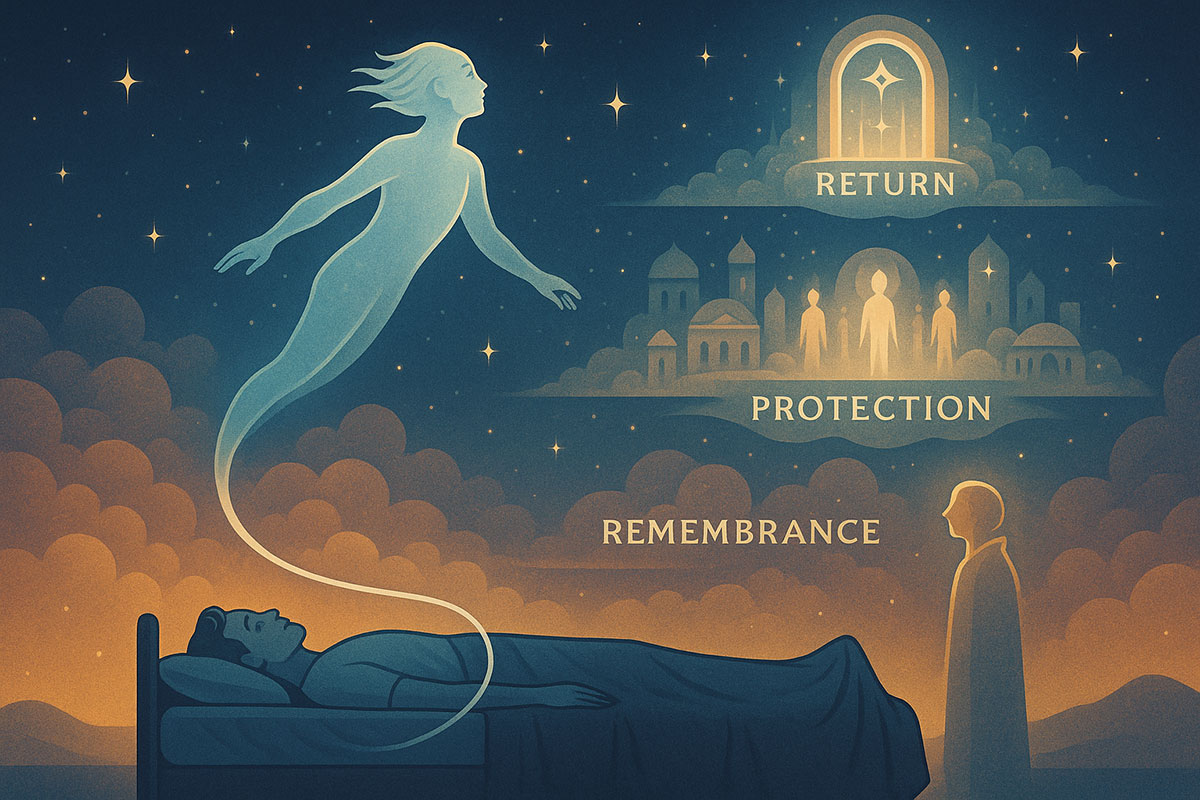
Astral projection is not a new invention of the mind, but an ancient highway of the soul—known to yogis, saints, and mystics long before science gave it a name.
This world is not the whole of your being. You are more than the flesh that walks, the name that is called, the memories that fade. You are eternal souls, sons and daughters of God, wrapped for a time in earthly garments, yet never bound by them.
In the deep stillness of meditation and in the sacred journey of astral projection, one begins to recall the forgotten truth: we are not human beings having occasional spiritual experiences—we are divine beings having a human experience.
Astral travel is not a parlor trick, nor a spectacle for curiosity. It is a sacred science, long veiled by the fog of materialism. The Rishis knew of it. The saints lived by it. Christ, Buddha, Krishna—they all traversed these inner heavens.
Through this dialogue, may you learn not merely how to travel beyond the body, but why. May your soul awaken to its true nature, and may your spirit rejoice in the infinite freedom that is your birthright.
Meditate deeply. Love purely. Seek God—not merely in temples, but in the astral sky within you.
Let us begin.
(Note: This is an imaginary conversation, a creative exploration of an idea, and not a real speech or event.)

What Is the True Nature of the Astral Realm?
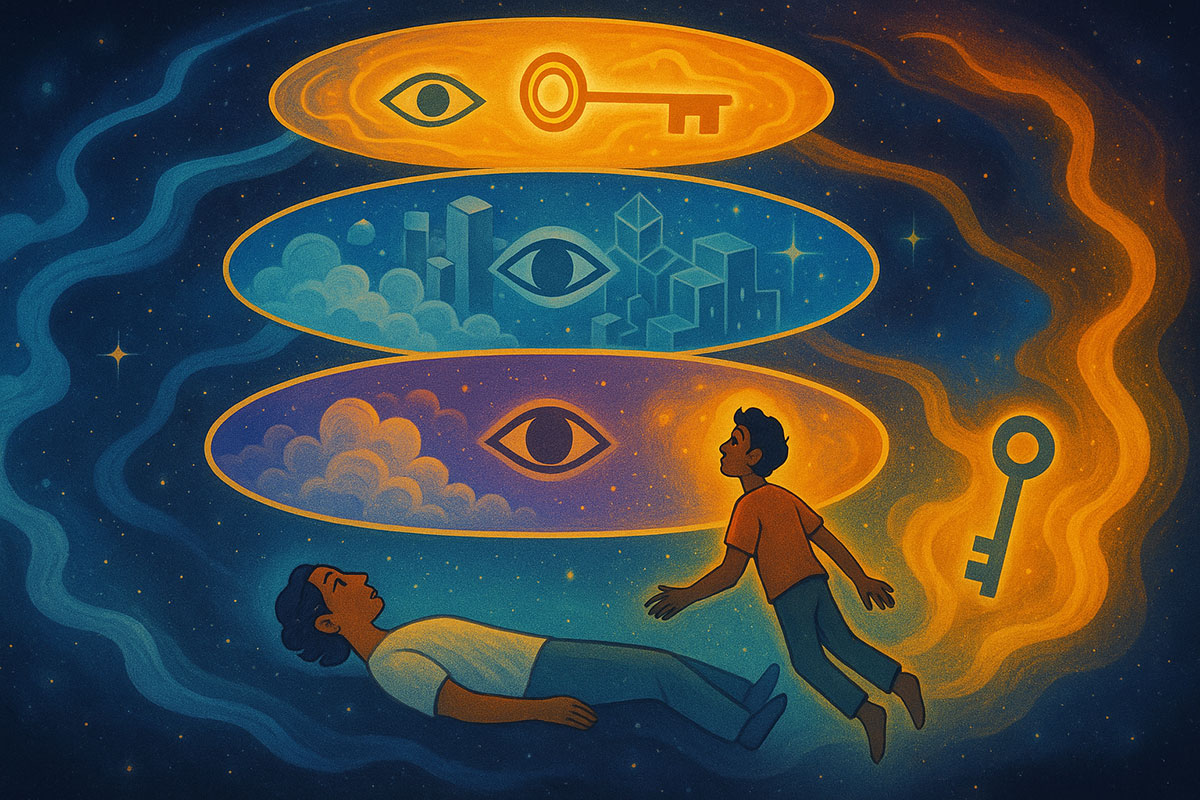
Moderator: Charles Tart — A pioneer in consciousness studies and transpersonal psychology, bringing both scientific rigor and openness to altered states.
Participants:
- Robert Monroe – Explorer and founder of the Monroe Institute
- Thomas Campbell – Physicist and consciousness theorist
- Robert Bruce – Author of Astral Dynamics
- Marilyn Hughes – Mystic and founder of the Out-of-Body Travel Foundation
- Yogananda Paramahansa – Spiritual teacher and yogi
Opening by Charles Tart
Welcome, everyone. Today we explore a deceptively simple question that has captivated mystics, scientists, and seekers for centuries: What exactly is the astral realm? Is it a creation of the mind? A shared objective dimension? Or something beyond categorization altogether?
Let me begin with a foundational question.
When we speak of the astral realm, are we referring to an internal dreamscape—or an external, autonomous reality?
Robert Monroe:
In my early journeys, I assumed I was navigating dreamlike thought-forms. But over time, I encountered consistent places, intelligences, and even "roads" others later described identically. The astral realm is not a figment. It's a system—a vast, layered, structured reality as objective as Earth, but accessed non-physically. What we call "internal" and "external" don’t hold up out there.
Yogananda Paramahansa:
The astral world is finer than the physical, yet real in every sense. Saints and masters reside there, and souls journey through its spheres after death. It is God’s intermediary realm—vibratory and filled with divine light. Yet, for the impure or fear-bound, it may appear as illusion or chaos. Perception of it depends on spiritual refinement.
Robert Bruce:
It’s both—and neither. Some layers are shaped by thought, yes, but others remain unchanged regardless of who visits them. There are “consensus zones”—realms that don’t dissolve when you stop thinking. I’ve tested this. You can leave an object and return to find it still there. That’s not just mind-stuff. That’s structural.
Marilyn Hughes:
My experiences confirm the astral is absolutely real—and absolutely moral. What you see is filtered through your soul’s condition. I’ve passed through realms of torment and bliss, judgment and mercy. It is not merely a projection. It’s a designed reality, part of the soul’s curriculum.
Thomas Campbell:
From a physics standpoint, I define it as another data stream within the larger consciousness system. Just like Earth is a rule-set-based simulation, so is the astral. It’s “real” in that it has its own logic, consistency, and cause-effect framework. But it is still virtual—rendered by consciousness for exploration and evolution.
If the astral realm has layers or levels, how do we distinguish illusion from truth, and which layers hold the most spiritual significance?
Marilyn Hughes:
The astral has many levels—some dense, some radiant. Lower levels reflect earthly attachments, while higher ones vibrate with divine presence. You’ll know where you are not just by what you see, but by what you feel. Peace, reverence, and unity indicate you’re ascending. Lower planes breed confusion or desire. Clarity is a spiritual compass.
Thomas Campbell:
The lower levels are mostly personal and belief-driven—your fears, your expectations. They dissolve with awareness. The higher you go, the more universal the rules. Growth lies in navigating upward toward greater love, less ego. The astral, like life, is a learning system.
Robert Monroe:
There are stages—what I later called Locale I, II, III, and beyond. The early layers are fluid, symbolic, and reactive. But deeper in, the patterns stabilize. There’s traffic, architecture, even governance. The most spiritually transformative places are paradoxically the quietest—no forms, no beings, just presence.
Robert Bruce:
Discernment comes through experience and technique. You can ask: “What is the source of this image?”—and often it will dissolve or clarify. You also develop internal energetic signals. I’ve visited what felt like libraries, healing centers, and vast learning halls in higher layers—those places hold truth encoded in light.
Yogananda Paramahansa:
In deep meditation, one ascends naturally. The inner eye will pass the stars and the moon—these symbols mark transitions between levels. In the highest astral realms, one communes with divine beings. They teach not in words but in vibrations of wisdom. Those are the realms that liberate.
Why do so many people report wildly different astral experiences—are we visiting the same place, or is the astral realm shaped by the traveler?
Thomas Campbell:
It’s both. The data stream is partly user-generated and partly shared. Early on, you’re mostly interacting with your own fears and filters. But as you become clearer, you access areas that are stable, collaborative—realms shared by many.
Yogananda Paramahansa:
Each soul sees according to its karma and readiness. A sinner and a saint may both go astral, but they will not walk the same path. Perception is colored by vibration. Yet the realm is one—just as water can appear calm or stormy, depending on where you dip your hand.
Robert Monroe:
I’ve met other travelers mid-journey. We compared notes after returning—and yes, the overlaps were striking. But I’ve also seen people get stuck in loops of their own fear or desire. The astral responds to you. It amplifies your essence. So while there is a shared space, the lens is personal.
Marilyn Hughes:
Absolutely. The astral realm is both mirror and school. God has allowed us this space to work out our inner struggles. What you carry will shape what you see—but so will your mission. When I was sent to rescue trapped souls, I entered realms I never would have chosen, yet they were real, occupied, persistent.
Robert Bruce:
You start in personal zones—like mental wallpaper—but beyond that, there are structured realities. The difference is in the degree of consensus and the density of form. The more people visit a realm and agree on its structure, the more stable it becomes. Think of it as a spectrum: subjective to intersubjective to objective.
Closing Thoughts from Charles Tart
We’ve heard today that the astral realm is not a single place—but a layered spectrum of realities shaped by consciousness, intention, and spiritual maturity. Some speak of light. Some speak of law. But all agree: it’s not fantasy. It’s a mirror, a message, and a mystery.
Is There Danger in Astral Travel—And How Do We Protect Ourselves?

Moderator: Yogananda Paramahansa — As a master of higher consciousness and subtle realms, Yogananda brings calm spiritual wisdom to guide this conversation about safety, fear, and divine protection in non-physical journeys.
Participants:
- William Buhlman – Veteran OBE trainer and author
- Robert Bruce – Expert in energetic defense and subtle body work
- Sylvan Muldoon – Early 20th-century astral explorer
- Teal Swan – Intuitive healer and multidimensional empath
- Charles Tart – Psychologist and pioneer in consciousness research
Opening by Yogananda Paramahansa
Brothers and sisters of the inner path, today we speak not of curiosity but of courage—for the astral world, like the physical, contains both light and shadow. Is there danger in leaving the body? And if so, how shall we walk safely?
Let us begin by asking:
What types of danger, if any, can arise during astral projection—and are they real or imagined?
Robert Bruce:
There are absolutely real dangers. Not Hollywood-style demons—but energetic parasites, dense entities, thought-forms that feed on fear. They can latch onto your field if you're reckless. It’s like swimming in a river—if you don’t know the current, you could get swept. But awareness and energetic hygiene reduce risk dramatically.
Charles Tart:
From a psychological perspective, most "danger" stems from fear and suggestion. But that doesn't mean it's imaginary. Fear-induced hallucinations can feel terrifying and have real after-effects. For the unprepared, even benign experiences can trigger dissociation or anxiety. The danger lies not just out there—but in how we interpret what we encounter.
William Buhlman:
The greatest danger is ignorance. People launch into the astral without training or discipline and encounter projections of their own fear. But the truth is—most lower realm entities have no real power unless you resonate with them. Raise your frequency, set your intention, and you become untouchable.
Teal Swan:
Energetically, you are open and exposed during an OBE. If your emotional body is wounded or unstable, you might attract experiences that mirror your trauma. It's not just "in your head"—the law of resonance applies out there too. That said, those challenges are often opportunities to heal.
Sylvan Muldoon:
I noted long ago that fear draws you rapidly back into the body. I never encountered harm, but I knew others who felt watched or followed in the astral. The key is the silver cord—it keeps you connected. But mental attitude is everything. Calmness is armor. Panic is poison.
What methods or mindsets offer true protection when traveling the astral planes?
William Buhlman:
Affirm your sovereignty. Before departure, say: “I am a being of light, protected and guided by love.” Set your destination. Intention is the vehicle. Clarity is the compass. And if you ever feel vulnerable—return. There's no shame in learning gradually.
Teal Swan:
Build energetic boundaries. Visualize light shielding your energy body. Seal emotional leaks before traveling. If you have unhealed trauma, work on integration before going deep. Also, call in guides. You don’t have to do this alone. We’re never really alone.
Sylvan Muldoon:
In my time, we lacked the terminology of energy fields and chakras. But I found that harmony of mind before sleep—a quiet conscience, elevated thoughts—was the surest protection. Low vibrations cannot cling to high-minded travelers.
Charles Tart:
Use discernment. Develop a meditation practice to ground your consciousness. Avoid drugs or unstable emotions before attempting OBEs. Keep a log. The more you know your inner terrain, the less likely you are to be overwhelmed by surprise. Awareness is the greatest shield.
Robert Bruce:
Shielding techniques work. Use golden spheres, mirror walls, or rotating energy fields. Learn to feel your etheric body and run energy through it daily. Cleanse. Strengthen. Your subtle immune system must be trained just like your physical one.
Can encounters with negative entities or energies actually be opportunities for spiritual growth?
Teal Swan:
Absolutely. Every dark being we meet is a mirror—a part of us calling to be integrated or transmuted. Don’t just fight or flee. Ask: Why did I attract this? Many people reclaim lost fragments of themselves through these very confrontations.
William Buhlman:
Yes—but only if you have the courage to stand your ground. Fearful responses feed lower entities. Conscious projection teaches you to choose response over reaction. Even in darkness, you are not powerless. You are there to awaken.
Charles Tart:
I’ve seen people heal phobias and existential fears by facing them in OBEs. The key is psychological preparation. If someone panics, it reinforces trauma. But if guided and supported, these experiences can lead to profound transformation.
Robert Bruce:
I once encountered a shadowy form that seemed hostile. Instead of retreating, I radiated light toward it—and it dissolved. It was my own unresolved anger. That moment taught me: the astral realm doesn’t lie. It reflects. Growth begins when we stop running.
Sylvan Muldoon:
To the soul in pursuit of truth, even darkness can be a teacher. But one must not be arrogant. Train first. Know thyself. Then even the astral night reveals stars.
Closing Thoughts by Yogananda Paramahansa
There is no need to fear the astral world when one is aligned with divine light. Like the ocean, it holds beauty and danger—but the swimmer who knows the current, and swims with love, will not drown. Do not venture in haste. Go with devotion, with discipline, and with the thought: “Thy will be done.” Then even shadows become ladders of ascent.
Why Are We Not Taught This From Childhood?
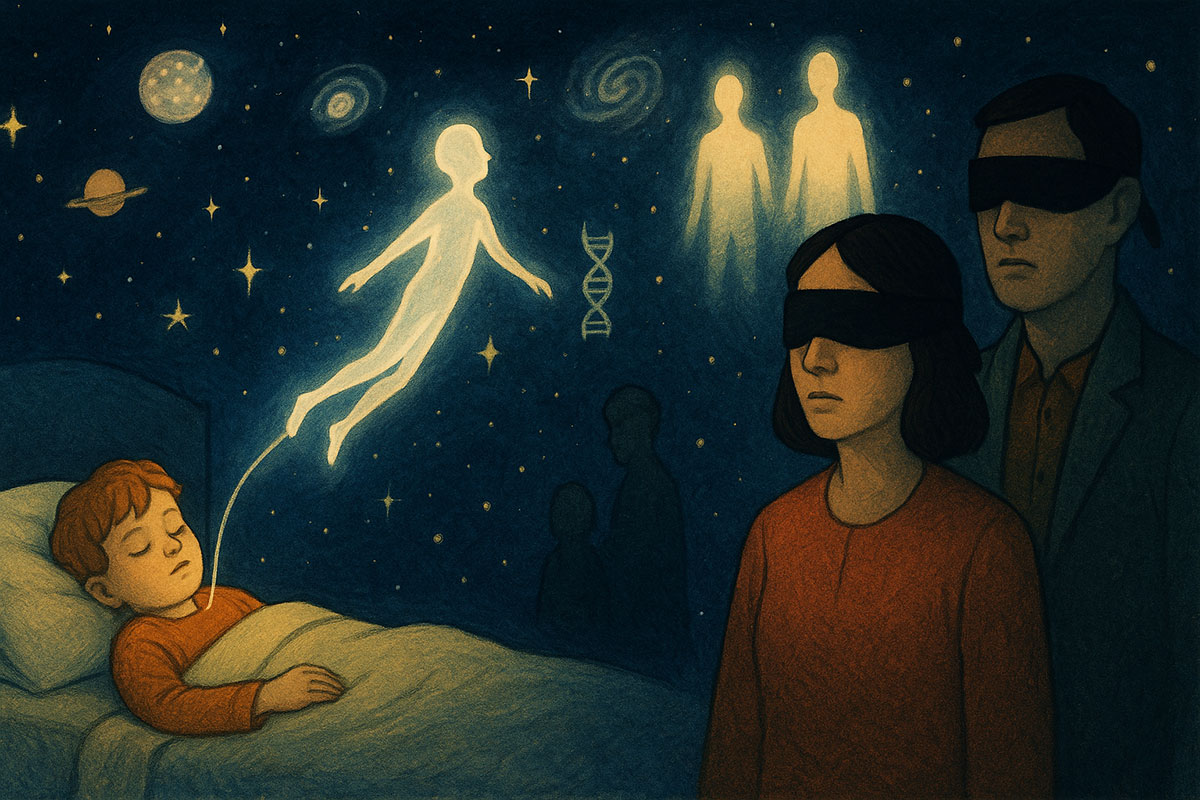
Moderator: Ingo Swann — A pioneer in remote viewing and cross-dimensional perception, Ingo brings a sharp, irreverent, and inquisitive voice to this provocative topic.
Participants:
- Thomas Campbell – Physicist and consciousness researcher
- Marilyn Hughes – Out-of-body mystic and spiritual teacher
- Teal Swan – Multidimensional guide and intuitive
- Yogananda Paramahansa – Enlightened yogi and teacher of cosmic awareness
- Robert Monroe – Explorer of non-physical realities and founder of the Monroe Institute
Opening by Ingo Swann
We spend our early years learning multiplication tables and memorizing wars—but no one tells us we can leave our bodies. No one tells us the world we see isn’t the only one that’s real. Why?
Let’s unravel this puzzle.
If astral projection is a natural human ability, why has it been left out of education, religion, and science?
Teal Swan:
Because systems of control depend on keeping us disconnected. If a child knew she could explore other dimensions, meet her higher self, and feel unconditional love beyond this world, she’d be harder to shame, program, or manipulate. The matrix of society doesn’t want awakened beings. It wants obedient consumers.
Thomas Campbell:
From a systems perspective, our current physical reality is a school for consciousness. If we all remembered our non-physical origins too soon, the lessons of limitation, fear, and courage might be lost. That said, culture has played a role. Materialist science, reductionist education—it’s all part of the veil.
Marilyn Hughes:
This knowledge was once sacred and known—taught in monasteries, mystery schools, and through ancient initiations. But in modern times, it's been buried under materialism and fear. Even religion, which should point to the beyond, has often reduced the soul’s journey to dogma. Astral travel is too real, too free—it threatens institutions.
Robert Monroe:
When I first left my body, I thought I was going insane. Why? Because no one told me this was possible. It’s not that the ability is rare—it’s that the permission is. Our culture prefers conformity to curiosity. And institutions—be they academic, religious, or governmental—don’t deal well with the unpredictable.
Yogananda Paramahansa:
The West fears what it cannot measure. In the East, such abilities were nurtured in the yogic sciences. But even there, the knowledge is now veiled. The age we live in—Kali Yuga—obscures the soul’s memory. Still, the soul remembers. And those who seek will find.
How would society change if children were taught about the astral world from an early age?
Robert Monroe:
We’d raise explorers instead of employees. Imagine if children knew from the start that they are not their bodies. That they can move through time, space, and beyond. Fear of death would fade. Creativity would explode. Authority would lose its grip.
Yogananda Paramahansa:
The child who learns to meditate and enter inner stillness will not become lost in worldly illusion. She will carry joy like a lantern. Such a society would raise saints, not merely citizens. It would restore the soul as the center of education.
Teal Swan:
We’d see less depression, less self-harm, fewer identity crises. Children would know they’re multidimensional. They’d remember that this life is just one chapter in a longer book. They’d have context—and with it, compassion. For themselves and others.
Thomas Campbell:
It would radically shift our collective evolution. But it would also require new models of responsibility. Astral travel isn’t just fun—it’s powerful. If taught too lightly, it could overwhelm. But taught rightly, it would produce a generation of conscious beings ready to co-create a better simulation.
Marilyn Hughes:
It would restore sacredness to life. Children would understand karma, soul contracts, and the continuity of existence. They would treat others with reverence, knowing they’ll meet again. The “Golden Rule” would no longer be a command—it would be instinct.
Do children naturally experience OBEs—and if so, what causes them to forget or lose access as they grow?
Marilyn Hughes:
Yes, they do—especially in sleep. Many children see spirits, travel in dreams, or speak of other lives. But adults dismiss them. Schools invalidate them. Over time, children disown these gifts in exchange for acceptance. It’s heartbreaking.
Thomas Campbell:
Young minds are less locked into the rule set of physical reality. Their brains are more like open receivers. But as language and logic systems develop, they begin to filter experience through cultural consensus. The data stream narrows. What we call “growing up” is often just forgetting.
Yogananda Paramahansa:
Children are closer to God, having freshly descended from the higher realms. Their laughter, their intuition, their visions—all come from divine memory. But Maya, the illusion of the world, pulls them into forgetfulness. Only the soul that clings to inner light can retain its knowing.
Teal Swan:
It’s not just forgetting—it’s survival. If a child’s gifts are ridiculed, pathologized, or punished, they will lock them away to stay safe. It’s protective amnesia. That’s why we must create safe spaces for children to speak about what they see and feel.
Robert Monroe:
When I met young people at the Monroe Institute, they took to astral training faster than adults. Why? Because they weren’t yet hardened by disbelief. The ability doesn’t disappear. It just goes dormant—waiting for a spark to reawaken it.
Closing Thoughts by Ingo Swann
What if we built schools where dream journals mattered more than test scores? Where a child’s astral journey was discussed with the same care as their math homework? What kind of world would that be?
Maybe the real revolution isn’t political or technological. Maybe it’s metaphysical.
And maybe—it starts with listening to what our children already know.
Can Astral Travel Help Us Remember Who We Truly Are?
Moderator: William Buhlman — A master teacher of out-of-body travel, Buhlman brings clarity and empowerment to the transformative potential of OBEs.
Participants:
- Robert Monroe – Explorer of expanded states and soul-level identity
- Teal Swan – Embodiment guide and trauma healer
- Yogananda Paramahansa – Mystical yogi of Self-realization
- Marilyn Hughes – Soul journeyer and recorder of the afterlife
- Thomas Campbell – Consciousness physicist and author of My Big TOE
Opening by William Buhlman
Many ask how to astral project, but fewer ask why. In my experience, OBEs aren’t just cosmic tourism—they’re mirrors that reflect the truth of what we are: consciousness, not flesh.
So today I ask: Can the astral realm help us remember our original nature—our soul’s identity beyond this body and name?
Let’s begin there.
What is revealed about the Self during out-of-body travel that we can’t easily access in waking life?
Teal Swan:
In waking life, we’re bound to the illusion of the ego—a character playing a story. But in the astral realm, we shed the costume. We feel ourselves as frequency, light, memory. It’s not a theory anymore. It’s direct knowing. You are not your trauma, not your name. You are presence.
Robert Monroe:
I learned that the “I” is layered. There’s the actor, the observer, the experiencer—and then the eternal. In deep states, I encountered my core essence: genderless, timeless, curious. I called it the “Total Self.” And realizing it dissolved death’s grip on me.
Marilyn Hughes:
I have passed through the veils of illusion and felt myself return to my eternal origin—the Soul of Light. You realize you are not becoming someone new—you are remembering someone ancient. These realms hold the echoes of our divine blueprint.
Thomas Campbell:
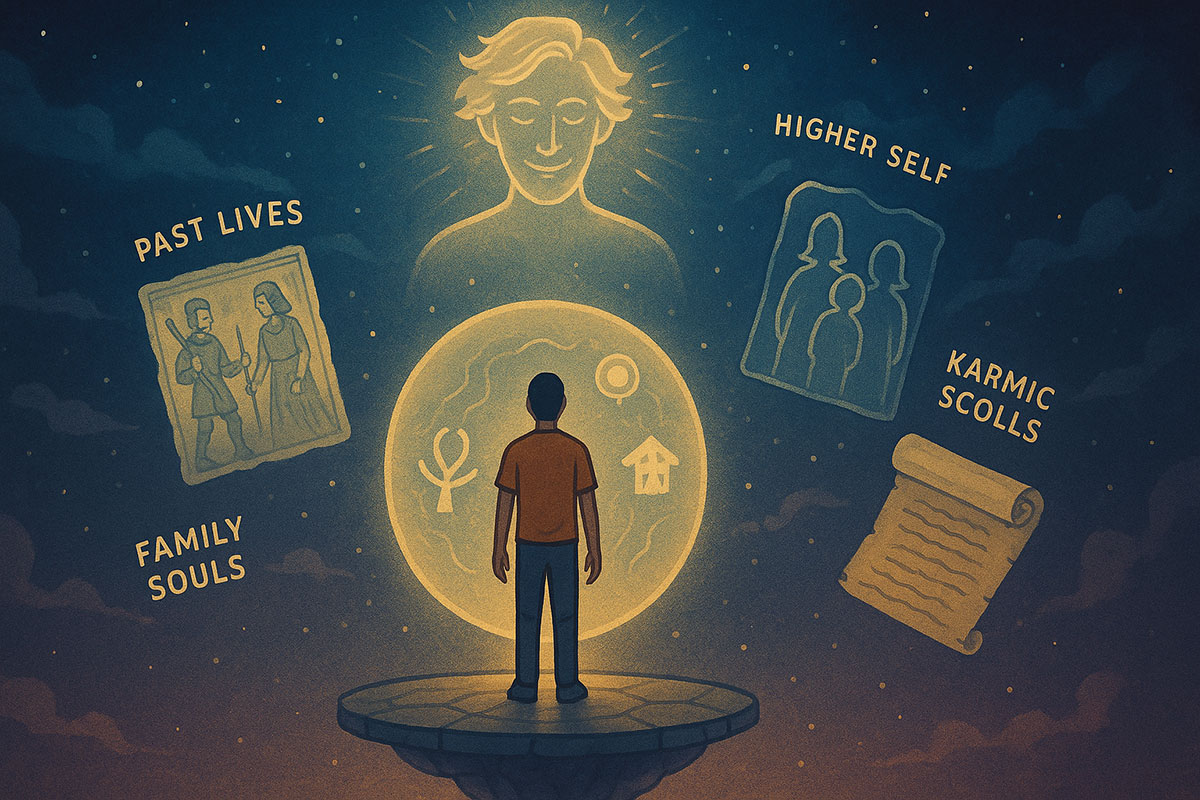
You’re more than a personality. You are a decision-making unit of consciousness evolving across lifetimes. Astral projection lets you temporarily decouple from the data stream of physical reality and connect to a broader stream—one that reveals your trajectory, your unfinished lessons, your deeper purpose.
Yogananda Paramahansa:
In meditation, one may glimpse this truth. But in astral experience, it becomes unmistakable: you are Spirit having a human sojourn. You are not the actor. You are the light behind the play. This knowing brings not just knowledge—but liberation.
Can astral experiences reconnect us with past lives, soul contracts, or the Higher Self—and if so, how?
Robert Monroe:
I experienced memory bleedthroughs from other lifetimes—not as visions, but as feelings that didn’t belong to this life. One OBE brought me to a version of myself I’d never met but instantly recognized. These encounters don’t answer all your questions—but they expand your frame.
Yogananda Paramahansa:
Indeed. Many saints recall their incarnations as part of their awakening. In deep states, the veil lifts. You may meet your guides, see your karmic threads, or receive glimpses of your divine commission. But the ego must be quiet. Truth whispers to the silent soul.
Marilyn Hughes:
I’ve stood before the Book of Life and seen past lives unfold in full dimension. Sometimes you are shown not to indulge curiosity—but to heal. To complete a mission left undone. OBEs allow the soul to review, reconcile, and renew its vows.
Thomas Campbell:
It’s not about collecting lifetimes like trading cards. It’s about growth. The Higher Self is your most evolved aspect—outside time, watching all your avatars. When you project, you can sometimes merge with that stream. You’ll know, because it feels like coming home.
Teal Swan:
Yes, and it can be overwhelming. Suddenly, you remember your soul agreements. Why you chose your parents. Why that heartbreak mattered. It doesn’t erase the pain—but it brings context. OBEs give us soul perspective. That’s medicine.
How can we bring back these memories or realizations into daily life, instead of leaving them behind like fading dreams?
Thomas Campbell:
Record everything. Speak it aloud. Write it down. But more importantly—live it. Insights are like seeds. If you don't plant them in action, they die. Practice integrity. Follow your inner nudges. That’s how you stay connected to what you glimpsed.
Teal Swan:
Anchor the frequency in the body. After a profound OBE, I always move. Dance. Breathe. Ground it. Then I integrate through service—sharing the insight with others. When you embody the soul truth, it becomes part of your human expression.
Robert Monroe:
I created tools—tapes, protocols, retreats—not to escape the body, but to help people live better inside it. Your job isn’t to stay “out there.” It’s to bring back the wisdom. Be more loving. Less reactive. Curious. That’s how the memory stays alive.
Marilyn Hughes:
We must sanctify life. Every act—washing a dish, speaking a word—can be a reflection of what was seen in the higher planes. I pray daily: “Let me not forget Thy face.” Because forgetfulness is the soul’s great sorrow.
Yogananda Paramahansa:
Chant. Meditate. Serve. The astral truths fade unless reinforced by devotion and repetition. One flash is not enough. But a life attuned to Spirit will remember more than any vision: it will become the vision.
Closing Thoughts by William Buhlman
Astral travel isn’t about escape. It’s about remembrance. You are more than your job, your wounds, your face in the mirror. You are consciousness—ancient, luminous, whole.
Don’t just touch that knowing once.
Train to return to it—again and again—until it’s the only thing that feels real.
Is Astral Travel the Bridge to Life After Death?
Moderator: Marilyn Hughes — Having authored hundreds of accounts of journeys into the afterlife, Marilyn brings reverence, clarity, and first-hand insight to this final, essential topic.
Participants:
- Robert Monroe – Explorer of post-death realms and soul retrieval
- William Buhlman – OBE teacher focused on conscious dying
- Thomas Campbell – Physicist of consciousness evolution
- Charles Tart – Transpersonal psychologist and NDE researcher
- Ingo Swann – Remote viewer and speculative mystic
Opening by Marilyn Hughes
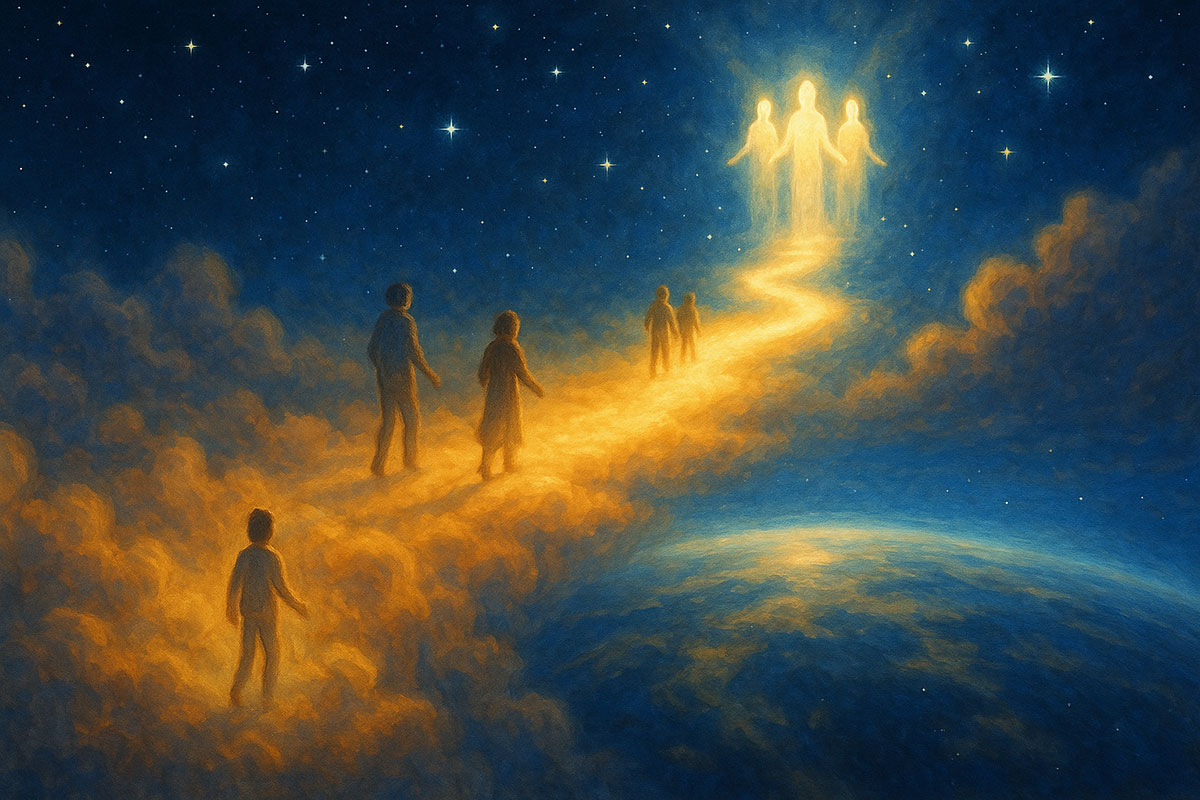
To the soul, death is not an end—but a doorway. And astral travel, I believe, is practice for walking through that door with awareness. Today, I ask each of you: What have your experiences taught you about life after death? And is the astral realm truly the bridge between the worlds?
Let’s begin with that.
Does astral travel offer a glimpse of what happens when we die—or are these experiences something else entirely?
Robert Monroe:
I spent years exploring what I later called “the Park”—a realm where souls gather after death. I met people who didn’t know they had died. I helped some move on. These weren’t dreams. They were consistent, structured realities. What I saw convinced me: OBEs and death are part of the same continuum.
Charles Tart:
From a scientific standpoint, I’ve studied hundreds of near-death experiences. The parallels to OBEs are undeniable: floating above the body, entering realms of light, meeting beings. The difference is permanence. Death severs the connection. OBEs simulate that crossing—but allow return. They're rehearsals, not replacements.
Ingo Swann:
I think the astral realm includes some post-mortem territories, but it’s not the full picture. Just as Earth has cities and wilderness, the “afterlife” is vast. OBEs are like scouting missions. We see some neighborhoods, but not the whole map. And sometimes, we’re shown only what we’re ready to handle.
William Buhlman:
I’ve taught hospice workers how to prepare for death using conscious exit techniques. In OBEs, I’ve visited transition zones—some beautiful, others chaotic. Death doesn’t make you enlightened. Where you go reflects your state of consciousness. But yes—the skills developed in astral travel absolutely help you face death awake.
Thomas Campbell:
From a data-stream perspective, death is a transition from one stream to another. Astral travel is like switching channels temporarily. You don’t lose identity—you recontextualize it. The astral realm is not “the afterlife”—it’s the interface. The doorway. What lies beyond depends on your growth.
Are there specific realms or beings in the astral that assist souls in crossing over or preparing for death?
William Buhlman:
Absolutely. I’ve encountered what I call “transition teams”—guides who help souls leave the body gently or orient them afterward. They radiate calm and clarity. But not everyone sees them. Belief can create a fog. That’s why I stress practice before death.
Robert Monroe:
Yes. I met guides who worked in what I’d call rescue operations—helping “stuck” souls move past confusion, addiction, or attachment. Some didn’t know they were dead. Others resisted change. These helpers don’t preach—they just shine presence.
Charles Tart:
In NDE reports, we often hear of beings of light, deceased relatives, or life review councils. Are they objective or symbolic? Maybe both. Consciousness may present what each soul needs. But the function is similar: orientation, guidance, transition.
Ingo Swann:
I once encountered a realm that felt like a cosmic customs office. Souls were waiting, resting, or being debriefed. Some spoke languages I didn’t know. There were beings there—not human, not judgmental—who felt like universal midwives. Their role seemed to be ushering souls with precision and compassion.
Thomas Campbell:
These guides are part of the larger consciousness system. They’re like automated help agents—but conscious, compassionate. Their goal isn’t to reward or punish—it’s to ensure you land where your evolution can continue. It’s efficient, not emotional.
How can practicing astral projection change the way we live—especially in how we face aging, dying, and the fear of death?
Charles Tart:
Fear of death drives much of human behavior—greed, control, avoidance. When you have even one verified OBE, that fear starts to soften. You realize: I am not this body. That changes everything. You become more present. More curious. Less afraid of letting go.
William Buhlman:
It’s empowering. People often think of dying as something that happens to them. But astral practice gives you tools. You become an active participant in your exit. I tell people: don't die unconscious. Die lucid. Use the moment of transition as a launchpad, not a trapdoor.
Robert Monroe:
Before my experiences, I feared death. After them, I became more focused, more ethical, more loving. Not because someone told me to—but because I saw the long arc of the soul. Every action echoes beyond this lifetime. That awareness makes life richer.
Ingo Swann:
It makes you laugh more. Seriously. You stop taking the drama so seriously when you’ve floated above it. Astral travel gives you a backstage pass to the theater. You still play your role—but with more joy, more improvisation.
Thomas Campbell:
You start making choices for long-term growth, not short-term ego. You become less reactive, more loving. That’s the real fruit of OBEs—not just flying around, but becoming a better node in the system. Death becomes a chapter—not a collapse.
Closing Thoughts by Marilyn Hughes
We are not bodies seeking souls.
We are souls navigating bodies.
Astral travel, in its highest form, prepares us for the Great Return—not as a fall into nothingness, but as a rising into everything. Practice now. Love now. Die consciously when the time comes—and you will discover: You were never gone.
Final Thoughts by Yogananda Paramahansa
Astral projection is a bridge of remembrance—a holy thread that lifts the soul above illusion and draws it back to its divine origin.
When the body sleeps and the breath becomes silent, the soul stirs. It longs to stretch its wings and remember the stars.
Each of you was born with the map to heaven etched into your being—not in books, not in temples, but in the silence behind your thoughts. The astral realm is not separate from you. It is a finer octave of the divine song you already are.
Do not fear the journey beyond the body. Fear forgetting who you are.
In the astral, you may walk with your ancestors, converse with angels, remember the soul's vow. But these are not destinations—they are reminders. You are the light that travels. You are the truth that awakens. You are the joy that God planted in flesh to bloom again in spirit.
May your journeys be guided by love.
May your return be graced by wisdom.
And may your life on Earth reflect the beauty you remember beyond it.
Aum, Peace, Amen.
Short Bios:
Yogananda Paramahansa: Indian yogi and author of Autobiography of a Yogi, he taught the unity of all religions and introduced the West to deep meditation and higher states of consciousness, including the astral and causal planes.
Robert Monroe: Pioneer of astral projection and founder of the Monroe Institute, he mapped out non-physical realities and coined terms like "Locale I, II, and III" through thousands of out-of-body journeys.
William Buhlman: Leading OBE trainer and author of Adventures Beyond the Body, known for his clear, empowering methods to explore consciousness and consciously navigate the death transition.
Robert Bruce: Author of Astral Dynamics, he is known for his practical, energetic techniques in astral projection, spiritual protection, and mapping out the structure of subtle realms.
Marilyn Hughes: Mystic and founder of the Out-of-Body Travel Foundation, she has written extensively on soul journeys, afterlife realms, and spiritual purification through OBE.
Thomas Campbell: NASA physicist and author of My Big TOE, he explains astral projection and reality as part of a larger consciousness system evolving through experience.
Charles Tart: Transpersonal psychologist and researcher, he bridged science and spirituality, studying OBEs, altered states, and validating consciousness beyond the body.
Teal Swan: Spiritual teacher and multidimensional intuitive, she speaks openly about astral perception, emotional healing, and the spiritual structure behind trauma and soul memory.
Sylvan Muldoon: Early 20th-century author who, alongside Hereward Carrington, documented spontaneous OBEs and introduced the Western world to concepts like the silver cord.
Ingo Swann: Psychic and artist, he was a central figure in the development of remote viewing and explored the astral and interdimensional realms through intuition and experimentation.
Leave a Reply