


Robert Monroe:
When I first left my body, I didn’t ask for it. It happened to me, unexpected and bewildering, shattering the comfortable assumptions I had about reality. What began as confusion became a lifetime of exploration.
In the years that followed, I came to realize that these journeys are not accidents nor hallucinations, but experiences available to every human being. They reveal a simple but profound truth: we are far more than our physical bodies.
In this dialogue, you will hear voices from different corners of science, psychology, spirituality, and culture. Some will defend the astral as real, others will argue it is illusion. But beyond the debate lies something that cannot be ignored: millions of people across the world, across cultures, across history, have described this same phenomenon.
The task before us in 2025 is not to believe blindly nor dismiss cynically, but to investigate honestly. What does astral projection say about the nature of consciousness? Can it heal trauma? Could it be replicated or distorted by technology? Do shamans and scientists describe the same frontier in different tongues? And most importantly, what does this mean for the evolution of humankind?
We gather not to settle the question, but to expand it. If nothing else, astral projection challenges us to step outside the narrow cage of certainty and dare to ask: what if consciousness truly transcends the limits of the brain and body?
That, I believe, is where our future begins
(Note: This is an imaginary conversation, a creative exploration of an idea, and not a real speech or event.)
Topic 1: Astral Projection and Consciousness Science
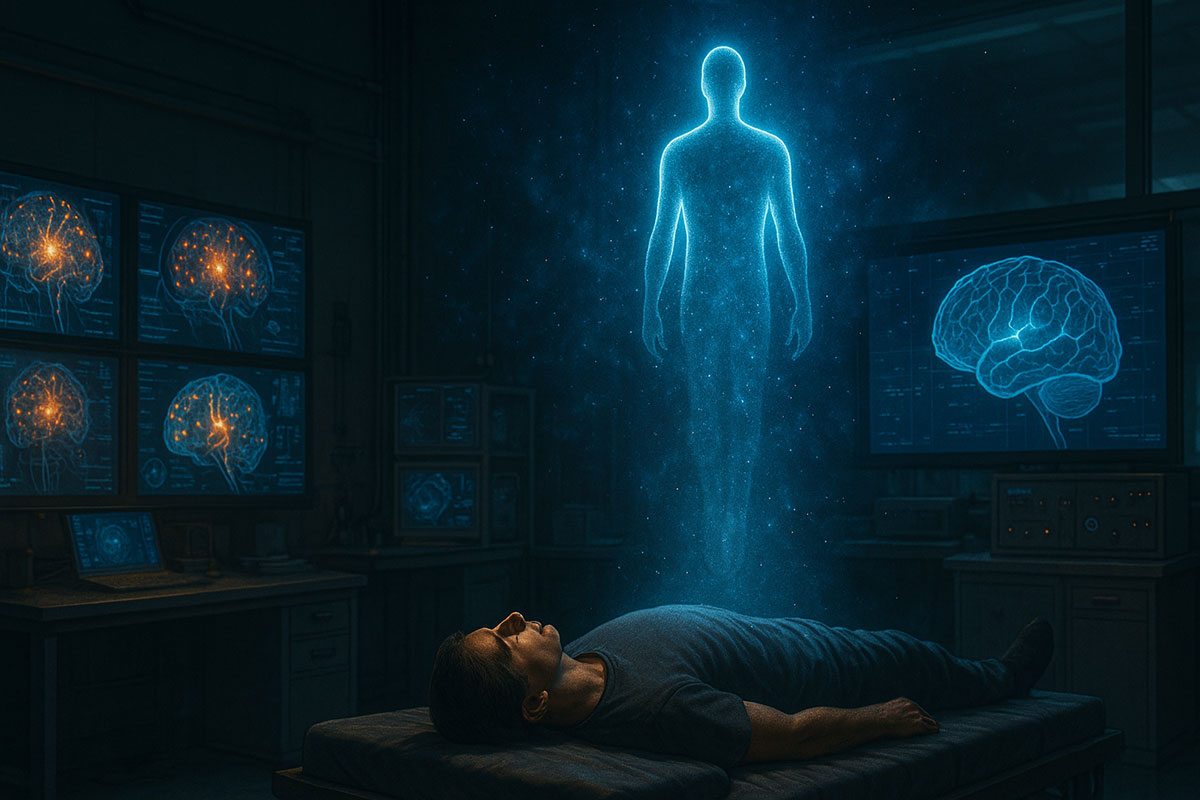
Participants:
Dr. Dean Radin (Moderator, consciousness researcher)
Robert Monroe (pioneer of OBEs and founder of the Monroe Institute)
Susan Blackmore (psychologist and skeptic who once had an OBE)
Jade Shaw (contemporary astral projection teacher and researcher)
Dr. Eben Alexander (neurosurgeon and NDE experiencer)
Waldo Vieira (Brazilian parapsychologist and founder of Projectiology)
Opening by Dr. Dean Radin
“We’re here to explore one of the most contested frontiers of human experience: astral projection. Is it a genuine separation of consciousness from the body, or a fascinating construct of the brain? Tonight, I’d like to ask each of you not only to share your views but to wrestle with the possibility that both science and spirit may be touching the same truth from different angles.”
First Question by Radin
“If astral projection is real, what does it suggest about the nature of consciousness—does it exist beyond the brain?”
Robert Monroe: “From my journeys, I can only conclude that consciousness extends far beyond the body. I traveled across landscapes, interacted with beings, and returned with knowledge I had no way of fabricating. For me, OBEs are not dreams—they’re excursions of a larger self.”
Susan Blackmore: “I must disagree. I had an extraordinary OBE as a student, yet when I investigated, I found no evidence that consciousness had left my body. Neuroscience shows the brain can simulate vast realities. To me, these states reflect the brain’s creative power, not disembodied travel.”
Jade Shaw: “While Susan emphasizes the brain, I’d add that lived experience matters. People report transformation, healing, and consistent encounters during OBEs. Even if the brain is involved, that doesn’t mean consciousness is limited to it—perhaps the brain is a filter, not the source.”
Eben Alexander: “As a neurosurgeon, I once believed Susan’s view. But my near-death experience changed me. With my cortex inactive, I experienced a vast realm of consciousness. The brain doesn’t produce consciousness—it receives it, like a radio receiver.”
Waldo Vieira: “Through decades of projection training, I’ve mapped patterns across thousands of people. Consciousness projects beyond the soma, the physical body. These repeated, verifiable experiences suggest we’re multidimensional beings, not confined to neurons.”
Second Question by Radin
“What kind of evidence—scientific or experiential—would convince humanity at large that astral projection is more than imagination?”
Susan Blackmore: “We’d need controlled, replicable experiments. For example, someone projecting must describe hidden targets in another room. Most attempts have failed under rigorous conditions, which is why I remain skeptical.”
Robert Monroe: “I attempted such experiments. Some were successful, some not. But the deeper evidence is in the consistency of reports—millions of people across cultures describing the same vibrational states, silver cords, and floating sensations. Is mass coincidence not itself evidence?”
Jade Shaw: “Science can’t yet capture subjective phenomena fully. Instead, we should value experiential validity. Think of meditation or love—both transformative, yet hard to ‘prove’ in a lab. Astral projection’s impact on personal growth is evidence of its reality.”
Eben Alexander: “I agree with Jade. In medicine, patient testimony matters. If OBEs consistently reduce fear of death and inspire compassion, that is powerful evidence of their reality—even if our instruments lag behind.”
Waldo Vieira: “Still, Susan is right that controlled data matters. In my Projectiology research, we use paired projections, group verification, and energetic phenomena. Over time, this builds a body of data that bridges the subjective and the scientific.”
Third Question by Radin
“If astral projection truly extends consciousness beyond the body, what implications does that hold for humanity’s future?”
Jade Shaw: “It means we can live with less fear of death. If we know we survive bodily boundaries, we can approach life with more compassion and responsibility.”
Robert Monroe: “For me, OBEs are training for our next stage—what happens when we transition beyond the body. Astral travel prepares us for continuity of existence, so we meet death as explorers, not victims.”
Susan Blackmore: “Or, it may mean we should be cautious about illusions. Believing in afterlife journeys without proof may comfort us, but it risks distracting from the urgency of living ethically in the here and now.”
Eben Alexander: “Susan, I respect your caution, but I believe the implications are vast. Imagine a society grounded in the knowledge that we are eternal. That would transform economics, politics, and human relationships. We’d prioritize love over fear.”
Waldo Vieira: “Yes, and collective projection may one day allow humanity to explore higher dimensions together. That could be the true evolution of consciousness—a planetary awakening.”
Closing by Radin
“Tonight, we’ve heard both skepticism and conviction, science and spirit. Whether astral projection is a neurological trick or a glimpse of eternity, its implications are profound. If nothing else, it challenges us to reconsider what consciousness really is—and that may be the most important question of our age.”
Topic 2: Astral Projection as Healing and Trauma Release
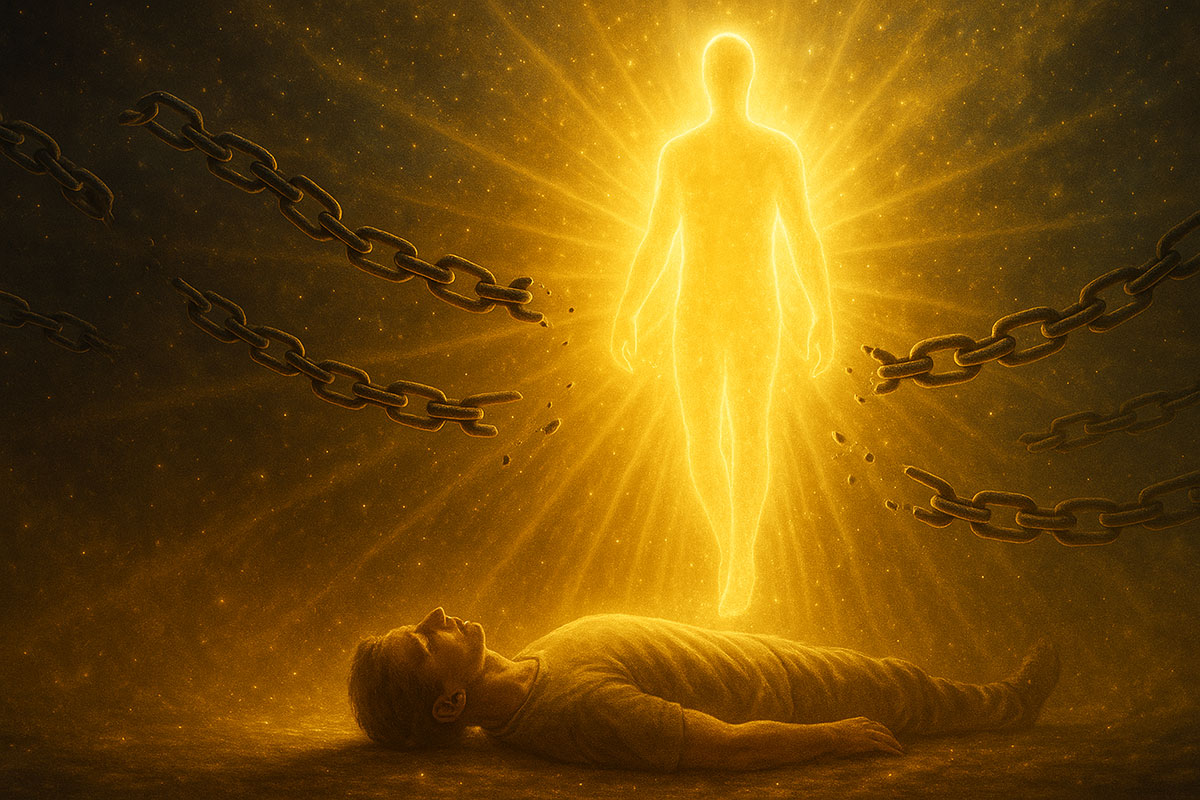
Participants:
Dr. Stanislav Grof (Moderator, transpersonal psychology pioneer)
Jade Shaw (astral projection teacher and researcher)
Robert Bruce (author of Astral Dynamics, energy healer)
Susan Blackmore (psychologist and skeptic)
Eben Alexander (neurosurgeon and NDE experiencer)
Waldo Vieira (parapsychologist, founder of Projectiology)
Opening by Dr. Stanislav Grof
“In my decades of work with non-ordinary states, I have seen people access deep layers of trauma and profound healing. Astral projection raises a provocative question: can leaving the body—or experiencing oneself beyond it—be a therapeutic act? Let us consider how OBEs intersect with healing, trauma, and integration.”
First Question by Grof
“Can astral projection serve as a tool for psychological or emotional healing, especially for trauma survivors?”
Jade Shaw: “Yes, many of my students report healing from grief or anxiety after OBEs. By experiencing themselves beyond the body, they see their pain from a new perspective. It’s not about escaping trauma but expanding identity beyond it.”
Susan Blackmore: “I’m cautious here. Trauma survivors are vulnerable, and encouraging them to believe they’re literally leaving their bodies could deepen dissociation. While the experience may feel therapeutic, we must guard against mistaking fantasy for healing.”
Robert Bruce: “I’ve guided countless people through OBEs where they’ve encountered inner wounds symbolized as entities or landscapes. Facing these directly in the astral can catalyze deep release—much like dream therapy but far more vivid.”
Eben Alexander: “After my near-death experience, I found my fear of death—and much of my personal pain—lifted. Astral states reassure us that we are more than our trauma. That alone has tremendous therapeutic value.”
Waldo Vieira: “Projection is one of the most powerful forms of consciential therapy. By leaving the dense body, people access the holosoma—the multidimensional self—which allows them to work on blockages imprinted across lifetimes.”
Second Question by Grof
“Some say OBEs may resemble dissociation, a symptom of trauma. How do we distinguish between pathological escape and genuine healing?”
Susan Blackmore: “That’s exactly my concern. Dissociation and OBEs share features: detachment, out-of-body sensations, emotional numbing. Without rigorous evidence, how can we tell a healing OBE from a coping illusion?”
Jade Shaw: “Intent is the difference. Dissociation is unconscious and often disempowering, while astral projection can be intentional and transformative. When practiced with integration, it strengthens rather than fragments identity.”
Robert Bruce: “Also, the phenomenology differs. In OBEs, people often return with clarity, insight, and reduced fear. Dissociation, by contrast, leaves them confused and weakened. Outcomes distinguish them.”
Waldo Vieira: “Exactly. Conscious projection develops lucidity, not avoidance. We train people to remain aware during projection, to study and learn, not escape. That is the antidote to pathological dissociation.”
Eben Alexander: “As a physician, I’d add: the brain can mimic many states, but the fruits of an experience matter most. If an OBE inspires compassion, courage, or release from trauma’s grip, then we should not dismiss it merely as dissociation.”
Third Question by Grof
“If astral projection truly has healing potential, how might it reshape the future of therapy and medicine?”
Robert Bruce: “I envision astral therapy clinics where patients are taught energy work and projection to process trauma directly in subtle realms. It would revolutionize mental health.”
Susan Blackmore: “That sounds utopian but dangerous. Therapy must be evidence-based. If OBEs help, let’s prove it in trials, not leap into mystical clinics. Otherwise, we risk exploitation of the vulnerable.”
Jade Shaw: “I agree with Susan’s call for responsibility. But even without clinics, OBE practices can complement therapy. Imagine integrating projection techniques with mindfulness, dreamwork, or EMDR—giving clients new ways to reframe their suffering.”
Eben Alexander: “In medicine, the greatest fear is death. If astral projection reduces that fear, it will transform end-of-life care, grief counseling, and trauma recovery. It gives patients a sense of continuity beyond loss.”
Waldo Vieira: “The long-term future is interconsciential therapy—where groups project together to assist others in the extraphysical dimension. Healing would then expand beyond the individual, becoming a planetary mission.”
Closing by Dr. Grof
“What we have seen is both enthusiasm and caution. For some, astral projection is a doorway to profound healing; for others, it risks confusion with pathology. Perhaps the truth lies in how it is practiced, integrated, and studied. The challenge ahead is to bridge the rigor of science with the richness of lived experience, so healing becomes not just survival of trauma but expansion of the human spirit.”
Topic 3: Astral Projection and the Digital Age
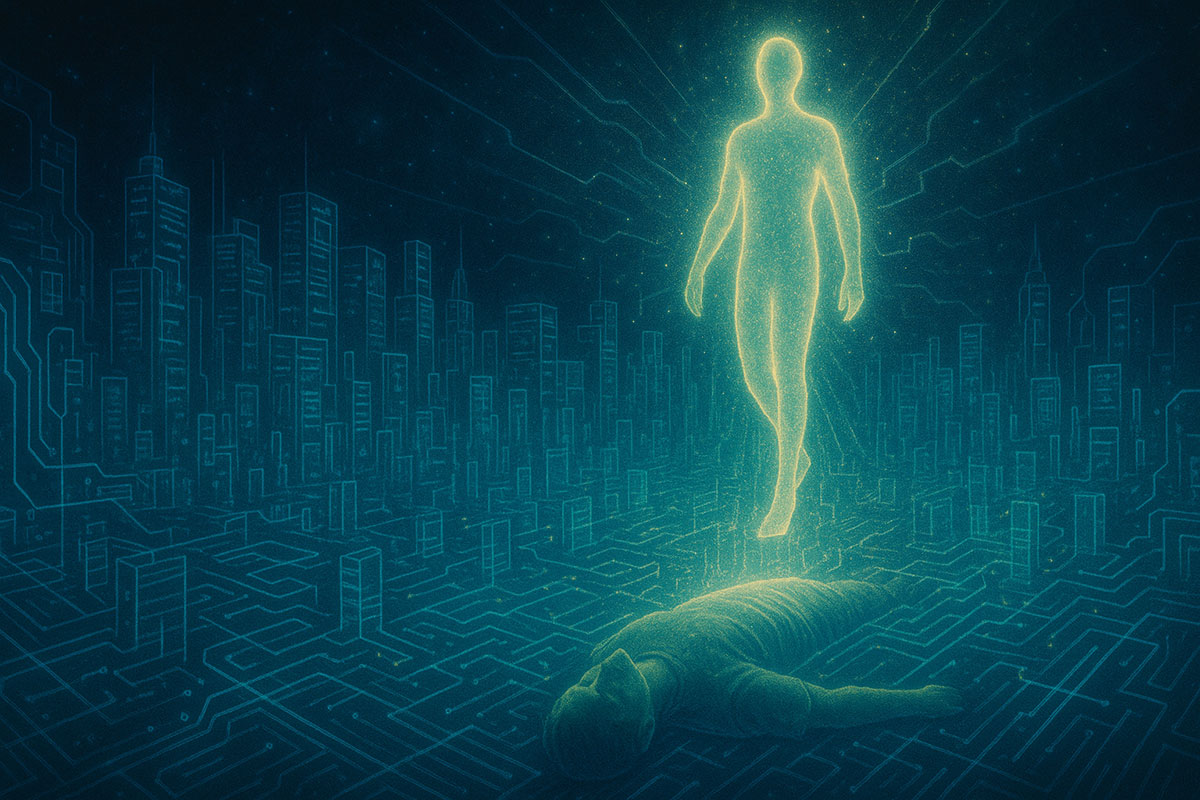
Participants:
Dr. Thomas Metzinger (Moderator, philosopher of mind)
Jade Shaw (astral projection teacher and researcher)
Robert Monroe (pioneer of OBEs, founder of the Monroe Institute)
Susan Blackmore (psychologist and skeptic)
Dr. Eben Alexander (neurosurgeon and NDE experiencer)
Waldo Vieira (parapsychologist, founder of Projectiology)
Opening by Dr. Metzinger
“In the 21st century, we find ourselves at the crossroads of ancient practice and modern technology. Virtual reality, AI, and brain–computer interfaces may soon simulate experiences once considered mystical. Tonight, we ask: what happens when the astral and the digital collide?”
First Question by Metzinger
“If virtual reality or AI could replicate the feeling of astral projection, would that undermine—or enhance—the authenticity of the real experience?”
Robert Monroe: “Technology might reproduce the sensations, the vibrations, the floating. But the authentic journey involves going beyond simulation—encounters, verifications, realities independent of the machine. VR could be training wheels, but not the real voyage.”
Susan Blackmore: “I would argue the opposite. If technology can mimic these states convincingly, it suggests that astral projection is nothing more than brain-generated illusion. We could reproduce the ‘astral’ without leaving the body at all.”
Jade Shaw: “Yet even if VR triggers the experience artificially, the transformation may still be real. Just as guided meditation apps help people meditate, VR could help people step into altered states—and maybe even catalyze genuine OBEs.”
Eben Alexander: “Technology may open doors, but consciousness itself is primary. A machine cannot replicate the depth of an OBE that reveals eternal truths. If anything, VR could be a gateway, but the true journey is far greater than circuitry.”
Waldo Vieira: “I foresee hybrid methods. Devices can induce trance, vibrational states, or lucidity, but projection must ultimately be trained consciously. Technology assists; it cannot substitute for consciential evolution.”
Second Question by Metzinger
“What ethical concerns arise if technology enables artificial OBEs for entertainment or profit?”
Susan Blackmore: “This is precisely my worry. If corporations sell virtual ‘afterlife vacations,’ we risk exploiting people’s deepest fears and hopes. That could be dangerous and manipulative.”
Robert Monroe: “True. I built the Monroe Institute not for entertainment, but for exploration of consciousness. If the digital age commercializes these states, the sacred potential may be lost to shallow amusement.”
Jade Shaw: “And yet, accessibility matters. If VR can introduce millions to the idea that they are more than their bodies, it could ignite genuine curiosity and healing. Ethics must be built into the design, but the potential is vast.”
Eben Alexander: “We must safeguard human dignity. These states touch the soul. If reduced to consumer products, they risk trivialization. But if approached responsibly, they may help humanity overcome its fear of death.”
Waldo Vieira: “Yes. Commercial misuse is inevitable, but so is evolution. Conscientiology teaches that each person must discern. Some will treat artificial OBEs as toys; others will use them as stepping-stones to true multidimensional awareness.”
Third Question by Metzinger
“Could the merging of digital tools and astral practice point to a new phase in human evolution, where consciousness itself is technologically expanded?”
Jade Shaw: “Absolutely. Imagine a fusion of neurofeedback, VR, and traditional OBE training, giving people direct access to higher states. That could democratize spiritual growth.”
Susan Blackmore: “Or it could reveal that all such experiences are constructs. If technology can generate them, then perhaps that’s all they ever were. Evolution might mean letting go of supernatural interpretations.”
Robert Monroe: “But remember—technology is not consciousness. We may use digital aids, but the frontier is inner. Humanity’s evolution lies in realizing that we are far more than biological machines, even more than digital ones.”
Eben Alexander: “From my own experience, I’d say yes: these tools may awaken people to deeper truths. But they must never replace the inner path. Evolution comes when we integrate science and spirit, not when one pretends to erase the other.”
Waldo Vieira: “Technological expansion of consciousness is inevitable. But we must prepare ethically and spiritually. If humanity gains tools for mass projection without maturity, we risk confusion and misuse. True evolution is not just access—it is responsibility.”
Closing by Dr. Metzinger
“What we’ve heard tonight reflects both excitement and warning. Technology may amplify our access to altered states, but it may also reduce them to simulations. The crucial question is not whether machines can induce OBEs, but whether humanity can use them to deepen—not cheapen—our relationship with consciousness. The astral and the digital are meeting; whether this becomes liberation or illusion depends on us.”
Topic 4: Cross-Cultural Perspectives on Astral Travel
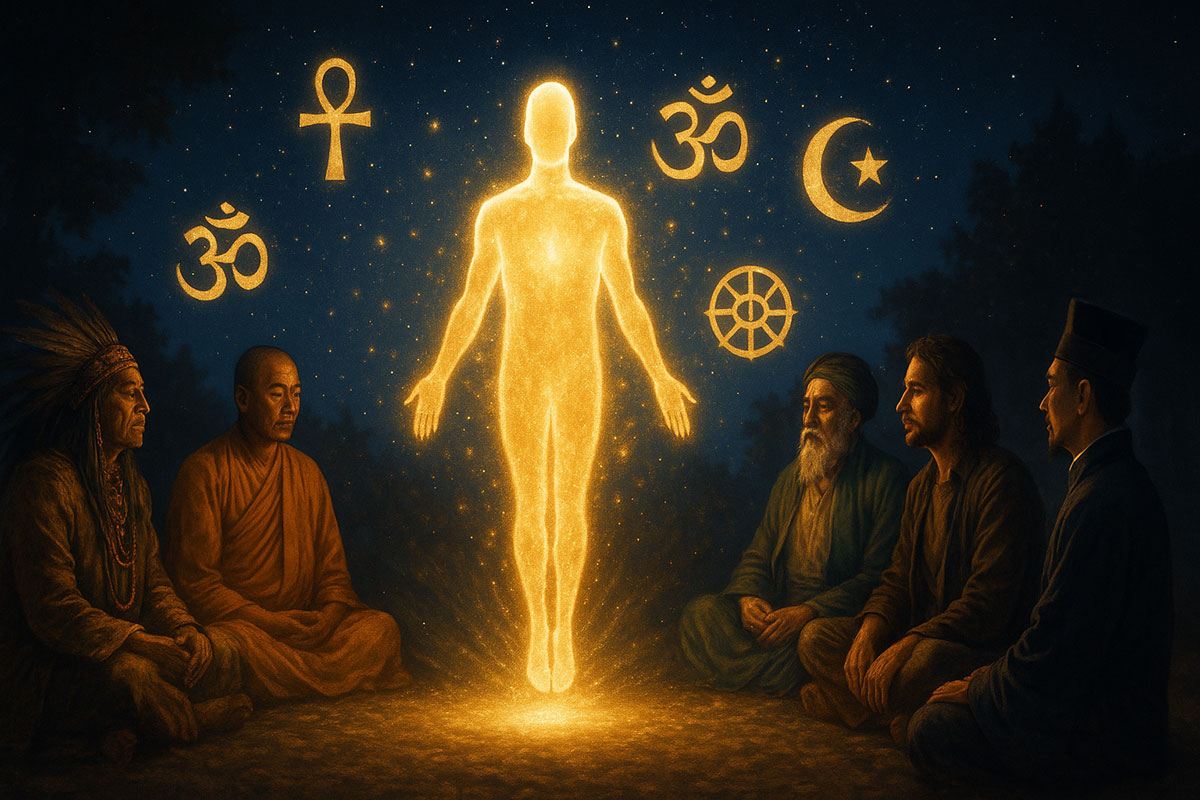
Participants:
Mircea Eliade (Moderator, historian of religion)
Robert Monroe (pioneer of modern OBEs)
Susan Blackmore (psychologist and skeptic)
Jade Shaw (astral projection teacher and researcher)
Eben Alexander (neurosurgeon and NDE experiencer)
Waldo Vieira (parapsychologist, founder of Projectiology)
Opening by Mircea Eliade
“In every culture, there are stories of the soul leaving the body: shamans who fly to other realms, yogis who travel in subtle bodies, mystics who ascend in visions. Today, the term ‘astral projection’ is often used in the West, but the underlying experience seems universal. Let us ask: are we speaking of one human phenomenon with many faces, or many different practices merely appearing alike?”
First Question by Eliade
“In your view, is astral projection a universal human experience expressed differently across cultures, or is it shaped by cultural beliefs and frameworks?”
Robert Monroe: “From my journeys, I believe the experience is universal. People from all walks describe vibrations, separation, travel, and encounters. The language changes—silver cord, spirit body, subtle body—but the essence is the same.”
Susan Blackmore: “I’d argue culture shapes the reports. A Tibetan monk may describe dream yoga; a Brazilian medium may speak of leaving the body. Both reflect expectations shaped by their traditions. The brain produces the experience, culture provides the script.”
Jade Shaw: “Both are true. Yes, culture frames the narrative, but the transformative essence—the expansion of identity beyond the body—appears everywhere. That suggests something deeper than conditioning.”
Eben Alexander: “During my NDE, I saw motifs described in Christian mysticism, but when I later read Sufi and Hindu accounts, I recognized the same terrain. I believe the universality is real: we are all tuning into the same larger consciousness.”
Waldo Vieira: “I call this the holosoma—the multidimensional self that transcends culture. Projection is a technical capacity of consciousness. But interpretation, yes, is colored by one’s society. The raw event is universal; the explanation is local.”
Second Question by Eliade
“Some traditions, like Tibetan Dream Yoga or Amazonian shamanism, integrate out-of-body practices into structured spiritual systems. What can the modern West learn from these traditions?”
Jade Shaw: “We can learn discipline. In Tibetan practice, OBEs are not random—they are cultivated for awakening. In the West, many approach projection as a thrill. We could borrow their seriousness and sense of purpose.”
Susan Blackmore: “I’d say what we learn is humility. Many traditions treat these states as symbolic, not literal. Shamans may ‘travel’ to heal, but even they don’t always claim physical reality. The West should be cautious before taking OBEs as proof of the soul.”
Robert Monroe: “What I see is the importance of maps. Shamans and yogis have mapped the subtle worlds for centuries. My work attempted something similar: to chart these terrains so explorers are not lost. The West needs its own maps.”
Eben Alexander: “The lesson is integration. In other cultures, OBEs are not fringe—they’re woven into healing, morality, and cosmology. If the West integrated these practices, our healthcare and spiritual life would be richer.”
Waldo Vieira: “Agreed. In Brazil, projection is not exotic—it is part of Spiritist and Consciential traditions. The West should learn to normalize projection as a human capacity, not a paranormal oddity.”
Third Question by Eliade
“If humanity could recognize the cross-cultural common ground of out-of-body journeys, what impact might that have on global spirituality and cooperation?”
Eben Alexander: “It could dissolve the fear of death across traditions. If Christians, Muslims, Buddhists, and shamans all recognize they touch the same expanded reality, then compassion and unity could flourish.”
Susan Blackmore: “Or it could encourage more confusion. People may mistake metaphor for fact, turning symbolic traditions into literal claims. Unity is possible, yes, but only if we admit the brain’s role in shaping these illusions.”
Robert Monroe: “I believe it could be revolutionary. If millions accepted their multidimensional identity, cultural divisions would matter less. We’d know we are more than citizens of nations—we are citizens of eternity.”
Jade Shaw: “Cross-cultural recognition can heal division. Instead of arguing whose religion is ‘right,’ we could see OBEs as the shared human doorway to the sacred.”
Waldo Vieira: “Ultimately, this convergence could lay the groundwork for planetary consciential evolution. Shared recognition of projection would mean humanity finally accepts itself as multidimensional. That could unify spiritual and scientific pursuits alike.”
Closing by Mircea Eliade
“From shamanic flights to modern OBEs, astral travel seems to bridge cultures, languages, and centuries. Perhaps, as some of you suggest, it is one universal experience interpreted differently; perhaps, as others argue, it is a mirror of our cultural imagination. Yet either way, it serves the same role: reminding humanity that the boundaries of self are far wider than the physical body. Whether we call it astral, shamanic, or dream yoga, the human longing to transcend seems eternal.”
Topic 5: Astral Projection and the Future of Human Evolution

Participants:
Dr. Rupert Sheldrake (Moderator, biologist and consciousness researcher)
Robert Monroe (pioneer of OBEs, founder of the Monroe Institute)
Susan Blackmore (psychologist and skeptic)
Jade Shaw (astral projection teacher and researcher)
Eben Alexander (neurosurgeon and NDE experiencer)
Waldo Vieira (parapsychologist, founder of Projectiology)
Opening by Dr. Sheldrake
“Human evolution is often spoken of in terms of biology and technology, but rarely in terms of consciousness. If astral projection is more than fantasy, it might represent a hidden capacity of our species—one pointing to our future. Tonight, let us ask: does humanity evolve by expanding its consciousness, and is astral projection part of that unfolding?”
First Question by Sheldrake
“Could astral projection represent an evolutionary step—an emerging ability of consciousness beyond physical limits?”
Robert Monroe: “Absolutely. OBEs are like training flights for the soul. They show us that identity is not confined to the body, preparing us for existence beyond death. Evolution, in this sense, is about remembering what we already are—multidimensional beings.”
Susan Blackmore: “I must object. Evolution works through natural selection, not mystical leaps. OBEs are fascinating, but they are brain phenomena, not new organs of consciousness. To frame them as evolution risks misleading people into wishful thinking.”
Eben Alexander: “Susan, I understand your caution, but my near-death journey convinced me that evolution is not just physical. Consciousness itself evolves. If OBEs reduce fear of death and increase compassion, then perhaps this is the next stage—humanity awakening to its spiritual identity.”
Jade Shaw: “I see OBEs as a kind of evolutionary rehearsal. People step outside their bodies and return with expanded empathy, ecological awareness, or creative insights. Those are traits we urgently need as a species.”
Waldo Vieira: “From my research in conscientiology, projection is not new—it has always existed. What is new is humanity’s growing lucidity. As more people practice consciously, this ability becomes less rare, more collective. That is evolution: from unconscious to conscious projection.”
Second Question by Sheldrake
“If humanity embraced astral projection as a real capacity, how might it reshape our societies, institutions, or worldview?”
Eben Alexander: “It would revolutionize healthcare. Imagine doctors, patients, and families all knowing that consciousness continues beyond death. End-of-life care, grief, even medical ethics would be transformed by compassion and continuity.”
Susan Blackmore: “Or it could create new cults and delusions. I’ve seen how seductive these ideas are. Societies might waste resources chasing after illusions of the soul instead of addressing urgent physical needs.”
Jade Shaw: “But think of the educational implications. If young people were taught techniques to explore consciousness responsibly, they might grow up with less materialism, more respect for the planet, and greater openness to cultural diversity.”
Robert Monroe: “I would add the political dimension. Much of human conflict arises from fear and scarcity. If projection showed us that we survive death, that we are more than national identities, then wars and divisions would lose their grip.”
Waldo Vieira: “Yes—projection could become a planetary paradigm. Institutions would integrate it as consciential science. Universities could teach multidimensional ethics, governments could factor in life beyond the soma, religions could converge on shared experiential truths.”
Third Question by Sheldrake
“What responsibilities would come with widespread access to astral projection? Could there be dangers as well as gifts?”
Robert Monroe: “The gift is freedom; the danger is misuse. Just as we can use nuclear energy for power or destruction, OBEs could be used for healing or intrusion. The responsibility is to teach explorers integrity and love.”
Susan Blackmore: “That’s precisely my worry. If people take OBEs literally, they may exploit others with false promises—psychic intrusion, astral ‘spying,’ or cult manipulation. The danger is not the phenomenon itself but human gullibility.”
Jade Shaw: “I agree misuse is possible, but so is misuse of any tool. Responsibility comes with education—teaching grounding, integration, and ethical awareness. OBEs should serve healing, not escapism.”
Eben Alexander: “The greatest responsibility is humility. These realms are vast. Entering them without reverence could cause harm. But approached wisely, they prepare us to live more fully here and to die without fear.”
Waldo Vieira: “Projection amplifies who we are. If we are egotistical, we may misuse it. If altruistic, we may help others. The responsibility is consciential maturity—growing in lucidity, ethics, and fraternity before mass projection becomes widespread.”
Closing by Dr. Sheldrake
“What we’ve seen tonight is a vision of possibility and caution. For some, astral projection is the seed of a new human capacity; for others, a cautionary tale of illusion. Whether it is our evolutionary destiny or a symbolic mirror, it challenges us to ask: what does it mean to be human in a universe where consciousness may not end at the skull? If astral projection is indeed part of our evolution, then our future may be far larger than we ever imagined.”
Final Thoughts By Edgar Cayce
In my visions, I often found myself leaving the body, traveling to places where knowledge lived in light, and returning with words that were not my own. These journeys were not meant for spectacle, but for service—to remind humanity of its higher purpose.
Astral projection, by whatever name it is called—soul travel, dream yoga, shamanic flight—is not merely escape. It is preparation. Each journey beyond the body is a rehearsal for the greater journey we will all take when the body itself can no longer hold us.
The debates you have read—between science and spirit, between skepticism and belief—are part of the necessary testing of truth. But beyond the arguments lies a deeper unity: the recognition that man is more than flesh, that the soul survives, and that love is the force binding all dimensions together.
In the years ahead, many will use this knowledge for curiosity or for gain. But the wise will remember: every step into the astral carries a responsibility. The realms beyond are not playgrounds but classrooms, where the soul learns compassion, service, and humility.
Humanity’s evolution is not measured by machines, but by awakening. When men and women learn to live as if they are eternal—and to love as if the other is themselves—then the purpose of astral projection will be fulfilled.
For it was never meant to dazzle us with flights of wonder, but to anchor us more deeply in the truth: we are spiritual beings, eternal, bound by love, destined for unity.
— Edgar Cayce
Short Bios:
Leave a Reply