

|
Getting your Trinity Audio player ready...
|
What if today’s philosophers confronted the crises we’re living through without abstraction or distance?
Introduction by Hannah Arendt
Before we speak of crises, we must speak of the world we share.
A common world is not held together by agreement, nor by truth enforced from above. It exists only insofar as people are willing to appear before one another, to speak, to listen, and to take responsibility for what they say and do. When that space between us collapses—when reality fragments into private versions and power operates without visibility—what is lost is not simply truth, but plurality itself.
We do not live in an age of lies alone. We live in an age where the very conditions for judging truth have become unstable. Language no longer reveals; it persuades. Information no longer informs; it mobilizes. Power no longer commands; it arranges, nudges, and normalizes. And in such conditions, the danger is not fanaticism, but thoughtlessness—the quiet acceptance of systems we no longer question.
The thinkers gathered here do not speak as prophets, nor as judges. They speak as participants in a world whose structures of meaning, identity, and authority are actively forming. Their task is not to provide certainty, but to illuminate responsibility: to ask who shapes our realities, how power circulates without names, and whether a shared life remains possible amid profound difference.
This conversation does not promise resolution. It promises something more demanding: attention.
To think, now, is already an act of resistance.
(Note: This is an imaginary conversation, a creative exploration of an idea, and not a real speech or event.)
Topic 1 — Who Controls Reality Now: Language, Media, or Power?
Moderator: Susan Sontag
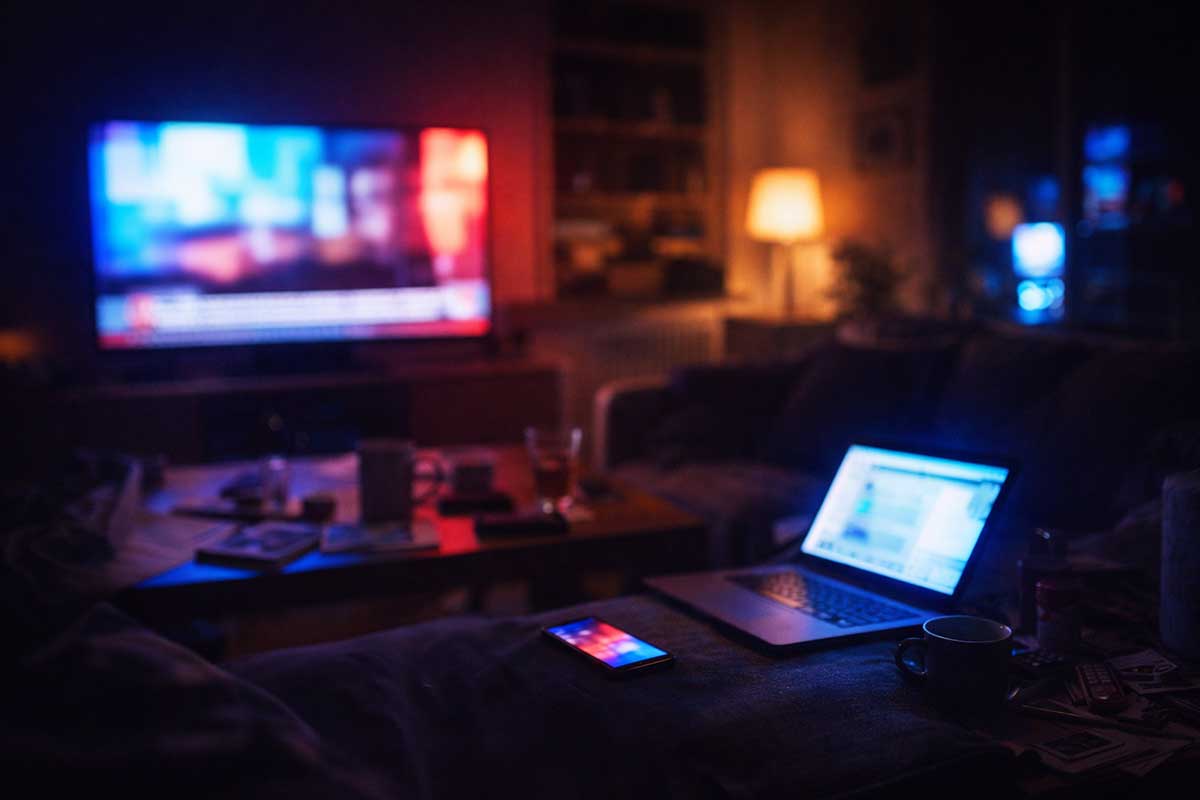
The room is restrained, almost austere. No spectacle. No screens. Susan Sontag insisted on that. If the conversation was about how reality is shaped, she wanted no mediated distractions inside the room itself.
“These are not academic questions anymore,” she begins. “They are lived questions. Questions people encounter daily without language for them.”
She looks around the table.
Seated with her are Noam Chomsky, Stuart Hall, Slavoj Žižek, and Judith Butler.
“All of you,” Sontag continues, “have warned—explicitly or implicitly—that reality itself could become unstable. Let’s begin there.”
First Question
In today’s world, who actually controls reality: language, media systems, or power structures—and are these still separable?
Chomsky answers first, as expected, calmly and without ornament.
“The primary mechanism hasn’t changed,” he says. “What has changed is its scale and speed. Power controls reality by controlling the range of acceptable discourse. Media—whether corporate or algorithmic—does not fabricate reality wholesale. It selects, frames, emphasizes, and repeats. That is enough. People are not lied to constantly. They are distracted systematically.”
He pauses.
“The public is not uninformed. It is misdirected.”
Stuart Hall nods, but reframes.
“Power today doesn’t simply impose meaning from above,” he says. “It circulates through culture. Through identity. Through symbols people recognize as their own. The old propaganda model assumed a passive audience. That assumption no longer holds. People participate in the production of meaning—even when that meaning works against them.”
He gestures subtly with his hand.
“Reality is negotiated now, not dictated. That makes it more unstable, not more democratic.”
Judith Butler leans forward.
“We should be careful about speaking as if power is external,” she says. “Power operates through norms—through what feels intelligible, speakable, livable. Language doesn’t just describe reality; it constitutes it. Certain lives become real by being recognized. Others remain unreal—ungrievable, unspeakable.”
She looks directly at Chomsky.
“This isn’t only about media systems. It’s about whose suffering registers as reality at all.”
Žižek, predictably, disrupts the calm.
“Yes, yes—but here is the obscene twist,” he says. “We obsess over misinformation while ignoring ideology at its purest form: the fantasy that we already see reality clearly. People say, ‘I know media manipulates me,’ and then continue exactly as before. Cynicism is no longer resistance. It is ideology itself.”
He smiles faintly.
“The greatest power today is not deception. It is resignation.”
Sontag listens carefully before intervening.
“So if power no longer needs to lie, only to flood—are we dealing with control or collapse?”
No one answers immediately.
Second Question
Has language lost its ability to clarify reality—or has it become the primary site of control itself?
This time Hall begins.
“Language has always been a site of struggle,” he says. “What’s different now is saturation. Meaning moves too quickly to settle. Words detach from shared reference. They become signals of belonging rather than tools of understanding.”
He continues.
“When language loses its anchoring function, identity rushes in to replace it. People don’t ask, ‘Is this true?’ They ask, ‘Is this us?’”
Butler builds on this carefully.
“Language doesn’t lose power,” she says. “It gains it. But in distorted ways. Naming can liberate. It can also trap. When categories harden, language polices rather than opens. Yet abandoning language isn’t an option. Silence has always favored power.”
She pauses.
“The task is not purity of language, but responsibility in its use.”
Chomsky returns to structure.
“Language becomes dangerous when it is severed from material analysis,” he says. “Words like ‘freedom’ or ‘democracy’ float free of institutional reality. That’s not linguistic failure—it’s strategic abstraction. Power prefers vague ideals. They can be endlessly invoked without accountability.”
Žižek laughs softly.
“Notice the paradox,” he says. “We talk endlessly, yet nothing changes. Discourse becomes a substitute for action. Language becomes a ritual that reassures us we’ve done something.”
He leans back.
“Sometimes the most ideological thing you can do is keep talking.”
Sontag finally steps in more forcefully.
“There’s a danger here,” she says. “If we treat language only as control, we risk aestheticizing power. Words still wound. Still expose. Still reveal. The problem is not that language failed. It’s that we stopped demanding seriousness from it.”
She looks around the table.
“We confuse expression with thought.”
Third Question
Are people victims of manufactured reality—or complicit participants in sustaining it?
This question lands heavily.
Chomsky answers with characteristic restraint.
“Responsibility is uneven,” he says. “Systems are designed to limit alternatives. That doesn’t eliminate agency, but it constrains it. Blaming individuals for structural manipulation is convenient for those who benefit from it.”
Hall complicates that.
“True,” he says, “but people are not merely duped. They interpret. They invest. They identify. Power works because it resonates with lived experience. That’s why resistance must be cultural, not just institutional.”
Butler shifts the focus inward.
“Complicity doesn’t require intent,” she says. “We reproduce norms simply by living within them. The question is whether we can interrupt those reproductions—whether we can pause, reflect, and rearticulate the conditions of intelligibility themselves.”
Žižek cuts in sharply.
“We love blaming ‘the system’ because it absolves us,” he says. “But the system persists because it is comfortable. It gives us enemies, narratives, outrage—without demanding real transformation. People are not forced into illusion. They cling to it.”
The room tightens.
Sontag closes the discussion deliberately, her voice quieter but firmer.
“The danger is not that reality is controlled,” she says. “The danger is that people grow accustomed to unreality. That they stop expecting coherence. That they lower their demands on truth.”
She pauses.
“A society can survive disagreement. It cannot survive indifference to reality itself.”
Closing Reflection (Moderator)
Sontag gathers her notes but does not stand.
“What emerges here,” she says, “is not a conspiracy, but a condition. A world where reality is fragmented not by lies alone, but by overload, speed, and fatigue.”
She looks at each thinker in turn.
“Power no longer needs to silence language. It needs only to exhaust it. And exhausted people accept incoherence as normal.”
She turns to the unseen audience.
“If there is a responsibility left to us, it is not to shout louder—but to slow down, to refuse easy narratives, and to demand that words once again correspond to something real.”
She lets the silence hold.
“Otherwise,” she concludes, “we won’t lose truth in a dramatic collapse. We’ll lose it the way people lose hearing—gradually, until the quiet feels normal.”
The room remains still.
And the question lingers, unresolved but unavoidable:
If reality is slipping, who will insist on holding it in place?
Topic 2 — Power Everywhere: Invisible Control and the Quiet Discipline of Modern Life
Moderator: Michel Foucault
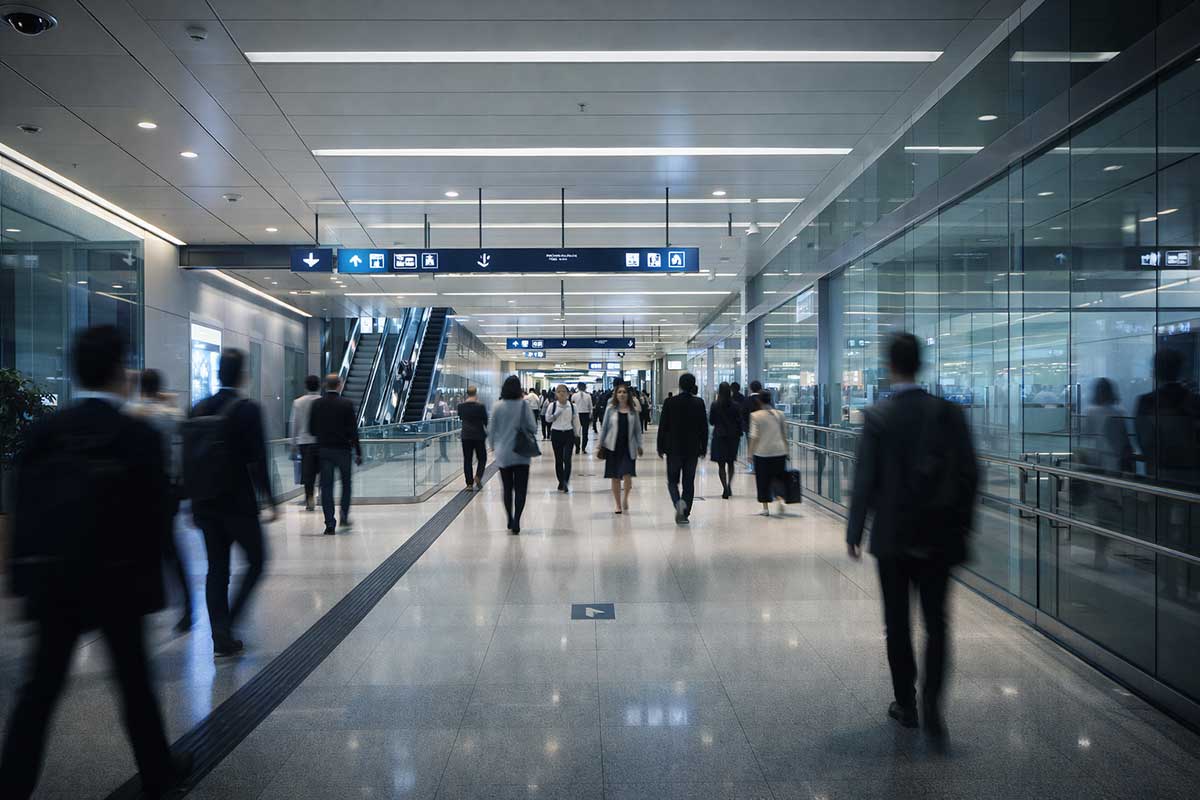
The setting this time is intentionally unsettling—not dramatic, but ordinary. Foucault insisted on that. Power, he believed, did its most effective work where it appeared least theatrical.
“There is no throne in the room,” he begins calmly. “No tyrant. No central command. Yet everyone here understands that power is present.”
Seated with him are Noam Chomsky, Judith Butler, Stuart Hall, and Slavoj Žižek.
Foucault folds his hands.
“Let us begin with a simple premise,” he says. “Power no longer announces itself. It arranges.”
First Question
If power today has no visible center, where exactly does it operate—and how do ordinary people encounter it in daily life?
Foucault answers his own question first, not out of dominance, but clarity.
“Power operates through systems of normalization,” he says. “Through routines, standards, metrics, and expectations. It does not forbid; it optimizes. It does not threaten; it guides. One follows the path not because one is ordered to, but because alternatives quietly disappear.”
He pauses.
“The most effective power makes itself unnecessary.”
Chomsky nods, then grounds the abstraction.
“In institutional terms,” he says, “this means corporate governance, algorithmic incentives, labor precarity, surveillance capitalism. People are not coerced into compliance—they are economically cornered. Freedom is preserved rhetorically while choices narrow materially.”
Hall reframes again, shifting attention to culture.
“What’s crucial,” he says, “is that power now works through identity and aspiration. People internalize expectations. They discipline themselves in pursuit of visibility, success, legitimacy. Culture becomes the transmission belt between structure and self.”
He adds quietly:
“Power succeeds when it feels like common sense.”
Butler deepens the interior dimension.
“Power governs by shaping what is recognizable as a viable life,” she says. “Certain ways of living appear natural, others unintelligible. People don’t feel constrained; they feel misaligned if they deviate.”
She pauses.
“Control is felt not as force, but as anxiety.”
Žižek, leaning forward, disrupts again.
“And don’t forget enjoyment,” he says. “Power today commands us to enjoy—to optimize ourselves, to express, to perform authenticity. This is the cruelest discipline. You are not oppressed; you are failing yourself.”
The room grows still.
Foucault resumes.
“So power does not stand over you,” he says. “It passes through you.”
Second Question
If power operates through freedom, choice, and self-expression, how can it be resisted without simply reproducing itself?
This question exposes tension immediately.
Butler answers carefully.
“Resistance cannot simply invert norms,” she says. “It must expose how norms are constructed and enforced. That requires vulnerability. To resist is not to stand outside power—that is impossible—but to trouble its smooth operation.”
She adds:
“Refusal itself can be a practice.”
Chomsky shifts to strategy.
“Resistance must target institutions,” he says. “Naming power without organizing against it leads to paralysis. Awareness alone changes nothing. History shows that gains come from sustained collective pressure—not performative dissent.”
Hall bridges the two.
“Resistance is not singular,” he says. “It operates across registers—economic, cultural, symbolic. Movements fail when they ignore how people understand themselves. You cannot dismantle power without reshaping meaning.”
Žižek scoffs gently.
“Be careful,” he says. “Today’s resistance is often pre-packaged. Protest becomes lifestyle. Outrage becomes consumption. The system feeds on symbolic rebellion because it leaves material relations untouched.”
He pauses, then adds:
“Sometimes resistance means refusing to play—even the games of opposition.”
Foucault listens intently, then intervenes.
“Resistance does not begin with grand gestures,” he says. “It begins with attention. With noticing how one is governed. Power hates reflection.”
Third Question
Has modern power become so diffuse that responsibility disappears—leaving no one accountable?
This question sharpens the room.
Chomsky answers bluntly.
“No,” he says. “Responsibility has not disappeared. It has been obscured. Corporations, states, financial institutions remain highly centralized. Diffusion is ideological. It convinces people that no one is in charge.”
Hall agrees, but complicates.
“Yes—but power also fragments responsibility intentionally,” he says. “When harm is distributed across systems, individuals experience it as fate rather than policy. Accountability dissolves into procedure.”
Butler turns inward again.
“Responsibility is displaced,” she says. “People are told they are responsible for their outcomes, even when structures are decisive. This produces shame, not justice.”
Žižek smiles darkly.
“And nothing is more effective than shame,” he says. “It privatizes failure. It keeps people isolated. The system remains untouched while individuals blame themselves.”
Foucault speaks last, deliberately.
“Power does not need to erase responsibility,” he says. “It needs only to relocate it—from institutions to individuals, from structures to psyches.”
He pauses.
“That is the most subtle domination.”
Closing Reflection (Moderator)
Foucault does not summarize. He reframes.
“We often imagine power as something that must be seized or overthrown,” he says. “But power today is not a fortress. It is an atmosphere.”
He looks around the room.
“You breathe it. You adjust to it. You reproduce it.”
He addresses the unseen audience directly.
“The question is no longer ‘Who rules us?’ The question is ‘How are we shaped?’—and whether we are willing to recognize that shaping without comfort or illusion.”
He concludes softly:
“Power is most dangerous when it feels like freedom.”
The room remains quiet—not in fear, but recognition.
And a new question settles in the space left behind:
If power is everywhere, where does responsibility begin?
Topic 3 — Identity, Oppression, and Responsibility: Who Owes What to Whom?
Moderator: bell hooks
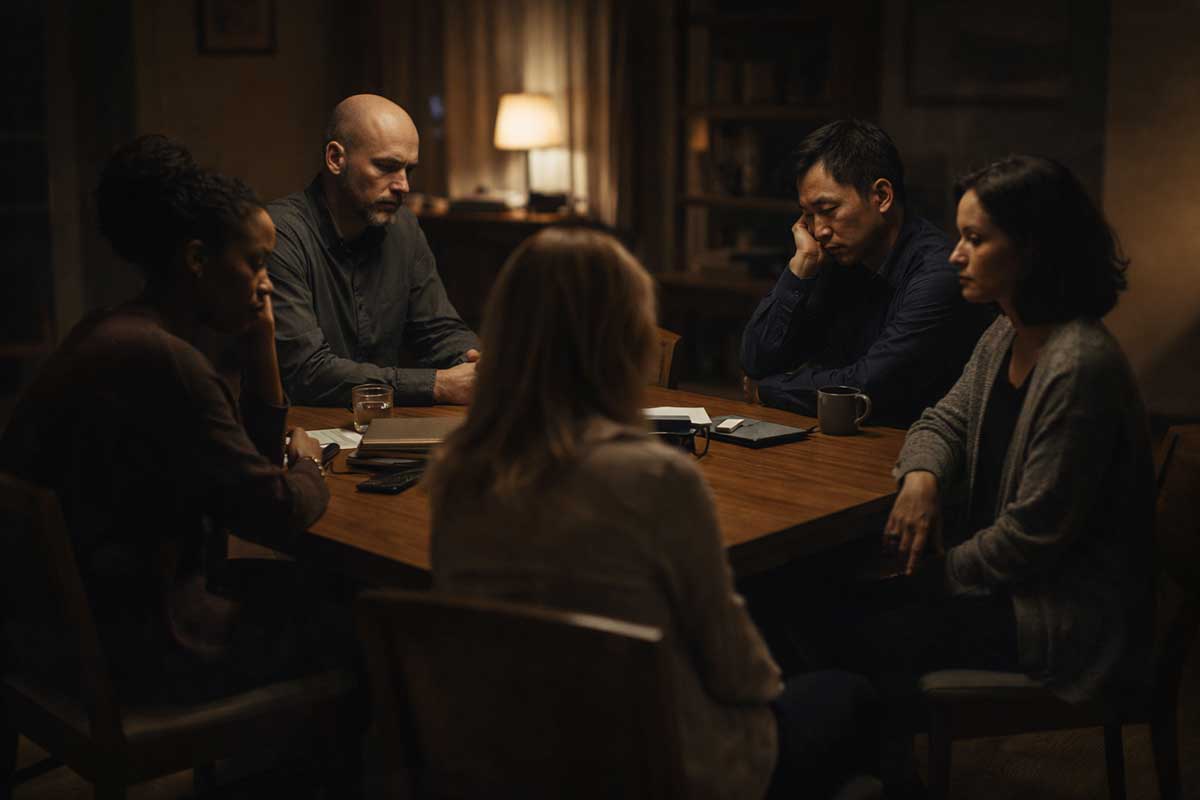
The room feels different this time. Less formal. Less guarded. bell hooks wanted it that way.
“Too many conversations about power forget how it feels to live under it,” she begins. “And too many conversations about identity forget how easily pain becomes ideology.”
Around the table sit Judith Butler, Frantz Fanon, Martha Nussbaum, and Slavoj Žižek.
hooks continues gently, but firmly.
“This discussion isn’t about winning arguments. It’s about whether identity politics has helped us become more free—or more divided.”
She lets the silence do some of the work.
First Question
Has identity become a tool of liberation—or a new system of moral control?
Judith Butler speaks first, carefully.
“Identity emerged as a response to erasure,” she says. “People needed language to name harm, exclusion, violence. Without that, there is no political recognition. But identity hardens when it becomes prescriptive—when it tells people not just who they are, but what they are permitted to say, feel, or imagine.”
She pauses.
“Liberation becomes fragile when identity replaces ethics.”
Fanon responds more sharply.
“Identity was never abstract,” he says. “It was forced upon the colonized. Race, inferiority, otherness—these were imposed categories backed by violence. To criticize identity politics without acknowledging this history risks moral amnesia.”
He leans forward.
“The problem is not naming oppression. The problem is what comes after naming.”
Žižek interjects.
“Yes—but today identity often functions as a moral shield,” he says. “It explains everything and demands nothing. Structural critique disappears. Capitalism remains untouched while we argue over symbolic recognition.”
He shrugs.
“It’s easier to fight language than power.”
Nussbaum reframes the conflict.
“Identity is morally relevant,” she says. “But it is not morally sufficient. Justice requires attention to what people can actually do and become. When identity eclipses capabilities—education, health, dignity—we lose the human core.”
hooks listens, then speaks.
“Identity can awaken consciousness,” she says. “But without love, it becomes a cage. Without compassion, it turns pain into hierarchy.”
The room settles into discomfort.
Second Question
Does focusing on oppression risk eroding individual responsibility—or is responsibility itself a privilege?
This question cuts deeper.
Fanon answers without hesitation.
“Responsibility cannot be abstracted from conditions,” he says. “You cannot ask the oppressed to bear the same moral burden as those protected by the system. Freedom must be made possible before it can be demanded.”
Butler adds nuance.
“Yes—but denying agency entirely is also a form of domination,” she says. “If people are framed only as victims, they are stripped of ethical subjectivity. Responsibility must be contextual, not erased.”
Žižek smirks.
“This is the paradox,” he says. “We oscillate between blaming individuals for everything and excusing everything as structure. Both positions protect the system. True responsibility is unbearable—it demands structural change and personal risk.”
Nussbaum grounds the debate again.
“We must distinguish blame from responsibility,” she says. “Blame punishes. Responsibility empowers. The goal is not guilt—it’s moral development.”
hooks responds quietly.
“I worry,” she says, “that we’ve lost the language of accountability that isn’t punitive. People fear being wrong more than being unjust. That fear doesn’t heal—it hardens.”
Third Question
Can a society built around identity claims still cultivate solidarity—or does solidarity require something deeper?
This question lingers.
Butler speaks first.
“Solidarity cannot be based solely on sameness,” she says. “It must emerge from shared vulnerability. Identity politics fails when it forgets that our lives are interdependent.”
Fanon is skeptical.
“Solidarity without justice is sentimentality,” he says. “Those in power often ask for unity to preserve order. True solidarity disrupts comfort.”
Žižek sharpens the tension.
“Solidarity today is simulated,” he says. “Clicks, slogans, symbolic gestures. It feels ethical while changing nothing. Real solidarity costs something—status, security, belonging.”
Nussbaum responds firmly.
“Solidarity requires a shared moral horizon,” she says. “Without universal principles—human dignity, freedom from cruelty—politics fragments into competing grievances.”
hooks closes the circle.
“Solidarity begins with love,” she says. “Not romantic love—political love. The willingness to see one another fully, without erasing difference or weaponizing it.”
She pauses.
“That’s the work we keep avoiding.”
Closing Reflection (Moderator)
bell hooks does not summarize arguments. She speaks to the wound beneath them.
“We are living in a time when pain has become currency,” she says. “And pain is real. But pain alone cannot guide us.”
She looks around the table.
“When identity becomes the end rather than the beginning, we stop asking what kind of people we are becoming together.”
She addresses the audience.
“Justice without responsibility becomes vengeance. Responsibility without compassion becomes cruelty. And identity without love becomes another form of domination.”
Her voice softens.
“The question is not whether identity matters. The question is whether we are brave enough to move beyond it—toward a politics that heals rather than merely accuses.”
The room remains still.
And the unresolved truth settles in:
If we define ourselves only by what harmed us, can we still imagine who we might become?
Topic 4 — Technology vs. Meaning: Are We Advancing Faster Than We Understand Ourselves?

Moderator: Martin Heidegger
Heidegger chose the setting carefully: sparse, undecorated, almost monastic. No screens. No devices. Only a table, chairs, and silence.
“Technology is not a tool,” he begins slowly. “It is a way of revealing. And today, what is revealed is a world emptied of meaning.”
Around the table sit Hannah Arendt, Marshall McLuhan, Jacques Ellul, and Martha Nussbaum.
Heidegger continues.
“We are no longer asking what technology is doing to us. We are asking how to keep up.”
First Question
Has technology expanded human freedom—or quietly replaced the question of meaning with the pursuit of efficiency?
Ellul responds first, voice firm, almost resigned.
“Technology does not ask permission,” he says. “It advances according to its own logic—efficiency, optimization, speed. Every technique that can be developed will be developed. Human values adjust afterward.”
He pauses.
“This is not tyranny. It is inevitability mistaken for progress.”
McLuhan nods.
“We keep asking what technology does for us,” he says. “We rarely ask what it does to us. Every medium reshapes the nervous system. It alters perception, attention, memory. The medium is not neutral—it rewires us.”
Arendt enters, concerned but precise.
“The danger is not automation itself,” she says. “It is the loss of thinking. When action becomes reflex, when judgment is replaced by process, humans become unnecessary—not economically, but morally.”
Nussbaum reframes in human terms.
“Technology expands capability,” she says. “But capability without purpose is emptiness. The question is not speed or power—it is whether technology serves human flourishing or merely productivity.”
Heidegger listens, then concludes the round.
“When everything becomes a resource,” he says, “even the human being is standing-reserve.”
Second Question
Why does technological progress coincide with rising anxiety, loneliness, and a sense of inner hollowness?
This question settles heavily.
McLuhan answers first.
“We live inside our technologies,” he says. “They extend us, but they also amputate. Constant connection fragments attention. Fragmented attention fragments the self.”
Ellul is more severe.
“Meaning requires limits,” he says. “Technology dissolves limits. When everything is possible, nothing is significant.”
Arendt reflects quietly.
“The modern condition accelerates life without deepening it,” she says. “We act more, communicate more, produce more—but understand less. Thought requires stillness. Stillness has vanished.”
Nussbaum addresses the emotional cost.
“Human beings need narrative coherence,” she says. “We need to feel that our lives are about something. Technology supplies stimulation, not meaning.”
Heidegger brings it inward.
“We flee from ourselves,” he says. “Technology makes that flight easier. Constant noise spares us the terror of confronting our own finitude.”
Silence follows.
Third Question
Can technology still be reclaimed as a servant of meaning—or has it already reshaped us beyond that possibility?
This is the most difficult question.
Ellul is pessimistic.
“Reclamation is a comforting illusion,” he says. “We adapt to technique far more than it adapts to us. Ethics arrives too late.”
McLuhan is ambiguous.
“Awareness changes nothing automatically,” he says. “But without awareness, nothing changes at all.”
Arendt insists on responsibility.
“Human judgment cannot be automated,” she says. “As long as we remain capable of thinking, we remain capable of resistance.”
Nussbaum offers a moral framework.
“We must ask not what technology allows—but what it owes,” she says. “Education, reflection, care, and dignity must not be optional add-ons.”
Heidegger speaks last, slowly.
“The saving power grows where the danger grows,” he says. “But only if we pause. Only if we resist the demand to optimize everything—including ourselves.”
Closing Reflection (Moderator)
Heidegger does not conclude optimistically.
“The greatest danger,” he says, “is not artificial intelligence. It is artificial meaning.”
He looks toward the audience.
“When speed replaces wisdom, when efficiency replaces care, when connectivity replaces presence—we are no longer choosing technology. We are being chosen by it.”
He pauses.
“The question before us is simple, but terrifying.”
He lets the silence stretch.
“Are we still the ones shaping our tools—or have our tools begun shaping what it means to be human?”
Topic 5 — Can We Still Live Together? Trust, Pluralism, and the Fracture of Shared Life
Moderator: Hannah Arendt
Arendt begins without ceremony.
“Politics,” she says, “is not about agreement. It is about learning how to live together without resorting to violence.”
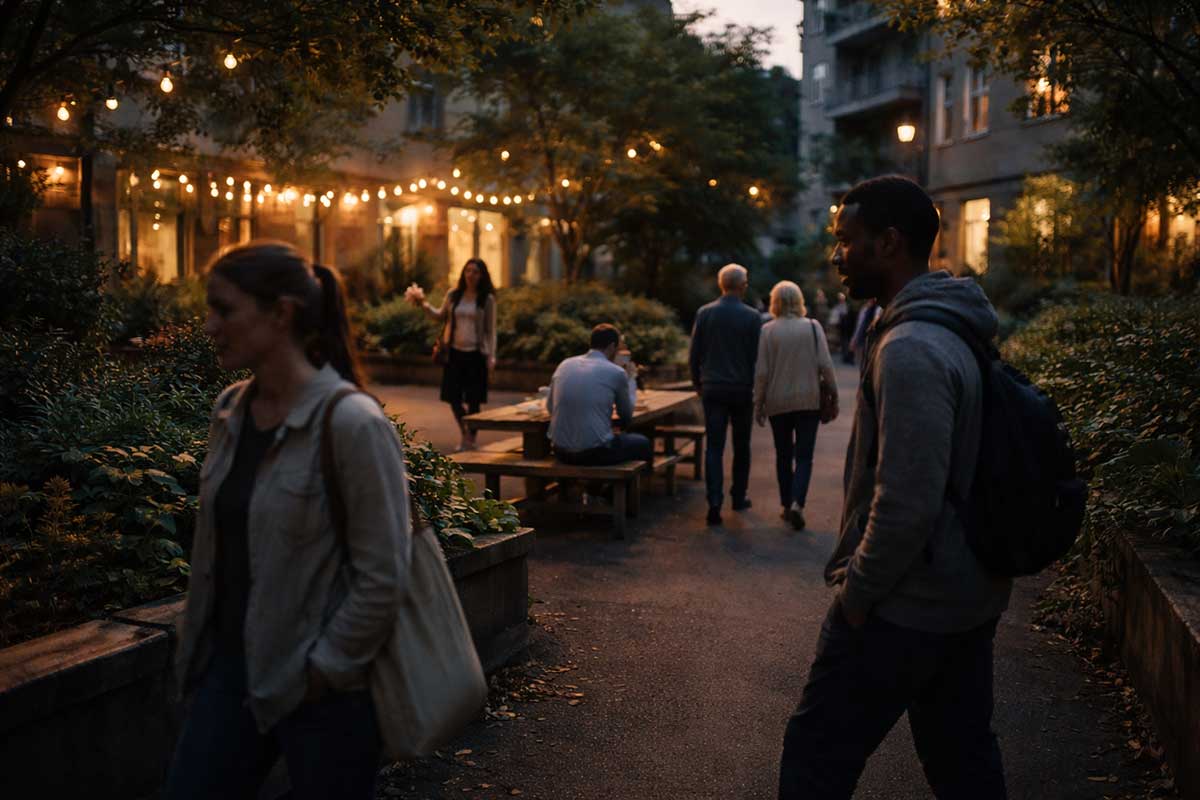
The room is quieter than before. This question feels closer to home.
Seated with her are Jürgen Habermas, Zygmunt Bauman, Martha Nussbaum, and Slavoj Žižek.
Arendt continues.
“What concerns me is not disagreement, but the disappearance of the world—the shared space where disagreement can appear without destroying us.”
First Question
Is social fragmentation today a temporary crisis—or the new normal of pluralistic societies?
Bauman speaks first, with weary clarity.
“We live in liquid times,” he says. “Institutions no longer anchor us. Communities dissolve into networks. Relationships become provisional. Coexistence becomes fragile because nothing is meant to last.”
He adds quietly:
“When bonds weaken, fear rushes in.”
Habermas responds more optimistically, but firmly.
“Pluralism does not require uniformity,” he says. “It requires procedures—shared norms for dialogue, accountability, and truth-seeking. The danger is not diversity; it is the collapse of communicative trust.”
Žižek interrupts.
“But trust presupposes a shared symbolic order,” he says. “What if that order no longer exists? What if we inhabit incompatible realities? Tolerance then becomes indifference—or quiet hostility.”
Nussbaum reframes again.
“Pluralism survives when people recognize one another as ends,” she says. “Not as threats, not as abstractions. Civic education matters. Moral imagination matters. Without them, diversity hardens into suspicion.”
Arendt closes the round.
“The crisis is not pluralism,” she says. “It is worldlessness—the loss of a common stage where differences can appear without annihilating one another.”
Second Question
Can civility survive without shared values—or is it merely politeness masking deeper breakdown?
The question lands uncomfortably.
Habermas answers first.
“Civility is not manners,” he says. “It is commitment to reason-giving. When people stop offering reasons to one another, civility collapses into performance.”
Bauman is more somber.
“Politeness can coexist with cruelty,” he says. “History shows that people can be civil while systems degrade. Civility without solidarity is brittle.”
Žižek sharpens the critique.
“Today’s civility often means ‘don’t disturb my bubble,’” he says. “It avoids conflict rather than working through it. That avoidance breeds resentment.”
Nussbaum counters gently.
“Civility is not enough,” she says. “But it is not nothing. It creates breathing room. It allows disagreement without humiliation.”
Arendt intervenes.
“The danger,” she says, “is mistaking calm for cohesion. Silence can be peaceful—or it can be the prelude to rupture.”
Third Question
What holds a society together when trust erodes and shared narratives collapse?
This is the hardest question yet.
Bauman answers bleakly.
“Nothing permanent,” he says. “Only temporary alignments. That is the price of liquidity.”
Habermas resists.
“Procedural legitimacy still matters,” he says. “People will accept outcomes they dislike if they trust the process. The erosion of institutions is more dangerous than ideological conflict.”
Žižek shakes his head.
“Procedures without belief are hollow,” he says. “People obey them until crisis arrives. Then fantasy fills the void—often violently.”
Nussbaum speaks with urgency.
“What holds societies together is moral commitment,” she says. “The belief that others’ lives matter, even when they are unfamiliar or uncomfortable.”
Arendt listens carefully, then speaks last.
“A society holds together,” she says, “when people are willing to appear to one another—to speak, to act, to risk misunderstanding.”
She pauses.
“When fear replaces appearance, the public realm withers.”
Closing Reflection (Moderator)
Arendt does not offer reassurance.
“We often ask whether we can still live together,” she says. “But that question hides a deeper one.”
She looks directly outward.
“Are we still willing to share a world—or only territory?”
She continues.
“Living together requires more than tolerance. It requires courage: the courage to speak without certainty, to listen without guarantees, and to remain present when retreat would be easier.”
Her voice lowers.
“When people abandon the shared world, they do not become free. They become isolated. And isolation is the seedbed of domination.”
She lets the silence linger.
“The future of coexistence does not depend on agreement. It depends on whether we still believe a shared world is worth sustaining.”
Final Thoughts by Nick Sasaki
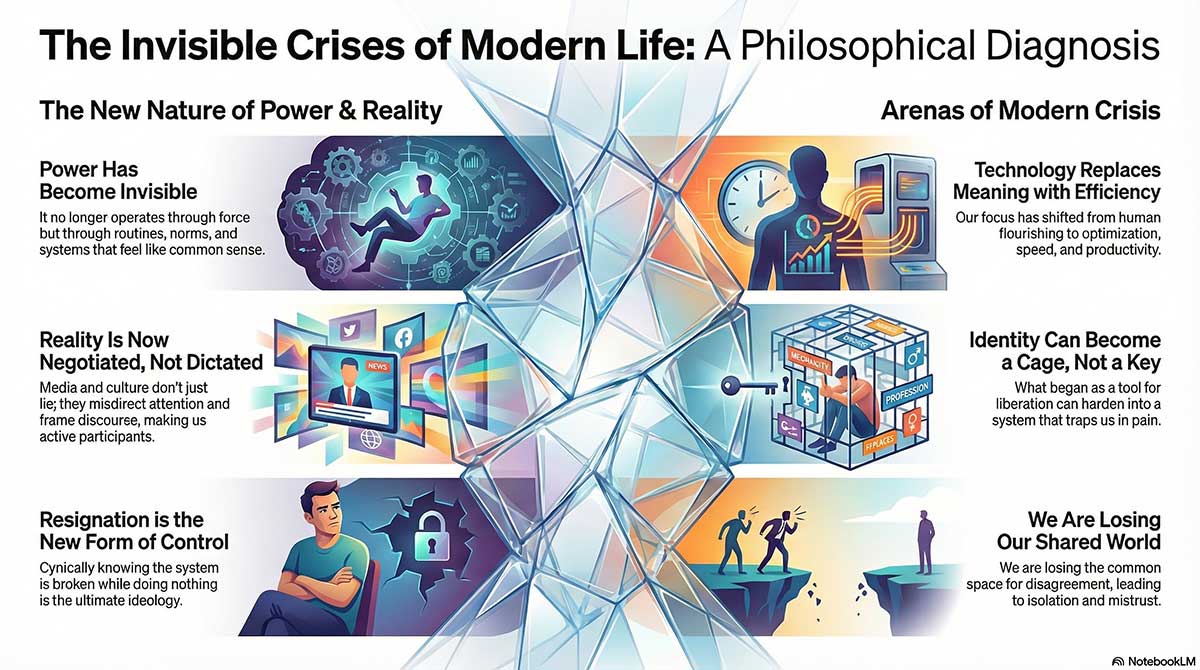
We don’t experience these crises as ideas.
We feel them at home, late at night, staring at glowing screens that disagree with one another.
We feel them at work, moving smoothly through systems that feel efficient but strangely impersonal.
We feel them in conversations that never quite happen—and in silences that linger long after the table is cleared.
What struck me most in listening to today’s philosophers wasn’t how much they disagreed. It was how consistently they circled the same unease: that we are living inside structures we did not consciously choose, yet are asked to defend as if they were natural. Power without faces. Identities without grounding. Technologies without direction. Togetherness without trust.
None of these thinkers offered an escape hatch. And that may be the most honest gift they give us.
Because the question is no longer Who is right?
It is Who is willing to remain awake inside the tension?
A shared world doesn’t collapse all at once. It thins. It frays. It becomes harder to name. And yet, it only exists if we continue to show up—to speak carefully, to listen generously, and to resist the temptation to withdraw into certainty.
ImaginaryTalks was never about answers.
It was about keeping the space between us open.
If these conversations unsettle you, that may be a sign that the world they describe is already yours.
And the responsibility, quietly, is too.
Short Bios:
Noam Chomsky
A linguist and political critic who exposed how media, language, and power shape public consent in modern democracies.
Jürgen Habermas
A philosopher of democracy who argued that rational dialogue and the public sphere are essential to legitimate social order.
Luce Irigaray
A feminist thinker who challenged how Western philosophy erased sexual difference and reduced women to reflections of male identity.
Stuart Hall
A cultural theorist who revealed how media, race, and representation shape identity and power in everyday life.
Susan Sontag
An essayist and critic who examined how images, suffering, and art shape moral perception in modern culture.
Hélène Cixous
A writer and philosopher known for challenging patriarchal language and urging new forms of expression beyond domination.
Julia Kristeva
A philosopher and psychoanalyst who explored identity, exile, and the emotional roots of culture and meaning.
Martha Nussbaum
A moral and political philosopher who emphasized human dignity, emotional life, and justice through the capabilities approach.
Slavoj Žižek
A provocative cultural critic who exposes the hidden ideologies operating beneath everyday beliefs and systems.
bell hooks
A cultural critic and feminist thinker who connected race, gender, class, and love to systems of power and liberation.
Judith Butler
A philosopher who reshaped how identity, gender, and power are understood as socially formed rather than fixed.
Leave a Reply