

|
Getting your Trinity Audio player ready...
|

Kim Jong-un:
To those who listen from beyond our borders—and to my people, who wait with questions in their hearts—
For decades, I have been told two things: that the world will never accept a strong, sovereign North Korea… and that if we ever open our gates, we will not survive.
I do not speak today as a weak leader begging for favor, but as a watchful son of this land—born from sacrifice, bound by history, and responsible for every heartbeat within our borders.
I know your expectations. You want revolution, instant reform, glittering markets. But what you don’t see is the weight we carry—how even a small crack in control can let in a flood. I’ve studied China. I’ve watched Vietnam. Their rise did not come from surrender, but from strength—calculated, patient strength.
So I ask you to consider this: Is there a path where my people can eat well, trade freely, dream honestly… and still live with dignity, without humiliation, without losing who we are?
These conversations you will read are not official decrees. They are questions I dare to entertain. Quietly. Carefully.
For those willing to see us not just as a regime, but as human beings navigating survival—this may be the beginning of something. Or at least, the end of complete silence.
(Note: This is an imaginary conversation, a creative exploration of an idea, and not a real speech or event.)

Topic 1: Can the Kim Regime Feel Safe Enough to Open the Gates?

Moderator: Ban Ki-moon
Opening by Ban Ki-moon
“Thank you, distinguished guests. Today we gather not to judge the past but to prepare the future. We all know that North Korea’s fear of opening is rooted not only in geopolitics but in deeply internalized trauma, mistrust, and survival instinct. Our first task is to address the deepest question:
Can the Kim regime ever feel safe enough to open its gates to economic reform?
Let's begin with your insights on what guarantees are truly required for such trust to form.”
❓ Q1: What specific guarantees would the Kim regime require to feel safe enough to begin opening up?
William Burns
“The Kim regime isn’t afraid of sanctions or economic failure—it fears irrelevance and collapse. The first step is a multi-party non-aggression pact, co-signed by the U.S., China, and Russia. But beyond that, we need to guarantee dynastic continuity. Quietly acknowledge that their system of rule—however flawed—is theirs to control, not ours to replace. Without that, nothing else begins.”
Xi Jinping
“Reform does not mean revolution. China’s experience shows that strong central control can coexist with economic vitality. If North Korea can be reassured that it may retain its ‘Supreme Leader’ system while engaging in trade and modernization, they may open gradually. We must ensure no regime change language enters the discussion—only respect.”
Moon Chung-in
“Kim Jong-un doesn’t just want security from bombs—he wants protection from being humiliated. His father survived by playing the ‘military-first’ card. Kim may wish to shift toward prosperity-first, but without looking weak. That means internal narrative control is as vital as external assurance. We need to provide a way for him to claim victory at home as he opens up abroad.”
Sergey Lavrov
“Russia is prepared to offer military cooperation under a neutrality framework—such as shared observation posts or peacekeeping training exercises. This creates a new regional trust layer. The West often speaks of trust but sends aircraft carriers. North Korea hears your words—but they measure your submarines.”
Glyn Ford
“The North Koreans fear being Libya—cooperating, then being overthrown. What’s needed isn’t just security but public dignity. That might mean inviting Kim Jong-un to observer status in a neutral trade or peace forum, hosted in Vietnam or Mongolia. Let the world see him as a contributor, not a curiosity.”
Kim Yong-chol
“We must see de-escalation from the South and the U.S.—military drills, nuclear subs, and surveillance flights must be reduced if you expect us to disarm our fears. You speak of opening gates, but we remember what followed such gates elsewhere. We will not become Baghdad.”
Lee Hsien Loong
“Singapore’s role as a neutral host has taught us that non-Western spaces help North Korea feel less pressured. We can facilitate new frameworks—like an East Asia Security Circle—where smaller nations help moderate major power tensions. That way, engagement isn’t about winners and losers, but shared Asian stability.”
Henry Kissinger (legacy influence)
“Power is perception. With China, we didn’t make them feel small—we made them feel needed. If we offer Kim a leadership role in pan-Asian development, especially in energy or climate strategy, it gives him a future narrative. One built on relevance, not resistance.”
Park Jie-won
“Having met North Korean envoys for decades, I’ve learned that small symbolic moves—like resuming Kaesong Industrial Complex—matter more than sweeping promises. They signal good faith in manageable pieces. We should offer practical wins first, and treaties second.”
Cheng Li
“One overlooked assurance is internal ideological continuity. If we can help North Korean scholars develop a new domestic language for capitalism—one framed around ‘Juche economics’—it becomes their idea, not ours. Reform must be seen as homegrown, not imported.”
❓Q2: If North Korea does begin to open, how can we prevent regime panic from early market failures or internal unrest?
Xi Jinping
“Start small. We advise opening just two pilot SEZs, heavily state-managed, near the Chinese border. Chinese firms can partner quietly. We’ll protect success behind the scenes. This mirrors our Shenzhen strategy—test first, then expand.”
Kim Yong-chol
“We already allow informal markets. But they must not become open doors for ideology or opposition. We must see reforms as loyalty to the Supreme Leader—not rebellion. If markets bring chaos, reform dies. If they bring order under control, reform lives.”
William Burns
“We can assist indirectly, through third-party institutions like the IMF and ASEAN—providing financial literacy, risk management, and logistics training to internal cadres. Done quietly, it supports the system while keeping Western fingerprints off the front.”
Moon Chung-in
“North Korea must not be punished for failing. One reason they hesitate is fear of sanctions snapping back after a stumble. We should establish a ‘no-fault period’—say five years—where early experiments are protected from external punishment.”
Lee Hsien Loong
“Let’s also remember the importance of face. If reforms are framed as ‘gifts of Kim’s genius’, the people will follow with pride. SEZs should bear his name, his imagery, his story. This is political theater—but necessary for cohesion.”
Sergey Lavrov
“We propose that Russia train NK’s early reform leaders in Far East institutions like Vladivostok’s development schools. These environments are familiar, respectful, and insulated from disruptive media. Quiet competence breeds quiet reform.”
Park Jie-won
“The generals and party bosses must be shown a path to profit without displacement. Offer them special economic incentives—import licenses, energy contracts, or export roles—that turn them into reform’s guardians, not its victims.”
Glyn Ford
“Reform will only survive if North Korea develops its own reformers. That means building institutions to teach entrepreneurship, logistics, and trade—but in Korean ideological terms. You can’t import reformers and expect respect. They must rise from within.”
Cheng Li
“The Chinese model succeeded in part because we created ideological continuity. We taught cadres to say: ‘The market serves socialism.’ North Korea must do the same: ‘Wealth under Juche.’ Without this, reform will feel like betrayal.”
Henry Kissinger
“The key to preventing panic is making economic change look like ideological loyalty. Kim must be seen not as copying others, but as evolving Juche into a new strength for the 21st century. That illusion sustains stability during disruption.”
❓Q3: What small but powerful first step can North Korea take to show the world it’s ready—without risking pride or control?
Ban Ki-moon
“Let us close with a question of humility and hope. What first move—symbolic or practical—could signal to the world that North Korea is not just watching history, but ready to enter it?”
Glyn Ford
“Reopen the Kaesong Industrial Complex under joint oversight—perhaps even with Vietnam and Mongolia involved. This move is not surrender. It’s signal. Jobs return, lights turn on, and yet control remains domestic.”
William Burns
“Release a handful of foreign detainees as a gesture of ‘diplomatic reset.’ It’s low-risk, high-impact. It shifts the narrative without requiring systemic change.”
Xi Jinping
“Announce a ‘Korean Prosperity Initiative’—a national project to modernize infrastructure or education, framed as a domestic achievement. Let outsiders quietly fund it. Appearances matter more than origins.”
Kim Yong-chol
“Invite Chinese engineers to expand Wonsan’s port. It’s familiar, trusted, and not threatening. No American logos. Just useful roads and clean water—under Korean flags.”
Lee Hsien Loong
“Host a small regional economic forum in Pyongyang—not for the West, but for ASEAN, Mongolia, and Central Asia. The West will watch. But it won’t feel like intrusion.”
Moon Chung-in
“Allow select North Korean students to quietly study abroad in China or Singapore. Not hundreds—just a dozen. Let them return. Change begins one conversation at a time.”
Sergey Lavrov
“Create a North Korean Development Bank, with capital from China and Russia. Call it a ‘Juche Resilience Fund.’ Finance local agriculture and clean energy—something visible and tangible.”
Cheng Li
“Build a domestic museum of ‘Korean Innovation’—highlighting inventions, resilience, and new prototypes. Let pride emerge from inside, not through foreign praise.”
Henry Kissinger (legacy)
“Change begins when perception changes. Let Kim make a speech—not apologizing, but declaring a new era of ‘proud Korean strength through economic self-mastery.’ The content is less important than the tone.”
Park Jie-won
“Reopen the Pyongyang International Film Festival. Invite neighbors—Vietnamese, Iranians, Russians. Culture speaks softly, but it speaks deeply. Let the world come watch, and wonder.”
Closing Reflection by Ban Ki-moon
“Gentlemen, I thank you. What we have seen today is not a miracle plan, but a scaffold of realism. It is clear: North Korea does not need more pressure. It needs permission to trust. We are not asking it to become us. We are asking it to become itself—just with more light, more food, and more peace.
And that future does not begin with force. It begins with an invitation.
Let us be the ones who extend it—firmly, respectfully, and with hope.”
Topic 2: How Can Special Economic Zones Succeed Without Losing Control?

Moderator: Ban Ki-moon
Goal: Explore how North Korea can safely and realistically build Special Economic Zones (SEZs) to initiate economic reform without risking regime destabilization.
Participants
- Ban Ki-moon – Moderator
- Xi Jinping – President of China
- William Burns – CIA Director
- Moon Chung-in – Former SK Presidential Adviser
- Sergey Lavrov – Russian Foreign Minister
- Kim Yong-chol – NK General & Diplomat
- Lee Hsien Loong – Former PM of Singapore
- Henry Kissinger – Legacy influence
- Park Jie-won – Former SK Intelligence Chief
- Glyn Ford – British NK expert
- Cheng Li – Chinese reform scholar
Opening by Ban Ki-moon
“Colleagues, welcome again. If the first gate to reform is trust, the second is infrastructure. Special Economic Zones can be the lungs through which North Korea breathes its first fresh economic air—but if done poorly, they can trigger fear, corruption, or rebellion.
So I ask today: Can SEZs be structured to bring prosperity without collapsing control? Let us begin.”
❓ Q1: What kind of SEZ design would allow reform without threatening regime stability?
Xi Jinping
“China began with limited, closed-loop SEZs—Shenzhen, Zhuhai, Shantou. We advise North Korea to do the same: only border zones, near Dandong or Rason, where trade already happens informally. Let state-owned Chinese firms be the early investors. This keeps it predictable, politically safe, and slow.”
William Burns
“The U.S. must not appear front-stage. Early SEZs should be run with neutral or aligned partners—China, Russia, Vietnam—who understand controlled capitalism. The more familiar the ecosystem, the less likely the regime is to panic.”
Kim Yong-chol
“We do not fear economic activity—we fear infiltration. SEZs must be guarded. Access must be military-approved. Workers must be loyal cadres. And profits must return to the state, not create new political centers.”
Moon Chung-in
“Then use state-guided entrepreneurship. Allow loyal generals to appoint industrial managers from among trusted family networks. Let SEZs reward loyalty while promoting productivity. Reform should not threaten hierarchy—it should expand its power base.”
Sergey Lavrov
“Russia suggests building an Eurasian Logistics Corridor, linking Vladivostok to Rajin Port. Let the SEZ serve Eurasian trade, not Western markets. That way, it’s about sovereignty and connectivity—not capitalism.”
Lee Hsien Loong
“Singapore’s model was built on tight control + international standards. We propose a SEZ with dual governance: one NK-controlled council, and one advisory panel from neutral countries—Brunei, Vietnam, Mongolia. Quiet supervision avoids shame, while providing competence.”
Park Jie-won
“And don’t forget the Kaesong precedent. It failed not because of design, but because of politics. We must create insulated SEZs, immune to shifts in U.S.-NK relations. Long-term agreements signed with neutral third parties may offer that protection.”
Glyn Ford
“SEZs must be small, walled experiments—not showcases. Focus on sectors like light manufacturing, agriculture, or rare earth processing. Avoid internet firms, NGOs, or media. Prosperity should come quietly—not through flashy headlines.”
Henry Kissinger
“Begin where fear is lowest. Allow the regime to claim: ‘This is a fortress of Juche wealth.’ Control optics. Praise loyalty. Let the zone be named after Kim’s father. A pilot project must succeed not just in money, but in mythology.”
Cheng Li
“Design a Juche Capitalism Curriculum within the SEZ. Train workers in business practices framed through state ideology. The zone should become not just a factory—but a school of ideological-economic harmony.”
❓ Q2: How do we prevent elite backlash and internal sabotage of SEZ success?
Kim Yong-chol
“When new money arrives, so does suspicion. We must ensure that existing elite networks benefit first. SEZ contracts should go through the military, the party, and trusted legacy families. That way, reform becomes reward—not threat.”
William Burns
“Then include elite buy-in safeguards. For example: allow senior party families to form trade consortiums in the zone. This ensures they become economic stakeholders—not saboteurs. If their children thrive, they’ll protect reform.”
Cheng Li
“China faced the same challenge in the 1980s. Our answer? ‘Red Capitalists’—party-loyal entrepreneurs. North Korea must groom a new class of Juche Entrepreneurs—politically vetted, economically trained.”
Lee Hsien Loong
“Offer transition roles to older officials: from military logistics to SEZ supply chains. Let them feel useful, not obsolete. Every new system needs the old system’s blessing.”
Sergey Lavrov
“Create closed media zones. No internet. No foreign press. No risk of ideological pollution. If the zone is secure and quiet, the inner circle won't panic.”
Moon Chung-in
“And reinforce the ideological narrative. Kim should declare that SEZs are part of his father’s legacy, delayed only by sanctions. Make prosperity part of the revolution—not a betrayal of it.”
Park Jie-won
“Enforce strict hierarchical command. No SEZ administrator should ever be seen as more powerful than a general. Reward success with state medals and loyalty ranks. Keep the system intact—even as the market grows.”
Henry Kissinger
“Fear breeds sabotage. Hope breeds loyalty. Give the elite a clear ladder: SEZ success → party promotion → family honor. When advancement flows through reform, reform becomes survival.”
Glyn Ford
“And protect SEZ workers from envy. Provide food stipends for surrounding villages. Subsidize basics. If neighbors starve while SEZ workers eat meat, the countryside will riot.”
Xi Jinping
“We will quietly fund a stability buffer—food, power, security—for surrounding towns. China has a stake in calm. What helps North Korea breathe, helps us sleep.”
❓ Q3: What should the first SEZ include, and how do we ensure international support without undermining control?
Ban Ki-moon
“Let us now turn to action. If North Korea were to begin building an SEZ today, what should it contain—and how can we, the world, support it without disrupting internal control?”
Xi Jinping
“Start with logistics, textile, and mineral processing. Sectors that require less digital freedom. China will invest through state-owned enterprises and provide initial workforce training—discreetly.”
William Burns
“Let the first SEZ include a model village for workers, complete with loyalty schools, health clinics, and secure housing. Let the West fund health and food—but let North Korea take the credit.”
Lee Hsien Loong
“Singapore will offer infrastructure design blueprints—especially for clean water, customs flow, and energy sustainability. Keep it modern, efficient, and tightly supervised.”
Glyn Ford
“The SEZ should also include a single export channel, ideally managed by North Korea but audited by neutral observers. This avoids black-market leakage and assures buyers.”
Park Jie-won
“South Korea can contribute joint industrial IP from previous Kaesong projects—especially in textiles and components. But without branding or cultural interference.”
Cheng Li
“Train young elites in business diplomacy—privately. Send them to Chinese universities under assumed programs. Reform dies when there’s no one prepared to lead it.”
Sergey Lavrov
“Russia will handle energy transport, laying pipelines from Primorsky Krai. This reduces North Korea’s dependence on maritime imports and makes it part of the land bridge to Asia.”
Moon Chung-in
“Let ASEAN observers offer soft training programs in English, accounting, and trade law. Quiet, unbranded learning will slowly shift the system from within.”
Henry Kissinger
“Make the SEZ symbolic and practical. Build a monument at its entrance: not of commerce, but of resilience. The world will see factories. North Koreans must see legacy.”
Kim Yong-chol
“The first zone must not be too fast. We agree to roads, factories, even trade. But if it brings chaos, it ends. We open one gate—not all.”
Closing Reflection by Ban Ki-moon
“I thank you, once again. What we see now is the careful architecture of possibility. The SEZ is not merely an economic tool—it is a psychological bridge between survival and dignity.
For North Korea, success will not be measured in exports—but in whether they still feel like themselves when they succeed.
Our task is to make prosperity feel familiar—not foreign. And in that, I believe we have taken a crucial step.”
Topic 3: Is Global Integration Possible Without Political Collapse?

Moderator: Ban Ki-moon
Goal: Explore how North Korea could enter international trade, financial, and diplomatic systems—like the WTO, RCEP, or IMF—without triggering collapse, backlash, or ideological unraveling.
Participants
- Ban Ki-moon – Moderator
- Xi Jinping – President of China
- William Burns – CIA Director
- Moon Chung-in – Former SK Presidential Adviser
- Sergey Lavrov – Russian Foreign Minister
- Kim Yong-chol – NK General & Diplomat
- Lee Hsien Loong – Former PM of Singapore
- Henry Kissinger – Legacy influence
- Park Jie-won – Former SK Intelligence Chief
- Glyn Ford – British NK expert
- Cheng Li – Chinese reform scholar
Opening by Ban Ki-moon
“Gentlemen, integration is the dream—and the dilemma. Global systems promise prosperity, but they also demand transparency, cooperation, and reform. For North Korea, that’s dangerous ground.
Today I ask: Can North Korea engage with the global economy—gradually, meaningfully—without being forced to dismantle its identity or regime? Let us begin.”
❓ Q1: What global systems could North Korea realistically join first—without compromising its control?
Xi Jinping
“We propose starting with observer status in RCEP or the Asian Infrastructure Investment Bank (AIIB). These are trade and development platforms—not ideologically driven. It allows North Korea to be seen, not exposed. China will sponsor its seat.”
William Burns
“Full WTO or IMF integration is far off. But we could create a parallel confidence-building track: a Development Readiness Framework monitored by neutral institutions—Switzerland, Mongolia, Singapore—where NK can test small compliance projects without committing to transparency it fears.”
Moon Chung-in
“An excellent bridge is the UN Economic and Social Commission for Asia and the Pacific (ESCAP). It is non-threatening, focused on regional growth, and open to states at various stages. Integration must begin where being present is enough—not where performance is judged.”
Sergey Lavrov
“North Korea should join the Eurasian Economic Union in some capacity. Trade in rubles or renminbi will feel safer than in dollars or euros. Let Russia help it create low-friction trade agreements with Belarus, Kazakhstan, and Mongolia.”
Lee Hsien Loong
“Another safe entry point is standardization. Let North Korea quietly begin aligning with ISO or regional quality certifications. No cameras, no politics—just specs and standards. Small, apolitical steps build trust.”
Park Jie-won
“They could also restart the Kaesong Industrial Zone under a new trilateral structure: North Korean administration, South Korean industry, and ASEAN compliance monitors. It creates employment and slowly builds a track record.”
Kim Yong-chol
“We are willing to trade. But we will not open our banks or internal reports. Begin with physical goods only. Commodities. Energy. Light manufacturing. We sell. You buy. That is a beginning—not a dissection.”
Glyn Ford
“Fine. Then let’s create a North Korea Development Authority—funded by China and Russia, managed by a neutral third party. Its mission is to connect trade, not audit politics. This avoids panic while proving viability.”
Henry Kissinger
“Never push North Korea into Western-led institutions first. Begin in Asia. Let regional institutions absorb the friction. Over time, presence becomes partnership. Then integration is not forced—it is inevitable.”
Cheng Li
“Invite them into climate and energy partnerships. These are less threatening than financial treaties. Let them join clean energy grids, carbon credit talks, or water-sharing initiatives. Cooperation through survival—not ideology—feels safe.”
❓ Q2: How can the world offer trade and aid benefits without triggering North Korean paranoia or backlash?
Kim Yong-chol
“Your aid is often poison wrapped in smiles. We accept development—but only if we control where it goes. We want bridges, roads, ports—not brochures about freedom. If you respect our order, we can build together.”
William Burns
“Then we offer modular support packages: For every verified milestone, release a new tranche of benefits. No lump sums. No dependence. Let success trigger the next reward.”
Xi Jinping
“China will offer ‘sovereignty-respecting’ assistance: infrastructure for resources. Roads for copper. Logistics for coal. It’s barter-based, not debt-based. That’s how we began Africa’s cooperation—and it can work here.”
Lee Hsien Loong
“Singapore suggests an ‘Aid Without Labels’ fund. Allow donor countries to contribute, but brand everything locally: the ‘Pyongyang Initiative’ or ‘Korean Prosperity Road’—not the ‘USAID Water Project.’ Let pride drink from every pipe.”
Park Jie-won
“Involve the Korean diaspora. Quiet remittances and investment from trusted sources will feel familiar. We’re not strangers to them. We’re relatives. That bond softens suspicion.”
Sergey Lavrov
“Structure deals as development exchanges, not donations. For example: ‘Build this railway section, and you earn access to Russian port facilities.’ No one fears a transaction. They fear pity.”
Glyn Ford
“We must also eliminate embarrassment. When something breaks, don’t shame them in global headlines. Instead, create fail-safe mechanisms—a repair team from Laos or Sri Lanka, not CNN.”
Moon Chung-in
“And if the North agrees to open a trade school or shipping hub, let it be co-managed with neutral nations. Invite Vietnamese or Uzbek trainers—not Americans waving democracy pamphlets.”
Henry Kissinger
“To gain trust, offer something irreversible but safe: open your own borders a little first. Build an NK-foreign research facility in Singapore. Or let a DPRK ambassador speak at ASEAN. Trade always follows trust.”
Cheng Li
“And most importantly: don’t mix aid with regime critique. Let progress be practical, not moralized. If the lights come on and the factories run, reform will happen—on their terms.”
❓ Q3: How should global institutions respond if North Korea begins integration—slowly, awkwardly, or inconsistently?
Ban Ki-moon
“Let us close with realism. No transformation will be clean or fast. But if North Korea stumbles toward global participation, how should we respond—with pressure, praise, or patience?”
Cheng Li
“With respectful ambiguity. Don’t cheer too loudly. Don’t critique too sharply. Say little, show up, and let them control the narrative. Reform doesn’t need applause—it needs air.”
William Burns
“Respond with reciprocity—not righteousness. If they take one step, give one back. But never demand perfection. North Korea will reform unevenly, and that’s okay.”
Xi Jinping
“China will buffer mistakes quietly. If a trade deal stumbles, we will renegotiate it behind closed doors. Our goal is not conversion—it is containment through cooperation.”
Kim Yong-chol
“Do not expect us to change like you. If we pause, it is not retreat. If we shift tone, it is not betrayal. We move like the mountain—not the river.”
Lee Hsien Loong
“Let neutral institutions create ‘grace periods’ for reform. Offer reassurances that missteps in logistics, trade errors, or delayed reports will not result in humiliation. That safety net fosters trust.”
Sergey Lavrov
“Reward internal progress—even if it’s invisible. If they build a clean water system, don’t ask for press access. Just send the filters. Validation without voyeurism.”
Park Jie-won
“South Korea can serve as a buffer translator. When North Korea makes a move, we interpret it, shield it from misreading, and ensure it’s not weaponized in global politics.”
Glyn Ford
“Let’s create a North Korea Watchroom—a quiet multilateral platform to observe reform, address problems, and offer confidential feedback. No sanctions. No shame. Just support.”
Moon Chung-in
“Finally, tell the world to expect awkwardness. North Korea has never done this. If we make every failure a scandal, the regime will shut down again. Let first steps wobble.”
Henry Kissinger
“The world’s role is to wait—not chase. Reform begins when risk becomes less terrifying than stagnation. When that happens, don’t rush. Just nod—and keep the door ajar.”
Final Reflection by Ban Ki-moon
“What we’ve outlined today is a global choreography of patience. If North Korea begins its slow waltz toward trade, we must not drag it into a sprint. The measure of success is not in openness—but in ownership.
Let integration come as evolution, not exposure. If we do this right, the regime will not collapse into the global order.
It will arrive—cautiously, carefully, and completely—as itself.”
Topic 4: Can the Ideology of Juche Be Reframed to Support Openness?
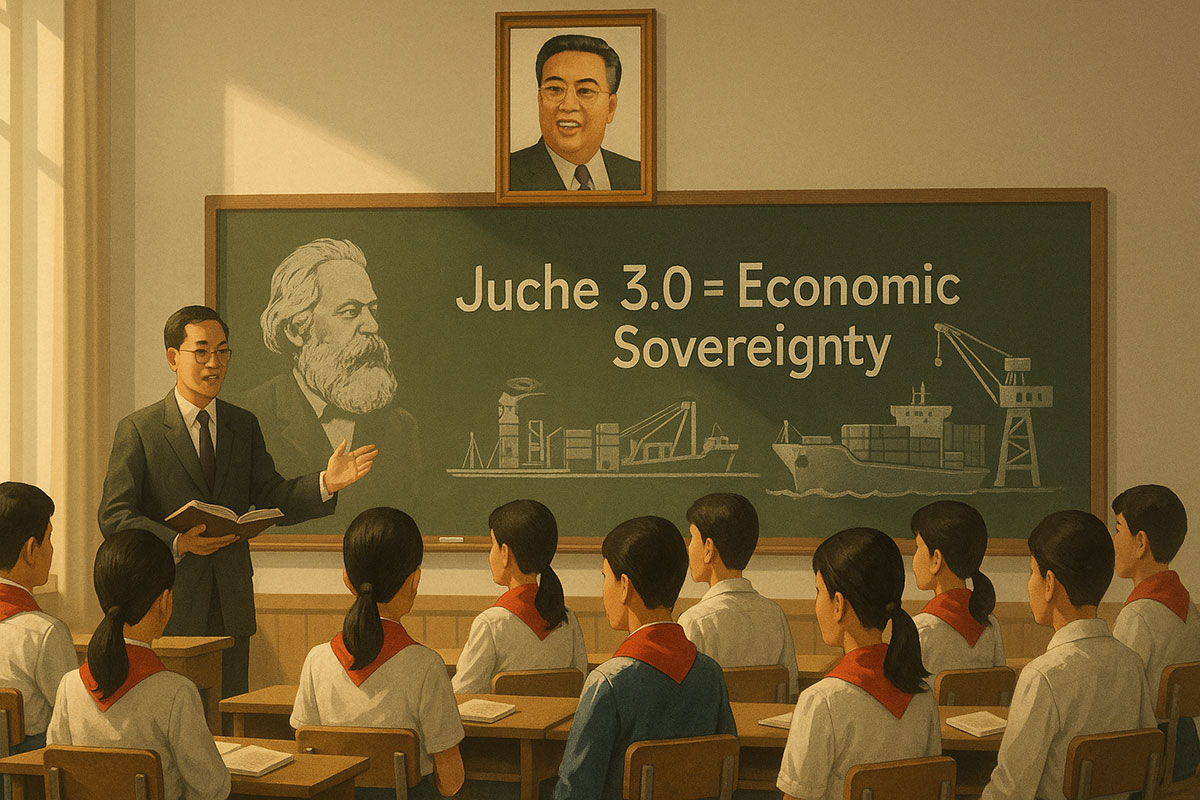
Moderator: Ban Ki-moon
Goal: Explore how North Korea’s state ideology, Juche, can be reinterpreted to support economic reform, global engagement, and controlled modernization without triggering identity collapse.
Participants
- Ban Ki-moon – Moderator
- Xi Jinping – President of China
- William Burns – CIA Director
- Moon Chung-in – Former SK Presidential Adviser
- Sergey Lavrov – Russian Foreign Minister
- Kim Yong-chol – NK General & Diplomat
- Lee Hsien Loong – Former PM of Singapore
- Henry Kissinger – Legacy influence
- Park Jie-won – Former SK Intelligence Chief
- Glyn Ford – British NK expert
- Cheng Li – Chinese political reform scholar
Opening by Ban Ki-moon
“Thank you, once again. Today’s question cuts deeper than diplomacy—it touches the soul of the DPRK.
The ideology of Juche, so often misunderstood abroad, is at once a shield and a prison. But is it possible that Juche can evolve—not dissolve—and become a guidepost for economic self-reliance rather than autarky?
I ask each of you: Can we help reframe Juche in a way that supports openness, rather than fearing it?”
❓ Q1: How can Juche be interpreted to support gradual economic reform and modernization?
Cheng Li
“This is not impossible. In China, we turned ‘socialism with Chinese characteristics’ into a vessel for controlled capitalism. North Korea can do the same by saying: ‘Juche means choosing our own modern path—not isolation.’ It must sound like continuity, not change.”
Moon Chung-in
“Juche already emphasizes self-reliance, not total seclusion. Kim could argue that trade, SEZs, and infrastructure are tools of self-strengthening. Let him say: ‘The great leader planted the seed, now we harvest the fruit.’ It’s not betrayal—it’s maturation.”
William Burns
“Let the regime write its own story: that reform is the second mountain of the revolution. The first was military survival. The second is economic sovereignty. We should support scholars in shaping that myth—not undermining it.”
Xi Jinping
“Deng Xiaoping never said we abandoned socialism. He said: ‘To get rich is glorious.’ Let Kim Jong-un say: ‘To uplift the nation is loyal.’ That becomes Juche 2.0.”
Lee Hsien Loong
“Singapore went from third-world to first without abandoning control. Let Juche become a call for Korean efficiency, discipline, and innovation. That story can appeal to both the people and the party.”
Park Jie-won
“The regime already shows signs of narrative evolution. State TV highlights development, science, youth success. These are the building blocks. Help shape the language that says: ‘Science is Juche. Technology is patriotism.’”
Glyn Ford
“North Korean propaganda is highly adaptable. They once painted cars as capitalist pollution—then they showed Kim in a Mercedes. Juche is flexible if the leader redefines it. The key is letting that shift come from Pyongyang, not pressure.”
Sergey Lavrov
“Russia suggests developing Juche Reform Institutes inside North Korea—modeled after Russian economic academies. Let new cadres be trained in market policy using North Korean metaphors. It becomes an internal evolution, not a foreign infection.”
Henry Kissinger
“Never remove the mask. Instead, offer them a new face to wear. If Juche once meant control, let it now mean competence. Reform must wear the robe of ideology—only then will it be tolerated.”
Kim Yong-chol
“We do not fear growth. We fear disorder. Let the world respect our path. If you call it propaganda, it dies. If you call it ‘national style,’ it survives. Juche is how we speak to ourselves. Do not interrupt.”
❓ Q2: How do we prevent ideological panic among elites and citizens during ideological reframing?
Cheng Li
“Begin with ideological alignment campaigns, not reforms. Create ‘Juche Modernization’ handbooks. Host internal lectures where senior officials quote the Supreme Leader’s father while explaining solar panels. Connect every change to a sacred lineage.”
William Burns
“Support invisible legitimacy transfers. When reforms succeed, have party elders endorse them publicly—not just Kim. Let the ideology live through old voices. This softens generational panic.”
Moon Chung-in
“Use a generational shield. Assign the burden of reform to the younger class—Kim Yo-jong, young technocrats. Let elders be guardians of the past, while juniors shape the future under their blessing.”
Park Jie-won
“Let’s encourage internal ritual framing. Launch new reforms on patriotic holidays. Tie economic wins to Kim Il-sung’s anniversaries. Reform becomes memory—not rupture.”
Sergey Lavrov
“Avoid media explosions. Reform should be gradual and silent. A new road here. A new school there. Let the people discover prosperity before they name it.”
Lee Hsien Loong
“Let symbols evolve with language. The North Korean flag, the slogans, the statues—don’t remove them. Reinterpret them. Say the same words with new meanings. That’s how nations preserve face through change.”
Kim Yong-chol
“You think we are fragile. We are disciplined. But change must be honorable. Our schools must teach that modern tools are weapons of national dignity. Not symbols of surrender.”
Glyn Ford
“Involve artists, not just economists. Let the first reforms be celebrated in murals, music, and cinema. Let Juche evolve through culture, not just policy.”
Henry Kissinger
“Do not confuse secrecy with fear. They will not share their process. But they may still evolve. Respect their silence as a form of strength.”
Xi Jinping
“China stands ready to fund cultural training academies. These will support economic literacy, party loyalty, and technical skill. When ideology and reform share a classroom, fear recedes.”
❓ Q3: What outside support—symbolic or practical—can help Juche evolve without appearing to weaken it?
Ban Ki-moon
“Let us close with diplomacy. Reform cannot exist in a vacuum. What can the world offer—quietly—that supports ideological evolution while honoring North Korea’s narrative?”
Xi Jinping
“We propose a Juche Infrastructure Partnership. Roads, bridges, ports—all built with North Korean branding, Chinese materials, and no foreign flags. It is partnership without pressure.”
William Burns
“Create a Juche Technology Exchange—invite North Korean engineers to study at a Chinese university under a non-political name. Let learning happen quietly. Results matter more than symbolism.”
Lee Hsien Loong
“ASEAN can host a ‘Self-Reliant Development Forum’ where North Korean scholars present ideas without being questioned. Let them speak their truth while absorbing global tools.”
Sergey Lavrov
“Russia is willing to fund ideological heritage museums that include economic exhibits. Let them curate their own narrative arc—from survival to strength. The medium is the message.”
Moon Chung-in
“South Korea can provide cultural content advisors to help reinterpret Juche through youth channels—TV, comics, TikTok equivalents. If young people hear reform in their own rhythm, it sticks.”
Park Jie-won
“Encourage the North to build a Patriot Academy—a national university where ideology and trade merge. Let it train diplomats, scientists, and civil servants under the same flag.”
Henry Kissinger
“Do not insult their pride with praise. Simply engage. Show up. Invest. Listen. Their narrative will evolve if we stop trying to rewrite it—and simply allow it to stretch.”
Glyn Ford
“Offer translation services for Juche works into global languages. Let the world read their story without ridicule. Mutual understanding is the true starting line.”
Cheng Li
“China can support a peer-to-peer cadre network—young leaders from China, Vietnam, and Laos exchanging reform narratives. Let North Koreans hear from fellow survivors, not judges.”
Kim Yong-chol
“What we need is not your applause. It is your distance. Let us define the next Juche, not the world. But if you must help, build the road and let us name it.”
Closing Reflection by Ban Ki-moon
“What I’ve heard today is wisdom veiled in humility. The question is not: Can North Korea change? It is: Can we give it the space to change on its own terms?
Juche is not a wall—it is a mirror. Let it reflect a stronger, prouder, more prosperous future. Not by removing its past—but by reinterpreting it.
If we listen more than we advise, perhaps the voice of reform already lives inside them—waiting to be heard.”
Topic 5: What Might a Peaceful, Wealthy North Korea Look Like by 2040?

Moderator: Ban Ki-moon
Goal: Envision a realistic future for North Korea—one where the country maintains sovereignty, gains prosperity, and becomes a peaceful regional actor by the year 2040.
Participants
- Ban Ki-moon – Moderator
- Xi Jinping – President of China
- William Burns – CIA Director
- Moon Chung-in – Former SK Presidential Adviser
- Sergey Lavrov – Russian Foreign Minister
- Kim Yong-chol – NK General & Diplomat
- Lee Hsien Loong – Former PM of Singapore
- Henry Kissinger – Legacy influence
- Park Jie-won – Former SK Intelligence Chief
- Glyn Ford – British NK expert
- Cheng Li – Chinese political reform scholar
Opening by Ban Ki-moon
“Friends, we’ve journeyed far—from fears and reforms to diplomacy and narrative. But what if we could look ahead?
Let us imagine not only what is possible—but what is purposeful. If we do all of this right, what might North Korea look like by the year 2040? And more importantly—how do we help them get there without arrogance or interference?
Let us dream aloud, with discipline.”
❓ Q1: What would a realistically prosperous and peaceful North Korea look like in 2040?
Xi Jinping
“It would be a nation with five functioning Special Economic Zones, each linked to regional trade routes. It would produce goods—machinery, chemicals, processed minerals—for the Belt and Road. Its ports would hum with Eurasian traffic, and its factories would feed Asian industries. It would be proud, productive, and sovereign.”
William Burns
“I see a North Korea that feeds itself, trades legally, and communicates quietly. It would still be authoritarian—but more pragmatic. Less obsessed with survival, more focused on strength. Its people would travel modestly, its leaders negotiate professionally. Fear would no longer be its only engine.”
Moon Chung-in
“By 2040, I see reunified infrastructure, not reunified politics. High-speed rail from Busan to Sinuiju. Smart agriculture in Hwanghae. A tech corridor stretching from Seoul to Pyongyang. And young Koreans—North and South—working on climate tech, not border patrol.”
Sergey Lavrov
“North Korea will not be Western. It will be a hybrid model—Russian-style state capitalism, Chinese-style governance, Korean-style discipline. It will serve as a buffer of stability, a trade partner, and a regional ally.”
Lee Hsien Loong
“I imagine Pyongyang resembling a scaled-down Singapore: clean, safe, efficient. Its leaders travel for forums, its youth join regional start-up contests. Not a democracy—but a respected player.”
Kim Yong-chol
“We will still raise our flag. But by 2040, that flag will stand over clean factories, healthy children, and fast trains. We will not copy. We will adapt. And we will survive with grace—not just grit.”
Park Jie-won
“By then, thousands of families will reconnect. Grandparents will meet grandchildren. Letters will no longer be forbidden. Tourism will cross the DMZ. The first inter-Korean hotel will open in Wonsan, with elevators that speak both dialects.”
Glyn Ford
“There will be elections—not open ones, but functional ones. City mayors, school heads, union leaders—voted under oversight. The people will feel participation. That’s how legitimacy evolves.”
Henry Kissinger
“It will still be a fortress—but one with gates. North Korea will never be soft. But it may become wise. Wisdom is power clothed in humility. And that’s where real change begins.”
Cheng Li
“2040’s North Korea will teach Juche 3.0 in schools—an ideology of innovation, strength, and cultural excellence. Its students will learn AI and Confucian ethics. Its leaders will quote Kim Il-sung and manage trade spreadsheets in the same sentence.”
❓ Q2: What foundational systems must be built in the next 15 years to reach this vision?
William Burns
“Build a financial architecture—a central bank that understands global transactions, trade compliance teams, and risk management training. You don’t need a stock exchange—but you do need a working ledger.”
Moon Chung-in
“Establish dual legal systems. One for ideological control, one for economic function. The first maintains order. The second invites foreign partners. This firewall keeps reform stable.”
Lee Hsien Loong
“Develop civil infrastructure: waste management, data centers, clean water systems. Without these, prosperity will collapse under pollution, traffic, and disease.”
Cheng Li
“We need schools of integration: Juche universities with economics departments. National academies that teach logistics, law, and diplomacy. Cadres must evolve into competent technocrats.”
Xi Jinping
“Establish a Ministry of Modernization, independent of propaganda and military. Let it report directly to Kim. Give it foreign advisors in secret. Let it become the heart of national progress.”
Kim Yong-chol
“Build trust inside first. We must train new leaders from loyal families who understand science, not just slogans. They will run factories, not commands. That is our greatest reform.”
Sergey Lavrov
“Russia offers to lead a three-tier integration strategy: trade zones, energy corridors, and joint rail ownership. These create function, funding, and friendship all at once.”
Park Jie-won
“Create a national feedback system—a hotline, a complaint channel, a citizens’ survey. Not to criticize—but to listen. If the government hears the people, it will not fear them.”
Henry Kissinger
“Build time. North Korea needs space to change slowly. Create ten-year frameworks, not two-year performance reports. Reform is a season, not a headline.”
Glyn Ford
“And above all—build soft power. Let North Korea host a music festival. A marathon. An education expo. Let it become known for something other than fear.”
❓ Q3: What should the international community do—and avoid doing—to support this future?
Ban Ki-moon
“Let us end with responsibility. What role must the world play in supporting this vision—without sabotaging it?”
William Burns
“Avoid triumphalism. Don’t act as if you won. Treat each gain as mutual, not unilateral. Be firm—but never loud.”
Xi Jinping
“Let North Korea become a regional success story—not a global trophy. Invest quietly. Train deeply. Praise privately. Respect the process.”
Lee Hsien Loong
“Create a consortium of Asian mentors—Singapore, Vietnam, Mongolia—who can walk beside, not above. Western intervention must always be filtered.”
Sergey Lavrov
“Offer predictable trade pathways. Don’t shift tariffs or rules when leadership changes. Stability builds trust.”
Moon Chung-in
“Allow South-North cooperation without sabotage. Let Korea shape Korea. We can disagree, but we must not disable each other’s paths.”
Kim Yong-chol
“Do not insult us by pretending to save us. Just give us quiet space to rise. We have held the line for 70 years. We now wish to build.”
Park Jie-won
“Send books, not missionaries. Send engineers, not ideologues. If we build hospitals together, peace will follow.”
Glyn Ford
“Offer multilateral forgiveness. Some things must be forgotten. Not erased—but forgiven. Without that, there is no rebirth.”
Henry Kissinger
“Do nothing that demands gratitude. Do only what demands honor. If we treat North Korea as worthy of partnership, one day they may treat the world the same.”
Cheng Li
“Help North Korea build a story. Give them a reason to write new songs, new slogans, and new futures. Every regime needs a myth. Let this one be about survival through wisdom.”
Closing Reflection by Ban Ki-moon
“And so we reach the end—and the beginning.
A peaceful, wealthy North Korea is not impossible. It is simply unfamiliar. But that which is unfamiliar is not unreachable.
If we build trust with the bricks of respect, patience, and dignity, we may one day look up—and see not just gates opened, but bridges built.
And on those bridges, children will walk. Not afraid. But free.
Let that be our shared dream—realistic, restrained, and resolute.”
Final Reflections by Kim Jong-un
I have read what you wrote. I have heard your questions. And I’ve imagined—for once—not the next military drill or speech, but the morning my granddaughter walks freely across a bridge into Seoul… not as a traitor, but as a Korean.
You speak of economic zones, diplomacy, trade pacts. These are tools. But tools mean nothing without belief. And belief is fragile in a country that has survived only by defending against betrayal.
You call it isolation. I called it protection. Maybe both are true.
But now I see—if we do not evolve, we may protect nothing at all.
This is not an admission of weakness. This is the quiet voice inside me asking: Can we be both proud and prosperous?
If you are willing to walk with me—not run ahead, not chase me with conditions, but walk—then perhaps, this is not the end of the Hermit Kingdom.
Perhaps, it is the beginning of the Phoenix Kingdom.
I make no promises. But I no longer refuse the question.
Short Bios:
Ban Ki-moon: Former Secretary-General of the United Nations from South Korea, known for his diplomatic leadership in global peacekeeping, climate action, and humanitarian efforts. Respected across ideological lines for his calm authority and ability to mediate complex international negotiations.
Xi Jinping: President of the People’s Republic of China and General Secretary of the Communist Party, Xi leads the world’s second-largest economy. He has overseen China’s Belt and Road Initiative and is a key figure in guiding North Korea’s strategic options through the lens of China’s own reform history.
William Burns: Director of the CIA and a seasoned American diplomat, Burns previously served as U.S. Deputy Secretary of State. Known for his expertise in backchannel diplomacy and high-stakes geopolitical negotiations.
Moon Chung-in: Distinguished professor and former special adviser to South Korean presidents, Moon is one of the most influential voices on inter-Korean relations and Northeast Asian security policy.
Sergey Lavrov: Russia’s long-serving Foreign Minister, Lavrov is a master strategist in global diplomacy, known for managing Russia’s interests through multipolar negotiations and quiet power positioning.
Kim Yong-chol: A senior North Korean general and diplomat, Kim has played a central role in negotiations with the United States and South Korea. He embodies the internal balance of military loyalty and diplomatic outreach.
Lee Hsien Loong: Former Prime Minister of Singapore, Lee is widely respected for leading Singapore’s transition into a global economic powerhouse. He hosted the 2018 Trump-Kim summit and is viewed as a trusted voice in East Asian diplomacy.
Henry Kissinger: Former U.S. Secretary of State and National Security Advisor, Kissinger was the architect of the U.S.–China opening in the 1970s. Though no longer active, his strategic frameworks continue to shape global policy discussions.
Park Jie-won: Former Director of South Korea’s National Intelligence Service, Park has decades of experience in North–South negotiations and behind-the-scenes diplomacy. Known for his pragmatic approach and deep personal ties in Pyongyang.
Glyn Ford: British politician, author, and long-time North Korea expert, Ford has visited the country over 50 times and advises on policy through a realistic, non-alarmist lens. He advocates for engagement over isolation.
Cheng Li: Chinese-American scholar and political reform analyst, Cheng is a senior fellow at the Brookings Institution. His expertise lies in China’s internal governance and elite politics, offering crucial parallels for North Korean reform pathways.
Leave a Reply