
|
Getting your Trinity Audio player ready...
|
What if Post Japan Depression was explained by top psychologists and a comedian—so you finally know what you’re really longing for?
Introduction by Nick Sasaki.
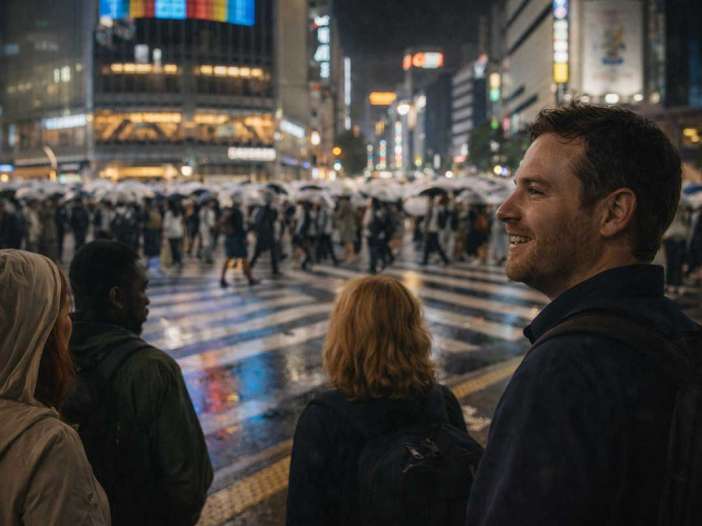
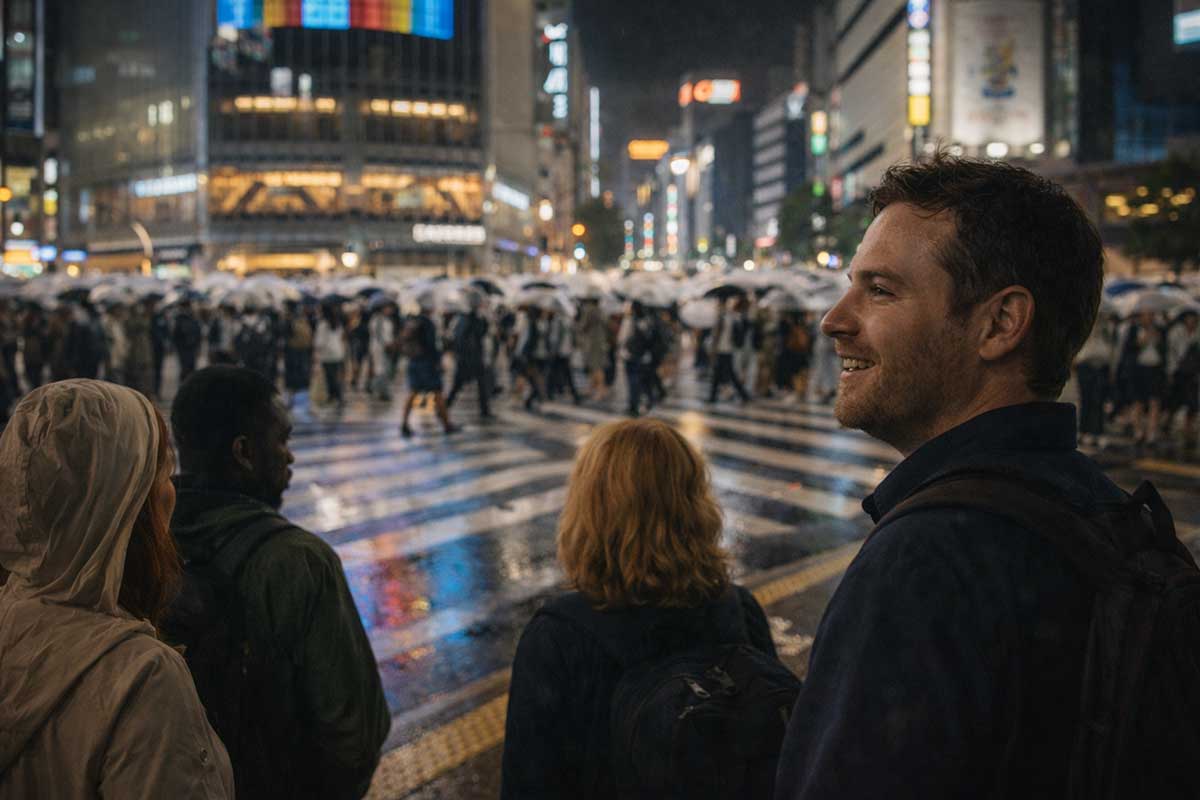
Post Japan Depression isn’t just missing a trip—it’s the shock of realizing how calm you can feel when the world stops extracting from you. When people say “I miss Japan,” I’ve learned they’re usually talking about something deeper: the way Shibuya can be crowded but not hostile, the way trains can be full but still quiet, the way strangers can help without pressuring you, and the way your body stops bracing for conflict.
So I invited a roundtable I wish every PJD traveler could sit with: Alain de Botton, Brené Brown, Cal Newport, Dacher Keltner, Marie Kondo, and Mike Birbiglia. Not to romanticize Japan, but to translate the longing into something useful: a map of needs—nervous-system relief, legible social respect, beauty as everyday dignity, protected attention, and the grief of meeting a “better you” you don’t want to lose.
If you’ve ever landed back home and felt the noise hit you like weather, this conversation is for you. Not to tell you to “get over it,” but to ask the real question: what were you actually looking for—and what would it mean to build it where you live?
(Note: This is an imaginary conversation, a creative exploration of an idea, and not a real speech or event.)
TOPIC 1 — “I Miss Japan” Is Code for “My Nervous System Finally Got Quiet”
The room is deliberately plain: pale wood, soft light, a kettle breathing steam like a small animal at rest. No music. No screens. Everyone’s phone sits face down in the center of the table like a truce offering.
Outside, a winter wind taps the window. Inside, the air feels padded—like a library after closing.
Alain de Botton folds his hands as if he’s about to guide a confession, not a conversation.
Alain de Botton: People call it Post-Japan Depression, but what I’m interested in is more specific. When you say, “I miss Japan,” you’re not just missing a geography. You’re missing a feeling. A particular internal climate. So let’s begin there.
He pauses, letting the silence do what silence does—invite honesty.
Alain de Botton: When you were in Japan, what exactly became quieter inside you? I don’t mean “the streets were quieter.” I mean inside. Was it your thoughts, your vigilance, your social performance, your decision fatigue—what went quiet?
Mike Birbiglia: For me, it was… my internal narrator stopped auditioning. At home, my brain is like, “Welcome to the Mike Show, tonight’s episode: Why That Person Looked At You Weird.” In Japan, it was like the narrator got a union break. He was still there, but he wasn’t allowed to do overtime.
Marie Kondo: I feel this very physically. The quiet is not only sound; it is less friction. In many places, there is constant small collision—people, noise, clutter, rushing. In Japan, many things are arranged so you do not collide. Your body relaxes because it is not bracing all day.
Dacher Keltner: I hear “bracing” and I think nervous system. There’s a kind of low-grade threat detection many of us carry—especially in crowded, unpredictable environments. In Japan, the predictability reduces the brain’s need to scan for danger. Your system moves from vigilance toward regulation. It’s not that you become a different person; it’s that your body stops preparing for impact.
Brené Brown: I think it’s social evaluation. At home, a lot of us feel exposed—like we’re being watched, rated, sized up. In Japan, for many travelers, there’s a sense of respectful invisibility. You’re not demanded to perform friendliness or explain yourself. That can feel like relief, especially if your daily life is full of “Show me you’re okay, show me you’re productive, show me you belong.”
Cal Newport: Decision fatigue dropped for me. Not because there were fewer choices—Japan has endless choices—but because the system carries more of the burden. Transit is coherent. Public norms are legible. The environment is engineered for flow. At home, you’re forced to constantly self-navigate: Where do I stand, what’s the rule, what’s safe, who’s mad, what’s expected. In Japan, the external structure reduces the cognitive tax.
Alain de Botton listens as if he’s collecting evidence for a case he’s already decided will be kinder than the verdict people fear.
Alain de Botton: So we have a chorus: the inner commentator quiets, the body stops bracing, the social self stops performing, and the mind stops spending so much energy on navigation. That’s important—because it suggests the sadness after returning isn’t “missing Japan” so much as missing a state of internal safety.
He leans forward slightly.
Alain de Botton: Let’s sharpen this. What did Japan do for you—psychologically—that you weren’t doing for yourself?
Dacher Keltner: It offered repeated micro-signals of order and care. We underestimate how much the body responds to small cues: clean lines, predictable movement, polite distance, quiet voices, well-kept shared spaces. Those cues tell your nervous system, “You can un-clench.” Many people don’t know how to give themselves those cues. They wait for a place to do it.
Mike Birbiglia: Japan gave me permission to be… small. Not “insignificant,” but like—nobody needs me to be the loudest version of myself. In America, I feel like the world is constantly asking, “What’s your brand? What’s your angle? What are you selling?” In Japan I could just be a guy with a coffee, quietly trying not to get lost. It was the first time my ego took a nap and didn’t wake up angry.
Brené Brown: It also gives people a break from belonging anxiety. At home, belonging can feel conditional—like you have to keep proving your worth. In Japan, as a visitor, you’re allowed to be “not from here” without being interrogated. That distance can be soothing. But the hard truth is: many people are not offering themselves unconditional belonging in their own lives. They’re harsh, demanding, always measuring. Japan, for a moment, interrupts the shame cycle.
Marie Kondo: Japan did something simple: it reflected dignity back to you through the environment. When a place is kept with care, you feel, “My presence here is not a burden.” Even small things—how an item is handed to you, how a space is maintained—communicate respect. If your home life or your work environment is chaotic, you may have forgotten how nourishing respect feels.
Cal Newport: Japan also protected attention. So many places are designed around extraction—advertising, noise, constant interruptions. Even when you don’t consciously register it, your brain pays a price. Japan isn’t free of stimulation, but much of the stimulation is structured rather than chaotic. That helps you drop into deeper presence. People underestimate how emotionally restorative deep presence is.
Alain de Botton: So in other words, Japan acted as an external therapist. It didn’t “fix” you; it simply removed the constant triggers that keep you in survival mode. And it modeled a kind of care—care for objects, spaces, and social boundaries—that you may not be giving yourself.
He lets that land, then changes the angle with the delicacy of someone turning a sore wrist.
Alain de Botton: Now I want to address the return. When you got back home, what was the first stimulus that hit you—the first thing your body reacted to? Noise, rudeness, choice overload, phone addiction, loneliness, the speed of people, the pressure to resume roles—what was it?
Brené Brown: For me, it’s roles. The moment you get back, you’re somebody again. Not in a good way—more like, “Here’s what you owe. Here’s what you have to manage. Here’s who expects you to be fine.” Japan can be a pause from your identity contracts. Home is where the contracts come due.
Cal Newport: The phone. Honestly. You land and suddenly you’re reacquainted with a thousand tiny tugs at your attention. Messages, feeds, news, notifications. In Japan, even if you used your phone, the surrounding culture didn’t feel built around constant interruption. Coming home can feel like being dropped into an attention blender.
Marie Kondo: Visual clutter. It sounds trivial, but it is not. In Japan, many spaces are designed with breathing room—what you might call negative space. When you return to cluttered environments, your eyes don’t rest. Your mind doesn’t rest. You feel tired in your own home because the space is asking you to manage it constantly.
Dacher Keltner: For many, it’s unpredictability and aggression—small and large. Driving culture. The harshness in public interactions. The sense that people are on edge. The body notices that immediately. It’s like your system says, “We’re back in the place where we have to defend ourselves.” Then the mind adds a story: “Japan was better. Home is worse.” But underneath is physiology.
Mike Birbiglia: Mine was… volume. Not just sound. Emotional volume. People here do feelings at full blast. In Japan, I felt like emotions were in a well-designed container. Back home, it’s like every place is a talk show. Everyone’s a panelist. And my brain is like, “You’re on in 3… 2… 1…” and I’m like, “I just want to buy toothpaste.”
He glances at the kettle as if it’s the only sane citizen in the room.
Mike Birbiglia (softly): And also… I didn’t realize how safe I felt walking at night until I didn’t feel it anymore.
A small silence follows—not heavy, just truthful.
Alain de Botton: That’s the heart of it. Not romance. Not novelty. Safety, containment, and reduced cognitive taxation. And it makes sense that you’d mourn that.
He looks around the table, then offers a reframing that’s neither lecture nor comfort—more like a handrail.
Alain de Botton: Let me propose something. Perhaps “Post-Japan Depression” is not a disorder but a message. A message that says: There is a version of you that emerges when your nervous system is not under siege. The grief is real. But the grief might also be information.
Brené Brown: Yes. And the danger is when we turn the message into a verdict: “My life is wrong.” Instead, we can translate it into a request: “My life needs more quiet. More respect. More breathing room. More predictable kindness.” Those are needs. Needs can be honored.
Cal Newport: This is where people can do something practical. If Japan lowered the “friction tax,” then your job at home is to lower friction deliberately: fewer inputs, clearer routines, protected attention, systems that carry the load. Otherwise you’ll keep chasing geography for what is actually an environmental design problem.
Marie Kondo: And a self-respect problem. If your space is chaotic, it may reflect how you treat your own time and body—like they are disposable. Japan reminds people: care is not luxury. Care is the baseline.
Dacher Keltner: I’ll add one more layer: awe. Japan offers small, frequent moments of awe—beauty, craftsmanship, seasonal attention. Awe expands the self. When you return to environments that don’t offer awe, the self collapses back into stress and narrowness. People think they miss Japan; they miss expansion.
Mike Birbiglia: Which is wild, because if you told me ten years ago, “One day you’ll travel somewhere and your main souvenir will be a calmer nervous system,” I’d be like, “Great, can I get that at the airport duty-free?”
A few smiles, not to escape the seriousness—just to keep it breathable.
Alain de Botton: Here’s what I’d like you to remember from today: when you say “I miss Japan,” try translating it into a sentence that names the need without using the word Japan.
He glances from face to face, inviting the experiment.
Brené Brown: I miss feeling unjudged.
Cal Newport: I miss living in a world that protects attention.
Marie Kondo: I miss feeling cared for by my environment.
Dacher Keltner: I miss being regulated—safe enough to be open.
Mike Birbiglia: I miss not being on stage.
Alain de Botton nods once, satisfied—not because the pain is solved, but because it now has a shape.
Alain de Botton: Good. Now we have something we can work with. Not a fantasy, but a set of needs. And in our next topic, we’ll go after the one that keeps returning in disguise: the relief of social scripts—how it feels when you don’t have to guess how to behave, or defend your boundaries every minute.
The kettle clicks off, and for a moment, the quiet in the room feels less like an absence and more like a skill—something learnable, something bringable, something that doesn’t have to stay overseas.
TOPIC 2 — The Seduction of Social Scripts: “I Don’t Have to Guess How to Behave”
The same room, the same quiet. The kettle has been refilled. A faint scent of toasted barley tea lingers like a memory you can’t quite place.
Outside, the world continues being loud on purpose.
Inside, Alain de Botton waits until everyone settles—not because he’s trying to control the room, but because he knows something about longing: it speaks best when it doesn’t have to compete.
Alain de Botton
In the first topic, we kept translating “I miss Japan” into a need: calm, dignity, protection of attention, a nervous system that isn’t bracing. Now I want to go after another layer people mention almost immediately, often without realizing how deep it runs.
He looks at the phones on the table, as if they’re innocent witnesses.
Alain de Botton
Which social “scripts” in Japan felt like kindness to you? I’m not asking what was “polite.” I’m asking what reduced your anxiety—what removed the guesswork.
Brené Brown
For me it’s the predictability of respect. When the rules of interaction are consistent, you don’t have to scan for hidden rejection. At home, a lot of us are constantly reading the room: “Am I welcome? Am I bothering someone? Are they annoyed but pretending?” In Japan, many travelers experience a kind of neutral respect as the baseline. You’re not forced to perform for it.
Marie Kondo
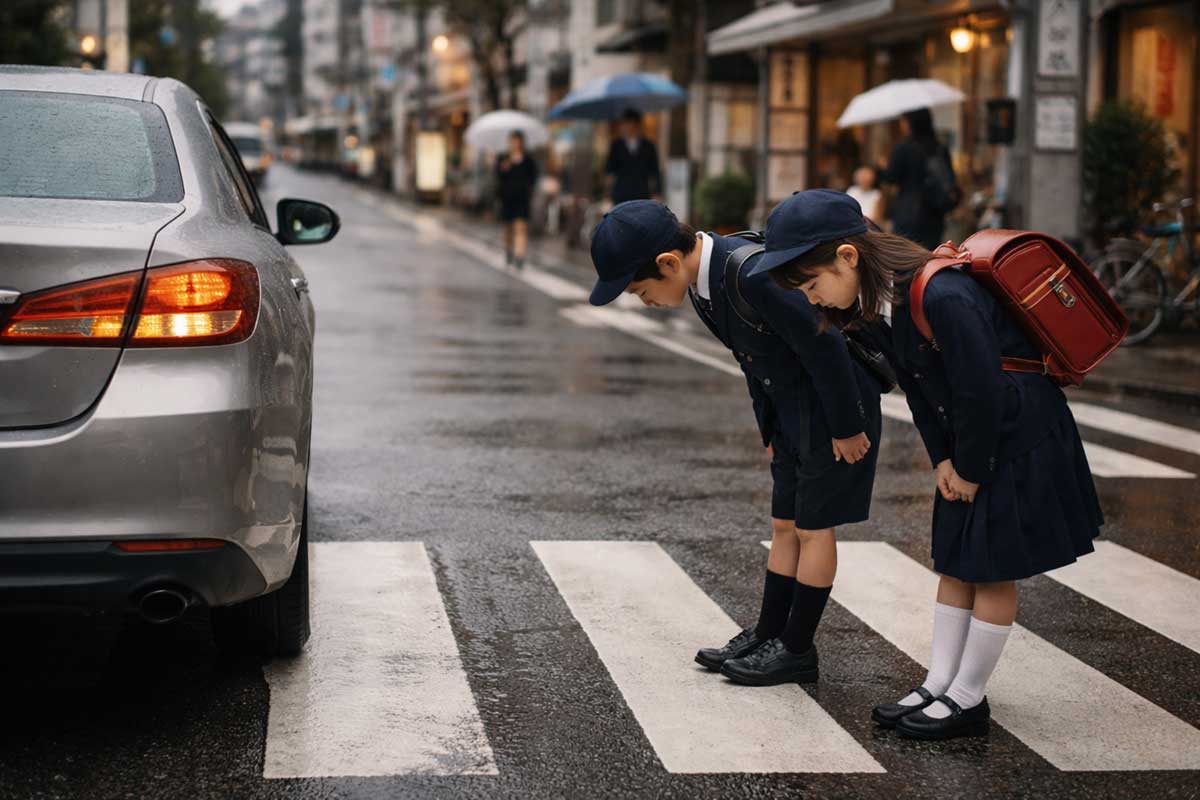
Yes. There is a comfort in not needing to push yourself outward. Even small things—how people move around each other, how they avoid imposing—communicates: “I will not make you carry me.” That is kindness. When people do not take up unnecessary space, your body relaxes.
Cal Newport
I’d phrase it as reduced social bandwidth usage. In high-friction cultures, you spend a lot of mental energy on micro-negotiations: who goes first, who’s entitled to space, whether someone is going to escalate. In Japan, the social contract is legible in public settings—queuing, train etiquette, subdued voice volume. It’s not perfect, but it lowers the “unknowns.” Unknowns are exhausting.
Dacher Keltner
And the body reads unknowns as potential threat. Predictable scripts help because they reduce ambiguity. Ambiguity forces the brain to prepare for multiple possibilities—some of them negative. When you’re in an environment where people reliably follow norms of consideration, you downshift. Your vagus nerve can do its job. You feel safer, and therefore more open.
Mike Birbiglia
Okay, I’m going to say something that makes me sound like a socially anxious raccoon. In Japan, I loved that there’s a way to exist in public without auditioning to be “a fun person.” You can be quiet and it’s not taken as hostility. At home, silence can be interpreted like you’re mad, or smug, or plotting. In Japan, silence is just… a setting.
He taps the table once, like he’s checking whether the thought is solid.
Mike Birbiglia
And also: nobody tries to “win” every interaction. Like, even buying a snack doesn’t feel like a contest for dominance.
A soft laugh moves around the room, then fades.
Alain de Botton
That’s a sharp observation. So the scripts you’re describing are not merely manners—they’re a kind of emotional infrastructure. They reduce the need to defend yourself socially.
He pauses, then turns the question as if he’s turning a stone to see what lives underneath.
Alain de Botton
But we should be honest: did those scripts feel like freedom… or like hiding? Because a script can soothe you—or it can let you disappear when you should be seen.
Brené Brown
Both. And that’s where it gets tender. If you’re exhausted from being evaluated, a script that lets you be “unremarkable” can feel like freedom. But if you’re already struggling with loneliness, invisibility can deepen it.
She leans forward slightly, the way she does when she wants to speak to the part of someone that’s embarrassed.
Brené Brown
Sometimes we call it “I love the culture,” but what we mean is, “I loved not being emotionally exposed.” That’s not wrong. It’s just revealing. It tells you your current life may be demanding a kind of performance you haven’t consented to.
Dacher Keltner
I agree. Social scripts can be regulating, but they can also limit the expression of vulnerability. There’s a difference between “I feel safe” and “I feel unseen.” Some people feel soothed because there’s less overt confrontation, less intrusion. Others might find it difficult because their relational style needs more explicit warmth.
Marie Kondo
And we must remember: a script is not the same as love. A script can create cleanliness in a relationship, a sense of order, but love is deeper. Love requires being known. Still, for many people, the script is the first step—because when life is chaotic, order is mercy.
Cal Newport
There’s also a modern context. Many of us live in cultures where social interaction has become performative: we speak to be interesting, to be liked, to gain status. If Japan gave people relief from status performance, they might interpret that relief as “freedom.” But the deeper question is: why is their home environment so status-saturated? That’s not a Japan question. That’s a values question.
Mike Birbiglia
Can I confess something? I think I used the scripts as a vacation from my own personality. Like, I could be the “quiet, respectful tourist” and nobody expected me to be… Mike.
He shrugs, half smiling, half serious.
Mike Birbiglia
But then I came home and realized: wow, maybe I don’t like how loud I feel I have to be to count as alive.
Alain de Botton
That may be one of the most important admissions in PJD: “I found a way of being in public that didn’t drain me.” Whether that’s freedom or hiding depends on what you do with the information.
He lets the thought settle, then asks the next question, gentler but more demanding.
Alain de Botton
If you could import just one social script into your home culture—or even into your own life—what would it be? And I don’t mean “everyone be Japanese.” I mean: what rule of interaction would reduce suffering where you live?
Marie Kondo
I would import consideration as default. Not friendliness as performance, but consideration as posture. For example: do not force your emotions into other people’s space. Do not make your urgency become someone else’s emergency. This is kindness.
Dacher Keltner
I’d import public gentleness—lower aggression in everyday encounters. Driving, shopping, waiting. These micro-interactions shape social trust. When the baseline is mildness, people feel safer, and prosocial behavior increases. It becomes a positive feedback loop.
Cal Newport
I’d import quiet norms around attention in shared spaces. Trains, waiting rooms, cafés. Not as authoritarian silence—more like an agreement: “We don’t need to fill every gap.” That protects focus and reduces noise pollution. Noise pollution is cognitive pollution.
Brené Brown
I’d import the permission to be neutral. At home, we often demand emotional labor from strangers: smile, chat, perform warmth. That can be beautiful sometimes, but it can also be coercive. Neutrality can be respectful. “I won’t pull you out of yourself.” That’s a form of consent.
Mike Birbiglia
I would import… how do I say this… “polite distance without coldness.” Like, I don’t need you to be my best friend at the pharmacy. I need you to not treat me like an obstacle. And I also want to not treat you like an obstacle.
He looks at Brené, then back to Alain.
Mike Birbiglia
Also, I want a culture where standing in line doesn’t feel like entering a hunger games arena.
The room laughs, but it’s the laugh of recognition.
Alain de Botton
Good. Now the harder part: if you can’t change a whole society, you can still build micro-cultures—your family, your friend group, your work meetings, your daily rituals. But first you must articulate your script clearly.
He gestures lightly, like a conductor cueing a softer section.
Alain de Botton
So tell me: what’s the script you personally want to live by—starting tomorrow—so your life doesn’t depend on a plane ticket to feel humane?
A small silence, the kind where people check whether they’re about to say something true.
Brené Brown
My script would be: “I will not earn belonging by over-giving.” I will show up with warmth, but I will stop performing to prevent rejection. If I need rest, I will name it without apologizing. That’s my version of respectful boundaries.
Cal Newport
Mine is: “Protect attention like it’s health.” I will create quiet zones in my day, and I won’t treat constant availability as virtue. I’ll choose environments—physical and digital—that don’t demand a performance every minute.
Marie Kondo
Mine is: “Care is the baseline.” I will keep my space and my routines in a way that tells my body, “You matter.” And in relationships, I will practice consideration: I will not throw clutter—emotional or physical—into other people’s hands.
Dacher Keltner
Mine is: “Regulate before you relate.” If I’m dysregulated, I will not export it as sharpness or urgency. I will breathe, slow down, and then engage. That alone changes the emotional tone of rooms.
Mike Birbiglia
Mine is: “I’m allowed to be quiet without being absent.” I’m going to practice being present without trying to be entertaining. And if someone thinks my silence is weird… that’s okay. My nervous system is not a comedy club.
Alain’s face softens—not into pity, but into something like relief. As if the longing has finally stopped being a fog and started being a map.
Alain de Botton
What you’ve all described is something very radical in many modern places: an agreement not to extract from one another. Not to extract attention, emotional labor, speed, or dominance.
He reaches for his tea, then sets it down again, as if the room itself is the point.
Alain de Botton
And perhaps that’s why Japan feels so restorative to some: it offers a temporary world where you don’t have to negotiate basic decency in every encounter.
He nods once, concluding without closing the door on what comes next.
Alain de Botton
In the next topic, we’ll move from scripts to beauty—why aesthetics can feel like love, and why people come home grieving not a country, but a level of care they didn’t know they were starving for.
TOPIC 3 — Beauty Without Permission: Why Aesthetics Can Feel Like Love

The kettle is quieter tonight, or maybe everyone has learned to listen differently. The cups are the same, but the room feels slightly changed—as if the conversations themselves have been tidying the air.
A small branch in a vase catches the light. Not dramatic. Just placed with intention.
Alain de Botton
We’ve spoken about calm and social scripts—how Japan can feel like a nervous system sanctuary and a relief from constant social improvisation. Now we go somewhere people often struggle to explain without sounding sentimental.
He gestures toward the vase, then the plain table, then the gentle space around them.
Alain de Botton
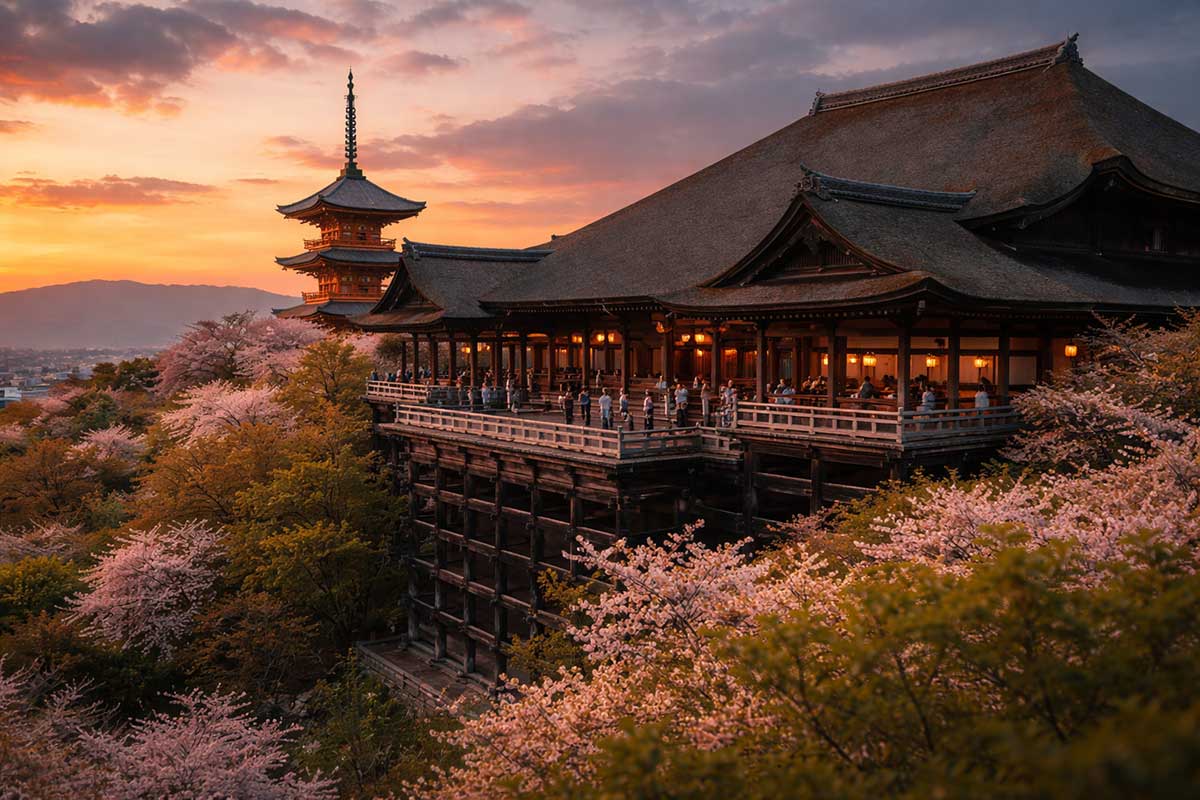
Beauty. Aesthetics. Care. Many people return from Japan with a strange grief, as if they’ve lost a relationship. But what they often lost was not a place—it was the experience of being surrounded by quiet excellence. By attention. By things done well without shouting about it.
He looks around the table.
Alain de Botton
What moment of beauty hit you hardest? Not the tourist highlights—unless it truly was one. I mean a moment that surprised you: a station platform, a convenience-store meal, a silent garden, a perfectly wrapped object. What was it?
Marie Kondo
For me, it is often the simplest beauty: the way ordinary things are treated as worthy. A bowl, a wrapper, a doorway, a public restroom. When an ordinary object is treated with respect, you feel something inside you soften. You realize: “I am allowed to live with care.”
Mike Birbiglia
Mine was… a train platform. Which is not something I ever thought I would say without being forced in court.
He shifts, smiling at his own disbelief.
Mike Birbiglia
It was clean, quiet, and everyone was standing in the correct place like they’d rehearsed it for a Broadway show called We Respect Each Other. And I felt this weird emotion like—“Oh. So civilization is possible.” Not perfect, but possible. And I didn’t even know I needed that hope until I had it.
Dacher Keltner
That’s awe. People often assume awe comes only from grand mountains or cathedrals. But awe can come from human coordination—collective restraint, craftsmanship, harmony. It makes you feel part of something larger than your ego. It expands your sense of what humans can be.
Brené Brown
The wrapping gets me. I know it sounds small, but it’s actually profound. In a lot of places, we communicate: “You’re lucky you got anything at all.” In Japan, wrapping often communicates: “You matter enough to receive this with dignity.” And when you don’t experience that regularly, your body experiences it as… love. Or at least, as respect that feels like love.
Cal Newport
I’ll take the “quiet excellence” angle. Japan is full of systems where the beauty is the absence of friction. A doorway that slides smoothly, signage that reduces confusion, a meal that is balanced without being fussy. That’s aesthetic, yes—but it’s also cognitive relief. Beauty isn’t just appearance; it’s the feeling of a world that doesn’t constantly fight you.
Alain nods, as if each detail is another piece of a puzzle that spells something bigger than travel.
Alain de Botton
So let’s press deeper. Did beauty make you feel worthy… or did it make you feel alive? Those are not the same.
He lets the question sit long enough for the honest answer to rise.
Brené Brown
For me, worthy. I realized how much I walk around braced for disrespect—like I’m always one step from being dismissed. Beauty done with care felt like someone saying, “You don’t have to earn gentleness.” And that hit a shame place. Because shame says, “You are not worthy of care unless you perform.”
Marie Kondo
I think it is both. Worthy—because care reflects dignity. Alive—because beauty awakens the senses. But worthiness is especially important for people who have been living in constant depletion. When you are depleted, you stop giving care to your own life. Then when you see care around you, you feel grief: “I forgot I deserved this.”
Dacher Keltner
I’ll add: beauty can be a moral emotion. When we see care, craftsmanship, harmony, our minds interpret it as goodness. It restores trust. And trust is one of the most powerful regulators of human stress. Feeling “alive” is often the body returning to trust.
Cal Newport
Alive, but in a specific way: present. Japan’s aesthetic restraint—negative space, simplicity, seasonal detail—pulls you out of your head. In many modern environments, you’re trapped in abstraction: notifications, ads, politics, noise. Aesthetic coherence returns you to the tangible. You feel alive because you can actually feel again.
Mike Birbiglia
Okay, I’m going to say something slightly embarrassing.
He looks down at his cup, then commits.
Mike Birbiglia
In Japan, I felt like… the world liked me. Not “the people,” but the world. Like the sidewalks were saying, “We made space for you.” The trash bins—when you find one—are like, “We trust you to do the right thing.” And then I came home and I felt like the world was like, “Good luck, idiot.”
A laugh, then a quiet sympathy.
Alain doesn’t rush past it. He handles it like a fragile object.
Alain de Botton
What you’re describing is the emotional experience of design. When a place is designed with care, it can feel like being welcomed. And when you return to environments that feel neglected or hostile, the contrast is not merely aesthetic—it’s existential.
He leans forward.
Alain de Botton
So here is the critical question. What would it mean to treat your own life with that same level of care? Not as tourism. As a practice. Where in your life have you accepted ugliness—physical or emotional—because you believed you had to?
A deeper silence. The kind that feels like the room expanding.
Marie Kondo
Many people accept clutter because they believe they are too busy, or they believe care is selfish. But clutter is not only objects. Clutter is unresolved decisions. Unspoken resentment. Rooms you avoid. When you choose care, you stop abandoning yourself. That is the real transformation.
Brené Brown
A lot of us accept emotional ugliness: relationships where kindness is optional, workplaces where dignity is conditional, family systems where you’re valued only when you’re useful. Japan can confront you with an uncomfortable truth: “I have been normalizing disrespect.” When you see care elsewhere, you can’t unsee what you tolerate.
Cal Newport
There’s also a practical translation. “Treat your life with care” can be operationalized. Reduce friction. Curate inputs. Create rituals that protect attention. Choose environments—digital and physical—that don’t scatter you. Beauty doesn’t have to be expensive. It has to be intentional.
Dacher Keltner
And it has to include awe. Awe is often treated like a luxury. But awe is medicine for the ego and the stress response. If you want to treat your life with care, build in small awe experiences: nature walks, museums, craft, music, quiet spaces. Japan accidentally prescribes awe to many people through daily life.
Mike Birbiglia
For me it means… I stop living like my life is a storage unit. Like I’m just throwing things in there until “someday” when I’m organized and calm and worthy of nice bowls.
He points at the vase.
Mike Birbiglia
That branch in the vase? That’s illegal in my apartment. Because I would be like, “That’s clutter.” But it’s not clutter. It’s a decision. It’s saying, “I’m alive today.”
Brené’s eyes soften, because she recognizes the hidden sentence beneath his joke.
Brené Brown
That’s not about the branch. That’s about you giving yourself permission to receive beauty without earning it.
Alain nods, gently satisfied.
Alain de Botton
Yes. Beauty without permission. That’s the phrase. Many people live as if beauty must be justified—by productivity, by success, by money, by a special occasion. Japan, for some travelers, offers daily beauty as a baseline. And when you return to a life where beauty is postponed indefinitely, you feel the absence as grief.
He sits back, letting the idea widen.
Alain de Botton
So perhaps the longing is not “I want to go back.” Perhaps the longing is: “I want to live in a world—or create a small world—where care is normal.”
He looks around the table.
Alain de Botton
Before we end, I want each of you to name one “tiny act of care” you could do at home that would translate this insight into reality. Something so small you can’t argue with it.
Marie Kondo
Clear one surface and keep it clear. One. Make it a sanctuary for your eyes.
Cal Newport
Create one hour per day with no phone and no feeds. A protected hour where your attention belongs to you.
Dacher Keltner
Schedule awe weekly—walk somewhere beautiful, listen to music with full presence, visit a museum. Put awe on the calendar like medicine.
Brené Brown
Practice dignity as a boundary: stop tolerating one small disrespect you’ve normalized. Name it. Change it. Even gently.
Mike Birbiglia
I’m going to buy one nice bowl and use it on a Tuesday.
He grins, then turns serious.
Mike Birbiglia
Because I think I’ve been living like Tuesdays don’t deserve beauty.
The room goes quiet again, but it’s a different quiet now—less like loss, more like possibility.
Alain de Botton
Next, we’ll confront the “better me” effect—why Japan can feel like an identity upgrade, and why the depression is sometimes grief for a self you met there and don’t know how to be at home.
TOPIC 4 — The “Better Me” Effect: Travel as Identity Upgrade
Tonight the room feels slightly warmer, not because the heater changed, but because everyone is beginning to recognize a pattern: each topic has been less about Japan and more about the self that appears when certain conditions are met.
The kettle whistles softly, then quiets—like a ritual that knows its role.
Alain de Botton
We’ve spoken about calm, about social scripts, about beauty as a form of care. Now we come to the confession that sits behind many PJD stories but is rarely said out loud.
He looks at each face with a kind of permission.
Alain de Botton
Who were you in Japan that you don’t know how to be at home?
A silence that feels like a doorway.
Mike Birbiglia
I was… less defensive. Like my personality didn’t have to carry body armor. At home, I’m always slightly braced for someone to misunderstand me, or judge me, or cut me off, or take up all the space. In Japan, I felt like I could relax into being a person instead of being a persona.
He shrugs, then adds with a small laugh:
Mike Birbiglia
Also, I walked like I belonged somewhere. Which is rare for me in any country.
Brené Brown
I was softer. More open. I wasn’t constantly scanning for rejection. And the weird part is… I didn’t realize how much of my “strength” at home is actually protection. In Japan I could be tender without feeling stupid for it. I could be quiet without feeling like I was failing.
Cal Newport
I was more focused. More deliberate. I wasn’t splitting my mind into a thousand tiny tabs. At home, even when I try to be present, the environment is designed to pull me away. In Japan I felt like I could choose my attention and actually keep it. That creates a different identity: someone who finishes thoughts.
Marie Kondo
I was more respectful to myself. That may sound strange, because Japan is where I am from, but even for me, when I’m in an environment where care is visible, my behavior becomes more careful. I move more gently. I waste less. I am less harsh. It is easier to be your best self when the world invites it.
Dacher Keltner
I was more trusting. And that changes everything. When you trust your environment, you smile more. You notice more. You make room for others. Trust is not only a belief—it’s a bodily state. Japan gave many travelers repeated reasons to trust. At home, trust may feel more costly.
Alain nods as if he’s been waiting for this exact set of answers.
Alain de Botton
So the “better you” in Japan is not necessarily a fantasy. It may be you without constant defensive adaptations.
He leans forward.
Alain de Botton
But we need to test something: was that version of you real… or was it borrowed from the environment?
A few people inhale as if he’s asked the question they’ve been avoiding.
Brené Brown
Both. And I think that’s where shame can creep in. People come home and think, “If that was the real me, why can’t I be that here?” Then they conclude they’re failing. But context matters. We are relational creatures. If you were in a context that lowered threat and raised dignity, of course a better version of you appeared.
She pauses.
Brené Brown
The question isn’t “Was it fake?” The question is “What conditions allowed it?” That’s empowerment. Shame says, “You’re not good enough.” Empowerment says, “You need different inputs.”
Cal Newport
I agree. Identity is not a fixed trait; it’s a set of behaviors reinforced by environment. If Japan produced a “more focused you,” that’s not a costume. It’s evidence that your attention can thrive in the right conditions. The lesson is to replicate key conditions at home: reduce distractions, add structure, lower friction. Otherwise you’re trying to be a monk in a casino.
Mike Birbiglia
A monk in a casino is exactly how I feel at Target.
He looks around, half-joking, half pleading to be understood.
Mike Birbiglia
I think the “better me” was real… but fragile. Like a plant that only grows in certain light. And then I brought it home and put it under a fluorescent bulb and was like, “Why aren’t you thriving, you ungrateful plant?”
Marie Kondo
Yes. We must not blame the plant. We must change the light.
Dacher Keltner
And we should also be careful: some people become “better” on vacation because they’re temporarily free from responsibility. That’s real relief—but it’s not the whole truth of a life. So part of the work is integrating that self into real circumstances, not only ideal ones.
Alain’s gaze is steady, like someone who wants to protect the conversation from becoming either fantasy or self-attack.
Alain de Botton
Good. So the “Japan-you” may be authentic, but context-dependent. Now the pivotal question: If you could bring back one behavior that proves that Japan-you is real—something you can do at home—what is it?
He lifts his cup, then sets it down again, waiting.
Cal Newport
One behavior: I will take a walk every day without my phone. A deliberate, sensory walk. It sounds simple, but it’s a declaration: my attention is mine. In Japan, my attention felt protected by default; at home I have to protect it intentionally.
Marie Kondo
One behavior: I will prepare one small thing with care each day—a meal, a cup of tea, the way I fold a cloth. It is not about being perfect. It is about treating life as worthy of attention. That behavior changes identity over time.
Brené Brown
One behavior: I will practice “quiet confidence.” Meaning: I won’t over-explain. I won’t perform wellness. I’ll let my no be no. I’ll let my yes be yes. In Japan, many travelers feel relief because they don’t have to perform. So at home, I’m going to stop performing for belonging.
Dacher Keltner
One behavior: I will slow down my movements in public. People underestimate how speed signals threat. If I move with calm intention—walking, driving, interacting—I’m telling my nervous system and others: we’re safe. That’s culture-building in miniature.
Mike Birbiglia
One behavior: I’m going to do the “Japanese thing” where you don’t treat every moment like a pitch.
He smiles, then gets more specific.
Mike Birbiglia
I’m going to go to a café and not pull out my laptop and not make it a productivity performance. I’m going to sit there and just… exist. Like a human being. And if my brain yells, “This is a waste,” I’m going to be like, “No, this is training.”
Alain nods, as if this is the exact translation he hoped for: identity as practice.
Alain de Botton
This is the hidden promise of PJD: it reveals a self you liked. And if you’re wise, you don’t treat that self as something that belongs to a country. You treat it as a clue: a blueprint.
He pauses.
Alain de Botton
But there’s also grief here. Many people return home and realize something painful: their old life may not fit the self they met. They may have outgrown their pace, their habits, their relationships, even their environment.
Brené’s expression turns serious, because she knows what comes next.
Brené Brown
And this is where people can either evolve… or numb out. If you don’t integrate the insight, you can turn Japan into an escape fantasy, a place you worship from afar while your life stays the same. But if you listen, Japan becomes a teacher that asks: “Where are you abandoning yourself at home?”
Dacher Keltner
And because this is an identity issue, it can feel like mourning. Not only mourning Japan, but mourning the life you thought you were supposed to live.
Cal Newport
And it’s not always dramatic. Sometimes it’s small: you realize you need more quiet, more walking, more public civility, less noise. But small needs ignored become big despair.
Marie Kondo
Yes. The sadness is not the enemy. It is the messenger.
Mike Birbiglia
I’m starting to think PJD is like… your soul’s customer service complaint.
He tilts his head.
Mike Birbiglia
Like you went somewhere and your soul was like, “Oh, you offer this? Calm? Respect? Beauty? Attention?” And then you came home and your soul was like, “I would like to speak to the manager.”
A laugh moves through the room, but it lands softly.
Alain’s eyes brighten with the kind of amusement that still respects the pain.
Alain de Botton
Exactly. And now we arrive at the final topic: the homecoming problem. Not “How do I get back to Japan?” but “How do I build a life that can hold the self I met there?”
He lets the kettle’s silence be the closing bell—an invitation to continue, not an ending.
TOPIC 5 — The Homecoming Problem: When Your Old Life No Longer Fits
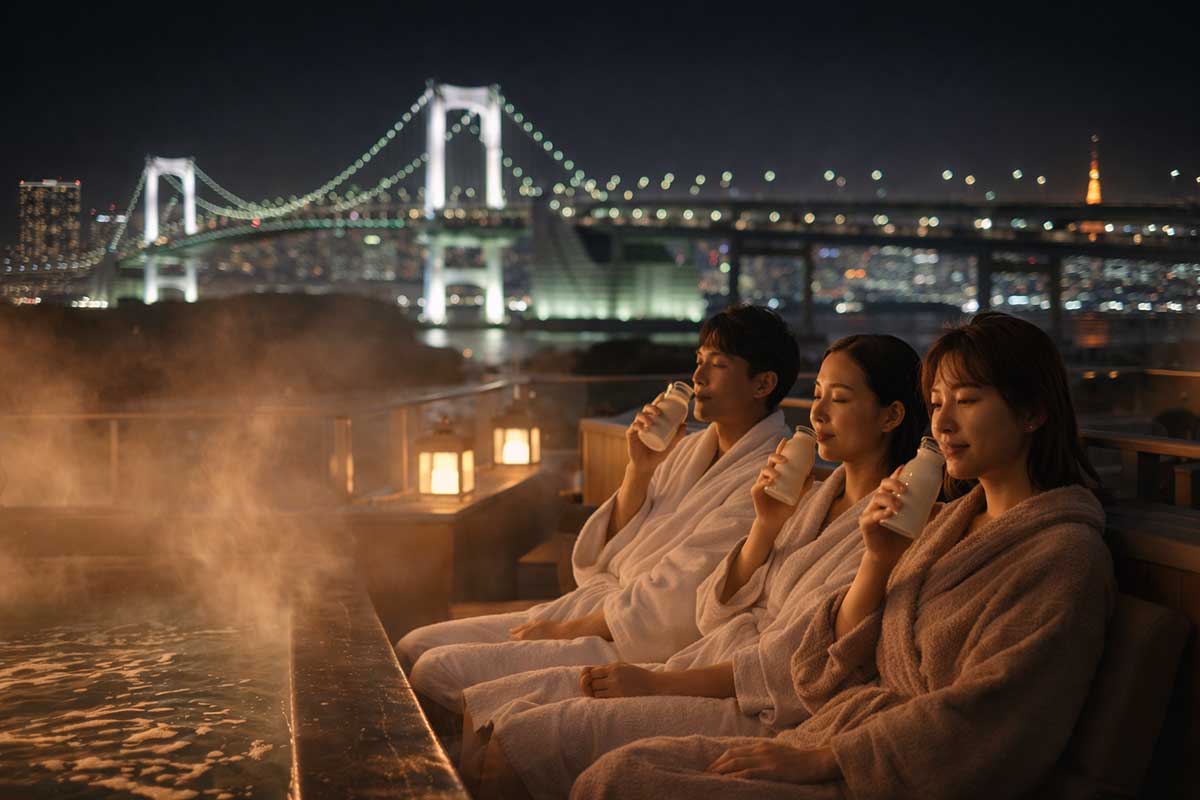
The room is the same, but the feeling has shifted again—like a tide going out. The earlier topics carried wonder, discovery, relief. Tonight carries something more sober: consequence.
The kettle clicks on. Steam rises. The phones remain face down, quietly loyal to the ritual.
Alain de Botton sits with the stillness of someone who knows that the final layer of longing is rarely romantic. It’s practical. It’s relational. It’s terrifying in its simplicity.
Alain de Botton
We’ve translated “I miss Japan” into needs—calm, legible respect, beauty as care, a self that emerges without constant defense. Now we arrive at the point where PJD stops being a mood and becomes a question of life design.
He looks around the table, not accusing, just honest.
Alain de Botton
When you returned home, what did you feel forced to resume—roles, noise, conflict, obligation, speed? What was the first “old life” demand that made your chest tighten?
Brené Brown
Roles, immediately. The invisible job titles you carry. The family expectations. The “be fine” performance. It wasn’t even one big demand—it was a thousand small ones. Answer the texts. Catch up. Be useful. Be available. It felt like putting on clothes that used to fit… and suddenly they don’t.
Mike Birbiglia
I felt forced to resume… pretending I wasn’t overwhelmed. You get back and everyone’s like, “How was it?” and you’re supposed to say, “Amazing!” and then immediately pivot into productivity. Like you didn’t just have your nervous system gently cradled for two weeks. I got home and my calendar was like, “Welcome back, clown. Dance.”
Cal Newport
Speed. Not just physical speed—information speed. The rapid switching, the constant context shifts. In Japan, my mind could complete a thought. At home, the environment is engineered for interruption. The “old life” demand was the expectation of instant responsiveness: messages, feeds, work pings, news. It doesn’t just fill time. It fragments identity.
Marie Kondo
Clutter—both physical and emotional. Home can carry the accumulated evidence of postponed care: piles, unfinished projects, unresolved decisions, spaces you tolerate but do not love. When you return from a place that models care, the clutter feels louder. It says, “You abandoned yourself here.”
Dacher Keltner
Hypervigilance. Many people don’t realize how much their bodies brace in everyday life—especially in environments where public trust is lower. The first demand was: “Be on guard again.” Driving, public interactions, the subtle aggressions. The body returns to scanning. That alone can create grief, because you tasted what it’s like not to scan.
Alain nods slowly, as if the room has just named the exact shape of the bruise.
Alain de Botton
Good. Now the second question is more dangerous, because it demands courage.
He lets the silence stretch until it becomes a mirror.
Alain de Botton
Are you missing Japan… or are you mourning the life you’re afraid to outgrow?
Mike Birbiglia
I’m going to answer like a comedian who accidentally wandered into therapy: yes.
He smiles, then softens.
Mike Birbiglia
I miss Japan, sure. But I think I’m mourning the part of my life that feels like it’s built around noise. Like I’ve been living as if chaos is proof I’m important. Japan made me realize: maybe my life shouldn’t feel like a fire drill.
Brené Brown
Mourning the life I’m afraid to outgrow—that’s exactly it. Because outgrowing things sounds empowering until you realize it might require disappointing people. It might require changing how you show up in relationships. Japan doesn’t just offer a calm experience; it reveals what you’ve normalized. And once you see it, going back to “normal” can feel like betrayal of yourself.
Cal Newport
I’d say: you’re mourning a lifestyle architecture. Japan gives you a lived experience of coherence—attention protected, systems that reduce friction, norms that discourage constant extraction. When you return, you don’t just miss a place—you miss a way of organizing daily existence. That can make your current life feel badly designed. And yes, that may mean you’ve outgrown certain defaults.
Marie Kondo
Sometimes what you outgrow is not a person or a job, but a standard. A standard for how you treat your time, your space, your body. Japan can raise your standard quietly. Then you return and the old standard feels painful. The grief is the gap between the life you lived… and the life you now know is possible.
Dacher Keltner
And there’s a biological angle: when you move into a regulated state and then drop back into chronic stress, your body interprets it as loss. That loss is real. But it can be transformative if it becomes motivation rather than rumination. Mourning can be a signal that you’re ready to evolve.
Alain watches their faces the way you watch a shoreline after a storm—looking for what remains.
Alain de Botton
So the longing may be a form of truth: you met a life rhythm that better fits your nervous system, your values, your dignity.
He lifts his cup, then sets it down again. He doesn’t drink. He doesn’t want the moment diluted.
Alain de Botton
Now the third question—perhaps the only one that matters. What is the smallest “Japan-shaped” change you can make that proves you’re listening to the message?
He raises a finger slightly, as if making a pact.
Alain de Botton
Small. Concrete. Not a fantasy. Not a vow to move countries tomorrow. Something you can begin this week.
Marie Kondo
Choose one room, one corner, one drawer—any small place—and make it a sanctuary. Not “perfect.” But cared for. When you come home, let your eyes land somewhere that says, “You are welcome here.” This is a way of bringing dignity into your daily life without asking anyone’s permission.
Cal Newport
I’ll make it operational: one “quiet block” per day where your phone is off and your attention belongs to a single activity—walk, reading, cooking, journaling, even sitting. The point is to build a daily environment that rewards depth instead of fragmentation. Japan gave you that by default; now you manufacture it deliberately.
Dacher Keltner
A micro-culture change: practice gentle public presence. Choose one place you frequent—your coffee shop, your commute, your grocery store—and make your behavior a signal of calm rather than urgency. Slower movements. A softer voice. Non-escalation. This does two things: it regulates your body and it quietly invites others into a calmer emotional climate.
Brené Brown
A boundary practice: identify one role that is draining you because it’s built on unspoken expectations. Then rewrite one expectation out loud. Not dramatically. Just clearly. For example: “I can’t respond instantly anymore.” Or: “I need one evening a week with no obligations.” The Japan-shaped change is often not an object—it’s permission. Permission to stop earning your right to rest.
Mike Birbiglia
Mine is embarrassingly simple: I’m going to create a “no audition” zone.
He makes a little rectangle in the air, as if framing a scene.
Mike Birbiglia
Like, one hour each day where I’m not trying to be impressive, productive, funny, useful, or fast. I can make tea. I can walk. I can sit. And I’m not allowed to turn it into content.
He glances at the others.
Mike Birbiglia
Because I realized Japan didn’t just calm me down—it showed me how addicted I am to proving I deserve to exist.
A quiet settles over the table—no pity, no drama—just recognition.
Brené Brown
That’s not embarrassing. That’s brave. Because the compulsion to perform is often a trauma response in a suit.
Dacher Keltner
And it’s also a cultural response. Some societies reward constant output, constant visibility. But visibility is not the same as belonging.
Cal Newport
And performance is not the same as meaning.
Marie Kondo
And busyness is not the same as love.
Alain lets those lines hang there like lanterns—simple, illuminating.
Alain de Botton
So if we had to summarize the final lesson of Post-Japan Depression, it might be this: the depression isn’t a punishment. It’s a contrast. It’s your psyche saying, “You have seen what it feels like to be treated with care—by a place, by a culture, by an aesthetic, by a rhythm. Now you must decide what you will no longer tolerate in your life.”
He doesn’t say it like a command. He says it like a hand offered.
Alain de Botton
Before we close, I want to propose one final translation. When the longing rises, don’t just say, “I miss Japan.” Say: “I need more ___.” Then fill in the blank.
He looks around the table, inviting each of them to name it—once—cleanly.
Marie Kondo
I need more care.
Cal Newport
I need more protected attention.
Dacher Keltner
I need more safety and awe.
Brené Brown
I need more dignity and honest boundaries.
Mike Birbiglia
I need more quiet without guilt.
Alain nods, as if the room has finally extracted the real message from the postcard.
Alain de Botton
Good. That’s the end of the illusion that a place can save you. But it’s also the beginning of something better: the realization that you can build—slowly, imperfectly—a life that holds the self you met.
The kettle clicks off. Steam fades. The room remains.
Not as an escape.
As a blueprint.
Final Thoughts by Nick Sasaki
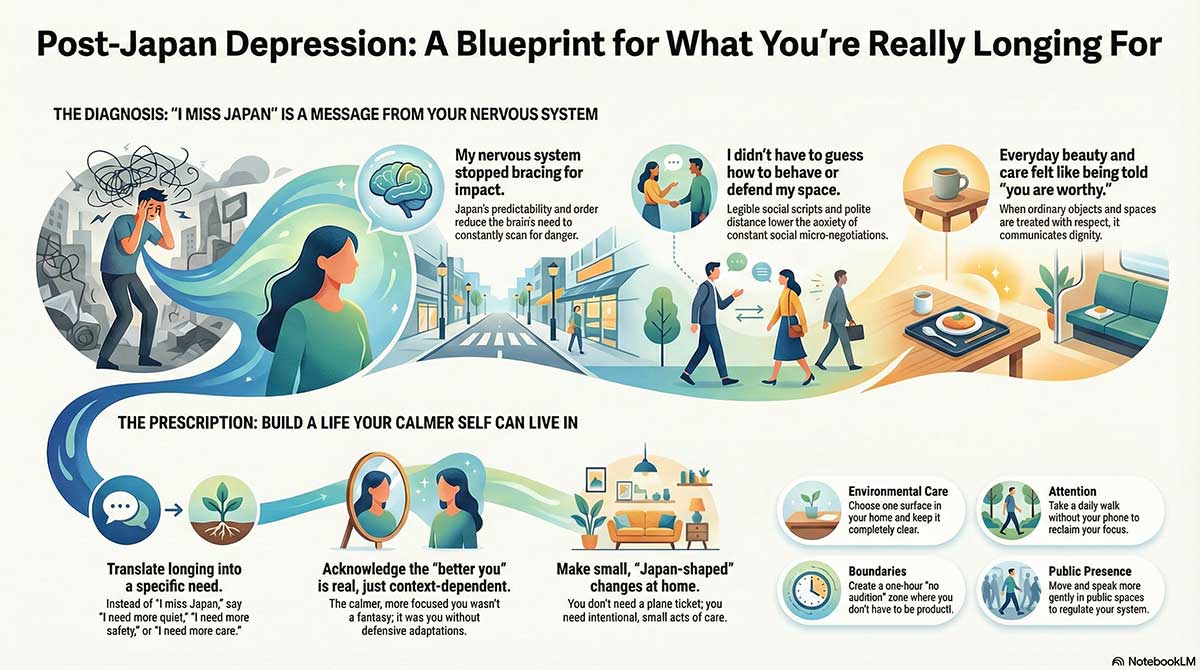
By the end of this roundtable, I don’t think Post Japan Depression is a weakness. I think it’s a message—your nervous system filing an honest report.
The mistake is treating Japan like the only place that can give you what you felt there. The opportunity is realizing that the feeling had ingredients: calm without vigilance, scripts that reduce social guessing, beauty that makes ordinary life feel worthy, and a public space where trust is still possible. Those ingredients can’t be copied perfectly—but they can be translated.
So here’s the question I’m leaving you with: when the longing rises, can you name the need without saying “Japan”? Then—just once—make a small “Japan-shaped” change that proves you’re listening. One protected hour. One cleared corner. One boundary that restores dignity. One walk without your phone. One decision to stop performing for belonging.
Because the real goal isn’t to escape your life with another plane ticket.
It’s to build a life your calmer self can actually live in.
Short Bios:
Nick Sasaki — Founder of ImaginaryTalks, Nick turns modern longings into honest roundtables that uncover what people are really searching for—and how to bring it home.
Alain de Botton — Philosopher and author who examines love, anxiety, and modern life with surgical gentleness, helping people translate vague sadness into clear emotional needs.
Brené Brown — Researcher and storyteller focused on shame, belonging, and vulnerability, known for turning private pain into language that creates courage and connection.
Cal Newport — Author and professor who studies attention, deep work, and digital overload, offering practical frameworks for building calmer, more focused lives.
Dacher Keltner — Psychologist and researcher of awe, compassion, and emotion, exploring how environments shape the nervous system and our sense of safety.
Marie Kondo — Organizing expert and author whose philosophy centers on care, order, and joy, showing how physical spaces can restore dignity and inner peace.
Mike Birbiglia — Comedian and writer with a warm, self-observing voice, using humor to reveal uncomfortable truths about anxiety, identity, and the need to feel safe.
Leave a Reply