

|
Getting your Trinity Audio player ready...
|
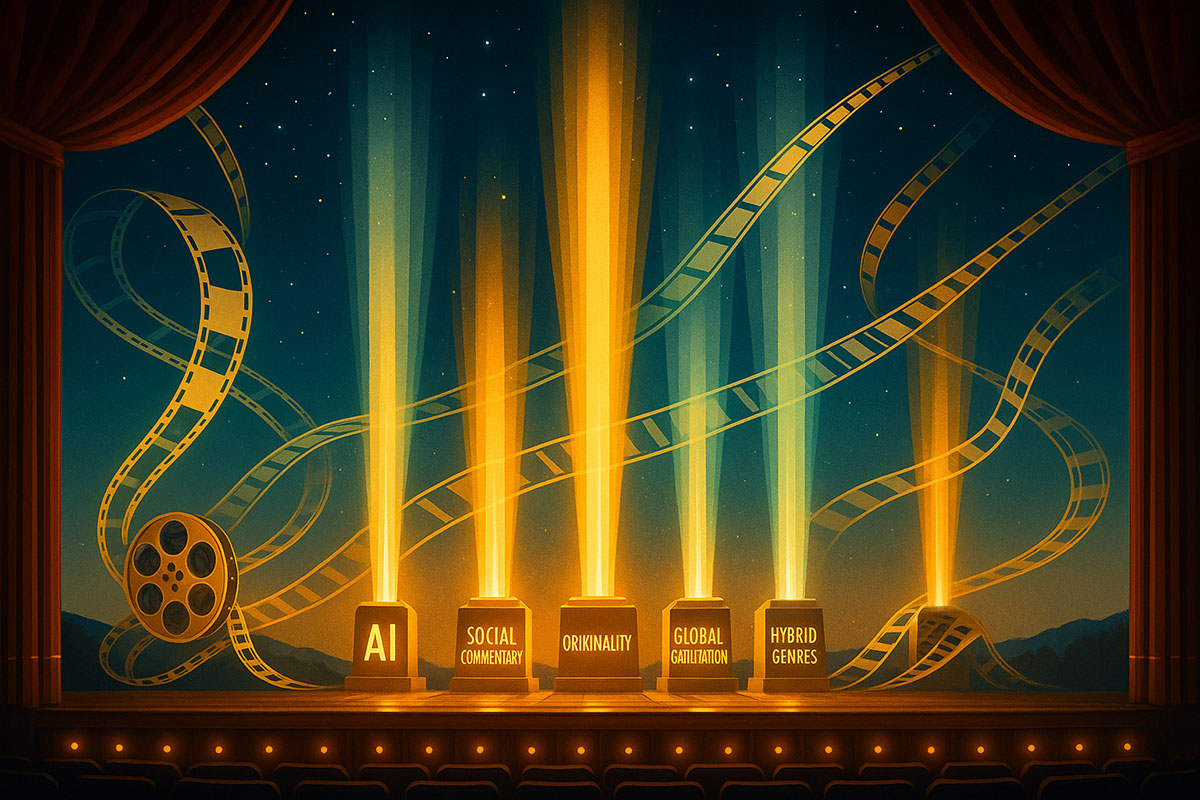
Introduction by Steven Spielberg
Cinema has always been a dialogue between the present and the future. When I began making films, the questions were about how far technology could take us, how much wonder we could conjure on the screen. Today, the questions are larger, and perhaps more profound: Who tells our stories? How do we balance spectacle with truth, fantasy with responsibility?
The five conversations you’re about to witness bring together some of the finest screenwriters in the world to explore where movies are heading. They’ll wrestle with the role of AI, debate whether audiences want comfort or confrontation, weigh originality against the gravitational pull of franchises, open the doors to global storytelling, and experiment with hybrids that defy category.
Film has always been more than entertainment—it’s a mirror of our times and a map of our imagination. These discussions will not only hint at the stories you’ll see on screen in 2026, but also reveal how cinema itself is evolving into a more global, diverse, and boundary-breaking art form.
(Note: This is an imaginary conversation, a creative exploration of an idea, and not a real speech or event)

Topic 1: AI and Human Collaboration in Storytelling
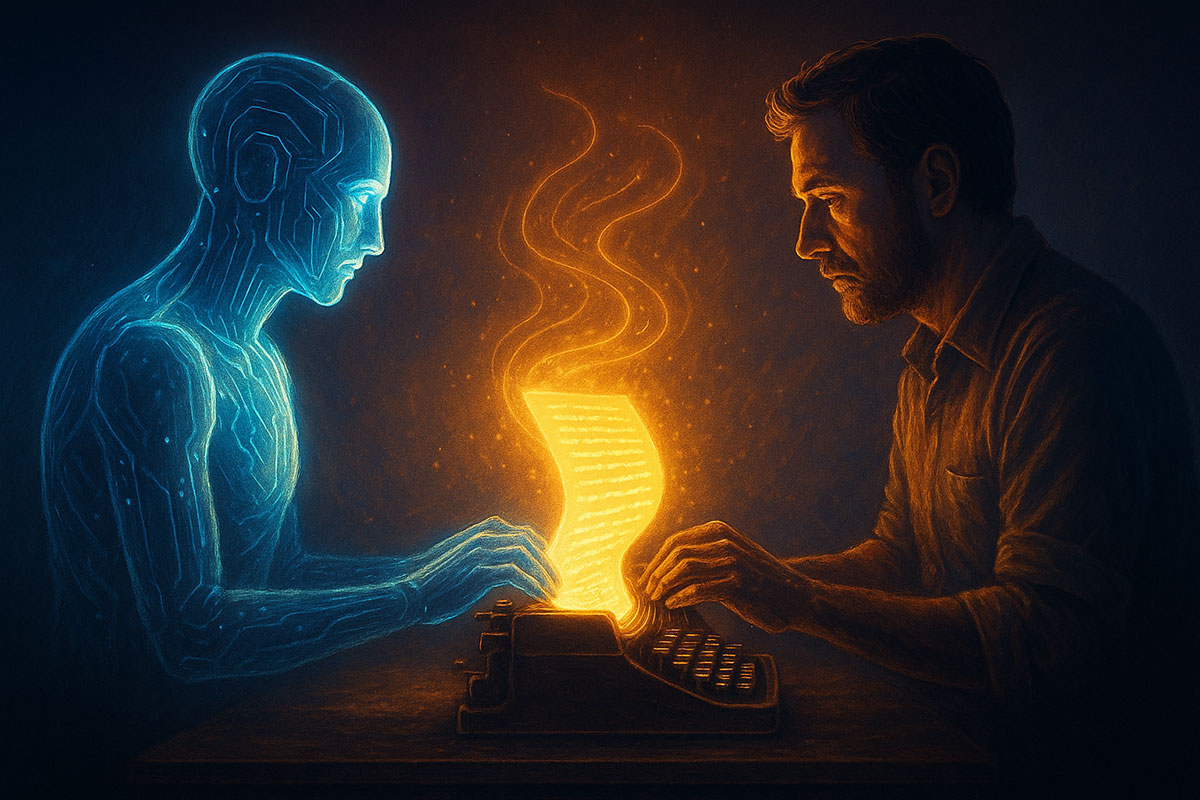
Moderator: Tatiana Siegel (Variety journalist)
Opening by Tatiana Siegel
We’re at a moment where artificial intelligence is stepping into the writers’ room. Some see it as a collaborator, others as a threat, and many as an experiment. Today, I’m joined by five of Hollywood’s most inventive screenwriters: Charlie Kaufman, Aaron Sorkin, Lena Waithe, Alex Garland, and Diablo Cody. I’d like to start with something fundamental: what do you believe AI can and cannot contribute to the art of screenwriting right now?
Question 1: What can AI do well, and what is uniquely human in storytelling?
Charlie Kaufman
AI can imitate structure, even simulate cleverness, but what it cannot do is wrestle with its own mortality or the absurdity of waking up every morning and wondering why. A script is not just words in proper format. It’s a human scream, dressed up as dialogue and plot. AI can dress the mannequin, but it doesn’t know what it feels like to be naked.
Aaron Sorkin
I’ll grant that AI can generate a scene formatted to Final Draft standards in seconds. But storytelling isn’t stenography. It’s about rhythm, about the crackle in the air when one person interrupts another at just the wrong time. That’s not pattern recognition. That’s lived experience.
Lena Waithe
I think AI is like a mirror: it reflects what it’s been fed. It can remix tropes, it can pitch ideas fast, but it doesn’t know what it’s like to be a queer Black woman navigating Hollywood. Our voices carry the weight of personal history. AI can’t manufacture authenticity.
Alex Garland
I’m cautious. In Ex Machina, I tried to imagine what happens when intelligence crosses a threshold. AI is useful for breaking logjams, for offering “what if” scenarios at speed. But it’s not conscious. Consciousness gives stories their ambiguity, their contradictions.
Diablo Cody
Honestly, I’ve used AI like a brainstorming partner. “Give me ten versions of a breakup text.” It can be funny, it can be fast. But would I trust it to write Juno? No way. That came from me being a very particular human with very particular insecurities.
Question 2: Do you see AI as a collaborator, competitor, or creative threat?
Lena Waithe
I see it as a collaborator if used responsibly. Think of it like a writers’ assistant who never sleeps. But a threat? Only if the industry treats it as a replacement for voices that are already marginalized.
Charlie Kaufman
I see it as a competitor, but a weak one. The danger isn’t the machine’s capability, it’s the executives who believe story is a commodity. They’ll accept a soulless draft if it’s cheap. That’s the real threat—human laziness, not machine intelligence.
Aaron Sorkin
I’ll say this bluntly: AI isn’t my competition. My competition is still other writers who can string words together with intent and humanity. AI doesn’t have intent. If producers want intent-less scripts, then we have a different crisis on our hands.
Diablo Cody
I think it’s both. A collaborator for quick hacks, a threat if it becomes the Hollywood equivalent of fast food. Do we want the McDonald’s of screenplays? Sure, it feeds you. But no one remembers it an hour later.
Alex Garland
I view it less emotionally. As a tool, it’s fine. As an existential shift in authorship, it unsettles me. If an AI script wins an Oscar, what does authorship even mean? That question, not the technology, is what threatens the creative process.
Question 3: Looking ahead, do you believe audiences will embrace AI-written films, or will they demand the human touch?
Aaron Sorkin
Audiences may not articulate it, but they feel it. They know when a line comes from a living, breathing person who has lost love, who has stood in a courtroom, who has fought with their father. AI can fake syntax, but not stakes.
Diablo Cody
I think audiences might be tricked at first. A flashy AI-written rom-com could pass the sniff test. But the cultural aftertaste will be thin. Movies stick when they bleed. Without that, they vanish.
Alex Garland
Audiences are pragmatic. If an AI film entertains, they’ll buy tickets. But enduring art requires contradiction and vulnerability. My instinct is audiences will crave the chaos of humanity more as AI becomes ubiquitous elsewhere.
Charlie Kaufman
Audiences already live in an AI-shaped world—feeds, algorithms, clickbait. When they come to the cinema, they want escape, not repetition. A human-made story is rebellion against the machine. That rebellion will always be craved.
Lena Waithe
I believe people want to see themselves. That’s why diverse voices matter. That’s why authenticity matters. If AI can’t carry my grandmother’s stories, my community’s struggles, then it can’t carry the box office either. Audiences will know the difference.
Closing by Tatiana Siegel
What I hear from all of you is a mixture of pragmatism and defiance: AI can accelerate ideas, but it cannot replace humanity’s scars, contradictions, and lived truth. The danger isn’t the machine—it’s the temptation of those in power to settle for what is fast instead of what is real.
Topic 2: Post-Pandemic Escapism vs. Social Commentary
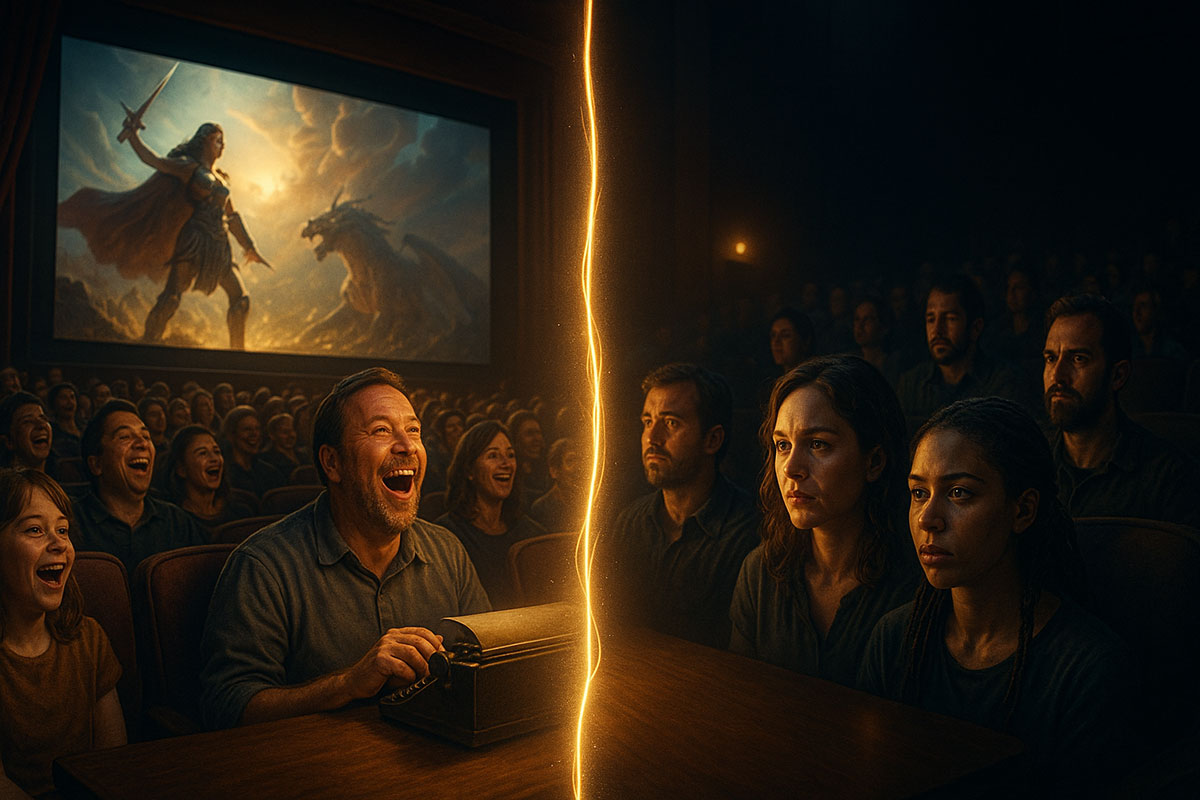
Moderator: Tatiana Siegel (Variety journalist)
Opening by Tatiana Siegel
As theaters recover and streaming reshapes viewing habits, filmmakers are asking: What kinds of stories do people crave in a world forever marked by the pandemic? Tonight, I’m joined by five visionary screenwriters: Greta Gerwig, Ryan Coogler, Chloé Zhao, Jordan Peele, and Paul Thomas Anderson. Let’s start with the heart of the question: Are audiences hungrier for pure escapism or for socially charged narratives?
Question 1: What do audiences truly want now—escapism, commentary, or both?
Greta Gerwig
I think audiences want both at once. Barbie worked because it was fun, glittery escapism, but also a conversation about gender and identity. People want to laugh and cry, but they also want to think.
Ryan Coogler
In my experience, you can’t separate the two. Black Panther was escapist, but it resonated because it spoke to representation and history. Audiences are sophisticated. They know when they’re being offered empty calories.
Paul Thomas Anderson
For me, the pendulum always swings. After trauma, some seek comfort, others seek confrontation. Cinema can be the mirror or the mask. The trick is timing—knowing when people are ready to look in the mirror again.
Chloé Zhao
Audiences crave connection more than category. Whether it’s fantastical or grounded, the question is: does it make them feel less alone? That’s why Nomadland resonated. It wasn’t escapism, but it was deeply comforting.
Jordan Peele
I lean toward commentary, because horror thrives on what’s underneath the surface. But commentary can be thrilling. Audiences love the ride, but they want to know what the ride means when it’s over.
Question 2: How has the pandemic reshaped the kind of stories you want to tell?
Ryan Coogler
It sharpened my sense of urgency. Life is fragile, community is everything. I feel a responsibility to tell stories that uplift and empower, but without losing the joy of spectacle.
Greta Gerwig
The pandemic reminded me how much people need laughter. Isolation taught me that shared joy in a theater is precious. That’s shaped the kind of stories I want to put out into the world.
Jordan Peele
For me, the pandemic confirmed that fear is collective. We were all in one giant horror movie. That showed me how universal paranoia and hope can be, which pushes me to tap into broader human anxieties.
Chloé Zhao
I came out of it wanting more silence in stories. Stillness, contemplation, the value of small human moments. The pandemic slowed us down, and I think audiences respond to that rhythm.
Paul Thomas Anderson
It’s made me more interested in intimacy. Forget the grand stage; sometimes two people at a table can reveal an entire era. The pandemic stripped away excess, and I want my films to reflect that.
Question 3: Looking at 2026, do you predict the biggest hits will be escapist blockbusters or socially resonant dramas?
Jordan Peele
I think hybrids will dominate—movies that terrify or entertain, but carry a message that lingers. That’s what makes audiences talk long after the credits.
Paul Thomas Anderson
Escapist blockbusters may win box office, but socially resonant dramas win memory. In twenty years, people will recall the films that spoke to their condition, not just their Saturday night.
Greta Gerwig
I believe films that balance joy with meaning will thrive. Audiences want to dance in the theater, but they also want to see their lives reflected back at them.
Chloé Zhao
Both will succeed, but global hits will be those that cross cultural lines—escapist in form, human in spirit. That combination translates everywhere.
Ryan Coogler
I see blockbusters that don’t shy away from social truths as the future. Big spectacle, yes, but rooted in real human stakes. That’s the sweet spot.
Closing by Tatiana Siegel
What I hear is a consensus: audiences don’t want a binary choice. They want films that thrill and comfort, but also challenge and resonate. Escapism and social commentary are not opposites anymore—they’re intertwined in the stories shaping cinema’s future.
Topic 3: Franchise Fatigue vs. Original Voices
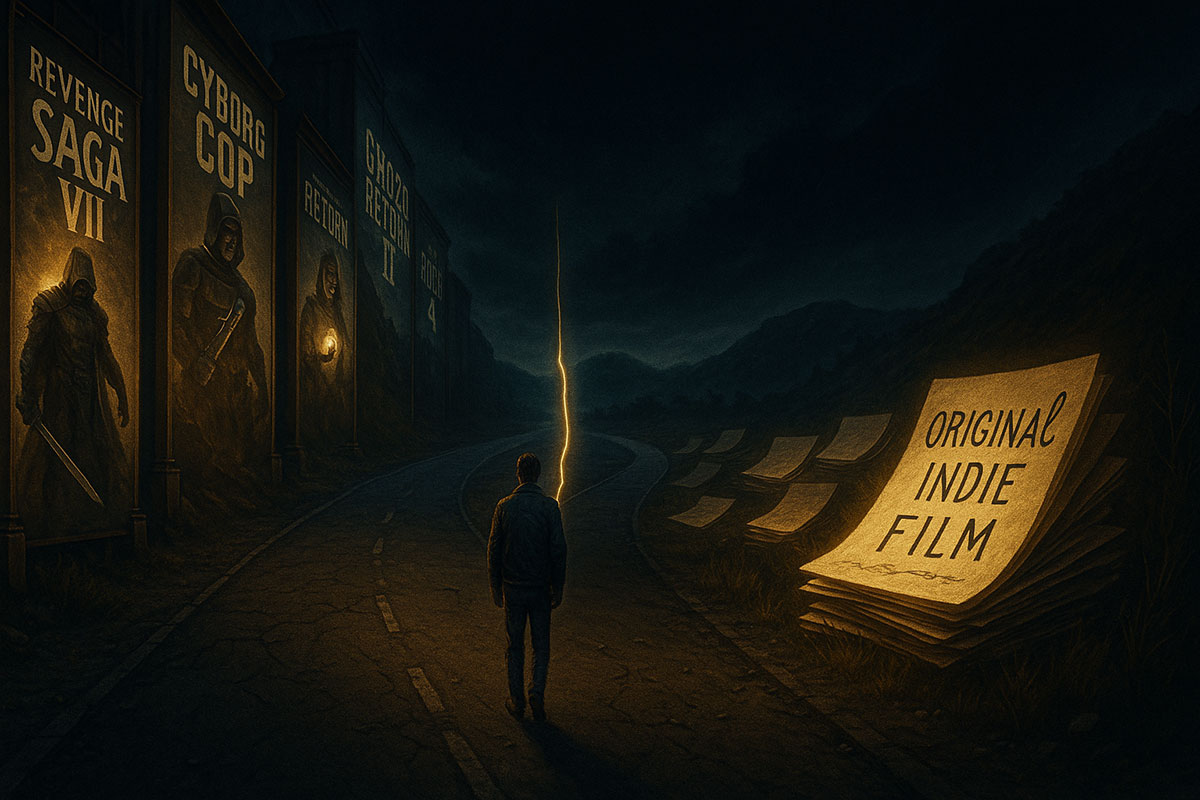
Moderator: Tatiana Siegel (Variety journalist)
Opening by Tatiana Siegel
Hollywood stands at a crossroads. Franchises and sequels dominate the box office, but audiences also show hunger for fresh, original stories. I’m joined today by Quentin Tarantino, Rian Johnson, Taika Waititi, Sofia Coppola, and James Gunn to explore whether the industry will keep doubling down on familiar brands or finally make room for bold, new voices.
Question 1: Are audiences tired of franchises, or do they still crave them?
Rian Johnson
Audiences crave mystery and novelty. That’s why Knives Out resonated—it felt like something familiar but also unexpected. Franchises work until they don’t. People can smell when the engine is running on fumes.
Sofia Coppola
For me, audiences are looking for intimacy. Franchises rarely provide that. People want to see characters they can feel close to, not just IP-driven spectacle.
James Gunn
I think audiences are smarter than we give them credit for. They’ll show up for a franchise if it feels alive. Guardians worked not because it was Marvel, but because it had heart and weirdness.
Quentin Tarantino
Let’s be honest: franchises are comfort food. But art isn’t supposed to be comfortable. Audiences may still line up, but the movies they talk about, the ones that last, are original voices breaking through the noise.
Taika Waititi
I think it’s both. Audiences want popcorn but also spice. Franchises can work if they’re infused with personality. But yes, fatigue is real when every poster looks the same.
Question 2: As creators, what balance do you strike between franchise work and original storytelling?
James Gunn
For me, franchise work funds the weird stuff. I put my voice into a big studio project, but I also carve space for the odd, original stories that wouldn’t exist without that platform.
Sofia Coppola
I’ve always chosen originality, even when it’s risky. For me, authenticity matters more than scale. I’d rather make a quiet film that lingers than a loud one that disappears.
Quentin Tarantino
I’ve refused the franchise treadmill. I want my ten films to stand as my legacy. If I made Spider-Man 5, it might be fun, but it wouldn’t be me. That’s the line I won’t cross.
Taika Waititi
I try to inject originality into the franchises. Thor: Ragnarok only worked because it felt like my sense of humor was baked into it. Otherwise, I’d get bored.
Rian Johnson
I’m trying to prove that original IP can live alongside franchises. That’s why I’m building Knives Out into its own little universe—but one driven by character, not branding.
Question 3: Looking ahead, do you think original voices will regain ground at the box office, or will franchises keep dominating?
Sofia Coppola
I think streaming has created space for original voices to thrive, even if theaters remain dominated by franchises. Theatrical space may shrink, but originality will survive elsewhere.
Quentin Tarantino
History repeats. Audiences eventually rebel against sameness. In the ’70s, original voices exploded after studio formulas collapsed. We’re overdue for another rupture.
Taika Waititi
I think we’ll see a blending. Studios will keep milking franchises, but they’ll have to take bigger creative swings to keep people interested. Otherwise, it’s box office fatigue.
James Gunn
I agree. Franchises aren’t going anywhere. But the winners will be the ones that let creators inject their DNA into the work. Voice will matter more than IP alone.
Rian Johnson
Audiences want stories that surprise them. The form doesn’t matter—franchise or original. The trick is making sure it doesn’t feel like a corporate product. Surprise is the currency.
Closing by Tatiana Siegel
What emerges is a nuanced view: franchises will remain powerful, but only those that allow genuine voices to shine will endure. Originality, whether inside or outside the franchise machine, is what makes films memorable. The audience may still eat the comfort food—but they’re hungry for flavor.
Topic 4: Globalization of Storytelling
Moderator: Tatiana Siegel (Variety journalist)
Opening by Tatiana Siegel
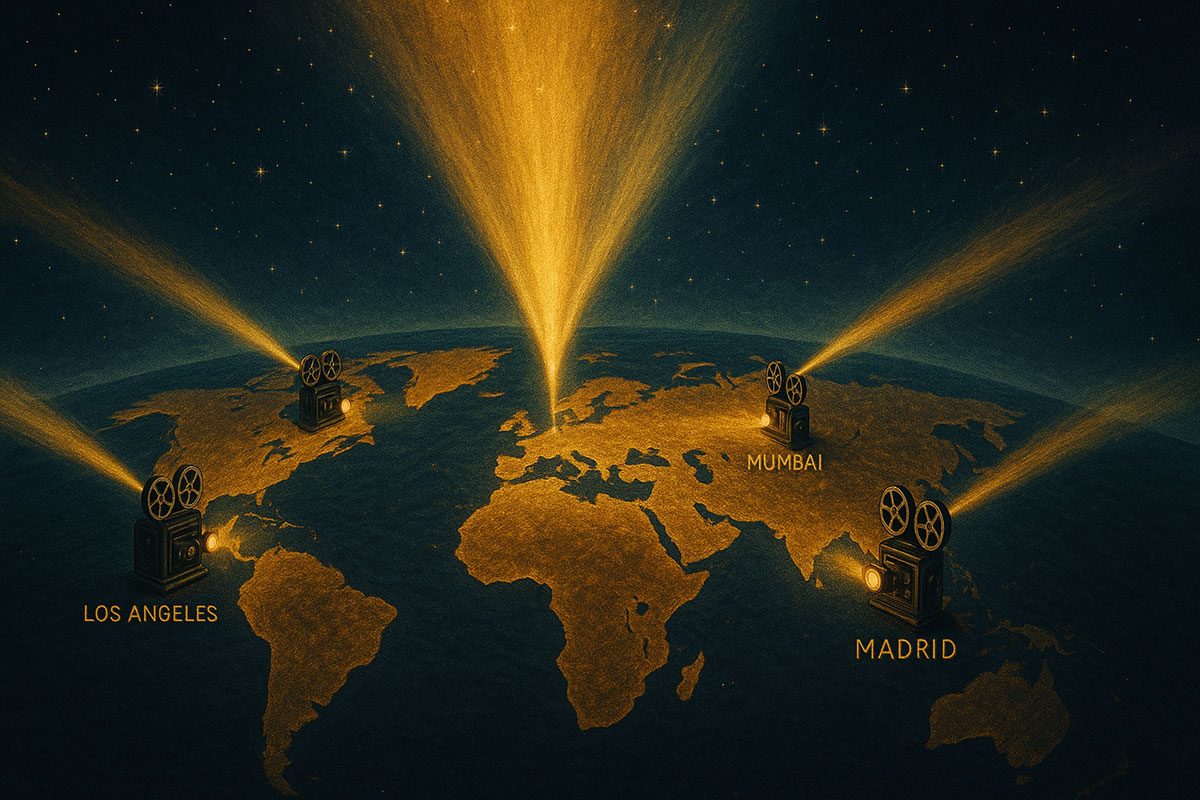
The box office is no longer defined by one country. Hits come from Seoul, Mumbai, Madrid, and beyond. Streaming has brought global stories to living rooms everywhere. To explore this shift, I’m joined by Bong Joon-ho, Guillermo del Toro, Pedro Almodóvar, S.S. Rajamouli, and Lulu Wang. Let’s begin with a big question: what does it mean that Hollywood is no longer the only storytelling capital of the world?
Question 1: How do you see the global shift in storytelling affecting cinema?
Guillermo del Toro
For me, it’s liberation. Monsters, fairy tales, folklore—they don’t belong to one culture. Cinema feels richer when Mexican ghosts meet Japanese spirits on the same screen. The borders are dissolving.
Bong Joon-ho
When Parasite won the Oscar, it wasn’t about Korea beating Hollywood. It was about cinema proving itself universal. Audiences realized they don’t need subtitles to block emotion. Stories cross oceans naturally.
Pedro Almodóvar
Globalization means intimacy now travels further. A story about a Spanish mother, deeply rooted in my culture, can move someone in Tokyo. The more personal, the more universal.
S.S. Rajamouli
With RRR, I saw firsthand that action, music, and emotion are a global language. Audiences in America cheered at the same beats as in India. Storytelling becomes more powerful when it embraces scale and spectacle without losing heart.
Lulu Wang
It also means responsibility. We must resist flattening culture into a generic “global” voice. Authenticity matters. The Farewell worked because it embraced cultural specificity, not because it diluted it.
Question 2: How do you balance cultural specificity with global appeal?
Pedro Almodóvar
I never chase “global appeal.” I tell stories about Spain, about women, about desire. If they travel, it’s because people recognize themselves in the details. Specificity is the path to universality.
Bong Joon-ho
Exactly. The “smell of poverty” in Parasite was very Korean, but also very human. The local detail is the bridge to global connection.
S.S. Rajamouli
For me, spectacle carries across cultures. Dancing, fighting, friendship—these are primal. The cultural colors make it unique, but the emotional beats make it universal.
Lulu Wang
I agree, but I’ll add: nuance matters. We can’t assume global audiences will only understand big emotions. They can handle cultural complexity if we invite them in with honesty.
Guillermo del Toro
Yes, honesty is the universal language. If I tell a story about my grandmother’s ghost, I don’t need to explain it for every culture. If it’s true, people will feel it.
Question 3: Looking ahead, will the biggest films of the next decade come from Hollywood—or from everywhere?
S.S. Rajamouli
Everywhere. The next global blockbuster might come from Nigeria, from Brazil. Technology and streaming give equal platforms now. Hollywood is one player, not the whole game.
Guillermo del Toro
I think Hollywood will still be a hub, but no longer the throne. The age of one empire is over. Cinema will be a constellation, not a sun with satellites.
Bong Joon-ho
I agree. The 20th century was Hollywood’s. The 21st is plural. Theaters and streamers alike will reflect that. The best film of the decade may not be in English at all.
Lulu Wang
Audiences are ready. They already watch Korean dramas, Spanish thrillers, Indian epics. The barriers are gone. The question is not if but when.
Pedro Almodóvar
And when that happens, cinema will feel more alive than ever. Diversity is not a threat—it is the lifeblood of the art form.
Closing by Tatiana Siegel
From specificity to spectacle, these filmmakers remind us that the future of storytelling isn’t about one culture dominating—it’s about many voices intertwining. The next decade of cinema may not belong to Hollywood alone. It will belong to the world.
Topic 5: Hybrid Genres
Moderator: Tatiana Siegel (Variety journalist)
Opening by Tatiana Siegel
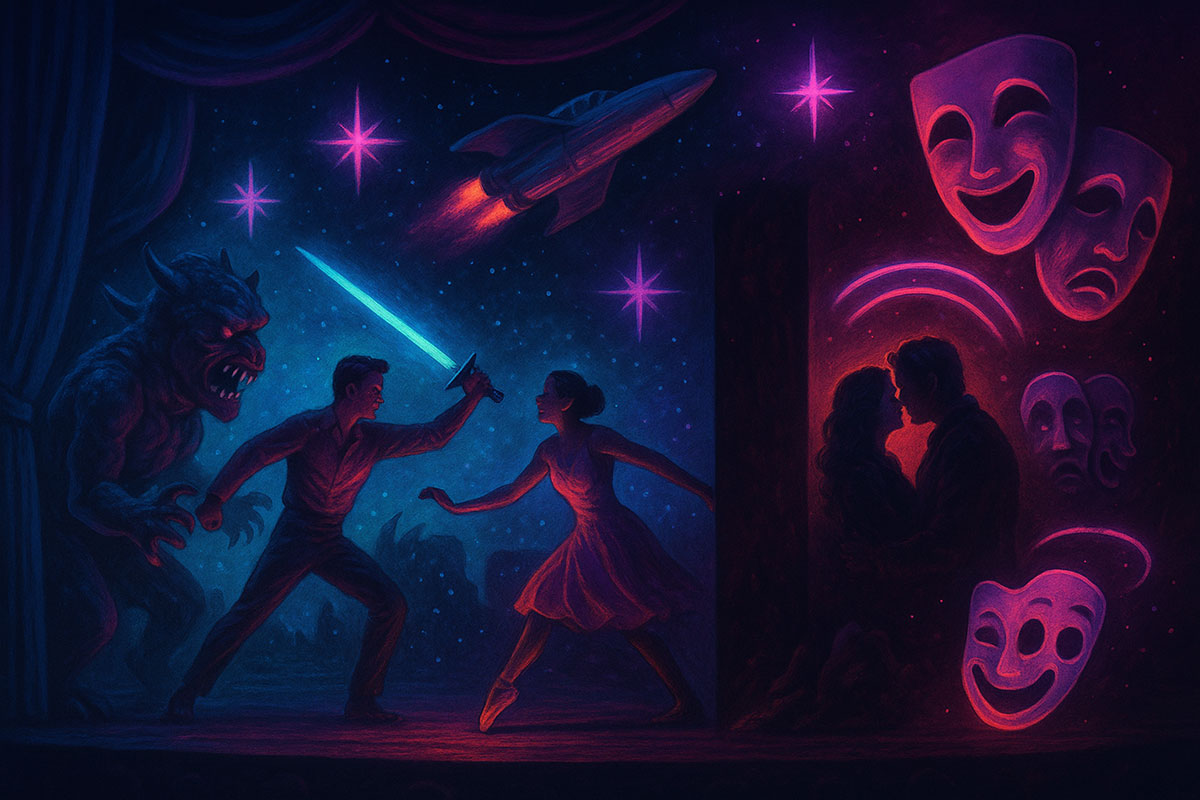
Genres used to come in neat boxes: comedy, horror, sci-fi, romance. But today, some of the most successful films defy those categories. To discuss where hybrid storytelling is going, I’m joined by Edgar Wright, Damien Chazelle, Nia DaCosta, Denis Villeneuve, and Richard Linklater. Let’s begin with the obvious: why are hybrid genres becoming so central to modern filmmaking?
Question 1: Why do you think audiences are drawn to hybrid genres today?
Edgar Wright
Because life itself is hybrid. One minute you’re terrified, the next you’re laughing. Shaun of the Dead worked because it treated horror and comedy as two sides of the same coin. Audiences want that whiplash—they recognize it as real.
Damien Chazelle
I think audiences crave new rhythms. Music taught me that surprise is essential. A musical that becomes a drama, or a drama that bursts into music, shocks the senses. Hybrid films keep people awake.
Nia DaCosta
For me, it’s about breaking silence. Horror, drama, even superhero films—they all speak to trauma in different keys. By blending them, we can capture the complexity of how people actually live with fear and hope at once.
Denis Villeneuve
Hybrid genres allow scale and intimacy to coexist. Arrival was science fiction, but also a meditation on grief. That combination resonates deeply because it mirrors how humanity experiences both awe and loss.
Richard Linklater
Life resists neat labels. My films tend to wander, mixing romance, comedy, philosophy. Hybrid genres mirror conversation itself—fluid, open, refusing to be boxed.
Question 2: As creators, how do you balance genres without losing coherence?
Damien Chazelle
The key is musicality. Whether I’m blending jazz with heartbreak or spectacle with intimacy, I think of genre like instruments. They can clash, but if you find the harmony, it works.
Edgar Wright
Tone is everything. You can shift gears as long as the film maintains its own rhythm. You don’t throw in comedy just to cut tension—you use it to deepen it.
Denis Villeneuve
I approach it with sincerity. If you respect each genre’s emotional truth, they can merge naturally. Spectacle without sincerity collapses into noise.
Nia DaCosta
You also have to think about trauma. Audiences can handle shifts if they feel earned—if the comedy arises from pain, if the horror grows from love. It’s all connected.
Richard Linklater
I lean into digression. Life is digressive. A film can wander across genres as long as it feels human. Coherence comes not from structure but from authenticity.
Question 3: Looking forward, what hybrid genres do you think will define the next wave of cinema?
Nia DaCosta
I see horror-romance becoming bigger. Love and fear are deeply intertwined. Those stories will feel fresh and emotionally raw.
Edgar Wright
Action-comedy will evolve into something wilder—films that blend satire, spectacle, even musicals. We’ll see mashups nobody’s imagined yet.
Denis Villeneuve
For me, it’s science fiction fused with spirituality. As AI and climate crises reshape the world, audiences will crave films that ask metaphysical questions within epic canvases.
Damien Chazelle
Musical hybrids. Imagine a sci-fi opera or a horror ballet. Music transcends genre, and audiences are ready for those experiments.
Richard Linklater
I think slow cinema will merge with fantasy. Intimate, meandering stories that suddenly touch the surreal. Hybrids won’t just be about adrenaline—they’ll also be about patience.
Closing by Tatiana Siegel
What I hear is that hybrid genres aren’t a gimmick—they’re the future. Audiences crave surprise, contradiction, and emotional truth. Whether it’s horror-romance, sci-fi spirituality, or musical hybrids, the next wave of cinema will resist boundaries and embrace fusion.
Final Thoughts by Steven Spielberg
As I listen to these remarkable voices, I’m reminded that cinema’s future is not a choice between technology and humanity, but a collaboration between them. AI may generate scripts, but it cannot feel love, grief, or hope—that remains our role as storytellers. Franchises may dominate billboards, but originality gives them soul. Global stories may come from Seoul, Mumbai, or Madrid as often as Los Angeles, and that is cause for celebration, not concern. And hybrids—those bold blends of genre—remind us that the audience is ready to be surprised, even challenged, by the unexpected.
What endures in every era of filmmaking is the human hunger for connection. Audiences don’t go to the movies just to watch—they go to feel. And as long as we honor that, cinema will continue to evolve, inspire, and endure.
The next chapter of film belongs not to a single city or a single voice, but to all of us, telling stories together under one shared sky.
Short Bios:
Leave a Reply