

|
Getting your Trinity Audio player ready...
|
Introduction by Elon Musk
People often think the future arrives all at once. It doesn’t.
It arrives unevenly—quietly at first—then suddenly everywhere.
We are living at the edge of one of those moments.
For most of human history, survival required labor. Labor required coordination. Money became the system that made that coordination possible. It wasn’t sacred—it was practical. A database for effort and reward.
But databases evolve.
Artificial intelligence and robotics are advancing toward a point where scarcity, at least in its traditional form, begins to dissolve. When machines can build homes, grow food, manufacture goods, and deliver services at scale, the fundamental reason money exists starts to weaken.
That doesn’t mean humanity becomes irrelevant. It means the rules change.
This conversation isn’t about predicting dates or selling utopias. It’s about asking the questions we’ve avoided because work forced the answers for us:
What organizes society when money no longer does?
What gives identity when income no longer defines it?
What remains scarce when abundance expands?
How do we preserve freedom when survival is guaranteed?
And finally—what are human beings for?
These aren’t questions technology can answer for us.
They’re questions technology forces us to finally face.
(Note: This is an imaginary conversation, a creative exploration of an idea, and not a real speech or event.)
Topic 1 — When Money Disappears: What Actually Organizes Society?
Moderator: Ezra Klein
The room is quiet in a way that feels deliberate, almost ceremonial. No screens glow. No clocks tick loudly enough to remind anyone of urgency. Ezra Klein looks around the table, then speaks carefully, as if testing the weight of the idea before releasing it.
Opening by Ezra Klein
For most of human history, money has been more than a tool—it’s been a story. A way we decide who matters, who contributes, who deserves what. Elon, you’ve said that in a future shaped by AI and robotics, money itself may disappear. Not just wages, but money as a concept.
So let me begin simply: if money no longer organizes society, what does? What replaces it as the system that coordinates human life?
Round One Responses
Elon Musk
Money is fundamentally a database. It tracks who did what for whom and allocates resources accordingly. But databases evolve. If AI and robotics reach a point where scarcity is dramatically reduced—where food, housing, healthcare, education are produced at near-zero marginal cost—then the database becomes unnecessary.
In that world, coordination happens through abundance rather than exchange. Systems optimize directly for human well-being. You don’t need prices when supply vastly exceeds demand. What replaces money is access—open access to what you need—and reputation systems for things that still require trust or responsibility.
Karl Polanyi
I would caution against seeing money merely as a technical instrument. Historically, money is embedded in social relations. It expresses obligation, power, reciprocity. When societies attempted to disembed economic systems from social ones, the result was not freedom but dislocation.
If money disappears, something else will still encode obligation. The danger is imagining neutrality where hierarchy persists invisibly. The question is not whether society organizes—but whether it does so transparently and democratically.
Yuval Noah Harari
Humans don’t organize around resources alone. We organize around stories. Money is one of the most successful stories ever told because billions believe in it simultaneously.
If money fades, it will be replaced by another shared fiction—perhaps “human flourishing,” perhaps “optimization,” perhaps “alignment with AI systems.” The risk is that humans may no longer be the authors of that story. Whoever controls the narrative layer controls society.
Vinod Khosla
Elon is right about abundance, but abundance alone doesn’t guarantee justice. Coordination without money requires governance. Otherwise, power concentrates quietly.
In a post-labor world, the organizing principle must be guaranteed dignity. That means rights to housing, healthcare, education—enforced not by markets but by policy. Without intentional redistribution mechanisms, removing money could make inequality worse, not better.
Iain M. Banks (via ideas, voiced reflectively)
In The Culture, society is organized around choice and curiosity. People are free because machines handle necessity. Coordination comes from shared values: autonomy, pleasure, exploration, kindness.
But that only works if power is diffused. Minds—the AI stewards—exist to serve, not rule. Remove money without removing domination, and you don’t get utopia. You get a prettier cage.
Ezra nods slowly. He lets the silence breathe before continuing.
Ezra Klein
Money has always been how we measure contribution. Which leads to the next question: if money disappears, how does society decide who is contributing—and who isn’t?
Round Two Responses
Yuval Noah Harari
Historically, societies punished those deemed “non-contributors.” If AI performs most economically valuable tasks, humans risk becoming a “useless class”—not because they lack worth, but because the system fails to recognize it.
Contribution may shift from production to meaning-making: care, creativity, connection. But those are harder to quantify, and systems that cannot measure tend to ignore.
Elon Musk
I don’t think contribution needs to be measured the way it is today. In a world where survival is guaranteed, people will contribute voluntarily to things they care about—art, science, community.
You don’t need to rank everyone. Most people want to be useful. The fear that humans will stop caring if money disappears underestimates human nature.
Karl Polanyi
Respectfully, history suggests otherwise. When contribution is undefined, societies invent new moral hierarchies. The idle rich were once admired; later resented.
Without money, contribution will be assessed culturally—through honor, reputation, shame. That can be more coercive than markets. We must ask who sets the criteria.
Vinod Khosla
This is where policy matters. Contribution shouldn’t determine survival. That link must be broken. Universal basic income—or universal basic services—ensures that dignity is unconditional.
Beyond that, contribution becomes personal rather than compulsory. But removing compulsion requires strong institutions, not just optimism.
Iain M. Banks (ideas)
In The Culture, contribution isn’t mandatory. People drift in and out of projects. The assumption is abundance plus freedom leads to engagement.
But that only works if people trust the system—and if the system trusts people. Fear breaks the loop.
Ezra leans back slightly, fingers steepled.
Ezra Klein
Let’s go deeper. Money doesn’t just allocate resources—it allocates power. Influence, access, priority. So here’s the hardest version of the question:
If money disappears, what becomes the new source of power—and how do we prevent it from becoming invisible and unaccountable?
Round Three Responses
Vinod Khosla
Power will shift to those who control AI systems, infrastructure, and policy. That’s unavoidable. The only question is whether power is checked.
Transparency, democratic oversight, and redistribution mechanisms must be designed before labor disappears. Waiting invites catastrophe.
Elon Musk
Power already concentrates today. AI doesn’t create that problem—it reveals it. The solution is open systems. Open-source AI, decentralized energy, distributed manufacturing.
If everyone has access to powerful tools, power flattens. Centralization is a choice, not a destiny.
Karl Polanyi
Yet openness itself requires governance. Markets once promised freedom too. Without social limits, they devoured society.
Invisible power is the most dangerous form. If algorithms allocate access without accountability, money’s disappearance won’t free us—it will obscure domination.
Yuval Noah Harari
The ultimate power shift may not be economic but cognitive. Whoever shapes meaning—what people believe is valuable, normal, admirable—rules society.
If AI mediates reality itself, power lies in narrative control. The challenge is ensuring humans remain meaning-makers, not just meaning-consumers.
Iain M. Banks (ideas)
In The Culture, power is restrained by design. The most powerful beings are constrained by ethics.
That’s the real question: can we build systems powerful enough to manage abundance and wise enough not to rule us?
Closing Reflection by Ezra Klein
Money may disappear. Or it may linger longer than any of us expect. But listening to this conversation, one thing is clear:
Money was never the real system. Power, meaning, trust, and values were.
If we remove money without rethinking those deeper structures, we don’t transcend history—we repeat it in a quieter language.
The room remains still. Not resolved—but awakened.
Topic 2 — Six Figures, Zero Meaning: What Happens to Status and Identity?
The room doesn’t reset. No one stands. The silence from the previous question still lingers, heavier now—closer to home.
Ezra Klein glances around the table, then speaks again, this time more softly.
Opening by Ezra Klein
For generations, income hasn’t just paid the bills—it’s told people who they are. A six-figure salary signals competence, security, even virtue. Elon, your vision implies that this entire ladder—promotion, prestige, financial ascent—simply dissolves.
So let me ask the uncomfortable question beneath that:
when income no longer defines success, what does? And what happens to people whose identity was built around earning?
Round One Responses
Alain de Botton
Status anxiety is one of the great quiet engines of modern life. We don’t just want money—we want recognition. Income became the proxy for moral worth in secular societies.
If that proxy vanishes, people will experience something close to grief. Not liberation at first, but loss. The danger is not laziness; it’s humiliation. A society that removes old measures of worth must offer new ones—or people will invent cruel substitutes.
Elon Musk
I think people overestimate how much they actually like status competition. A lot of it is survival pressure disguised as ambition.
If basic needs are met, people will gravitate toward things they genuinely enjoy—building, learning, helping, creating. Identity becomes less about proving value and more about expressing curiosity. That’s not loss. That’s relief.
David Graeber (via ideas)
We should remember how many people already feel their work is meaningless. Entire industries exist largely to justify status hierarchies rather than produce real value.
If those hierarchies collapse, many will feel exposed—but also vindicated. The tragedy isn’t that meaning disappears. It’s that we outsourced meaning to paychecks in the first place.
Avital Balwit
I used the word “aristocracy” deliberately—not as praise, but as warning. Historically, elites without obligation to work didn’t automatically become enlightened. Some flourished. Others decayed.
The psychological transition will be brutal for many. Especially for those taught that earning equals deserving. We need to prepare people emotionally, not just economically.
Cal Newport
Work once structured identity because it required deep skill and craft. The problem today isn’t work—it’s shallow work. If AI removes the shallow layers, what remains could be meaningful again.
The question isn’t whether identity survives without income. It’s whether we’ve forgotten how to build identity without external metrics.
Ezra nods, then leans forward slightly.
Ezra Klein
That leads naturally to the next layer. If income no longer signals worth, what replaces it as the marker of status? Humans have never lived without hierarchies for long.
Round Two Responses
David Graeber (ideas)
Status doesn’t disappear—it migrates. From money to education. From education to cultural fluency. From that to proximity to power.
Without vigilance, we’ll see new forms of symbolic capital emerge—algorithmic reputation scores, influence metrics, aesthetic prestige. The system will feel gentler while remaining exclusionary.
Elon Musk
I don’t deny that hierarchies will exist. But they don’t have to be oppressive. Open platforms flatten access. If you can build something useful, beautiful, or insightful and share it instantly, status becomes more fluid.
You don’t need permission. You just need curiosity and effort.
Alain de Botton
But effort itself becomes the new moral demand. Those who struggle psychologically—through depression, trauma, confusion—may be judged more harshly in a world where survival is guaranteed.
We may move from “you didn’t earn enough” to “you didn’t try hard enough to be interesting.” That is not necessarily kinder.
Cal Newport
I worry about performative identity. When status isn’t anchored in necessity, people may chase visibility instead of depth.
True meaning requires constraints—time, effort, resistance. If AI removes all resistance, we’ll need to re-introduce chosen difficulty, or identity becomes shallow theater.
Avital Balwit
And we shouldn’t ignore power again. Status will favor those fluent in the systems—those who understand AI, governance, narrative control.
Without intervention, inequality becomes cultural instead of economic. Harder to see. Harder to challenge.
Ezra lets out a quiet breath.
Ezra Klein
So here’s the final turn of the knife. Many people today endure stress, boredom, even misery because work gives them structure and legitimacy.
If work becomes optional—if no one needs you—how do humans maintain dignity, purpose, and self-respect?
Round Three Responses
Viktor Frankl (via ideas)
Meaning does not arise from necessity alone. It arises from responsibility freely chosen. When survival is guaranteed, the question becomes sharper: what are you responsible for now?
Freedom without responsibility leads to emptiness. Freedom with responsibility leads to meaning.
Elon Musk
I don’t think humans need to be needed by the economy to feel valuable. They need to be needed by something. A project. A mission. A relationship.
AI doesn’t remove purpose—it removes coercion. What we do with that freedom is up to us.
Alain de Botton
Still, society must validate non-economic contributions. Caregiving, listening, presence—these must be honored culturally.
If not, people will feel invisible. And invisibility erodes dignity faster than poverty.
Cal Newport
Purpose survives when effort matters. I hope the future doesn’t eliminate work, but transforms it—from survival labor to chosen craftsmanship.
The danger isn’t leisure. It’s aimlessness disguised as freedom.
Avital Balwit
We need rituals of worth that aren’t tied to productivity. Coming-of-age moments. Civic contribution. Shared meaning.
Otherwise, people will cling to old hierarchies even when they no longer serve them.
Closing Reflection by Ezra Klein
Listening to this, I’m struck by something subtle but profound. The fear isn’t that money disappears.
The fear is that without money, we finally have to answer the question it helped us avoid:
Who am I, if no one is paying me to exist?
The room stays quiet—not empty this time, but reflective.
Topic 3 — Scarcity in a Post-Scarcity World: Who Gets the Best Life?
No one shifts in their seat. The conversation doesn’t pause—it deepens, as if gravity itself has increased.
Ezra Klein looks down briefly, then back up, choosing his words with care.
Opening by Ezra Klein
We’ve been talking about abundance—food, housing, healthcare, even purpose. But history suggests something stubborn: scarcity never fully disappears; it just changes form.
So let me ask what may be the most destabilizing question yet:
in a world where basic needs are met for everyone, what remains scarce—and who decides who gets it?
Round One Responses
Thomas Piketty
Scarcity migrates upward. When material survival is guaranteed, scarcity concentrates in positional goods: location, influence, education, cultural prestige.
Even in wealthy societies today, inequality persists because relative advantage matters more than absolute comfort. Without deliberate correction, post-scarcity simply means inequality becomes less visible—but no less powerful.
Elon Musk
I think people underestimate how much scarcity is artificial. Location matters today because jobs cluster. If work is optional and remote presence becomes immersive, location matters less.
Technology dissolves many bottlenecks. The goal is not perfect equality, but maximal access. We should focus on expanding the pie until the remaining scarcity feels trivial.
Kate Raworth
But systems don’t self-correct. Abundance without boundaries risks ecological collapse or social fragmentation.
The question isn’t just who gets the best life, but what kind of life is worth maximizing. A society obsessed with unlimited access can still produce deep injustice if it ignores planetary and human limits.
Shoshana Zuboff
We must name a new form of scarcity already emerging: attention and autonomy.
In a post-material world, the scarce resource becomes the ability to live unmanipulated. Those who control data, platforms, and behavioral nudging will quietly decide whose lives feel expansive—and whose feel constrained.
Nick Bostrom
And we cannot ignore existential asymmetry. Small differences in access to advanced AI systems could compound into enormous power imbalances.
If one group controls optimization itself—deciding what outcomes are “best”—scarcity becomes epistemic. Not who has more, but who defines reality.
Ezra leans forward, visibly unsettled.
Ezra Klein
Let’s sharpen that. Suppose housing, food, and healthcare are guaranteed. Still, some homes are more beautiful. Some lives are more visible. Some voices are amplified.
How do we prevent post-scarcity from becoming a quiet aristocracy of access rather than income?
Round Two Responses
Shoshana Zuboff
Transparency is not enough. We need enforceable rights over how systems shape experience.
If algorithms decide opportunity invisibly, hierarchy becomes frictionless—and therefore unquestioned. Democracy requires friction. It requires the ability to say no to systems that claim neutrality.
Elon Musk
This is why decentralization matters. Open AI models. Distributed energy. Personal fabrication.
If everyone has powerful tools, aristocracy collapses. Concentration is the enemy—not abundance.
Thomas Piketty
But decentralization alone doesn’t solve inheritance. Advantage reproduces itself culturally and informationally.
Without intervention—education parity, access guarantees, inheritance reform—elites persist even when markets fade.
Kate Raworth
We must redefine “the best life.” If excellence means endless accumulation—even of experiences—scarcity will always reappear.
A regenerative society values sufficiency, not supremacy. Otherwise, post-scarcity becomes post-empathy.
Nick Bostrom
There’s also a governance challenge: who arbitrates disputes over access when money no longer mediates them?
Scarcity without prices requires rules. Rules require legitimacy. Legitimacy requires trust. That chain is fragile.
Ezra lets the tension hang before continuing.
Ezra Klein
So let me pose the hardest version.
If scarcity shifts from money to influence, from income to algorithmic priority—
what new moral failures might we normalize without even noticing?
Round Three Responses
Kate Raworth
We may normalize ecological harm again—this time hidden behind clean interfaces and efficiency metrics.
If systems optimize human comfort without respecting planetary thresholds, we outsource responsibility and call it progress.
Thomas Piketty
We may accept inequality as “natural” once more—because it no longer looks brutal.
Soft inequality is harder to fight than visible poverty.
Elon Musk
We risk underestimating humanity. People adapt. Norms evolve.
Every transition looks dangerous from inside it. That doesn’t mean stagnation is safer.
Shoshana Zuboff
We risk surrendering agency. When convenience replaces consent, freedom erodes quietly.
The most dangerous scarcity is the loss of the ability to choose otherwise.
Nick Bostrom
And finally, we risk creating irreversible systems before understanding their moral consequences.
Post-scarcity without wisdom may lock humanity into outcomes it cannot escape.
Ezra exhales slowly.
Closing Reflection by Ezra Klein
Scarcity doesn’t vanish when money does.
It moves upward, inward, and quieter—into influence, meaning, control.
The question is no longer who earns the most,
but who decides what counts as “the best life.”
The room stays silent—not from agreement, but from recognition.
Topic 4 — Universal Basic Income: Liberation or Digital Dependency?
The silence from the last reflection doesn’t lift—it changes texture. Less philosophical now. More political. More dangerous.
Ezra Klein looks around the table, aware that this question drags ideals into systems, and systems into power.
Opening by Ezra Klein
If money fades and work becomes optional, something has to bridge the gap between survival and meaning. For many, that bridge is Universal Basic Income—or universal basic services.
Supporters describe it as liberation. Critics warn it could create dependence on centralized systems unlike anything we’ve seen before.
So let’s confront it directly:
Is UBI the foundation of human freedom in a post-work world—or the most elegant form of control ever designed?
Round One Responses
Vinod Khosla
Without guaranteed income or services, a post-labor world becomes catastrophic. Productivity gains will no longer flow naturally to workers.
UBI isn’t charity—it’s a dividend from collective technological progress. If AI replaces human labor, humans must still share in the output. Otherwise, you get unrest, collapse, or authoritarianism.
Elon Musk
I see UBI as a transition mechanism, not an end state. It smooths the shift while society figures out new norms.
The real goal is abundance—where money matters less over time. UBI buys us stability while we get there.
Milton Friedman (via ideas)
A guaranteed income can be compatible with freedom if it replaces bureaucracy rather than expanding it.
The danger lies not in the transfer itself, but in conditionality. The more rules attached, the more behavior is shaped—and freedom erodes.
Rutger Bregman
We’ve tested versions of this. People don’t stop caring. They don’t become lazy. They become healthier, calmer, more future-oriented.
The myth that humans need economic threat to function says more about our distrust than about human nature.
Angela Merkel
From a governance perspective, stability matters more than ideology. UBI may be necessary—but it must be credible, sustainable, and trusted.
If citizens believe income can be withdrawn arbitrarily, it becomes leverage. Trust is the currency here.
Ezra nods, then pivots.
Ezra Klein
That raises the next concern. If income comes from the state—or from systems managing AI output—
what prevents UBI from becoming a behavioral tool? A way to reward compliance and punish dissent?
Round Two Responses
Milton Friedman (ideas)
Any system that centralizes distribution risks politicization. The safeguard is simplicity and universality.
The moment you add moral judgment—who deserves more, who deserves less—you invite control.
Angela Merkel
But universality alone is not enough. Institutions must be constrained by law, not goodwill.
Democracies fail when systems grow faster than accountability. A post-work society magnifies that risk.
Elon Musk
Technology can help here—blockchain-based distribution, transparent rules, decentralized verification.
Control isn’t inherent to UBI. Poor design is.
Rutger Bregman
We already condition survival—just invisibly, through employment. At least UBI is honest.
The question isn’t whether society influences behavior—it always does. The question is whether people have room to say no.
Vinod Khosla
If UBI is framed as permission rather than entitlement, it fails. It must be non-negotiable.
Otherwise, it becomes a leash during crises.
Ezra pauses, sensing the tension between theory and fear.
Ezra Klein
Let’s take it further. Even if UBI is fair and unconditional, it reshapes human psychology.
What happens to motivation, ambition, and innovation when survival is guaranteed?
Round Three Responses
Rutger Bregman
Scarcity narrows imagination. Security expands it.
Most breakthroughs don’t come from desperation—they come from freedom to explore. The Renaissance didn’t happen because people were starving.
Elon Musk
Exactly. Innovation thrives when people can take risks. Guaranteed survival lowers the cost of failure.
The fear that humans will stop striving misunderstands what drives curiosity.
Milton Friedman (ideas)
But incentives still matter. Remove all consequences and effort may decline.
The balance is delicate: guarantee dignity, not comfort so complete that initiative dissolves.
Angela Merkel
Culturally, this transition must be guided. Societies that equate worth with labor will struggle more than those that value contribution broadly.
Policy alone cannot rewrite meaning.
Vinod Khosla
We’re not removing struggle—we’re changing its nature. The struggle moves from survival to significance.
That’s a harder question, not an easier one.
Ezra leans back, reflective.
Closing Reflection by Ezra Klein
Universal Basic Income sits at the fault line between trust and fear.
Trust that humans, once freed from survival anxiety, will rise.
Fear that dependence, once normalized, will be exploited.
Perhaps the real question isn’t whether UBI works—
but whether our institutions deserve the power it gives them.
The room is quiet again. Not hopeful. Not cynical.
Just honest.
Topic 5 — If We Don’t Need to Work: What Are Humans For?
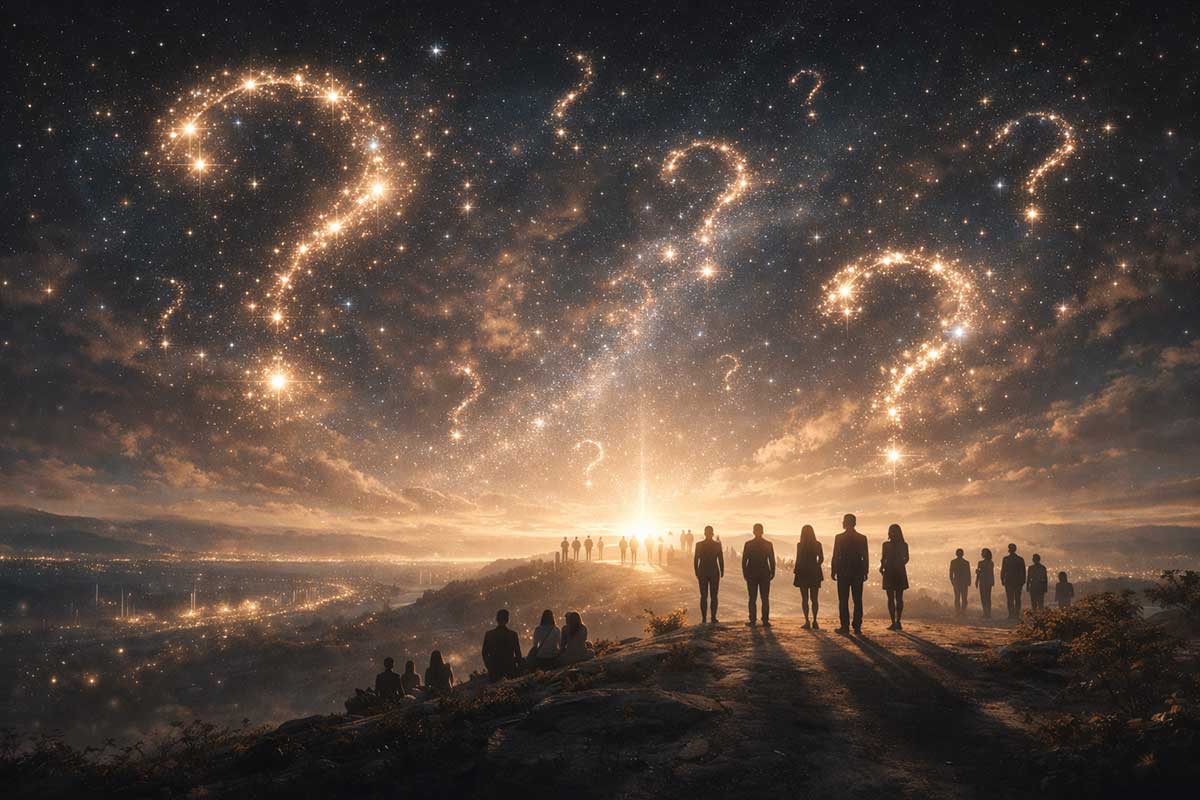
Nothing feels theoretical anymore. The conversation has stripped away systems, currencies, incentives. What remains is the human being—unshielded.
Ezra Klein doesn’t rush the moment. When he finally speaks, his voice is quieter than before.
Opening by Ezra Klein
We’ve talked about money, status, scarcity, policy. But beneath all of it is a question we’ve postponed for centuries by necessity.
If survival is guaranteed
If work is optional
If no one needs you to produce
What are human beings for?
Round One Responses
Viktor Frankl (via ideas)
Human beings are not defined by what they do, but by what they choose to take responsibility for.
When necessity disappears, meaning does not vanish—it becomes more demanding. Without suffering imposed from outside, we must choose our own reasons to endure, to care, to commit. That is terrifying—and sacred.
Elon Musk
I don’t think humans need an externally assigned purpose. Curiosity is enough.
We’re here to understand the universe, to explore, to create. AI doesn’t replace that—it accelerates it. If anything, freeing humans from labor lets us focus on questions that actually matter.
Hannah Arendt (via ideas)
We must be careful. There is a difference between labor, work, and action.
Labor sustains life. Work builds the world. Action gives life meaning through participation with others.
A society that eliminates labor but forgets action risks emptiness—not freedom.
Sam Altman
As someone building these systems, I feel the weight of this question constantly.
AI can optimize outcomes—but it cannot tell us which outcomes deserve pursuit. That responsibility remains human. If we abdicate it, abundance won’t save us.
Ocean Vuong
I think humans are for witnessing. For holding pain without solving it. For loving what will not last.
Work once gave us a reason to be exhausted together. Without it, we’ll need new ways to recognize each other’s quiet bravery.
Ezra listens carefully, then continues.
Ezra Klein
If meaning is no longer supplied by necessity,
how do societies teach people to live well rather than merely comfortably?
Round Two Responses
Hannah Arendt (ideas)
Through shared spaces of appearance—forums where people act, speak, and are seen.
Meaning arises not from consumption, but from participation. Without civic life, abundance becomes isolation.
Elon Musk
Education will have to change. Less about training for jobs, more about teaching how to think, build, and explore.
People don’t need instruction manuals for meaning—they need tools and freedom.
Viktor Frankl (ideas)
Suffering cannot be removed entirely, nor should it be. What matters is chosen suffering in service of something greater.
Societies must teach responsibility, not happiness.
Sam Altman
We’ll need cultural scaffolding—projects bigger than individuals. Scientific missions. Climate repair. Exploration.
Without shared goals, freedom fragments into loneliness.
Ocean Vuong
We may need to slow down enough to grieve what we’re losing.
Work gave structure to days, excuses for absence, reasons not to feel. A post-work world must teach emotional literacy—or it will feel unbearable.
Ezra nods, deeply moved.
Ezra Klein
One final question—perhaps the most unsettling.
If humans no longer need to justify their existence economically,
what becomes of dignity?
Round Three Responses
Ocean Vuong
Dignity becomes intrinsic—or it collapses.
Without wages to prove worth, we’ll have to learn how to look at each other without asking, What do you do?
Viktor Frankl (ideas)
Dignity survives when people know they are responsible to life itself.
Not useful—responsible.
Elon Musk
I think dignity comes from choosing your path, not having one imposed.
AI doesn’t take that away. It finally gives it back.
Hannah Arendt (ideas)
Dignity requires visibility. A society that does not see its members—regardless of productivity—cannot honor them.
The danger is not leisure. The danger is invisibility.
Sam Altman
This is the part no technology can solve.
We can build abundance. But dignity—recognition, care, meaning—that has to be continuously practiced.
Ezra exhales, letting the weight settle.
Final Reflection by Ezra Klein
For centuries, work answered the question of worth for us.
When work ends, the question doesn’t disappear.
It comes home.
And perhaps that is the real test of the future—not whether we can build machines that replace us,
but whether we can learn to value ourselves without needing to be useful first.
The room stays silent.
Not empty.
Complete.
Final Thoughts by Elon Musk

If there’s one thing I want to be clear about, it’s this:
The future isn’t about replacing humans.
It’s about removing constraints we’ve mistaken for purpose.
For thousands of years, struggle defined meaning because it had to. When survival is no longer the primary problem, meaning doesn’t disappear—it becomes voluntary. That’s a harder challenge, not an easier one.
Some people worry that without work, humans will lose motivation. I think the opposite is more likely. Curiosity, creativity, exploration—these are not side effects of pressure. They’re core traits.
But freedom without wisdom is dangerous.
Abundance without ethics is unstable.
Technology without humility concentrates power.
So the real question isn’t whether AI will change everything.
It already is.
The question is whether we design systems that expand human agency—or quietly replace it.
A future without money, without mandatory work, without artificial scarcity could be extraordinary. But only if we remember something simple:
Human value was never supposed to be earned.
It was always intrinsic.
The future won’t be decided by machines alone.
It will be decided by the values we choose to encode—into our systems, our institutions, and ourselves.
That responsibility remains ours.
Short Bios:
Elon Musk
Entrepreneur and technologist behind Tesla, SpaceX, and Neuralink, focused on artificial intelligence, automation, and humanity’s long-term future.
Ezra Klein
Political and cultural analyst known for moderating complex conversations on power, economics, technology, and social change.
Vinod Khosla
Venture capitalist and technology investor advocating for AI-driven abundance alongside strong public policy and universal basic income.
Yuval Noah Harari
Historian and philosopher examining how shared narratives, technology, and power shape human societies.
Karl Polanyi
Economic historian best known for analyzing money, markets, and society as deeply embedded social systems rather than neutral mechanisms.
Iain M. Banks
Science fiction author whose Culture series imagines a post-scarcity civilization governed by advanced AI and human freedom.
Alain de Botton
Philosopher and writer exploring modern anxiety, status, meaning, and emotional well-being in secular societies.
David Graeber
Anthropologist and political thinker known for his critique of meaningless labor and modern economic hierarchies.
Avital Balwit
AI policy strategist and futurist examining labor displacement, governance, and human adaptation in automated economies.
Cal Newport
Author and researcher focused on meaningful work, craftsmanship, and the impact of technology on human attention and purpose.
Thomas Piketty
Economist studying inequality, wealth concentration, and long-term power dynamics beyond income.
Kate Raworth
Economist and creator of Doughnut Economics, emphasizing sustainable prosperity within social and planetary boundaries.
Shoshana Zuboff
Scholar of technology and power, known for analyzing surveillance capitalism and invisible forms of control.
Nick Bostrom
Philosopher and AI theorist focused on existential risk, superintelligence, and long-term human governance.
Milton Friedman
Economist and advocate of market-based policy solutions, including the negative income tax concept.
Rutger Bregman
Historian and writer promoting universal basic income and rethinking human motivation beyond scarcity.
Angela Merkel
Former German chancellor known for pragmatic governance, institutional stability, and long-term political realism.
Viktor Frankl
Psychiatrist and philosopher who emphasized meaning, responsibility, and dignity as central to human life.
Hannah Arendt
Political philosopher examining labor, action, freedom, and the moral responsibilities of modern societies.
Sam Altman
Technology executive and AI leader grappling with the ethical and societal implications of advanced artificial intelligence.
Ocean Vuong
Poet and writer exploring identity, dignity, love, and human meaning beyond productivity.
Leave a Reply