

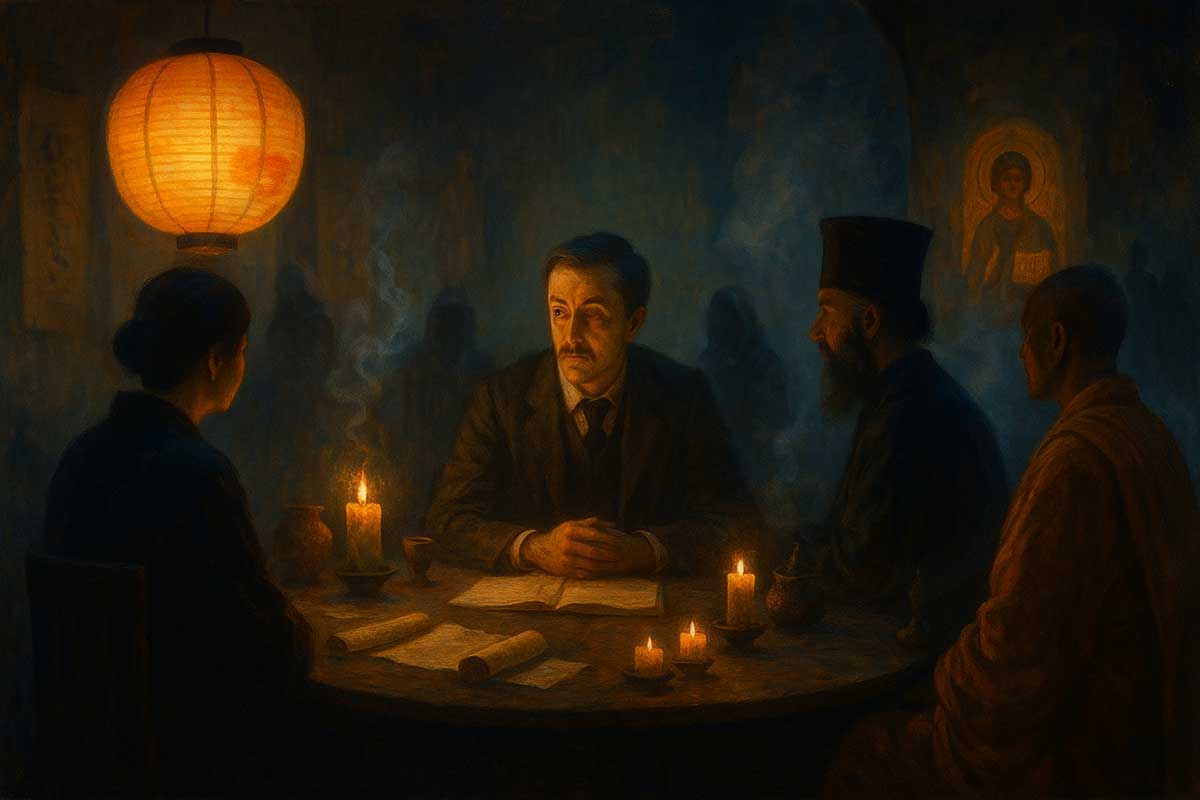
Introduction by Lafcadio Hearn
If there is one question that has followed me from continent to continent,
it is this:
What invisible hands formed the person I became?
I was never a man of one country.
I belonged to Greece by birth,
to Ireland by circumstance,
to America by survival,
and to Japan by the quiet unfolding of destiny.
And yet, beneath all these landscapes,
there were voices —
some gentle, some stern, some full of sorrow —
that guided me more profoundly than any nation’s borders.
The world believes a soul is shaped by blood or birthplace,
but I have learned that a soul is shaped
by those whose presence lingers long after they are gone.
A woman who taught me tenderness.
A guardian who taught me tyranny.
A storyteller who taught me the sacredness of the spoken word.
A monk who taught me silence.
A mystic who taught me that the unseen world is not far away.
They live in the chambers of my memory
like lanterns glowing in different colors.
In this work, I gather them around a single twilight table —
not as they were in life,
but as they remain within me.
Here, I speak with the influences that molded my fears,
my longings,
my capacity for wonder.
Here, I trace the paths by which pain became beauty,
and exile became belonging.
Every person carries such a circle of silent teachers.
I offer mine to you
in the hope that you may recognize your own.
(Note: This is an imaginary conversation, a creative exploration of an idea, and not a real speech or event.)
Topic 1: Where Does the Soul Dwell?
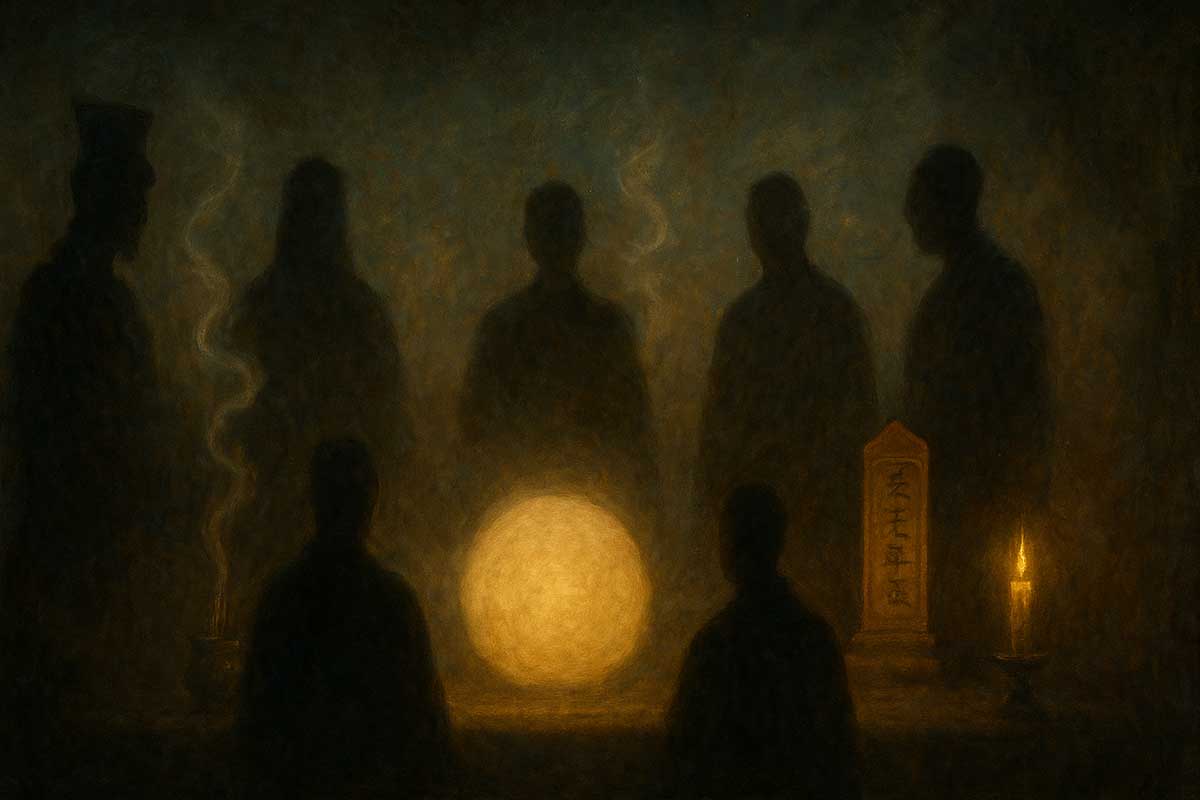
Moderator: Lafcadio Hearn
Participants:
- Emanuel Swedenborg
- Greek Orthodox Priest
- Koizumi Setsu
- Buddhist Monk
- New Orleans Black Storyteller
 Introduction — Lafcadio Hearn
“Throughout my life, I have wandered across cultures seeking the essence of the unseen.
Greece gave me my earliest memories,
Ireland my loneliness,
America my awakening,
and Japan my peace.
Across these worlds, one question followed me like a shadow:
Where does the soul dwell?
Is it fixed or fleeting?
Does it rise, return, or dissolve?
Does it linger in the stories we share?
Today, I ask five voices — each a part of my own spiritual inheritance — to explore what the soul truly is.”
Question 1
“Is the soul a fixed essence, or a constantly flowing presence?”
Swedenborg
“The soul is fixed in its essence.
When we die, the masks fall away and the inner nature — our love, our intentions —
reveals itself as our eternal form.
Change belongs to the body, not the soul.”
Greek Orthodox Priest
“The soul is a flame from God.
A flame may flicker, but its light is constant.
Your choices refine or darken the light,
yet the divine spark remains unchanged.”
Koizumi Setsu
“In Japan, we see the soul as something that moves like wind or water.
A joyful heart brightens it.
A grieving heart clouds it.
A wandering soul may become a spirit,
while a peaceful one returns to protect the family.
The soul is always moving, always responding.”
Buddhist Monk
“There is no fixed soul.
What we call ‘self’ is a stream of conditions arising and passing.
Clinging to the idea of a permanent soul
is the source of suffering.
Freedom comes from seeing that nothing — not even the self — stays the same.”
New Orleans Black Storyteller
“The soul is like a song.
The melody is familiar — that’s the essence.
But every singer brings new color and rhythm.
Every moment of life changes the way the song is sung.
So yes, the soul has a core…
but it also keeps on dancing.”
Hearn
“I hear in all your voices a truth I have sensed all my life:
we are both essence and change —
root and river.”
Question 2
“After death, where does the soul return?”
Swedenborg
“The soul goes where its inner love leads it.
Heaven and hell are not punishments —
they are natural destinations formed by our character.
We awaken in the world our heart has built.”
Greek Orthodox Priest
“All souls return to the divine light.
Some rejoice in it.
Some fear it — for the same light that comforts the pure
burns the conscience of the unprepared.
The destination is the same;
the experience differs.”
Koizumi Setsu
“In Japan, we believe the soul returns home.
It watches over the family,
comes back during summer’s Bon festival,
crosses to the other shore during equinox,
and lingers as a quiet presence in the house.
The soul stays close, never far.”
Buddhist Monk
“Death is not a journey to a place,
but a shift in the flow of conditions.
The next arising depends on the seeds planted in one’s heart.
It is not a return —
it is a continuation.”
New Orleans Black Storyteller
“Soul goes where the stories go.
If the family sings your name,
if people remember your kindness or your struggle,
your soul sits with them.
But if no one remembers,
the soul wanders like a lonely blues note,
searching for someone to hear it.”
Hearn
“I have always believed that souls survive in the places where they are felt —
in memory, in ritual, in story,
and in the quiet moments when we sense someone standing just behind us.”
Question 3
“Do stories allow the soul to live on?”
Swedenborg
“Stories are windows —
they help the living perceive spiritual truths,
but they do not keep the soul alive.
The soul lives independent of human tales,
yet stories help us understand its nature.”
Greek Orthodox Priest
“Sacred stories carry divine grace.
When we listen,
our hearts align with the heavenly realm.
In that harmony,
the soul finds clarity.”
Koizumi Setsu
“Yes.
A soul continues as long as it is spoken.
When people tell the story of someone who lived,
that soul breathes again through their voices.
Forgotten souls fade.
Remembered souls stay close.”
Buddhist Monk
“A story is neither the soul nor the person —
it is a reflection.
Yet reflections can free us.
When a story helps someone release sorrow or understand suffering,
it is part of the path to liberation.”
New Orleans Black Storyteller
“Where I come from,
stories are the soul.
Every tale carries joys, heartbreaks, sins, prayers —
and when we speak them,
those who came before us sit right beside the fire.”
Hearn
“Stories have saved me more than once.
Through them, I reunited with ancestors I never met
and found a voice for the ghosts I felt in every culture I lived in.
Perhaps this is why I write:
to give wandering souls a place to rest.”
Closing — Lafcadio Hearn
“Today, I see the soul not as a single truth,
but as a meeting place of many truths.
A flame,
a river,
a song,
a presence,
a story.
Perhaps the soul dwells wherever it is remembered,
wherever it is felt,
and wherever compassion gives it shelter.”
Topic 2: Why Do Fear and Beauty Live Side by Side?
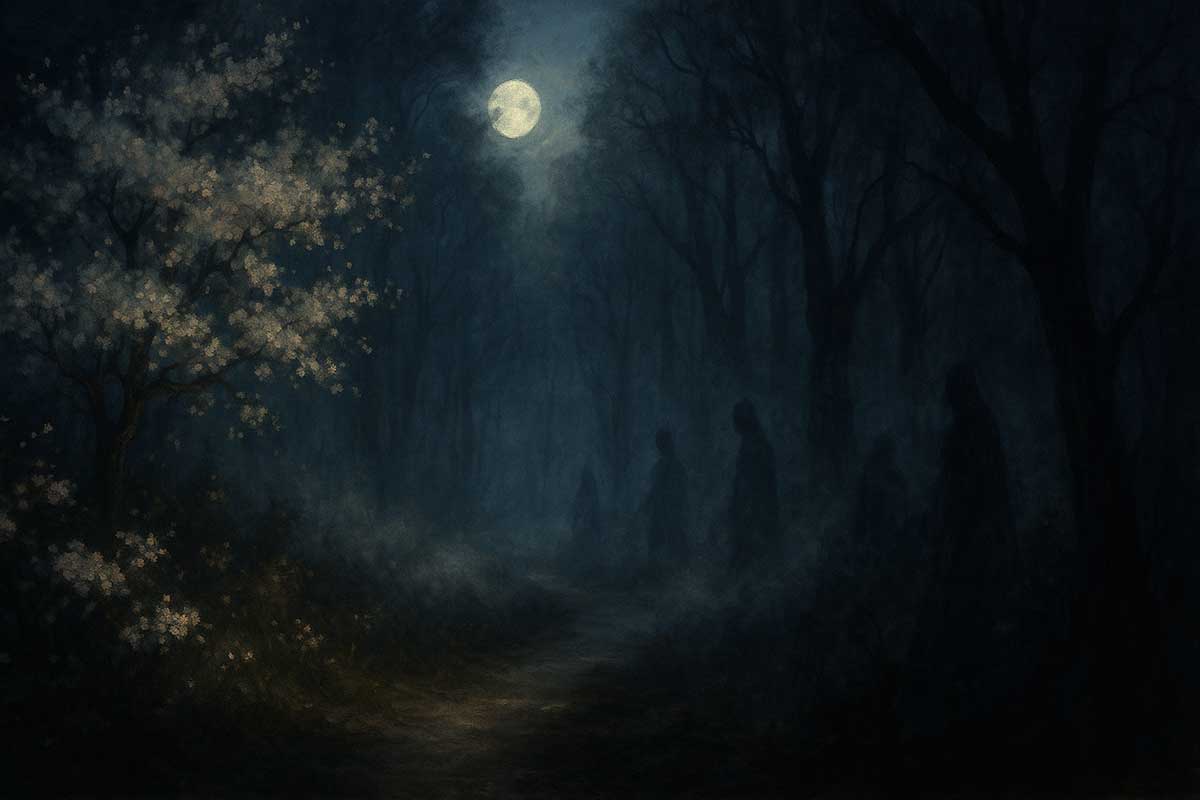
Moderator: Lafcadio Hearn
Participants:
- Edgar Allan Poe
- Elderly Japanese Village Storyteller
- Percival Lowell
- Julian Huxley
- Lafcadio Hearn
Introduction — Lafcadio Hearn
“All my life, I have been drawn to the strange union between terror and beauty.
Why does a ghostly presence illuminate the human heart?
Why does moonlight on a lonely path feel both peaceful and unsettling?
Why do frightening stories leave behind a trace of tenderness?
Today, I invite voices who shaped my understanding of fear —
from American Gothic to Japanese folk tales,
from Western science to Eastern shadow —
to explore this question:
Why do fear and beauty so often walk together?”
Question 1
“Why do humans perceive beauty inside fear?”
Edgar Allan Poe
“Because fear strips away illusions.
In moments of terror,
the mind becomes crystalline —
sharp, unfiltered, painfully awake.
In that heightened awareness,
even darkness glows with terrible beauty.
Horror reshapes the world,
and for a moment,
we see with unmasked eyes.”
Japanese Village Storyteller
“When people are frightened,
they notice things they usually ignore.
The wind sounds louder.
Flowers seem brighter.
Shadows breathe.
Fear opens the senses.
And when the senses open,
beauty slips in.”
Percival Lowell
“In Japanese aesthetics, beauty is inseparable from impermanence.
Mono no aware — the pathos of things —
teaches that beauty lies in the fragile, the fading, the uncertain.
Fear sharpens our awareness of transience.
It reminds us that everything can vanish.
And what can vanish
is always beautiful.”
Julian Huxley
“Fear triggers the mechanisms of survival —
adrenaline, alertness, hyper-awareness.
From an evolutionary standpoint,
fear intensifies perception.
When perception heightens,
the world appears more vivid —
which the human mind often interprets as beauty.”
Hearn
“When I write of ghosts,
I am really writing about sorrow —
and sorrow,
like fear,
reveals the hidden radiance inside the human heart.”
Question 2
“What do ghosts reveal about the living rather than the dead?”
Poe
“Ghosts are not the dead —
they are the living person’s unresolved guilt.
Every apparition is a confession.”
Japanese Village Storyteller
“A ghost appears
when the living forget something important.
A promise,
a kindness,
an obligation,
a sorrow.
A ghost does not accuse —
it reminds.”
Lowell
“Western ghosts tend to terrify.
Japanese ghosts tend to feel sorrowful.
This difference reflects the values of the cultures.
Ghosts reveal what a society fears losing:
identity, honor, memory, belonging.”
Huxley
“A ghost is a projection of the psyche.
It manifests when something within the self
cannot be integrated or accepted.
The ghost is the shadow side of the living mind.”
Hearn
“I have always felt that ghosts appear
when human hearts do not know how to speak.
They are unspoken emotions
taking temporary shape.”
Question 3
“Can fear guide a person toward a better life?”
Poe
“Destruction and creation are neighbors.
A brush with darkness
can propel the mind toward exquisite beauty.
But fear alone is not the teacher —
it is the threshold.”
Japanese Village Storyteller
“A child who fears the mountain spirit
does not wander into danger.
Fear protects.
Fear teaches respect.
Fear keeps the heart humble.”
Lowell
“Japanese ghost stories often serve as moral instruction.
Fear becomes a social compass —
suggesting caution, discipline,
and awareness of consequence.”
Huxley
“Fear is a biological signal:
‘Pay attention.’
‘Do not repeat past mistakes.’
‘Move with greater care.’
Without fear,
humankind would not survive long enough
to contemplate meaning.”
Hearn
“Fear softens us.
When we feel afraid,
we remember that others feel afraid too.
Fear invites compassion
because it makes us aware of our shared fragility.”
Closing — Lafcadio Hearn
“Tonight I see more clearly than ever:
Fear does not dim beauty —
it illuminates it.
Fear is the lantern
that lets us see the tenderness hidden inside shadows.
And beauty is the balm
that lets us face what frightens us
without losing our humanity.
Perhaps the two were never separate at all.”
Topic 3: Where Does a Person Truly Belong?
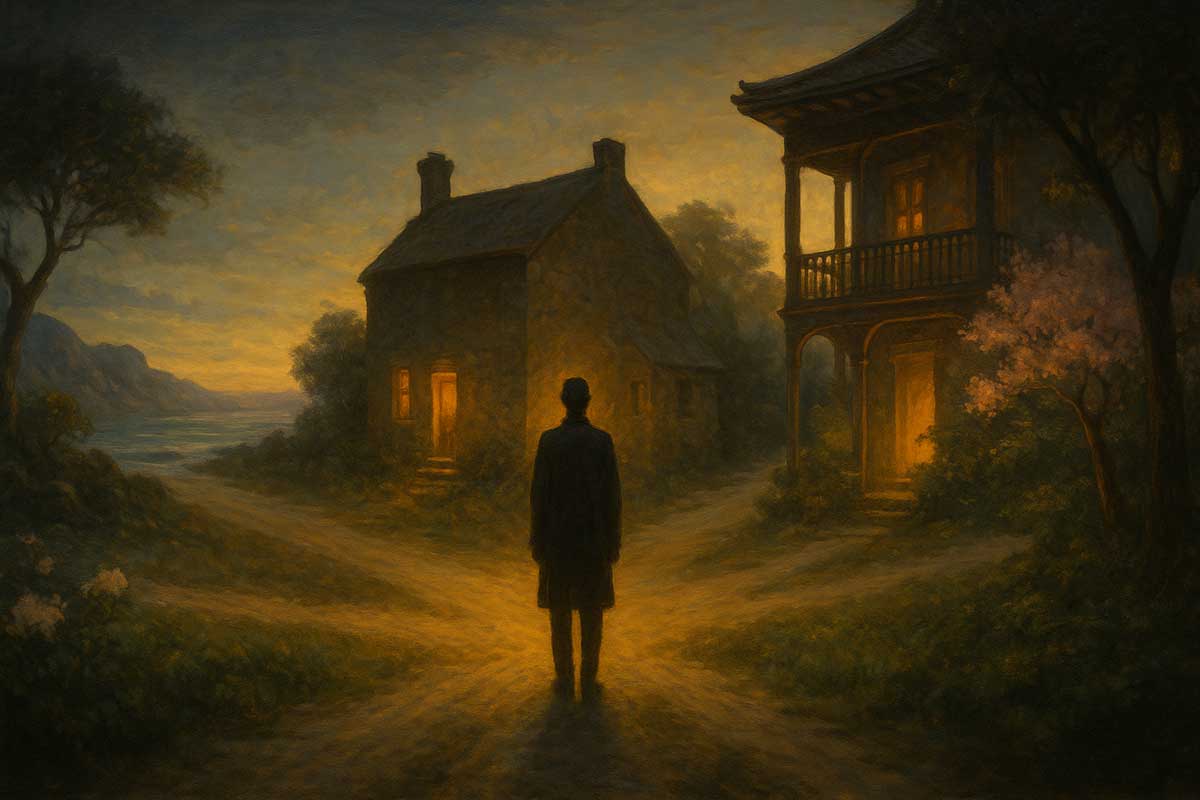
Moderator: Lafcadio Hearn
Participants:
- Aunt Rosa (Rosa Cassimati)
- Charles Wood
- Aline Hearn
- Nishida Sentarō
- Lafcadio Hearn
Introduction — Lafcadio Hearn
“If there was one question that followed me across continents,
across languages,
across all the rooms of my life,
it was this:
Where do I belong?
I was born in Greece,
uprooted to Ireland,
cast into America,
and reborn in Japan.
And yet, through all those migrations,
a deeper migration unfolded within me —
from isolation toward intimacy,
from exile toward home.
Tonight, I ask the people whose presence shaped me:
Where does a person truly belong?”
Question 1
“Is belonging determined by blood, culture, or the heart’s longing?”
Aunt Rosa
“Belonging is not found in blood,
though blood begins the story.
Belonging grows where the heart is seen —
where your sensitivity, your fears, your love
are welcomed rather than judged.
A child who feels unseen in his birthplace
will bloom elsewhere.”
Charles Wood
“Belonging is determined by duty —
to the nation that shelters you,
the religion that forms you,
and the laws that guide you.
One must submit to belong.”
Aline Hearn
“No, belonging ain’t submission.
It’s where your heartbreak is understood.
You belonged with me in New Orleans
not because of papers or duty,
but because we both carried scars
and we could breathe in the same silence.
Pain recognizes pain,
and that recognition becomes home.”
Nishida Sentarō
“In Japan, we speak of en —
a bond, a karmic connection.
Belonging is not inherited
but formed through relationships,
moments of trust,
shared tea,
shared thought.
You belonged to Japan, Hearn,
because Japan opened a door
your heart had been waiting for.”
Hearn
“I once thought belonging meant stability.
But now I see:
belonging is the place
where your inner voice is not a stranger.”
Question 2
“Can a person have multiple homes — or none?”
Aunt Rosa
“Yes.
A person may carry many homes within them.
You, Lafcadio,
were a garden with many climates —
Mediterranean sun,
Irish rain,
American thunder,
Japanese moonlight.
Each became part of you.
Each gave you a new room of the heart.”
Charles Wood
“One cannot serve multiple masters.
To belong everywhere
is to belong nowhere.”
Aline Hearn
“Oh, Charles, life ain’t that clean.
Some people —
especially the ones bruised early —
belong a little in many places
and completely in none.
That ain’t failure.
That’s survival.”
Nishida Sentarō
“To belong in many places
is to see the world with more than one set of eyes.
Such a person becomes a bridge —
between East and West,
old and new,
seen and unseen.
Hearn, that was your gift.”
Hearn
“I agree with each of you.
I have known the ache of not belonging anywhere —
and the grace of belonging in unexpected places.
Perhaps belonging is not a destination,
but a journey carried inside us.”
Question 3
“Is belonging something we are given, or something we create?”
Aunt Rosa
“It is something we cultivate.
You created belonging through your attention —
your ability to listen deeply,
to cherish the overlooked,
to find beauty in forgotten corners.”
Charles Wood
“Belonging is assigned
by society, law, and lineage.
One does not choose it.”
Aline Hearn
“Well, that explains your loneliness, Charles.
Belonging is born when someone finally says:
‘I see you.’
‘I’m not afraid of your darkness.’
‘I’ll stay.’
We create belonging through courage —
the courage to keep our hearts soft.”
Nishida Sentarō
“In Japan, belonging grows through practice.
Sharing meals.
Learning language.
Honoring customs.
Offering respect.
Effort creates connection.
You became Japanese not by papers,
but by sincerity.”
Hearn
“I spent so many years feeling like a guest in my own life.
But Japan allowed me to walk barefoot in its soul.
Belonging is neither given nor seized —
it blossoms where the heart finds rest.”
Closing — Lafcadio Hearn
“As I listen to all of you,
I realize the truth is not singular.
Belonging is a mosaic:
- part memory
- part longing
- part recognition
- part effort
- part grace
A person does not belong to one place —
a person belongs to whoever can hear the quiet truths inside them.
If I have learned anything on this long, wandering road,
it is this:
Home is where your soul stops whispering
and finally speaks in its full voice.”
Topic 4: Why Do Stories Save Us?
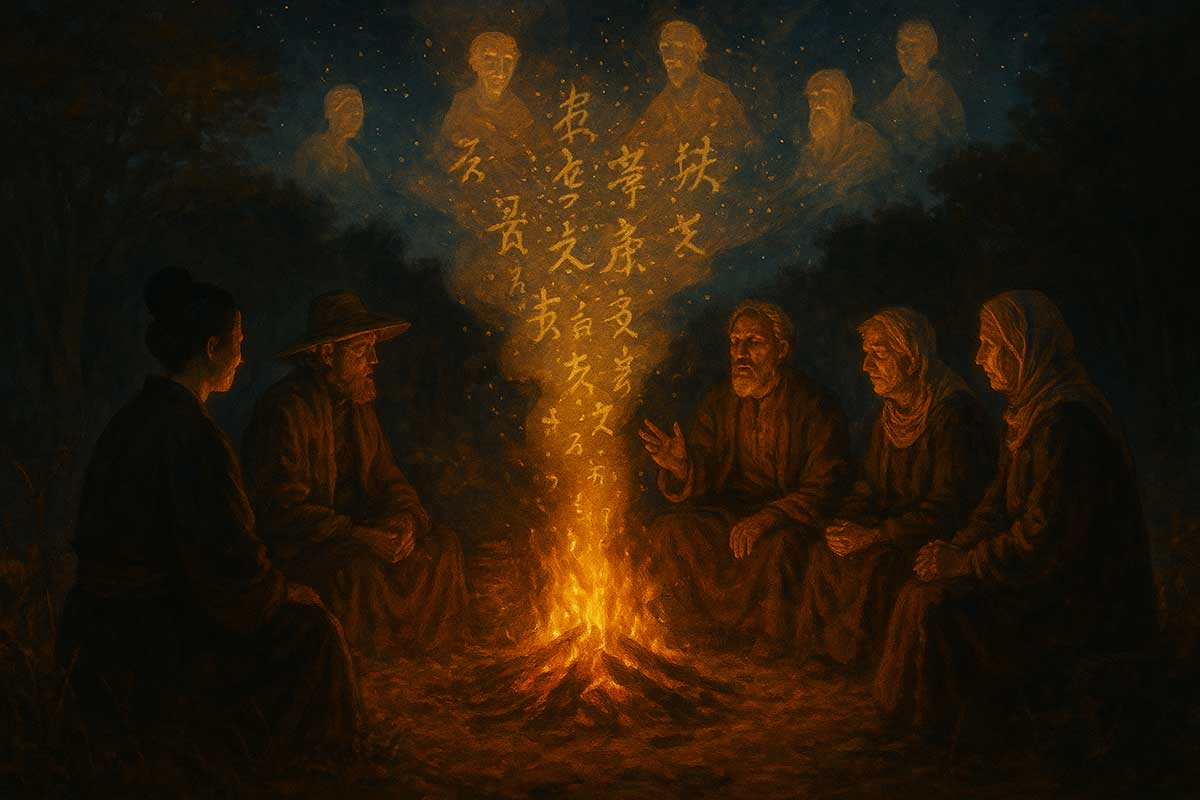
Moderator: Lafcadio Hearn
Participants:
- Koizumi Setsu
- New Orleans Black Storyteller
- Greek Grandmother (Symbolic Memory)
- Irish Folklorist
- Lafcadio Hearn
Introduction — Lafcadio Hearn
“I learned early in life that facts may guide the mind,
but stories guide the heart.
Stories held me when nothing else did.
They gave warmth to my loneliness in Ireland,
music to my hunger in New Orleans,
mystery to my wandering in America,
and belonging in Japan.
But why do stories have this power?
Why do they ease our suffering?
Why do they carry the dead across generations?
Tonight, I call upon the storytellers who shaped my soul
to explore one essential question:
Why do stories save us?”
Question 1
“How does a story ease human suffering?”
Koizumi Setsu
“When a person cannot express their sorrow,
a story speaks for them.
In Japan, grief is quiet.
People endure silently.
So our stories —
of ghosts, lost children, wandering spirits —
carry the emotions we cannot say aloud.
A story holds the sadness
so the heart does not have to hold it alone.”
New Orleans Black Storyteller
“Where I come from,
stories were the only medicine we had.
When slavery crushed the body,
stories kept the spirit from breaking.
A tale is a boat.
A song is a shelter.
A myth is a piece of freedom you can carry in your pocket
when the world gives you none.”
Greek Grandmother
“My child, stories ease suffering
because they place personal sorrow
inside something eternal.
When you hear that gods, ancestors, and heroes suffered too,
your pain becomes part of a larger human song.
You are no longer alone.”
Irish Folklorist
“A story turns chaos into pattern.
Loss, fear, injustice —
these are shapeless forces.
But once they are woven into a tale,
the mind can grasp them.
We suffer less from what we can understand.”
Hearn
“For me, stories softened the ache of exile.
They gave form to the shadows I felt
but could not name.
Stories made the unbearable
bearable.”
Question 2
“Does storytelling carry the soul of the teller, the listener, or both?”
Koizumi Setsu
“Both.
When a story is told,
the teller offers a piece of their heart,
and the listener wakes a piece of their own.
The two souls meet
in the space between the words.”
New Orleans Black Storyteller
“When I speak a story handed down from old folks,
I ain’t the only one talking.
Every ancestor who ever told it
is talking through me.
And when someone hears it —
really hears it —
their own memories rise to meet ours.
That’s communion.”
Greek Grandmother
“A story is the hand of the past
reaching toward the present.
When you listen with an open heart,
you take that hand.”
Irish Folklorist
“Teller and listener co-create meaning.
The tale is a bridge.
Each crossing leaves footprints
from both sides.”
Hearn
“Whenever I write a story,
I feel not only my own voice,
but echoes —
from Greece,
from Ireland,
from New Orleans,
from Japan.
Storytelling is how souls travel across time.”
Question 3
“Can stories allow the dead to live on?”
Koizumi Setsu
“Yes.
In Japan, we believe a soul stays alive
as long as it is remembered.
A story is a breath
that keeps the dead warm.
If no one tells their tale,
they fade like incense smoke.”
New Orleans Black Storyteller
“When someone passes,
we say:
‘Let their song keep singing.’
A story is the breath of the dead
moving through the living.
Tell it right,
and the dead sit beside you
by the fire.”
Greek Grandmother
“My mother lived on
not in her body
but in the stories she gave me.
And now you carry them too.
This is how souls travel.”
Irish Folklorist
“Stories preserve the emotional truth of a life
long after facts disappear.
In that sense, yes —
the dead live wherever their stories are told.”
Hearn
“All my life, I wrote ghost stories
not to frighten,
but to give forgotten souls
a voice,
a home,
a heartbeat.
Stories are the afterlife
that human love creates.”
Closing — Lafcadio Hearn
“Tonight I understand that stories save us
because they weave individual loneliness
into collective memory.
They give voice to the lost,
companionship to the living,
and passage to the dead.
A story is a small, shining raft
that carries the human spirit
across the waters of sorrow.
As long as stories are told,
no one —
living or dead —
is ever truly alone.”
Topic 5: Does Religion Rescue or Restrain the Human Spirit?
Moderator: Lafcadio Hearn
Participants:
- Greek Orthodox Priest
- Aunt Rosa
- Charles Wood
- Buddhist Monk
- Emanuel Swedenborg
Introduction — Lafcadio Hearn
“Across the many places I lived —
Greece, Ireland, America, Japan —
religion was never just belief.
It was memory, discipline, comfort, fear, beauty, and longing.
I met religion as a child through icons glowing in a Greek chapel,
and again through the stern moralism of Ireland,
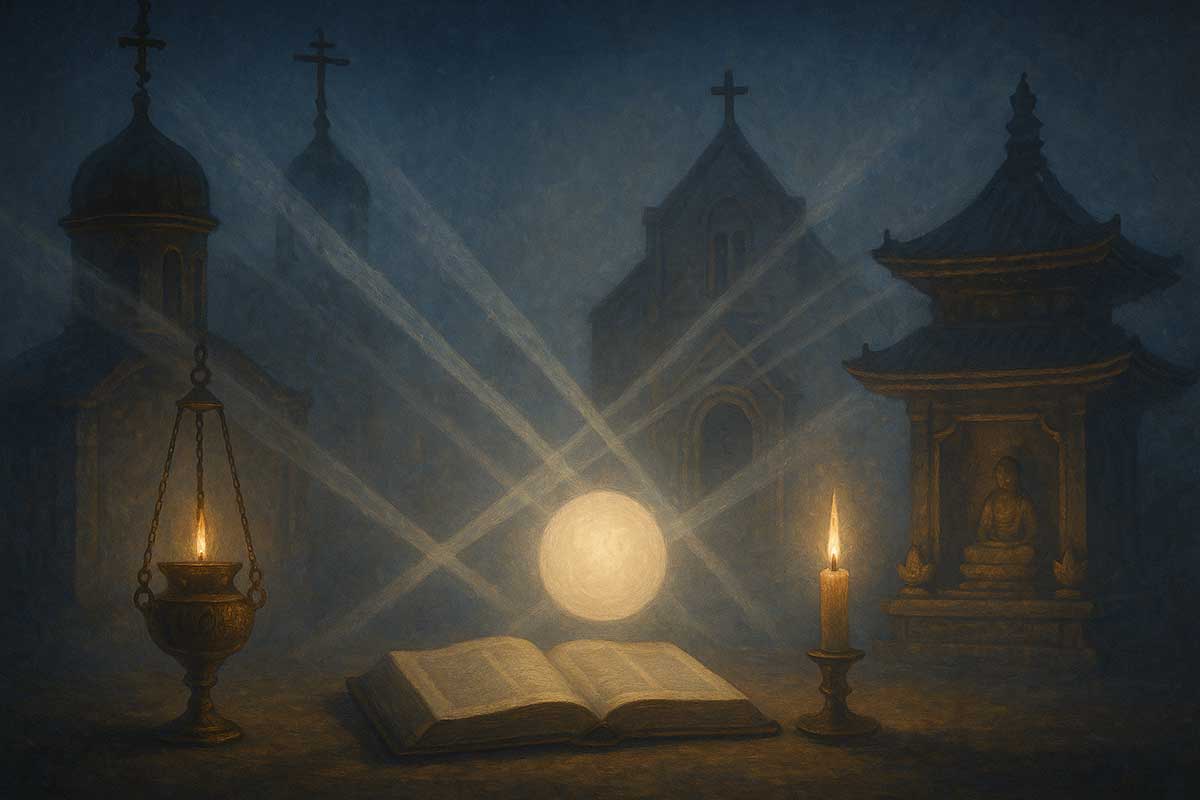
and again through the quiet altars of Japan’s ancestral homes.
But I also met religion in its shadows —
in the loneliness of exile,
in the harshness of judgment,
in the struggle to reconcile differing worlds.
Tonight, I ask the voices who shaped my understanding:
Does religion liberate the human spirit —
or bind it?”
Question 1
“Does religion free the soul, or imprison it?”
Greek Orthodox Priest
“True religion frees.
It opens a window to divine light.
Through prayer, humility, and ritual,
the soul sheds its burdens
and remembers its origin.
Bondage comes only
when people confuse human authority
with divine truth.”
Aunt Rosa
“Religion can be a mother’s embrace
or a parent’s scolding.
It frees the soul when it teaches compassion,
forgiveness, and dignity.
But when it uses fear instead of love,
it closes the heart
instead of opening it.”
Charles Wood
“Without rules and moral boundaries,
humanity descends into chaos.
Religion provides a framework —
duty, obedience, order.
Freedom is overrated.
What a soul needs is guidance.”
Buddhist Monk
“Attachment imprisons.
Religion itself does not.
When people cling to dogma,
they become bound.
When they use teachings as tools
to loosen suffering,
they become free.
Religion is a raft.
Not a cage.”
Swedenborg
“Religion binds the soul
when it is external —
mere ritual, fear, authority.
But true religion —
the inner alignment of love and wisdom —
liberates.
The soul is enslaved by falsity,
not by faith.”
Hearn
“In my travels, I saw religion heal and harm.
I learned that religion is not inherently binding;
it depends on the spirit with which it is held.
Some find heaven in it.
Others find only walls.”
Question 2
“What roles do fear, love, and ritual play in religious life?”
Greek Orthodox Priest
“Fear teaches humility.
Love teaches communion.
Ritual gives structure to both.
Without fear,
we grow arrogant.
Without love,
we grow cold.
Without ritual,
we become aimless.
Balance is salvation.”
Aunt Rosa
“Fear can wake us,
but love keeps us alive.
Ritual is simply love made visible —
a candle lit,
a prayer whispered,
a gesture of remembrance.
Without love,
ritual becomes empty.”
Charles Wood
“Fear is necessary.
It keeps the soul from sin.
Ritual is discipline.
It forms character.
Love is the reward —
not the starting point.”
Buddhist Monk
“Fear is ignorance misunderstood.
Love is compassion awakened.
Ritual is a finger pointing to the moon —
useful, but not the moon itself.
Fear dissolves through wisdom.
Love expands through awareness.
Ritual sustains practice,
but one must not cling to it.”
Swedenborg
“Fear belongs to the outer self.
Love belongs to the inner self.
Ritual is the bridge between them.
But rituals without love
are like lamps without oil.”
Hearn
“I witnessed fear used to control,
and love used to liberate.
I came to believe:
Fear makes religion heavy.
Love makes religion light.
Ritual gives religion shape.”
Question 3
“Can a person find true spirituality outside organized religion?”
Greek Orthodox Priest
“God is larger than institution.
Where there is sincerity and goodness,
there is grace.
Religion guides,
but it does not own the divine.”
Aunt Rosa
“Some of the most spiritual souls
never stepped inside a church.
Kindness is a form of prayer.
Gratitude is a hymn.
Compassion is devotion.”
Charles Wood
“Without formal structure,
spirituality becomes indulgence.
One cannot trust a path
built of personal preference.”
Buddhist Monk
“True spirituality arises
when the mind becomes clear.
Institutions help some,
hinder others.
The question is not
‘Inside or outside religion?’
but
‘Are you waking up?’”
Swedenborg
“Spirituality is the inner marriage
of love and understanding.
Many religions,
one essence.
A person may find the divine
in a doctrine,
in nature,
in silence,
or in compassion itself.”
Hearn
“I lived within many religions
and outside them as well.
What I discovered is this:
Spirituality is not the house,
but the light inside it.
It is not the doctrine,
but the heart it awakens.”
Closing — Lafcadio Hearn
“Tonight I see that religion is not a single phenomenon
but a mirror —
one that reflects both the shadows and lights
within the human soul.
Religion can restrain
when held in fear.
It can rescue
when held in love.
In every culture I lived in —
Orthodox, Catholic, Protestant, Buddhist, Shinto —
I found the same hunger:
To make sense of suffering.
To honor the unseen.
To feel less alone in the universe.
Perhaps the purpose of religion
is not to define the divine
but to remind us
that the divine is seeking us too.
What binds us is not religion itself
but the walls we build around our hearts.
What frees us
is not doctrine
but compassion.”
Final Thoughts by Lafcadio Hearn
As these conversations draw to a close,
I feel as though I have walked backward through my own soul —
retracing the faint footprints of those
who once walked beside me.
It is a strange thing to realize
that one’s identity is not a single thread
but a woven fabric of many hands.
Some left bright colors.
Others left scars.
All left their mark.
From Greece I learned mythic longing.
From Ireland I learned solitude.
From New Orleans I learned the poetry of suffering.
From Japan I learned the quiet dignity of the unseen.
But the true revelation is this:
A soul is not inherited.
It is assembled.
Piece by piece,
voice by voice,
moment by moment.
Those who have influenced us most
do not disappear when the world loses sight of them.
They become part of our breath,
our choices,
our fears,
our compassion.
We are never simply ourselves.
We are a chorus.
And when I listen to the voices that shaped me,
I hear not only their guidance
but also the deeper truth they have carried across my life:
That beauty and terror walk together,
that belonging can be found in the unlikeliest of places,
that stories keep the dead alive,
and that religion is never the cage or the key —
only the direction in which we turn it.
If I have a final hope,
it is that readers may look within
and find not chaos,
but companionship —
the quiet, enduring presence
of those who shaped their own souls.
For in the end,
the greatest journey is not across oceans,
but inward —
toward the voices that continue to speak
long after their lips have closed.
Short Bios:
Leave a Reply