
|
Getting your Trinity Audio player ready...
|
Introduction by
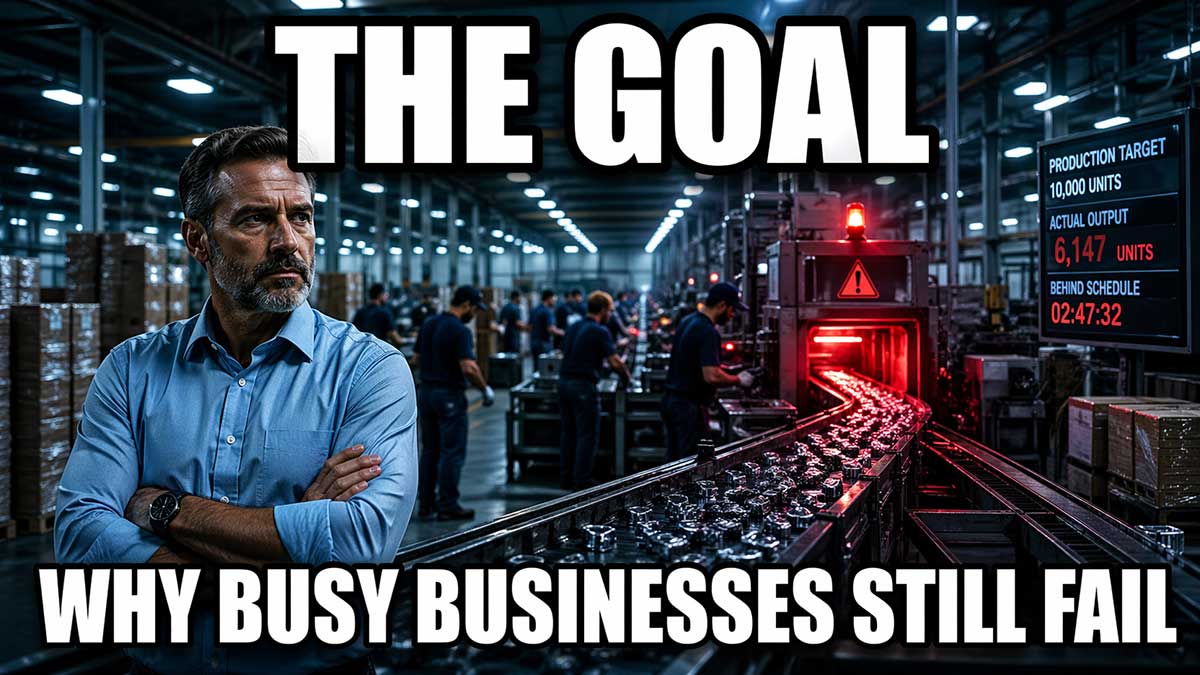
Most people think a failing business needs more effort: more production, more meetings, more pressure, more urgency.
But The Goal asks a sharper question:
What if the problem is not lack of effort, but effort aimed at the wrong thing?
Eliyahu M. Goldratt and Jeff Cox created a business novel about Alex Rogo, a plant manager with three months to save his factory. His orders are late, his inventory is growing, his team is exhausted, and his marriage is strained.
Then Jonah asks the question that changes everything:
What is the goal?
Alex slowly learns that a company can be busy everywhere and still fail as a whole. A machine can run nonstop and still hurt flow. A department can hit its numbers and still damage the business.
This imaginary conversation brings Goldratt, Cox, Alex, Jonah, Herbie, Julie Rogo, and leading systems thinkers together to ask what The Goal still teaches us about business, family, leadership, creativity, and life.
The question remains:
What is the real goal — and what hidden constraint is keeping us from reaching it?
(Note: This is an imaginary conversation, a creative exploration of an idea, and not a real speech or event.)
Topic 1 — What Is the Goal, Really?

Participants
Eliyahu M. Goldratt — author and systems thinker behind the Theory of Constraints
Jeff Cox — co-author and storyteller who helped turn business theory into a novel
Alex Rogo — plant manager in The Goal, carrying the pressure of both work and home
Jonah — the Socratic mentor who keeps asking the question everyone avoids
Peter Drucker — management thinker focused on purpose, results, and responsibility
Opening
Nick Sasaki:
Most people work harder when things fall apart. They push longer hours, tighter schedules, more meetings, more measurements, more pressure.
But The Goal asks something more dangerous.
What if the problem is not that people are lazy?
What if the problem is that everyone is improving things that do not matter?
Today, we begin with the question at the center of the book:
What is the goal, really?
Question 1
Did we make “the goal” clear enough, or did readers still confuse it with productivity, efficiency, and survival?
Goldratt:
The danger was always that people would read the story and think I was giving them a better factory method. That is not enough. I wanted them to see a way of thinking. The goal is not to keep machines busy. The goal is not to impress headquarters. The goal is not to make every department look efficient on a report.
The goal is to make money now and in the future. But that sentence is easy to repeat and hard to understand.
A company can be full of people doing useful-looking things and still be moving away from its goal. That is why the book had to begin with confusion. Alex had to suffer under bad measurements before he could see the truth.
If readers still confuse activity with progress, then the question remains alive. That is not failure. That is the reason the book still needs to be read.
Jeff Cox:
From the storytelling side, we had to make the goal feel discovered, not announced. If Jonah simply gave Alex a clean lecture in chapter one, the reader might nod and forget it.
Alex had to be under threat. The plant had to be near closure. His marriage had to be strained. His team had to be tired. The reader had to feel the pain of not knowing the real goal.
The phrase “the goal” sounds simple. But in a story, simplicity has to be earned. Alex does not find the answer by memorizing a slogan. He finds it by being forced to question everything he thought counted.
That is why the book works. It does not merely tell you that productivity is not the goal. It lets you feel the damage caused by pretending that it is.
Alex Rogo:
When I was inside the crisis, survival felt like the goal.
Keep the plant open. Keep Peach off my back. Keep the orders moving. Keep people from panicking. Keep my marriage from falling apart. Everything felt urgent.
But urgency is not the same as clarity.
At first, I thought the goal was better performance. Then I thought it was higher output. Then better efficiency. Then lower cost. But every answer kept breaking under pressure.
The painful thing was realizing that I had been managing pieces, not the whole. I was fighting fires inside a building whose structure I did not understand.
Jonah:
People often ask for answers before they have clarified the question.
“What should we improve?”
“Where should we cut?”
“How can we increase output?”
“Why is this department behind?”
These questions may be useful later. But first comes a more basic question: What is the system for?
Without that, productivity becomes theater. Efficiency becomes decoration. Survival becomes panic dressed as strategy.
The goal was clear enough for those willing to think. It was not clear for those looking for formulas.
Peter Drucker:
A business does not exist to keep people busy. It exists to create a customer, serve a market, use resources responsibly, and produce results that allow it to continue.
Yet managers often hide behind activities because activities are easier to count than purpose.
You can count meetings.
You can count labor hours.
You can count units processed.
You can count machine usage.
But the fact that something can be counted does not mean it matters most.
The greatness of The Goal is that it reminds managers that measurement without purpose is a very refined form of confusion.
Question 2
Why do so many managers need a crisis before they are willing to ask the simplest question: “What are we really trying to accomplish?”
Alex Rogo:
Crisis strips away pride.
Before the plant was threatened, I had explanations for everything. Bad luck. Bad suppliers. Difficult workers. Unfair demands from headquarters. Equipment problems. Market pressure.
Some of those things were real. But they were not the root.
When everything is still barely functioning, you can keep believing your own explanations. Crisis takes that away. It corners you.
I did not become wiser because I was naturally humble. I became teachable because the old answers stopped working.
That is embarrassing, but true.
Goldratt:
Most systems are protected by habits. People do things because those things were rewarded yesterday.
A manager does not ask, “What is the goal?” every morning because the organization has already supplied many smaller goals: reduce cost, increase utilization, meet schedule, improve department metrics, avoid blame.
These smaller goals become a fog.
Crisis is painful, but it has one advantage: it breaks the fog.
The question then becomes whether the leader will use the crisis to think, or merely use it to apply more pressure.
Peter Drucker:
Managers often confuse responsibility with busyness. They feel guilty when they stop to ask first principles questions. They fear that reflection looks like weakness.
But no executive task is more practical than defining the right aim.
A crisis makes this acceptable. Suddenly, asking basic questions no longer looks philosophical. It looks necessary.
This is one of the tragedies of management. People wait until reality punishes them before they permit themselves to think.
Jeff Cox:
In fiction, crisis gives the character permission to change.
Alex could not begin the story as a wise man calmly revising his assumptions. That would not be honest. People usually change when the cost of staying the same becomes visible.
The plant deadline creates pressure. Julie’s frustration creates pressure. Jonah’s questions create pressure. The late orders create pressure.
The story keeps tightening until Alex has no choice but to ask better questions.
That is why the novel form mattered. A textbook can explain a crisis. A story can make the reader feel cornered with the character.
Jonah:
A crisis does not create truth. It only removes excuses.
The goal was always there. The constraint was always there. The false measurements were already misleading people. The system was already speaking.
But people hear the system only when the noise of assumption becomes unbearable.
The wise manager does not wait for crisis. The wise manager asks crisis-level questions before crisis arrives.
Question 3
Can a company pursue profit without slowly turning people into instruments of the system?
Goldratt:
Yes, but only if profit is understood correctly.
Profit is not a license to abuse people. Profit is evidence that the system is producing value in a sustainable way. A company that destroys its people is not truly healthy, even if the numbers temporarily look good.
The Theory of Constraints is often misunderstood as mechanical. Find the constraint. Exploit it. Subordinate everything else. Elevate it. Repeat.
But beneath that is respect for reality. And people are part of reality.
If the system requires fear, exhaustion, and deception to function, then the system is badly designed.
Julie Rogo:
I know I am not listed as one of today’s main participants, but I need to speak into this question.
From the outside, the plant crisis looked like it belonged only to Alex. But it came home with him. It sat at dinner. It entered our silences. It took his attention even when his body was in the room.
When a company says, “We are only pursuing results,” families often pay part of the bill.
So yes, profit can be pursued without reducing people. But only if leaders admit that work does not stay at work. The pressure spreads.
Alex Rogo:
I used to think the plant and my family were separate problems.
They were not.
At work, I was trying to save the plant by chasing every urgent demand. At home, I was losing Julie because I had no attention left. In both places, I was reacting instead of seeing the system.
When I began to understand the plant, I began to understand something about myself. I had been treating people as interruptions to the crisis.
That is what bad systems do. They make human beings feel like obstacles.
Peter Drucker:
Profit is a condition of survival, not the whole meaning of enterprise.
A business that does not produce profit will die. But a business that treats profit as its only moral language becomes spiritually thin and managerially dangerous.
People are not merely labor inputs. They carry judgment, creativity, loyalty, fear, memory, and dignity.
A company that forgets this may still function for a period. But it loses the trust that makes real performance possible.
Jonah:
The question is not whether profit and humanity can coexist.
The question is whether the system has been designed so that the pursuit of profit depends on human damage.
If yes, the system is unstable.
A true goal cannot be achieved by destroying the conditions that make achievement possible.
Closing Reflection
Nick Sasaki:
The first topic brings us back to the simplest and most unsettling lesson of The Goal:
A person can work hard and still move in the wrong direction.
A factory can stay busy and still lose money.
A leader can measure everything and still miss reality.
A family can suffer from a business problem no one has named correctly.
Goldratt and Cox gave us a story where the first breakthrough is not a new machine, a new policy, or a new slogan.
It is a question.
What is the goal, really?
Topic 2 — The Bottleneck Tells the Truth
Participants
Eliyahu M. Goldratt — systems thinker behind the Theory of Constraints
Jonah — the Socratic mentor who teaches by asking
Alex Rogo — plant manager trying to save his factory
Herbie — the slow hiker who reveals the meaning of a constraint
Taiichi Ohno — Toyota Production System pioneer
Opening
Nick Sasaki:
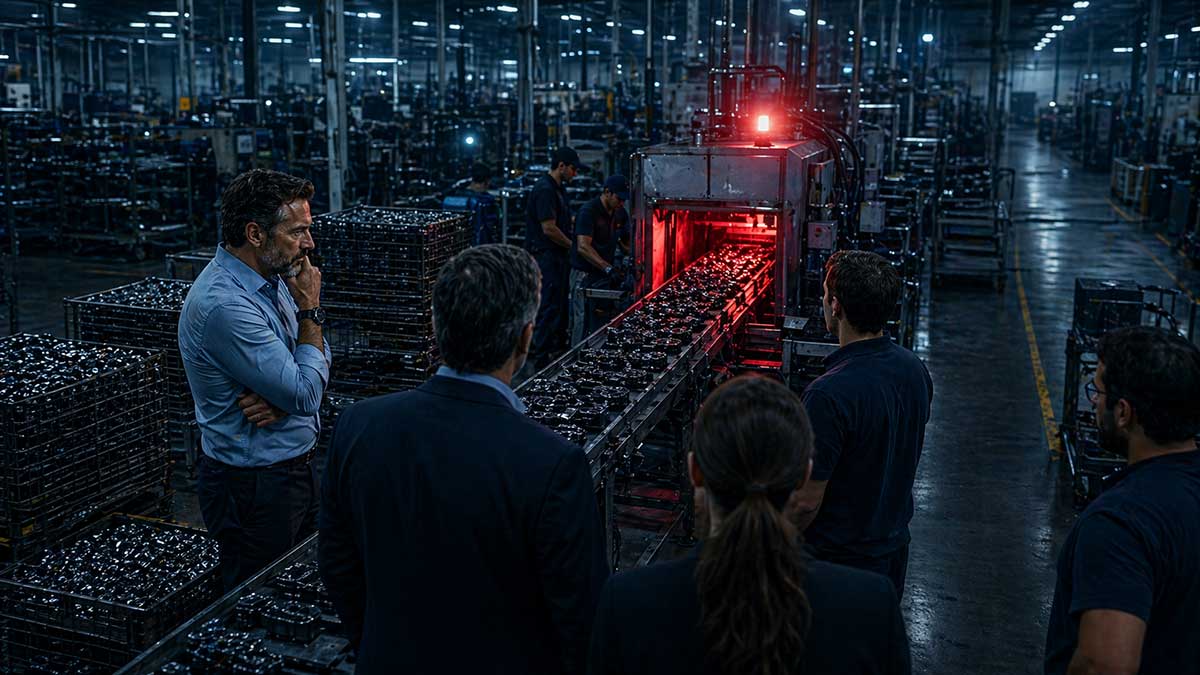
In The Goal, the bottleneck is not just a machine. It is the place where the whole system finally tells the truth.
Every manager has reports.
Every department has excuses.
Every worker has pressure.
Every schedule looks urgent.
But the bottleneck does not care about appearances.
It says:
“This is how fast the system can really move.”
Today we ask why the slowest point often becomes the wisest teacher.
Question 1
Why do people resist seeing the bottleneck, even when the whole system is pointing straight at it?
Goldratt:
People resist the bottleneck because it threatens their local pride.
A department wants to believe it is important. A manager wants to believe his area is the key. A worker wants to believe his effort matters equally. But in a constrained system, not every improvement has the same value.
That is emotionally difficult.
If a non-bottleneck improves, the system may not improve at all. That sounds insulting to people who worked hard. But it is not an insult. It is a fact about flow.
The bottleneck humiliates false equality. It says, “This point governs the system right now.”
A leader must accept that reality before real improvement begins.
Jonah:
The bottleneck is resisted because it simplifies.
People often prefer complicated explanations. Complication protects ego. It allows many people to remain partly right.
The bottleneck removes that comfort.
It says:
“Look here.”
Not everywhere. Not at every department. Not at every complaint. Here.
This is why I ask questions rather than give answers. A person must discover the constraint, not merely be told about it. Discovery changes behavior. Instruction often creates agreement without change.
Alex Rogo:
At first, I did not want there to be one main constraint.
I wanted the problem to be spread out. If everything was broken, then maybe no single decision was mine to make. If every department was equally guilty, then no one had to face the real issue.
But once I saw the bottleneck, I could not unsee it.
The strange thing was that it gave me relief. Before that, every problem screamed at the same volume. After that, the system had a priority.
The bottleneck was painful, but it gave me a place to begin.
Herbie:
I was not trying to slow anyone down.
I was just walking.
The boys ahead of me wanted to move fast. The boys behind me were stuck with my pace. Everyone could pretend the hike had many problems, but the line told the truth.
If I was slow, the troop was slow.
When they helped me carry less weight, the whole group improved.
That is the part people forget. Finding the bottleneck is not about blaming the bottleneck. It is about helping the whole system move.
Taiichi Ohno:
In production, the line reveals what managers hide.
A factory floor does not respect wishful thinking. Inventory piles up. Waiting appears. People walk too much. Machines sit idle. Defects travel. These are not opinions. They are signals.
Managers often resist the bottleneck because they prefer reports to observation.
Go and see.
Stand where the work happens. Watch the flow. Ask why five times. The constraint is usually visible to those willing to look without status.
Question 2
Is Herbie memorable because he explains a production principle, or because every reader has felt like Herbie somewhere in life?
Jeff Cox:
Herbie works because he is not a diagram.
A diagram can explain dependency. Herbie makes you feel it.
He is a child carrying too much weight, slowing down the group, and probably feeling ashamed without fully saying it. That is why the scene stays with readers. It turns factory flow into a human picture.
Everyone has been Herbie somewhere.
Too slow.
Too burdened.
Too exposed.
Too afraid of disappointing the group.
That is why the metaphor travels beyond manufacturing. It reaches school, family, marriage, business, health, and creativity.
Goldratt:
Herbie is powerful because he defeats abstraction.
People can argue against theory. They can debate terminology. They can ask for exceptions. But when they see the hiking line, the principle becomes unavoidable.
The system can move only as fast as its constraint.
But there is another lesson: do not shout at Herbie.
Help Herbie. Remove unnecessary weight. Reorganize the system around the constraint. Then the whole group benefits.
Many managers miss this. They identify a bottleneck and then punish it. That is stupidity disguised as leadership.
Alex Rogo:
When I saw Herbie, I saw my plant.
But later, I saw myself.
I was carrying too much. I was falling behind in my marriage. I was trying to keep up with demands I had not organized. I was becoming the constraint in parts of my own life.
That was hard to admit.
Herbie did not just teach me where to look in the factory. He taught me to stop confusing pressure with leadership.
If someone is slow, ask what they are carrying.
Jonah:
A symbol is useful when it keeps teaching after the scene ends.
Herbie teaches several things:
The slowest point governs pace.
Improving the fastest walkers does not help the group.
Blaming the slow walker does not solve the problem.
Redistributing burden can increase flow.
The system must be judged by the whole line, not by the speed of its strongest parts.
This is why Herbie remains memorable. He contains the theory without needing the vocabulary.
Taiichi Ohno:
In a factory, waste often hides as burden.
Too much inventory.
Too much movement.
Too much waiting.
Too much rework.
Too much confusion.
Herbie carries a backpack. Workers carry bad process. Machines carry bad scheduling. Managers carry bad measurements.
The lesson is not merely “find the slow person.”
The lesson is: find what the system has overloaded, then remove what should never have been there.
Question 3
What would modern companies discover if they stopped asking, “Who is underperforming?” and asked, “Where is the system being constrained?”
Goldratt:
They would discover that blame is often a substitute for thinking.
When output disappoints, leaders look for a person to pressure. This feels decisive. It is often lazy.
The better question is: where is throughput being limited?
Is it market demand? Is it engineering? Is it approval speed? Is it software deployment? Is it management attention? Is it a policy? Is it trust?
In modern companies, the constraint is often not a machine. It may be a decision rule. It may be a metric. It may be a meeting culture. It may be fear.
The principle remains the same. The constraint governs the system.
Taiichi Ohno:
Many companies would discover that their people are not slow. Their process is heavy.
They ask workers to move faster inside a bad system. That creates stress, not flow.
A leader should go to the workplace and ask:
Where does work wait?
Where does information stop?
Where do defects return?
Where does approval get stuck?
Where is inventory hiding?
When you ask these questions, the target changes. The enemy is no longer the worker. The enemy is waste.
Alex Rogo:
I would have saved time if I had asked that earlier.
“Who is underperforming?” makes everyone defensive. People protect themselves. They hide problems. They explain instead of reveal.
“Where is the system constrained?” changes the room.
Now we are all looking at something together.
The moment my team stopped defending departments and started seeing the plant as one system, things changed. We were still under pressure, but we were no longer trapped in accusation.
Herbie:
If the boys had blamed me, I would have felt worse and walked no faster.
If they had yelled, I might have tried harder for a few minutes. Then I would have fallen behind again.
But when they looked at my backpack, everything changed.
That is what good leaders do. They notice the backpack.
Jonah:
The question “Who is underperforming?” assumes the system is basically correct and the person is the problem.
Sometimes that is true.
But often, the person is only the visible location where the system’s contradiction appears.
Ask a better question:
“What must change so the whole system can move closer to the goal?”
This question creates learning.
And learning is more valuable than blame.
Closing Reflection
Nick Sasaki:
The bottleneck tells the truth because it refuses to flatter the system.
It does not care which department looks busy.
It does not care who has the best report.
It does not care which manager sounds confident.
It does not care how much effort has already been spent.
It shows the real pace.
Herbie teaches us that the constraint should not be mocked, hidden, or punished.
It should be understood.
A factory changes when it finds its bottleneck.
A business changes when it stops rewarding fake progress.
A family changes when it notices who is carrying too much.
A person changes when they ask, “Where is my real constraint?”
That is the second lesson of The Goal:
The system cannot move faster than the place it refuses to understand.
Topic 3 — The Trap of Local Efficiency
Participants
Eliyahu M. Goldratt — creator of the Theory of Constraints
W. Edwards Deming — systems thinker and critic of fear-based management
Taiichi Ohno — Toyota Production System pioneer
Lou — plant controller in The Goal
Bob Donovan — plant production manager in The Goal
Opening
Nick Sasaki:
One of the most dangerous ideas in The Goal is this:
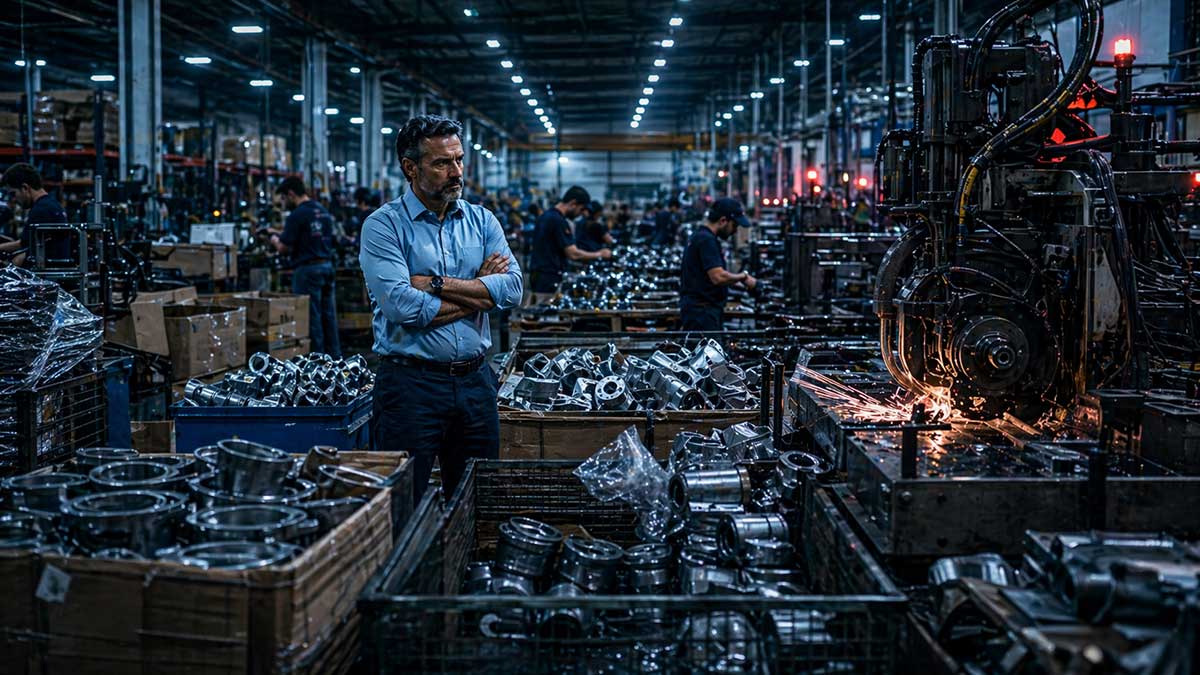
A department can look successful while the company becomes weaker.
A machine can stay busy while customer orders are late.
A worker can look efficient while inventory piles up.
A manager can hit a local metric while the plant loses money.
This is where The Goal becomes uncomfortable.
It says the problem is not always laziness.
Sometimes the problem is the reward system itself.
Today we ask why “efficiency” can become a trap.
Question 1
Why is it so hard for managers to believe that keeping every worker and machine busy can actually damage the whole company?
Goldratt:
Because idleness offends the traditional managerial eye.
A manager walks through a plant and sees someone waiting. Immediately, he thinks something is wrong. A machine is not running. A worker is not moving. Labor is being wasted.
But the real question is not, “Is everyone busy?”
The real question is, “Is the system increasing throughput?”
If a non-bottleneck produces more than the bottleneck can absorb, it creates inventory, confusion, storage cost, handling cost, and false confidence. The local efficiency looks good, but the system becomes heavier.
This is one of the hardest lessons for managers: sometimes the most responsible thing a worker can do is not produce.
Deming:
Management has trained people to fear stillness.
The worker fears being seen as lazy.
The supervisor fears being judged by utilization.
The department head fears poor numbers.
The executive fears unused capacity.
So everyone performs motion.
But motion is not knowledge. Motion is not quality. Motion is not flow.
A system must be judged as a system. If each part pursues its own apparent efficiency, the whole can become worse. This is not a people problem first. It is a management design problem.
Taiichi Ohno:
In Toyota thinking, producing more than needed is waste.
Overproduction is dangerous because it hides other problems. It creates inventory, and inventory hides defects, delays, imbalance, and poor thinking.
Many managers believe a stopped machine is waste. But a machine making what is not needed is worse.
If the next process does not need it, why make it? If the customer does not need it, why make it? If the system cannot use it now, the production is not strength. It is burden.
The factory should not worship activity. It should serve flow.
Lou:
From the accounting side, I understand why people fall into this.
The numbers encourage it.
If we measure cost per part, labor utilization, machine utilization, and departmental variance, then people will try to improve those numbers. They are not evil for doing it. They are responding to the system.
The trouble is that those numbers can make excess production look responsible.
A department can say, “We lowered unit cost.” But if those parts sit in inventory and do not help shipments, then what did we really improve?
That is the accounting problem Alex and I had to face.
Bob Donovan:
On the floor, keeping people busy feels practical.
You have workers. You have machines. You have orders. You have pressure. So you run what you can run.
If someone says, “Let that area wait,” your first reaction is, “Are you crazy?”
But then you see the piles. You see parts waiting. You see expediting. You see people chasing missing pieces while other pieces sit around doing nothing.
That is when it hits you: we were not producing order. We were producing noise.
Question 2
Did the book go far enough in challenging the accounting measurements that reward the wrong behavior?
Lou:
I would say the book opened the door, but the issue goes deeper.
Traditional accounting likes certainty. It likes allocation. It likes categories. It likes costs assigned neatly to products and departments.
But the plant did not live neatly.
The plant lived through queues, delays, late orders, changing priorities, bottlenecks, and cash pressure. The old measurements often gave us the wrong signal at exactly the wrong time.
Throughput, inventory, and operating expense helped us see the plant as a living system instead of a collection of cost centers.
That was the breakthrough.
Goldratt:
The accounting issue is central.
Many companies do not merely measure incorrectly. They make wrong decisions because of those measurements.
Cost accounting often encourages local optimization. It treats each product as though it carries a precise share of cost, then asks managers to reduce that cost. But in a constrained system, the key question is not local cost. It is contribution through the constraint.
What increases throughput?
What reduces inventory?
What controls operating expense?
These questions are closer to reality.
The book challenged the measurements, but many readers still underestimate how deeply wrong measurements shape behavior.
Deming:
A bad measure can corrupt a good person.
People do not merely use measures. They become governed by them.
If management rewards utilization, people maximize utilization.
If management rewards volume, people produce volume.
If management rewards quarterly appearance, people protect quarterly appearance.
Then management complains about the behavior it created.
This is why numerical targets without knowledge of the system are dangerous. They produce fear, distortion, and tampering.
A measure should help people learn. It should not force them to lie politely.
Taiichi Ohno:
Numbers are useful after seeing.
If you sit in an office and study reports, you may believe the factory is efficient. If you go to the floor, you may see waiting, walking, piles, rework, searching, and confusion.
The report may say one thing. The floor says another.
Good accounting must respect flow. If the measurement encourages overproduction, it fights the system.
Do not make numbers the master. Make them servants of observation.
Bob Donovan:
I was not an accounting guy. I was trying to get product out the door.
But I learned that the measurements affected everything we did.
If my department was judged by whether machines were busy, I kept them busy. If I was judged by output, I pushed output. If I was judged by cost, I defended cost.
Then we wondered why the plant was late.
The painful truth is that we were often doing what the numbers told us to do.
That means the numbers were part of the problem.
Question 3
What happens to leadership when numbers become more trusted than the living flow of the work itself?
Deming:
Leadership becomes detached.
The manager begins to believe he understands the work because he has a report. But the report is not the work. It is only a shadow of the work.
When numbers replace knowledge, people begin managing shadows.
They do not see frustration.
They do not see fear.
They do not see waiting.
They do not see rework.
They do not see the pride that has been damaged by impossible instructions.
A leader must understand variation, system behavior, and human consequences. Without this, numbers become a mask for ignorance.
Goldratt:
Numbers are necessary. But they must be connected to the goal.
If a number helps you see whether the organization is moving closer to the goal, use it. If it distracts from the goal, challenge it.
The problem is not measurement. The problem is false measurement.
A leader who trusts local efficiencies more than throughput will damage the organization while believing he is improving it.
This is why thinking must come before calculation.
Lou:
A number can feel safe because it seems objective.
But objectivity can become dangerous when the number is answering the wrong question.
I had to learn that finance should not merely record the plant. It should help management understand the plant.
That means asking: does this measure help Alex make a better decision? Does it help us ship more? Does it help us reduce trapped money? Does it help us protect the future?
If not, the number may be precise and still misleading.
Taiichi Ohno:
The work is the teacher.
A leader should stand near the process and watch. Where does the work stop? Who waits? What piles up? What returns? What is unclear? What is being made before it is needed?
These things are visible.
If the report says the machine is efficient but the customer is waiting, the report has missed something important.
A leader who cannot see flow cannot improve flow.
Bob Donovan:
On the floor, people know when the numbers are fake.
They may not say it in a meeting, but they know.
They know when they are building inventory just to keep utilization up. They know when priorities change three times in a day. They know when a machine is called efficient but the order is still late.
When leadership trusts numbers more than the floor, people stop telling the truth.
That may be the worst cost of all.
Closing Reflection
Nick Sasaki:
This is why The Goal still feels sharp.
It does not merely say, “Improve efficiency.”
It asks a harder question:
Efficiency of what?
A busy worker may not be helping.
A busy machine may not be helping.
A strong department may not be helping.
A beautiful report may not be helping.
If the whole system does not move closer to the goal, local efficiency becomes a polished form of waste.
Goldratt and Cox force us to see that bad measurements do more than mislead managers.
They shape behavior.
They reward the wrong victories.
They make people defend the numbers instead of the truth.
The third lesson of The Goal is this:
A system can look efficient at every local point and still fail as a whole.
Topic 4 — Why People Blame Each Other When the System Is Broken

Participants
Jeff Cox — co-author and storyteller who gave the business theory its human form
Julie Rogo — Alex Rogo’s wife, representing the personal cost of workplace crisis
Alex Rogo — plant manager caught between factory pressure and family breakdown
W. Edwards Deming — systems thinker who warned against fear-based management
Eliyahu M. Goldratt — creator of the Theory of Constraints
Opening
Nick Sasaki:
In The Goal, the plant is not the only thing close to breaking.
Alex Rogo is trying to save a factory, but his marriage is under strain. His attention is split. His patience is thin. His identity is tied to whether the plant survives.
That is what makes the story more than a management lesson.
A broken system does not stay inside the workplace.
It follows people home.
It enters their tone of voice.
It changes how they listen.
It makes love feel like one more demand.
Today we ask what happens when systems fail, and people begin blaming each other for pain the system helped create.
Question 1
Did Alex’s marriage story show the true cost of a broken work system, or did readers treat it as a subplot?
Jeff Cox:
I never saw the marriage as decoration.
If the book had been only about production, it would have been useful, but thinner. Alex had to be a full person, not merely a manager with a factory problem.
Work pressure does not end at the parking lot. It follows the body. It changes the voice. It turns small conversations into battles. It makes absence feel like betrayal.
Julie’s frustration matters because she shows the cost that business books often ignore. The plant is not just late on orders. Alex is late to his own life.
That is why the marriage belongs inside the story. It is part of the same crisis.
Julie Rogo:
To me, it did not feel like a subplot.
It felt like my life.
Alex was not cruel in some simple way. That might have been easier. He was worried, pressured, distracted, and always somewhere else even when he was sitting in front of me.
The plant had a deadline. Our marriage had one too, but no one from corporate announced it.
That is what hurts in families. Work has urgent names for its emergencies. Home often has silent ones.
I wanted him to see that I was not competing with the plant. I was asking whether there was still room for us.
Alex Rogo:
At the time, I treated the marriage problem like a separate crisis.
I thought, “First I’ll save the plant. Then I’ll fix home.”
But life does not wait politely for managers to finish solving production issues.
Julie was not asking for perfection. She was asking for presence. I had become so consumed by the plant that I started seeing every personal need as bad timing.
That is a terrible way to love someone.
The factory exposed my thinking problem. My marriage exposed my attention problem.
Deming:
A system that creates fear will produce damage beyond its formal boundaries.
People under fear do not become better listeners. They do not become wiser spouses. They do not become calmer parents. They become defensive, fatigued, and narrowed.
Management often pretends that workers and managers are separate from their home lives. This is false. A person does not remove the nervous system at the factory gate.
If the work system depends on chronic fear, it exports suffering into families.
Goldratt:
The marriage story shows another kind of constraint.
Alex has limited attention, limited emotional energy, limited time, limited clarity. When the plant consumes all of that, the family system becomes starved.
A human life is also a system.
The same mistake appears: he tries to manage symptoms instead of seeing the whole. Late orders at work. Late conversations at home. Pressure in the plant. Pressure in the marriage.
The point is not that business and family are identical. The point is that bad thinking repeats itself.
Question 2
Why do broken systems create moral accusations between people who are often doing their best?
Deming:
Fear converts system problems into personal blame.
When people are trapped inside a bad process, they search for a cause they can name. Often the easiest cause is another person.
The worker says the supervisor is unreasonable.
The supervisor says the worker is careless.
The manager says the department is lazy.
The spouse says the partner no longer cares.
Some of these judgments may contain a piece of truth. But they are incomplete.
A bad system makes decent people appear worse than they are.
Goldratt:
When a system is not understood, people personalize its symptoms.
A late order becomes someone’s fault. Excess inventory becomes someone’s incompetence. A bottleneck becomes someone’s weakness. Family distance becomes someone’s lack of love.
But before blaming, ask: what is the conflict? What assumptions are driving it? What is the constraint?
This does not remove responsibility. It clarifies it.
Blame often stops thinking too early.
Julie Rogo:
From the family side, it is hard not to blame.
When someone misses dinner again, forgets what you said, carries stress into every room, and keeps saying, “You don’t understand,” it feels personal.
Maybe the system shaped it. Maybe the job pressure made it worse. But I was still the one sitting there with the loneliness.
That is why this conversation has to be careful.
A system can explain pain, but it should not erase the person who felt it.
Alex Rogo:
Julie is right.
I could say the plant was under pressure, and that would be true. But I was still responsible for how I came home.
I think broken systems are dangerous because they give you excuses that sound reasonable.
“I had no choice.”
“It was an emergency.”
“You know how much pressure I’m under.”
“I’m doing this for us.”
Those lines can be true and still become shields.
At some point, I had to admit that the plant was not the only thing I was failing to manage.
Jeff Cox:
That tension is why the story needed both viewpoints.
If the book only defended Alex, Julie would become unfairly small. If the book only condemned Alex, the work crisis would become invisible.
Good fiction holds both.
Alex is pressured.
Julie is hurt.
The plant is failing.
The marriage is strained.
The system matters.
Personal choices still matter.
That is the human difficulty. We want one villain. Life often gives us a tangled system of pressure, fear, love, neglect, and misunderstood responsibility.
Question 3
What would change if leaders saw fear, exhaustion, and blame as symptoms of system design rather than personality flaws?
Goldratt:
They would begin asking better questions.
Instead of asking, “Why are these people resisting?” they might ask, “What conflict have we created for them?”
Instead of asking, “Why are they careless?” they might ask, “What conditions make care difficult?”
Instead of asking, “Why is everyone fighting?” they might ask, “What measurement or policy forces them into conflict?”
This is not softness. It is precision.
A leader who treats symptoms as character defects will never correct the system.
Deming:
Drive out fear.
That phrase is often quoted, but not always taken seriously. Fear is not a motivational tool. Fear is a signal that the system has made truth unsafe.
When people are afraid, they hide defects. They hide delays. They hide uncertainty. They protect themselves.
Management then receives false information and makes worse decisions.
If leaders saw fear as system feedback, they would stop rewarding silence and start building conditions for honesty.
Alex Rogo:
In the plant, blame made us slower.
People defended their departments. They explained their numbers. They protected themselves from being singled out. That made the real problem harder to see.
When we began looking at the plant as one system, the tone changed. Not perfectly, but enough.
The question was no longer, “Who messed up?”
It became, “What is stopping the flow?”
That shift saved time, and probably saved relationships inside the plant.
Julie Rogo:
At home, something similar applies, but with more tenderness.
If Alex had come home and said, “I am under pressure, and I am afraid, but I do not want to disappear from this family,” that would have changed everything.
Fear becomes more damaging when it pretends to be control.
Leaders at work and partners at home both need the courage to name what is really happening.
Not every problem is solved by naming it. But unnamed pressure becomes poison.
Jeff Cox:
From a storytelling point of view, the reader has to watch Alex become less blind.
Not suddenly enlightened. Not perfect. Just less blind.
That is one of the great human arcs: a person stops saying, “Why are people making my life harder?” and starts asking, “What am I not seeing?”
That question changes leadership. It changes marriage. It changes the reader.
The system may be broken, but the first repair often begins with a new kind of attention.
Closing Reflection
Nick Sasaki:
The fourth lesson of The Goal is painfully human.
When a system breaks, people often blame the nearest face.
The late order becomes the worker’s fault.
The inventory mess becomes the manager’s fault.
The cold dinner becomes the husband’s fault.
The silence becomes the wife’s fault.
The exhaustion becomes someone’s character flaw.
But Goldratt and Cox ask us to look deeper.
Not to excuse everything.
Not to erase responsibility.
But to see the hidden structure creating the pressure.
A broken system turns people against one another.
A wiser system helps them stand side by side and ask:
What is really constraining us, and what are we carrying that no one has named?
Topic 5 — What Goldratt Would Add If He Were Writing Today
Participants
Eliyahu M. Goldratt — creator of the Theory of Constraints
Jeff Cox — co-author and storyteller of The Goal
Donella Meadows — systems thinker focused on leverage points, feedback, and change
Russell Ackoff — systems theorist who challenged reductionist management
Alex Rogo — plant manager whose crisis became the reader’s classroom
Opening
Nick Sasaki:
If The Goal were written today, the factory might still matter.
But the constraint might not be a machine.
It might be leadership attention.
It might be software overload.
It might be approvals.
It might be meetings.
It might be unclear strategy.
It might be fear.
It might be the human mind itself.
The modern world is faster, but not always clearer.
So today we ask:
If Goldratt and Cox were writing The Goal now, what would they add?
Question 1
If we wrote The Goal today, would the main constraint be inside the factory, inside software, inside leadership, or inside attention itself?
Goldratt:
The constraint would still depend on the system.
That is the first discipline: do not assume the constraint before you examine the system. In one company it may be a machine. In another it may be engineering. In another it may be sales. In another it may be cash. In another it may be the market.
But today, I would pay much more attention to management attention.
Many organizations have more data than Alex had. They have dashboards, software, instant messages, automation, project tools, forecasts, and alerts. Yet the abundance of information often creates less clarity, not more.
A leader can now be busy every hour and still never think.
That may be the most dangerous modern constraint: attention scattered across too many signals, none connected clearly to the goal.
Jeff Cox:
If we wrote the novel today, Alex might not walk through a factory floor first. He might stare at twelve dashboards and still not know what is happening.
That would be a different kind of drama.
In the original book, the plant was physical. You could see inventory. You could see late orders. You could see people rushing. You could see parts piling up.
Today, the bottleneck may be hidden inside software queues, email threads, approval chains, calendar overload, or metrics no one believes but everyone obeys.
As a storyteller, I would still need a Herbie.
The modern Herbie might be the person everyone waits on. Or the overloaded team. Or the approval step. Or the inbox. Or the founder’s attention.
The reader needs to see the invisible constraint become visible.
Donella Meadows:
Attention is a powerful leverage point because it shapes what the system can perceive.
A system cannot respond to what it does not see. Modern organizations collect enormous amounts of information, but attention is selective. If the wrong variables are watched, the system adapts to the wrong signals.
This is why goals matter so deeply. The goal organizes attention.
If the goal is misnamed, the whole system learns in the wrong direction.
Today, I would ask not only, “Where is the bottleneck?” but also, “What information does the system privilege, and what does it ignore?”
Russell Ackoff:
The mistake is still the same: managers try to improve parts instead of redesigning the whole.
Software has not solved this. It has often accelerated it.
Each function optimizes its own tools. Marketing has its tools. Sales has its tools. Finance has its tools. Operations has its tools. Human resources has its tools. The organization becomes technically sophisticated and systemically foolish.
The constraint may not be technology. It may be fragmented purpose.
A system is not improved by making each part better separately. It is improved by improving the interactions that make the whole serve its purpose.
Alex Rogo:
If I were managing today, I think I would be overwhelmed in a different way.
Back then, I had pressure from headquarters, late orders, inventory, machines, people, and my marriage falling apart.
Today, I would have all that plus emails, texts, dashboards, Slack messages, automated reports, customer updates, and meetings stacked all day.
It would be easier to look informed and still be confused.
So yes, attention itself might be the constraint. Not because people do not care, but because they have no quiet place left to think clearly about the goal.
Question 2
Has modern work become faster, or have we simply created more sophisticated ways to hide the bottleneck?
Goldratt:
Both.
Some work has become faster. Information moves faster. Communication moves faster. Production can move faster. But speed without clarity can hide the constraint more effectively.
In the past, inventory was often visible. Today, inventory may appear as unfinished tasks, unread messages, half-approved projects, postponed decisions, unresolved dependencies, or psychological overload.
The form changes. The principle does not.
Where does work wait?
Where does value stop?
Where does decision-making slow?
Where does attention become overloaded?
Find that, and you find the modern constraint.
Jeff Cox:
A modern version of The Goal would need to make invisible waiting dramatic.
That is not easy. A pile of physical inventory is visual. A pile of digital work is harder to feel. But people know it in their bodies.
The open tabs.
The missed messages.
The calendar with no breathing room.
The project that waits three weeks for one decision.
The team that keeps starting new work before finishing old work.
That is modern inventory.
The challenge for a writer is to make the reader feel the hidden pileup.
Donella Meadows:
Many modern systems have increased speed at lower levels while weakening feedback at higher levels.
A message moves instantly, but meaning may not.
A dashboard updates instantly, but insight may not.
A task gets assigned instantly, but completion may not.
A metric rises instantly, but the system may still be moving away from its real purpose.
This is a classic systems problem: faster signals do not guarantee wiser behavior.
A system can accelerate its own confusion.
Russell Ackoff:
Modern work often mistakes acceleration for improvement.
If you do the wrong thing faster, you are not better. You are only wrong at higher speed.
Organizations now automate tasks that should have been questioned. They measure things that should have been redefined. They scale processes that should have been redesigned.
This is why the central question remains unchanged:
What is the whole system trying to do?
Without that, speed becomes a more elegant form of waste.
Alex Rogo:
In my plant, we had visible messes.
Parts waiting. Orders late. People rushing. Machines overloaded. Inventory everywhere.
Today, I can picture a company where the mess is hidden inside screens. Everyone looks professional. Everyone has tools. Everyone is replying. Everyone is in meetings.
But the customer is still waiting.
That would be harder, maybe, because the mess looks clean.
Question 3
What would the Theory of Constraints reveal about creators, families, schools, governments, and spiritual life if we stopped limiting it to business?
Goldratt:
The Theory of Constraints is a thinking discipline.
It can apply wherever there is a system with a goal.
A creator may think the problem is lack of ideas, when the real constraint is finishing.
A family may think the problem is money, when the real constraint is trust.
A school may think the problem is student effort, when the real constraint is the design of learning.
A government may think the problem is funding, when the real constraint is decision flow.
A spiritual life may think the problem is knowledge, when the real constraint is practice.
But one must be careful. The goal must be defined wisely.
If you define the wrong goal, constraint thinking becomes dangerous. It will help you reach the wrong destination more efficiently.
Jeff Cox:
That is why story matters.
A concept travels farther when people can see themselves inside it.
Alex is not only a plant manager. He is anyone whose life is coming apart because the system he serves no longer makes sense.
A creator under pressure can see Alex.
A parent can see Alex.
A teacher can see Alex.
A pastor can see Alex.
A small business owner can see Alex.
The question is not simply, “What is the bottleneck in my company?”
It becomes, “Where is my life asking for clearer thinking?”
Donella Meadows:
Systems thinking outside business requires humility.
Families, schools, governments, and spiritual communities are not factories. Their goals are more complex, more contested, and more human.
But constraints still exist.
There are delays. There are feedback loops. There are hidden incentives. There are leverage points. There are mental models that keep recreating the same results.
Often the deepest constraint is not external. It is the paradigm through which the system understands itself.
Change the paradigm, and different actions become possible.
Russell Ackoff:
In social systems, the parts have purposes of their own.
That is the major difference. A machine part does not decide it wants a different life. A human being does.
So applying constraint theory to families or schools requires respect for human purpose. You cannot simply optimize people as if they are components.
The question becomes: how do we design systems in which the parts can flourish while the whole improves?
That is a richer question than efficiency. It is a question of wisdom.
Alex Rogo:
For me, the lesson became personal.
I learned that I could be busy and still be avoiding the real issue. I could push harder and still be pushing in the wrong place. I could blame people and still miss the system.
That applies everywhere.
At work, I had to find the bottleneck.
At home, I had to see what Julie was carrying.
Inside myself, I had to ask what I was refusing to face.
Maybe that is why the book lasts. It is about a plant, but it is really about waking up to reality.
Closing Reflection
Nick Sasaki:
If Goldratt and Cox were writing today, the machines might be quieter.
The constraint might not clang, jam, overheat, or pile parts on the floor.
It might live inside a calendar.
Inside an approval chain.
Inside a dashboard.
Inside a founder’s mind.
Inside a family silence.
Inside a school policy.
Inside a spiritual habit no one questions.
But the lesson remains the same.
Do not improve everything.
Do not chase every signal.
Do not confuse speed with progress.
Do not let modern tools hide old confusion.
Ask the question that clears the fog:
What is the goal?
Then ask the question that changes the system:
What is the one constraint keeping us from reaching it?
That is the fifth lesson of The Goal:
The future does not belong to the busiest system. It belongs to the system brave enough to see what is truly holding it back.
Final Thoughts
The Goal endures because it exposes a mistake people make everywhere:
We try to improve everything before we understand the system.
We push harder, measure more, blame people, reward busyness, and celebrate local victories while the whole system keeps struggling.
Goldratt and Cox offer a better way to see.
A bottleneck is not an embarrassment. It is information.
A delay is not always laziness. It may be a signal.
A beautiful report is not always truth. It may be a distraction.
The deeper lesson is not “work faster.”
It is:
Find the constraint. Protect the flow. Serve the goal. Stop worshiping fake efficiency.
That applies far beyond manufacturing.
A writer may need finishing more than ideas.
A business may need trust more than leads.
A family may need listening more than advice.
A spiritual life may need practice more than knowledge.
The strongest breakthrough often begins with two questions:
What are we really trying to accomplish?
What is the one thing holding everything else back?
Short Bios:
Eliyahu M. Goldratt
Eliyahu M. Goldratt was an Israeli physicist, business thinker, and author best known for developing the Theory of Constraints. His work challenged traditional management thinking by showing how bottlenecks, flow, and system-wide goals matter more than local efficiency.
Jeff Cox
Jeff Cox is an American author and business writer who co-authored The Goal with Goldratt. His storytelling helped turn complex management theory into a readable novel centered on Alex Rogo’s factory crisis and personal struggle.
Alex Rogo
Alex Rogo is the fictional plant manager at the center of The Goal. Under pressure to save his factory and marriage, he becomes the reader’s guide through bottlenecks, false metrics, leadership pressure, and system thinking.
Jonah
Jonah is the Socratic mentor in The Goal, widely understood as a fictionalized voice for Goldratt’s ideas. He teaches through questions rather than lectures, forcing Alex to discover the logic of the system himself.
Herbie
Herbie is the slow hiker in The Goal whose overloaded backpack becomes one of the book’s most memorable illustrations of a bottleneck. He shows that the whole group can move only as fast as its constraint.
Julie Rogo
Julie Rogo is Alex’s wife in The Goal. Her role reveals the emotional cost of workplace pressure and shows that business problems often spill into family life, attention, trust, and love.
Peter Drucker
Peter Drucker was one of the most influential management thinkers of the twentieth century. He focused on purpose, responsibility, customers, results, and the role of management in creating meaningful enterprise.
W. Edwards Deming
W. Edwards Deming was a major thinker in quality, systems, variation, and management. He warned against fear-based leadership and argued that many workplace problems come from flawed systems rather than bad workers.
Taiichi Ohno
Taiichi Ohno was a key architect of the Toyota Production System. His work on flow, waste reduction, just-in-time production, and continuous improvement deeply shaped modern manufacturing and lean thinking.
Lou
Lou is the plant controller in The Goal. He represents the accounting and measurement side of the factory, helping expose how traditional numbers can reward behavior that weakens the whole system.
Bob Donovan
Bob Donovan is the production manager in The Goal. He brings the floor-level pressure of running machines, managing workers, shipping orders, and dealing with the real consequences of bad metrics.
Donella Meadows
Donella Meadows was a systems thinker and author known for her work on feedback loops, leverage points, and how systems create behavior. Her ideas help extend The Goal beyond factories into society and institutions.
Russell Ackoff
Russell Ackoff was a systems theorist and management thinker who challenged reductionist problem-solving. He argued that organizations must be understood as wholes, not as disconnected parts to be optimized separately.
Leave a Reply